KitGuru KitGuru.net – Tech News | Hardware News | Hardware Reviews | IOS | Mobile | Gaming | Graphics Cards


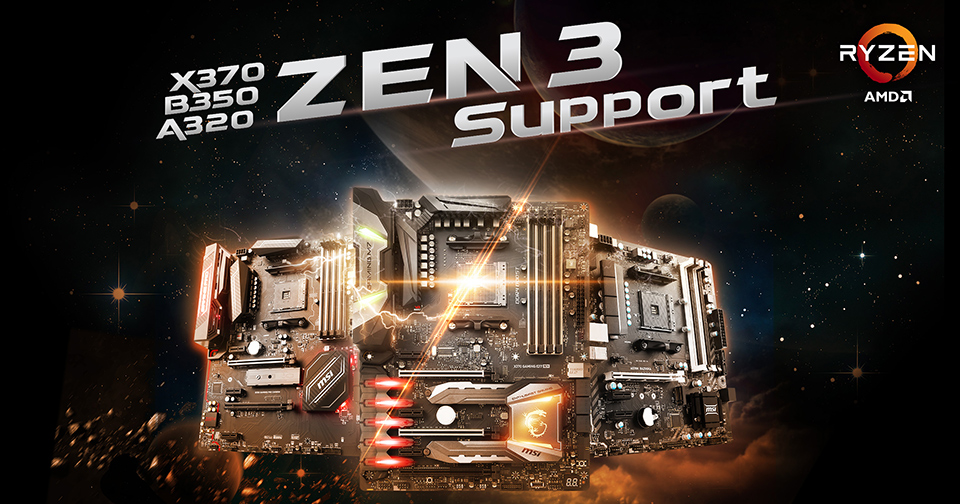
If you own an MSI 300-series motherboard (AMD) and want to upgrade to a Ryzen 5000 series chip, you should be pleased to read this. A new BIOS is being made available for 300-series motherboards, which will introduce support for all Zen 3 chips, including the Ryzen 7 5800X3D.
The new AGESA Combo PI V2 1.2.0.7 Beta BIOS should begin rolling out soon, allowing those with older 300-series motherboards to upgrade to the latest AMD processors.
Following the 300-series boards, MSI will launch the equivalent Beta BIOS for the 500- and 400-series in early June. However, instead of introducing support for the Zen 3 CPUs, this one will fix the intermittent performance stuttering issues when fTPM is enabled.
If you're planning to update the BIOS of your MSI motherboard, don't forget to follow the company's instructions for the process. You can do that by visiting your motherboard's product page and clicking on the support tab. Then go to “Drivers and Downloads” and select “BIOS”.
Discuss on our Facebook page, HERE.
KitGuru says: With the launch of the AGESA Combo PI V2 1.2.0.7 Beta BIOS, MSI is joining Asus in extending the upgrade path for 300-series motherboard owners. Do you own an MSI 300-series motherboard? Are you planning on upgrading to a new processor?