KitGuru KitGuru.net – Tech News | Hardware News | Hardware Reviews | IOS | Mobile | Gaming | Graphics Cards


Today we analyse a new power supply from a Chinese brand better known for producing air and liquid coolers for the PC sector. This new range of power supplies from CPS PCCooler consists of three SKUs, with 850W, 1000W and 1200W models. They sent us the flagship 1200W unit to check out. This supply has been Platinum certified by Cybenetics and, according to PCCooler, is set to be priced at around £157 when it is released into European and UK markets.
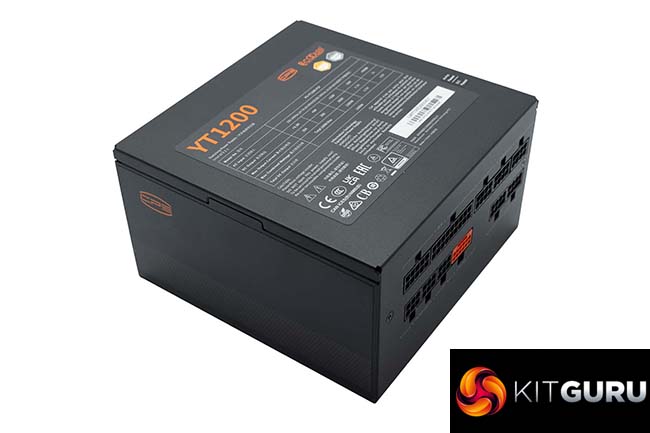
This power supply is fully modular and PCIe 5.1 and ATX 3.1 compliant. It adopts a high-grade 135mm fluid dynamic bearing fan, and is equipped with full Japanese capacitors. On paper the specification of this unit seems good – but as is often the case with PCCooler products, availability right now seems limited to the Asian market. (Buy HERE for 26480 JPY.)
YT1200 Product overview:
- Type: ATX 3.1
- Physical Dimensions: 150x150x86mm (LxWxH).
- Certification: Cybenetics Platinum
- Efficiency: >93.5% under Typical Load (50% loading)
- Topology: Active PFC + Full Bridge SRC LLC+DC to DC
- Protection: OVP/UVP/SCP/OPP/OCP/OTP/SPD
- Capacitors: Full Japanese Electrolytic Capacitors
- Fan Dimension: 135x135x25mm
- Fan Bearing Type: FDB Bearing
- Fan Operating Mode: Hybrid Mode
- PCI-E 5.1 Output Power: 600W
- Cybenetics Noise Rating: YT1200 (STANDARD ++)
- 10 year warranty.
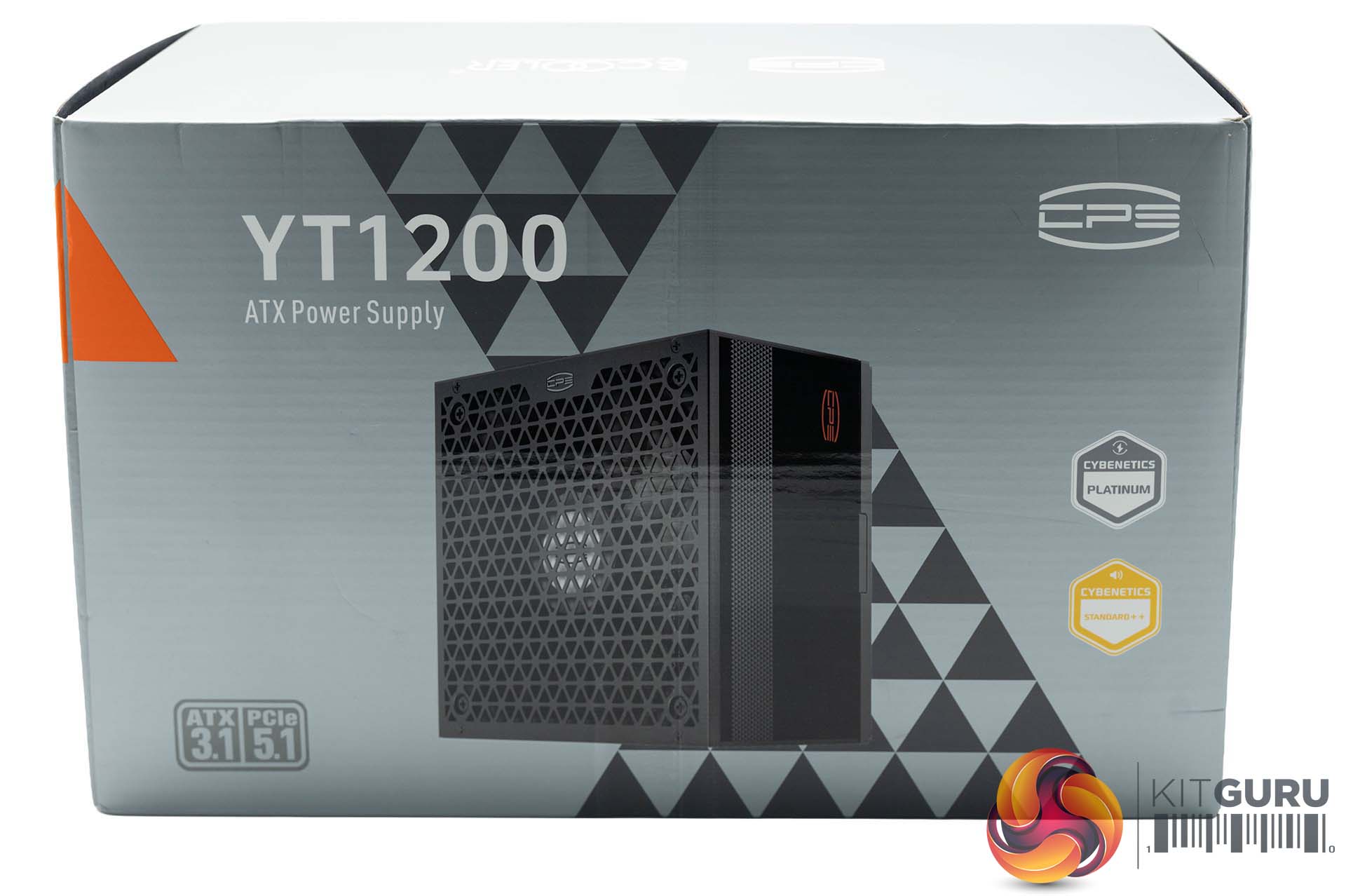
The YT1200 ships in a pretty nice-looking box with a high resolution image of the power supply on the front and some Cybenetics badges at the side. We prefer to see Cybenetics logos on the boxes rather than 80 Plus – it is a superior test platform.
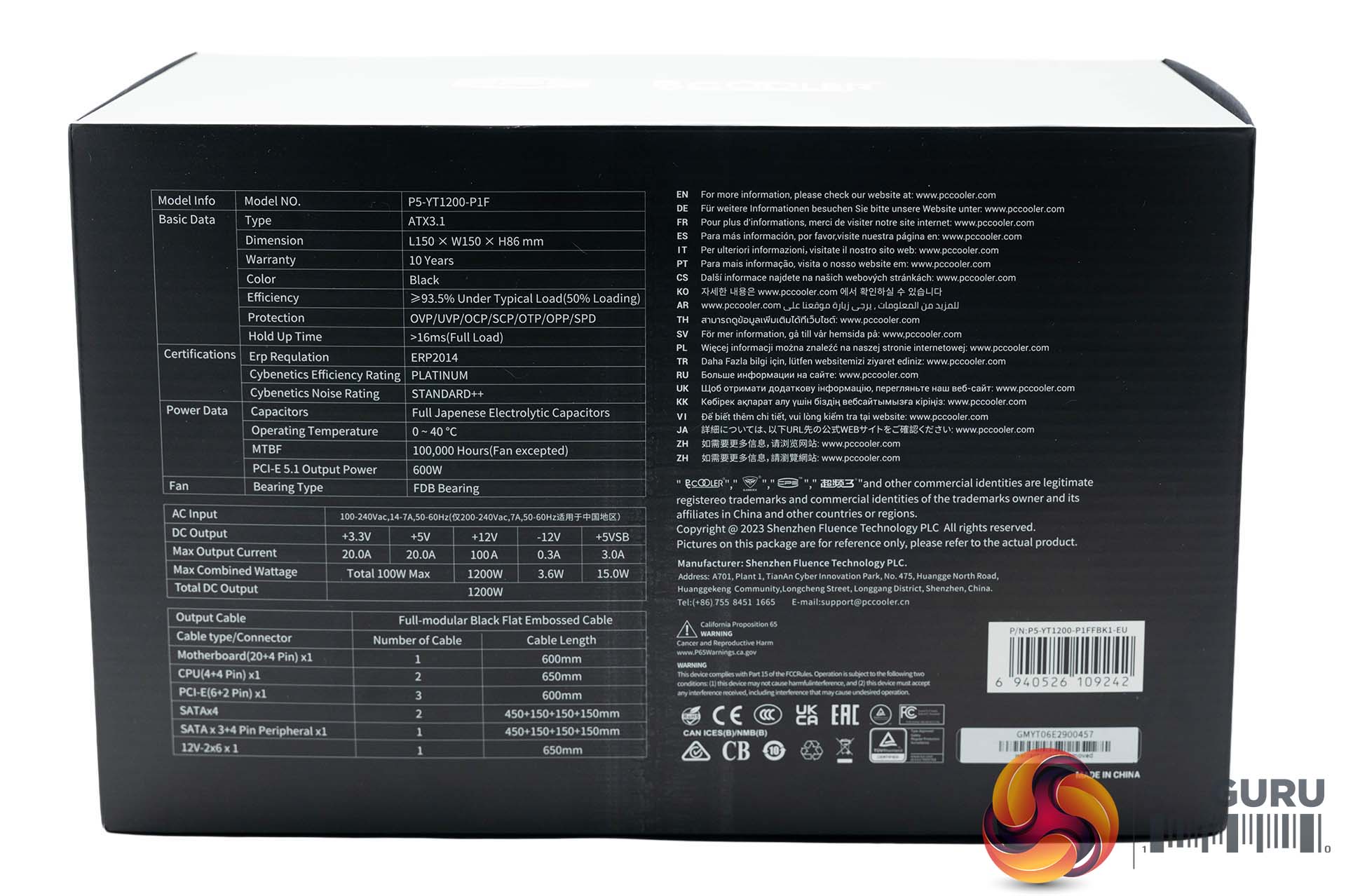
The rear of the box is basically a spec sheet along with some information on cabling.
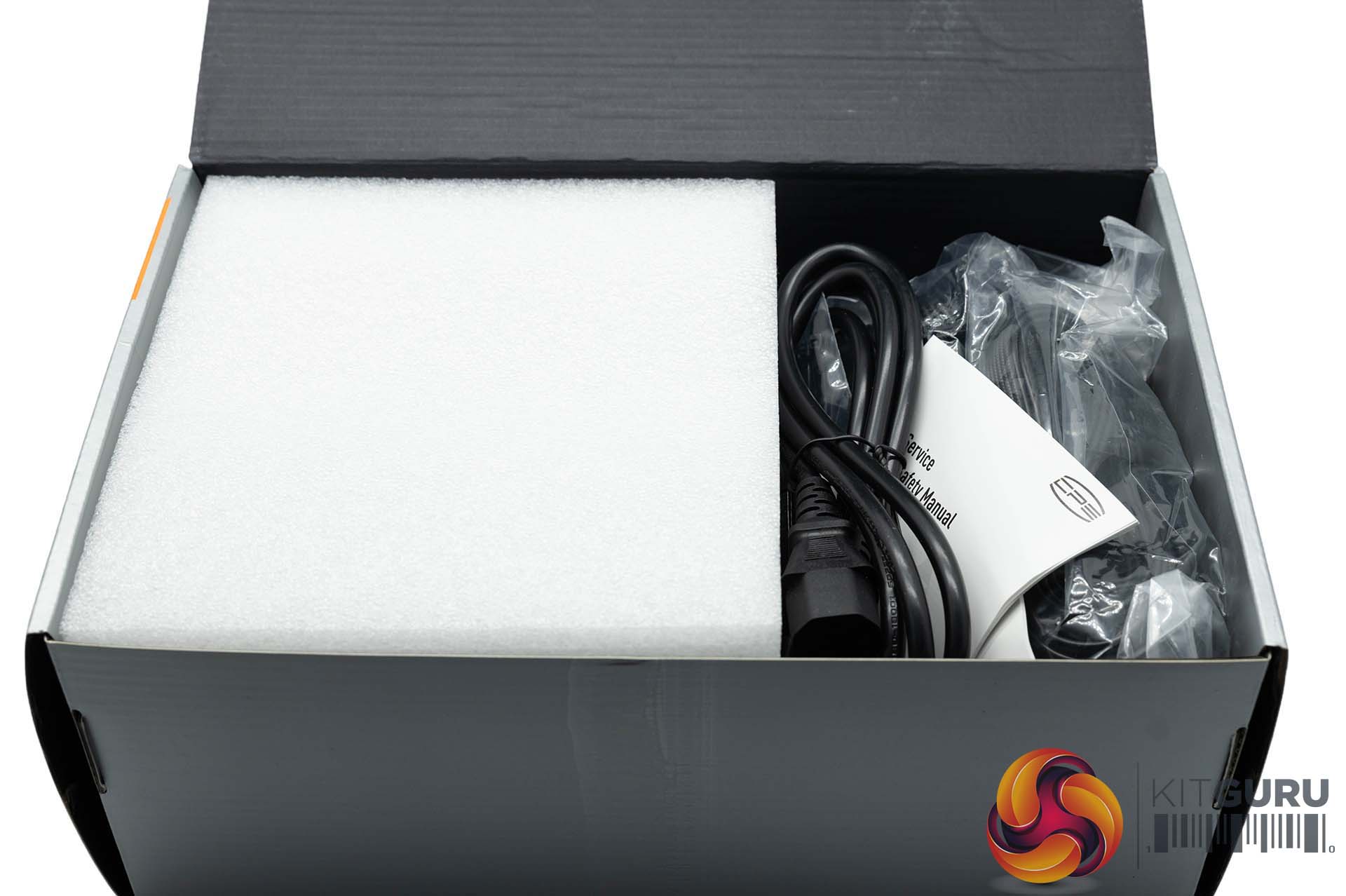
The power supply ships sandwiched between two thick bits of foam, with the accessories at the side.
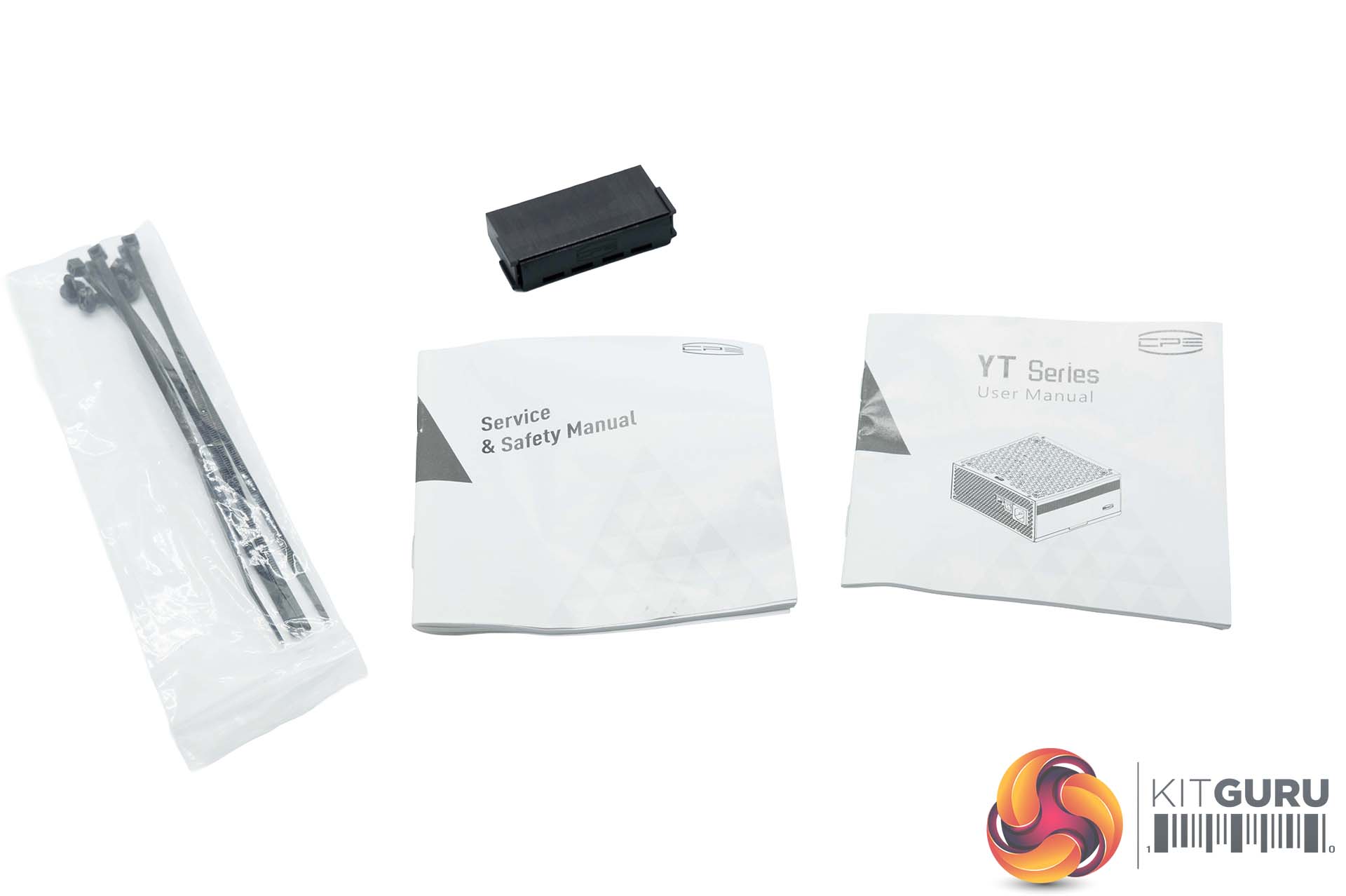
PCCooler supply some cable ties, literature on the product, PSU tester and a power cable. Our sample came direct from Asia.
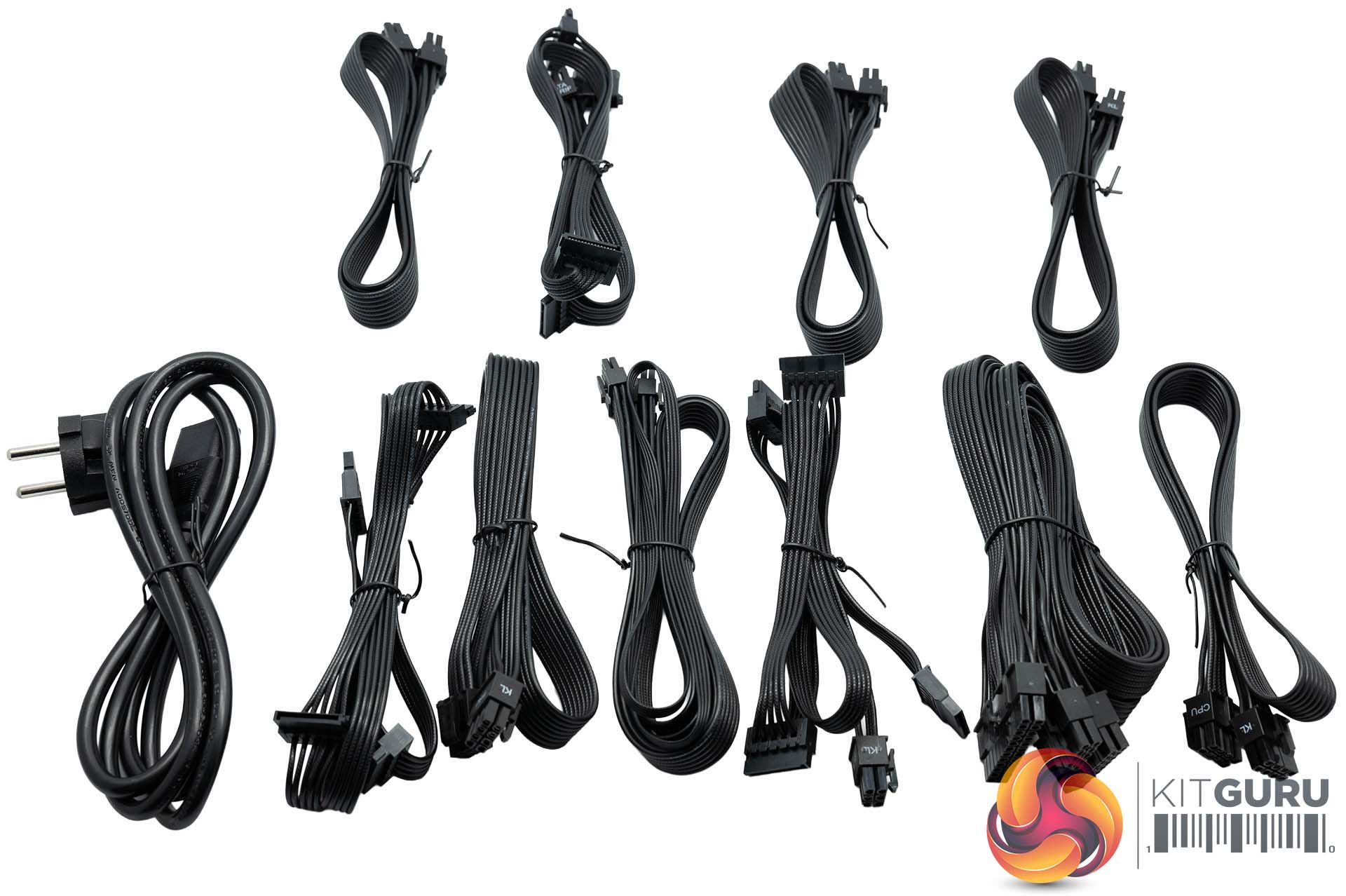
The YT1200 cables supplied with this power supply are all ribbon style for ease of routing during the install phase. They are all mostly 16AWG-18AWG and none of them have in-cable capacitors. There are a total of 9 SATA connectors over 3 cables (445mm + 150mm+150mm), a single 12+4 pin PCIe (600W) that is 650mm long. The ATX connector is 610mm long.
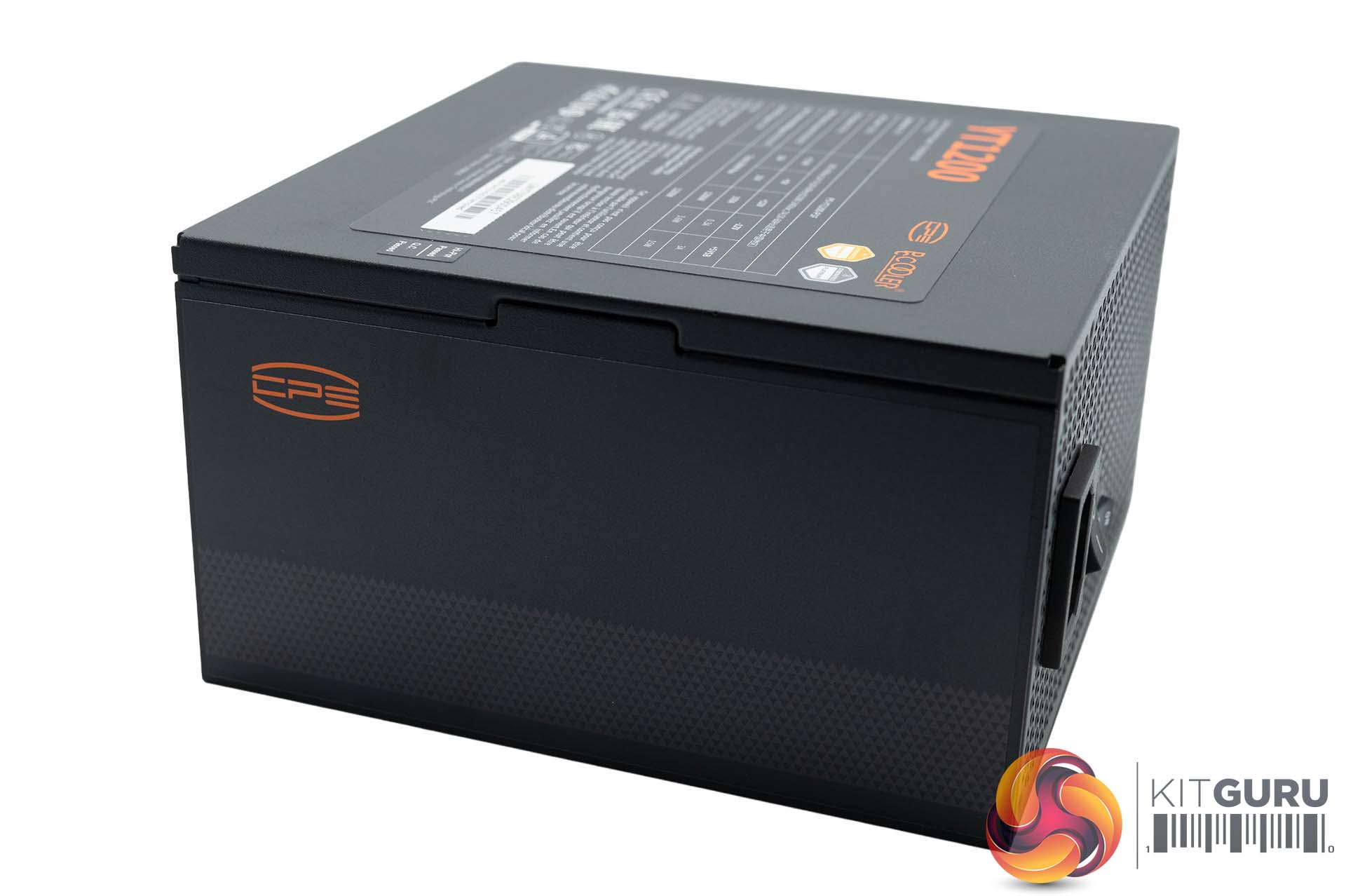
The YT1200 is relatively compact for the output wattage, measuring 135mm x 135mm x 25mm. It weighs 1.75kg.
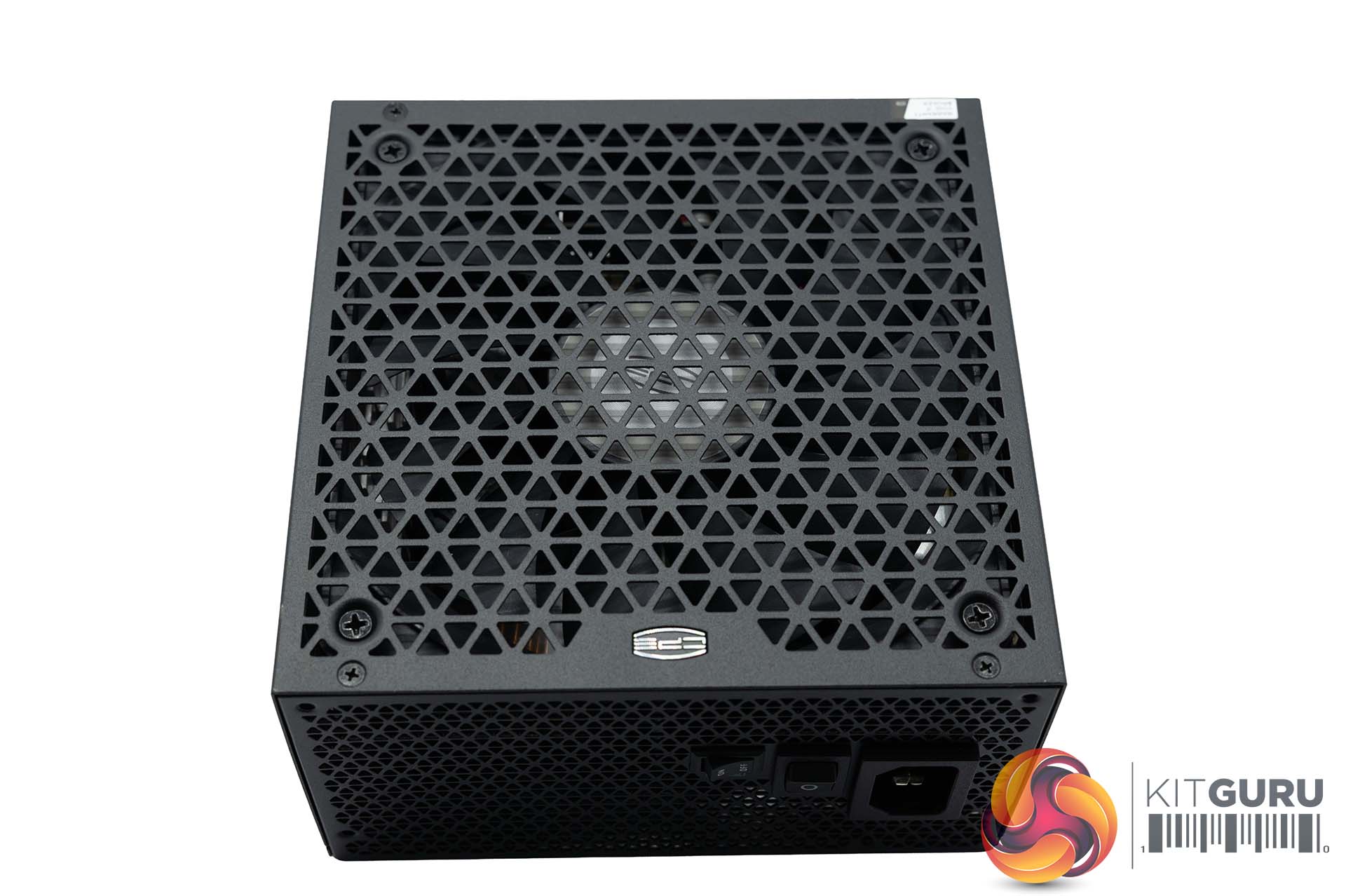
I like the fan grille – the triangular cut-outs not only look cool but they are large enough to ensure high levels of airflow with the fan drawing in air underneath.
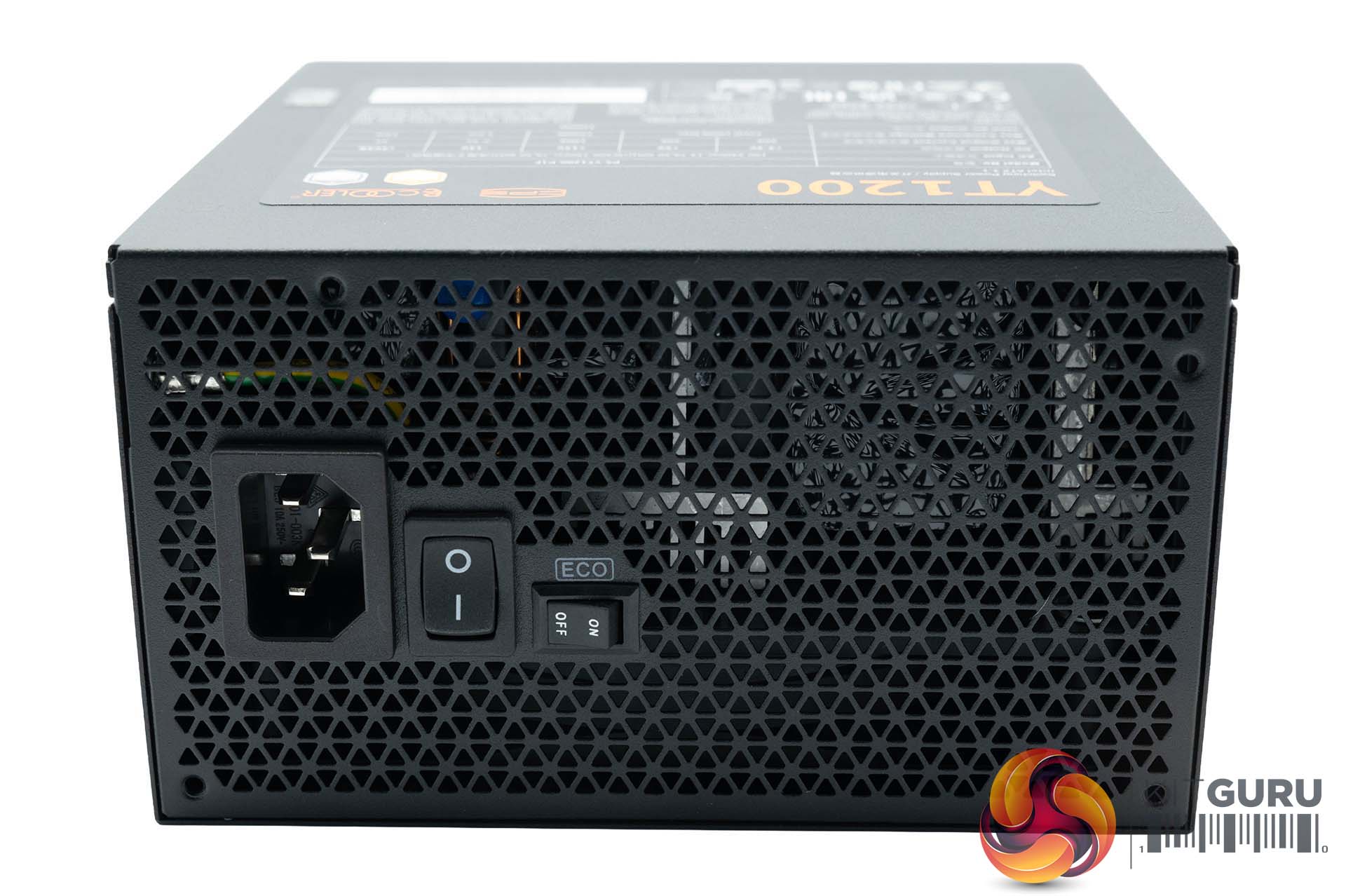
One side of the unit is home to the power connector, switch and ‘eco mode' switch. A similar implementation has been seen on many units in recent years. Basically, when enabled, the fan will only activate when a certain load/temperature is achieved. This has the effect of lowering noise emissions which many people value.
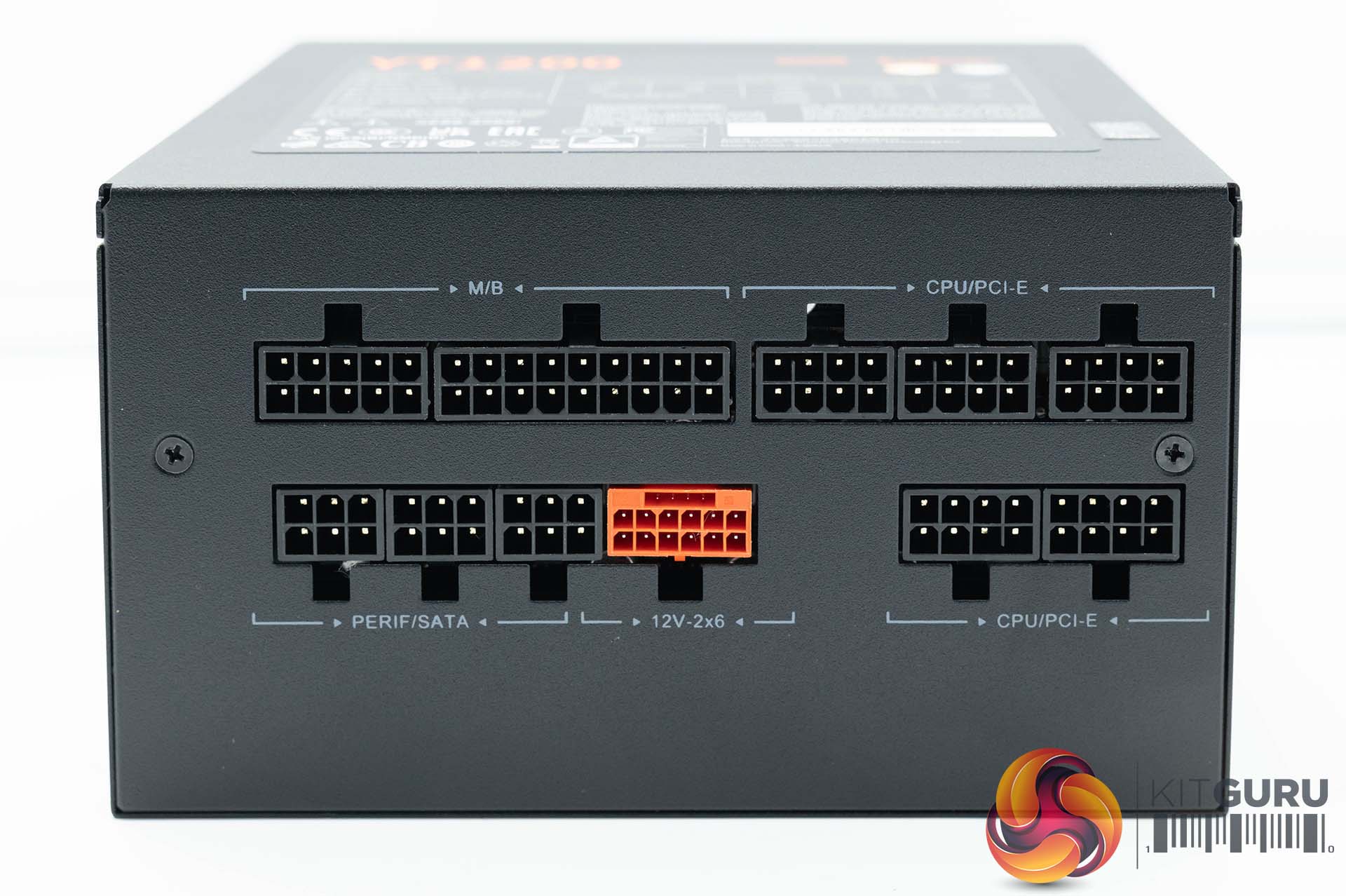
The modular bay is split over two rows, all clearly labelled and even colour coded for ease of install.
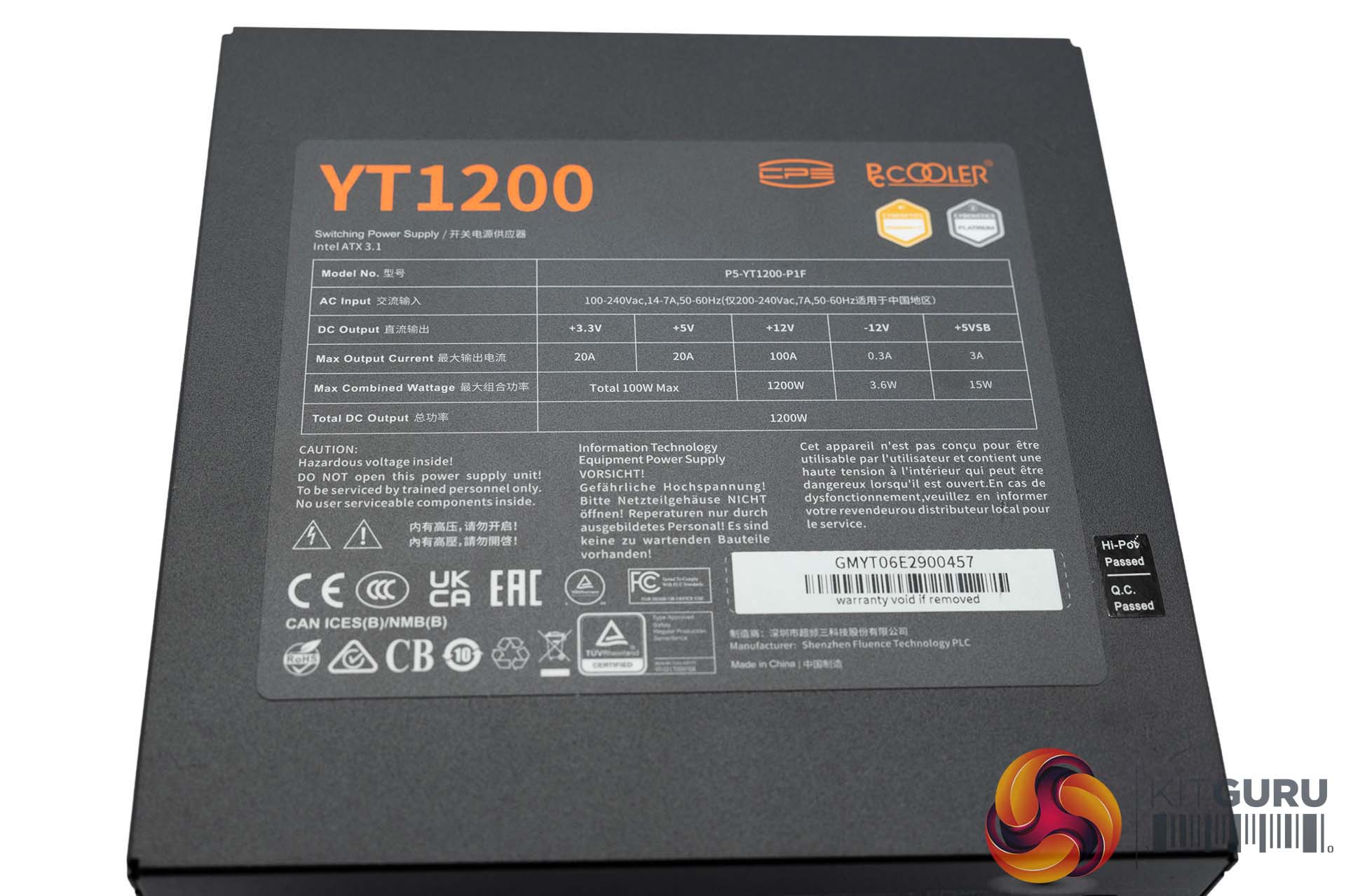
The YT1200 is able to deliver 100A on the +12V rail for a total of 1200 watts. Secondary +3.3V and +5V rails are rated at 20A.
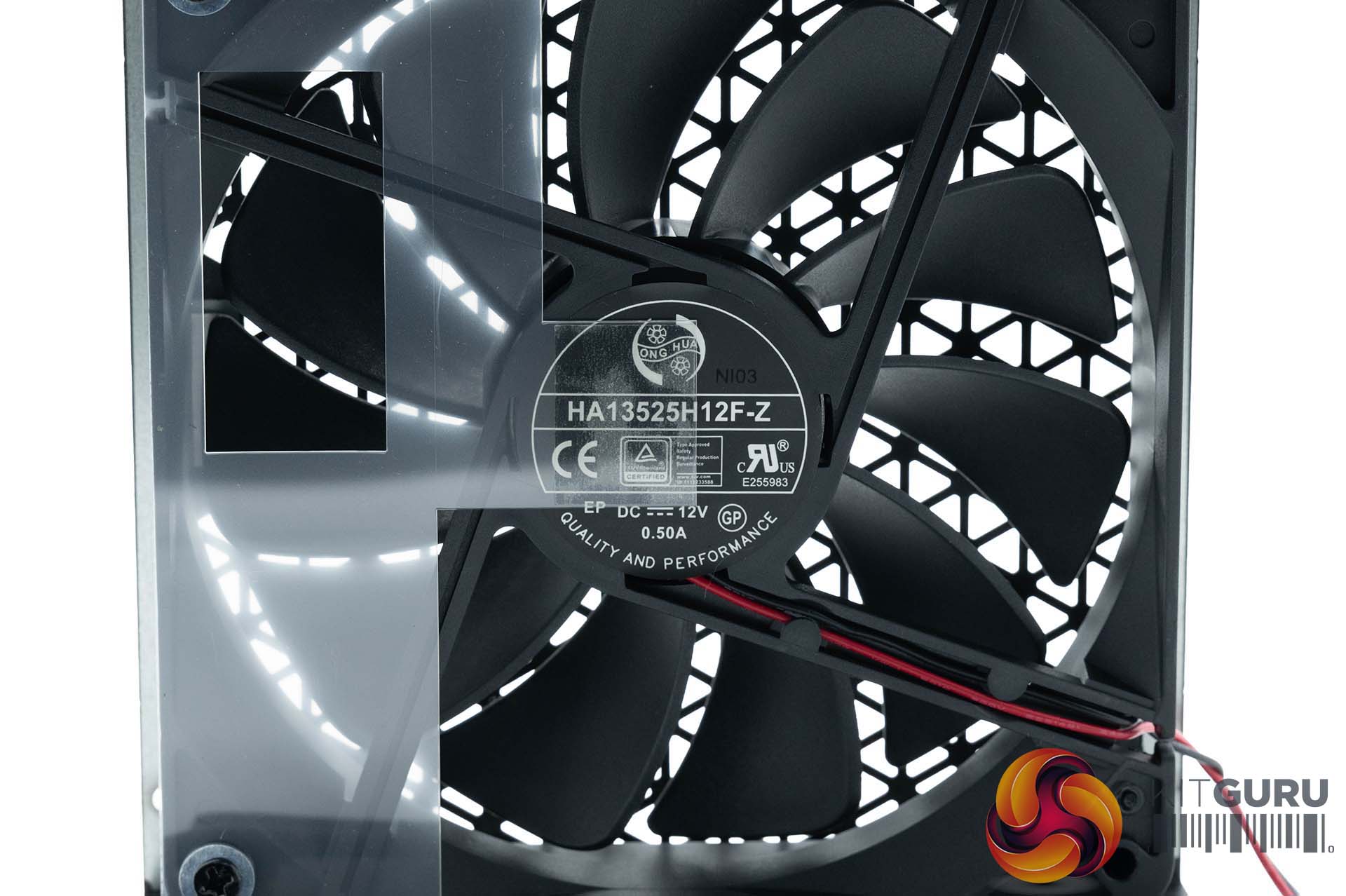
Inside, we find a high-grade Hong Hua FDB fan, model HA13525H12F-Z which we have seen in many high-end units in the last year from the likes of Seasonic. I like these fans a lot, they have proven to be good performers while being reliable.
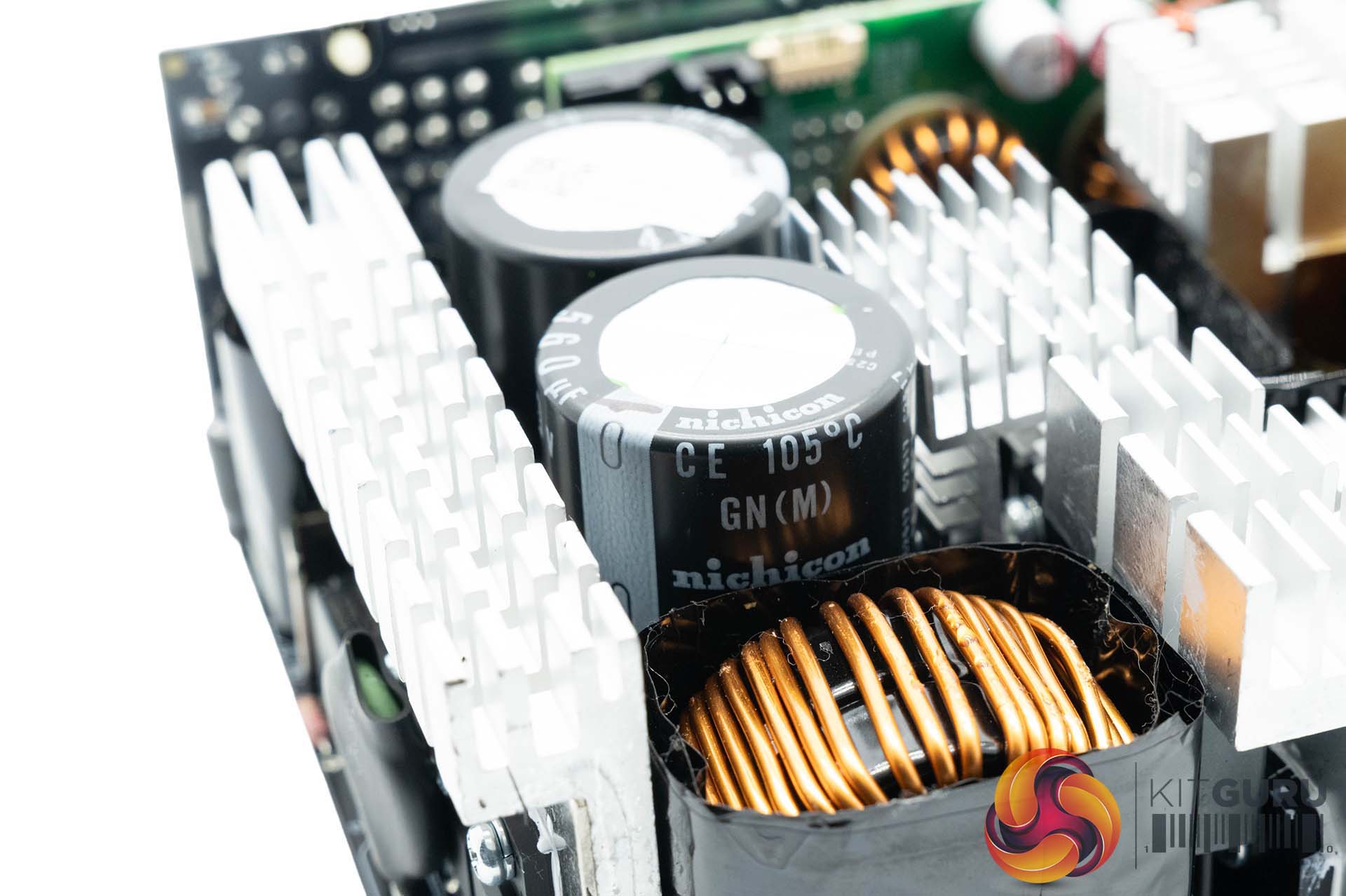
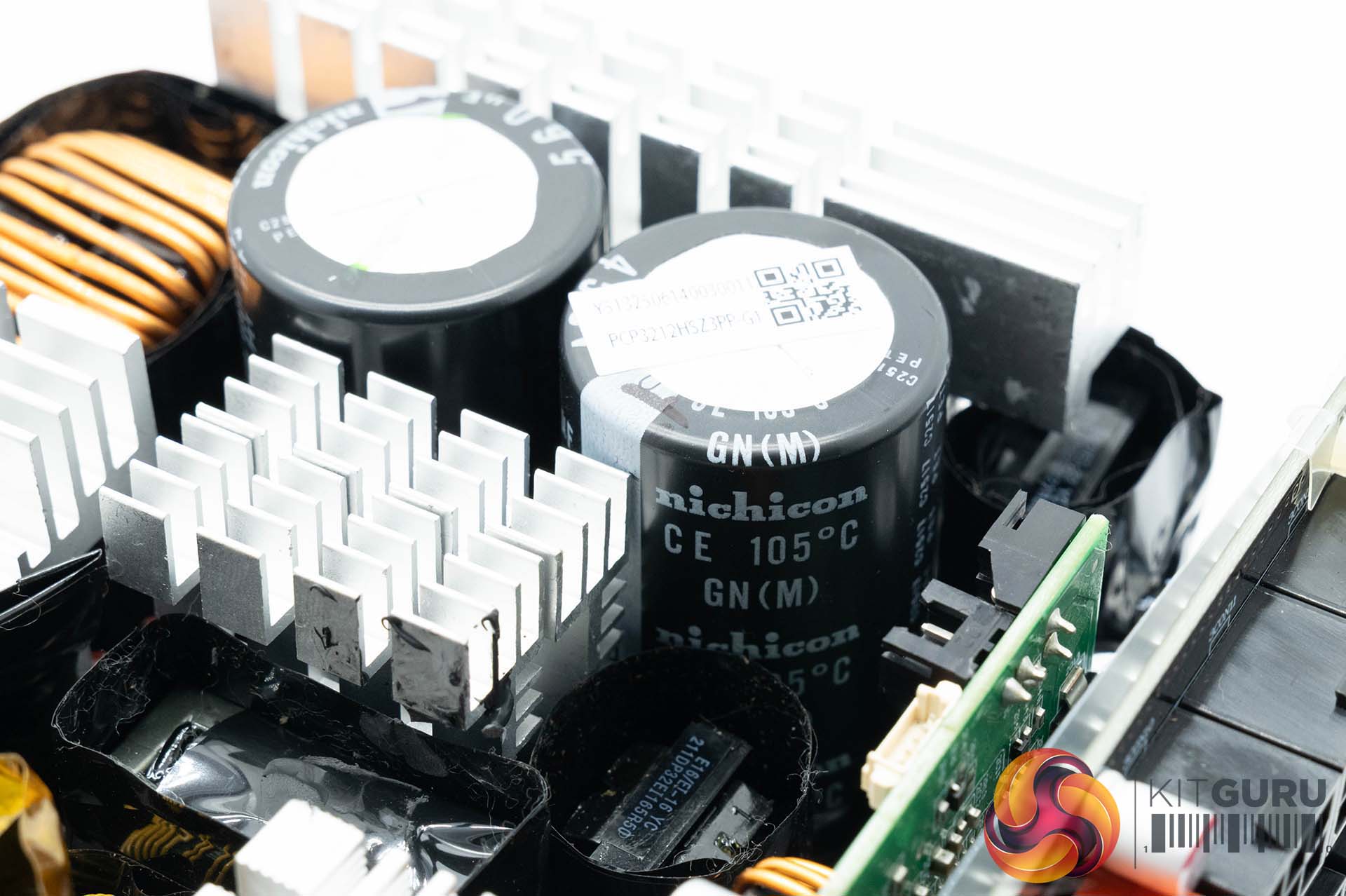
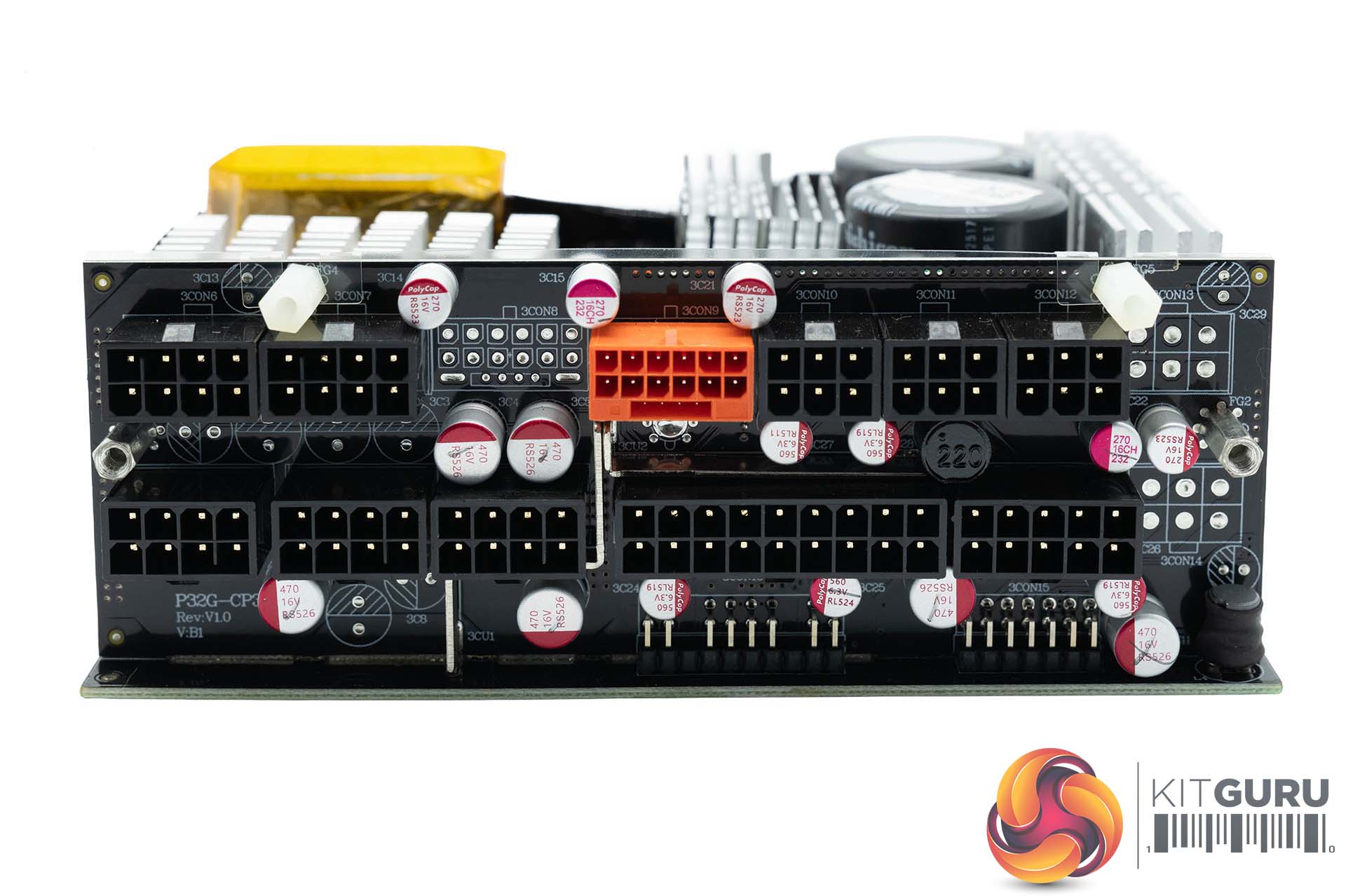
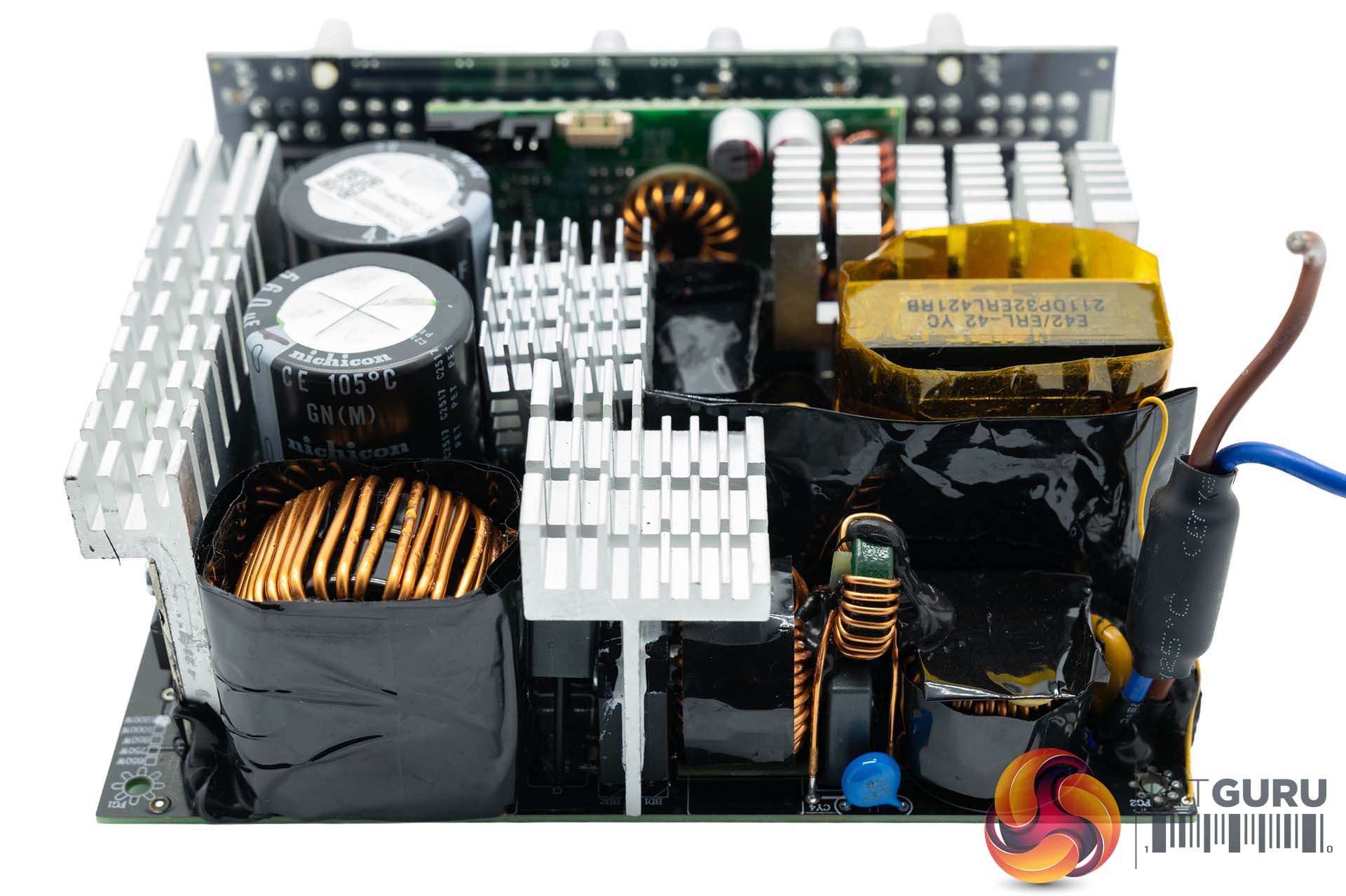
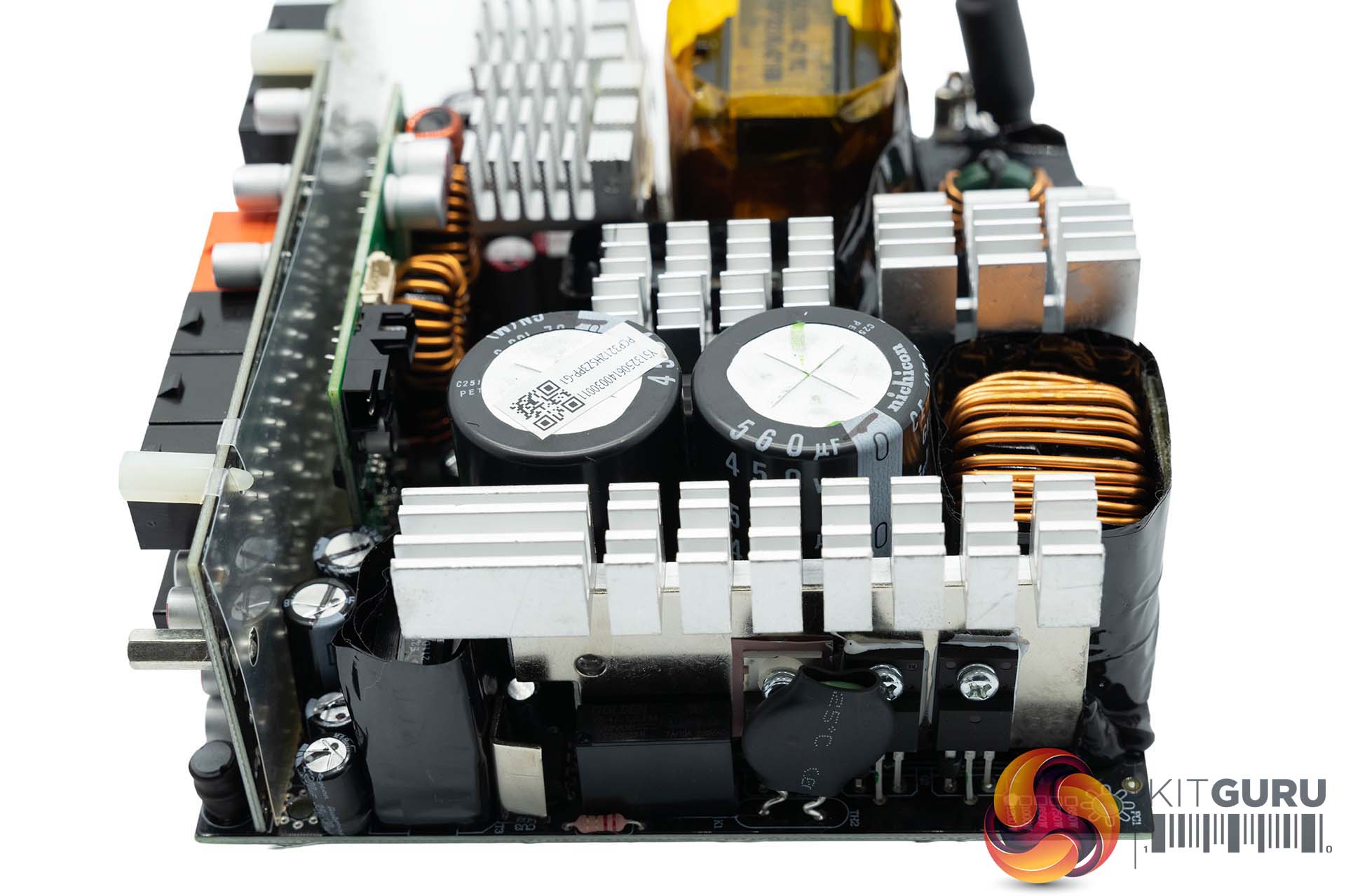
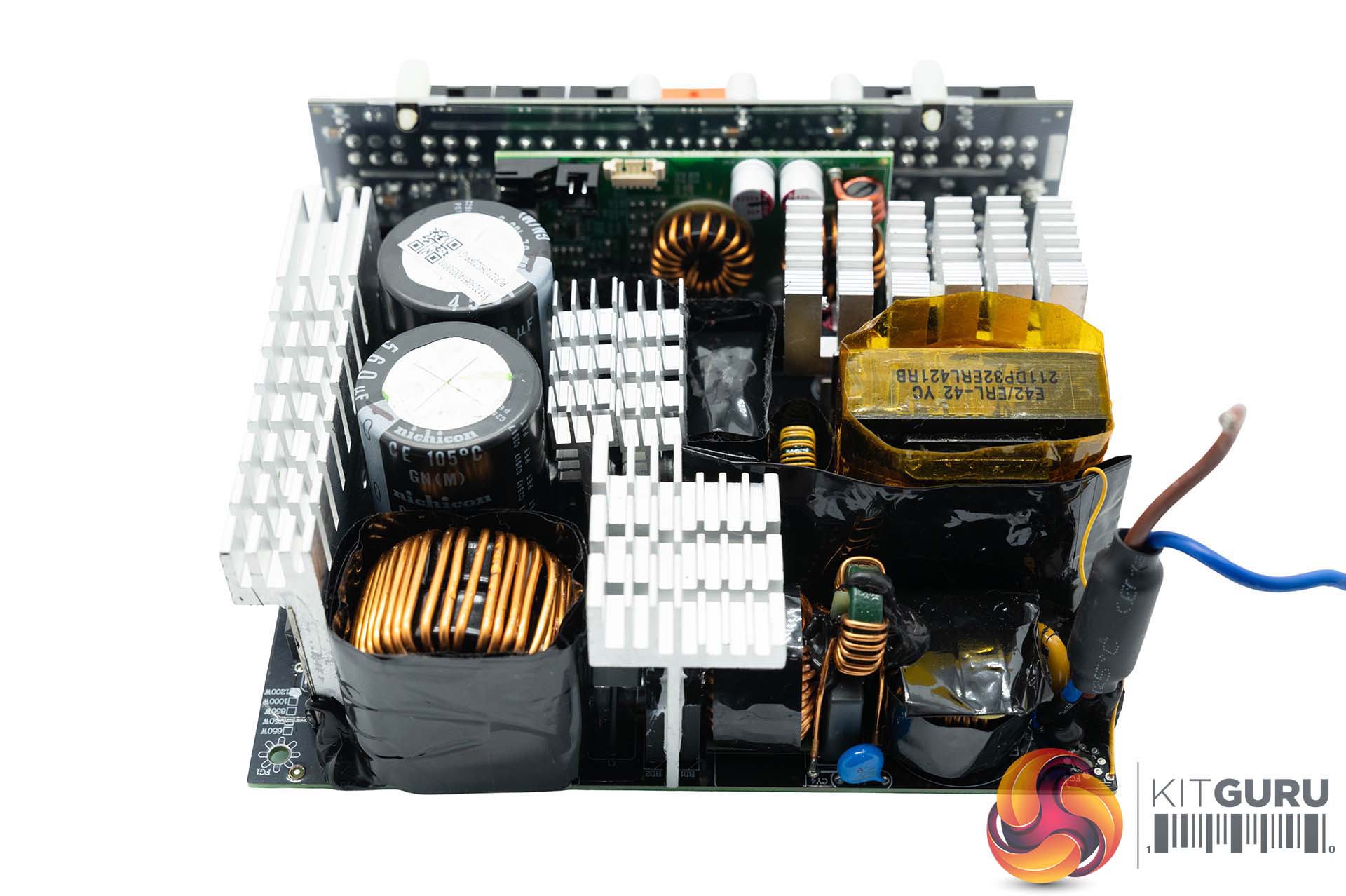
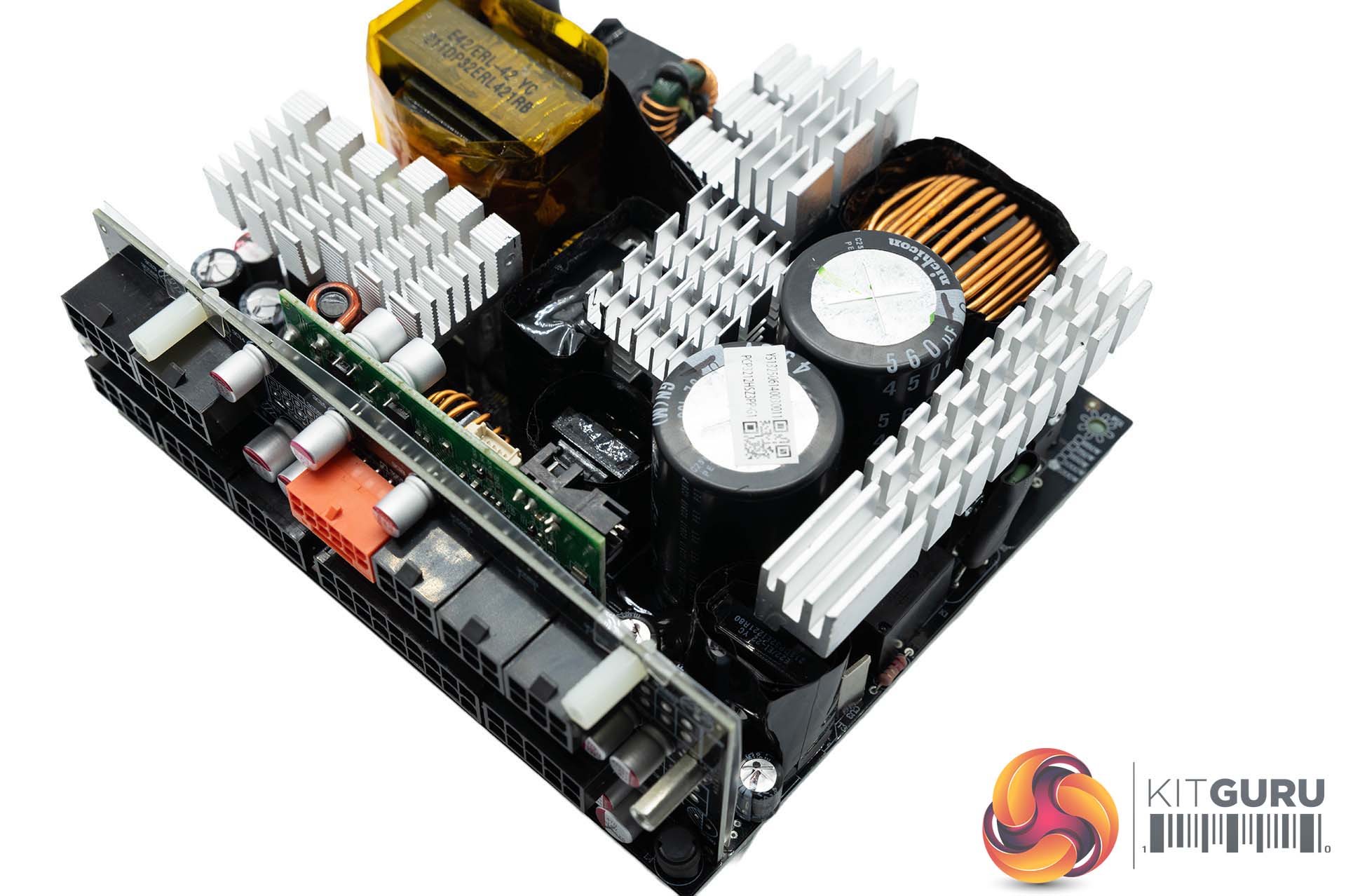
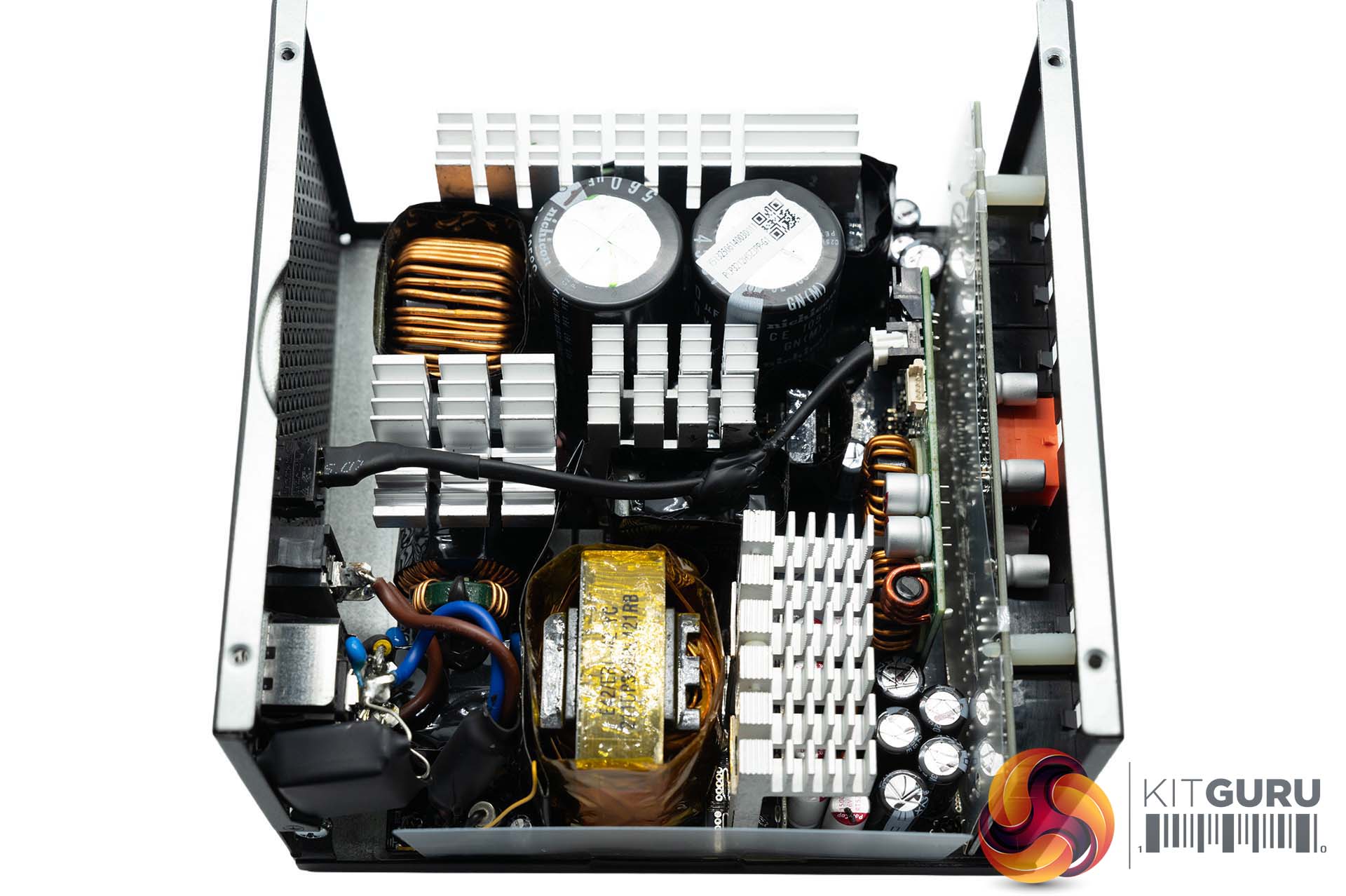
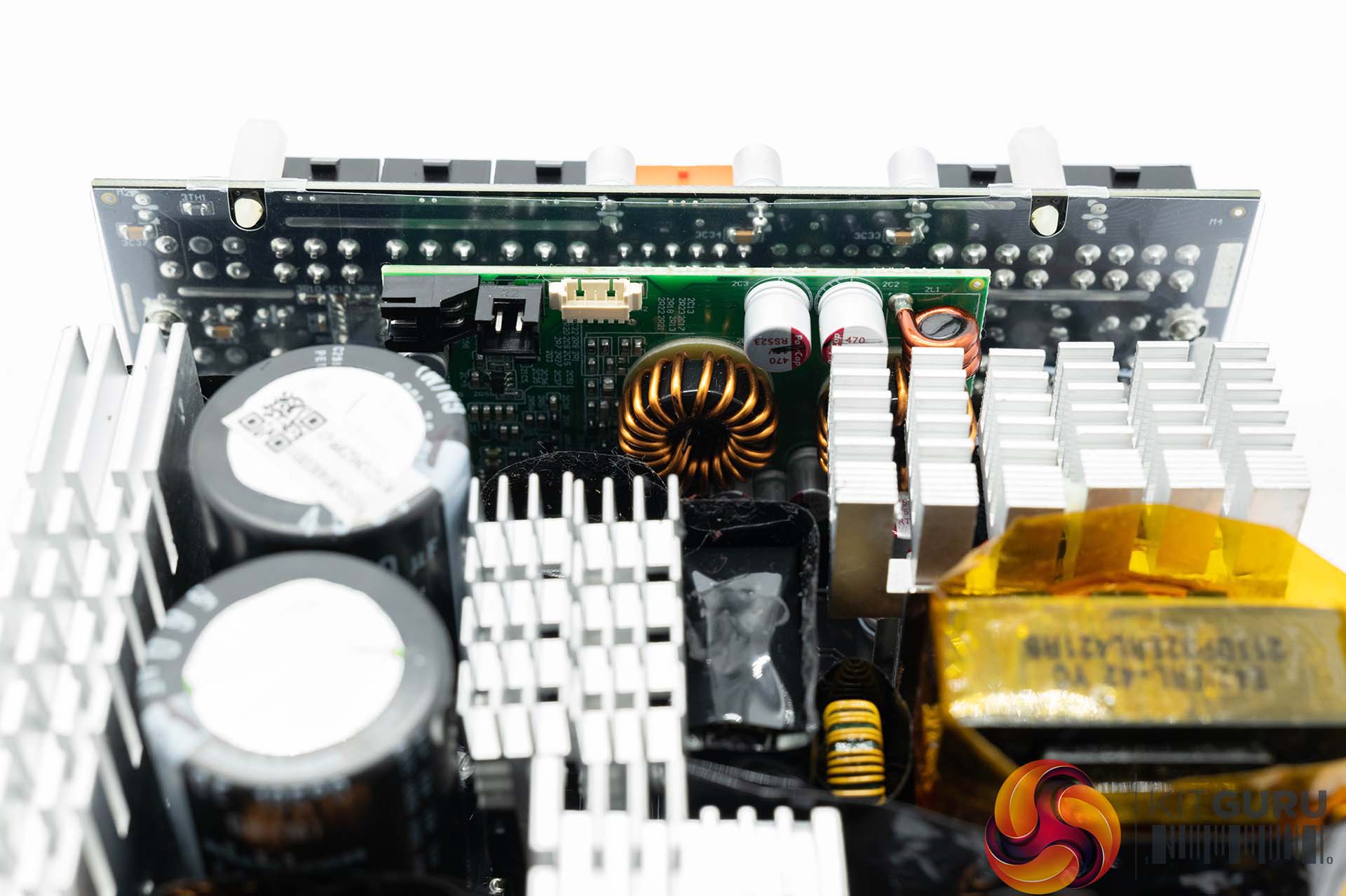
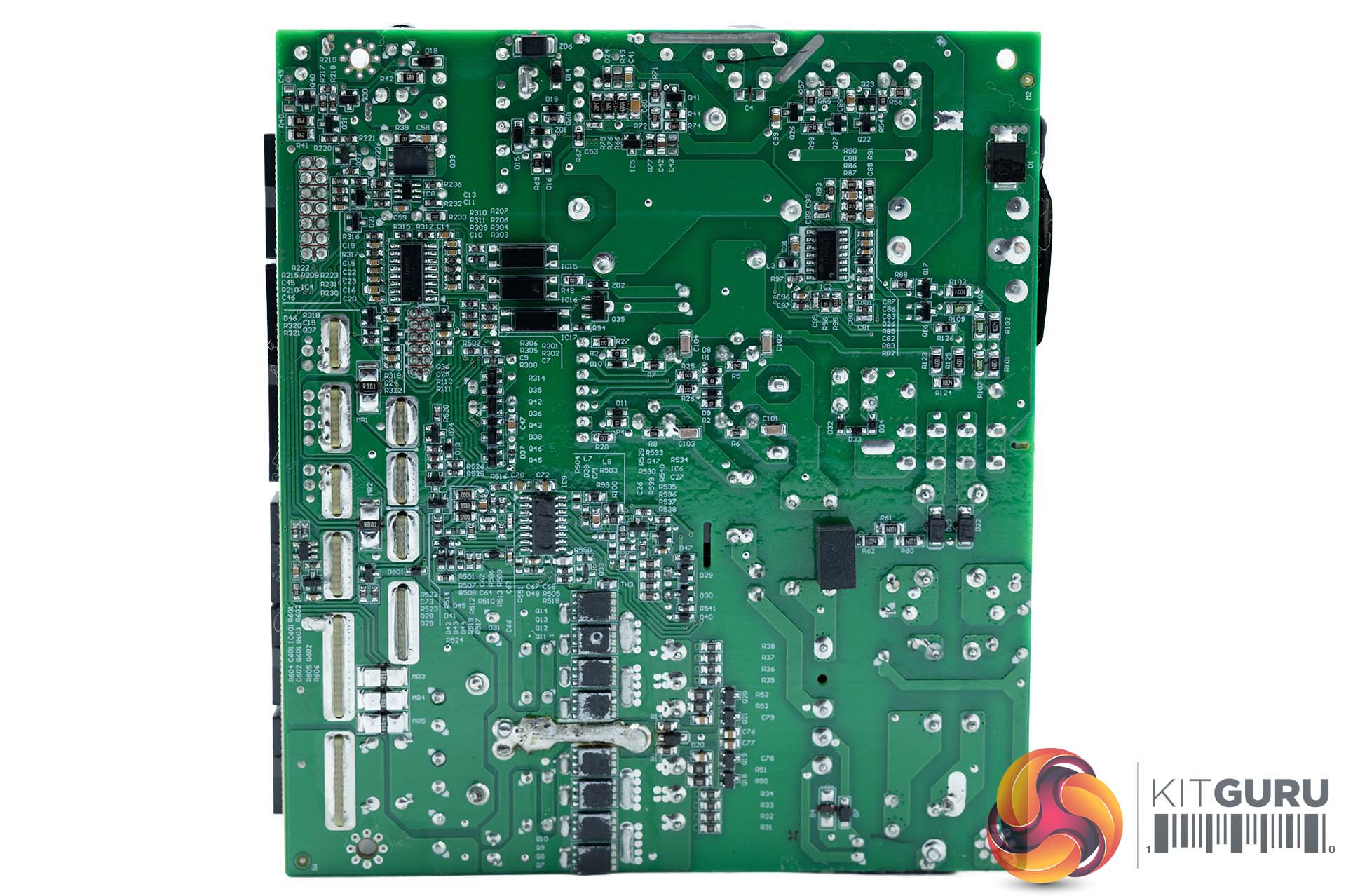
This power supply is an Andyson OEM part in conjunction with PCCooler. It is a double-sided PCB and the primary side is comprised of 4x Y Caps, 2x X Caps, 2x CM Chokes and 1x MOV. The primary stage is APFC, Full Bridge Topology and LLC Resonant Converter for improved efficiency levels – the secondary side is 12V Synchronous rectification with the minor rails generated from DC-DC converters.
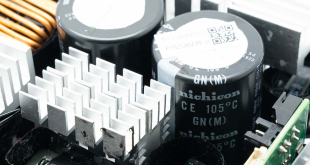
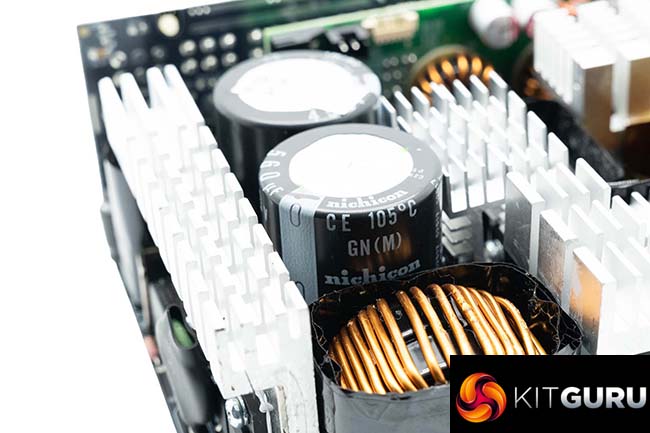
Soldering quality seems fine across the main board. The primary stage capacitors are by Nichicon – rated 105C, with two working at 560uF each for a total of 1120uF. Nippon Chemi Con, Rubycon and Teapo make the electrolytic caps. The unit has OVP/UVP/SCP/OPP/OCP/OTP/SPD Protections.
Correctly testing power supplies is a complex procedure and KitGuru have configured a test bench which can deliver up to a 2,000 Watt DC load.
We test ambient temperatures at 35C in our environment to greater reflect warmer internal chassis conditions. We test at 230V.
We use combinations of the following hardware:
• SunMoon SM-268
• CSI3710A Programmable DC load (+3.3V and +5V outputs)
• CSI3711A Programmable DC load (+12V1, +12V2, +12V3, and +12V4)
• Extech Power Analyzer
• Extech MultiMaster MM570 digital multimeter
• Extech digital sound level meter
• Digital oscilloscope (20 MS/s with 12 Bit ADC)
• Variable Autotransformer, 1.4 KVA
|
DC Output Load Regulation
|
||||||||||
|
Combined DC Load |
+3.3V
|
+5V
|
+12V
|
+5VSB
|
-12V | |||||
|
A
|
V
|
A
|
V
|
A
|
V
|
A
|
V
|
A | V | |
|
120W
|
0.90
|
3.37
|
0.93
|
5.02
|
8.94
|
12.13
|
0.50
|
5.01
|
0.20
|
-12.02
|
|
240W
|
1.63
|
3.37
|
1.63
|
5.02
|
18.45
|
12.12
|
1.00
|
5.00
|
0.20
|
-12.02
|
| 600W |
3.00
|
3.37
|
3.12
|
5.02
|
46.76
|
12.09
|
1.50
|
5.00
|
0.30
|
-12.02
|
| 900W |
4.02
|
3.37
|
4.07
|
5.02
|
70.84
|
12.09
|
2.00
|
5.00
|
0.30
|
-12.02
|
|
1200W
|
5.02
|
3.37
|
5.20
|
5.01
|
94.58
|
12.09
|
2.50
|
5.00
|
0.30
|
-12.01
|
Load regulation is very good across the rails.
Next we want to try Cross Loading. This basically means loads which are not balanced. If a PC for instance needs 500W on the +12V outputs but something like 30W via the combined 3.3V and +5V outputs then the voltage regulation can fluctuate badly.
| Cross Load Testing | +3.3V | +5V | +12V | -12V | +5VSB | |||||
| A | V | A | V | A | V | A | V | A | V | |
| 1190W | 4.0 | 3.37 | 3.0 | 5.01 | 88.0 | 12.09 | 0.2 | -12.02 | 0.50 | 5.01 |
| 240W | 19.0 | 3.35 | 22.0 | 5.00 | 2.5 | 12.12 | 0.2 | -12.02 | 0.50 | 5.00 |
The YT1200 handled our cross load tests without any issues.
We then used an oscilloscope to measure AC ripple and noise present on the DC outputs. We set the oscilloscope time base to check for AC ripple at both high and low ends of the spectrum. ATX12V V2.2 specification for DC output ripple and noise is defined in the ATX 12V power supply design guide.
|
ATX12V Ver 2.2 Noise/Ripple Tolerance
|
|
|
Output
|
Ripple (mV p-p)
|
|
+3.3V
|
50
|
|
+5V
|
50
|
|
+12V1
|
120
|
|
+12V2
|
120
|
|
-12V
|
120
|
|
+5VSB
|
50
|
Obviously when measuring AC noise and ripple on the DC outputs the cleaner (less recorded) means we have a better end result. We measured this AC signal amplitude to see how closely the unit complied with the ATX standard.
| AC Ripple (mV p-p) | ||||
| DC Load | +3.3V | +5V | +12V | 5VSB |
| 100W | 6 | 7 | 14 | 12 |
| 200W | 9 | 8 | 14 | 14 |
| 400W | 11 | 8 | 14 | 15 |
| 600W | 15 | 9 | 15 | 17 |
| 800W | 15 | 11 | 15 | 18 |
| 1000W | 17 | 12 | 16 | 19 |
| 1200W | 17 | 13 | 18 | 20 |
This unit passes our ripple suppression tests without any issues. The results are good all round and the unit is clearly performing at a high level.
|
Efficiency (%)
|
|
|
100W
|
87.1
|
|
200W
|
91.1
|
|
400W
|
92.8
|
|
600W
|
93.7
|
|
800W
|
93.1
|
| 1000W | 92.2 |
| 1200W | 90.9 |
Efficiency is good overall, hitting around 93.8% at peak. This drops to 90.9% at full load.
We take the issue of noise very seriously at KitGuru and this is why we have built a special home brew system as a reference point when we test noise levels of various components. Why do this? Well this means we can eliminate secondary noise pollution in the test room and concentrate on components we are testing. It also brings us slightly closer to industry standards, such as DIN 45635.
Today to test the power supply we have taken it into our acoustics room environment and have set our SkyTronic DSL 2 Digital Sound Level Meter (6-130dBa) one meter away from the unit. We have no other fans running so we can effectively measure just the noise from the unit itself.
As this can be a little confusing for people, here are various dBa ratings with real world situations to help describe the various levels.
KitGuru noise guide
10dBA – Normal Breathing/Rustling Leaves
20-25dBA – Whisper
30dBA – High Quality Computer fan
40dBA – A Bubbling Brook, or a Refrigerator
50dBA – Normal Conversation
60dBA – Laughter
70dBA – Vacuum Cleaner or Hairdryer
80dBA – City Traffic or a Garbage Disposal
90dBA – Motorcycle or Lawnmower
100dBA – MP3 Player at maximum output
110dBA – Orchestra
120dBA – Front row rock concert/Jet Engine
130dBA – Threshold of Pain
140dBA – Military Jet takeoff/Gunshot (close range)
160dBA – Instant Perforation of eardrum
|
Noise (dBA)
|
|
|
100W
|
<28.0
|
|
200W
|
<28.0
|
|
400W
|
<28.0
|
|
600W
|
31.9
|
| 800W | 33.7 |
| 1000W | 38.3 |
| 1200W | 41.7 |
The YT1200 is using a quality Hong Hua FDB fan which we know performs well, from all our previous tests featuring the same fan. The fan is quite aggressive in this PSU when tasked with over 800 watts load. At full load it is clearly audible, but not a situation you would likely be running on any kind of sustained basis. Not the quietest unit we have tested, but generally under a 700 watt load it is reasonably quiet.
|
Temperature (c)
|
||
|
Intake
|
Exhaust
|
|
|
100W
|
35
|
38
|
|
200W
|
36
|
42
|
|
400W
|
38
|
44
|
|
650W
|
43
|
48
|
|
800W
|
45
|
55
|
| 1000W | 47 | 57 |
| 1200W | 50 | 60 |
The efficiency of this unit combined with the quality FDB fan ensure temperatures are well maintained at all times.
The PCCooler YT1200 power supply has proven to be a solid performer in our testing over the last week. This Andyson-based design is competent across the board, while not class-leading in any single area. Overall, PCCooler has delivered a well-built, dependable unit, and based on our experience here, there is no reason to doubt that the other models in this new range should perform to a similar standard.
First impressions are positive. The external finish is of high quality, and the triangular airflow cut-outs above the fan give the unit a distinctive look. While most users will rarely see their power supply once installed, the overall design is clean and well executed. The fully modular interface is sensibly laid out, with colour coding on the 600W connector that will be particularly helpful for first-time system builders.
From a technical standpoint, performance is strong. Load regulation is tight, the unit passed our cross-load testing without issue, and ripple suppression is excellent. All protection and shutdown tests were completed successfully, with no concerns raised. Cabling quality is good throughout, and the use of high-grade 105C-rated Japanese capacitors is a welcome inclusion at this price point.
The fully modular design and semi-passive fan mode will appeal to many users, and the inclusion of a Hong Hua fluid dynamic bearing fan is another positive. That said, acoustics are not quite as refined as we would have hoped under sustained heavy load. Once power draw exceeds roughly 800 watts, the fan becomes clearly audible, and at full 1200W load it ramps up to noticeable levels.
Overall, the unit looks good, performs well, and with an expected price of around £157 according to PCCooler, it appears competitively positioned. However, this brings us to the main drawback: availability. At the time of writing, the YT1200 is only available in Asia, where it retails for around 26,480 JPY HERE (roughly £125). PCCooler has not been able to provide any guidance on European, UK, or North American availability, which makes assigning a definitive score difficult. Provided pricing does not increase significantly outside Asia, this is a power supply that would be easy to recommend – assuming you can actually buy one.
Pros:
- Fully modular.
- 105C-rated Japanese capacitors.
- Quality build.
- Hong Hua FDB fan.
- Nicely finished externally.
- 10-year warranty.
- Good ripple suppression.
- Tight load regulation.
- ATX 3.1/PCIe 5.1 compliant.
- Quality components inside.
Cons:
- Not currently for sale outside Asia.
- Can get a bit loud at higher loads.
KitGuru says: The PCCooler YT1200 is a great power supply at what appears to be a competitive price point. It delivers clean, sustained power for a high-end system. It is nicely finished and uses quality components throughout including high-grade 105C-rated Japanese capacitors.