KitGuru KitGuru.net – Tech News | Hardware News | Hardware Reviews | IOS | Mobile | Gaming | Graphics Cards


Kingston has just added an external SSD to their HyperX high performance/gaming product line. The HyperX Savage EXO is a slim line drive using 3D TLC NAND and a USB 3.1 Gen 2 interface.
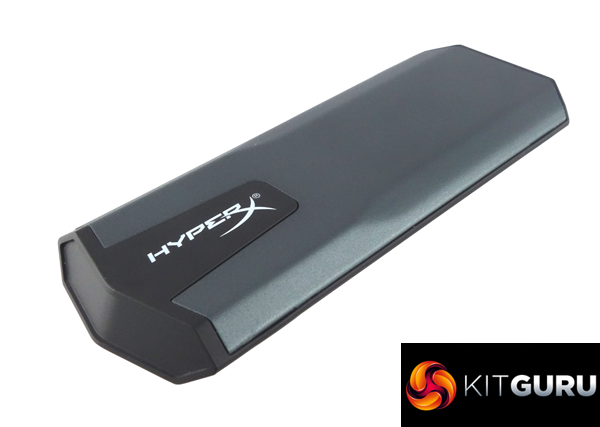
The new Kingston HyperX Savage EXO joins a varied product line-up that already includes other storage devices, memory modules, keyboards, headsets, mice and mouse pads. It's available in two capacities, the flagship 960GB model and the 480GB drive which Kingston kindly supplied for review. The drive has official sequential speed ratings of up to 500MB/s for reads and up to 480MB/s for writes.
Kingston doesn't state what controller or which NAND the drive uses in the specification sheet but if we were to make an educated guess, it would be a Toshiba BiCS3 NAND & Marvell controller combination.
Using an USB 3.1 Gen 2 Type-C interface, the drive is compatible with Microsoft Windows, Apple macOS as well as Microsoft’s Xbox One and Sony’s PlayStation 4.
Kingston back the drive with a three-year warranty.
Physical Specifications:
Usable Capacities: 480GB
NAND Components: 3D TLC NAND
Interface: USB 3.1Gen 2 Type-C
Form Factor: external
NAND Controller: n/s
Dimensions: 123.82 x 48.61 x 10.24mm
Drive Weight: 56g
Firmware Version: 003056RA
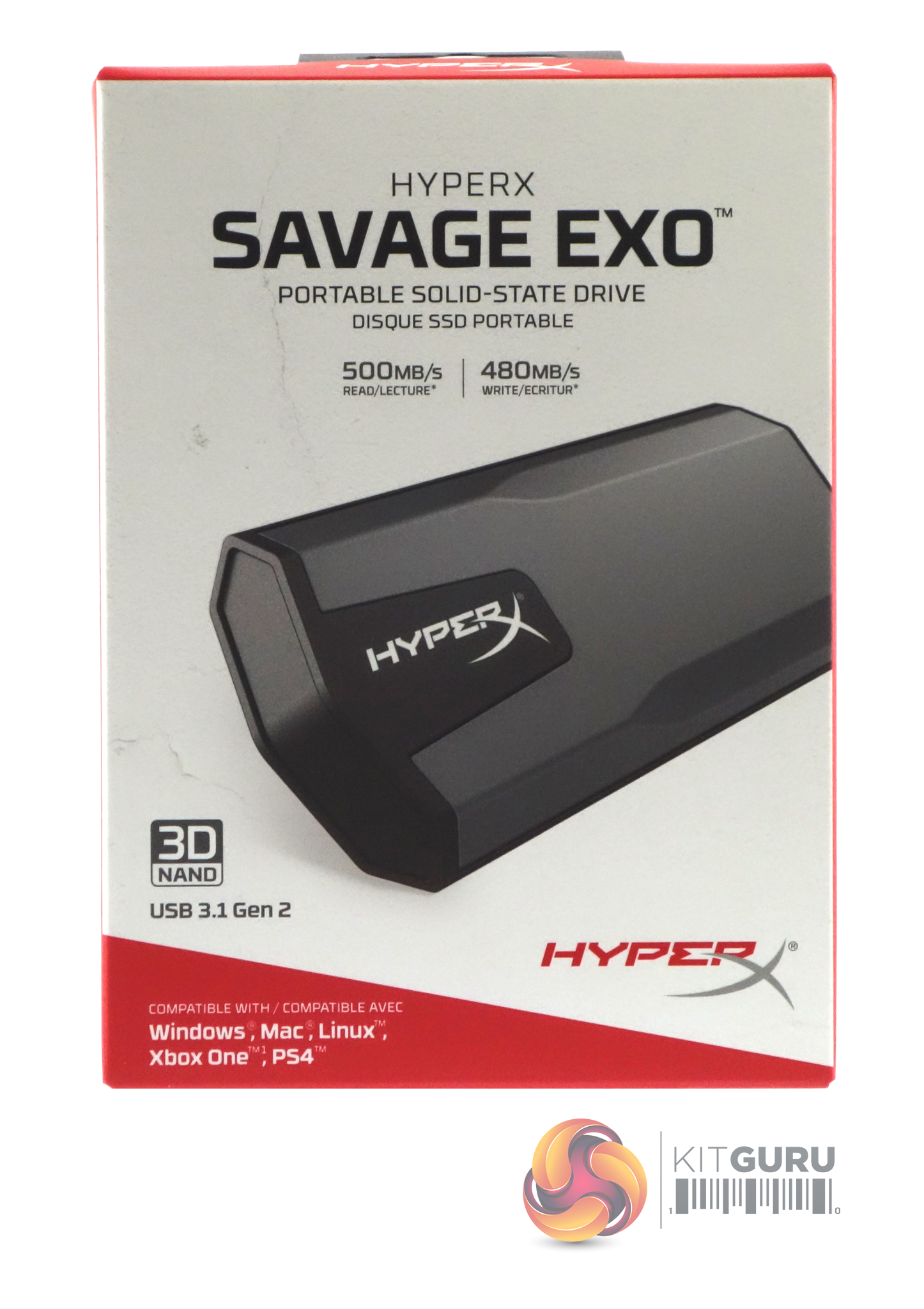
The Savage EXO ships in a sturdy compact box with an image of the drive on the front, along with sequential read and write speeds and information stating that it uses 3D NAND and a USB 3.1 Gen 2 interface. In the bottom left hand side of the box is a panel displaying the drives compatibility with Windows, Mac, Linux, Xbox One and PS4.
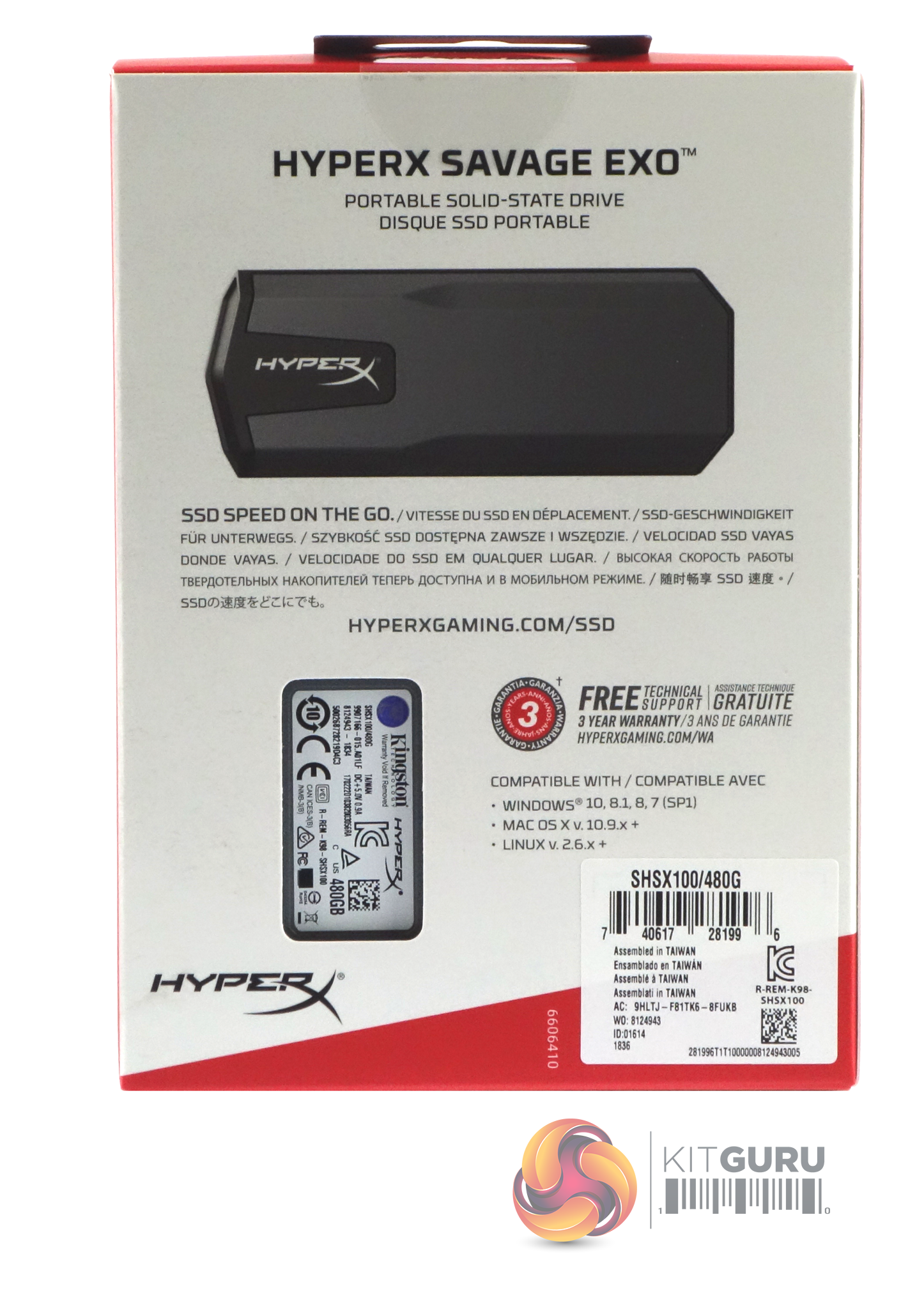
The rear of the box has another image of the drive at the top under which sits a multilingual “SSD Speed On The Go” marketing message. Under this message is a small window that displays the sticker on the back of the drive where you will find the drives capacity.
The capacity is show again on the sticker in the bottom right hand side of the box along with its serial number.
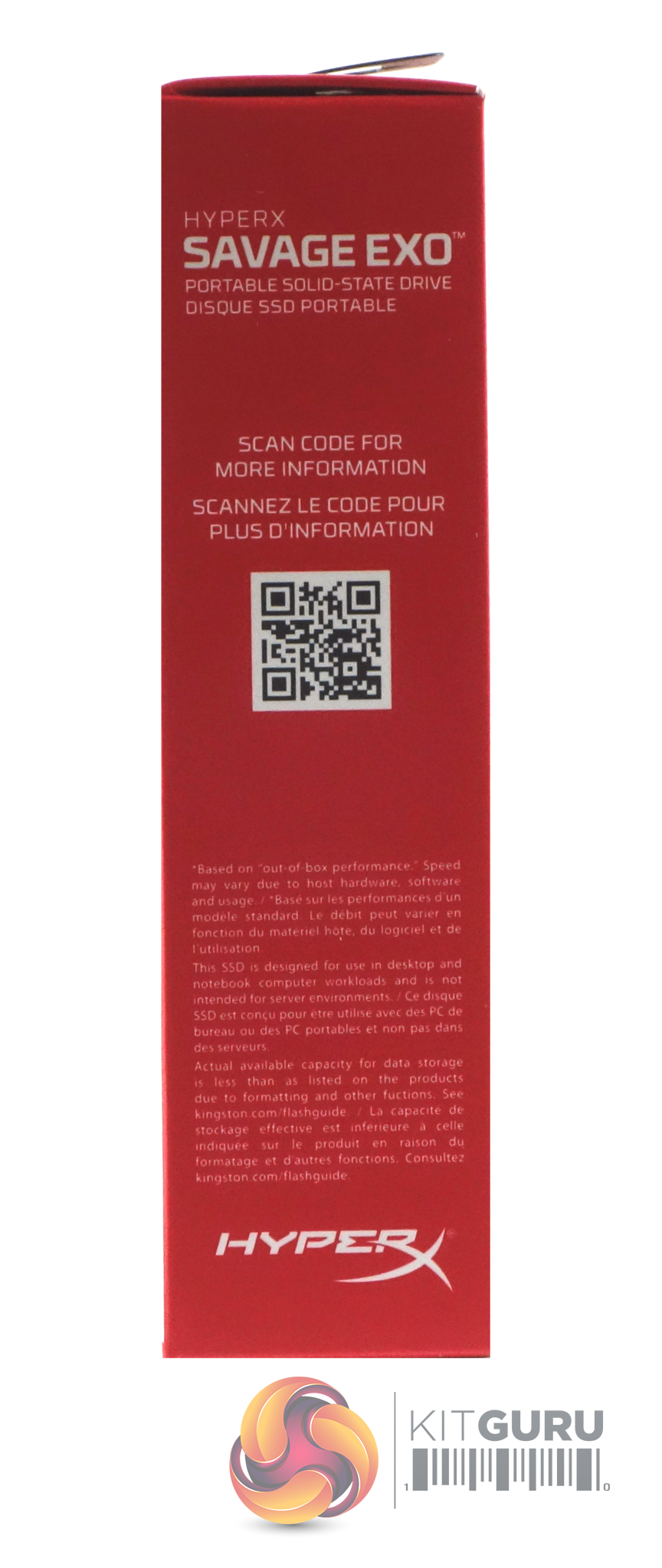
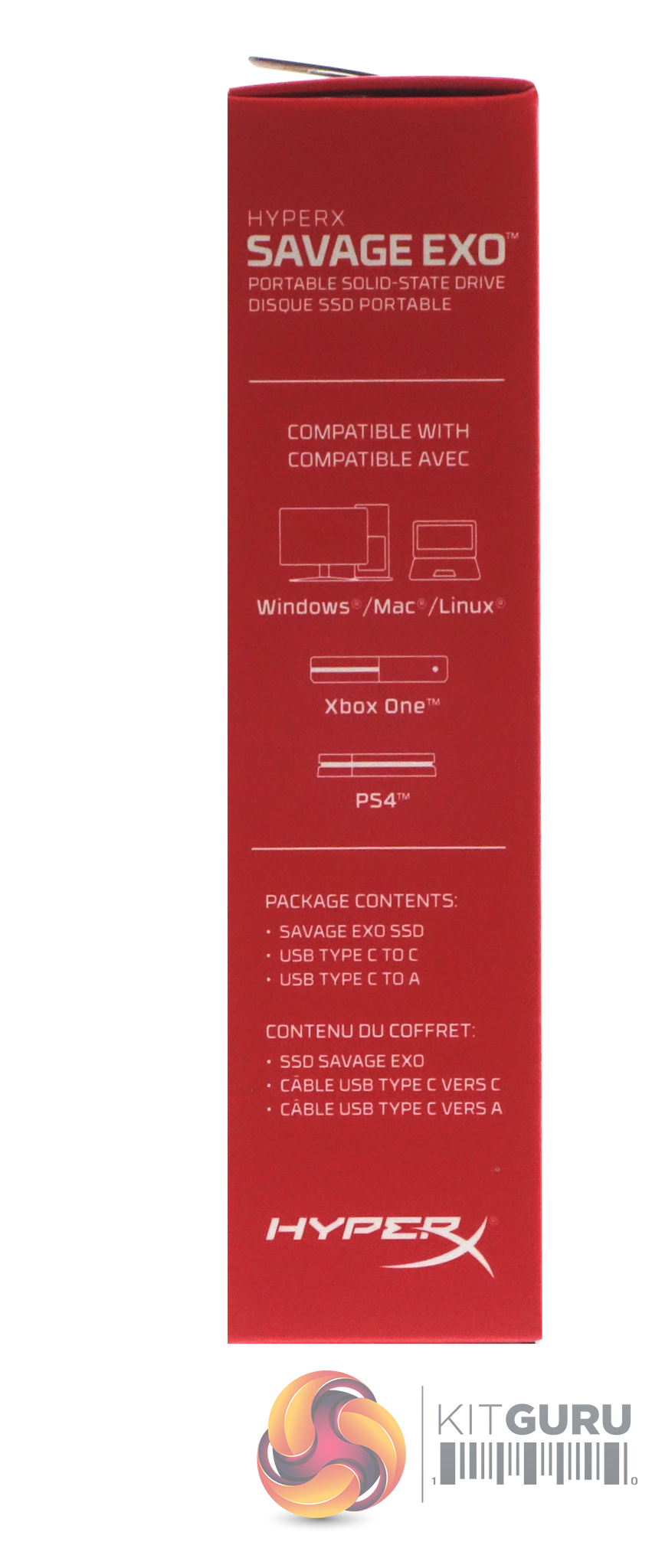
One side of the box has a QR code which you can use to scan for more information about the drive while the other side has a group of icons displaying the systems the drive is compatible. Under this sits a list of the box contents in English and French.
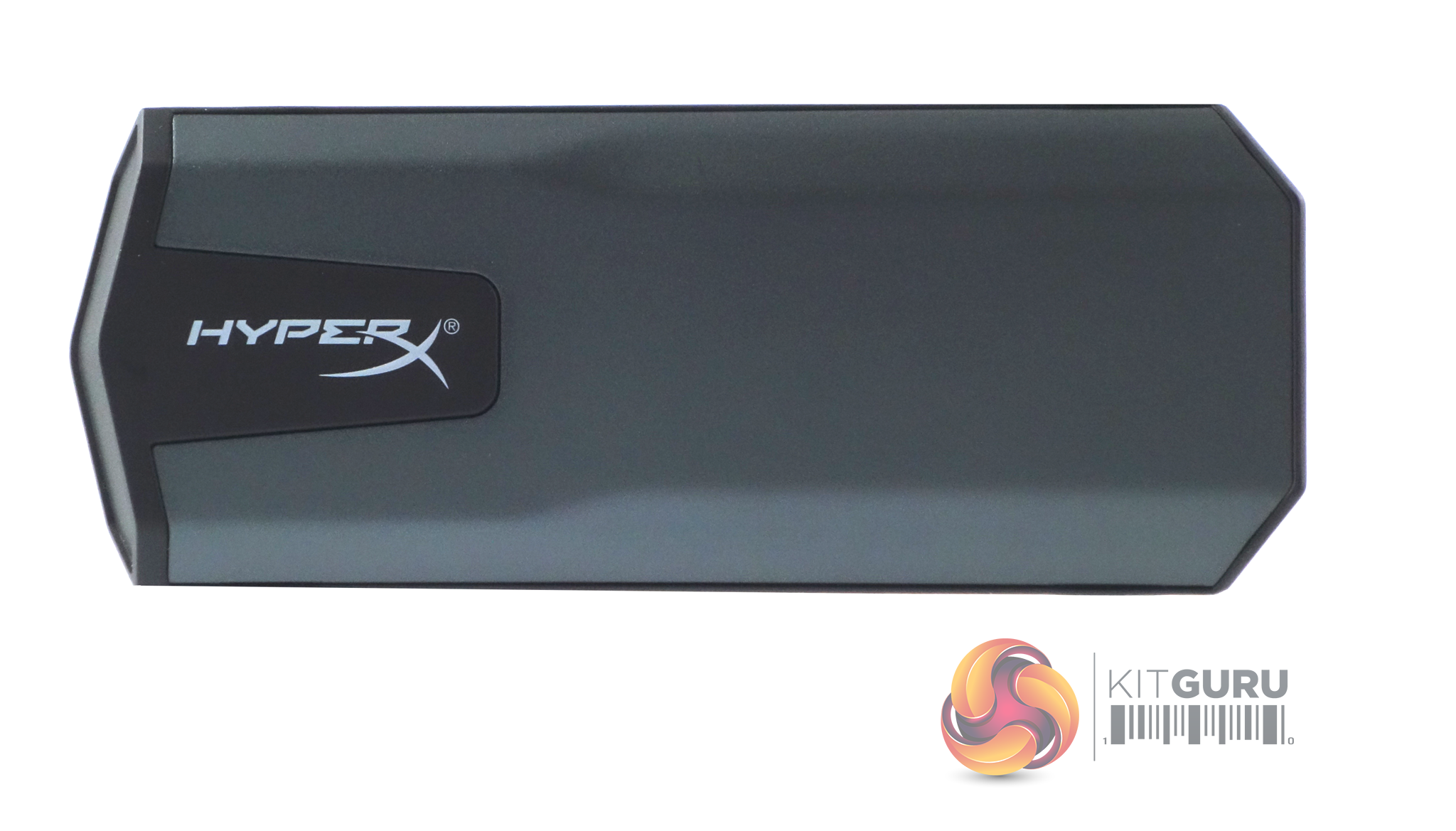
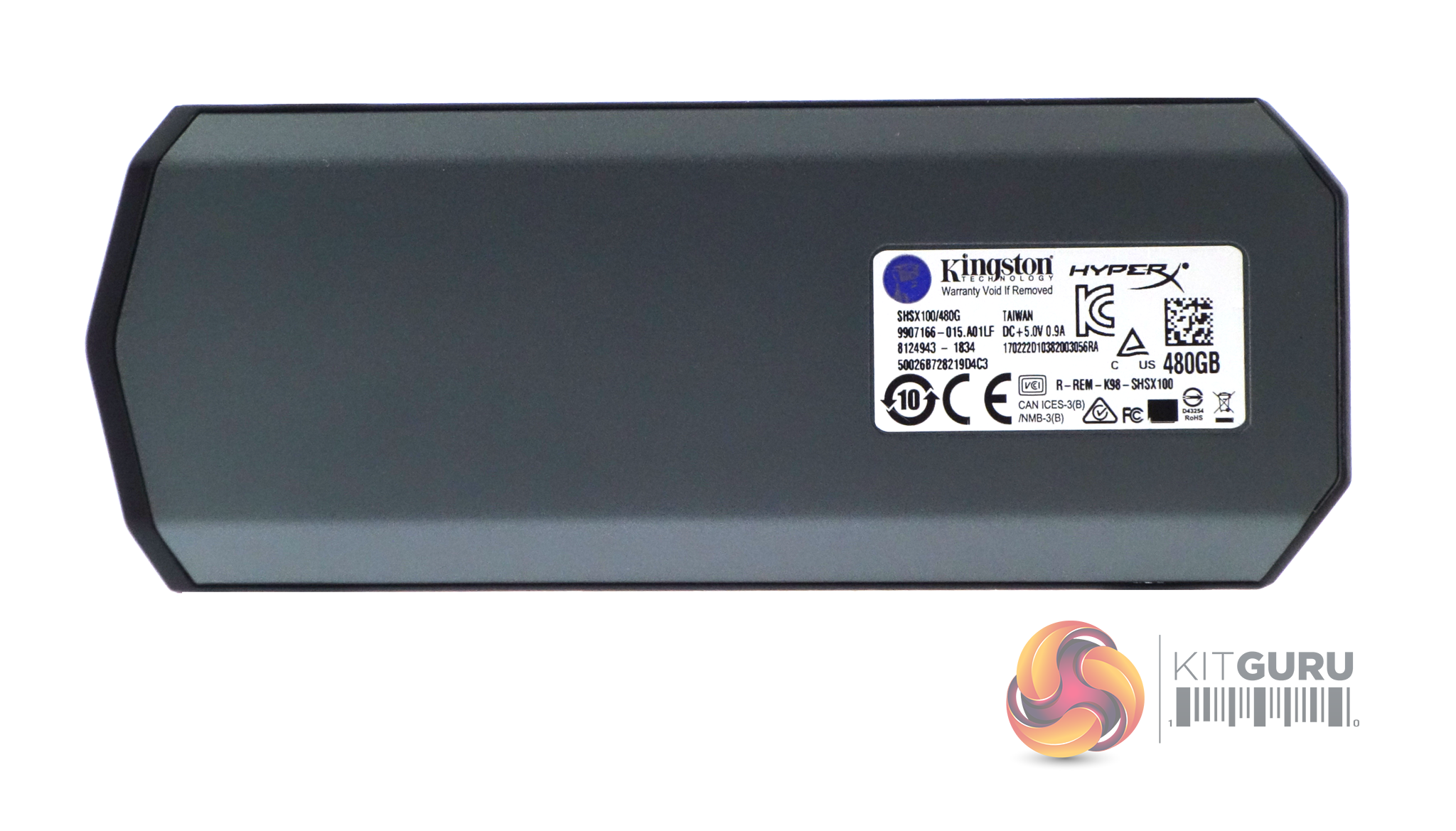
Kingston's HyperX Savage EXO is a really slim line drive measuring just 123.82 x 48.61 x 10.24mm and weighing in at a mere 56g.
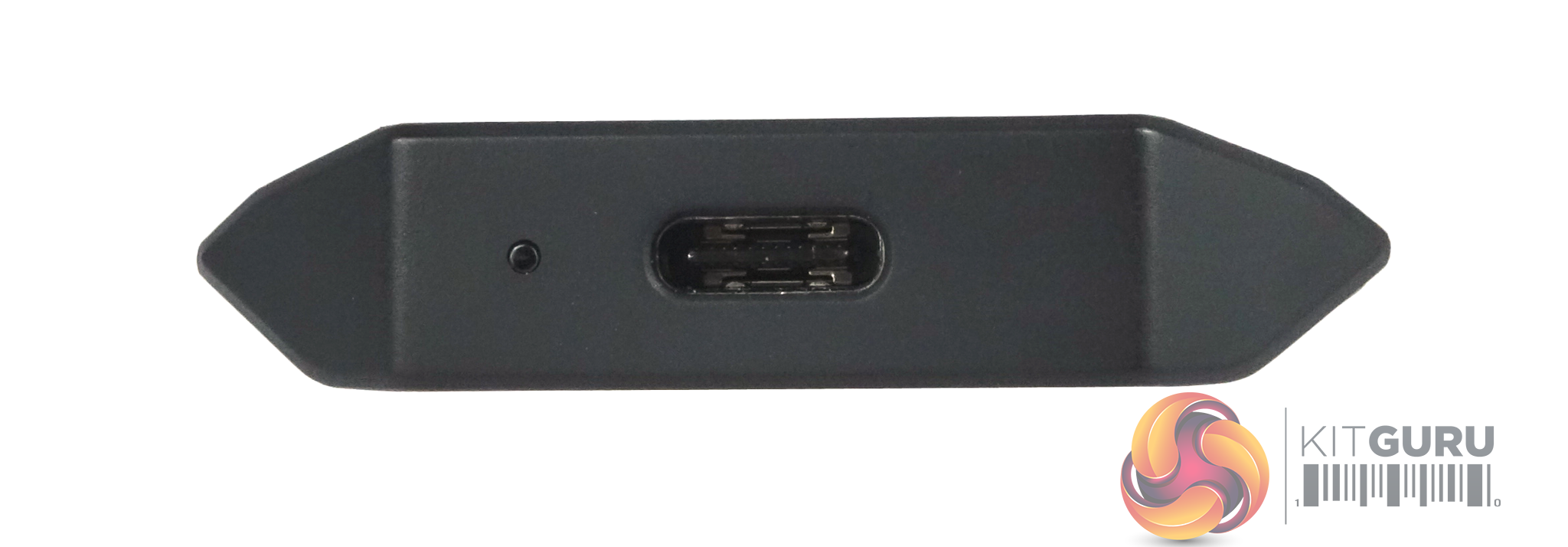
Sitting next to the USB 3.1Gen 2 Type-C interface is a tiny white drive activity LED.
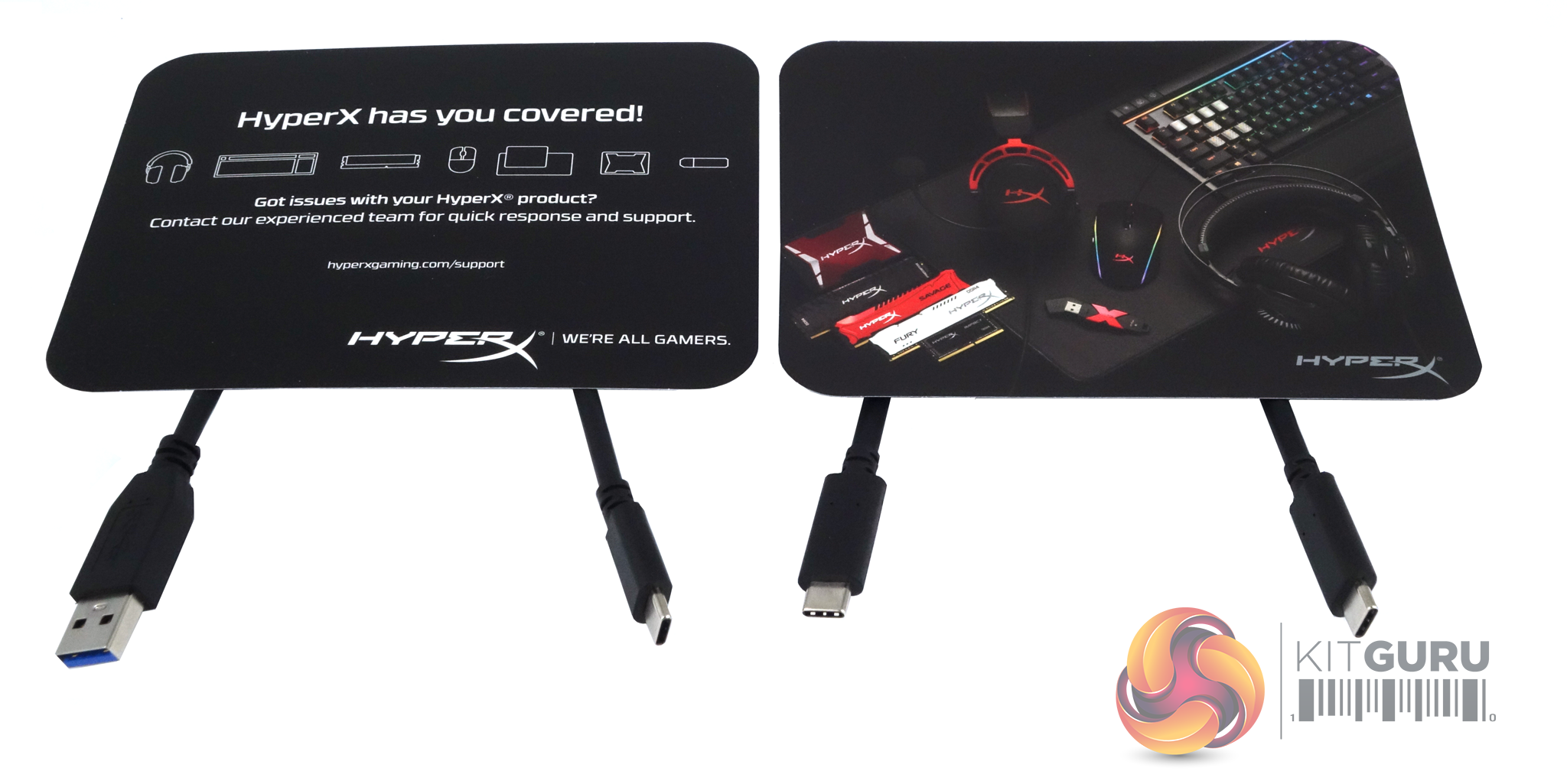
The box bundle comprises USB Type C to A and USB Type C to C cables and a couple of HyperX marketing cards. One has images of all the types of products that make up the HyperX family with a welcome message on the back while the other card has a multilingual message where to get support for the drive.
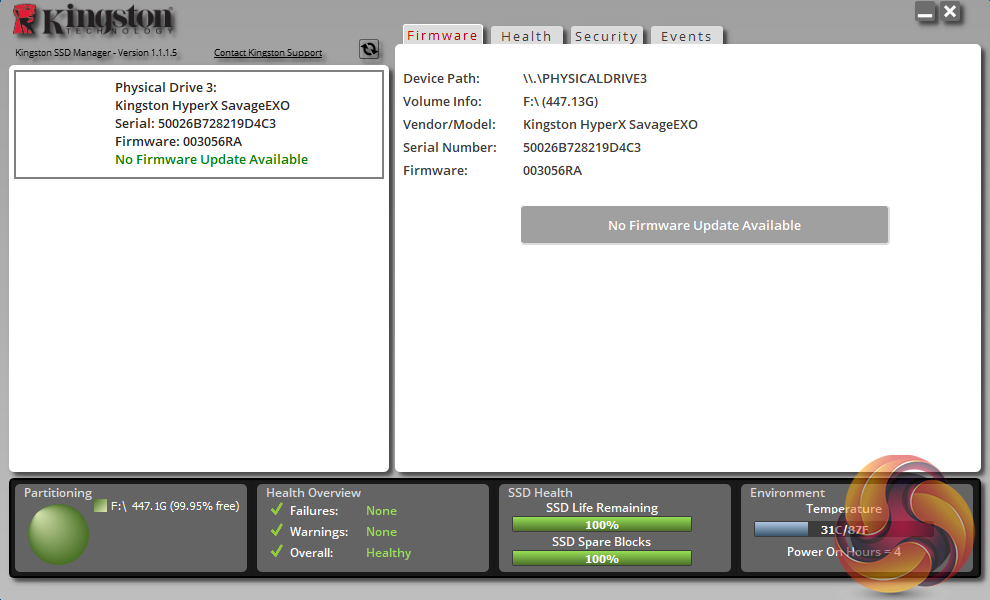
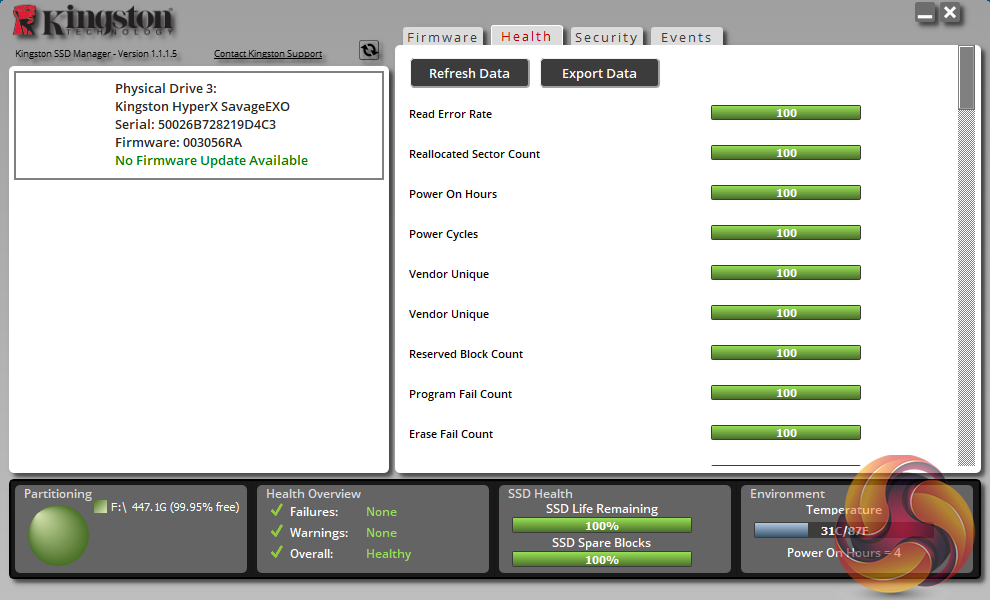
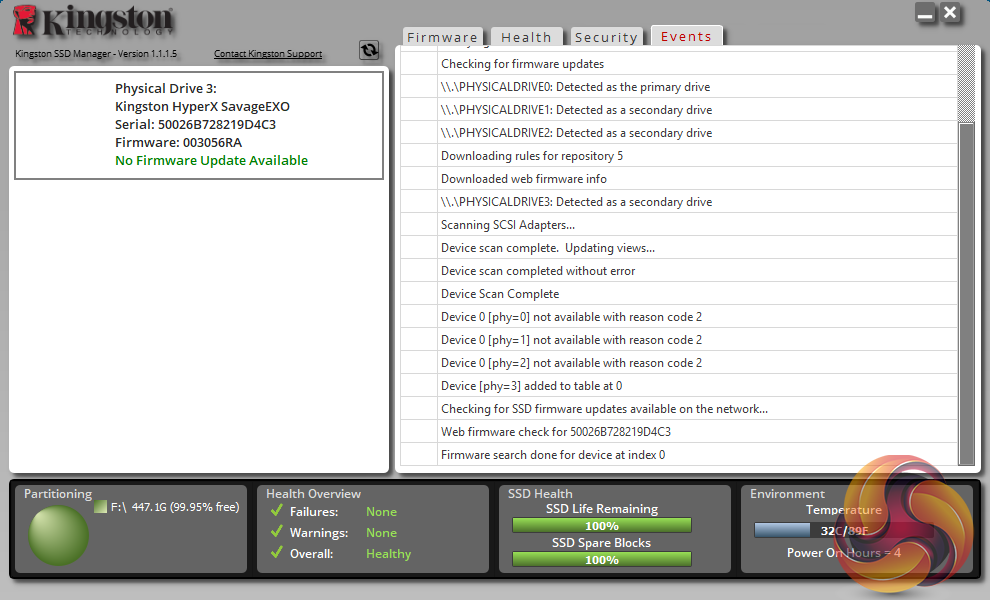
The drive is supported by Kingston's SSD Manager utility. It displays drive health, status and how the disk capacity is being used and it also enables the updating of firmware.
We tested the drive as it comes out of the box, factory formatted as exFAT so we re-formatted to NTFS to run our benchmarks.
Crystalmark is a useful benchmark to measure theoretical performance levels of hard drives and SSD’s. We are using V3.0.3.
The ATTO Disk Benchmark performance measurement tool is compatible with Microsoft Windows. Measure your storage systems performance with various transfer sizes and test lengths for reads and writes. Several options are available to customize your performance measurement including queue depth, overlapped I/O and even a comparison mode with the option to run continuously.
Use ATTO Disk Benchmark to test any manufacturers RAID controllers, storage controllers, host adapters, hard drives and SSD drives and notice that ATTO products will consistently provide the highest level of performance to your storage.
AS SSD is a great free tool designed just for benching Solid State Drives. It performs an array of sequential read and write tests, as well as random read and write tests with sequential access times over a portion of the drive. AS SSD includes a sub suite of benchmarks with various file pattern algorithms but this is difficult in trying to judge accurate performance figures.
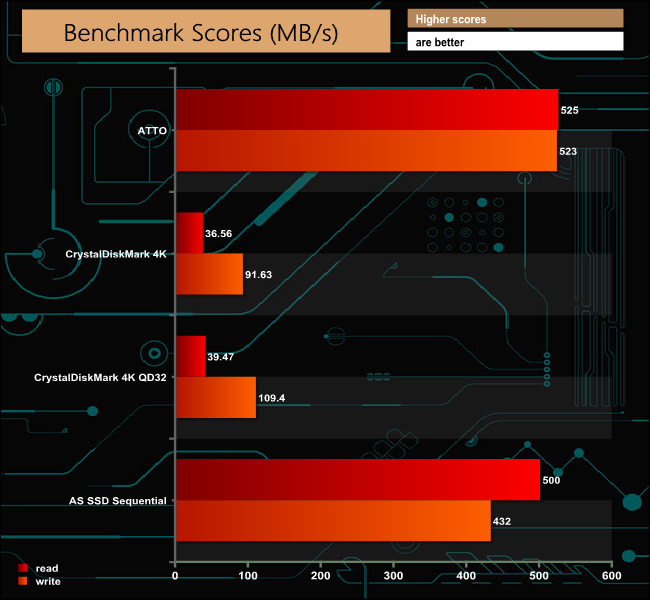
The official Kingston sequential read/write figures for the Savage EXO are 500MB/s and 480MB/s respectively. Using the ATTO benchmark we got performance figures better than the official numbers at 525MB/s for reads and 523MB/s for writes.
IOMeter is another open source synthetic benchmarking tool which is able to simulate the various loads placed on hard drive and solid state drive technology.
We set IOmeter up (as shown above) to test both backup and restore performance on a 100GB file.

The 501MB/s and 492MB/s figures we got from the drive for our backup and restore tests respectively are very good.
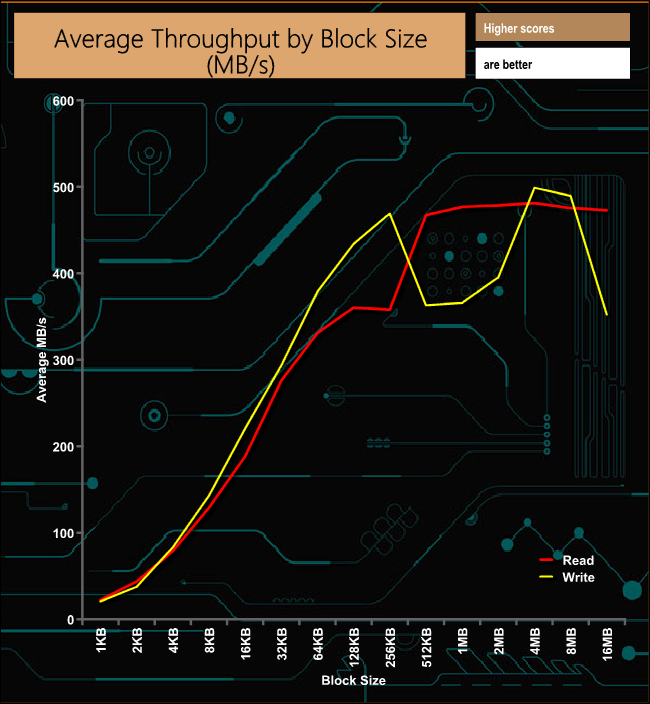
The HyperX Savage EXO peak reads come at the 4MB block level at 481.08MB/s before dropping back slightly to finish the test at 472.96MB/s.
At the 512KB block mark, the write performance falls away to 362MB/s before gradually picking up to peak at 498.88MB/s at the 4MB block mark before once again dropping back to finish the test run at 352.27MB/s
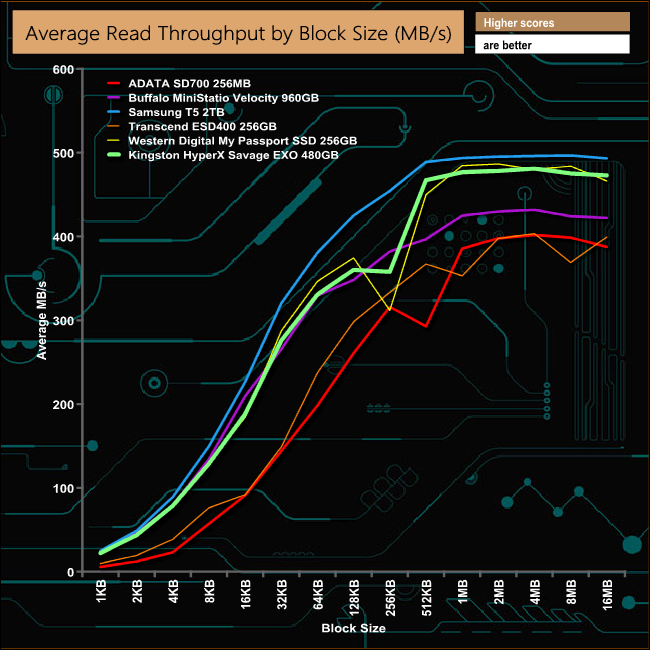
Samsung's TS still reigns supreme for all the non NVMe SSD external drives we have tested when it comes to peak read performance in our throughput test at 496MB/s.
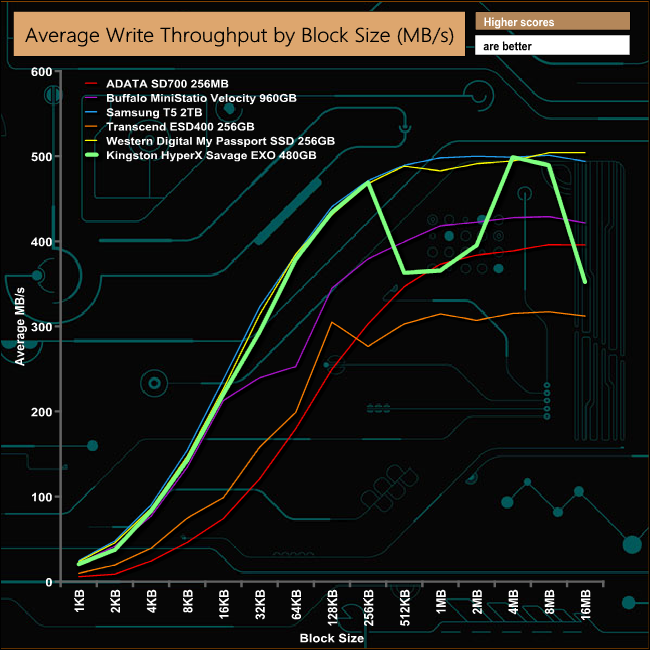
In our write throughput test it's the Western Digital My Passport that still holds sway with peak write performance of 504MB/s. The Kingston Savage EXO keeps pace with it for a while but the performance drops off dramatically at several block sizes during the test run.
To test real life performance of a drive we use a mix of folder/file types and by using the FastCopy utility (which gives a time as well as MB/s result) we record the performance of drive reading from & writing to a 256GB Samsung SSD850 PRO.
100GB data file.
60GB iso image.
60GB Steam folder – 29,521 files.
50GB File folder – 28,523 files.
12GB Movie folder – 24 files (mix of Blu-ray and 4K files).
10GB Photo folder – 621 files (mix of .png, raw and .jpeg images).
10GB Audio folder – 1,483 files (mix of mp3 and .flac files).
5GB (1.5bn pixel) photo.
BluRay movie.
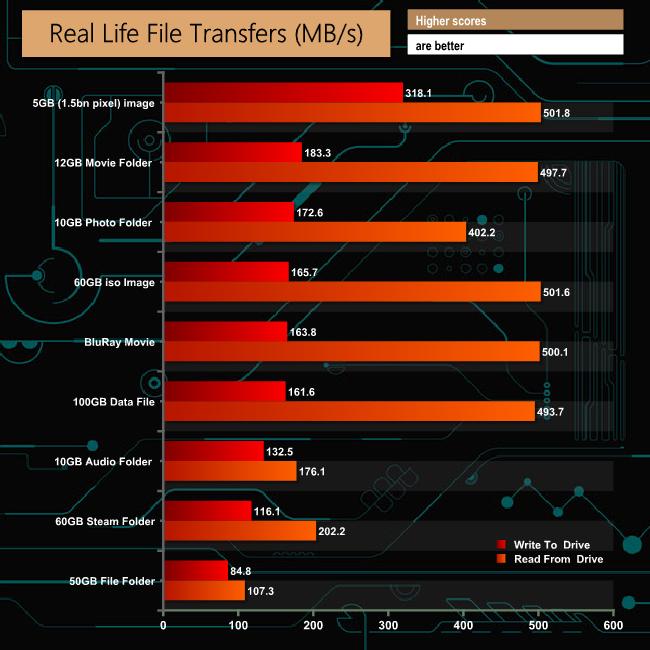
In our real life file transfer test, the read performance of the drive was very good especially dealing with larger file sizes however the write performance apart from the 5GB photo transfer was disappointing.
Since it sprung to life in 2002, HyperX, Kingston Technology's high performance consumer product line has gradually seen the number and type of products contained within it steadily increasing so now it encompasses memory modules, solid-state drives, USB Flash drives, headsets and mouse pads. Now we can add external hard drives to the list with the launch of the HyperX Savage EXO.
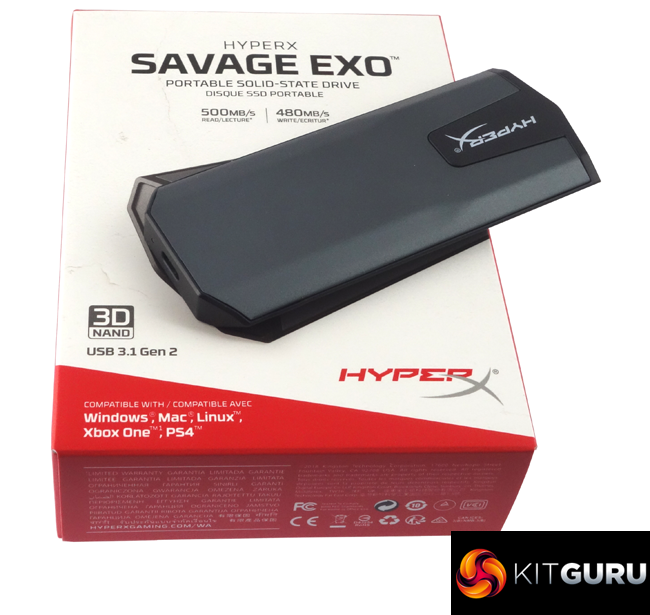
Available in two capacities, 480GB and 960GB, the Savage EXO is a neat slimline external drive packing a SSD using 3D TLC NAND. Measuring just 123.82 x 48.61 x 10.24mm and weighing in a just 56g, the drive is small and light enough to be carried around in a jacket pocket all day without noticing it.
The official performance transfer rate figures for the drive are up to 500MB/s for reads and 480MB/s for writes which we were able to confirm with the ATTO benchmark, which produced a read score of 525MB/s and 532MB/s for writes. Real life file transfers saw read performance go over the 500MB/s mark on few occasions; when dealing with the 5GB photo, Bluray movie and 60GB iso image. However, the write performance of the Savage EXO was left somewhat in the shade producing over 300MB/s just once, when dealing with the 5GB photo (318.1MB/s).
We found the 480GB version of the HyperX Savage EXO available to pre-order on Scan.co.uk for £123.98 HERE
Pros
- Slimline design.
- Good Sequential performance.
Cons
- Real life write performance was disappointing.
Kitguru says: Small and perfectly formed, the HyperX Savage EXO has very good read performance and is pretty competitively priced.