KitGuru KitGuru.net – Tech News | Hardware News | Hardware Reviews | IOS | Mobile | Gaming | Graphics Cards


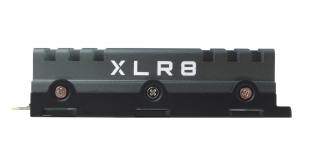
The CS3140 is PNY's latest flagship model in the company's XLR8 gaming line-up of high-performance SSDs. The new NVMe Gen4 x4 drive is rated for up to 7,500MB/s and 6,850MB/s sequential read and writes, respectively. We put it through its paces to see how it stacks up to the competition.
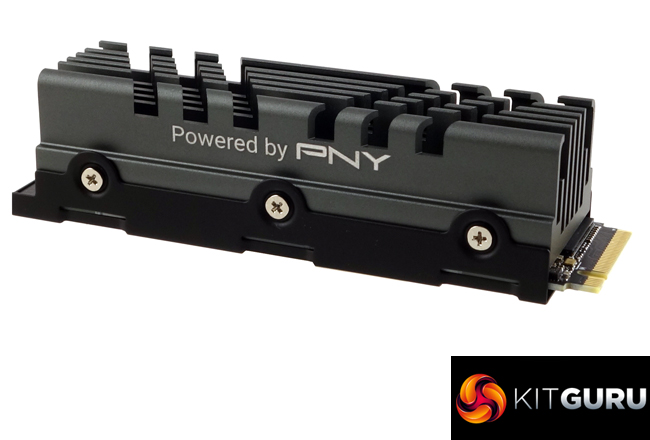
Those headline speeds refer to the 2TB drive with the only other drive in the range, the 1TB model (the one we are reviewing here) having the same 7,500MB/s sequential read speed but a lower write speed – 5,650MB/s. Somewhat surprisingly there are no 4K random performance figures given on the specification sheet for the drive.
The drive uses a combination of a Phison PS5018-E18 controller and 96-layer 3D TLC NAND and is offered in two versions. One has a chunky extruded aluminium heatsink aimed at desktop use while the other has just a product label making it ideal for use in notebooks, very compact PCs or if you want to use the integrated M.2 cooling features of a motherboard.
As with the random performance figures, there are no details of the drive's endurance on the specification sheet for the drive, but PNY backs the drive with a 5-year warranty.
Physical Specifications:
- Usable Capacities: 1TB.
- NAND Components: 96-layer 3D TLC NAND.
- NAND Controller: Phison PS5018-E18-41.
- Cache: 1GB DDR4-2666.
- Interface: PCIe Gen4 x4. NVMe 1.4
- Form Factor: M.2, 2280.
- Dimensions: 80 x 22 x 20mm.
- Drive Weight: 47g
Firmware Version: CS314210.
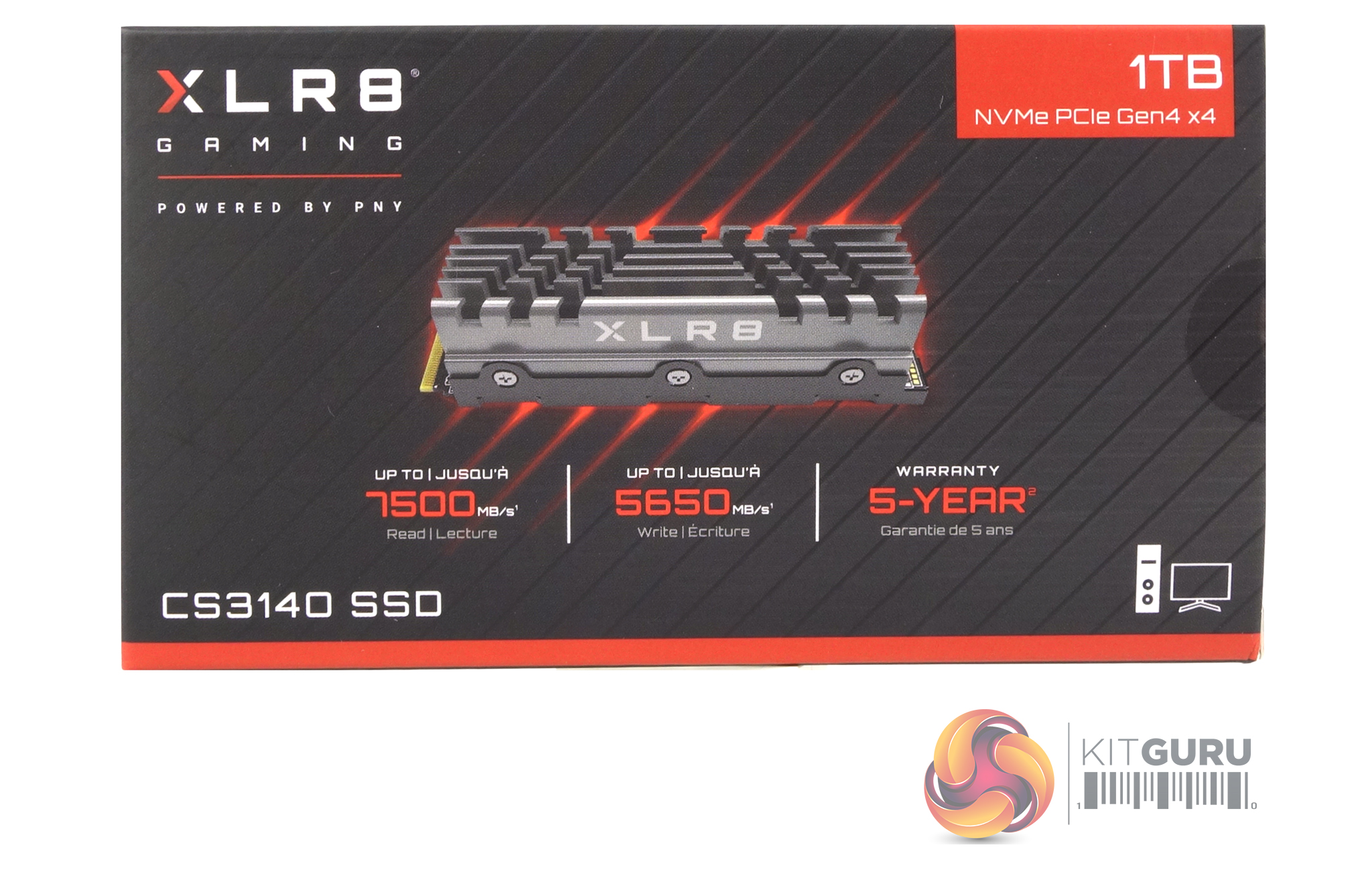
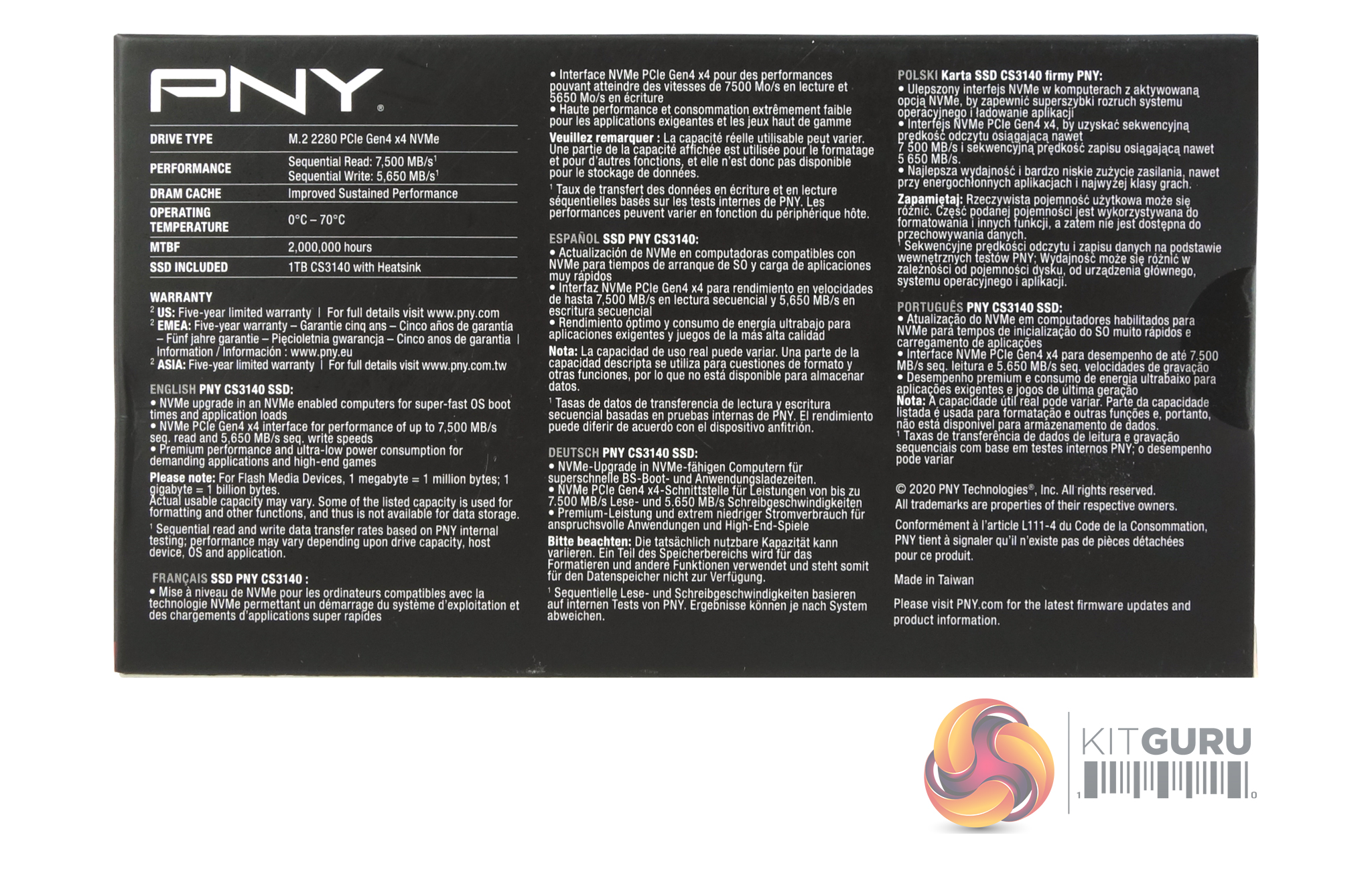
The PNY XLR8 CS3140 comes in a compact box with an image of the drive on the front, along with the drive's capacity on the top right-hand corner. Underneath the drive image we find the read and write sequential speeds along with the drive's warranty length. The rear of the box has a very small product info panel but most of the back is taking up by multilingual marketing information.
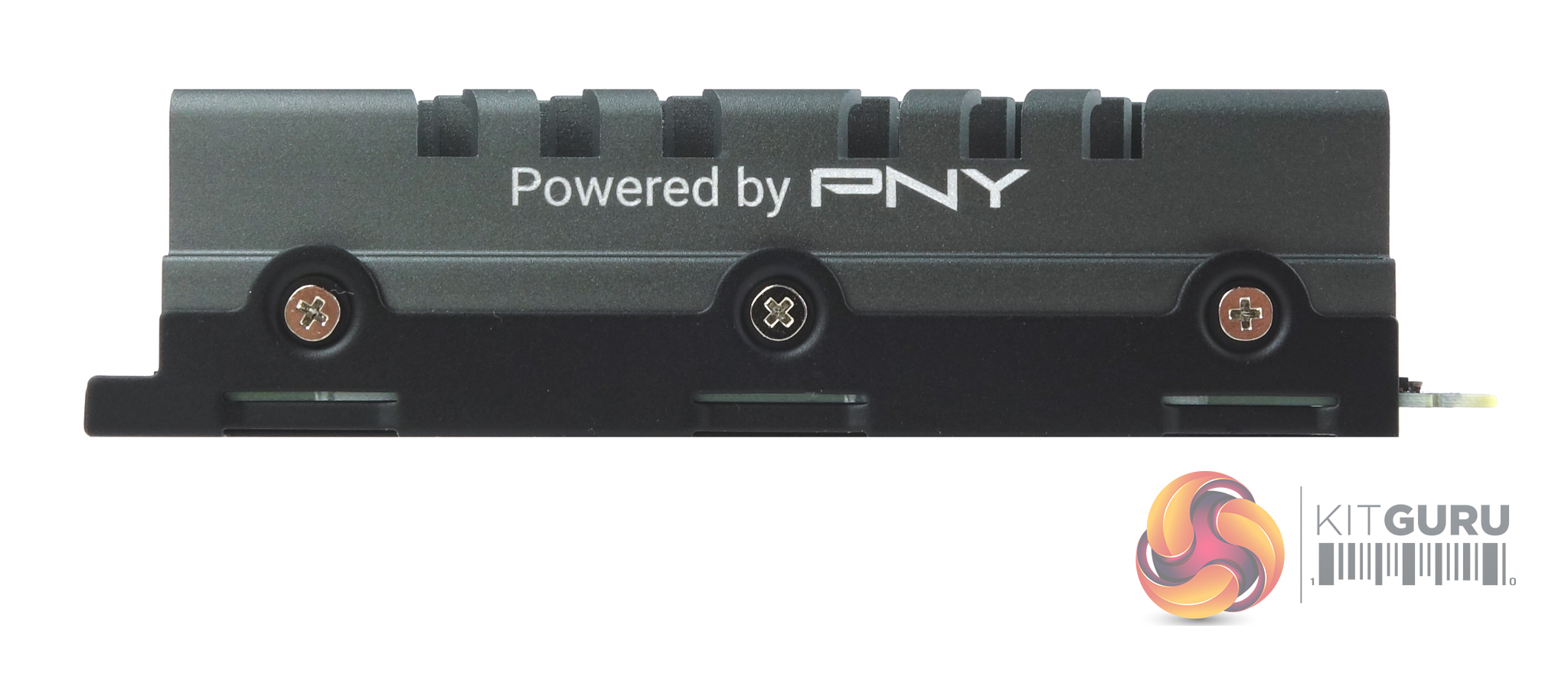
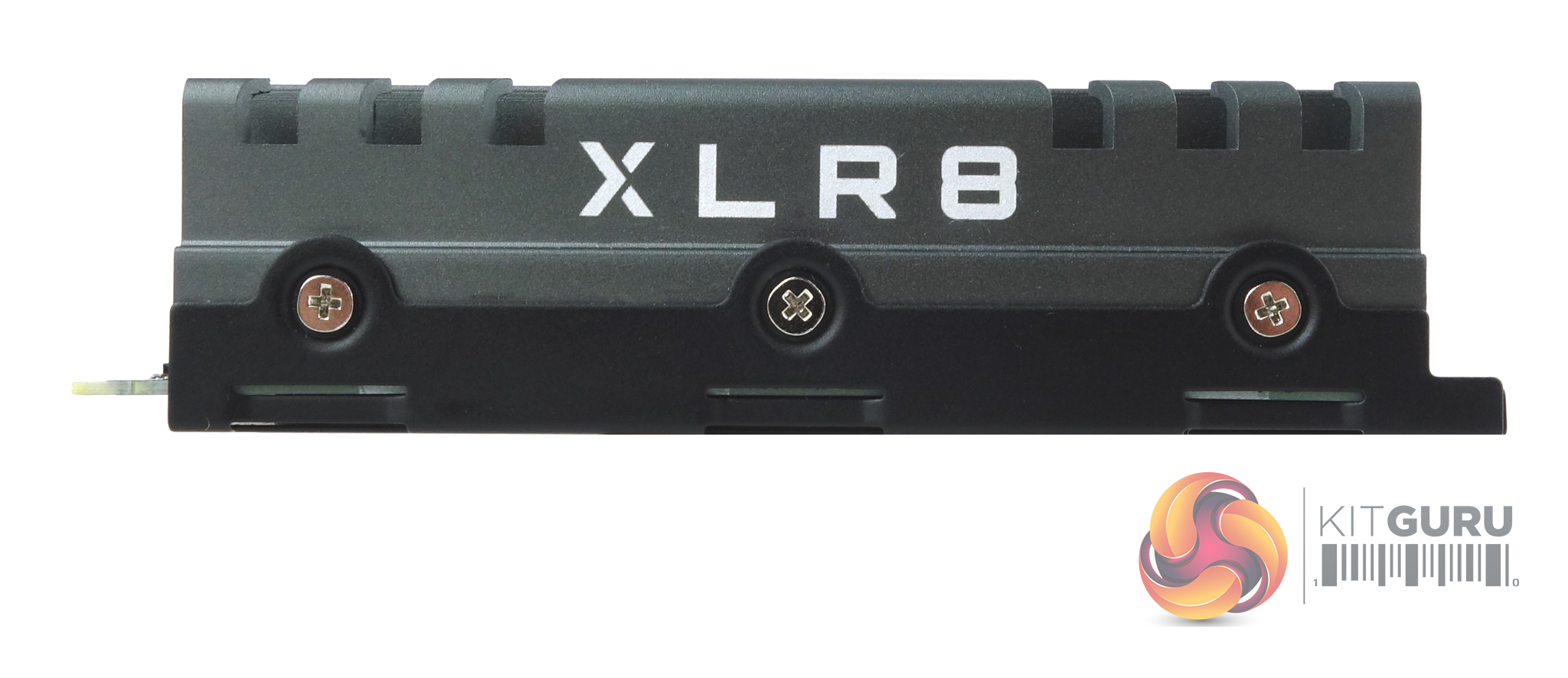
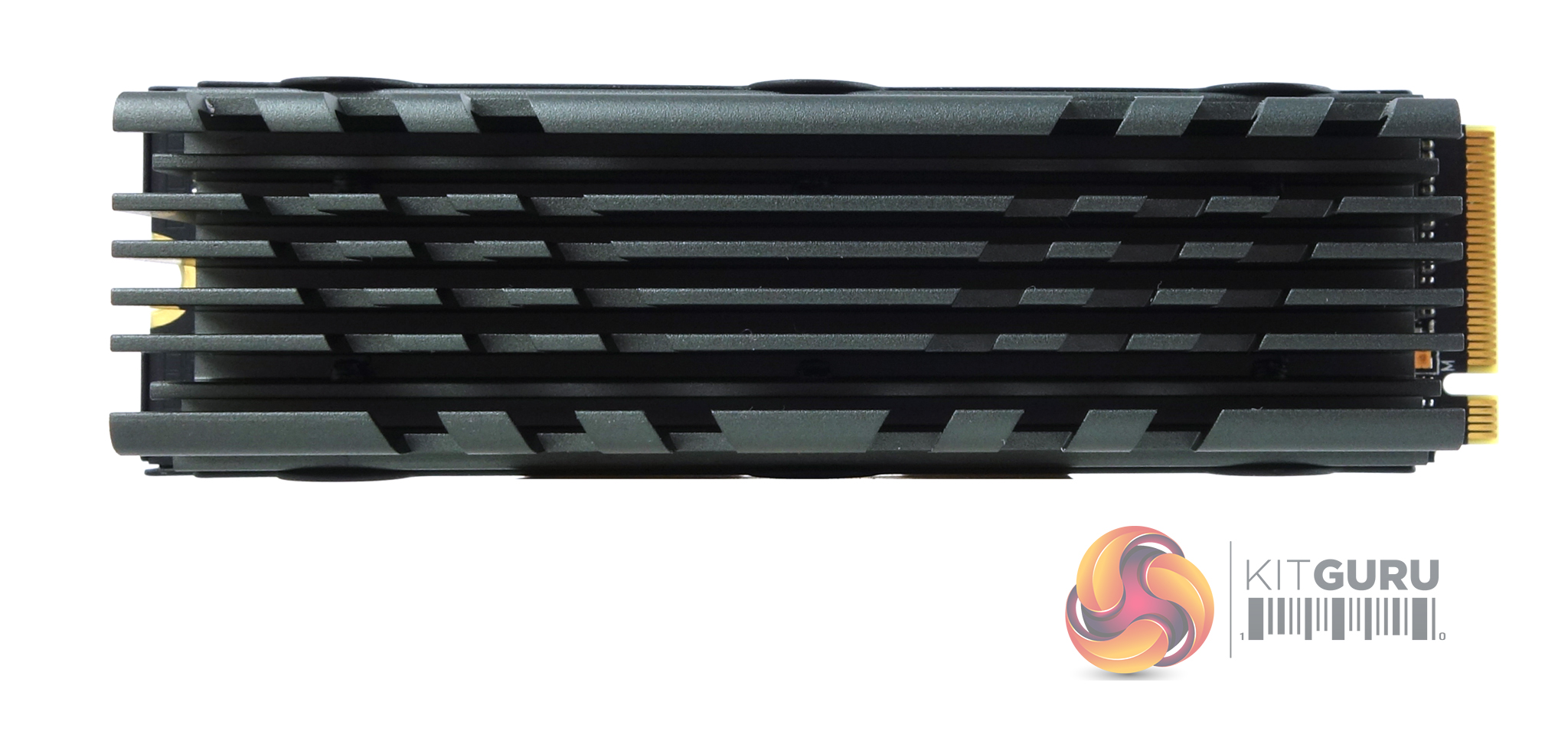
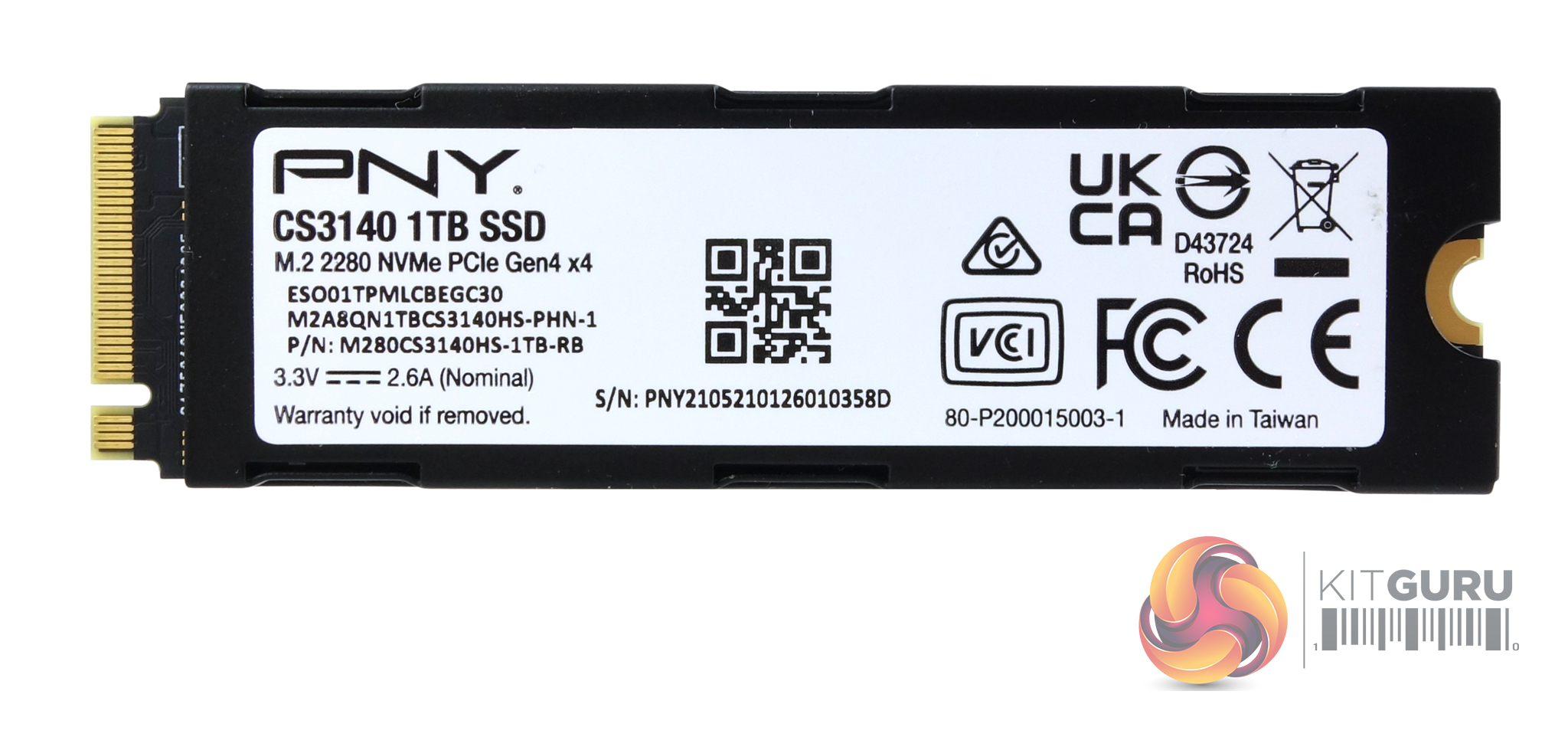
The chunky extruded aluminium heatsink covers the entire PCB, weighing in at 45g and connects to the cradle holding the drive via six tiny screws.
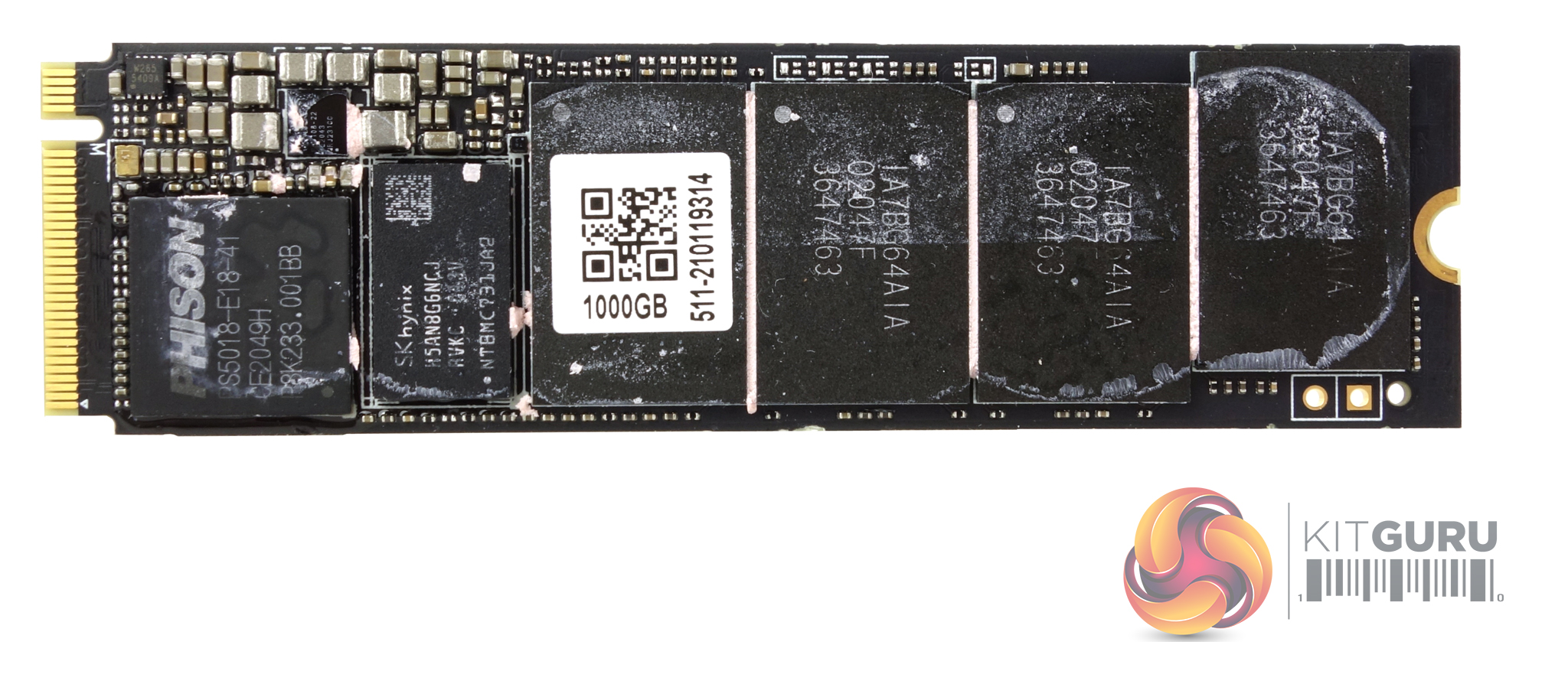
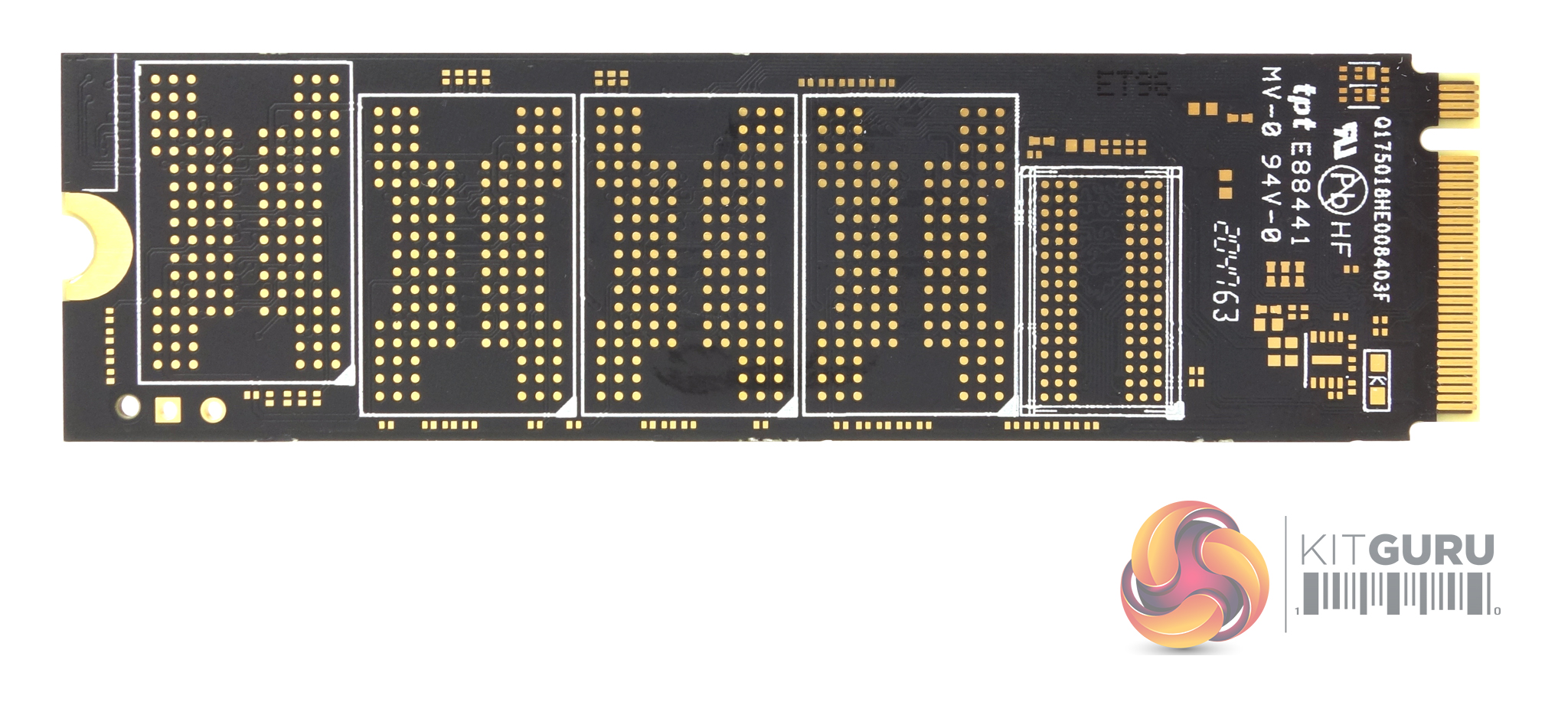
The 1TB version of the XLR8 CS3140 is built on a single-sided M.2 2280 format using a 12nm manufacturing process. Next to the PCIe connector is the Phison PS5018-E18 8-channel controller, next to which sits the 1GB DDR4-2666 SK hynix (H5AN8G6NCJR-VKC) cache chip. The rest of the PCB real estate is taken up by four 256GB packages of Micron 96-Layer 3D TLC NAND (labelled IA7BG64AIA).
Built on a 12nm process, the PS5018-E18 is Phison’s 2nd generation PCIe Gen4 controller. The 8-channel controller uses Triple ARM Cortex R5 CPUs together with a pair of CoXProcessor’s. It has an interface speed of up to 1,600MT/s per channel and supports the latest NVMe 1.4 specifications.
The E18 supports Phison’s 4th Gen LDPC engine and comes with End-To-End Data Path Protection. It supports AES 128/256bit hardware encryption and TCG & Opal 2.0, Pyrite, Sanitize and Crypto Erase technologies.
For testing, the drives are all wiped and reset to factory settings by HDDerase V4. We try to use free or easily available programs and some real-world testing so you can compare our findings against your own system.
This is a good way to measure potential upgrade benefits.
Main system:
AMD Ryzen 5 3600X, 16GB DDR4-2400, Sapphire R9 390 Nitro and an MSI MPG X570 Gaming Edge Wifi motherboard.
Other drives
Corsair Force MP600 PRO 2TB
Corsair Force MP600 1TB
Patriot Viper VP4300 2TB
Patriot Viper VPN4100 1TB
Sabrent Rocket 4 Plus 1TB
Sabrent Rocket 4 Plus 2TB
Sabrent Rocket 4 Plus 4TB
Samsung SSD980 PRO 1TB
Seagate FireCuda 520 1TB
Teamgroup T-Force Cardea Zero Z440 1TB
WD Black SN850 1TB
Software:
Atto Disk Benchmark 4.
CrystalMark 6.0.0. & 8.0.0.
AS SSD 2.0.
Futuremark PC Mark 10.
All our results were achieved by running each test five times with every configuration this ensures that any glitches are removed from the results. Trim is confirmed as running by typing fsutil behavior query disabledeletenotify into the command line. A response of disabledeletenotify =0 confirms TRIM is active.
CrystalDiskMark is a useful benchmark to measure theoretical performance levels of hard drives and SSDs. We are using v6.0.

The PNY CS3140 does seem to struggle with the 4K QD32 T1 test in CrystalDiskMark 6. Having said that we could confirm the official sequential read performance figure for the drive of 7,500MB/s with a tested CDM v6 read figure of 7,458MB/s. The tested best write figure of 5,349MB/s is a little short of the official sequential maximum of 5,650MB/s.
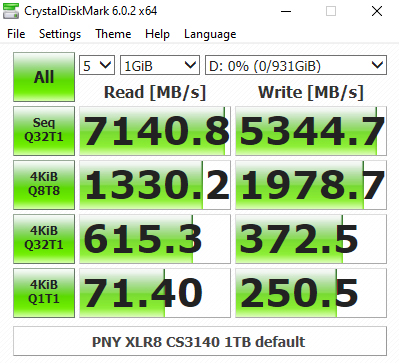
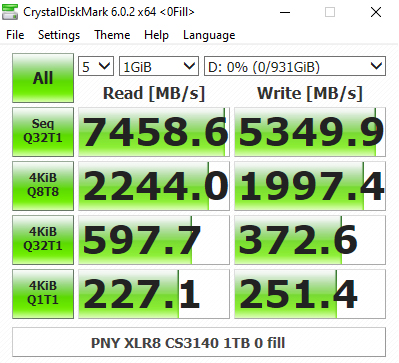
Comparing the two CrystalDiskMark result screens shows that the Phison E18 controller that the CS3410 uses is much more efficient when reading compressible sequential and 4K data at certain queue depths.
CrystalDiskMark 8 Profile tests.
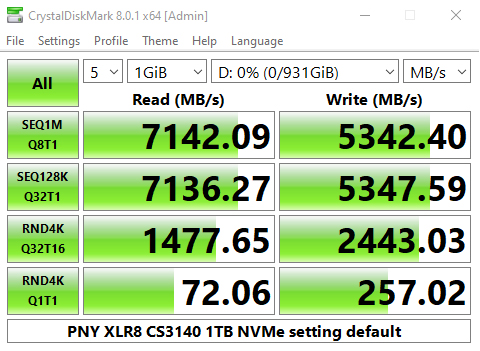
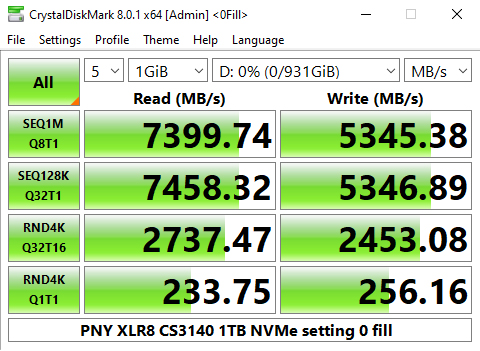
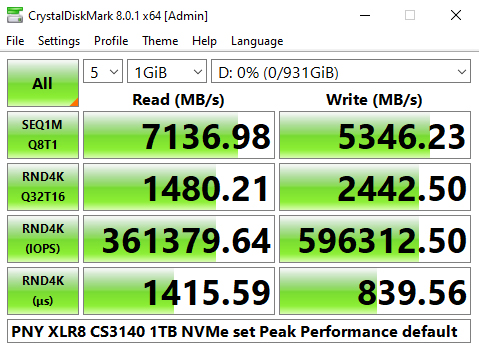
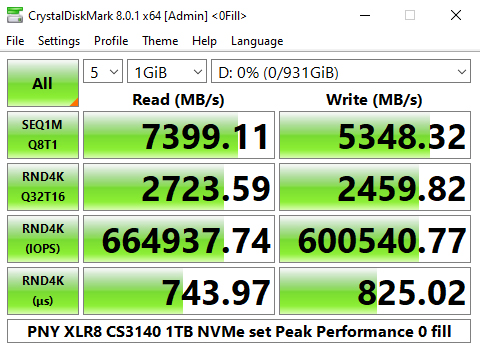
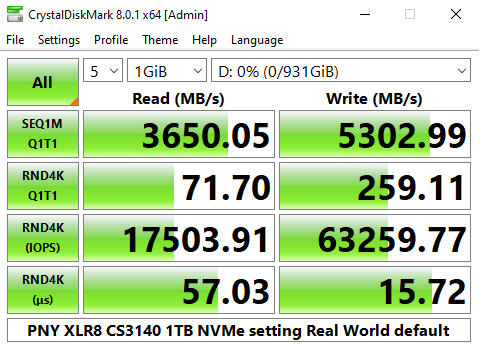
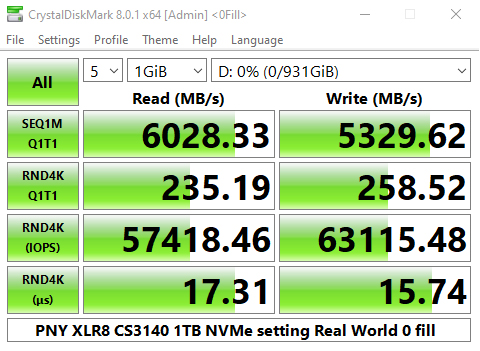
CrystalDiskMark 8 comes with a couple of interesting ready-made testing profiles as well as a dedicated NVMe setting. The best tested sequential figures for reads (7,399.74MB/s) and writes (5,348.32MB/s) are both a little shy of the official maximums of 7,500MB/s and 5,650MB/s repetitively.
The best tested random 4K figures in CDM8 for the drive are 664,937.74 IOPS for reads and 600,540.77 IOPS for writes. Unfortunately, we couldn't confirm how these figures match up to the official ones as PNY don't have the random performance figures featured on any specification sheet for the drive we've seen.
The ATTO Disk Benchmark performance measurement tool is compatible with Microsoft Windows. Measure your storage systems performance with various transfer sizes and test lengths for reads and writes. Several options are available to customize your performance measurement including queue depth, overlapped I/O and even a comparison mode with the option to run continuously. Use ATTO Disk Benchmark to test any manufacturers RAID controllers, storage controllers, host adapters, hard drives and SSD drives and notice that ATTO products will consistently provide the highest level of performance to your storage.
We are using version 4.0 for our NVMe disk tests.
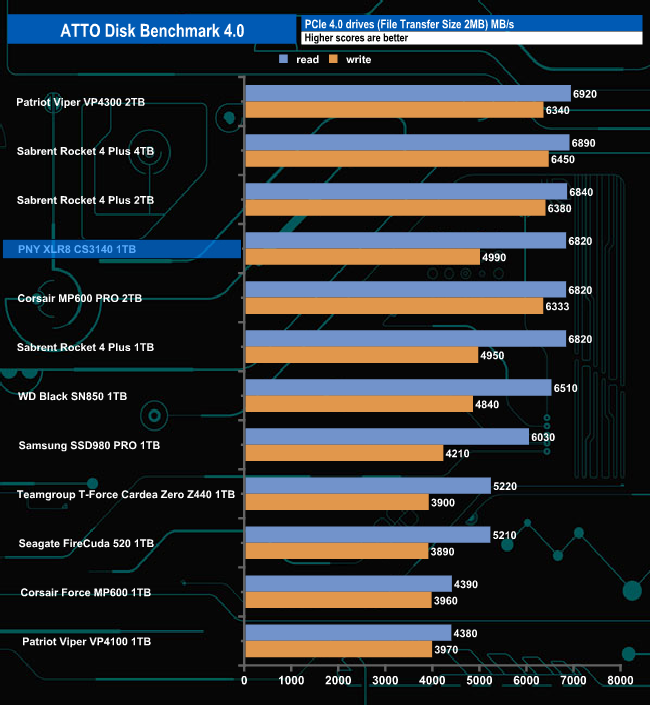
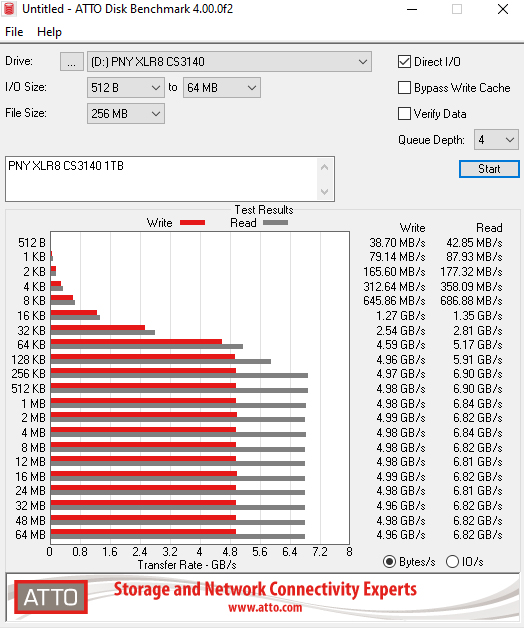
In the ATTO benchmark test, both the 6,820MB/s read figure and the 4,990MB/s for writes are some way short of the official maximums of 7,500MB/s for reads and 5,650MB/s for writes.
AS SSD is a great free tool designed just for benching Solid State Drives. It performs an array of sequential read and write tests, as well as random read and write tests with sequential access times over a portion of the drive. AS SSD includes a sub suite of benchmarks with various file pattern algorithms but this is difficult in trying to judge accurate performance figures.
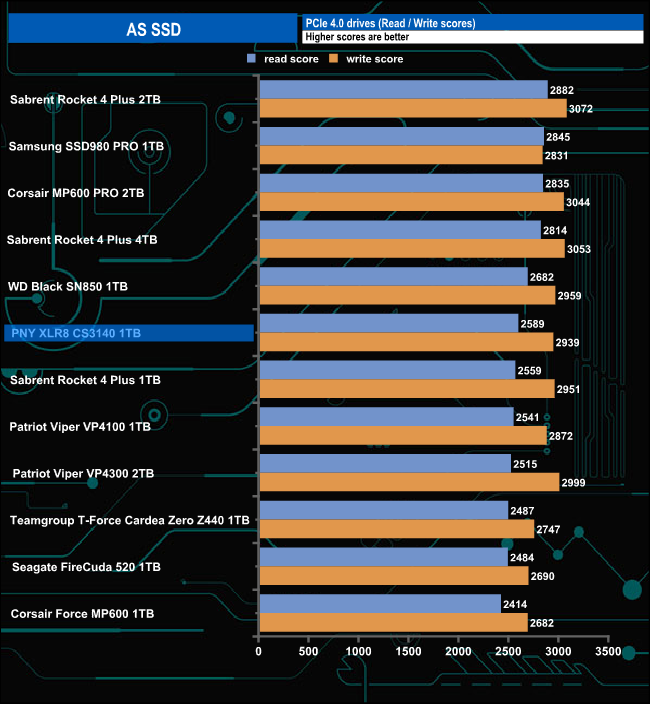
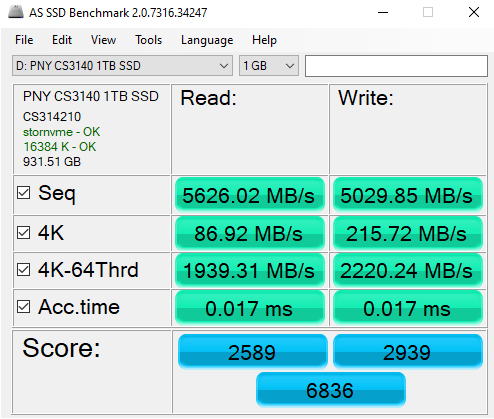
The 2589 and 2939 scores for read and writes, respectively, are good enough the see the CS3140 slip into our results chart at the midway point.
We used CrystalDiskMark 8‘s custom settings to test the sequential read and write performance of the drive through a range of queue depths. The setup for the tests is listed below.
128KB sequential Read / Write.
Transfer Request Size: 128KB, Thread(s): 1, Outstanding I/O: 1-32.
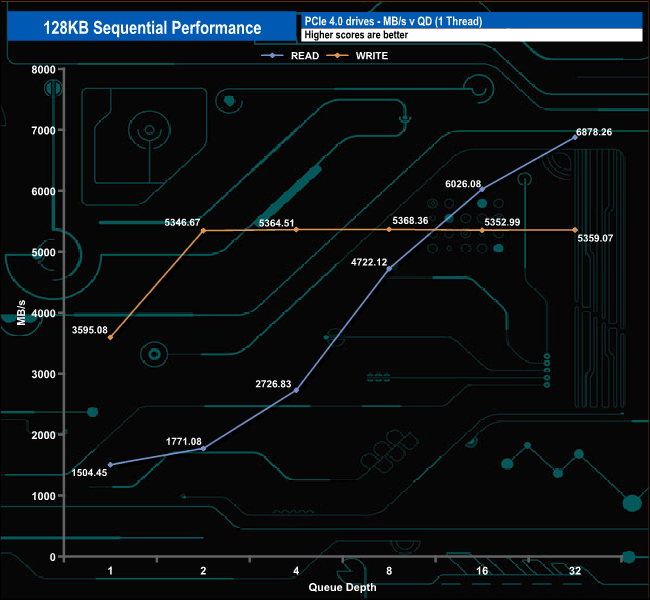
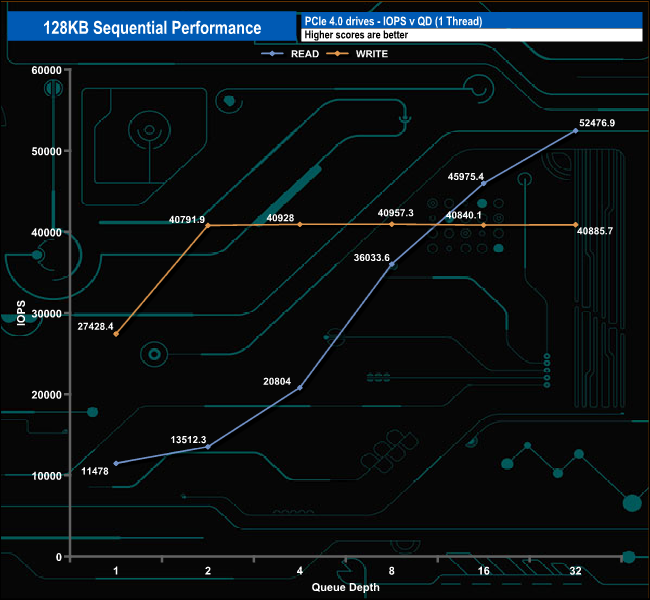
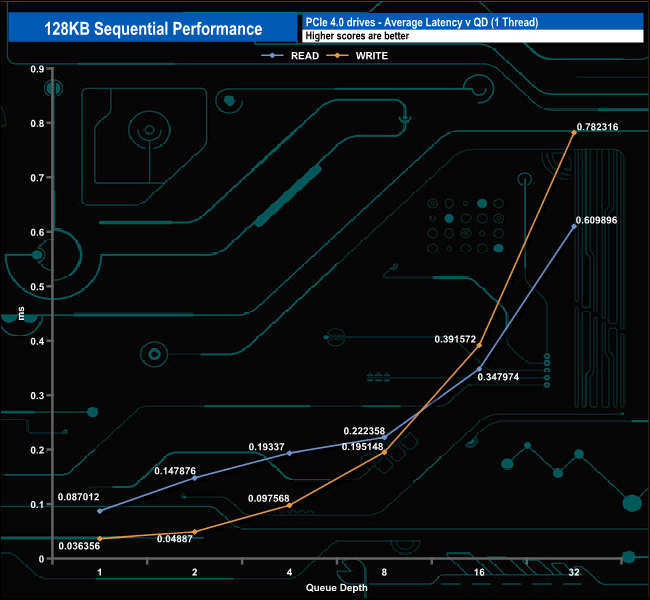
The CS3140 produced a best sequential read figure of 6,878.26MB/s, a little way short of the official maximum of 7,500MB/s. The best sequential write figure we saw was 5,368.36MB/s which is not so far away from the official maximum of 5,650MB/s.
128KB sequential Read Performance v QD compared.
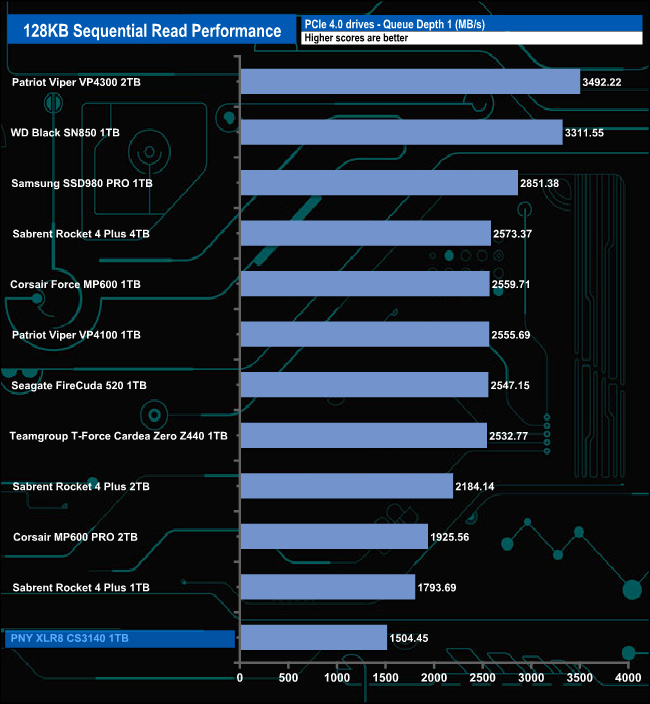
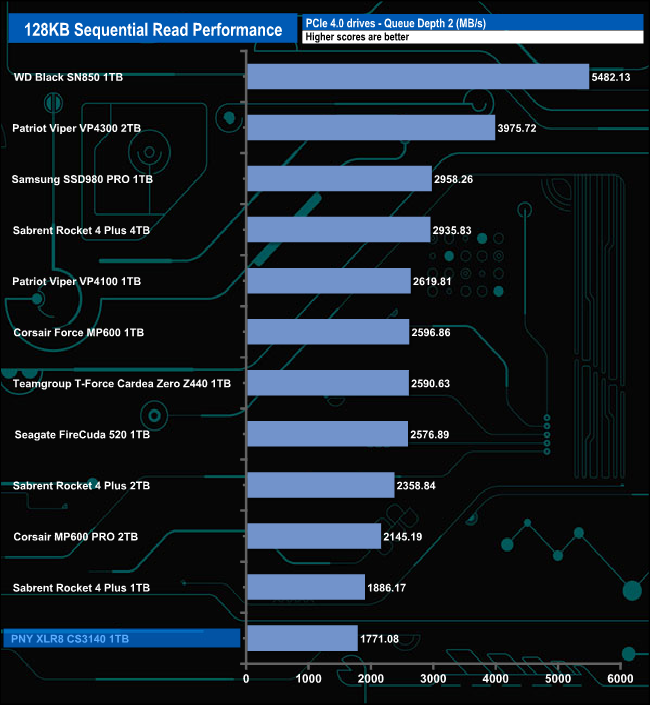
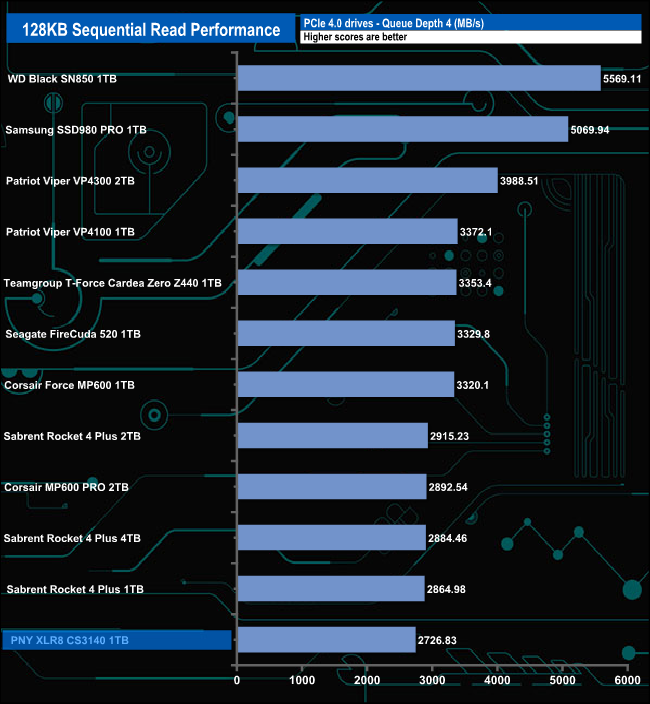
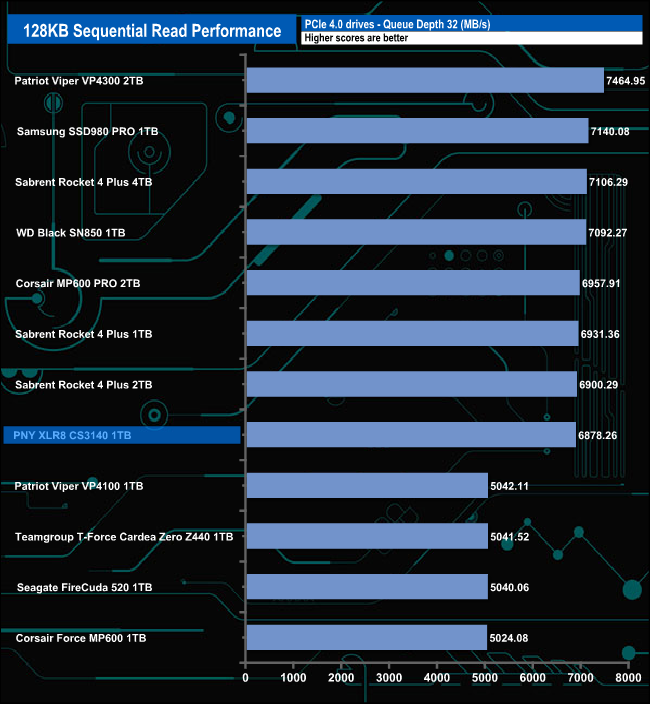
The CS3140 sits at the bottom of the result charts at QDs 1, 2 and 4 but by the QD32 test, it has begun to climb up the table.
128KB sequential Write Performance v QD compared.
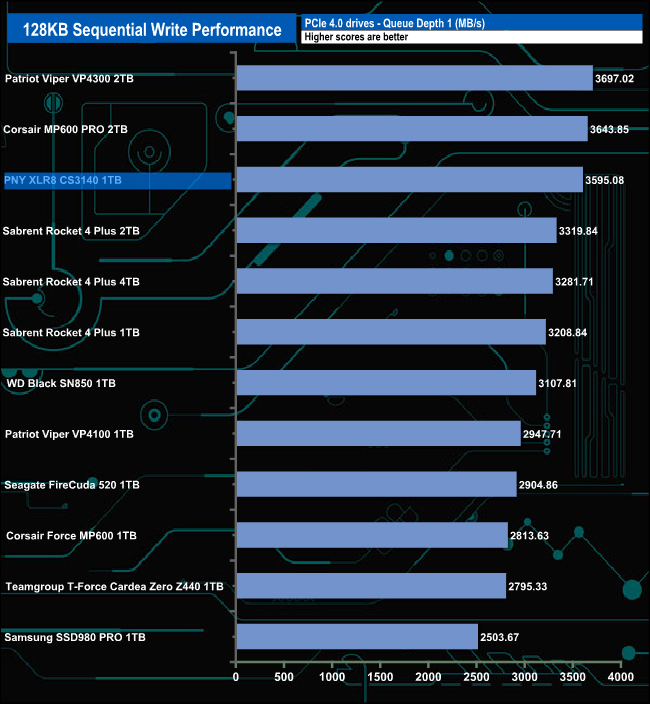
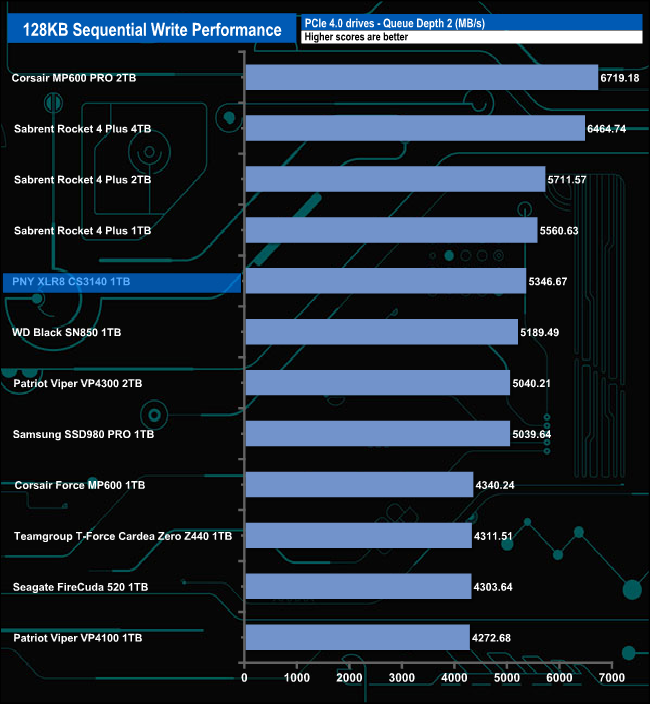

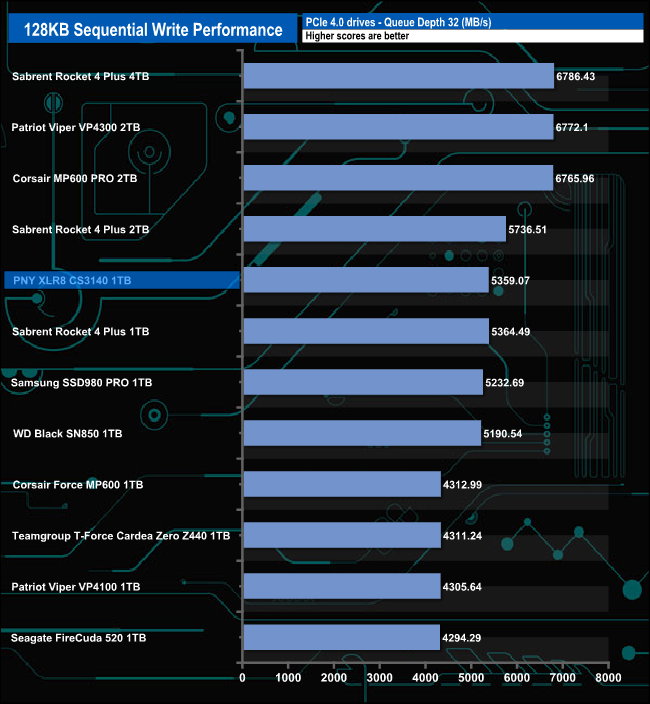
At a QD of 1, the PNY CS3140 sits in third place on the results chart behind the Patriot Viper VP4300 and the Corsair MP600 PRO but it drops down the table as the queue depth begins to deepen.
We used CrystalDiskMark 8‘s custom settings to test the 4K random read performance of the drive through a range of queue depths. The setup for the tests is listed below.
Transfer Request Size: 4KB, Outstanding I/O: 1-32.
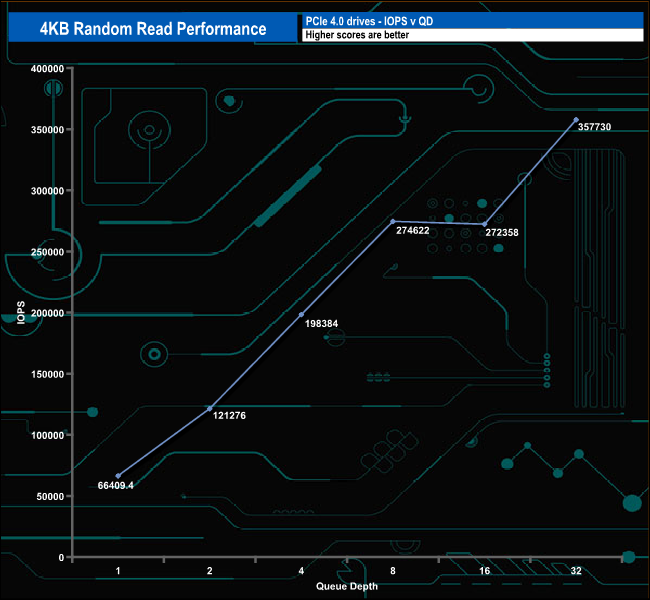
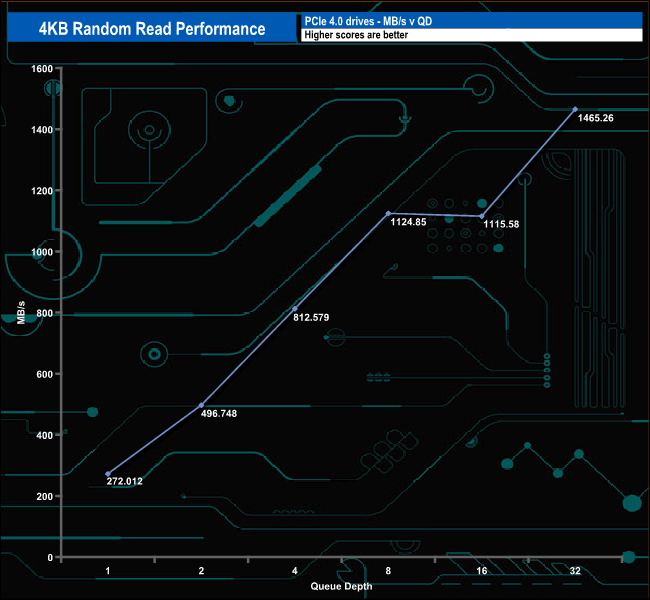
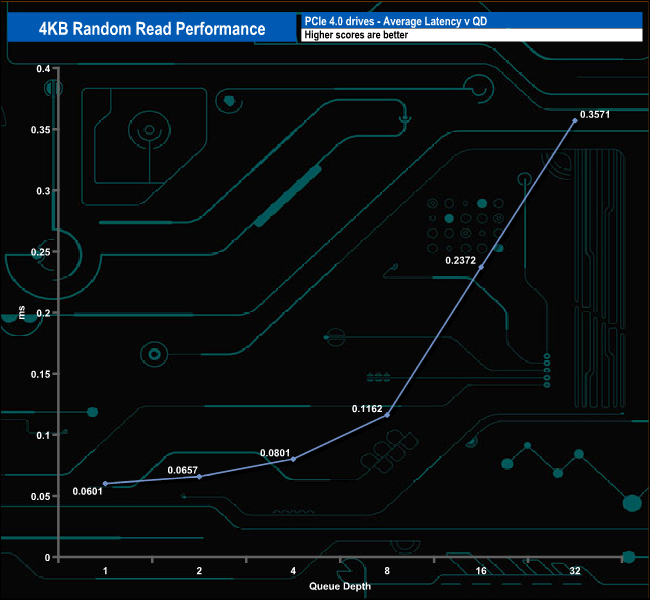
PNY doesn't put any random performance figures on any specification sheets we have seen for comparison with our test results. The best figure we saw in our 4-threaded testing was 357,730 IOPS (QD32). Between QDs 8 and 16, the performance appears to dip slightly before recovering well.
4K Random Read v QD performance compared.
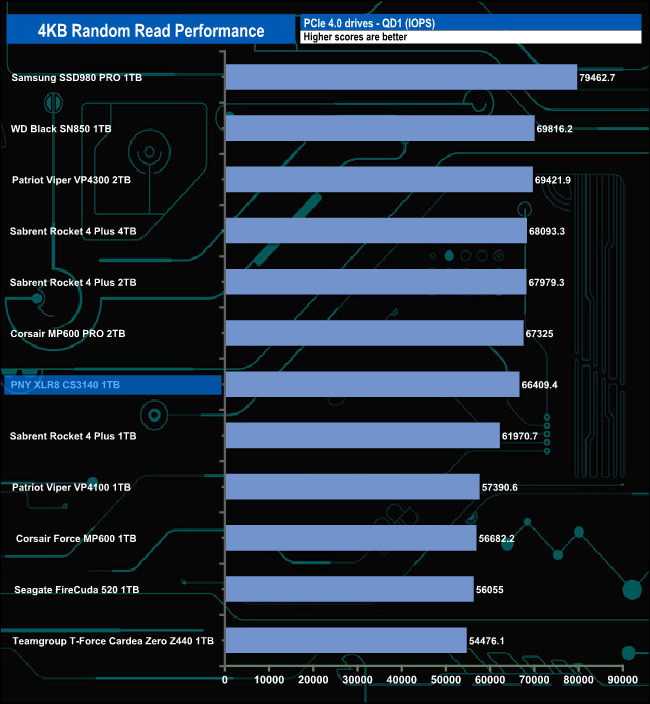
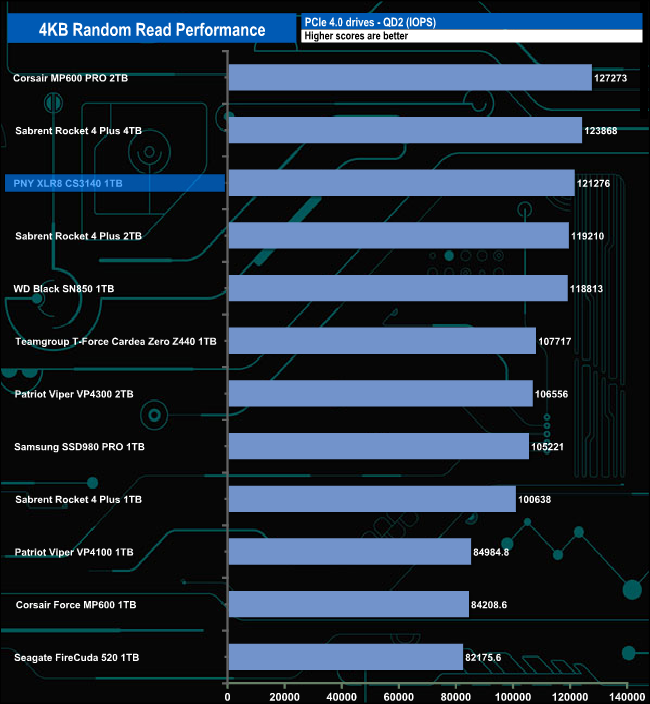
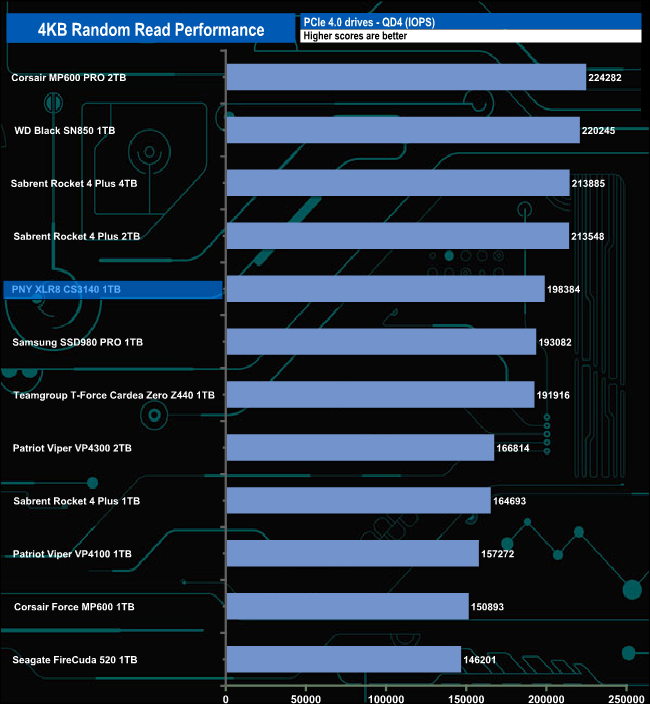
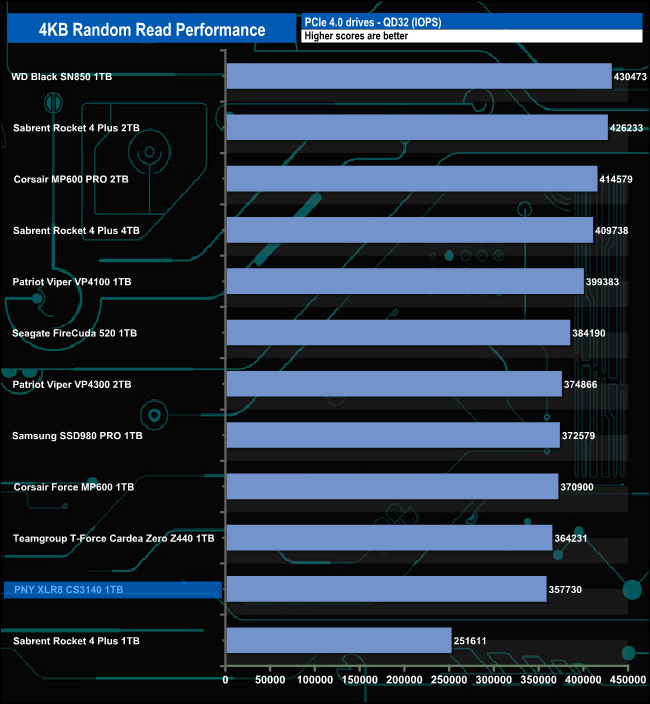
In comparison to the drives around it, the CS3140 performs best at QD2. At a QD of 32, the drive has slipped back down towards the bottom of the chart.
We used CrystalDiskMark 8‘s custom settings to test the 4K random write performance of the drive through a range of queue depths
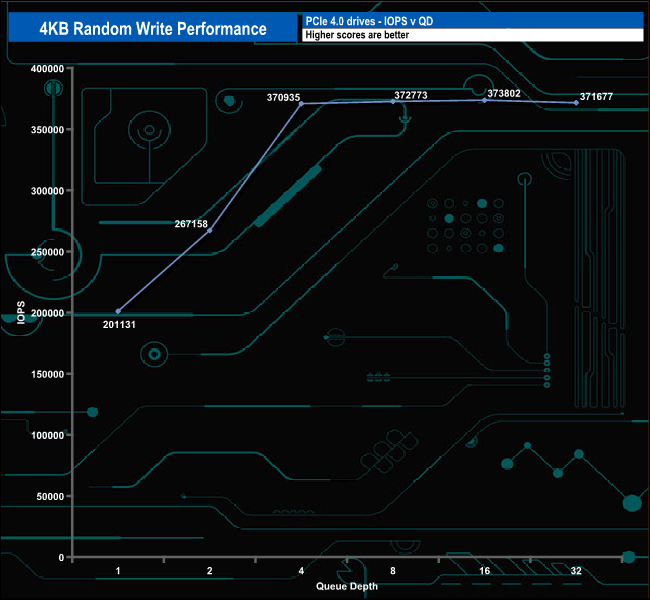
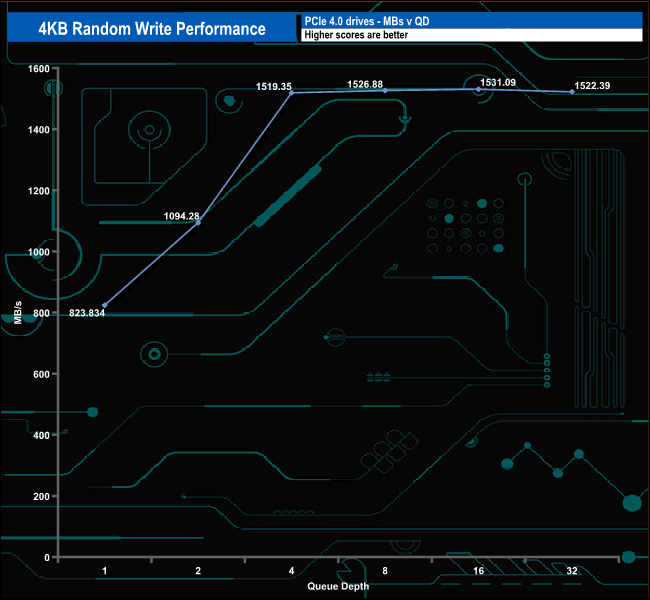
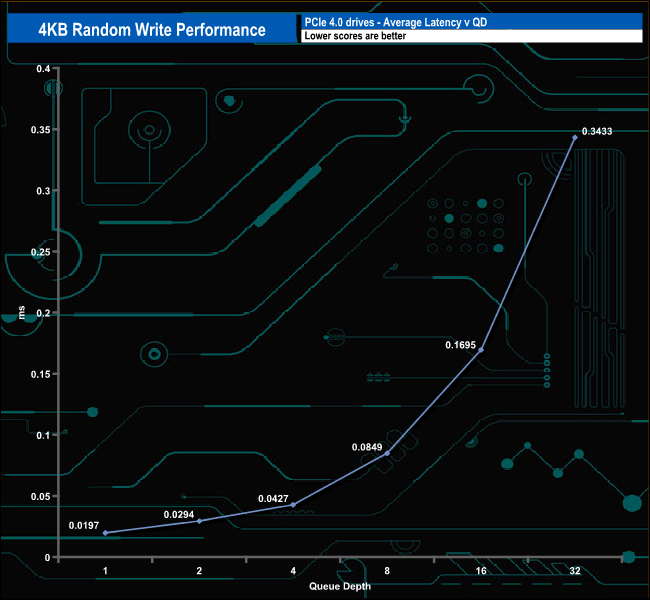
In the random 4K 4-treaded write test, the drive's performance peaked at 373,802 IOPS (1,531.09MB/s) at a QD of 16 before dropping back slightly to finish the test at 371,677 IOPS (1,522.39MB/s).
4K Random Write v QD performance compared.

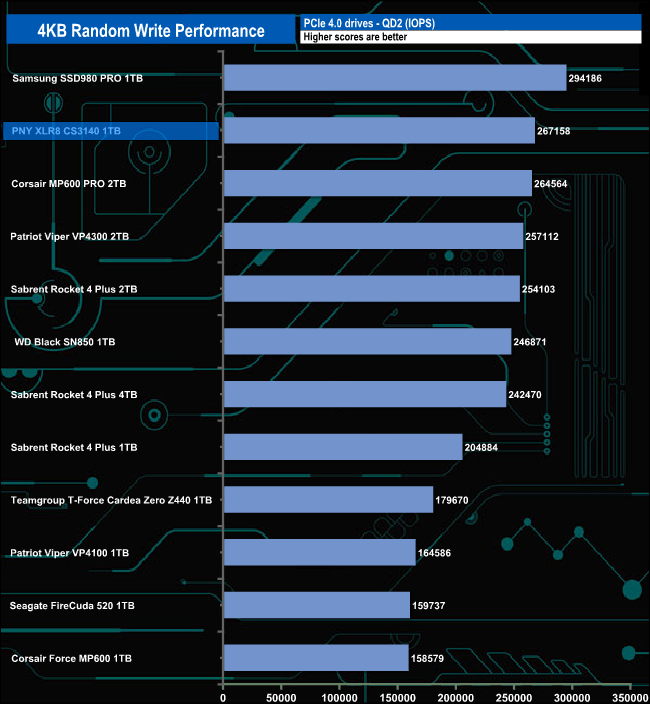
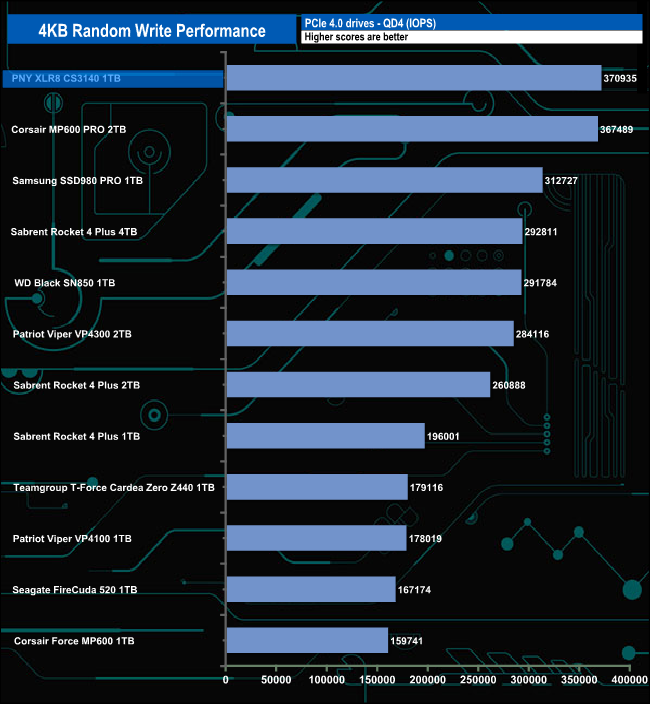
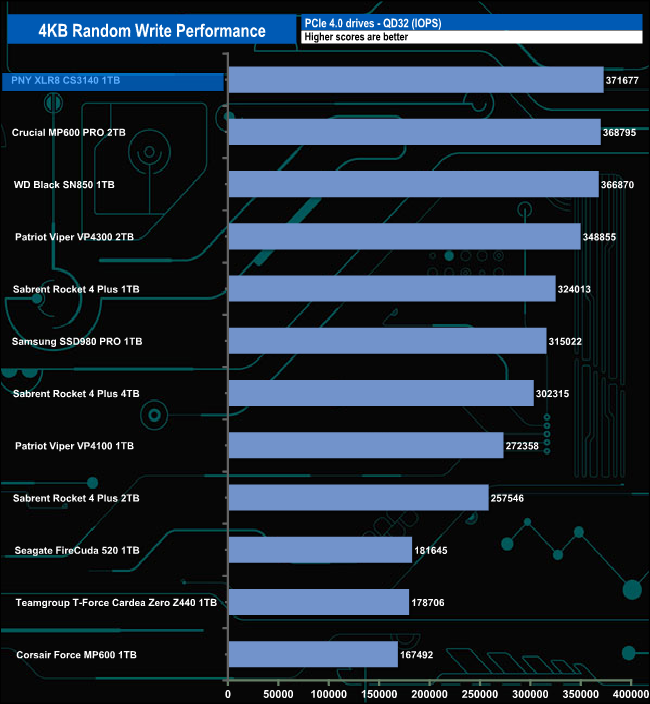
Unlike the 4K random read performance, when it comes to random writes the drive is at the top of the charts for all tested queue depths, with the exception of QD2 where Samsung's SSD 980 PRO still reigns supreme.
We used CrystalDiskMark 8’s custom settings to test the 4K 70/30 mixed read/write performance of the drive through a range of queue depths.
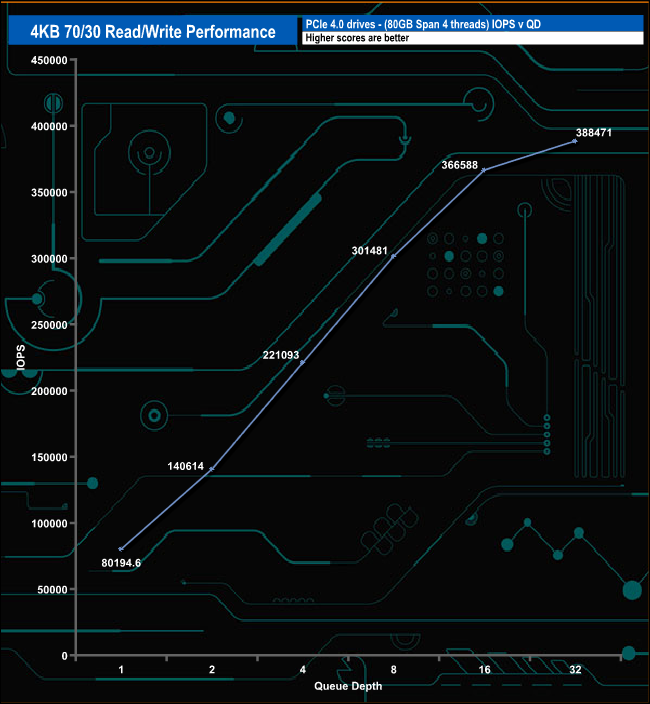
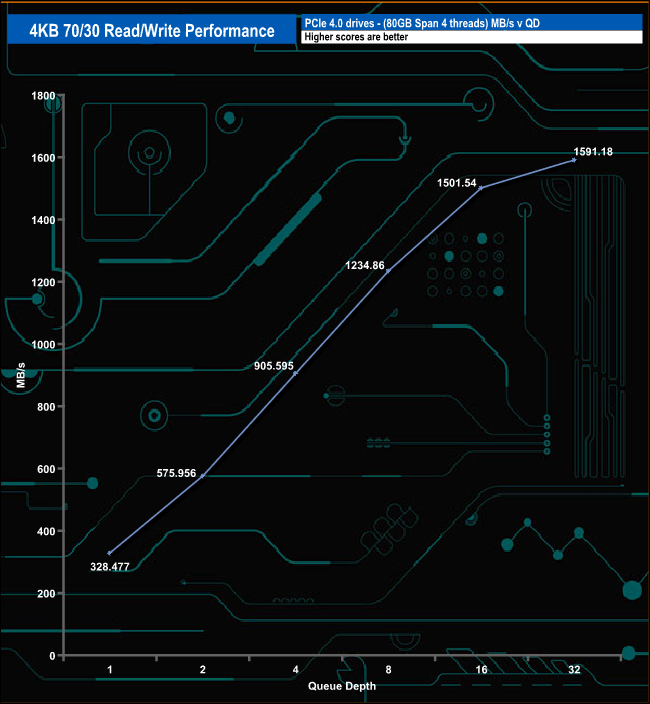
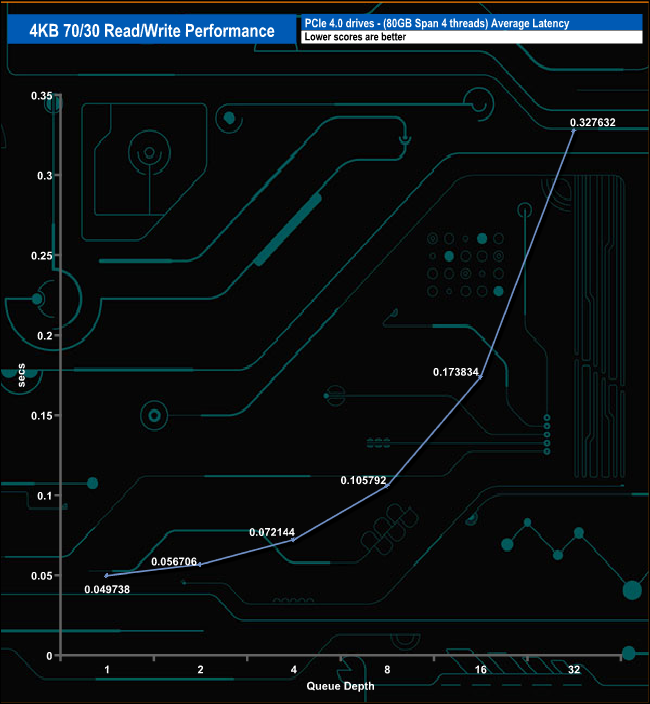
The CS3140 performs very well in the 70/30 mixed read/write test, finishing the test run at 388,471 IOPS (1,591.18MB/s) at a queue depth of 32.
We used CrystalDiskMark 8 to test the random performance of the drive at lower queue depths (QD1 – QD8 where most of the everyday workloads occur) using 1 to 4 threads.
Random Read Performance
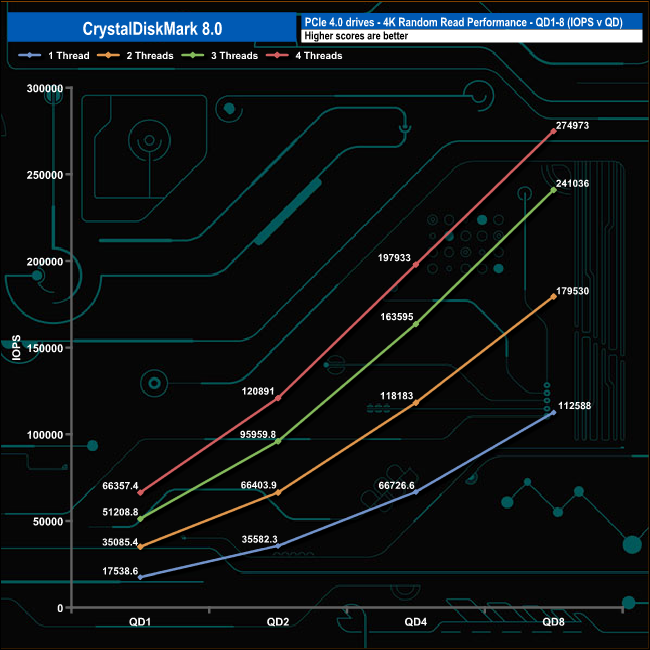
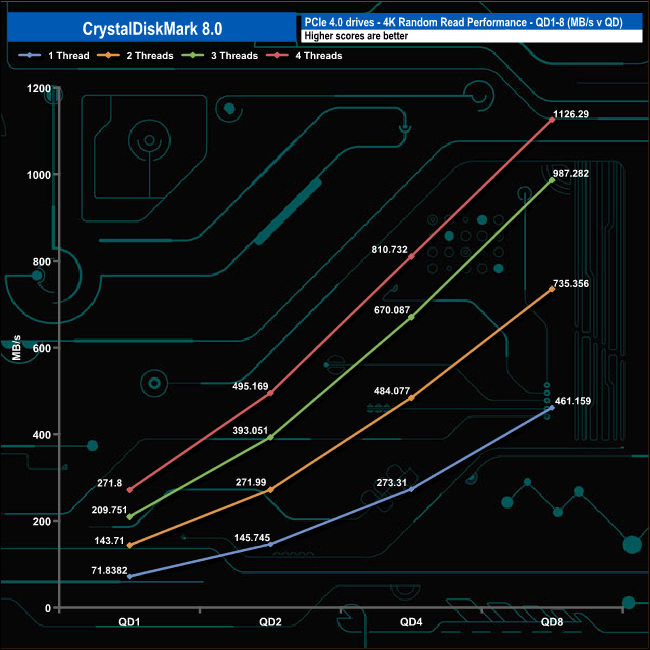
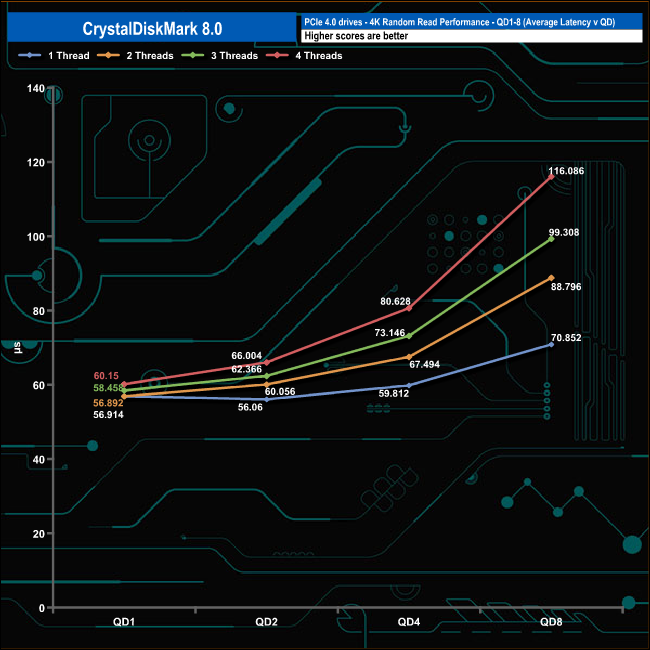
The drive powers through the read part of the test without displaying any problems. The drive's performance increasing smoothly as the queue depth deepens.
Random Write Performance
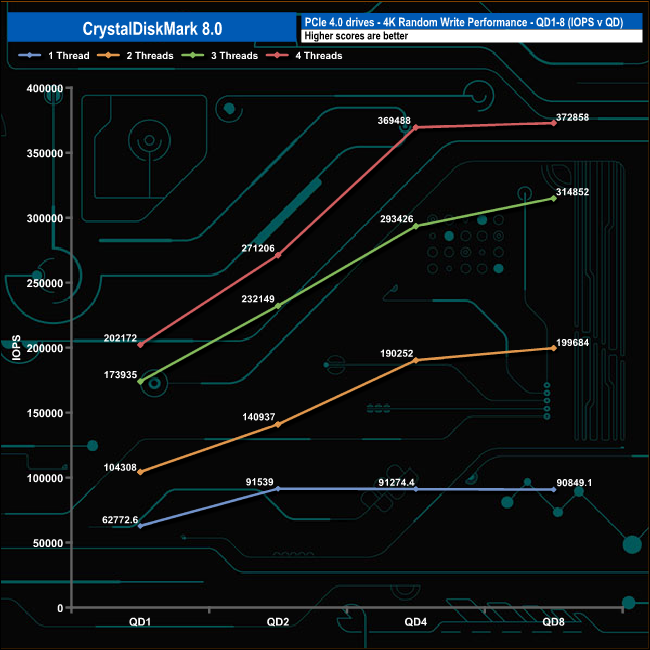
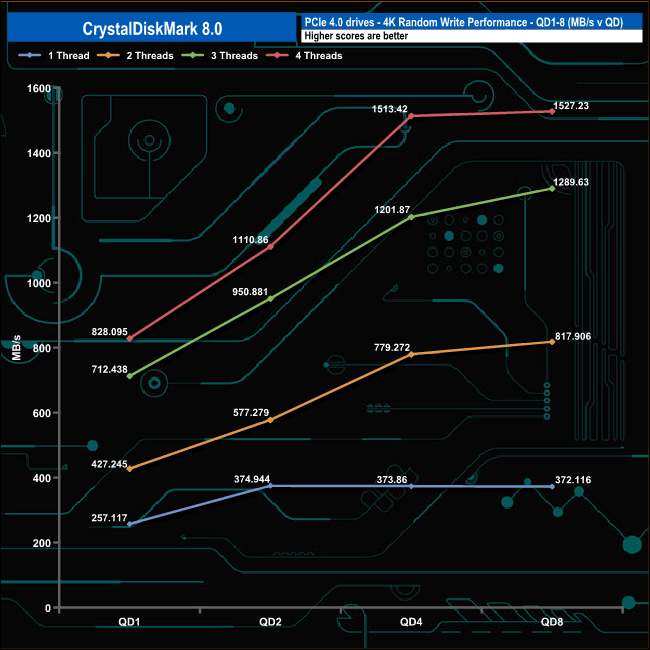
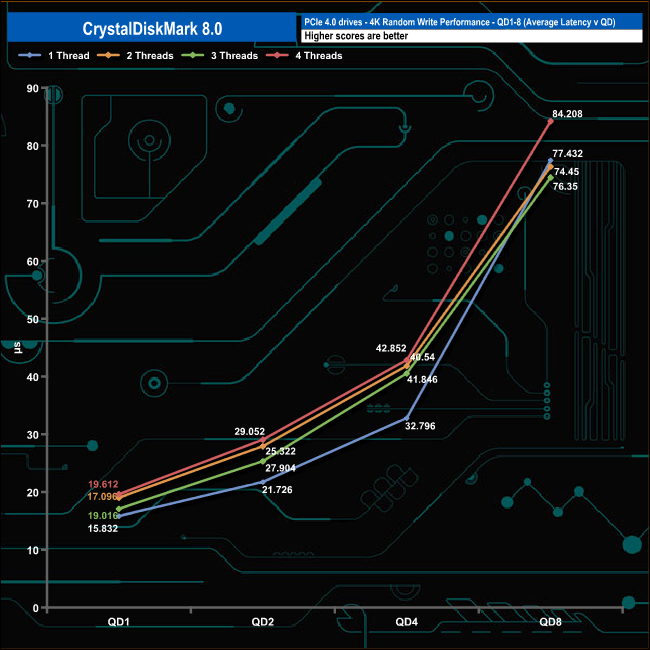
In the write tests, testing with one thread sees the drive peak at 91,539 IOPS at a queue depth of 2 before slipping back to finish the test at 90,849 IOPS. With 2, 3 and 4 threads the initial burst of performance peaks for all at the QD4 mark with the rate of increase slowing from QD4 to QD8.
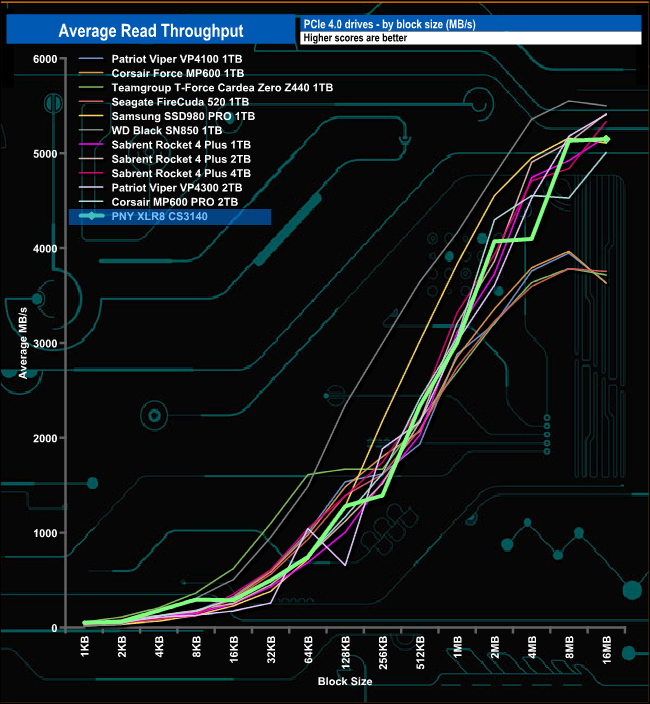
In our read throughput test the drive peaks at 5,147.89MB/s at the end of the test, which is some way short of the official maximum speed of up to 7,500MB/s.
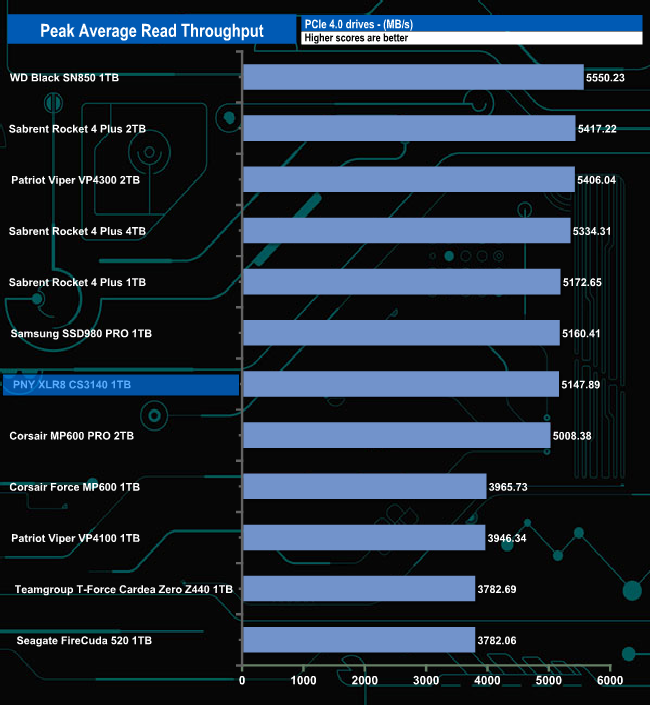
The peak average read throughput speed of 5,147.89MB/s slots the PNY XLR8 CS3140 into the middle of the results chart.
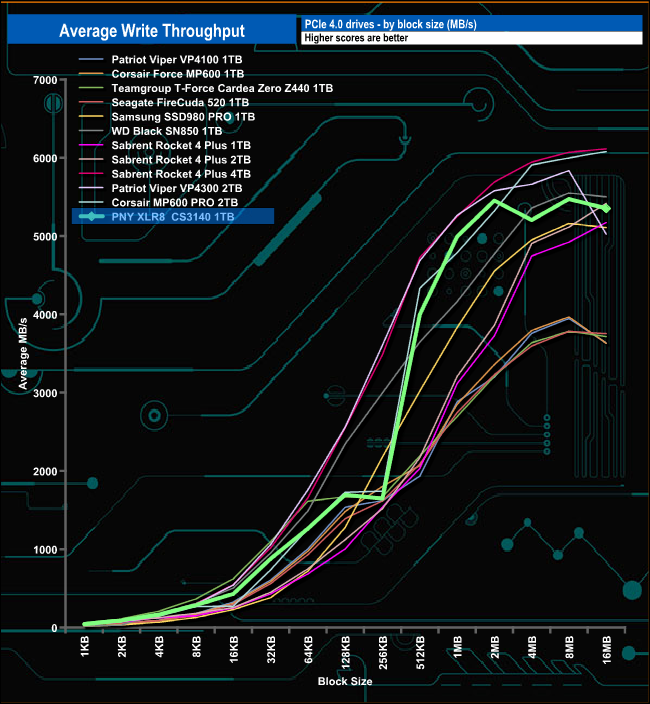
In the write throughout test, the drive peaked at the end of the test run at 5,472.738MB/s which isn't too far away from the official maximum of 5,650MB/s.
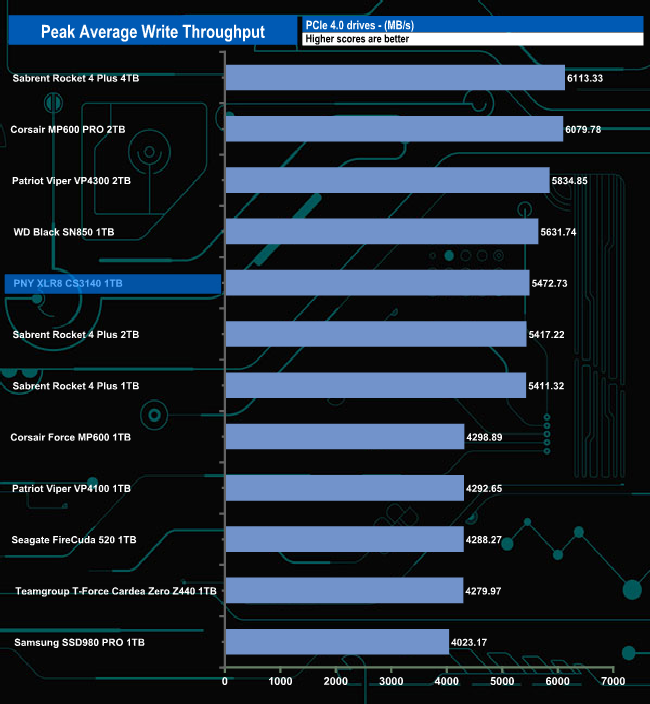
That peak average write figure of 5,472.738MB/s makes the PNY XLR8 CS3140 the fifth-fastest Gen4 drive we've tested to date.
The PCMark 10 Full System Drive Benchmark uses a wide-ranging set of real-world traces from popular applications and common tasks to fully test the performance of the fastest modern drives. The benchmark is designed to measure the performance of fast system drives using the SATA bus at the low end and devices connected via PCI Express at the high end.
The goal of the benchmark is to show meaningful real-world performance differences between fast storage technologies such as SATA, NVMe, and Intel’s Optane. The Full System Drive Benchmark uses 23 traces, running 3 passes with each trace. It typically takes an hour to run.
Traces used:
Booting Windows 10.
Adobe Acrobat – starting the application until usable.
Adobe Illustrator – starting the application until usable Adobe Premiere Pro – starting the application until usable.
Adobe Photoshop – starting the application until usable.
Battlefield V – starting the game until the main menu.
Call of Duty Black Ops 4 – starting the game until the main menu.
Overwatch – starting the game until main menu.
Using Adobe After Effects.
Using Microsoft Excel.
Using Adobe Illustrator.
Using Adobe InDesign.
Using Microsoft PowerPoint.
Using Adobe Photoshop (heavy use).
Using Adobe Photoshop (light use).
cp1 Copying 4 ISO image files, 20 GB in total, from a secondary drive to the target drive (write test).
cp2 Making a copy of the ISO files (read-write test).
cp3 Copying the ISO to a secondary drive (read test).
cps1Copying 339 JPEG files, 2.37 GB in total, to the target drive (write test).
cps2 Making a copy of the JPEG files (read-write test).
cps3 Copying the JPEG files to another drive (read test).
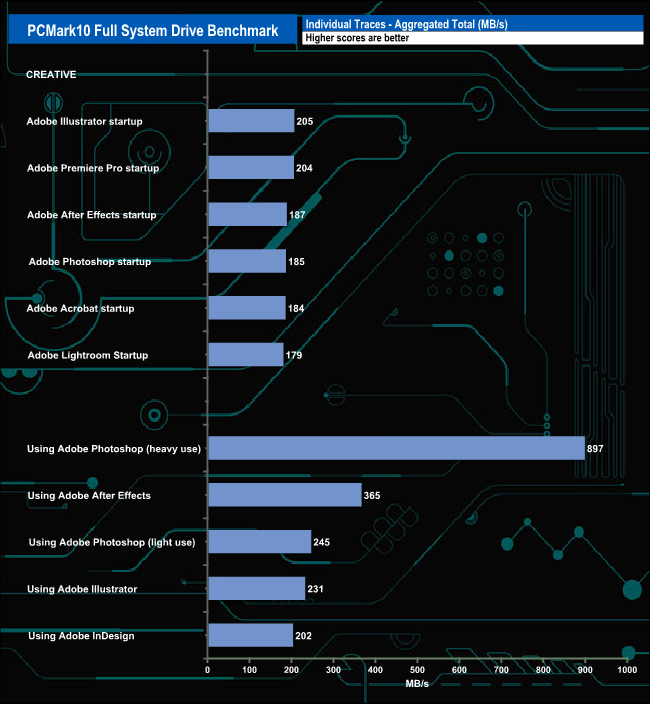
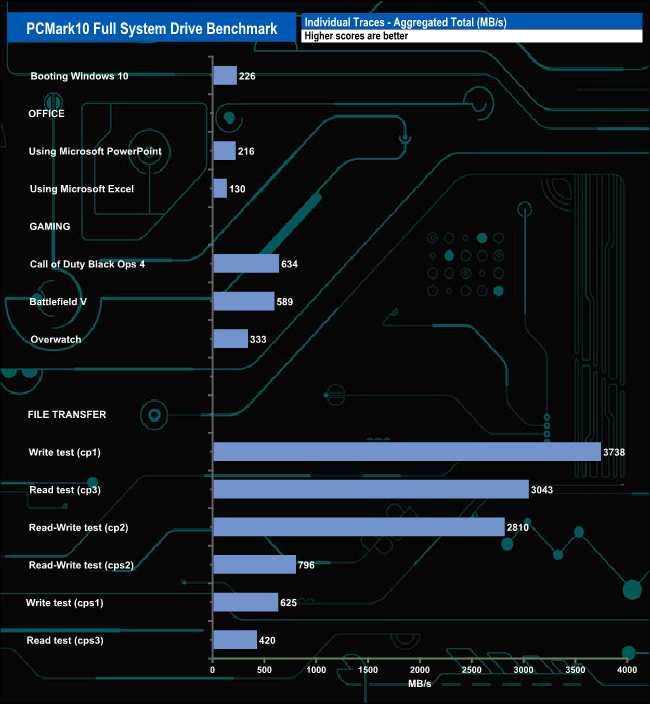
The PNY XLR8 CS3140 handled the PCMark10’s Full System Drive benchmark well with solid scores for all the test traces. The 897MB/s for the Heavy Use Adobe Photoshop trace is very good and also impressive was the 3,738MB/s the drive produced for the cp1 write test.
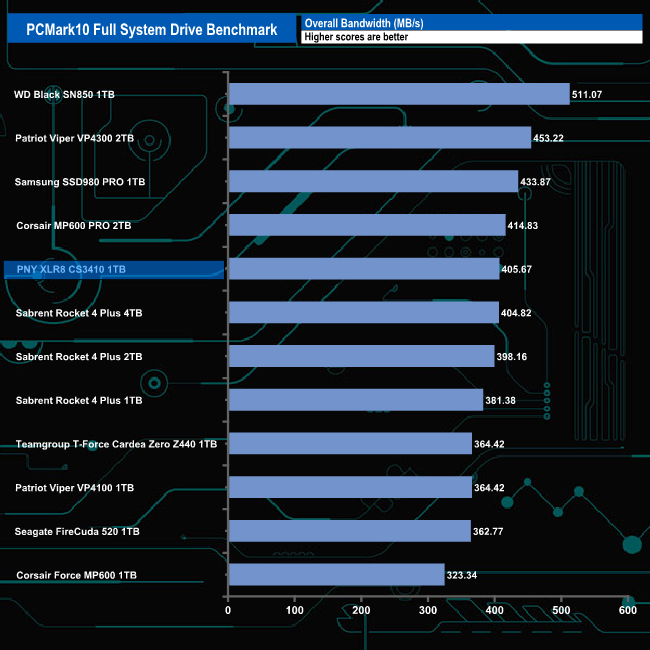
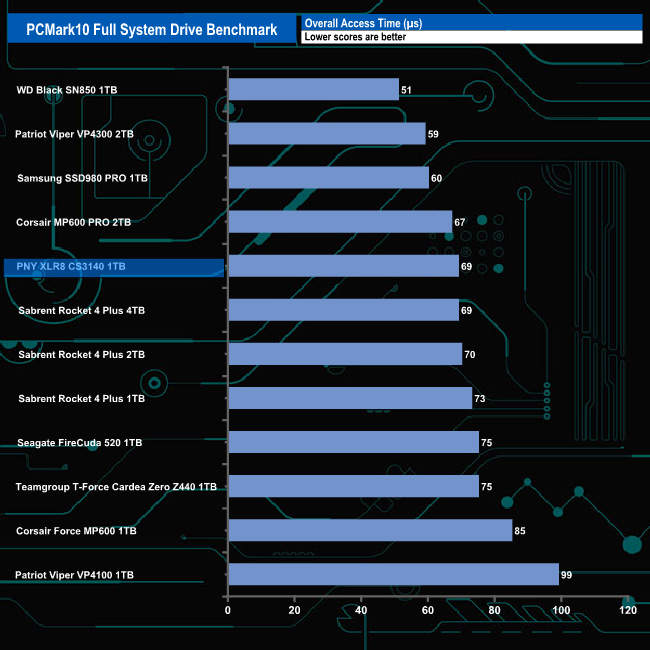
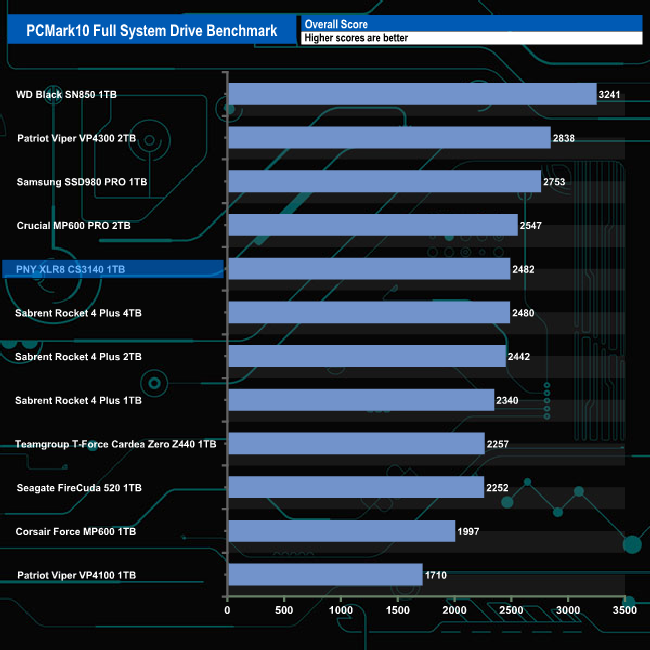
The overall bandwidth figure of 405.67MB/s makes the PNY XLR CS3140 the second-fastest drive (behind the Corsair MP600 PRO) we've seen to date that uses Phison's second-generation PCIe Gen 4 controller.
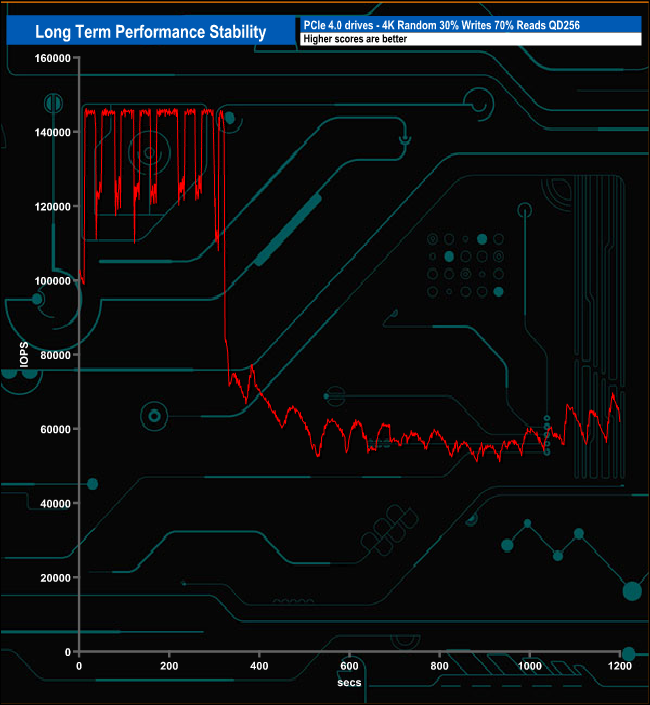
For the long term performance stability test, we set the drive up to run a 20-minute 4K random test with a 30% write, 70% read split, at a Queue Depth of 256 over the entire disk. The 1TB PNY XLR8 CS3140 averaged 80,974 IOPS for the test with a performance stability of 55%.
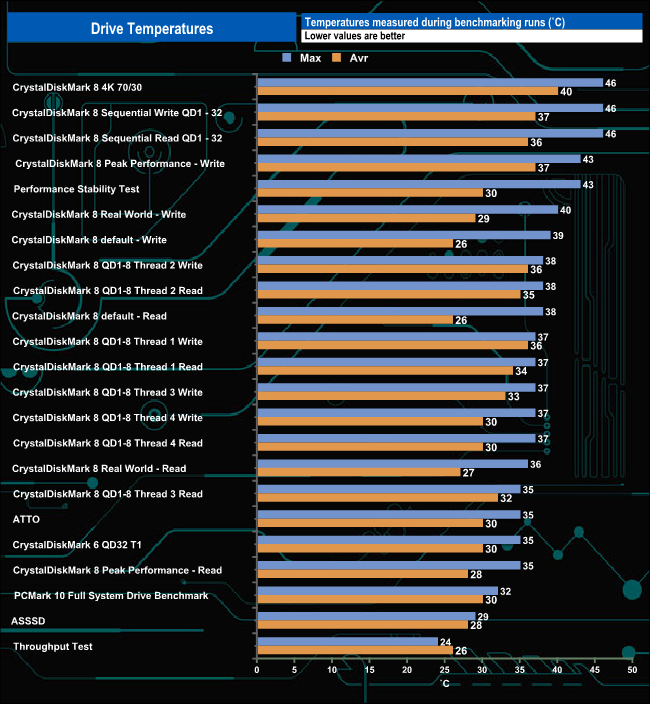
We took note of the drive’s temperature during some of our benchmarking runs. The well-designed extruded aluminium heatsink on the CS3140 keeps the temperature down even when the drive is being pushed hard during benchmarking. The hottest the drive got on three occasions was 46° C (with a 22° C ambient temperature).
To test real-life performance of a drive we use a mix of folder/file types and by using the FastCopy utility (which gives a time as well as MB/s result) we record the performance of drive reading from & writing to a 256GB Samsung SSD850 PRO.
We use the following folder/file types:
- 100GB data file.
- 60GB iso image.
- 60GB Steam folder – 29,521 files.
- 50GB File folder – 28,523 files.
- 12GB Movie folder – (15 files – 8 @ .MKV, 4 @ .MOV, 3 @ MP4).
- 10GB Photo folder – (304 files – 171 @ .RAW, 105 @ JPG, 21 @ .CR2, 5 @ .DNG).
- 10GB Audio folder – (1,483 files – 1479 @ MP3, 4 @ .FLAC files).
- 5GB (1.5bn pixel) photo.
- BluRay Movie – 42GB.
- 21GB 8K Movie demos – (11 demos)
- 16GB 4K Raw Movie Clips – (9 MP4V files).
- 4.25GB 3D Printer File Folder – (166 files – 105 @ .STL, 38 @ .FBX, 11 @ .blend, 5 @ .lwo, 4 @ .OBJ, 3@ .3ds).
- 1.5GB AutoCAD File Folder (80 files – 60 @ .DWG and 20 @.DXF).
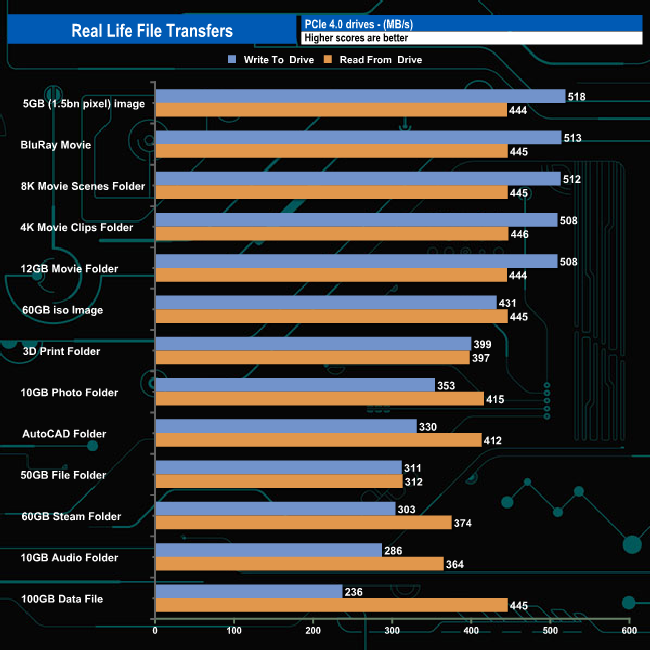
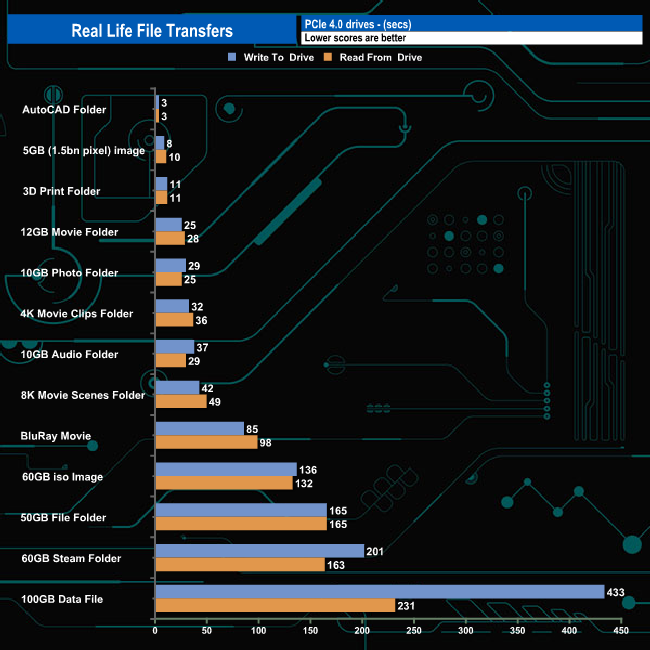
PNY's XLR CS3140 handled our real-life file testing without displaying any problems, although it has to be said the 100GB data file transfer seemed to cause the drive some problems. It averaged 511.8MB/s when writing the larger test files to the drive and 444.8MB/s when reading the data back again.
To get a measure of how much faster PCIe NVMe drives are than standard SATA SSDs we use the same files but transfer to and from a 2TB Kioxia Exceria Plus drive:
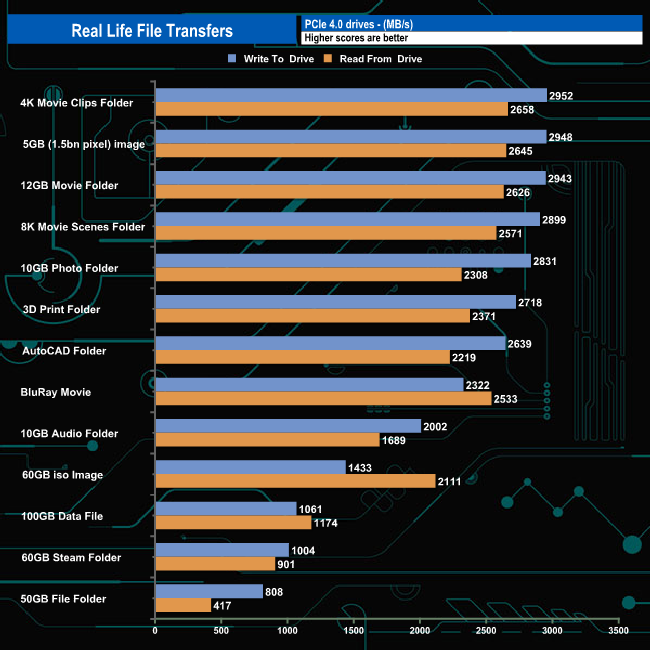
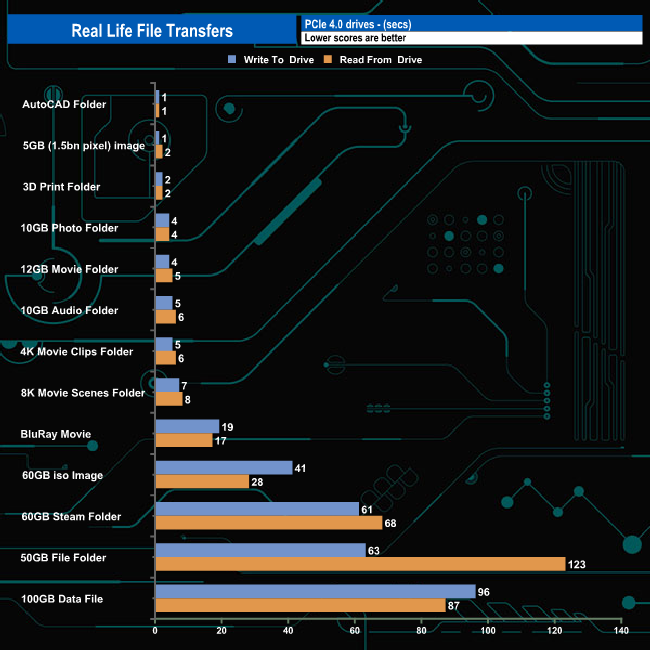
Switching over to an all NVMe storage environment we see write speeds approaching 3GB/s, the fastest being the 2,952MB/s when writing the contents of the 4K Movie clips folder. Nine of the thirteen transfers were over 2GB/s when it came to both reads and writes.
The CS3140 is PNY's latest flagship drive series in the company's XLR8 gaming portfolio. By using a combination of a 2nd generation Phison controller and 96-layer 3D TLC NAND, the PCIe Gen4 x4 CS3140 is also PNY's fastest drive to date.
The new drive is available in just two capacities,1TB and 2TB and in two versions; one aimed at desktop use with a well designed extruded aluminium heatsink and the other with just a straightforward product label aimed towards notebook users, compact PC designs and those who want to use the integrated heatsink/cooling technology of a motherboard. The heatsink versions have HS in the SKU number.
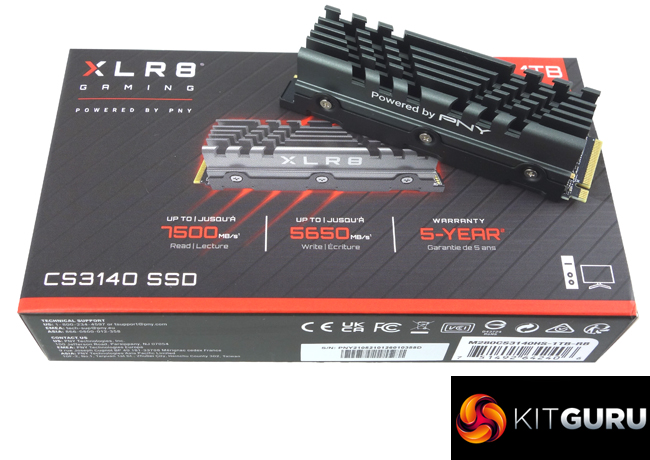
The only official performance figures to be found on the spec sheet, and the box for that matter, are sequential read/writes, which is a bit odd. The 1TB drive is rated as up to 7,500MB/s for reads and up to 5,650MB/s for writes.
Using the ATTO benchmark we couldn’t hit the official maximums for sequential reads or writes, with the best read figure being 6,820MB/s with writes at 4,990MB/s. We got a lot closer using the compressible data test in CrystalDiskMark 6 with a best-read figure of 7,458.6MB/s and a write figure of 5,349.9MB/s.
As we previously noted PNY doesn’t state any 4K random performance figures for the drive but in our tests, the best read/write IOPS figures we got from the drive was when we used the Peak Performance profile in CrystalDiskMark 8 which produced figures of 664,937.74 IOPS and 600,540.77 IOPS for reads and writes respectively.
PNY told us the CS3140 will cost £234.20 for the heatsink model and £226.89 without the heatsink. The only Amazon listing we could find is from a third-party seller with significantly higher prices.
Discuss on our Facebook page HERE.
Pros
- Overall performance.
- 5-year warranty.
Cons
- 4K performance a little disappointing in some of our tests.
- Stiff competition.
KitGuru says: PNY is the latest company to pitch their hat into the PCIe Gen4 SSD ring. The XLR8 CS3140 is a quick drive and PNY has ensured most bases are covered by offering the drive in two versions, one with a heatsink and one without.