 KitGuru KitGuru.net – Tech News | Hardware News | Hardware Reviews | IOS | Mobile | Gaming | Graphics Cards


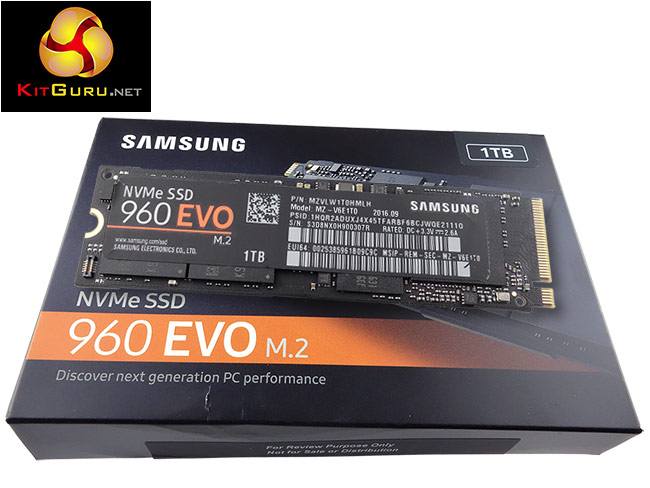
Announced at the same time as the high-end SSD 960 PRO, but arriving a month later, the newly-launched SSD 960 EVO is Samsung's attempt to push the M.2 PCIe NVMe format SSD into the mainstream market. The EVO uses the same Polaris controller as the 960 PRO but combines it with Samsung's 3rd Generation 48-layer 3-bit (TLC) V-NAND compared with the 2-bit MLC V-NAND used by the PRO.
The 960 EVO comes in three capacities; 250GB, 500GB and the flagship 1TB drive. Unlike the 960 PRO, the EVO doesn't use Samsung's 4-Landing or POP (Package-on-Package) design for the components on the PCB, with the controller, cache and NAND packages being laid out in a more conventional manner.
Samsung uses two types of their 3rd Generation 48-layer 3-bit TLC V-NAND for the EVO range. The 250GB model uses 128Gb dies while the 500GB and the 1TB models use 256Gb dies.
With the 960 EVO, Samsung have introduced Intelligent TurboWrite. First seen in the 840 EVO, TurboWrite accelerates write performance by creating an SLC write buffer (in the case of the 840 EVO this TurboWrite buffer was 3GB) in the drive. While a 3GB buffer was deemed adequate for a SATA drive, the higher performance/workload of an NVMe drive called for something a lot larger – enter Intelligent TurboWrite.
Intelligent TurboWrite identifies a workload and decides the appropriate SLC buffer to deal with it. For example, the 1TB drive has a default TurboWrite area of 6GB. Any data under that is dealt with in the TurboWrite region. However, what Intelligent TurboWrite brings to the table is the ability to use a dynamic SLC buffer for data that is larger than the default region; in the case of the 1TB drive that is up to 36GB giving a total SLC buffer of 42GB. This dynamic buffer takes advantage of any idle capacity but if the drive doesn't have more than the free capacity required, the Intelligent TurboWrite technology doesn't work.
Samsung quote Sequential performance figures for the drive at up to 3,200MB/s for reads and 1,900MB/s for writes. For 4K random performance, they quote two sets of figures. At a queue depth of 1 with 1 thread, the figures are up to 19,000IOPS for reads and 50,000 for writes. With a deeper queue depth of 32 and with 4 threads the figures rise to 380,000 IOPS for reads and 360,000 IOPS for writes.
The new updated version of Samsung's Magician software, which might have been expected to arrive with the 960 PRO, is now expected sometime towards the end of this month (November). What has been launched alongside the 960 EVO, however, is the latest Samsung NVMe driver (Driver 2.0) which should produce better performance than the native Windows drivers.
The 1TB drive has a quoted endurance of 400TBW and Samsung back the 960 EVO series with a three-year warranty.
Physical Specifications:
Usable Capacities: 250GB, 500GB, 1TB
NAND Components: Samsung 256Gb 48-layer 3-bit TLC V-NAND
Interface: PCIe 3.0 x4 NVMe
Form Factor: 2280 M.2
NAND Controller: Samsung Polaris
Dimensions: 80 x 22 x 2.38mm
Firmware Version: 1B7QCXE7
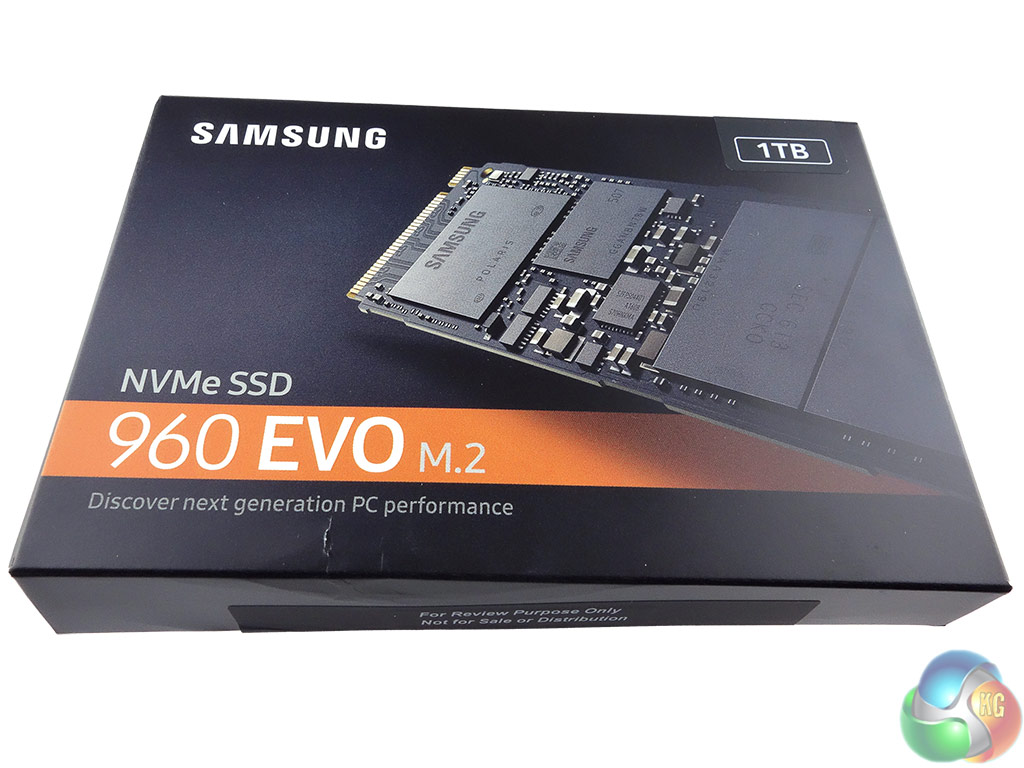
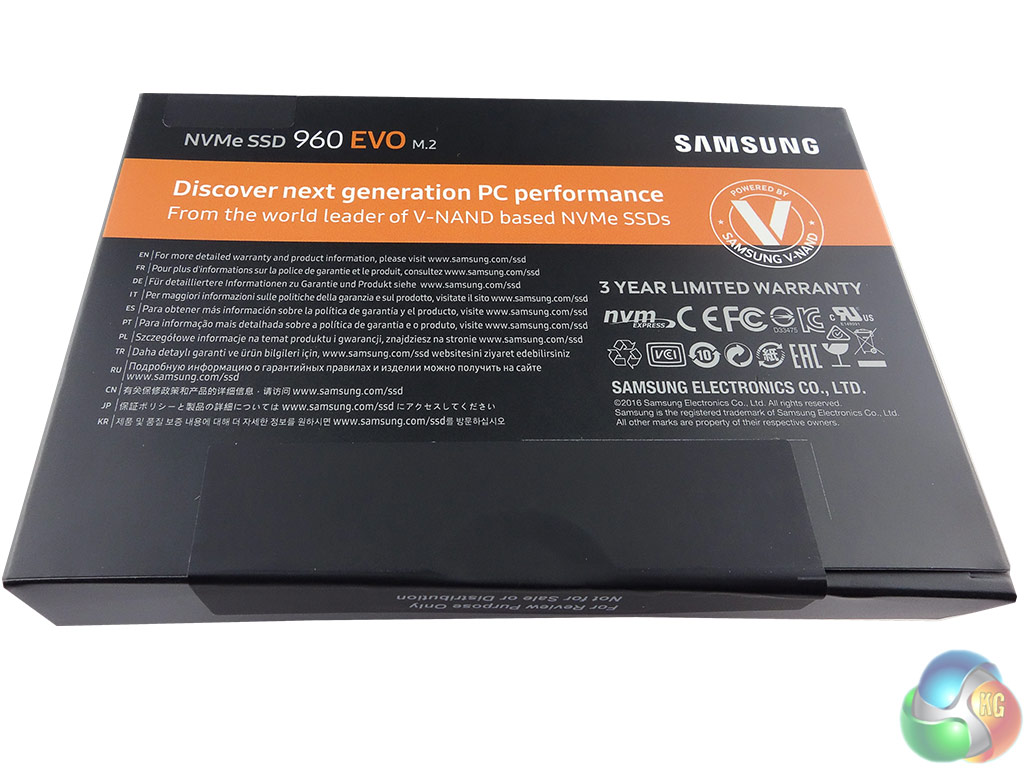
The front of the box has a part image of the drive together with its capacity and the interface it uses. The rear of the box displays the warranty length and multilingual statements of where to find more warranty and product information.
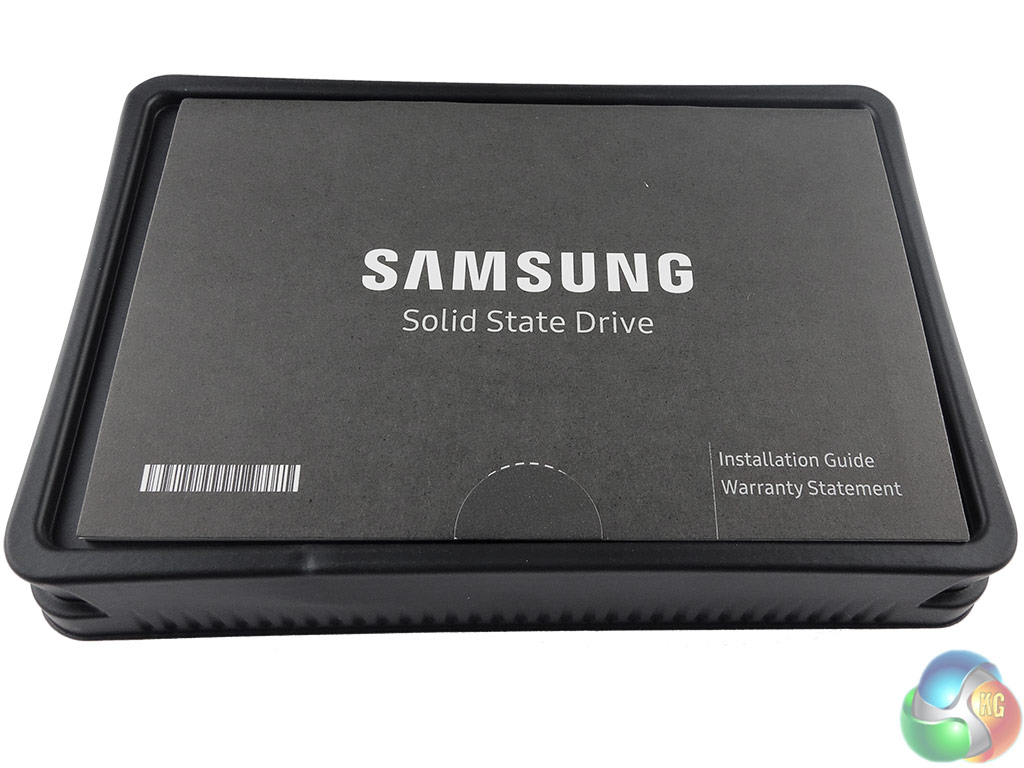
Inside the box there is a plastic tray which holds the drive, sitting underneath a warranty and installation guide and that's all you get, no other fancy bits and bobs.
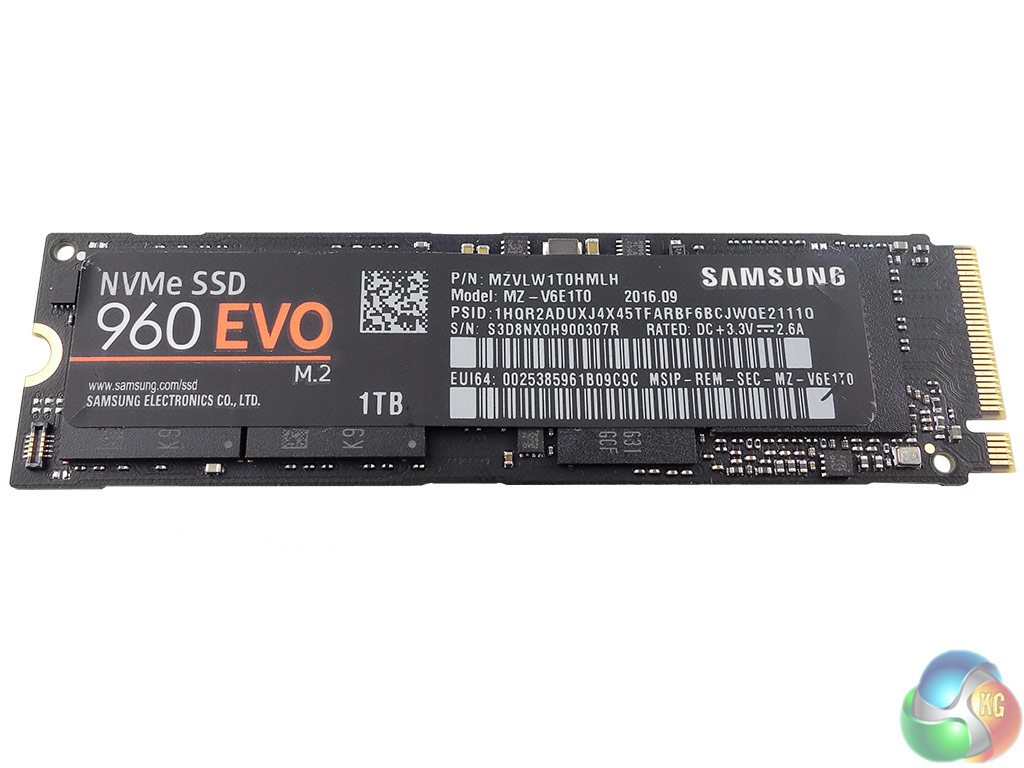
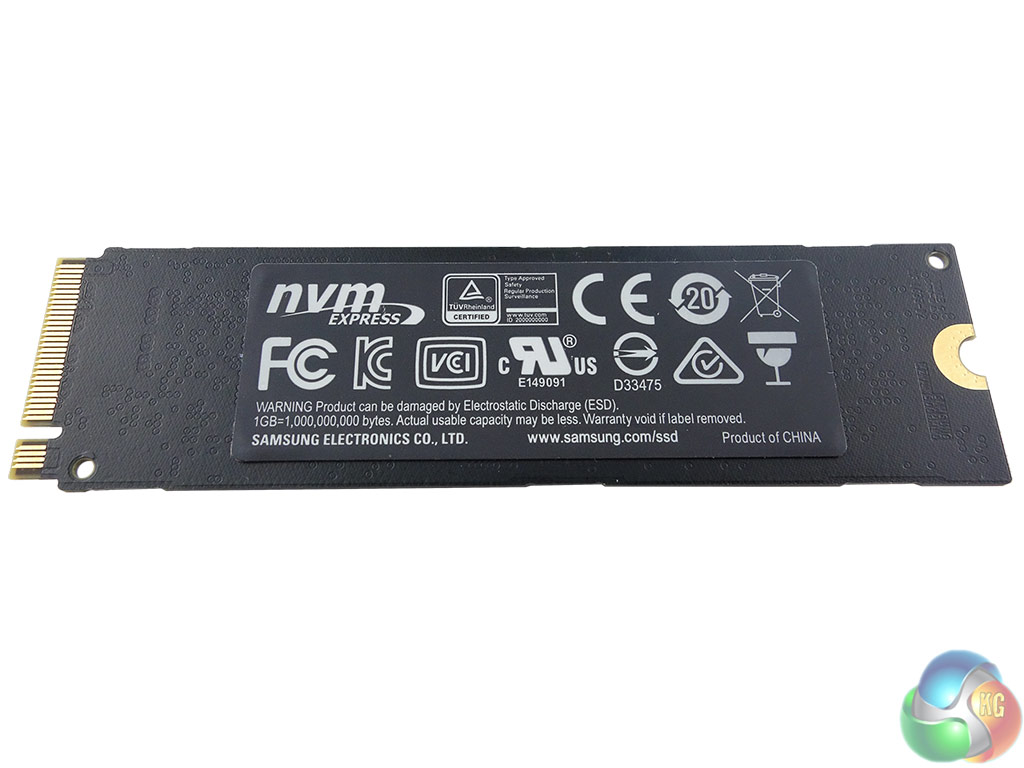
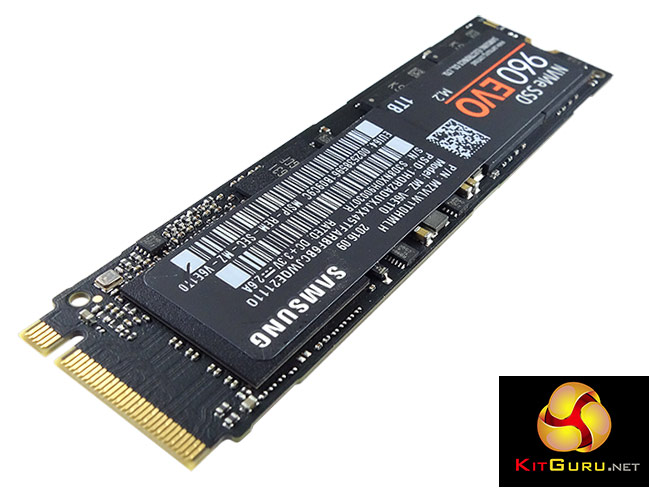
The drive is built on a standard 2280 (22mm wide, 80mm long) M.2 format. All the components are on one side of the PCB. The rear of the drive is partly covered by a label, but this is no ordinary label, no sir, this is a thermal protection label. Constructed of six layers the label has a thin copper layer sitting on top of the first layer of adhesive that fixes the label to the drive to dissipate the heat generated by the drive.
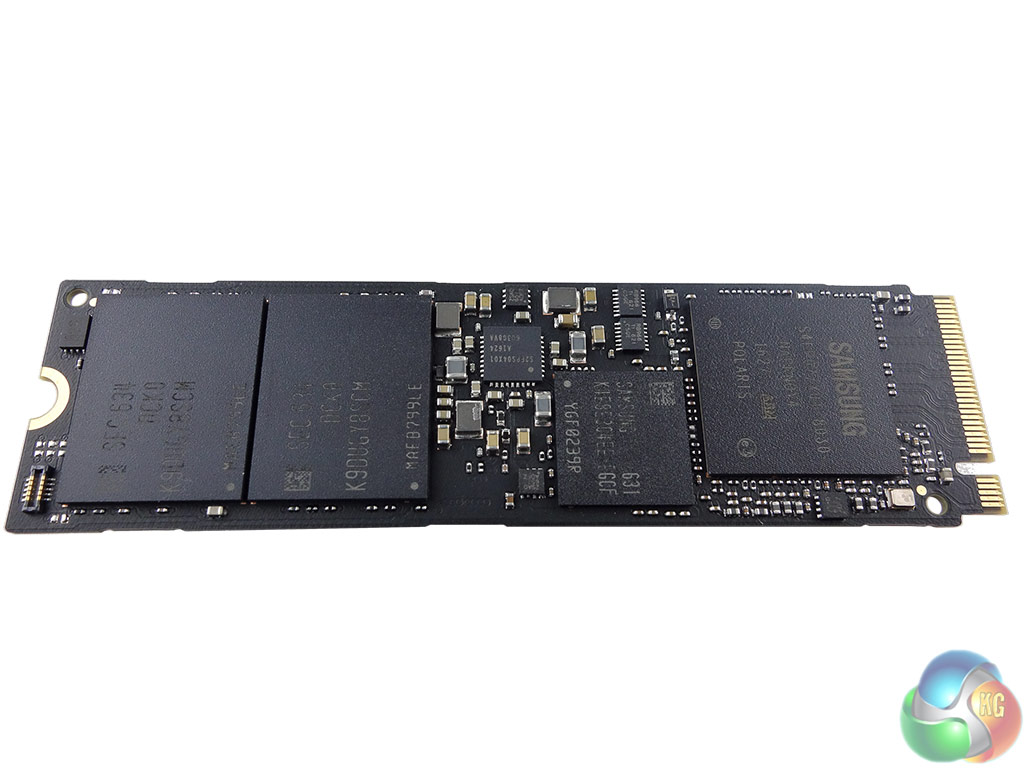
The SSD960 EVO doesn't use the 4-Landing or POP (Package-on-Package) design for the drive components that the SSD960 PRO 2TB model used. Instead, we have a more conventional layout. Two 512GB 48-layer 3-bit TLC V-NAND packages are joined by a 1GB LPDDR3 cache chip and the Polaris controller.
For testing, the drives are all wiped and reset to factory settings by HDDerase V4. We try to use free or easily available programs and some real world testing so you can compare our findings against your own system.
This is a good way to measure potential upgrade benefits.
To test the SSD960 EVO we used Samsung's new 2.0 driver and we also quickly tested the 2TB SSD960 PRO using the driver to see how much if any advantage it gave over the standard Windows driver.
Main system:
Intel Core i7 4790K with 16GB of DDR3-2133 RAM, Sapphire R9 390 Nitro and an ASRock Extreme 6 motherboard.
Other drives
Kingston HyperX Predator 480GB
OCZ RevoDrive 350 480GB
OCZ RevoDrive 3 x2 480GB
Plextor M6e Black Edition PCIe 256GB
Samsung SSD960 PRO 2TB
Samsung SSD950 PRO 256GB
Samsung SM951 256GB
Samsung XP941 512GB
Toshiba OCZ RD400 512GB
Software:
Atto Disk Benchmark.
CrystalMark 3.0.3.
AS SSD.
IOMeter
All our results were achieved by running each test five times with every configuration this ensures that any glitches are removed from the results. Trim is confirmed as running by typing fsutil behavior query disabledeletenotify into the command line. A response of disabledeletenotify =0 confirms TRIM is active.
Crystalmark is a useful benchmark to measure theoretical performance levels of hard drives and SSD’s. We are using V3.0.3.
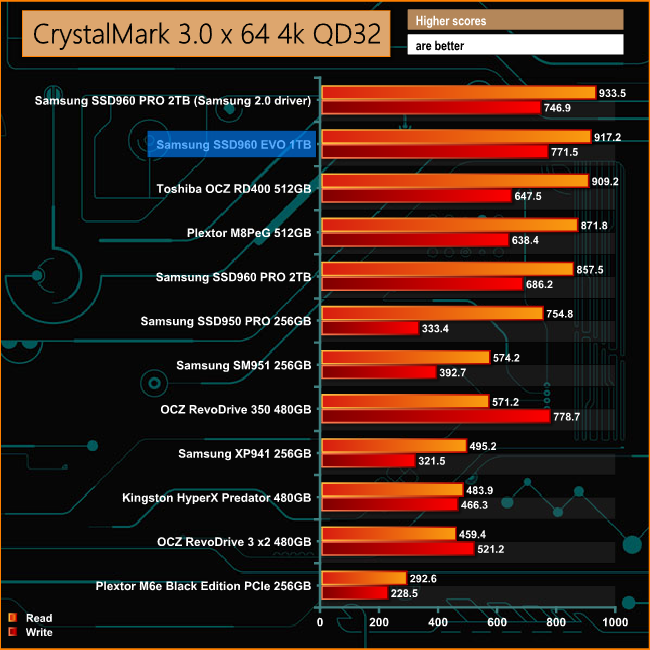
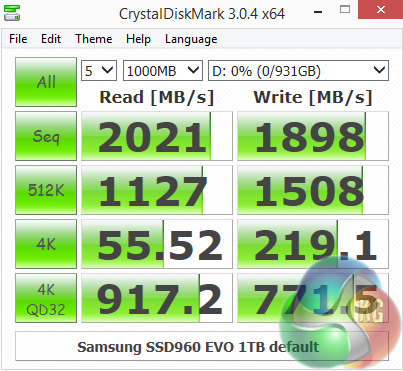
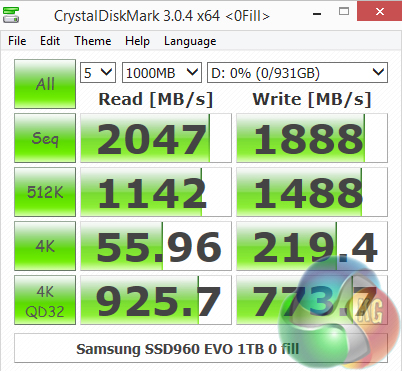
At deeper queue depths the SDD960 EVO performs very well with the Intelligent TurboWrite technology giving the write performance a small boost over the SSD960 PRO. The new Samsung 2.0 driver boosts the SSD960 PRO's performance in both read and writes.
Comparing the two sets of results shows that the Polaris controller has no real preference when it comes to the type of data it's asked to work with.
The ATTO Disk Benchmark performance measurement tool is compatible with Microsoft Windows. Measure your storage systems performance with various transfer sizes and test lengths for reads and writes. Several options are available to customize your performance measurement including queue depth, overlapped I/O and even a comparison mode with the option to run continuously.
Use ATTO Disk Benchmark to test any manufacturers RAID controllers, storage controllers, host adapters, hard drives and SSD drives and notice that ATTO products will consistently provide the highest level of performance to your storage.
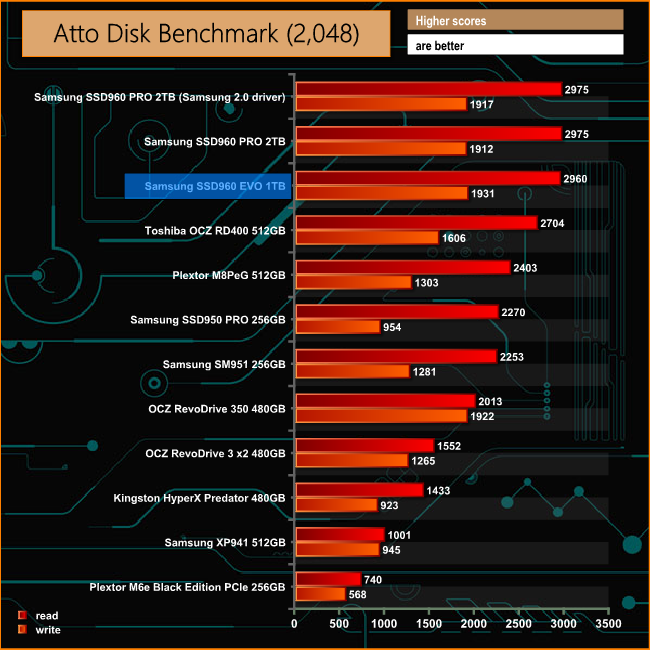
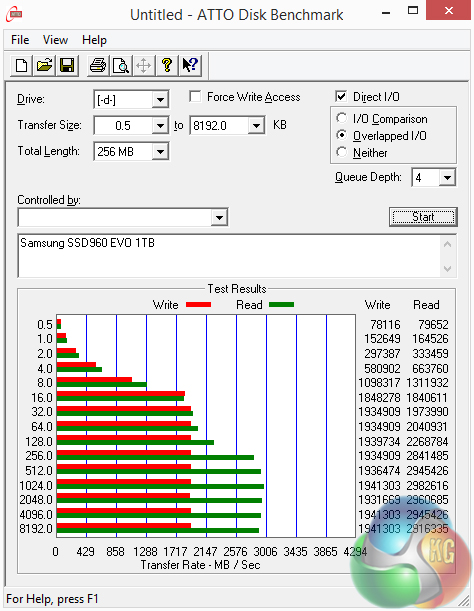
Samsung's SSD960 EVO isn't that far behind the SSD960 PRO in the Sequential read performance stakes and the Intelligent TurboWrite technology seems to give the 960 EVO a slight edge in write performance.
AS SSD is a great free tool designed just for benching Solid State Drives. It performs an array of sequential read and write tests, as well as random read and write tests with sequential access times over a portion of the drive.
AS SSD includes a sub suite of benchmarks with various file pattern algorithms but this is difficult in trying to judge accurate performance figures.
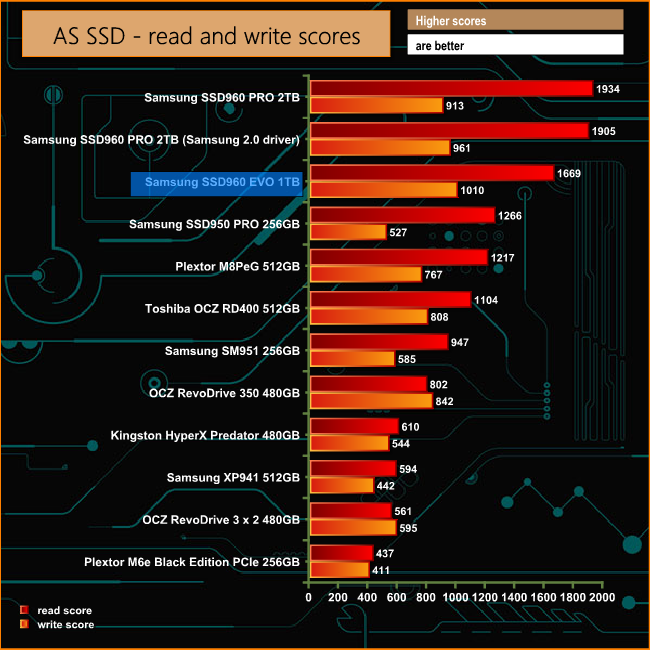
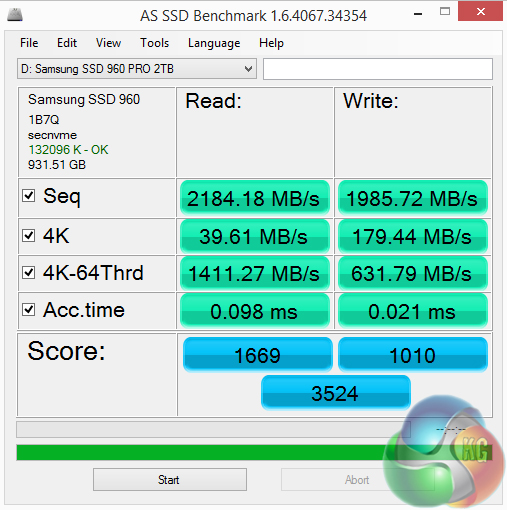
Again, the SSD960 EVO's Intelligent TurboWrite gives it the edge over the SSD960 PRO by a far distance although its read performance is nowhere near as strong. Using the Samsung 2.0 driver with the SSD960 PRO saw the read figure drop a little but the write figure got a small but useful boost.
IOMeter is another open source synthetic benchmarking tool which is able to simulate the various loads placed on hard drive and solid state drive technology.
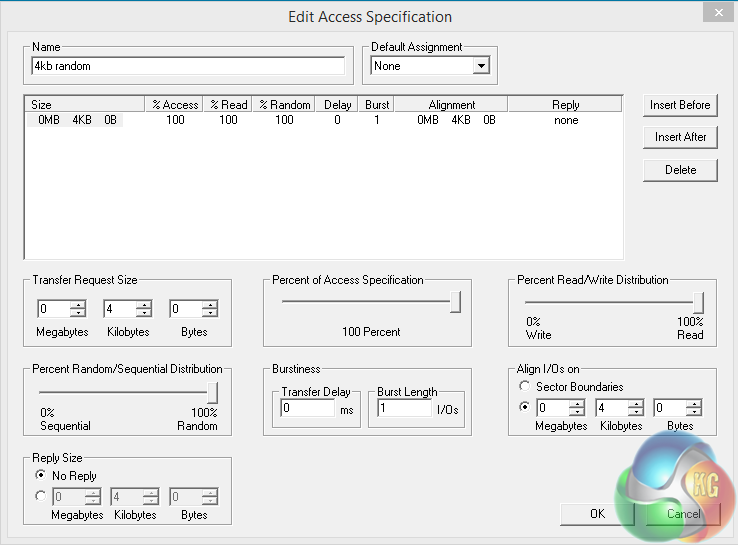
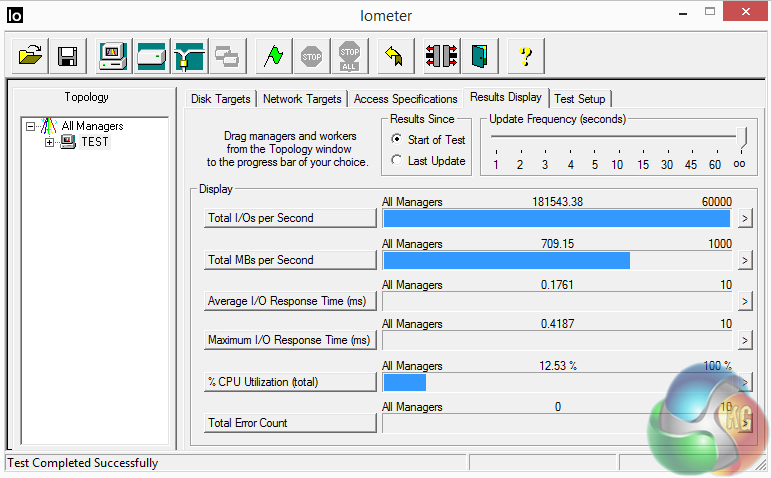
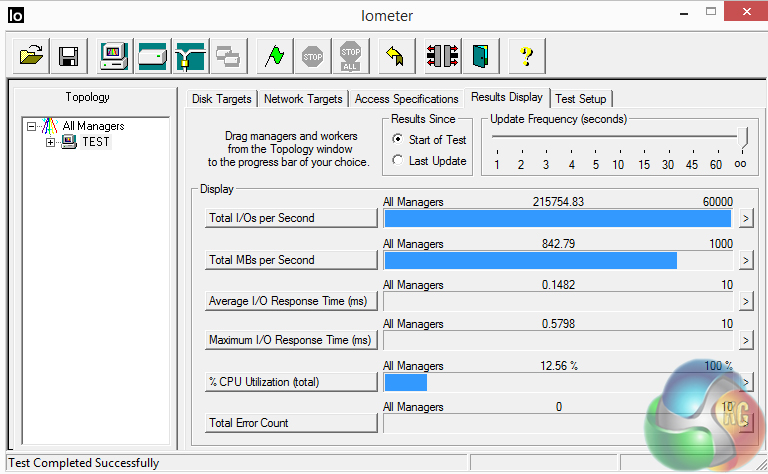
We test with both random read and write 4k tests, as shown above. There are many ways to measure the IOPS performance of a Solid State Drive, so our results will sometimes differ from manufacturer’s quoted ratings. We do test all drives in exactly the same way, so the results are directly comparable.
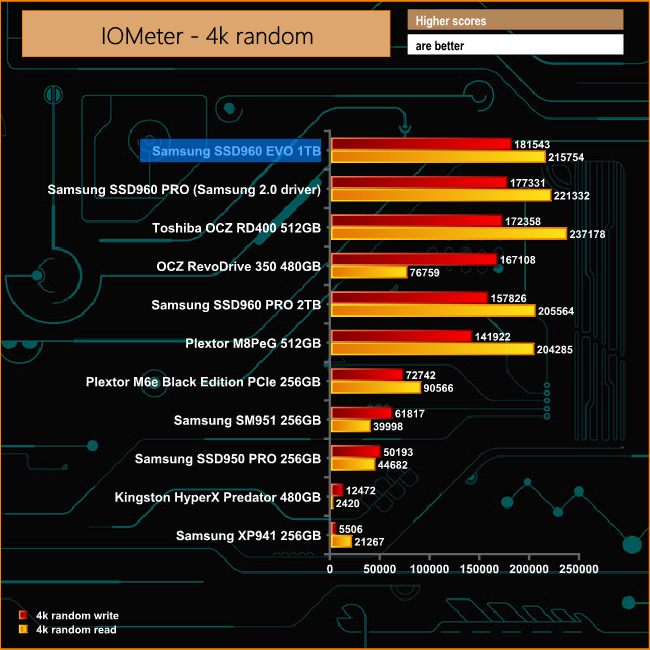
Although using the latest Samsung driver boosts both the read and write performance of the SSD960 PRO, it still lags behind the Intelligent TurboWrite-equipped SSD960 EVO in write performance.
To test real life performance of a drive we use a mix of folder/file types and by using the FastCopy utility (which gives a time as well as MB/s result) we record the performance of drive reading from & writing to a 256GB Samsung SSD850 PRO.
60GB Steam folder – 29,521 files.
50GB File folder – 28,523 files.
12GB Movie folder – 24 files (mix of Blu-ray and 4K files).
10GB Photo folder – 621 files (mix of .png, raw and .jpeg images).
10GB Audio folder – 1,483 files (mix of mp3 and .flac files).
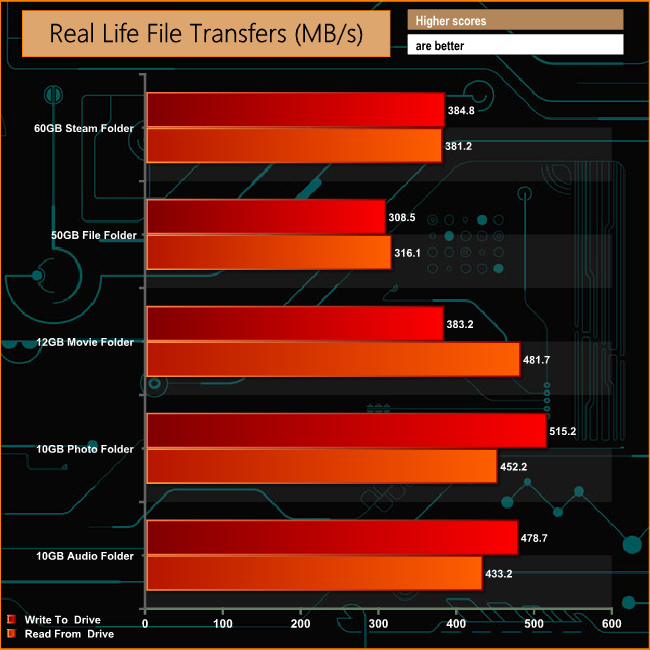
As you might expect, the SSD960 EVO dealt with real life file transfers without missing a beat. It shows very good consistency between read and writes dealing with the small bity files of the 50GB file and 60GB Steam folder transfers. It is also very quick dealing with the larger file sizes.
With two very fast M.2 NVMe drives in the high-end/enthusiast market segment in the shape of the SSD960 PRO and its predecessor the SSD950 PRO, Samsung has now, it seems, turned their attention on the mainstream market with the launch of the TLC V-NAND equipped SSD960 EVO. It's certainly an interesting move and, as a toe in the water to see if the mainstream market is ready for the next generation of SSDs, it will be fascinating to see how it sells.
The 1TB drive uses Samsung's 3rd Generation 48-layer 256Gb, 3-bit MLC (TLC) V-NAND as does the 500GB version while the entry-level 250GB drive uses 128Gb V-NAND. The drive uses the Polaris controller but unlike the 2TB SSD960 PRO that had the cache IC built on top of the controller, the SSD960 EVO is a more conventional layout with both ICs being separated.
The drive supports an advanced version of the TurboWrite technology which first saw the light of day with the 840 EVO, and while the technology was fine for use with standard SSDs it didn't have the legs to deal with the much faster-performing NVMe drives and potentially much heavier workloads. Samsung's answer is Intelligent TurboWrite which not only uses a larger SLC buffer than TurboWrite, it can dynamically adjust the SLC buffer by using any spare capacity the drive has if the data it's being asked to handle is larger than the default SLC buffer. If there isn't enough spare capacity, the Intelligent TurboWrite technology won't work.
Performance wise the drive is very quick. Quoted Sequential performance figures for the drive are up to 3,200MB/s for reads and up to 1,900MB/s for writes. Under our test conditions, the drive was slightly down on the official figure producing a score of 2,975MB/s but writes were bang on at 1,917MB/s. When it came to the 4K random read/write tests, the drive produced the highest write figure for a drive we have seen and its read performance isn't that far behind the SSD960 PRO.
As for data security, the drive features AES 256-bit data hardware encryption and TCG/Opal support but at the time of this review, eDrive (IEEE1667) isn't yet supported.
The 1TB drive has an endurance of 400TBW and is backed by a three-year warranty which is two years less than the PRO version.
We found the 1TB Samsung SSD 960 EVO available for around £470 in the UK.
Discuss on our Facebook page HERE.
Pros
- Performance
- Intelligent TurboWrite
Cons
- Pricey
- Only a three-year warranty
KitGuru says: It will be interesting to see if the mainstream market is ready to embrace an NVMe M.2 drive, even if it does pack a sizeable performance punch.


Its really hard to trust Samsung with e Drive 1667 they never delivered on the 950 like they promised and I don’t have any faith that they will deliver on the 960. Until this happens it’s a non purchase for me. I am disappointed no hardware site has taken them to task on this.