 KitGuru KitGuru.net – Tech News | Hardware News | Hardware Reviews | IOS | Mobile | Gaming | Graphics Cards


Today we are looking at the latest Solid State Drive from Intel, the 730. This 2.5 inch drive uses a specially qualified 3rd generation Intel controller, the same 20nm NAND flash memory that was used in the S3500, alongside an optimised firmware. Intel have overclocked the controller by 50% and the NAND bus has been tweaked by a further 20%. How does it stack up in 2014?
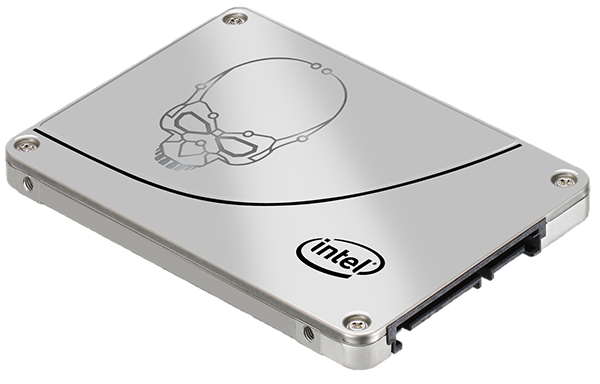
Intel have released the 730 in 240GB and 480GB capacities and there is quite a difference in rated write performance between the two units.
Sustained Sequential Reads / Writes
240GB: up to 550 / 270 MB/s
480GB: up to 550 / 470 MB/s
The 240GB drive is markedly slower than the larger 480GB drive, with write speeds dropping from a rated 470 MB/s to 270 MB/s. With the 2014 SSD market being so competitive, this slow write speed does stand out like a sore thumb as it is very similar to write speeds we documented with last generation SATA 2 Sandforce drives. Thankfully both drives offer the same read speeds – up to 550 MB/s … close to the bandwidth limitations of the SATA 3 interface.
730 SSD 4K IOPS performance is rated at 86,000 read and 56,000 write for the 240GB model and 89,000 read and 74,000 write for the 480GB model. Again the 240GB unit suffers a noticeable performance penalty.
The new 730 Solid State Drive is based on the Intel PC29AS21CA0 controller which is found inside the Intel DC S3500 and S3700 products. Both of these drives are designed with the server market in mind, delivering consistent write performance. The higher cost S3700 has been designed specifically to deal with extremely taxing write based workloads. It is able to deliver 10 full drive writes every day, for five years.
The 730 is based on these drives, but as a consumer model it is using 20nm ONFI flash memory. The controller has been overclocked from the 400mhz speeds in the server models, to a final clock speed of 600mhz. NAND bus speeds have also been increased from 83mhz to 100mhz.
The 730 is also protected with an impressive five year warranty – covering 70GB of data transfer each day across the time frame. If you are moving a lot of data around every day and demand the highest levels of reliability, then this is a very strong selling point.
Intel claim that the performance in RAID 0 has been optimised with almost perfect scaling. As Intel only sent us a single drive for this review today, we are sadly unable to test these claims.
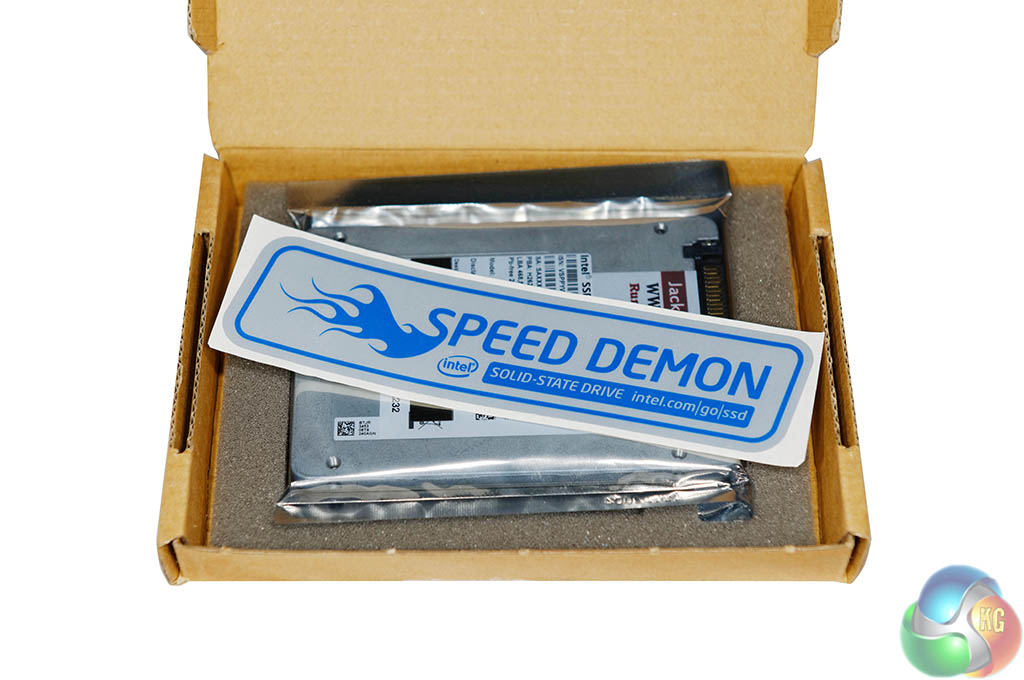
No retail packaging with our sample, just a simple brown box with a ‘speed demon' sticker, and the drive enclosed in an anti static wrap.
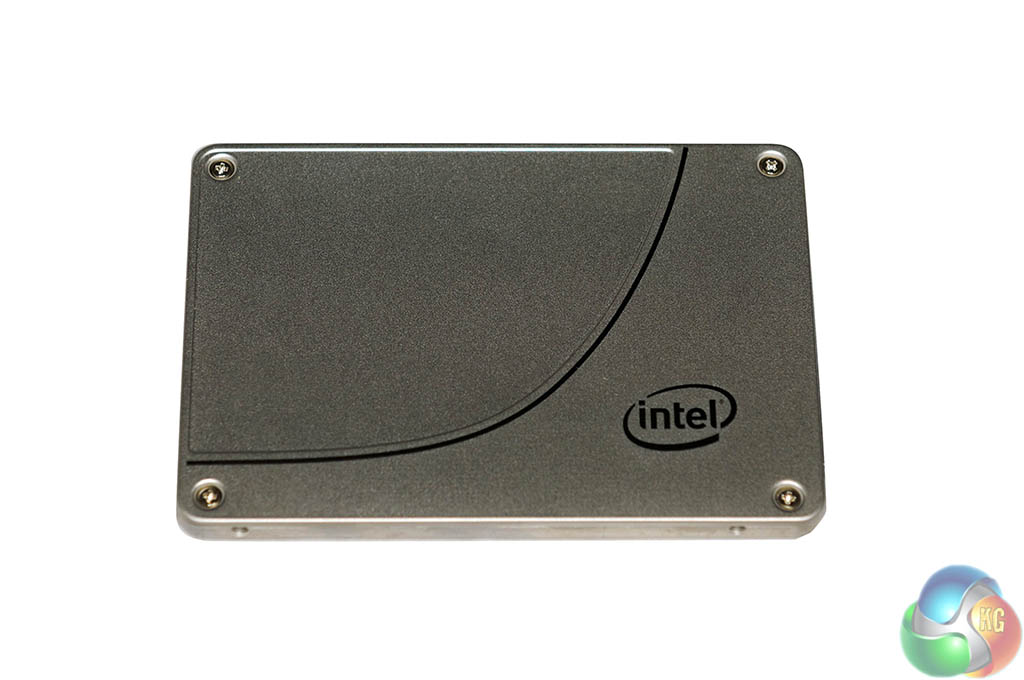
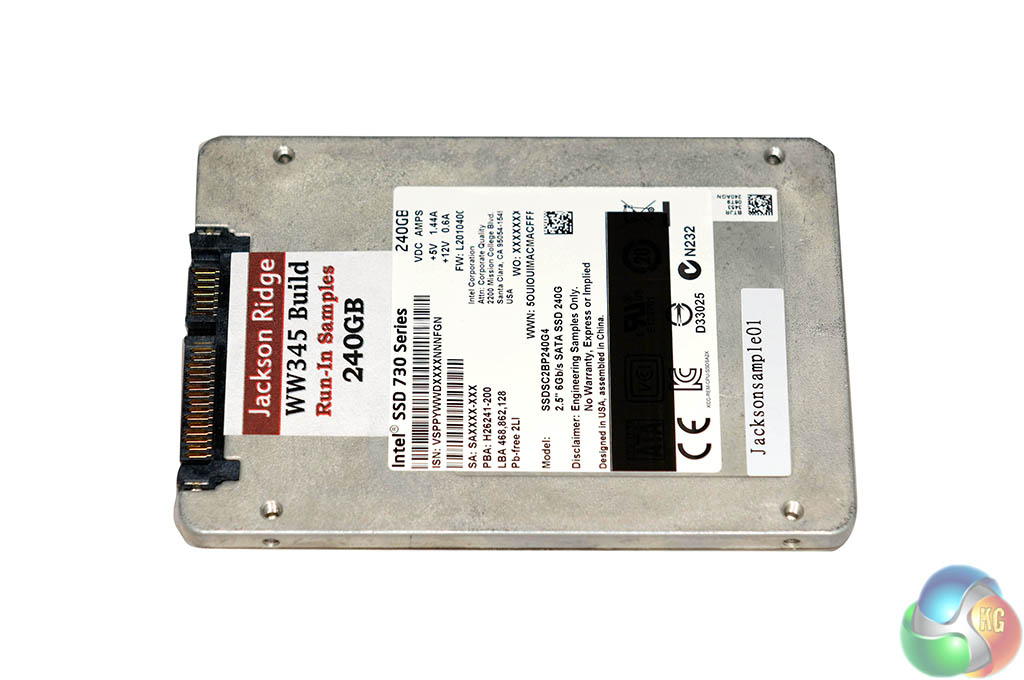
The Intel 730 240GB Solid State Drive ships in an attractive little enclosure – with details listed on the underside. The full retail model of this drive is covered with a ‘skull sticker' shown on the first page of our review today.
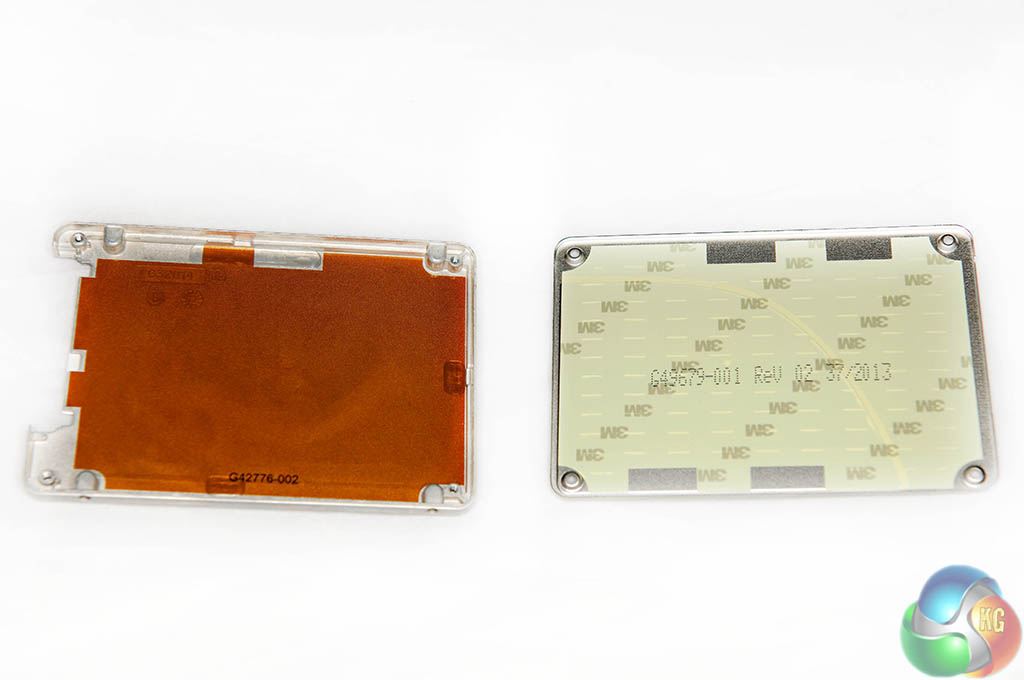
Four screws hold the two sections of the chassis in place. There are thermal/protective pads on both sides.
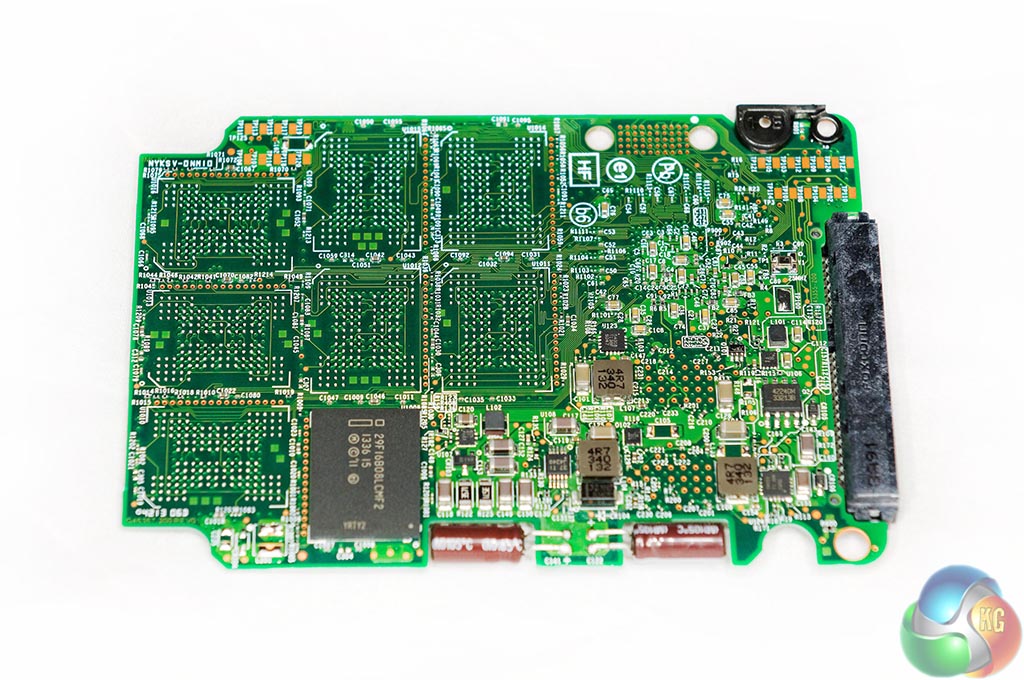
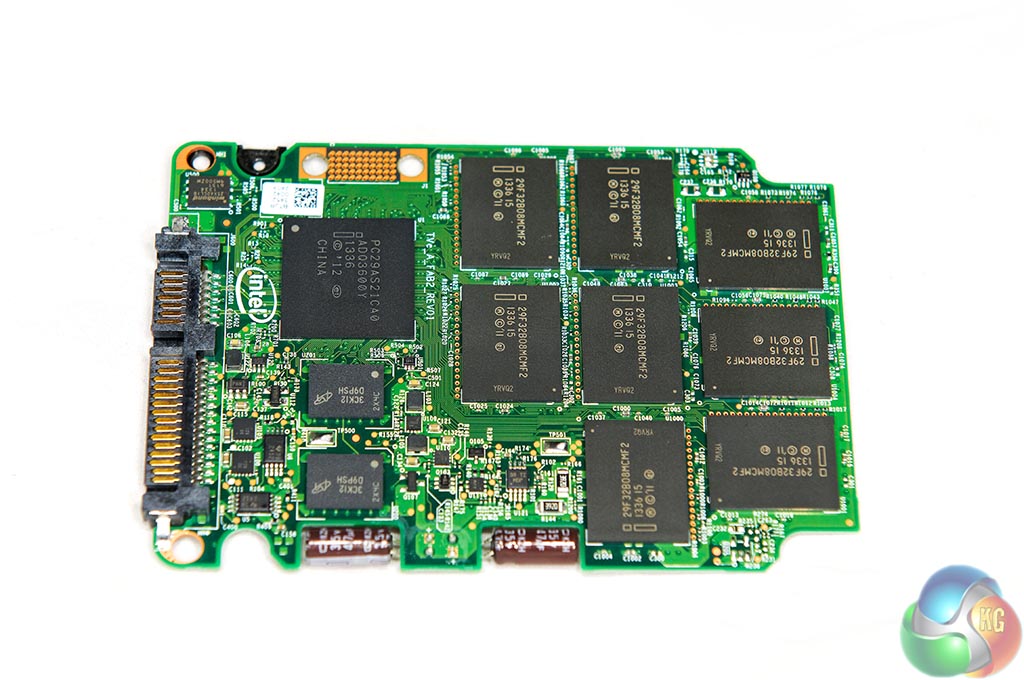
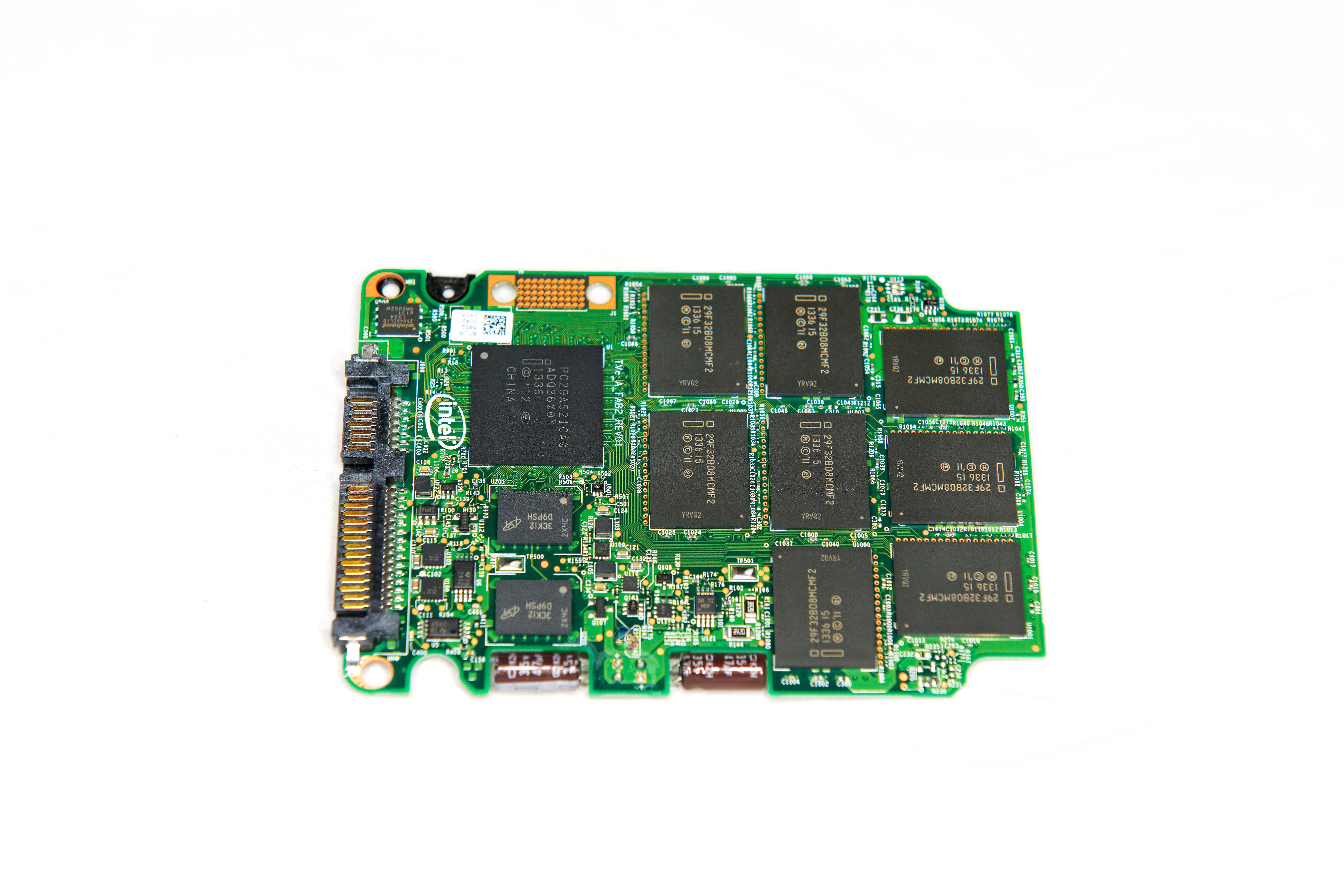
The pictures above show two 105c rated 47 μF rated capacitors (along the bottom of the images), which are utilised for power loss protection. Above this are two 512MB DDR3 1600 DRAM chips. The rear of the PCB has eight NAND packages and the Intel PC29AS21CA0 controller, which as previously discussed, runs at 600mhz. The other side of the PCB would be populated if this was the 480GB model.On this page we present some super high resolution images of the product taken with the 24.5MP Nikon D3X camera and 24-70mm ED lens. These will take much longer to open due to the dimensions, especially on slower connections. If you use these pictures on another site or publication, please credit
Kitguru.net as the owner/source. You can right click and ‘save as’ to your computer to view later.
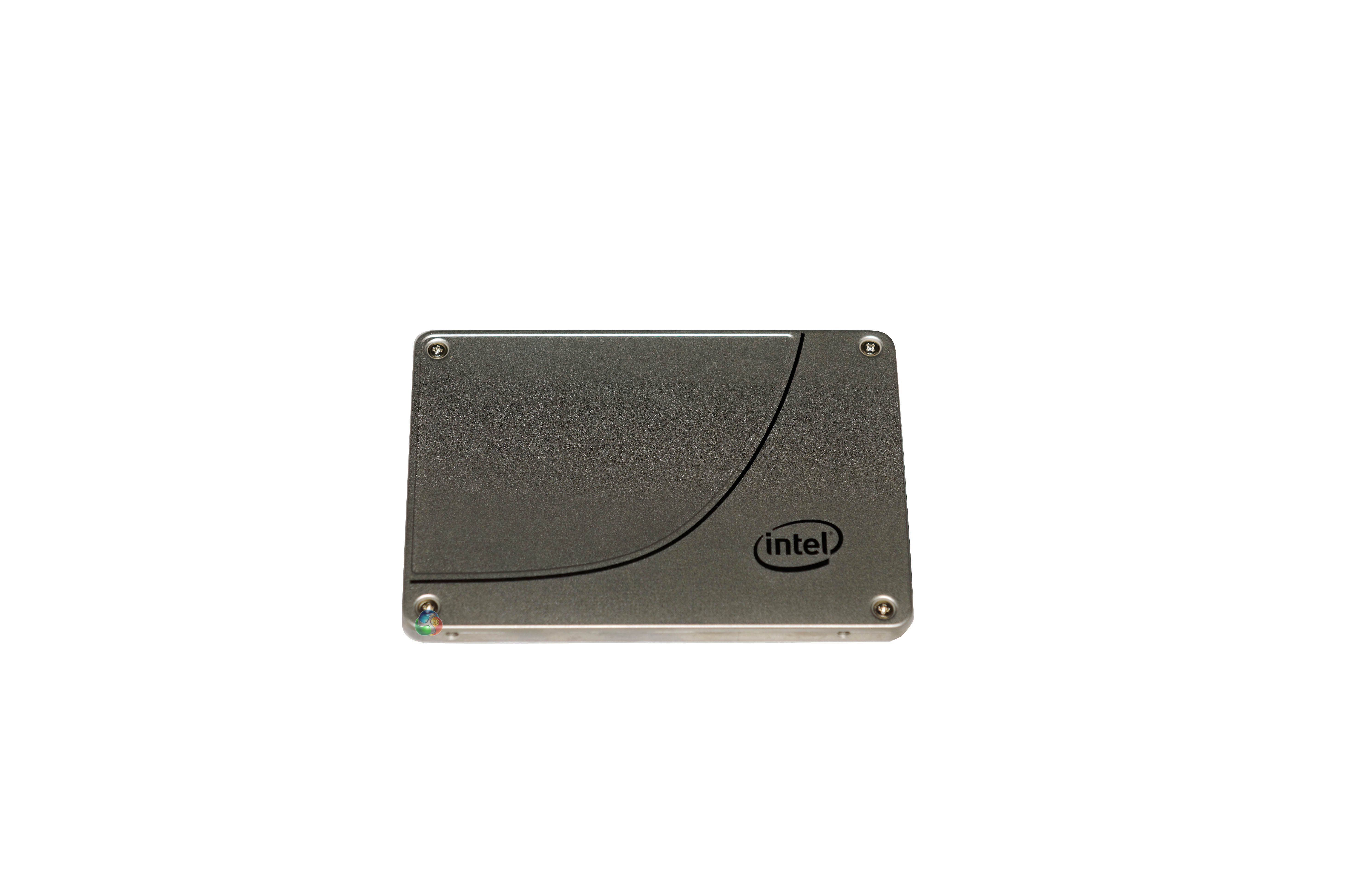
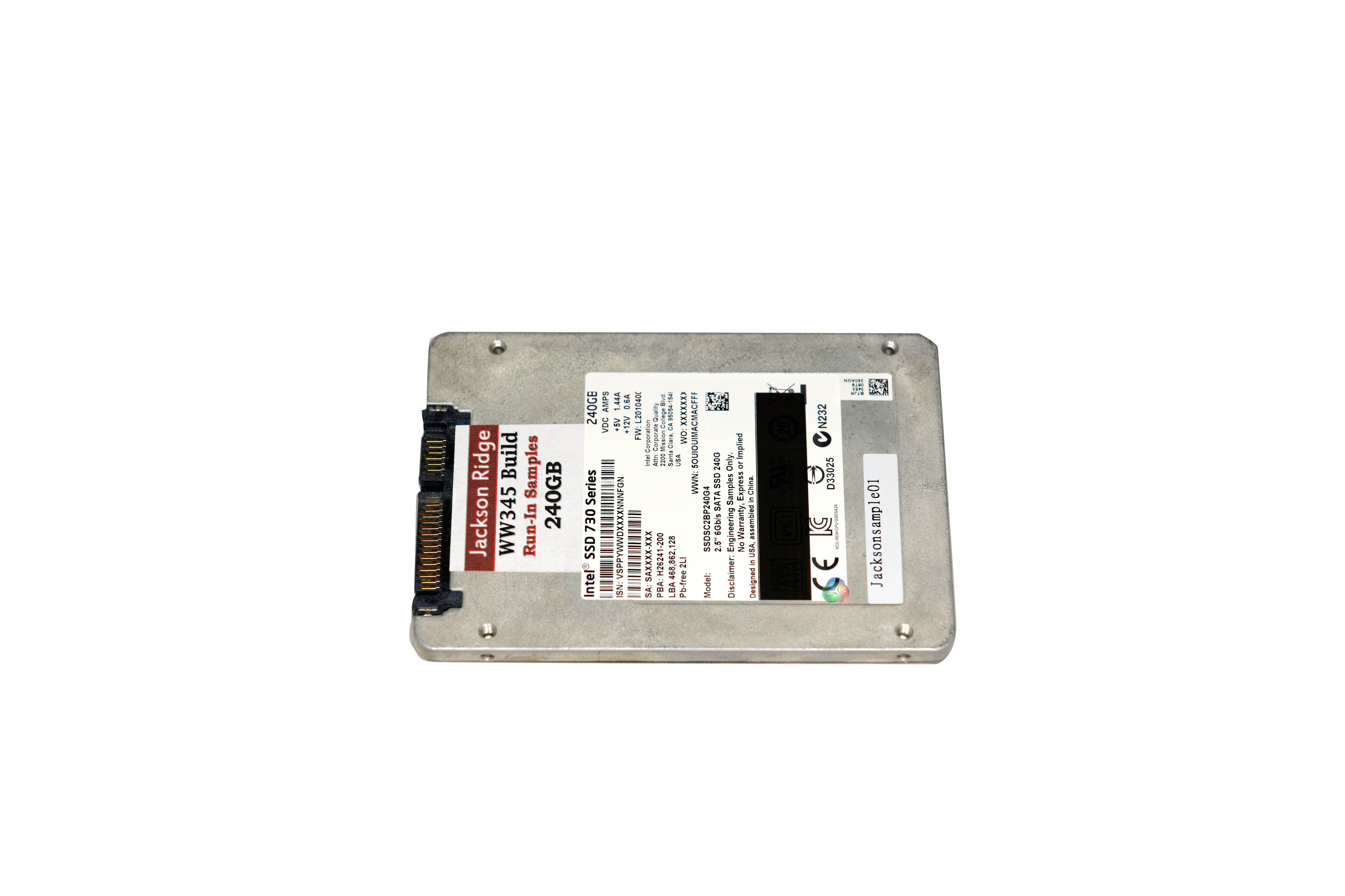
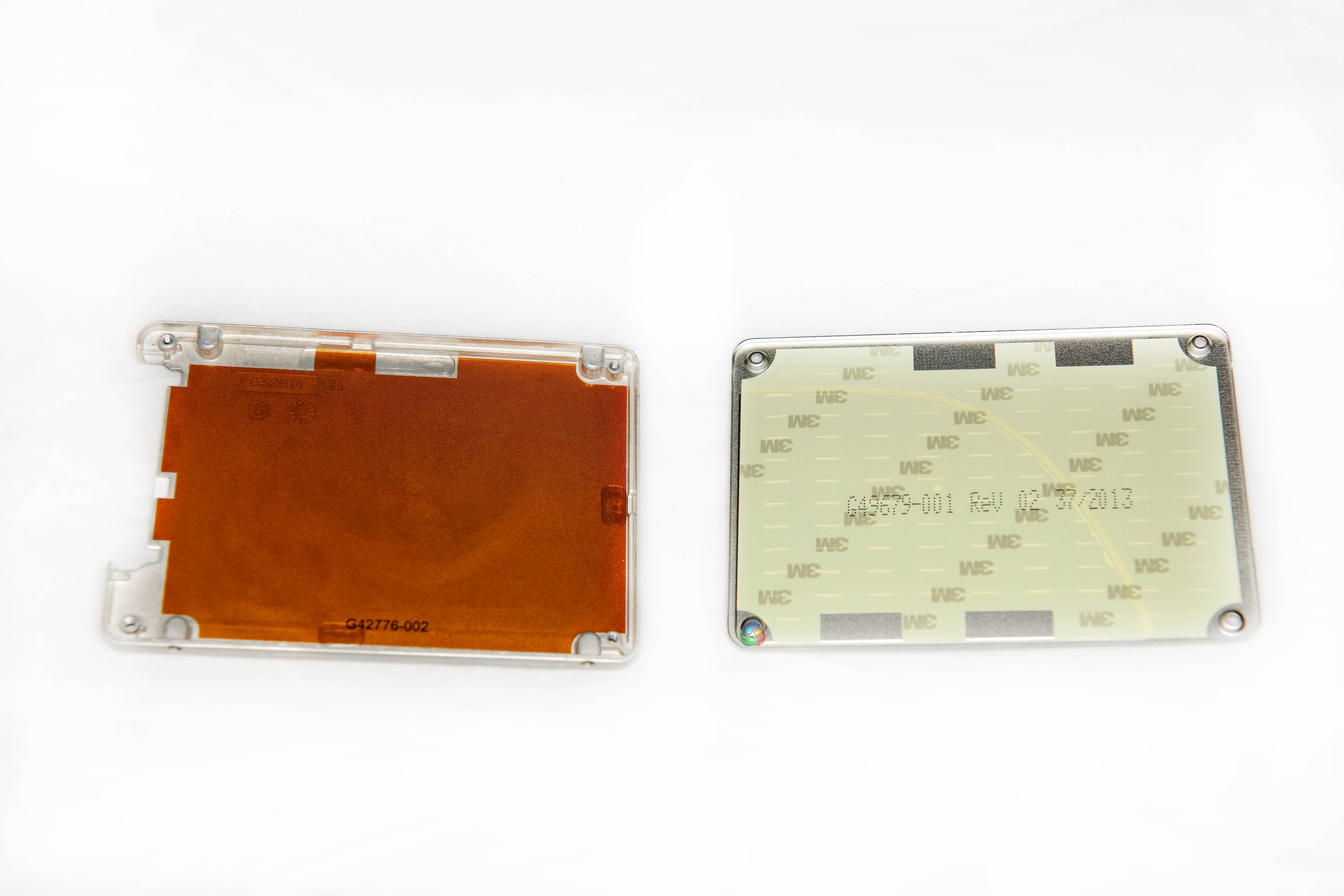
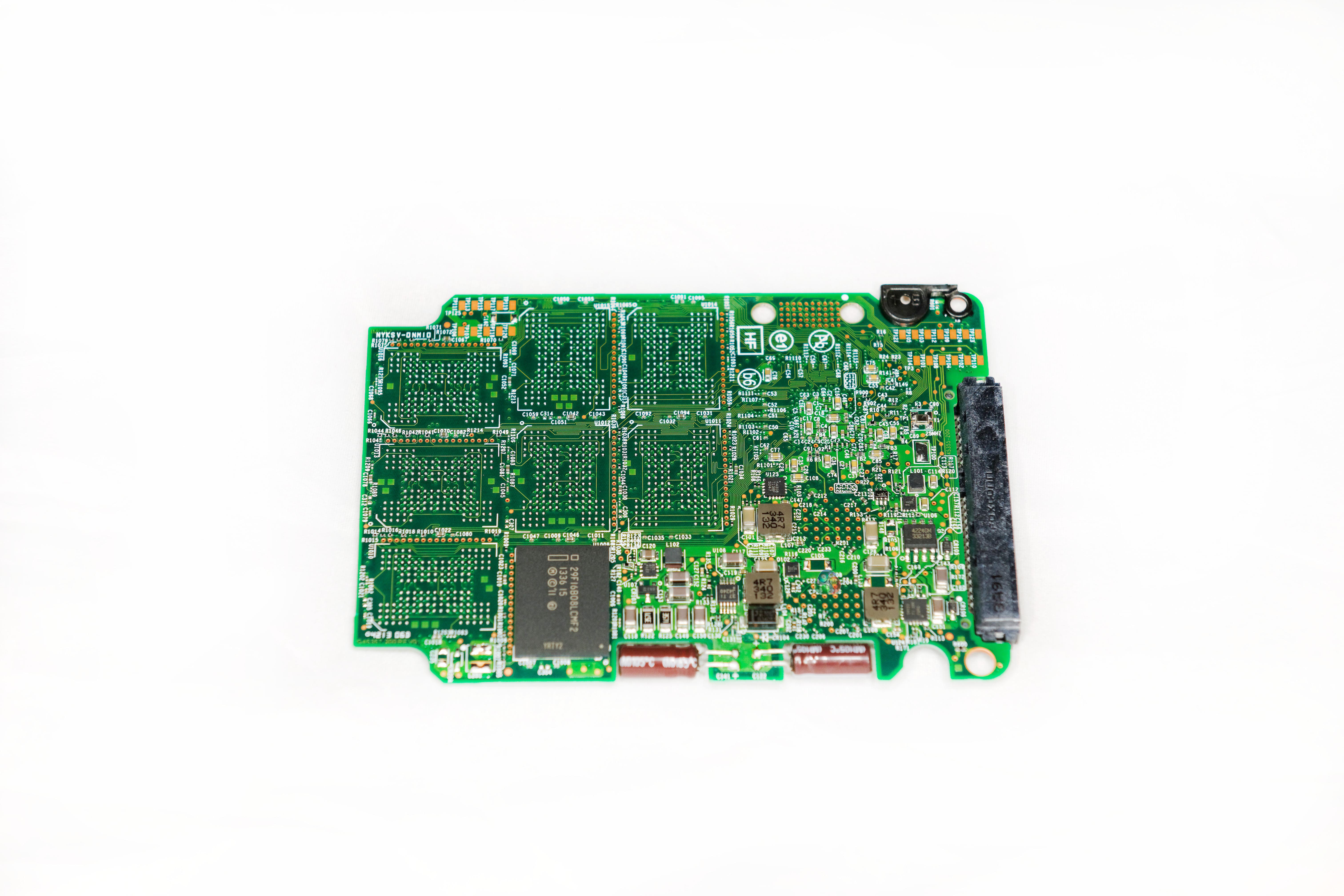
For testing, the drives are all wiped and reset to factory settings by HDDerase V4. We try to use free or easily available programs and some real world testing so you can compare our findings against your own system.
This is a good way to measure potential upgrade benefits.
Main system:
Kitguru Test Rig 2
Compare system:
CPU: Intel Core i7 2700k
Cooler: Thermaltake Frio OCK
Motherboard: Asus P8P67 Deluxe
Memory: ADATA DDR3 2000mhz 9-11-9-24
PSU: ADATA 1200W
Graphics: Sapphire HD6950 Flex Edition
Chassis: Thermaltake Level 10 GT
Operating System: Windows 7 64 bit
Other Drives
OCZ Vertex 460 240GB
Samsung 840 EVO 1TB
OCZ Vector 150 240GB
ADATA Premier Pro SP900 128GB
Visiontek Racer Series 120GB
Kingston HyperX 3k 120GB
OCZ Vertex 4 512GB
OCZ Vertex 4 128GB SSD Review (firmware 1.4 update)
Transcend SSD720 128GB
Kingston SSDNow V+200 90GB
OCZ Octane 512GB (V1.13 fw)
Mach Xtreme MX-DS Turbo 120GB
Corsair Performance Pro 256GB
Samsung 830 Series 512GB
Patriot Pyro SE 240GB
Patriot Wildfire 240GB
MemoRight FTM Plus 240GB SSD
Patriot Pyro 120GB SSD
OCZ RevoDrive 3 x2 480GB
Patriot Wildfire 120GB SSD OCZ Agility 3 240GB
OCZ Vertex 3 240GB
OCZ Vertex 3 MAX IOPS 240GB
ADATA S511 240GB
Intel 510 120GB
Corsair F100 100GB
OCZ Vertex 2 120GB
Crucial Real SSD C300 64GB
MemoRight FTM.25 115GB SSD
Samsung SpinPoint F3 1TB
PCIe drives test system:
OCZ RevoDrive Hybrid 1TB HDD/SSD &
OCZ RevoDrive 3 x2 480GB
Software:
Atto Disk Benchmark
CrystalMark
AS SSD
PCMark 8
IOMeter
All our results were achieved by running each test five times with every configuration this ensures that any glitches are removed from the results. Trim is confirmed as running by typing fsutil behavior query disabledeletenotify into the command line. A response of disabledeletenotify =0 confirms TRIM is active.
Crystalmark is a useful benchmark to measure theoretical performance levels of hard drives and SSD’s. We are using V3.0.1 x64.
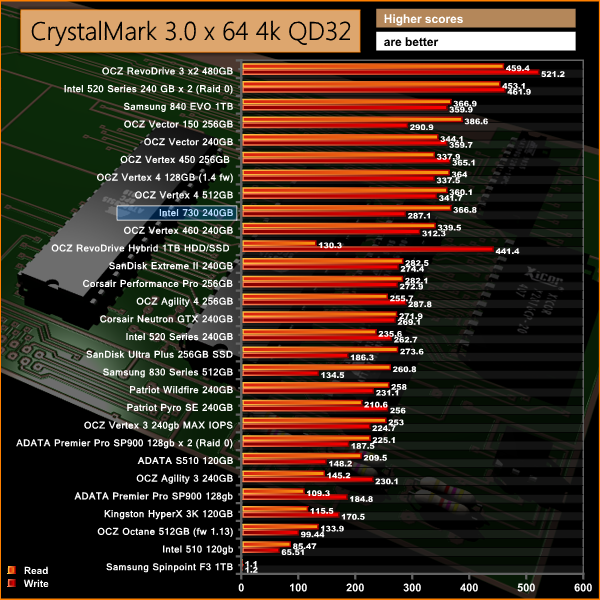
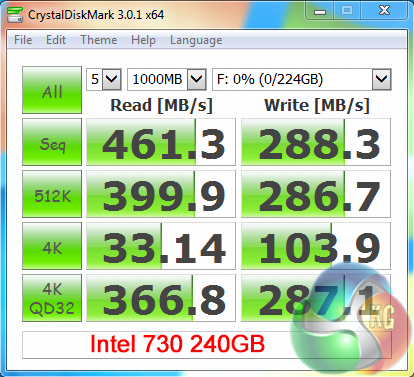
4K QD32 performance is excellent, rated in the top half of performance drives we have reviewed in the last year. As stated earlier in the review, the sequential write performance of the 240GB drive is rated around 270MB/s which is 200 MB/s less than the 480GB model.
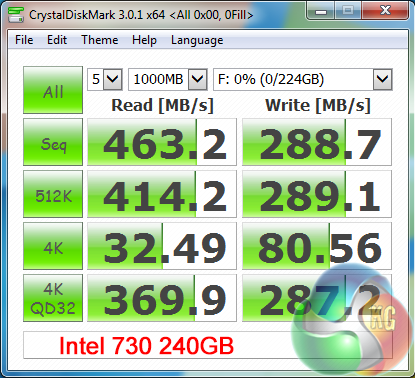
The controller deals with compressible data at the same level as incompressible data. These are ideal results for a very wide audience.


Above, some included compares from other leading solid state drives which we have reviewed in the last year.
The ATTO Disk Benchmark performance measurement tool is compatible with Microsoft Windows. Measure your storage systems performance with various transfer sizes and test lengths for reads and writes. Several options are available to customize your performance measurement including queue depth, overlapped I/O and even a comparison mode with the option to run continuously.
Use ATTO Disk Benchmark to test any manufacturers RAID controllers, storage controllers, host adapters, hard drives and SSD drives and notice that ATTO products will consistently provide the highest level of performance to your storage.
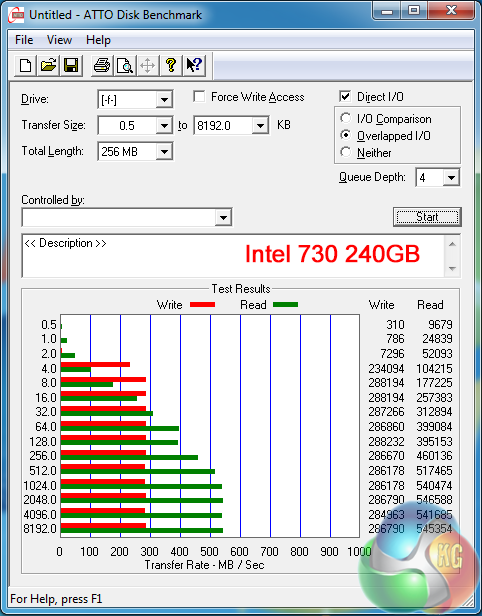

As we discussed earlier in the review, the write performance of the 240GB drive is considerably less than the larger 480GB unit – around 270 MB/s v 470 MB/s. This means the 240GB unit scores close to the bottom of our chart – as write performance is the same as many SATA 2 drives we reviewed years ago.
Read performance is excellent – hitting 546 MB/s.


Some comparison results from other leading products available on the market today.
AS SSD is a great free tool designed just for benching Solid State Drives. It performs an array of sequential read and write tests, as well as random read and write tests with sequential access times over a portion of the drive. AS SSD includes a sub suite of benchmarks with various file pattern algorithms but this is difficult in trying to judge accurate performance figures.

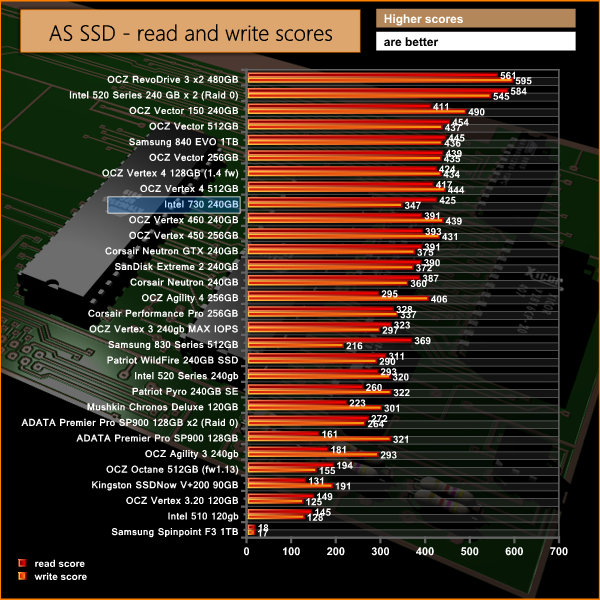
AS SSD only deals with incompressible data, and this highlights the strength of the Intel 730 drives. The final score of 988 points put it in the top 20% of drives we have tested.


Some other comparisons from leading manufacturer drives, which we have tested in recent months.
PCMark 8 is the latest version in our popular series of PC benchmarking tools. Improving on previous releases, PCMark 8 includes battery life measurement tools and new tests using popular applications from Adobe and Microsoft. Whether you are looking for long battery life, or maximum power, PCMark 8 helps you find the devices that offer the perfect combination of efficiency and performance for your needs.

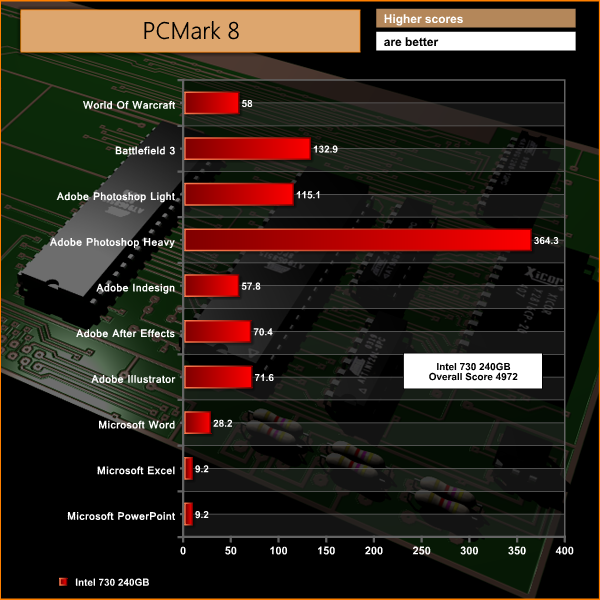
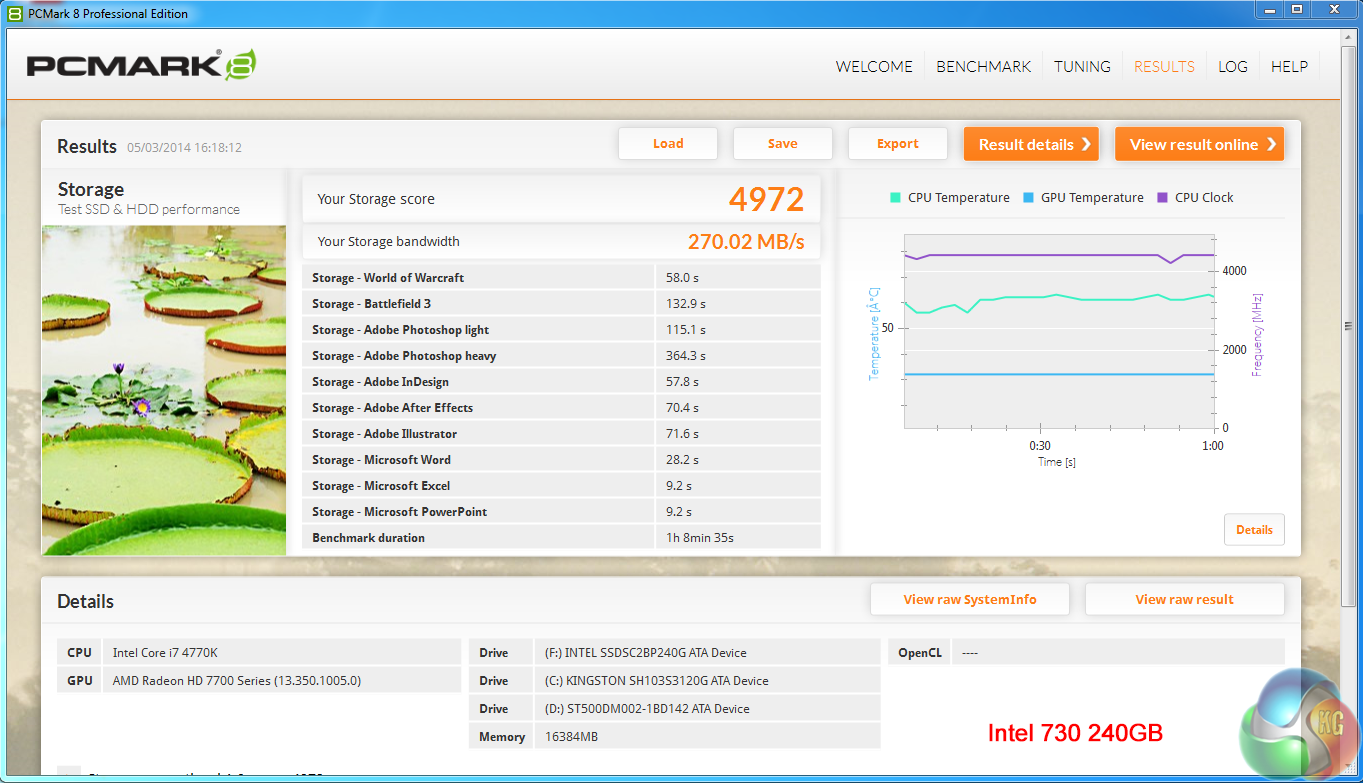
Results are excellent. We reviewed the OCZ Vertex 460 240GB earlier this week and it scored 4974 points, which is almost identical to the Intel 730 240GB scoring of 4972 points today.
IOMeter is another open source synthetic benchmarking tool which is able to simulate the various loads placed on hard drive and solid state drive technology.
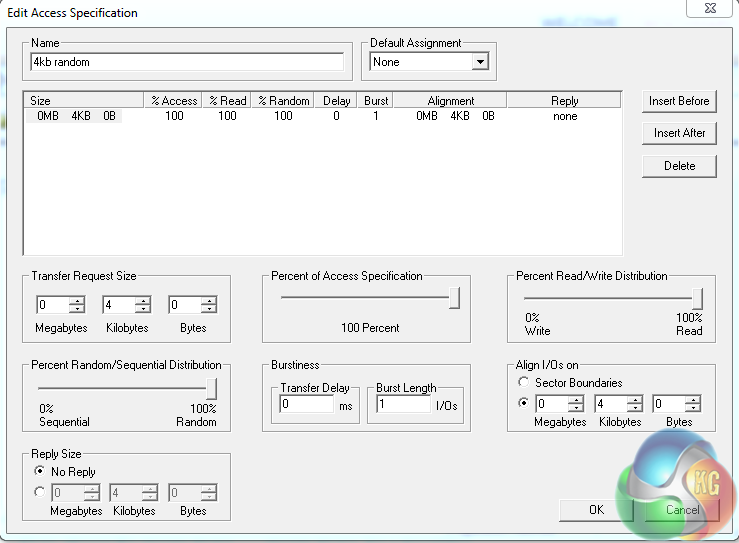
We test with both random read and write 4k tests, as shown above. There are many ways to measure the IOPS performance of a Solid State Drive, so our results will often vary between the manufacturer’s quoted ratings.
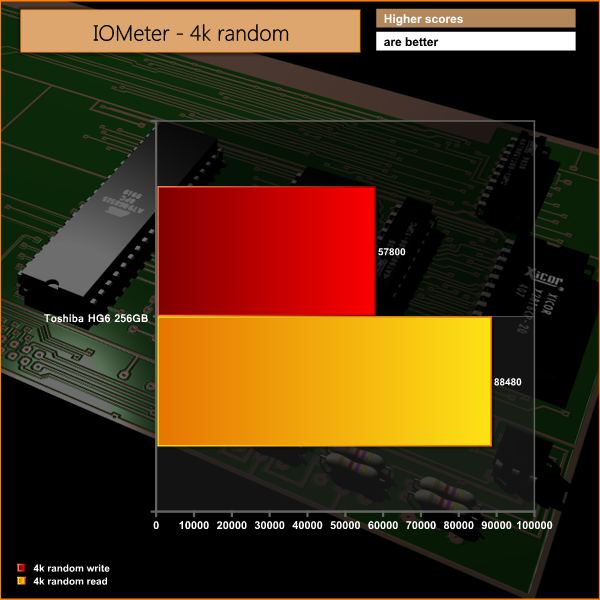
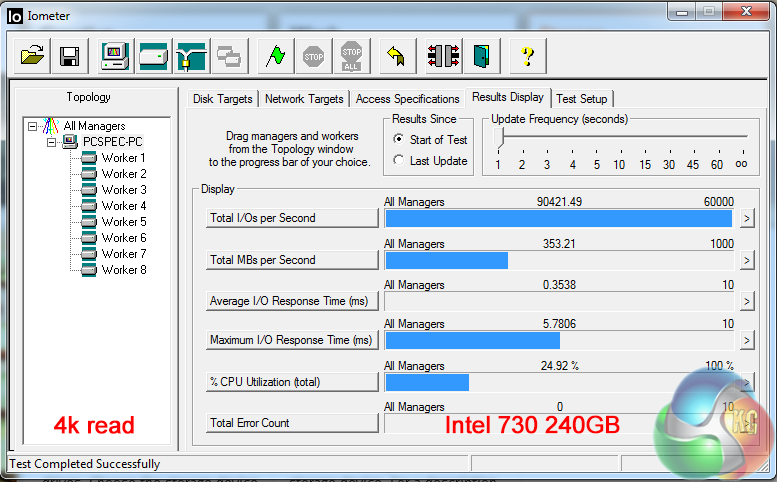
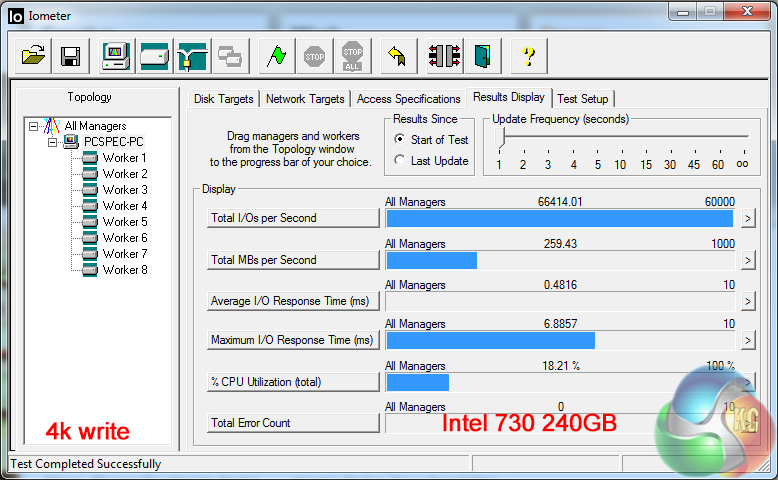
IOPS performance is strong, specifically in the 4k random read test, scoring over 90,000. As we expected, the write IOPS performance isn't at the same level, scoring 66,414.
Intel's official IOPS performance is rated at 86,000 read and 56,000 write, so our results are actually higher than Intel's official claims.
The Intel 730 ‘Jackson Ridge' has been an interesting Solid State Drive to analyse, as it is using a controller lifted from Intel's enterprise market. To make the product more interesting for the enthusiast sector, Intel have overclocked both the controller and NAND flash memory.
The performance of the 730 is excellent, it is a clear indication that Intel are still able to create a controller which can compete in 2014. The Intel 730 also deserves special praise for its ability to deal equally well with both compressible and incompressible data.
While the 5 year warranty of this drive may be matched by some of Intel's competitors, the data throughput warranty rating is class leading. The Intel 730 has some clear and strong selling points.
Competitors have quoted 20GB writes per day, while OCZ have upped this recently to 50GB a day with their Vector 150 Solid State Drive. The Intel 730 is rated to 70GB a day which could be beneficial if you have a very high daily workload, such as editing high definition video or rendering large 3D scenes.
We also appreciate the 47 μF rated capacitors which will ensure data gets transferred from the cache to flash memory, during a power failure. There are situations when the Intel 730 would successfully store critical data when other drives would fail.
The main negative with the smaller 730 drive is the reasonably weak write performance. The 480GB drive is rated at 470MB/s sequential write, but the 240GB capacity sadly takes a substantial hit, dropping to 270 MB/s. If write performance is very important we would recommend you spend the extra cash and get the larger 480GB version of the drive.
Overclockers UK have the 240GB unit available for pre-order at £179.99 inc vat, and the 480GB unit at £349.99 inc vat. If long term reliability and incompressible data performance is important then the 240GB has a lot to offer.
You can discuss on our Facebook page, over here.
Pros:
- 5 year warranty with 70GB of data rated per day.
- incompressible and compressible performance is very strong.
- IOPS performance.
- Intel drives have proven to be very reliable since they launched.
- built in capacitors act as a data safety measure.
Cons:
- A little more expensive than some leading competitor drives at same capacity.
- 240GB drive takes a 200 MB/s write hit compared to the 480GB drive.
Kitguru says: An excellent drive from Intel and one geared for long term reliability with balanced all round performance. If you move a lot of data around every day, this should be right at the top of your shortlist.


I love Intel drives, the performance figures are only part of the story – most reliable drives by far. I still have an original Intel SSD from the 1st generation and its working fine.
I have had 3 OCZ and Corsair sandforce drives fails over a couple of a months, I will always be going back to Intel. ordering a 240GB or maybe a 480GB jackson ridge SSD in the coming months, depending if I can stretch to it.
I dont think in real world terms the write speed of 270Mb/s would be a huge issue, but for some future proofing and a boot drive, the 480GB seems a better bet. The slight price overhead due to the reliability enhancements is worth it.
Intel lover here too, reliability is very important for me, I wouldn’t risk the chance of losing data over £20 more than an OCZ or something else.
Any ideas when OCUK will have these in stock? just a preorder page atm
I have had 3 OCZ and Corsair sandforce drives fails over a couple of a months, I will always be going back to Intel. ordering a 240GB or maybe a 480GB jackson ridge SSD in the coming months, depending if I can stretch to it. http://num.to/457-287-619-226
im using the Intel sandforce based drive that works great for me and now i cant wait to get the 240 gb jackson ridge. love the reliability of intel.