KitGuru KitGuru.net – Tech News | Hardware News | Hardware Reviews | IOS | Mobile | Gaming | Graphics Cards


The Stormforce Onyx is a decent little gaming PC designed to target a wide audience. The CoolerMaster Masterbox lite 5 case is a good choice in regards to aesthetics and build quality while the compact Micro ATX size means its great for smaller spaces. That said, it can be a little restrictive in regards to airflow despite the trio of three RED led fans.
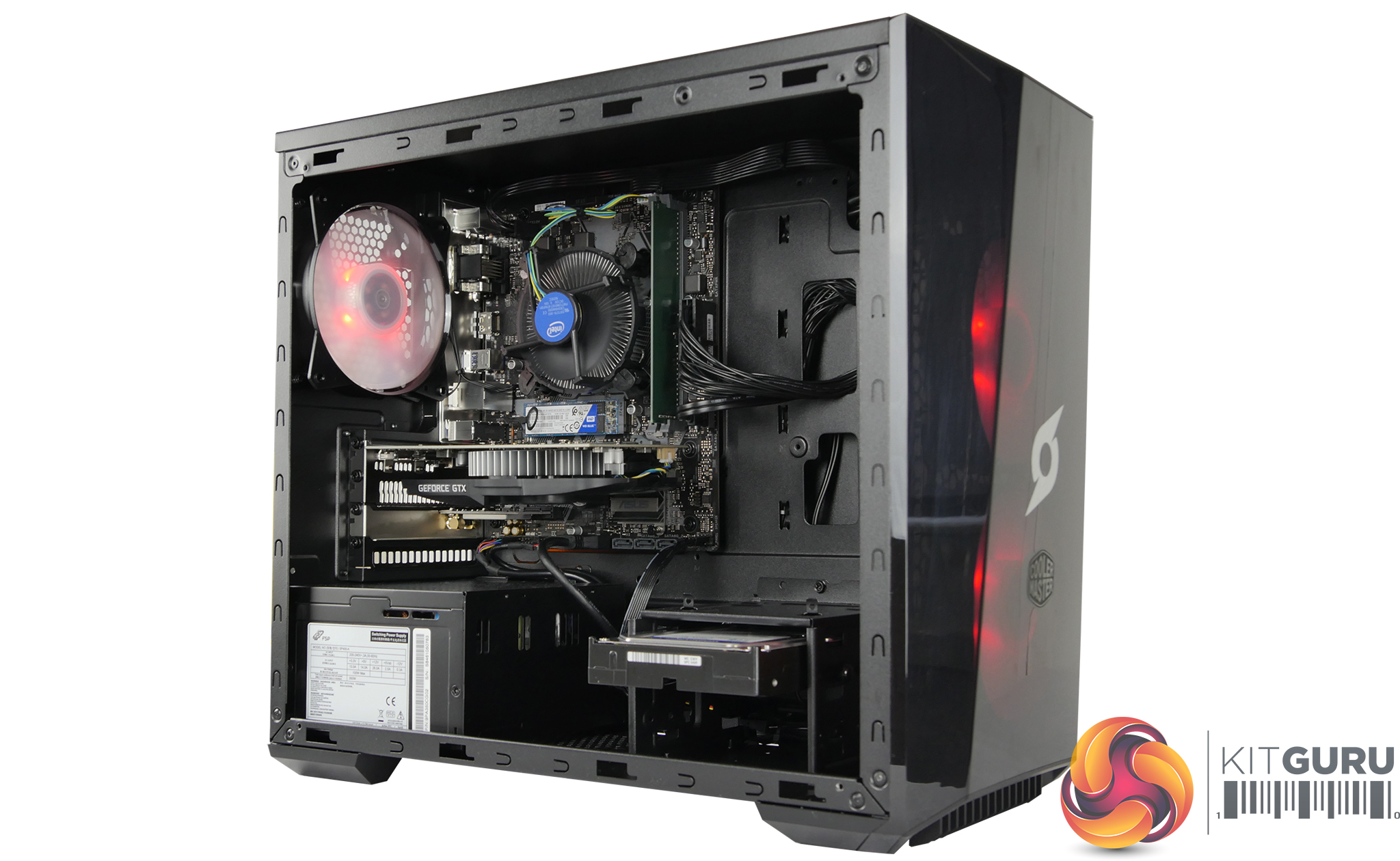
The components used in the build are well matched with none of them really letting the team down except the slower storage. However it's good to see an M.2 drive with enough space for a few games and I saw some great results when it comes to gaming performance at 1080p.
I think this would be a great starter system for someone just getting into PC gaming that might not be interested in building their own. The £650 asking price is fair and you could even team it with a 1080p, 144hz display for less demanding games and get a great gaming setup for under £1000. The excellent 3 year warranty that Stormforce offer is also going to give you piece of mind for the next few years.
Pros:
- Attractive case
- Good cable management
- Great 1080p gaming performance
- Fair price
- Compact size
- 3 year warranty
Cons:
- Storage is slow
- RAM cannot run at full speed
- Airflow could be better
The Stormforce Onyx PC can be found HERE for £649.99
Kitguru says: The Stormforce Onyx PC is a well priced system capable of playing many of the latest games. If you want to game at 1080p and have limited funds then this system is certainly worth a serious consideration.