KitGuru KitGuru.net – Tech News | Hardware News | Hardware Reviews | IOS | Mobile | Gaming | Graphics Cards


Testing and Performance
The key parts of the specification of our pre-built Intel NUC 12 Extreme review system are:
CPU 12th Generation Intel Core i9-12900 8P+8E (65W)
Memory 16GB Kingston HyperX Impact DDR4-3200 C21
Graphics card EVGA RTX 3070 XC3 Ultra Gaming 8GB
SSD 1TB WD Black SN850 PCIe Gen 4 M.2 NVMe
CPU Tests
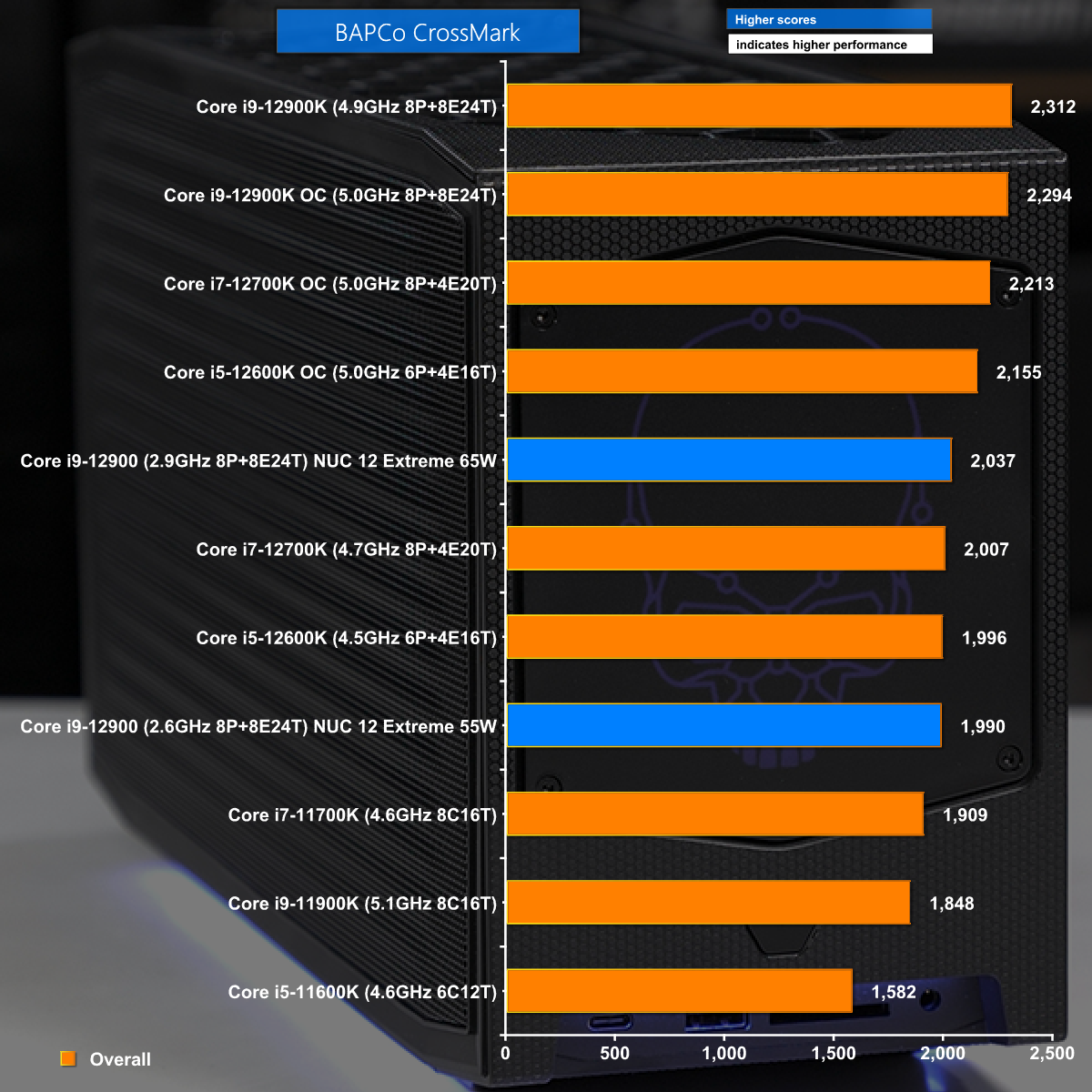
In BAPCo CrossMark the 12th Gen NUC demonstrates its all-round ability and delivers similar performance to the Core i5-12600K.
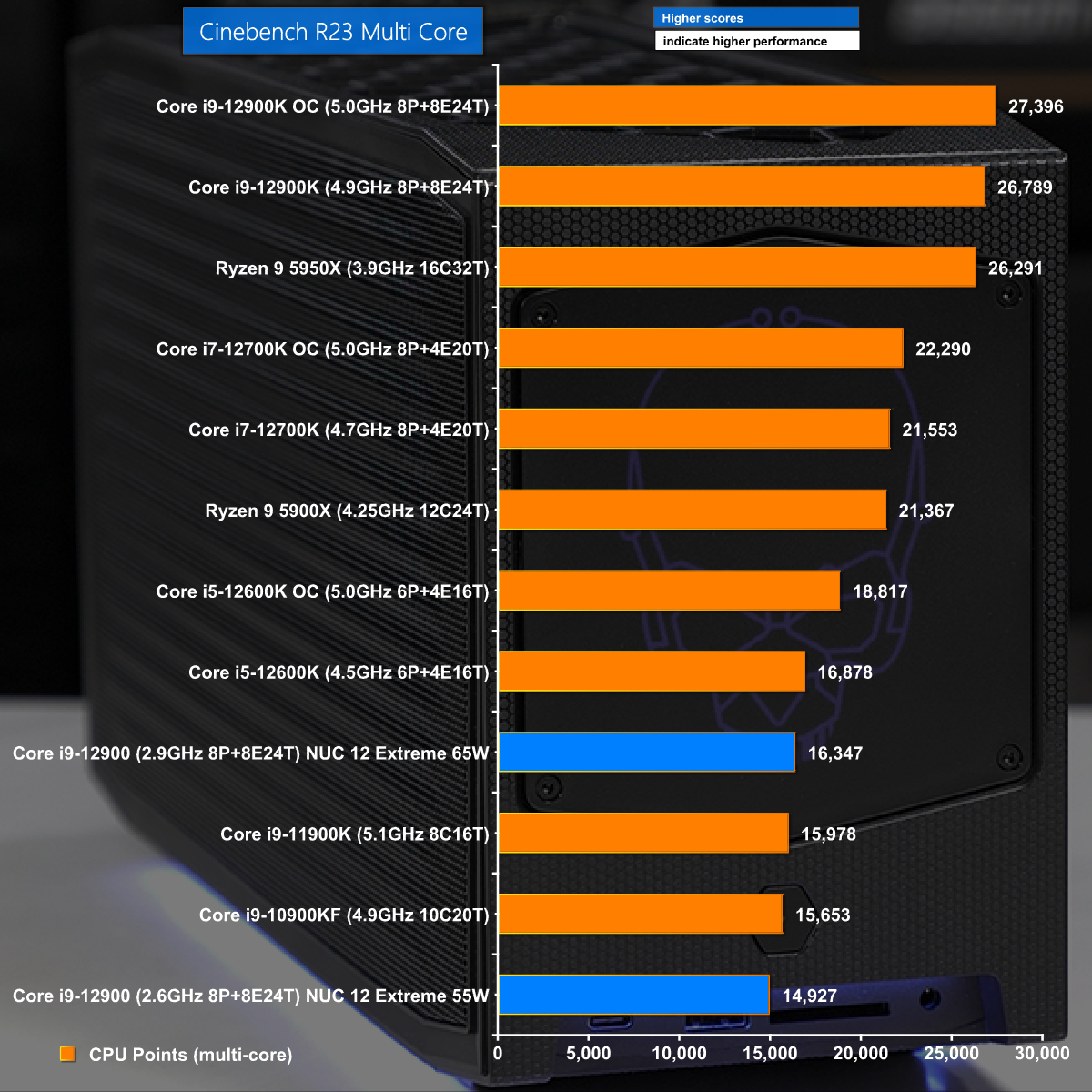
Cinebench R23 Multi Core shows the limitations of the Core i9-12900 running on 55W or 65W of power. In our video we didn't break down the clock speeds at different power limits however they might prove interesting:
Core i9-12900K at 219W, P cores 4.9GHz, E cores 3.7GHz
Core i9-12900 at 65W, P cores 2.6GHz, E cores 2.2GHz
Core i9-12900 at 55W, P cores 2.9GHz, E cores 2.4GHz
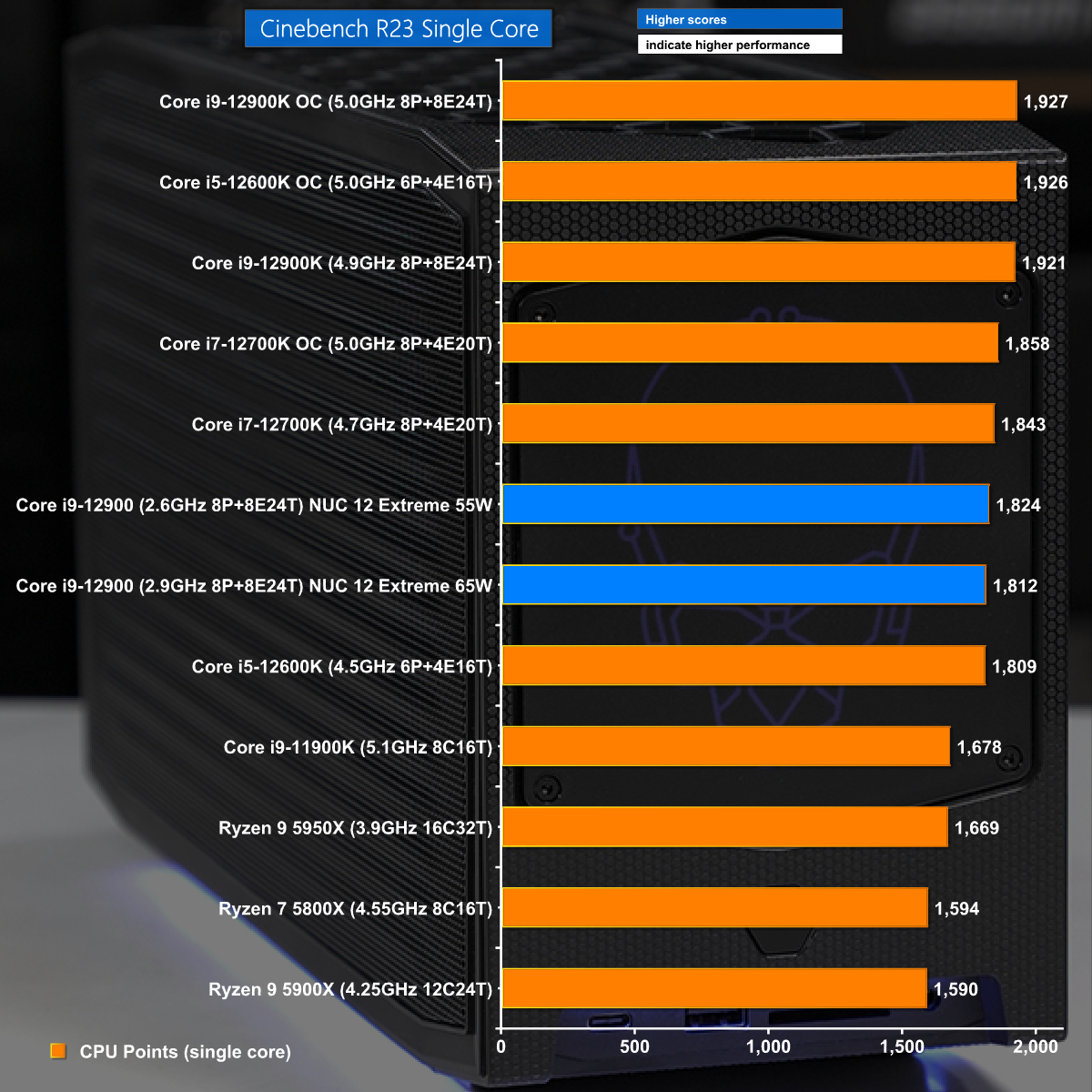
In the Single Core test of Cinebench R23 the power limit makes very little difference to the performance of the Core i9-12900 and it is able to compete with the K-SKUs quite successfully.