KitGuru KitGuru.net – Tech News | Hardware News | Hardware Reviews | IOS | Mobile | Gaming | Graphics Cards


Before we started this review I had my doubts that a combination of Intel Core i5-13400F and DDR4-3200 RAM would provide a decent basis for a gaming PC and neither was I sure about the RTX 3060 Ti graphics card.
Dominic, by contrast, was confident as he previously reviewed a Cyberpower Infinity X123 Pro PC that used a Core i3 and regular RTX 3060 to good effect. And blimey was Dominic ever correct as the PCSpecialist Tempest Nova delivered impressive results in various games at 1080p and 1440p. Admittedly you won't need a monitor with a refresh rate above 120Hz unless you're an esports fanatic, but the gaming experience is genuinely impressive considering the calibre of hardware.
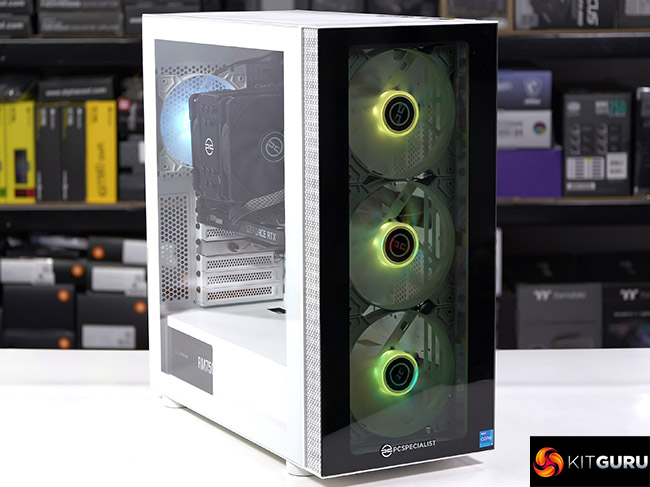
This is excellent news as we reviewers genuinely hate suggesting you should move upmarket from a £500 CPU to a £700 model or push out the boat and spend £300 on a 64GB DDR5 kit as the ‘extra RAM may come in handy'. Often this is good advice but there are times when a budget product that does exactly what it promises is all you need, and that is true of the PCSpecialist Tempest Nova. It delivers a superior gaming experience to a console but can also be used for email, spreadsheets, photo editing and other tasks that just work better on a large screen.
You can buy the PCSpecialist Tempest Nova for £1,099 HERE.
Discuss on our Facebook page HERE.
Pros:
- Excellent value for money.
- Impressive 1440p gaming performance.
- Smart looks and RGB lighting.
Cons:
- The CPU cooler gets noisier than we would expect.
- No USB Type-C on the front I/O
- The case looks a bit empty and over-sized.
KitGuru says: PCSpecialist Tempest Nova is a great option for 1080p or 1440p gaming without breaking the bank.