KitGuru KitGuru.net – Tech News | Hardware News | Hardware Reviews | IOS | Mobile | Gaming | Graphics Cards


Months ago, Anti-Lag+ had to be disabled in online multiplayer games like Counter-Strike 2 due to the technology leading to false anti-cheat flags and player bans. Now, Anti-Lag has been reworked with Anti-Lag 2, which has now debuted in Counter-Strike 2 and should be friendly to use with other online multiplayer games in the future.
While AMD initially claimed that several titles supported Anti-Lag+ at launch, it was soon discovered that using this technology could lead to bans in specific games. Subsequently, AMD ceased support for Anti-Lag+ and rolled out a new driver to omit the feature. The company is now introducing a new driver with a revamped Anti-Lag technology called Anti-Lag 2. Contrary to Anti-Lag+, this new technology requires game integration, similar to the original Anti-Lag.
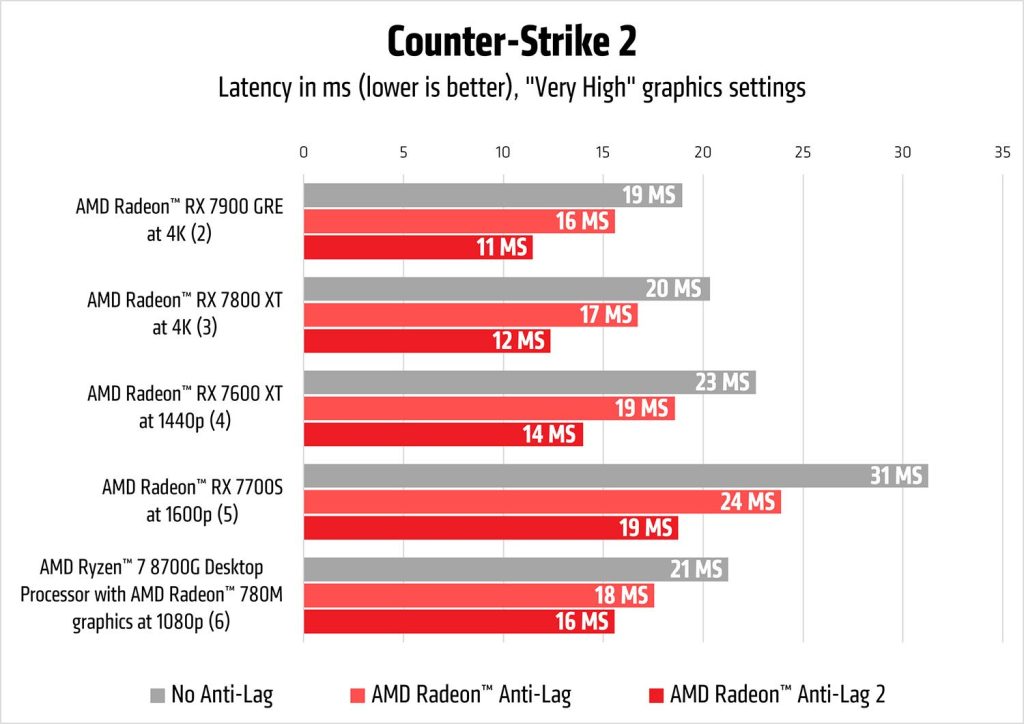
AMD collaborated with Valve to ensure that Anti-Lag 2 is compatible with its game titles, which were previously incompatible with Anti-Lag+ and resulted in bans. This collaboration guarantees that no bans will be imposed for using Anti-Lag 2, which has been thoroughly tested before its release. Anti-Lag 2 now supports a broader range of GPU architectures, including the Radeon RX 5000/6000 series graphics cards, expanding its accessibility beyond RDNA 3 GPUs.
Anti-Lag 2 is currently available only for Counter-Strike 2. Users must download and install the AMD Software: Adrenalin Edition 24.5.1 with the Anti-Lag 2 Technical Preview to use it. Once installed, Anti-Lag 2.0 will be enabled by default in the “ADVANCED VIDEO” settings menu of Counter-Strike 2, providing players with significantly reduced click-to-response latency.
Discuss on our Facebook page, HERE.
KitGuru says: Will you be trying Anti-Lag 2 now, or will you wait for it to arrive in other games?