KitGuru KitGuru.net – Tech News | Hardware News | Hardware Reviews | IOS | Mobile | Gaming | Graphics Cards


Let’s dive into some benchmarks, all tests done with the laptop plugged in and set to best performance in Windows and Razer Synapse software. Let’s start with our CPU performance, our Book 13 has the Intel Core i7-1165G7 with 4 cores, 8 threads running at 2.80GHz and a max TDP of 28w.
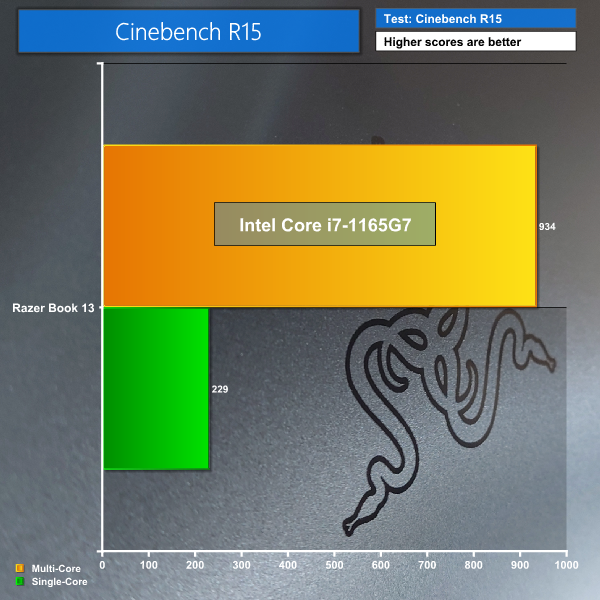
Running Cinebench R15 gave us a multi-core score of 934 and a single-core score of 229, but being an Ultrabook with a fairly low power CPU, these results were as we expected.
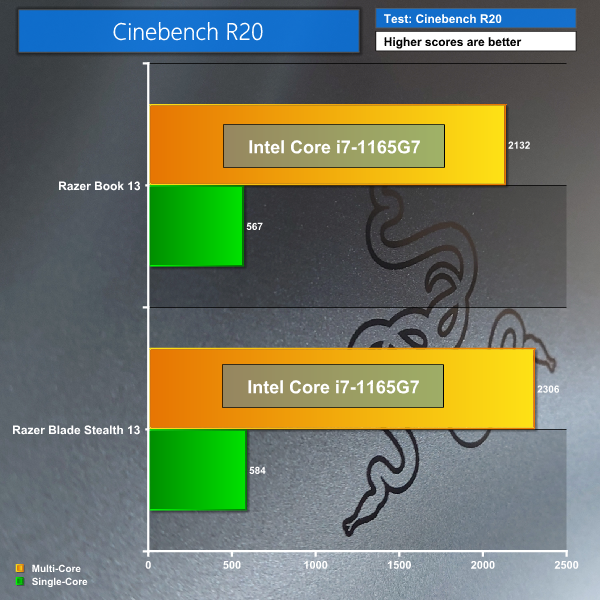
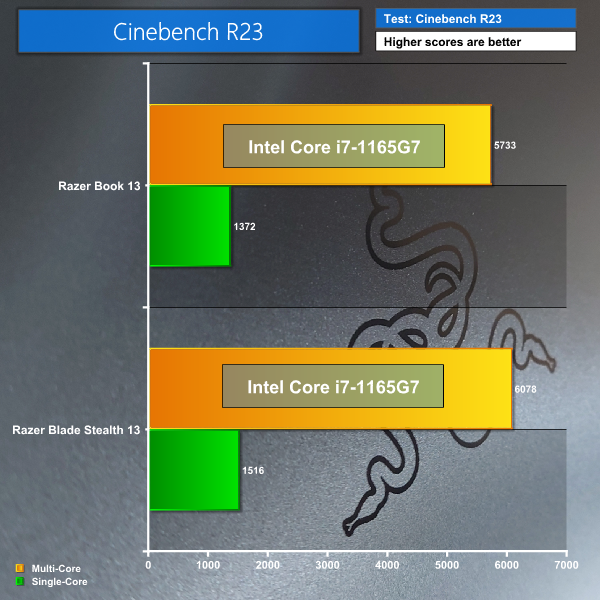
For our Cinebench R20 and R23 benchmarks I compared our results to Luke’s Razer Blade Stealth 13 results, which has the same Intel Core i7-1165G7. The Razer Blade Stealth 13 just takes the lead in Cinebench R20/23 results but not by much, and we can put this down to differences in size and cooling between the two machines.
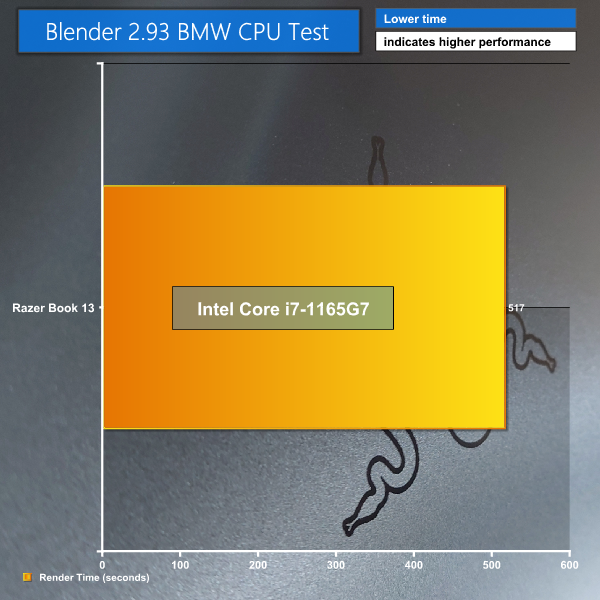
Time taken to render our BMW CPU benchmark in Blender 2.93 was 8 minutes and 37 seconds, or 517 seconds.
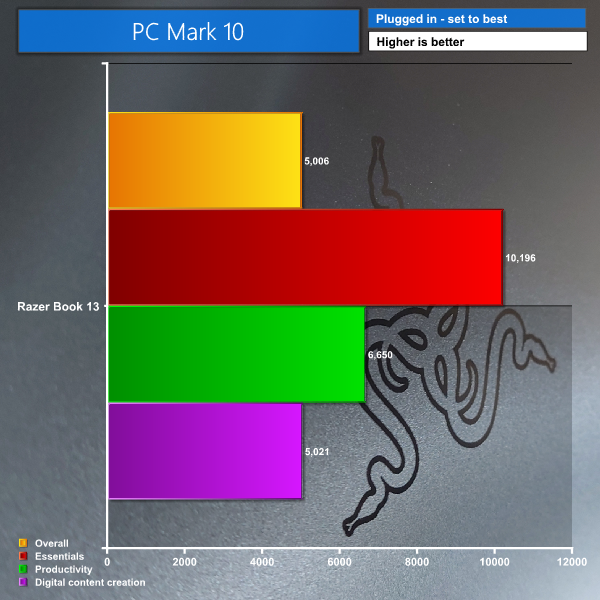
PCMark 10 scored well overall and shows how capable the system is as a whole.
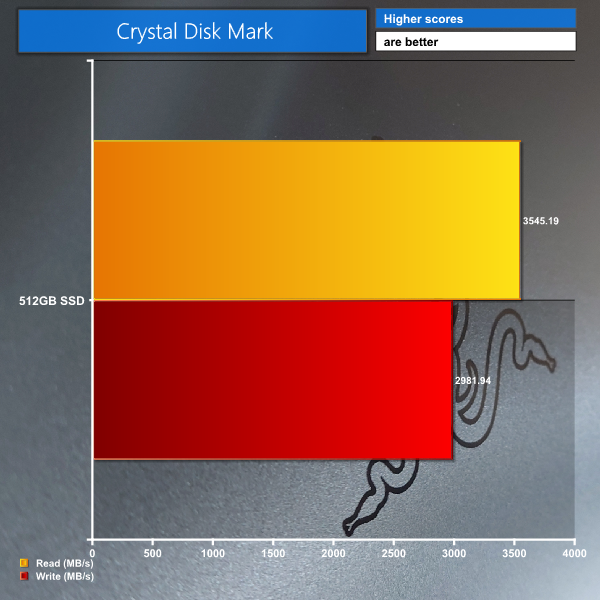
Testing our 512GB SSD, which is the Samsung PM981a OEM-only drive, via CrystalDiskMark shows it’s more than capable at 3500MB/s read and almost 3000MB/s write, and these are good results for an Ultrabook.
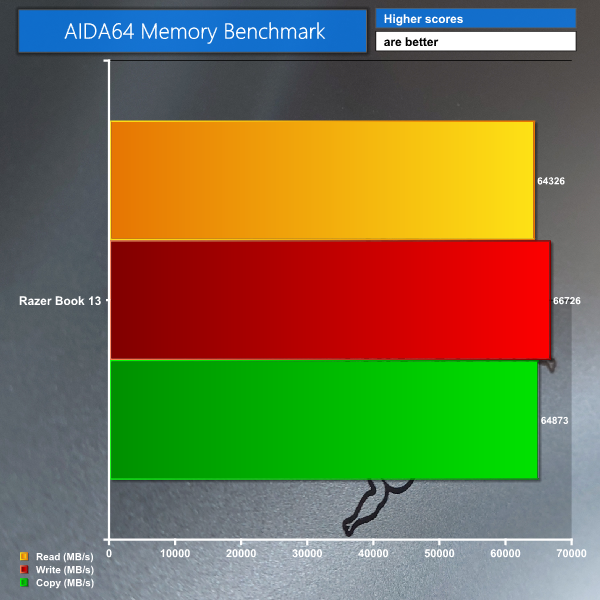
AIDA64 results show our 16GB DDR4 RAM is very quick with high scoring read, write and copy results from this benchmark.