 KitGuru KitGuru.net – Tech News | Hardware News | Hardware Reviews | IOS | Mobile | Gaming | Graphics Cards


Xi3 Corp., a company that is mostly known for its small form-factor (SFF) Piston systems and its partnership with Valve Software, and Intel Corp. on Monday said that they would jointly work on next-generation mini personal computers. Xi3 also revealed plans to sell Intel’s NUC SFF systems. It is unclear whether the cooperation with Intel will remove AMD processors from Xi3 PCs completely.
Xi3 will initially commercialize Intel NUC-based systems to global enterprise and government customers. The first NUC products from Xi3 are already available at the company’s web-site. Given that Xi3 Piston systems are pretty expensive, the addition of Intel NUC devices into the Xi3 lineup will help the company to boost its sales.
Intel and Xi3 will also work together on new ultra-small form factor computing products leveraging Xi3's intellectual property and Intel's low power processors. The move should help Xi3 to fund the development of its next-generation systems and ensure that they are compatible with Intel’s new central processing units (CPUs). The cooperation should grant Xi3 access to Intel’s roadmaps and develop its PCs knowing exactly what to expect from the future microprocessors.
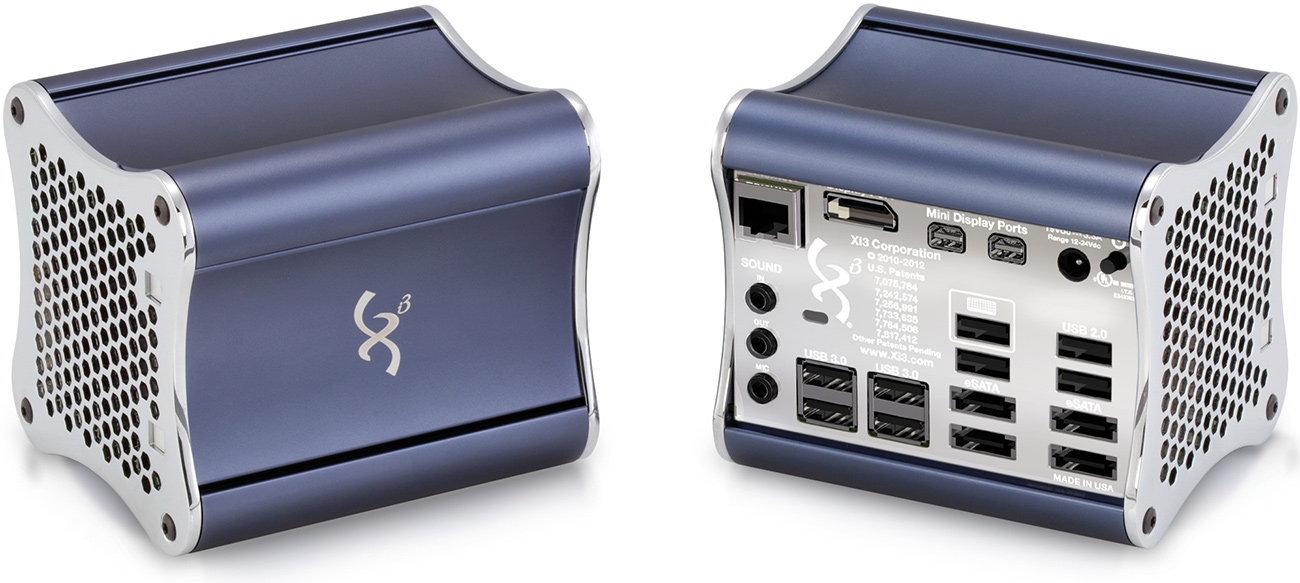
“We are pleased to be working with a worldwide leader in low power x86 microprocessors,” said Jason A. Sullivan, Founder, President and CEO of Xi3 Corporation. “This agreement will result in Xi3's first commercially available Micro-Mini computers powered by Intel processors. We see this relationship as the perfect marriage between processor and platform technologies. We are very excited about what the future may hold!”
At present the majority of Xi3 personal computers are based on the highly-integrated AMD Fusion accelerated processing units. The collaboration with Intel will most probably mean that Xi3 will exclusively use Intel’s microprocessors in its next-gen PCs.
Discuss on our Facebook page, HERE.
KitGuru Says: The partnership between Intel and Xi3 underlines the importance of low-power small form-factor systems for the chipmaker.

love the port density on the back