KitGuru KitGuru.net – Tech News | Hardware News | Hardware Reviews | IOS | Mobile | Gaming | Graphics Cards


Intel has announced a significant milestone in the adoption of its XeSS upscaling technology, revealing that it is now available in more than 50 titles. According to Intel, there are currently 64 games and applications that either support XeSS or are expected to support it once the software is released.
The widespread integration of Intel XeSS in such a short amount of time is a testament to its impact. With 64 games and apps featuring XeSS support, including both newly released and existing ones, this technology has emerged as a formidable competitor to Nvidia DLSS and AMD FSR.
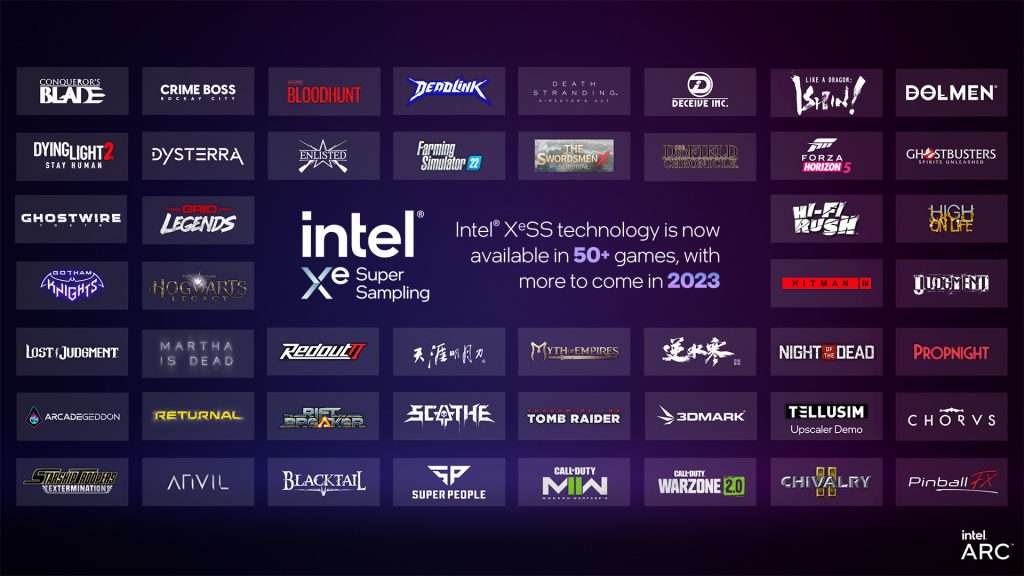
Numerous acclaimed games have embraced XeSS, including popular titles like Cyberpunk 2077, Assassin's Creed Valhalla, Shadow of the Tomb Raider, Hogwarts Legacy, and most recently, Diablo IV.
However, it's important to note that Intel faces strong competition in this space. Nvidia boasts support for over 300 games and applications with DLSS. Meanwhile, AMD is rapidly gaining traction among game developers, with over 200 games and apps supporting FSR and 100 supporting the newer FSR2 technology.
Discuss on our Facebook page, HERE.
KitGuru says: Do you have an Intel Arc GPU? Do you regularly use XeSS in games and apps?