KitGuru KitGuru.net – Tech News | Hardware News | Hardware Reviews | IOS | Mobile | Gaming | Graphics Cards


Sapphire has officially entered the “cable-less” PC building arena with the launch of its Nitro+ PhantomLink series. Currently debuting in the Chinese market, this release signals Sapphire's adoption of the back-connector power delivery standard, offering a solution to the cluttered aesthetics that often plague high-end builds. The new lineup includes a dark grey motherboard, a limited white edition motherboard, and a GPU.
According to VideoCardz, Sapphire's implementation of the Asus-pioneered BTF 2.5 (GC-HPWR) standard is named PhantomLink. By using a high-power header adjacent to the primary PCIe slot, the graphics card draws power directly from the motherboard. This eliminates the need for the traditional power cables that typically trail across the front of the chassis. For builders not yet ready to commit to a specialised motherboard, Sapphire has wisely opted for a detachable GC-HPWR module, allowing the card to function with standard hardware via a traditional 12V-2×6 connector.


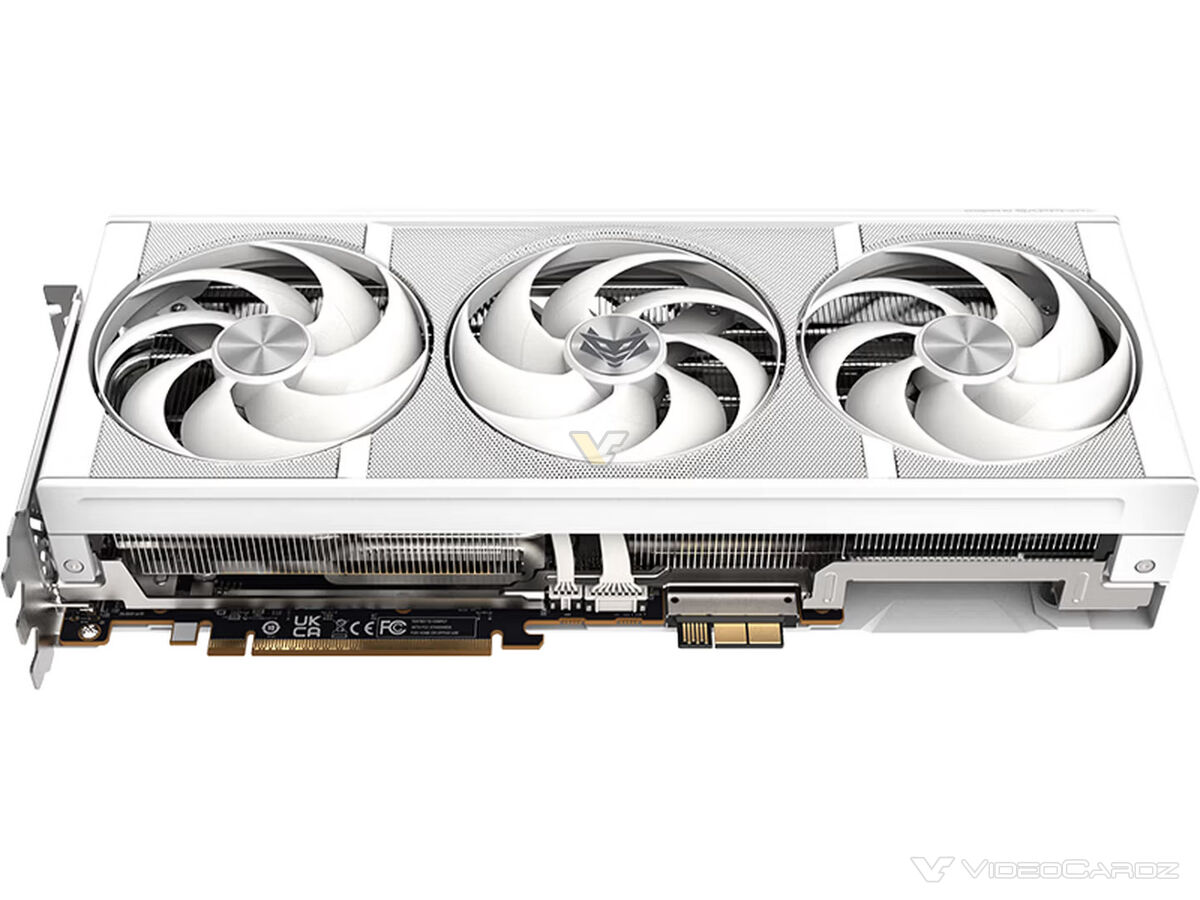
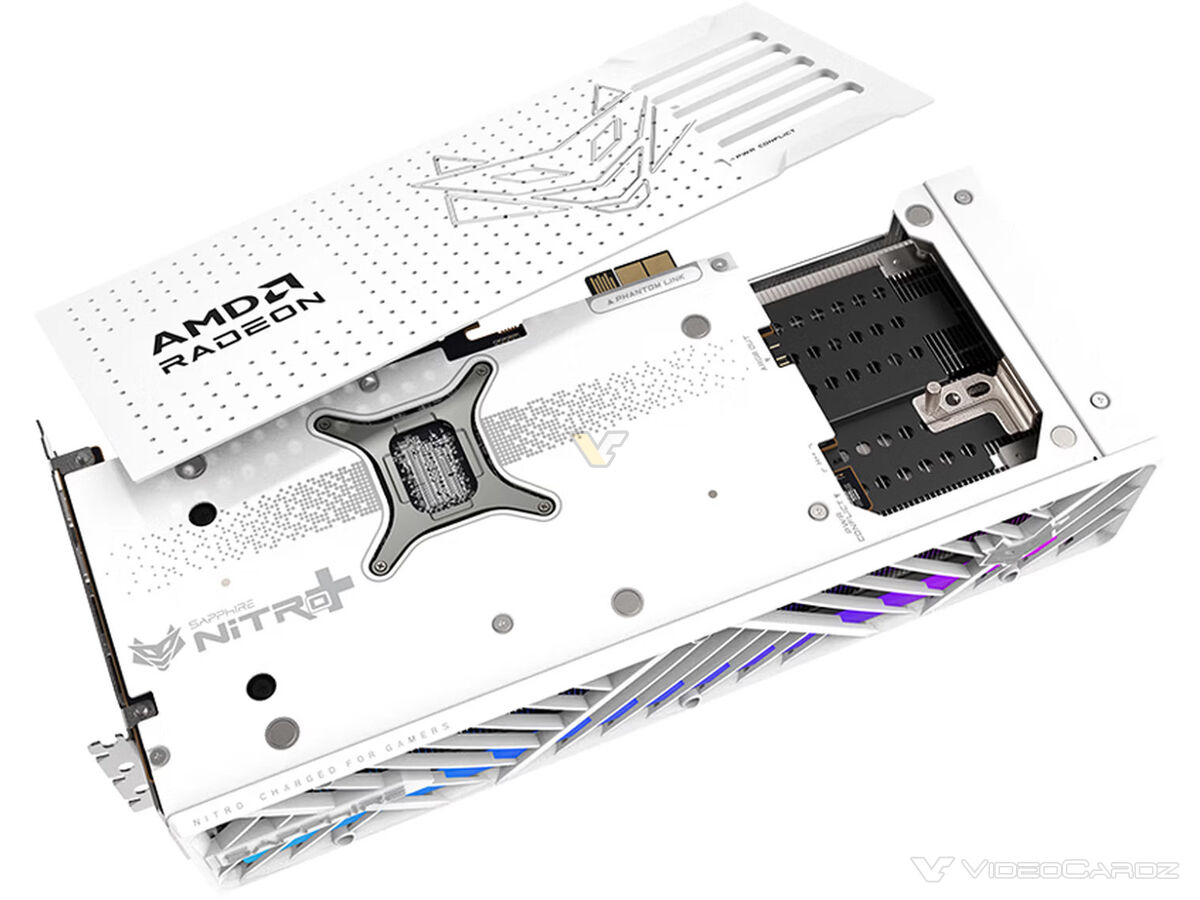
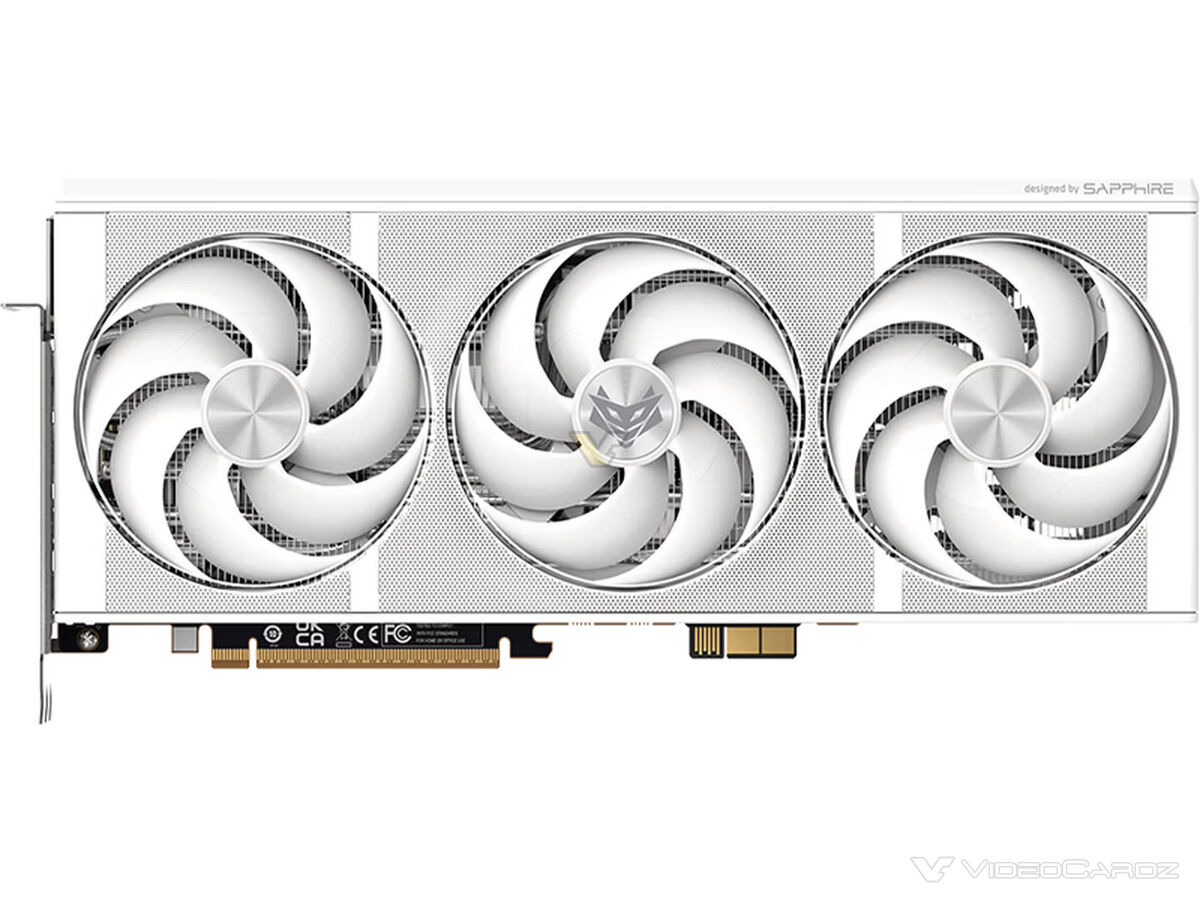
Image credit: VideoCardz
To complement the new GPUs, Sapphire has also unveiled two matching motherboards built on the AM5 X870E chipset: the Nitro+ X870EA PhantomLink and the Nitro+ “Aurora” X870EA PhantomLink Polar Edition. These boards act as the power delivery hub for the system, featuring a rear-mounted power interface that keeps all primary cabling hidden behind the motherboard tray. Beyond the aesthetic clean-up, these boards are high-spec enthusiast offerings, featuring support for PCIe 5.0 storage and graphics, as well as modern connectivity standards like Wi-Fi 7 and USB4.
Underneath the hood, the Nitro+ RX 9070 XT PhantomLink shares identical specifications (via VideoCardz) with the standard Nitro+ model, featuring 4,096 stream processors and a core clock that boosts up to 3,060 MHz. The 16 GB of GDDR6 memory sits on a 256-bit bus operating at 20 Gbps, supported by 64 MB of Infinity Cache. Sapphire has also included a safety feature: a “PWR CONFLICT” LED that prevents the card from operating if a user accidentally connects both the PhantomLink header and the traditional 12V-2×6 cable simultaneously.
While these products are currently appearing on Chinese retail sites, a broader global rollout is expected to follow, likely coinciding with CES 2026. In terms of pricing, the Titanium model is listed at 5,799 RMB (approximately £611), while the white Aurora edition carries a premium at 5,999 RMB (roughly £632).
KitGuru says: Sapphire is clearly banking on the “clean build” trend becoming standard. While the reliance on a specific motherboard remains a barrier to entry, the inclusion of a detachable adapter makes this a much more sensible purchase for those planning a multi-stage system upgrade.