KitGuru KitGuru.net – Tech News | Hardware News | Hardware Reviews | IOS | Mobile | Gaming | Graphics Cards


Micron has become the first company to launch a 176-layer NAND UFS 3.1 mobile solution, offering enough performance to enable 5G applications in high-end smartphones. One such example is downloading a two-hour 4K movie in 9.6 seconds.
Providing up to 75% faster sequential write and random read speeds over the prior generation, Micron's latest NAND mobile solution offers a compact design suited for mobile devices. Moreover, its low power consumption also allows device manufacturers to employ Micron's new modules in multiple other devices, including professional workstations and ultrathin notebooks.
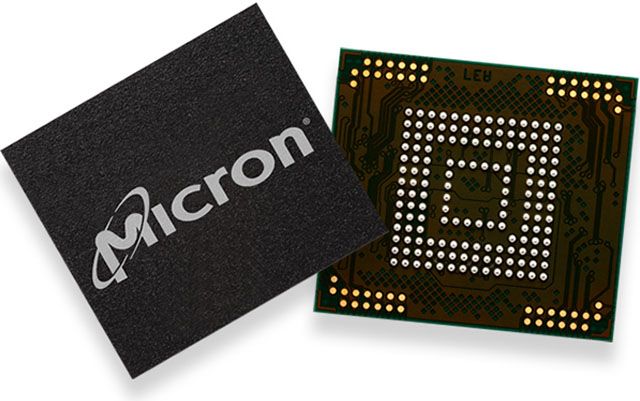
The first devices to use this solution will be the Honor Magic 3 series smartphones. As per Fang Fei, president of the product line at Honor, Micron's solution will allow users “to enjoy snappy, seamless multitasking across apps” and “fast downloads and storage”, giving the Honor Magic 3 smartphones the “edge” over the competition.
Micron 176-layer NAND UFS 3.1 solution is overall superior to its predecessor, providing a 15% performance bump in mixed workloads, 10% shorter latency, and up to two times the endurance (TBW). These solutions will be available with 128GB, 256GB, and 512GB capacities, offering sequential write speeds of up to 1,500 MB/s.
Discuss on our Facebook page, HERE.
KitGuru says: At the moment, Micron is the only manufacturer in the industry with a 176-layer NAND UFS 3.1 mobile solution. However, both Samsung and SK Hynix have already announced their 176-layer NAND memory, so it shouldn't take long for both companies to launch equivalent mobile solutions.