KitGuru KitGuru.net – Tech News | Hardware News | Hardware Reviews | IOS | Mobile | Gaming | Graphics Cards


It looks like the Intel Core i9-11900 is starting to leak. This week, CPU-Z benchmark scores for the upcoming processor leaked. The chip benchmarked was an engineering sample, but it still can give us an idea of the expected performance from this Rocket Lake-S CPU.
The screenshots with the CPU-Z benchmark results of the Core i9-11900 and photos of the 11900 engineering sample (QV1J) were shared by @9550pro. As per the photos, this sample had a base clock of 1.8GHz, an all-core boost of 3.8GHz, and a single-core boost of 4.4GHz. Regarding the remaining specifications of the Core i9-11900, it should feature 8 cores, 16threads, 16MB of cache, Intel Xe-LP Graphics with 32 EUs, and a 65W TDP.
The Core i9-11900 scored 582 points on the single thread benchmark and 5262 on the multi-thread benchmark. Compared to the higher clocked Core i7-10700, which features a similar core configuration, that's an 8% uplift in single-thread (vs 540) and a 3.5% decrease in multi-thread workloads.
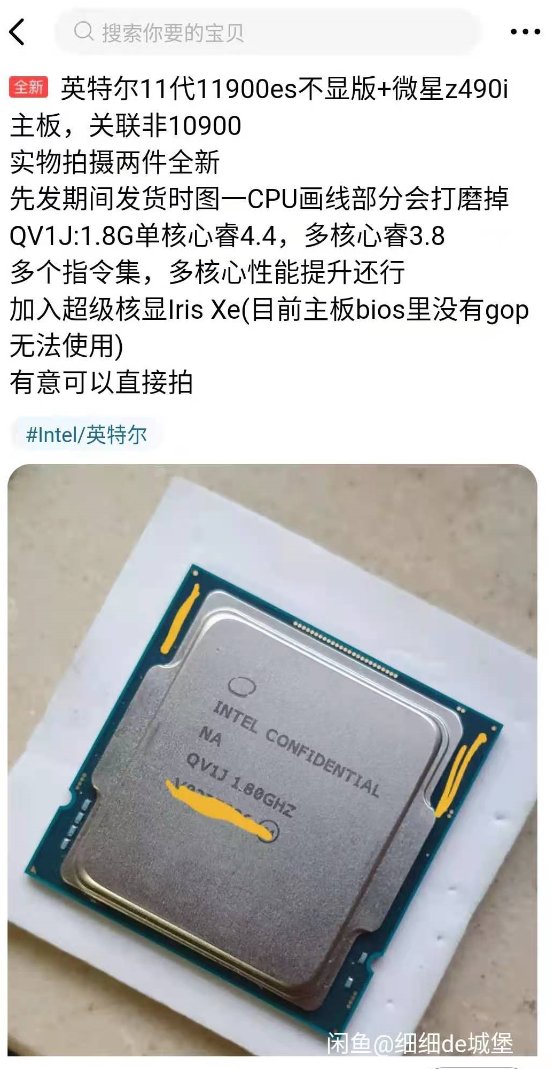
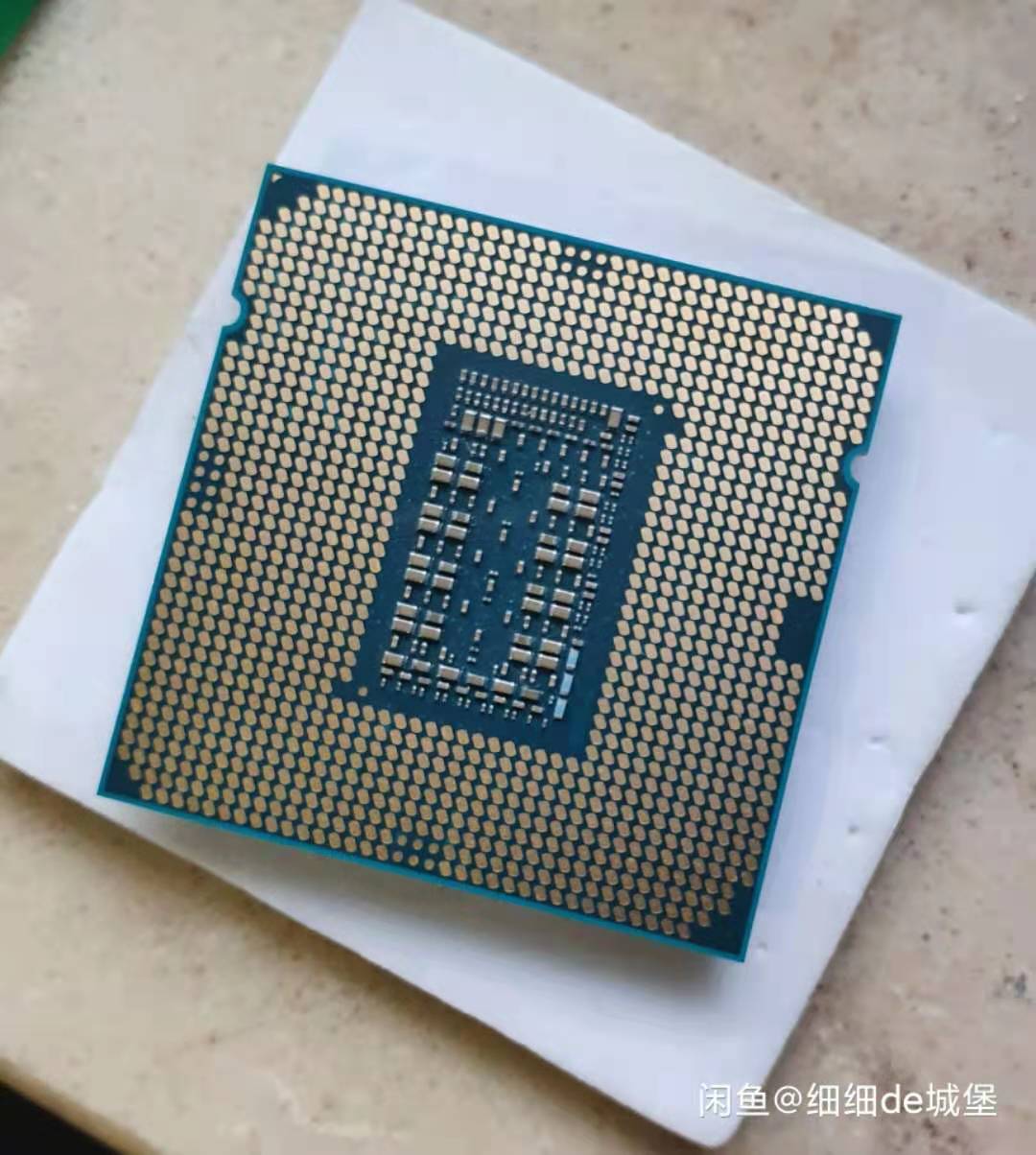
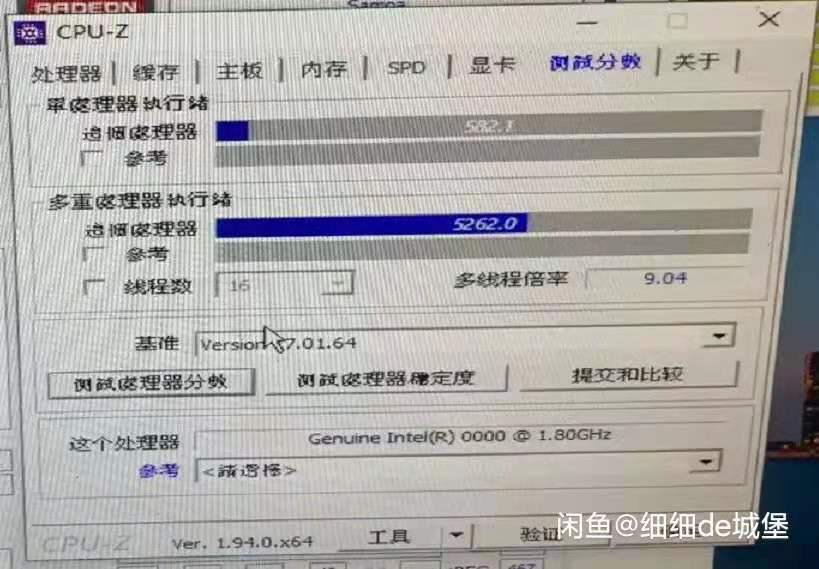
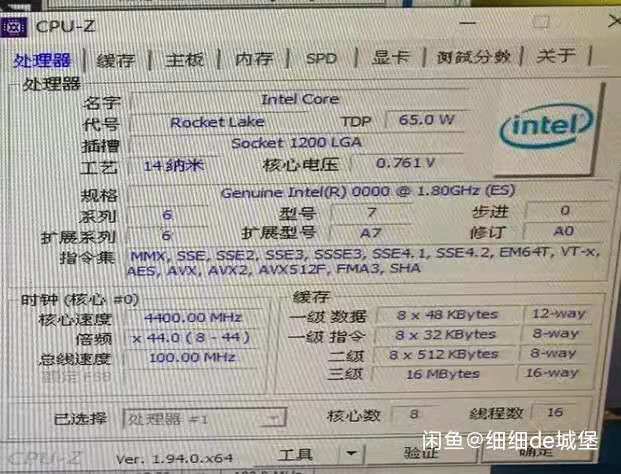
Image credit: @9550pro
For further comparison, another user in the forum thread downclocked their Core i9-9900KS to 4.4GHz, which features the same core architecture as the 10th Gen Core desktop processors. By downclocking the Core i9-9900KS, it's possible to calculate the IPC increase between both architectures, which appears to be around 14%.
Intel's 11th Gen Core series Rocket Lake-S processors are expected to launch in early 2021.
KitGuru says: What do you think of these early results for Rocket Lake-S?