KitGuru KitGuru.net – Tech News | Hardware News | Hardware Reviews | IOS | Mobile | Gaming | Graphics Cards


Intel has officially entered the dedicated desktop graphics market by partnering up with AiBs to produce discrete Iris Xe graphics cards for OEMs.
The Intel Iris Xe is based on the Xe-LP architecture, featuring 80 EUs (Execution Units), 4GB of LPDDR4X memory across a 128-bit memory bus, and PCIe 4.0 x4. With support for up to 3 displays, this GPU is based on Intel's 10nm SuperFin process node and, according to HardwareLuxx, has a 30W TDP design. Additionally, it supports Adaptive Sync, Display HDR, AV1 decode, and artificial intelligence capabilities through the DP4a deep-learning inference acceleration. Clock frequencies are still unknown, but it should sit between the 1350MHz of the higher-tier Xe-LP iGPU and the 1650MHz of the Iris Xe Max graphics card.
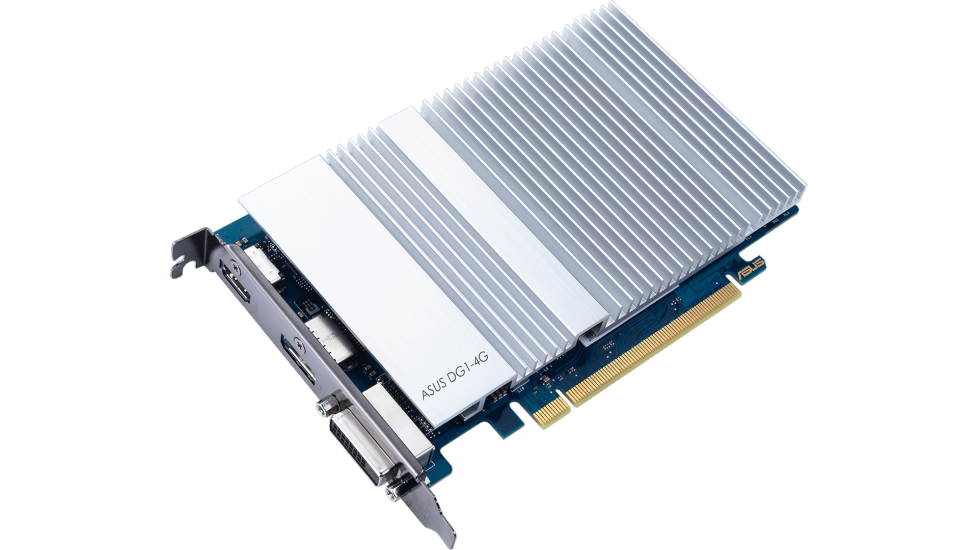
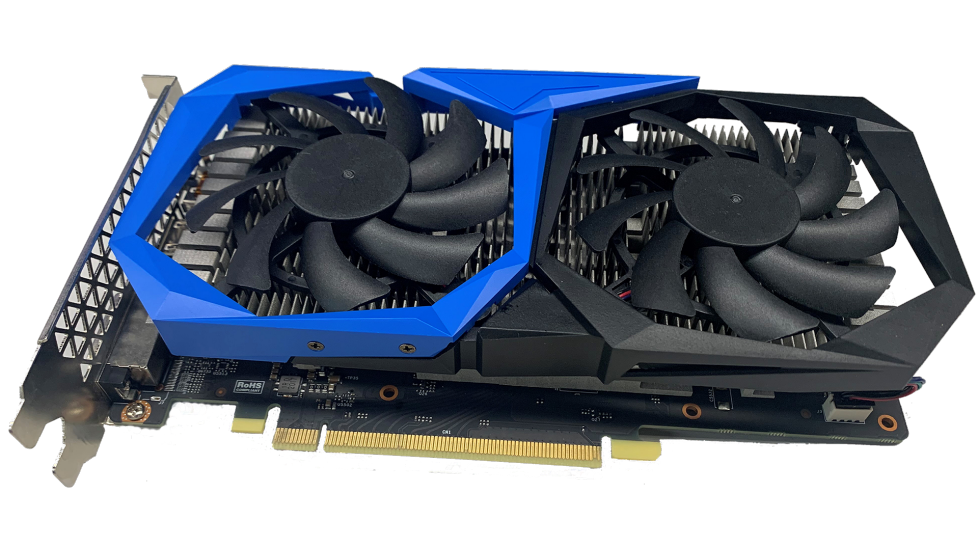
Aimed at “mainstream users and small- and medium-sized businesses”, the Intel Iris Xe will only be available for OEMs. As per LegitReviews, this new graphics card will be only available in pre-built systems powered by 9th Gen (Coffee Lake-S) and 10th Gen (Comet Lake-S) Core desktop CPUs and Intel B460, H410, B365, and H310C motherboards. The motherboards need a “special BIOS” to support this graphics card, meaning that review samples of this card will be hard to come by.
You can learn more about Intel Iris Xe Graphics HERE.
KitGuru says: This is a low-power GPU intended for only OEMs, so it isn't going to be taking on the likes of AMD and Nvidia. Still, it is good to see Intel pushing its way into the discrete GPU market. Hopefully later in the year we'll get our first look at higher power Xe GPUs.