KitGuru KitGuru.net – Tech News | Hardware News | Hardware Reviews | IOS | Mobile | Gaming | Graphics Cards


As SSDs are getting closer to reaching the theoretical speed limit of PCIe 4.0 x4 interfaces, Silicon Motion has started to develop PCIe 5.0 SSD controllers for the next generation of NVMe M.2 SSDs.
Currently, there are PCIe 4.0 NVMe SSDs capable of transferring data at over 7GB/s. Although PCIe 4.0 is capable of speeds up to 32GB/s, that's only possible through x16 interfaces. Considering that PCIe 4.0 x4 interfaces are the most commonly used for these SSDs, the theoretical maximum speed of 8GB/s is fairly close to what current PCIe 4.0 SSDs are capable of. Given that the NAND chips, SSD controllers, and other factors play a considerable role in the performance of the SSDs, reaching the theoretical maximum is almost impossible.
To further increase performance, PCIe 5.0 SSD controllers have to be developed. Capable of transfer speeds of 64GB/s in x16 interfaces and 16GB/s in x4 interfaces, PCIe 5.0 SSDs will provide double the transfer rates and speeds than their predecessors.
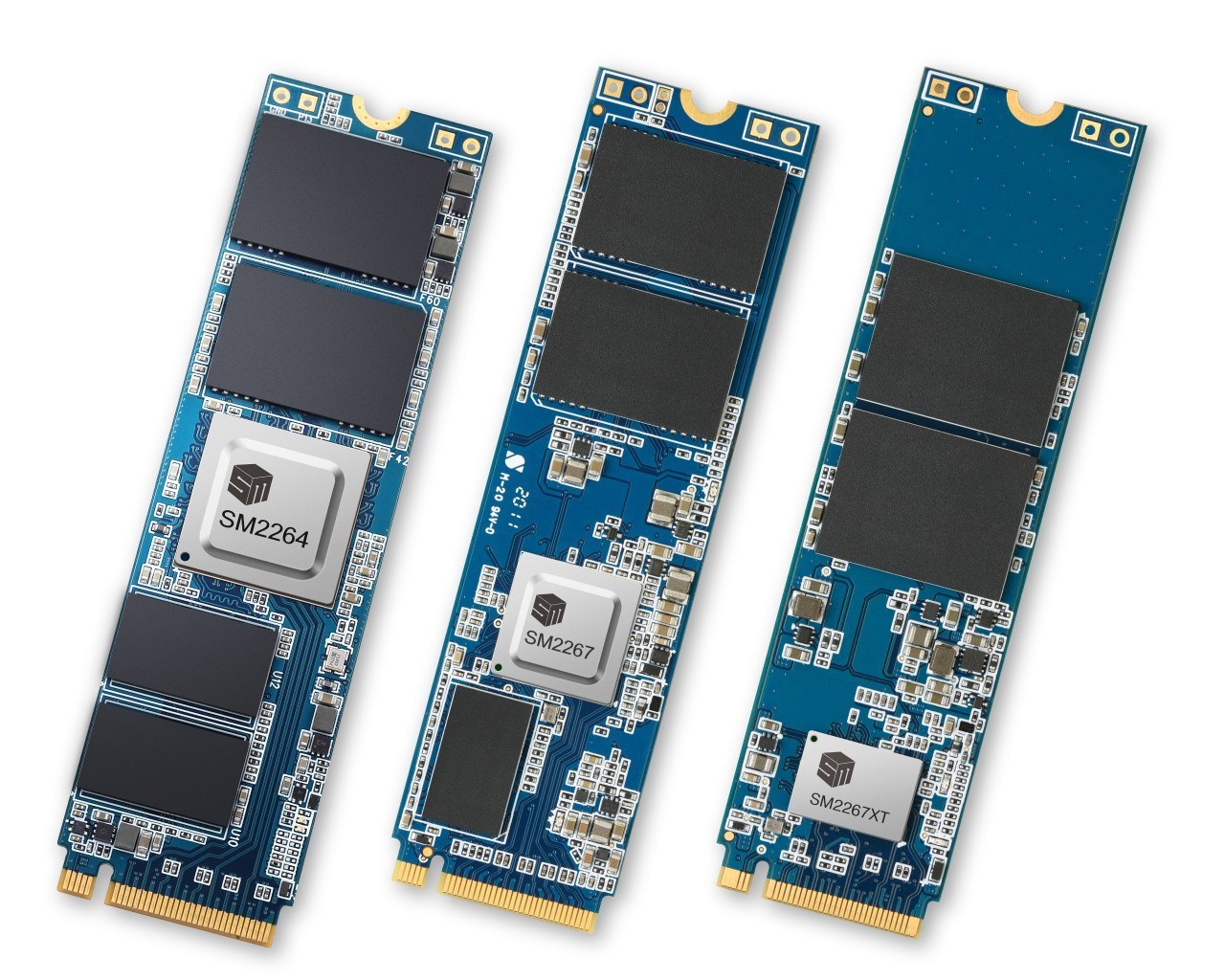
In its latest earnings call, Silicon Motion stated that it's already working on developing SSD controllers employing the PCIe 5.0 standard. According to Silicon Motion president and CEO, Wallace C. Kou, the company plans to sample these controllers in the second half of 2022, but they should only be available for sale during 2023.
The first PCIe 5.0 supported platform is expected in late 2021, with Intel Alder Lake and 600-series chipset motherboards. It seems that PCIe 5.0 capable SSDs will take a little longer to hit the market.
KitGuru says: Have many of you already upgraded to a PCIe 4.0 SSD? If not, are you now thinking about holding off for PCIe 5.0?