KitGuru KitGuru.net – Tech News | Hardware News | Hardware Reviews | IOS | Mobile | Gaming | Graphics Cards


AMD has confirmed that it is working on its own alternative to Nvidia's DLSS. As part of the Radeon FidelityFX suite, AMD will be adding a new Super Resolution feature, something that wasn't really detailed during AMD's recent RX 6000 GPU unveiling.
Speaking during the RX 6000 unveiling event, AMD's Scott Herkelman explained that Super Resolution will give “gamers an option for more performance when using ray tracing”. Outside of that though, further details weren't shared but fortunately, The Verge were able to get some more details on this.
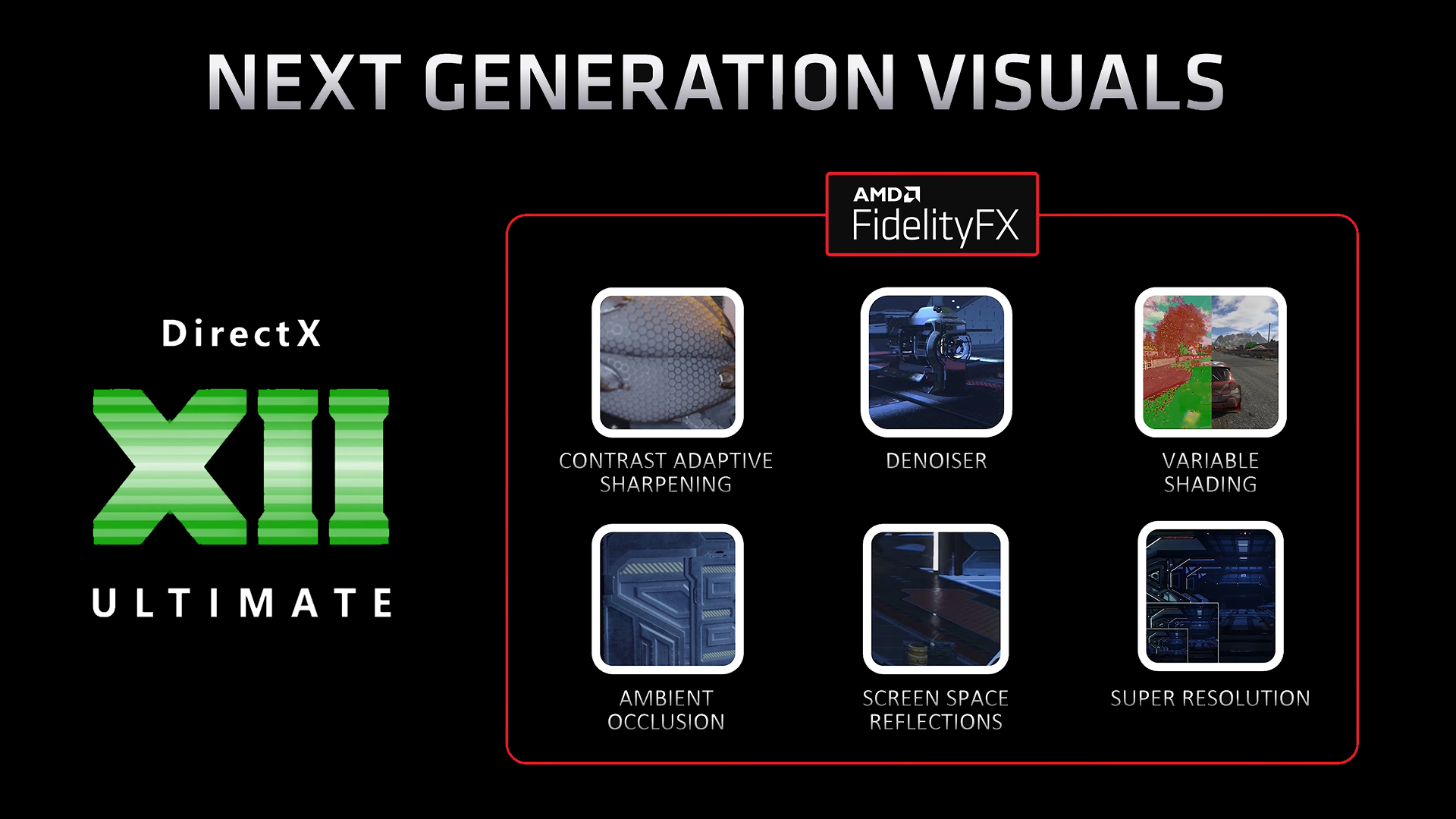
Speaking with the site, an AMD representative confirmed that Super Resolution is in development as an open/cross-platform technology to bring a performance boost to games using ray-tracing.
It is also said that this feature is expected to get “strong industry support” but unfortunately, it won't be ready in time for the RX 6000 series launch on November 18th. It seems more likely that this feature will begin rolling out in 2021.
KitGuru says: It is good to hear that AMD is working on its own alternative to DLSS. Hopefully early next year, we'll get our first look at what to expect from ‘Super Resolution' as AMD continues to expand its FidelityFX suite of graphics technologies.