KitGuru KitGuru.net – Tech News | Hardware News | Hardware Reviews | IOS | Mobile | Gaming | Graphics Cards


The 5K professional monitor market is expanding, with more and more options landing at increasingly affordable prices. We reviewed ASUS' ProArt PA27JCV last year and today our attention turns to the Philips Brilliance 27E3U7903. Packing a 5120×2880 IPS panel with glass finish, this monitor also boasts Thunderbolt 4 support, a 5MP integrated webcam and comes Calman Ready.
5K monitors remain incredibly popular for Mac users, and it seems manufacturers have identified that not everyone with a MacBook or Mac Mini/Studio wants to shell out another £1500 minimum for the Apple Studio Display. The Philips Brilliance 27E3U7903 offers the same 5K resolution and 27in form factor but has an MSRP of just £849. It's still very expensive, but it could be an enticing proposition for a number of professional users. And of course it's not limited to only Mac users!
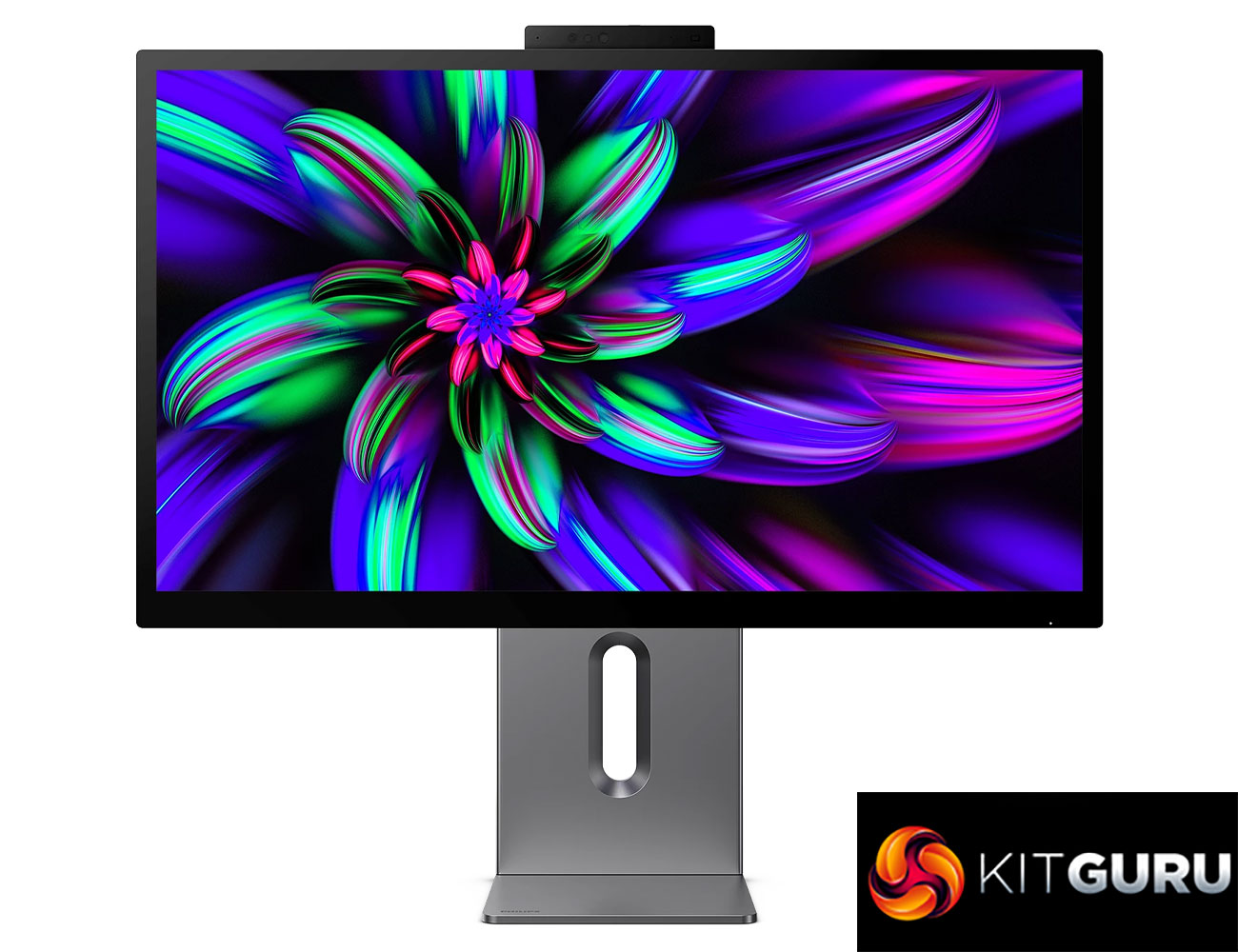
Specification:
- Panel size: 27 inch / 68.5 cm
- Aspect ratio: 16:9
- LCD panel type: IPS
- Pixel pitch: 0.11655 x 0.11655 mm
- Brightness: 500 cd/m²
- Display colours: 1.07 B (8 bit+FRC)
- Colour gamut (typical): REC709 100%, Adobe RGB 99.5%; DCI-P3/Display-P3: 99%, sRGB: 160%, NTSC 130%*
- Contrast ratio (typical): 2000:1
- SmartContrast: 80,000,000:1
- Response time (typical): 4 ms (Grey to Grey)*
- Viewing angle: 178º (H) / 178º (V) @ C/R > 10
- Picture enhancement: SmartImage Premium
- Maximum resolution: 5120 x 2880 @ 70 Hz
- Effective viewing area: 596.736 (H) x 335.664 (V) mm
- Scanning frequency: 30-210 kHz (H) / 60-70 Hz (V)
- sRGB: Yes
- Delta E: <2 (sRGB)
- Flicker-free: Yes
- Pixel density: 218 PPI
- LowBlue Mode: Yes
- Display screen coating: Front Glass with Anti-Reflection, Anti-Finger 7%, 7H
- Low input lag: Yes
- EasyRead: Yes
- HDR: DisplayHDR 600 certified
- Calman Ready: Yes
- Signal input: HDMI 2.1 x 1, Thunderbolt 4 in x 1 (Upstream, Data, Video, PD 96 W)
- Sync input: Separate Sync
- Audio (In/Out): Headphone out
- RJ45: Ethernet LAN (10M/100M/1G)
- HDCP: HDCP 1.4 (HDMI), HDCP 2.3 (HDMI)
- Thunderbolt: Thunderbolt 4 in x 1 upstream (Data, Video, PD 96 W), Thunderbolt 4 out x 1 downstream (Data, Video, PD 15 W)
- USB Hub: USB version, Upstream: 1 x USB-C (Data only, 15 W), Downstream: USB-A x 2 (Gen2: 10 G; 1 for FC); USB-C x 1 (Data, 15 W)
- Max power delivery: USB to 96 W (5 V/3 A, 7 V/3 A, 9 V/3 A, 10 V/3 A, 12 V/3 A, 15 V/3 A, 20 V/4.8 A)
- Version: USB PD version 3.0
- Built-in speakers: 5 W x 2
- Plug and Play compatibility: DDC/CI, Mac OS X, sRGB, Windows 11/10
- Height adjustment: 150 mm
- Pivot: +90°
- Swivel: -/+ 360°
- Tilt: -5° / 20°
Firmware tested: V1.02