KitGuru KitGuru.net – Tech News | Hardware News | Hardware Reviews | IOS | Mobile | Gaming | Graphics Cards


ASRock has really upped its game over the last few years. A decade ago, the company was most successful at the budget end of the market. But that image has long gone. Recently, we looked at a decidedly high-end X99 chipset board in the shape of the ASRock X99 WS-E/10G. This time, we are putting a more modest Intel C232 board, the E3V5 WS, through its paces. This is still aimed at workstations, but smaller, less powerful units.
The socket used is LGA 1151, so this will accommodate processors up to quad-core. It supports the latest Intel Xeon E3-1200 v5 series, and sixth generation consumer-grade Intel processors.
Up to 64GB of DDR4 SDRAM can be fitted, and this can be the ECC variety with a compatible processor. So this motherboard may be small, but it’s possible to build a pretty powerful PC with it. Let’s take a closer look.
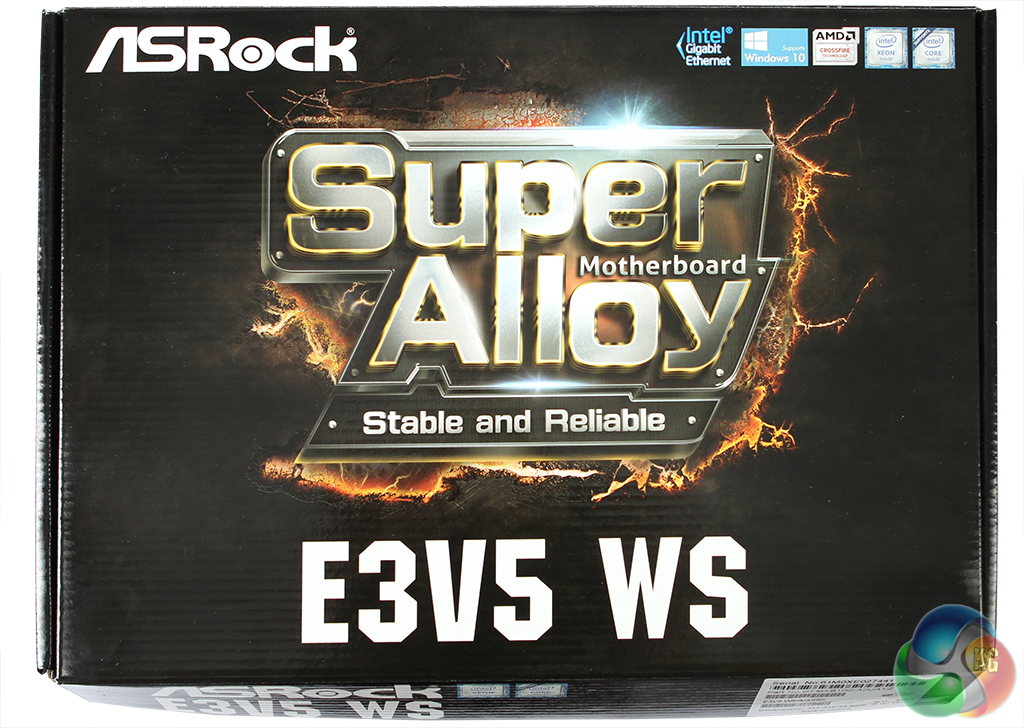
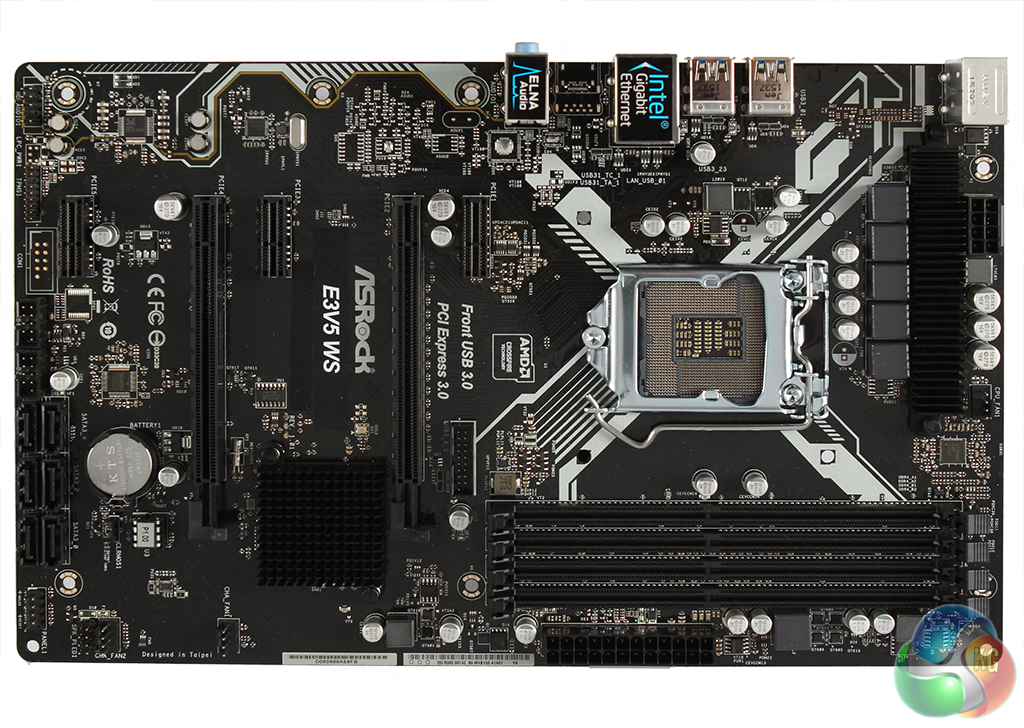
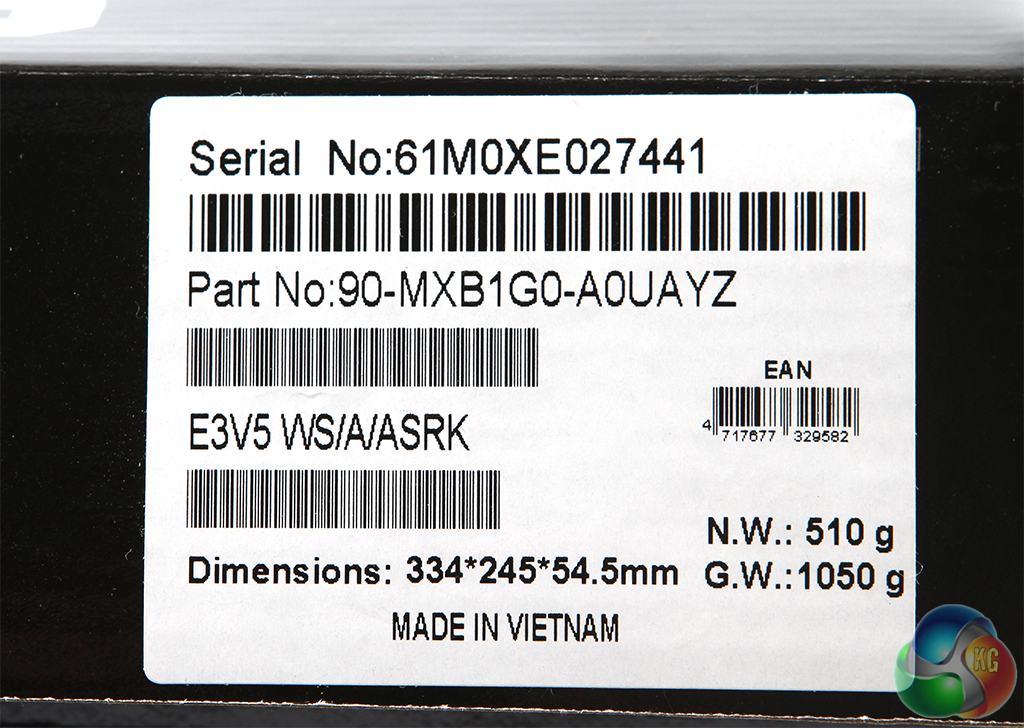

Features:
- 6th-generation Intel Core i7, i5, i3, Pentium Celeron and Xeon E3-1200 v5 processors for LGA1151
- Dual-channel memory up to DDR4 2133MHz
- Up to 64GB memory
- ECC memory (Xeon only)
- 2 x PCI Express x16 slots (1 runs at x16, 1 runs at x4)
- AMD Quad CrossFireX and CrossFireX
- 7.1-channel Realtek ALC1150 HD audio
- 1 x Gbit LAN
- 6 x SATA 3
- 6 x USB 3.0 (4 rear, 2 via header), 6 x USB 2.0 (2 rear, 4 via header)
- Supports Microsoft Windows 7, 8.1, 10, Server 2012 R2 64-bit, Server 2012 64-bit, Server 2008 R2 64-bit
Price for this motherboard (at the time of writing): £99.56 (inc. VAT)