KitGuru KitGuru.net – Tech News | Hardware News | Hardware Reviews | IOS | Mobile | Gaming | Graphics Cards


We tested the raw throughput of the AVM FRITZ!Box 4690 across the four different WiFi standards it supports – 802.11be, 802.11ax, 802.11ac and 802.11n.
We used the open-source iPerf 3.1.3 software for testing, which can simulate multiple clients streaming at once. Five Windows systems were employed. Our desktop base was an Armari 32-core AMD Ryzen Threadripper workstation running Windows 11, connected to the router via its 10Gbit Ethernet LAN port. For WiFi 7 testing, we used an Acer Swift 14 AI notebook, then a Dell XPS 17 notebook (for WiFi 6), a fourth was an MSI WS63-7RK (802.11ac) notebook, and finally an HP Folio 3 notebook (802.11n only – to show performance with legacy devices). The Acer and Dell notebooks and Armari workstation were running Windows 11 but the other two notebooks were Windows 10-powered.
For all tests, the notebooks were tested using their various WiFi connections (802.11be / WiFi 7 for the Acer, 802.11ax / WiFi 6 for the Dell, 802.11ac / WiFi 5 for the MSI, 802.11n for the HP). The notebooks were then placed in four different locations – within 1m of the router, approximately 5m away with a wall in between, 10m away and on a lower floor (with multiple walls and a floor in between), and then 15m away on the same lower floor. We tested all four distances with the four WiFi standards.
With each WiFi standard and distance, we took 60 readings of throughput at one second intervals and calculated the average (iPerf does this automatically). We tested the FRITZ!Box against the MSI Radix AXE6600, NETGEAR Nighthawk X10 R9000, Synology RT2600ac, NETGEAR Nighthawk XR500, NETGEAR Nighthawk XR700, Synology RT6600ax, NETGEAR Nighthawk AX12, NETGEAR Nighthawk RS300, Acer Predator Connect X7 5G CPE, AVM FRITZ!Box 5690 Pro and AVM FRITZ!Box 7690.
802.11be (WiFi 7)
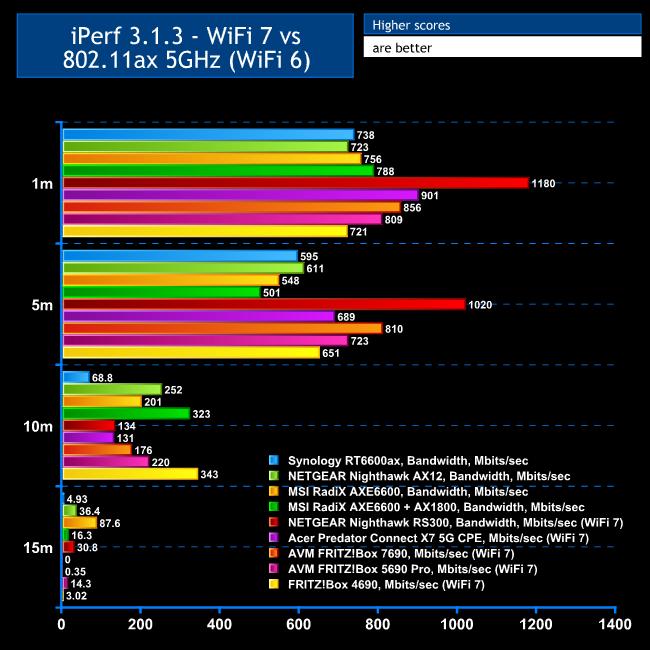
For this test, we show the WiFi 7 results compared to WiFi 6, so you can see the potential bandwidth benefit of the new standard.
In the past, we have seen variable WiFi 7 performance from FRITZ!Box routers. At the closest 1m proximity, the 4690's bandwidth is no better than WiFi 6 routers, but 721Mbits/sec isn't exactly slow.
Moving out to 5m, and the FRITZ!Box 4690 pulls ahead of the non-WiFi 7 routers with 651Mbits/sec, although still behind other WiFi 7 competitors.
Incredibly, at 10m, the 4690 is the fastest standalone router we've seen, hitting 343Mbits/sec.
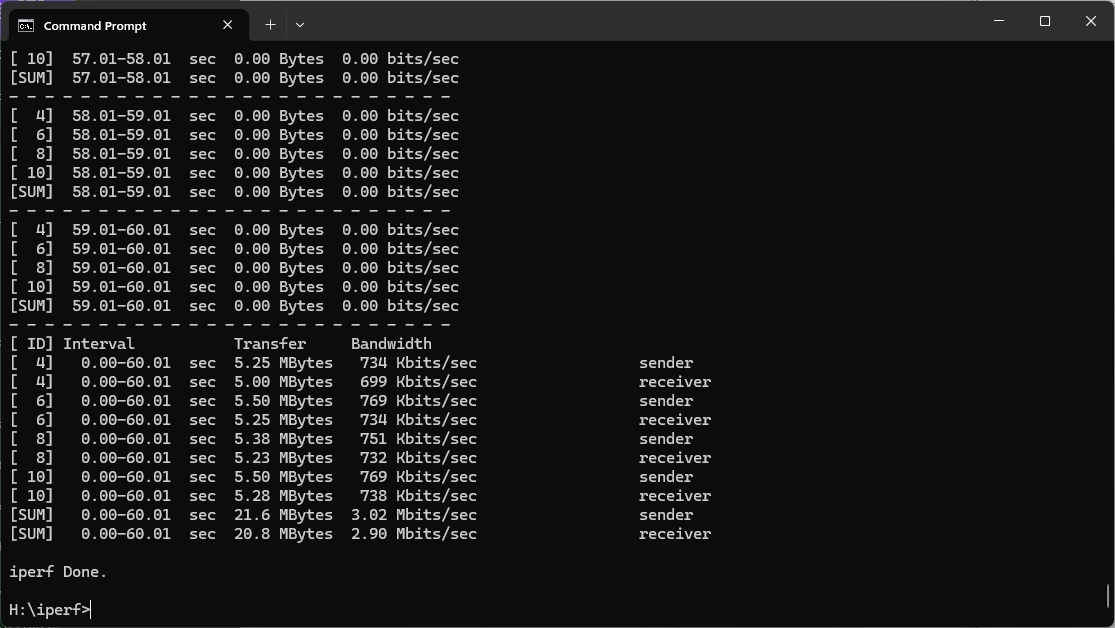
However, it drops back considerably at 15m, with a barely usable 3.02Mbits/sec.
Overall, the FRITZ!Box has decent mid-range coverage but lacks raw performance, most likely because it doesn't offer a 6GHz waveband.
802.11ax 5GHz (WiFi 6)
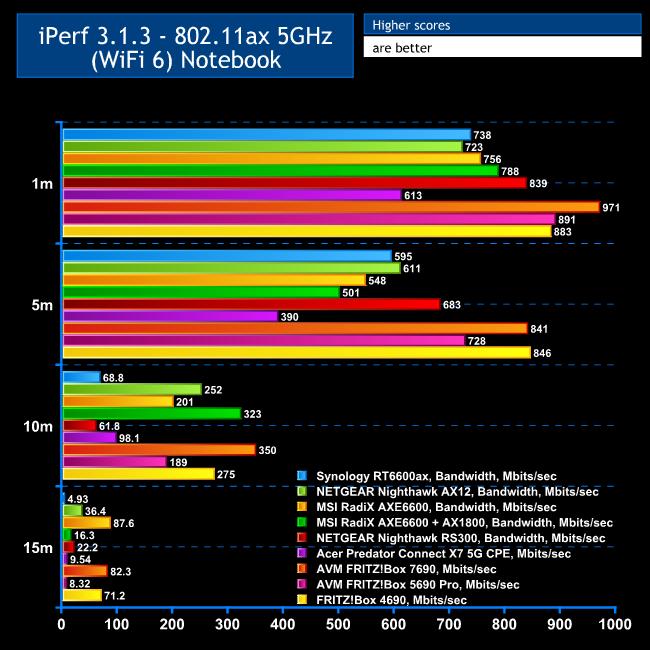
Switching to WiFi 6 is a different story, and arguably this is currently more important with WiFi 7 clients still sparse.
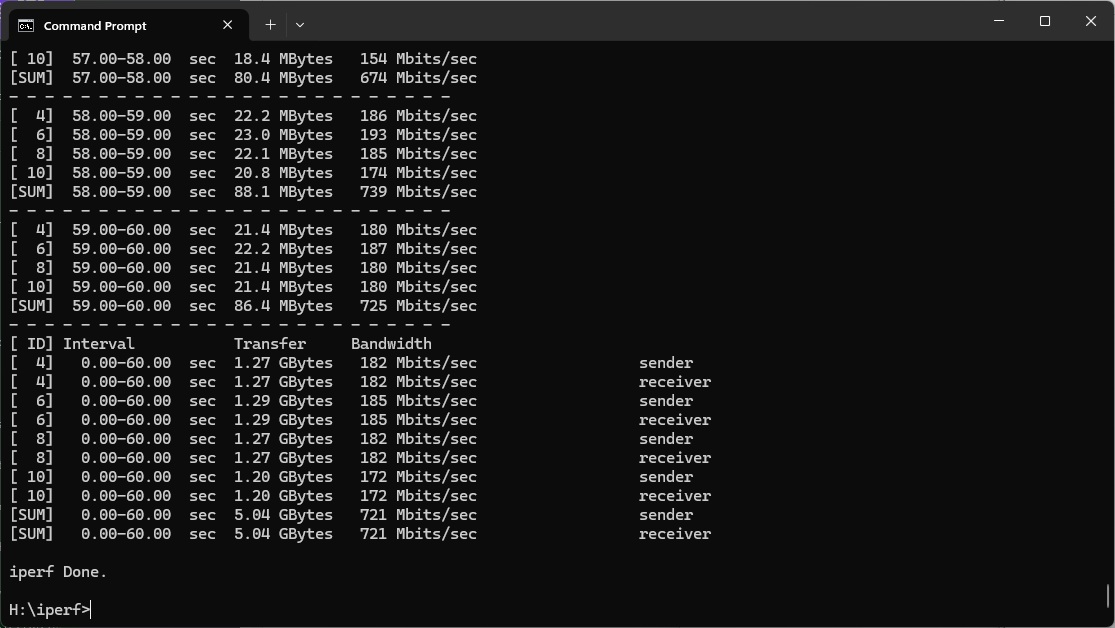
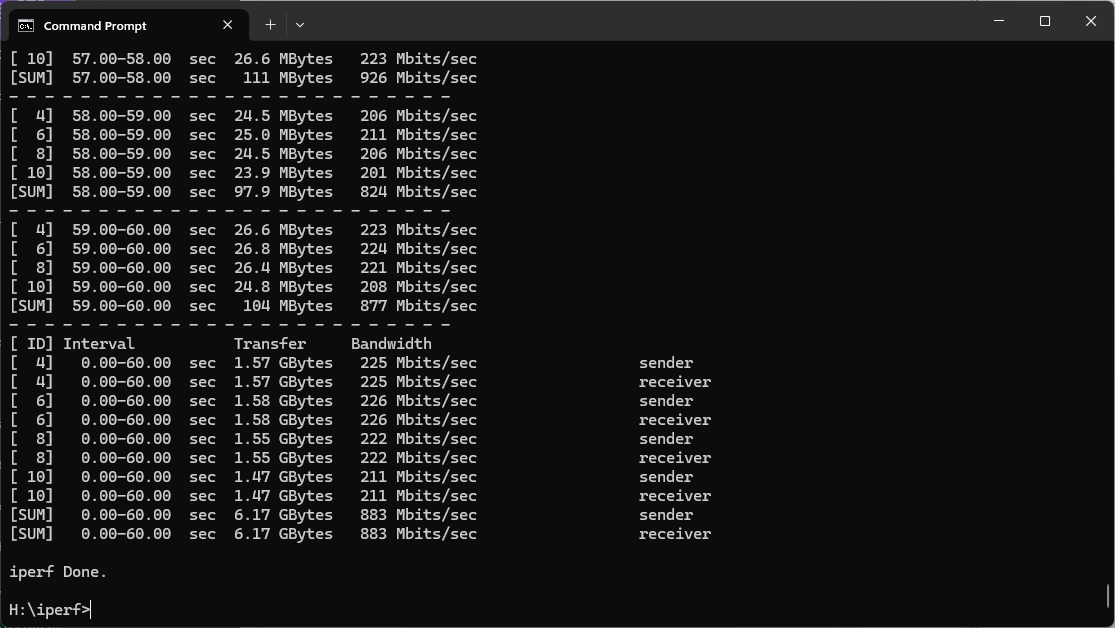
The FRITZ!Box 4690 provides a very commendable 883Mbits/sec at 1m, faster than its WiFi 7 performance and the third fastest standalone router we've seen.
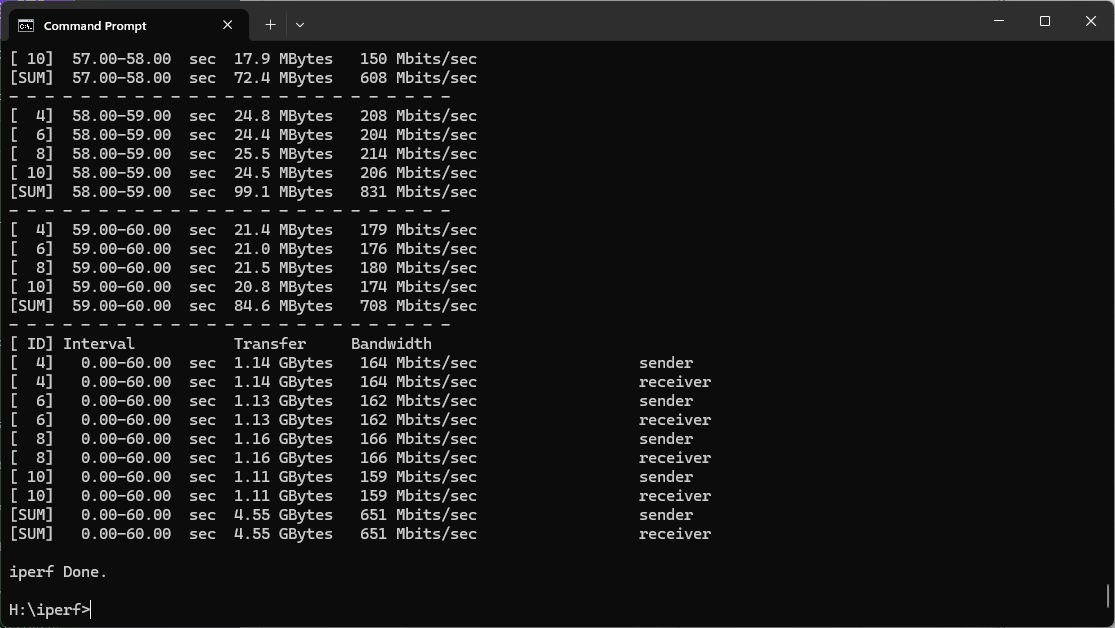
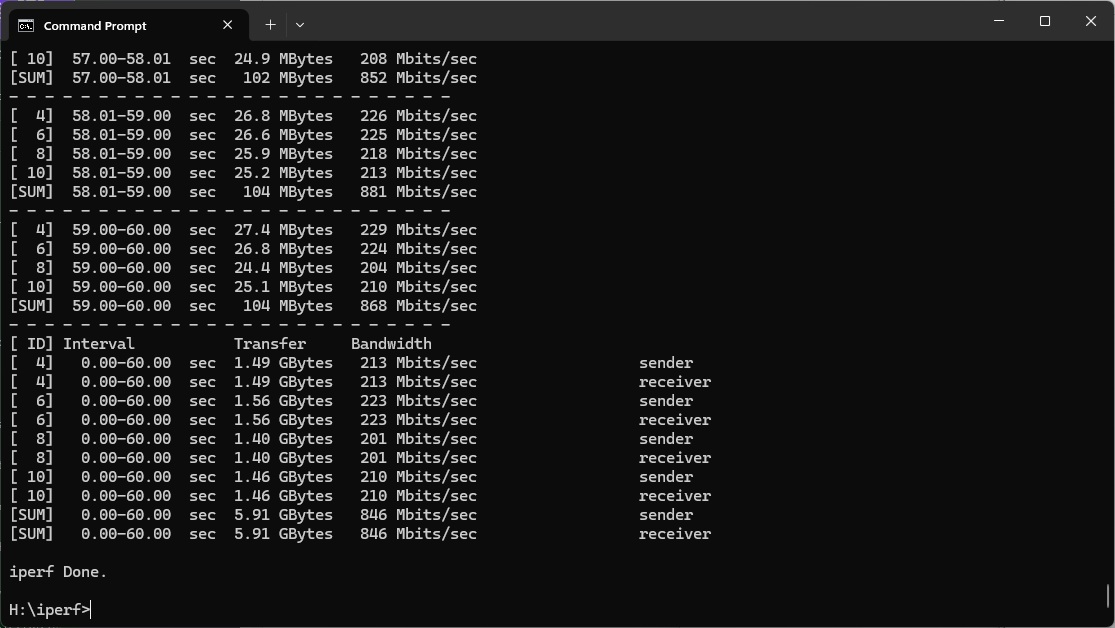
The throughput is even more competitive at 5m, hitting 846Mbits/sec and faster than any WiFi 6 router we've tested.
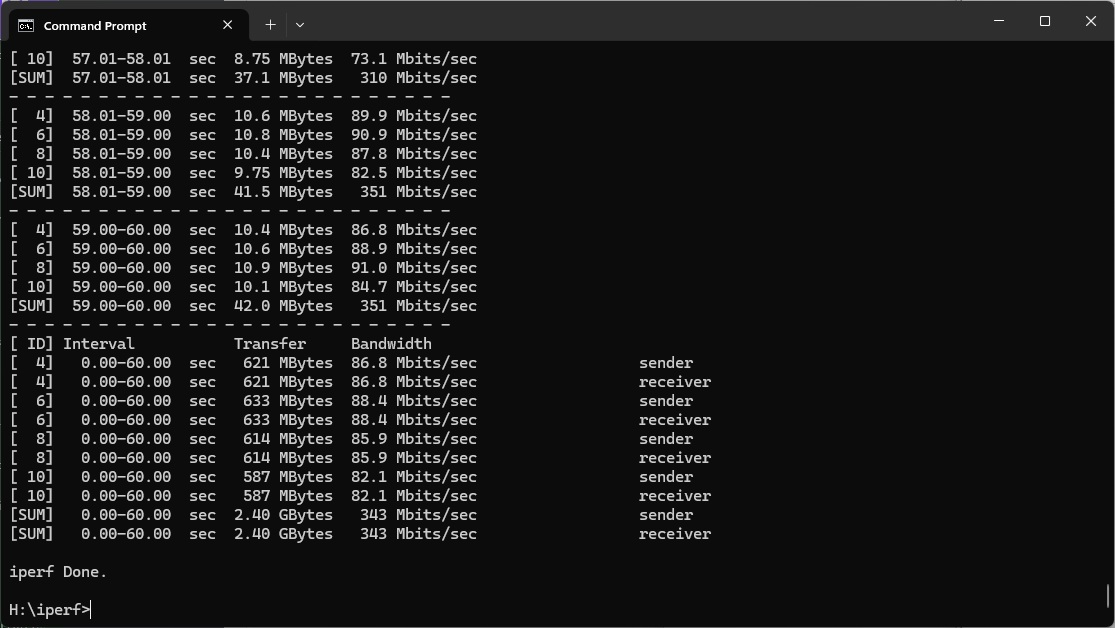
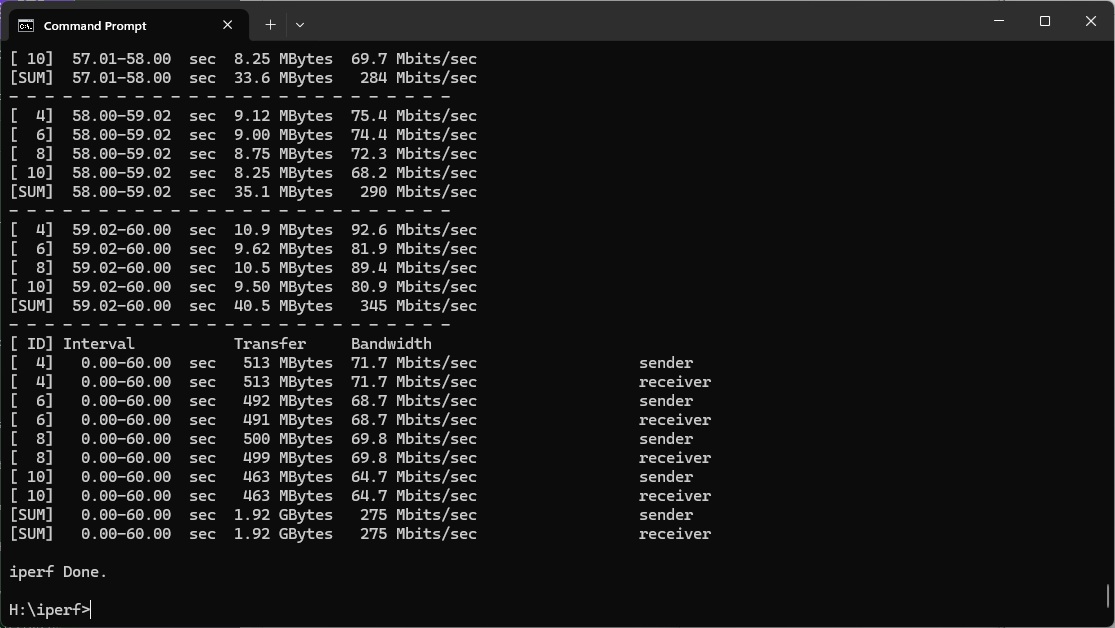
The 10m result drops the 4690 to third, but 275Mbits/sec is still a very commendable bandwidth.
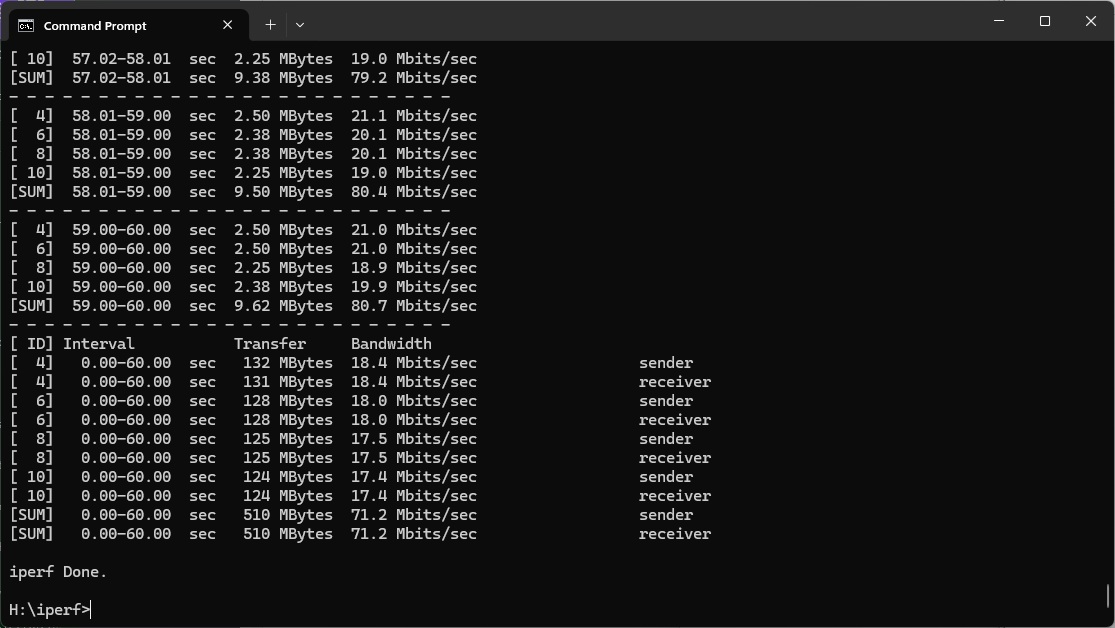
The FRITZ!Box 4690 remains in third place at 15m with a very useful 71.2Mbits/sec.
Overall, this will be an excellent router for WiFi 6 devices, able to cover up to 15m distance with very useful throughput.
802.11ac 5GHz (WiFi 5)
The solid WiFi 6 performance is complemented by still strong WiFi 5 abilities.
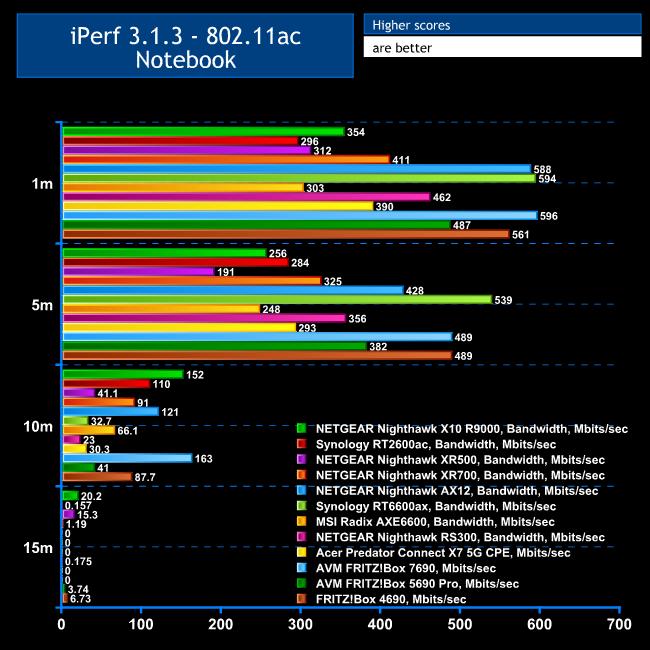
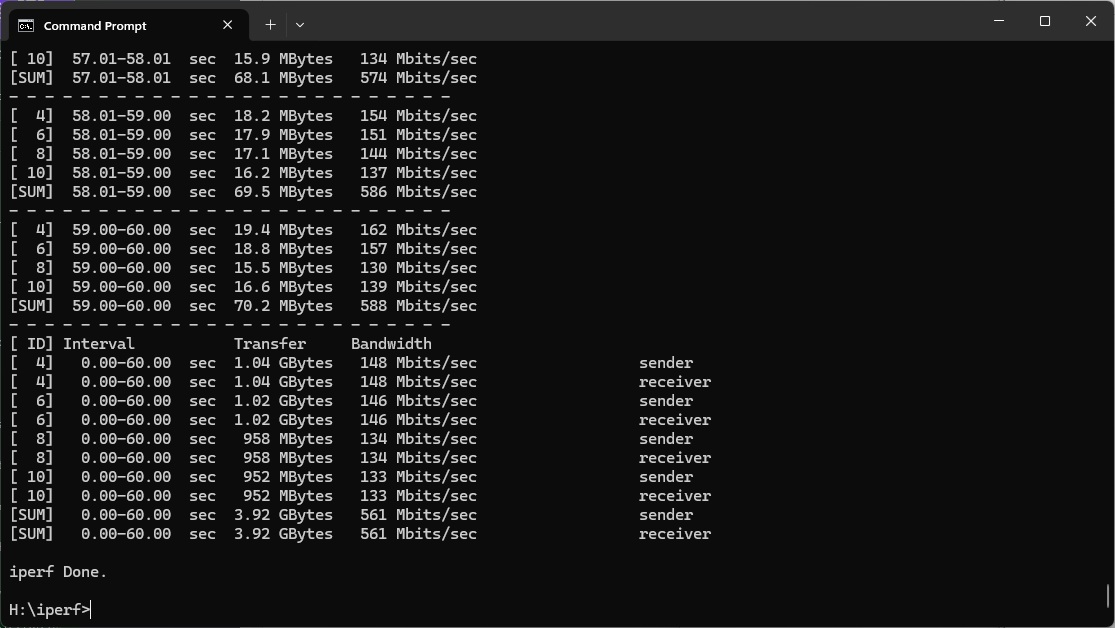
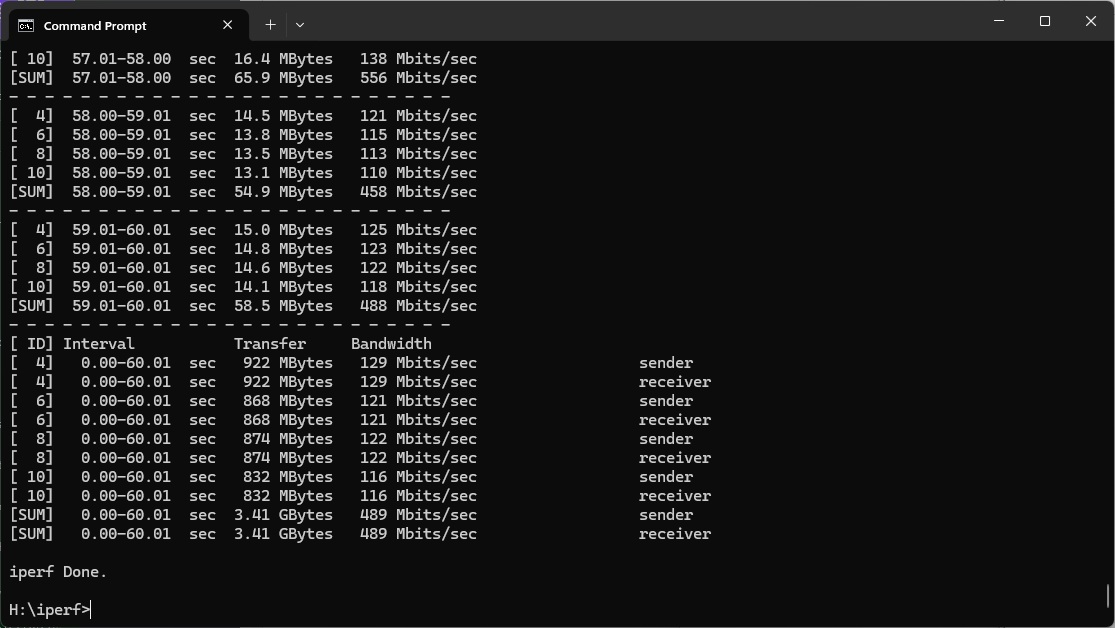
At 1m, the 4690's throughput of 561Mbits/sec is fourth fastest we've seen but not too far behind the leaders.
It does even better at 5m, with 489Mbits/sec bandwidth placing equal second.
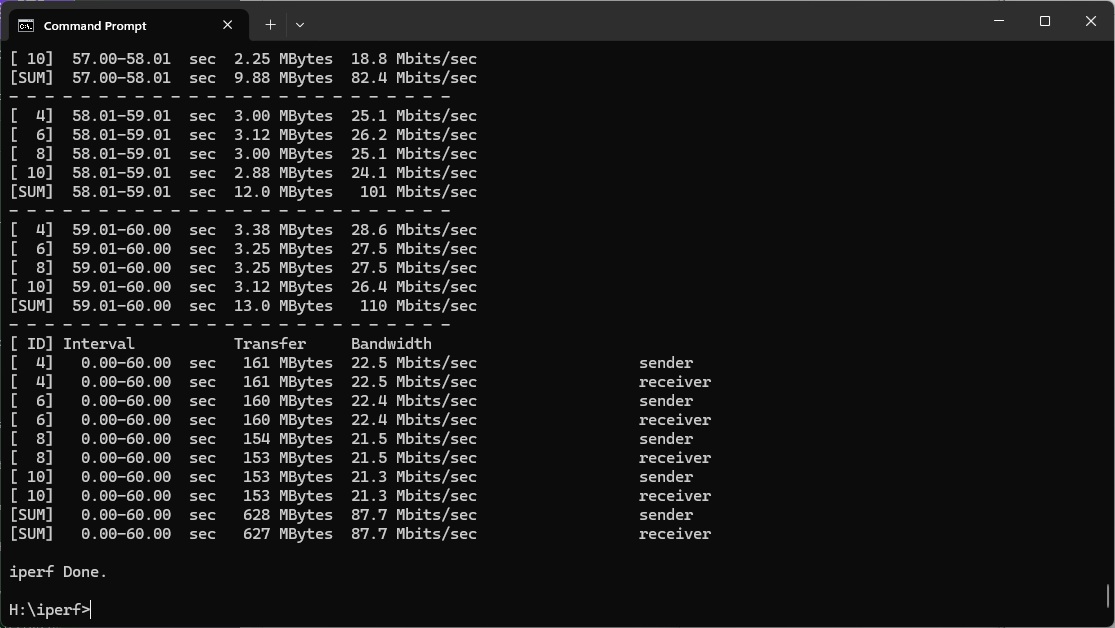
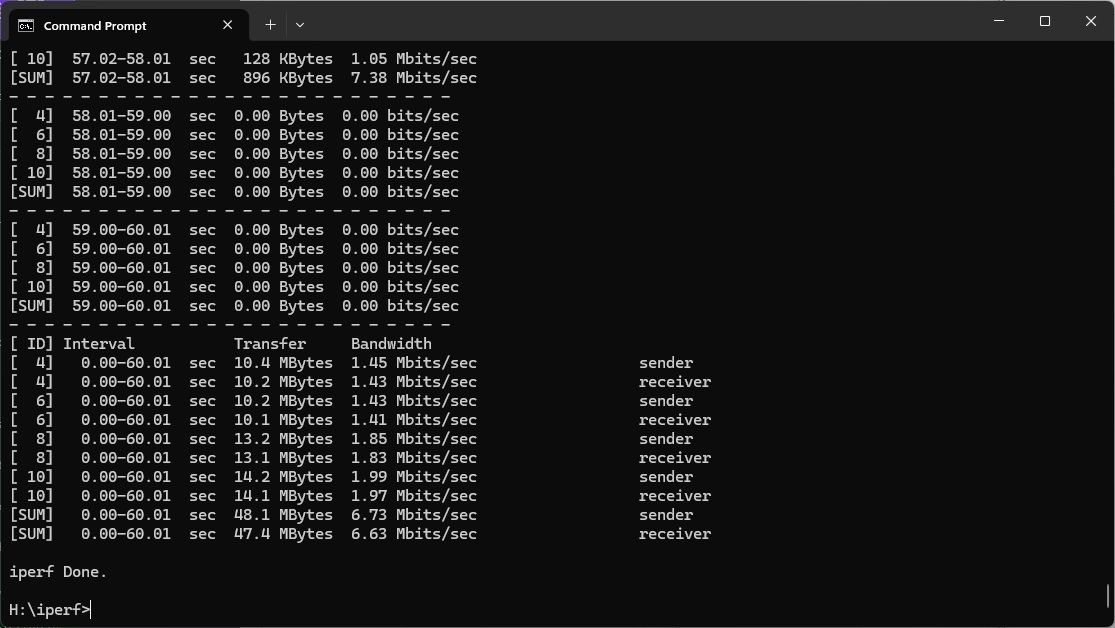
At 10m, however, the 4690 drops back considerably to 87Mbits/sec, and at 15m to 6.73Mbits/sec, which is just about usable but you wouldn't want to stream video over it.
Although you will probably have least WiFi 6 devices these days, it's reassuring that the FRITZ!Box 4690 can still deliver competent WiFi 5 coverage.
802.11n 2.4GHz – Legacy
Although 802.11n clients are getting few and far between – the one we use for testing is over ten years old now – you might still have something that operates with this standard, such as an Internet-of-Things device like a smart lightbulb.
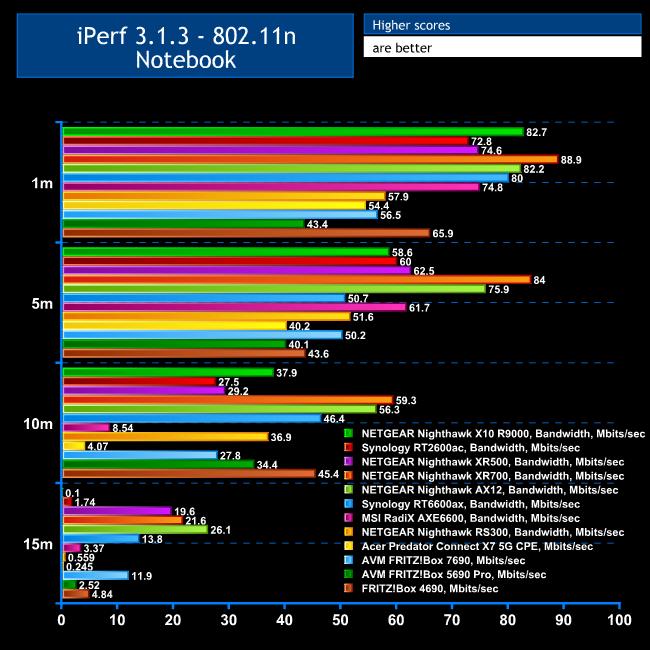
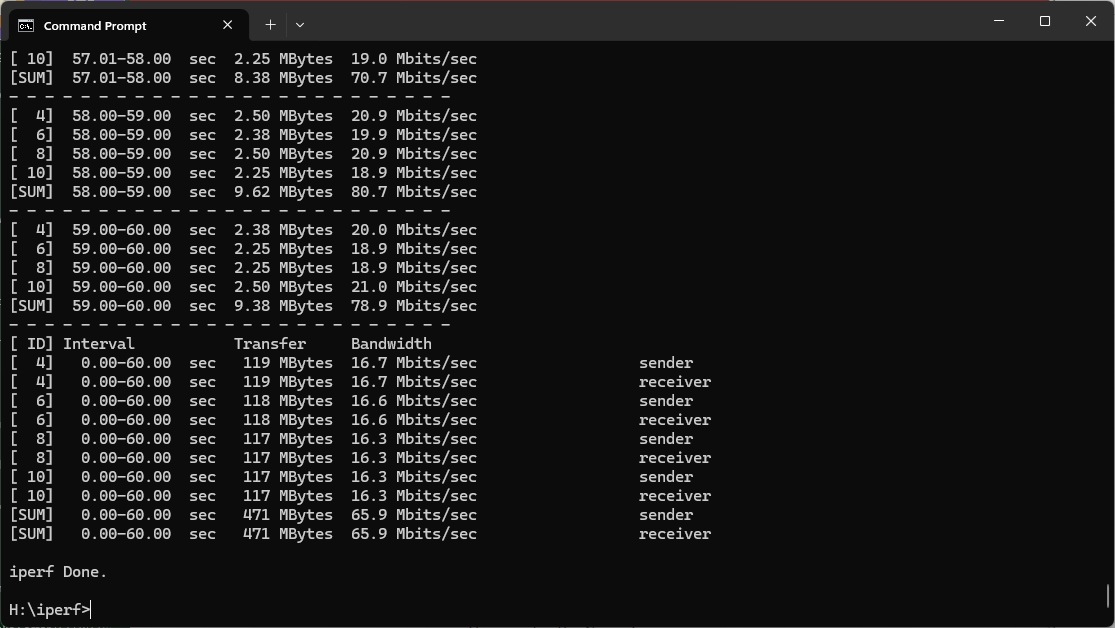
At 1m, the 4690 delivers a respectable 65.9Mbits/sec.
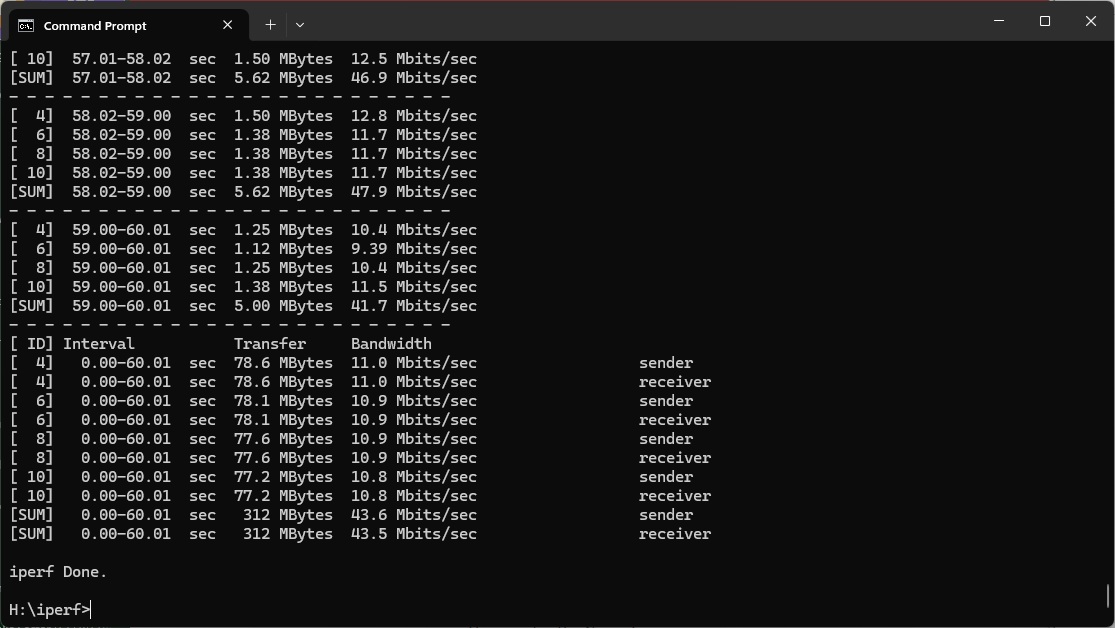
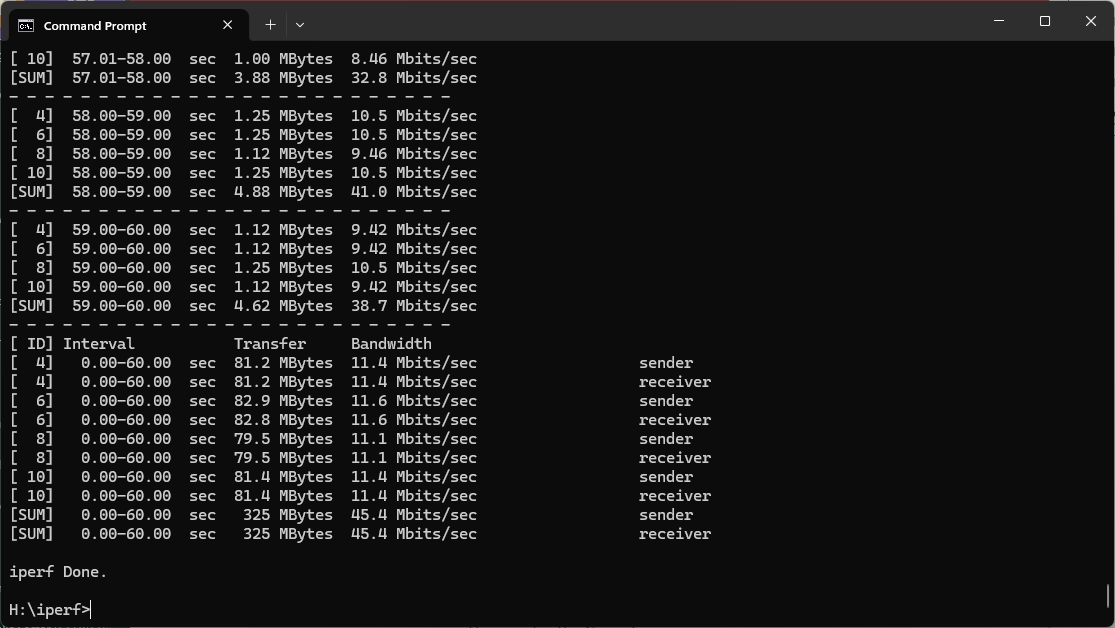
This drops considerably to 43.6Mbits/sec at 5m, but strangely rises again to 45.4Mbits/sec at 10m.
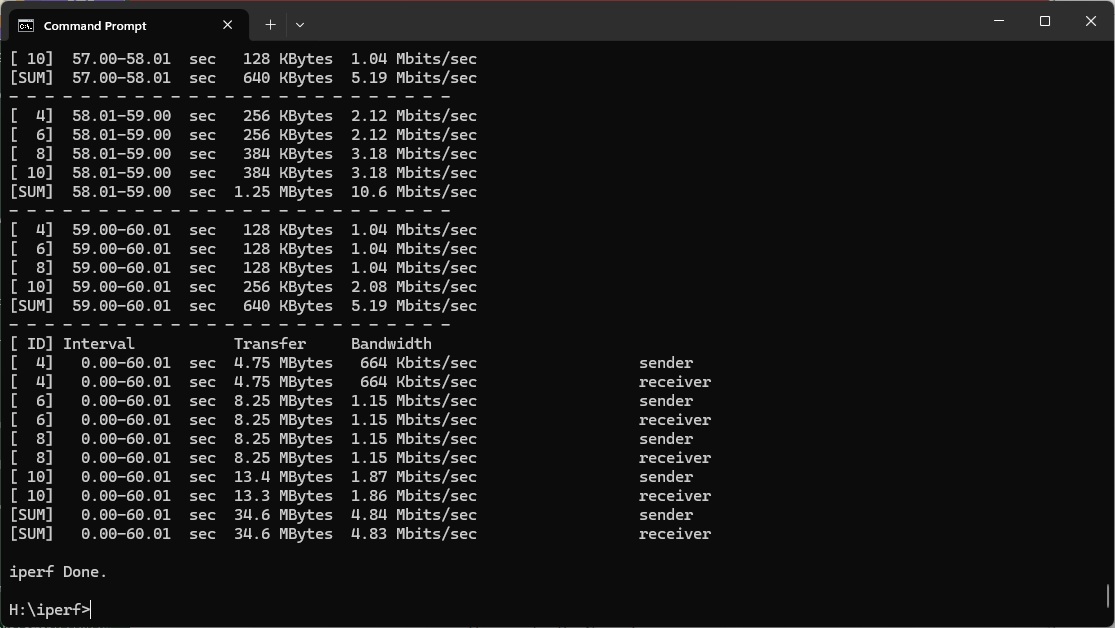
The performance of 4.84Mbits/sec at 15m would just about be usable for IoT or light web browsing.
But the FRITZ!Box 4690 holds its own for legacy 802.11n WiFi.
Overall, while the FRITZ!Box 4690 is disappointing for raw WiFi 7 throughput, its WiFi 6 and WiFi 5 performance are both excellent and 802.11n very usable. Since you'll probably be using a variety of devices of different ages, rather than just the latest WiFi 7 ones, this broad ability is very welcome.