KitGuru KitGuru.net – Tech News | Hardware News | Hardware Reviews | IOS | Mobile | Gaming | Graphics Cards


We tested the TVS-1282 in a number of scenarios that it may face in the real world. The settings for these scenarios are as follows.
File Server
512MB file size, 16KB Block size
80% Read 20% Write 100% Random
I/O queue depth 128
Web Server
1GB file size, 16KB Block size
100% Read 0% Write 100% Random
I/O queue depth 64
Database
2GB file size, 4KB Block size
90% Read 10% Write, 90% Random, 10% Sequential
I/O depth 128
HDD Testing
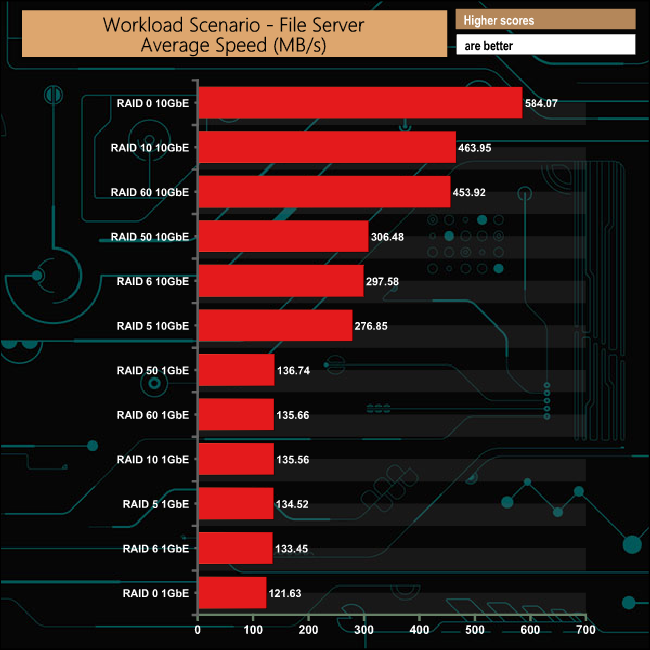
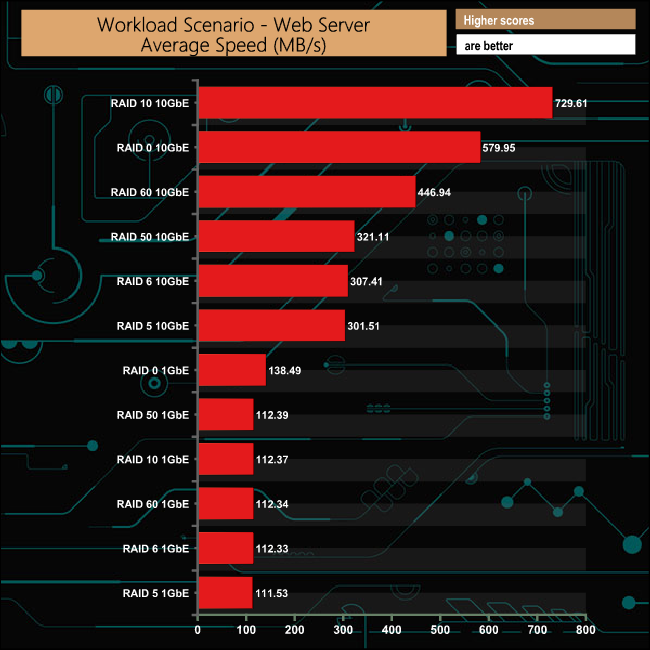
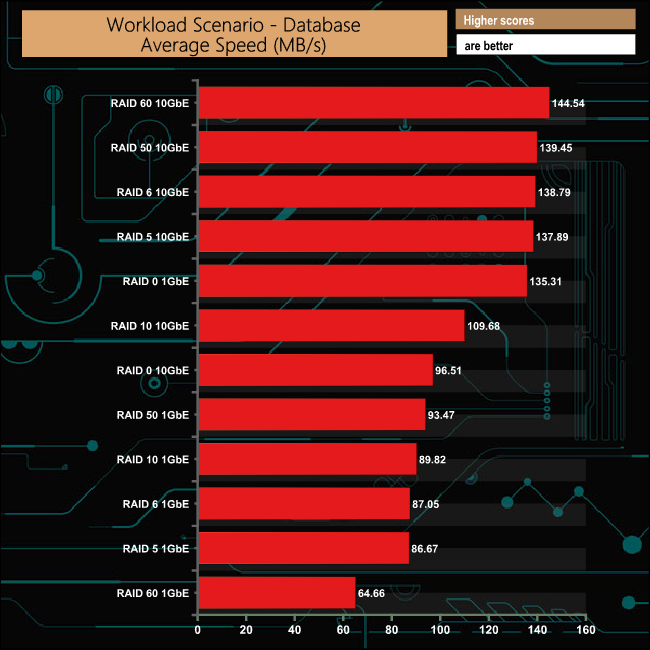
While the File and Web server tests produced much faster average speeds when using a 10GbE connection, the Database test produced results that were a lot closer between the two connection speeds.
SSD Testing
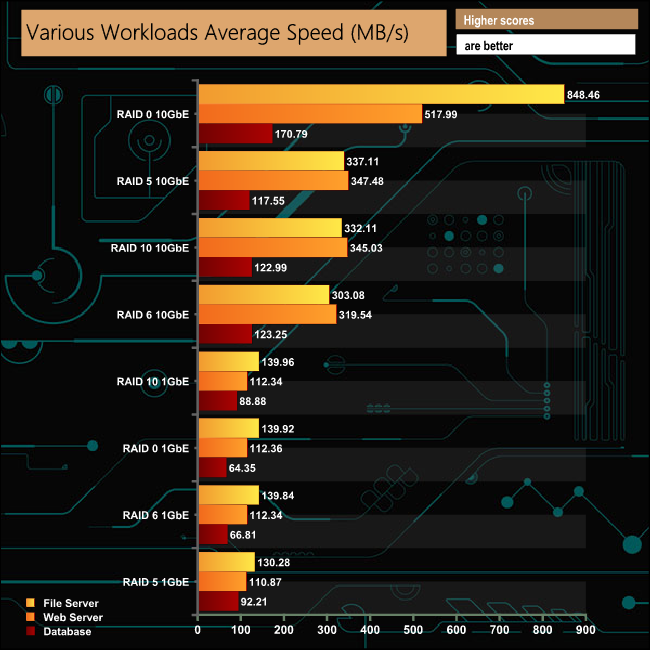
It's the same picture with the SSD arrays, the File and Web server tests produced much faster average speeds when using a 10GbE connection, while the Database test produced results that were a lot closer between the two connection speeds.