 KitGuru KitGuru.net – Tech News | Hardware News | Hardware Reviews | IOS | Mobile | Gaming | Graphics Cards


KitGuru invest plenty of time into analysing and reviewing headphones, but they are generally ‘gaming grade' products, priced between £30 and £100. But what if you have a lot more cash on hand and want a set of headphones that will reveal every single detail from your precious vinyl, compact discs or high resolution audio files?
Buying a set of ‘audiophile' grade headphones can be a very expensive undertaking. Not only do you often need to part with a grand (or more), but you need to ensure they are partnered up with serious amplification, otherwise it is a complete waste of time. We won't delve too much into dedicated headphone amplifiers today, but I will mention specific partnering equipment I have had great success with when talking about the headphones.
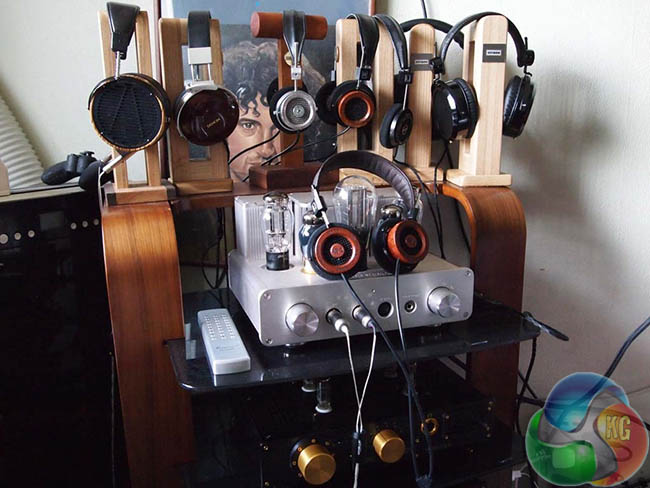
Before I get into my top 10 headphones, I thought it would be worthwhile looking at a couple of pair of headphones which even today would challenge for the top position.
Gone but not Forgotten!
When I am not running KitGuru, I do take audio very seriously, I have probably spent hundreds of thousands of pounds over the years on audio equipment and have owned probably every single pair of exotic headphones you could buy, from the iconic Sony R10 to the Sennheiser Orpheus HE90. Both of these headphones actually make a serious claim to being THE best headphone ever made — however for the purposes of this article today, we have a problem – they are no longer in production.
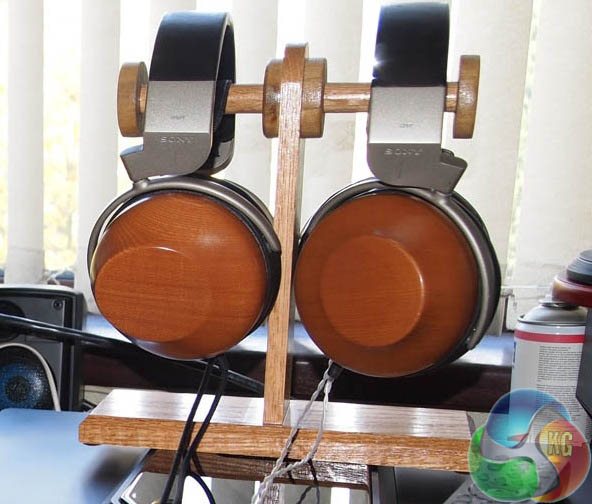
The Sony R10 headphones were based around a 50mm ‘Bio Cellulose Dome Diaphragm' and only 2,000 of them were ever made. At the time they cost £2,000 per pair, and prices now on the second hand market are often in excess of £5,000 – especially if the seller still has the original box and documentation. Sony tweaked the headphones over their short run period and owners have classified them into two categories. ‘Bass Light' and ‘Bass Heavy'. The headphone had real lambskin covered ear pads and the ear cups were made from aged wood from Zelkova trees. Sony did make other headphones with Bio Cellulose drivers, but the R10 are still seen as the best headphones they ever made. I own a pair of both bass light and heavy and while delicate to handle, they have a sound signature quite like no other.
I have had great success pairing these headphones up with the Ray Samuels Emmeline II B52 amplifier. They aren't particularly hard to drive, but will become more focused with well matched partnering equipment.
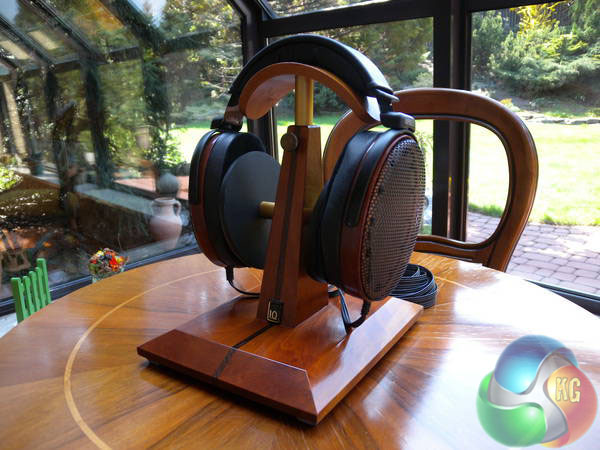
The Sennheiser Orpheus HE90 is another headphone that is no longer in production. In the early 1990's Sennheiser asked their engineering team to create the best headphones they could – regardless of price. This is how the Orpheus HE90 came to life. Only 300 of these were ever made. At the time the asking price was around $16,000. I bought a pair of these for around £10,000 a decade ago and sold them two years later for £15,000. You may find a pair on ebay today for around £20,000-£25,000.
Each pair of He90's came bundled with a dedicated valve amplifier by Sennheiser – called the HEV 90. The amplifier had six valves, each protected by a steel casing.
This headphone setup apparently had a range of 7 to 100,000 hz, well beyond the rating of the human ear. There is a lot of debate on this subject, as many experts have argued that Compact Disc will never sound as good as vinyl due to the inherent roll off of red book digital discs at 20,000hz. Frequencies above this are argued to enhance the audio experience and this is part of the reason why a select audience still buy high grade vinyl discs. Super Audio CD has never really taken off, but I use a Cary CD303T SACD player and the difference between a standard CD and Super Audio CD is incredible. The only downside is the price of a SACD – they can often cost in excess of £50.
The Sennheiser Orpheus HE90 in my own humble view is the best headphone that money can buy, but like the Sony R10 headphones, it is no longer in production. If you listen to a complex, well recorded orchestral piece you could close your eyes and be transported to the actual event, when it was recorded. I don't think anything I have ever owned since then has came close.
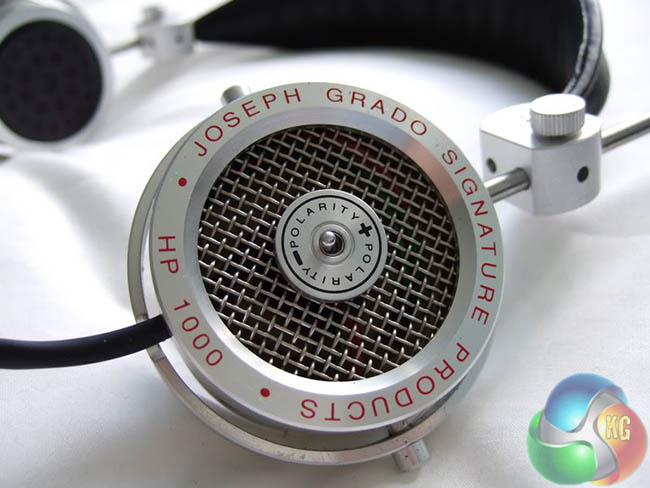
Thanks to Joe for the use of his picture.
GRADO are a small family run business, who have a huge worldwide following. Before Joseph Grado handed over the company to his nephew John Grado, he created one of the best headphones that money could buy. The Grado HP1 is an iconic headphone that you may see listed on Ebay from time to time – as they are no longer made. They often sell in excess of £2,000 – depending on the condition.
Joseph Grado called these headphones ‘Professional Recording Monitor Headphones' and a percentage of them were sold to professional recording engineers and equipment designers who needed to analyse material they were mixing. Grado's design goal at the time was to control resonance which can plague headphones with a plastic housing. The earpieces are crafted from Machined Aluminum alloy parts, which are then brushed to improve the appearance. The company used a stainless steel spring rod which was padded with genuine leather. Every pair of these headphones were assembled by hand – by Joe Grado himself. At the time they cost $600 and their value has increased significantly.
I never found these headphones very hard to drive although as always, a high grade headphone amplifier would help to improve and tighen bass frequencies. They are a great pairing for rock and pop music and are very forgiving of poorly recorded material and compressed MP3's. The polarity switch was an interesting addition only featured on the HP1. The HP2 was the same headphone without the polarity switch and the HP3 was a lower grade version, not as closely matched.
On this page, I highlight some of the best headphones available in 2014. They are not ranked in ascending or descending order, as people will have different tastes and demands. If you are considering spending £1,000 or more on headphones, these are the ones that should be making your shortlist. I have spent considerable time with all the headphones on this page (at least a year for each headphone), and have no bias for any company – KitGuru doesn't work directly with any of the companies listed on this page.
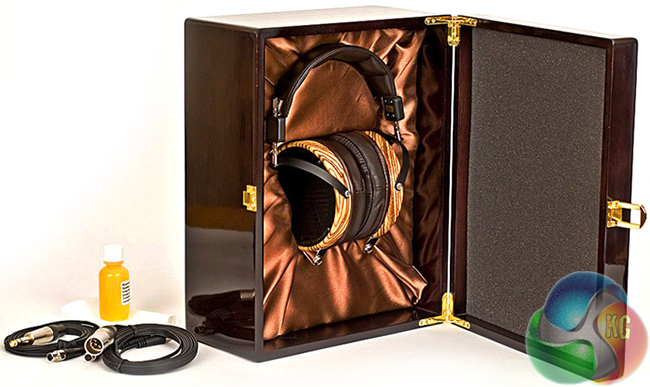
The Audeze LCD3 are the folllow up to the highly successful £1,000 LCD2 headphones that took the audio world by storm when they were released. The LCD3 are significantly more expensive, available by import from www.decentaudio.co.uk for £1,700. Audeze sell a small range of headphones, which you can see here.
The LCD3 incorporate a planar magnetic driver which uses a thin film ‘Lotus' diaphragm. Audeze say that this is made of a special alloy for greater control and lower distortion. The diaphragm is held between neodymium magnets in push pull. Audeze test these before shipping, and the customer is given a frequency plot for their own headphones in the box.
I have owned several LCD2 and LCD3 headphones over the years, and found their quality control in the early days was a little lacking. The first pair of LCD3 headphones I owned were plagued with problems, but after the replacement all the issues evaporated.
The LCD3 headphones are a open back circumaural design. The earpads are lambskin leather, and ‘meat free' options are available if requested. The earcup housings are made from zebrano wood, which has a distinct appearance.
In the box, you get two pairs of cables – one with a standard single ended connector, and the other with a XLR 4 pin balanced connector. These can be connected to the chrome header on each driver. Several companies sell cables for these headphones at various prices – some of which can improve transparency and bass response.
Audeze include wood treatment fluid and a cleaning cloth in the box, which is a nice touch.
The LCD3 will not suit everyone. They are quite a heavy headphone and your ears will get warm over a few hours. This is partly due to high clamping pressure, although they can be ‘tweaked' to reduce this pressure if you spend some time with the headband.
The LCD3 headphones deliver great bass extension, improved over their predecessors. They are a fairly neutral, flat sounding headphone and are ideal to use for long periods of time, especially if you are prone to ear fatigue.
Their mid range response is sublime, especially when dealing with vocals and acoustic music. Female vocals can be incredibly realistic and acoustic instruments are rendered with a lot of detail, yet no harshness. They are also a great headphone for rock music. Amplification is important to get the most from these headphones and we had great experience with the Trilogy 933 and Woo Audio WA22.
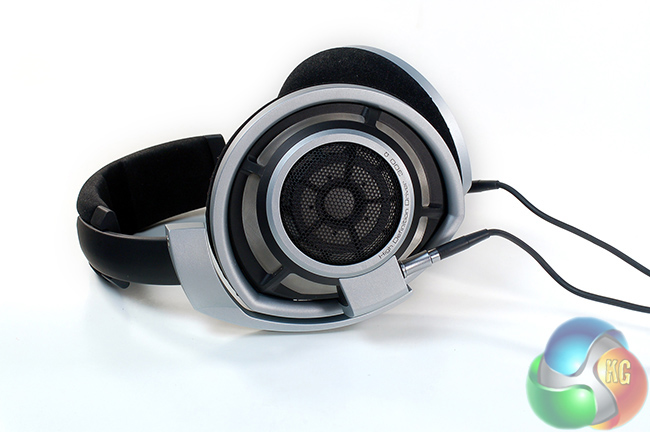
The Sennheiser HD800 are an incredible headphone and one that I use almost daily. While not in the same league as their HE90 flagship from yesteryear the HD800 are able to cope with a wide range of music from the most complex orchestral pieces to classic rock from the 70's.
The Sennheiser HD800 headphones cost £1000 and are worth every penny. Unfortunately the cable Sennheiser supply in the box is shockingly bad, so you will either need to spend £330 on a Cardas cable upgrade, or £250 on the new DH800 S balanced upgrade cable. This takes the cost of the headphone to £1,300 and while many will argue that it ‘unnecessary' – if ever a headphone needed an ‘out of the box' cable upgrade, it is the HD800. Bass response with either of the upgrade cables linked will be enhanced, tightened and more importantly they both eliminate a slight treble harshness.
Sennheiser have released a series of ground breaking headphone designs over the years, the HD600 and HD650 are extremely good value for money – but the HD800 is without question their current flagship product.
The Sennheiser HD800 may be one of the best headphones on the market, but they are surprisingly difficult to power correctly. The impedance of 300 ohms can prove tricky for the built in amplifiers on many portable players, so if you are traveling with these headphones then we recommend you invest in a portable amplifier along the lines of the £560 CEntrance Hifi-M8 LC.
We had great success with the Trilogy 933 headphone amplifier, however the recently released Sennheiser HDVD-800 amplifier is a great partner. Sadly both of these amplifiers are more expensive than the headphones, and take the total cost of ownership to around £3,000.
The Sennheiser HD800 is a striking, futuristic design built to the highest engineering standards. The HD800 earpieces are created from a combination of absorbing composites and metal accents. They are massive, having to house 56mm ring-radiator transducers. They are mounted in a position to fire ‘back' to your ears, from the front.
The HD800 is sporting a stainless steel mesh – called Leona – this is a rigid plastic which is used to dampen the steel. The earpad cushions are inspired by the luxury auto industry. Even the headband which is used to connect the earpieces is laminated from plastic and steel, and then covered in micro fibre. The appearance may split opinion, but there is no doubt that the construction is as advanced as it will get in 2014.
Large drivers, such as the 56mm transducer in the HD800 require a lot of control. Sennheiser say their ring radiator solves the problems with a conventional shape and produces a ‘very coherent platform'. The placement of the drivers is also key to the sound characteristic of the headphone – with the drivers firing back at your ears from an angle they get to mimic a real world environment – as if you were at a concert with loudspeakers firing at your ears. The HD800 drivers are set quite some distance away from your ears, so the soundstage is rather large – very like the now extinct Sony R10. You don't sit in the front row of a concert with these headphones on – you are at the back of the hall, in the middle.
These are the most comfortable headphones to wear – bar none. They are large enough to house even the biggest earlobes and Sennheiser have spent a lot of time in getting the balance on the top of the head as close to perfect as possible. Long term listening in a pleasure and after a few minutes you will forget they are on your head at all.
In regards to an audio signature, the HD800 are extremely detailed. Some people have classed them as slightly fatiguing, however with the cable upgrade, good source material and a high grade amplifier they hit a spot close to ‘perfect' for me. Well recorded vocals, acoustic tracks, and complex orchestral music sound divine via the HD800's although they are extremely critical of poor recordings. Compressed MP3 tracks will sound terrible, and poorly recorded music will render in a lifeless, flat manner. The HD800 will expose warts, flaws and dynamic problems with any track which is probably why many sound engineers use them in the studio.
Bass response with a cable upgrade is excellent, although they are not a bass heavy headphone. If you primarily listen to rock or dance music and want thumping driving bass, then there are better alternatives.
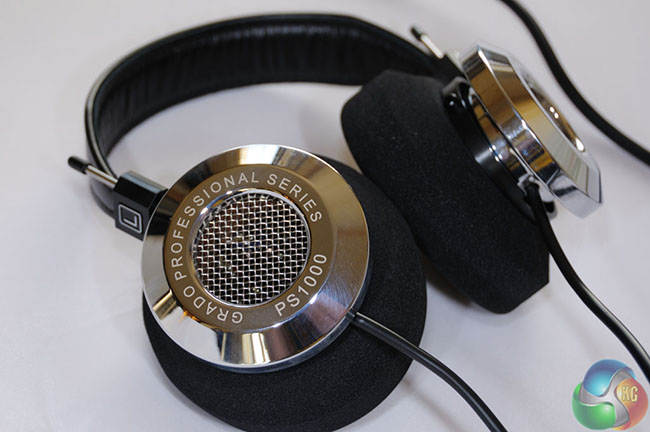
The Grado PS1000 headphones have split opinion among the enthusiast audience now for many years. When Joseph Grado handed over the company to his nephew John Grado, many of the diehard followers felt that the sound signature changed … for the worse. While I agree that the Grado PS1 headphone was probably their best headphone ever, I do enjoy many of their current headphones.
The Grado PS1000 is the companies current flagship headphone and is one of the most expensive you can buy today – At £2,000. The Grado PS1000 are created by a small, family run company in New York – they are shipped in a cheap looking white pizza box, with a cable extension, and a 3.5mm adapter. If you want top grade ‘Apple style presentation', then look elsewhere. I have reviewed these headphones before and used them in several of our tech reviews over the last 36 months. Out of the box, the PS1000 can sound a little harsh and they do need some bedding in time – around 50 hours before the drivers settle.
For rock music lovers, these are the best headphones that you could ever spend £2,000 on. They have incredible bass power and you will give up on increasing volume control, long before these drivers will. Listening to Mike Oldfield's SACD version of Tubular Bells or Ommadawn on the Ps1000's is a religious experience. They are equally impressive with Blues and Rock tracks from the likes of Joe Bonamassa or Black Sabbath. These are the headphones that will get the foot tapping, under the desk.
They are very heavy headphones and have a tendency to slip easily from your head, especially if you move around a lot when listening to music. Unlike the HD800, you are unfortunately always aware you are wearing them.
They will not resolve the same level of detail as the Sennheiser HD800 – which is not necessarily meant as an insult. The PS1000 are undoubtedly a slightly ‘warm' sounding headphone. Sometimes the Sennheiser HD800 can be fatiguing when the Grado PS1000 will just envelope you with the music in a more pleasant and engaging manner. The PS1000 wouldn't be my first choice for classical music however, I would pick up the HD800 or 009 for that. If you are a rock fan and listen to a wide range of popular music, the Ps1000 are difficult to beat.
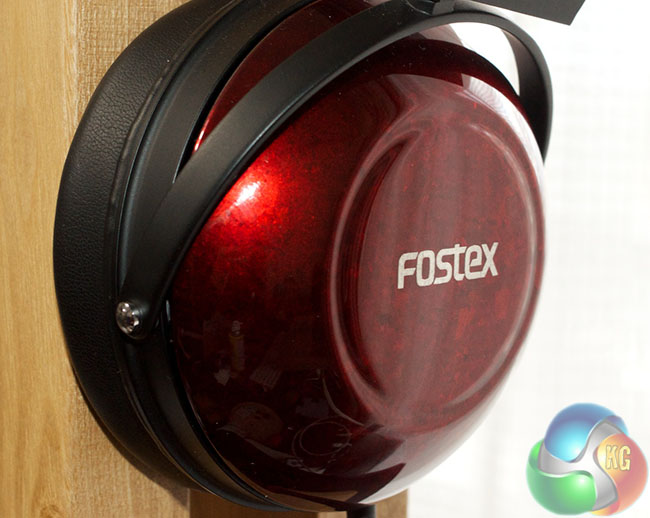
Fostex may not be that well known in the mainstream circles, but they have created headphones for some of the leading companies, such as Denon. The Fostex TH900 have taken the audiophile sector by storm since they were released a short while ago. The price of these headphones fluctuates a lot, but they are available from Amazon in the UK today for £1,279.00.
The Fostex TH900 are a very impressive pair of headphones which are relatively easy to drive, although the better the partnering equipment the better they sound. The TH900 feature a rather complex, newly designed driver unit with a 1.5 tesla (15,000 gauss) magnetic circuit and bio-dynamic 50mm Biodyna diaphragm. The housings are made of Japanese Cherry Birch (Betula Grossa), the Japanese specialty with rigid and dense texture for maximum acoustic performance.
The TH900 at times sound surprisingly like the Sony R10, with a more powerful bass frequency response and slightly more suppressed mid's. They aren't quite as beautiful sounding as the iconic R10 for classical or acoustic music/female vocals, but have enough character to make their own mark.
The build quality of the headphones is exceptional. The company use Japanese lacquered URUSHI finished housing and a quality 7N OFC cable, which is a pleasant surprise. More importantly, the cable is able to let the drivers truly sing, depending on the partnering equipment.
These are a very capable headphone and while they don't handle specific music genres as beautifully as the Sony R10, I believe them to be more versatile. No matter what music you listen to, these headphones can handle it. The sound signature is on the slightly warm side of neutral and the soundstaging is excellent. They don't deliver quite as much bass as the Grado PS1000 and the soundstaging isn't quite as enveloping as the Sennheiser HD800, but as an overall design they are tough to beat.
The TH900 excel with a wide variety of music, from complex orchestral passages to simple acoustic guitar and vocals. They are a great partner with the Trilogy 933 amplifier and the Woo Audio WA22 amplifier. We also found the synergy with the Sennheiser HDVD-800 amplifier to be excellent.
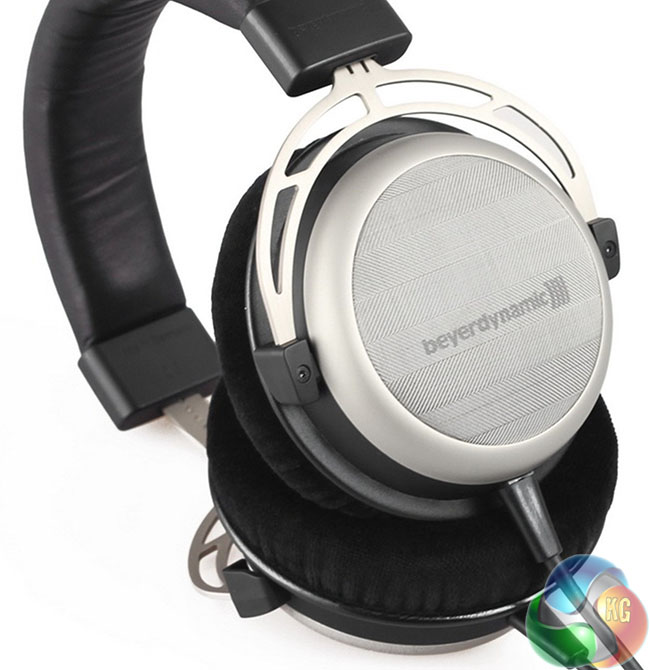
The Beyerdynamic T1 headphones have been around now for many years and have won over many users with their detailed, dynamic sound signature. I owned a pair of these for several years, but sold them on when I found I wasn't using them so much. They have dropped a little in price, selling now on Amazon for £880 inc vat.
The Beyerdynamic T1 use a Tesla driver and produce a very balanced sound. The T1 headphones are comfortable on the head, although their earcups are not as large, or comfortable as the Sennheiser HD800.
Sound quality is as we would expect, extremely high. Bass response is focused and tight, although not overpowered. The driver in the T1 headphones is placed at an angle and while the soundstaging is not as ‘big' as the HD800, it works extremely well. Bass lines are all accurately portrayed with enough impact to get the foot tapping. Resolution retrieval is very high, although not in the same league as the HD800.
The T1's are a slightly more warmer sounding headphone than the HD800 and as such will not inflict the same long term listening fatigue. They are a fine alternative to the PS1000, and at less than half the price, certainly offer a lot of value for money. PS1000 bass response is stronger however, although slightly less focused.
The T1's excel with all kinds of music. It would be fair to say that there are better headphones available for every specific genre, but as an ‘all in one' headphone they still rate very highly. At £880 they really are one of the ‘bargains' in the high end headphone world.
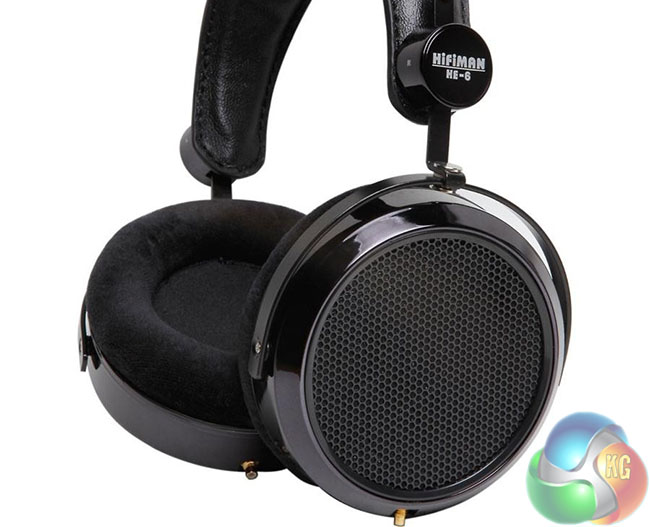
The HiFi MAN HE6 is a Planar Magnetic headphone, the flagship in their current range. These headphones have proven popular with the high end audiophile audience now for many years and have a deserved reputation for retrieving high levels of detail. Negatively, they are extremely difficult to drive.
The HE6 need a beast of an amplifier to get the most from them. Most of my amplifiers fail on a major level to control them. The Trilogy 933 is the only amplifier I have that I would use with the headphones to get their full potential. The amplifier problem is so well known that HiFi Man made their own amplifier to go with the headphones – The EF-6.
The HE6 are available for £950 inc vat and the EF6 amplifier is £1,140 – bringing the total cost to £2,090.
The HiFI Man HE6 are one of the most transparent headphones that you can buy and are reasonably well priced considering the competition. The issue with the amplification needs to be factored in, as these are not headphones you can operate without an expensive, dedicated amplifier. They simply won't work.
If you like music to be transparent, visceral, dynamic and emotional, then the HE6 deserve serious consideration. They can handle a wide range of music from bass pounding rock tracks to delicate, intimate acoustic pieces. They are exceptionally impressive with complex, detailed, orchestra and instrumental tracks but are equally damning of poorly recorded pop music (which is more often the case now than not).
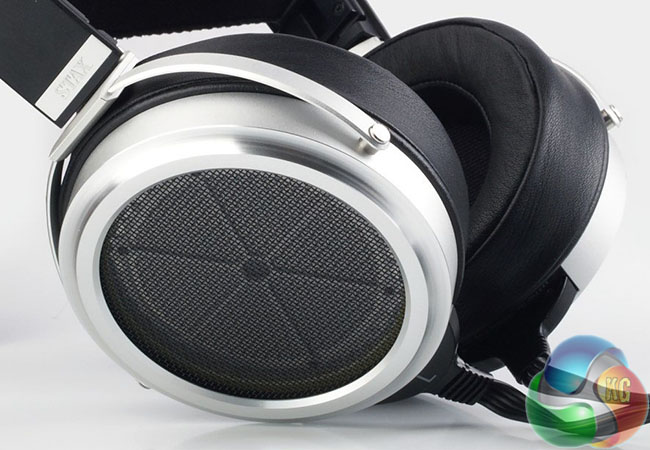
The STAX 009 are arguably the best headphones that you can buy today. The only downside is the asking price. Without the amplifier, these headphones cost £3,695.00 inc vat. I no longer own the STAX 009 headphones, but used them over a period of three years. I only lost £500 when I sold them, such is the demand.
The STAX 009 are electrostatic headphones and need electrostatic amplifiers to supply the juice. If you don't know that is, then be prepared to invest heavily into the amplification. STAX make their own amplifiers, although they all pale in comparison to the HeadAmp Blue Hawaii SE, which has to imported from America in the UK.
When I owned the STAX 009, I used the Stax SRM 007TII amplifier almost extensively and overall I found this amplifier slightly lacking. I spent a week with the Blue Hawaii SE and it really blew my mind. Other amplification options are the Ray Samuel's A10 Thunderbolt, The Cavalli Audio Liquid Lightning and the Woo Audio WES.
By the time you import any of these amplifiers, deal with customs charges and opt for the upgrades (in the case of the Woo Audio WES) you will be looking at between £5,000 and £8,000. This is why I opted for the STAX SRM 007 TII at the time. Yes, we are talking the price of a good car for a pair of headphones and amplifier.
With the right amplification, the STAX 009 are literally life changing headphones. The detail, resolution and dynamic range are in a league of their own. Only the legendary, now defunct Orpheus HE90 is a match. With well recorded classical music the STAX 009 are a revelation. While the following phrase is often overused, you really will hear micro details that you never knew existed. Listening to 24 bit 192khz master tracks from HDTRACKS or Linn records is a simply incredible experience.
I could wax lyrical on the incredible music experiences I had with the STAX 009, but they still have some weaknesses. The soundstaging is open, the audio signature is neutral and the detail retrieval is second to none however they can be fatiguing. If you move from a standard pair of dynamic headphones, the STAX 009 can initially be simply overwhelming.
Listening to acoustic music can bring out detail on strings that you didn't even know was in the recording in the first place. Strings will vibrate against the fret board and on a couple of recordings I could even hear a musician breathing, hidden with every other combination of headphone and amplifier I have tested.
If you believe that ‘less is more' then the STAX 009 will not be your ideal headphone. They will painfully reveal every weakness with a recording, including the source equipment. Recordings I actually enjoyed listening with the Sennheiser HD800 or Grado PS1000 were a painful experience with the STAX 009. This is not a fault of the STAX 009 headphones, but sadly a clear indication that many recording techniques are geared for compressed radio playback.
The STAX 009 have a moderate bass response. There is plenty of bass detail and response, but the weight is significantly less than say the Grado PS1000 or Fostex TH900. These are not the ideal headphones for general pop and rock music, but more for classical aficionados who want to hear every micro detail in a recording. The mid range is breathtaking and the upper frequencies are rendered without any hint of sibilance.
Today I detailed some of the best headphones that money can buy. While many people may assume that the cost plays a significant factor, this is NOT always the case. One of the worst headphones I ever bought, was also one of the most expensive.
The Ultrasone Edition 10 was one of the worst mistakes I ever made. I was one of the first people to buy these £2,000 headphones and initially couldn't believe how bad they were – especially after the companies excellent Edition 8. Even after many hundreds of hours of running in, they sounded terrible. This opinion has been shared by experts in the industry such as Tyll Hertsens at Innerfidelity (see his funny video below). [yframe url='http://www.youtube.com/watch?v=L34S4Tt1EuQ']
All of the headphones I listed on the previous pages are right at the top of their game. I have spent at least a year with each of the headphones in this article. I wouldn't always say that price is a clear indication of how good the headphones will be. For instance, while I love the Grado PS1000 headphones, they are overpriced at £2,000. There is no means of measurement to verify that they are ‘twice as good' as the £995 Sennheiser HD800.
If you are in the market for a good pair of headphones, and have a couple of grand spare, just remember that to get the most from any of the headphones in this article, you will need a high grade amplifier. These are often just as expensive as the headphones we are talking about and in some cases even more.
No one said this was a low cost hobby, but if you get it right, nothing is more rewarding!
Discuss on our Facebook page, over HERE.

dear lord, I think I just died and went to heaven
Happy ATH M50 owner here 🙂
But of course going a step higher again will be even more enjoyable. But for now these will do perfectly fine.
Odd.. The Skullcandy in-ear buds I found on the floor of a cab, that Ive been rocking for 4 years now, were not on the list.. But seriously though, I like these reviews.. Sort of like reading about the new Lamborghini I will never own.. Keep em coming.
No K-1000?
I wish I am in your shoes right now. It would be great to test these cans all day. I would difinitely marry off the new Denon AH-D7100 the only headphone I would never take off. Though the look and design has a slight similarity with beats but the comparison just ends there. It is definitely much larger than beats when it comes to audio performance and quality.
i prefer sennheiser http://www.shoppingway.co.uk/brands/sennheiser
Headphones which are very forgiving on poor audio records should never be treated as studio headphones.