 KitGuru KitGuru.net – Tech News | Hardware News | Hardware Reviews | IOS | Mobile | Gaming | Graphics Cards



Seagate's latest behemoth of a hard drive is the 10TB flagship of the companies new Helium based IronWolf product line aimed at Home, SOHO and small business's using up to 8-bay NAS devices.
Later this year the IronWolf drives will be joined by the LoneWolf Pro range of products, which we assume will be aimed at the Enterprise market segment.
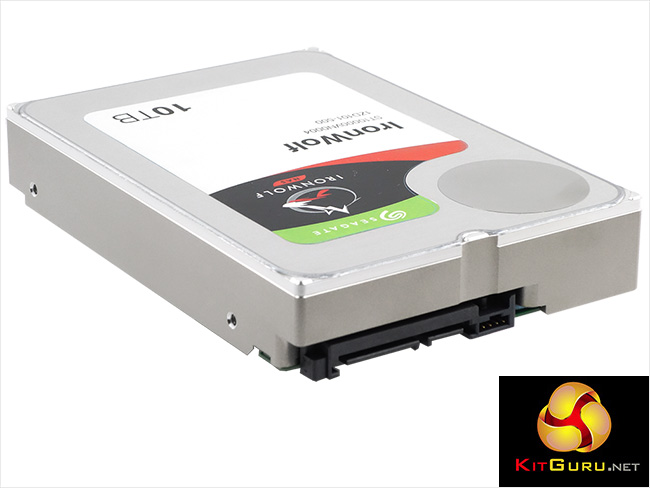
Currently, Seagate has a 10TB model in three product lines as part of the companies new Guardian series. There is a 10TB Barracuda Pro desktop drive, the 10TB SkyHawk drive which is aimed at surveillance setups and the NAS focused IronWolf.
Apart from the flagship drive, the IronWolf family has a comprehensive lineup of capacities; 1TB, 2TB,3TB,4TB, 6TB and 8TB. They all support NAS devices from 1 to 8 drive bays and Top Cover attached motors for better vibration tolerance.
All the drives feature AgileArray, Seagate's NAS optimisation technology which blends together drive balance, RAID error recovery and power optimisation. The three largest drives 6TB, 8TB and 10TB get extra protection through Dual-Plane Balance technology and Rotational Vibration (RV) sensors. RV sensors are usually only be found in Enterprise class drives and indeed the IronWolf drives with them are the first in this class of drives to have them installed. Both technologies aim to protect the drive against any damage caused by the vibration that is set up in the larger multi-bay NAS enclosures.
The IronWolf series also feature Multi-Tier Caching technology (MTC Technology), an architecture designed to maximize performance, particularly when it comes to random writes. The drives also feature multi-user technology that provides an 180TB/year user workload rate.
The quoted maximum sustained data rate for the 10TB IronWolf is 210MB/s and Seagate back the drive with a three-year warranty.
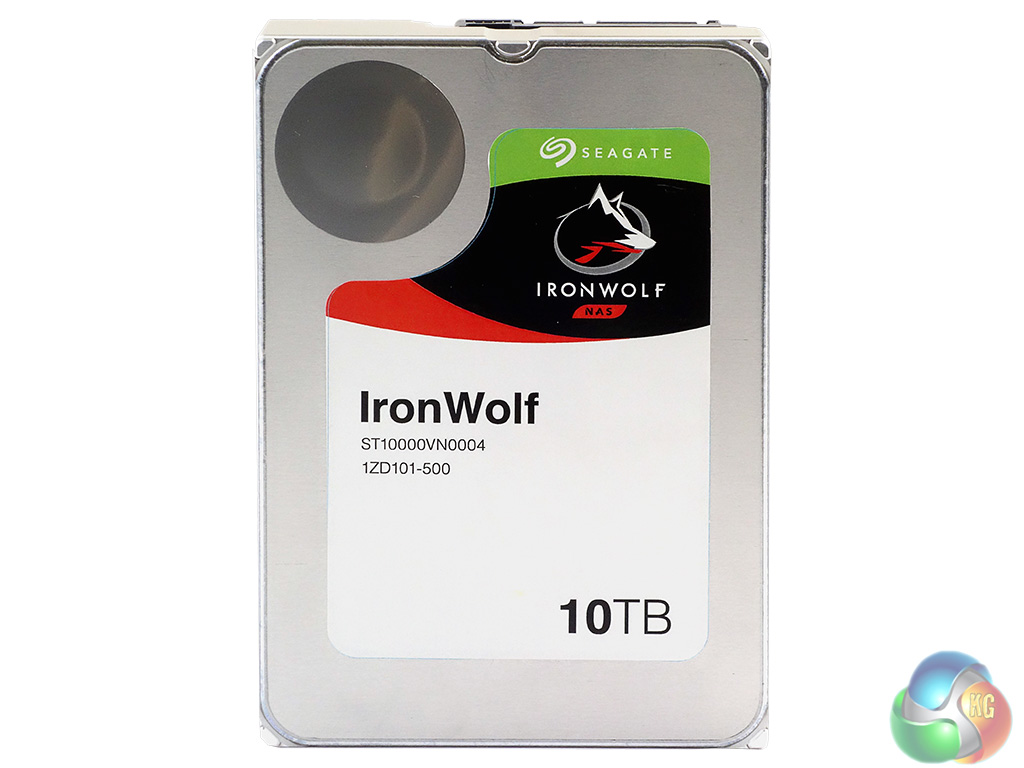
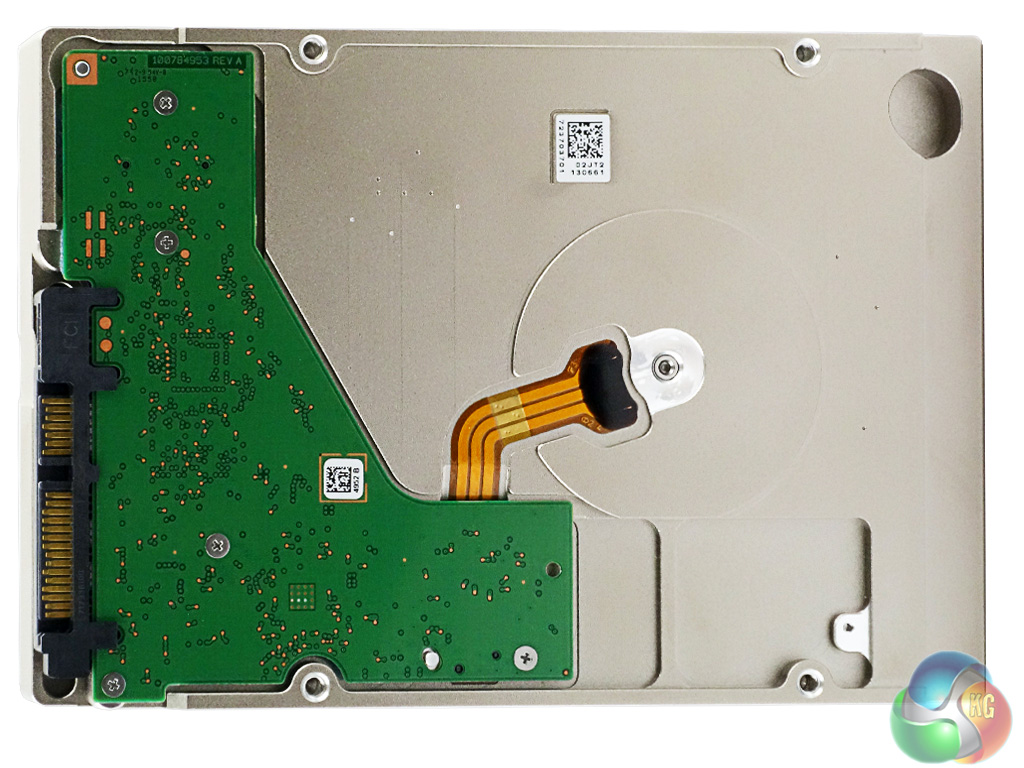
Built on a standard 3.5in format, the 10TB IronWolf has a spindle speed of 7,200rpm and 256MB of cache.
The drive uses helium technology and to get to its huge capacity it uses 7 PMR (Perpendicular Magnetic Recording) high capacity discs and has 14 reading heads.
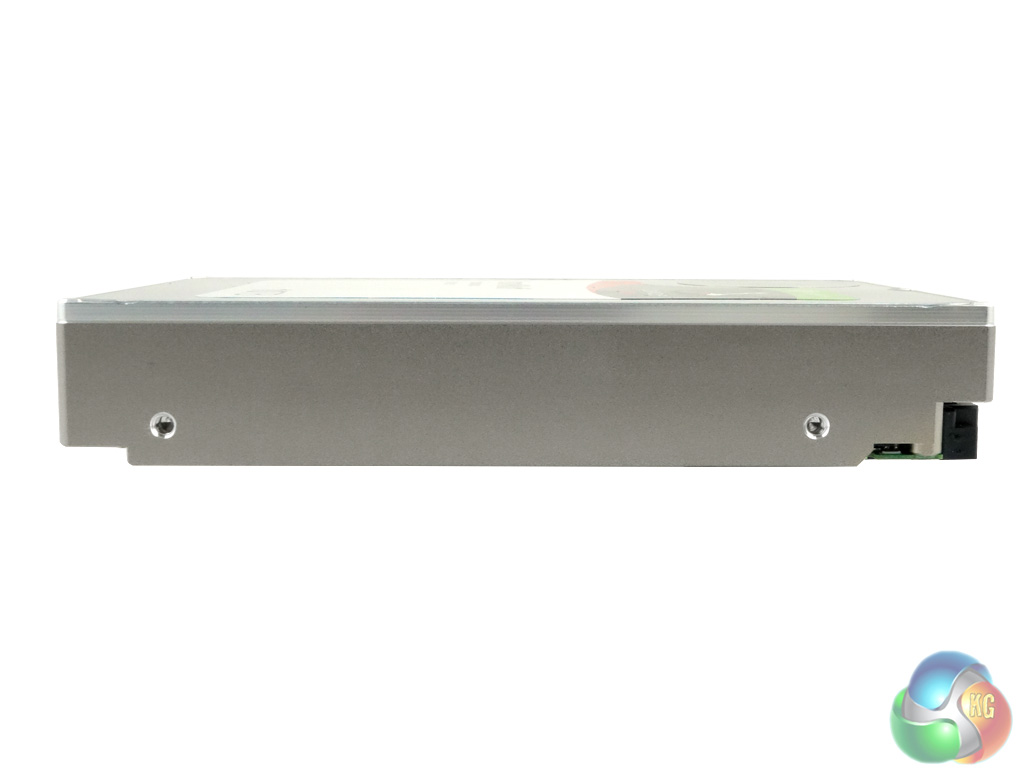
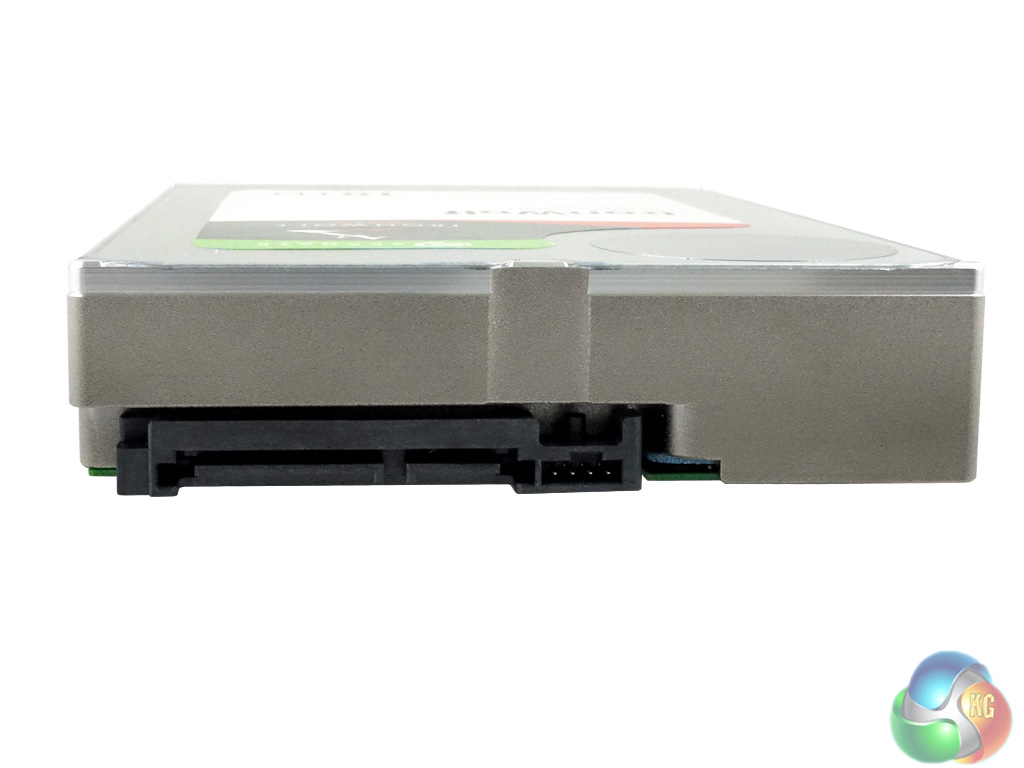
Using helium (which is 1/7th the density of air) allows drive manufacturers to use thinner platters and be able to pack more of them into a drive chassis. This because using helium inside the drive reduces the drag force acting on the spinning disks as well as reducing flow forces acting around both disks and heads.
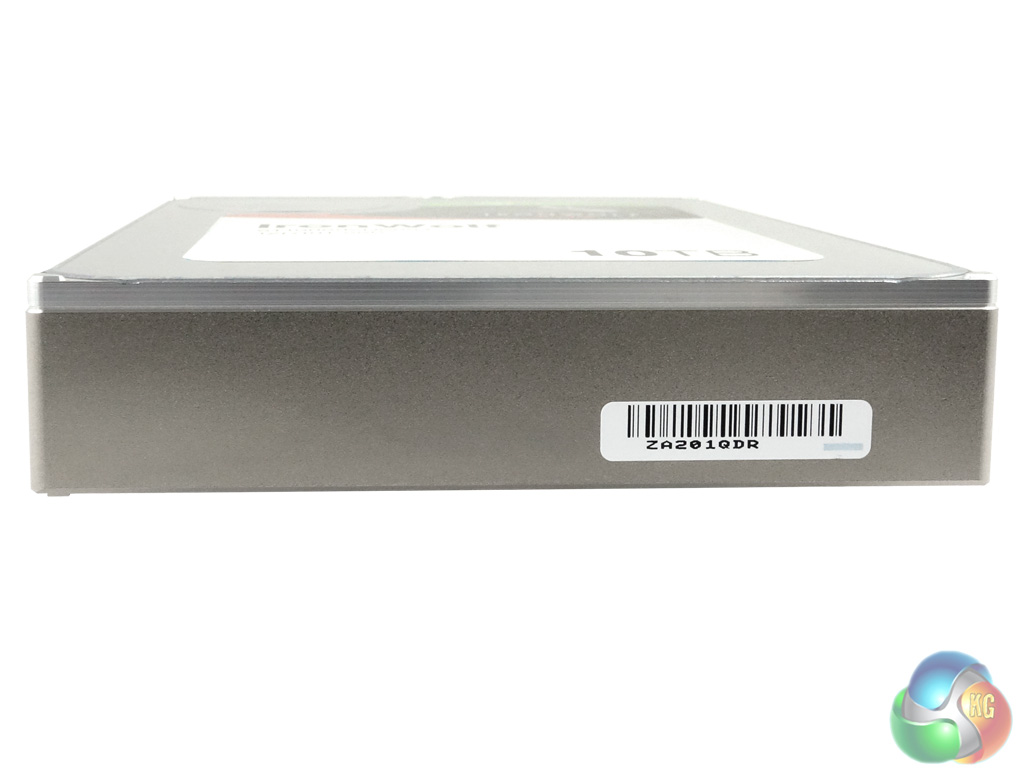
Physical Specifications:
Usable Capacities: 10TB
Spindle Speed: 7,200rpm
No. of Heads: 14
No. of Platters (discs) 7
Cache: 256MB
Recording Method: Perpendicular
Areal density (Gb/in2 avg): 867
Interface: Serial ATA (SATA) 6Gb/s (SATA III)
Form Factor: 3.5in
Dimensions: 26.11 x 101.85 x 146.99mm
Drive Weight: 650g
Firmware Version SC60
For testing, we try to use free or easily available programs and some real world testing so you can compare our findings against your own system.
This is a good way to measure potential upgrade benefits.
Main system:
Intel Core i7 4790K with 16GB of DDR3-2133 RAM, Sapphire R9 390 Nitro and an ASRock Extreme 6 motherboard.
Other drives
Seagate NAS 8TB
WD Red 8TB
Software:
Atto Disk Benchmark.
CrystalMark 3.0.3.
IOMeter
All our results were achieved by running each test five times with every configuration this ensures that any glitches are removed from the results.
Crystalmark is a useful benchmark to measure theoretical performance levels of hard drives and SSD’s. We are using V3.0.3.
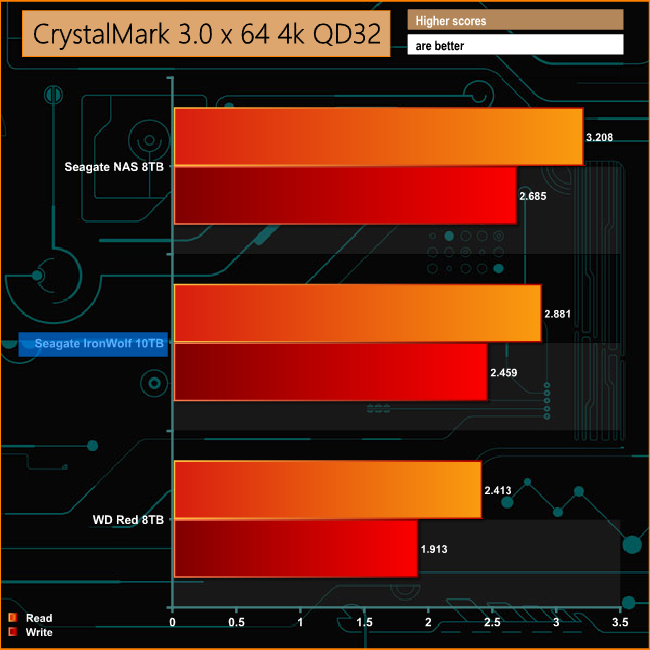
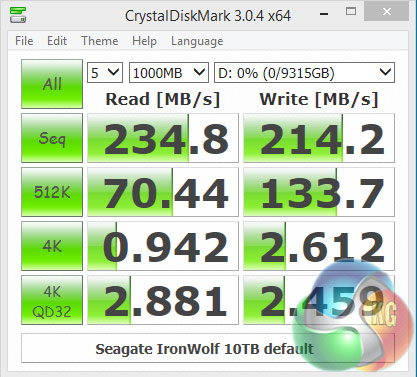
Not only is the WD Red with its 5,400rpm spin speed up against two 7,200rpm drives, it is also up against two drives with twice as much cache as it has; 128MB v 256MB. With only 6 platters as opposed to the 7 of the 10TB drive, the 8TB NAS just outperforms its larger sibling.
The ATTO Disk Benchmark performance measurement tool is compatible with Microsoft Windows. Measure your storage systems performance with various transfer sizes and test lengths for reads and writes. Several options are available to customize your performance measurement including queue depth, overlapped I/O and even a comparison mode with the option to run continuously.
Use ATTO Disk Benchmark to test any manufacturers RAID controllers, storage controllers, host adapters, hard drives and SSD drives and notice that ATTO products will consistently provide the highest level of performance to your storage.
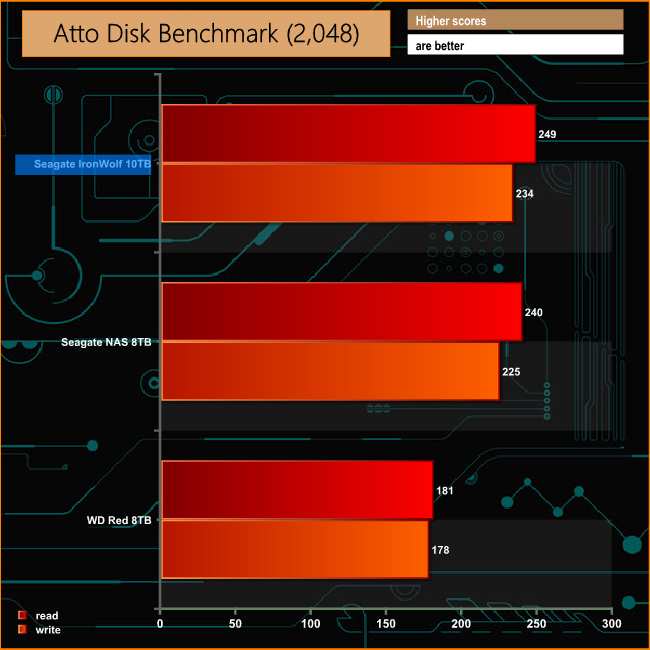
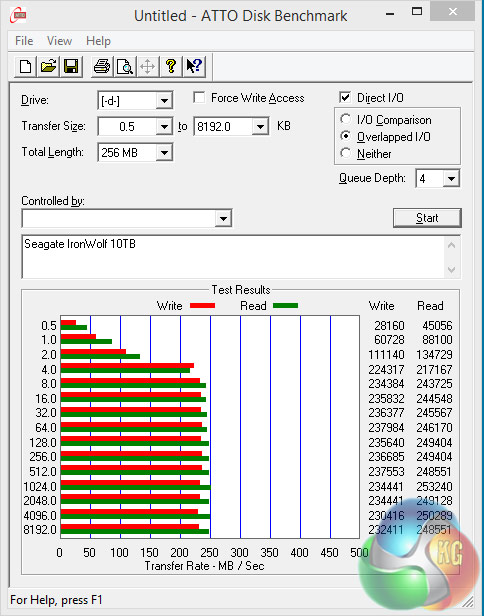
With both Seagate drives employing 7,200rpm spindle speeds, WD's Red drive with its 5,400rpm class spin speed was always going to lag behind them in the out and out speed test.
IOMeter is another open source synthetic benchmarking tool which is able to simulate the various loads placed on hard drive and solid state drive technology.
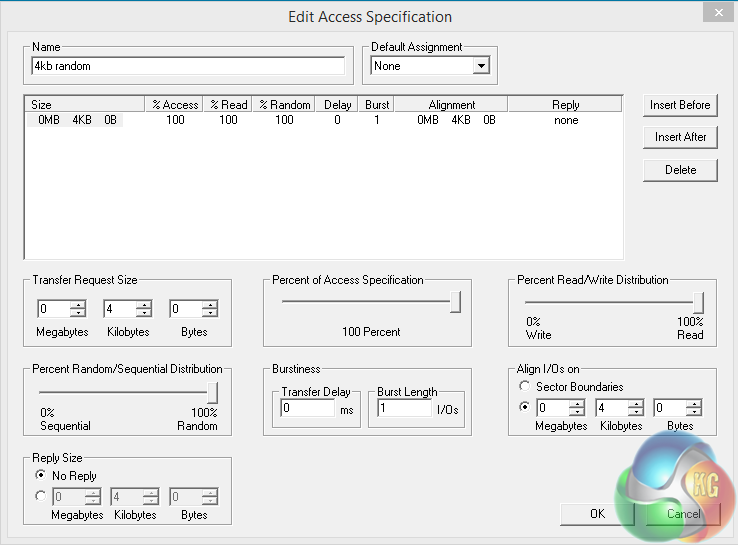
We test with both random read and write 4k tests, as shown above. There are many ways to measure the IOPS performance of a Solid State Drive, so our results will sometimes differ from manufacturer’s quoted ratings. We do test all drives in exactly the same way, so the results are directly comparable.
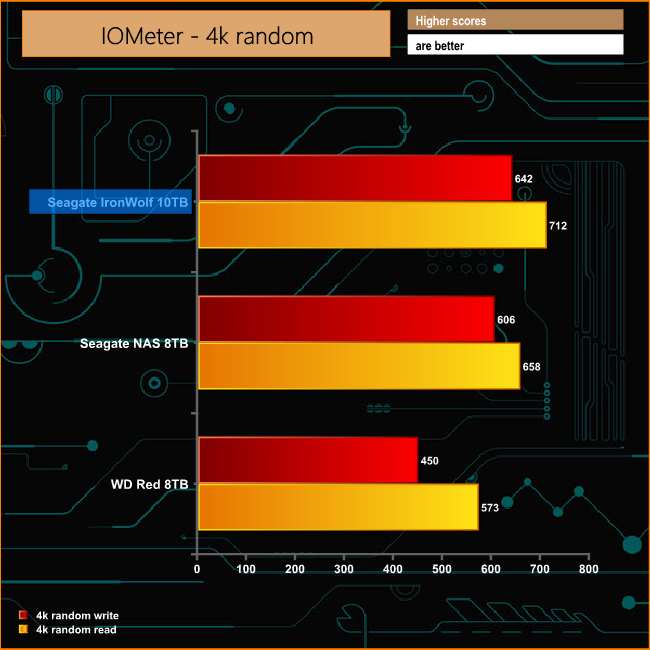
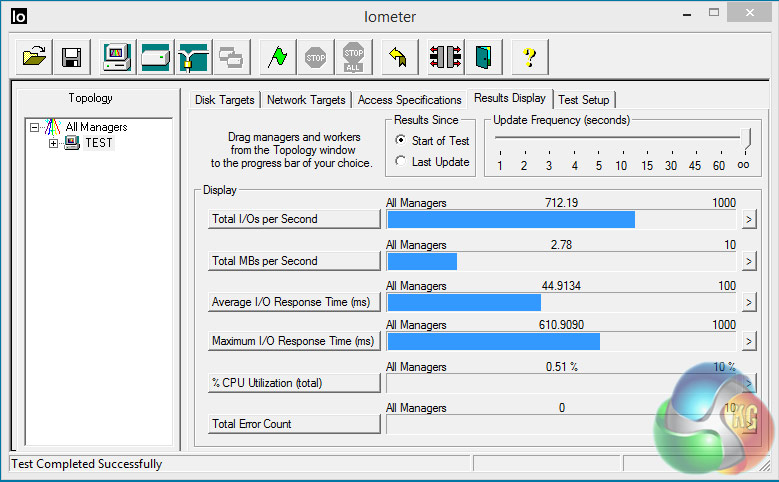
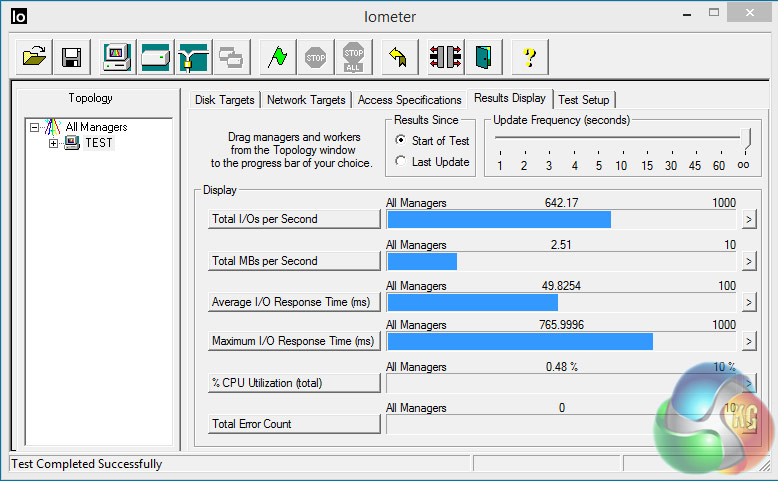
The Multi-Tier Caching technology in the 10TB IronWolf gives the drive the advantage when dealing with the small bity files of everyday use.
To test real life performance of a drive we use a mix of folder/file types and by using the FastCopy utility (which gives a time as well as MB/s result) we record the performance of drive reading from & writing to a 256GB Samsung SSD850 PRO.
60GB Steam folder – 29,521 files.
50GB File folder – 28,523 files.
12GB Movie folder – 24 files (mix of Blu-ray and 4K files).
10GB Photo folder – 621 files (mix of .png, raw and .jpeg images).
10GB Audio folder – 1,483 files (mix of mp3 and .flac files).
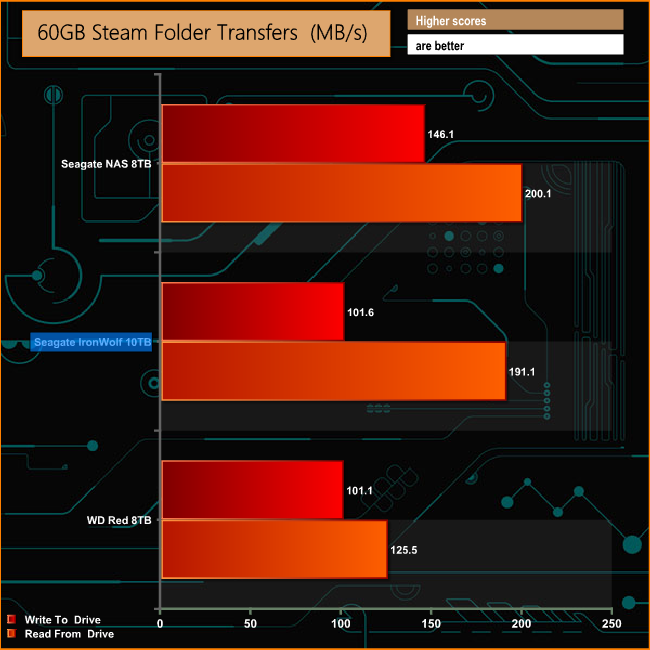
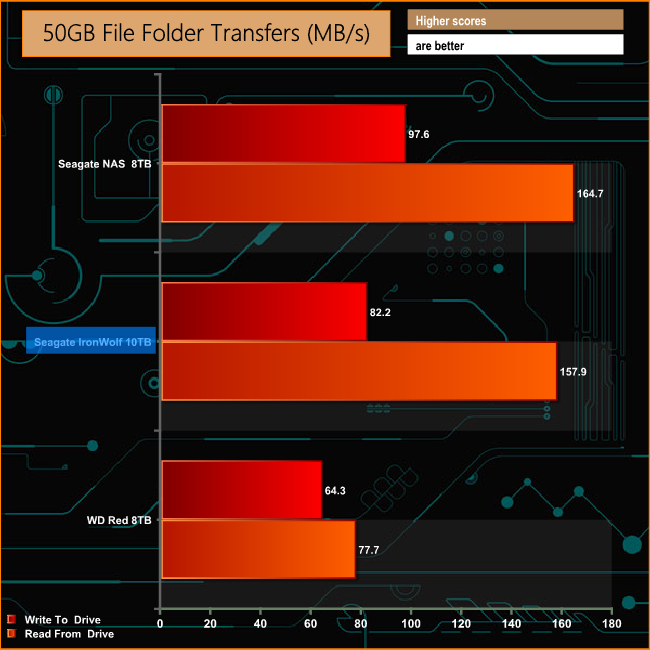
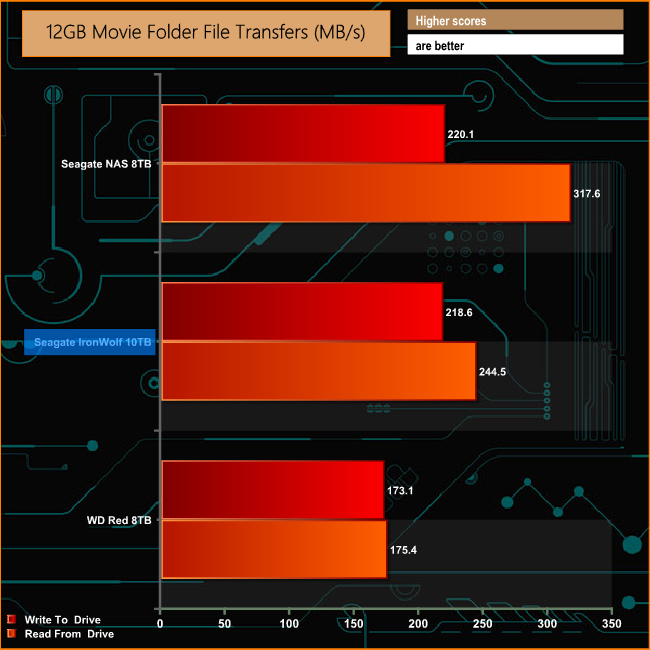
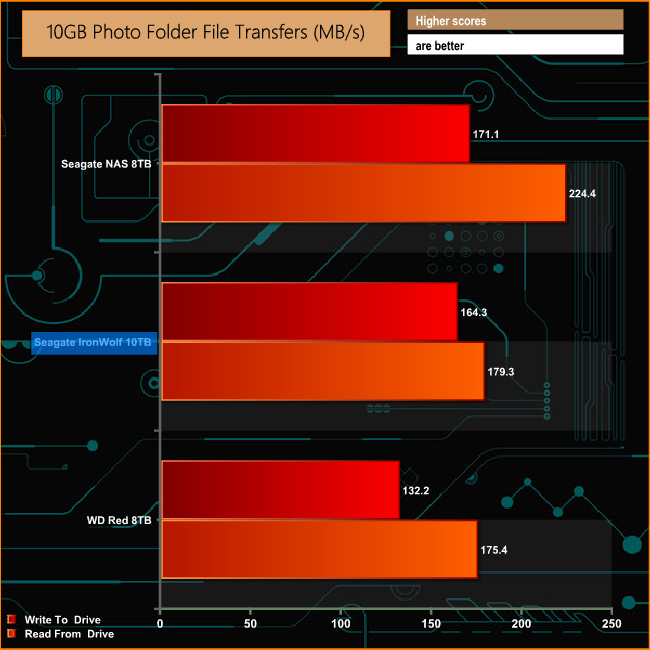
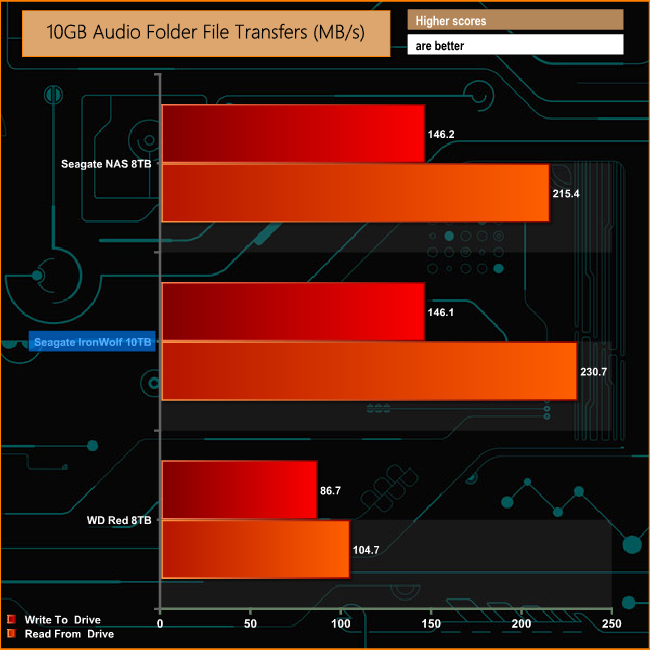
With only six discs to read and write to, the Seagate NAS 8TB is faster than its larger 10TB sibling with seven discs across all the real life tests.
The demise of the mechanical hard drive has been predicted for years now, and many hardcore enthusiasts will tell you they just use solid state drives in their system – for the operating system certainly, but even now for file storage. Unfortunately, unless you have a rather substantial income, these high capacity SSD's have exorbitant price tags that alienate a large percentage of the potential audience.
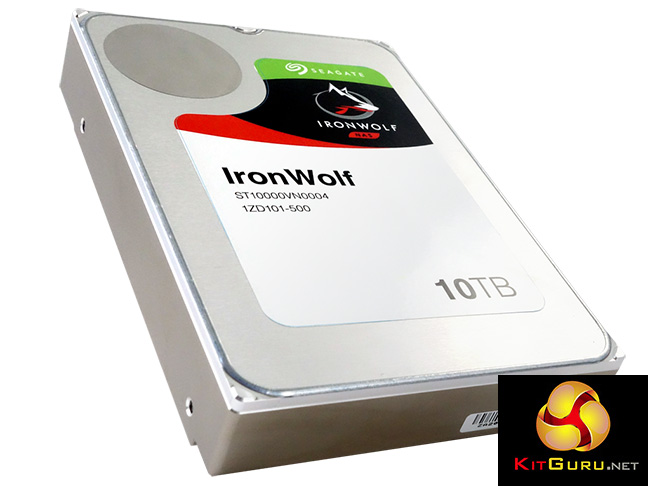
The demand for cheap storage shows no sign of slowing down as more and more content becomes available for download. Four hundred pounds is still a fair bit of cash but the 10TB IronWolf drives incorporating Helium technology are generally more expensive than standard mechanical designs.
The Seagate Ironwolf 10TB is priced at £399.99 inc vat, and by comparison the 4TB Samsung 850 EVO retails for £1,289.99 (HERE) inc vat. The Ironwolf offers two and a half times the capacity for less than a third of the price.
The 10TB IronWolf is a very quiet drive in operation even when pushed hard during benchmarking. Seagate quote power figures for the drive of 0.8w typical standby, 4.4W idle and 6.8W for average operations.
All the anti-vibration technology the 10TB IronWolf has may seem over the top for a NAS drive aimed at Home and Small Business but in NAS devices with 6 -8 bays (or more), preventing vibration damage is important as it can affect a drive's performance and ultimately the lifespan.
We found the Seagate IronWolf 10tb on sale at Ebuyer for £399.99 HERE
Discuss on our Facebook page, over HERE.
Pros
- Huge capacity.
- Anti-vibration technologies.
- by SSD standards, its cheap.
Cons
- by mechanical standards, its expensive.
Kitguru says: Contrary to popular belief the mechanical hard drive is alive and kicking. Seagate's IronWolf delivers solid performance with the latest in anti-vibration drive technology.


Yet, compared to 2TB SSD, this is the cheaper alternative for 5x the storage. It’s not cheap, but it’s not too bad comperatively. I would love to see this drive for less than 200 euros. My current steam library is roughly 6TB +
You actually keep all your games of your steam library on your HDD? lol.
Yep, means, I don’t have to wait to download a game if I feel like playing it. The games I play most end up on my SSD for the time I use them then back to HDD. If something ever were to happen to steam for who knows what reason I could always crack my games.
You have a higher chance of losing your HDD than steam suddenly shutting down lol.
With a 180TB write endurance for 10 years? Seems kind of unlikely. Drives have a pretty long life expectancy specially if you use them more for storage rather than every day use.
I usually get paid in the span of 6-8 thousand dollars on monthly basis on the internet. For those of you who are prepared to finish simple computer-based task for 2-5 hrs daily from your home and make good benefit in the same time… Test this task UR1.CA/pm79t
i got 8 of these into a NAS in RAID 6, 60TB of storage. this one NAS replaced 3 older units running 2TB and 3TB drives. the space and power savings alone are worth it!
I am only afraid of one thing … it is one word, really, that I am worried about. The word is SEAGATE.
I take care of over 30 classrooms full of pc’s with consumer hdd’s. By far the highest failure rates we have ever seen are Western Digital Green drives. There are no drives on the consumer market LESS reliable than Western Dodgy greens. Backblaze’s most recent data shows this to be true with a failure rate over 10%.
But the relevant fact is that the chance of steam suddenly shutting down *and* him losing his HDD at the same time is smaller than just the chance of the steam suddenly shutting down.
I hope they keep avoiding SMR wherever possible.