 KitGuru KitGuru.net – Tech News | Hardware News | Hardware Reviews | IOS | Mobile | Gaming | Graphics Cards


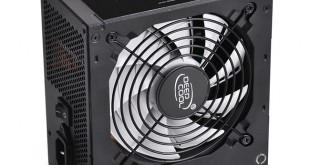
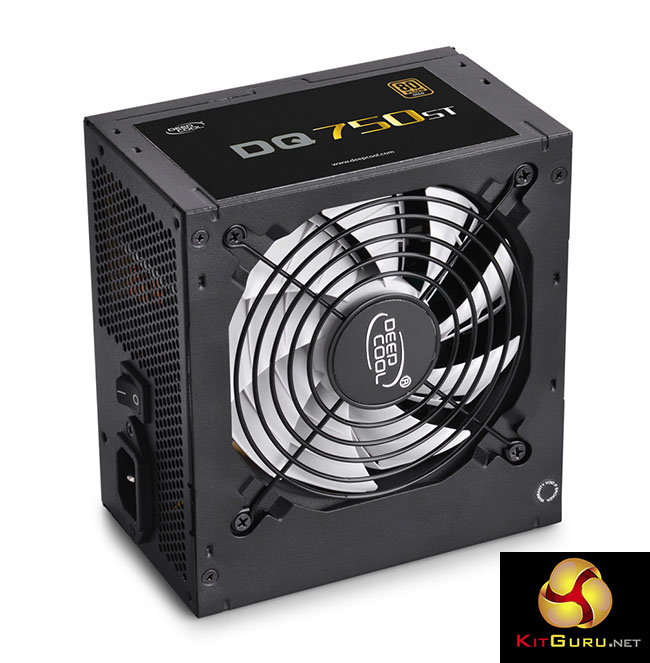
Today we analyse one of the new power supplies from Deep Cool – the DQ750ST. This non modular unit is 80 Plus Gold Certified and they have also incorporated a quiet 120mm speed adjustable fan into the chassis. Deepcool claim this power supply offers ‘outstanding and stable performance'.
Deepcool are working hard to raise their profile in Europe this year, and we have reviewed a handful of their products in recent months, such as the Tristellar case (review HERE), and their Captain 240 all in one liquid cooling system (review HERE). There are still some issues with UK product availability, but we hope that improves in coming months.
You can see the full range of Deepcool power supplies over HERE.
DeepCool DQ750 ST Overview:
- Compliant Intel ATX12V v 2.31.
- 80 PLUS® GOLD certified – Up to 87~90% efficiency (20~100% loading).
- 120mm FDB Bearing PWM fan with specially designed fan-blade, enjoys higher wind-pressure, super silent and excellent performance.
- The longer flat cable, exellent for cable management and increases the cooling capability of system.
- Double-Layer EMI Filter protects from electromagnetic interference & restrains noise.
- Intelligentized eco-friendly chipset, consume < 0.3W in its off-mode, compliant Erp standard.
- CircuitShield — OVP, UVP, SCP, OPP.
- Compliant Multi-Way SLI / CrossFire + Multi-Core CPUs.
- High reliability with an MTBF of at least 120,000 hours of use.
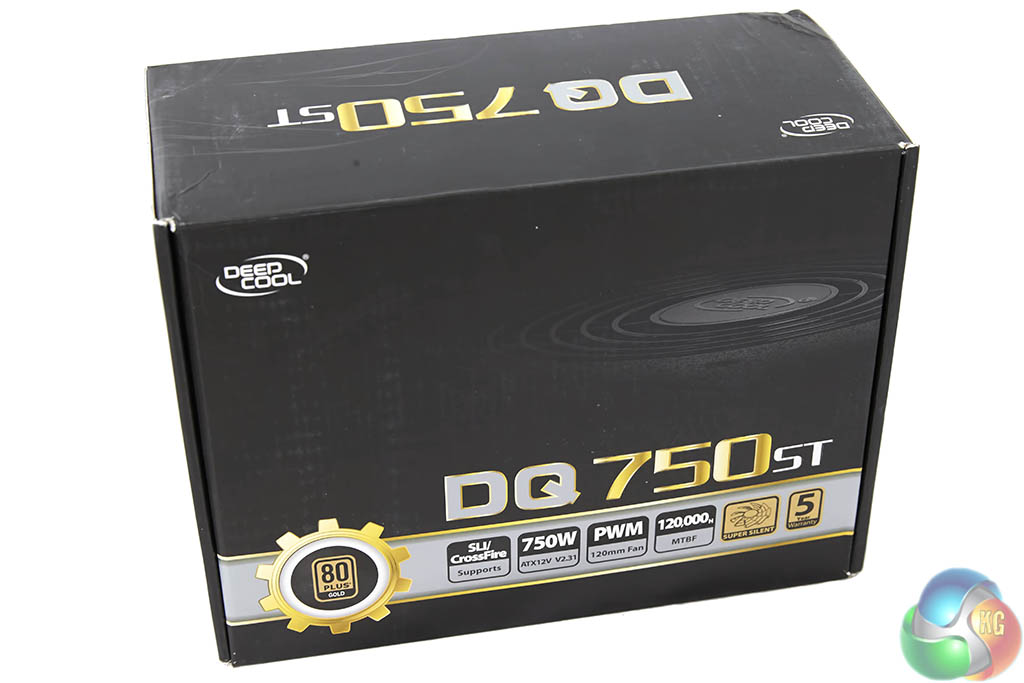
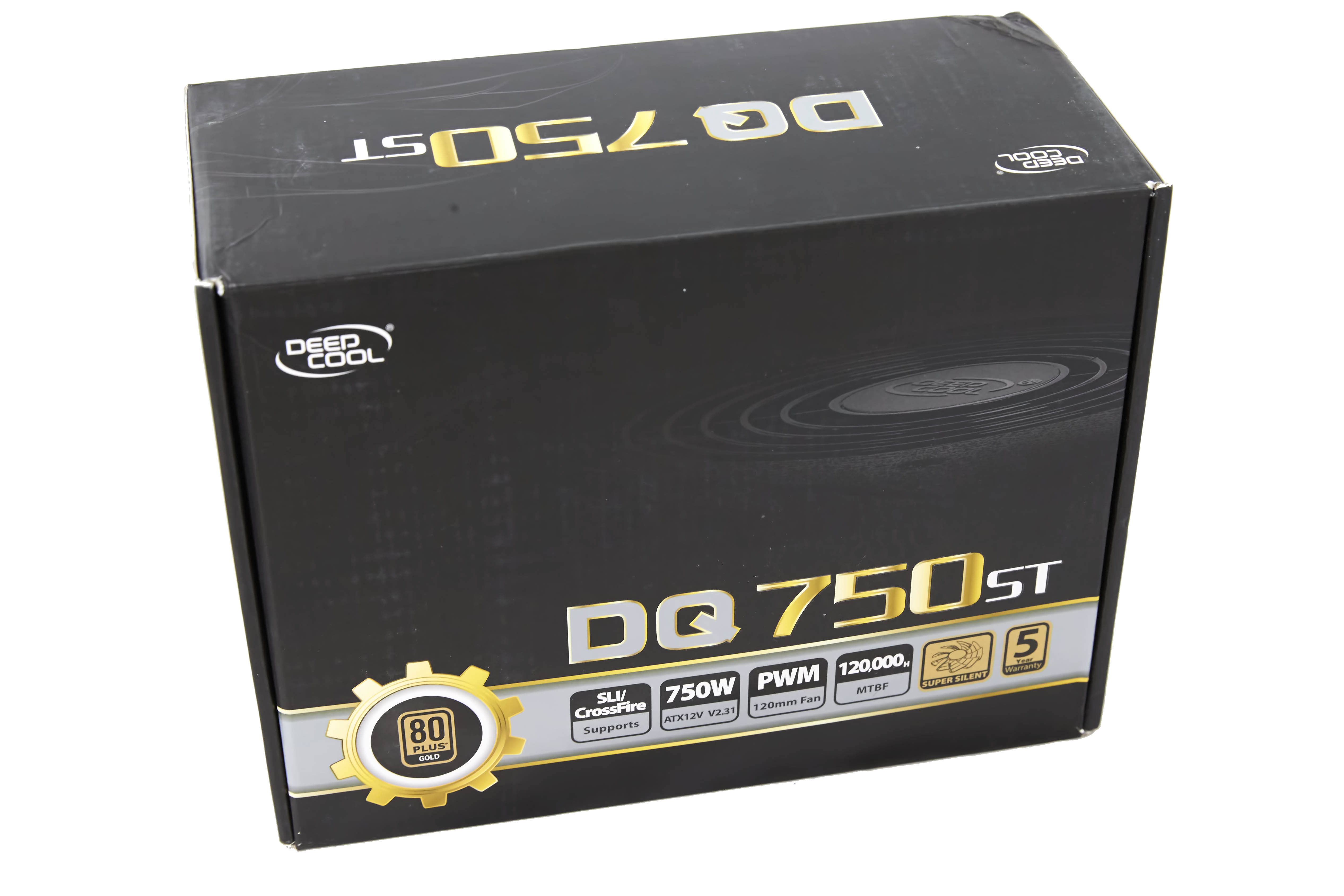
Deepcool box packaging is very bland with basic information shown on the front. The moody shot of the power supply is almost invisible.
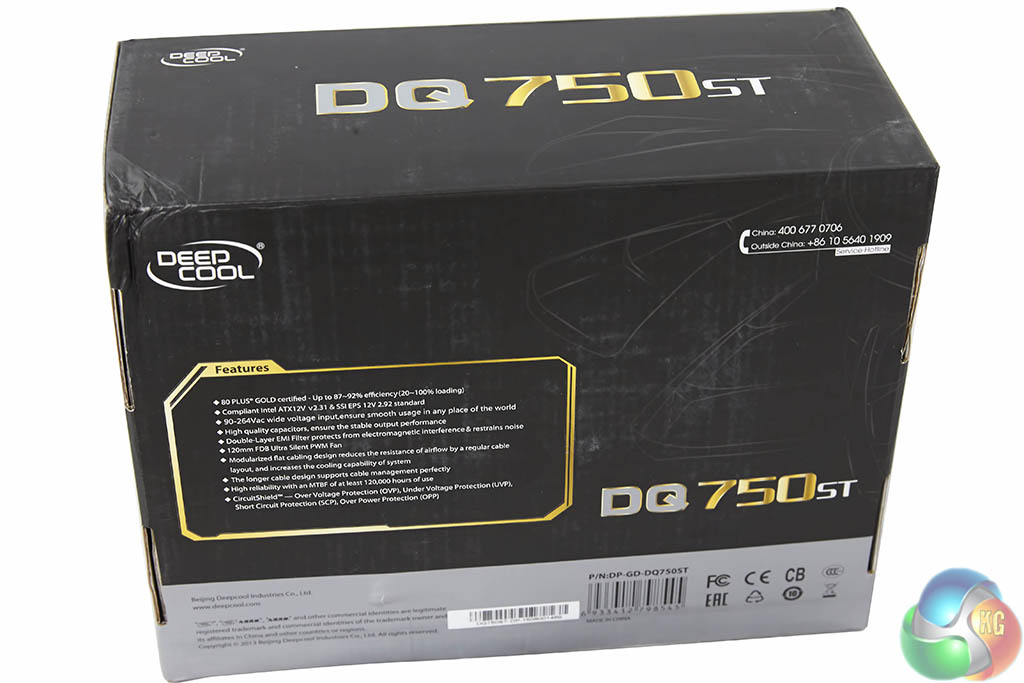
The rear of the box contains a feature list.
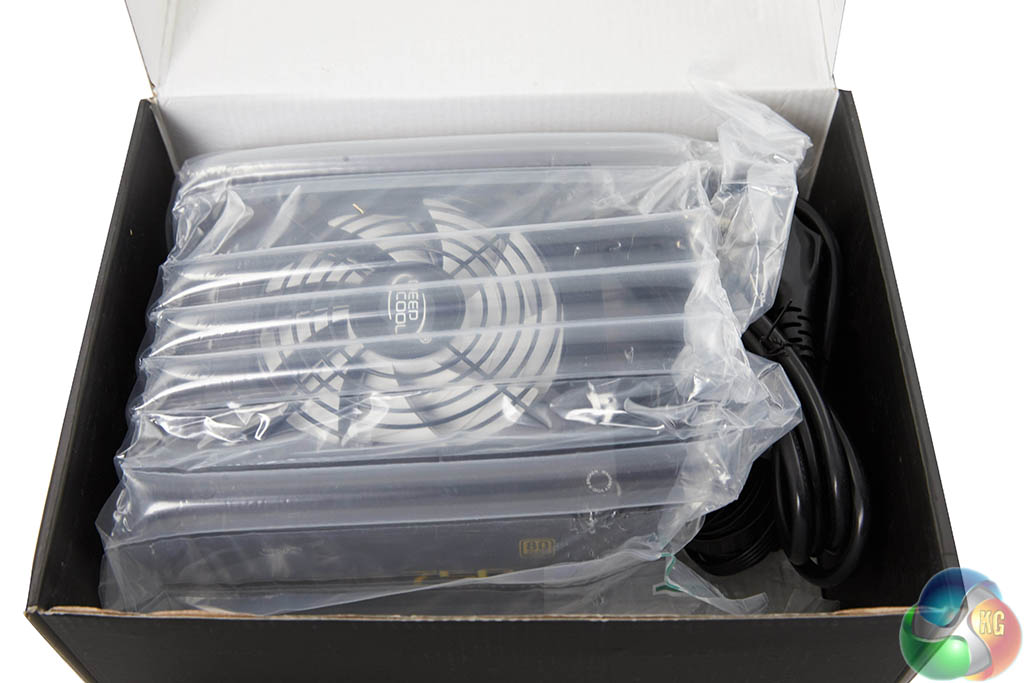
The packaging really could be improved. The power supply is protected inside a thick air padded plastic pouch. It does move a little inside the box which is disappointing.
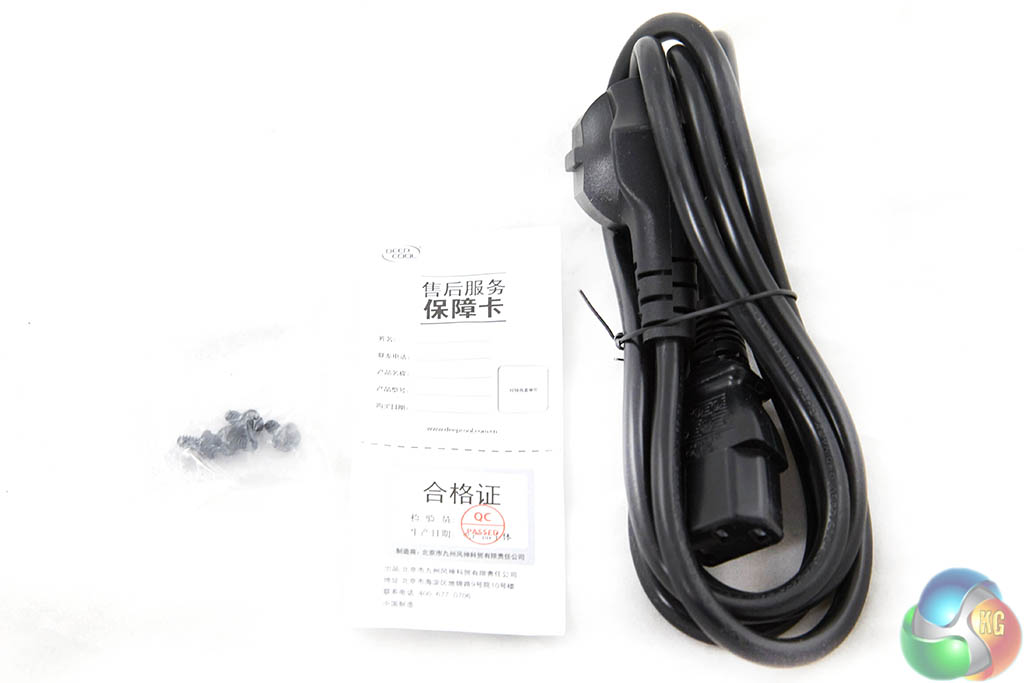
Not much in the way of accessories. A regional specific power cable, mounting screws and some quality control validation certificates are included. Sadly, there is no user manual in the box.
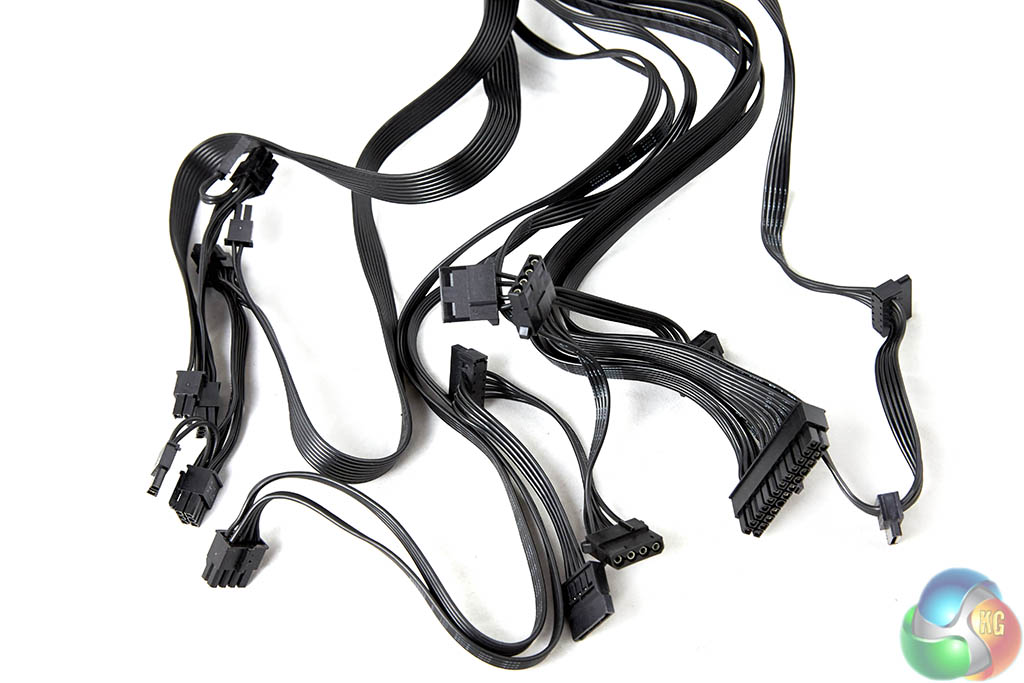
The cables are all flat ‘ribbon' style, for ease of routing. They are all hardwired into the chassis.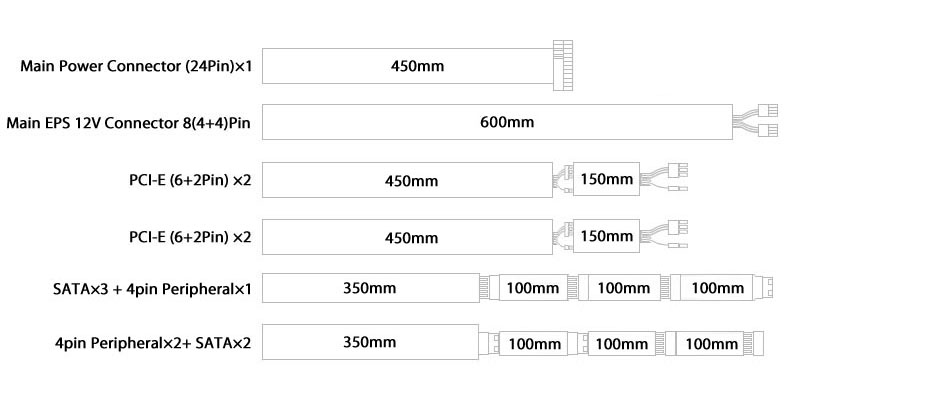
There are four PCI e 6+2 pin cables included at 450mm + 150mm length. There are plenty of SATA and Molex connectors across several cables.
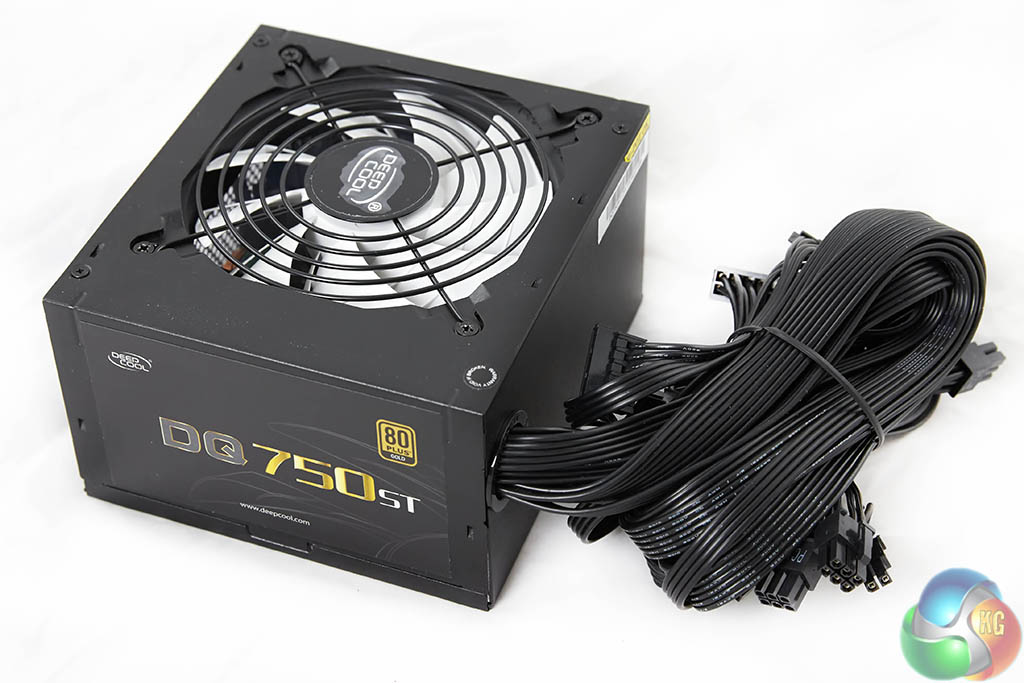
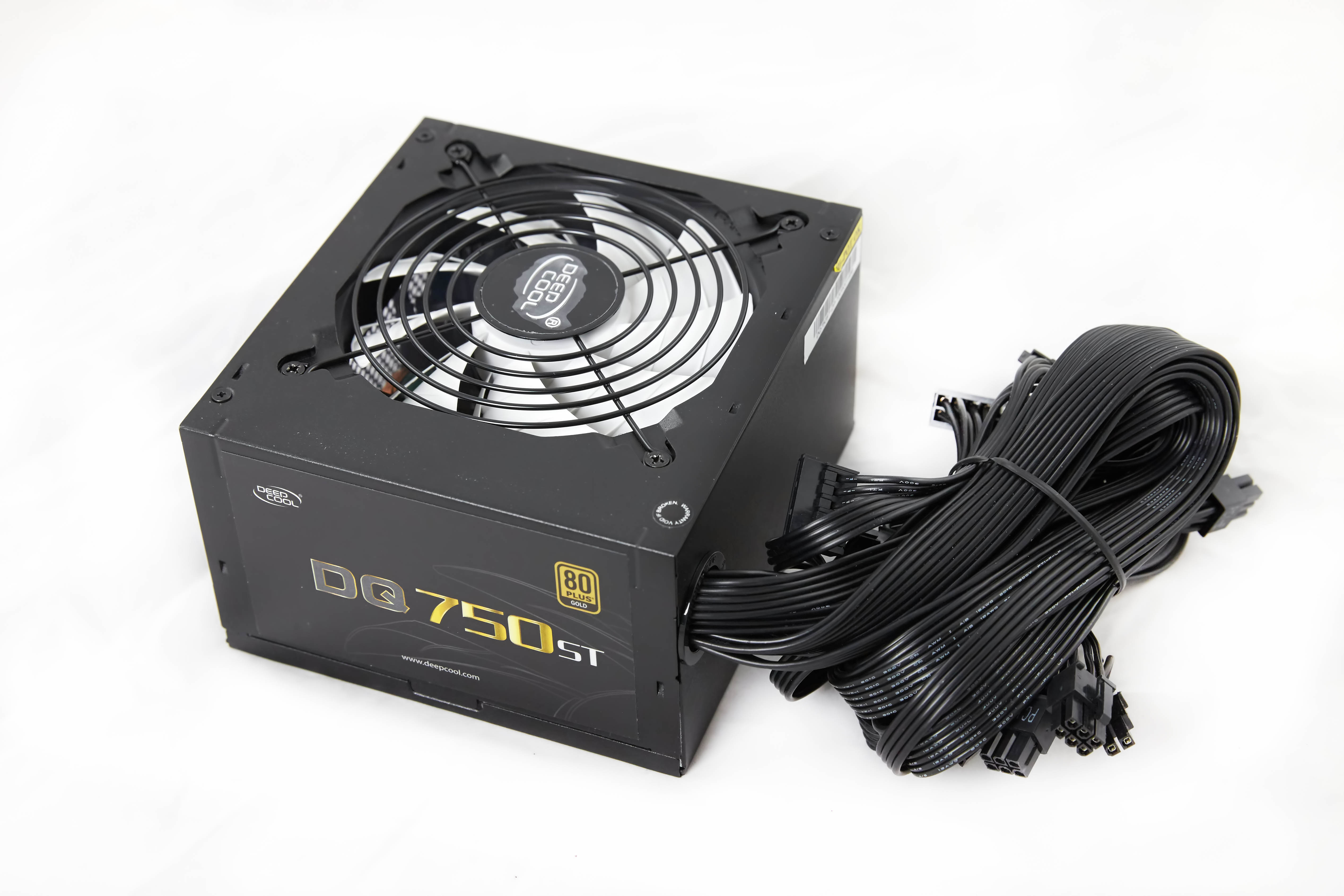
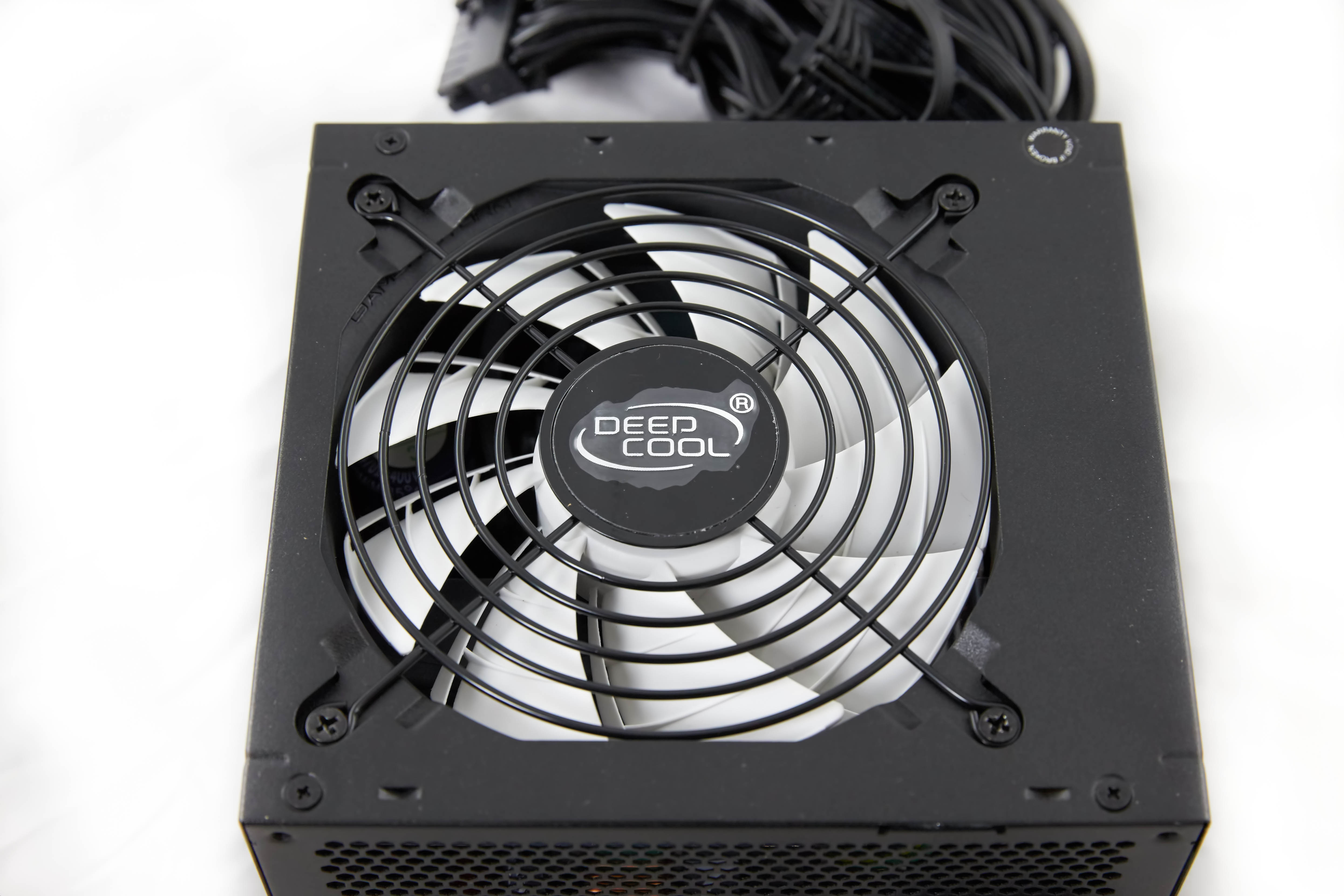
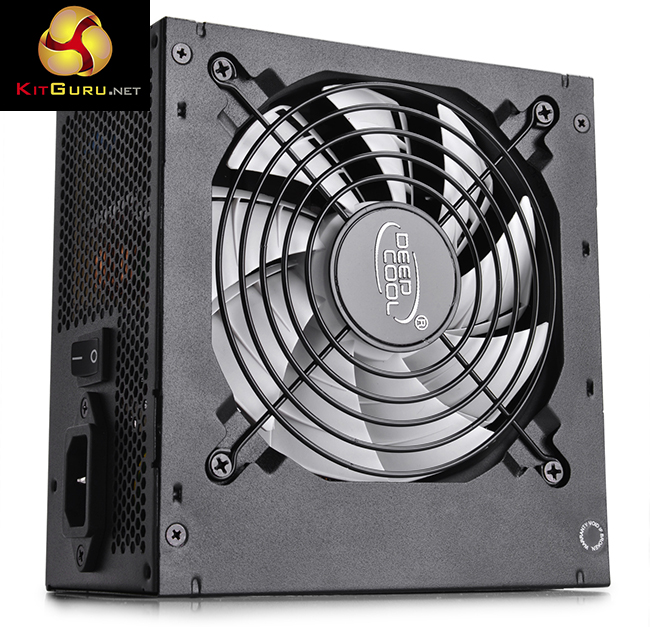
The DeepCool DQ750 ST is a compact design measuring 150x140x86 mm (WxLxH). A large white fan takes centerstage at the top of the chassis behind a black grill.
Finish quality is high and it passed our screwdriver test. This involves running the head of a Philips head driver down the side of the chassis with light to medium force. After all, how many times have you accidentally connected with a power supply during a system build?
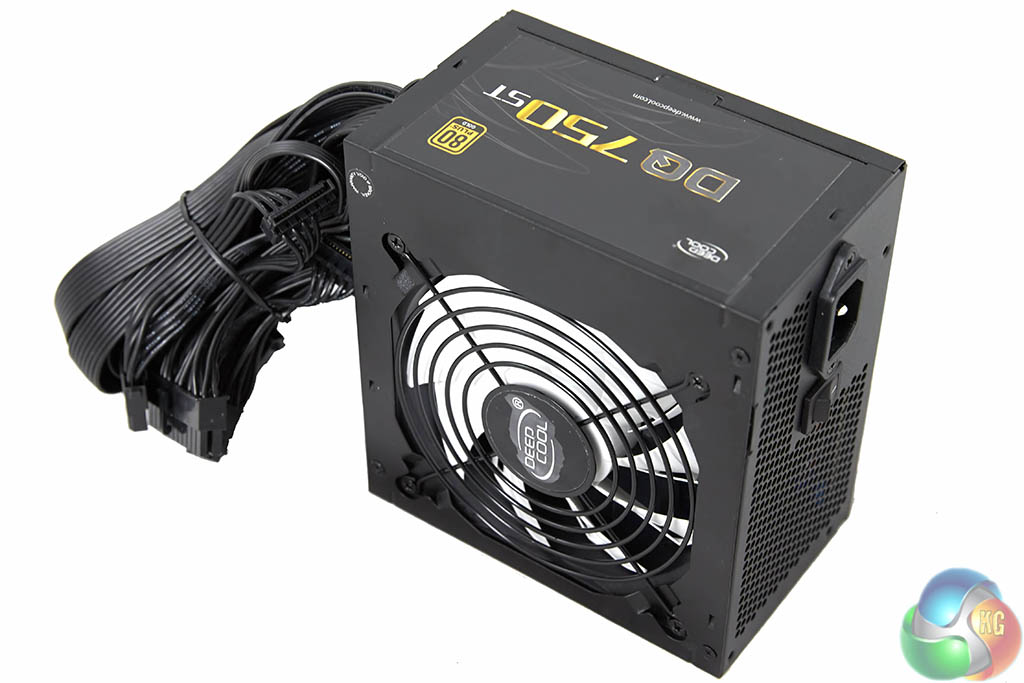
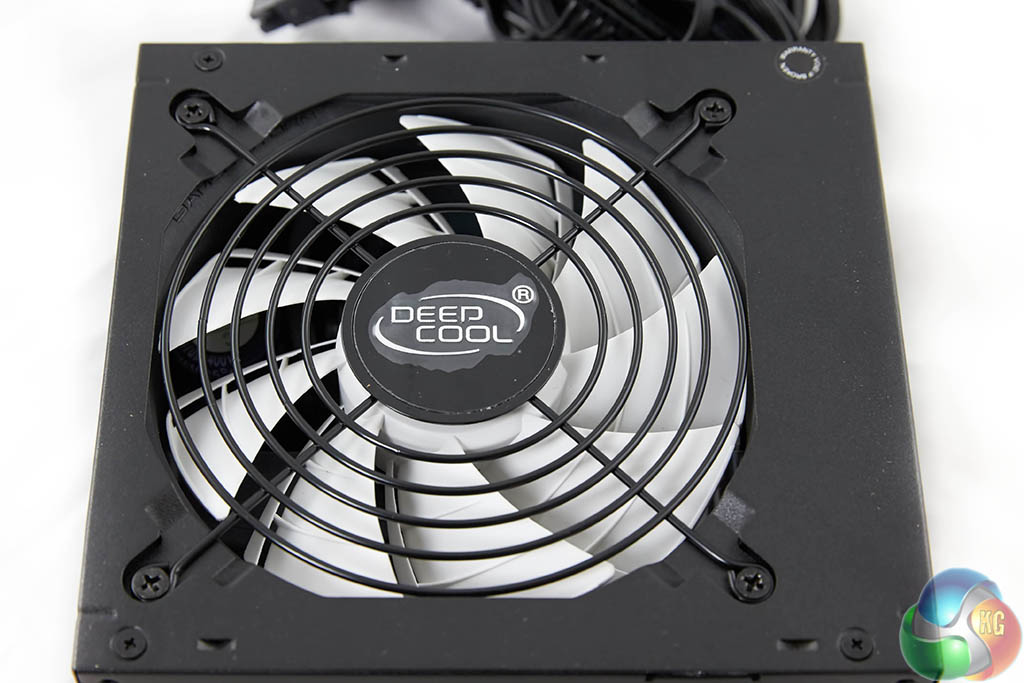
The 120mm fan is hidden behind a grill, shown above. We will look at this in more detail later in the review when we open the power supply.
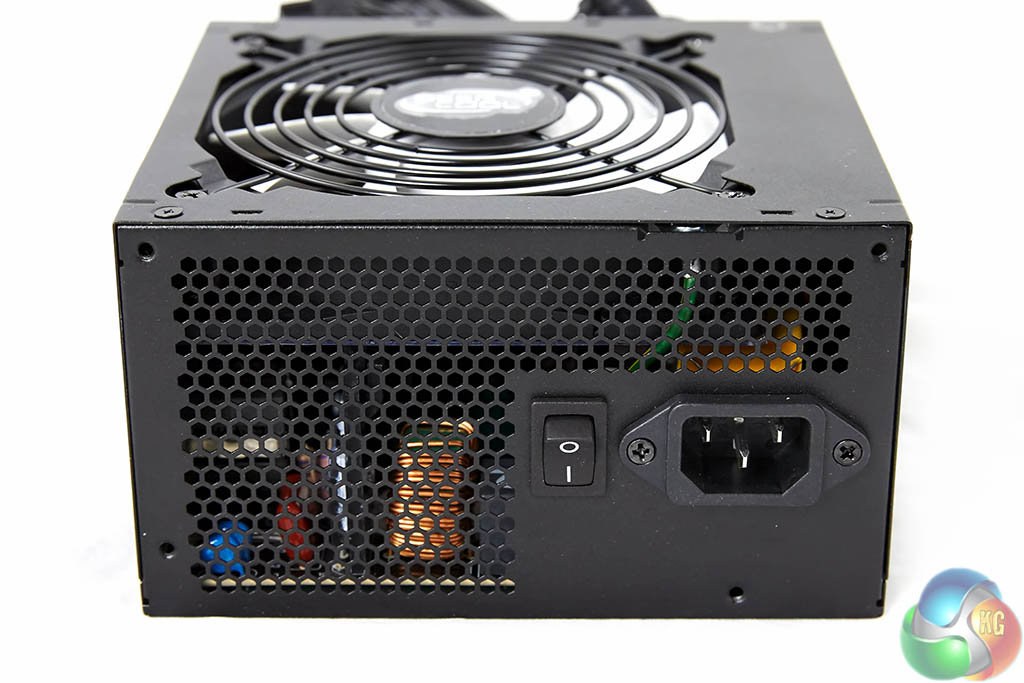
One side of the power supply is vented with a power connector and switch at the side.
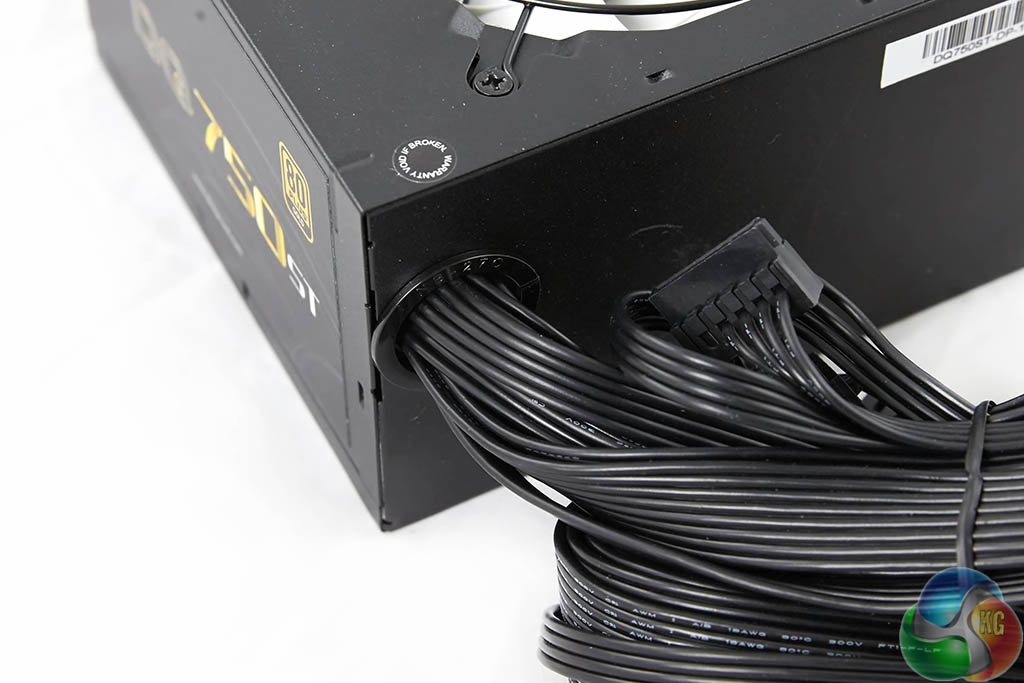
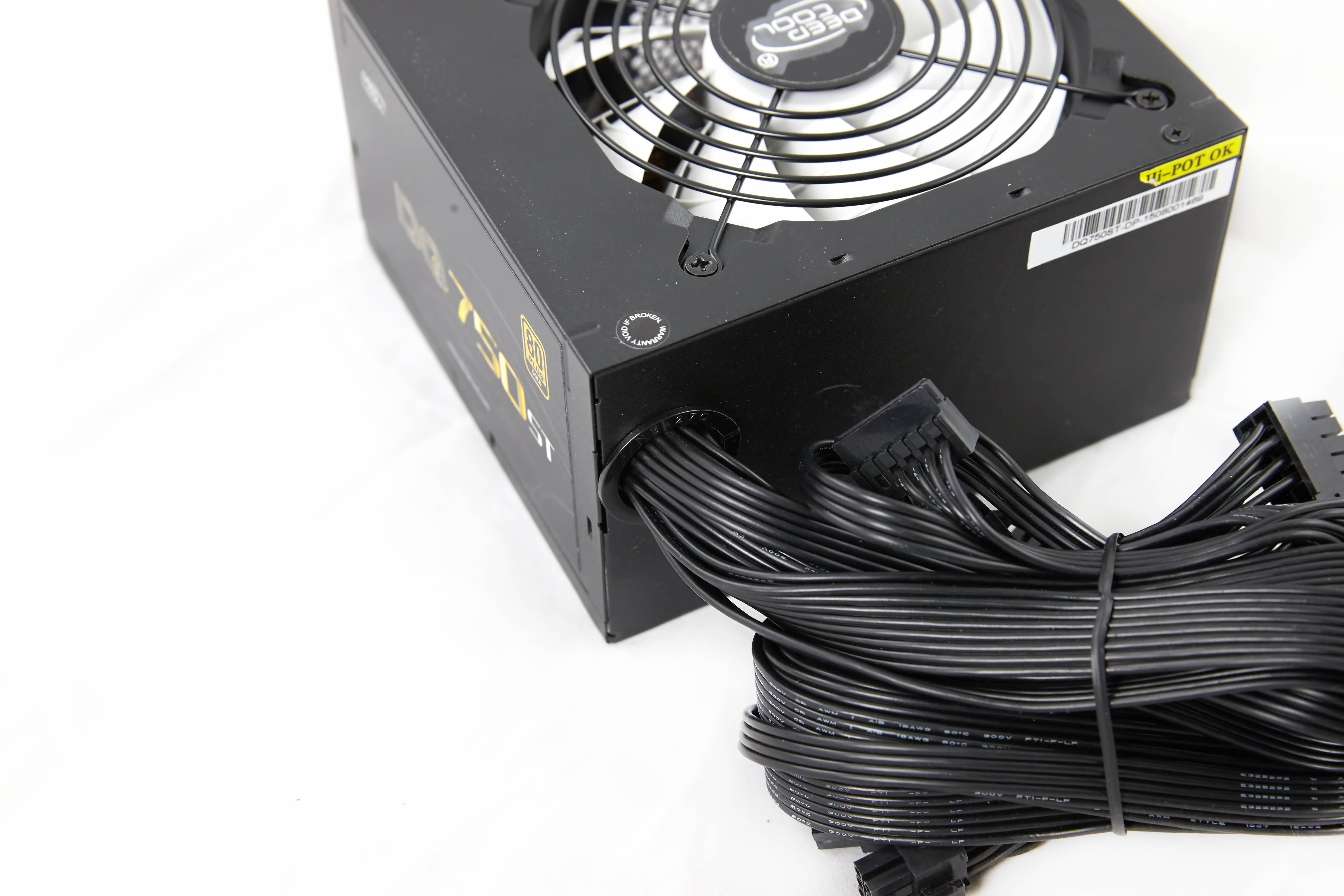
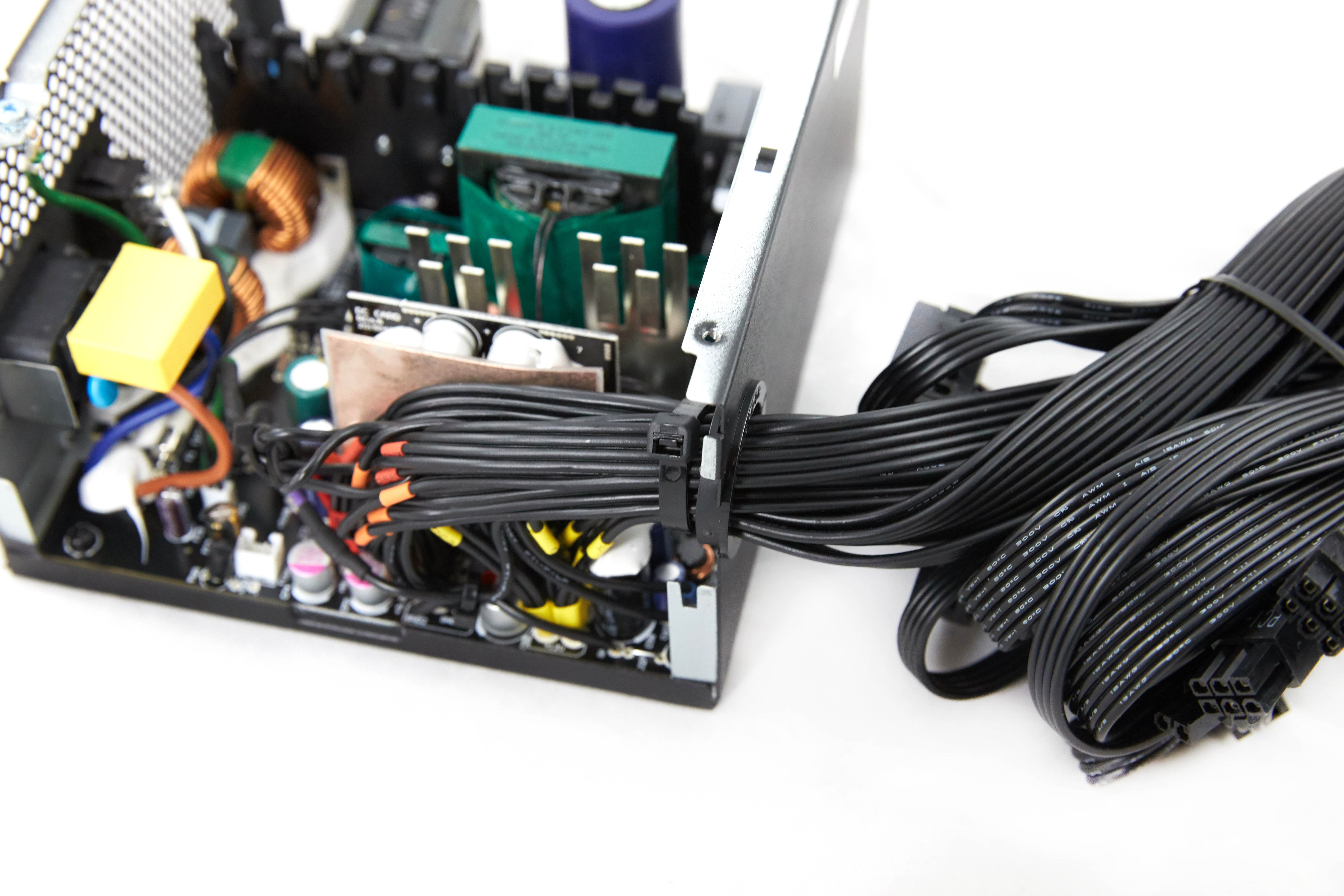
The other side of the power supply is home to the hardwired cabling which emerges from inside a rubber grommet.
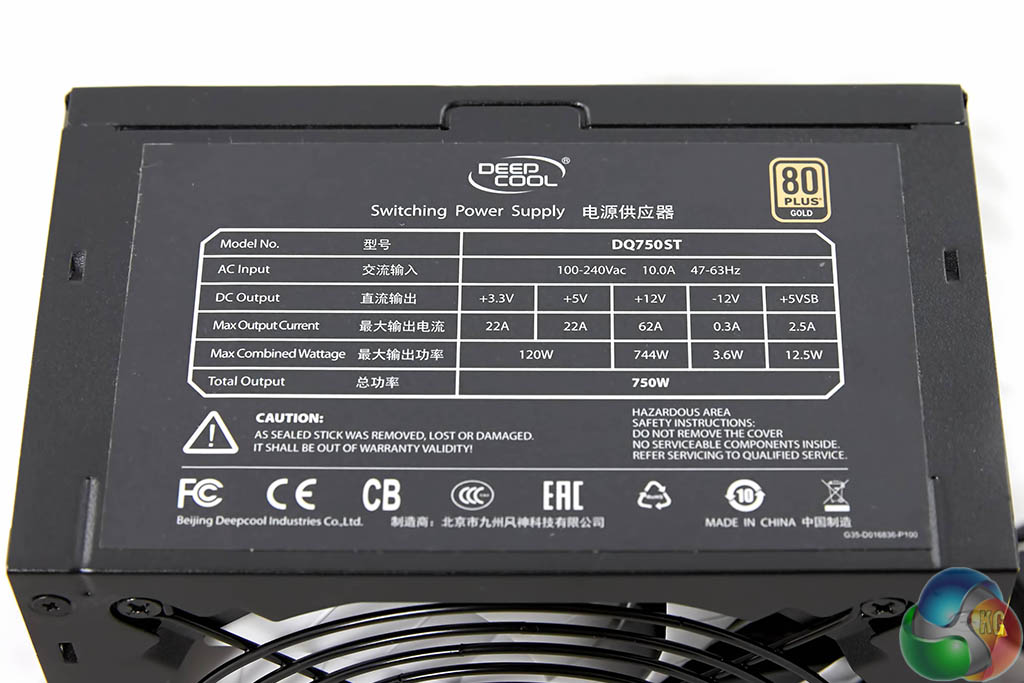
| DeepCool DQ750 ST | |||||
|
DC Output
|
+3.3V
|
+5V
|
+12V |
-12V
|
+5Vsb
|
|
Max Output
|
22A
|
22A
|
62A |
0.3A
|
2.5A
|
| Total Power | 120W | 744W | 3.6W | 12.5W | |
| 750W | |||||
The DeepCool DQ750 ST power supply can produce 62A from the single +12V rail along with 22A from both the +3.3V and +5V rails.
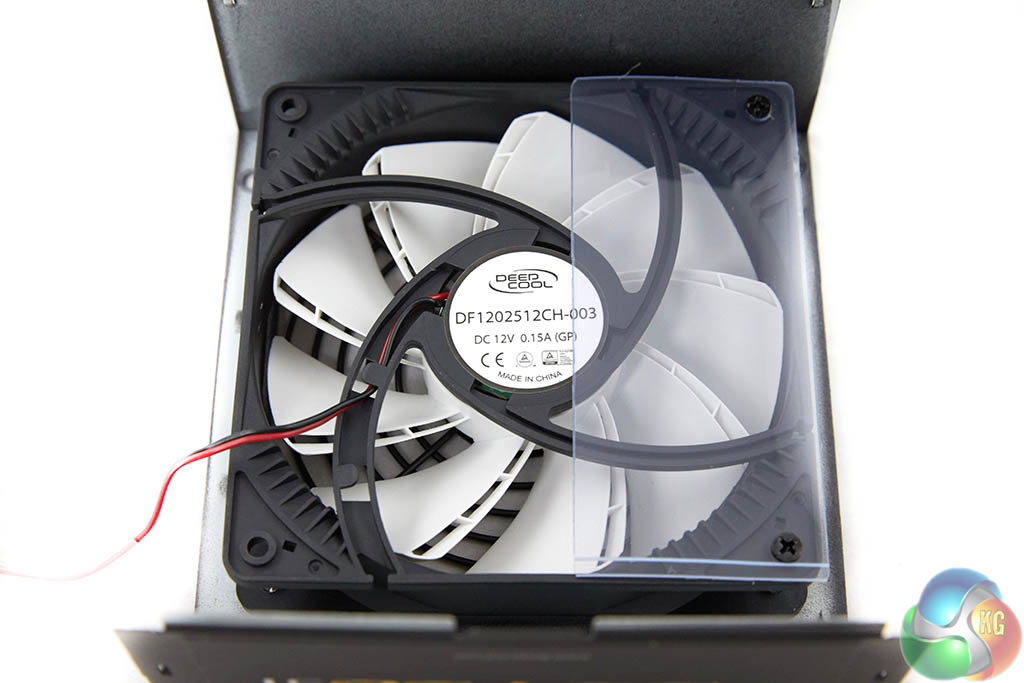
Deep Cool are using the DF1202512CH-003 120MM Fluid Dynamic Bearing fan (FDB) with a specially designed fan impeller which is said to produce higher airflow with lower noise.
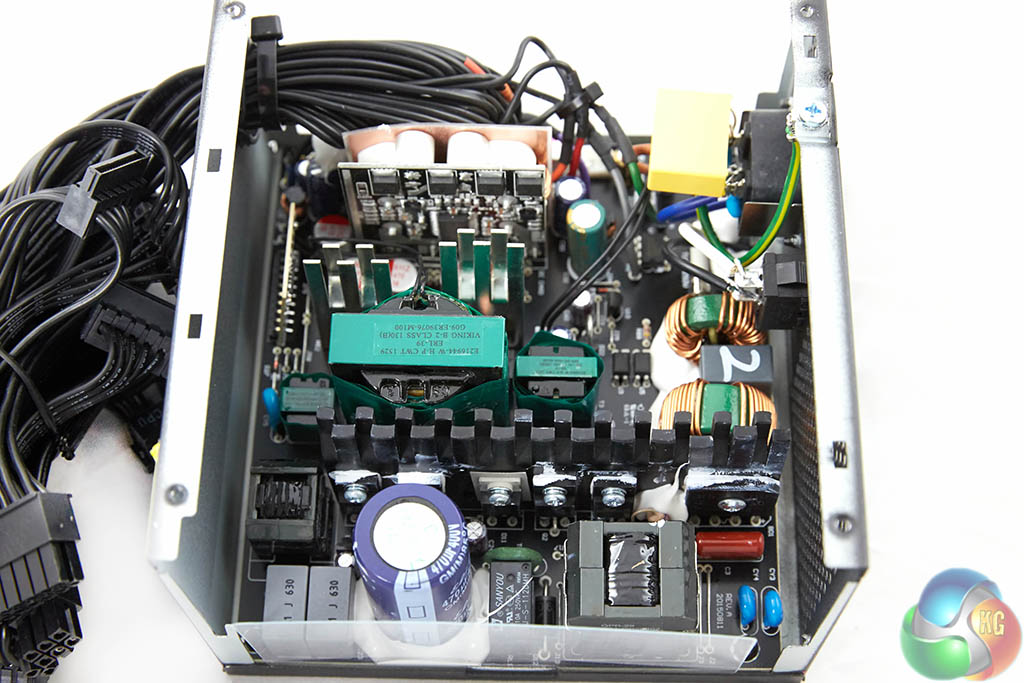
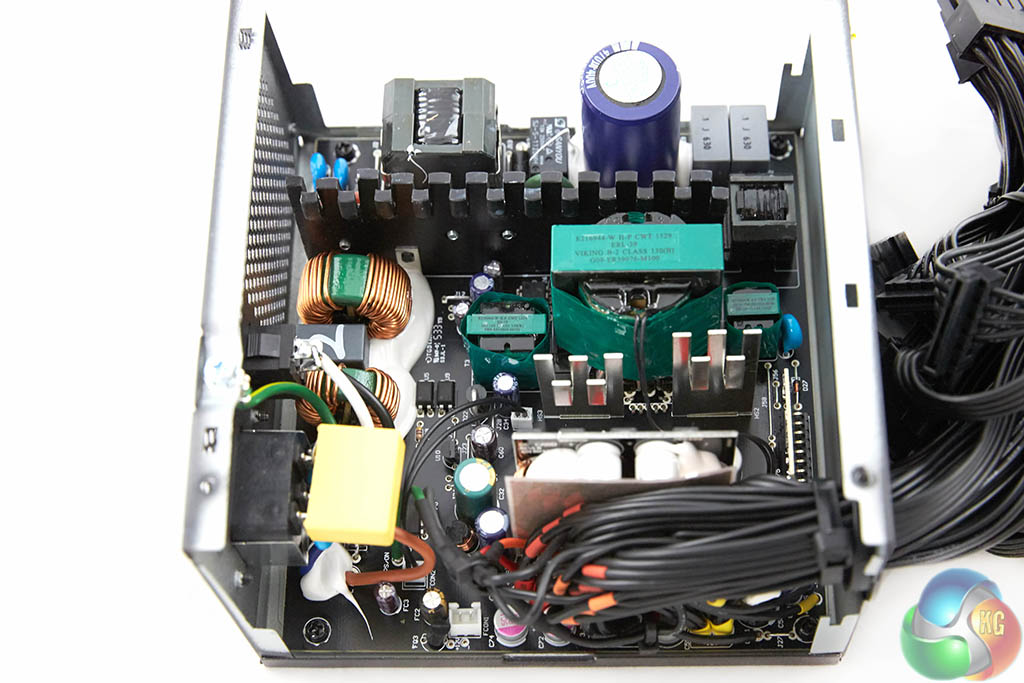
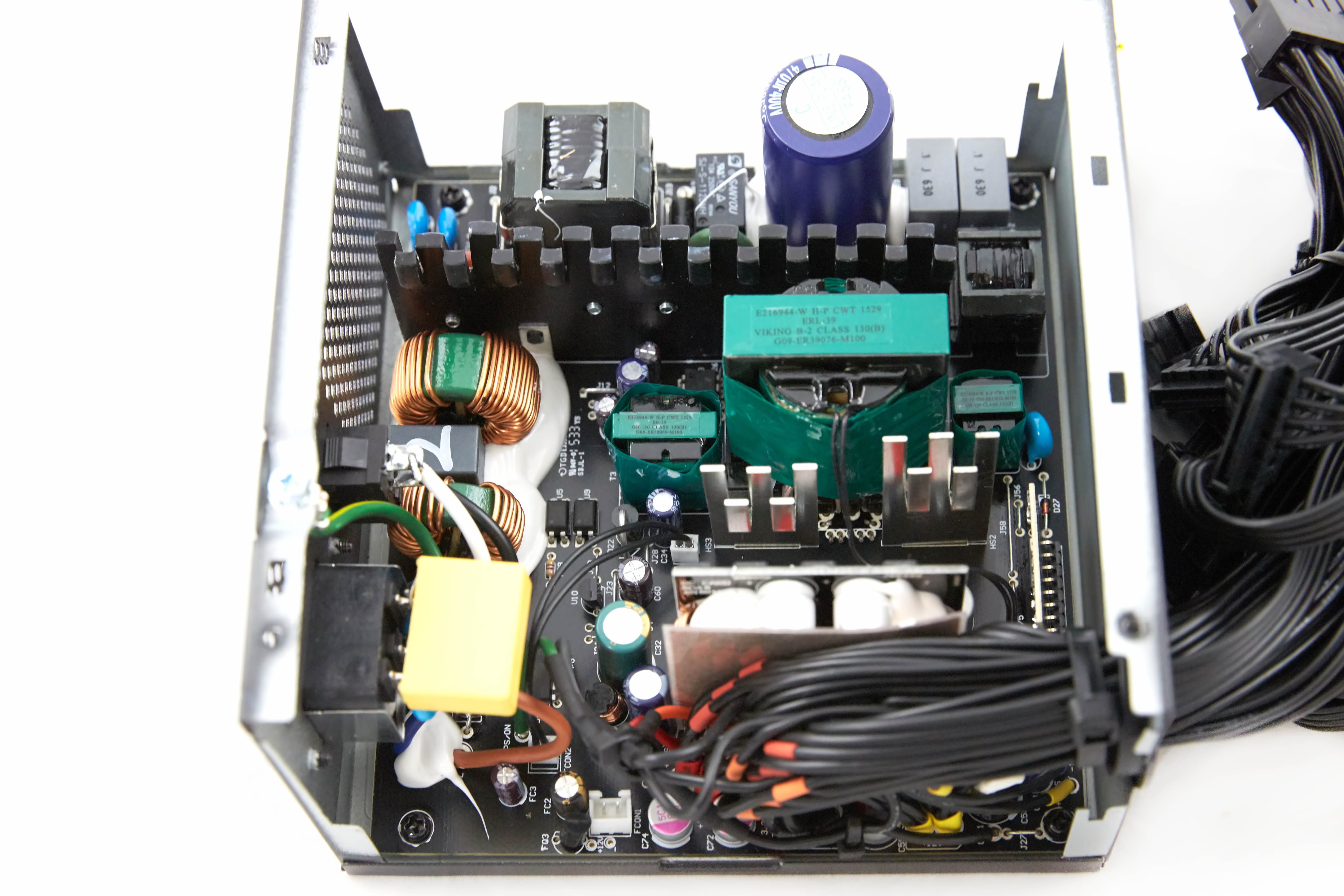
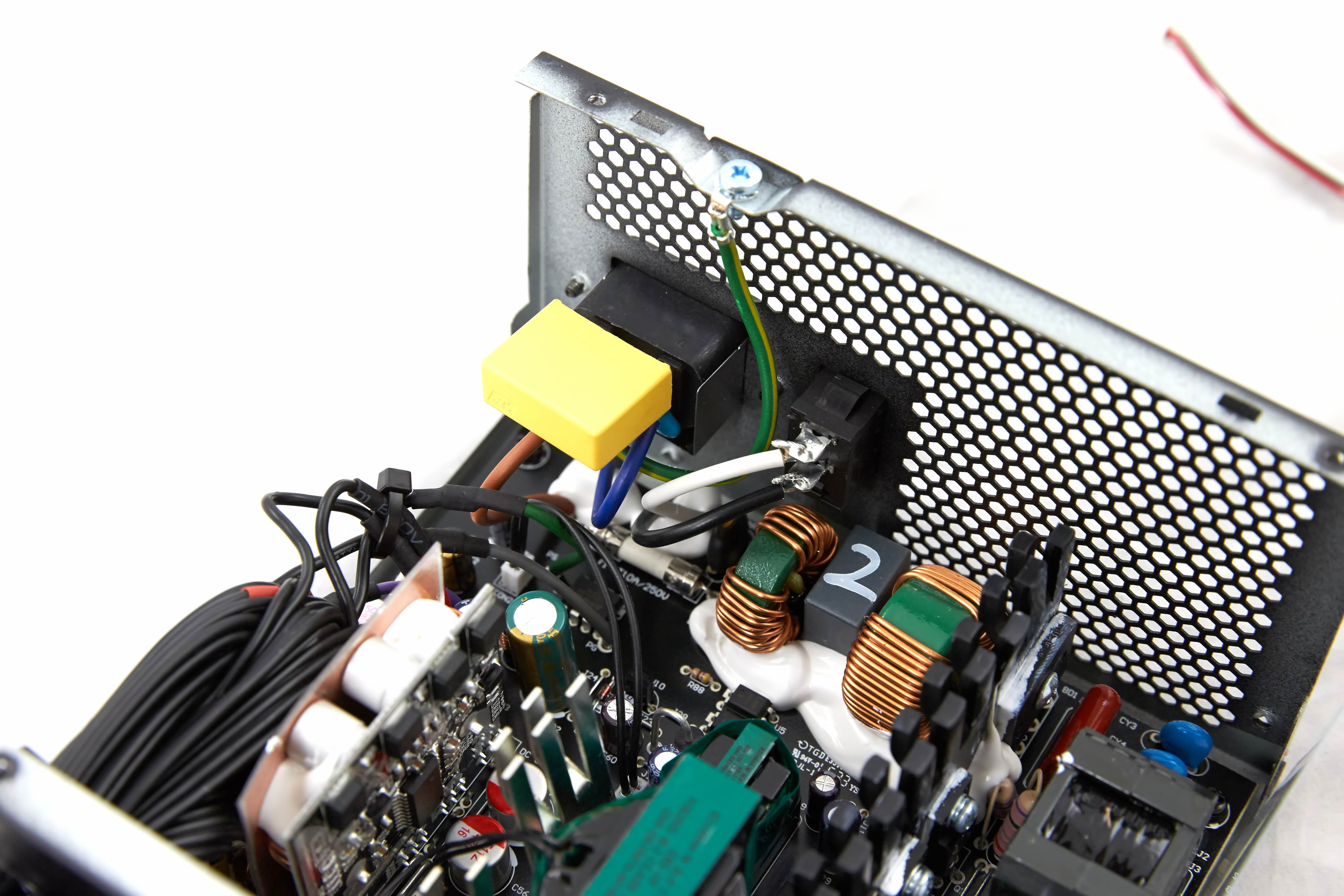
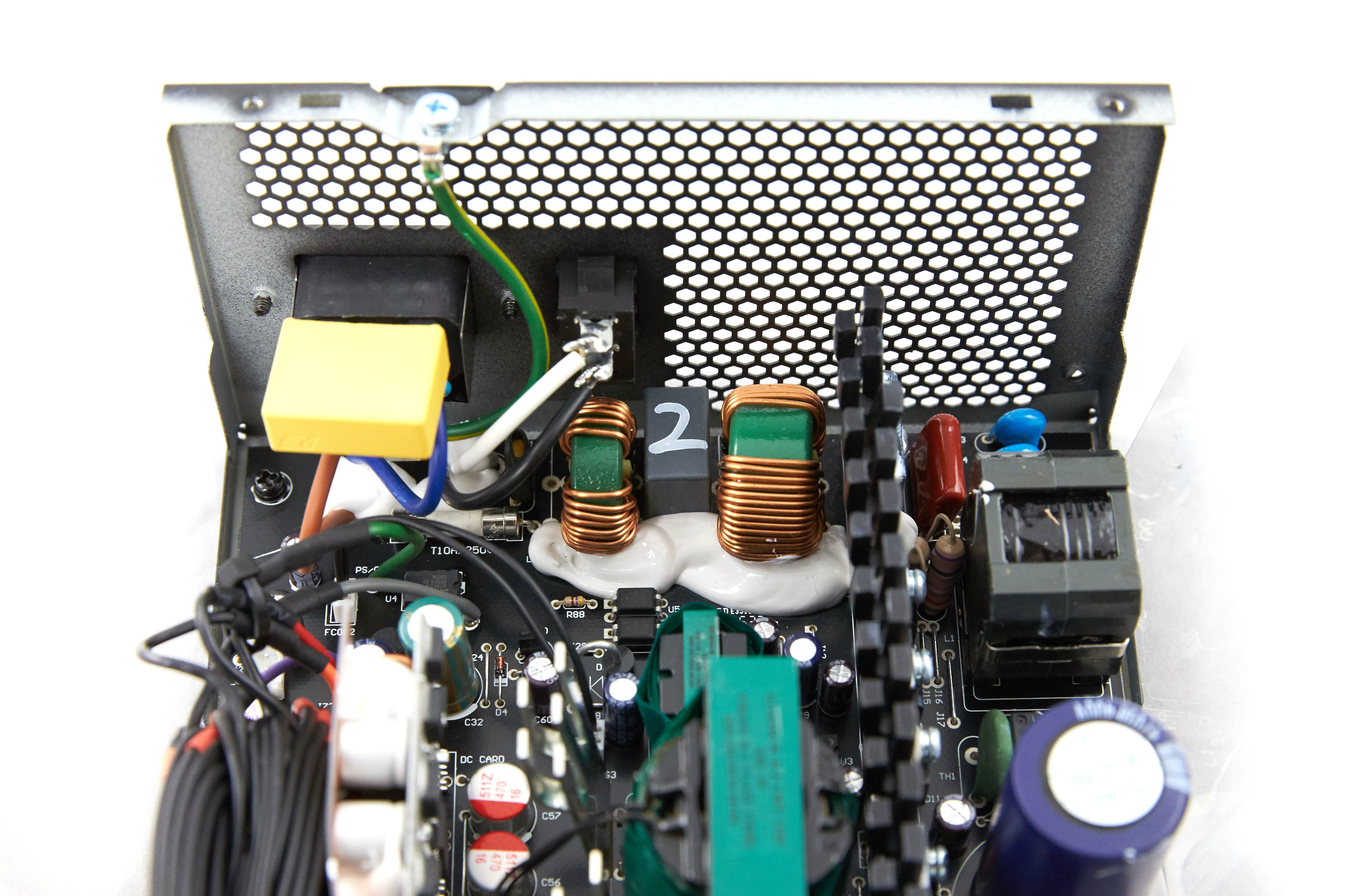
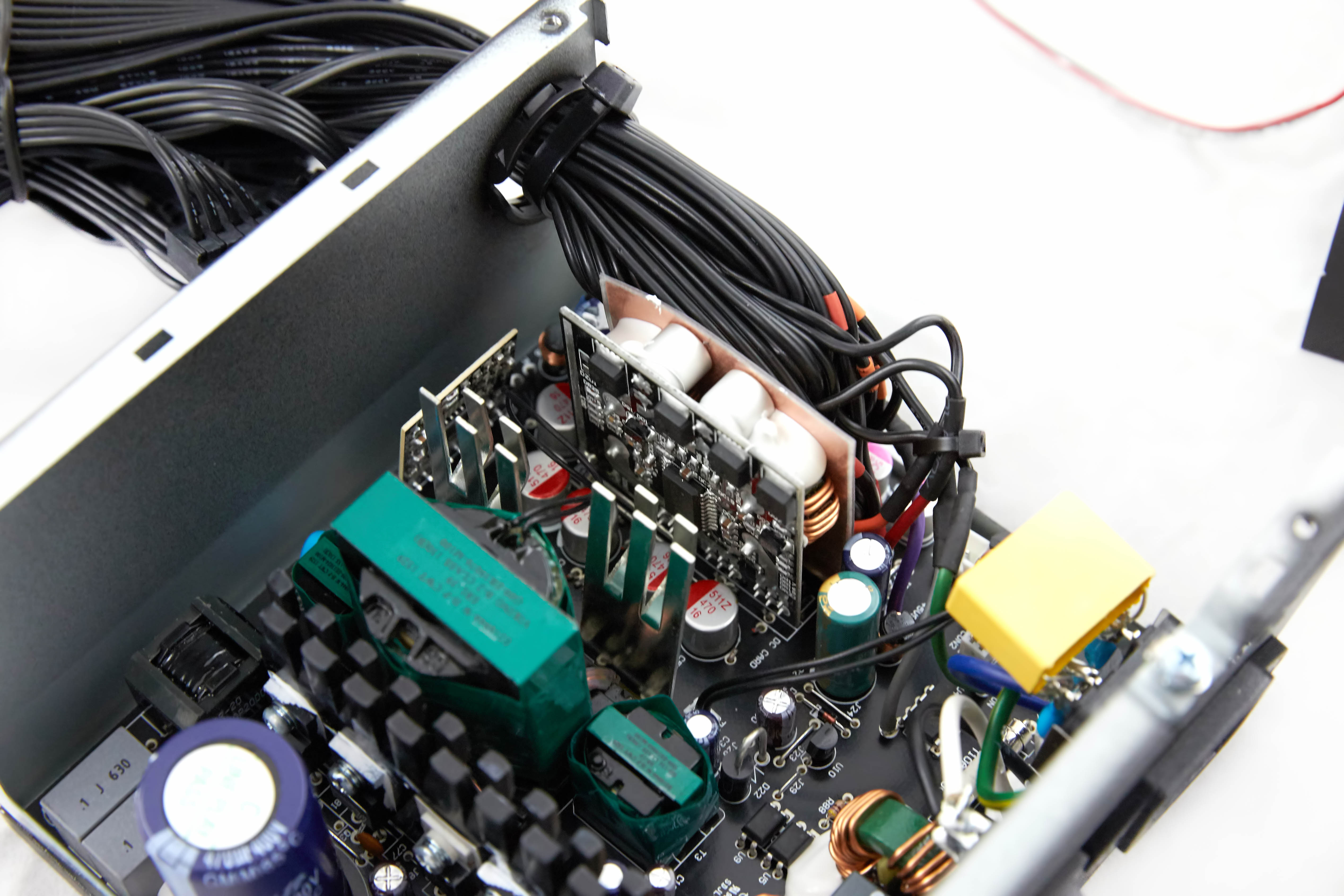
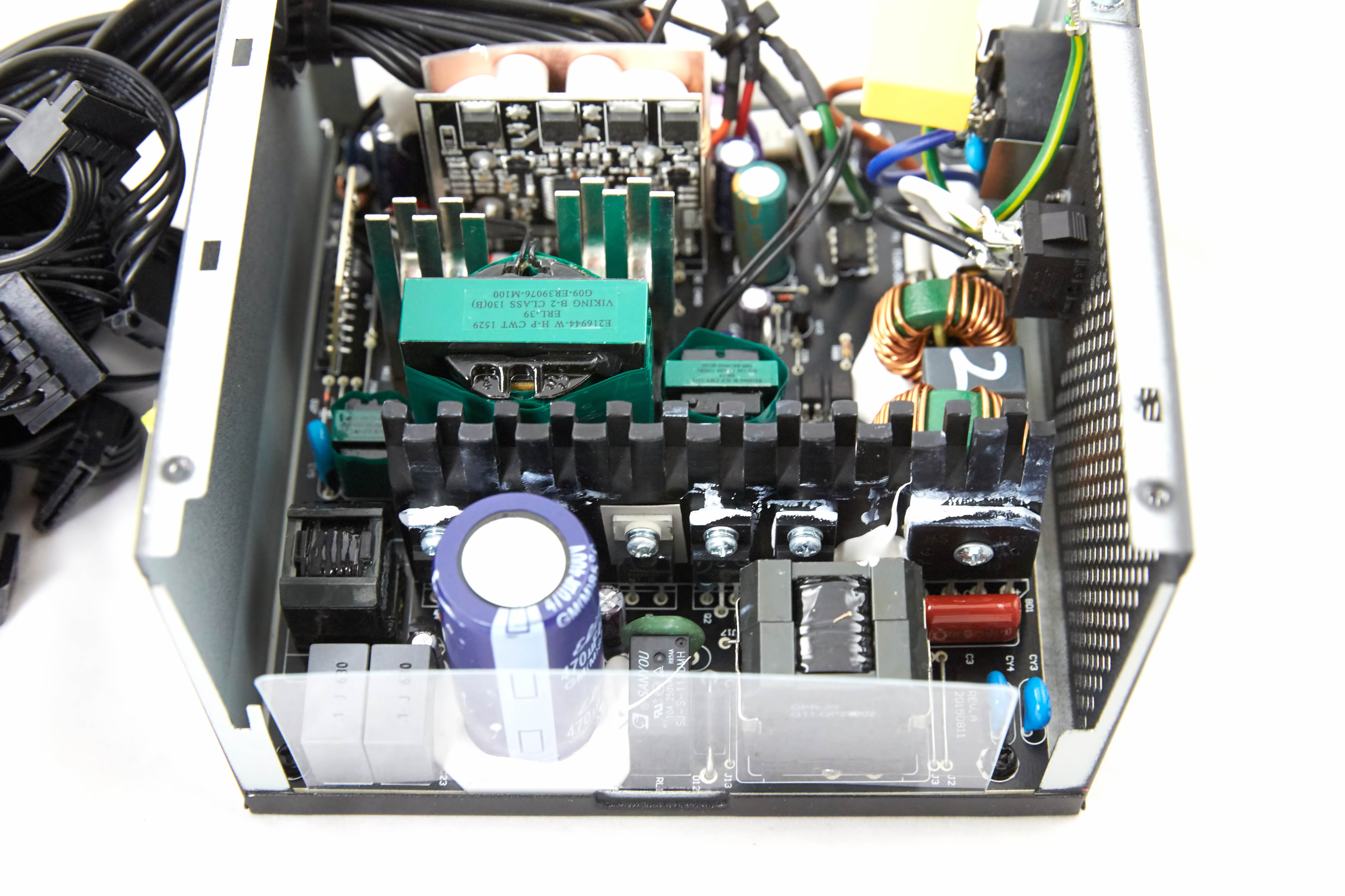
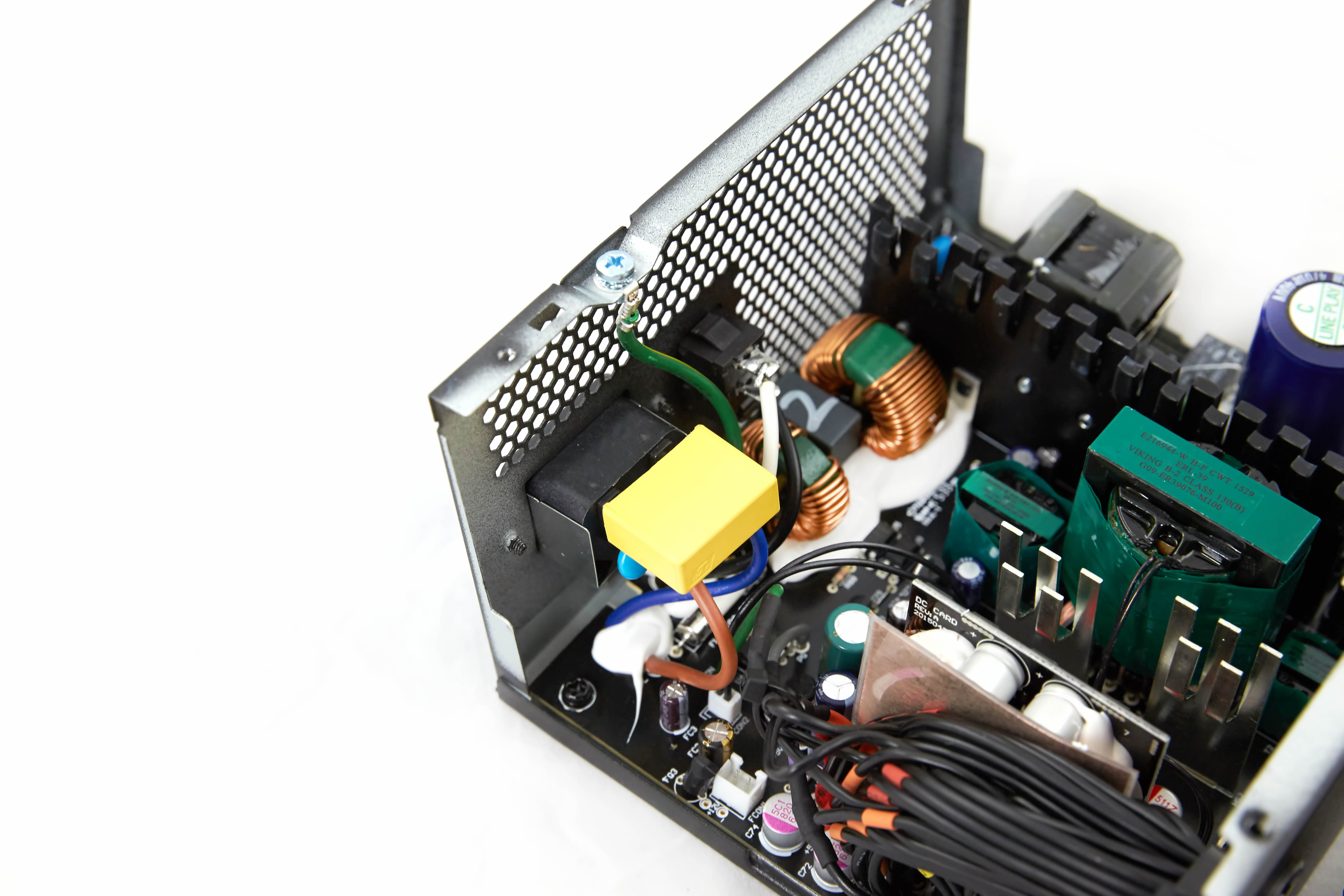
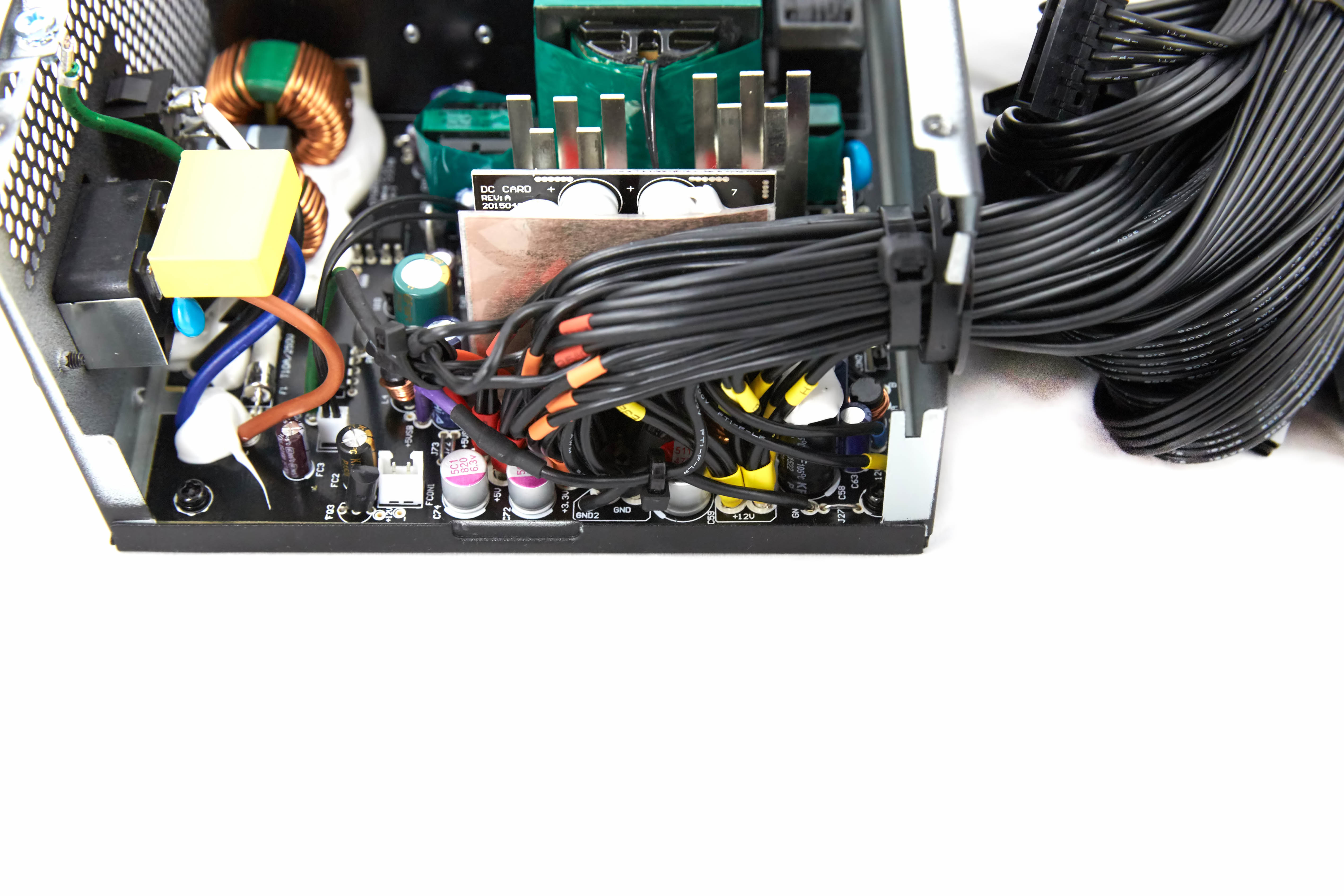
The design of this DC-DC power supply is by Channel Well Technology (CWT). They are a well known company who usually create low end or mid level power supplies. Soldering quality is above average although there are a few rough spots on the main PCB.
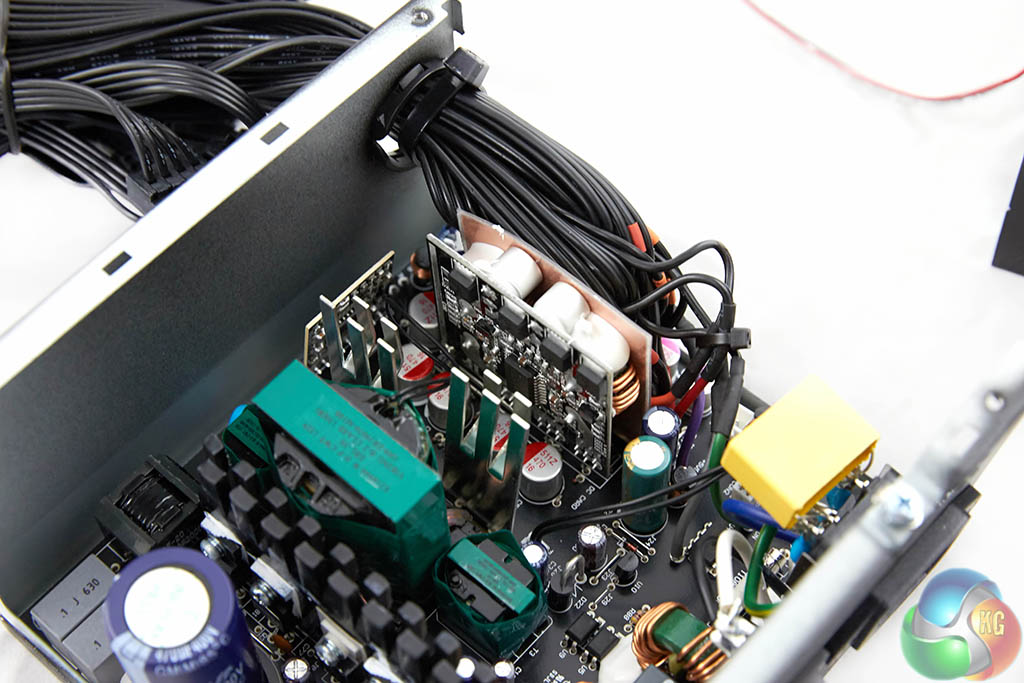
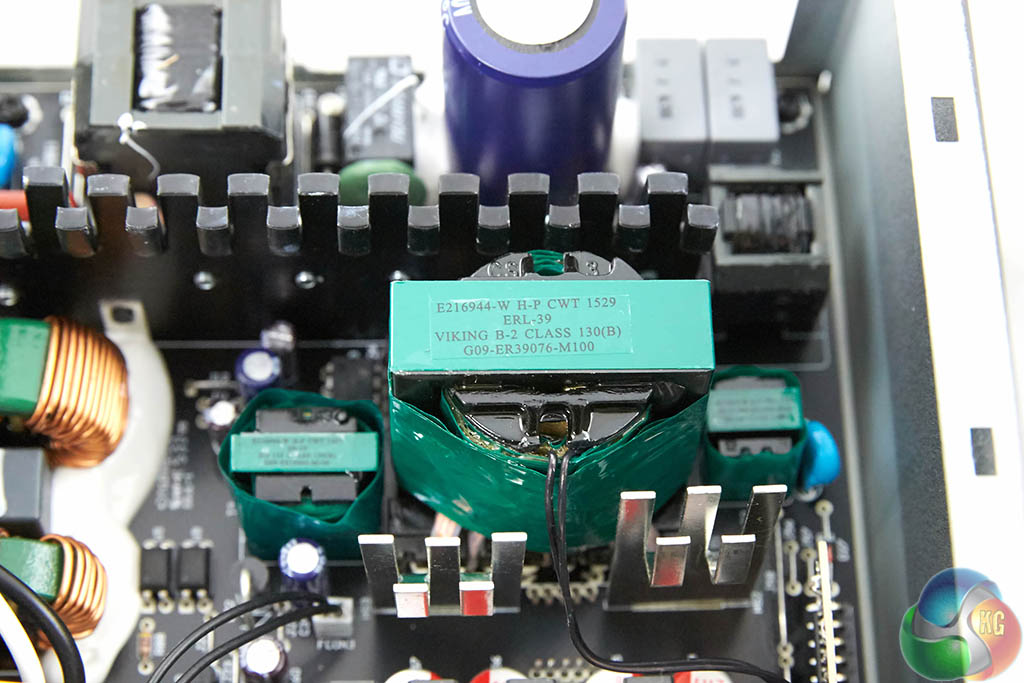
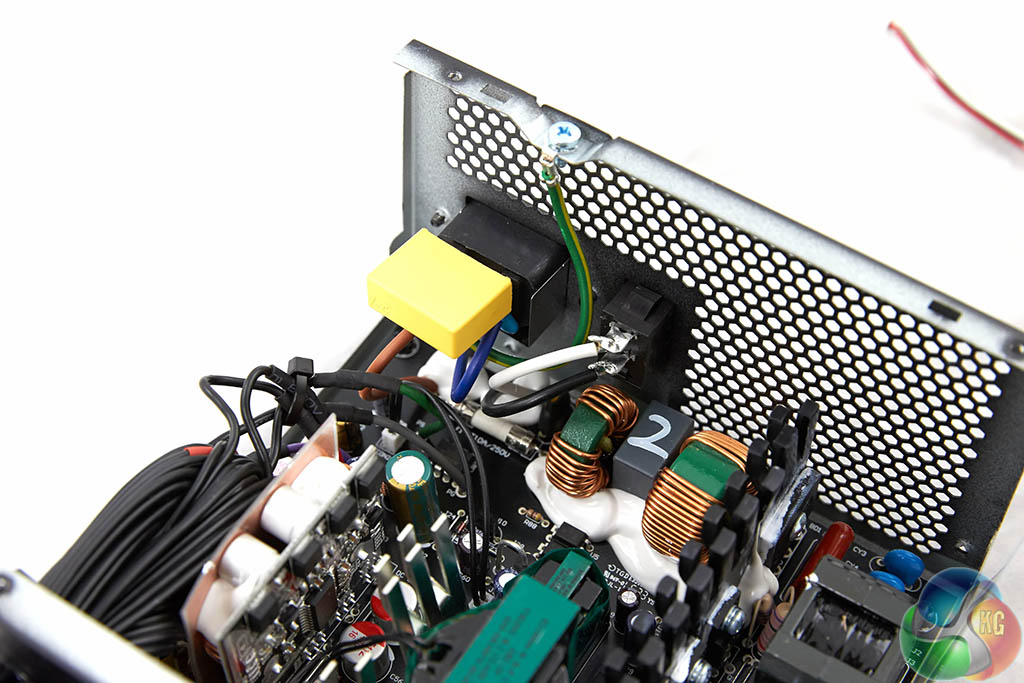
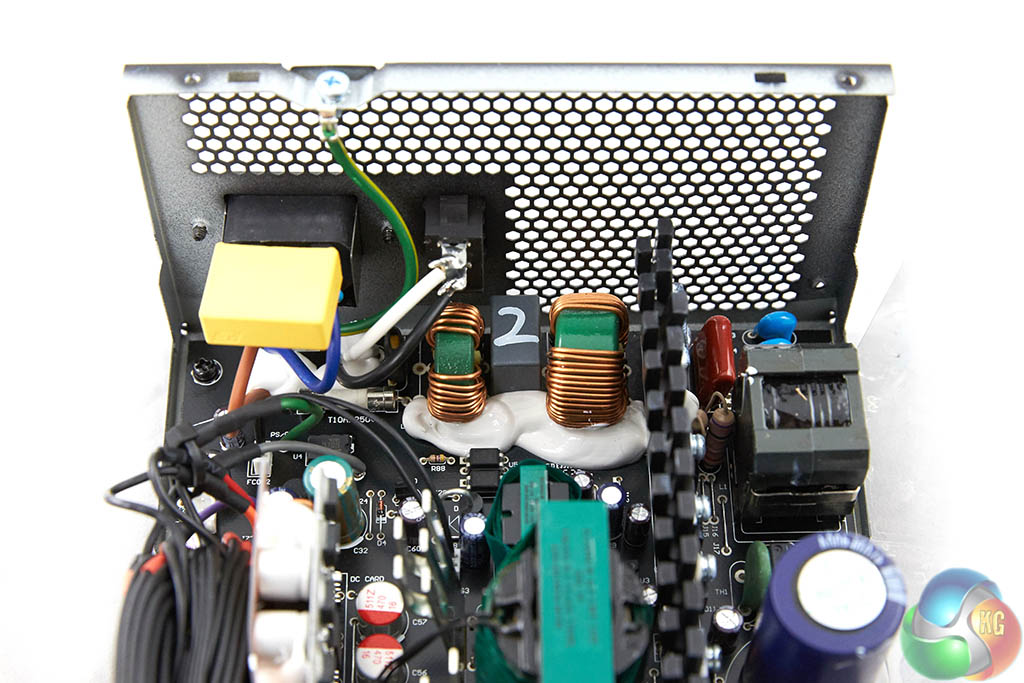
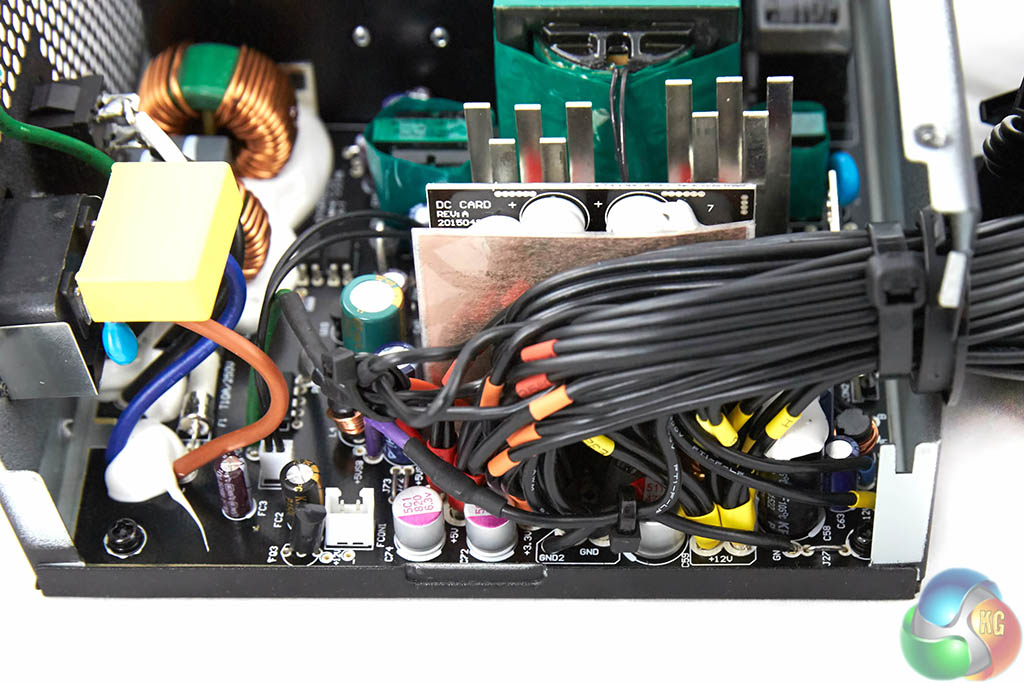
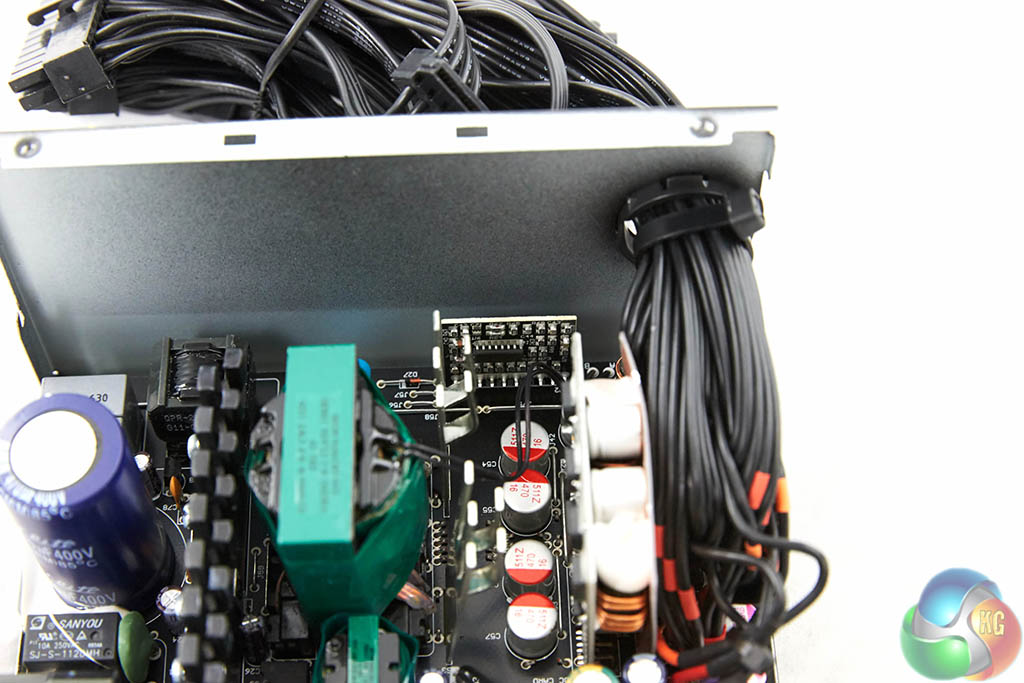
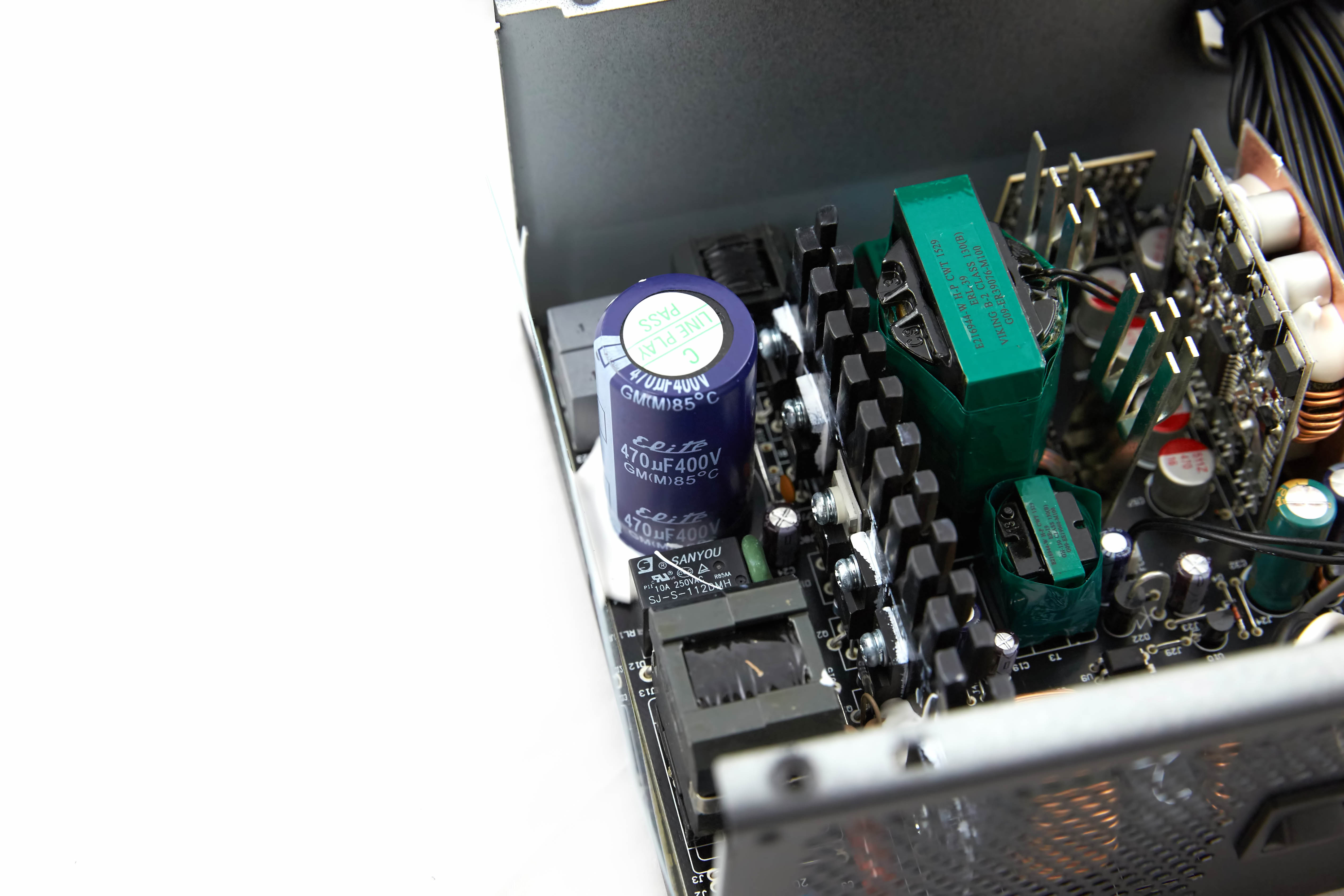
The filtering stage starts at the AC input receptacle and continues onto the main PCB. They are using a double EMI filter to try and stablise the voltages. The bridge rectifier has its own heatsink with another heatsink close by on the PFC power components and primary switching transistors. Wiring on the board varies, but some areas could certainly be better.
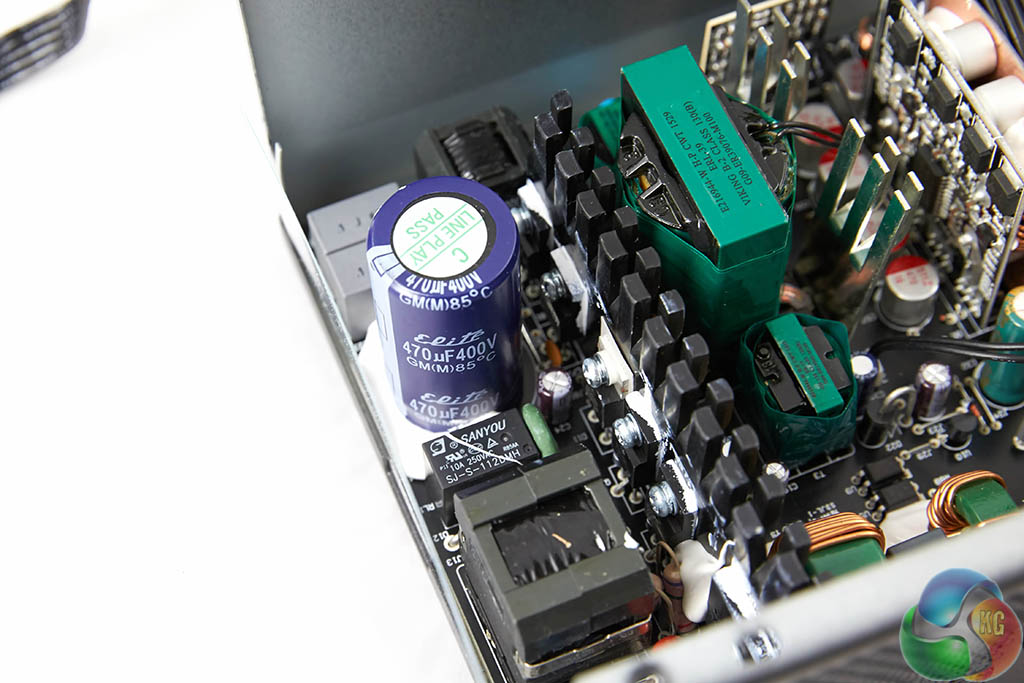
The primary capacitor is by ‘Elite'. This is a Chinese company and this particular capacitor is rated 85c 470uF, 400V. It is disappointing to see a Chinese 85C capacitor in this unit although I have little experience with the ‘Elite' brand specifically. I would expect them to be similar to TEAPO in quality. Other secondary capacitors in the unit are Chinese and 85c rated.
On this page we present some high resolution images of the product taken in our professional studio with a Canon 1DX camera. These will take much longer to open due to the dimensions, especially on slower connections. If you use these pictures on another site or publication, please credit Kitguru.net as the owner/source.
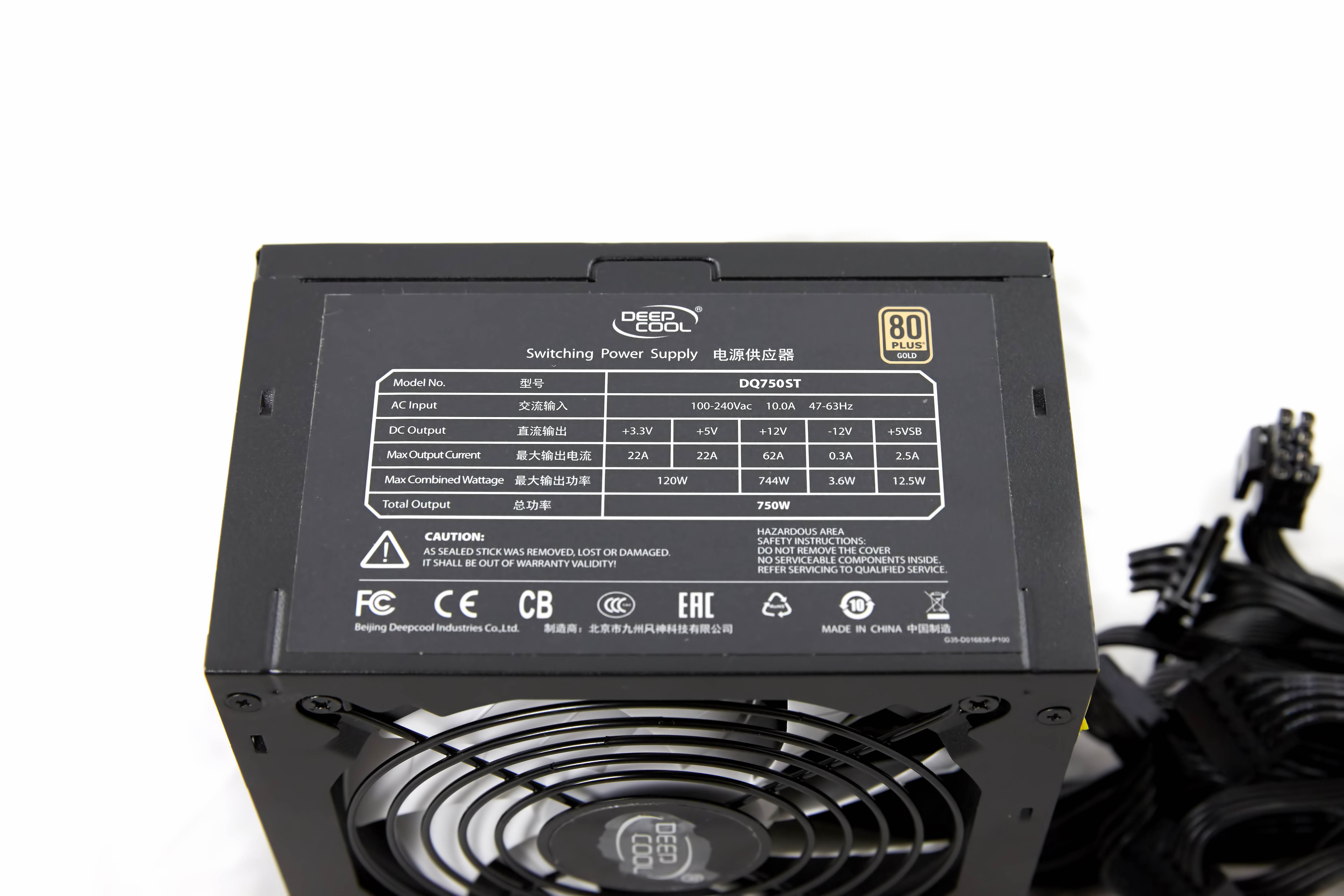
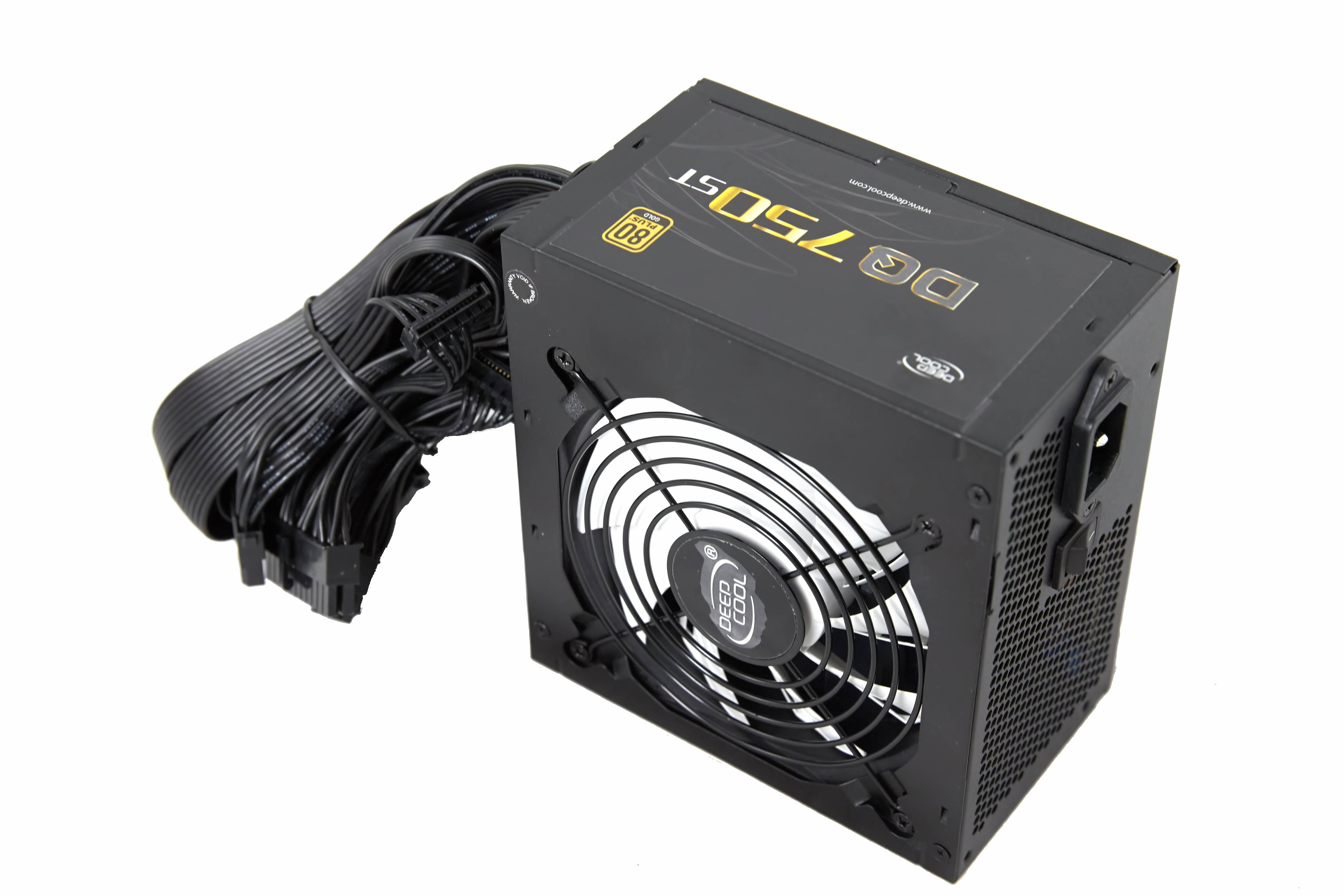
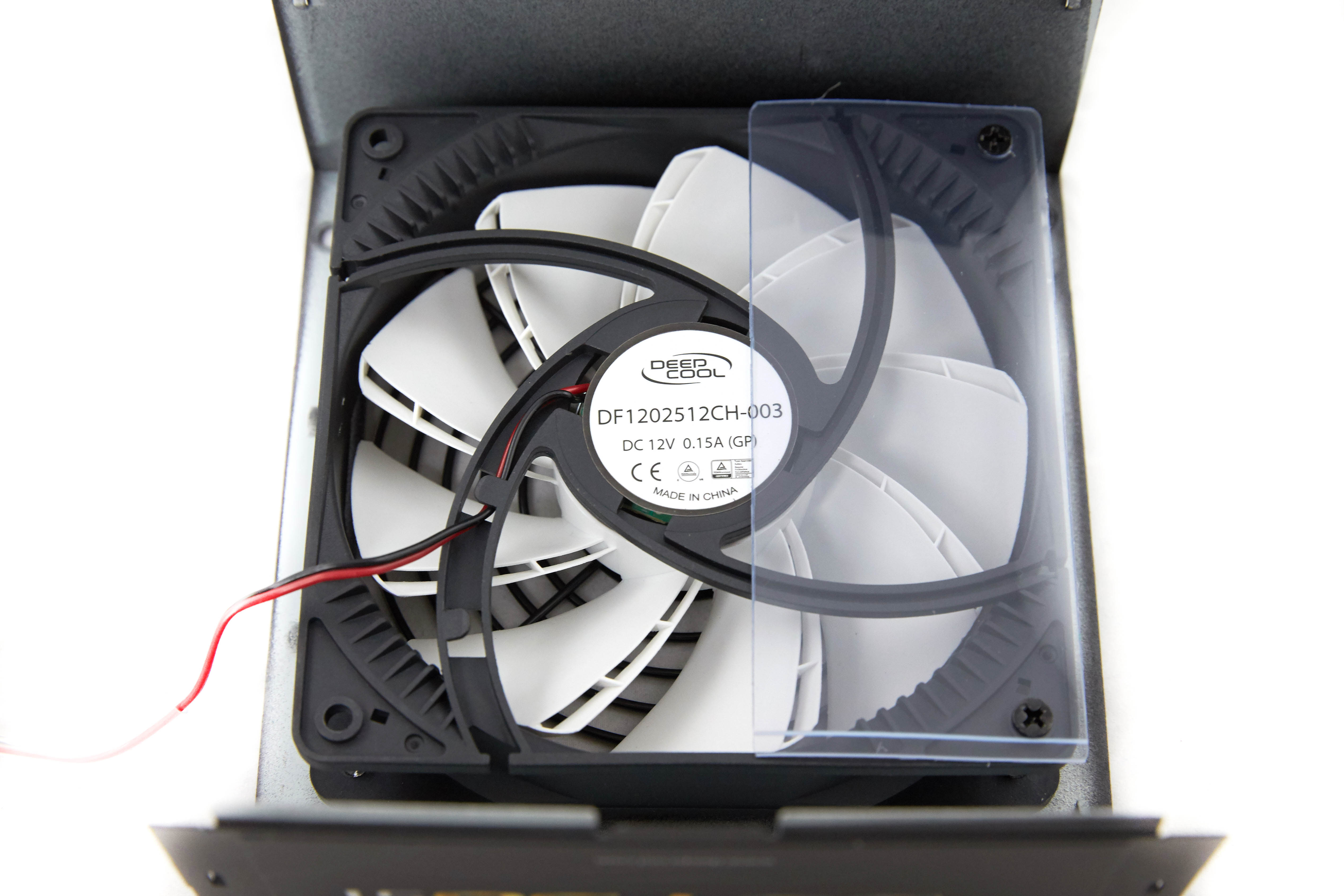
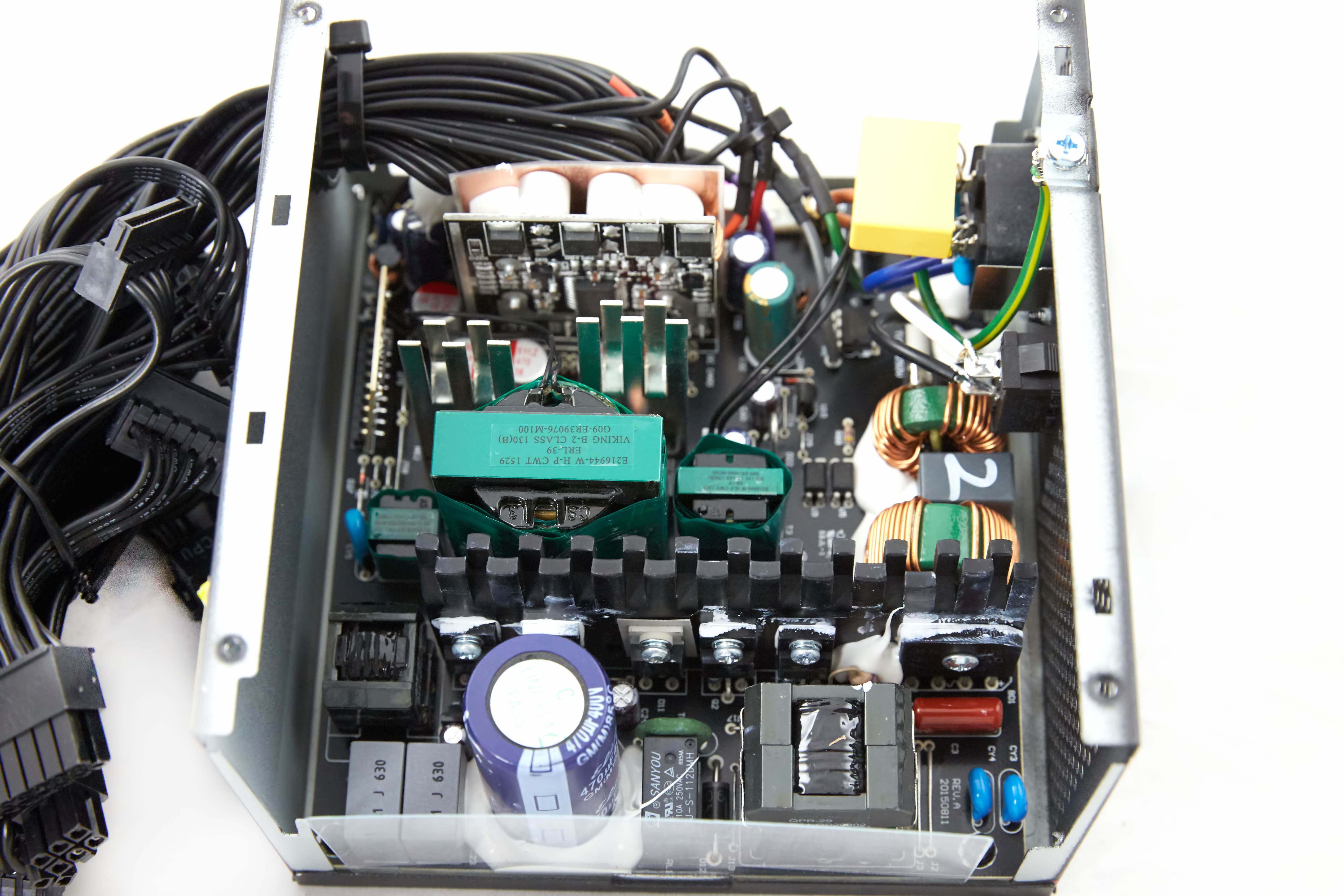
Correctly testing power supplies is a complex procedure and KitGuru have configured a test bench which can deliver up to a 2,000 watt DC load. Due to public requests we have changed our temperature settings – previously we rated with ambient temperatures at 25C, we have increased ambient temperatures by 10c (to 35c) in our environment to greater reflect warmer internal chassis conditions.
We use combinations of the following hardware:
• SunMoon SM-268
• CSI3710A Programmable DC load (+3.3V and +5V outputs)
• CSI3711A Programmable DC load (+12V1, +12V2, +12V3, and +12V4)
• Extech Power Analyzer
• Extech MultiMaster MM570 digital multimeter
• Extech digital sound level meter
• Digital oscilloscope (20M S/s with 12 Bit ADC)
• Variable Autotransformer, 1.4 KVA
We test with the +12V in single rail mode.
|
DC Output Load Regulation
|
||||||||||
|
Combined DC Load |
+3.3V
|
+5V
|
+12V
|
+5VSB
|
-12V | |||||
|
A
|
V
|
A
|
V
|
A
|
V
|
A
|
V
|
A | V | |
|
75W
|
1.24
|
3.34
|
1.19
|
4.97
|
4.95
|
12.03
|
0.50
|
5.00
|
0.20
|
-12.00
|
|
150W
|
2.16
|
3.33
|
2.83
|
4.90
|
10.07
|
12.00
|
1.00
|
5.00
|
0.30
|
-12.01
|
|
375W
|
6.17
|
3.32
|
6.06
|
4.87
|
26.17
|
11.97
|
1.50
|
5.00
|
0.50
|
-12.02
|
| 565W |
10.31
|
3.30
|
10.85
|
4.84
|
38.34
|
11.87
|
2.00
|
4.97 |
0.60
|
-12.03
|
|
750W
|
10.71
|
3.28
|
13.85
|
4.82
|
53.60
|
11.82
|
3.00
|
4.92
|
0.80
|
-12.05
|
Load regulation rates as a pass. I have seen much better results this year from other 750 watt units although there is nothing here to raise any major concerns.
| DeepCool DQ750 ST | Maximum Load |
| 757W |
We managed to reach around 757W before the unit would shut down gracefully. Or another 7 watts over the rated maximum.
Next we want to try Cross Loading. This basically means loads which are not balanced. If a PC for instance needs 500W on the +12V outputs but something like 30W via the combined 3.3V and +5V outputs then the voltage regulation can fluctuate badly.
| Cross Load Testing | +3.3V | +5V | +12V | -12V | +5VSB | |||||
| A | V | A | V | A | V | A | V | A | V | |
| 734W | 1.0 | 3.33 | 1.0 | 4.97 | 60.0 | 11.79 | 0.2 | -12.00 | 0.50 | 5.00 |
| 154W | 15.0 | 3.27 | 15.0 | 4.76 | 2.0 | 12.02 | 0.2 | -12.01 | 0.50 | 4.97 |
The unit dealt with the cross loading test however there was quite a lot of movement on the +5V and +12V rails.
We then used an oscilloscope to measure AC ripple and noise present on the DC outputs. We set the oscilloscope time base to check for AC ripple at both high and low ends of the spectrum.
ATX12V V2.2 specification for DC output ripple and noise is defined in the ATX 12V power supply design guide.
|
ATX12V Ver 2.2 Noise/Ripple Tolerance
|
|
|
Output
|
Ripple (mV p-p)
|
|
+3.3V
|
50
|
|
+5V
|
50
|
|
+12V1
|
120
|
|
+12V2
|
120
|
|
-12V
|
120
|
|
+5VSB
|
50
|
Obviously when measuring AC noise and ripple on the DC outputs the cleaner (less recorded) means we have a better end result. We measured this AC signal amplitude to see how closely the unit complied with the ATX standard.
| AC Ripple (mV p-p) | ||||
| DC Load | +3.3V | +5V | +12V | 5VSB |
| 75W | 5 | 10 | 15 | 10 |
| 150W | 5 | 10 | 20 | 10 |
| 375W | 10 | 15 | 35 | 15 |
| 565W | 15 | 15 | 55 | 15 |
| 750W | 15 | 20 | 75 | 25 |
Ripple suppression is decent, although far short of the best we have tested in recent months. The +12V rail peaks at 75mV under full load conditions which is a little higher than we would like to see.
|
Efficiency (%)
|
|
|
75W
|
87.66
|
|
150W
|
90.43
|
|
375W
|
91.92
|
|
565W
|
91.13
|
|
750W
|
90.21
|
The power supply delivers great efficiency results, peaking at close to 92% at 50% load. This drops to around 90% at full load.
We take the issue of noise very seriously at KitGuru and this is why we have built a special home brew system as a reference point when we test noise levels of various components. Why do this? Well this means we can eliminate secondary noise pollution in the test room and concentrate on components we are testing. It also brings us slightly closer to industry standards, such as DIN 45635.
Today to test the power supply we have taken it into our acoustics room environment and have set our Digital Sound Level Noise Decibel Meter Style 2 one meter away from the unit. We have no other fans running so we can effectively measure just the noise from the unit itself.
As this can be a little confusing for people, here are various dBa ratings in with real world situations to help describe the various levels.
KitGuru noise guide
10dBA – Normal Breathing/Rustling Leaves
20-25dBA – Whisper
30dBA – High Quality Computer fan
40dBA – A Bubbling Brook, or a Refrigerator
50dBA – Normal Conversation
60dBA – Laughter
70dBA – Vacuum Cleaner or Hairdryer
80dBA – City Traffic or a Garbage Disposal
90dBA – Motorcycle or Lawnmower
100dBA – MP3 Player at maximum output
110dBA – Orchestra
120dBA – Front row rock concert/Jet Engine
130dBA – Threshold of Pain
140dBA – Military Jet takeoff/Gunshot (close range)
160dBA – Instant Perforation of eardrum
|
Noise (dBA)
|
|
|
75W
|
<28.0
|
|
150W
|
<28.0
|
|
375W
|
30.8
|
|
565W
|
34.3
|
| 750W | 37.3 |
At 375 watts demand the large fan starts to spin up a little, hitting a noise rating at close to 31dBa. When the fan spins up in the last 250 watts of power delivery, the noise levels increase noticeably.
This power supply is reasonably quiet when you are demanding 500 watts or less, which would be the general situation if you are using a system with a single, mid or even high end graphics card (R9 295X2 excluded).
|
Temperature (c)
|
||
|
Intake
|
Exhaust
|
|
|
75W
|
36
|
41
|
|
150W
|
38
|
47
|
|
375W
|
39
|
52
|
|
565W
|
45
|
57
|
|
750W
|
47
|
62
|
The large fan maintains good thermals inside the chassis, peaking at +15c over intake at full load.
|
Maximum load
|
Efficiency
|
|
757W
|
89.94
|
For those interested, we measured efficiency when stressing the unit to breaking point. 89.94 percent efficiency at 757W … hardly practical, but interesting regardless.
The DeepCool DQ750 ST is a decent power supply created to meet a very specific price point. We like the subtle appearance, and the quality of the paintwork is surprisingly good. The compact physical dimensions means the DQ750 ST will be ideal for adoption inside smaller cases. Sadly the lack of modular cabling means you may have issues routing all the cables inside space restricted chassis.
Technically the unit is unremarkable. Load regulation is acceptable, however it exhibits noticeable droop via both +5V and +12V rails. Ripple suppression falls within rated industry tolerance levels, however the +12V rail hits 75mV at full load which is a little higher than we would like to see, even from a budget oriented unit.
The 120mm fan does the job adequately, although in the last 200 watts of power output, it does spin up noticeably, emitting a fair bit of noise. Unless you can tolerate this, the DQ750 ST is a unit that you will want to keep running at 500 watts or less under load, at all times. The efficiency of the unit is actually very good, and we recorded close to 92% at close to 50% load which is a great result.
Internally, the DC-DC design is competent, if nothing out of the ordinary. I was rather disappointed to see a Chinese 85c rated primary capacitor incorporated, and although I have little experience with the ‘Elite' brand, I would expect them to be at a similar level to TEAPO. I appreciate Deep Cool have opted to try and reduce costs as much as possible, but I do always prefer to see quality Japanese capacitors in both primary and secondary stages. I have seen two 85c TEAPO branded caps basically explode in our labs over the years during some severe stress tests.
Right now there is no stock of the DeepCool DQ750 ST in the UK, although I was informed this week that Amazon will stock the power supply in January for only £59.99 inc vat.
There is no doubt the DeepCool DQ750 ST is very competitively priced at £59.99 inc vat. Many 750 watt 80 Plus Certified units we have tested in recent months are priced closer to £100 (FSP Hydro G 750W HERE and Corsair RMi 750W HERE). There is however a reason for this – to achieve this price point Deepcool have opted for a less effective non-modular design and they are using lower grade 85c rated Chinese capacitors in both primary and secondary stages.
Pros:
- competitively priced.
- good paintwork.
- 80 Plus Gold design is efficient.
Cons:
- non modular.
- can get noisy at full load.
- 85c Chinese capacitors.
- poor packaging.
- no user manual.
Kitguru says: The DeepCool DQ750 ST power supply is a decent option for those who want a very efficient power supply at the lowest possible price.

It’s Chinese is it good quality, you hear bad things shit Chinese goods and PSU is one area where you need Quality!
I’ve used it with a FX 8370E OC and RX 470 overclocked to 1400mhz , despite its cheap appearance it handled the load no problem, never blew up, still going to use it for a Ryzen system, but I wish it ran cooler at 550w+ and had Japanese caps.