KitGuru KitGuru.net – Tech News | Hardware News | Hardware Reviews | IOS | Mobile | Gaming | Graphics Cards


FSP released their Hydro G series late last year, and it was well received in our labs. It excelled in all key areas, delivering first class load regulation and stellar efficiency – ripple suppression was also close to top of the class. Not everyone could afford the Hydro G and today we look at the latest, more affordable Hydro X range of power supplies from FSP targeting a much wider audience.
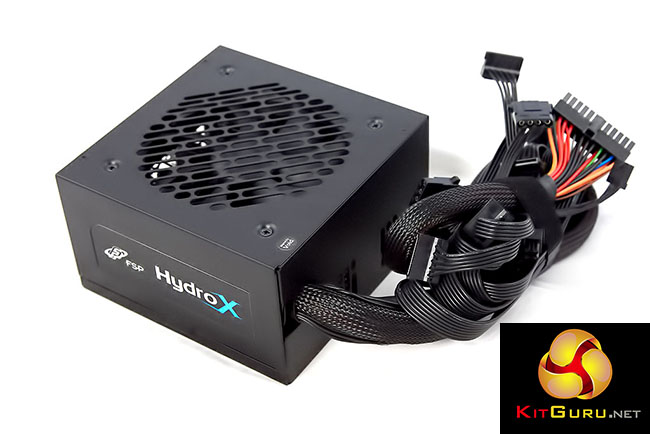
The new Hydro X series is a non modular range of power supplies and is offered in 450W, 550W and 650W capacities. FSP sent over a price list before we published this review detailing costs of 79.99 euros, 89.99 euros and 99.99 euros respectively.
FSP say this platform delivers high performance and should not be considered a simple budget range. FSP have incorporated high grade Japanese electrolytic capacitors.
The design has the LLC resonant converter on the primary side with the synchronous rectification of the +12V rail on the secondary side, along with DC-DC converters for the minor rails. The 5VSB circuit is also said to deliver high efficiency levels due to an advanced standby controller.
Additionally, the cooling fans in the Hydro X are double ball bearing which should help reliability long term (Fan is rated at 100,000 hours MTBF).
FSP Hydro X Overview:
- Unique product ID with stylish side sticker.
- Advanced air-flow design in silent operation.
- Complies with newest ATX12V & EPS12V standards.
- 80PLUS® Gold certified.
- High efficiency ≧ 90%.
- Full Japan-made electrolytic capacitors.
- Powerful single +12V rail design.
- Ribbon cables for the need of enthusiasts and gamers.
- SLI and Crossfire ready.
- Complete protection: OCP, OVP, SCP, OPP, OTP.
- Intel Skylake ready.
- Global safety approved.
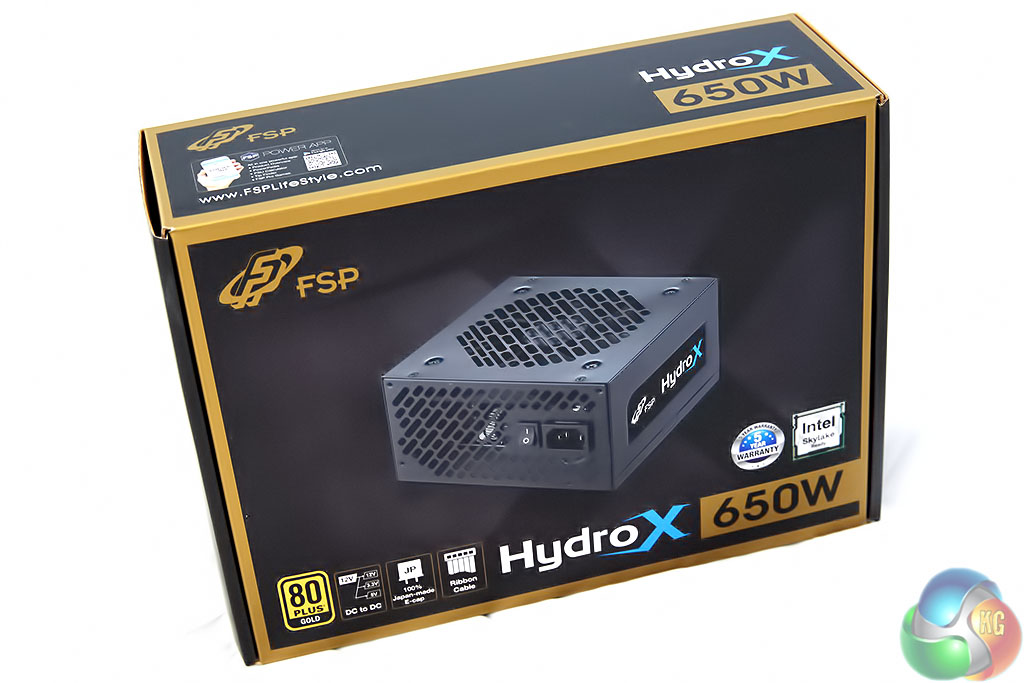
The FSP box artwork is almost identical to the Hydro G series unit we tested back in December 2015. The artwork is dark, with gold accenting on the edges and a photograph of the unit in the center. Some of the key selling points are listed along the bottom – such as 80 Plus Gold Certification, the DC to DC design and Japanese Caps.
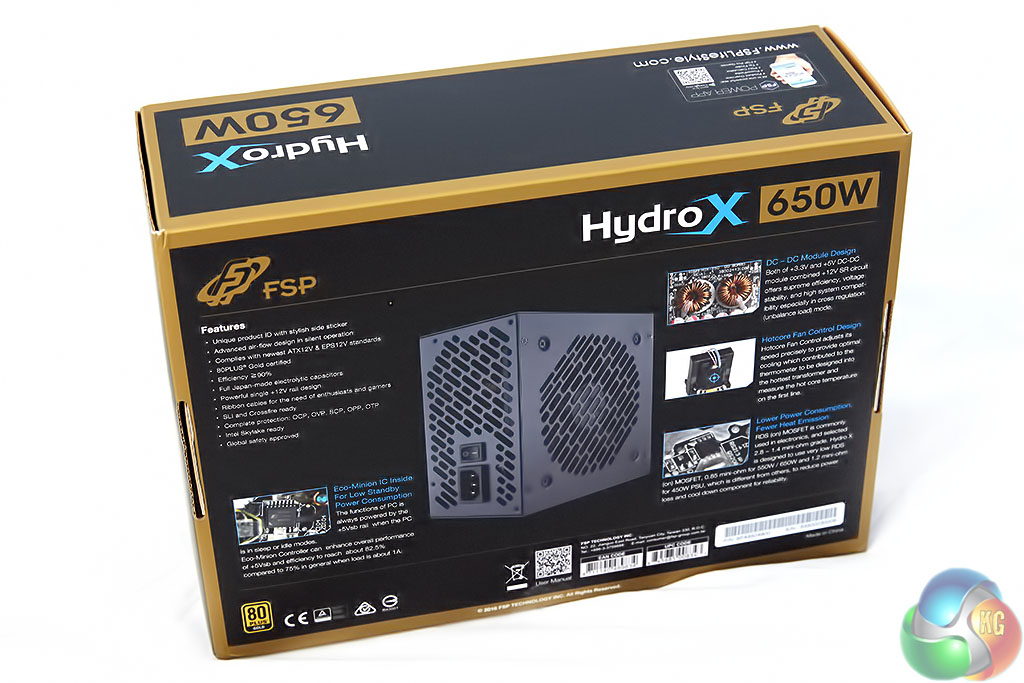
The rear of the box highlights a features list, a photograph of the power supply, alongside some images and details of the internal design.
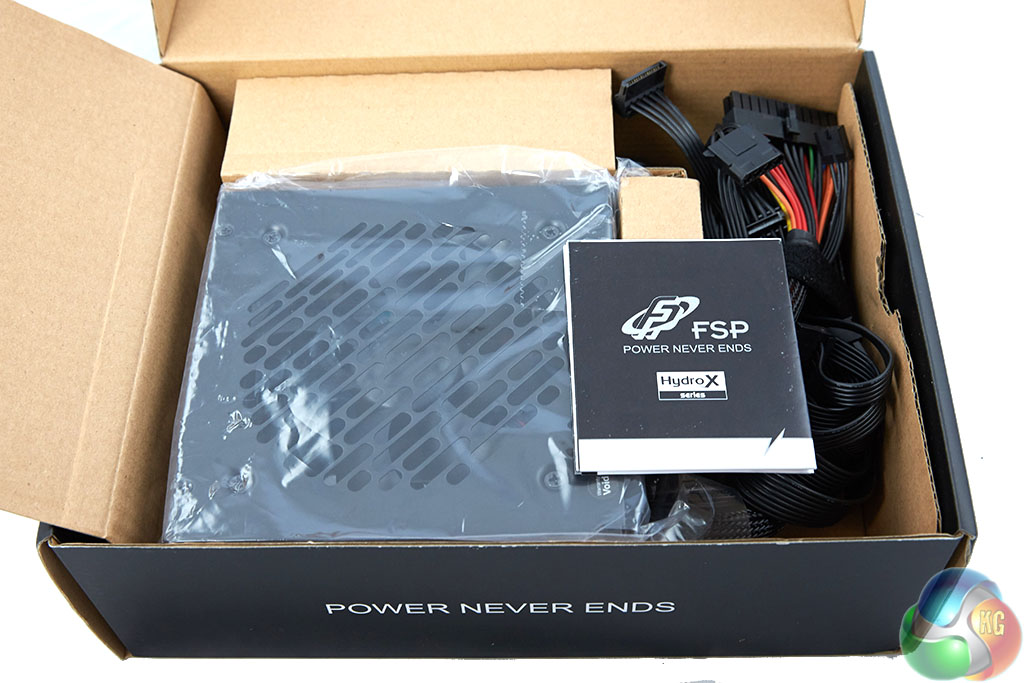
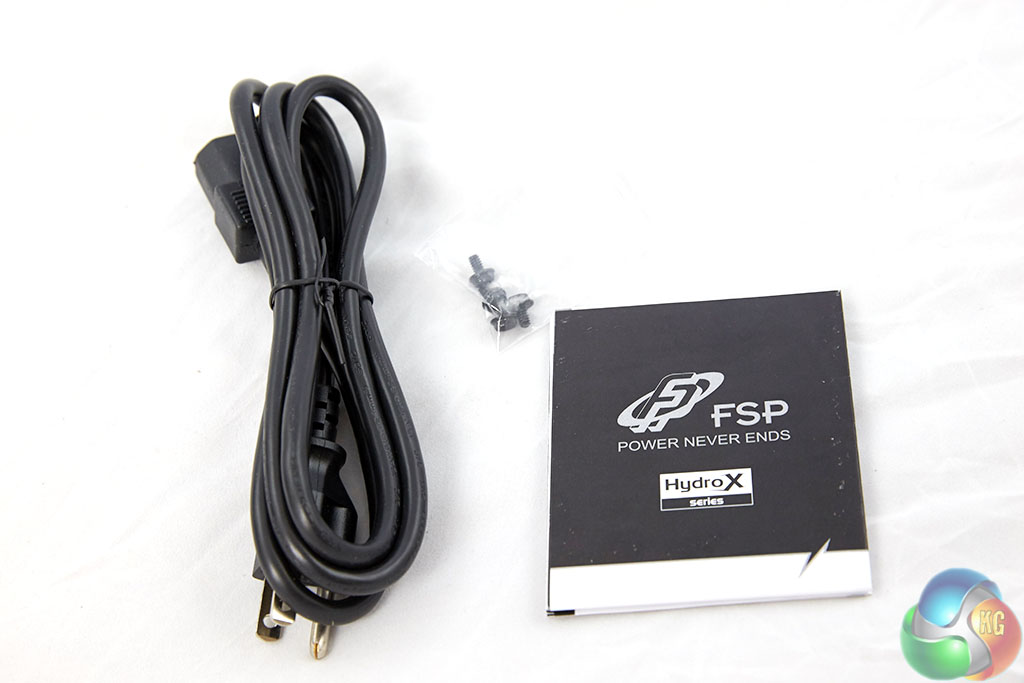
Inside the box, a little fold out user manual, mounting screws, and a regional specific power cable. The power supply is very poorly protected which is surprising, it is only wrapped in a plastic bag – with no bubble wrap or Styrofoam padding. Our unit actually had a couple of small marks on the paint due to it rubbing against the cardboard during transit. This is a little disappointing to see.
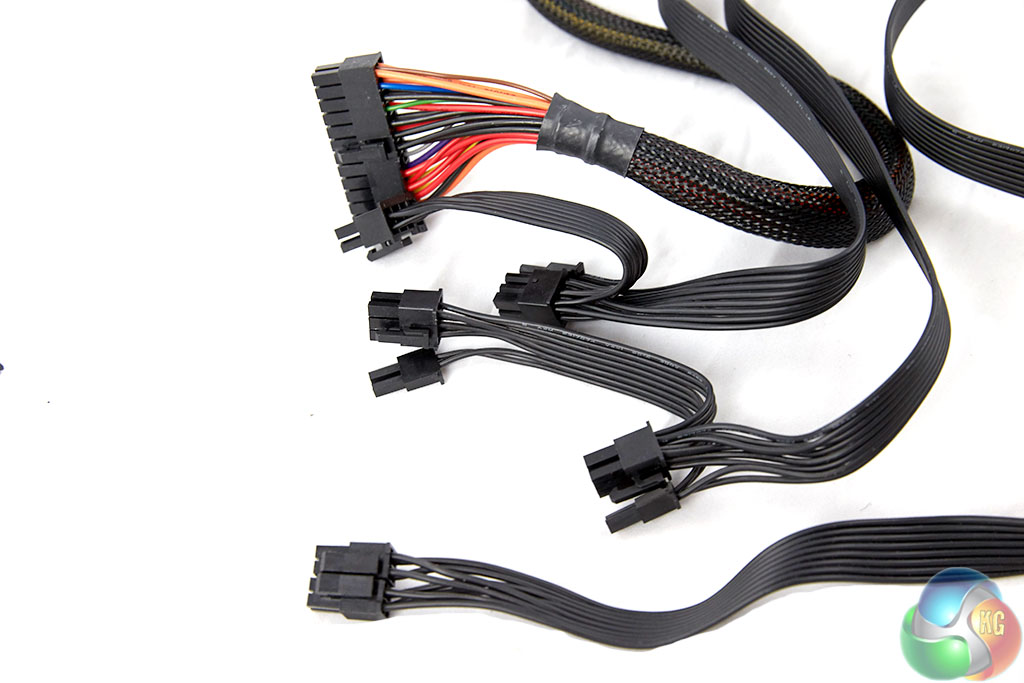
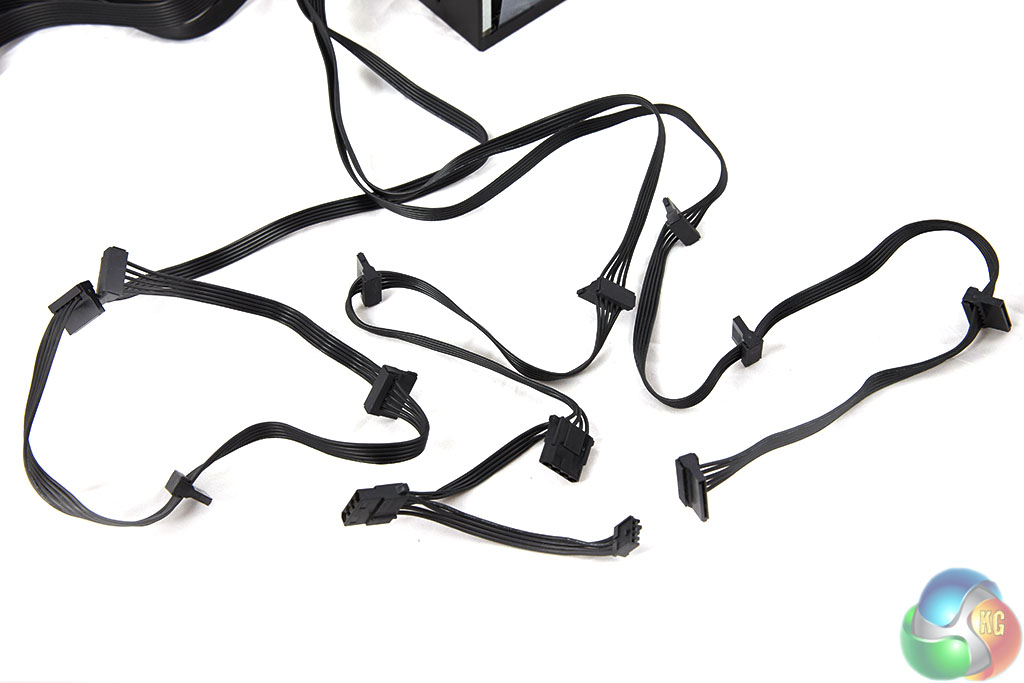
The quality of the cabling is very good – they are all flat ribbon style, except the main ATX cable which is sleeved.
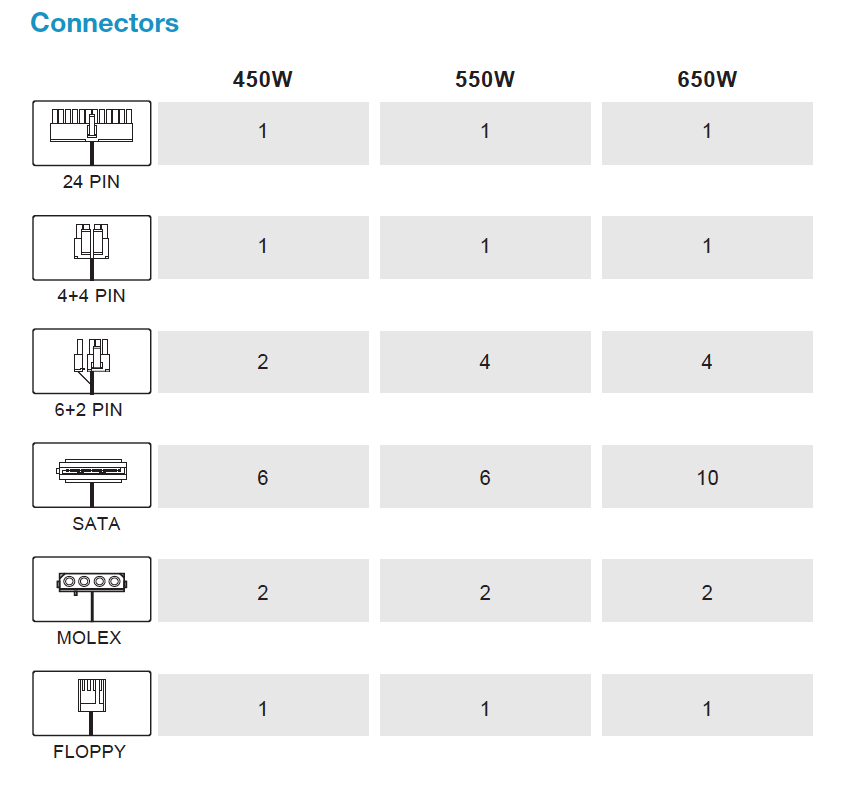
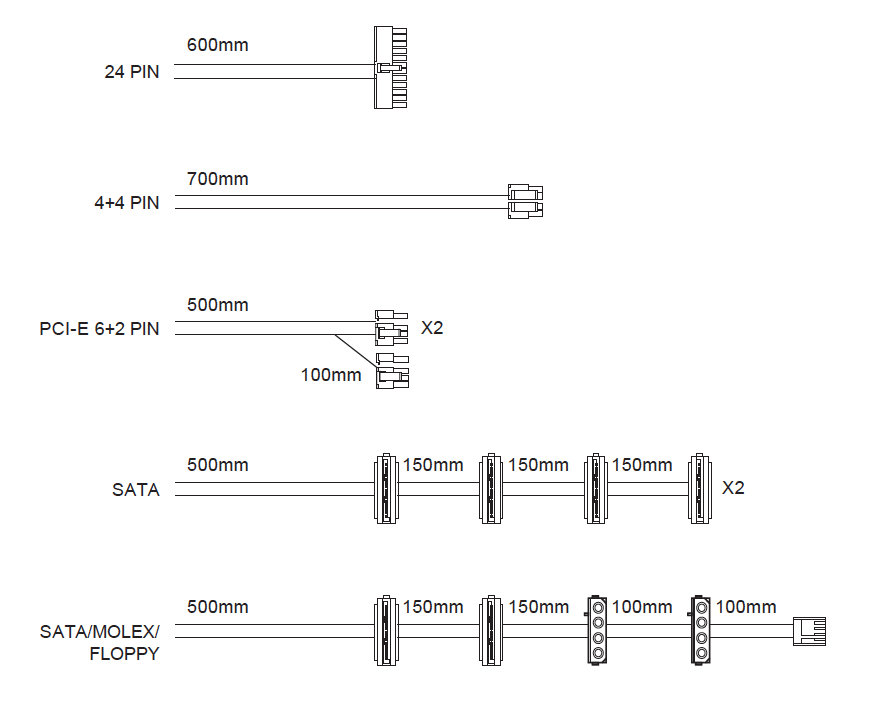
Above, a breakdown of the cable configuration, as well as the lengths. The X 650 has support for single and dual graphics cards configurations with 4 x PCIE 6+2 pin cables.
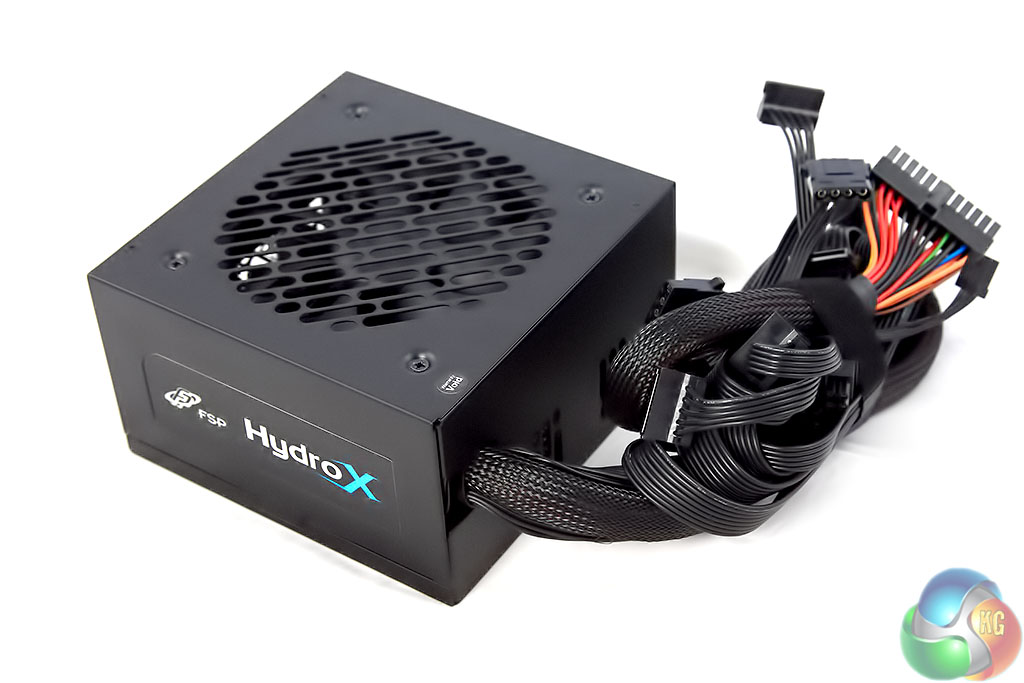
The FSP Hydro X 650 is an attractive looking power supply that we feel looks very like a Corsair branded unit due to the simple two tone colour scheme on the lettering. The power supply measures 150 x 150 x 86 mm.
The finish quality is quite high, although as I mentioned on the previous page of this review, our sample had some marks on the side panel out of the box, due to the chassis rubbing against cardboard during transit. Simply wrapping the unit in bubble wrap or encasing it in Styrofoam would have stopped this from happening. A thin, clear plastic bag doesn't really offer much protection.
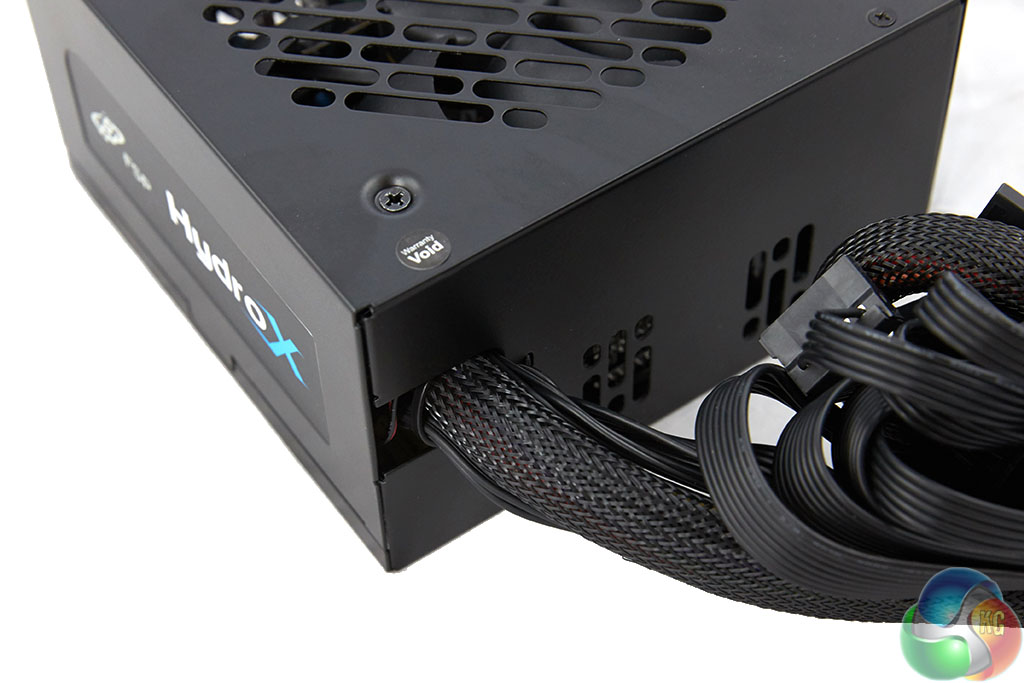
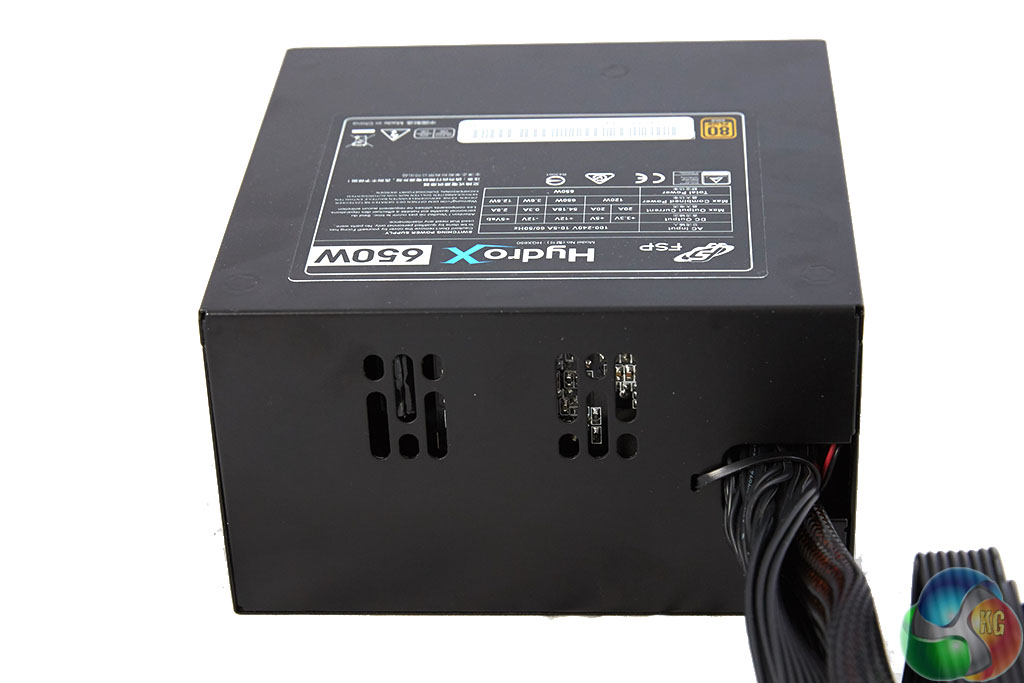
This is a non modular design, so all the cables enter the chassis on one side. There are some small grills on this panel to aid airflow.

One side of the power supply is vented, with a power connector and switch set to the side.
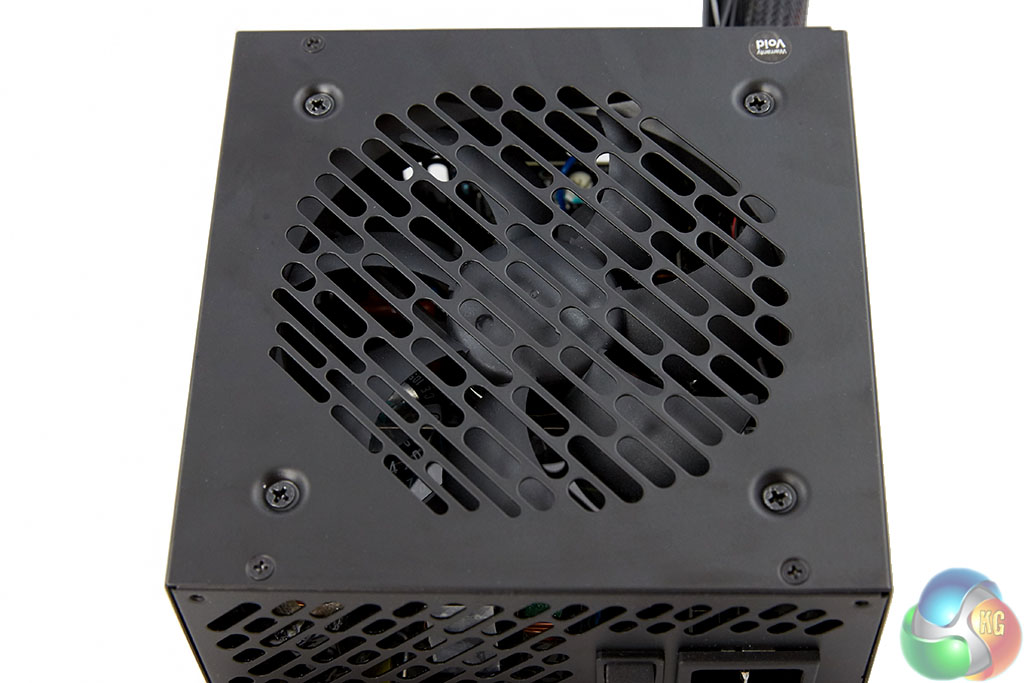
A large fan can be seen behind a metal grill, shown above.
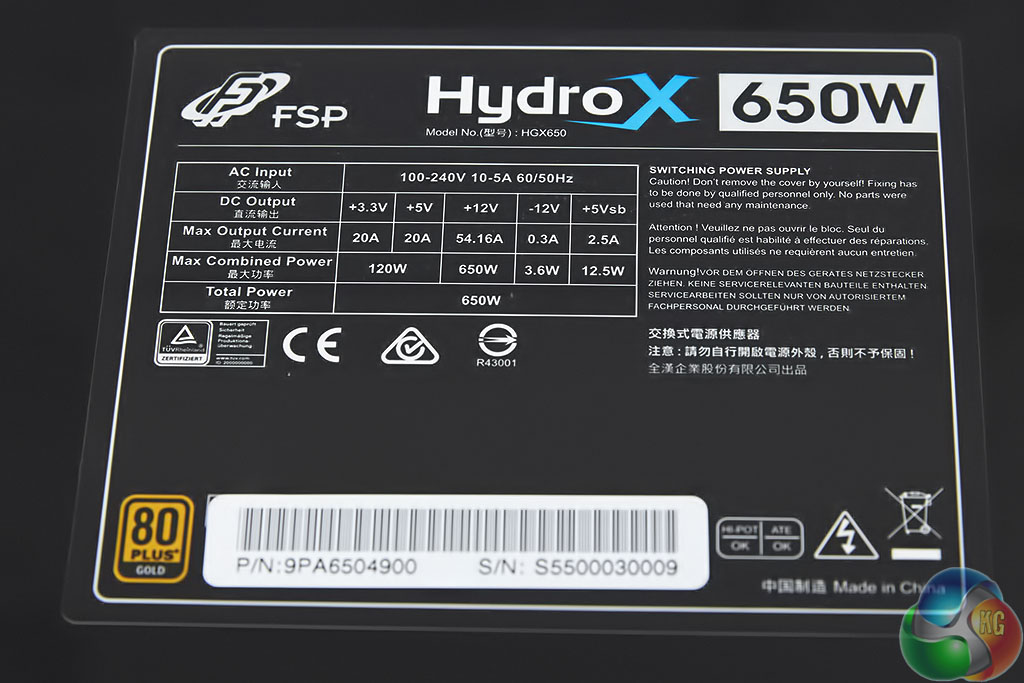
| FSP Hydro X 650 Power Supply | |||||
|
DC Output
|
+3.3V
|
+5V
|
+12V |
-12V
|
+5Vsb
|
|
Max Output
|
20A
|
20A
|
54.16A |
0.3A
|
2.5A
|
| Total Power | 120W | 650W | 3.6W | 12.5W | |
| 650W | |||||
Power distribution is strong with 54 amps available from the +12V rail.
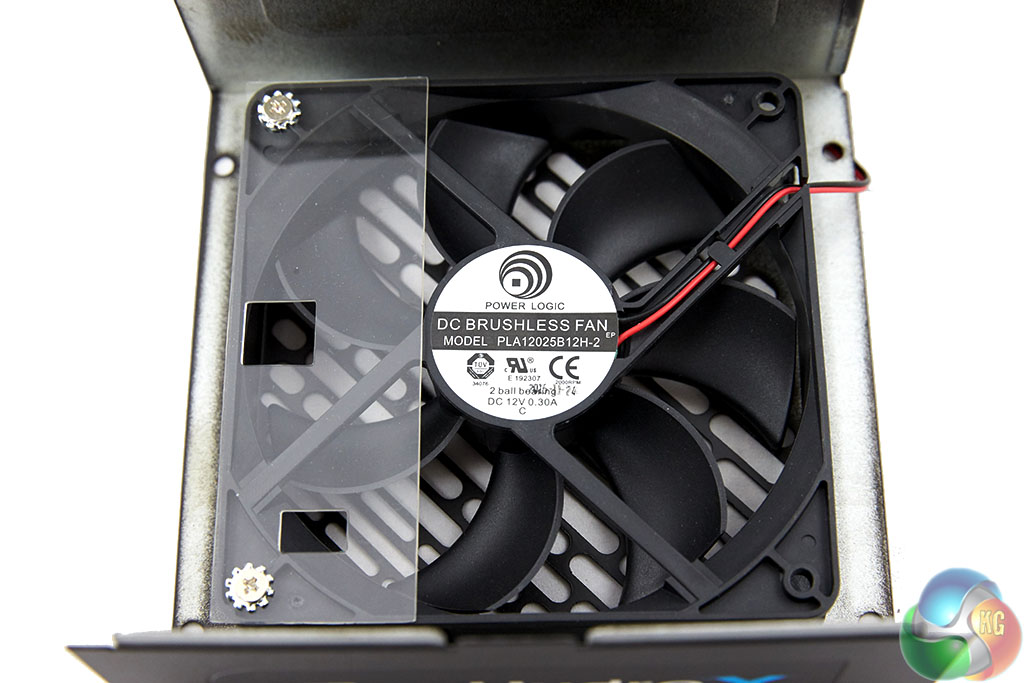
FSP are using a 120mm Power Logic fan model number PLA12025B12H-2. This is a high grade double ball bearing fan.
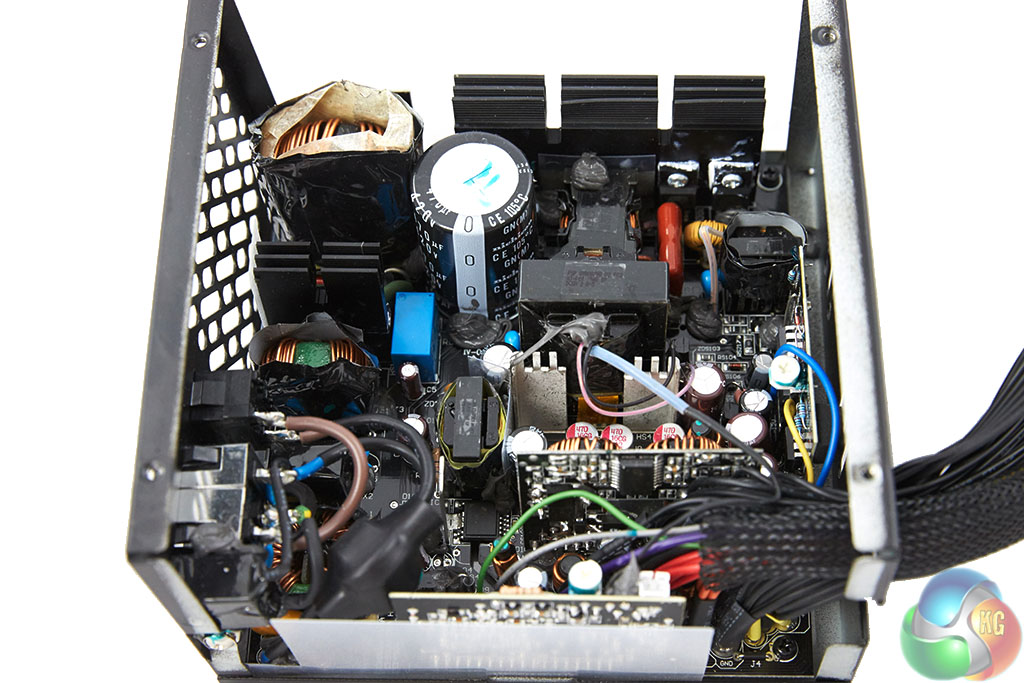
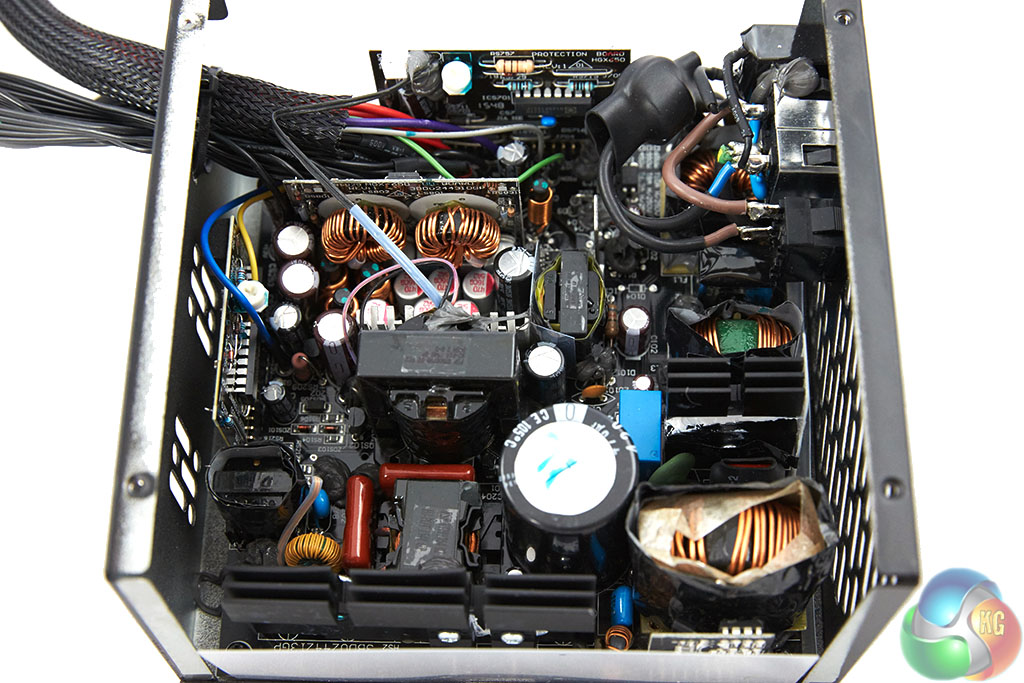
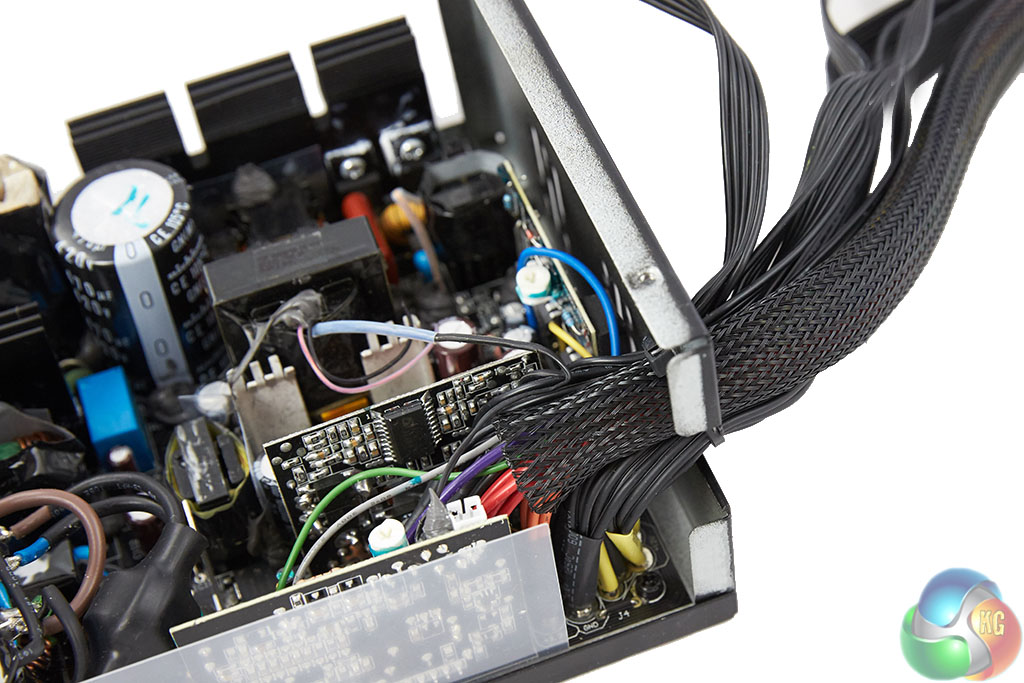
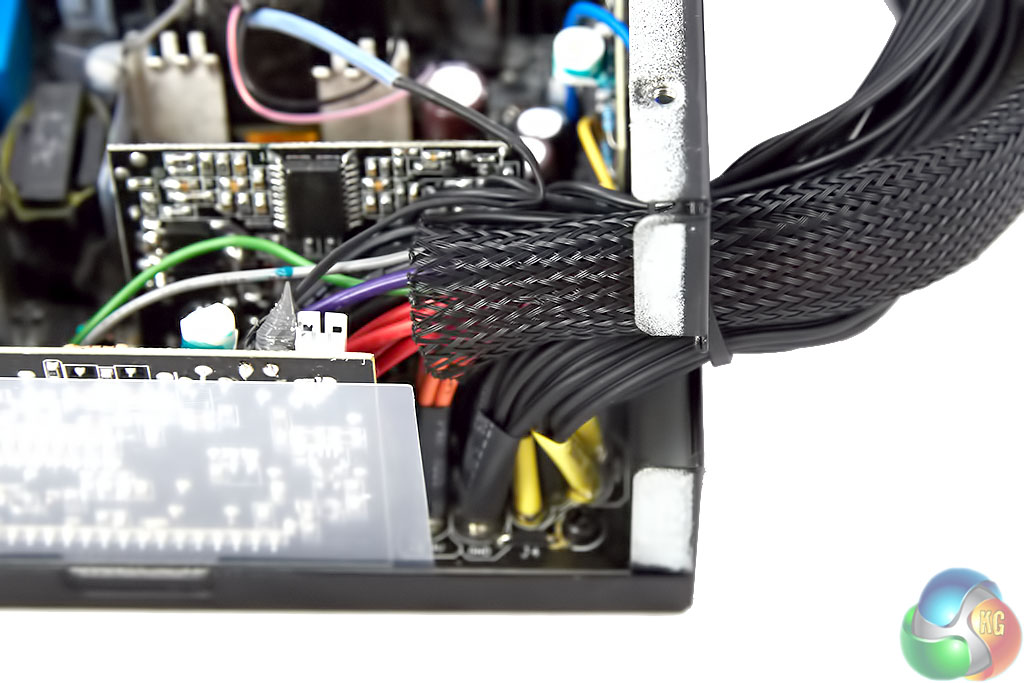
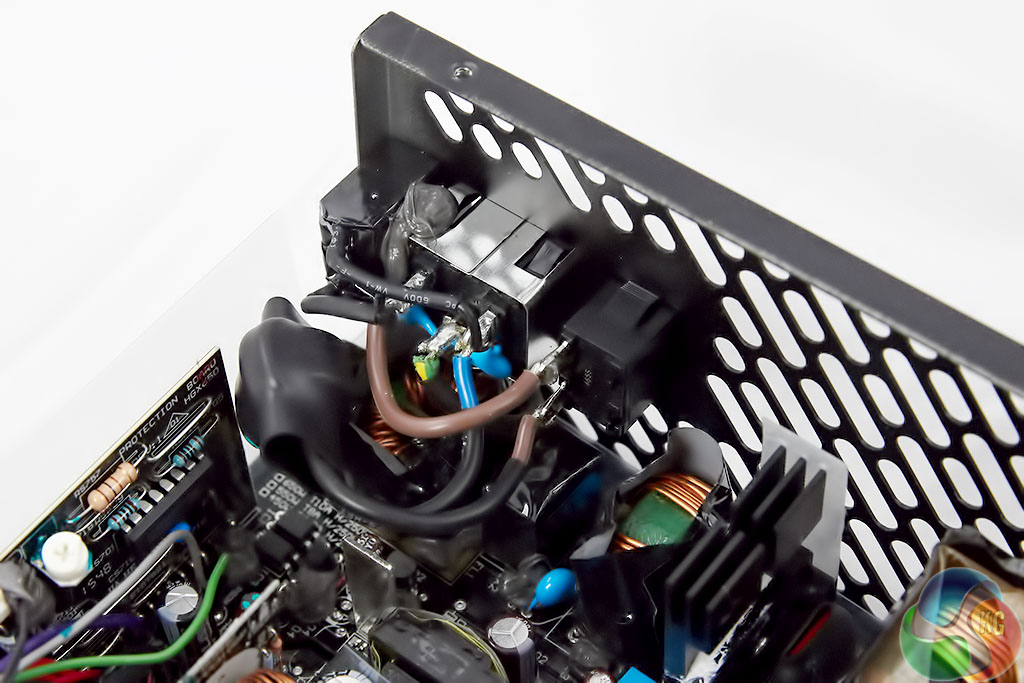
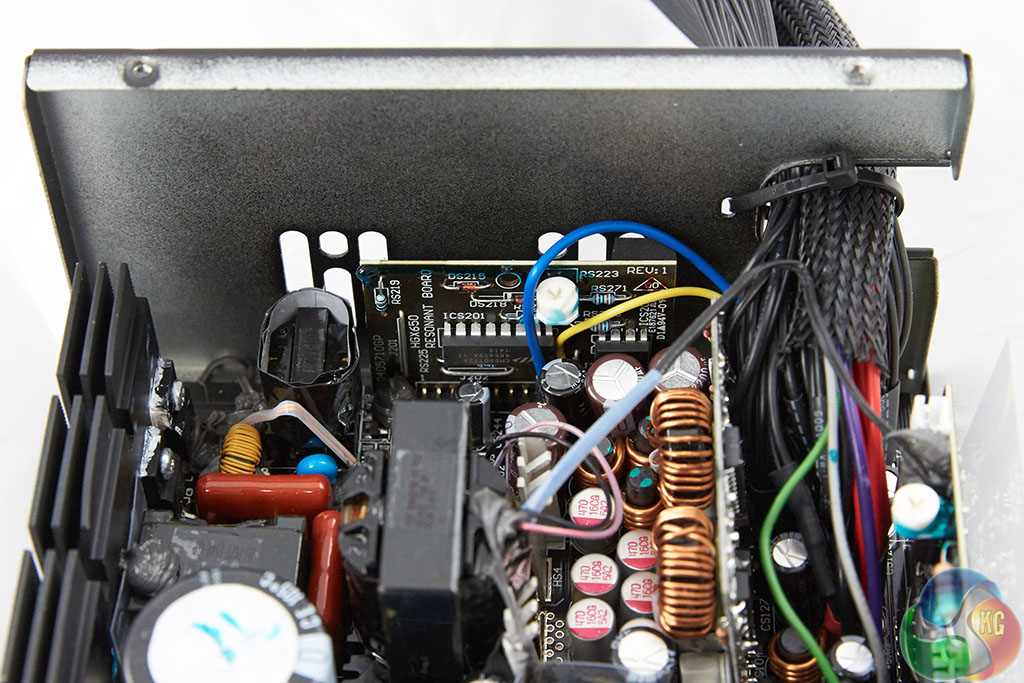
The overall build is very clean and soldering quality is high throughout. The filtering stage is comprised of 4x Y caps, 1x X cap, 1x MOV and 2 CM chokes. The topology on the primary side is a Half Bridge with LLC Resonant Converter and the secondary side is Synchronous Rectification with DC-DC Converters.
Two small heatsinks deal with keeping the single bridge rectifier and primary FET's cool.
Minor rails are regulated by two voltage regulators which are incorporated onto the same PCB.
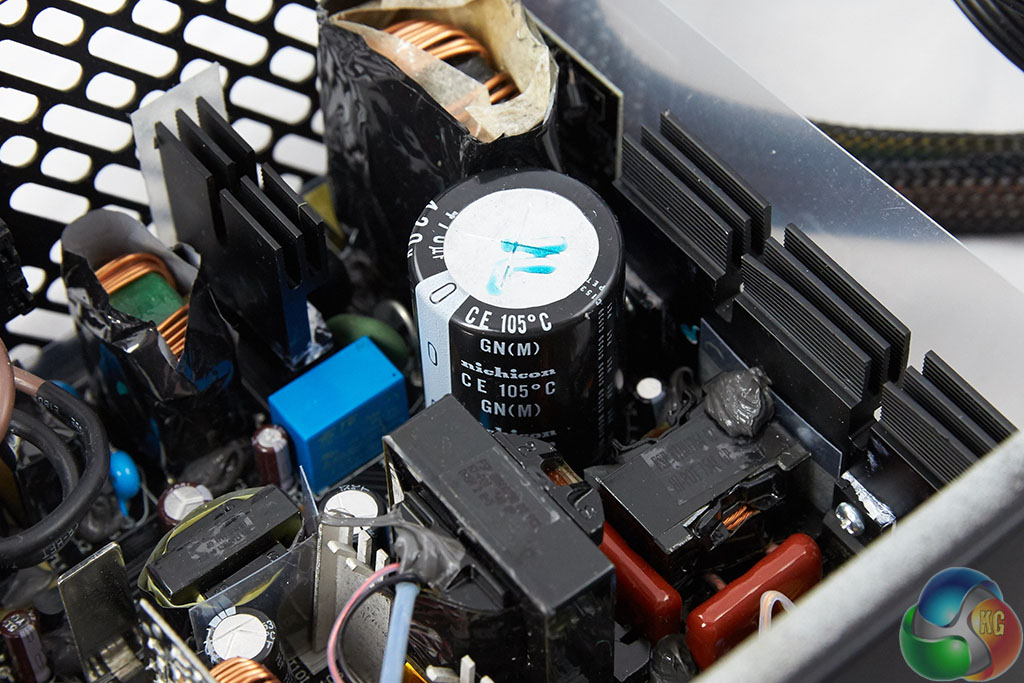
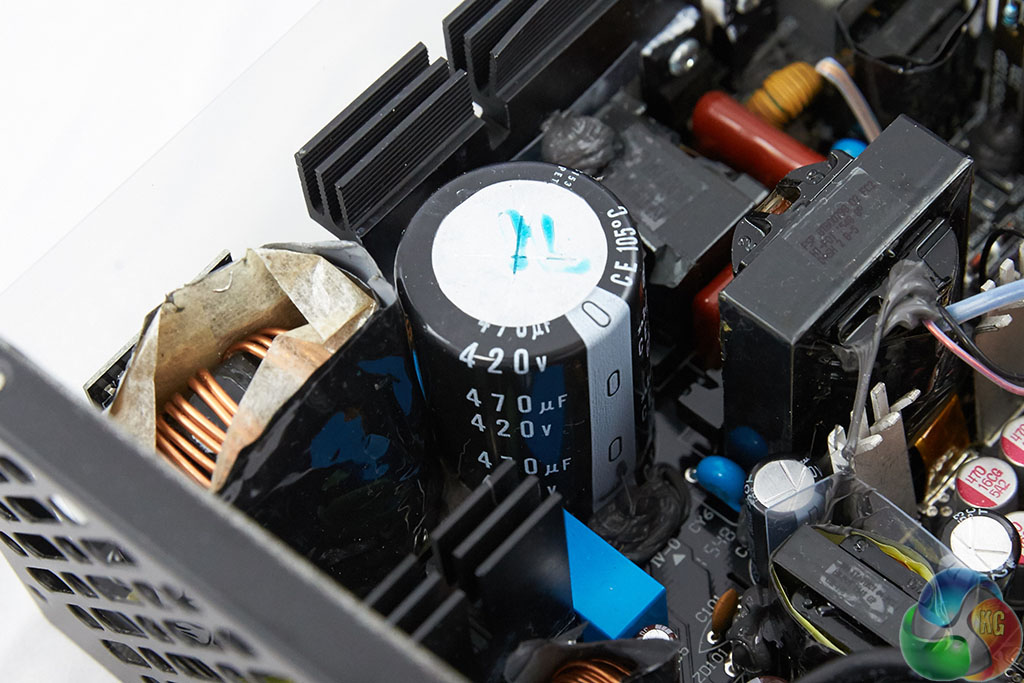
FSP are using a high grade Japanese, Nichicon branded 105c Capacitor in the primary stage – rated 420v 470uF. I did notice FSP are also using lower grade polymer capacitors by Teapo which isn't such a big deal in this case, as polymer caps don't contain liquid material and are less likely to fail.
Correctly testing power supplies is a complex procedure and KitGuru have configured a test bench which can deliver up to a 2,000 watt DC load. Due to public requests we have changed our temperature settings recently – previously we rated with ambient temperatures at 25C, we have increased ambient temperatures by 10c (to 35c) in our environment to greater reflect warmer internal chassis conditions.
We use combinations of the following hardware:
• SunMoon SM-268
• CSI3710A Programmable DC load (+3.3V and +5V outputs)
• CSI3711A Programmable DC load (+12V1, +12V2, +12V3, and +12V4)
• Extech Power Analyzer
• Extech MultiMaster MM570 digital multimeter
• SkyTronic DSL 2 Digital Sound Level Meter (6-130dBa)
• Digital oscilloscope (20M S/s with 12 Bit ADC)
• Variable Autotransformer, 1.4 KVA
|
DC Output Load Regulation
|
||||||||||
|
Combined DC Load |
+3.3V
|
+5V
|
+12V
|
+5VSB
|
-12V | |||||
|
A
|
V
|
A
|
V
|
A
|
V
|
A
|
V
|
A | V | |
|
152W
|
2.05
|
3.34
|
2.04
|
5.03
|
10.12
|
12.16
|
0.50
|
5.01
|
0.20
|
-12.03
|
|
270W
|
3.03
|
3.34
|
3.05
|
5.03
|
19.14
|
12.13
|
0.50
|
5.01
|
0.30
|
-12.03
|
|
400W
|
4.05
|
3.34
|
5.02
|
5.02
|
29.18
|
12.11 |
1.00
|
5.00
|
0.30
|
-12.04
|
| 523W |
6.09
|
3.33
|
7.04
|
5.01
|
38.18
|
12.09
|
1.50
|
4.99 |
0.30
|
-12.04
|
|
650W
|
8.00
|
3.32
|
9.00
|
5.00
|
48.00
|
12.06
|
2.50
|
4.99
|
0.30
|
-12.05
|
Load regulation is excellent across the output range.
| FSP Hydro X 650 | Maximum Load |
| 722W |
We managed to get the PSU to deliver 722 watts before it would shut down, delivering around 72 watts more than the rated specifications.
Next we want to try Cross Loading. This basically means loads which are not balanced. If a PC for instance needs 500W on the +12V outputs but something like 30W via the combined 3.3V and +5V outputs then the voltage regulation can fluctuate badly.
| Cross Load Testing | +3.3V | +5V | +12V | -12V | +5VSB | |||||
| A | V | A | V | A | V | A | V | A | V | |
| 590W | 1.0 | 3.33 | 1.0 | 5.03 | 48.0 | 12.05 | 0.2 | -12.02 | 0.50 | 5.02 |
| 145W | 12.0 | 3.31 | 15.0 | 4.98 | 2.0 | 12.14 | 0.2 | -12.01 | 0.50 | 5.00 |
The unit passed our cross load test without any problems.
We then used an oscilloscope to measure AC ripple and noise present on the DC outputs. We set the oscilloscope time base to check for AC ripple at both high and low ends of the spectrum. ATX12V V2.2 specification for DC output ripple and noise is defined in the ATX 12V power supply design guide.
|
ATX12V Ver 2.2 Noise/Ripple Tolerance
|
|
|
Output
|
Ripple (mV p-p)
|
|
+3.3V
|
50
|
|
+5V
|
50
|
|
+12V1
|
120
|
|
+12V2
|
120
|
|
-12V
|
120
|
|
+5VSB
|
50
|
Obviously when measuring AC noise and ripple on the DC outputs the cleaner (less recorded) means we have a better end result. We measured this AC signal amplitude to see how closely the unit complied with the ATX standard.
| AC Ripple (mV p-p) | ||||
| DC Load | +3.3V | +5V | +12V | 5VSB |
| 152W | 5 | 10 | 20 | 10 |
| 270W | 10 | 10 | 20 | 15 |
| 400W | 15 | 15 | 25 | 15 |
| 523W | 15 | 15 | 35 | 20 |
| 650W | 20 | 20 | 40 | 25 |
Ripple suppression falls within industry rated parameters although it is far from the best we have seen from an 80 Plus Gold rated power supply in recent months.
|
Efficiency (%)
|
|
|
152W
|
89.34
|
|
270W
|
91.87
|
|
400W
|
91.98
|
|
523W
|
90.75
|
|
650W
|
89.19
|
Efficiency is very good, hitting a peak around 92% – and dropping to around 89% at 100% load.
We take the issue of noise very seriously at KitGuru and this is why we have built a special home brew system as a reference point when we test noise levels of various components. Why do this? Well this means we can eliminate secondary noise pollution in the test room and concentrate on components we are testing. It also brings us slightly closer to industry standards, such as DIN 45635.
Today to test the Power Supply we have taken it into our acoustics room environment and have set our SkyTronic DSL 2 Digital Sound Level Meter (6-130dBa) one meter away from the unit. We have no other fans running so we can effectively measure just the noise from the unit itself.
As this can be a little confusing for people, here are various dBa ratings in with real world situations to help describe the various levels.
KitGuru noise guide
10dBA – Normal Breathing/Rustling Leaves
20-25dBA – Whisper
30dBA – High Quality Computer fan
40dBA – A Bubbling Brook, or a Refrigerator
50dBA – Normal Conversation
60dBA – Laughter
70dBA – Vacuum Cleaner or Hairdryer
80dBA – City Traffic or a Garbage Disposal
90dBA – Motorcycle or Lawnmower
100dBA – MP3 Player at maximum output
110dBA – Orchestra
120dBA – Front row rock concert/Jet Engine
130dBA – Threshold of Pain
140dBA – Military Jet takeoff/Gunshot (close range)
160dBA – Instant Perforation of eardrum
|
Noise (dBA)
|
|
|
152W
|
<28.0
|
|
270W
|
<28.0
|
|
400W
|
<28.0
|
|
523W
|
30.6
|
| 650W | 33.1 |
This is a quiet power supply and will likely be drown out by case fans. At maximum load noise levels hit 33 dBa, but the pitch of the fan is quite loud so it is never intrusive.
|
Temperature (c)
|
||
|
Intake
|
Exhaust
|
|
|
152W
|
36
|
38
|
|
270W
|
39
|
42
|
|
400W
|
42
|
47
|
|
523W
|
43
|
53
|
|
650W
|
45
|
58
|
The large fan holds a good ambient curve throughout the range of load.
|
Maximum load
|
Efficiency
|
|
722W
|
88.7
|
For those interested, we measured efficiency when stressing the unit to breaking point. 88.7 percent efficiency at 722W … hardly practical, but interesting regardless.
The FSP Hydro X 650 is a solid performing unit set to target a wide audience of enthusiast user. We have not received a UK price yet, but FSP told me before launch that the price in Europe will be 99.99 Euros – this works out at around £80-£85.
I rate the FSP Hydro X 650 supply highly, it is a modern, well thought out design which delivers excellent load regulation and low noise levels to suit a variety of system builds. Ripple suppression may fall short of market leaders in 2016, but all rails are still well within industry rated parameters.
It is also reassuring to see that FSP have opted to use high grade Japanese 105c rated Nichicon capacitors in the primary stage, sure to deliver stability and long life.
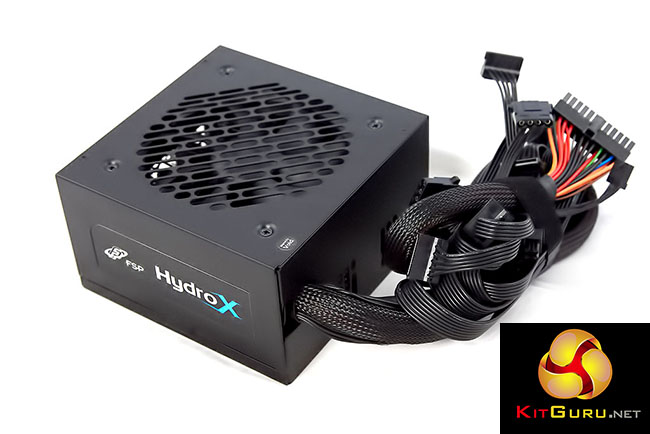
The lack of modular cabling is somewhat vexing. I appreciate the more expensive FSP Hydro G series is the pure modular design, but this year I would expect FSP to have tried to opt for a semi modular design. Enthusiast users really don't want to be dealing with a bunch of cables they perhaps will never need, I know I wouldn't if I was building a new system myself.
All in all, the FSP Hydro X 650 is a welcome addition to the market and offers an alternative to UK market leaders Seasonic, Corsair, be quiet! and Superflower. Hopefully FSP can release the Hydro X at competitive price points in Europe and the UK because right now their higher grade, fully modular Hydro G 750W looks to be only £15-20 more expensive than the FSP Hydro X 650 reviewed today (HERE).
Pros:
- technically very solid.
- quiet in use.
- quality cables.
- good looking supply.
Cons:
- poor packaging.
- non modular design.
- needs to be a little less expensive.
Kitguru says: The FSP Hydro X 650 Power Supply delivers quality power while emitting very little noise, even under load. Recommended, as long as you don't mind dealing with the non modular design.