KitGuru KitGuru.net – Tech News | Hardware News | Hardware Reviews | IOS | Mobile | Gaming | Graphics Cards


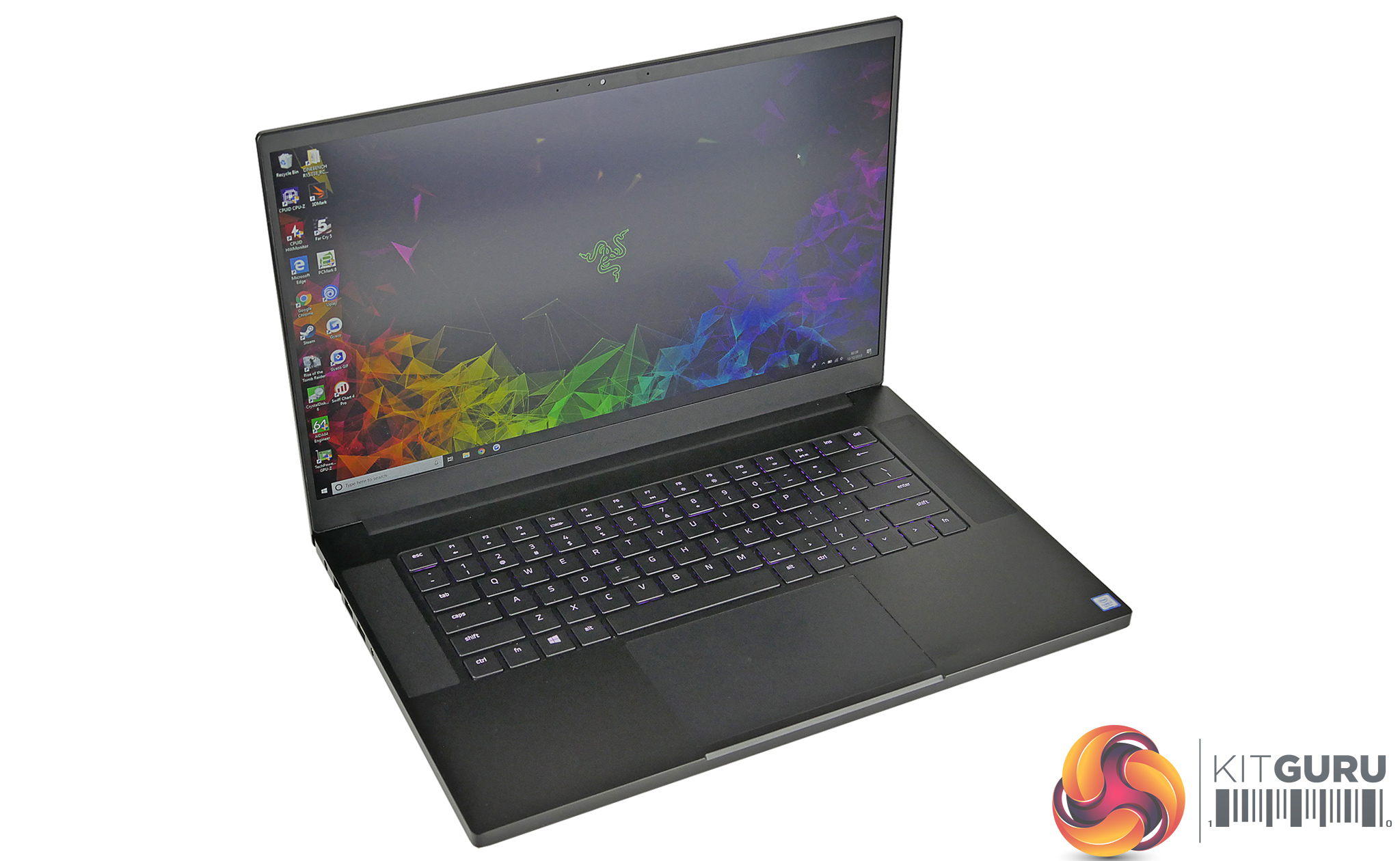
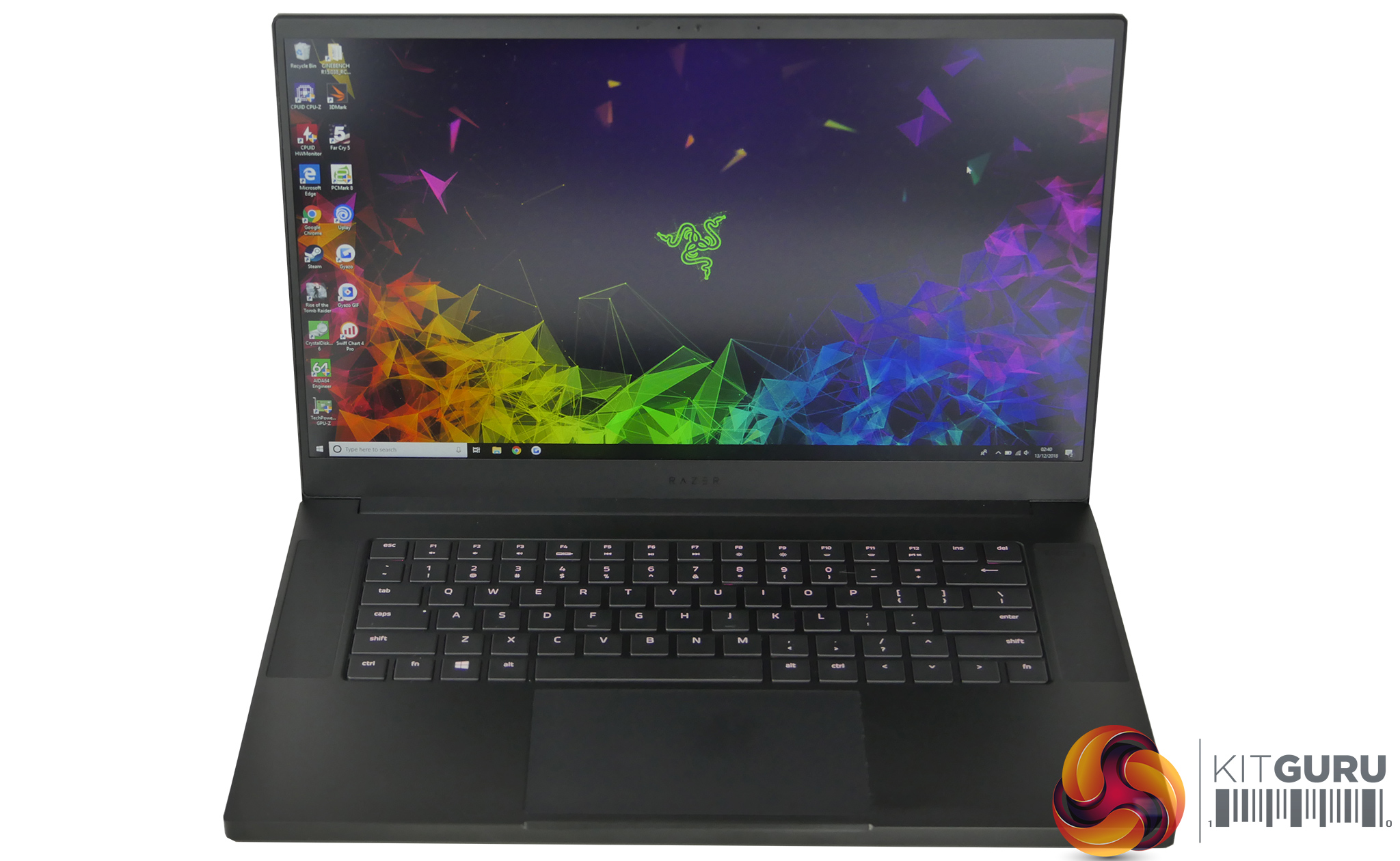
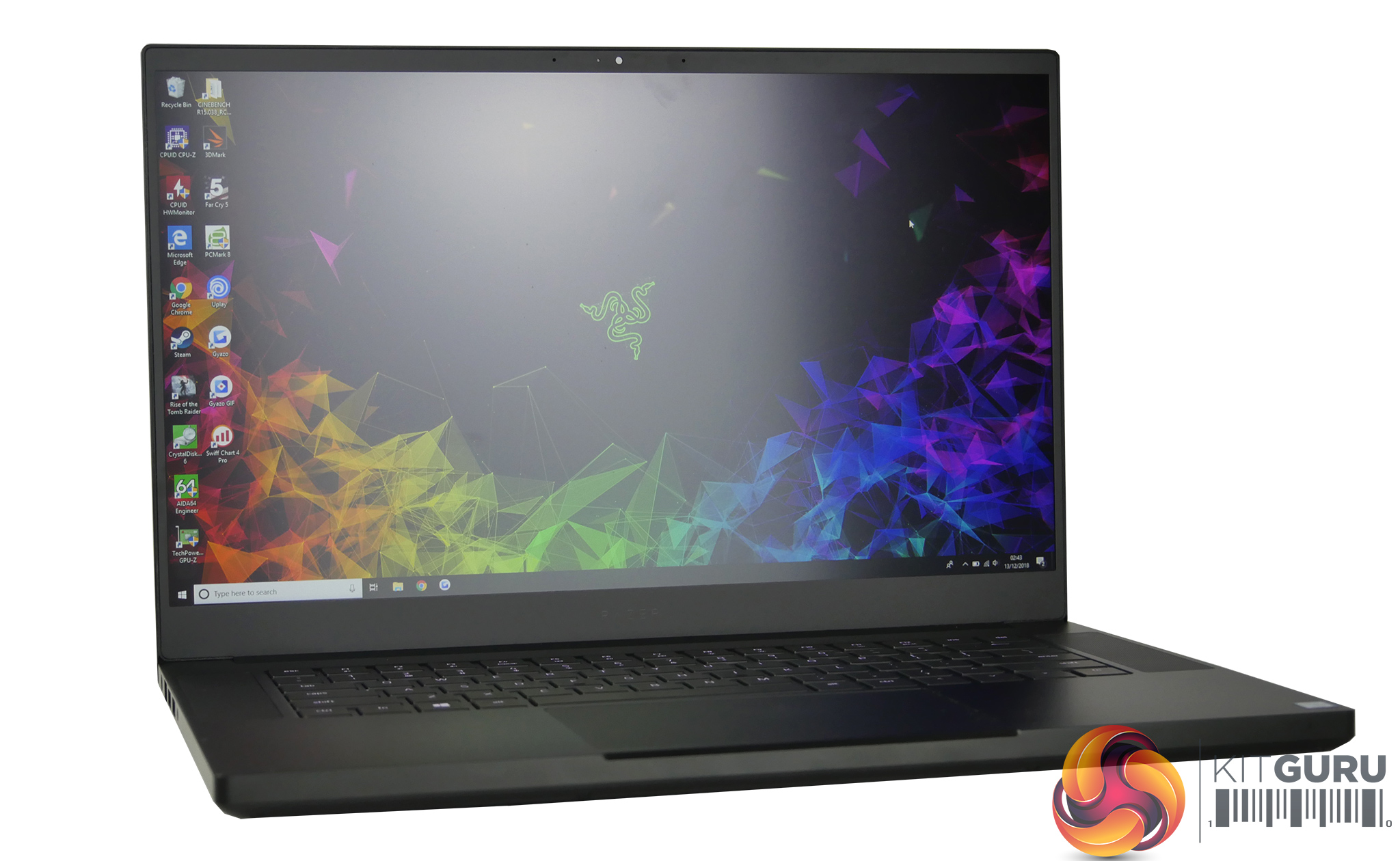
We took a look at the recently updated Razer Blade 15 Advanced model back in October and in this review we assess the newest Base model which is Razer's way of introducing some of the Razer Blade's features to a more budget conscious audience. It still doesn't come cheap with a RRP of £1,480 for the 128GB model, but it does shave off around £250 from the starting price of the Advanced model. But what has been sacrificed and is this a laptop a worthy member of the well-regarded Razer Blade line up?
Gallery:
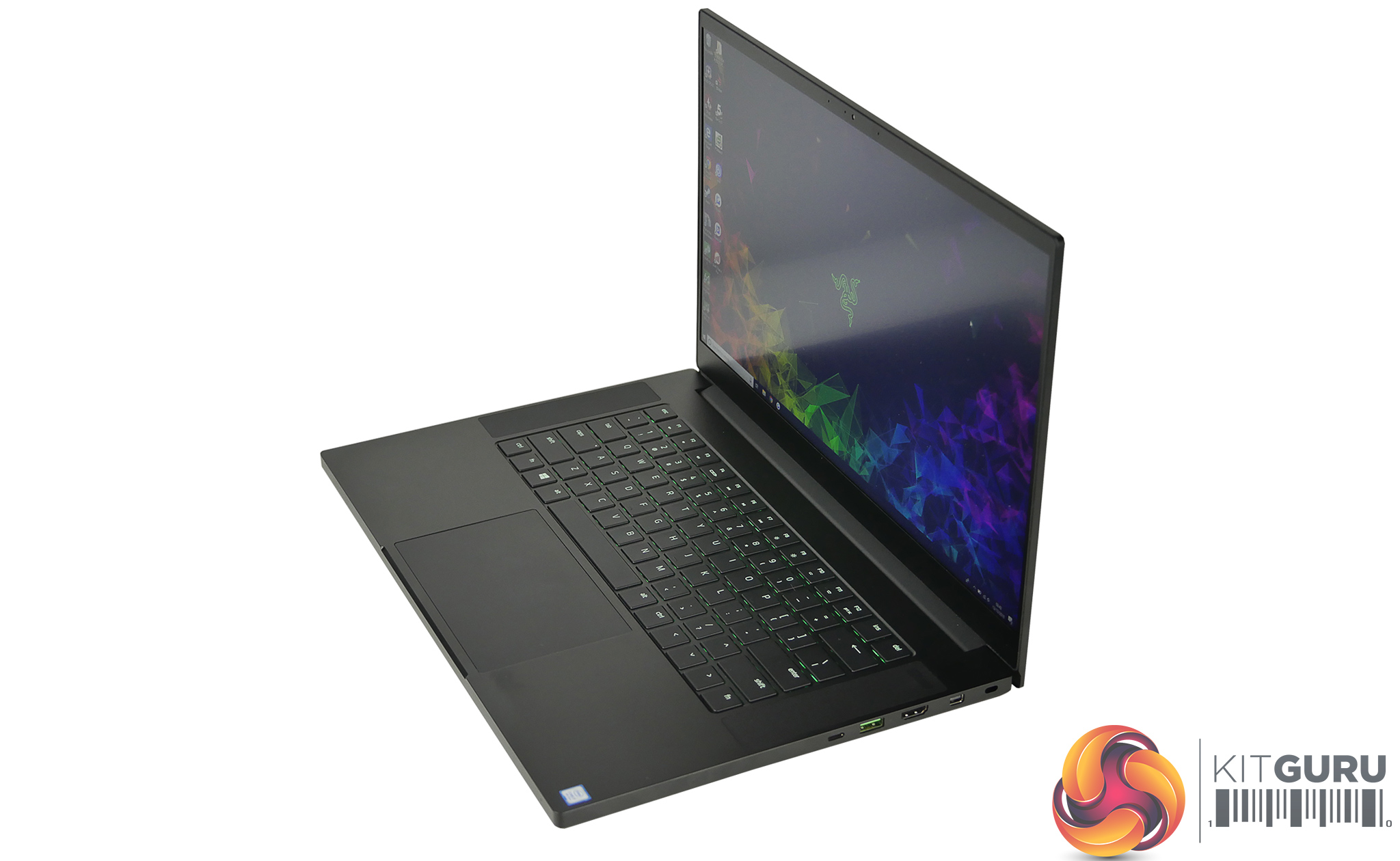
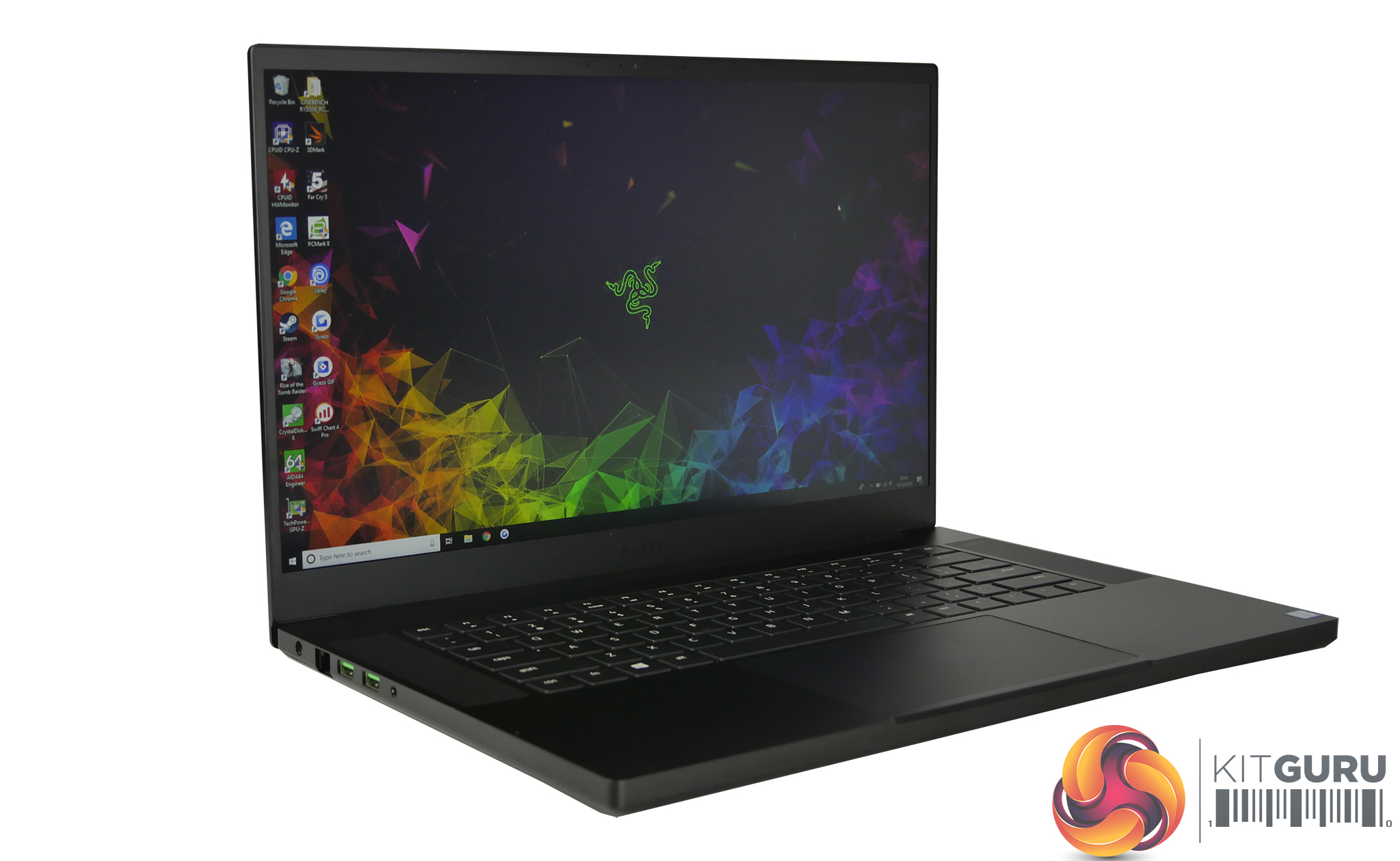
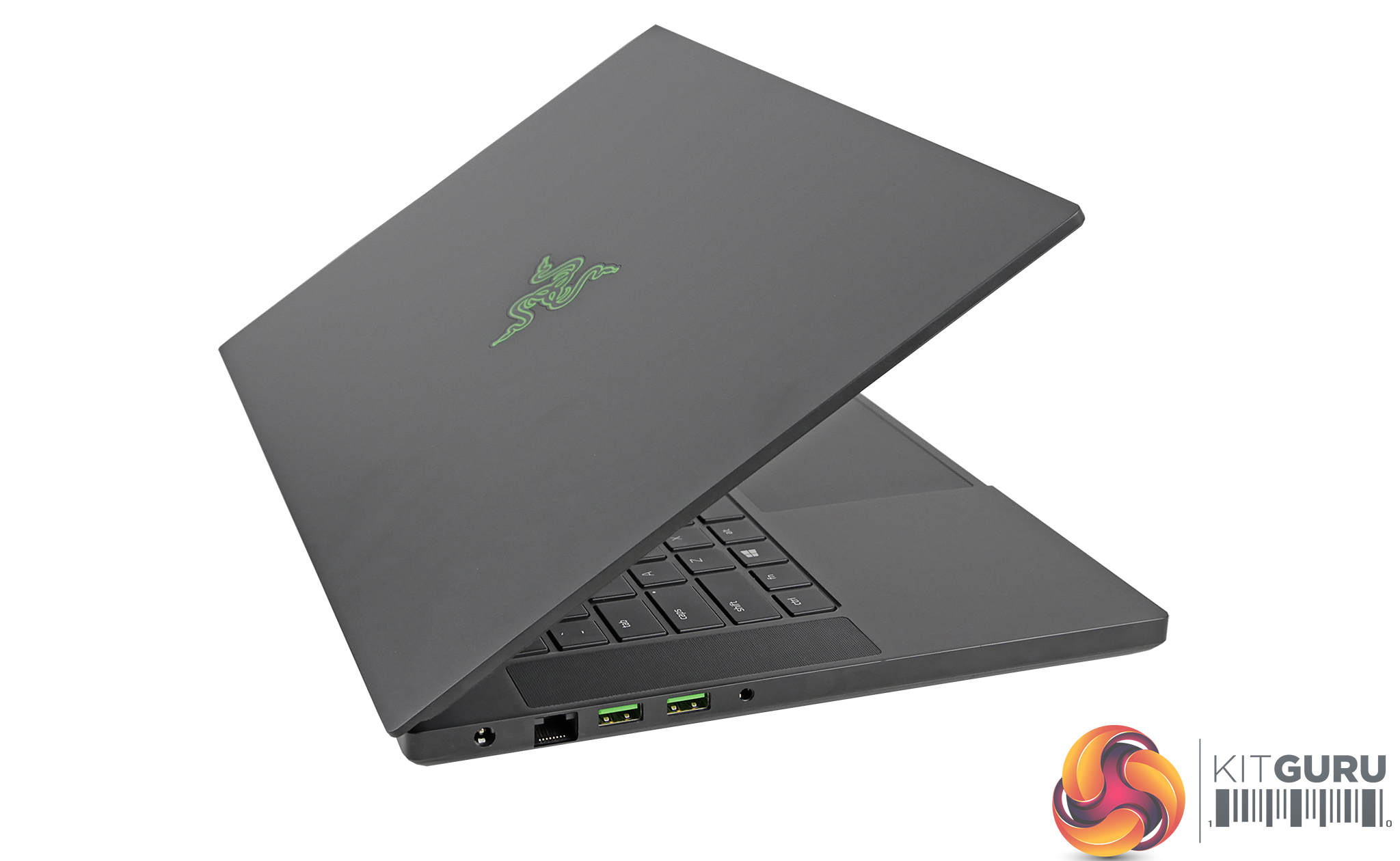
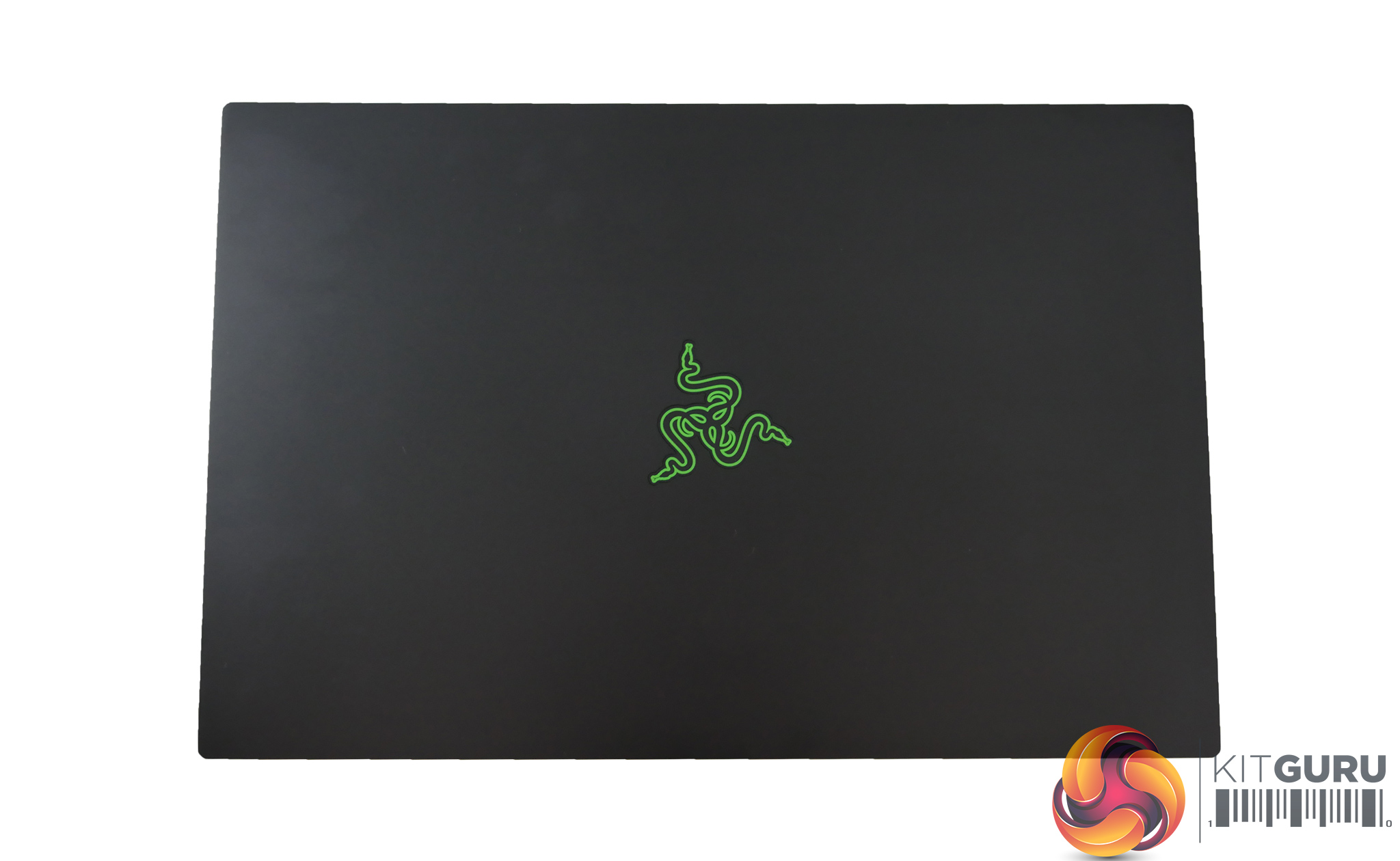
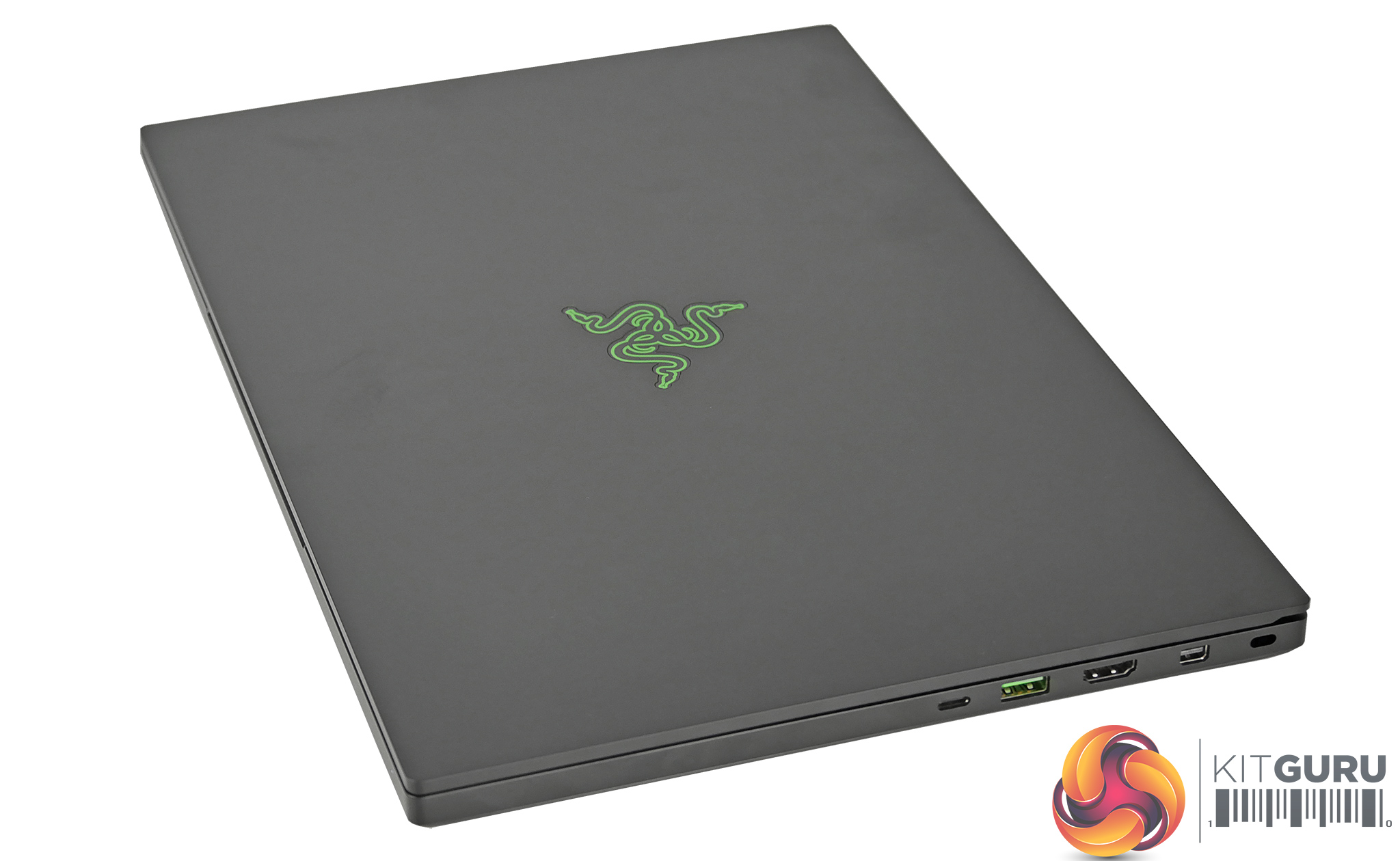
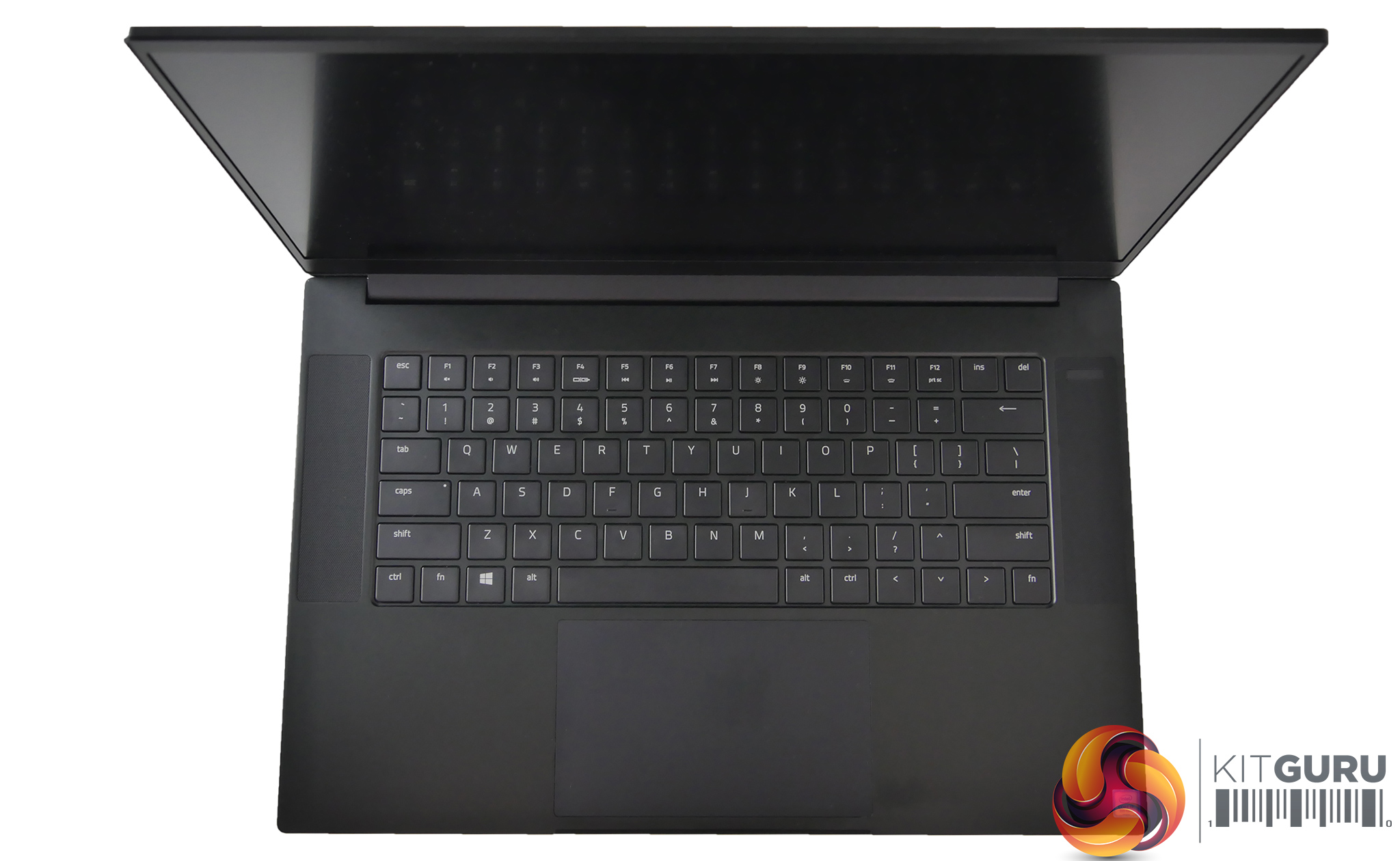
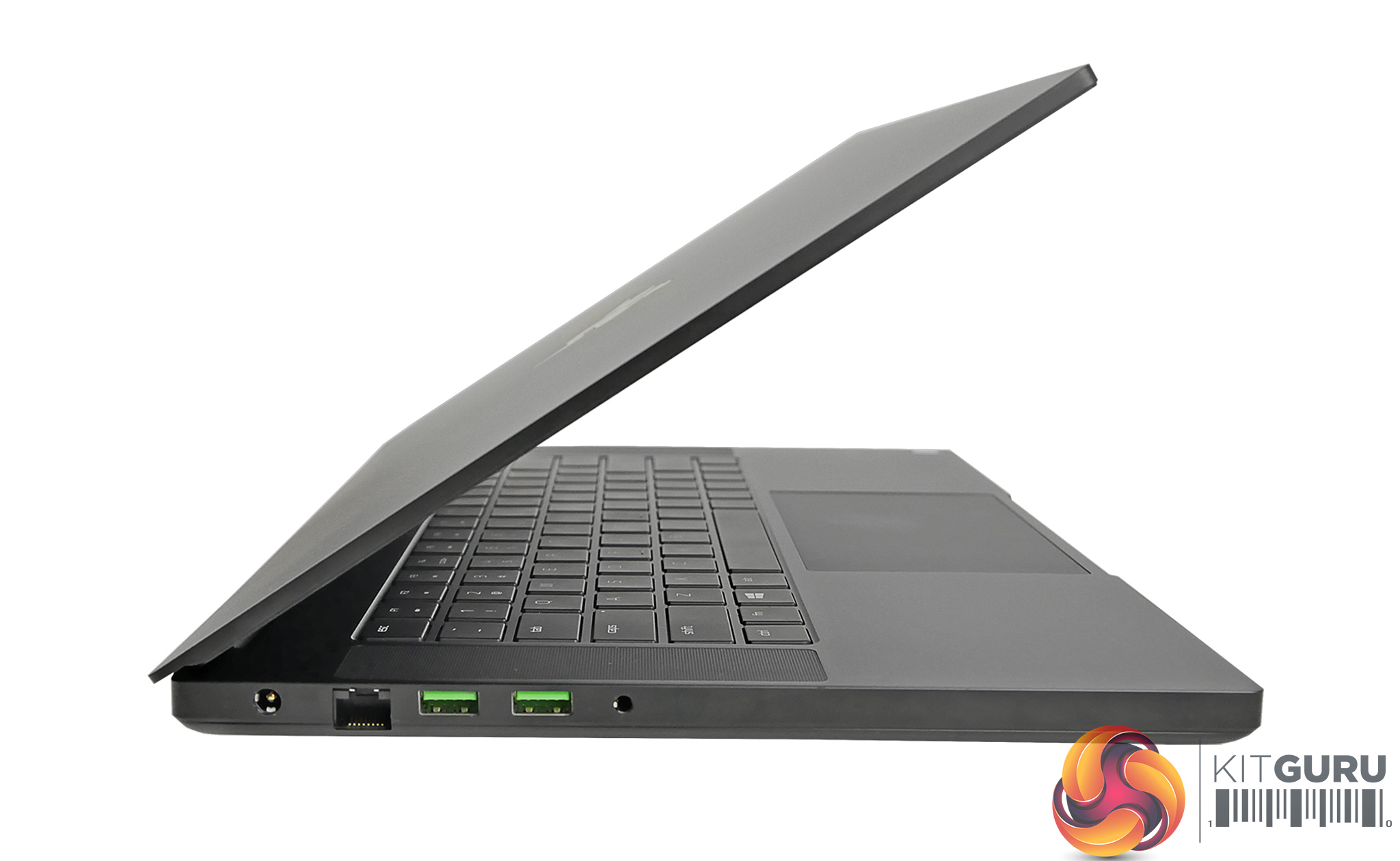
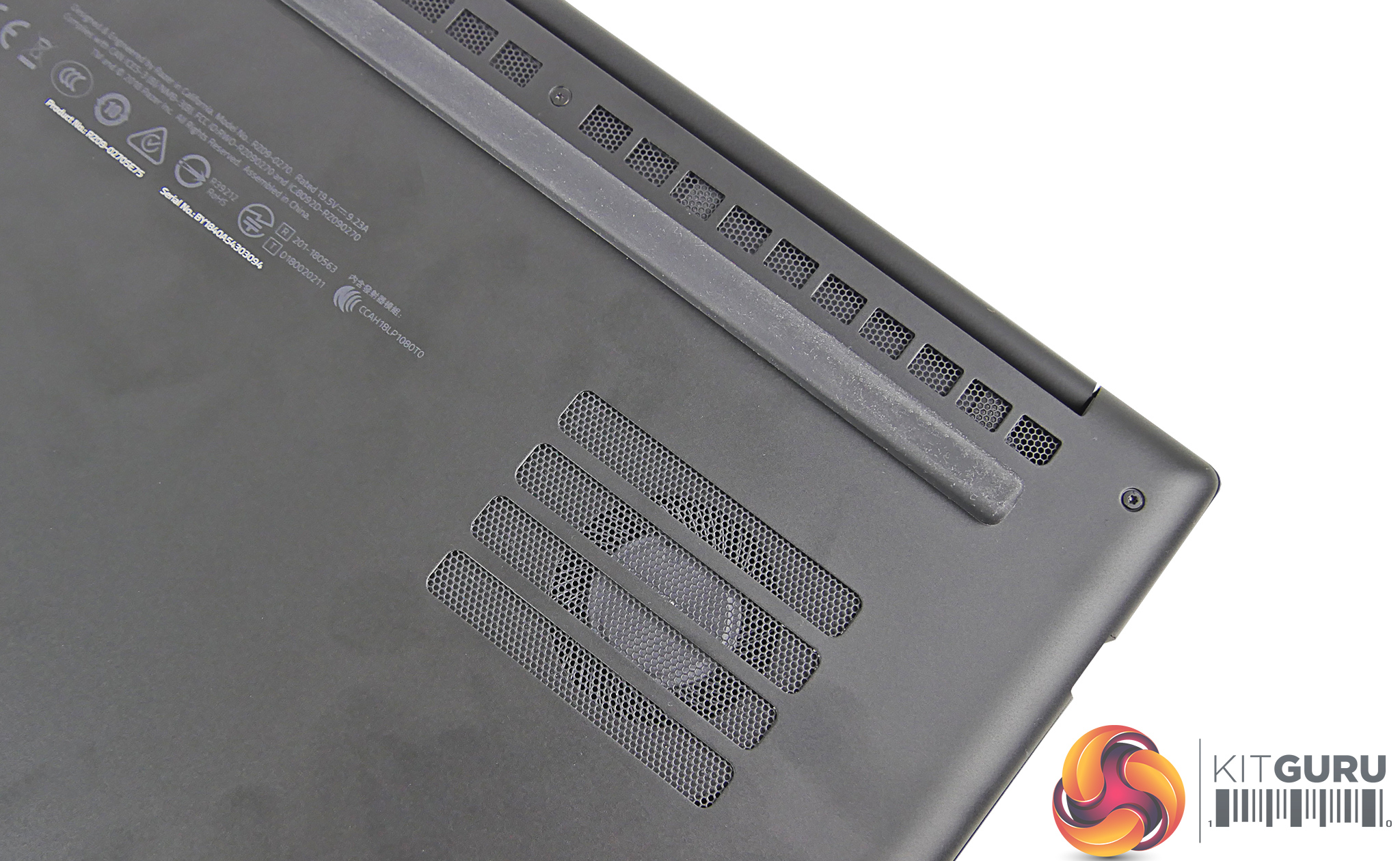
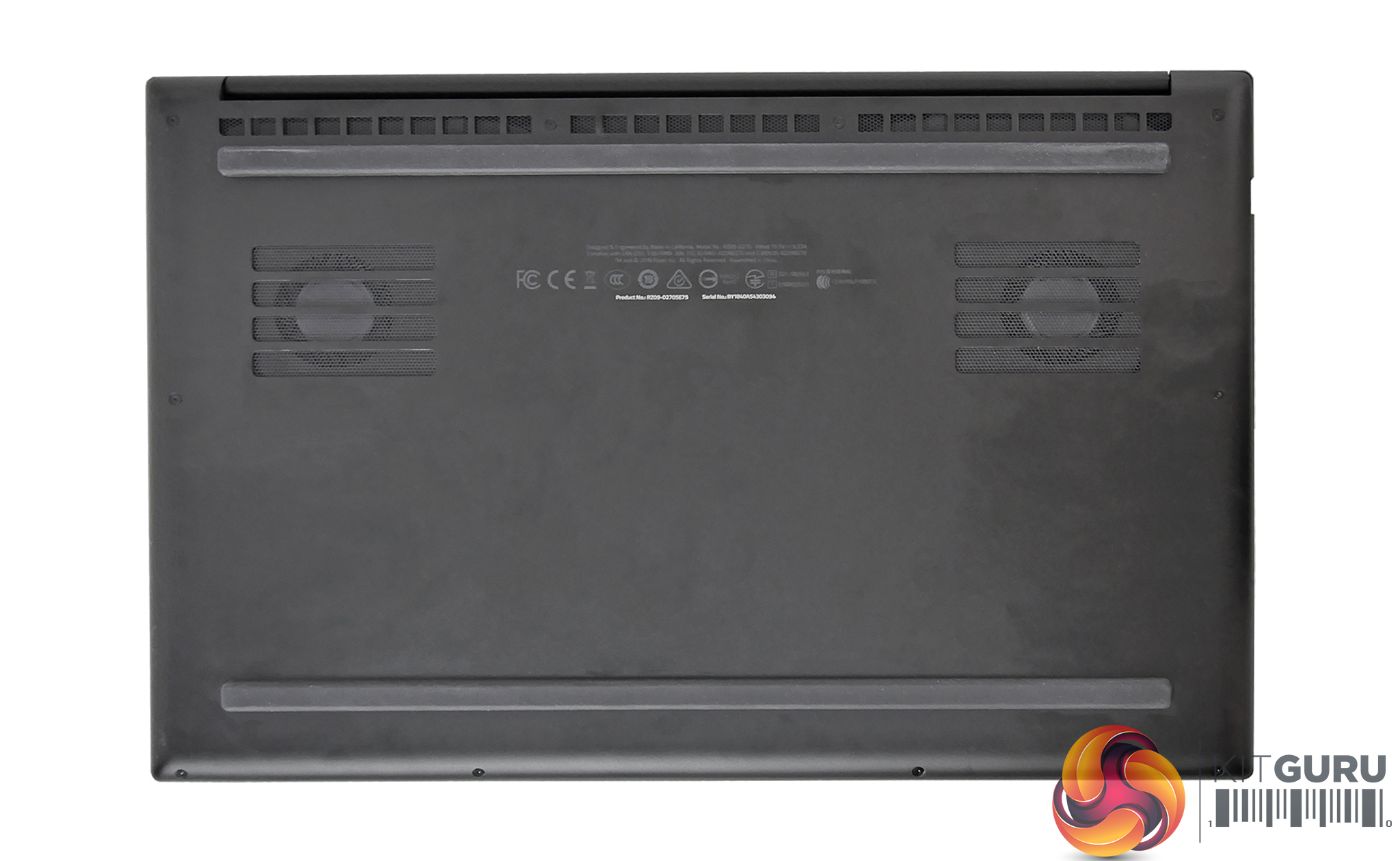
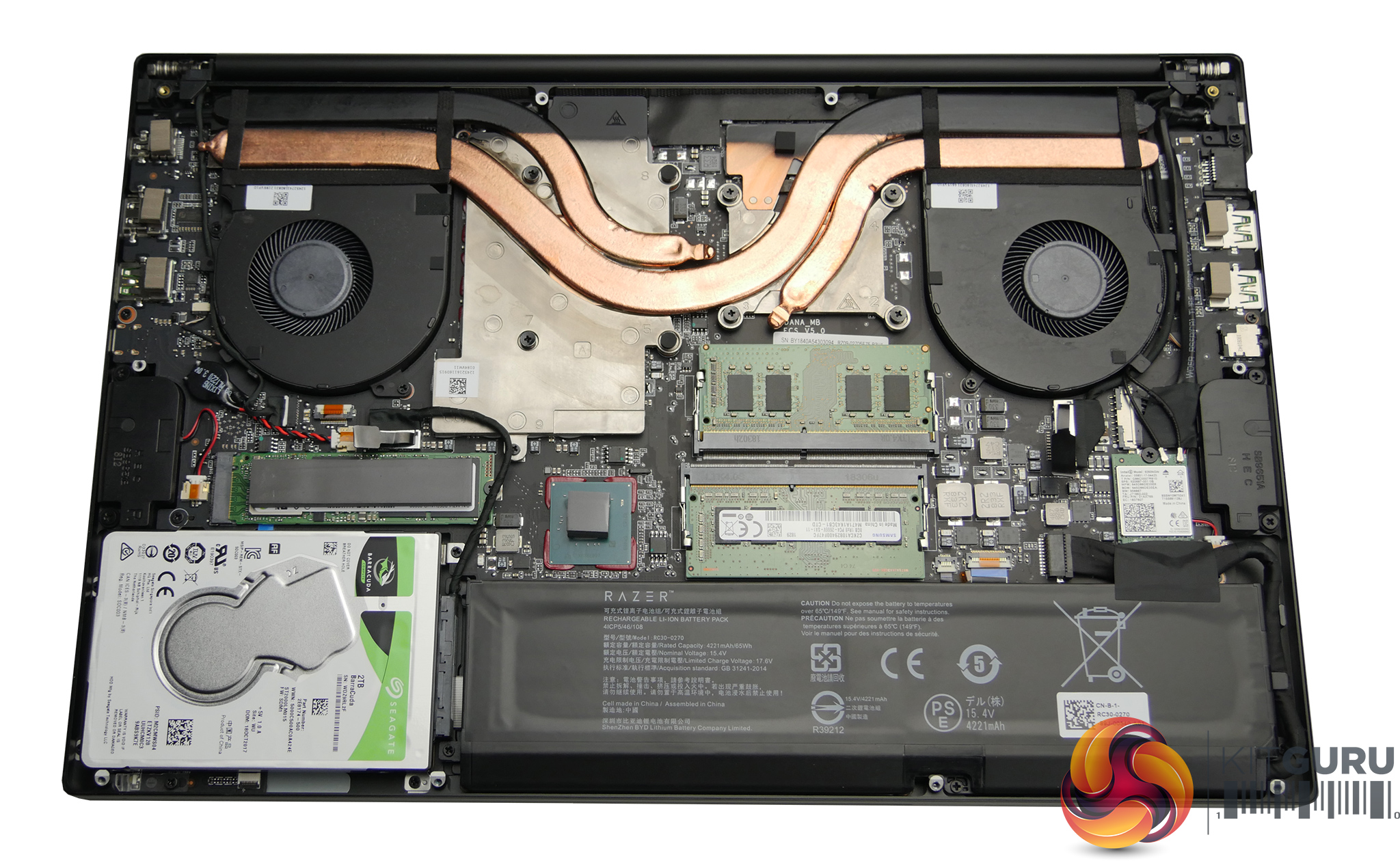
Specifications:
- Display Size: 15.6″
- Display Type: Full HD 60Hz, 100% sRGB, matte screen
- Processor: 8th Gen Intel® Core™ i7-8750H processor
- Graphics: NVIDIA® GeForce® GTX 1060 Max-Q Design 6GB
- Memory: 16GB Dual-Channel DDR4-2667MHz
- Storage: Up to 256GB SSD plus 2TB HDD (5400rpm)
- Ports: 1x mDP, 1x HDMI, 1x Type-C, 3 x USB 3.1
- Thunderbolt 3: Yes
- Ethernet Port: Yes
- Dimensions: 19.9mm x 355mm x 235mm
- Weight: 2.03KG
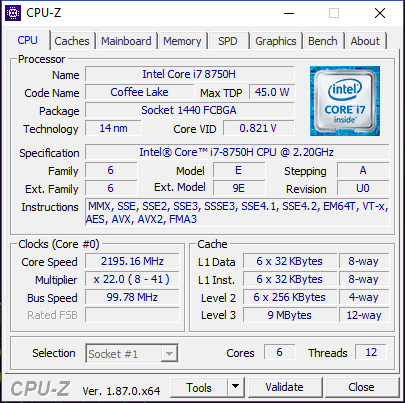
This laptop uses the hexa-core i7-8750H processor which has a base clock of 2.2GHz but will turbo boost up to 4.1GHz under load on a single core.
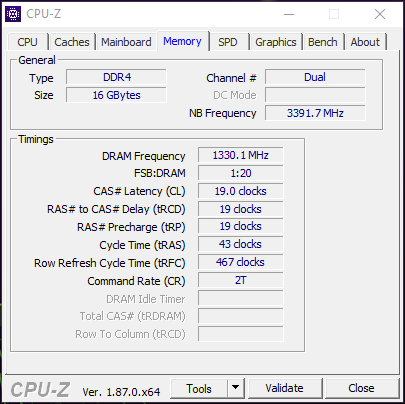
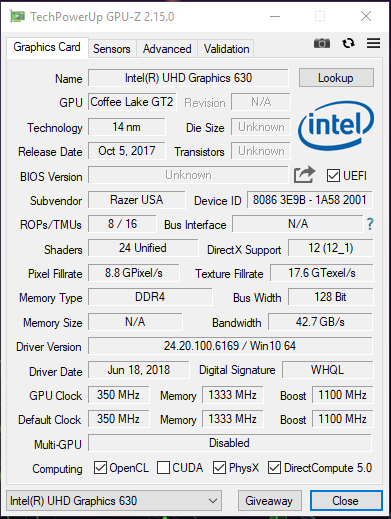
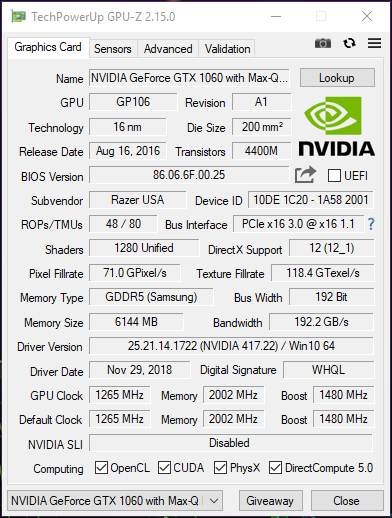
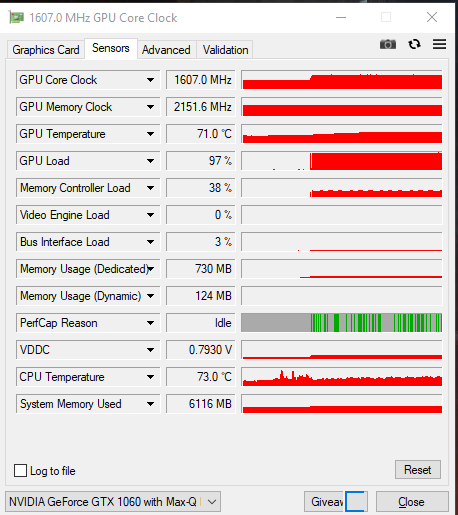
The 16GB of memory is DDR4 and runs at a speed of 2667MHz. The GPU-Z screenshots show both the Intel integrated graphics and the dedicated Max Q Nvidia GTX 1060. The Max Q GTX 1060 features 6GB of GDDR5 memory and has a default clock of 1265MHz and a rated boost clock of 1480MHz. However, during testing we did notice the boost clock peaked at nearly 1750MHz and levelled out around 1600Mhz which is rather impressive and makes it a very fast Max Q GPU.