KitGuru KitGuru.net – Tech News | Hardware News | Hardware Reviews | IOS | Mobile | Gaming | Graphics Cards


Philips Evnia has announced the M4 gaming monitor lineup, featuring the 27M4N3500PT and 27M4N5500PT. The new displays introduce a triple-mode feature that lets users toggle between three distinct resolution and refresh-rate configurations via the OSD.
The monitors are based on a Fast IPS panel and support three native configurations. In its highest resolution config, the panel operates at QHD (2560×1440) with an overclocked 275Hz refresh rate. Players seeking higher frame rates can switch to a FullHD (1920×1080) mode at 360Hz, or drop down to an HD (1280×720) mode to reach a 540Hz refresh rate. According to the company, these settings can be adjusted instantly through the on-screen menu without manual operating system changes.
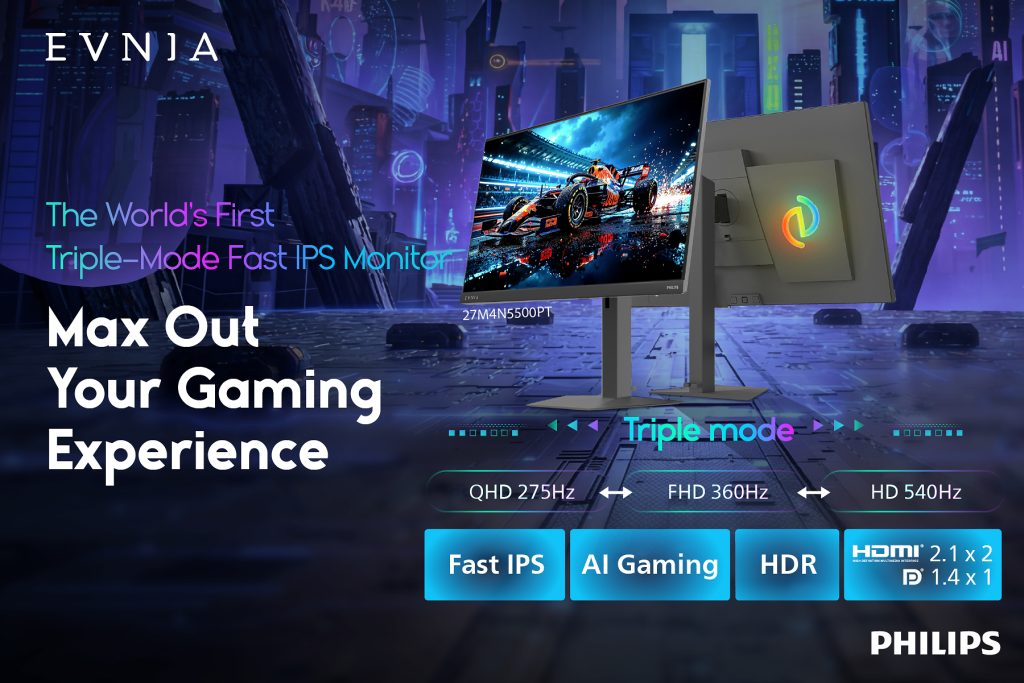
Both models include eye-protection features such as Low Blue Light and Flicker-Free technology to reduce eye fatigue. They're equipped with an anti-glare coating with 25% haze and can reach 350nits of peak brightness. For connectivity, the displays include HDMI 2.1 and DisplayPort 1.4 ports. Integrated AI features include Stark Shadow Boost, Smart Crosshair, Smart Sniper, and Smart MBR Sync.
Philips distinguishes the premium 27M4N5500PT model by equipping it with a SmartErgoBase stand. This stand provides height, tilt, and swivel adjustments, along with a 90º vertical pivot for multi-screen configurations. It also features a geometric cut base design paired with a new Evnia AI gaming icon light system.
Discuss on our Facebook page, HERE.
KitGuru says: Having three resolution/refresh-rate presets on a single panel is a handy option for players who constantly jump between high-fidelity and fast-paced titles. Would you take advantage of this feature?