 KitGuru KitGuru.net – Tech News | Hardware News | Hardware Reviews | IOS | Mobile | Gaming | Graphics Cards


When Konica Minolta invited us to an event called Spotlight Live about the “rise of the cognitive company and the evolution of employment” we were intrigued, but also a little nonplussed. Konica Minolta is historically known for its optical devices – cameras, lenses, photocopies and printers – and KitGuru doesn’t particularly focus on any of these. But with the legendary author Douglas Coupland as keynote speaker, Spotlight Live piqued our interest, so off we went to Berlin. This is what we learned on our travels.
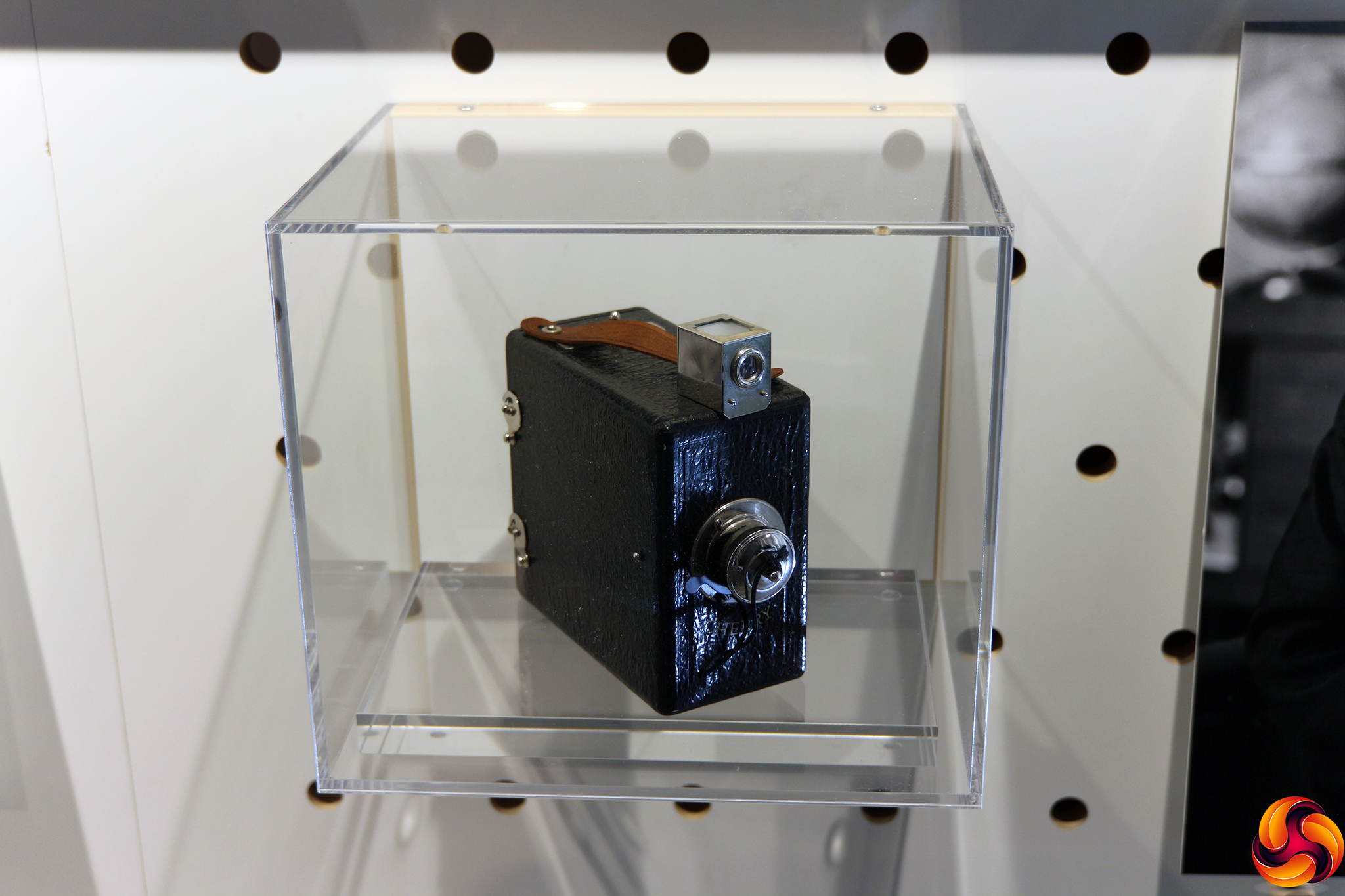
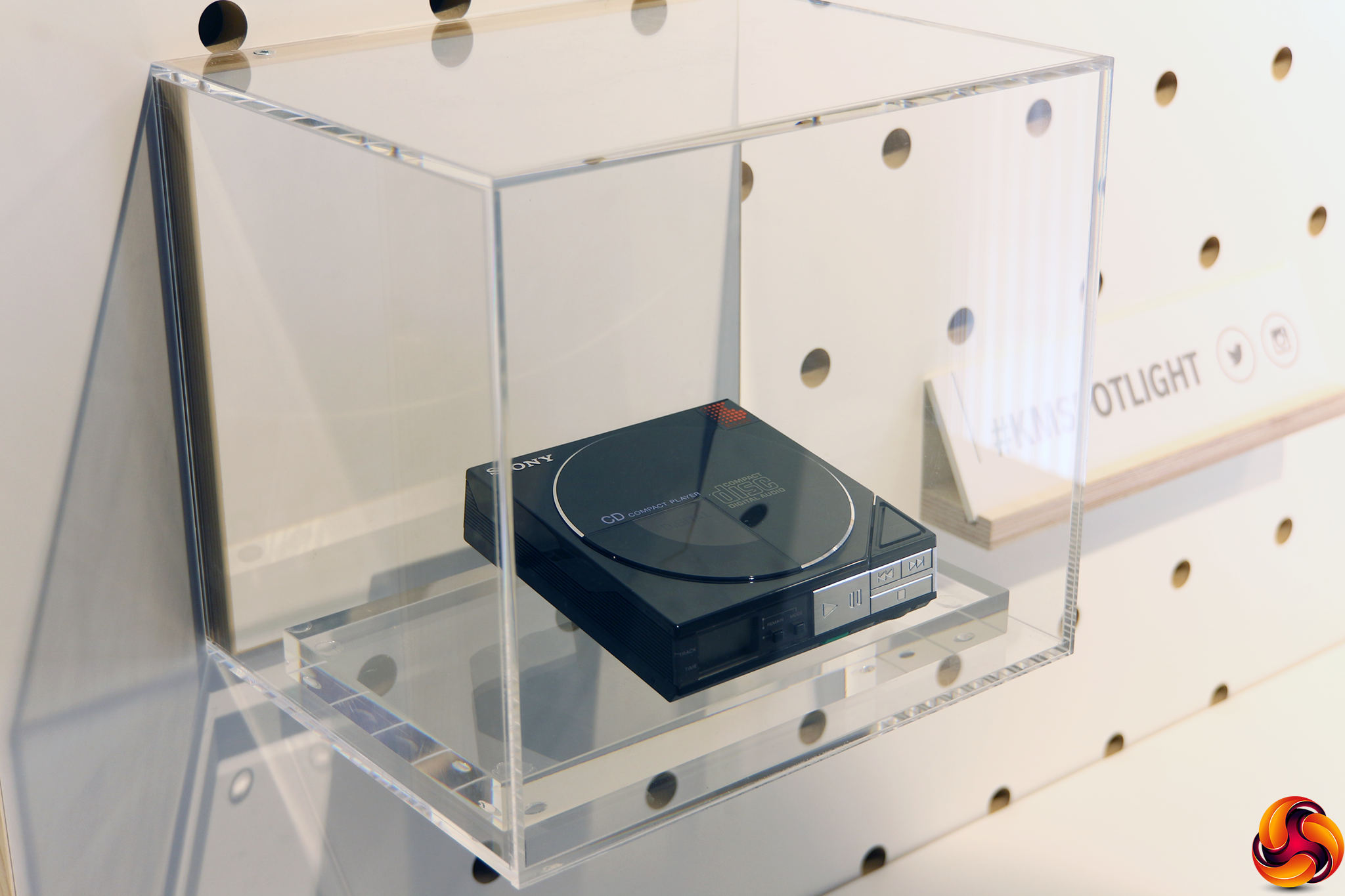
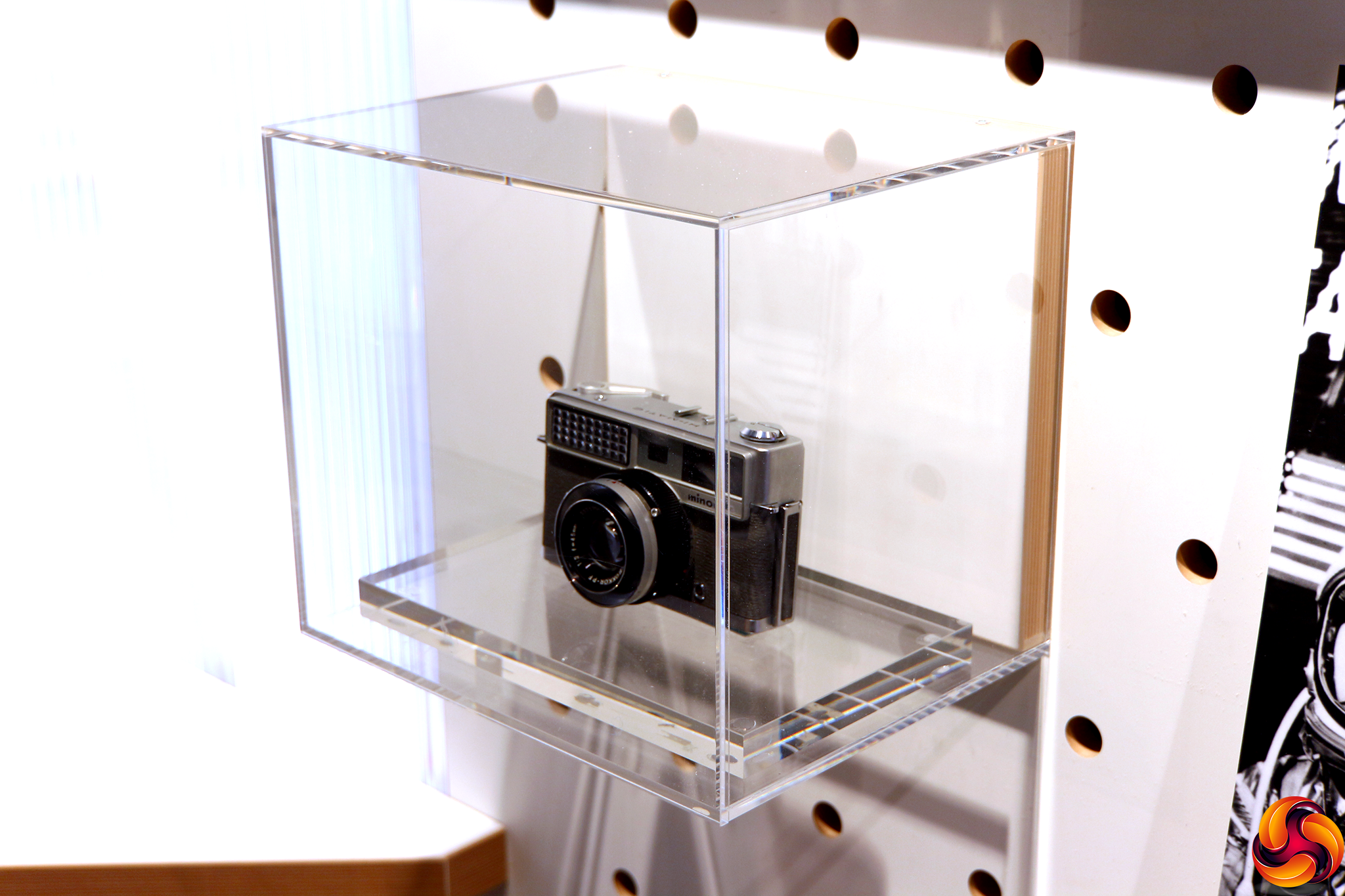
Konica Minolta has a history dating back to the 19th century (1873 to be exact), and started off making photographic materials, cameras, and optical equipment like medical imagers and the lasers on CD players. After moving into the copier business in the 1960s, the company has become a significant force in business printing and multi-function devices.
But although the paperless office is still some way away, the use of paper in business is falling, and Konica Minolta is looking to reinvent itself, which is where Spotlight Live and its focus on the “Workplace of the Future” comes in.
Event Details:
When: 23rd March 2017
Where: Berlin, German
Why: To be revealed…
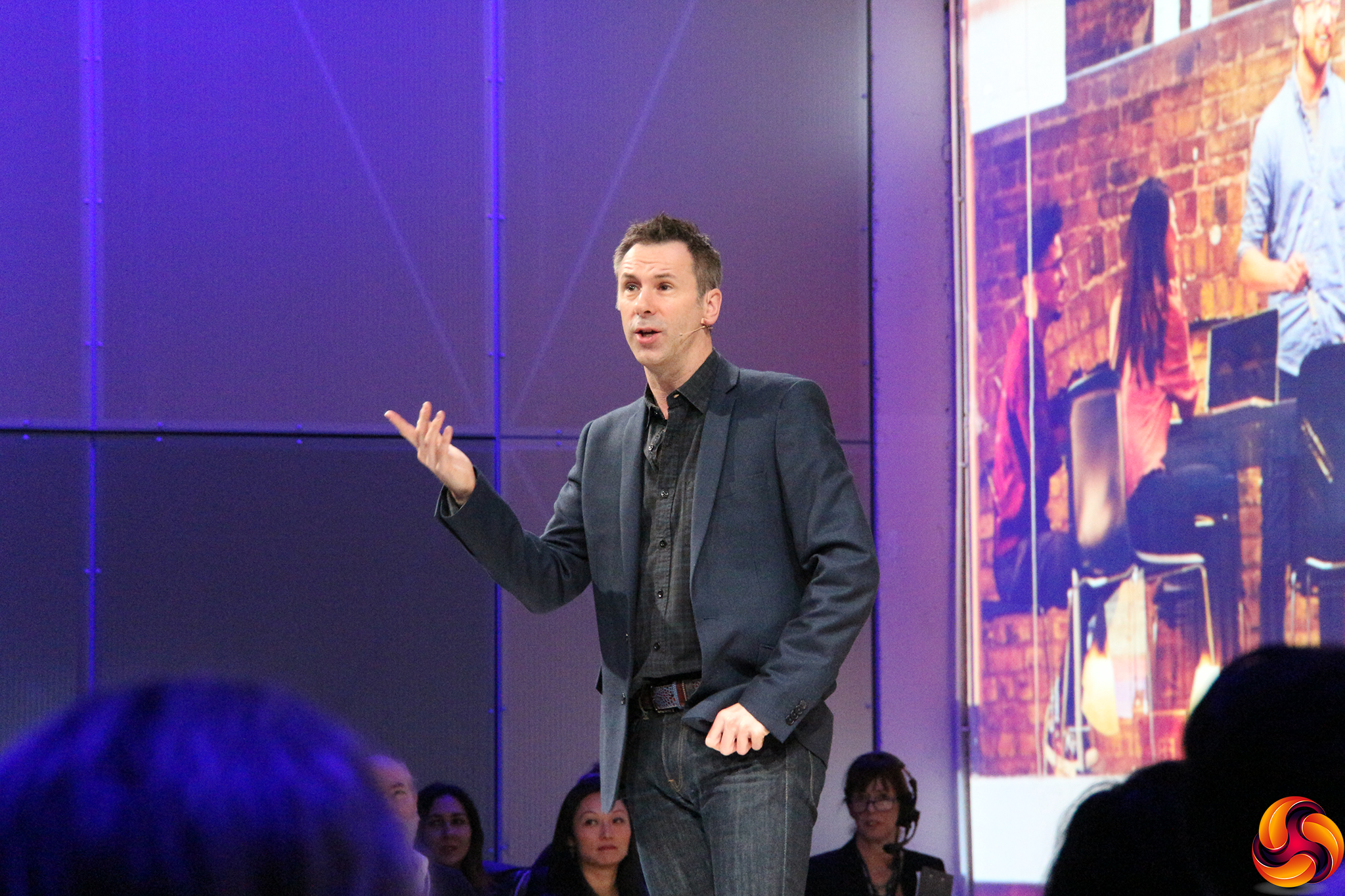
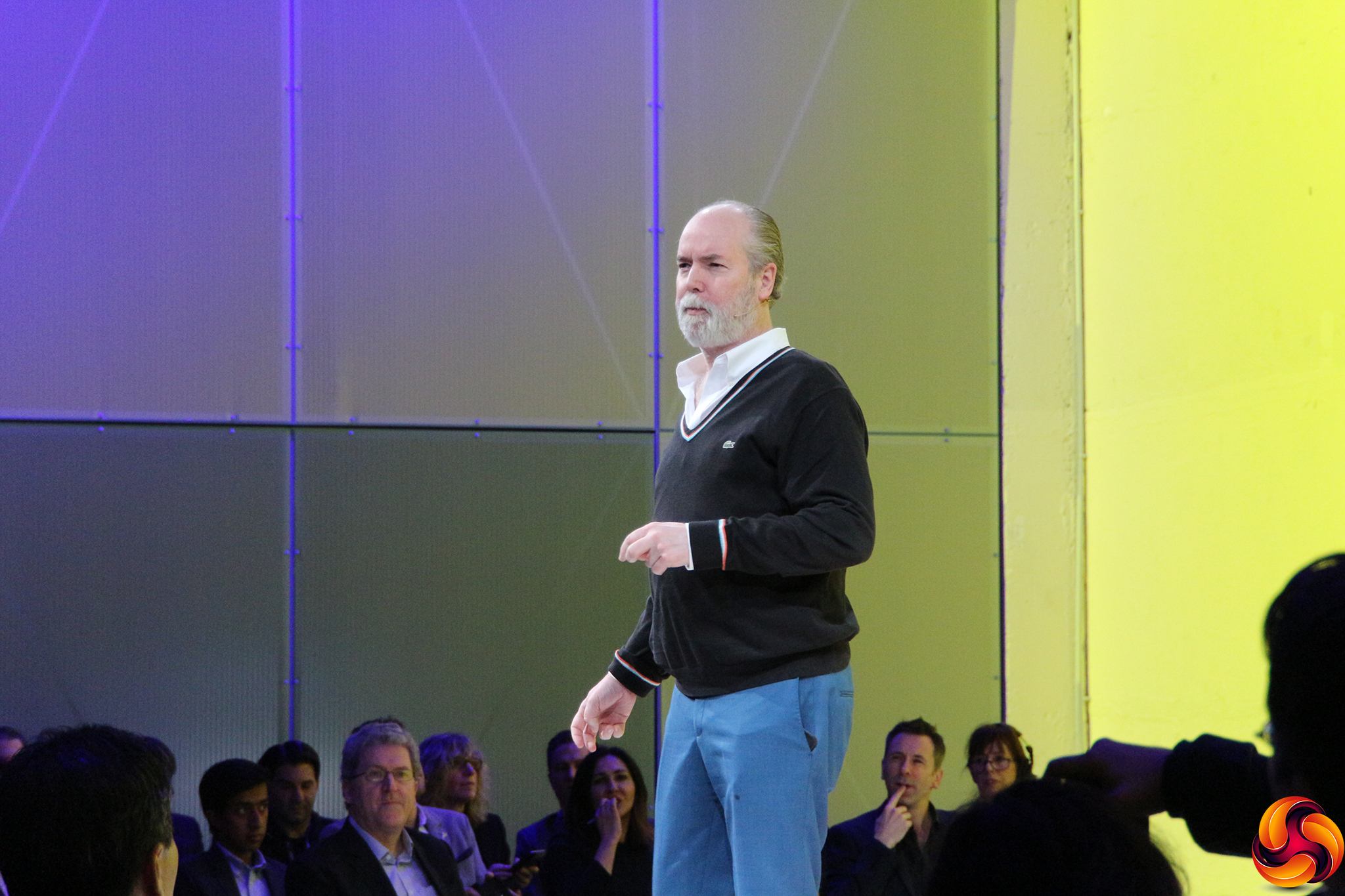
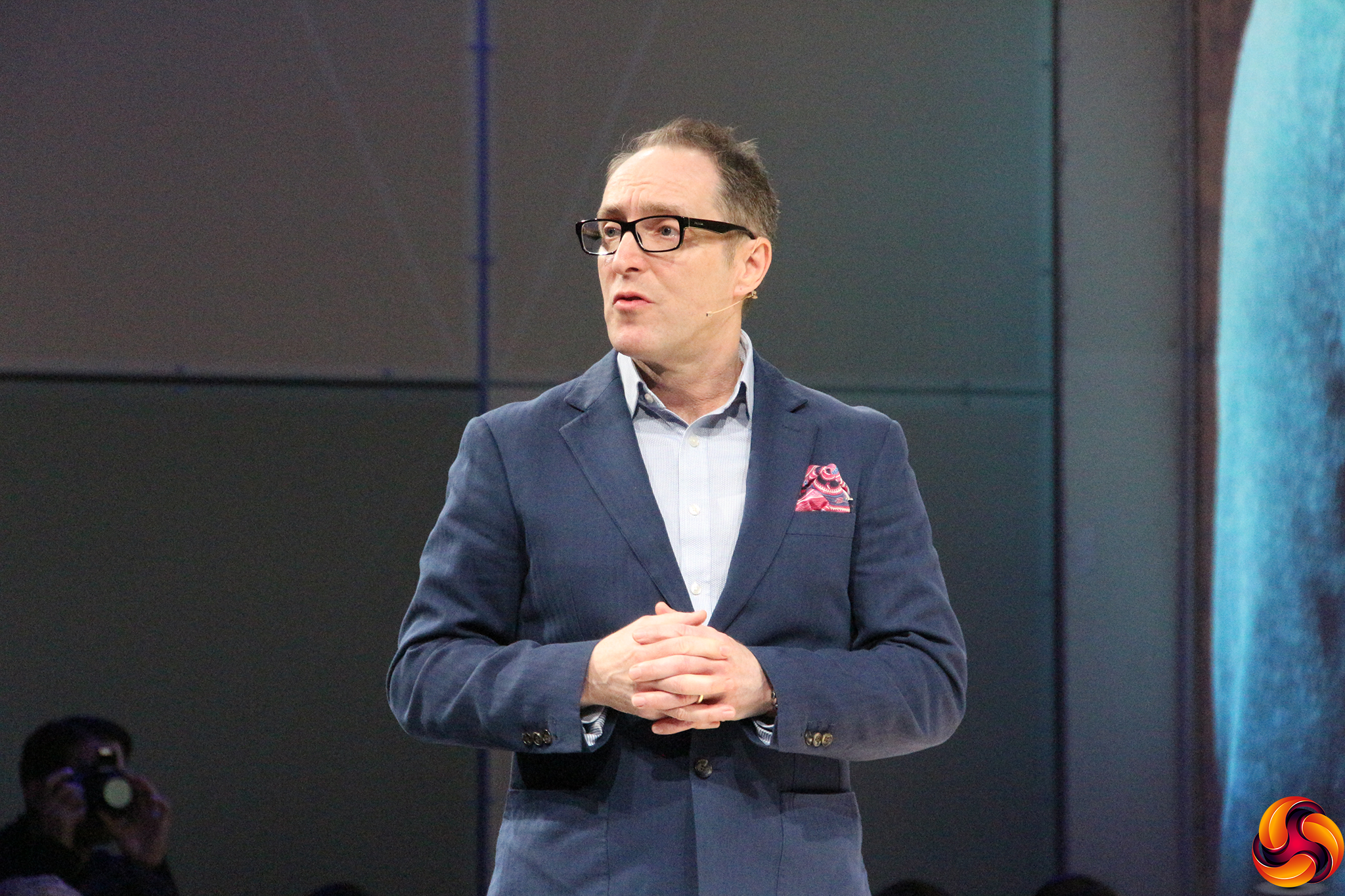
Spotlight Live kicked off with a brief introduction from BBC Click’s Spencer Kelly, where he outlined Konica Minolta’s Future of Work Manifesto. This covered things like connected devices, connected automation, and machine learning. But soon he was replaced by the headline act – author Douglas Coupland. This is the guy credited with popularising the phrase “Generation X”, with his 1991 novel of the same name.
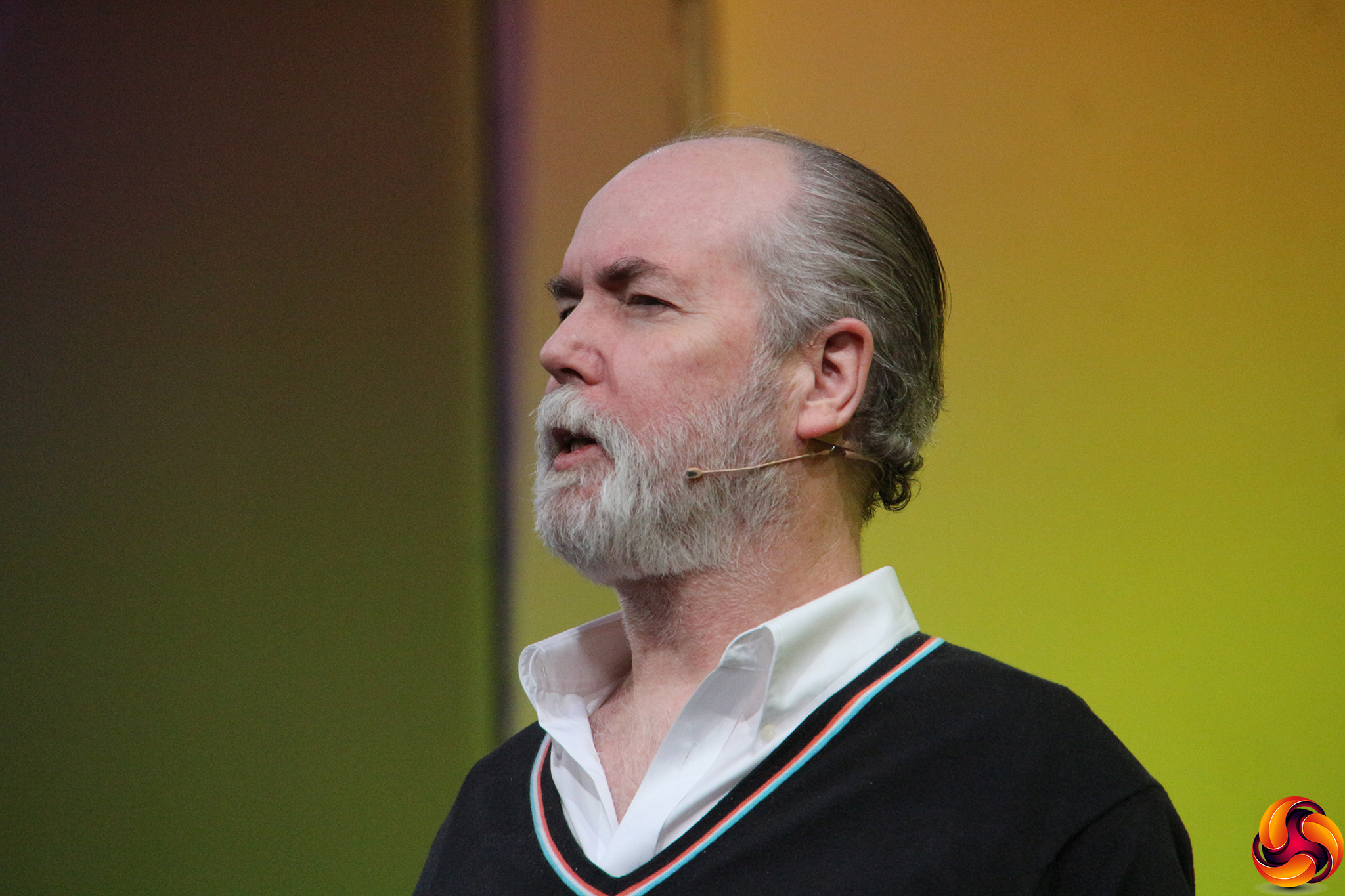
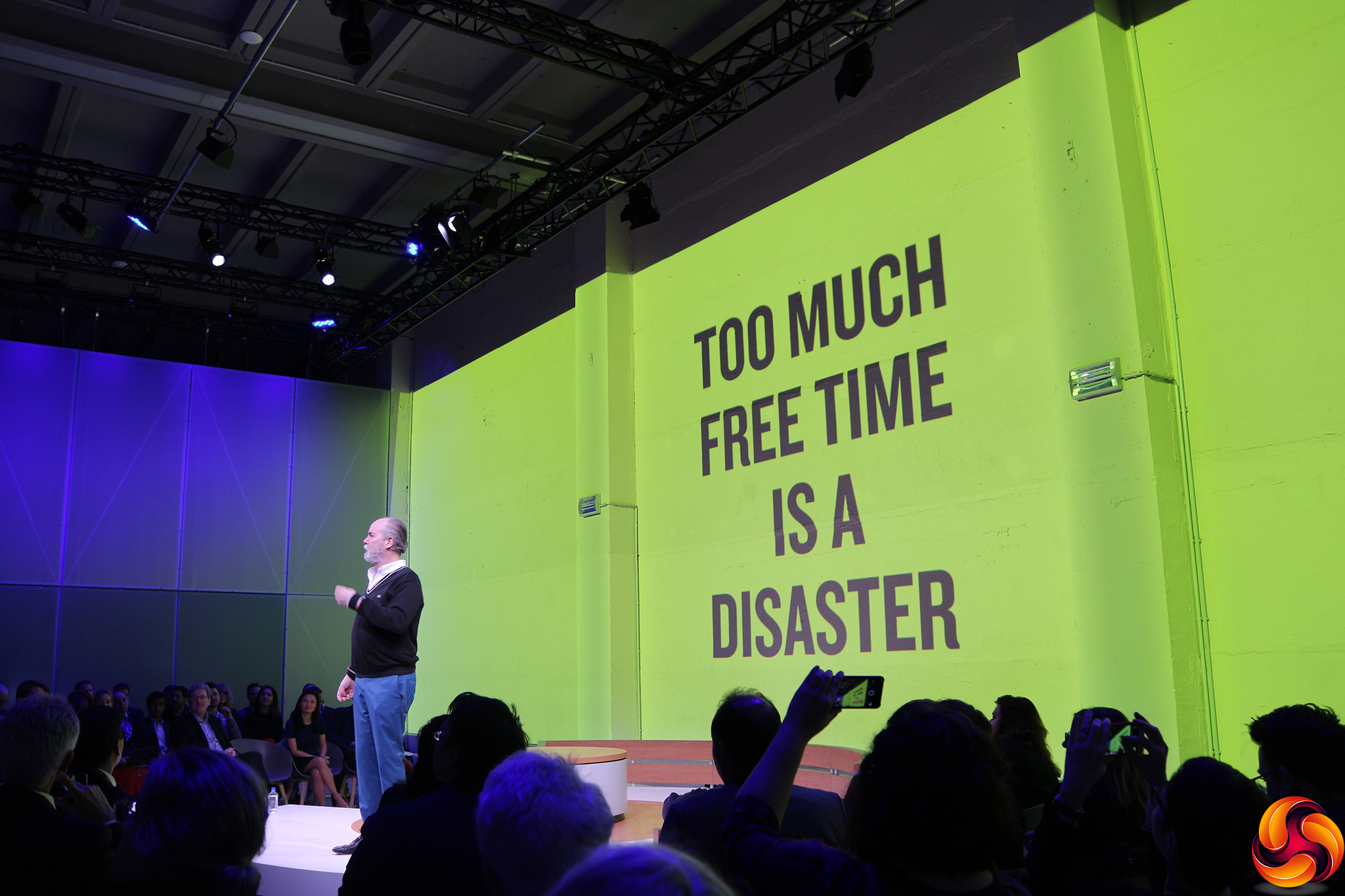
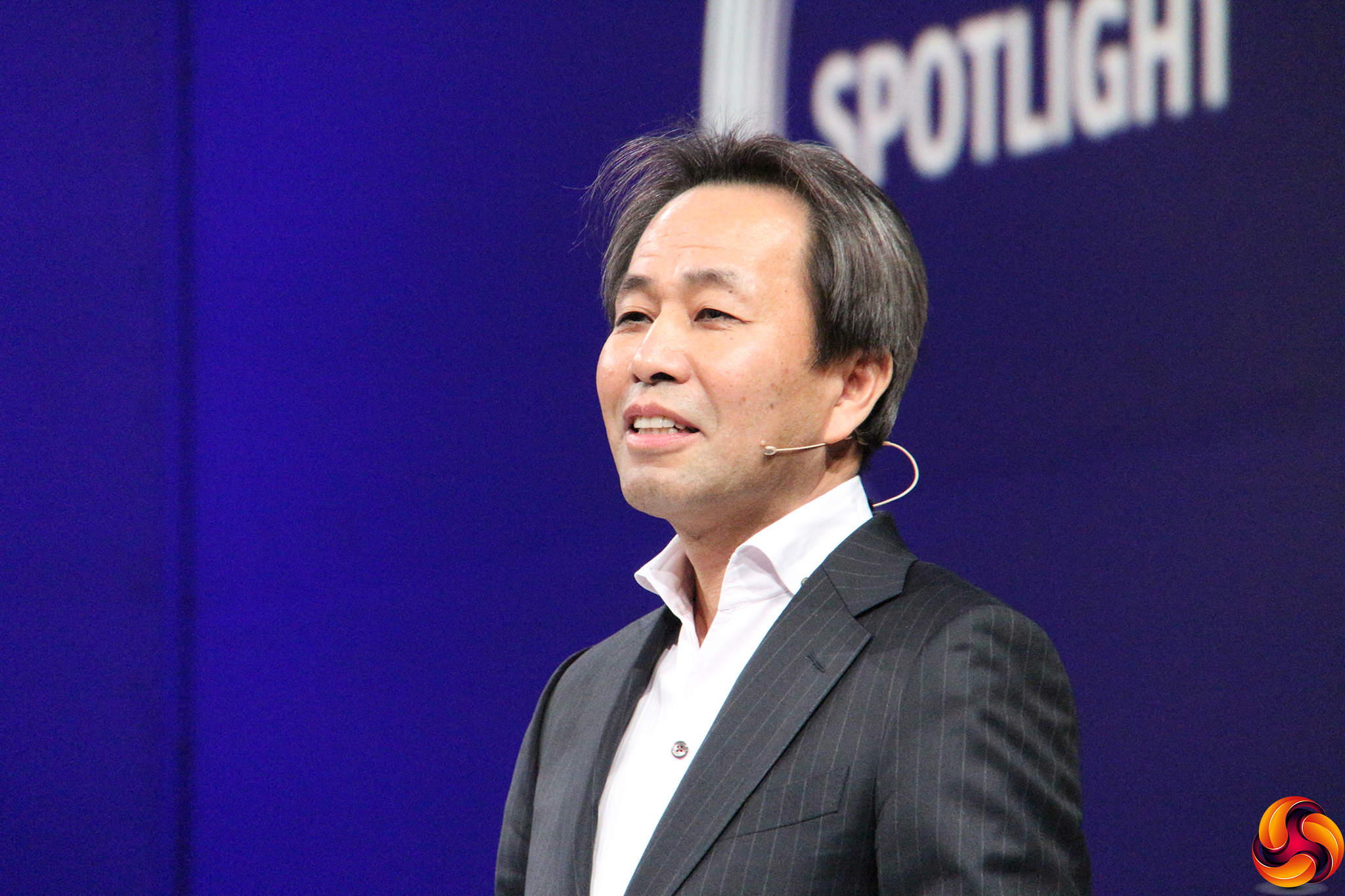
As a famous analyst of working trends, Douglas Coupland was the perfect choice for Spotlight Live’s keynote speaker, although he seemed a little uncomfortable reading from a teleprompter to begin with. He started off decrying how the sense of life being a story had been eroded by recent trends, asking “how do you find a meaningful life where anything is everything is anywhere?” He argued that we have lost our privacy, and become characterised by our schizophrenia.
One of the key defining factors of our age is ubiquitous connectivity, and Coupland cited the situation where rural China getting broadband as good as Manhattan. The Chinese see the future as digital, and intend to get get there first.
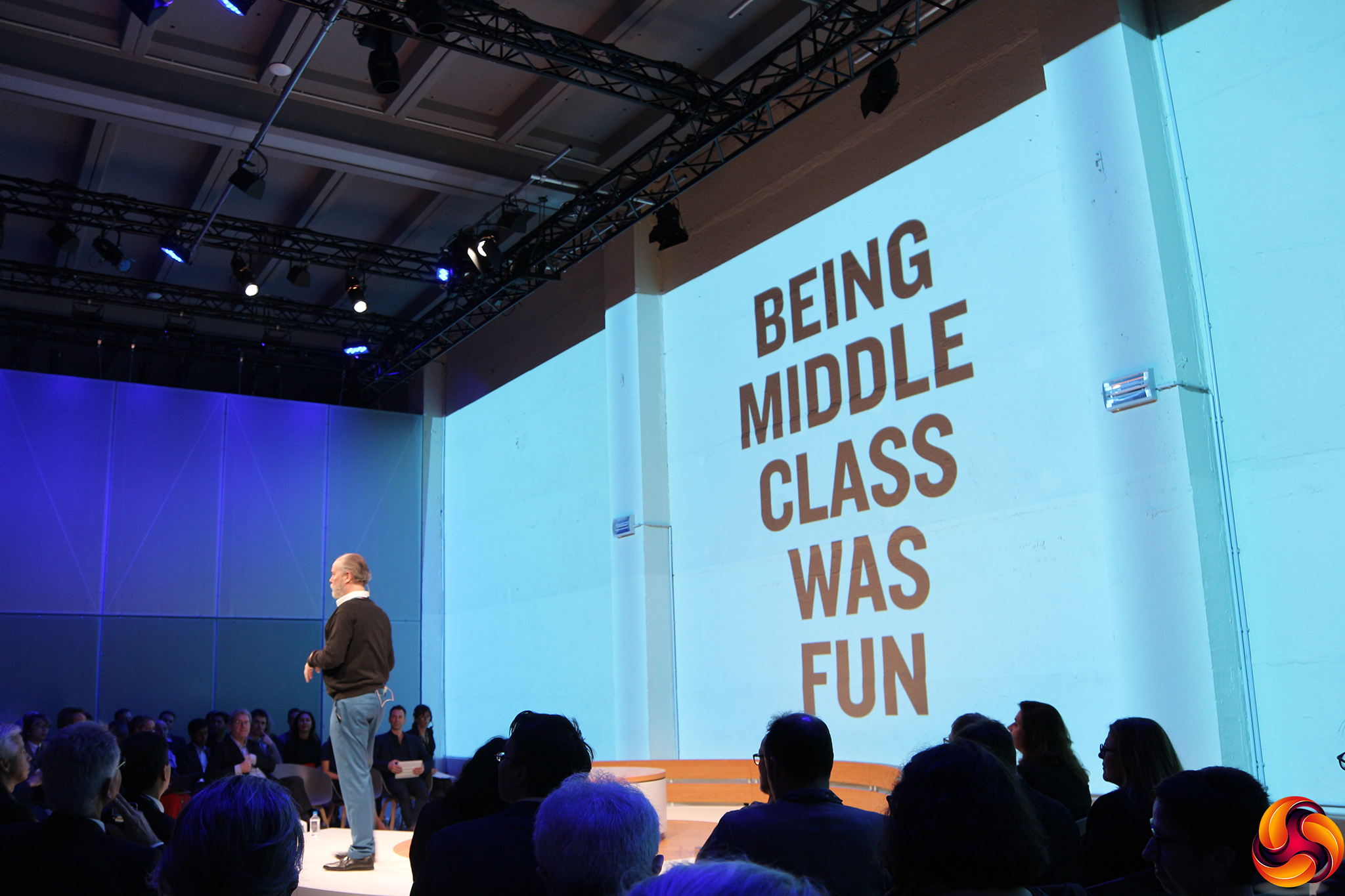
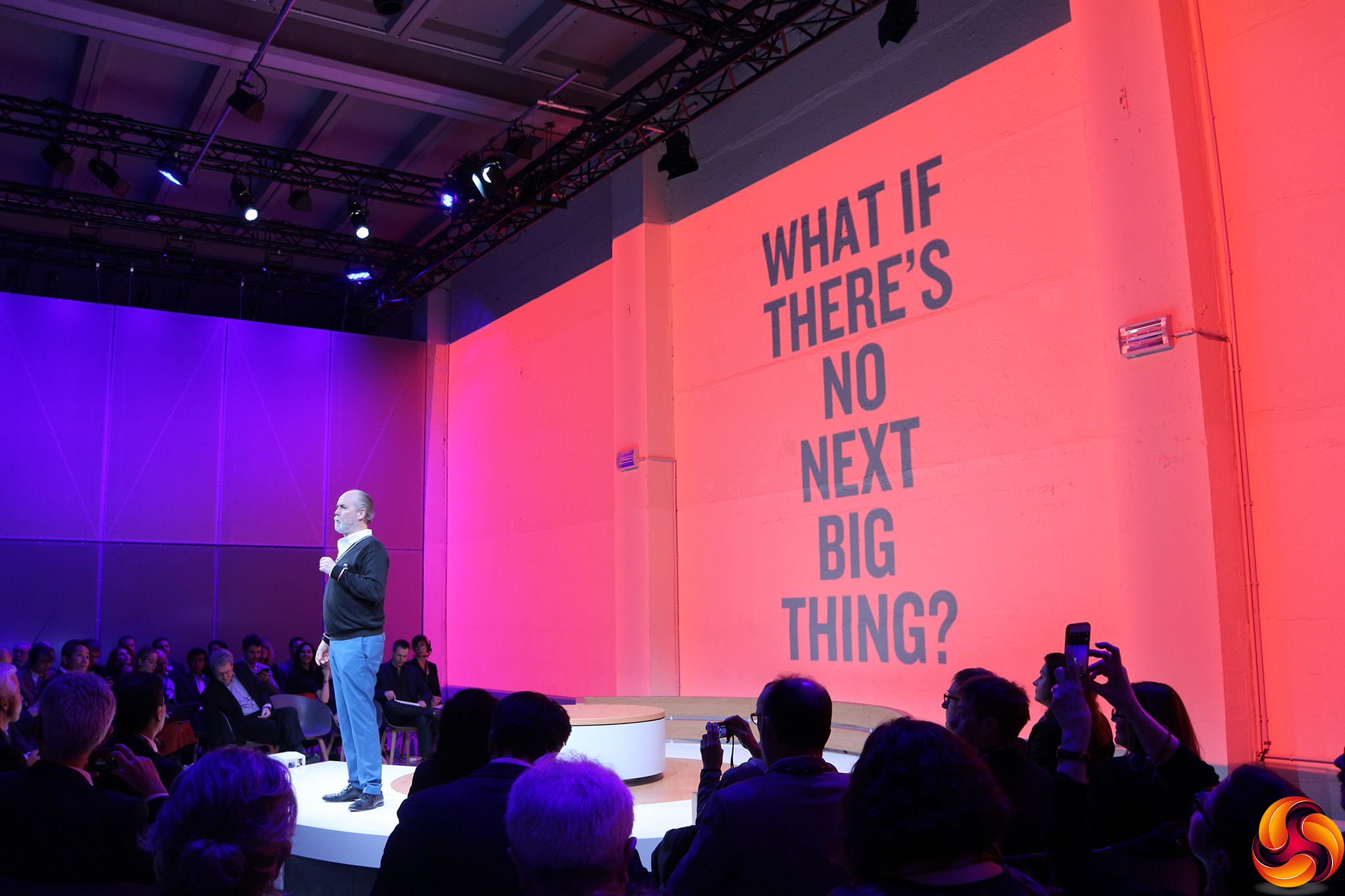
But Coupland did see the more fluid workday allowed by ubiquitous connectivity as potentially a boon, because the rigidity of 9 to 5 was barbaric. On the other hand, it's clear that we now have more people with fewer things to do, and our view of work could be changing.
He cited Greece as a case in point, where doing nothing was contrasted with having nothing to do. How do you allow people dignity when the jobs disappear, and will there really be exciting new jobs to replace the ones that technological advances render obsolete?
Referring to the Silicon Valley trend towards “work at home Wednesdays”, Coupland argued that in the future every day of the week will be a Wednesday. This would lead to a global monoclass instead of the middle class that has defined modernity for the last few centuries.
The survivors are likely to be people who actually have a skill. The future could be great, but the new poverty would be lack of WiFi rather than money. The impact of connectivity was so significant that maybe there wouldn't be anything more significant for some time to come.
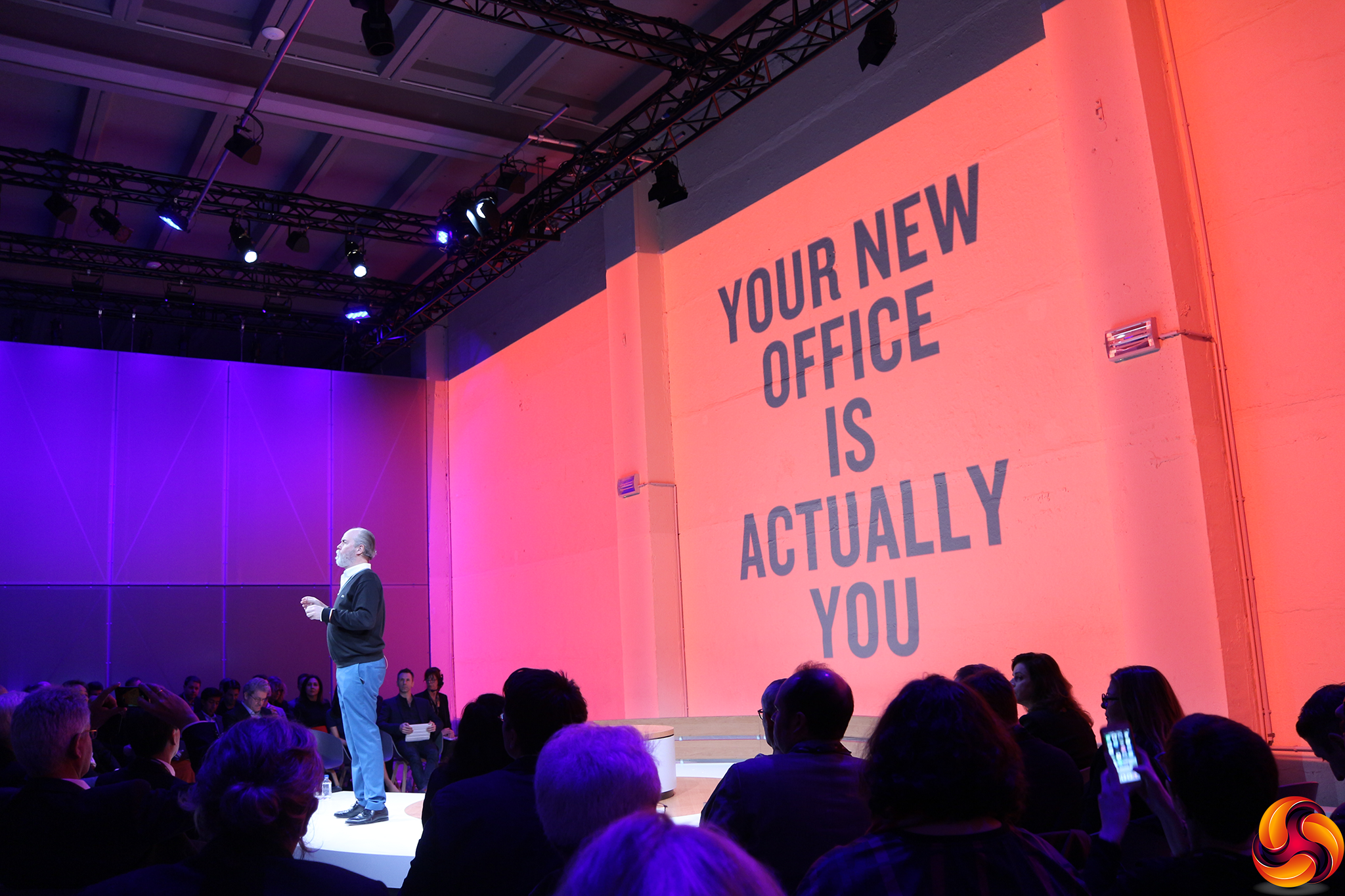
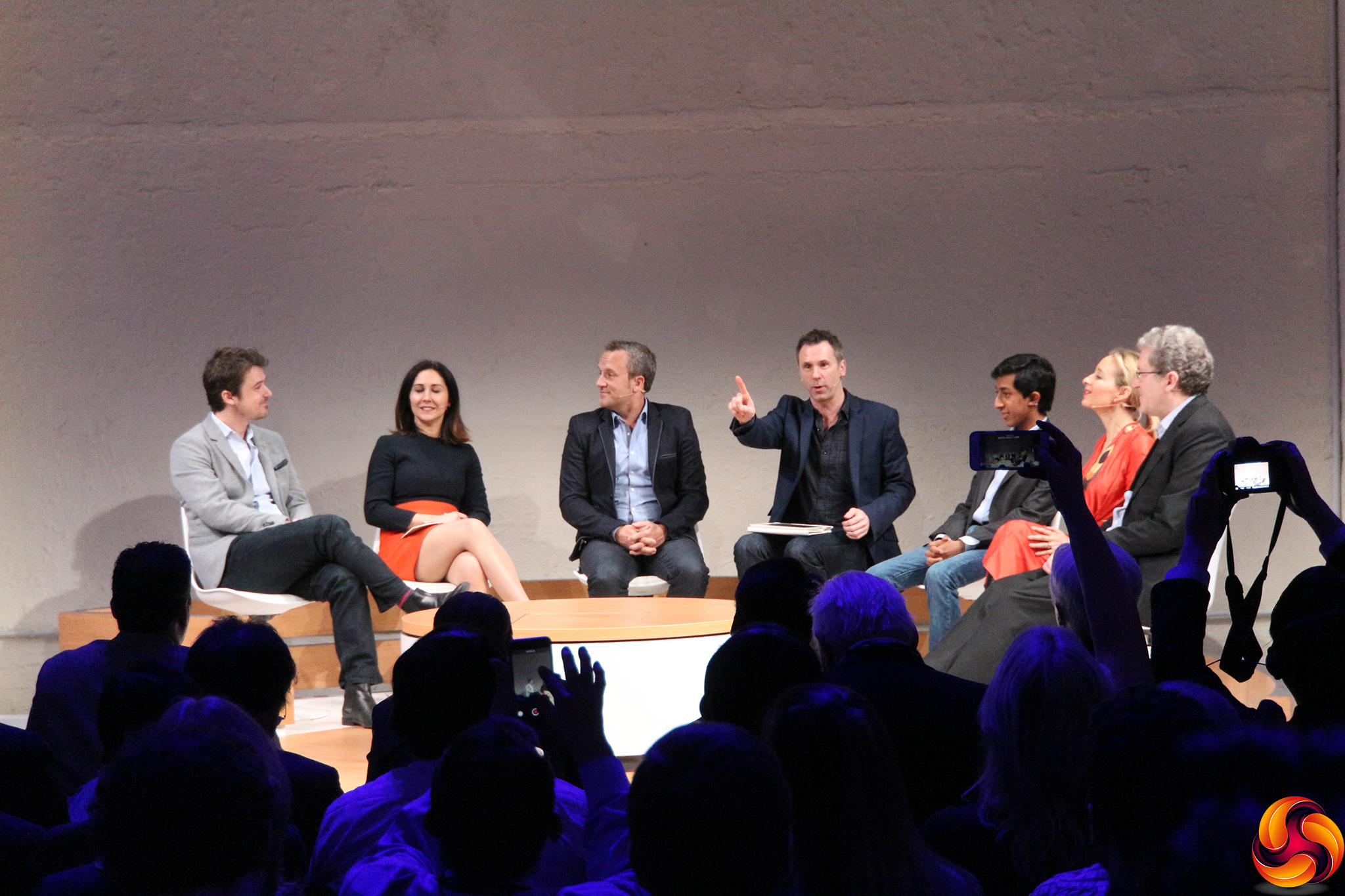
Coupland concluded that the office of the future would revolve around the needs of the individual. But he wasn't left with the last word on that, because next up was a panel discussion with six experts on the emerging world of digital work.
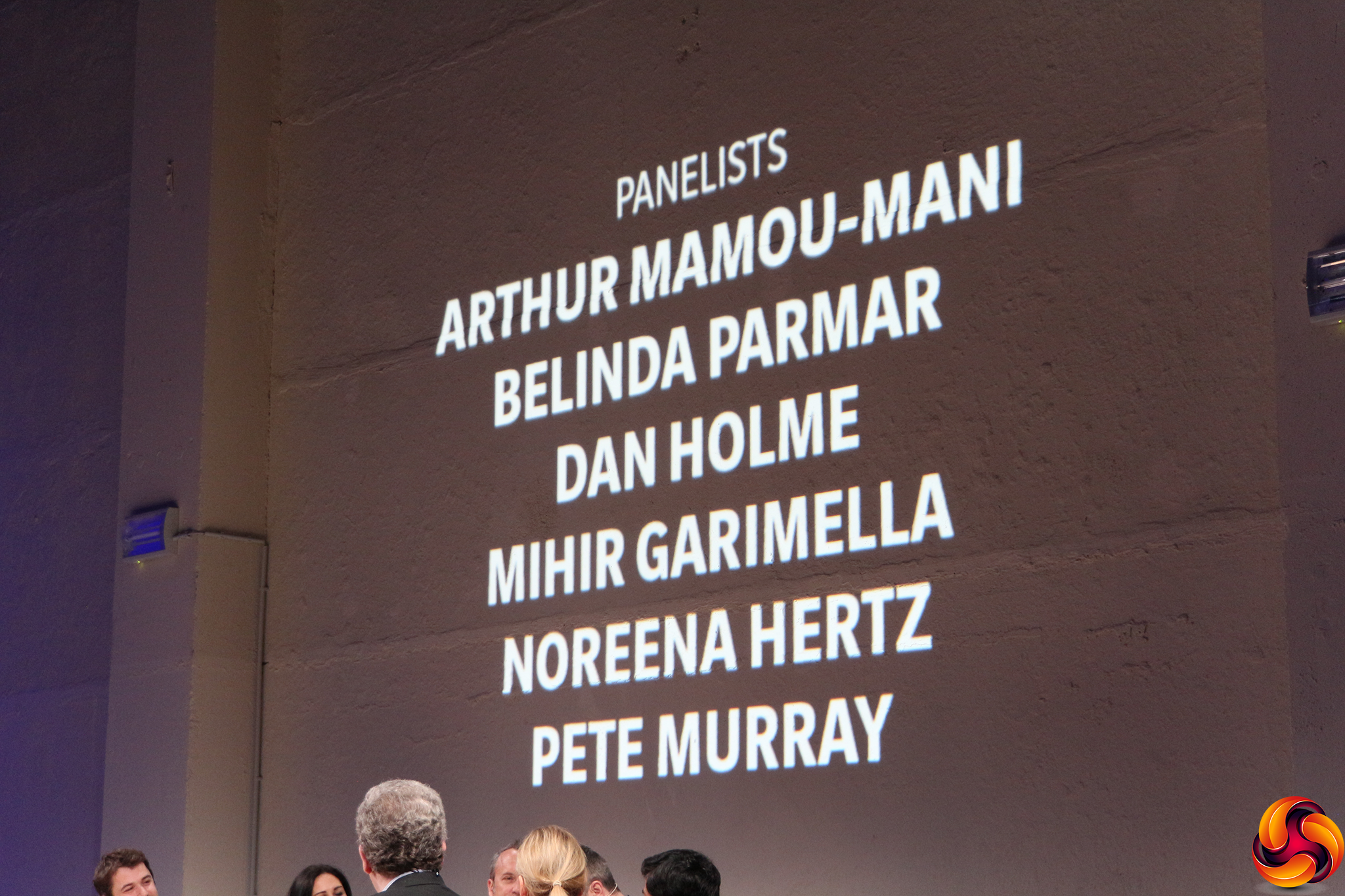
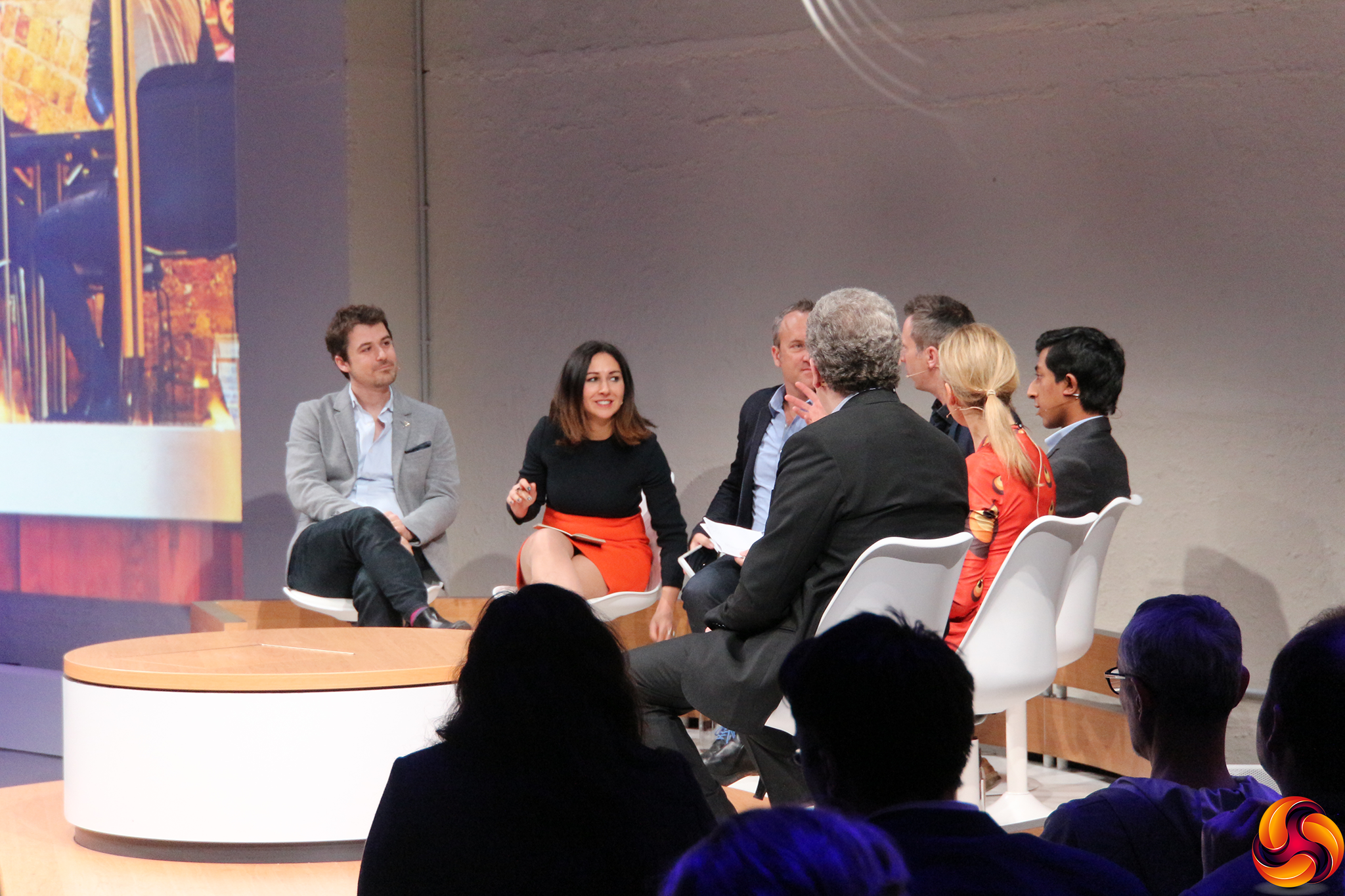
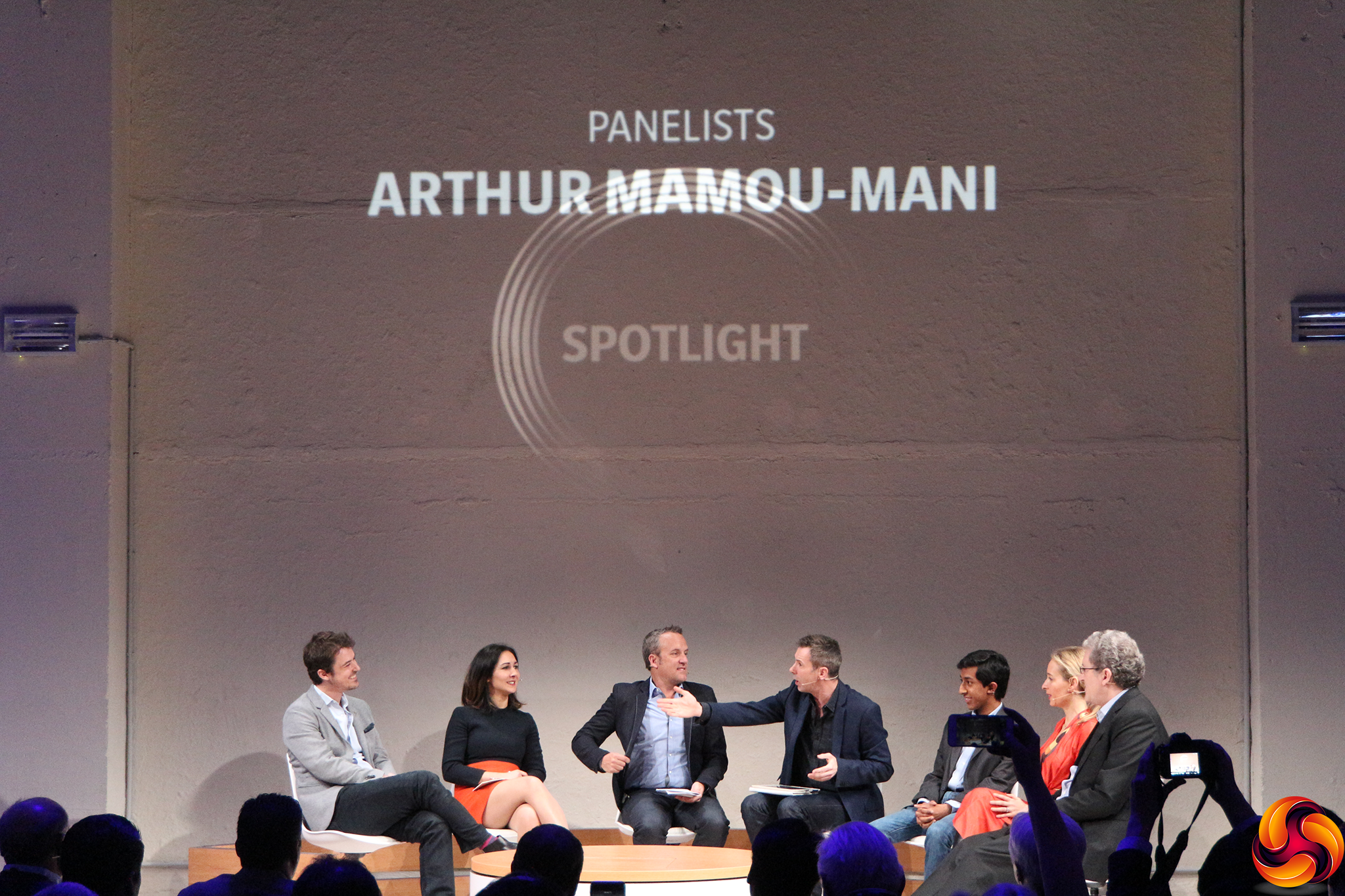
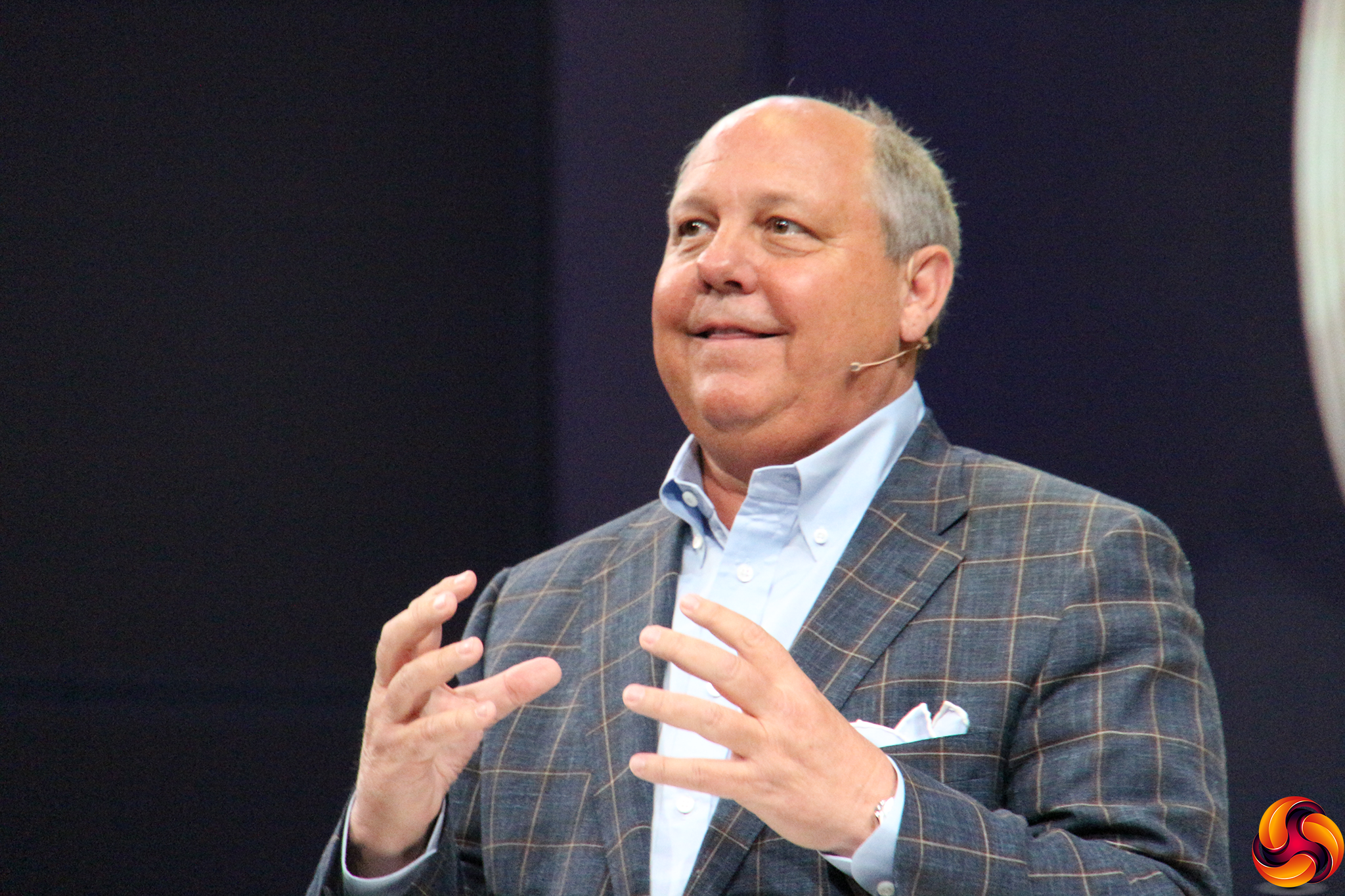
The next part of proceedings involved a panel chaired by Spencer Kelly once more, with a diverse range of panellists. They began by explaining what annoyed them about the modern workplace in three words, citing things like lack of empathy, noise overpowering signal, too much process, (the lack of) time to think or politics, waste, and complexity.
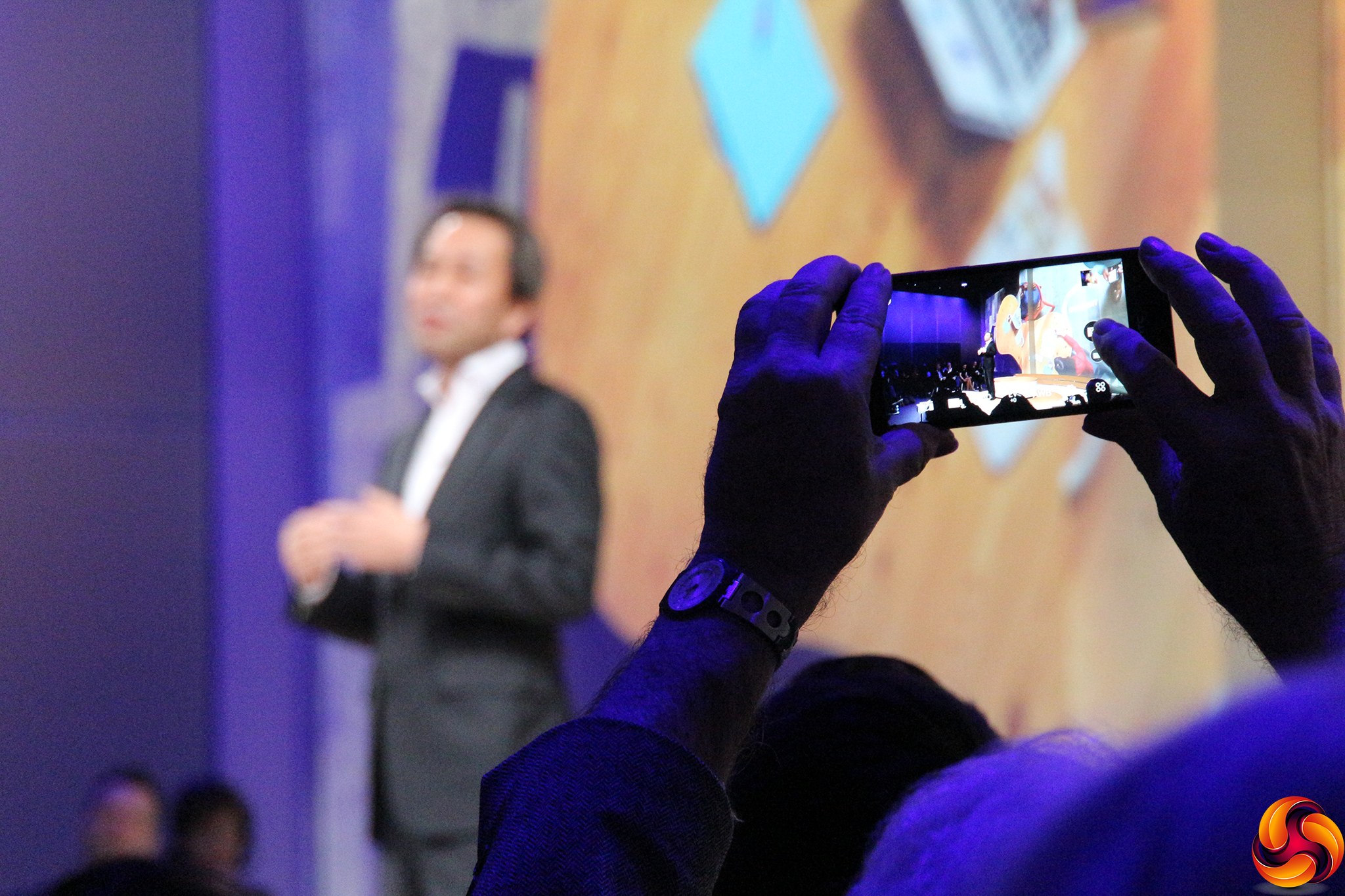
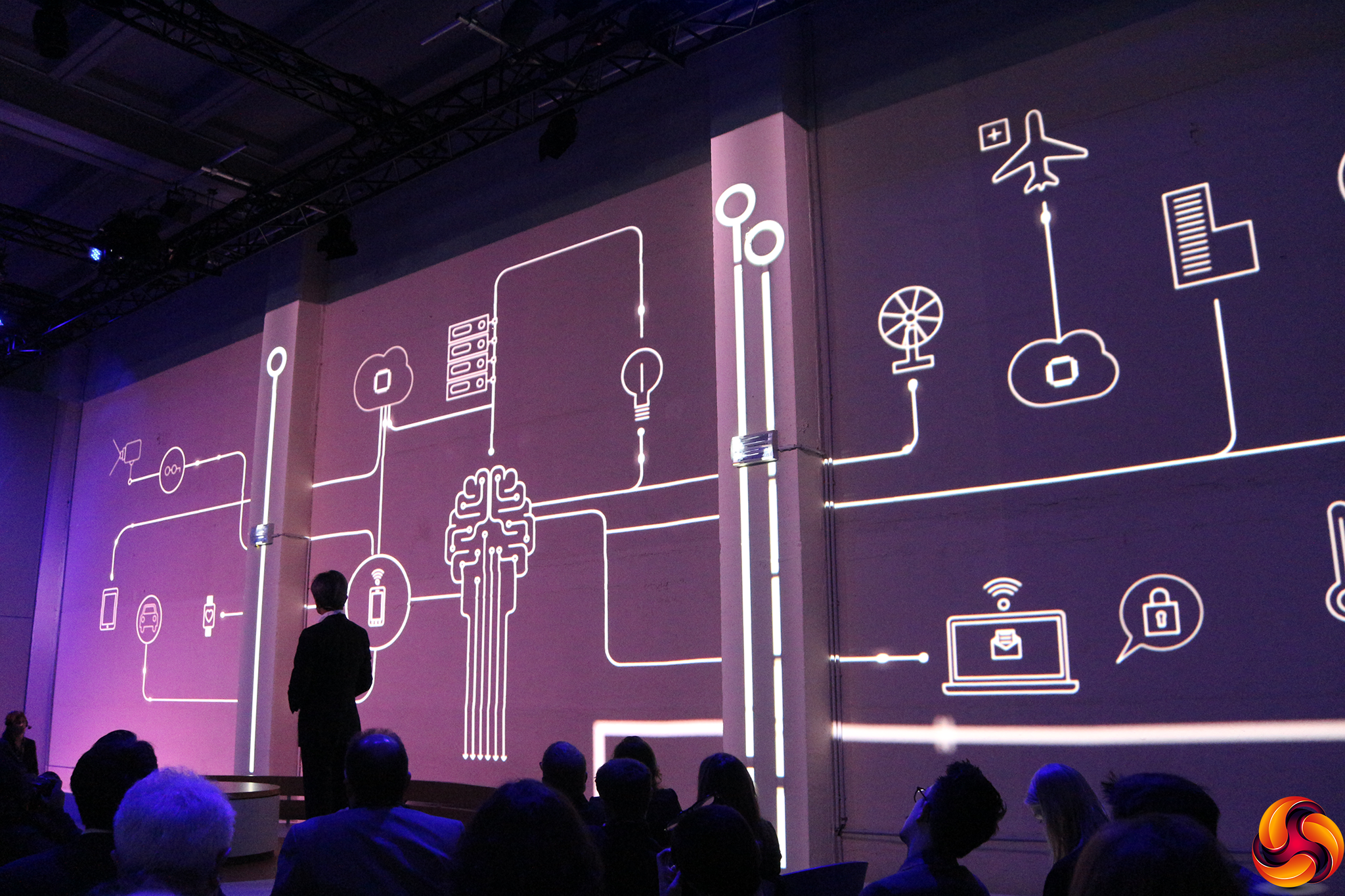
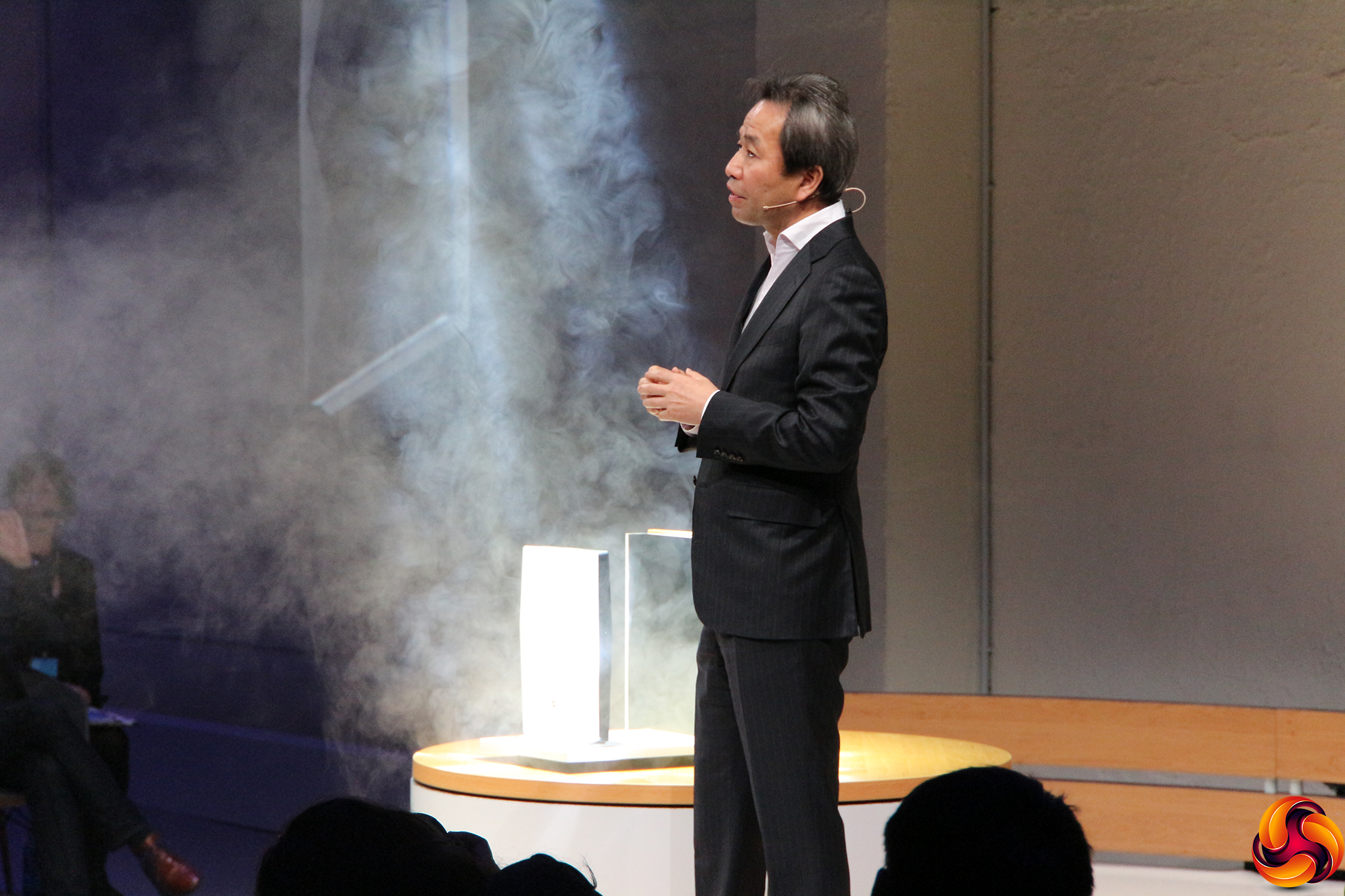
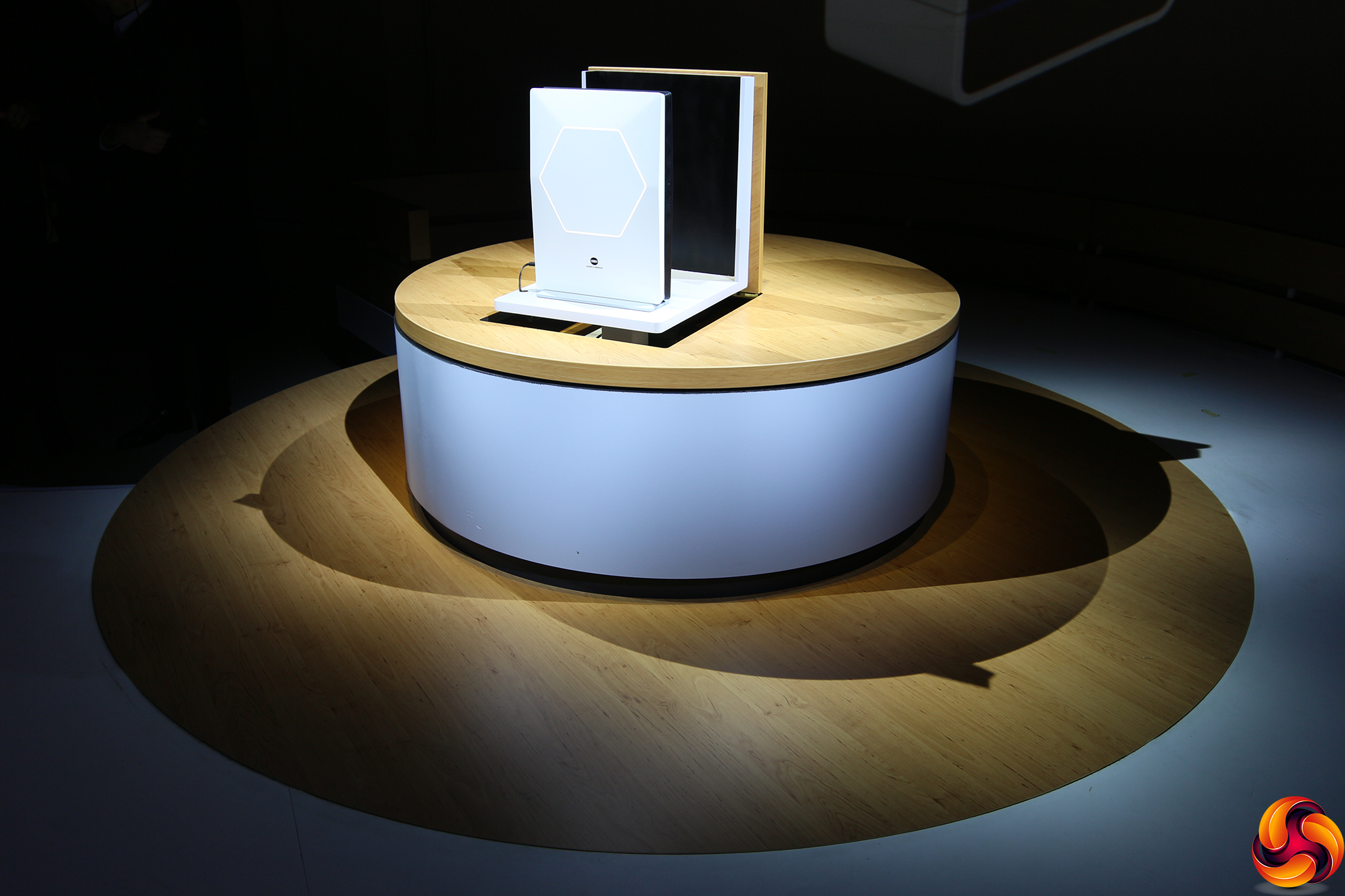
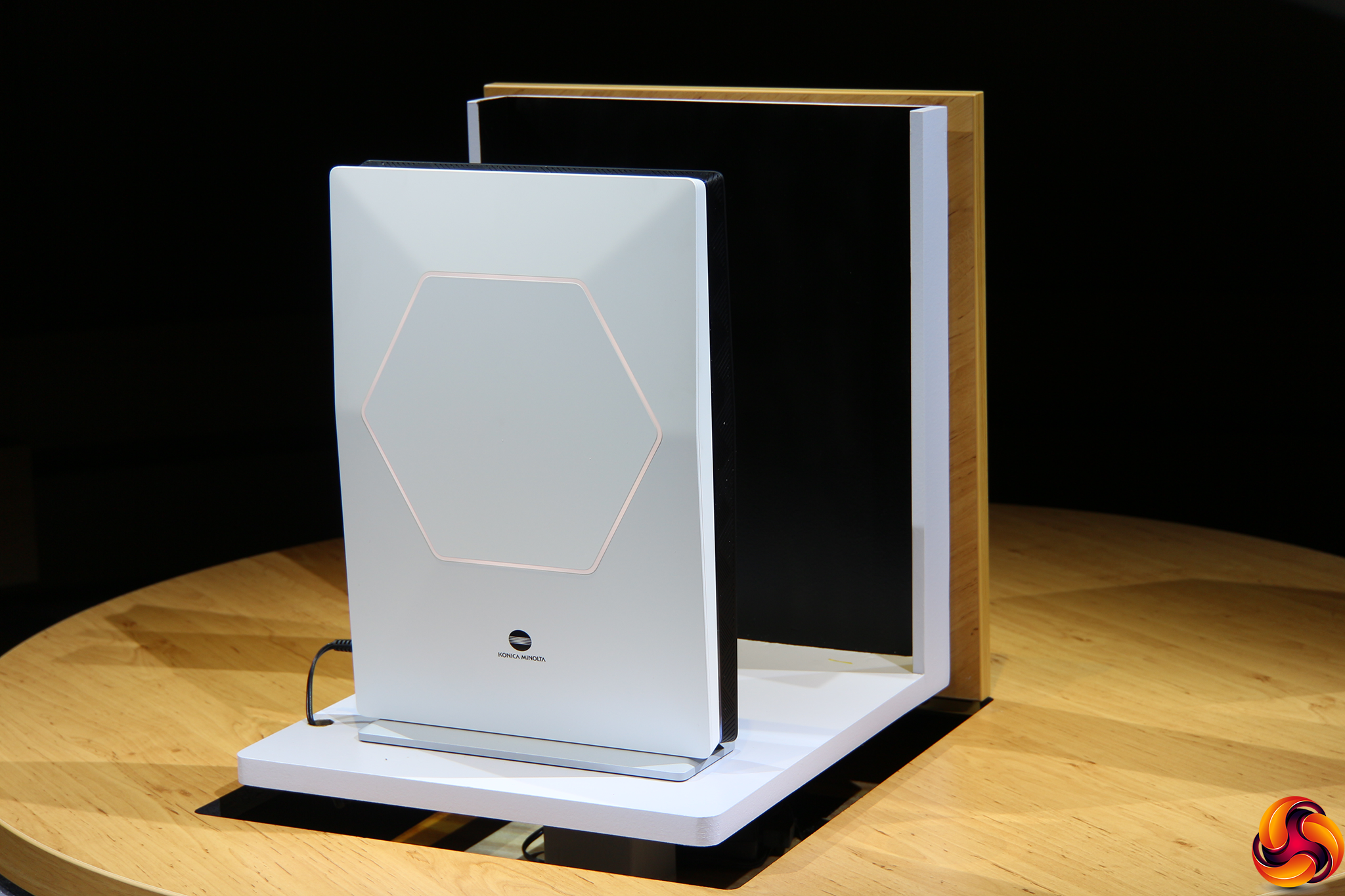
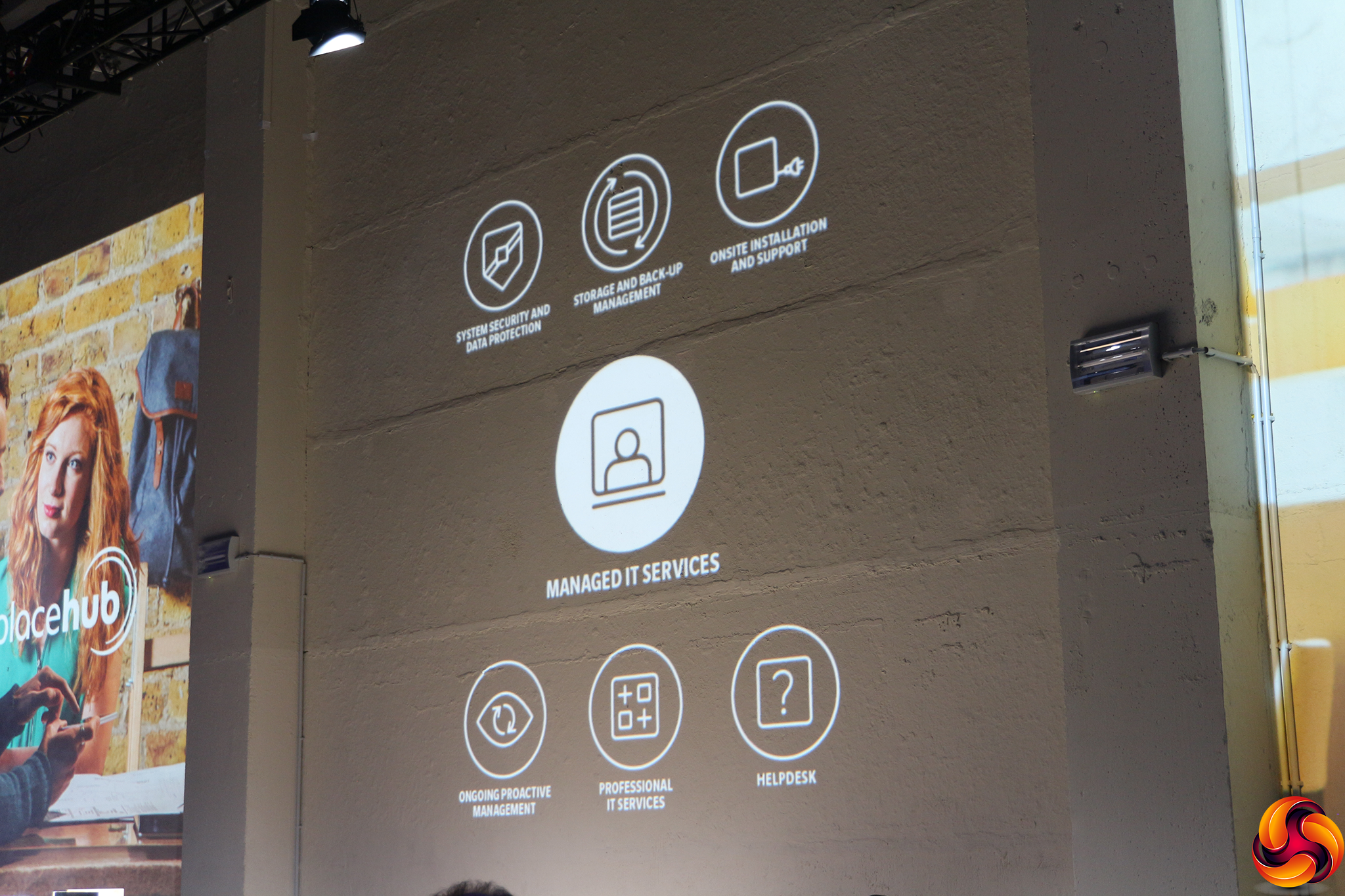
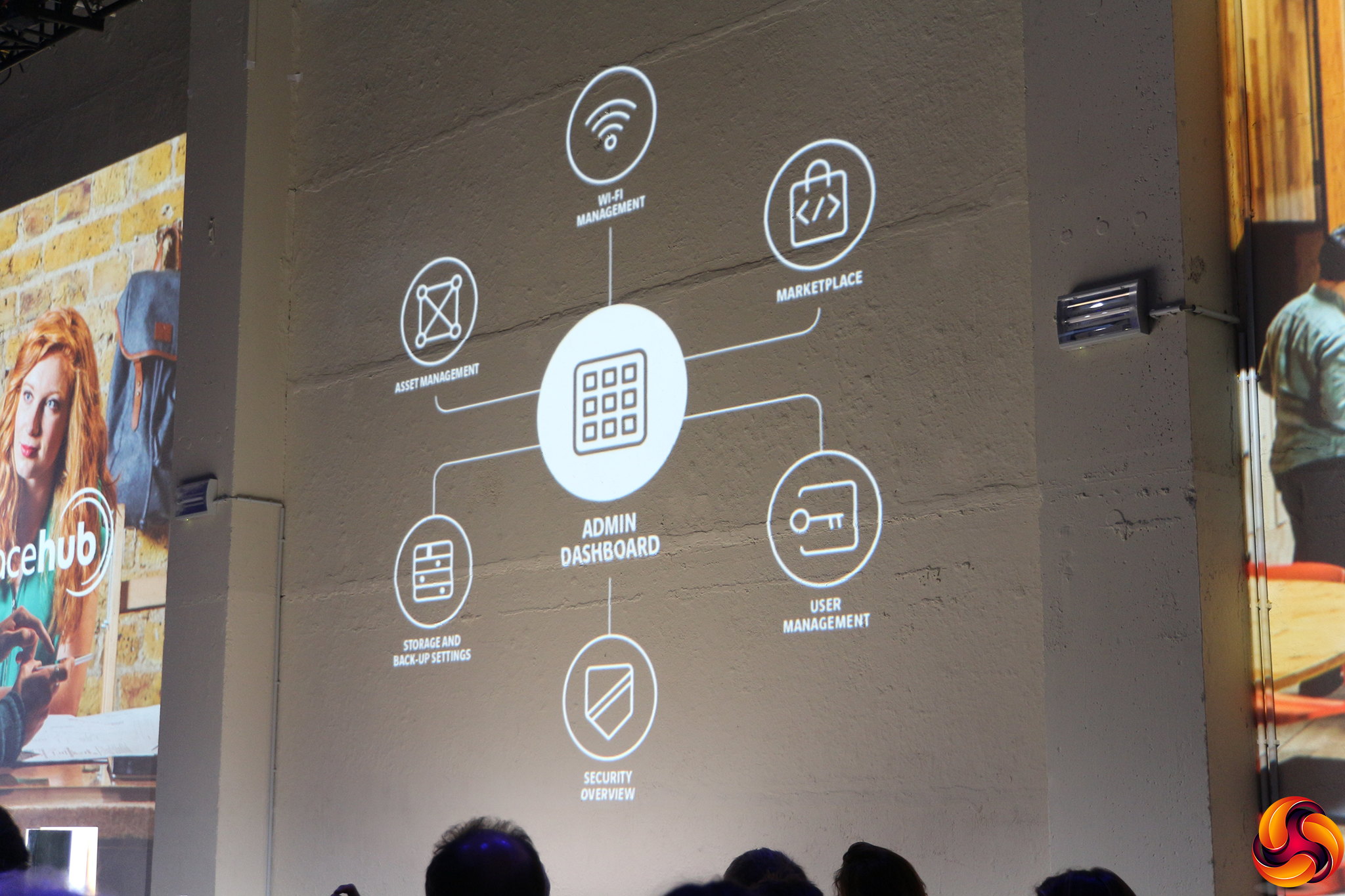
As part of its reinvention, Konica Minolta has set up a European Labs network to experiment with new concepts in workplace practice, and examples of the Labs' experimentation were also on show at Spotlight Live. One of the things they have been developing was the Google Glass-like Augmented Reality heads-up display system shown below.
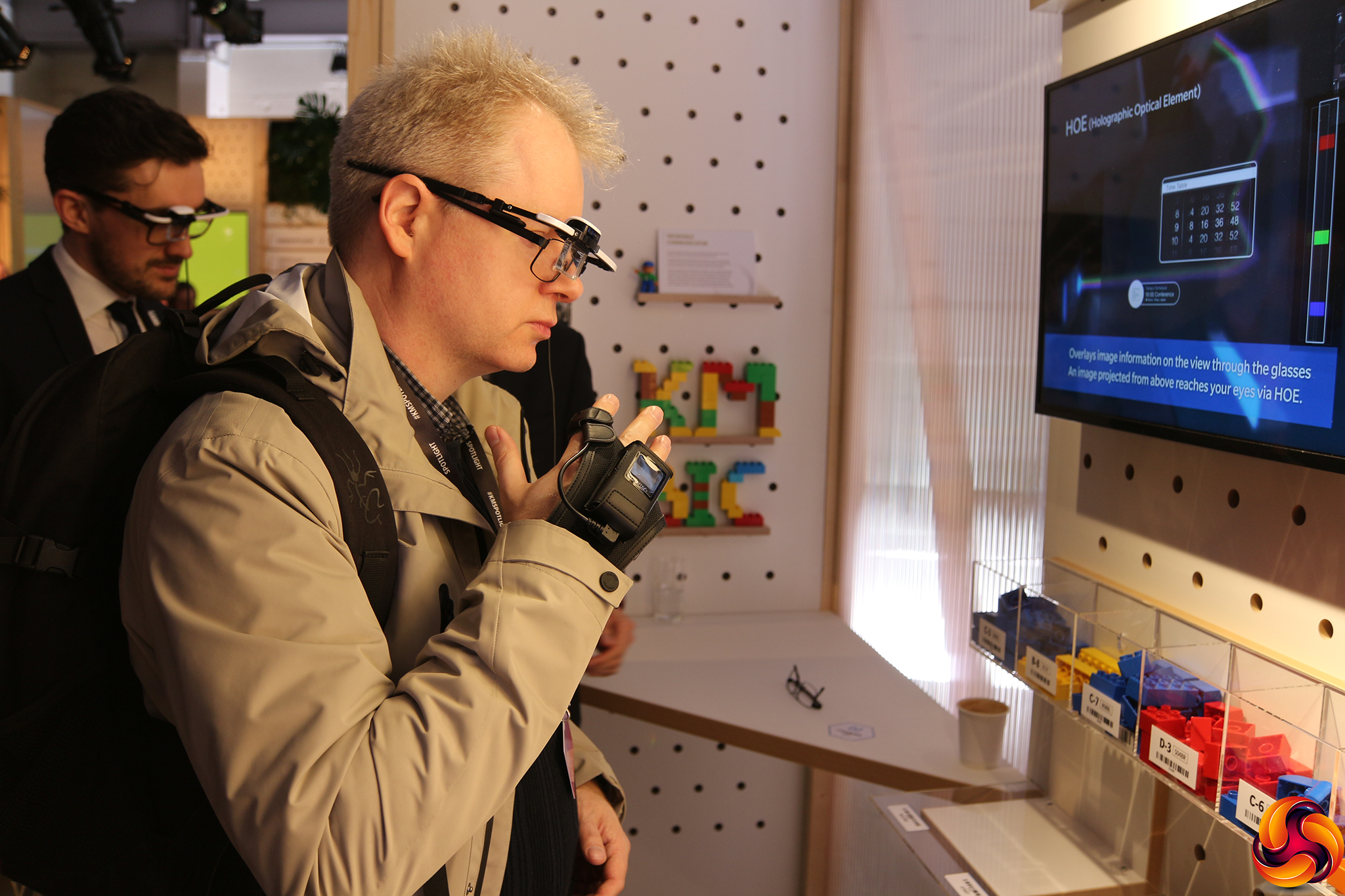
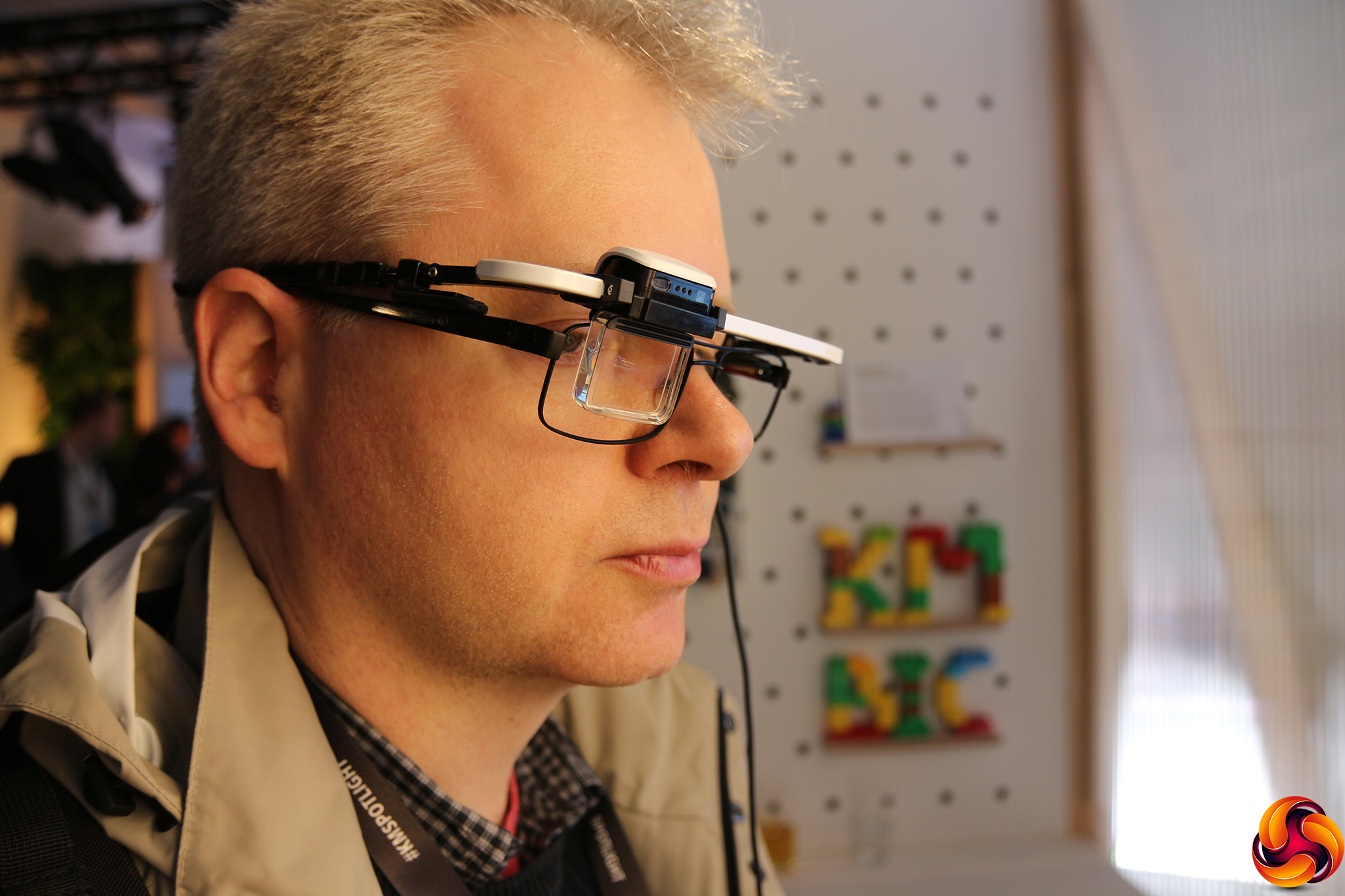
One eye can see a display showing a menu interface, whilst you wear a glove with a built-in barcode scanner.
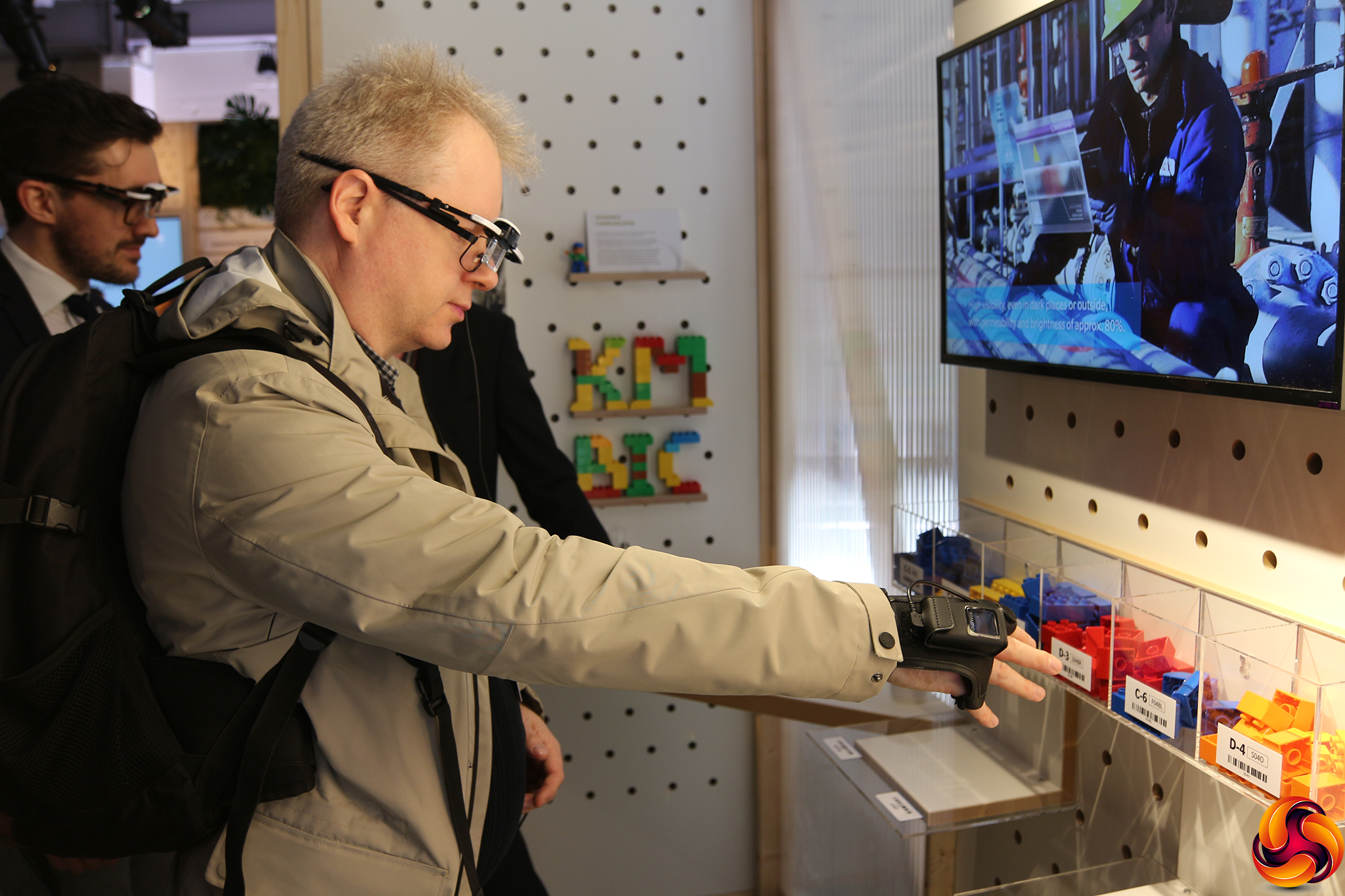
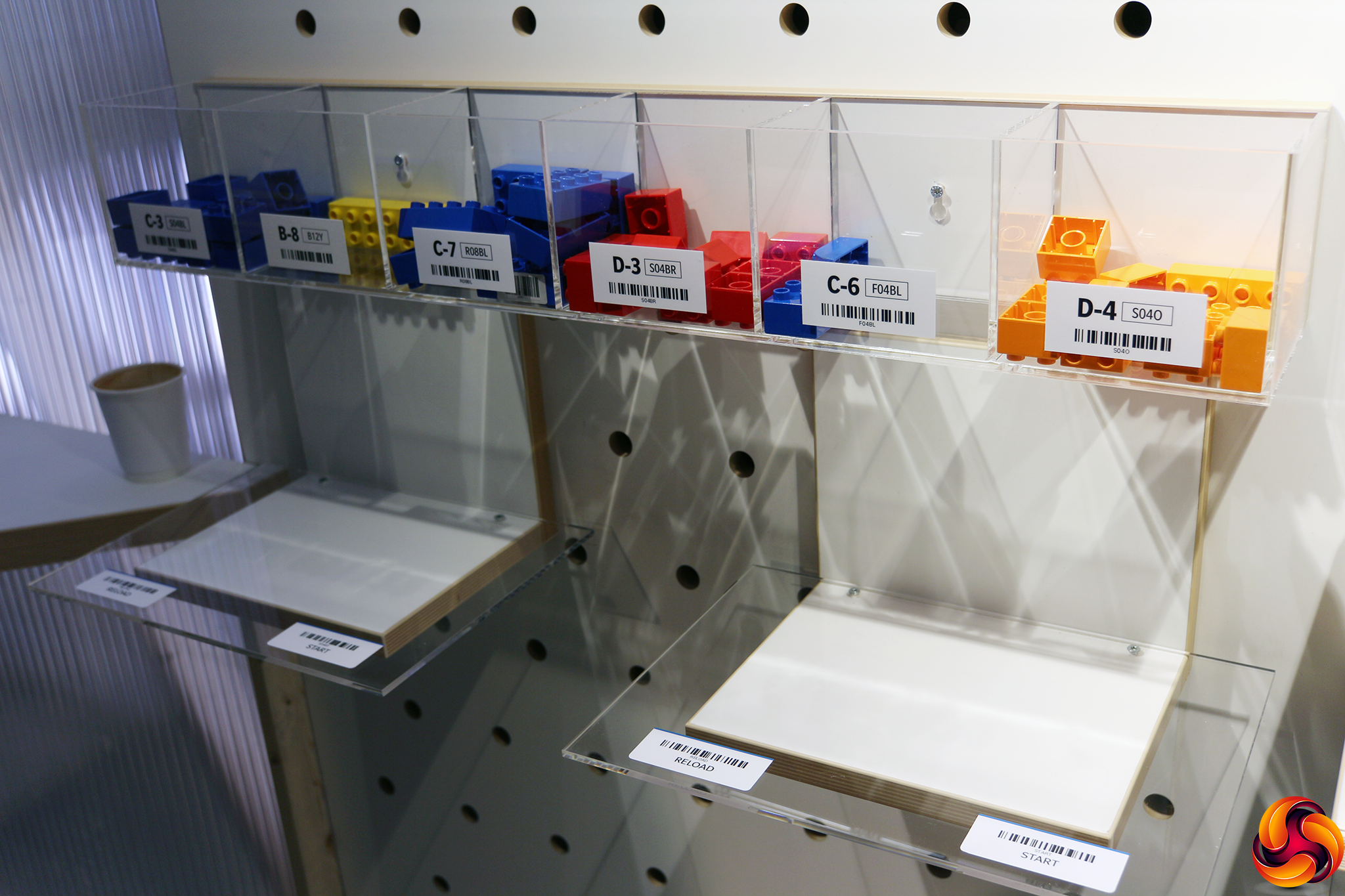
Instructions are fed in through the display, telling you to pick up various components, and how many. You scan the barcodes beneath each bin to show you have followed the instructions and are ready to move onto the next instruction.

After you've picked the parts, you're guided through the various stages of building. Voila! You've built the letter B in Duplo. Presumably, though, in the real world a worker would be constructing some electronics or an aircraft.

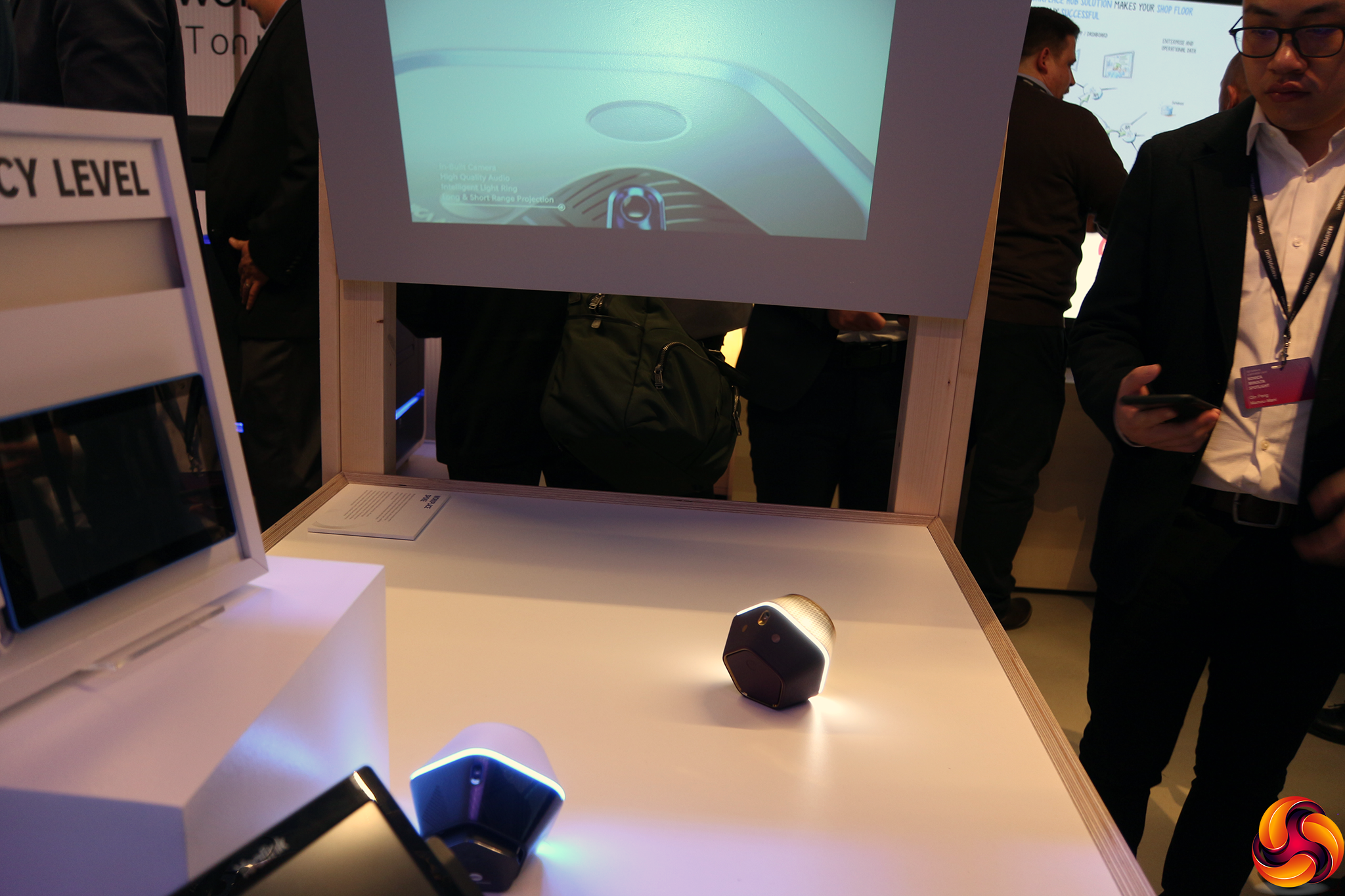
There were a number of other prototype products on show at Spotlight Live, and another one that caught our eye was the Workplace Spoke. This cute little pentagonal module is supposed to be a portable communications hub for workers on the road who want to set up a collaborative space anywhere. It combines mobile data with WiFi, so it can act as a portable hotspot.
But it also supposedly will include a few terabytes of local storage that syncs with the cloud, and even a built-in projector. That bit appeared to be working just fine in the demonstration, but the rest is still very much under development and not likely to be launched until 2018.
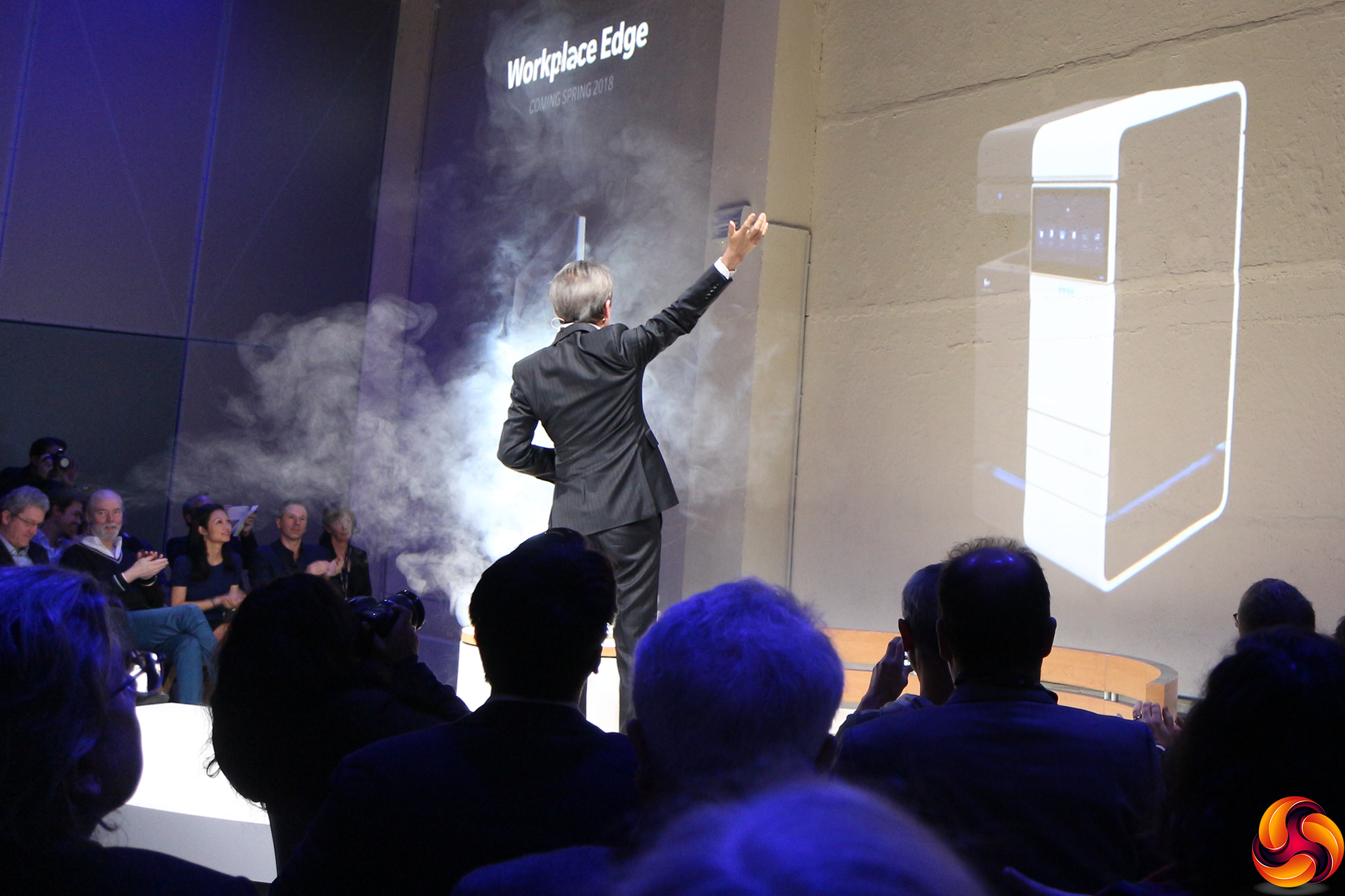
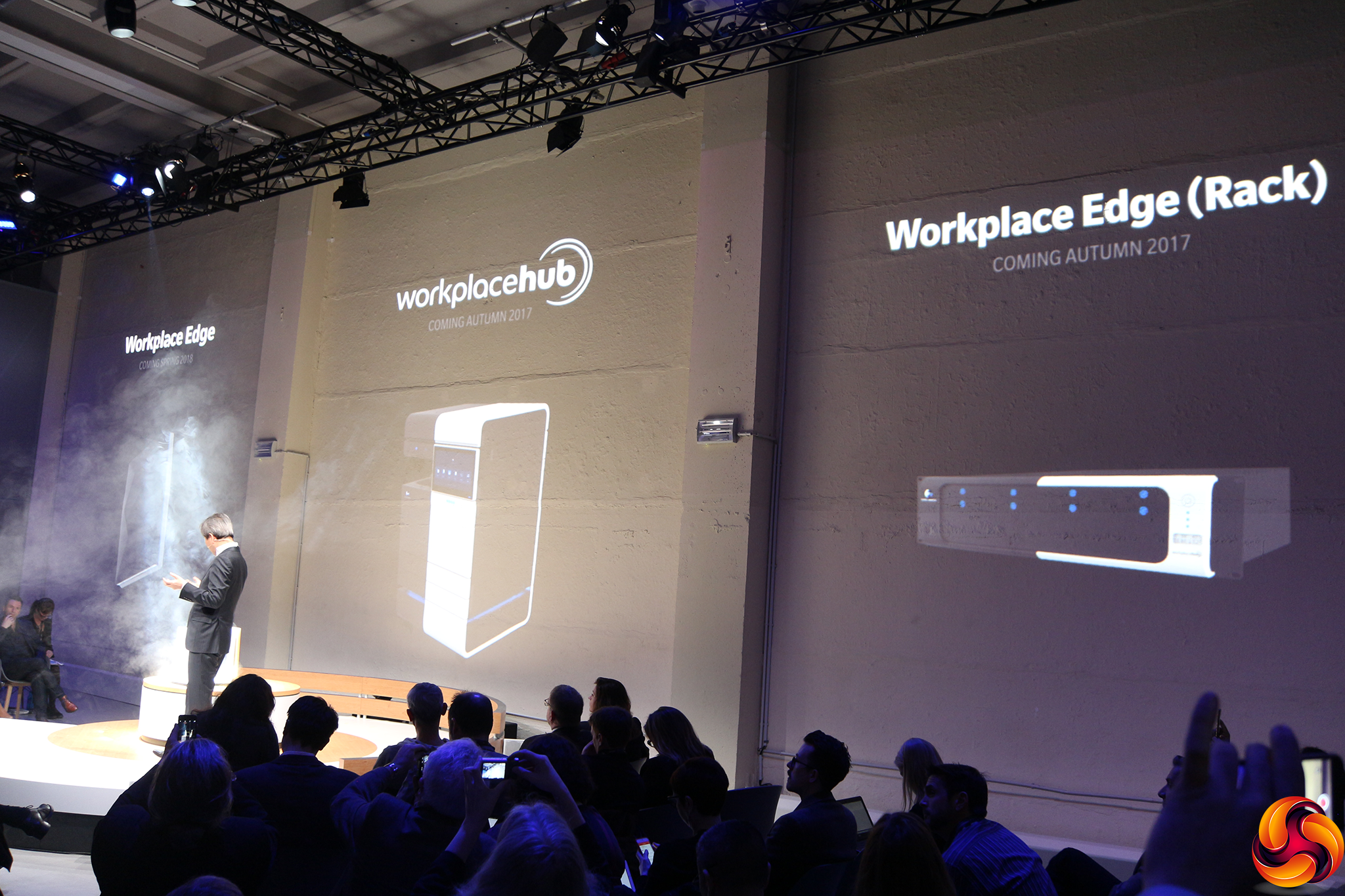
Quite a few attendees of Spotlight Live that we spoke to were still puzzled by what they had seen even after the event, with one claiming “they've tricked us into going to a printer launch”. The Workplace Hub ecosystem is clearly quite a bit more than that, although document management is going to be quite central to the first version launched later this year.
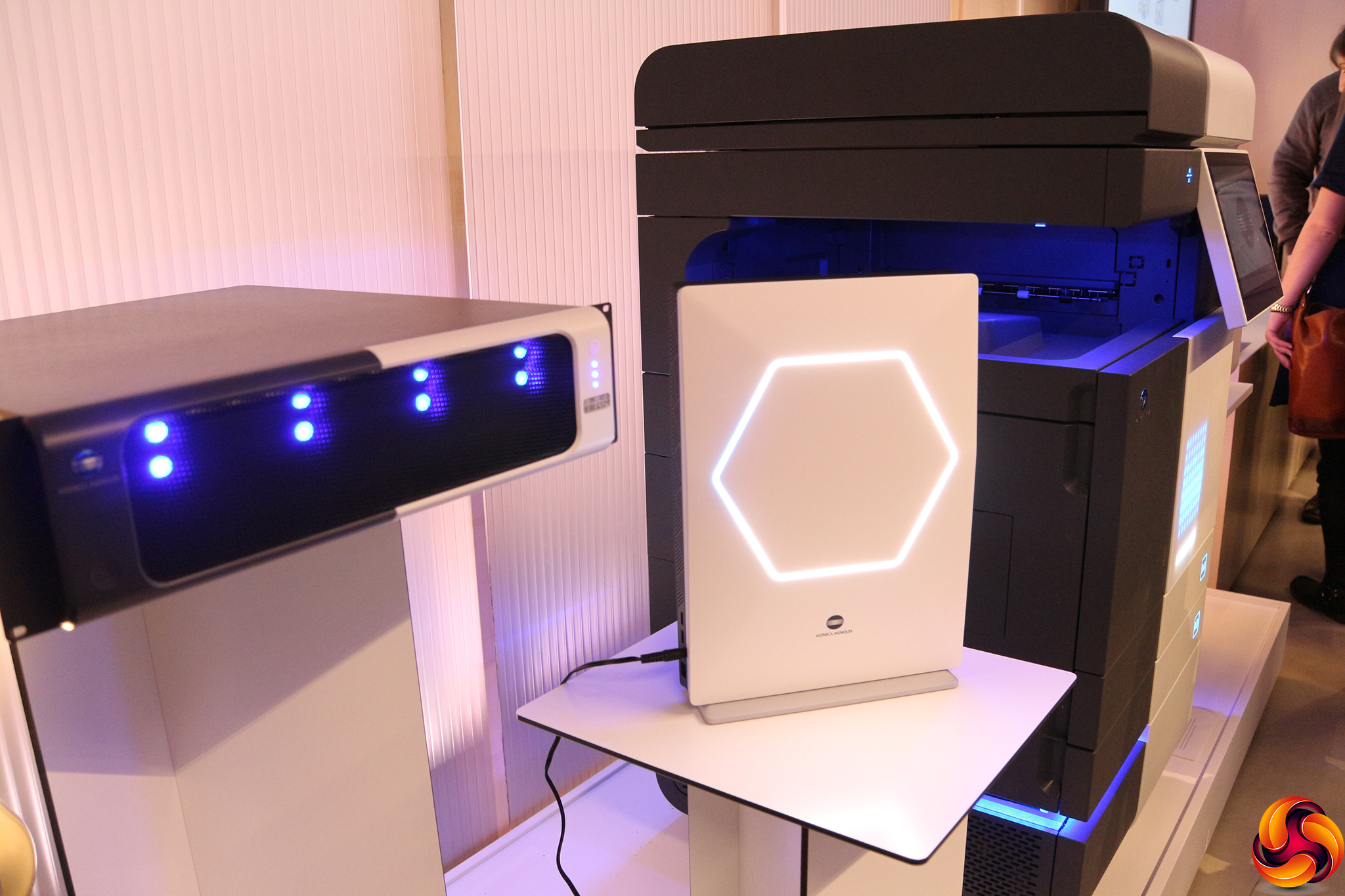
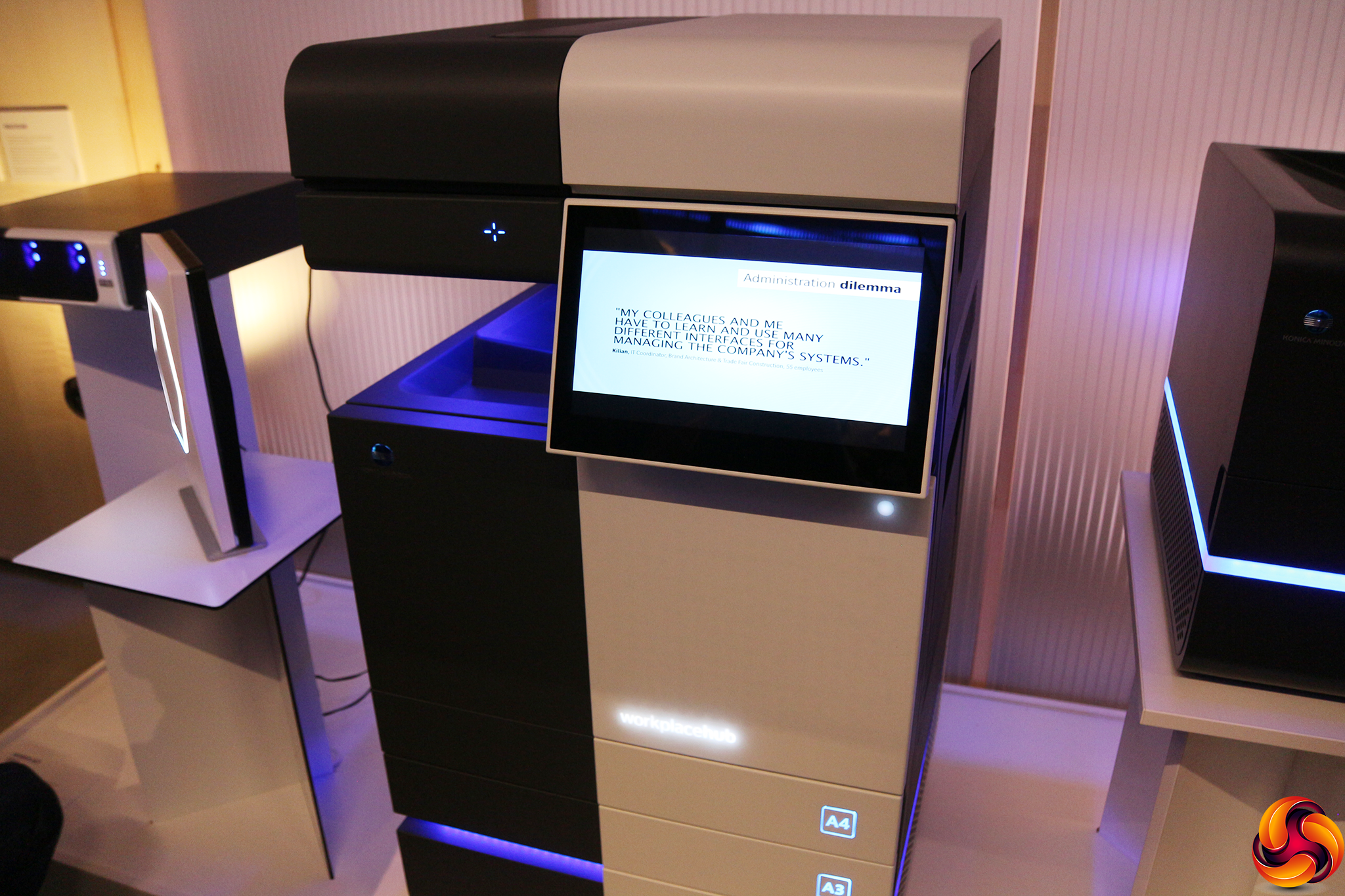
The most interesting aspects of Workplace Hub aren't here yet – the AI-based cognitive elements that enhance work activities with expert systems, like Google Cars for business processes. But it's great to see a company willing to break along way from its core business and comfort zone to experiment with future possibilities, even if those possibilities are a little confusing at this stage. You can read all about the Workplace Hub on a dedicated Konica Minolta website.
Discuss on our Facebook page, over HERE.
Kitguru Says: The Konica Minolta Workplace Hub is a major change of direction for the company, but whether it's the workplace of everyone's future remains to be seen. Watch this space…
I was paid 104000 dollars last 12 month period by doing an internet based work and also I was able to do it by working in my own time for quite a few hours every day. I utilized job opportunity I came across on the internet and I am thrilled that I was manage to make such decent money. It is actually newbie-friendly and therefore I am so blessed that I found out about it. Read through exactly what I do… http://nubr.co/dCQmw2
The Workplace hub……sounds damned well creepy to me, stirs up images of a cube with a toilet in the corner, a matress, and a feeding slot. A place where your overseers direct feed instructions into your pliable primate mind bypassing basic communication. Work Monkey Work. Ok it’s 1am here I best take my pills and go have a lie down.
I was paid 104000 bucks past year by doing an on-line job and I was able to do it by working in my own time for quite a few hours regularly. I tried job opportunity I stumbled upon online and also I am thrilled that I was capable to earn such decent cash. It is seriously newbie-friendly and I’m so blessed that I discovered out regarding it. Check out what I do… http://b1z.org/37Y
I fail to see what more I can get out of this, that I don’t already have with me develop (konica minolta) ineo+ 258.
Maybe this is just not for me but then again, why the felt the need to call consumer oriented sites in their event if this is not for me?
You just summed up the future of work… check out this company’s Twitter feed, for example. Scary. @metaselected