 KitGuru KitGuru.net – Tech News | Hardware News | Hardware Reviews | IOS | Mobile | Gaming | Graphics Cards


Silverstone have earned a positive reputation over the years, crafting some of the finest computer cases for the enthusiast audience. They have also had great success with their range of power supplies, especially in the high end. Today we look at something more modest, designed for the mainstream audience – the Strider Plus 700 W, a 80 Plus Bronze certified modular power supply sporting a single +12V rail.
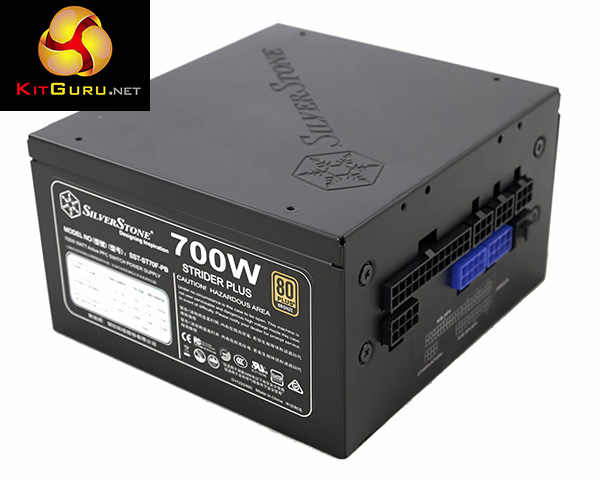
The SilverStone Strider power supply portfolio is certainly extensive, the company currently have a variety of models split into various categories, ranging in capacity from 500 watts to 1,500 watts. Regular readers may remember the £200 SilverStone 1500W model (Strider “80+ Silver” 1500W Power Supply) that Overclockers UK selected for their power sucking Infinity Vesuvius system which featured not one, but two AMD R9 295X2 graphics cards.
The Strider Plus 700W unit we are testing today is priced more conservatively – at £67.99 inc vat. The price point is certainly competitive, but there is no shortage of competition between £65 and £80 … if you spend time shopping around.
We haven't opened the Strider Plus 700w unit yet, but we would imagine that SilverStone may have had to cut some corners to achieve this price point, perhaps incorporating Chinese branded, or lower grade 85c rated capacitors. For now, a list of features from the company themselves.
Features
- High efficiency with 80 PLUS Bronze certification.
- 24/7 continuous power output with 40 degrees operating temperature.
- 100% modular cables.
- Class-leading single +12V rail.
- Strict ±3% voltage regulation and low ripple & noise.
- Silent running 120mm fan with 18dBA.
- PCI-E 8pin and PCI-E 6pin connectors support.
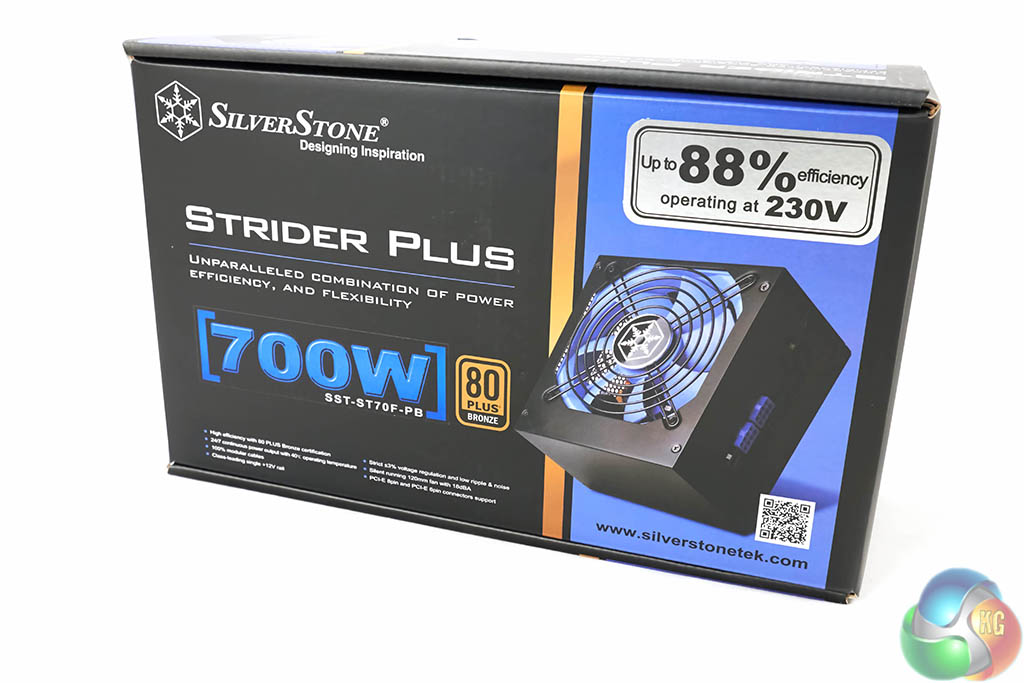
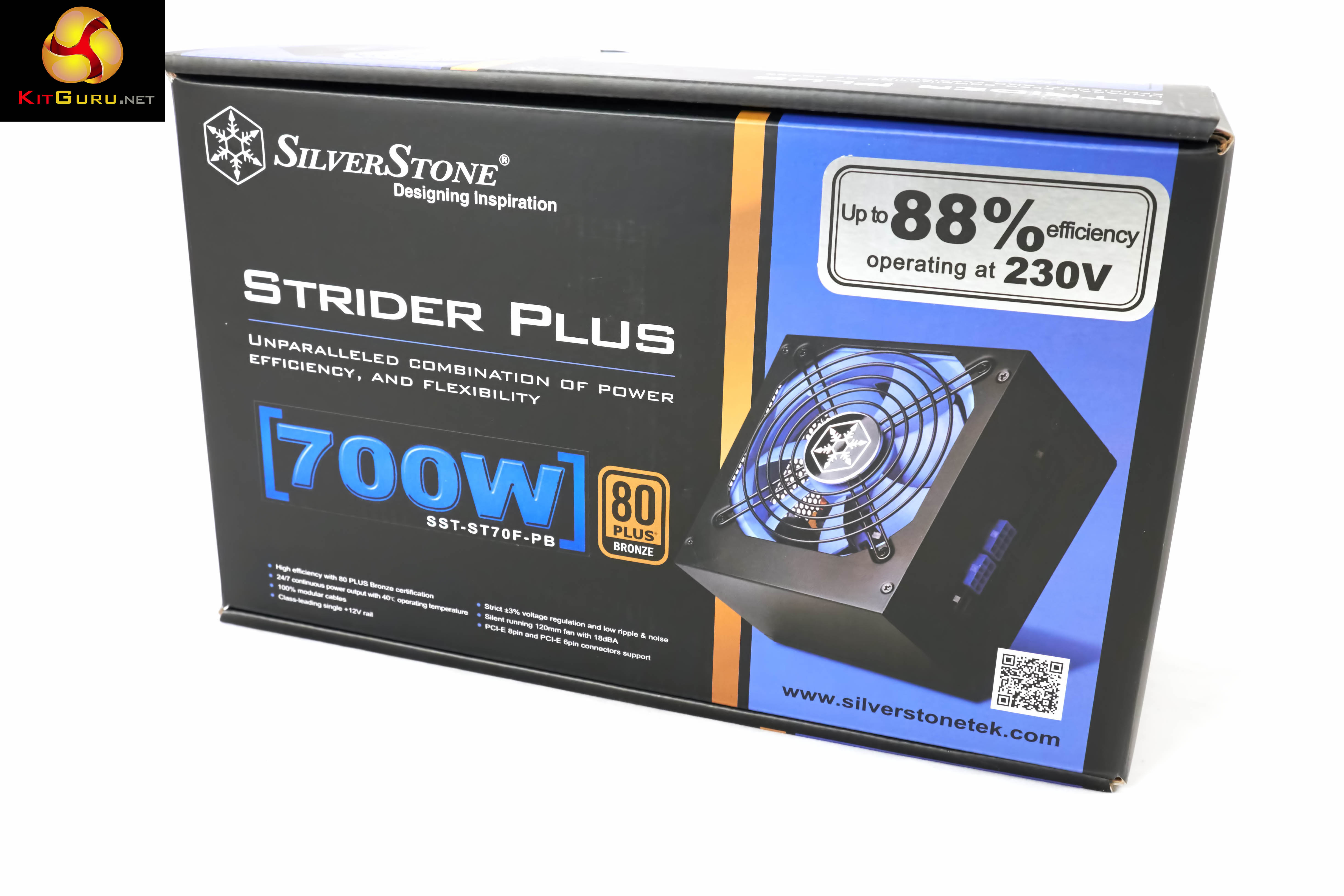
SilverStone packaging is actually quite distinctive, if somewhat bland. Still, it is nice to see an actual image of the product on the front of the box, rather than a generic image for a whole range of products.
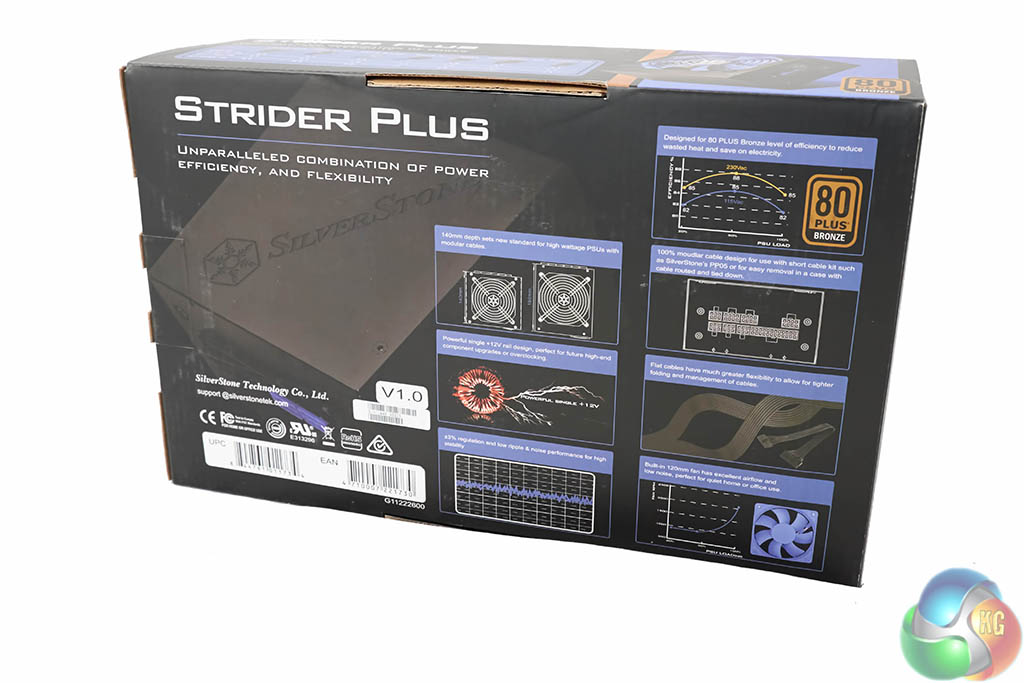
The rear of the box is home to a series of panels explaining some of the technical aspects of the power supply.
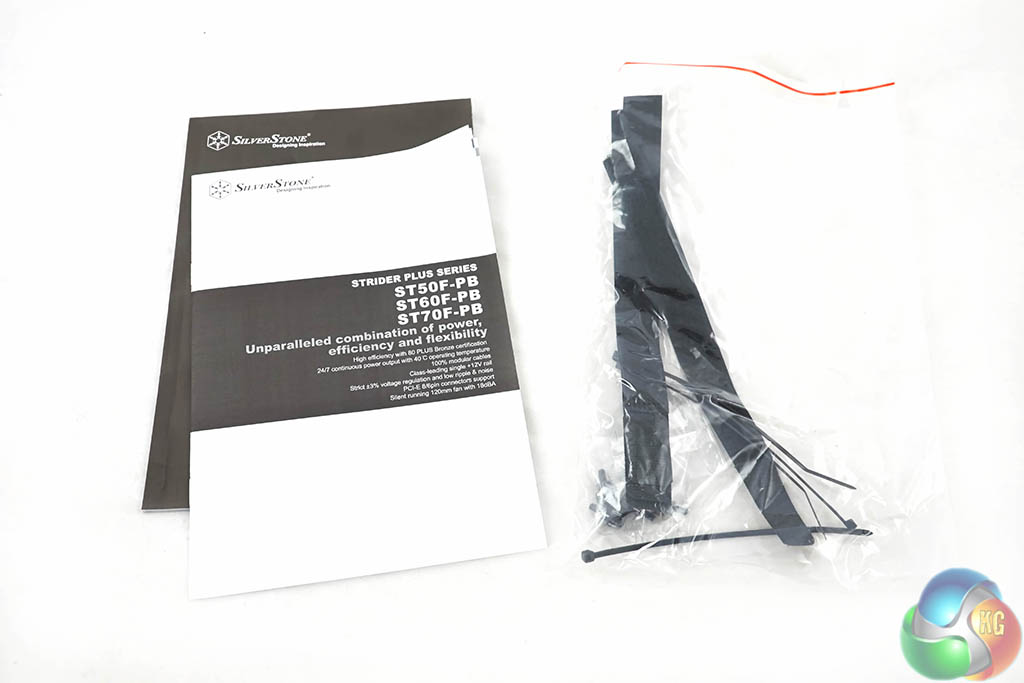
Inside the box is a user manual, cable ties, and mounting screws.
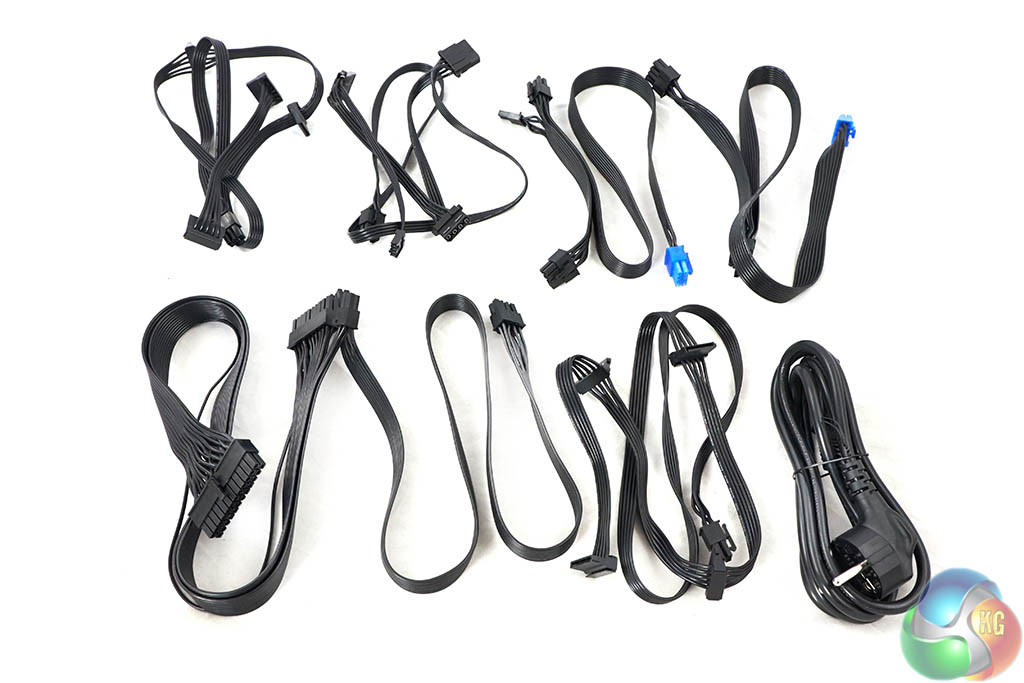
All cables are flat ribbon style, easier to route and can help improve airflow, which is always a bonus.
| Cable (modular) | Connectors |
| MB 20+4 pin | x1 (550mm) |
| 6+2 pin PCIe | x4 (550mm / 150mm” x 2) |
| 4+4 pin EPS12V/ATX12V | x1 (750mm) |
| SATA | x8 (600mm / 150mm / 150mm /150mm x 2) |
| MOLEX | x3 (600mm+150mm+150mm) |
| FDD | x1 (600mm / 150mm / 150mm / 150mm) |
SilverStone supply 4 PCI cables to cater for Crossfire or SLi configurations. The 4+4 pin cable is 750mm long which is ideal for larger chassis.
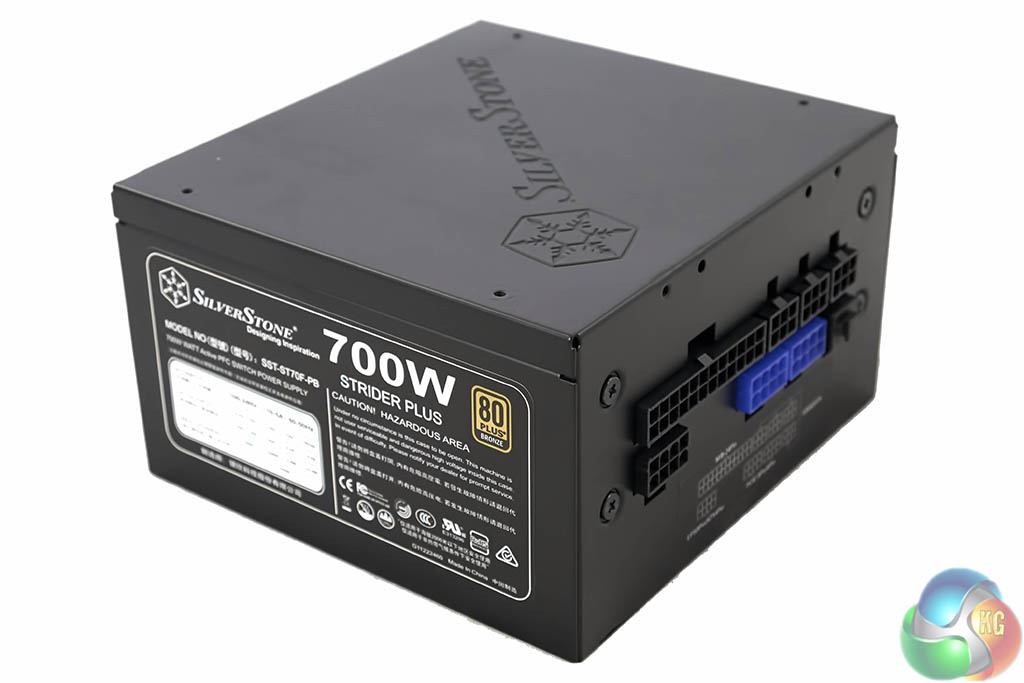
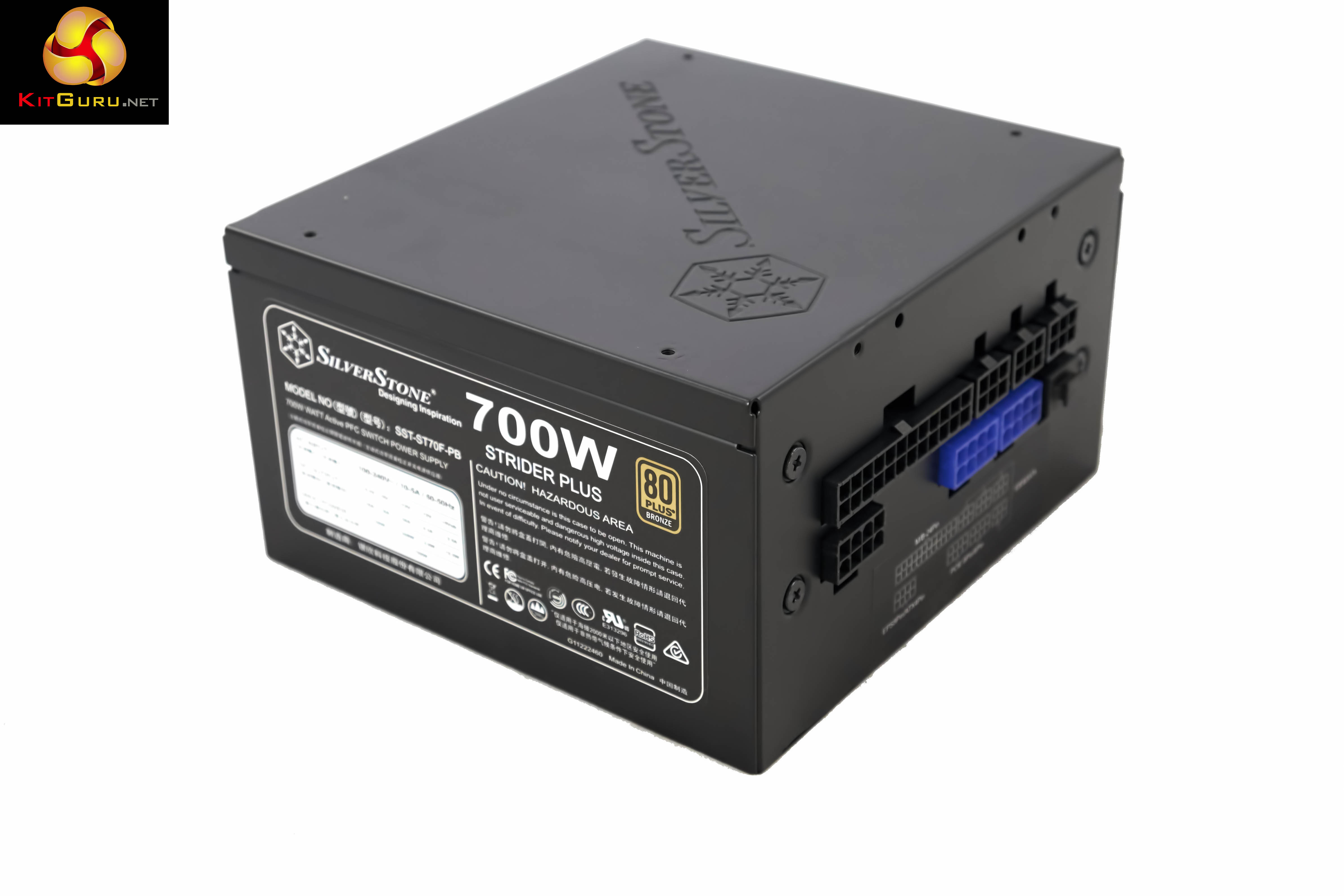
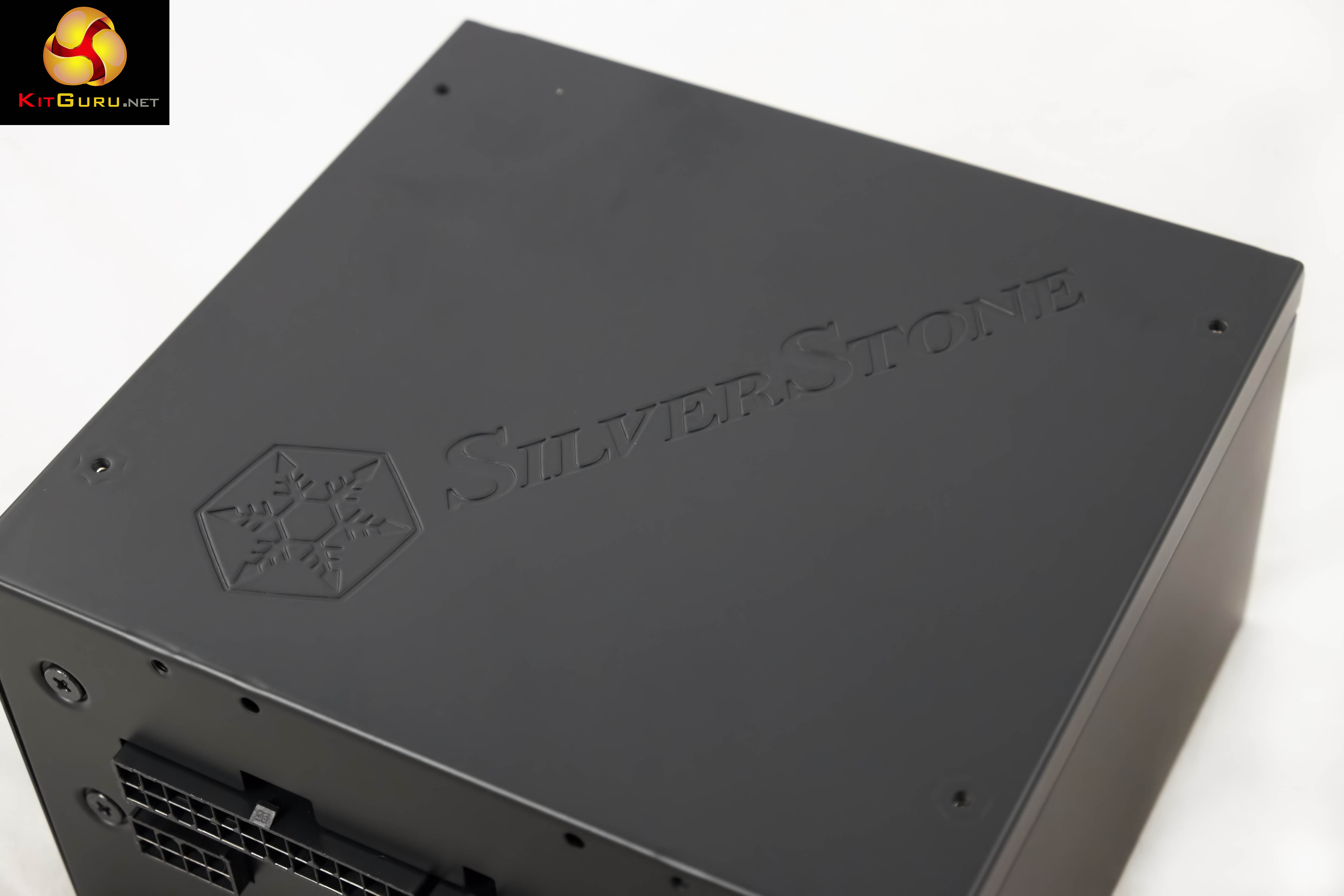
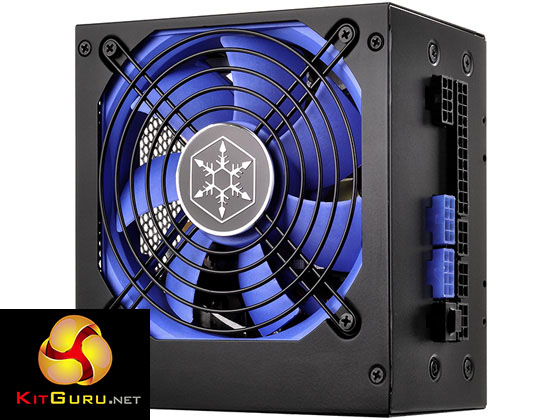
The SilverStone Strider Plus 700W is a rather inoffensive looking little unit with the company logo and name engraved into the top. A large sticker takes up position on the side.
This 700w watt unit passed our ‘screwdriver’ test without a problem. This involves running the head of a Philips head driver down the side of the chassis with light to medium force. After all, how many times have you accidentally connected with a power supply during a system build?
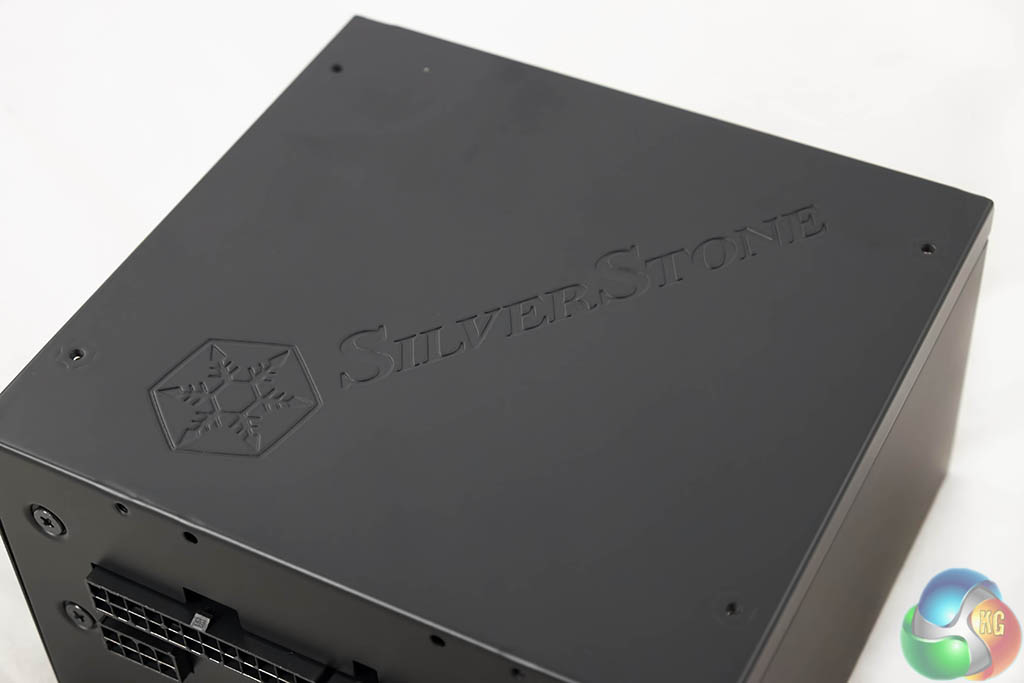
The engraving is rather a nice subtle touch.
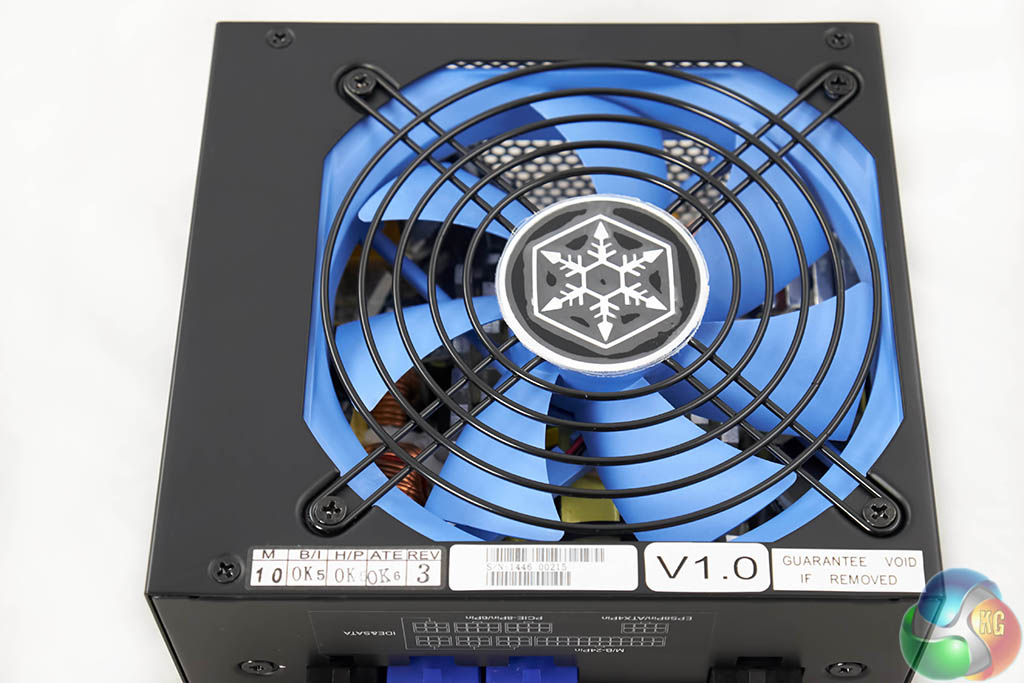
A bright lightly coloured blue fan is visible behind a protective black grill.
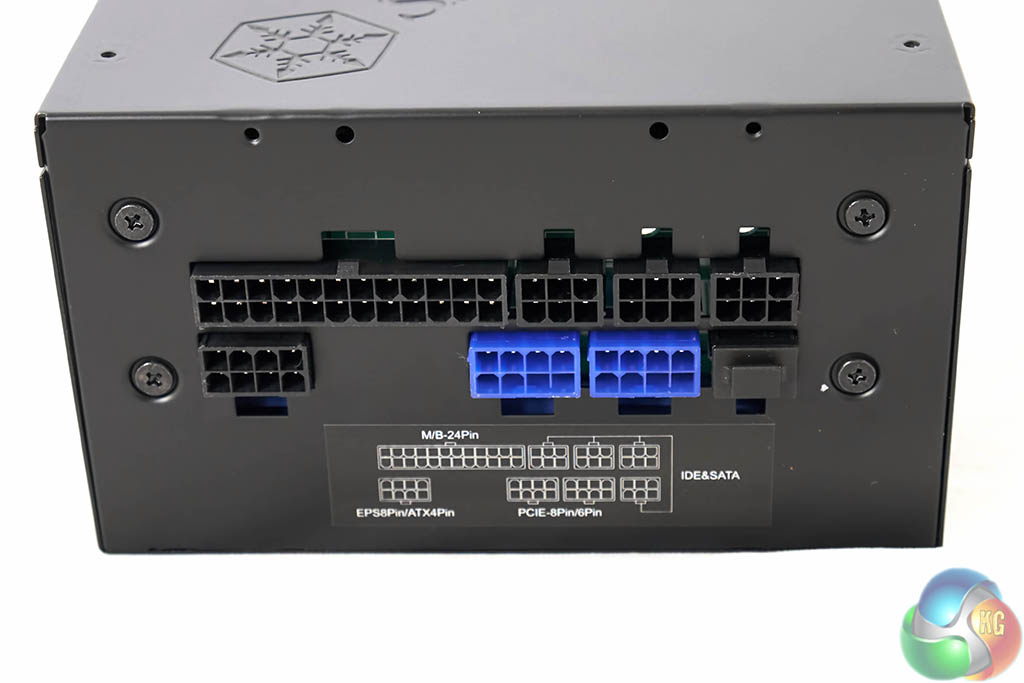
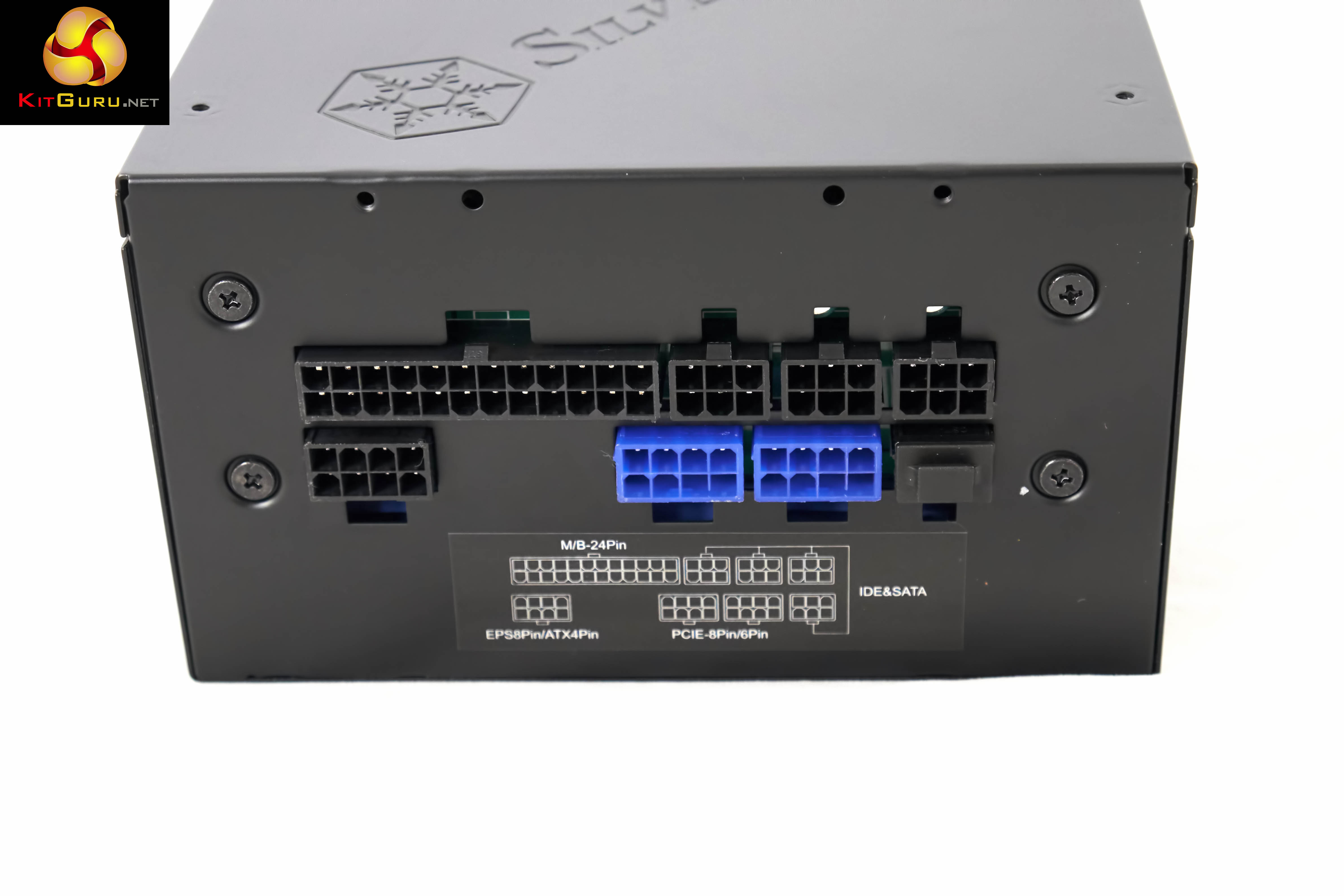
One side of the power supply is home to the modular panel – the ports are coloured black and blue. One of the connectors is covered on this particular unit.
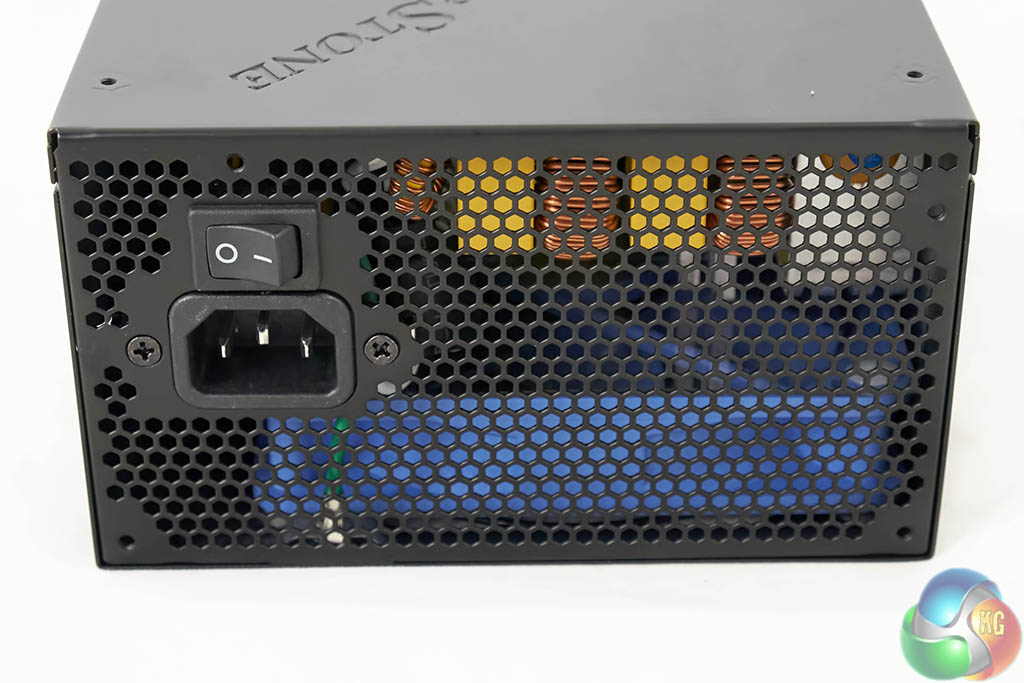
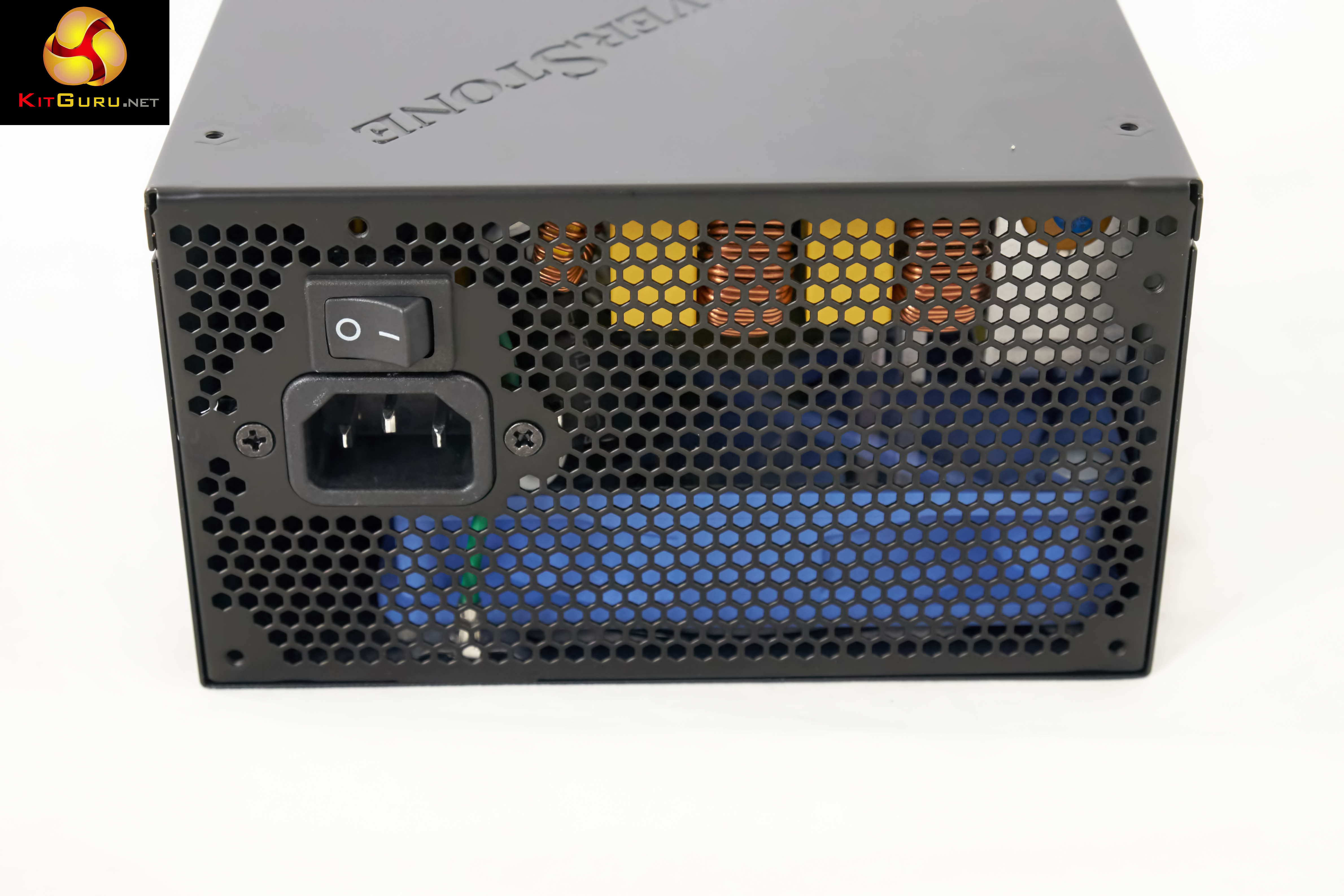
The other side of the power supply is honeycomb vented to help ensure there is enough air flow for cooling. At the side is a power connector and power switch.
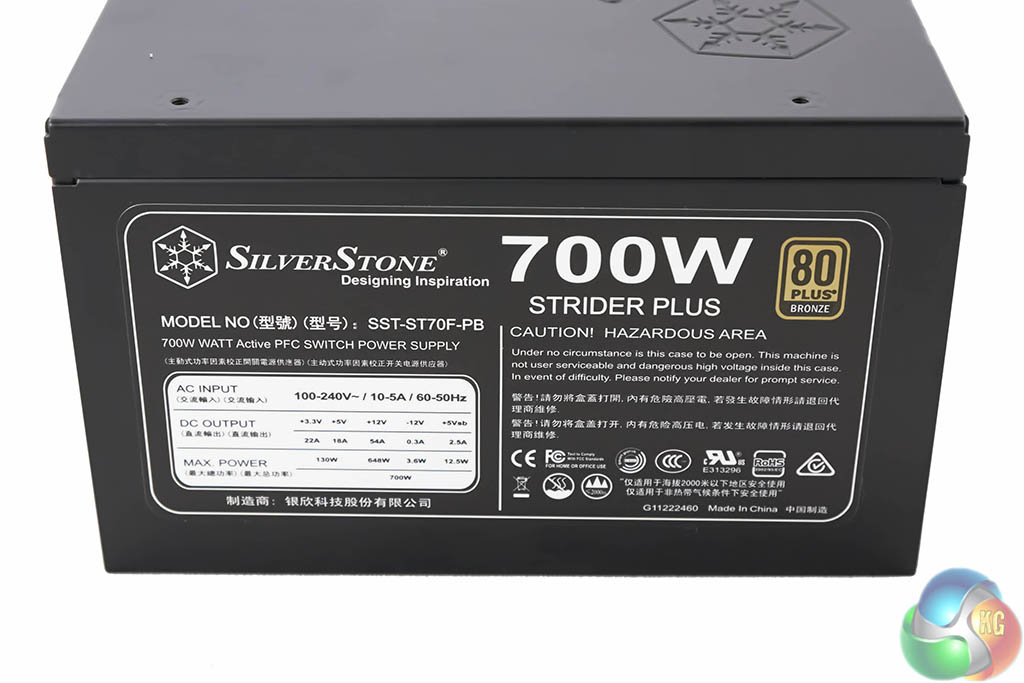
| Silverstone Strider Plus 700W | |||||
|
DC Output
|
+3.3V
|
+5V
|
+12V |
-12V
|
+5Vsb
|
|
Max Output
|
22A
|
18A
|
54A |
0.3A
|
2.5A
|
| Total Power | 130W | 648W | 3.6W | 12.5W | |
| 700W | |||||
The single +12V rail can deliver 54A which is 648W of the total output. The +3.3V rail can deliver 22A and the +5V rail 18A.
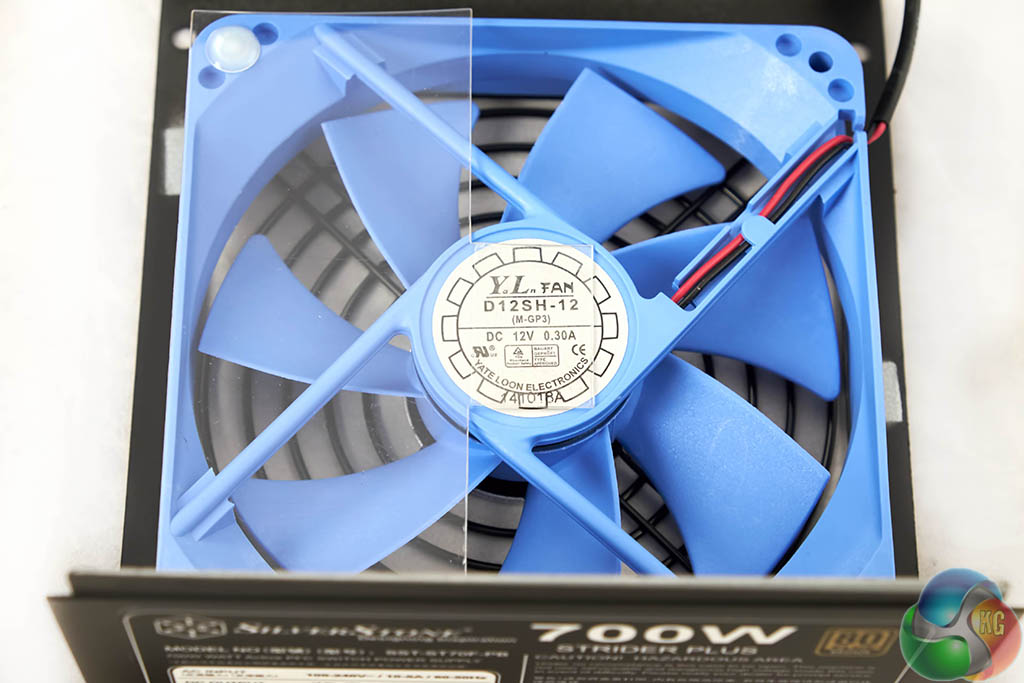
The Silverstone Strider Plus 700W is using a 120mm 7 blade Yate Loon fan (D12SH-12). The speed is rated at a maximum of 2,200 rpm with an airflow of 88cfm and a maximum noise rating of 40dBa. This is a standard quality ball bearing fan.
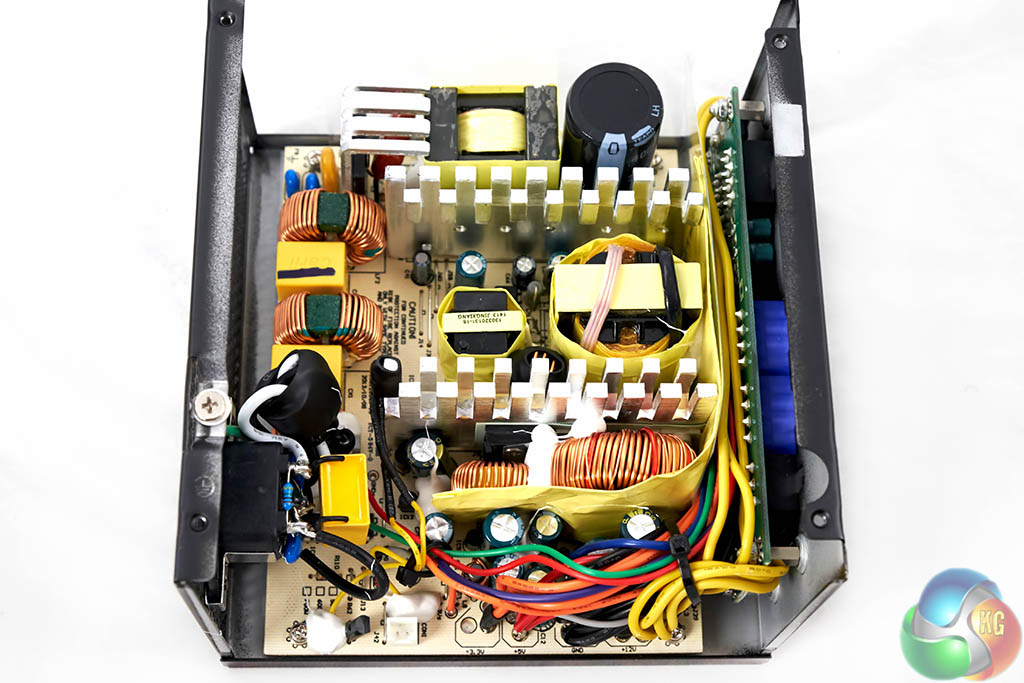
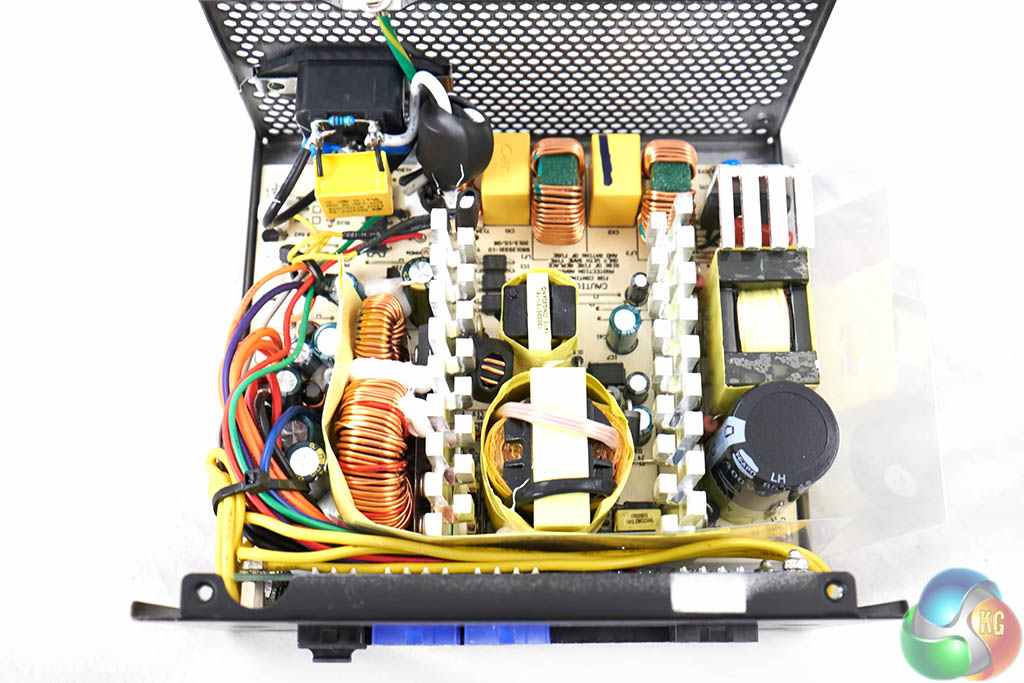
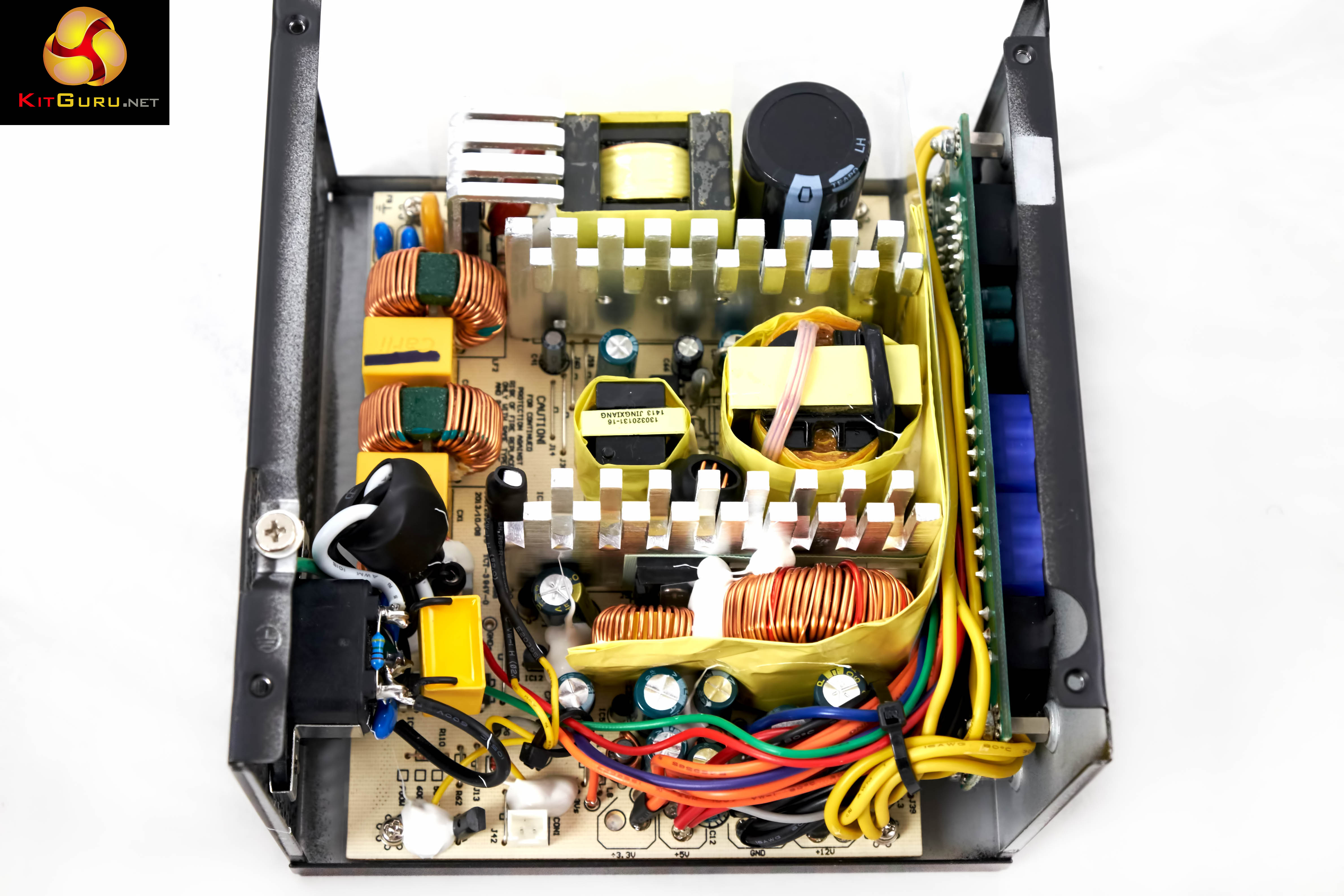
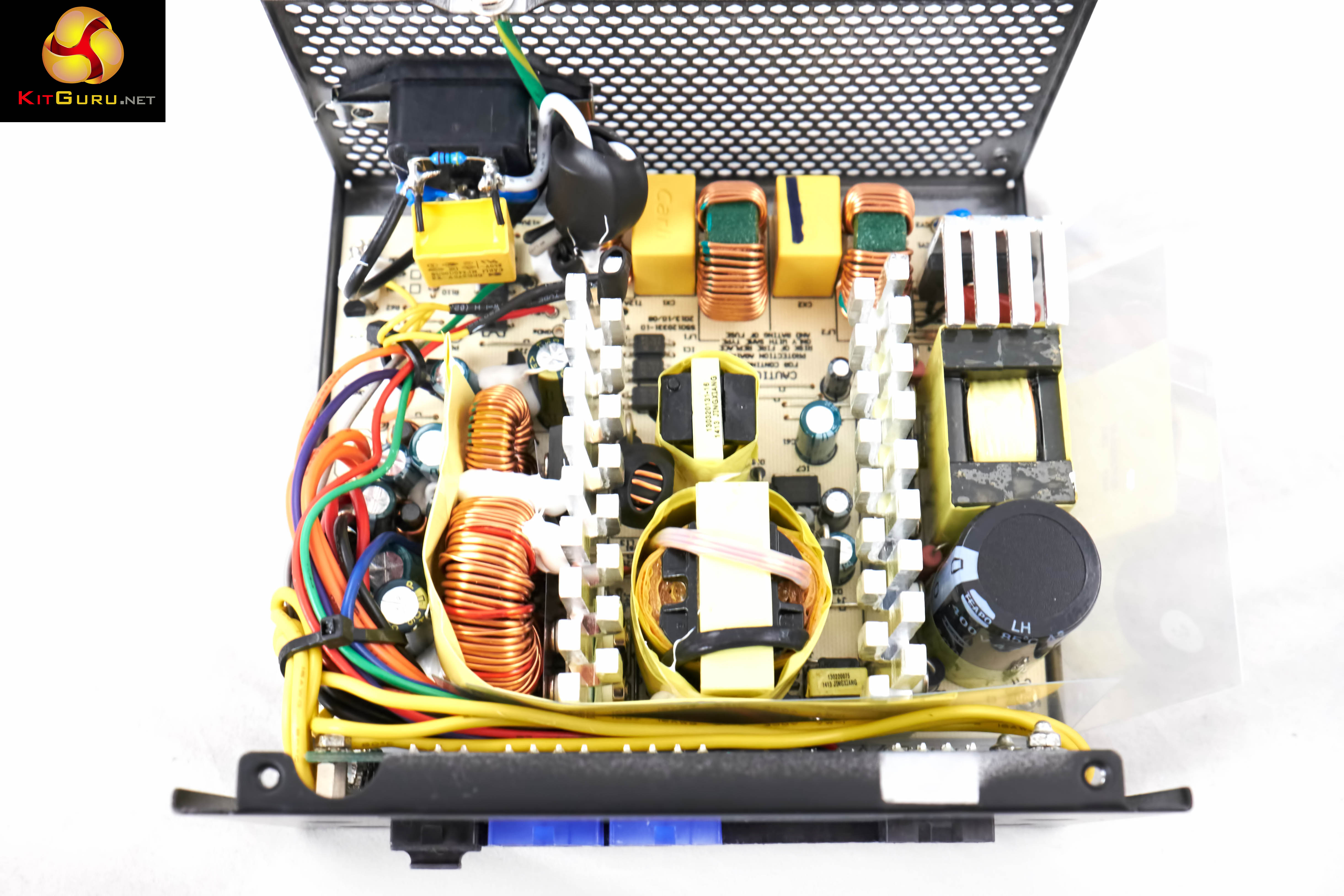
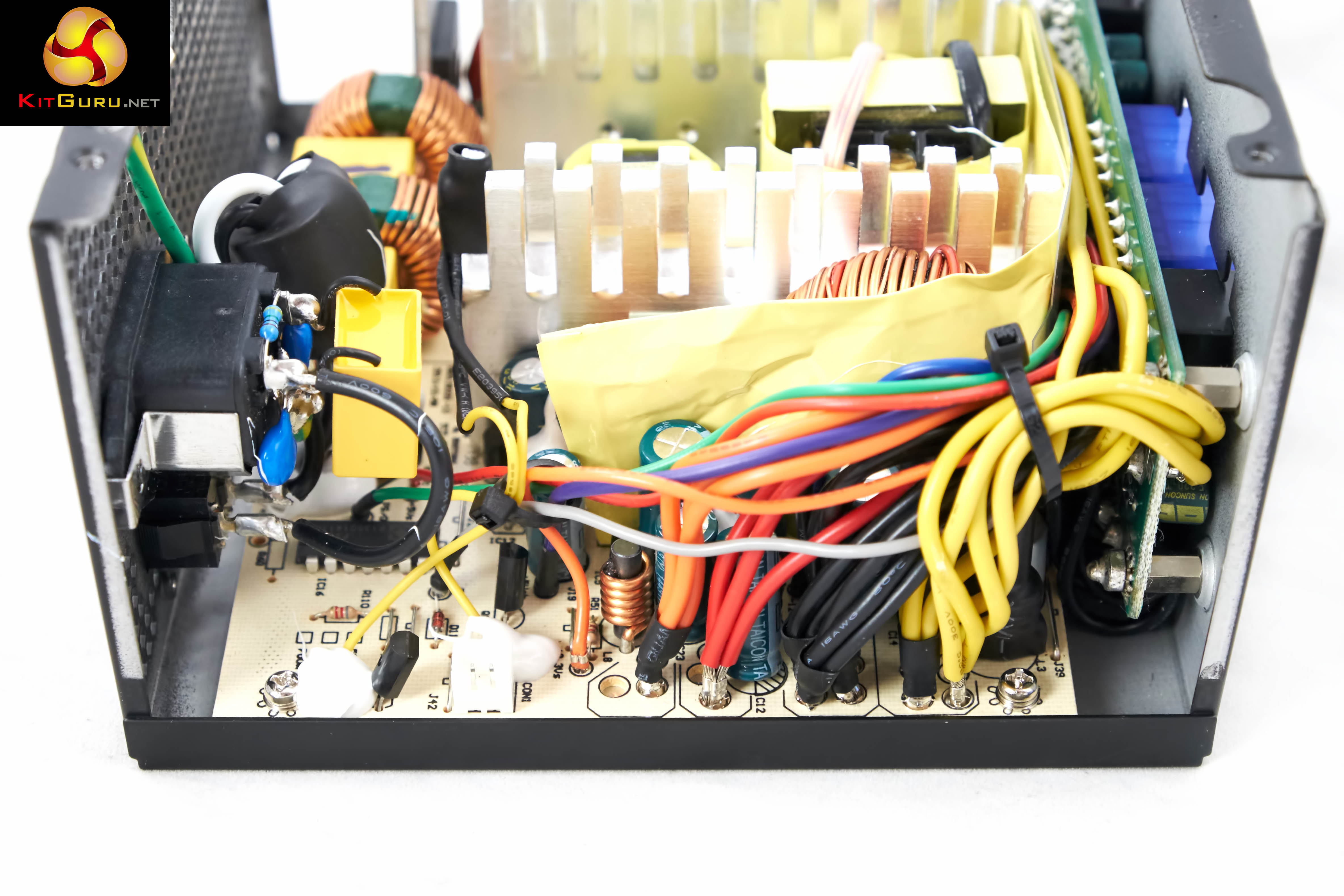
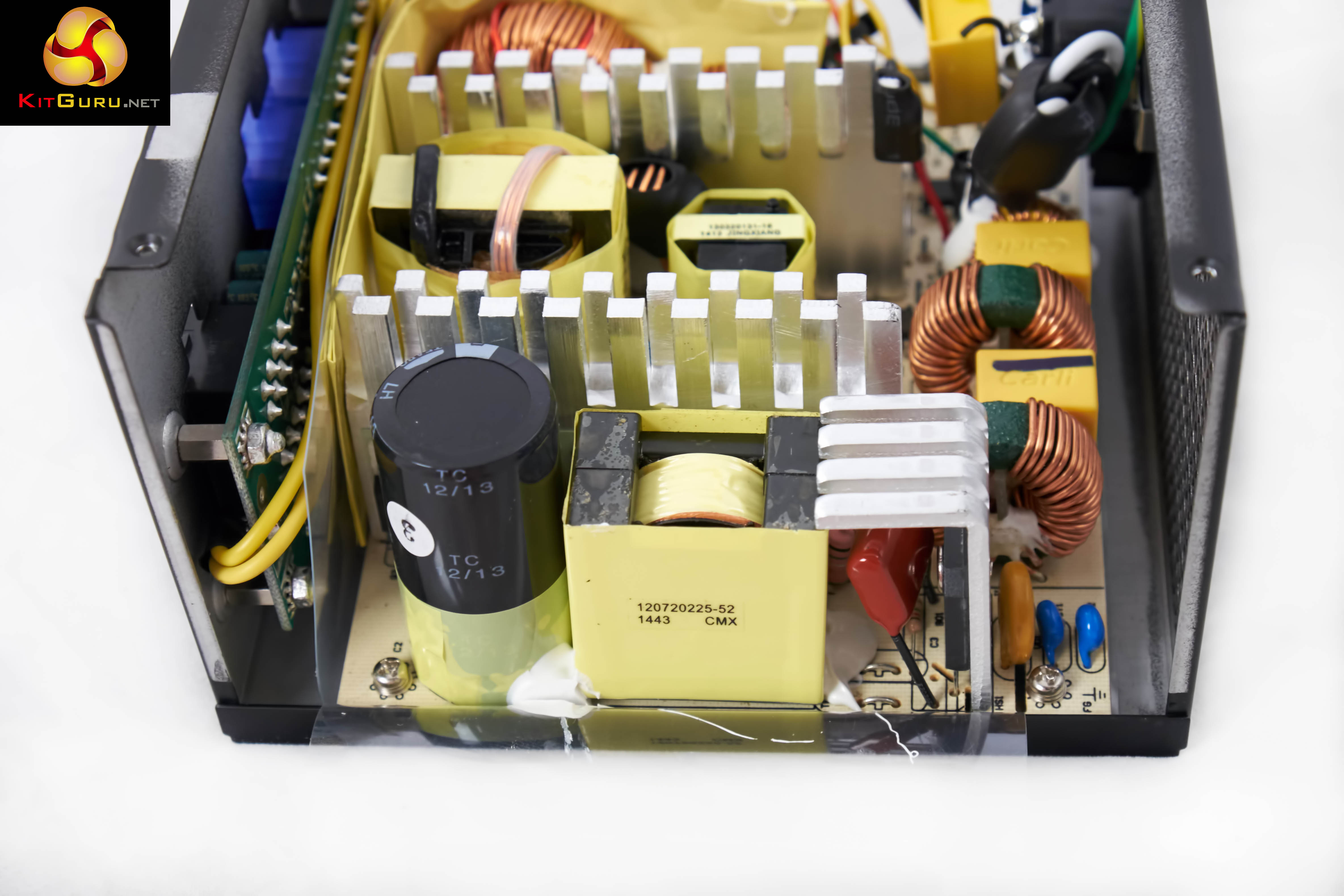
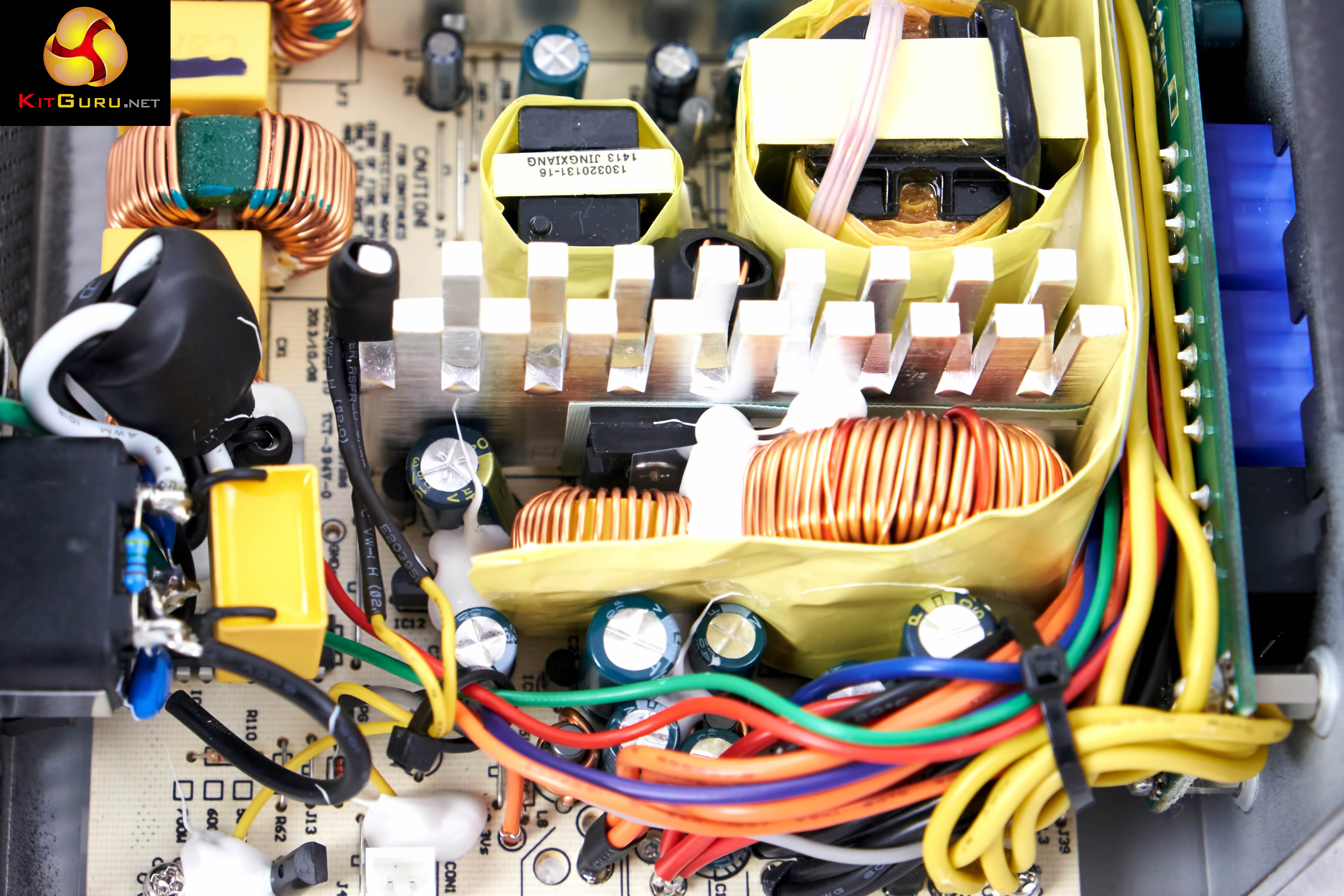
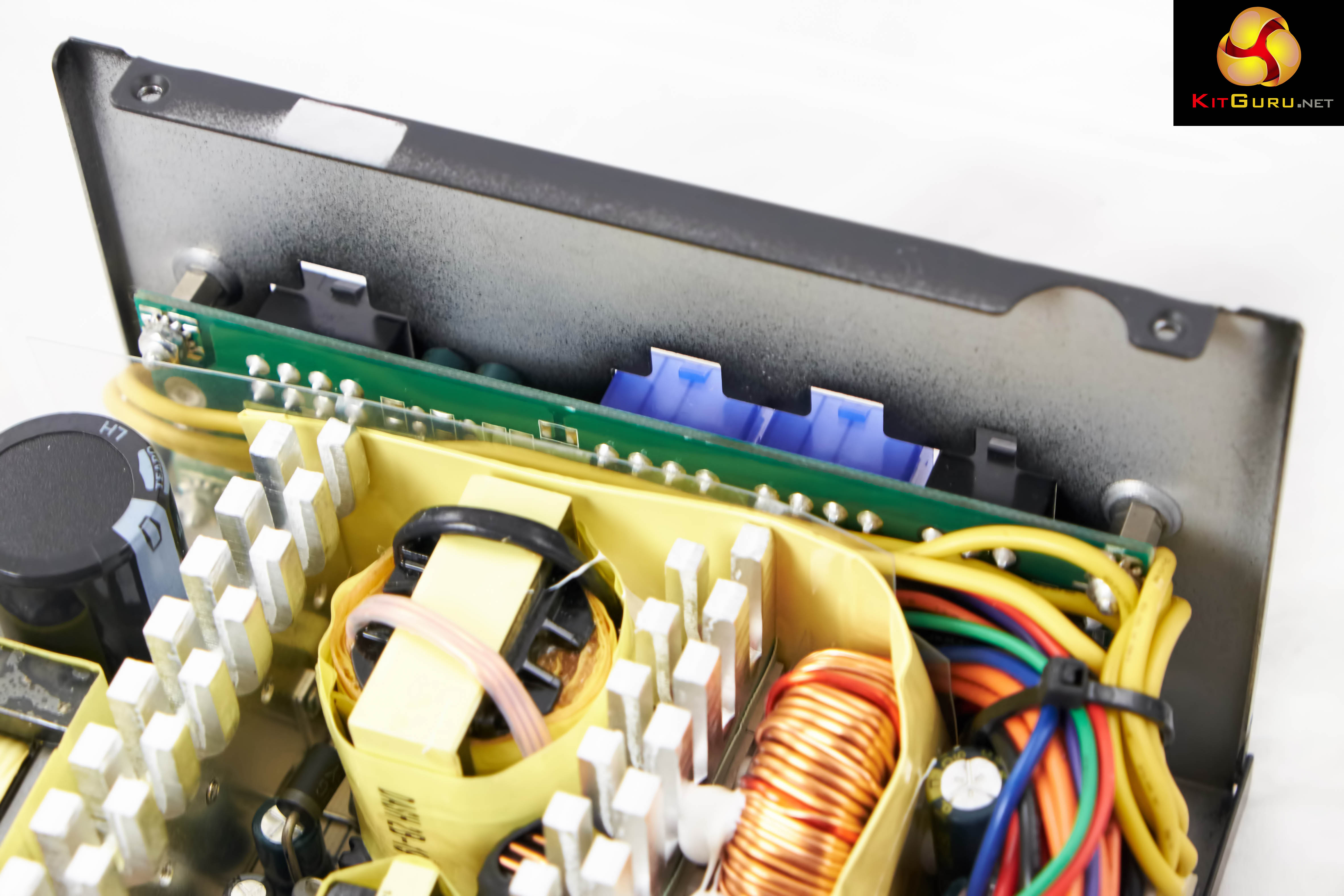
This is an Enhance design and overall quality seems quite good. Soldering quality is short of the best from the likes of Seasonic, but Enhance tend to make pretty good budget grade power supplies … based on previous tests anyway.
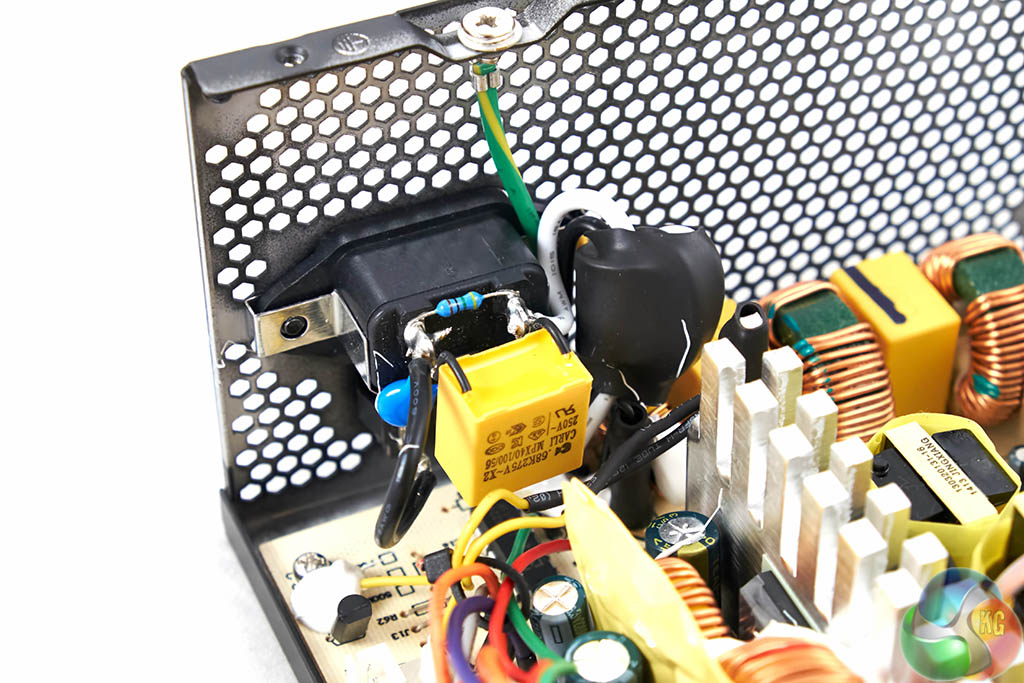
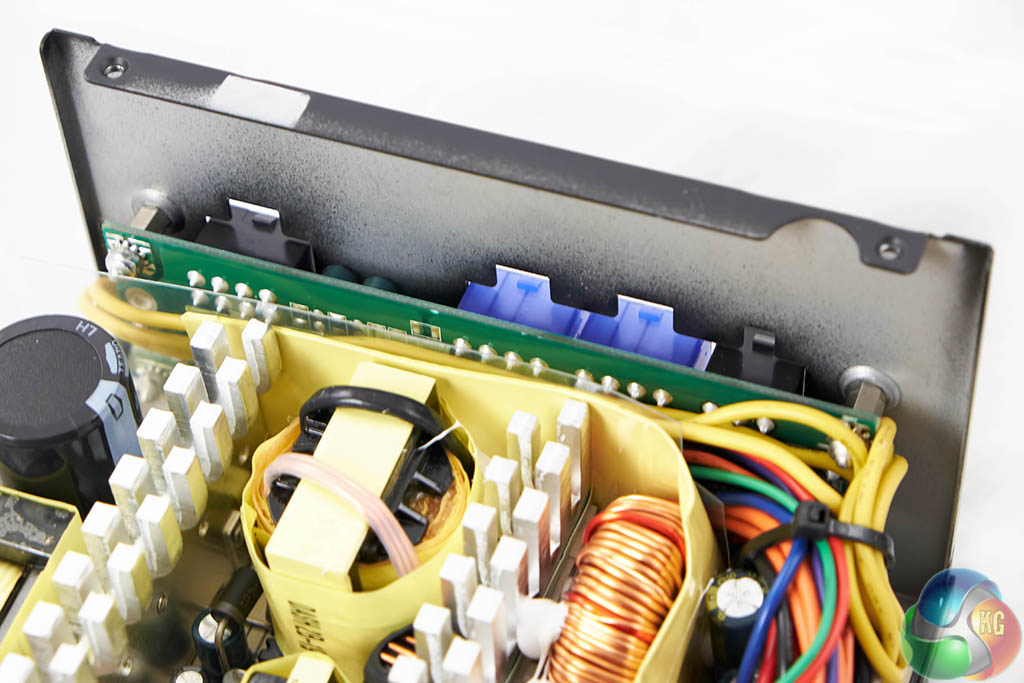
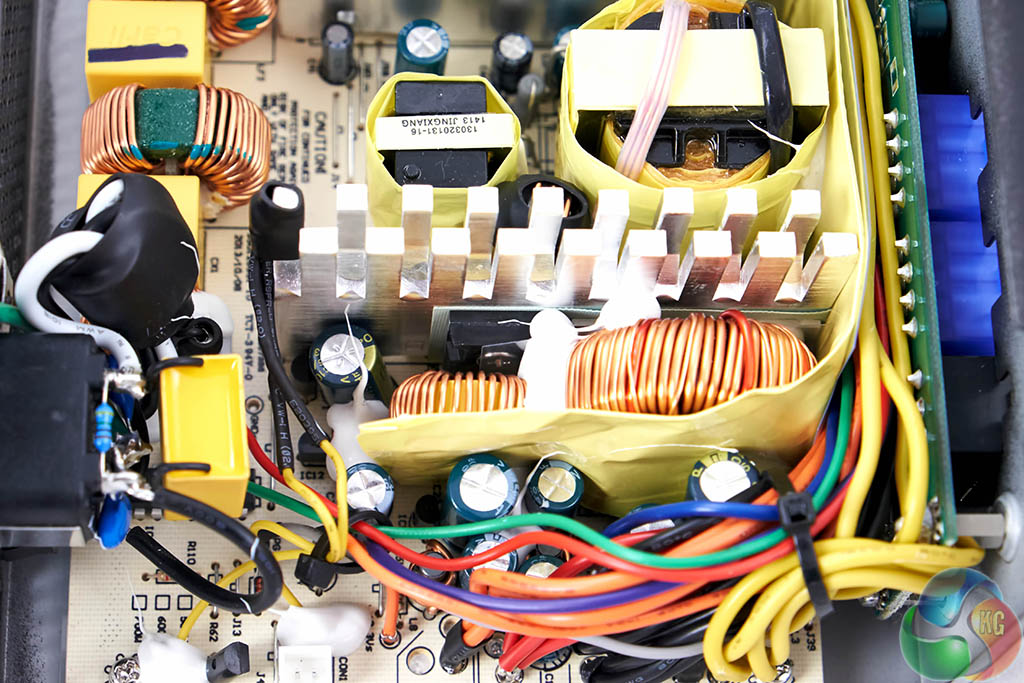
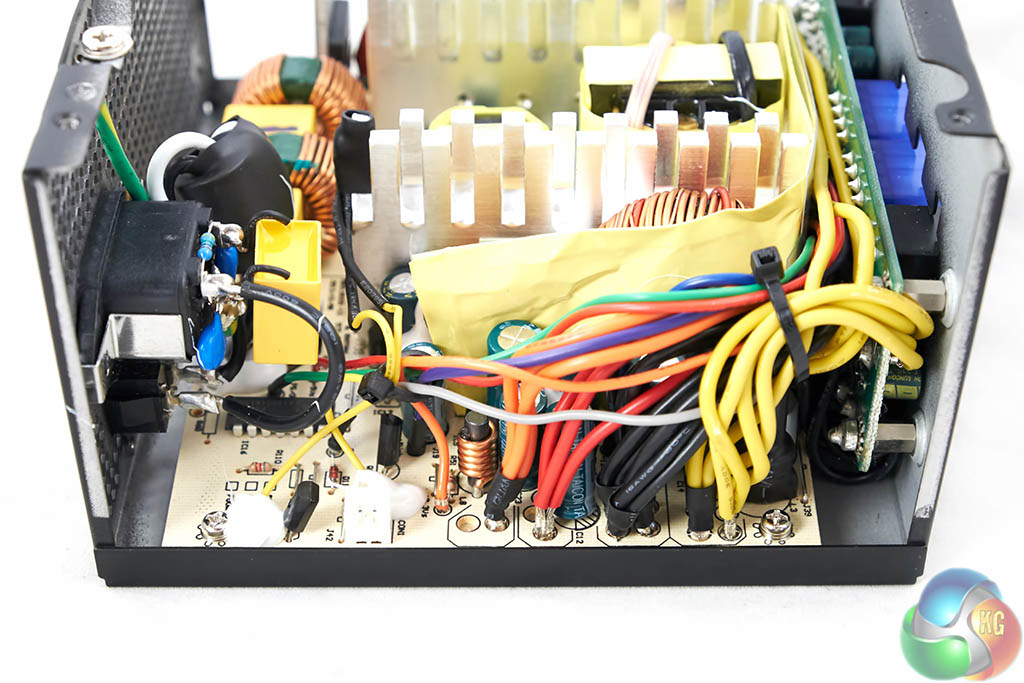
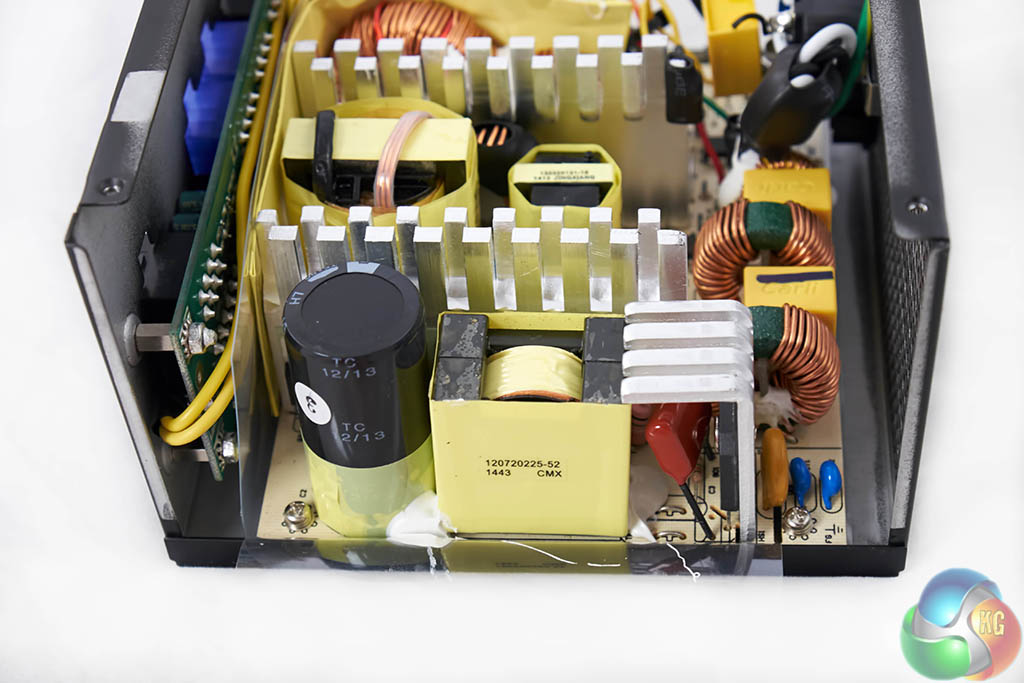
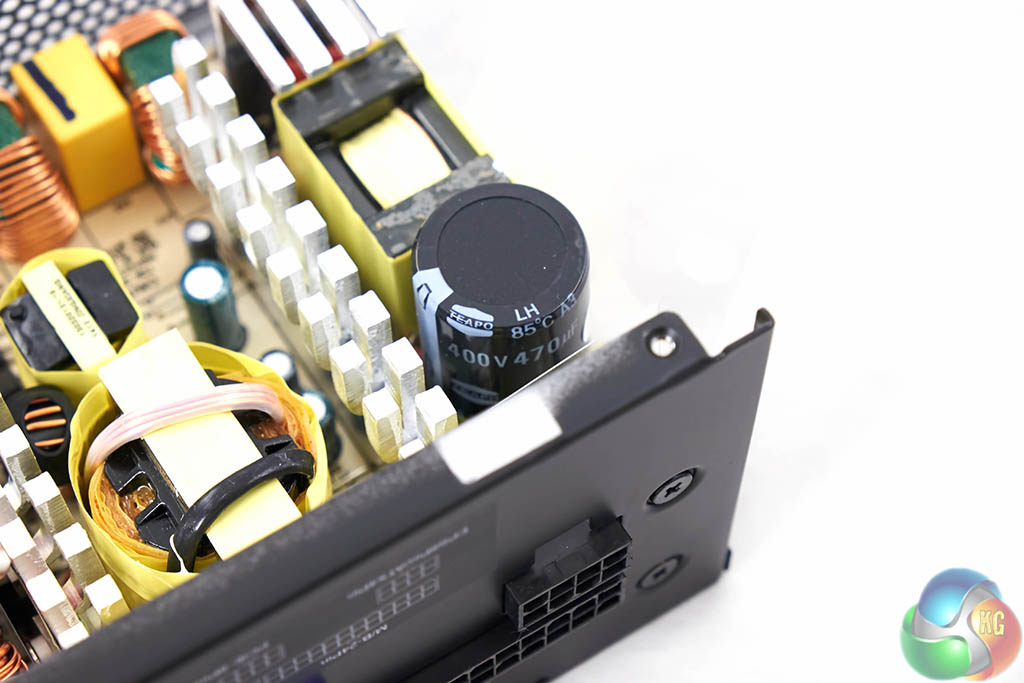
We can tell this is a budget oriented power supply by some of the design considerations. It is slightly disappointing to see a Chinese TEAPO 85c capacitor used in the primary stage (rated 400V 470uF). A lot of secondary capacitors are also 85c Chinese branded which always raises a little flag for me concerning long term durability.
The unit does offer Over Current, Over Power, Over Voltage and Over Temperature Protection. On this page we present some high resolution images of the product taken with the Fuji XT1 camera. These will take much longer to open due to the dimensions, especially on slower connections. If you use these pictures on another site or publication, please credit Kitguru.net as the owner/source.
Additional technical assistance: Peter McFarland and Jeremy Price.
Correctly testing power supplies is a complex procedure and KitGuru have configured a test bench which can deliver up to a 2,000 watt DC load. Due to public requests we have changed our temperature settings recently – previously we rated with ambient temperatures at 25C, we have increased ambient temperatures by 10c (to 35c) in our environment to greater reflect warmer internal chassis conditions.
We use combinations of the following hardware:
• SunMoon SM-268
• CSI3710A Programmable DC load (+3.3V and +5V outputs)
• CSI3711A Programmable DC load (+12V1, +12V2, +12V3, and +12V4)
• Extech Power Analyzer
• Extech MultiMaster MM570 digital multimeter
• Extech digital sound level meter
• Digital oscilloscope (20M S/s with 12 Bit ADC)
• Variable Autotransformer, 1.4 KVA
|
DC Output Load Regulation
|
||||||||||
|
Combined DC Load |
+3.3V
|
+5V
|
+12V
|
+5VSB
|
-12V | |||||
|
A
|
V
|
A
|
V
|
A
|
V
|
A
|
V
|
A | V | |
|
174W
|
3.27
|
3.35
|
3.25
|
5.00
|
11.55
|
12.00
|
0.76
|
5.02
|
0.12 | -12.00 |
|
352W
|
7.55
|
3.33
|
7.55
|
4.99
|
23.08
|
12.00
|
1.52
|
5.02
|
0.25 | -12.00 |
|
525W
|
11.27
|
3.31
|
11.29
|
4.97
|
34.53
|
11.97
|
2.26
|
5.01
|
0.37 | -12.01 |
|
700W
|
15.05
|
3.31
|
15.05
|
4.94
|
46.64
|
11.92
|
3.02
|
5.00
|
0.50 | -12.01 |
The Silverstone Strider Plus 700W delivers decent regulation with minor droop on all rails.
| Silverstone Strider Plus 700W | Maximum Load |
| 731W |
We managed to squeeze 731W from the PSU before it would shut down safely.
Next we want to try Cross Loading. This basically means loads which are not balanced. If a PC for instance needs 500W on the +12V outputs but something like 30W via the combined 3.3V and +5V outputs then the voltage regulation can fluctuate badly.
| Combined DC Load | +3.3V | +5V | +12V | -12V | +5VSB | |||||
| A | V | A | V | A | V | A | V | A | V | |
| 590W | 1.0 | 3.35 | 1.0 | 5.00 | 48.0 | 11.90 | 0.2 | -12.01 | 0.5 | 5.01 |
| 190W | 18.2 | 3.30 | 20.1 | 4.92 | 2.0 | 12.00 | 0.2 | -12.01 | 0.5 | 5.01 |
Cross load results rate as decent, with the +12V rail dropping from 12.00V to 11.90V when hit with 48A.
We then used an oscilloscope to measure AC ripple and noise present on the DC outputs. We set the oscilloscope time base to check for AC ripple at both high and low ends of the spectrum.
ATX12V V2.2 specification for DC output ripple and noise is defined in the ATX 12V power supply design guide.
|
ATX12V Ver 2.2 Noise/Ripple Tolerance
|
|
|
Output
|
Ripple (mV p-p)
|
|
+3.3V
|
50
|
|
+5V
|
50
|
|
+12V1
|
120
|
|
+12V2
|
120
|
|
-12V
|
120
|
|
+5VSB
|
50
|
Obviously when measuring AC noise and ripple on the DC outputs the cleaner (less recorded) means we have a better end result. We measured this AC signal amplitude to see how closely the unit complied with the ATX standard.
| AC Ripple (mV p-p) | ||||
| DC Load | +3.3V | +5V | +12V | 5VSB |
| 174W | 15 | 10 | 25 | 10 |
| 352W | 15 | 10 | 35 | 10 |
| 525W | 15 | 15 | 55 | 15 |
| 700W | 25 | 15 | 75 | 15 |
The unit scores reasonably well in this test with +3.3V and +5V rails peaking at 25mV and 15mV respectively. The +12V rail crept up a little higher than we would like to see, hitting 75mV at full load. This is still within rated industry tolerance levels.
|
Efficiency (%)
|
|
|
174W
|
82.24
|
|
352W
|
85.59
|
|
525W
|
84.23
|
|
700W
|
82.32
|
Efficiency is excellent, peaking over 92 percent at 50 percent load. At full load this drops to just over 82 percent efficiency.
We take the issue of noise very seriously at KitGuru and this is why we have built a special home brew system as a reference point when we test noise levels of various components. Why do this? Well this means we can eliminate secondary noise pollution in the test room and concentrate on components we are testing. It also brings us slightly closer to industry standards, such as DIN 45635.
Today to test the power supply we have taken it into our acoustics room environment and have set our Digital Sound Level Noise Decibel Meter Style 2 one meter away from the unit. We have no other fans running so we can effectively measure just the noise from the unit itself.
As this can be a little confusing for people, here are various dBa ratings in with real world situations to help describe the various levels.
KitGuru noise guide
10dBA – Normal Breathing/Rustling Leaves
20-25dBA – Whisper
30dBA – High Quality Computer fan
40dBA – A Bubbling Brook, or a Refrigerator
50dBA – Normal Conversation
60dBA – Laughter
70dBA – Vacuum Cleaner or Hairdryer
80dBA – City Traffic or a Garbage Disposal
90dBA – Motorcycle or Lawnmower
100dBA – MP3 Player at maximum output
110dBA – Orchestra
120dBA – Front row rock concert/Jet Engine
130dBA – Threshold of Pain
140dBA – Military Jet takeoff/Gunshot (close range)
160dBA – Instant Perforation of eardrum
|
Noise (dBA)
|
|
|
174W
|
<28.0
|
|
352W
|
32.7
|
|
525W
|
34.3
|
|
700W
|
36.8
|
Under modest load the fan spins very slowly, barely heard at a reasonable distance. At 50% load the fan spins up a little, although it is still relatively quiet. Under higher loads, the fan gets faster, hitting a peak noise level of 36.7dBa. This is clearly audible and not something you will want to deal with all the time. That said if you need to deliver a constant 650-700 watts, you need a more substantial unit anyway.
|
Temperature (c)
|
||
|
Intake
|
Exhaust
|
|
|
174W
|
36
|
41
|
|
352W
|
38
|
47
|
|
525W
|
42
|
54
|
|
700W
|
47
|
60
|
The internal temperatures are maintained well, rising to a maximum 13c above ambient at full load in our test environment.
|
Maximum load
|
Efficiency
|
|
731W
|
81.8
|
We measured the efficiency beyond the rated limits of the supply and recorded 81.8% at 731W. Its not a real world everyday rating, but interesting regardless.
The SilverStone Strider Plus 700W power supply is a capable, if somewhat unremarkable power supply designed to target a very wide audience of enthusiast user limited to a very specific budget.
First impressions are positive, the Strider Plus 700W is an attractively designed unit and small enough not to cause fitting issues in any chassis. The paint work passed our scratch test scenario, as we would expect from SilverStone.
The unit is modular, ensuring system builds can be kept as neat and tidy as possible. We appreciate that all the cables are the thin ‘ribbon' style which are beneficial when routing, especially in space restrictive chassis.
Technically, the Strider Plus 700W is solid, although nothing out of the ordinary. The Enhance design doesn't raise any red flags and it passed our cross loading test. Load regulation is quite good and the unit managed to deliver 731 watts before shutting down, safely. It delivered a maximum efficiency of 85.5%.
It was a little disappointing to see a Chinese 85c TEAPO capacitor used in the primary stage, as we have had a few bad experiences in the past with TEAPO, long term. We are quite sure the power supply will last a long time for most people, but this always raises a little question mark for us regarding sustained longevity.
Ripple suppression is fine, although the +12V rail peaked at 75mV, a little higher than we would like to see, although at this price point it is made a little more acceptable.

The Silverstone Strider Plus 700W is competitively priced, with Overclockers UK stocking the unit for £67.99 inc vat. If you are working to a limited budget of £70, then it does deserve to be on a final shortlist.
Discuss on our Facebook page, over HERE.
Pros:
- Attractively designed.
- good paintwork.
- fully modular.
- quality cables.
- pricing is good.
- delivered over 700 watts before shutting down.
Cons:
- Never nice to see a Chinese 85C TEAPO capacitor.
Kitguru says: The Silverstone Strider 700W is a capable, attractive power supply available for less than £70.


Efficiency % chart and caption say different things.