KitGuru KitGuru.net – Tech News | Hardware News | Hardware Reviews | IOS | Mobile | Gaming | Graphics Cards


We used CrystalDiskMark 8 to test the random performance of the drive at lower queue depths (QD1 – QD8 where most of the everyday workloads occur) using 1 to 4 threads.
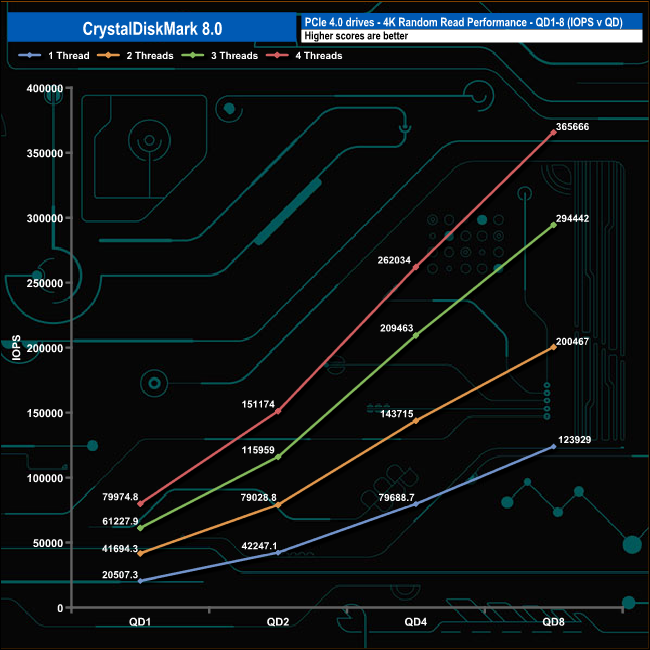
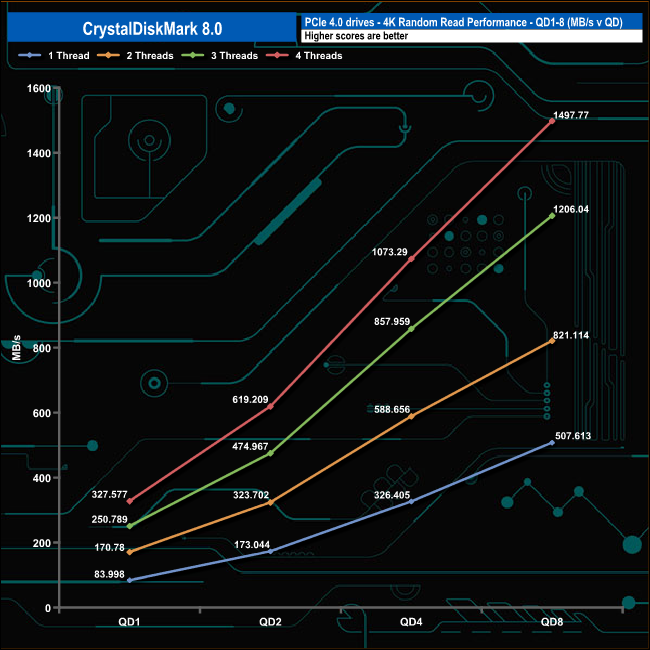
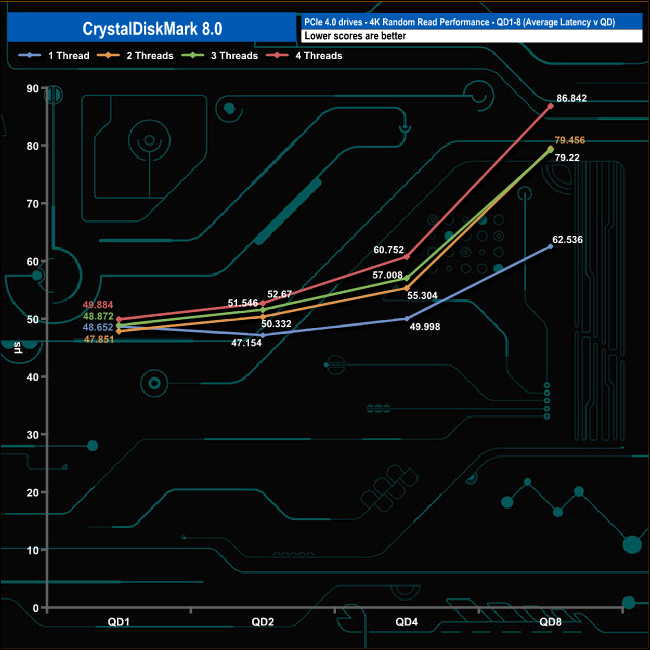
At QD1 the Kingston KC3000 produced a single thread random read result of 20,507 IOPS (83.998MB/s), using two threads saw the performance rise to 41,694 IOP (170.78MB/s). Using three threads produced 61,227 IOPS (250.78MB/s) and with four threads the performance rose to 79,974 IOPS (327.57MB/s). The drive’s performance increases smoothly as the queue depth deepens for each thread count.
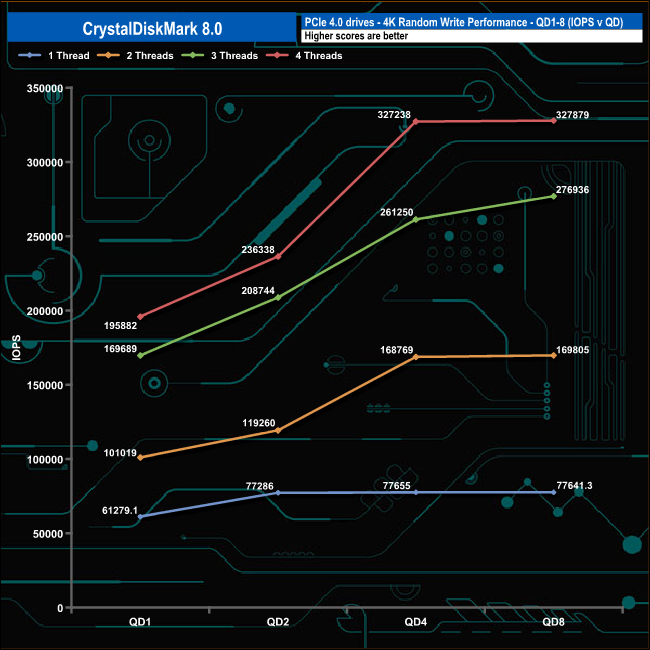
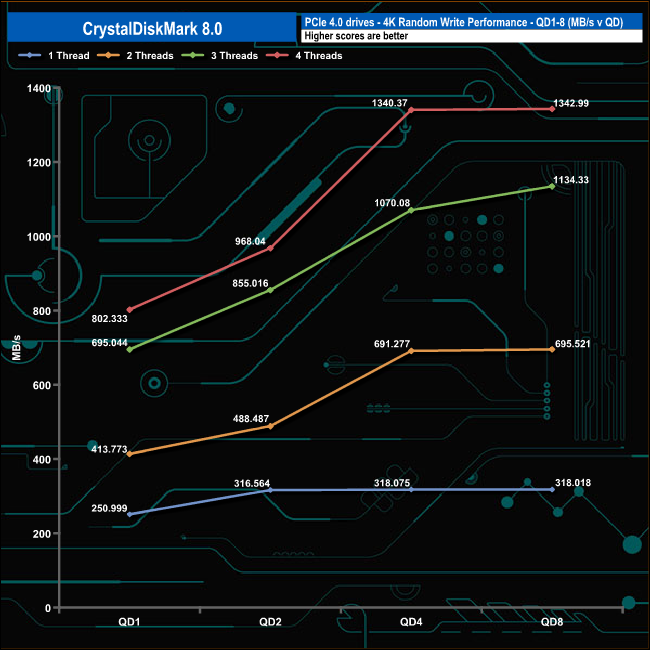
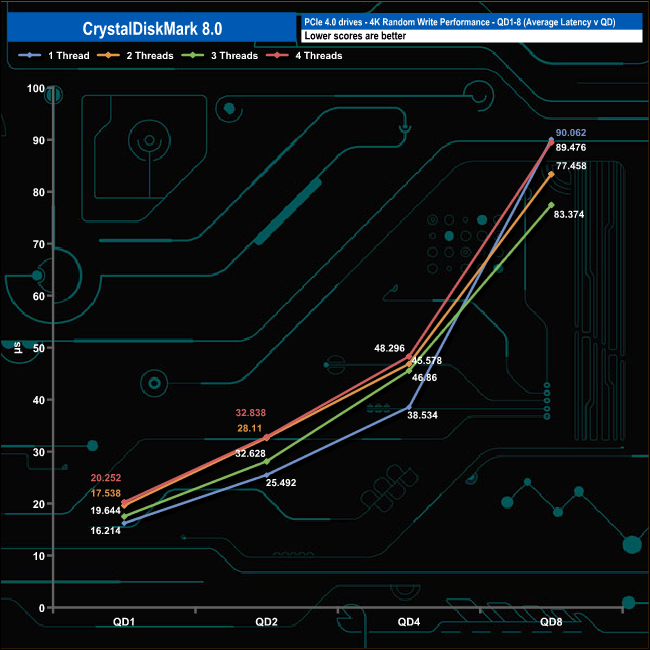
Using a single thread the random write performance slowly increases from QD1 (61,279 IOPS) to QD2 (77,286 IOPS) before beginning to plateau out. Using two and four threads the drive accelerates sharply from QD2 to QD4 before they too start levelling off. The only time the performance doesn’t seem to be levelling off to any extent is when it’s being tested using three threads.