KitGuru KitGuru.net – Tech News | Hardware News | Hardware Reviews | IOS | Mobile | Gaming | Graphics Cards


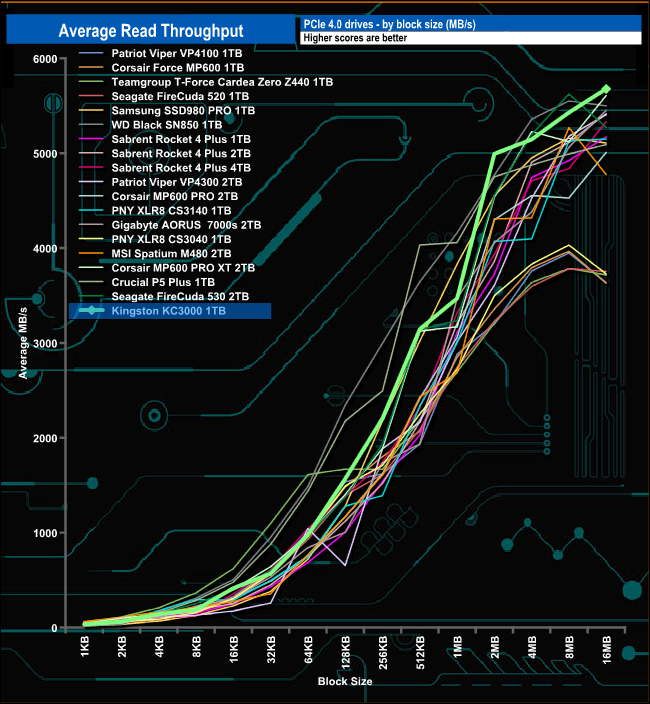
In our read throughput test, the drive peaks at the 16MB block mark at 5,677MB/s, a fair way short of the official maximum of 7,000MB/s.
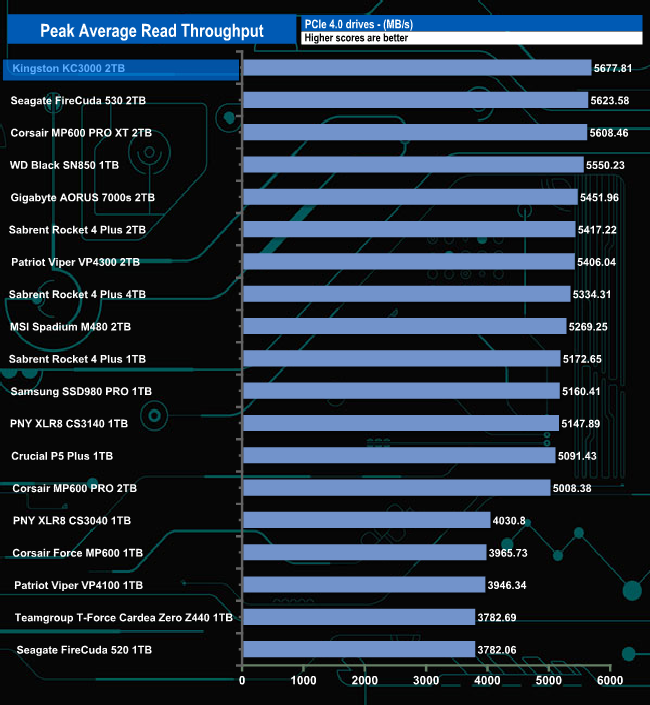
Although the 5,677MB/s peak read throughput figure we saw from the drive is short of the official 7,000MB/s official maximum figure, it's still good enough to put the drive into the top spot in the results chart.
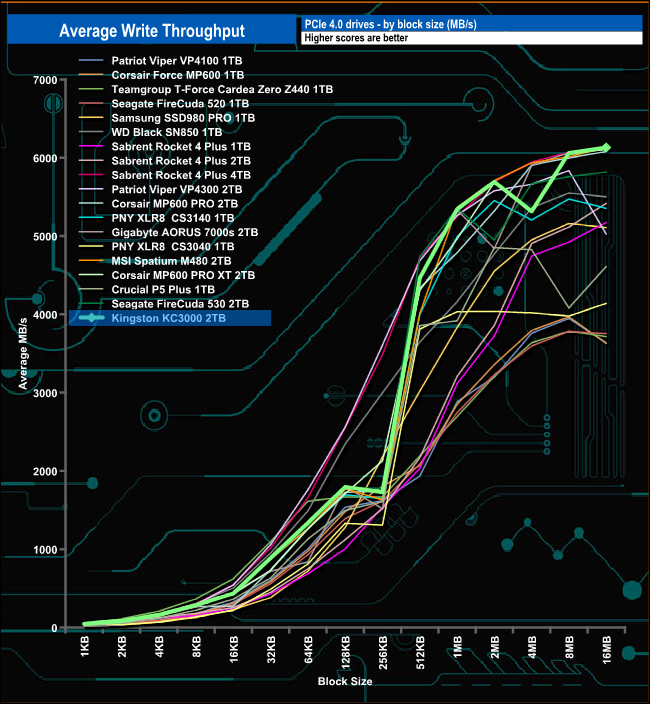
The write throughput peak figure comes, like the read throughput figure, at the 16MB block mark. The 6,131MB/s test result figure is still short of the official maximum write figure but it's much closer to the 7,000MB/s figure than the read result.
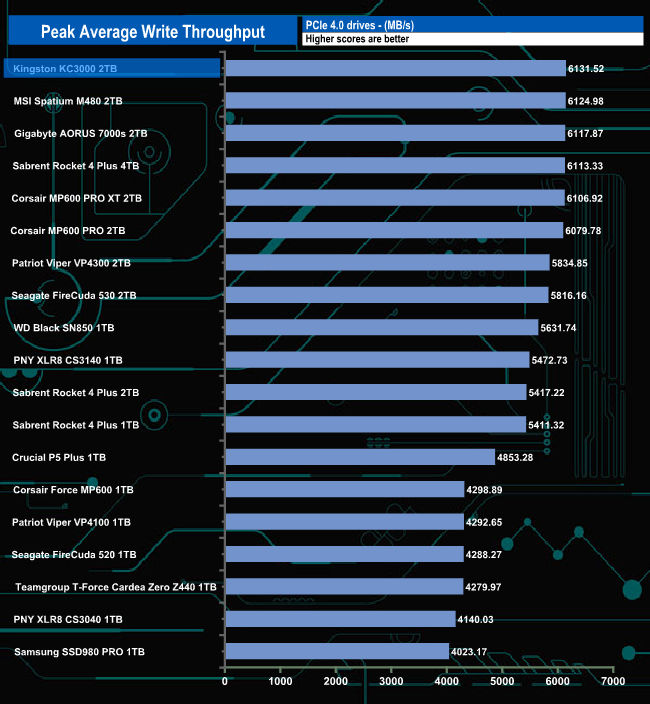
As with the read throughput peak figure, the peak write figure is also the fastest we have seen for a consumer PCIe 4.0 drive to date.