KitGuru KitGuru.net – Tech News | Hardware News | Hardware Reviews | IOS | Mobile | Gaming | Graphics Cards


We used CrystalDiskMark 8‘s custom settings to test the Sequential read and write performance of the drive through a range of queue depths. The setup for the tests is listed below.
128KB Sequential Read / Write.
Transfer Request Size: 128KB, Thread(s): 1, Outstanding I/O: 1-32.
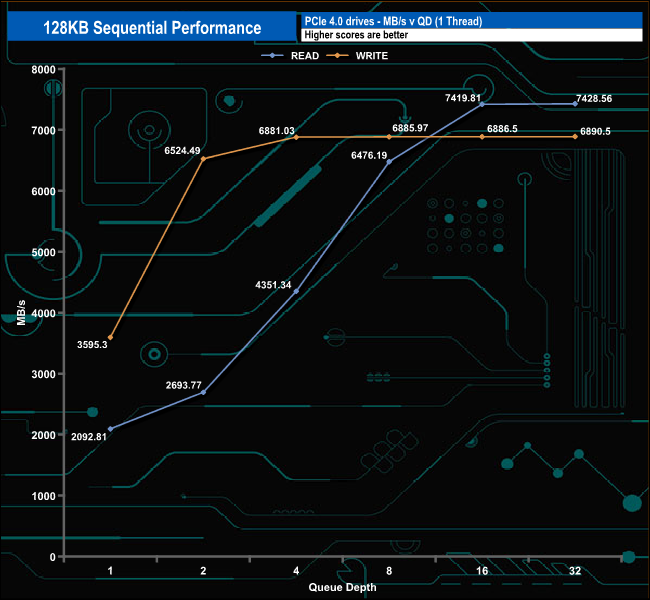
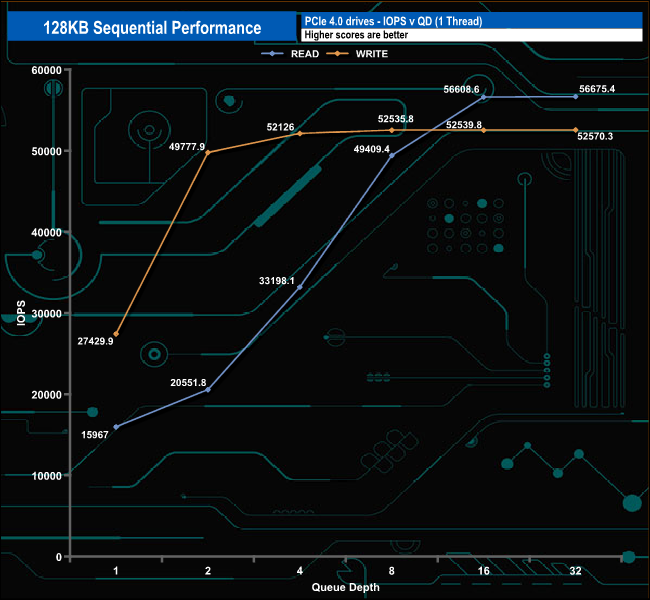
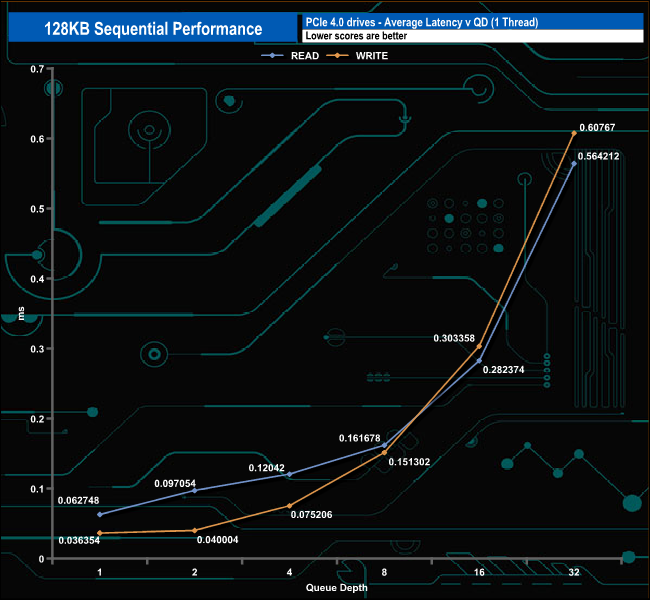
In this test, we got a read test result that not only confirmed the maximum Sequential read figure of 7,000MB/s but exceeded by quite some margin at 7,428.56MB/s. The best write result in this test of 6,890.5MB/s is some 109.5MB/s shy of the official maximum of 7,000MB/s.
128KB Sequential Read Performance v QD compared
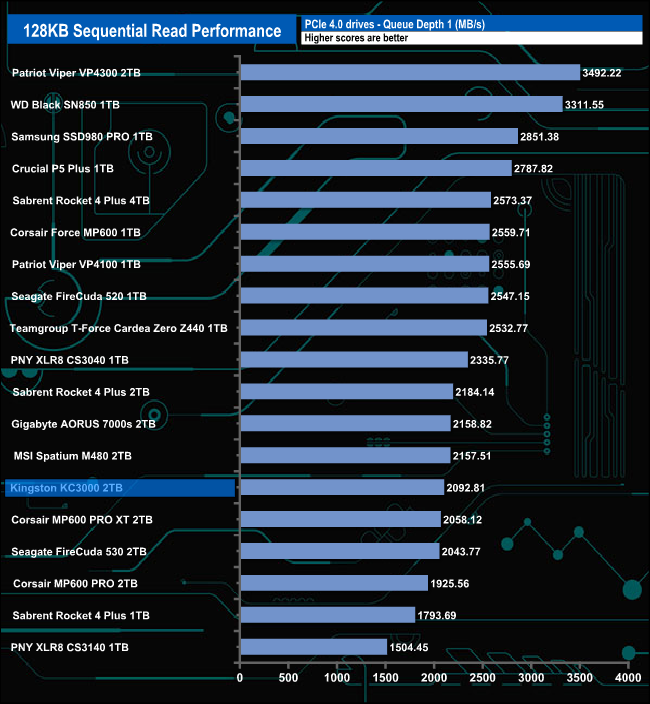
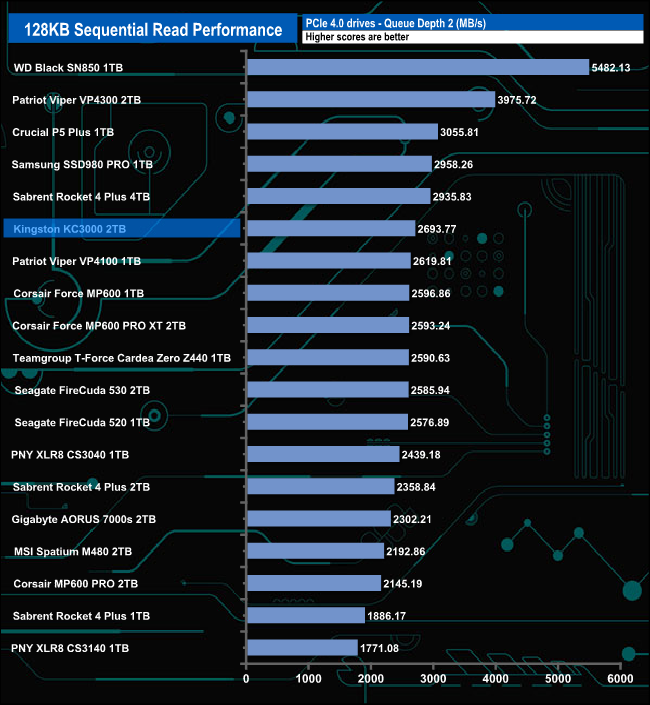
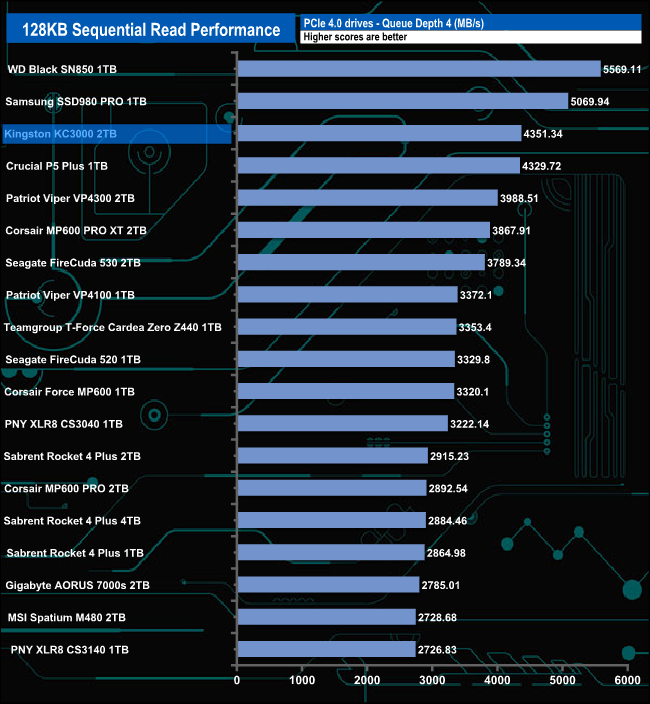
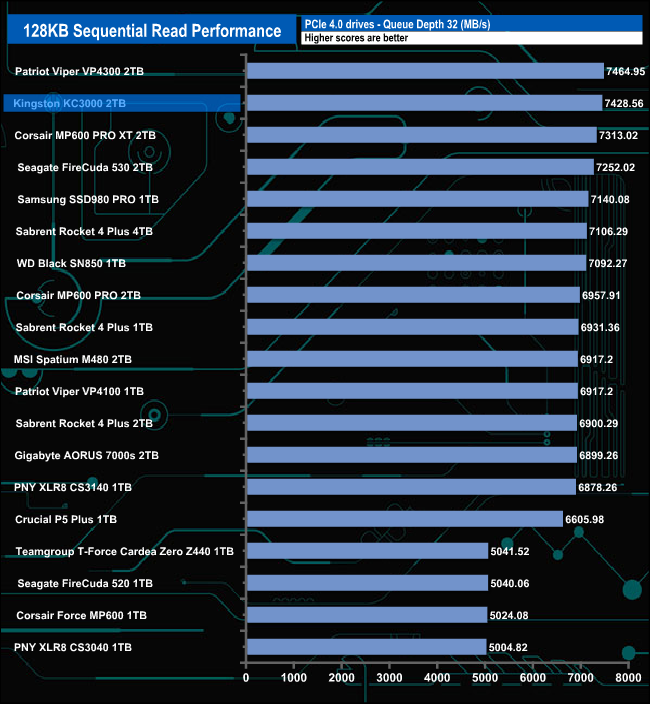
At a QD of 1, the KC3000 sits in the bottom half of our Sequential read results chart but, as the queue depth deepens, the drive moves up the performance chart until at QD32 it's only beaten by Patriot's Viper VP4300 drive.
128KB Sequential Write Performance v QD compared
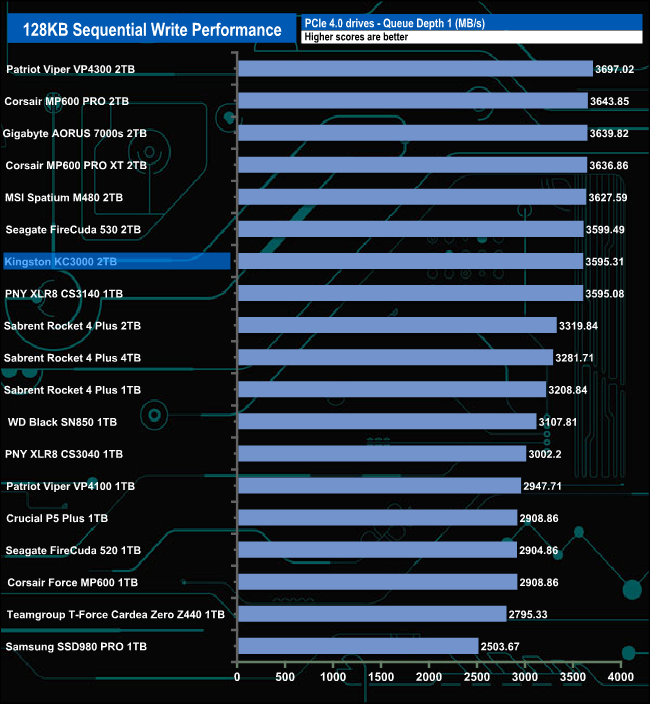
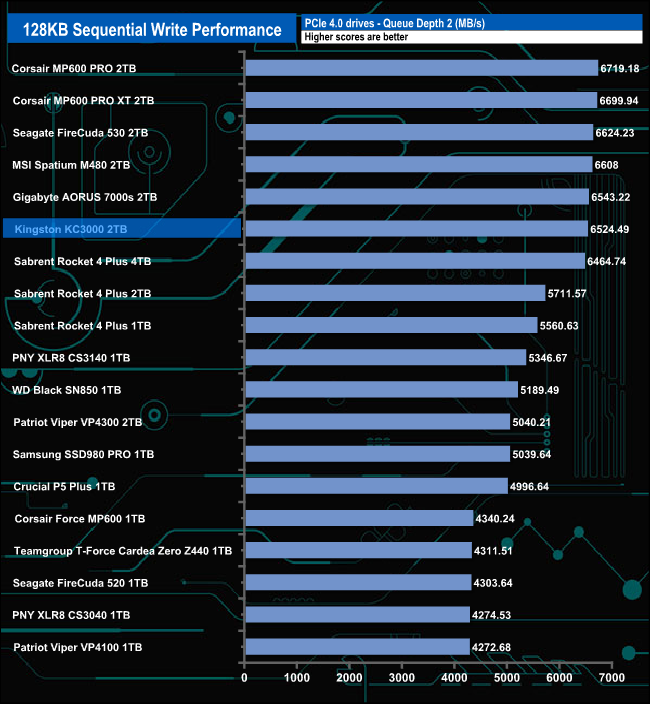
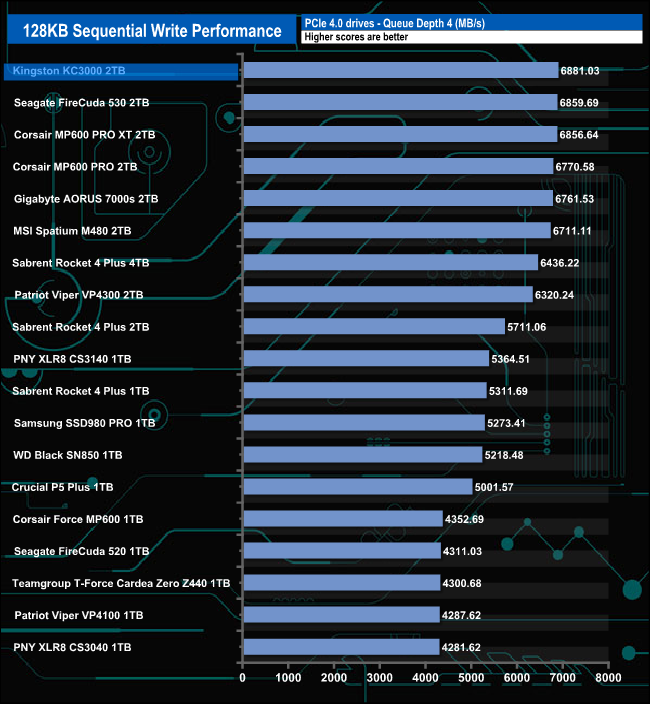
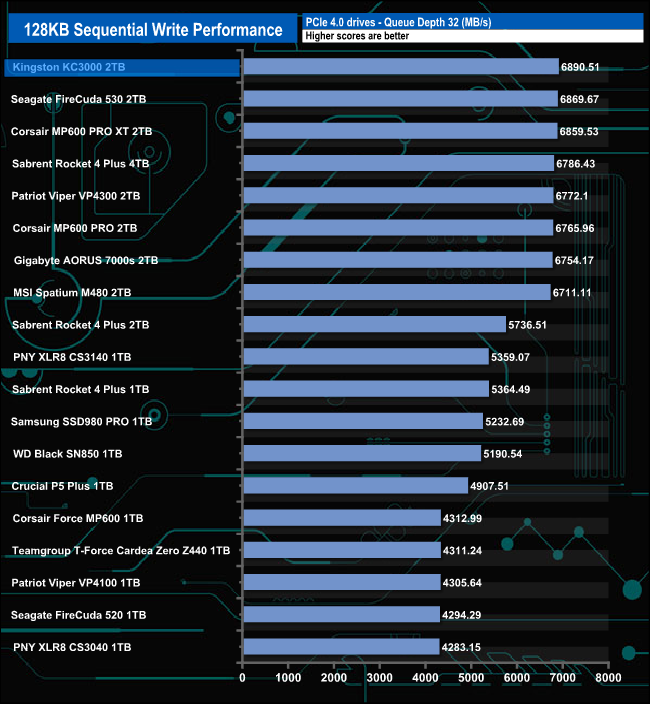
In the Sequential write tests, the drive sits in the top half of our results chart at QD's 1 and 2. At QD4 and QD32 it tops the chart at 6,881.03MB/s and 6,890.51MB/s respectively.