KitGuru KitGuru.net – Tech News | Hardware News | Hardware Reviews | IOS | Mobile | Gaming | Graphics Cards


We used CrystalDiskMark 8‘s custom settings to test the 4K random read performance of the drive through a range of queue depths. The setup for the tests is listed below.
Transfer Request Size: 4KB, Outstanding I/O: 1-32.
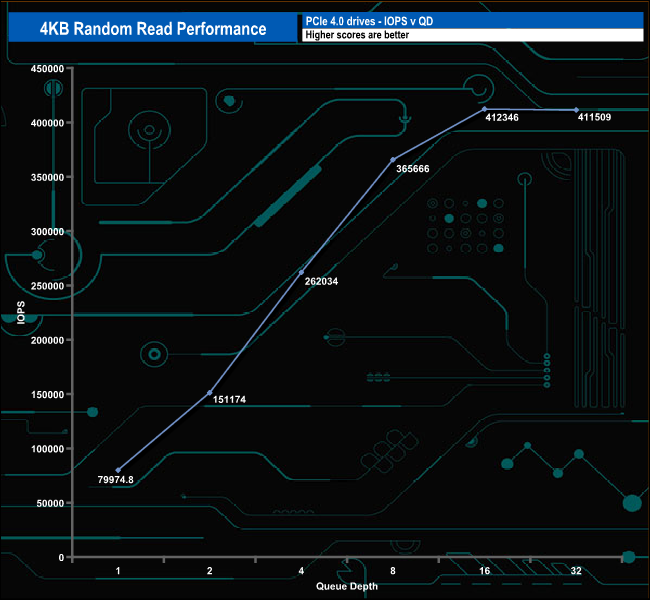
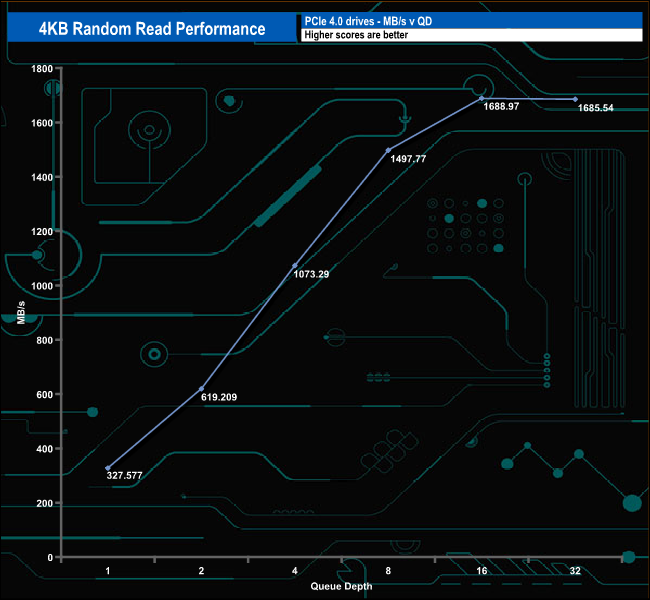
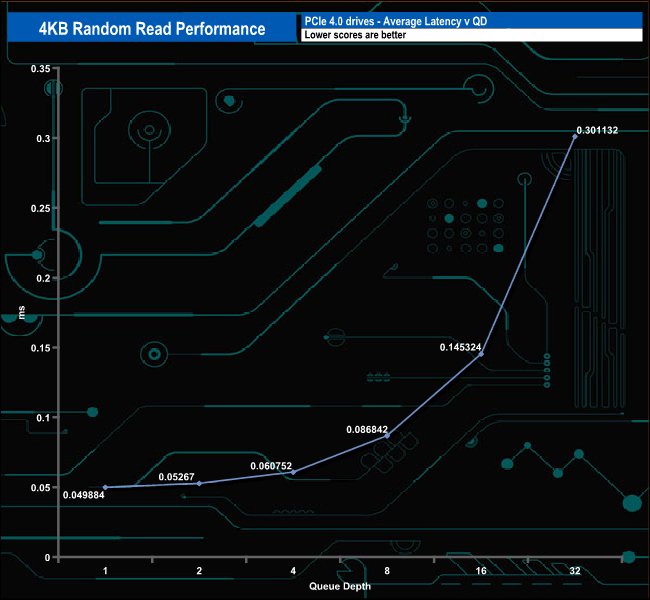
Kingston rate the 4K random read performance of the drive as up to 1,000,000 IOPS. We couldn't get close to that figure with our standard 4-threaded testing. The best we saw in this test was 412,346 IOPs (QD16) with the performance trailing off gradually to finish the test run at QD32 at 411,509 IOPS.
4K Sustained Random Read v QD comparison
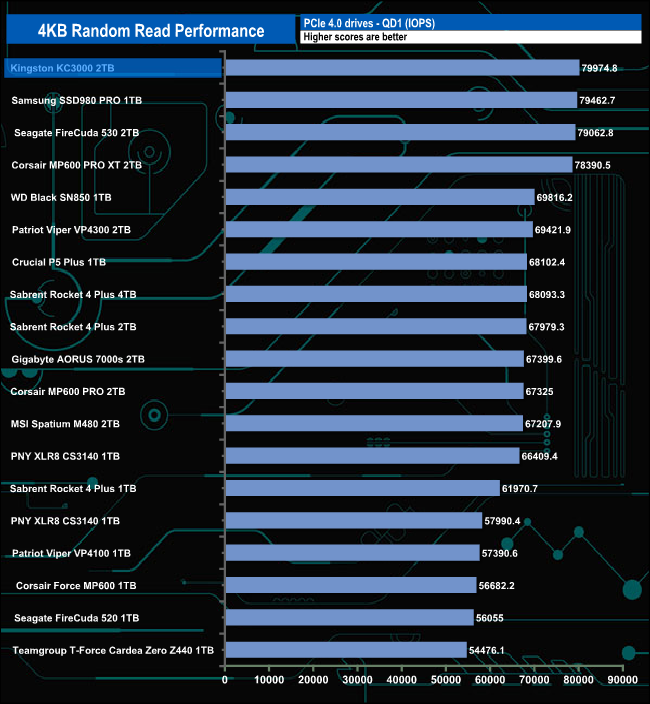
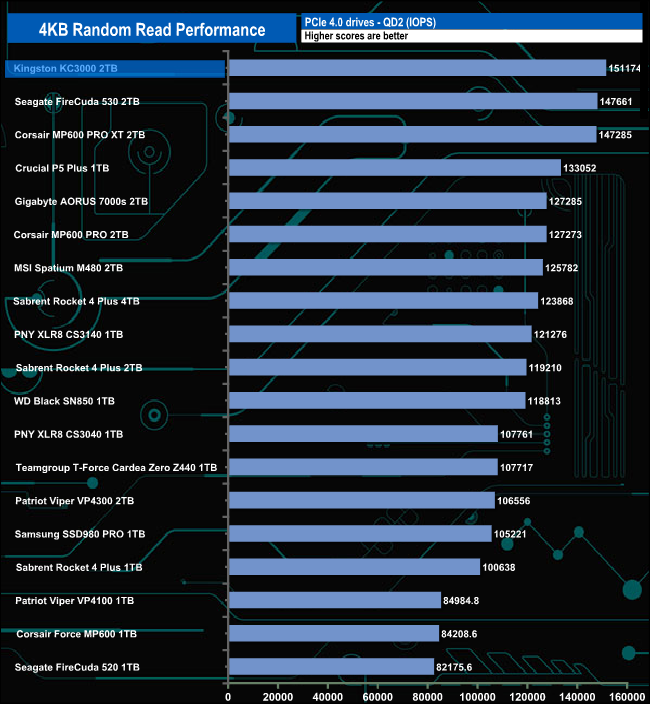
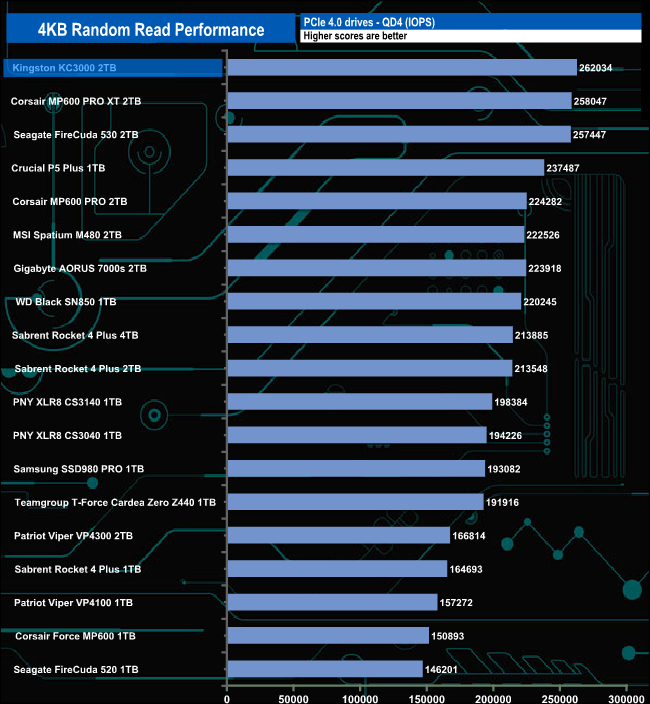
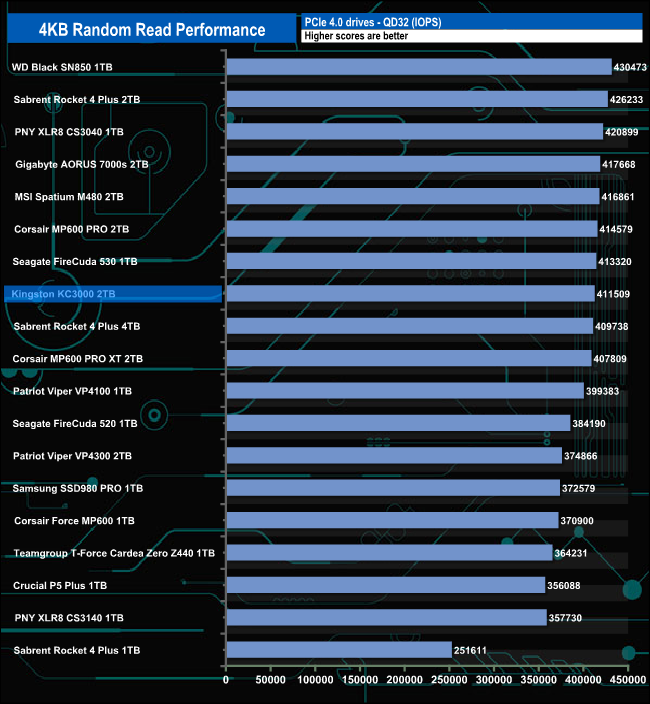
While we may not have seen the stunning official random read IOPS figure for the drive under our tests, at QD's 1.2 and 4 it is the fastest Gen4 consumer drive we have seen to date. At QD32 the drive has slipped down to around halfway on our chart.