KitGuru KitGuru.net – Tech News | Hardware News | Hardware Reviews | IOS | Mobile | Gaming | Graphics Cards


We used CrystalDiskMark 8‘s custom settings to test the 4K random write performance of the drive through a range of queue depths. The setup for the tests is listed below.
Transfer Request Size: 4KB, Outstanding I/O: 1-32.
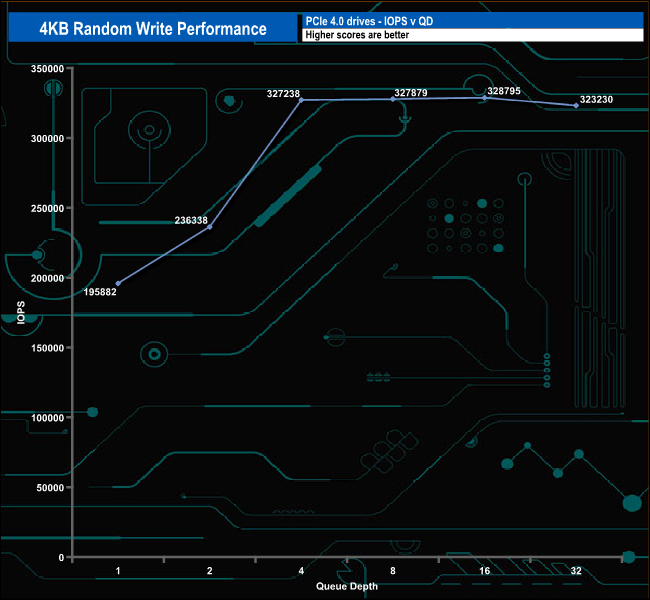
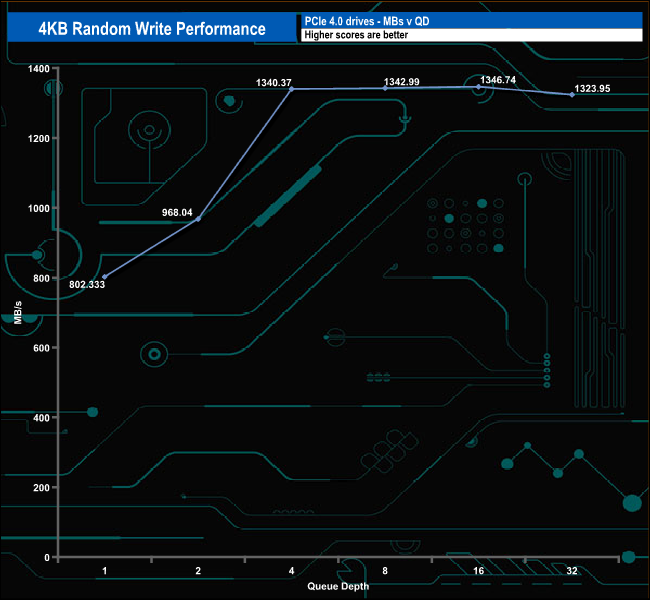
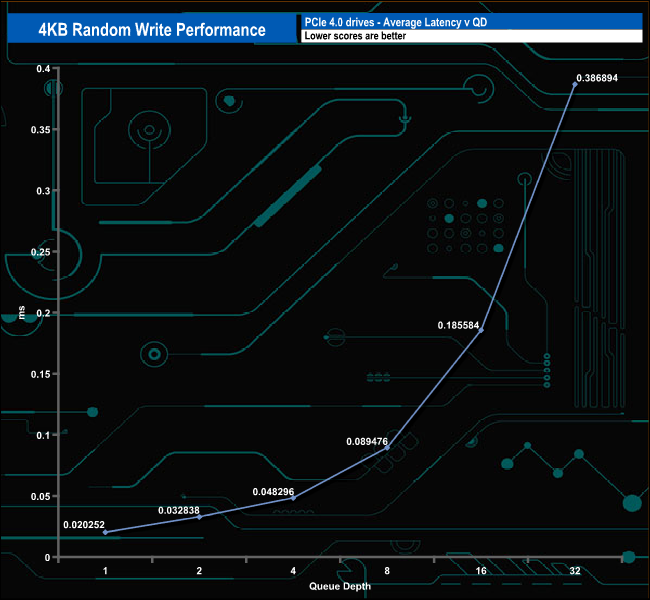
As with the 4K random read testing, with our 4-threaded random write testing, we couldn't get close to the official maximum of 1,000,000 IOPS. The best we saw was 328,795 IOPS at a QD of 16. The performance slipped back at the end of the test run (QD32) finishing at 323,230 IOPS.
4K Sustained Random Write v QD comparison.
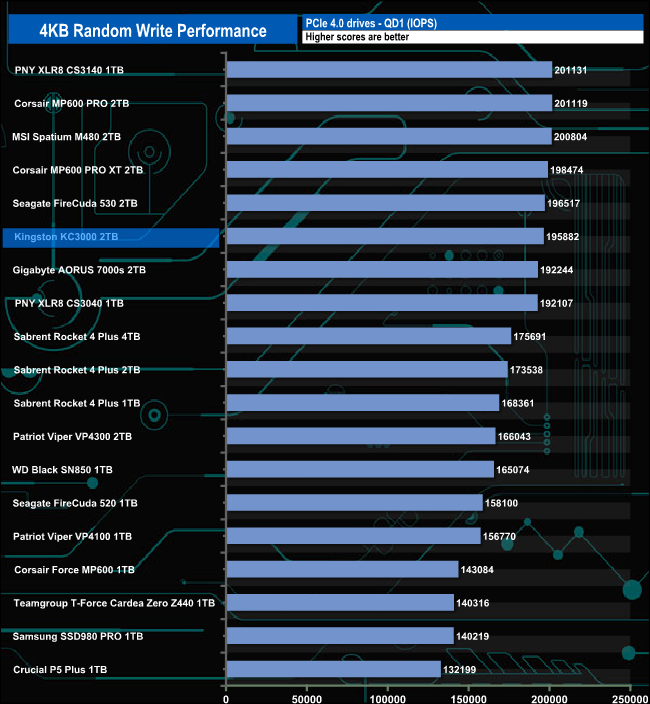
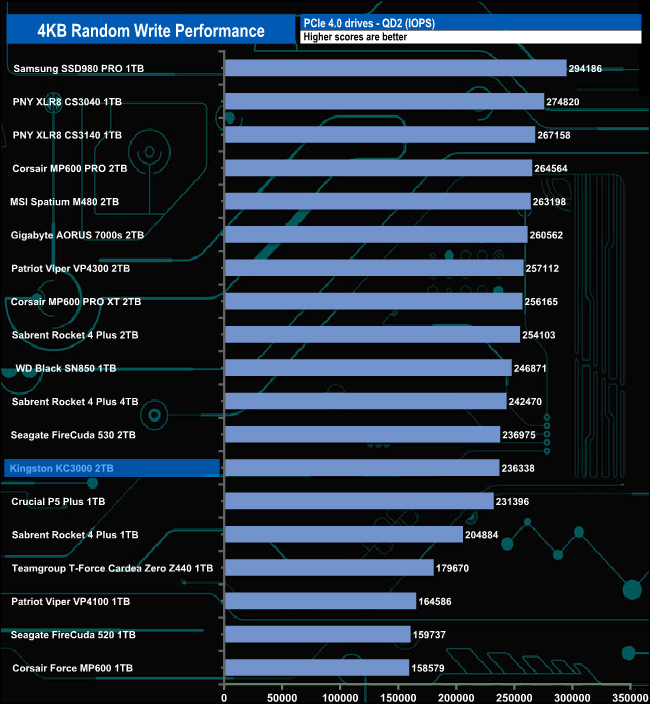
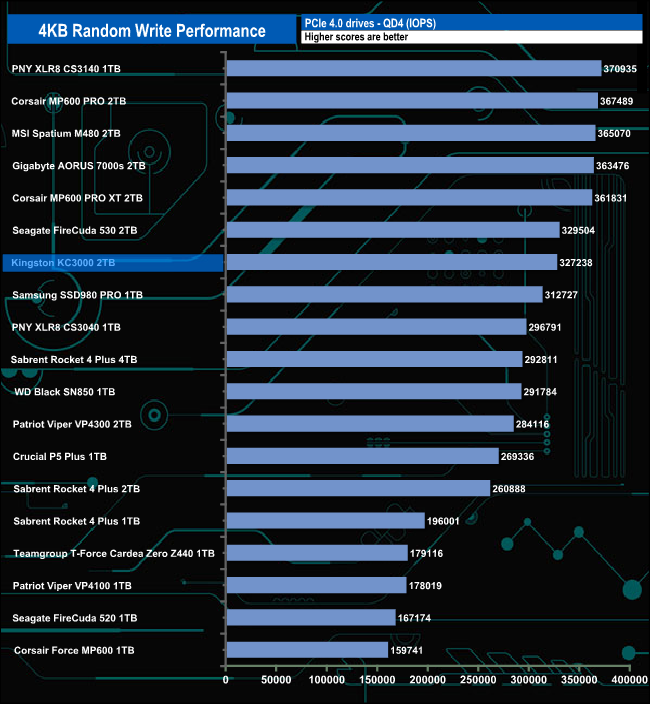
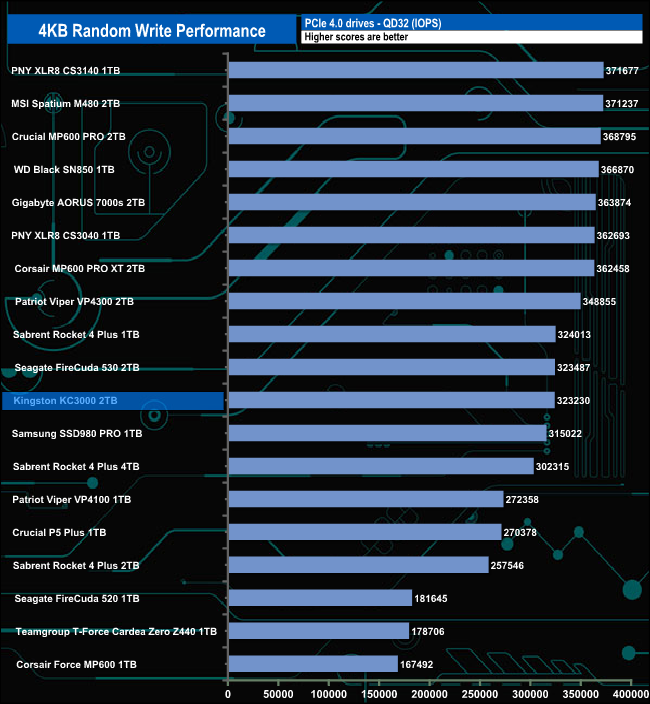
At queue depths 1 and 4 the drive sits in the top half of the results chart while at queue depths 2 and 32 it's heading towards the bottom half of the results chart.