 KitGuru KitGuru.net – Tech News | Hardware News | Hardware Reviews | IOS | Mobile | Gaming | Graphics Cards


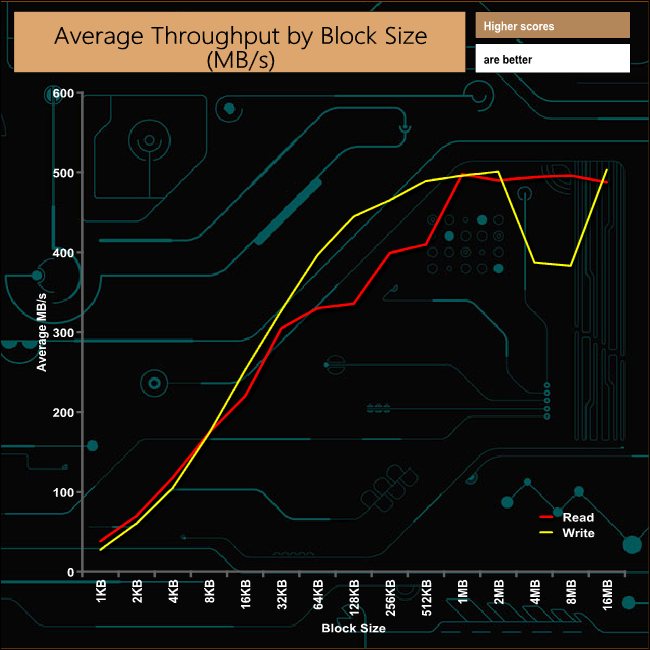
In our throughput test, the read performance curve is pretty erratic while the write performance drops quite considerably from 500MB/s at the 2MB block size to 387MB/s at 4MB and 383MB/s at the 8MB block size before recovering to finish the test run at 503MB/s. Peak reads come at the 1MB block at 497MB/s.
Tags 64-layer 3D TLC NAND AES 256-bit FDE kingston Marvell 88SS1074 Review
Check Also

KitGuru Games: DLSS 5 misses the point
It would be hard to argue that NVIDIA’s DLSS technologies haven’t been a net positive to the PC space, with the machine-learning based upscaler successfully translating lower resolution inputs into a final image which is perceivably sharper while hogging fewer resources. Though somewhat more contentious, the next evolution of DLSS came in the form of Frame Generation, using ML in order to generate additional frames for high-refresh rate gaming. Both techniques can have their issues, but generally speaking they’ve allowed for more people to experience higher-end titles at increased frame rates. DLSS 5, however, takes a sharp pivot, with a very different end goal in mind than the performance-boosting versions that came before.