KitGuru KitGuru.net – Tech News | Hardware News | Hardware Reviews | IOS | Mobile | Gaming | Graphics Cards


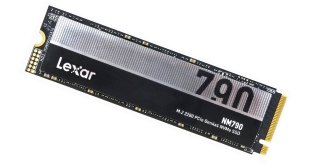
One of Lexar's latest additions to their range of gaming products is the NM790 SSD, a PCIe Gen 4 x4 drive offering speeds of up to 7,400MB/s for reads and 6,500MB/s for writes. With the 4TB model on sale for less than £200 here in the UK, is it worth picking up?
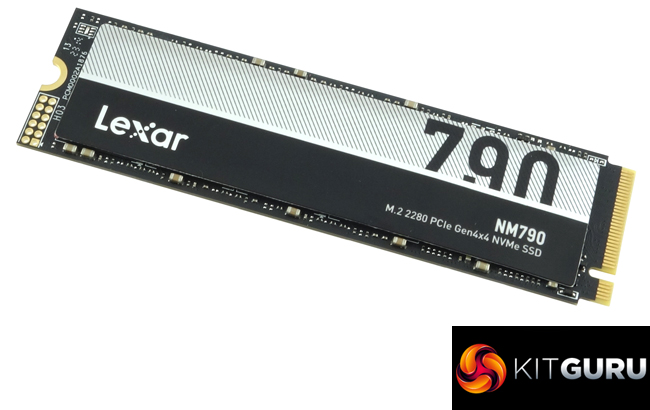
The NM790 comes in four capacities; 512GB, 1TB, 2TB and the 4TB flagship drive we are looking at here. It uses a controller that is new to us in the shape of a Maxiotech MAP1602A. The MAP1602A is a 4-channel DRAM-less design controller but unlike other DRAM-free controllers, this one has a 2,400 MT/s bus which means improved performance combined with better power efficiency. Instead of using DRAM, the drive uses Host Memory Buffer (HMB) 3.0 technology (the drive uses a small portion of the system memory in place of a dedicated DRAM IC) along with Dynamic SLC caching. For the NM790 Lexar has paired up the controller with Longsys branded 232-Layer 3D TLC NAND.
Lexar quotes Sequential performance across the range as up to 7,200MB/s and up to 4,400MB/s for read and writes respectively for the 512GB entry-level model while the other three capacities all have the same up to 7,400MB/s read and up to 6,500MB/s writes ratings. Lexar hasn't disclosed any random performance figures we have seen but the controller supports up to 1,000K IOPS for both read and writes.
The endurance of the 4TB drive is quoted as 3,000TBW and Lexar backs the drive with a 5-year warranty,
Physical Specifications:
- Usable Capacities: 4TB.
- NAND Components: 232-Layer 3D TLC.
- NAND Controller: Maxiotech MAP1602A 4-channel.
- Cache: none, Host Memory Buffer (HMB) 3.0.
- Interface: PCIe Gen4 x4
- Form Factor: M.2, 2280.
- Dimensions: 80 x 22 x 2.45mm.
- Drive Weight: 6g.
Firmware Version: 12237.