KitGuru KitGuru.net – Tech News | Hardware News | Hardware Reviews | IOS | Mobile | Gaming | Graphics Cards


Microsoft is preparing its OS for the upcoming wave of 1000Hz monitors with the release of Insider builds 26100.8106 and 26200.8106. This update, documented under the cumulative package KB5079387, quietly removes a long-standing artificial ceiling within the Windows display stack that previously hindered the OS's ability to communicate with ultra-high refresh rate monitors.
While the patch notes mention native support for 1000Hz displays, Blur Busters reports that the internal limit has actually been raised to a staggering 5000Hz. This ensures that Windows remains the primary platform for competitive gaming for years to come, even as panel manufacturers begin to experiment with five-digit refresh rates in laboratory settings.
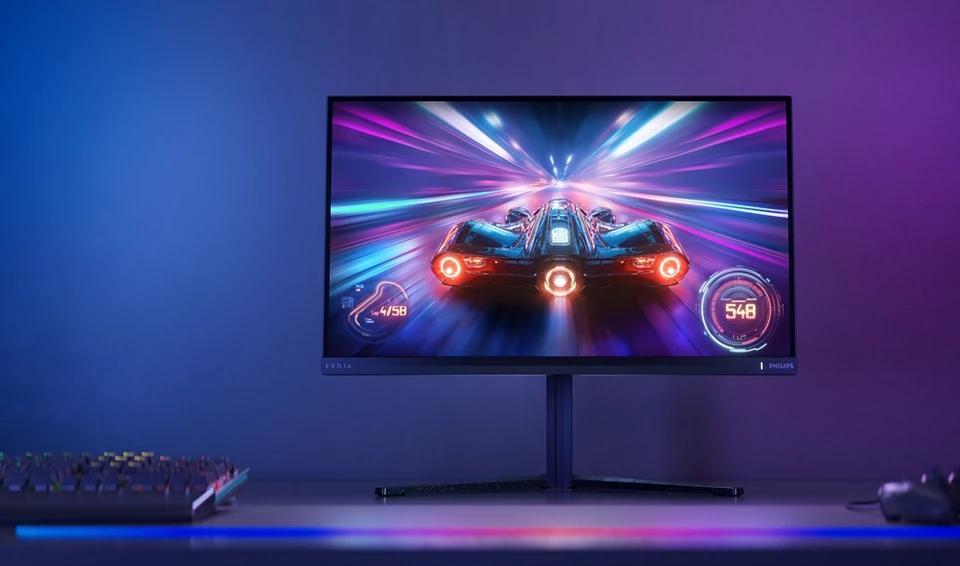
The timing of this update is particularly relevant, as the industry has begun showing its first few dual-mode monitors with a 1000Hz mode. These panels often trade resolution for raw speed, such as the latest prototypes that can toggle between 4K at 240Hz and 720p at 1000Hz. By updating the stack now, Microsoft is ensuring that when these monitors hit the retail market this year, the OS will correctly report those four-digit refresh rates in the Advanced Display Settings without requiring third-party hacks or specialised drivers.
Besides increasing native refresh rate support, the latest preview builds introduce several refinements that improve the overall user experience. For laptop users, the update enhances power efficiency by allowing USB controllers to enter their lowest power state while the system is in sleep mode, provided a native USB4 monitor connection is in use. There is also an improvement to HDR reliability, specifically targeting monitors that utilise non-standard DisplayID 2.0 blocks, which previously caused inconsistent luminance tracking. Additionally, Microsoft has improved the accuracy of the WMI monitor APIs, allowing displays to report their exact physical screen size more precisely, which helps Windows automate complex multi-monitor scaling configurations.
KitGuru says: Contrary to the “the human eye can't see more than 60 fps” myth, the reality is that higher refresh rates drastically reduce persistence blur and input latency. By raising the bar to 5000Hz, Microsoft has effectively future-proofed the Windows for the next several generations of gaming monitors.