 KitGuru KitGuru.net – Tech News | Hardware News | Hardware Reviews | IOS | Mobile | Gaming | Graphics Cards


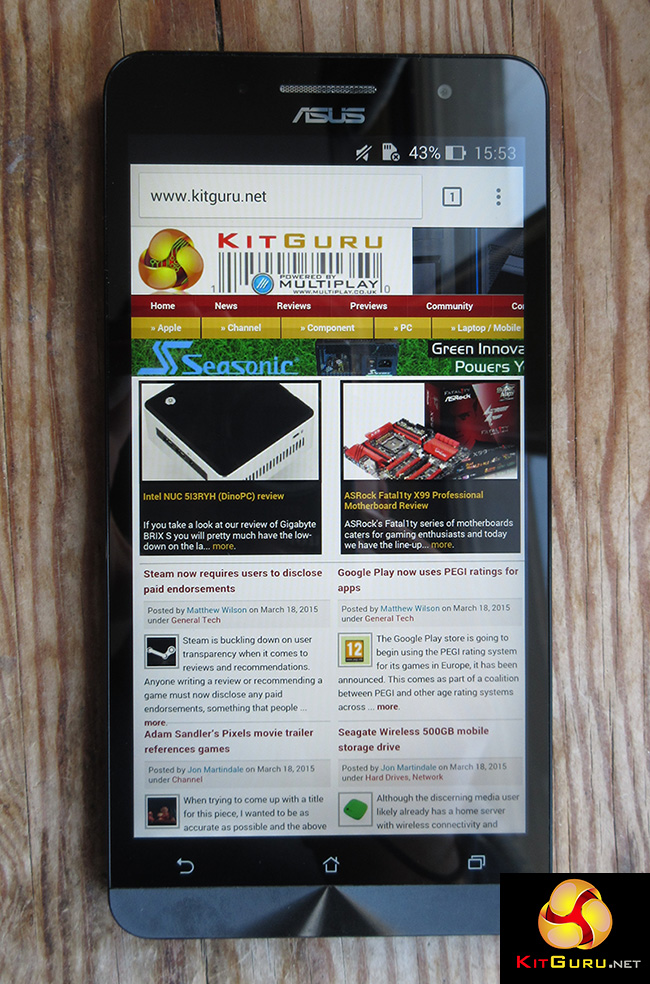
Over the last decade ASUS have built up a reputation in creating quality graphics cards and motherboards, however they have yet to make a massive splash in the mobile phone sector. In for review today is the ASUS ZenFone 6 mobile phone. Priced at just £249.99 for a 6-inch phone, the ZenFone aims for those after the biggest phones without the biggest price tags. Could the ZenFone appeal to those otherwise priced out of the market?
ASUS aren't best known for their phones but the ZenFone series first debuted back in April 2014. On paper the ZenFone 6 certainly looks good, with its huge display and adoption of a low powered Intel Atom processor. We analyse battery life later in the review to see how it fares.
Features
- 6″ 1280*720 IPS display
- Intel Atom Z2580 multi-core processor 2.0 GHz
- 2GB RAM
- Android 4.3, upgradable to Android 4.4.2
- 16GB internal memory with MicroSD cards up to 64GB supported
- 3300 mAh battery
- 13MP rear and 2MP front cameras
- SonicMaster speaker technology
The Asus ZenFone 6 is supplied in a minimalist dark grey box, where the top slides off the box itself. A photo of the ZenFone 6 takes up most of the front.
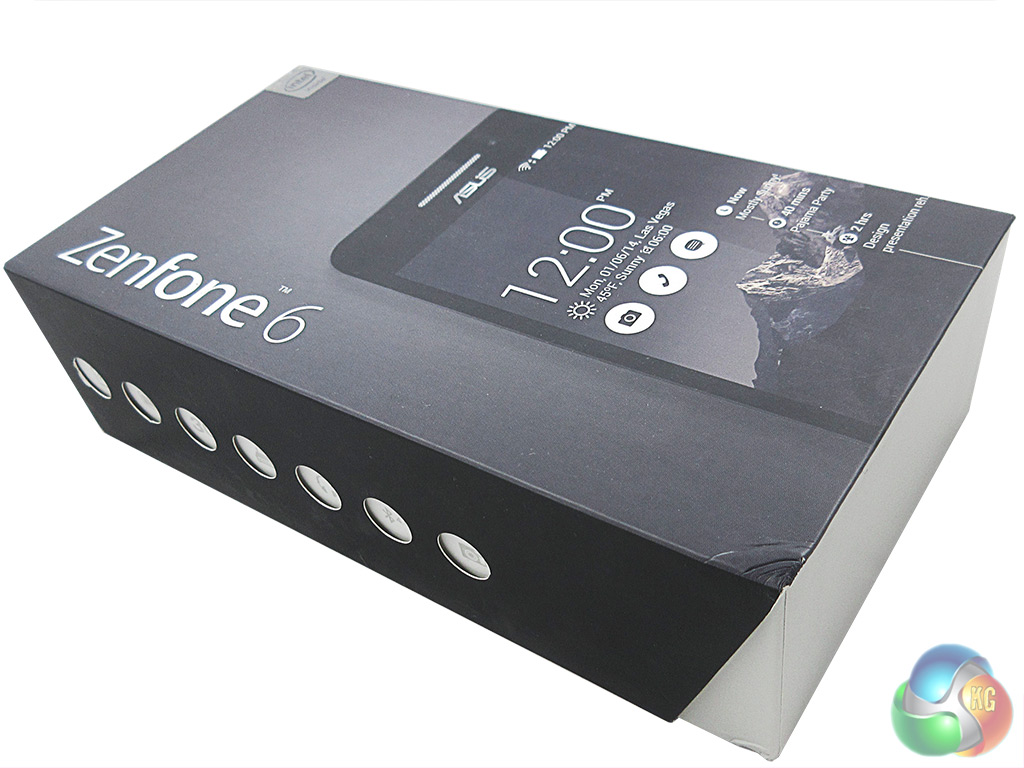
The top cover features cut-out circular holes through which some key specifications can be viewed. These are on the box itself, underneath the sliding cover.
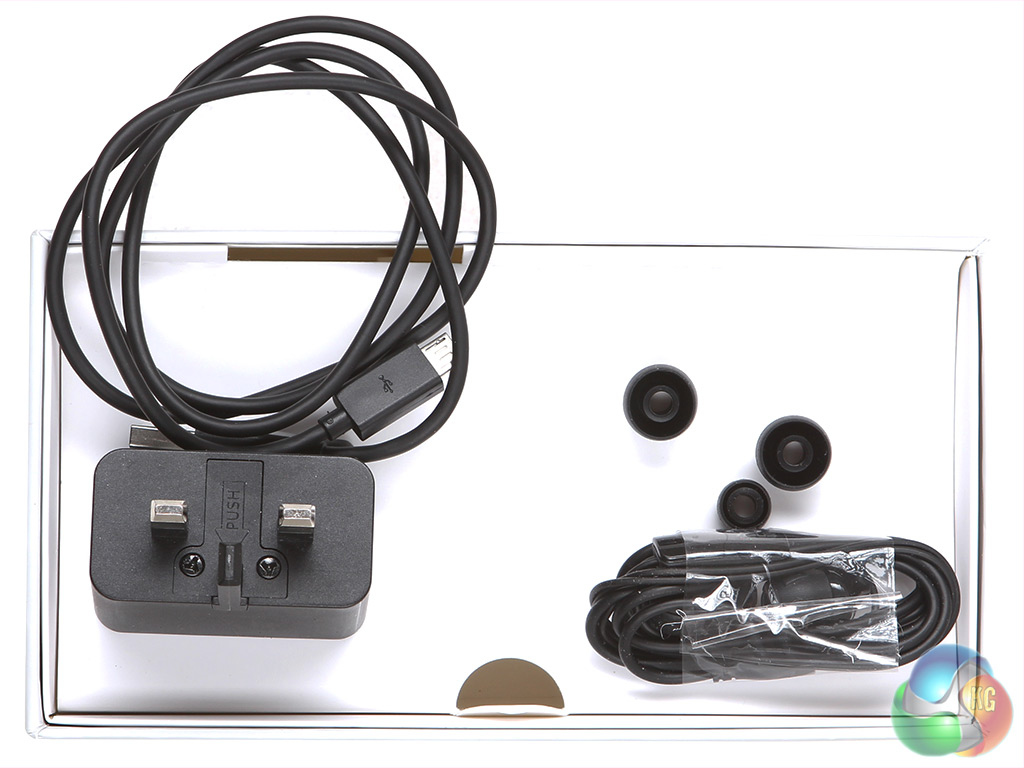
Inside, the ZenFone 6 is accompanied by a quick-start guide, a standard UK-plug charger with a micro-USB cable, and some ASUS headphones with three different sized earbuds.
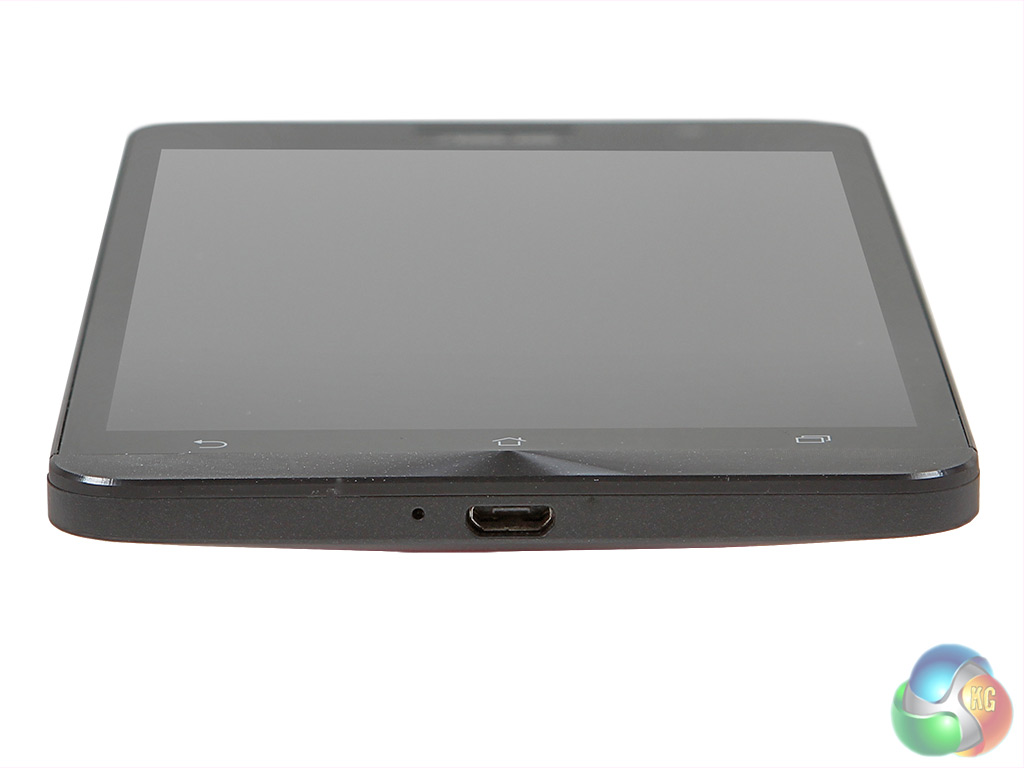
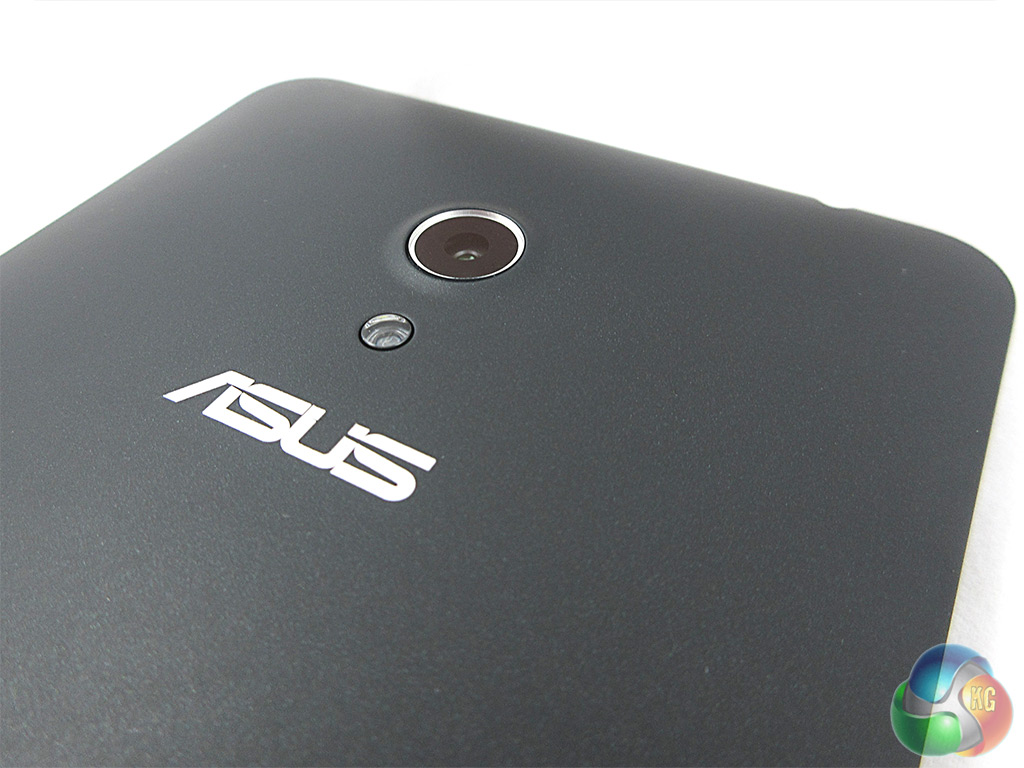
The Asus ZenFone 6 is a pleasing and simple design -it is mostly made from matte plastic. While it does not have the same premium feel as the all-metal Samsung A-series phones, it feels classy and smooth in the palm. The front has a slim bezel, with home, back and recent apps buttons at the bottom – rather than soft-keys like on the Nexus 6.
The back has a slight curve and is comfortable to hold one-handed.
Due to the phone's dimensions, however, most operations necessitate a two-handed approach. This is because, to accommodate the 6″ display, ASUS had to make the handset 166.9mm (6.57″) long, and 84.3mm wide (3.32″). This means, in comparison to the Nexus 6 with its same display size, it is 7.6mm longer and 1.3mm wider. This makes one-handed use challenging indeed. But we feel if you plump for a 6″ device, you know what you're getting into so this isn't a major obstacle for most consumers.
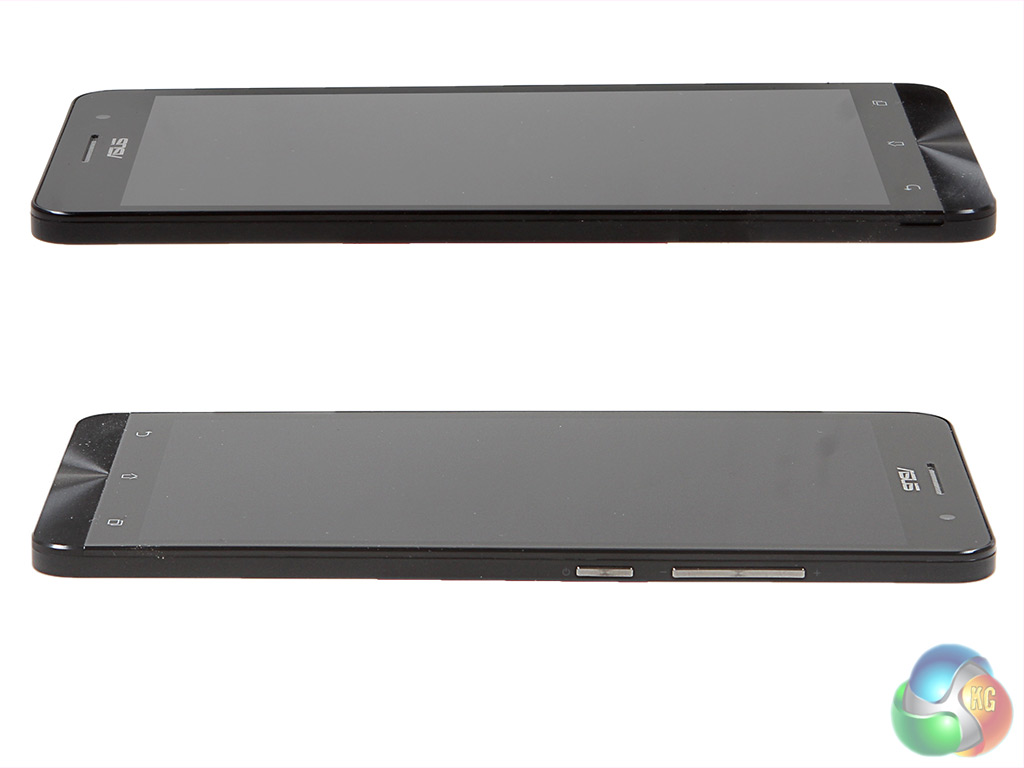
Indeed, ASUS have actually done very well to fit the 6″ display into the space they have – the ZenFone features a 70.9% screen-to-body ratio, which is particularly impressive considering the home buttons aren't part of the display, as with the Nexus. We feel separate buttons is a good move as it means all 6″ of the screen is usable, rather than about 5.75″ for the Nexus, due to the soft-keys take up screen space.
Also noteworthy is the thickness of the ZenFone. Coming in at 9.9mm, it's not exactly in the same league as the iPhone 6's 6.9mm thick body. However, for larger phones, and the larger batteries needed to accommodate them, this is impressive. The Nexus 6, for example, is 10.1mm thick.
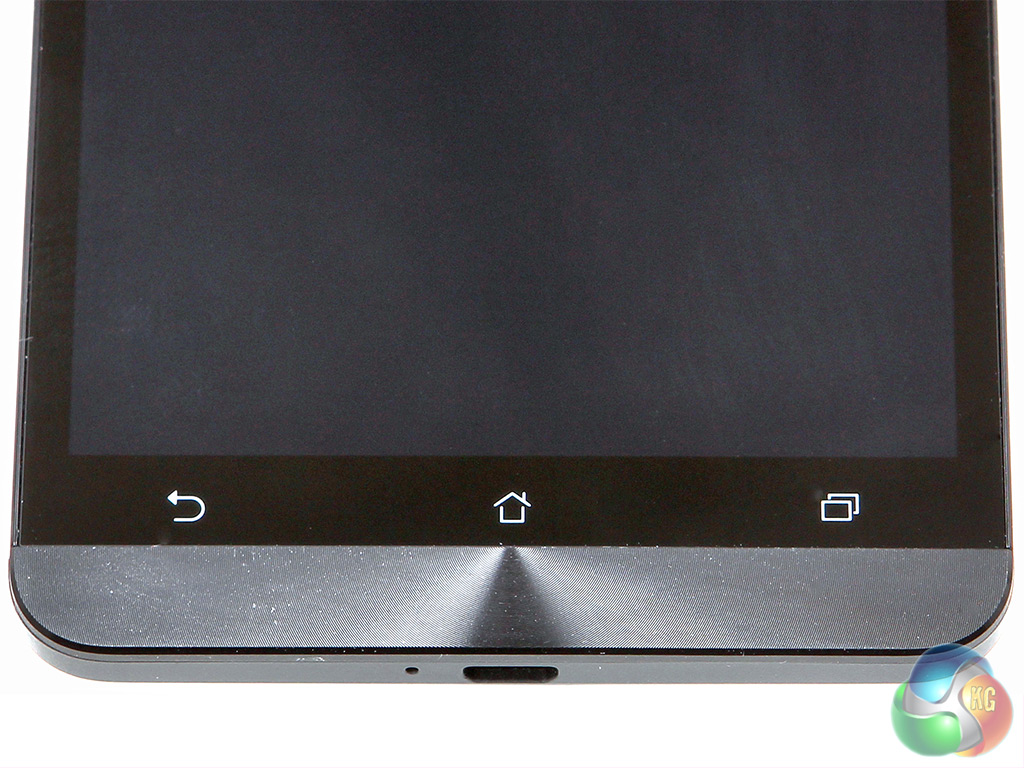
We should also mention that the ZenFone weighs in at 196g, 12g more than the Nexus – a negligible difference.
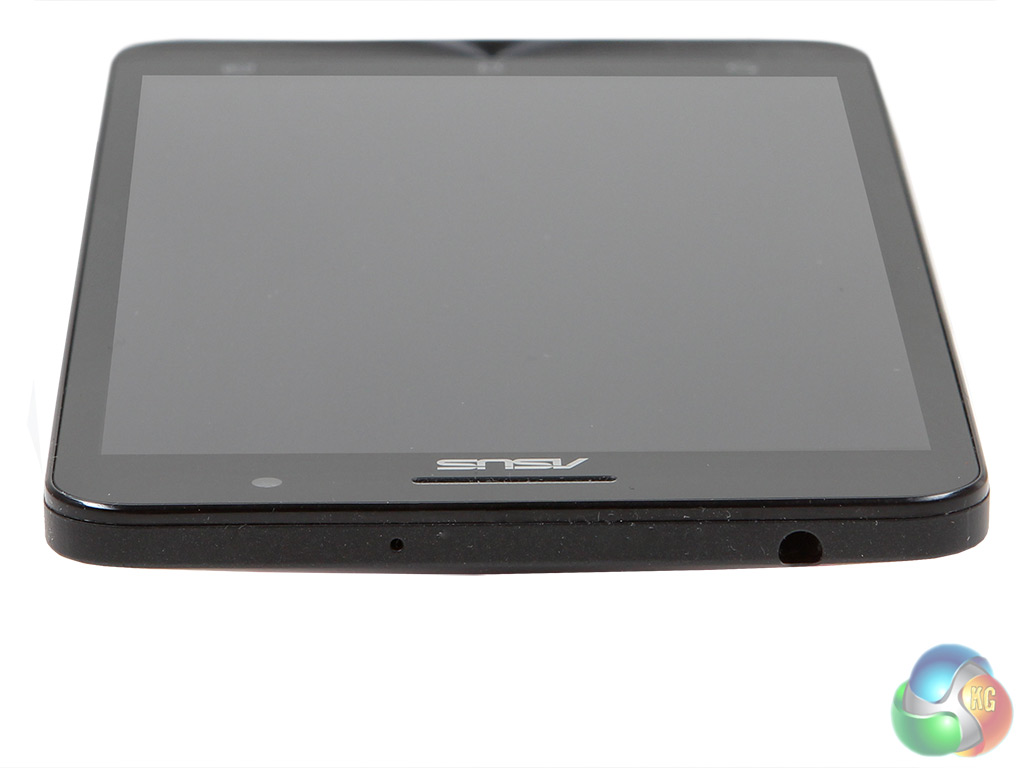
The rest of the design is fairly straightforward. There is the standard microUSB port at the bottom of the phone, a volume rocker on the right-hand edge of the phone, and the on/off button just below it. It is worth mentioning that the on/off switch has been cleverly positioned in the middle of the device to make reaching it easy for your thumb. A headphone jack at the top-left edge completes the build.
As stated, the ZenFone 6 packs in a 6″ HD (1280*720) IPS display. This HD display across the 6″ screen works out at 245 pixels-per-inch (PPI). This used to be considered very good, but nowadays we expect more. 2015's Samsung Galaxy S6, for example, features a display with 577 PPI from its 2560*1440 resolution.
Whilst we feel QHD displays are unnecessary as they create a drain on battery power without being noticeably sharper than a FHD display, we can't help but feel an HD display on a 6″ screen isn't quite good enough.
A 1920x1080p resolution on the ZenFone 6 would equate to 367 PPI – perfectly sharp and more battery-friendly than a QHD resolution. As it is, text on the ZenFone has slightly jagged edges and video isn't as crisp as devices such as the Sony Xperia Z3.
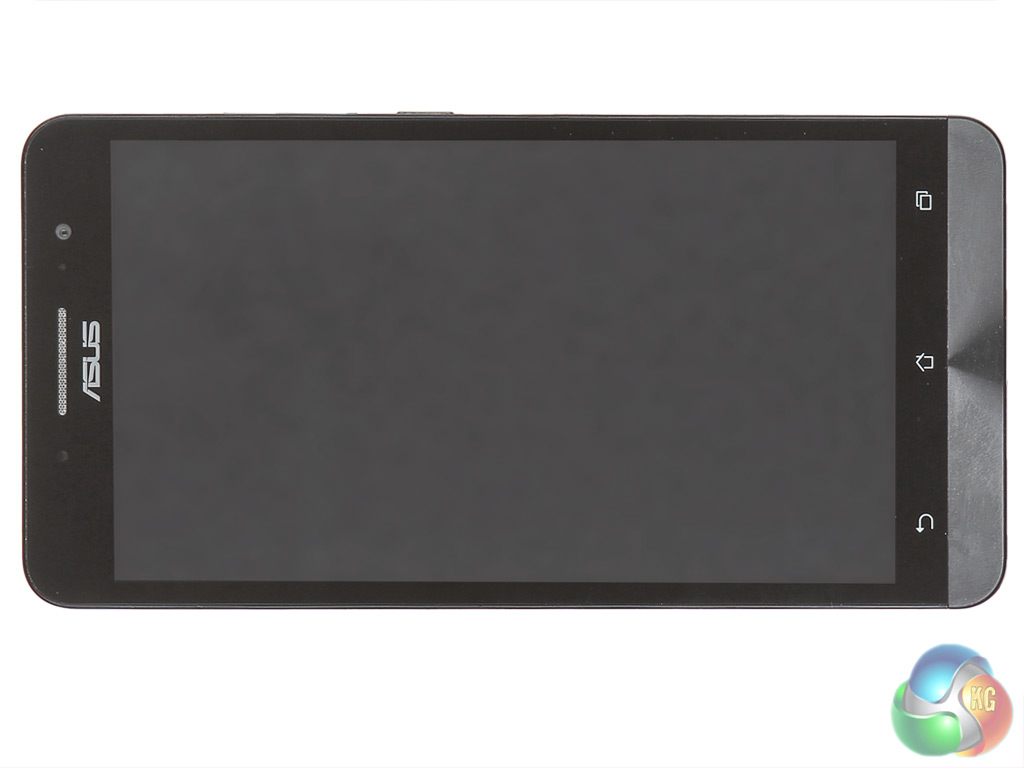
Viewing angles are very good thanks to the IPS panel, however, and the screen is impressively bright. A brightness of 400cd/m2 explains why – it is more than bright enough for indoor use, whilst maximum brightness outside still gives a sufficiently lit screen to view comfortably. We just used the automatic brightness feature as it worked well and intelligently, which saves you the hassle of fiddling around every time you go outside.
The ZenFone 6 also has good colour reproduction, thanks to ASUS TruVivid technology used in the phone. It doesn't suffer from over saturated colours like the Nexus 6, but consistently produces sharp images. As a result we found e-reading, for example, very satisfying. Video playback is great in 720p, but as we say – it lacks the absolute clarity of a 1080p device.
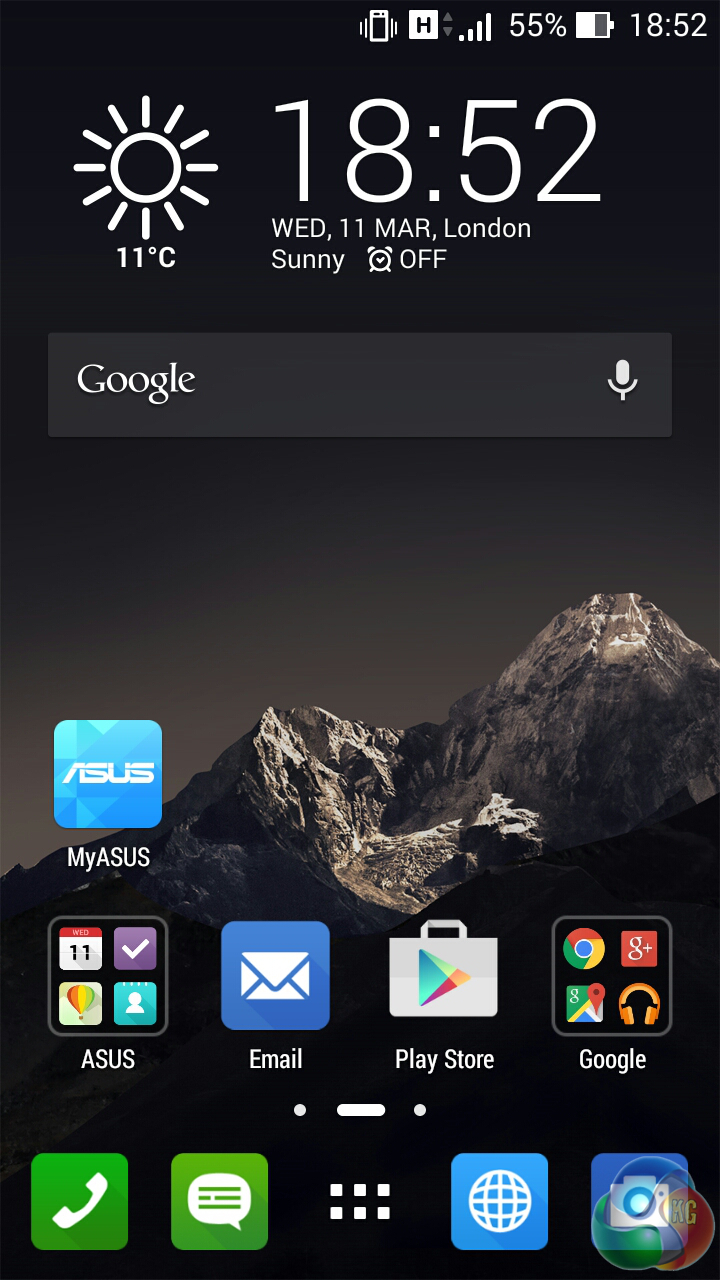
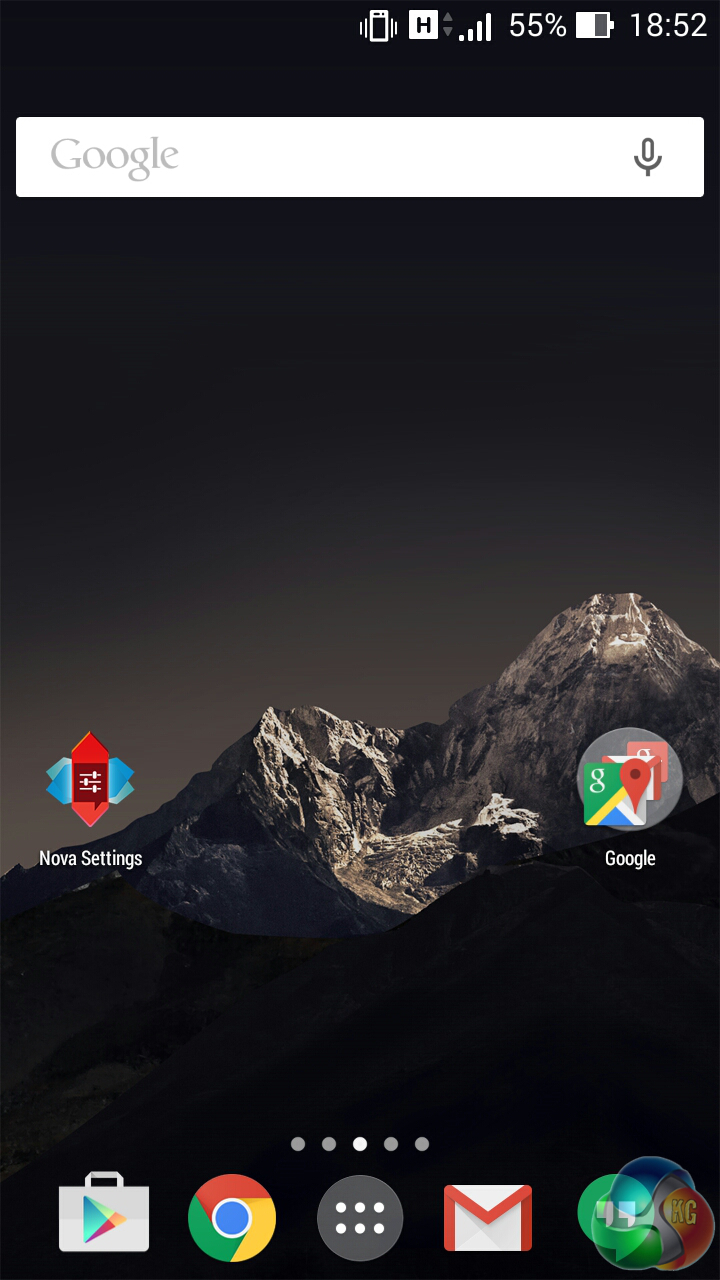
ASUS Launcher (left) next to Nova Launcher.
Coming to software, the ZenFone 6 launched with Android Jellybean, 4.3. It is now upgradable to KitKat 4.4.2, and ASUS have confirmed that Android 5 – Lollipop – will be coming to the entire ZenFone line-up in April 2015.
As it is, we tested the device with KitKat.
ASUS have designed their own launcher for the ZenFone – ASUS Launcher – whilst the general UI has been aptly named ZenUI. ASUS Launcher replaces the stock ‘Google Now' launcher found on Nexus and Motorola devices. Overall we found the launcher clunky and cluttered, but ZenUI is so simple and beautiful – we loved it.
Starting with ASUS Launcher, the first thing we noticed are the busy home pages. This mainly comes from the very large icon sizes – which can't be made smaller – and over-complicated widgets, which squeeze in too much text. App icons are attractive, however, with a ‘flat' look now common to mobile operating systems, plus a pleasing shadow effect.
It's just not enough to make us inclined to use ASUS Launcher – we prefer something more user friendly and customisable like Nova Launcher – at least this way we can shrink down the gargantuan icons.
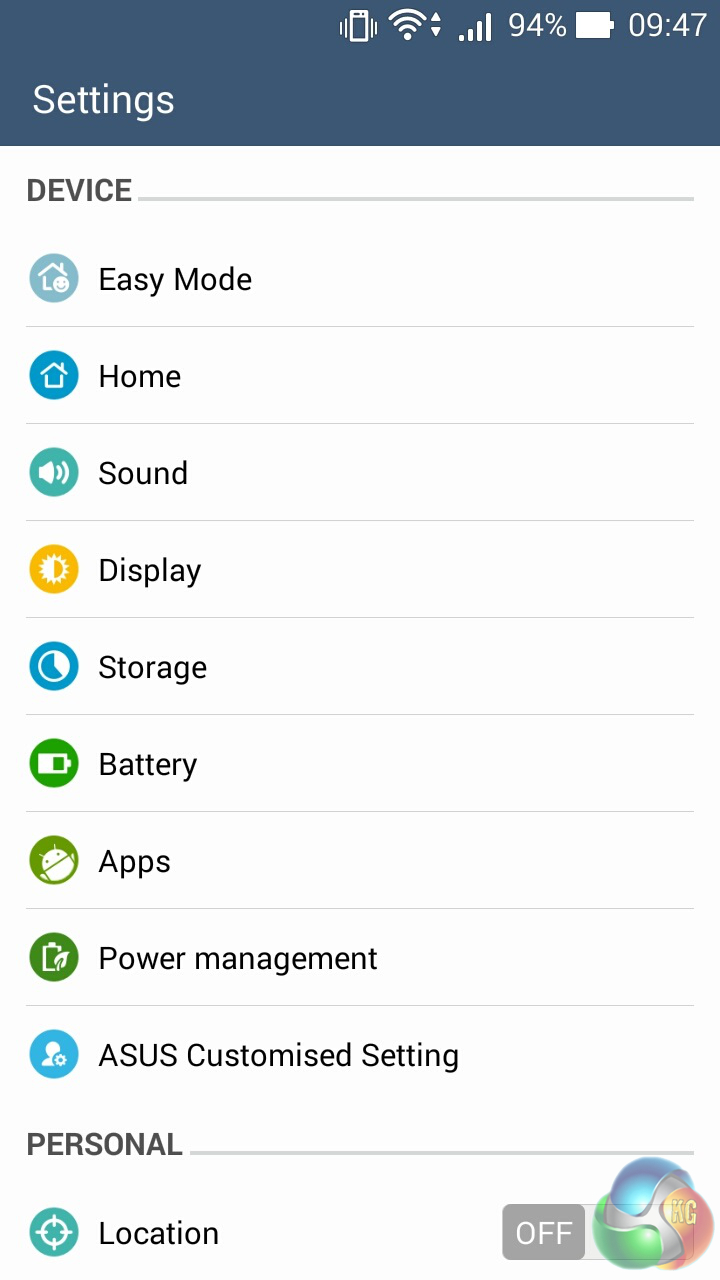
ZenUI is an entirely different matter. Its main appeal is its beauty and simplicity. The settings menu is wonderfully clean, where small, round and colourful icons contrast against the white background.
The notification panel is also well designed – swiping on the left-hand side brings down the system notifications, whilst swiping from the right gives you access to the quick settings feature. This quick settings drop-down is aesthetically pleasing with more minimalist and round icons, though it defaults to showing every quick setting there is – resulting in a cluttered appearance. You can customise this, however, to make sure only the settings you want appear, rather than them all.
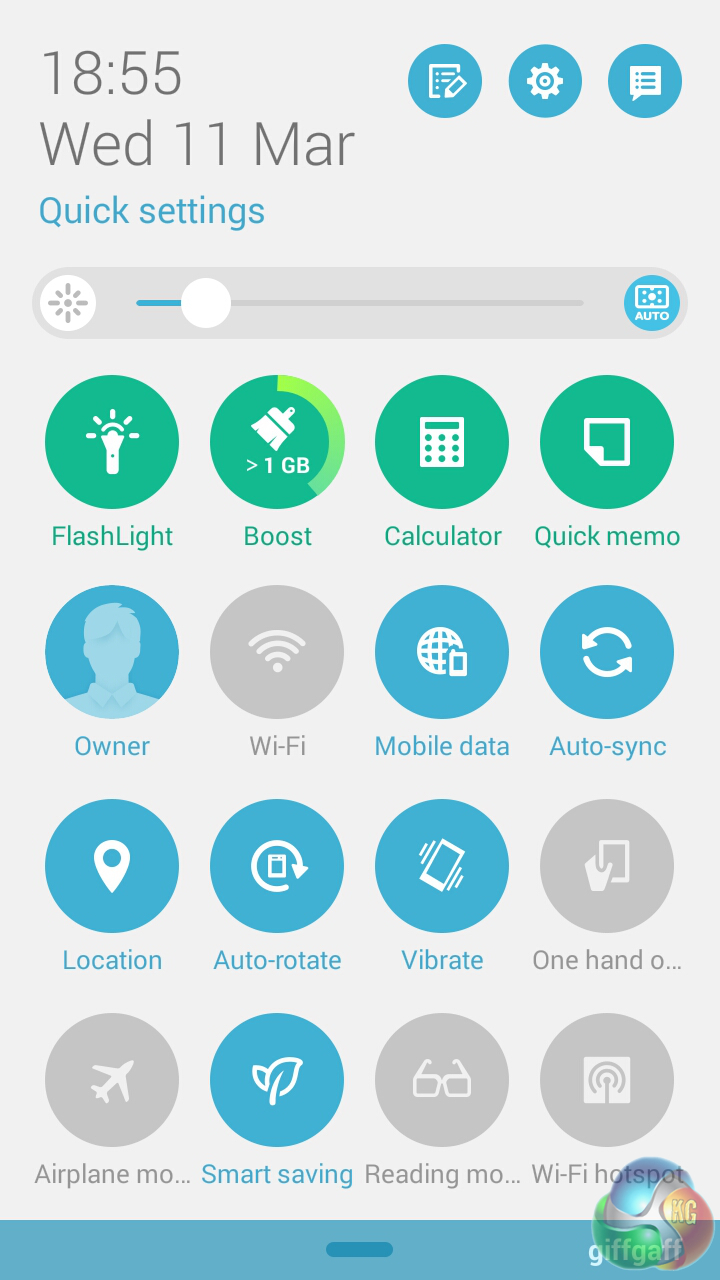
Quick settings (left) next to a cool one-handed mode.
On the whole, the ZenFone's software seems a mixed bag. ZenUI is stunning and its simplicity makes it effortlessly practical. ASUS Launcher, though, is too busy and lacks the sleekness of ZenUI. Pair the ZenFone with a different launcher like Nova and it would be a great partnership.
Making everything tick within the phone is the Intel Atom Z2580 multi-core processor, clocked at 2.0 GHz. It uses two physical cores – but four threads – so multi-tasking should be well managed. Paired with the CPU is 2GB of RAM and a PowerVR SGX544MP2 graphics unit.
In real-world use, the ZenFone is superb. Always responsive, we were never kept waiting for apps to open, nor did we experience lag in games like Temple Run 2. Multi-tasking proved a breeze for the Z2580 CPU – switching between apps was effortless, even with 10 tabs open in Chrome and another 10 apps open in the background.
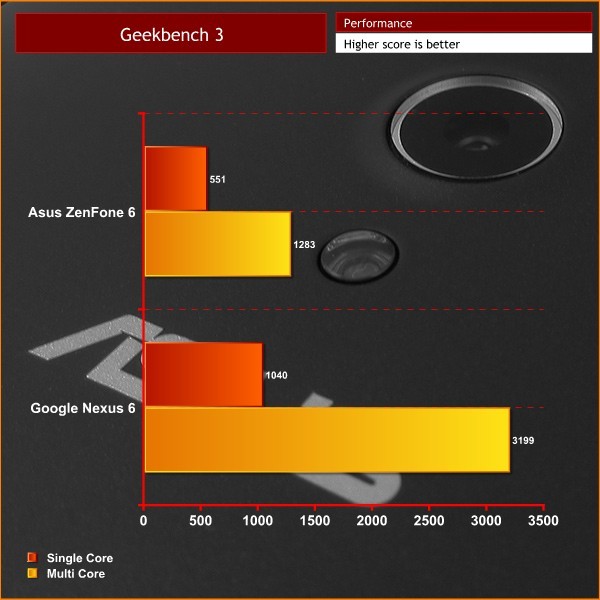
The ZenFone didn't perform as well in the benchmark tests we ran. In Geekbench 3 it scored 551 for single-core performance, and 1283 for its multi-core performance. This lags behind the premium Nexus 6 which scored 1040 and 3199 respectively.
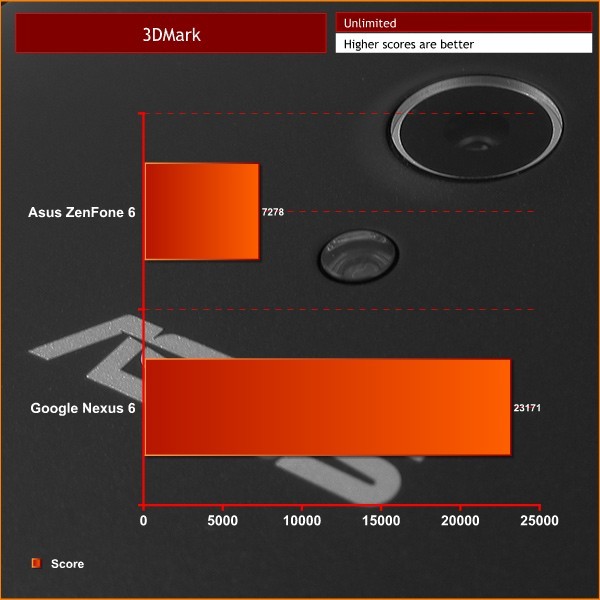
The 3DMark Ice Storm Unlimited test was another area where the ZenFone fell down against its pricier opposition. ASUS' device scored 7278 here, whilst the Nexus posted a huge 23176 – over 3 times the performance of the ZenFone.
At the end of the day, a benchmark just shows how far your hardware can be pushed. In everyday use, the ZenFone is brilliant. But if you're in need of a device with more grunt, you may have to look elsewhere.
Photos taken with the ZenFone are delivered by a 13MP rear camera, with a native image resolution of 4128×3096. A 2MP front camera deals with your ‘selfie' needs.
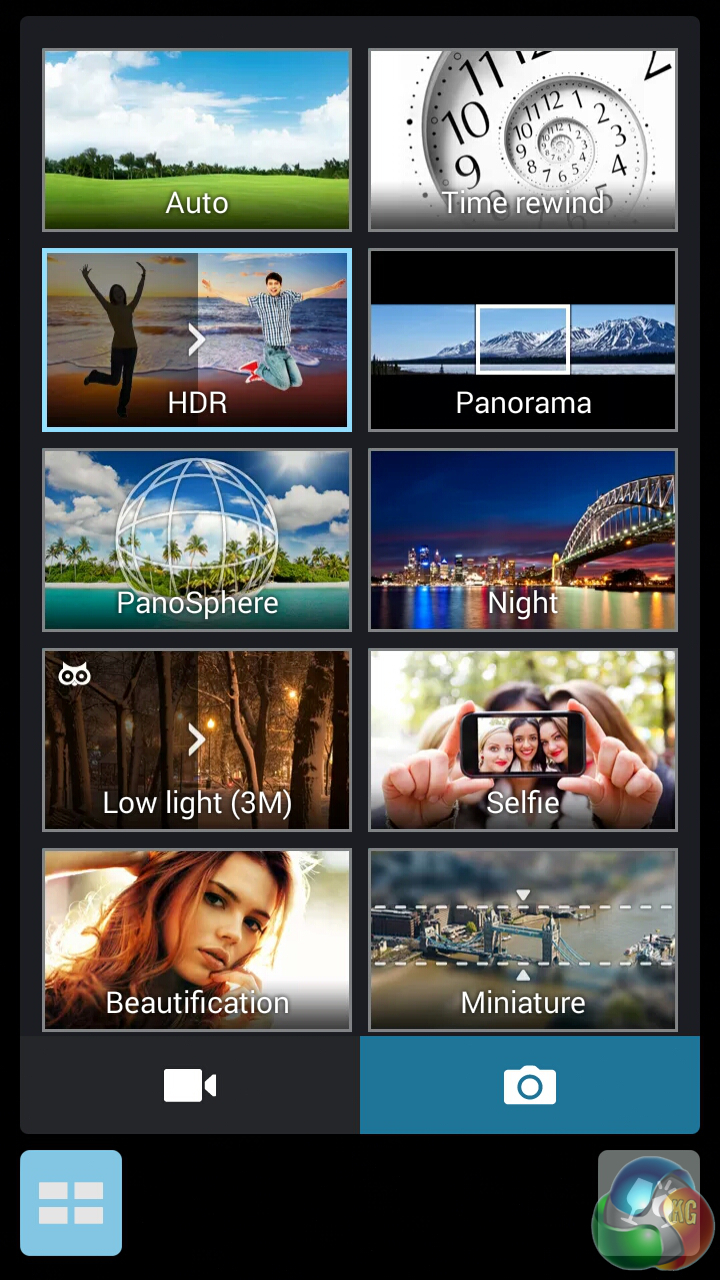
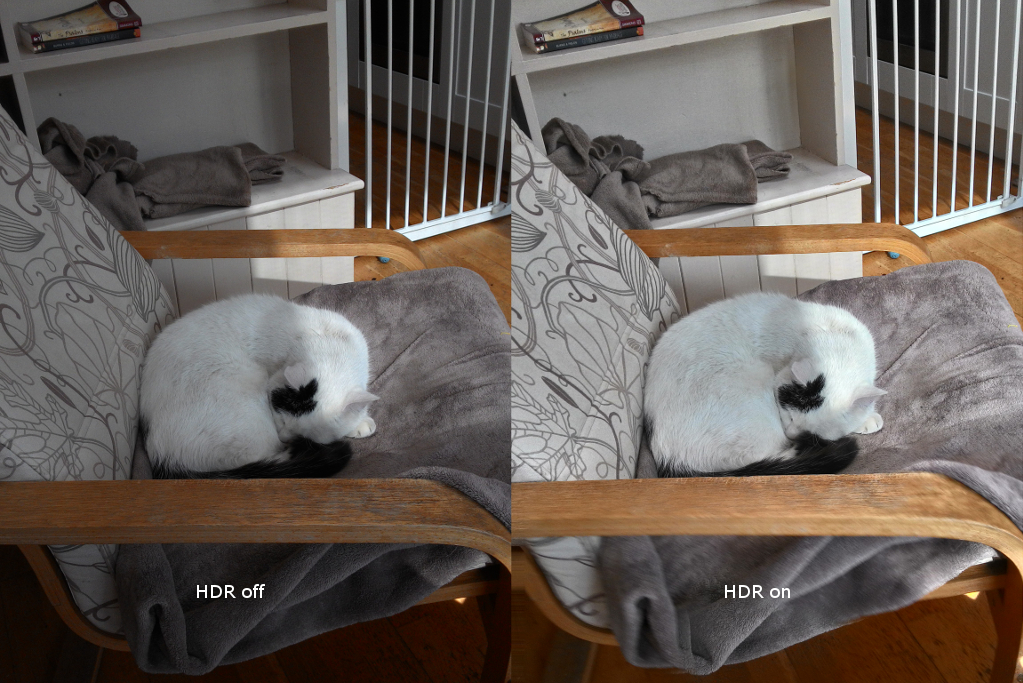
As with most manufacturers, ASUS included their own camera app on the ZenFone 6. This has a number of useful features, including a smart tap-to-focus option, several different shooting modes and a very effective HDR mode.
As you can see, in good lighting the phone produces detailed images which are very good considering the price point of the device – cheaper smartphones tend to skimp on image quality. Whilst we're not talking breathtaking sharpness here, the images are still impressive and look crisp on the 720p screen.


A good photo with deep contrast (left) shown alongside a lower-light photo where colours become murky.
However, in lower lighting colours lose their clarity somewhat and the images have more noise interference. Whilst this is partially remedied by the low-light photo mode, it is never going to be a complete solution as the sensor is not of sufficient quality to produce vivid, low-light images. Still, it's more than acceptable in most conditions, especially considering the price of the handset, but for the keen mobile photographers among you the ZenFone may not be completely satisfying.
The front camera, too, is more than good enough for Skyping or any selfies you may want to take. The ASUS camera app also includes filters so you can see yourself in sepia and grayscale amongst others before you take the photo.
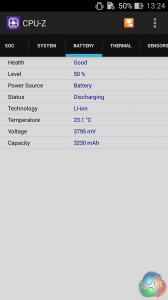
Inside the phone, ASUS managed to pack in a 3300 mAh battery to power everything. No matter how big your device, this is an impressive figure.
The battery lives up to the expectation, too. ASUS wisely fitted a high-capacity battery to power the big screen, even if it's not 1080p. The result is a battery performance which means you won't have to compromise on connectivity throughout the day.
We were able to get a whole day's use out of a single charge, so it can make it through without a top-up. This was with auto-sync and either WiFi or mobile data (depending whether we were indoors or on the go) constantly on, and we turned location on whenever it was requested. We also just stuck to the automatic brightness setting, rather than fiddling manually whenever it was needed.
.
To offset this, the phone does charge comparatively slowly, taking approximately 4 hours to reach a full battery level, and that was using the ASUS charger and microUSB cable provided. It's not a deal breaker as you should just be able to charge it overnight at the end of every day, but should you need to go for a top-up it may not be very satisfactory.
On the whole we were very impressed with the Asus ZenFone 6. It is very affordable for the size and has potential to meet a new niche in the market.
Solid everyday performance, despite lagging behind in the benchmarks, means the ZenFone can keep up with everything you throw at it. On top of this is the sleek design which fits the display and home buttons into a relatively small space.
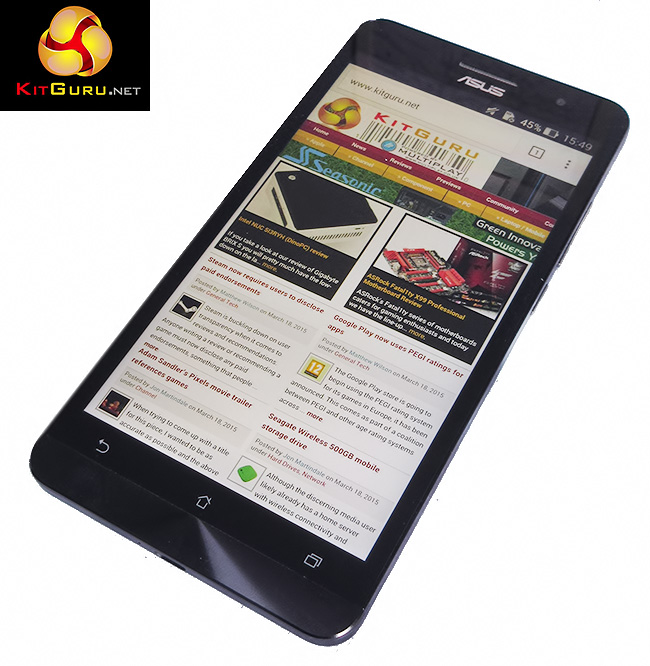
Though the screen does lack the absolute clarity of other flagships with a FHD display, it is still very usable and colour reproduction is very good. We just wish ASUS had opted for a 1080p panel.
In other areas, ASUS Launcher is functional but too cluttered – we recommend using Nova. ZenUI, though, is so simple and easy on the eye, it makes using the phone very satisfying. The battery will get you through the day comfortably, and the camera gives decent, if not spectacular, high-res photos.
You can buy the Asus ZenFone 6 from Currys for £249.99 inc VAT. It's a great value phone and can be relied upon for strong performance day-to-day.
Discuss on our Facebook page, over HERE.
Pros:
- Large 6″ screen.
- Beautiful UI.
- Solid real-world performance.
- 3300 mAh battery will comfortably last a whole day.
- Very good value for a 6″ phone.
Cons:
- Lacks a FHD display.
- ASUS Launcher is somewhat clunky.
- Charges slowly.
KitGuru says: Overall this is a great phone at a very affordable price too – especially considering it's a 6-inch device. ASUS seem to have transferred their quality in the peripheral sector to their phone manufacturing.

Considering its price, this seems like a strong contender for the nexus spot. Given that the new Nexus 6 retails for around £500.
✉✉⚓✉⚓✉⚓get over 13kM0NTH@ag21:
Going Here you
Can Find Out,
►►► https://WorkOnlineApp.com/get2/position98…
I have this phone… after 3 months of usage 2 stuck pixels appeared. Had to send it back for screen replacement now I have to wait a month or more :c
you dont have this phone the phone just came out this mount
zenfone 6 is from 2014 brah