KitGuru KitGuru.net – Tech News | Hardware News | Hardware Reviews | IOS | Mobile | Gaming | Graphics Cards


Intel's next-generation Arc Xe2 discrete GPUs, featuring the “Battlemage” graphics architecture, are reportedly set to be manufactured using TSMC's 4nm EUV foundry node. This move represents a significant leap from Intel's previous Arc “Alchemist” series, which uses the TSMC 6nm DUV technology.
The report originates from Digitimes (via TechPowerUp), which is paywalled. The upcoming series of graphics cards is expected to feature the BMG-21 and BMG-31 GPUs with 20 and 32 Xe2 cores, respectively, and should debut later this year.
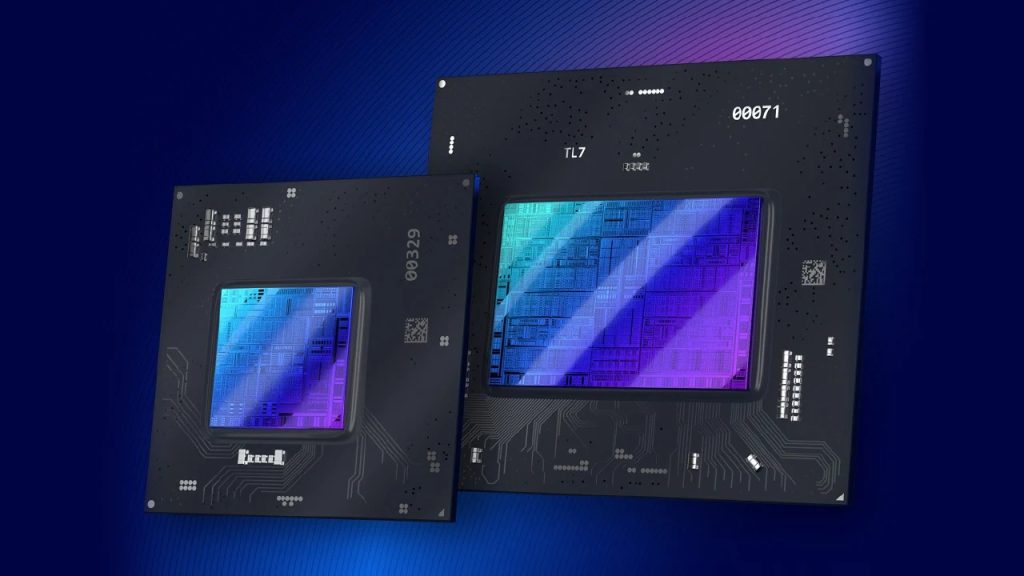
The transition to the TSMC N4 node promises notable enhancements in transistor densities, performance, and power efficiency, allowing Intel to potentially quadruple the Xe cores on its flagship “Battlemage” model. Coupled with improved IPC and clock rates, these advancements could position “Battlemage” to rival current offerings from AMD and NVIDIA in the gaming GPU market.
Interestingly, the use of the TSMC N4 node for Battlemage means Intel won't be using the most advanced foundry node (N3) for its next generation of Xe2-based discrete graphics cards. On the other hand, the Xe2 iGPU powering Intel's Core Ultra 200V “Lunar Lake” CPU is part of Intel's Compute tile, which is based on the TSMC N3 node.
Discuss on our Facebook page HERE.
KitGuru says: Do you believe Intel “Battlemage” discrete graphics cards will be competitive with AMD and Nvidia graphics cards?