KitGuru KitGuru.net – Tech News | Hardware News | Hardware Reviews | IOS | Mobile | Gaming | Graphics Cards


Microsoft has officially moved its latest graphics innovations into stable with the release of the DirectX 12 Agility SDK 1.619. This update marks the general availability of Shader Model 6.9. By using the Agility SDK, game studios can now bundle these advanced runtimes directly with their titles, bypassing a full Windows OS update and ensuring that any player with a compatible driver can access the latest features.
DirectX Raytracing (DXR) 1.2's latest update graduates several critical technologies from preview to stable status. Shader Execution Reordering (SER) is now a required feature of Shader Model 6.9, providing a standardised way for GPUs to sort disorganised ray-tracing workloads into coherent, parallel threads dynamically. Simultaneously, Opacity Micromaps (OMMs) have been fully integrated, allowing hardware to skip pixel-level checks for complex, alpha-tested geometry like foliage and chain-link fences. All these additions are designed to reduce the overhead of path tracing and complex lighting in modern AAA titles.
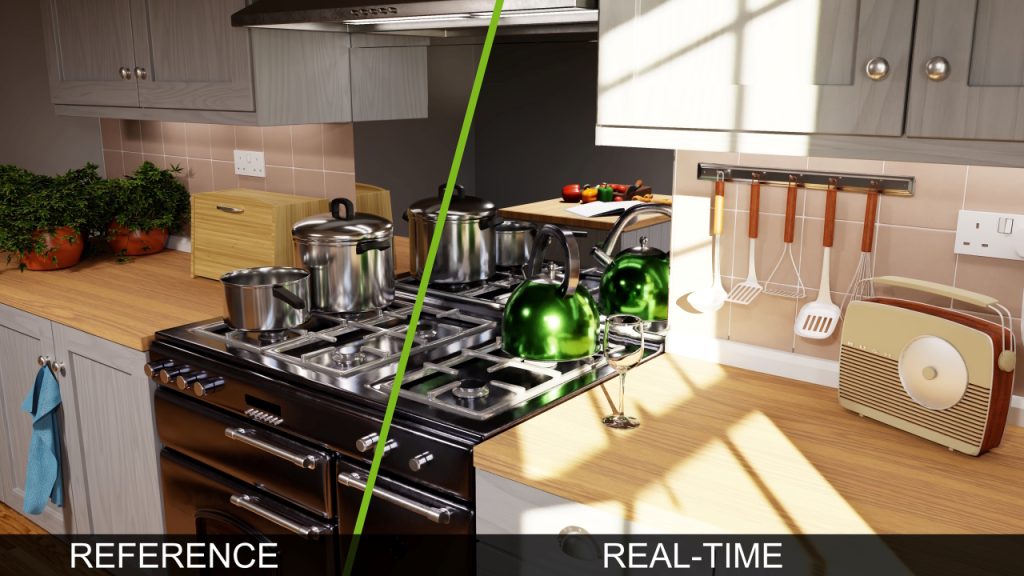
Beyond ray tracing, Shader Model 6.9 introduces Long Vector support, enabling shaders to process vectors with up to 1024 elements without the need for awkward manual packing. This release also makes several previously optional capabilities mandatory, including native 16-bit and 64-bit shader operations. For developers looking even further ahead, Microsoft also launched Agility SDK 1.719-preview, which introduces Fence Barriers for more granular synchronisation and VPblit 3DLUT, a feature that offloads video tone mapping to dedicated hardware, such as a video processing engine.
Hardware support for these features highlights a diverging landscape among the major GPU vendors. Nvidia continues to offer the most comprehensive implementation, with hardware-accelerated OMM and SER support across the RTX 40 series and newer, while maintaining software compatibility for older RTX hardware. Intel has made a massive splash with its Arc B-Series (Battlemage), which features full hardware acceleration for SER. Internal Microsoft testing (via VideoCardz) using a dedicated tech demo showed that SER could boost frame rates by 40% on an RTX 4090 and by a staggering 90% on Intel Arc B-Series hardware. AMD has enabled API support for these features on the Radeon RX 9000 series. However, current drivers reportedly do not perform physical reordering, meaning the performance gains on Team Red may lag behind competitors for now.
KitGuru says: While the 90% performance jump seen on Intel's Battlemage is specific to a Microsoft synthetic demo, it's still quite promising.