KitGuru KitGuru.net – Tech News | Hardware News | Hardware Reviews | IOS | Mobile | Gaming | Graphics Cards


Microsoft is rolling out a new feature in the latest Windows 11 Insider Preview build that aims to take some of the guesswork out of diagnosing system instability. The new Proactive Memory Diagnostics tool automatically detects potential memory-related issues after a crash and prompts the user to run a quick scan to find what went wrong.
As anyone who's dealt with random Blue Screens of Death knows, faulty RAM, unstable XMP/EXPO profiles, or wonky memory controllers can be notoriously tricky to pinpoint as the root cause of crashes. They often lead to subtle data corruption and unpredictable failures that are frustrating to work with.
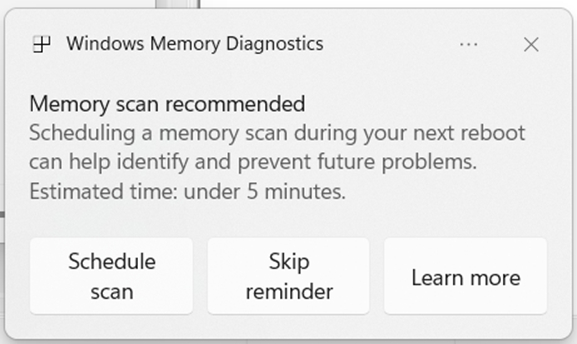
According to the post on the Windows Insider blog (via Techpowerup), this new feature, currently live in Build 26220.6982 for Insiders in the Dev Channel, aims to simplify this process. Suppose your system experiences an unexpected bug check or restart. In that case, Windows will now display a notification upon reboot, suggesting you run a memory scan with the built-in Windows Memory Diagnostic tool.
The scan runs automatically during the following boot sequence and takes about 5 minutes on average. It's a proactive approach that could save users a lot of troubleshooting time by quickly identifying or ruling out RAM as the culprit. Note, however, that the feature has a few limitations: it's not yet available on Arm64 systems and has restrictions for specific security configurations, such as BitLocker without Secure Boot.
KitGuru says: While it's still in testing, Proactive Memory Diagnostics looks like a genuinely useful addition.