KitGuru KitGuru.net – Tech News | Hardware News | Hardware Reviews | IOS | Mobile | Gaming | Graphics Cards


Several halls at London's Excel were crammed this week for Cloud Expo Europe 2019, which ran alongside Data Centre World, Blockchain Tech World, Smart IoT and DevOps Live. KitGuru hustled and bustled with the huge crowd to get a better look at the hardware that's underpinning the move back from desktop to remote computing. From a hardware lover's perspective, there was some impressive kit – alongside a lot of security, power and cooling systems.
As the headline would suggest, it was the ultra-high-density storage systems that had, arguably, the most impressive specs. Data centres measure products using the letter U to indicate a rack-mounted module that's 44.45mm high (1.75 inches in old money).
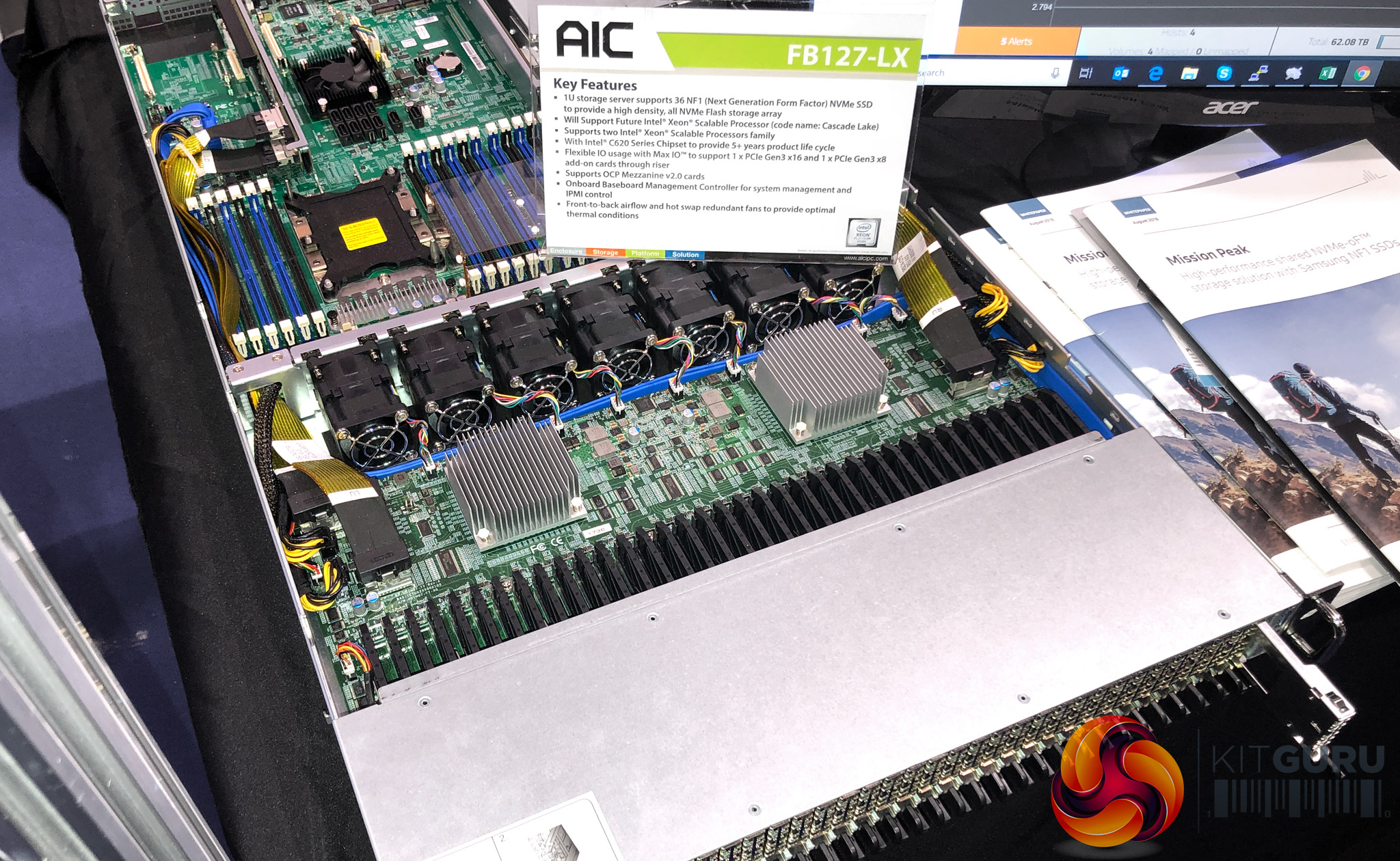
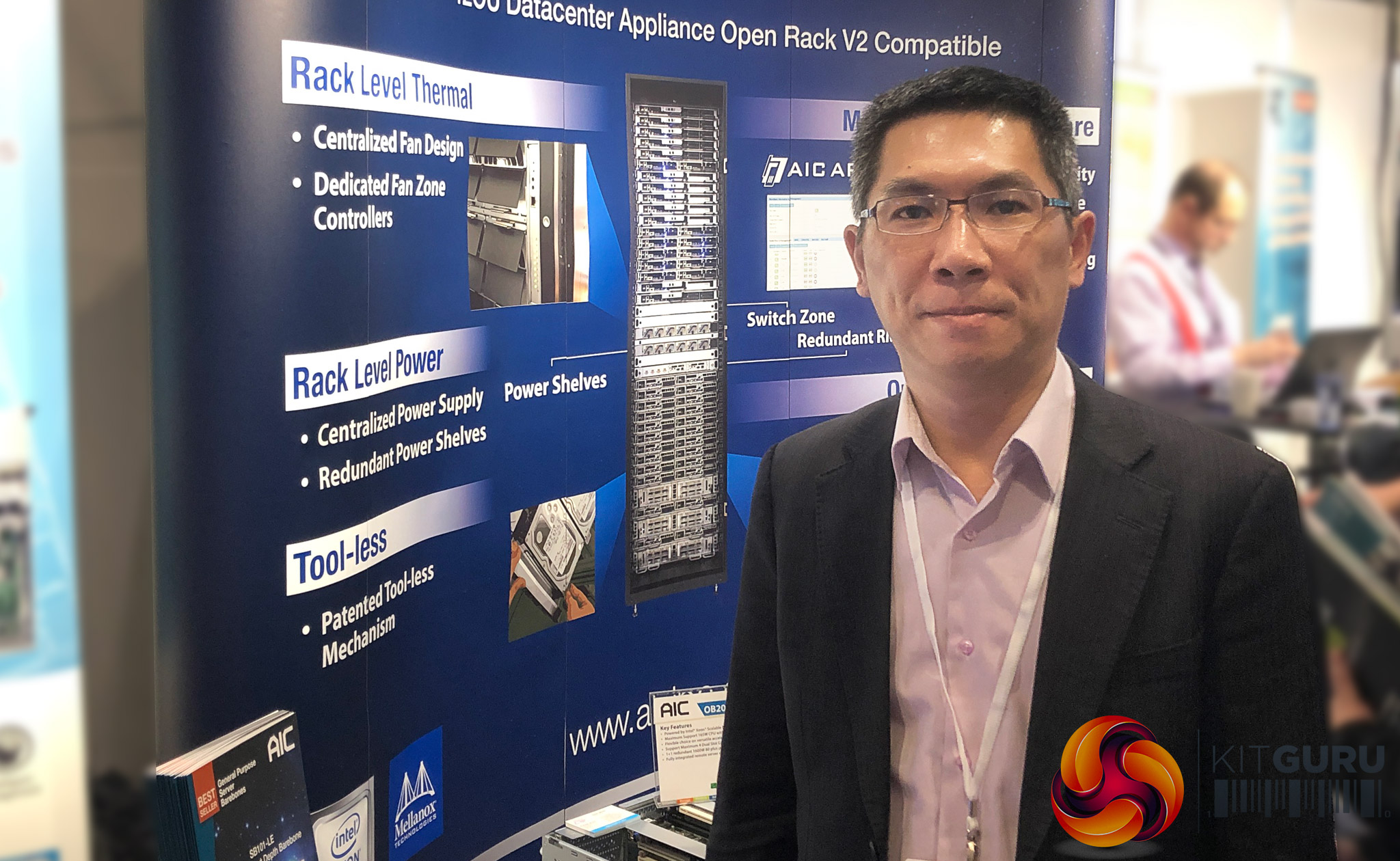
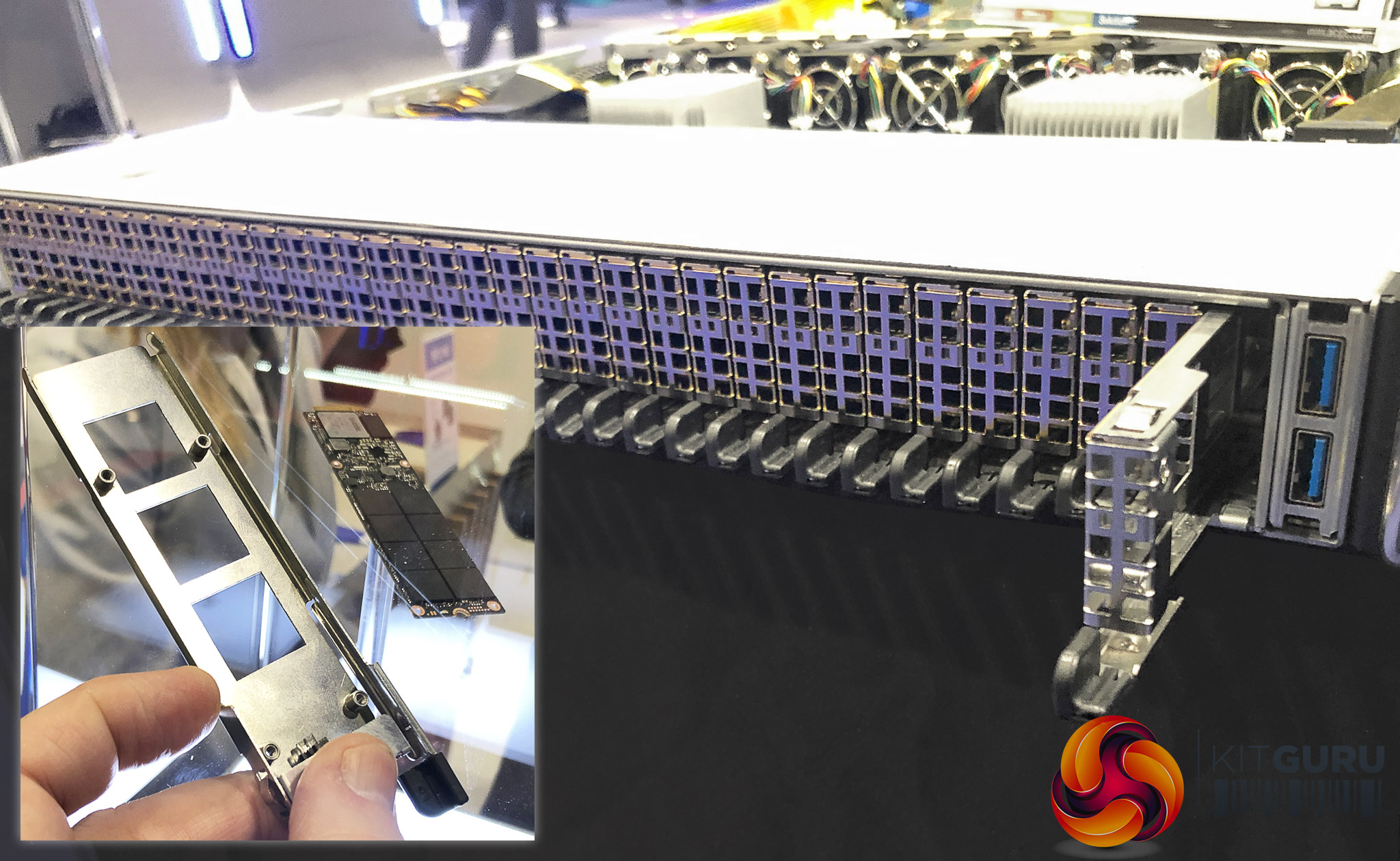
The AIC FB127-LX Storage Server offers 36 NF1 SSD bays – each of which could be populated with a 16TB NVMe Solid State Drive – for a total of 576 TB of storage. Just picturing 576x 1TB mechanical drives – and imaging that capacity in a space that’s less than 45mm high, gives you pause for thought. And a desire to own. David Huang, VP of Sales for Taiwanese OEM manufacturer AIC, explained the amazing storage densities that these new platforms can offer. The NF1 SSDs are roughly the same size as an M.2 but capacities range up to 16TB per drive.
There was much talk about the expected sales ramp up in the corporate/enterprise space for Intel's Cascade Lake – as well as the soon to be released Cascade Lake-X. That processor first appeared on Intel roadmaps as a Q4 2018, but is now likely to surface in/around Computex – targeting AMD's HEDT offerings. Plenty of products we saw at the show claimed to be ready to support Cascade Lake, with launch programmes geared up for next month.
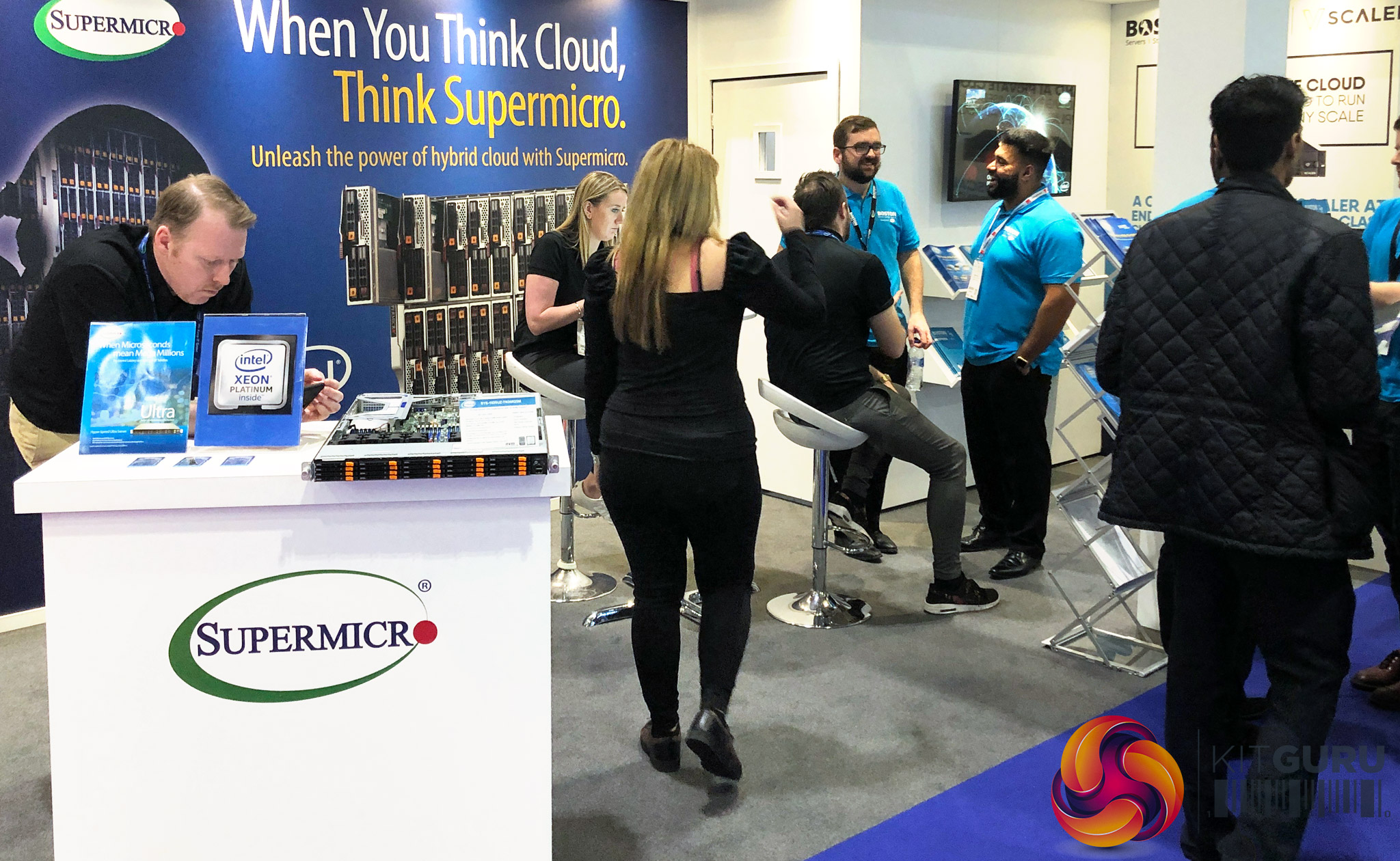
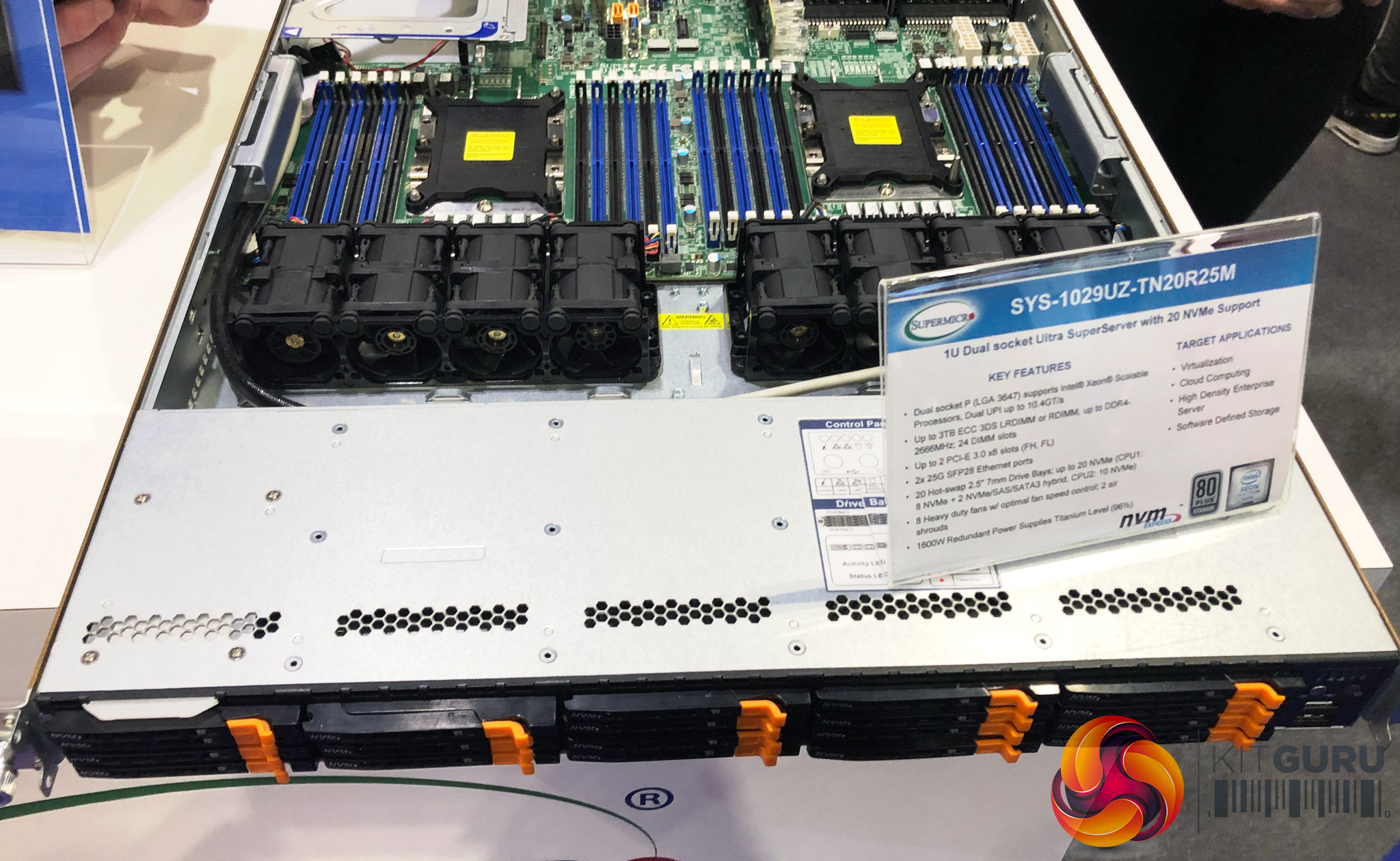
Supermicro were present, with products aimed at providing a high performance platform for cloud/hybrid solutions. Twin architecture products (with up to 24 DIMM sockets per node) mean you can park 3TB of 2666MHz memory next to your Dual Xeon processors.
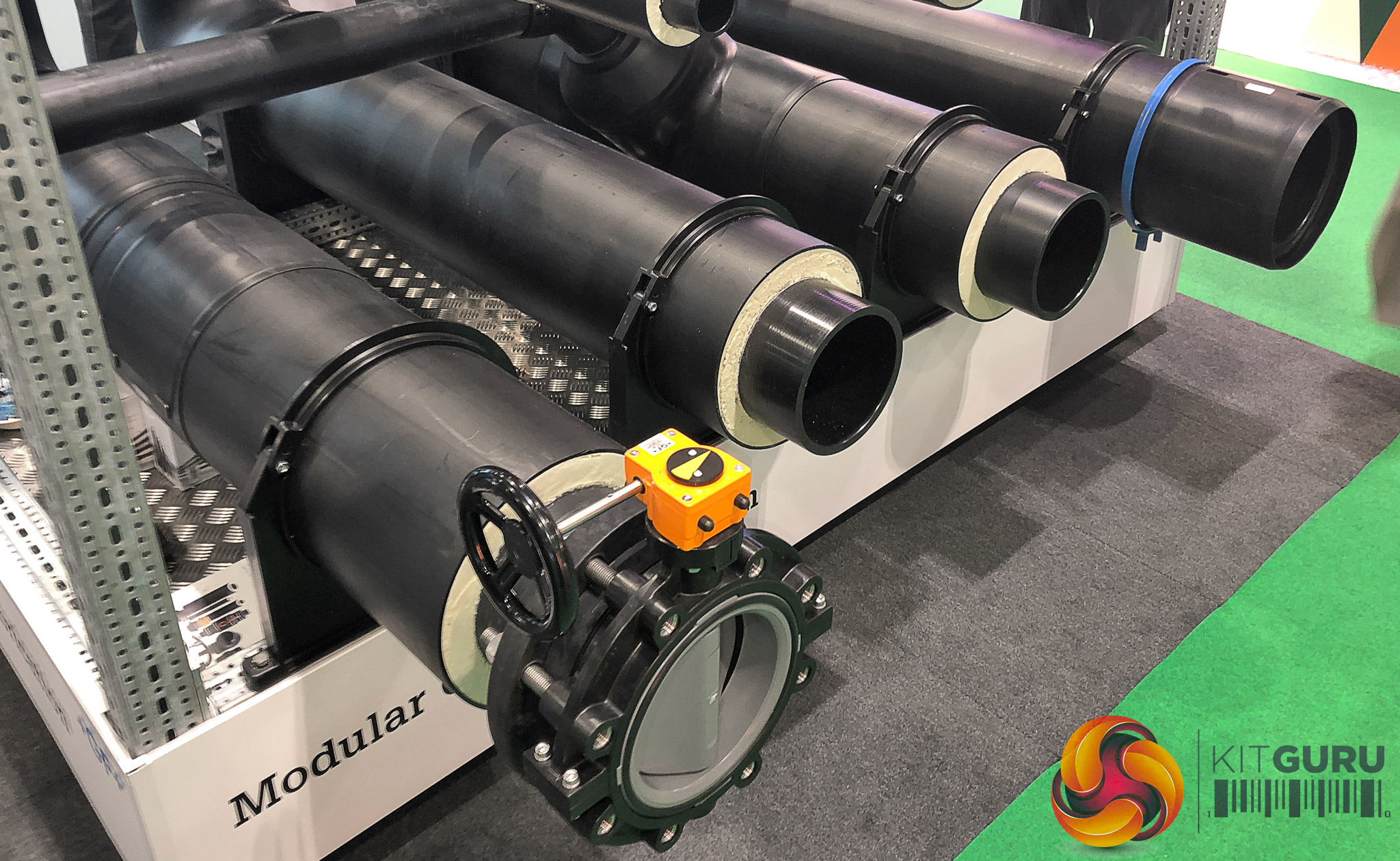
One other thing we photographed in case it made you smile: Liquid cooling pipes, for systems on an industrial scale. The expert on hand said that this range of (near) 30cm wide pipes were considered ‘mid-range' and that larger cooling solutions were available.
KitGuru says: While the hardcore among us will probably always opt for processing on the desktop, there's no doubt that there will be a huge investment in centralised systems over the next decade. With that in mind, not surprising that there were dozens of security companies on hand to explain how they can keep this metal safe. For a price.