KitGuru KitGuru.net – Tech News | Hardware News | Hardware Reviews | IOS | Mobile | Gaming | Graphics Cards


Earlier on in the week, Leo went to visit Seasonic, and while he was there he came across something quite interesting – an entirely passively cooled Mini ITX chassis from Monsterlabo.
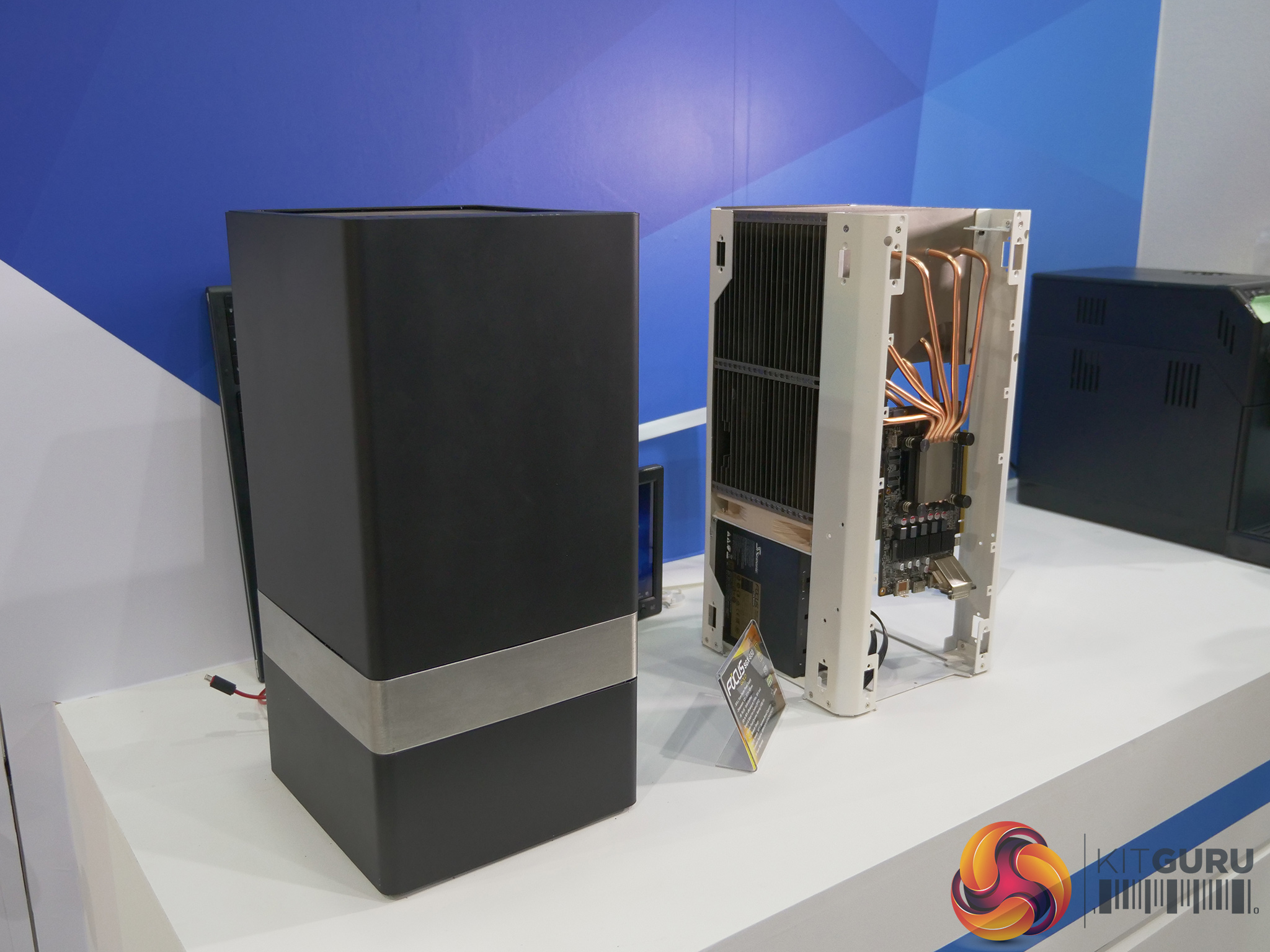
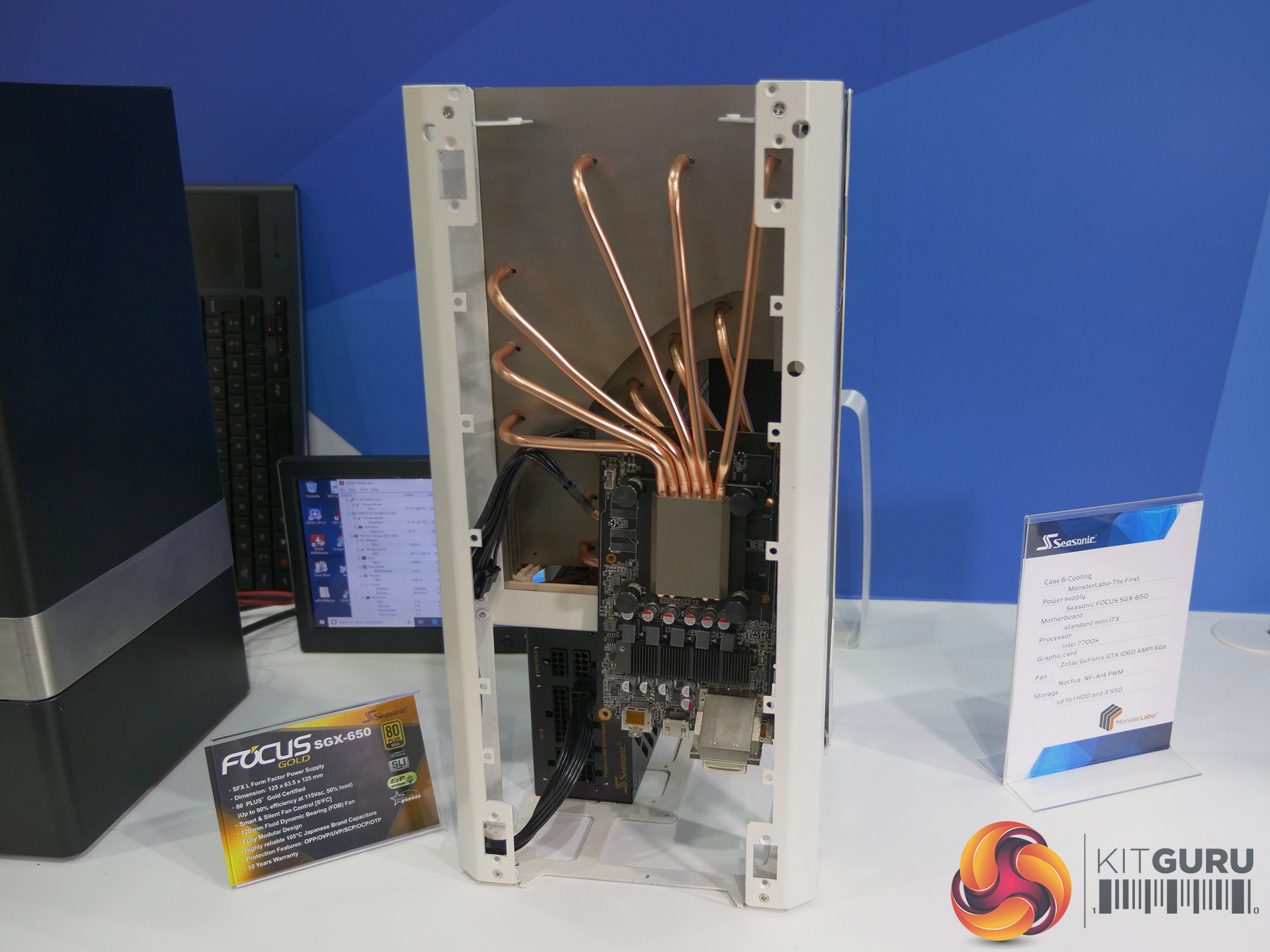
The chassis, inventively named ‘The First' because it is Monsterlabo's first case, may be of the Mini ITX form factor but it looks fairly large because the upper half is filled with a huge finned heat exchanger. It uses heatpipes to connect the cold plates on your CPU and GPU to the heat exchanger and then you rely on cool air being drawn in at the bottom of the system and rising through the heat exchanger.
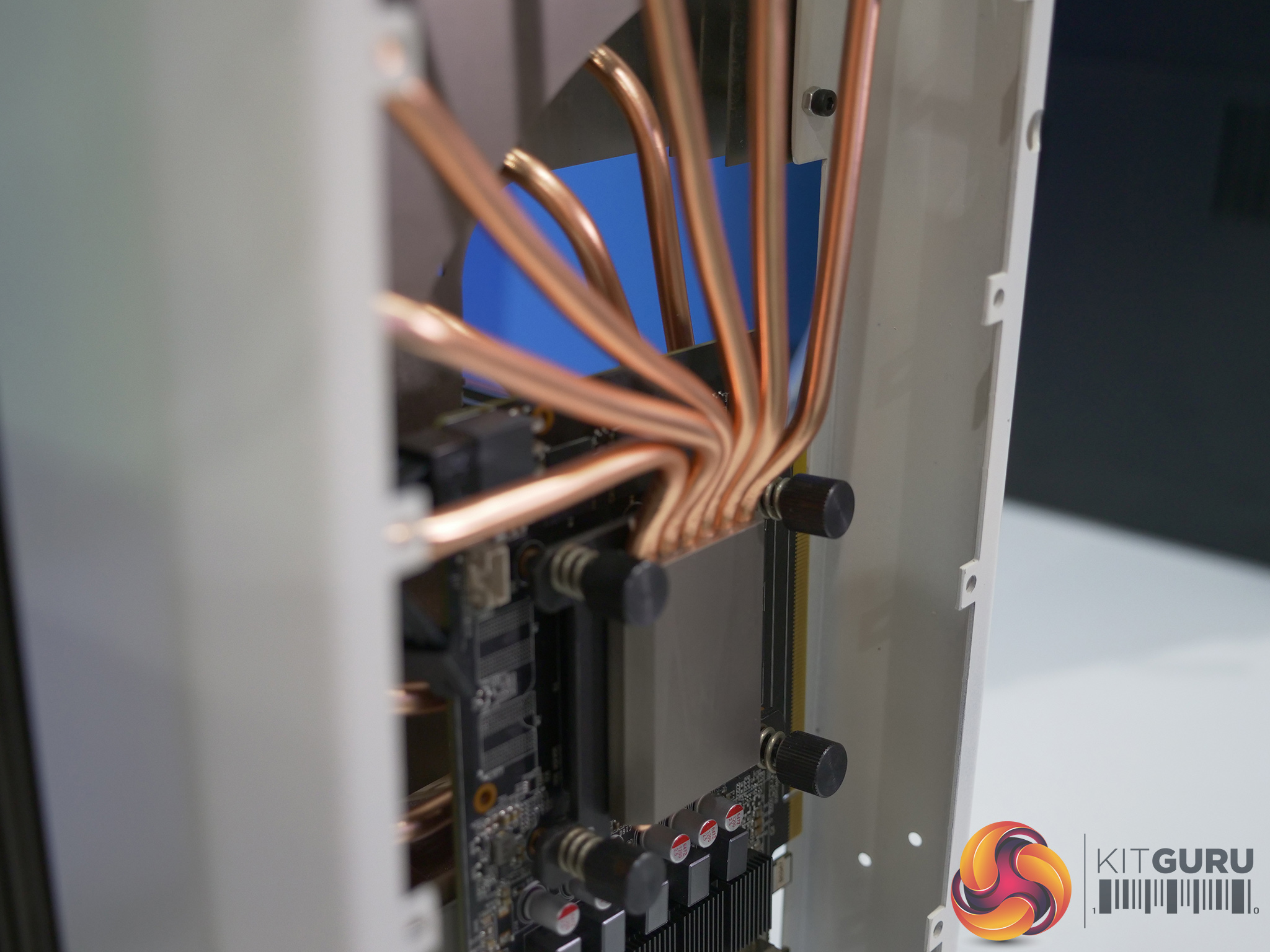
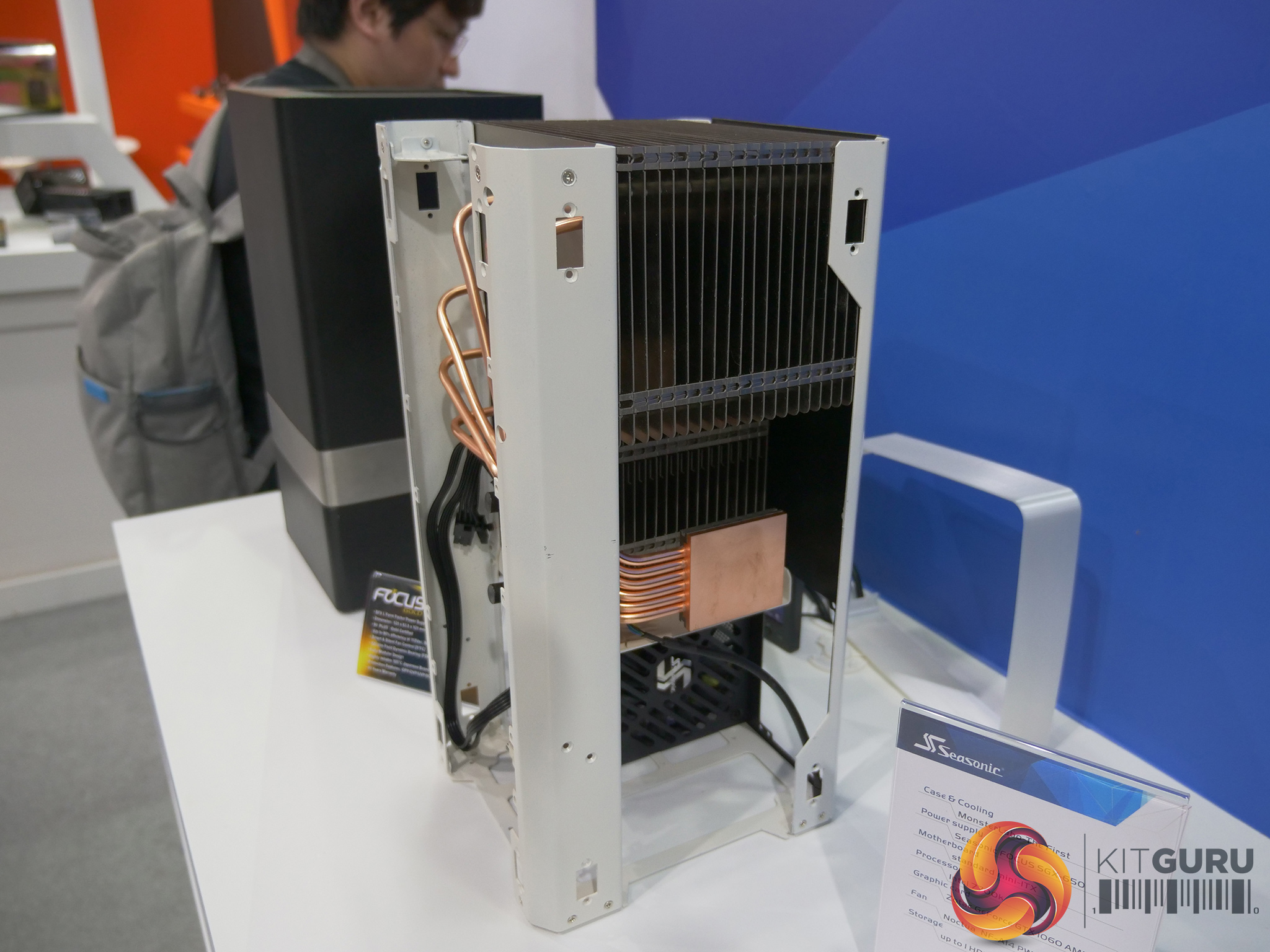
If used entirely passively, the cooling system is rated with a 200W TDP – but with a single 140mm fan from Noctua blowing air over the heat exchanger, the TDP rises to a not inconsiderable 400W. That means you can get away with some decent hardware installed, with a GTX 1080 and and i7-8700K giving a combined TDP of 275W.
KitGuru says: It will be interesting to see how this case pans out, as it looks like this is still very much early days for Monsterlabo. Be sure to watch our video for the full low-down.