 KitGuru KitGuru.net – Tech News | Hardware News | Hardware Reviews | IOS | Mobile | Gaming | Graphics Cards



The overwhelming audio preference among gamers is headsets. The ability to communicate while playing audio at serious volumes provides a tactical advantage without the need for constant complaints from friends and family. In this review, we’re taking on a set of speakers that is one level of ‘out loud’ above anything else we have seen recently – The WaveMaster Moody 2.1. Are they called ‘moody' because of the way that they make you feel or because your neighbours will want to shoulder barge you in the morning?
As a straight translation, the €99 price point on the manufacturer’s own site should translate to around £80 in UK money. In fact, you can pick them up for £70 online from Amazon.
Spending more money, means you will naturally demand more in return. So what should we expect? This is a 2.1 system and the overall weight is 9kg, which is healthy. Weight is generally reassuring when discussing speakers, because it usually indicates a higher grade product.
Power output seems decent. The subwoofer is rated at 35 watts and the satellites promise 15 watts each.
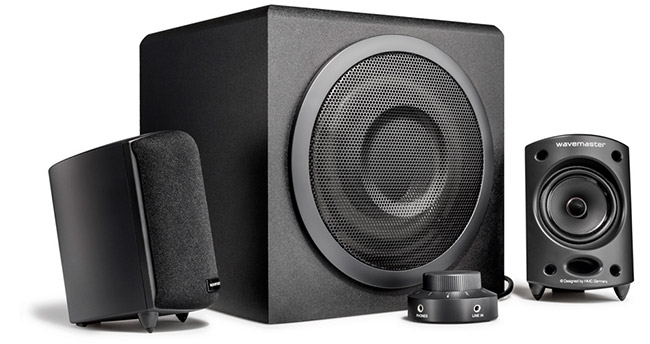
Available only in black, you can view that as (a) slightly depressing or (b) easy to match to the rest of your technology products.
SOUND: Powerful, dynamic stereo sound powered by 3 separate amplifier modules (incl. bass and treble control).
SATELLITES: Compact design combined with high quality wide-range drivers with integrated phase-plug. Detachable front covers, wall mountable cabinet and rubber feet.
SUBWOOFER: High performance long stroke bass driver in wooden cabinet with bass reflex technology.
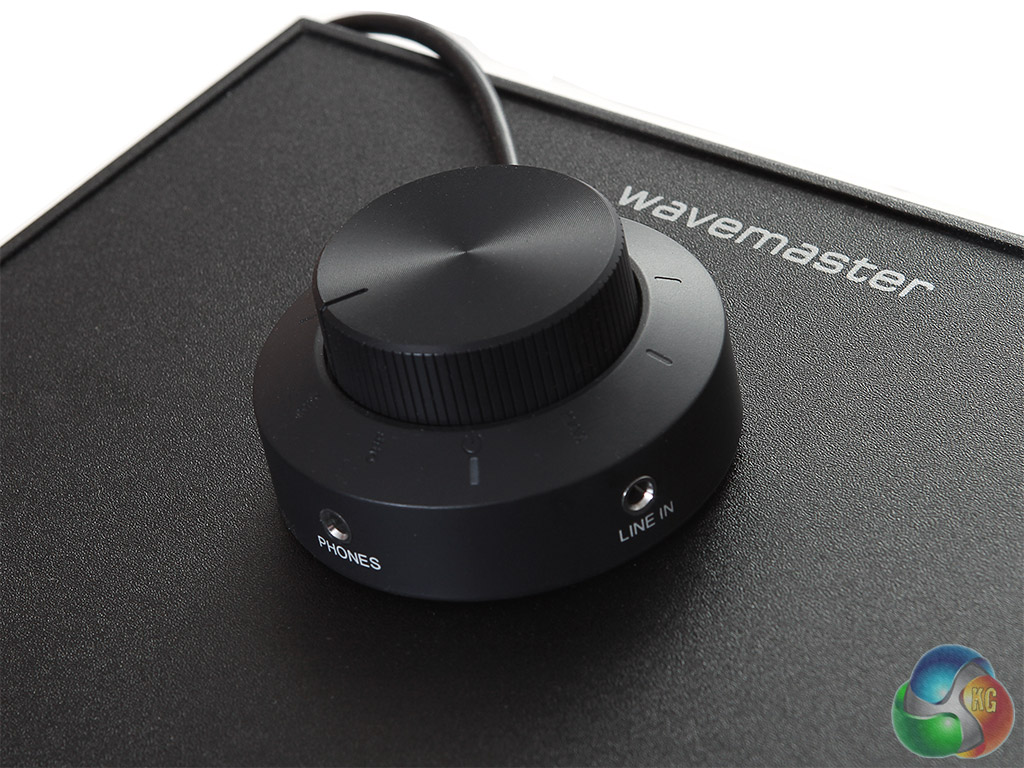
CONTROL: Integrated within the remote control unit are ON/OFF (standby), volume control, line-in (optimized for mobile sound sources) and headphone-out (amplified).
2 x LINE-IN PORTS: Connect an additional mobile stereo source (e.g. smartphone) to the dedicated socket on the control unit, without disconnecting your main source.
HEADPHONE JACK: MOODY offers an integrated headphone amplifier. Simply connect your headphones directly to the control unit and the speakers will mute automatically.
ECO-STANDBY: MOODY consumes less than 0.5 Watt during standby. Moreover there is a mains power switch located on the subwoofer.
Here’s the tech spec before we get into photos and hands-on feedback.
- Speaker drivers: Subwoofer 16.5cm bass driver, satellites 7 cm wide range drivers with phase-plug.
- Amplifier: Integrated with 3 separate channels.
- Output power (RMS): Subwoofer 35 Watt, satellites 2 x 15 Watt.
- Frequency response: Subwoofer 30 – 150 Hz, satellites 150 Hz – 20.000 Hz.
- Input sensitivity: Subwoofer line-in 500 mV, remote line-in 250 mV.
- Cable remote: On/standby function, volume control, headphone jack (amplified) and line-in.
- Satellite speakers: Compact design (wall mountable), detachable front covers and 3m connection cable.
- Subwoofer: Wooden cabinet with bass reflex technology, bass control, treble control and main power switch.
- Power supply: Internal, 100-240 Volt ~ 50/60 Hz, 0.7A max., Standby Power Connection: 3.5 mm mini stereo plug or RCA.
- Dimensions (WHD): Satellites = 90 x 145 x 103 mm, Subwoofer = 245 x 248 x 275 mm.
So now we are ready to take the box apart, plug everything together and put this speaker system through its paces. The outer packaging will survive most courier attempts to destroy your purchase and the inside packaging is simple, functional and easy to take apart.
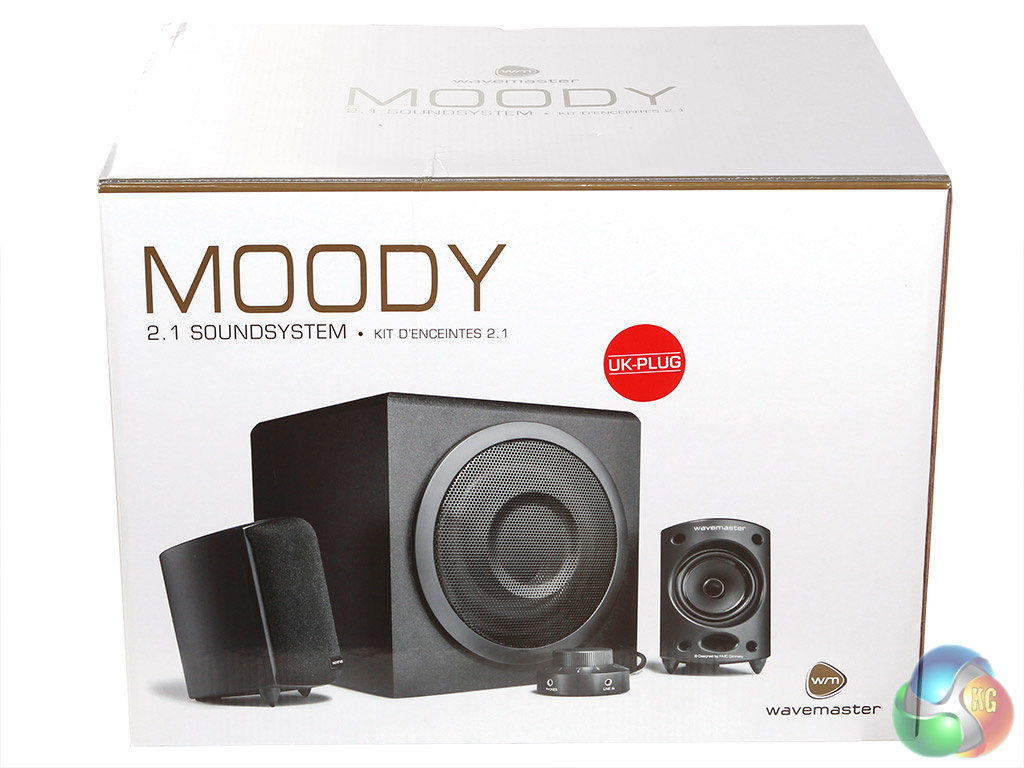
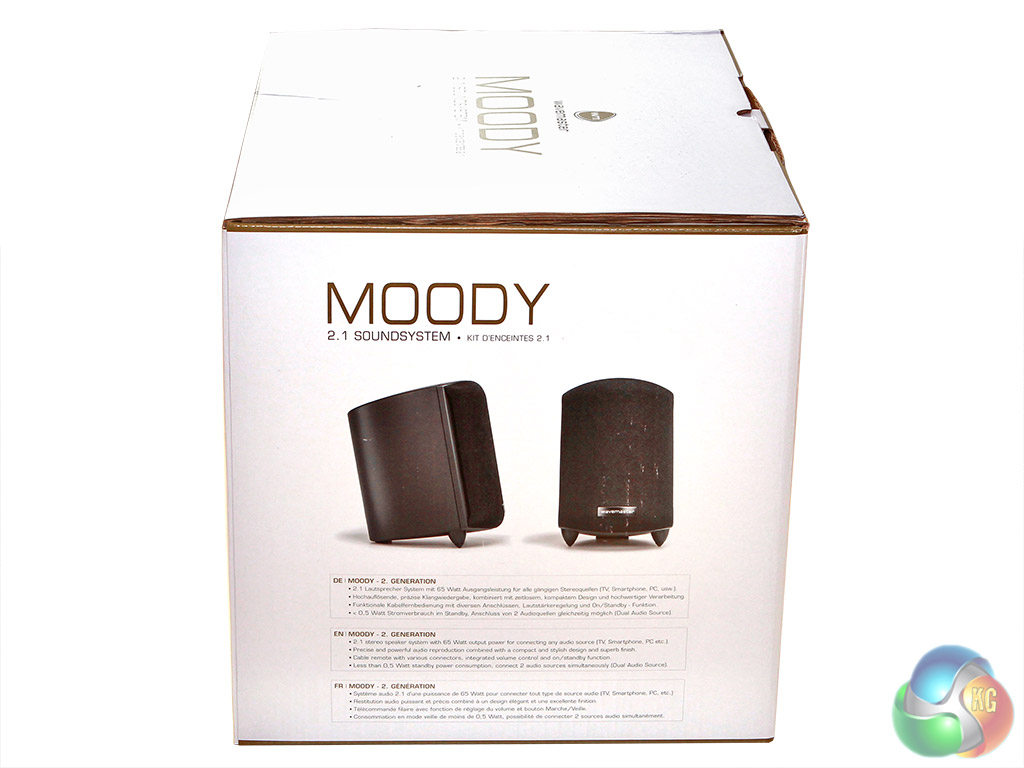
Alongside the speakers themselves – with instructions and cables – we also have the now famous Wavemaster Remote Control unit, which has both Headphone and Line-In connections.
Assembly is easy enough and the cables are long enough to allow you flexibility with positioning.
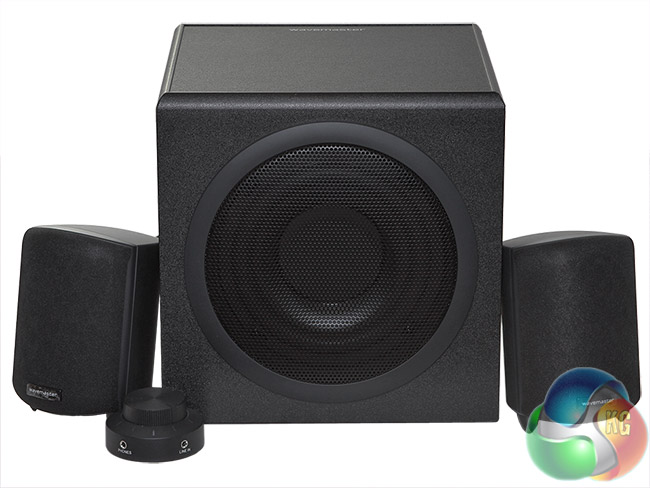
Wavemaster told us that this is a second spin on the Moody speakers, with some minor design updates and an improvement to both the speakers themselves and the amplification system. We will take their word for it since we have no v1.0 to compare against.
Internally, the amplifier looks for a non-amplified source (like a smartphone or tablet) and gives your audio an extra boost – above and beyond what you will get with a source that has already been boosted. Useful when you have the speakers situated around your TV/PC and you want to blast come tunes from your smartphone/tablet. Simply plug into the remote control and enjoy. The same is true for headphones.
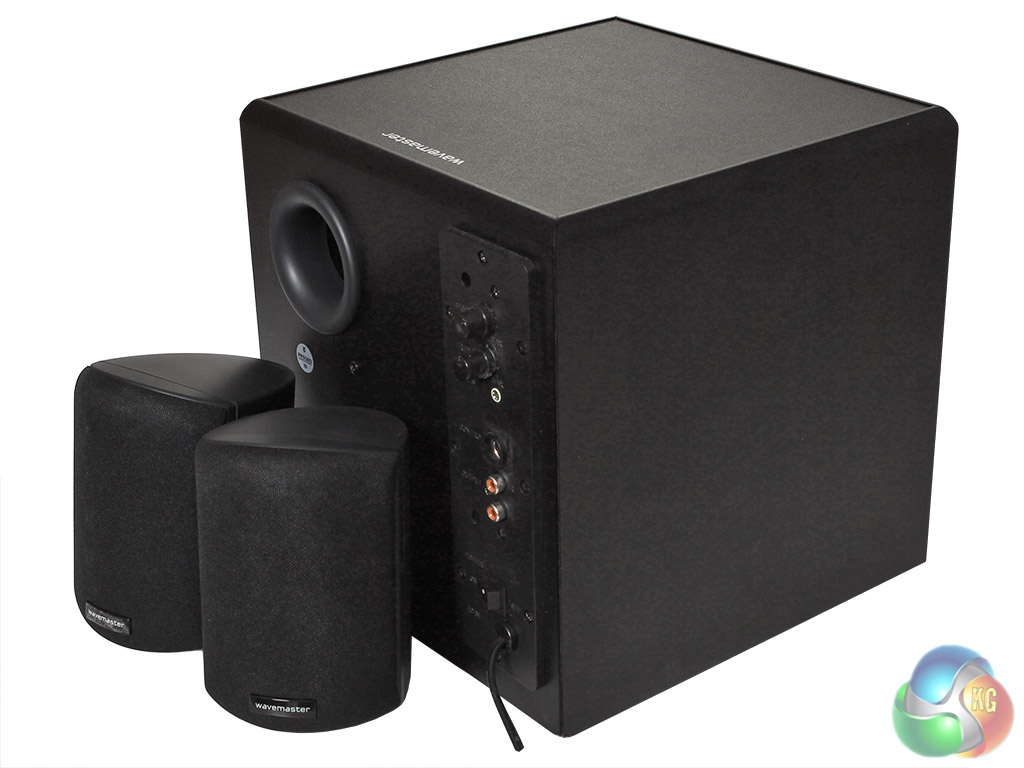
The satellites are, clearly bigger than those you might find with Wavemaster Stax or low end Creative/Logitech systems.
We will go into detail about the difference that makes on the next page.
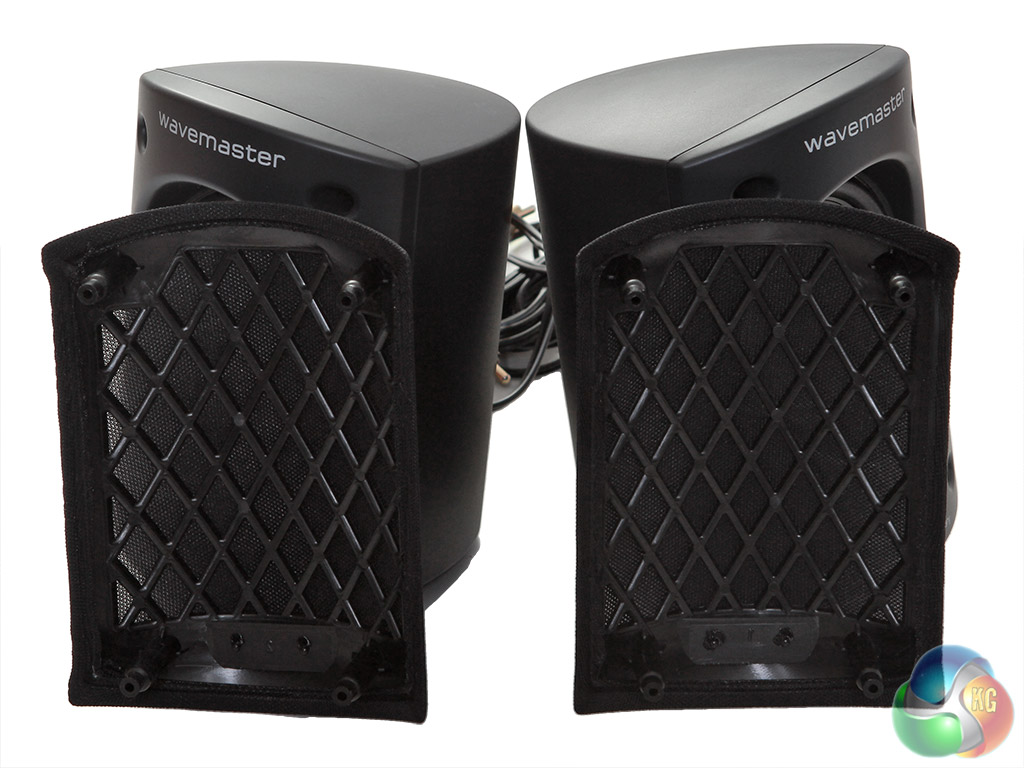
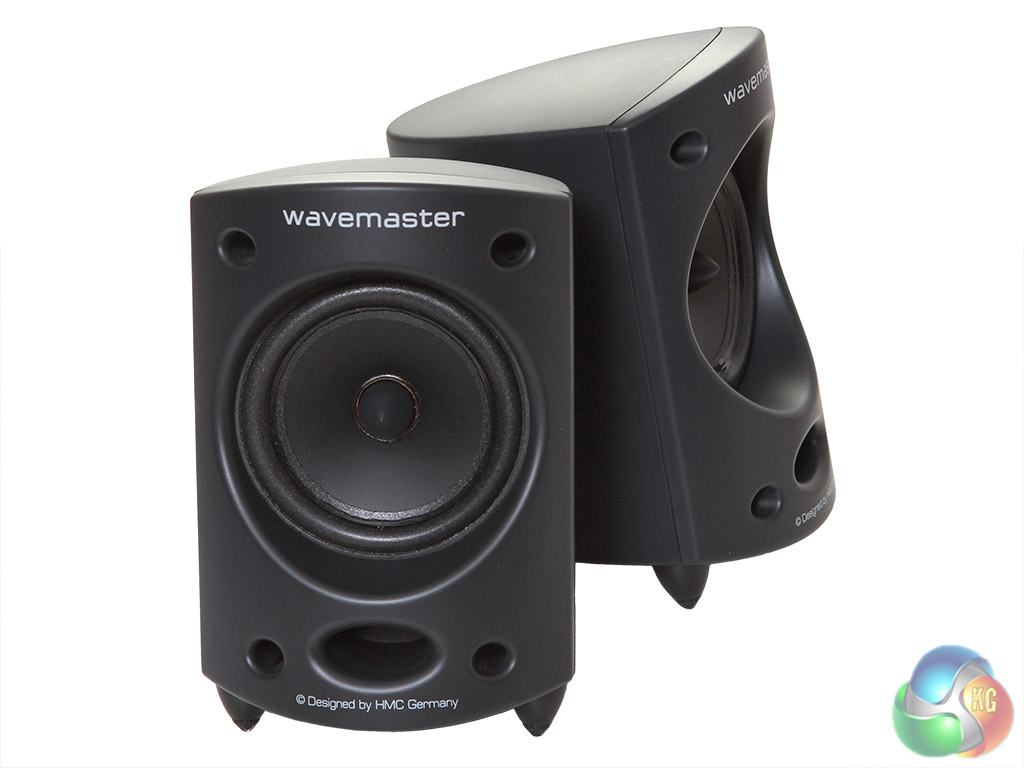
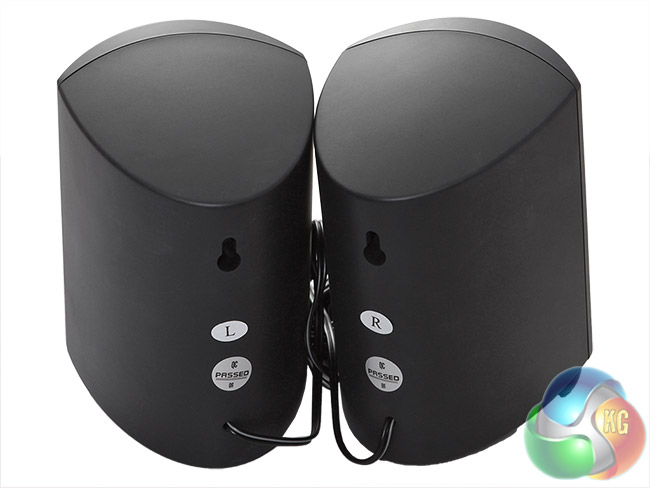
One thing they do have in common with the STAX satellites is the inclusion of a small mounting hole.
This is a minor design addition, but makes it so much easier to get your speakers into exactly the position you want – without the need for a shelf system.
Sizable though the satellites are, they are positively dwarfed by the sub woofer. It's a proper chunky monkey.
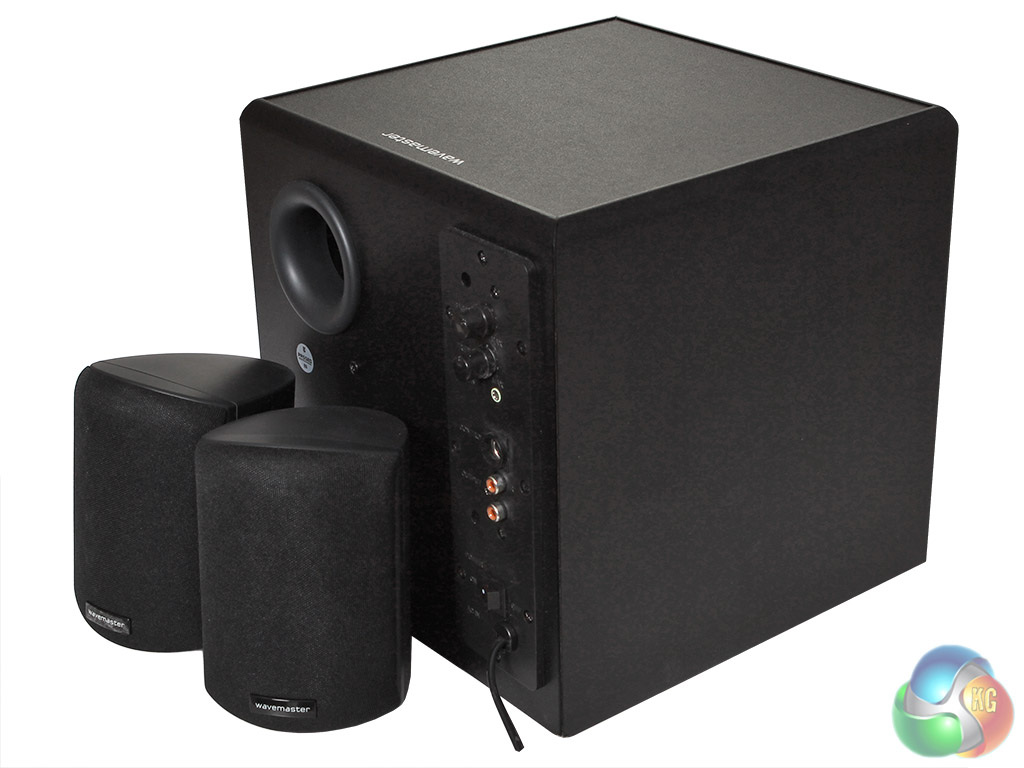
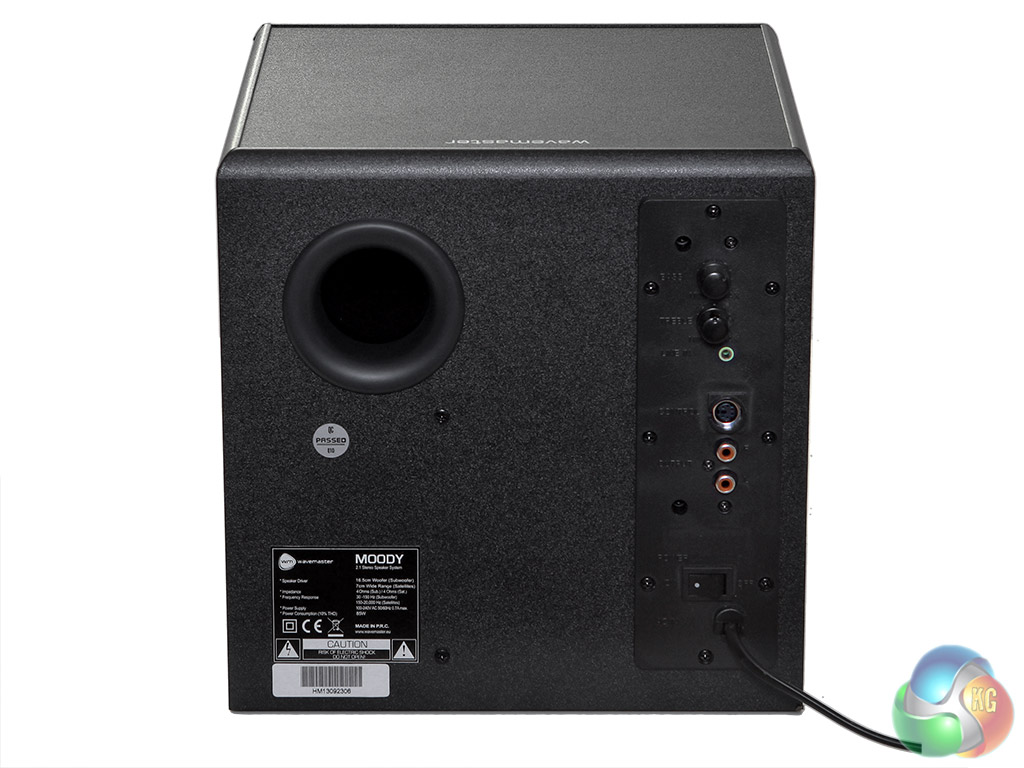
The connections on the rear are simple enough, with a power button at the base, connection ports for the remote and the satellites – as well as a line in.
There is also a control for overall bass and treble. This can be useful in a modern living room situation, where you may well have the TV in a corner – and need to deal with specific resonance in that situation.
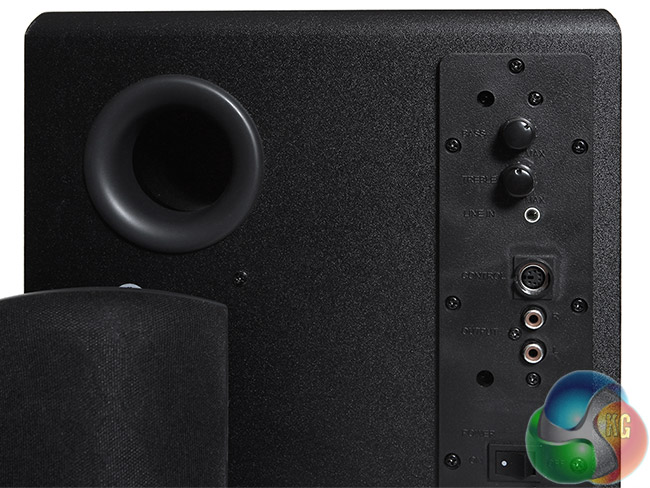
So, overall, not much in the design to leave us in awe and, by the same token, not a lot to clash with most technology products in the house.
Regular readers will know that, these days, we have an extra dimension alongside our traditional pure music and gaming tests. This is the ‘real world living room' scenario.
Once you start using powered speakers with a TV, you will forget what the original built-in units sound like. The answer, for those who can't remember, is terrible – super thin LCD screens are not an ideal shape for good speaker design.
First up, music and we started with some heavy rock favourites with tracks from Heaven & Hell by Black Sabbath.
With tracks such as Die Young, cheaper speakers start off fine, but quickly turn into literal boom boxes when the bass and drums kick in. The bass drive from the Wavemaster Moody speakers is quite incredible.
Whether by accident or design (we would like to think the latter), pushing the speaker volume to the limit does not make the woofer creak like it is about to break. While there might be another 5dBA or so in this system that will remain untapped, the lack of ‘high volume shakes' gives the impression of quality. Smoothly driven bass, at high volume, without nasty distortion.
Determined to push the speakers to distraction in a completely different way, we also went with the full version of Jamiroquai's Deeper and the Datsik and Excision remix of Teflon by Kelly Dean & Steady. Same result. The Wavemaster Moody 2.1 speakers took the punishment and stood there smiling.
For completion, we also went through some quiet segments by Arvo Part (Agnes Dei) and U2 (With or Without You) – all of which were delivered with rich tones. The same is true for Blade Runner Blues.
We switched back and forth between the Wavemaster Moody (£69) and Stax speakers (£49) and the difference was easily noticeable across all tracks.
In our living room set up, we went with the Blu-Ray of Star Trek Into Darkness, which exhibits massive dynamic range – shifting between annoyingly quiet and incredibly loud, from scene to scene. All of this was handled with relative ease – which is commendable.
Across all of our tests, we couldn't find a situation where there was no distinct difference between the Wavemaster Stax and Moody speakers – except gaming. The in-game tests we ran were as close to identical on both sets of speakers.

The Wavemaster Moody 2.1 Speakers are very competitively priced to target a wide audience of enthusiast user. Given their modest price point you would expect them to run out of power long before they do. Bass response is subterranean but able to maintain good focus – enough almost to shake the foundations of the house.
It is true these speakers will not suit an audiophile enthusiast user as they lack refinement. They will struggle with some genres such as dense instrumental and complex classical pieces. Audiophiles will need a decent AV Tuner with a serious array of speaker units if they are to get truly stimulated, but then costs will rise significantly. That is a completely different market.
At the end of the day, we really don't think it is worth buying a very cheap pair of speakers around £20. Bass response will be weak, high frequencies will be prone to sibilance and female vocals will sound clouded within a compressed mid range. If you can manage to budget between £50 and £80, the quality options begin to become available.
In closing, we rate the WaveMaster Moody 2.1 speakers very highly, especially when factoring in the modest £69.90 asking price.
Discuss on our Facebook page, over HERE.
Pros
- Serious volume.
- Neighbour annoying levels of bass.
- Cool controller with headphone and line-in sockets.
- Price.
Cons
- Not a massive benefit for gaming when moving up from the cheaper WaveMaster STAX.
KitGuru says: If your wallet can handle the £20-30 jump from a budget set of speakers to ‘something more serious', then we would recommend you wrap your ear drums round a set of Wavemaster Moody 2.1.


Truly agreed with this “Spending more money, means you will naturally demand more in return.” everybody wants