KitGuru KitGuru.net – Tech News | Hardware News | Hardware Reviews | IOS | Mobile | Gaming | Graphics Cards


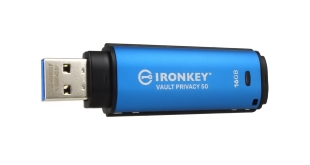
The latest addition to Kingston's family of IronKey encrypted USB flash drives is the IronKey Vault Privacy 50, offering FIPS 197 Certified XTS-AES 256-bit hardware encryption for improved data security. Priced at over £60 for a 16GB USB drive, it's certainly not cheap, but are the features worth the cash?
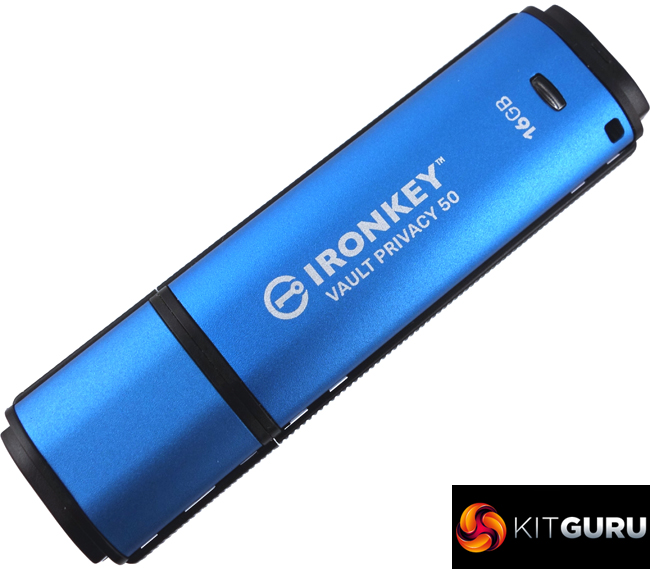
Aimed at the small/medium business segment, the Vault Privacy 50 lineup (at the time of writing) consists of six capacities; 8GB, 16GB (the model being reviewed here), 32GB, 64GB, 128GB and a flagship 256GB drive. The drive has built-in protection against BadUSB and Brute Force attacks and multi-password options including a new passphrase mode.
Speed-wise the 8GB to 128GB models are rated at up to 250MB/s for reads and up to 180MB/s for writes. The 256GB drive is slightly slower, rated as up to 230MB/s and 150MB/s for reads and writes respectively.
As well as the encryption protection, the drive gets some physical protection as it has an IEC 60529 IPX8 rating for waterproofing.
Kingston backs the Vault Privacy 50 with a 5-year warranty.
Physical Specifications:
- Usable Capacities: 16GB.
- Interface: USB 3.2 Gen 1, Type-A.
- Form Factor: USB Flash Drive.
- Dimensions: 77.9 x 21.9 x 12.0mm.
- Drive Weight: 15g.