KitGuru KitGuru.net – Tech News | Hardware News | Hardware Reviews | IOS | Mobile | Gaming | Graphics Cards


We recently reviewed the AS6104T four-bay NAS from Asustor and now we've had a chance to get to grips with it's more powerful sibling, the AS6204T which uses a quad-core Intel Braswell processor in place of the dual-core CPU of the AS6104T.
Whereas the AS6104T sits under the Asustor Home to Power User banner, the AS6204T sits firmly in the Power User to Business group category. It has a dedicated hardware AES-NI encryption engine, which will appeal to small business because of the data protection it offers, while the hardware transcoding engine will be more useful to the home user. The transcoding engine supports H.264 (AVC), H.265 (HEVC), MPEG-4 Part 2, MPEG-2 and VC-1 formats.
Powered by an Intel Celeron N3150 which has a clock speed of 1.6GHz (burst up to 2.08GHz), the AS6204T comes with 4GB of DDR3L dual channel memory which is expandable to 8GB via two SO-DIMM slots.
Asustor quote headline figures for the unit of 224.7MB/s for reads and 220MB/s for writes in a RAID 5 array, which are very impressive numbers. But, as they say, the devil is in the detail. Getting behind those figures reveals that they were achieved using both Ethernet ports set in Link Aggregation mode. Using just a single network connection the figures are 112.8MB/s for reads with writes coming in at 111.9MB/s.
Highlights
- Intel Braswell quad-core CPU.
- Built in AES-NI hardware encryption engine.
- HDMI multimedia output (4K, 1080p).
- Link aggregation.
- Mobile Apps suite.
- Snapshot support.
- 3-year warranty.
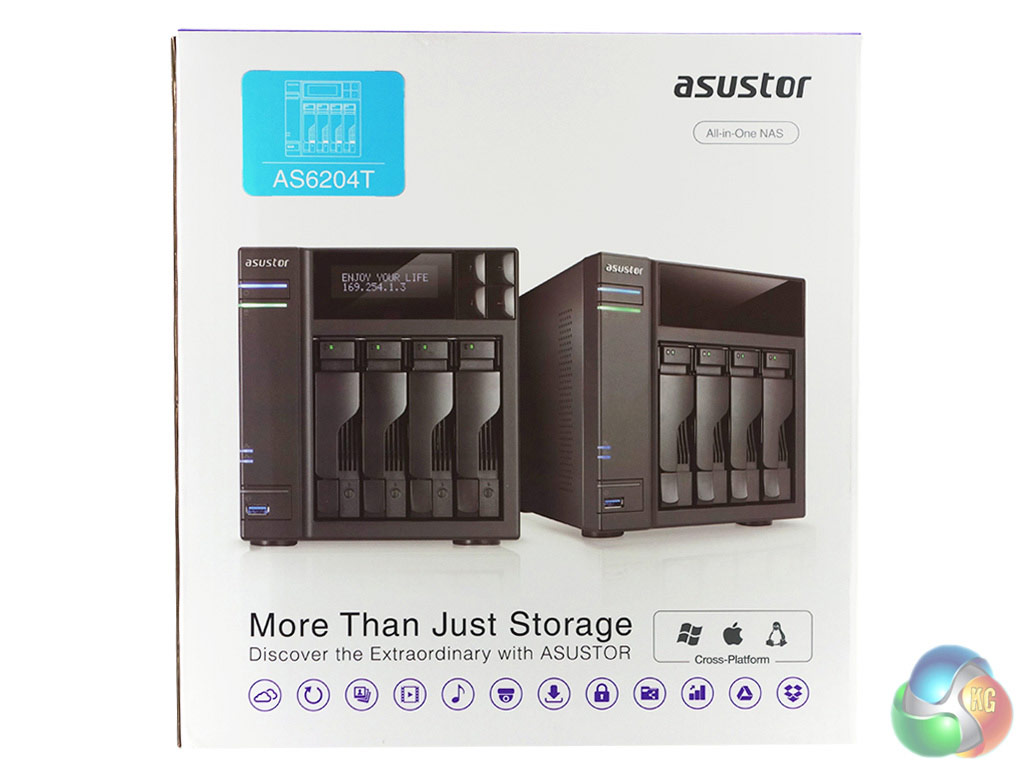
The Asustor AS6204T ships in a fairly large box with an image of the unit alongside its dual-core sibling, the AS6104T. There is also a row of icons informing you that this is more than just a storage device.
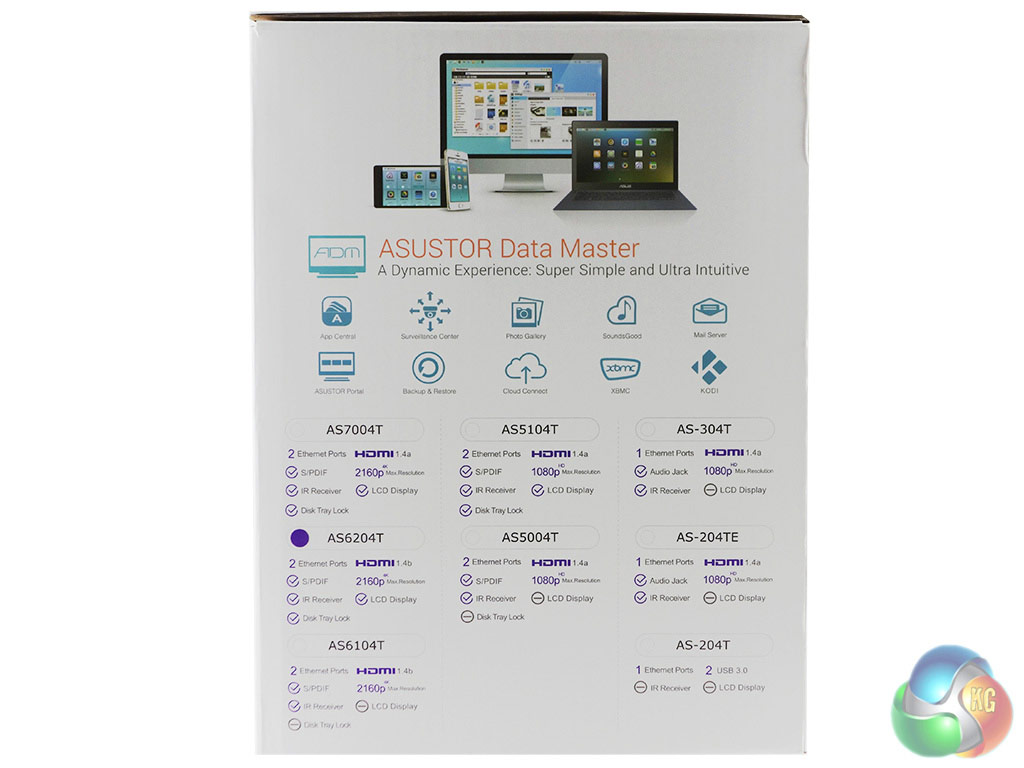
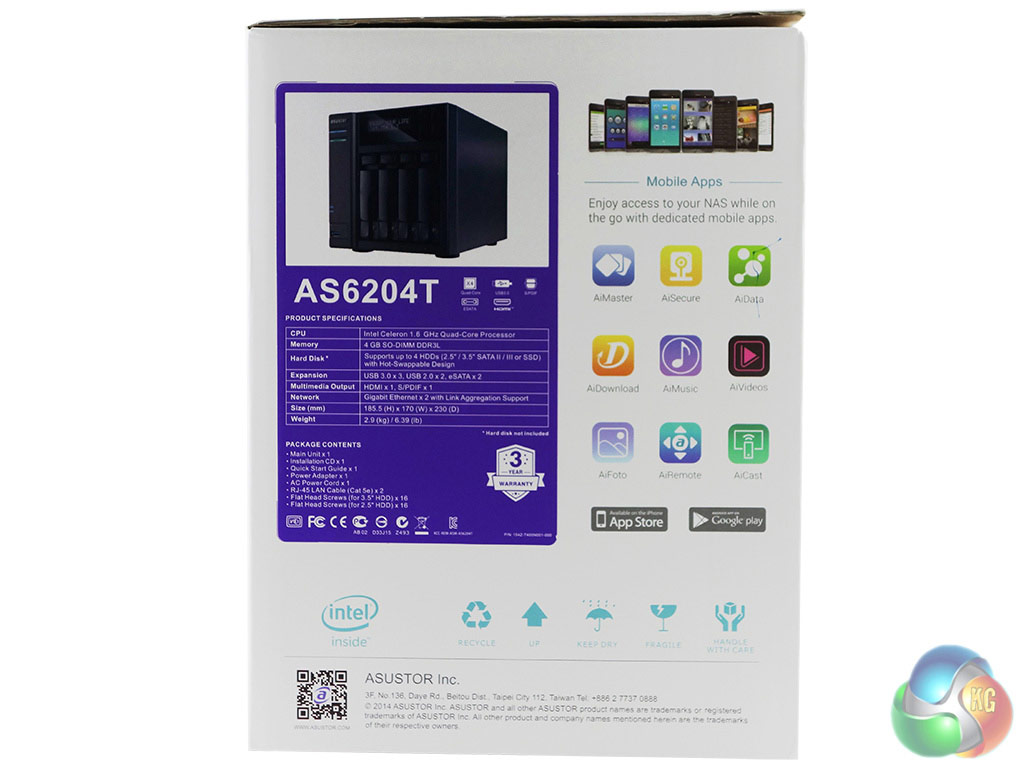
One side of the box has a small specifications panel, a list of what is in the box and information about the mobile apps that are available for the AS6204T. The other side of the box has information about the ADM OS and a list of other four-bay Asustor NAS units that are available, with some of their features.
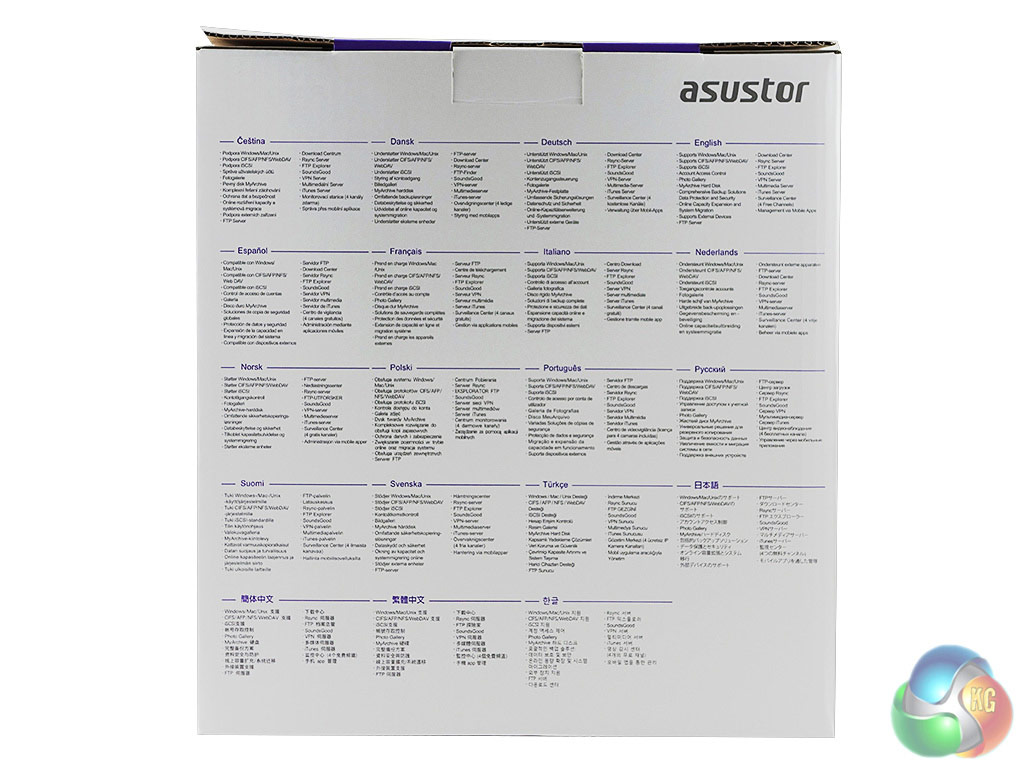
The rear of the box is covered by multilingual resumes of some of the AS6204T's features.
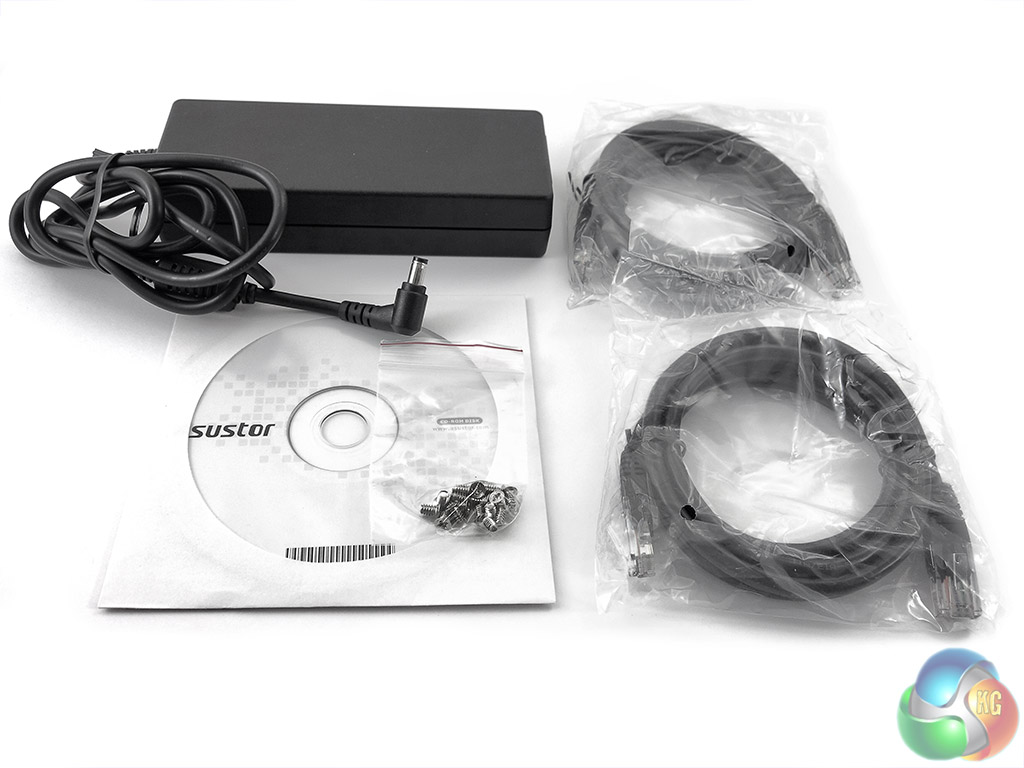
Inside the accessories box, there is a 90W AC adapter, a pair of Ethernet cables, a selection of screws for both 3.5″ and 2.5″ drive installations, a quick installation guide and a software CD.
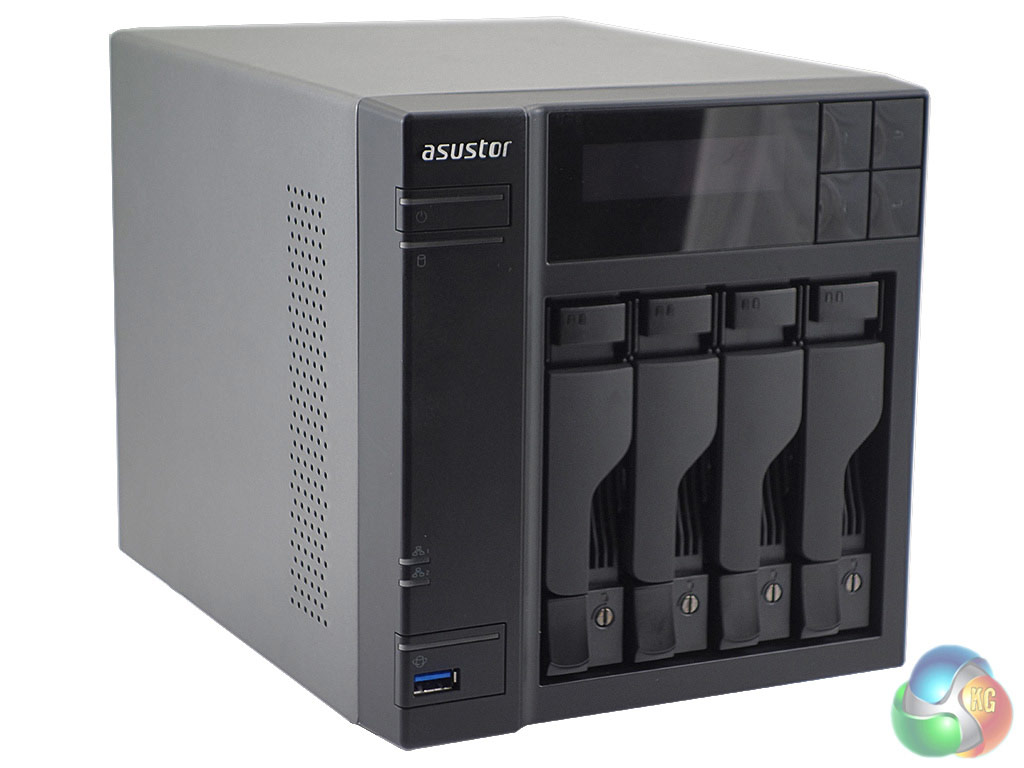
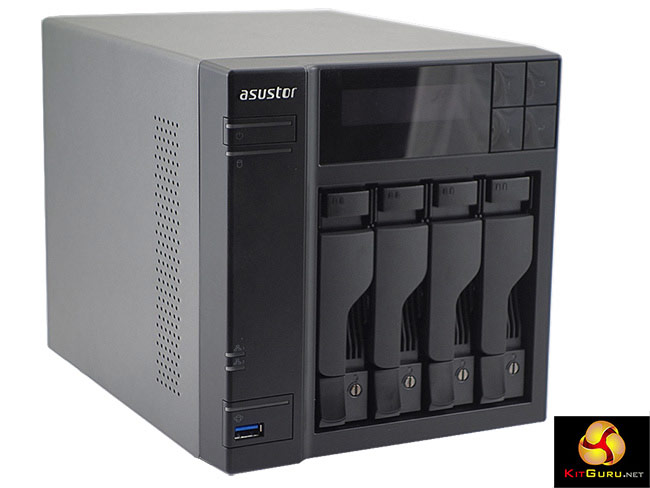
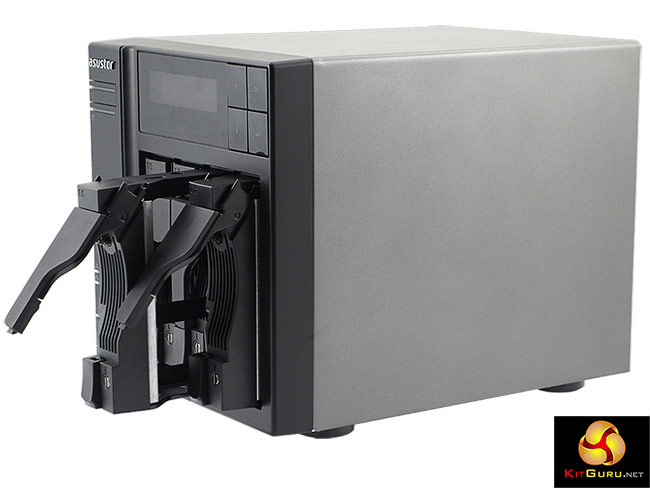
The Asustor AS6204T has the same compact design and build quality as the AS6104T, in fact, it looks identical but there are some subtle changes between the two. The panel above the drive bays which was just a blanking plate on the AS6104T has been swapped out for an LCD display in the AS6204T with the four buttons next to it fully functional. The drive bay doors of the AS6204T have locks on them, something that was lacking with the AS6104T.
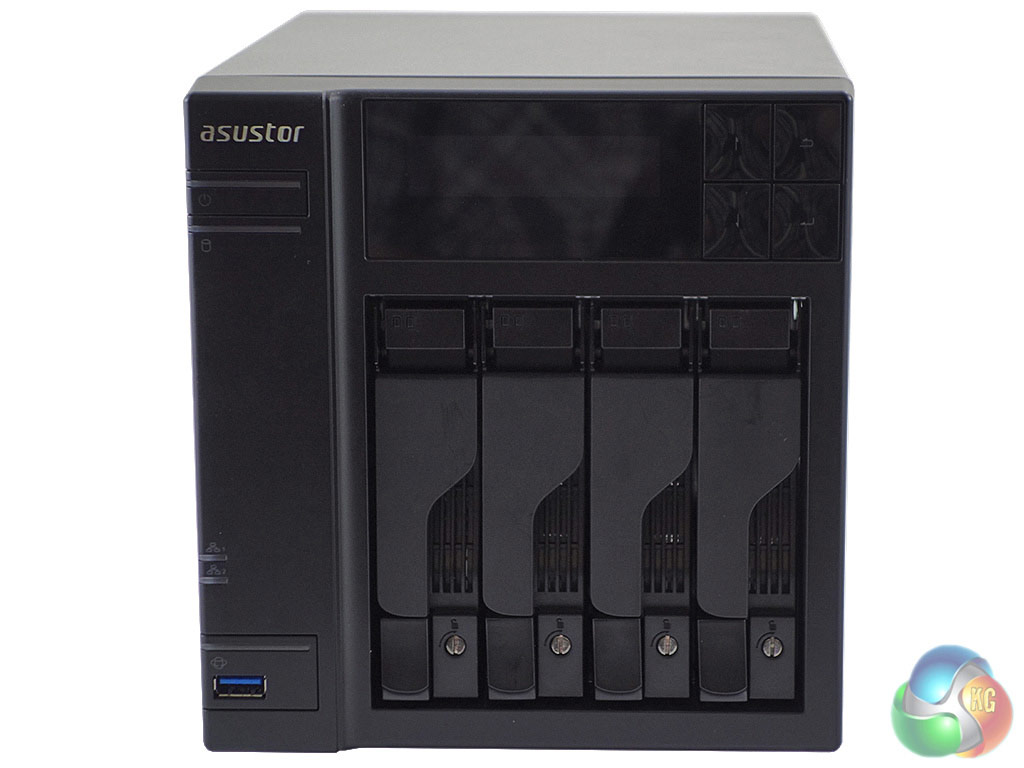
The top side of the front bezel houses two stacked LEDs – the top one being the power indicator while the lower one which is built into the on/off button is the system status indicator. Further down the panel is the network activity LED.
When the NAS is fired up the LCD screen displays the IP assigned to the NAS. Using the menu buttons next to the screen allows for a number of operations to be carried out. The unit can be shut down and restarted, the one touch backup can be initiated, the server name can be changed and the network settings adjusted. But to be honest it's just as easy to use the ADM OS to change these settings.
Sitting at the bottom of the front bezel is a USB3.0 port that is built into the One Touch back up button, which again has its own LED indicator. The button can be set up in either a transfer mode or to perform one-touch backups. All the indicator LEDs can even be controlled from within the OS; you can increase or decrease their brightness or even program a night mode for them including time and day.
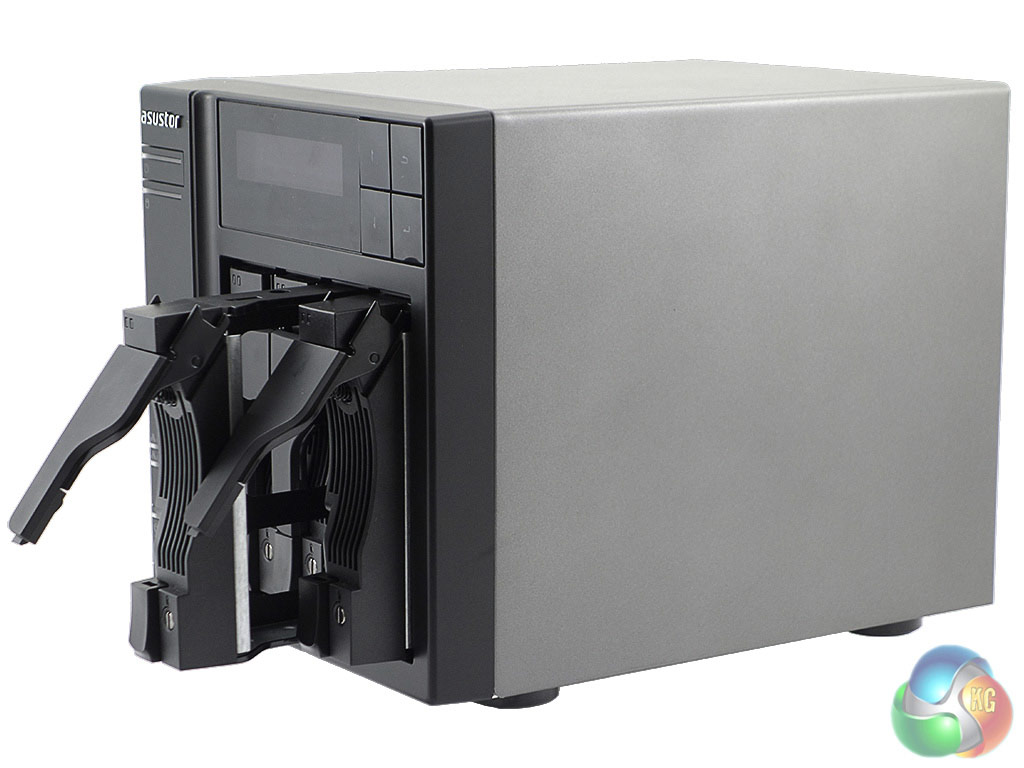
The four front mounted drive bays have a locking latch mechanism to hold them in place and each has a small lock at the bottom of the door, which needs something like a small bladed screwdriver to lock and unlock them. This feature offers another level of data security in a busy office environment. Each tray has a LED disk activity indicator built into it.
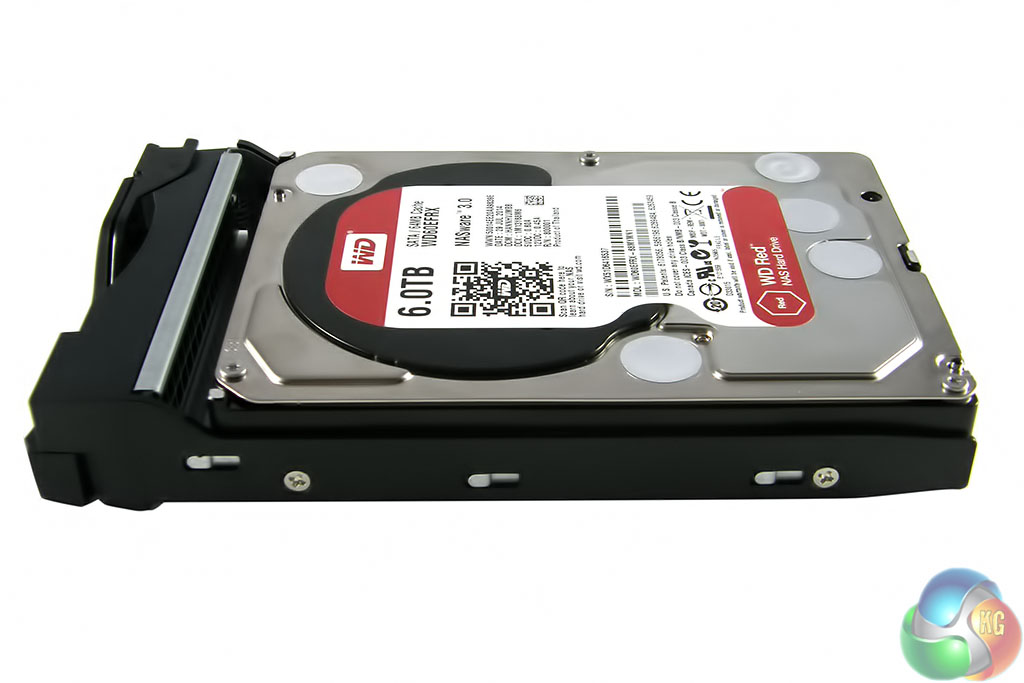
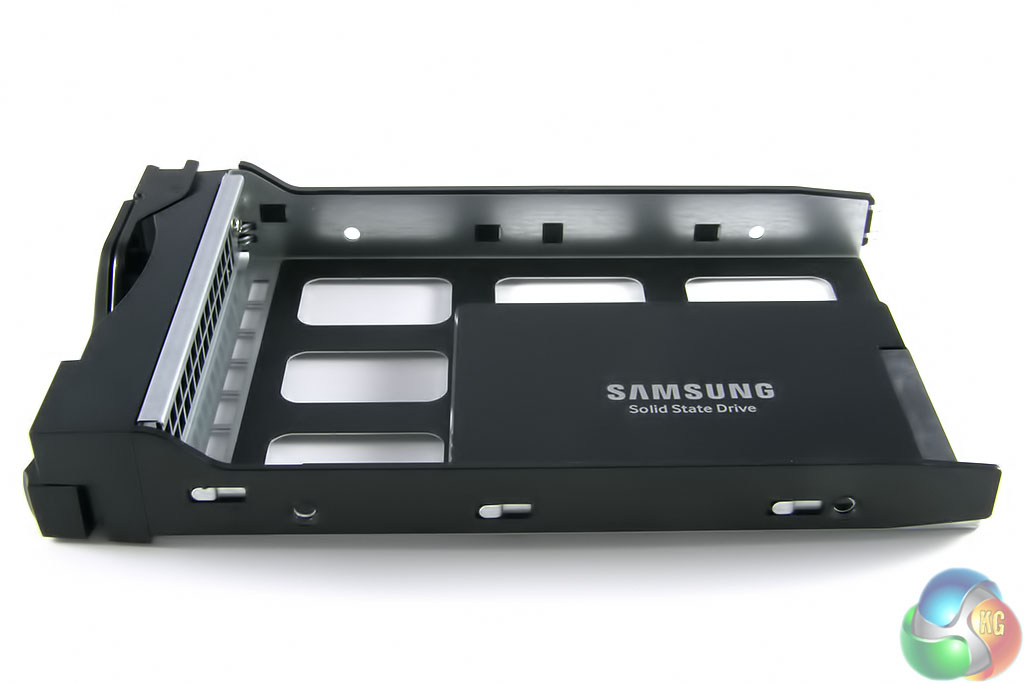
The drive trays support both 3.5 and 2.5in discs including SSDs and are of metal construction but unfortunately not tool free. The larger disks are fixed through the tray side walls by four screws while the smaller format drives are fixed in place via holes in the tray floor.
Currently, the AS6204T supports drives up to 10TB in capacity giving the unit a maximum capacity of 40TB (4 x 10TB).
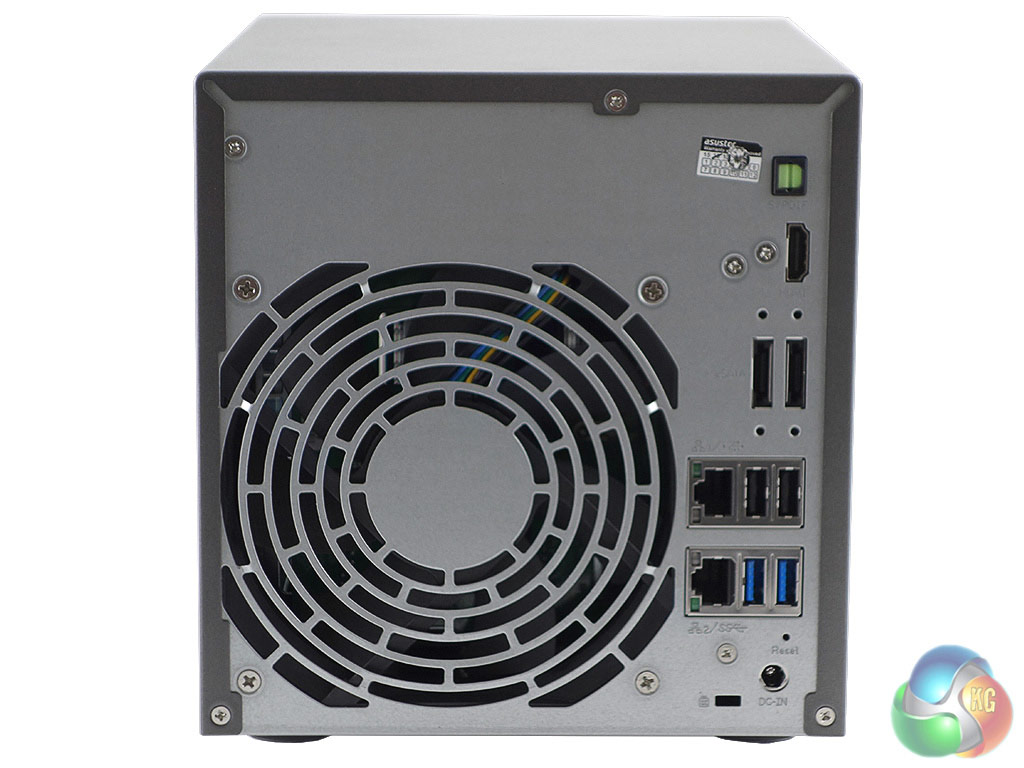
While the front panel may be light on ports, the same can’t be said for the real panel as it's very busy and gives an idea of what the AS6204T can be used for. There's a pair each of USB 3.0, USB 2.0 ports and eSATA ports which pretty much covers most external storage device options. Joining these are a pair of Ethernet ports that support Link aggregation, an HDMI 1.4b port, an S/PDIF output and the input for the 90W power adapter.
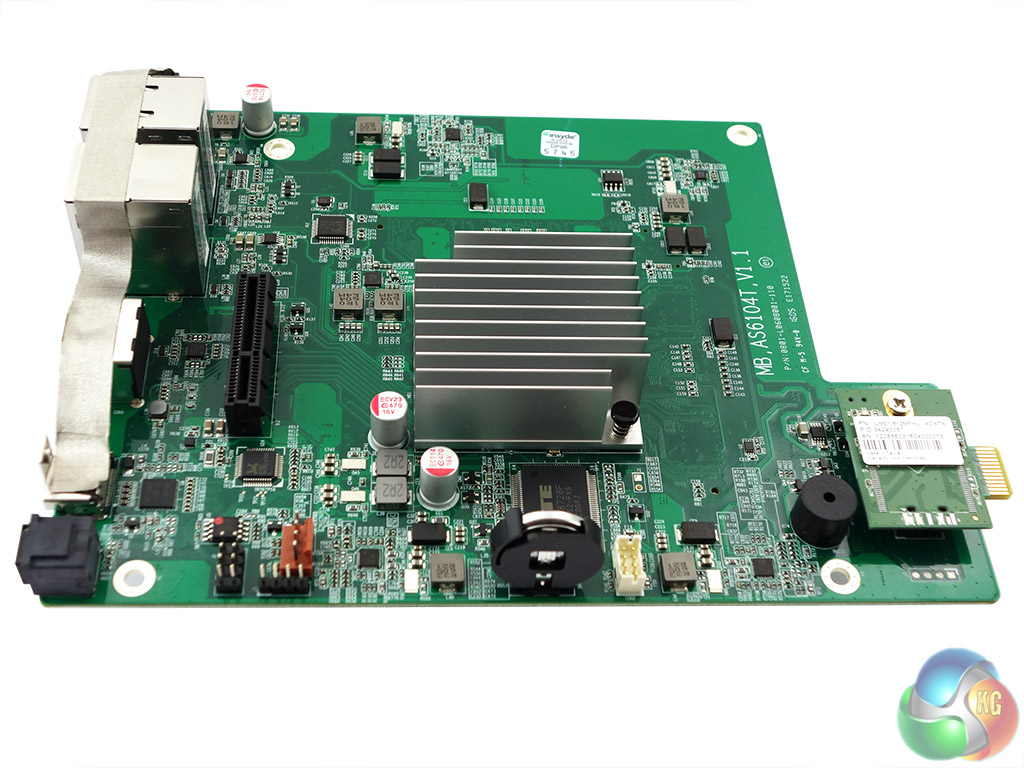
The front of the motherboard is dominated by the passive cooler for the N3150. With a TDP of just 6W a passive heatsink is all it needs. Joining the CPU are an ITE IT8728F IC which monitors the system, a Realtek ALC887 7.1 audio IC and a Texas Instruments DP139Ti chip which provides the HDMI support.
A Terminus FE1.1 USB 2.0 controller supports the unit's two USB 2.0 ports with the three USB3.0 ports being controlled by the N3150. An ADATA IUM01-512MFHL flash memory chip stores the AS6204T's firmware.
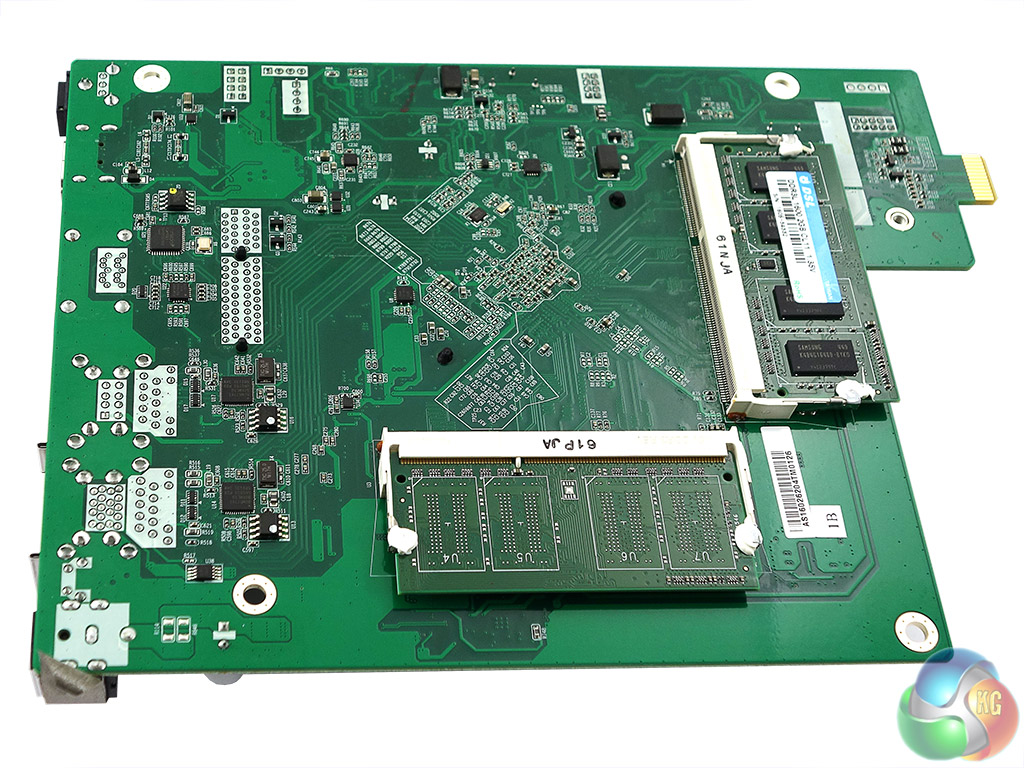
The rear of the motherboard holds the two SO-DIMM slots for the system memory, a pair of Broadcom BCM57781 controllers for the two Ethernet ports and an ASMedia ASM1061 SATA controller which looks after two of the four SATA ports housed in a riser card. There is a second ASM1061 on the riser card to take care of the remaining pair of SATA ports.
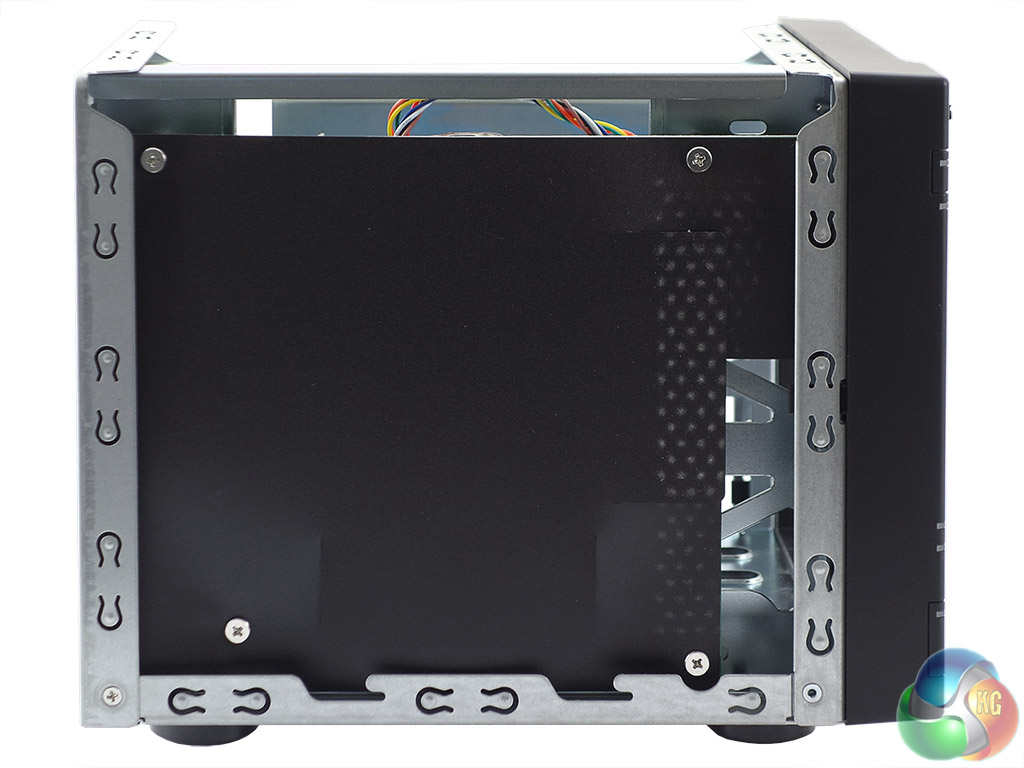
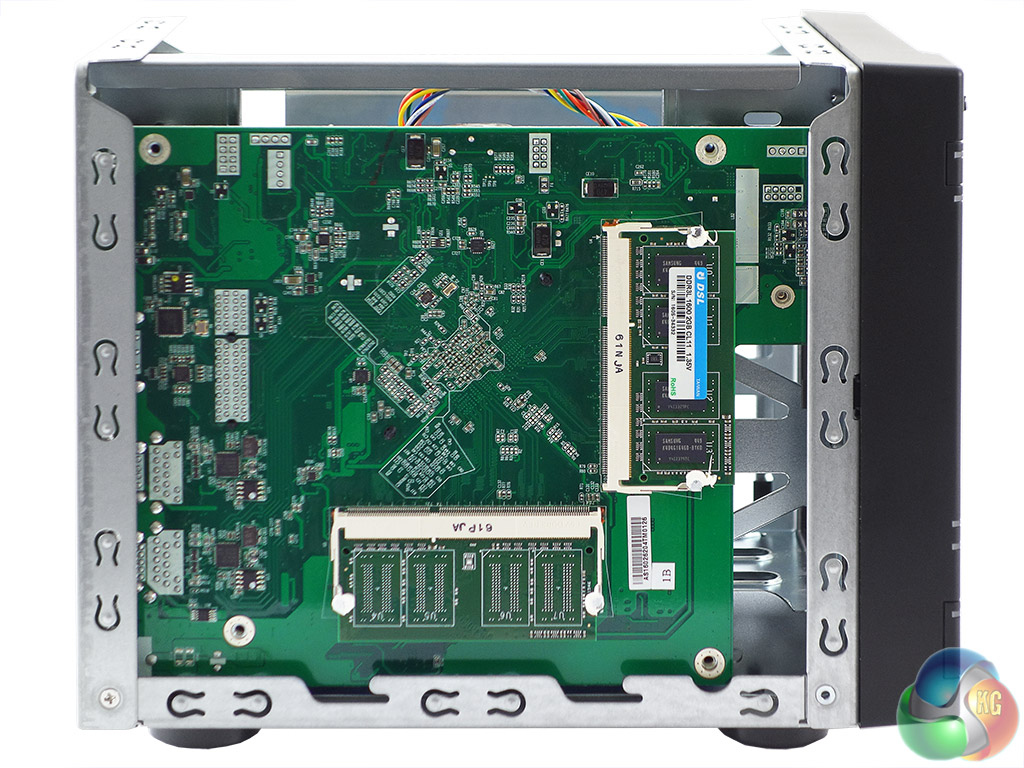
The AS6204T ships with 4GB of DDR3L-1600 memory as standard but should you need more, upgrading it presents no real problem as accessing the two SO-DIMM slots is pretty straightforward. Undoing three screws allows the unit's cover to be removed and the two slots sit behind a protective covering on one side of the chassis.
The covering is cut to allow access to the slots but you may find it easier to undo the four screws that help keep the covering in place and carefully peel it away (it does have an adhesive backing but with care it comes away easily enough).
Keeping everything cool is a massive YS Tech FD121225HB 120mm fan which has a maximum spin speed of 2,600rpm and thanks to its Sintectico bearing is very quiet during all aspects of the AS6204T's operations.
Physical Specifications:
- Processor Intel Celeron N3150 1.6GHz (burst up to 2.08GHz).
- Memory 4GB DDR3L-1600.
- Gigabit Ethernet Ports x 2
- Front panel connectors 1 x USB 3.0
- Rear panel connectors 2 x USB 3.0, 2 x USB 2.0, 2 x eSATA, 1 x HDMI 1.4b, 1 x S/PDIF.
- RAID support JBOD, RAID 0/1 /5 /6 /10, RAID 1 /5 +Hot Spare.
- Maximum hard drive size supported 10TB (max total storage 40TB).
- Dimensions (D x W x H) 230 x 170 x 185.5 mm.
- Weight 2.9kg
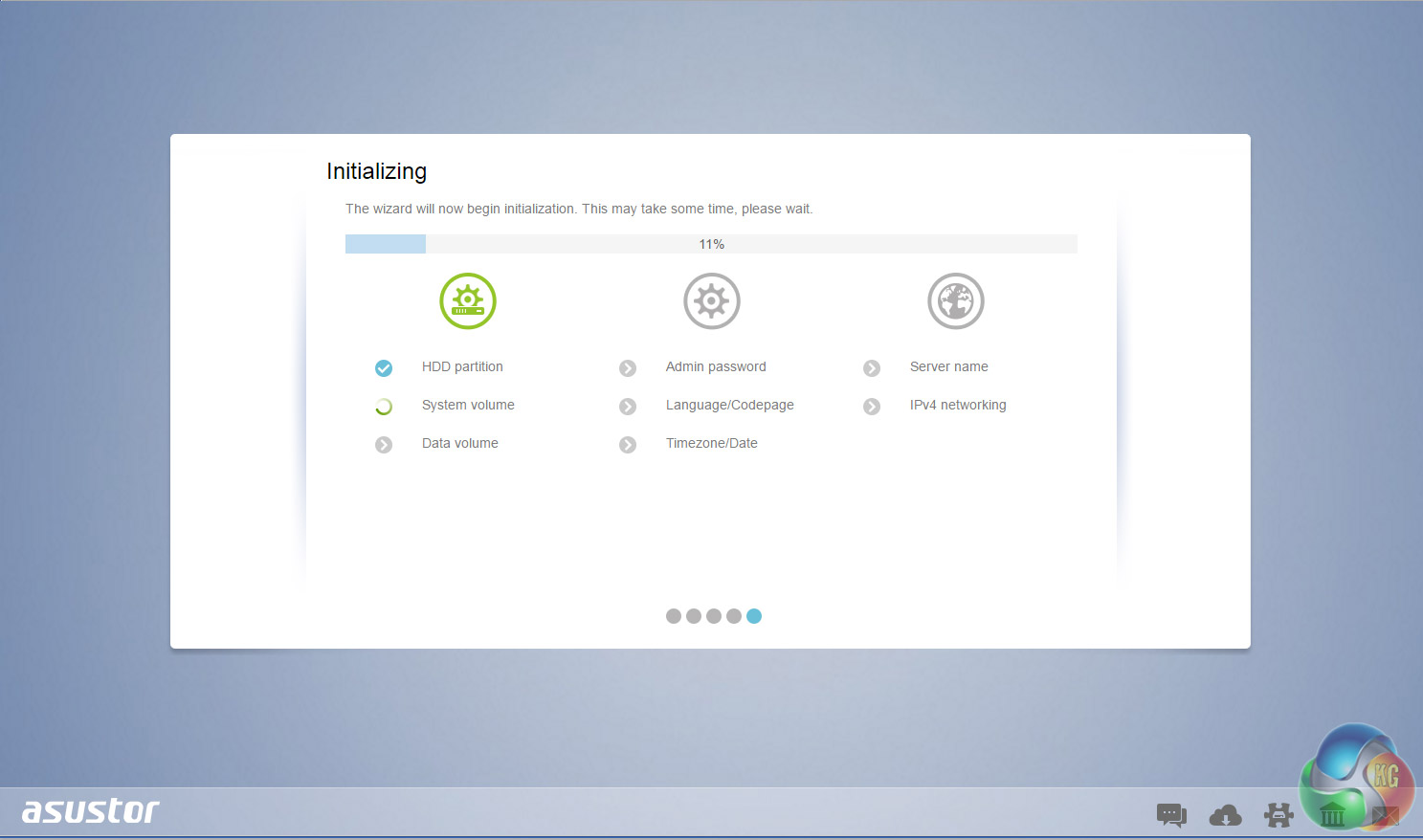
Asustor's ADM (Asustor Data Master) OS is a constantly evolving GUI (version 2.6.3 at the time of writing) and is easy to install, navigate through and is one of the most feature rich around particularly when it comes to add on apps.
Setting up the AS6204T is a pretty straightforward and painless task; it only takes around 10 minutes to load the OS and get the unit ready for use, although waiting for the disks to synchronize obviously takes a great deal longer. Each stage along the install process is checked off on the initialisation page so you always know what's happening during the install procedure.
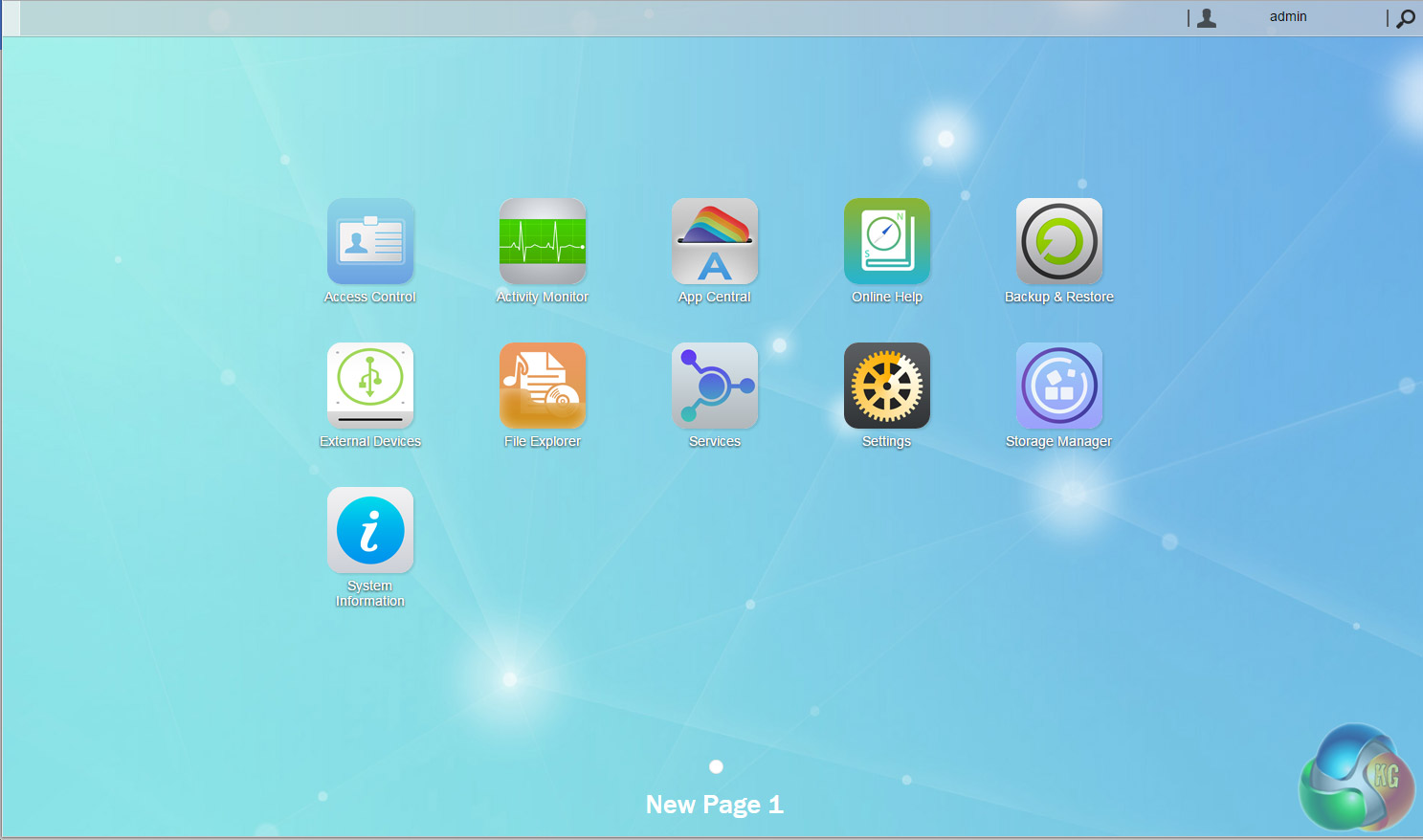
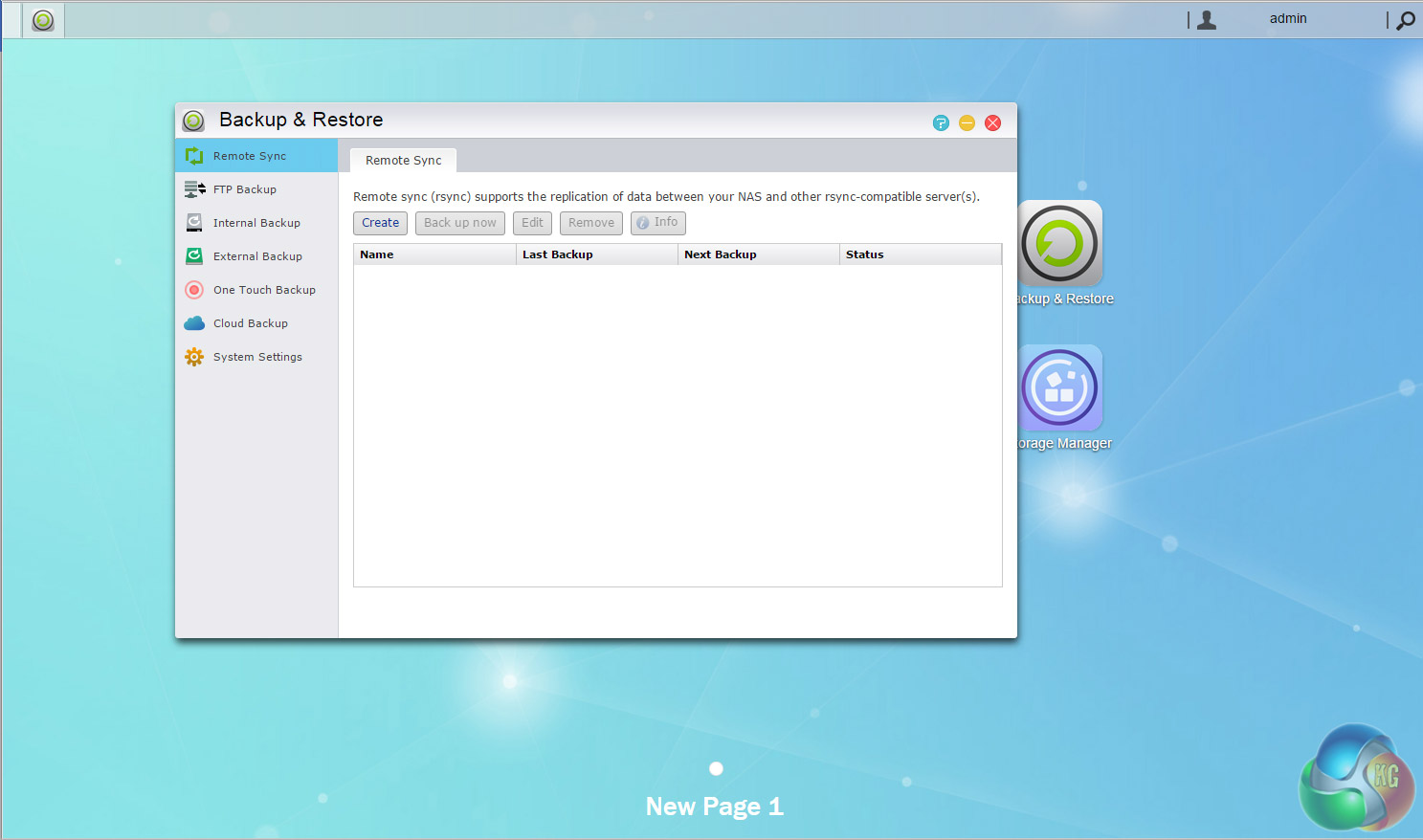
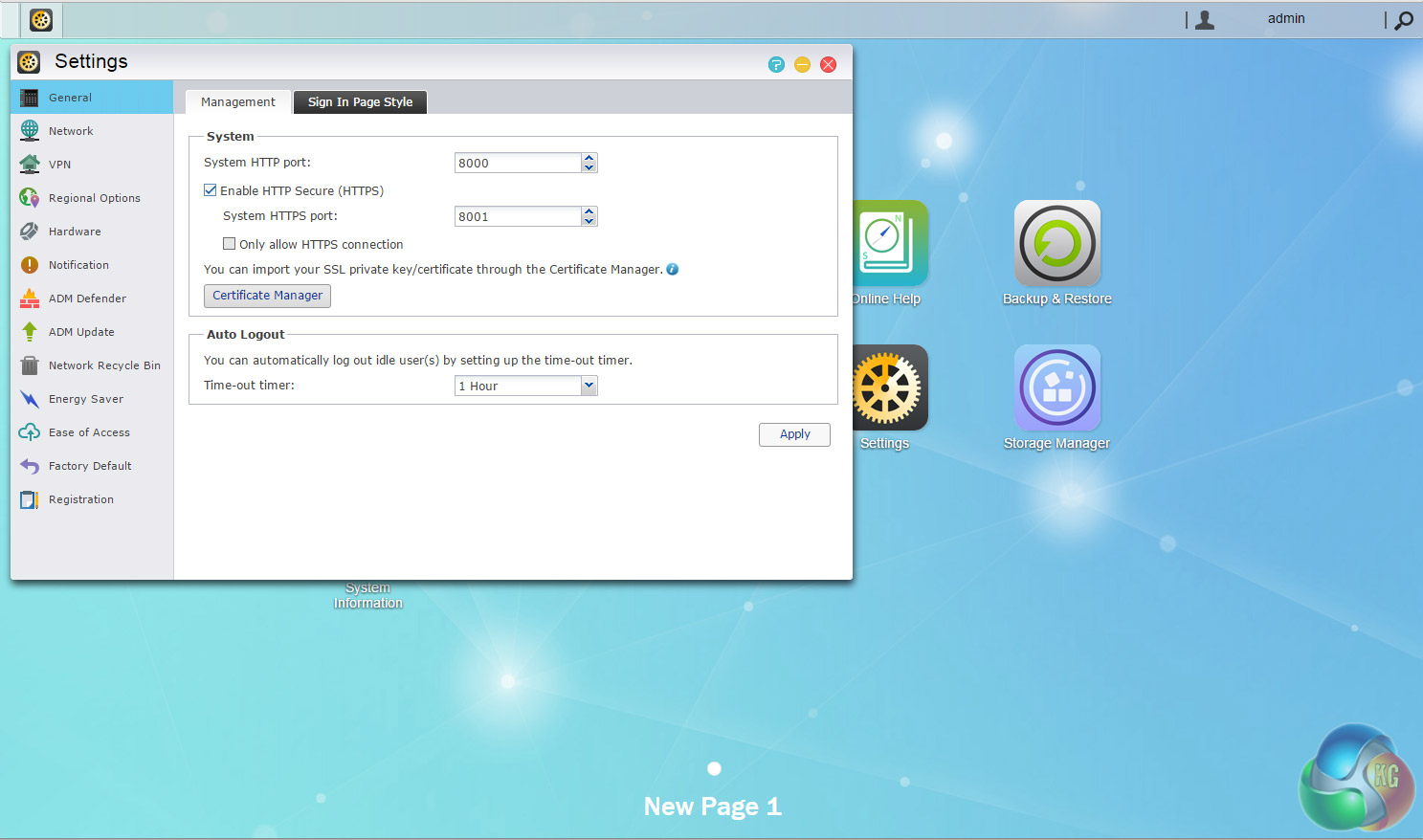
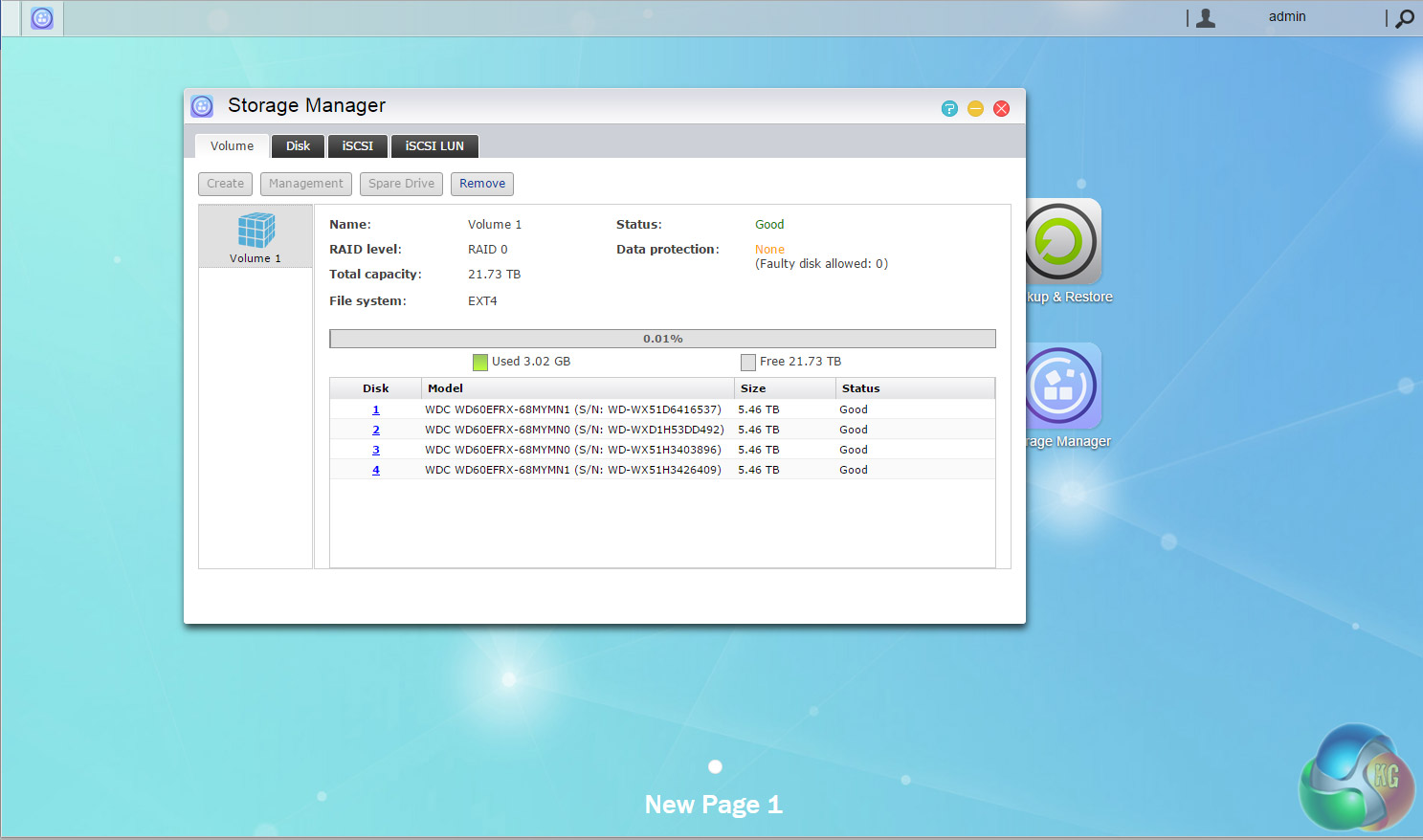
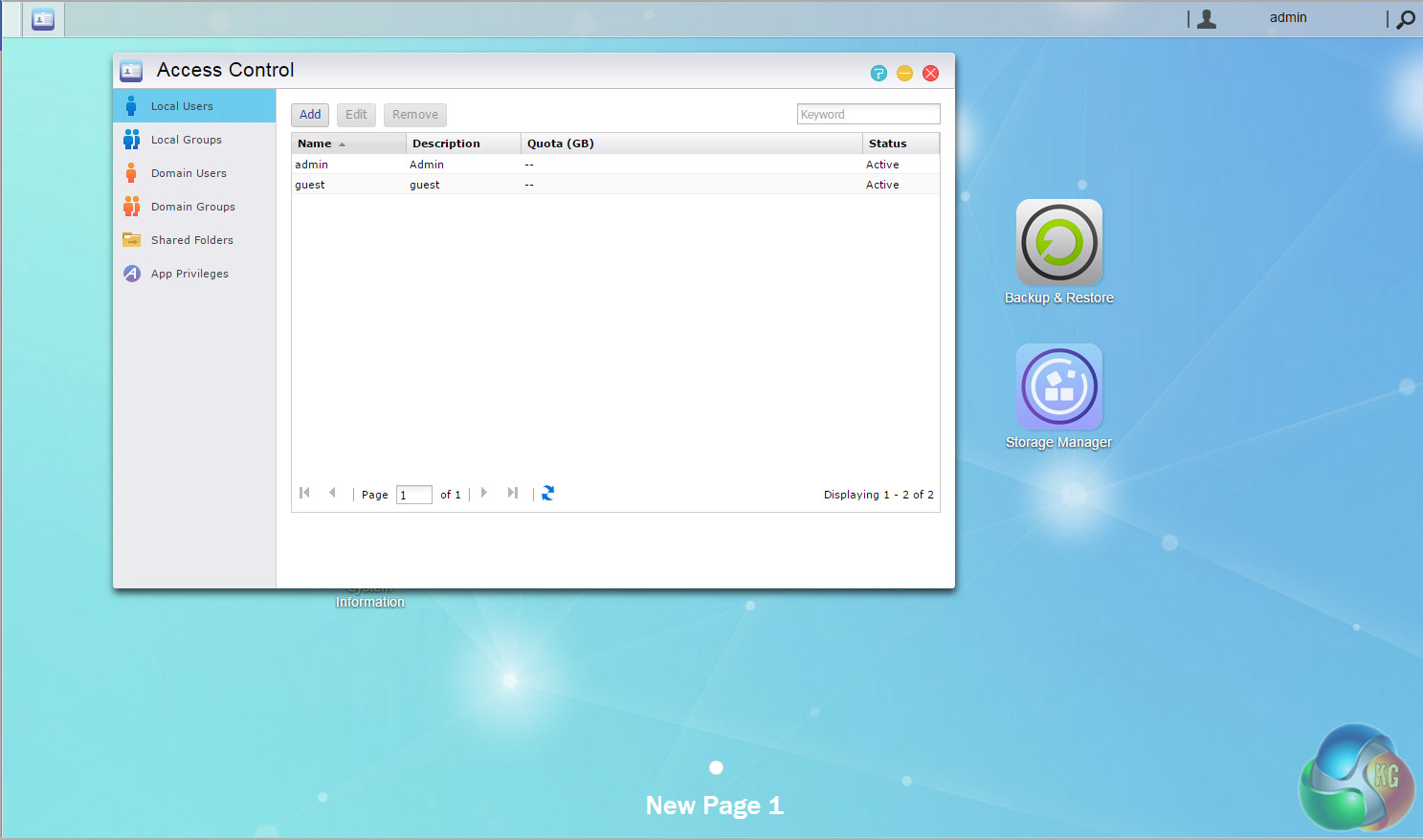
The main ADM page shows the major sections of the OS, although for speed it might be handier to have some form of side menu on this main page as all the other section pages have to help you get to what you are looking for a little quicker.
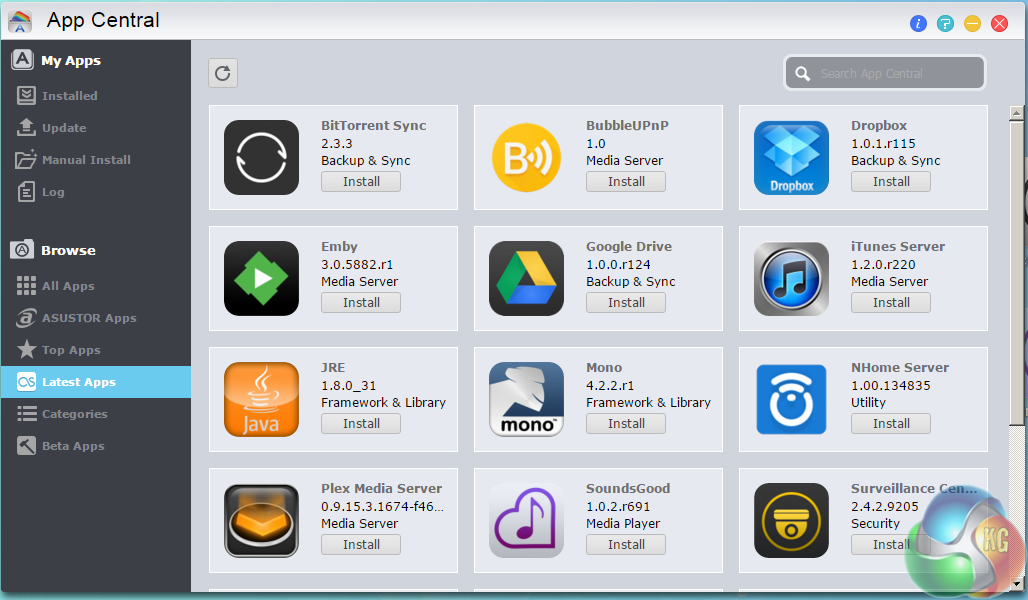
App support has always been one of ADM's strong points, as one glance at the App Central menu confirms. App Central is the control centre for app management and shows installed apps, all available apps and updates. At the time of writing, the list of available apps to choose from runs to a very impressive 189.
MyArchive
One very clever backup solution that ADM brings to the table is called MyArchive. This allows hard drives to be used as removable drives so you can swap between different collections of data as and when you need it. Recently upgraded, MyArchive now supports EX4, NTFS and HFS+ file systems.
Data security, particularly in an office environment is paramount and MyArchive drives have AES 256-bit encryption support (EXT4 file system only at present) and to add another layer of protection a USB device can be used as a physical encryption key.
The AS6204T has up to three bays reserved for MyArchive disks.
Asustor Portal
The Asustor Portal allows the AS6204T to become the central hub of any media collection. The software comes with Google Chrome, Chromium Web, Netflix and YouTube apps and it also supports Boxee and Kodi.
Adding the URL-Pack gives even more streaming options. Connect the AS6204T to a HDMI ready display and you can use it to watch videos or browse the internet without the need to fire up your PC.
ADM 2.6 Highlights
- Asustor Portal
- MyArchive
- Searchlight
- iSCI Lun Snapshots
- Cloud Backup
- Web-based file access.
- VPN server
- Built-in FTP server.
- BitTorrent client.
- Plex Media support.
- Mobile control and media streaming via AiData, AiMaster, AiRemote, AiMusic and AiVideos.
To test the Asustor AS6204T we used four WD 6TB Red drives (WD60EFRX, 5,400rpm class, 64MB cache). The drives were built into all the RAID arrays supported by the device; RAID 0,1, 5.6 and 10 and then tested.
Software:
Atto Disk Benchmark.
CrystalMark 3.0.3.
IOMeter.
Intel NASPT.
To test real life file/folder performance we use a number of different file/folder combinations to test the read and write performance of the NAS device. Using the FastCopy utility to get a MB/s and time taken for each transfer, the data is written from and read back to a 240GB SSD.
60GB Steam folder: 29,521 files.
50GB Files folder: 28,523 files.
12GB Movie folder: 24 files – mix of Blu-ray and 4K files.
10GB Photo folder: 621 files – mix of .png, .raw and .jpeg images.
10GB Audio folder: 1,483 files – mix of .mp3 and .flac files.
Crystalmark is a useful benchmark to measure theoretical performance levels of hard drives and SSD’s. We are using V3.0.3.
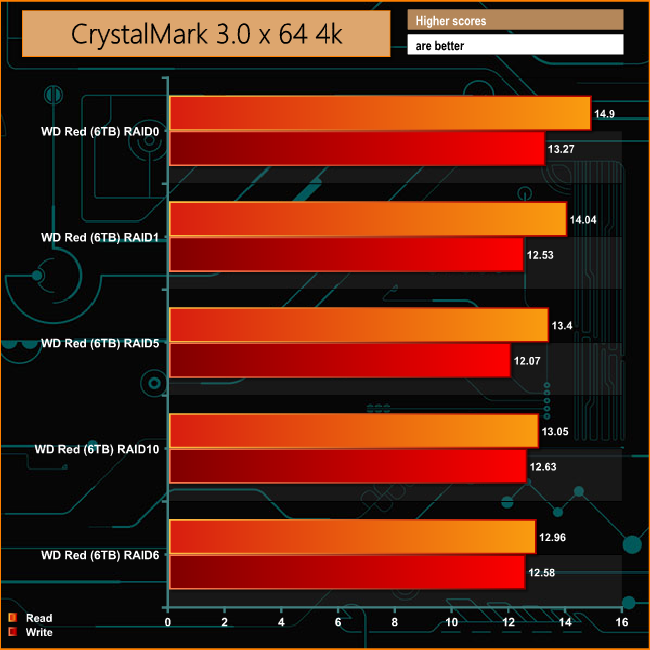
The AS6204T is pretty consistent across the board when it comes to dealing with the small files of everyday use in both reads and writes.
The ATTO Disk Benchmark performance measurement tool is compatible with Microsoft Windows. Measure your storage systems performance with various transfer sizes and test lengths for reads and writes. Several options are available to customize your performance measurement including queue depth, overlapped I/O and even a comparison mode with the option to run continuously.
Use ATTO Disk Benchmark to test any manufacturers RAID controllers, storage controllers, host adapters, hard drives and SSD drives and notice that ATTO products will consistently provide the highest level of performance to your storage.
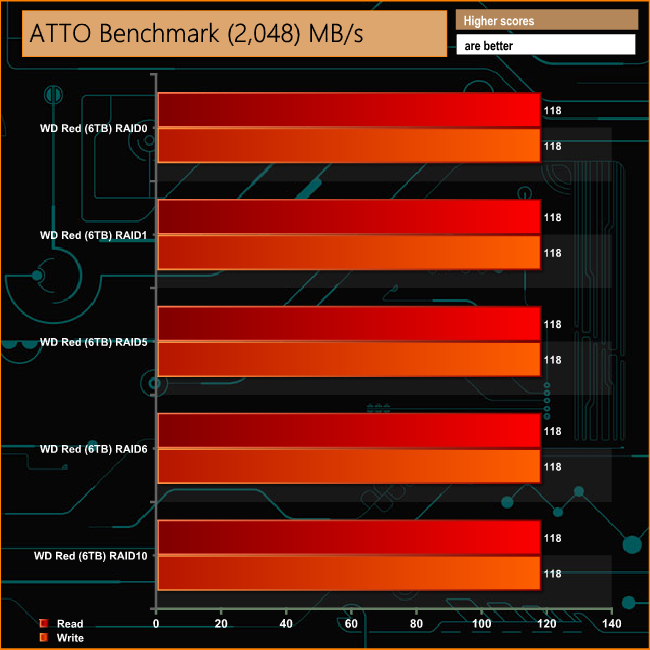
The AS6204T shows a remarkable level of consistency across all the arrays. Asustor's official sequential figures for the NAS using just a single Ethernet connection are 112MB/s for reads and 111MB/s for writes, figures that were confirmed and slightly bettered when tested with the ATTO benchmark.
Intel’s NASPT (NAS Performance Toolkit ) is a benchmark tool designed to enable direct measurement of home network attached storage (NAS) performance. NASPT uses a set of real world workload traces (high definition video playback and recording, video rendering/content creation and office productivity) gathered from typical digital home applications to emulate the behaviour of an actual application.
We’ve used some of the video and office apps results to highlight a NAS device’s performance.
HD Video Playback
This trace represents the playback of a 1.3GB HD video file at 720p using Windows Media Player. The files are accessed sequentially with 256kB user level reads.
4x HD Playback
This trace is built from four copies of the Video Playback test with around 11% sequential accesses.
HD Video Record
Trace writes an 720p MPEG-2 video file to the NAS. The single 1.6GB file is written sequentially using 256kB accesses.
HD Playback and Record
Tests the NAS with simultaneous reads and writes of a 1GB HD Video file in the 720p format.
Content Creation
This trace simulates the creation of a video file using both video and photo editing software using a mix of file types and sizes. 90% of the operations are writes to the NAS with around 40% of these being sequential.
Office Productivity
A trace of typical workday operations. 2.8GB of data made up of 600 files of varying lengths is divided equally between read and writes. 80% of the accesses are sequential.
Photo Album
This simulates the opening and viewing of 169 photos (aprrox 1.2GB). It tests how the NAS deals with a multitude of small files.
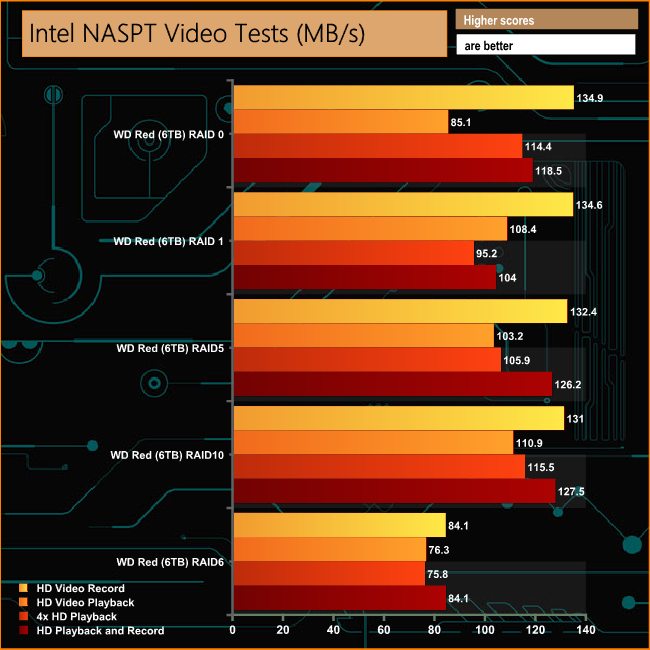
The HD Video scores from Intel’s NASPT shows the benefits brought by the quad-core processor and decent amount of dual channel memory. Good performance is shown, with 100MB/s + speeds across most of the tests, excluding the RAID 6 performance which drops somewhat alarmingly for all the tests.
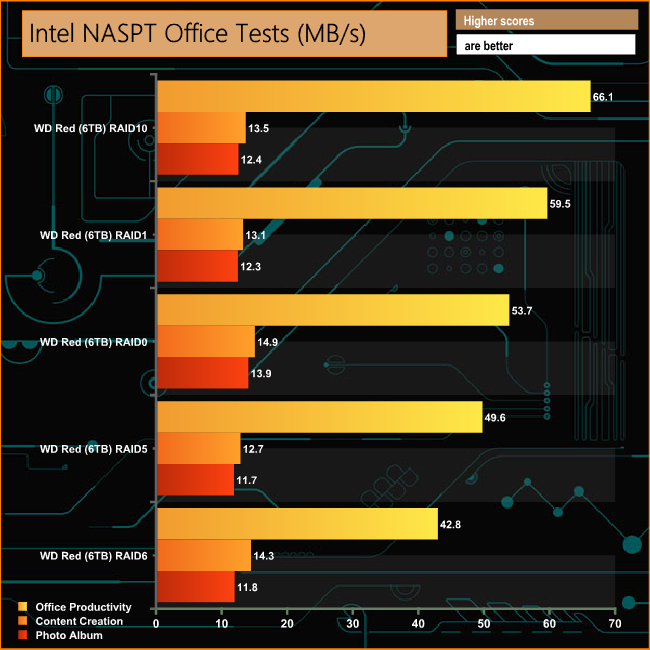
When it comes to dealing with everyday workloads, the AS6204T handles them without too much difficulty. There's pretty good consistency across the range of arrays when the NAS is dealing with the multi file/file types of Content Creation test and opening the multiple small files of the Photo test.
IOMeter is another open source synthetic benchmarking tool which is able to simulate the various loads placed on hard drive and solid state drive technology.
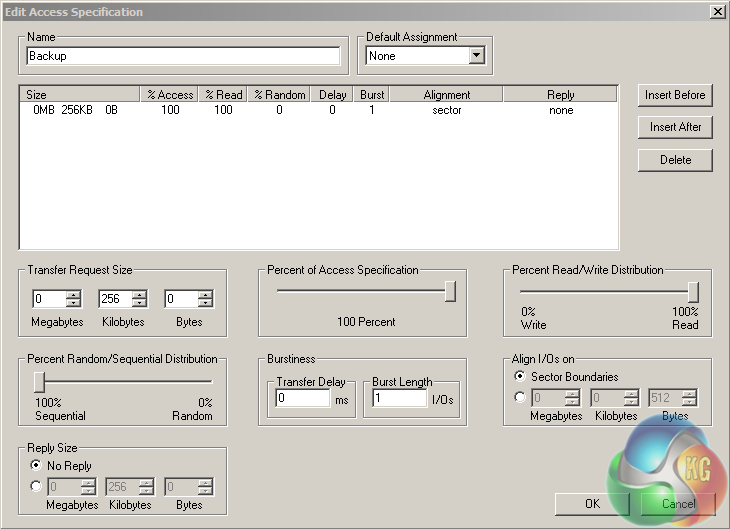
We set IOmeter up (as shown above) to test both backup and restore performance on a 100GB partition.
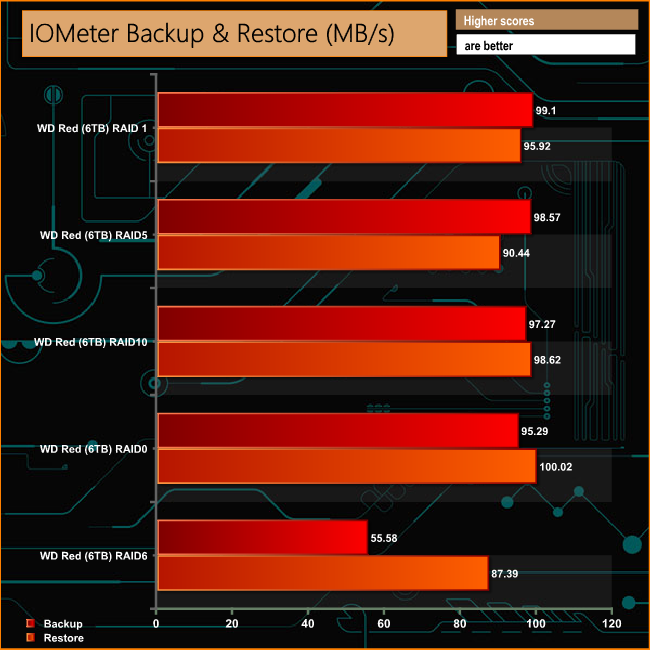
Once again the AS6204T shows pretty good consistency, getting close to 100MB/s across all the arrays in both reads and writes with the notable exception of when in RAID 6. In RAID 6 there is a pronounced drop in write performance and while there is a dip in the read performance, it's nowhere near as much as in writing mode.
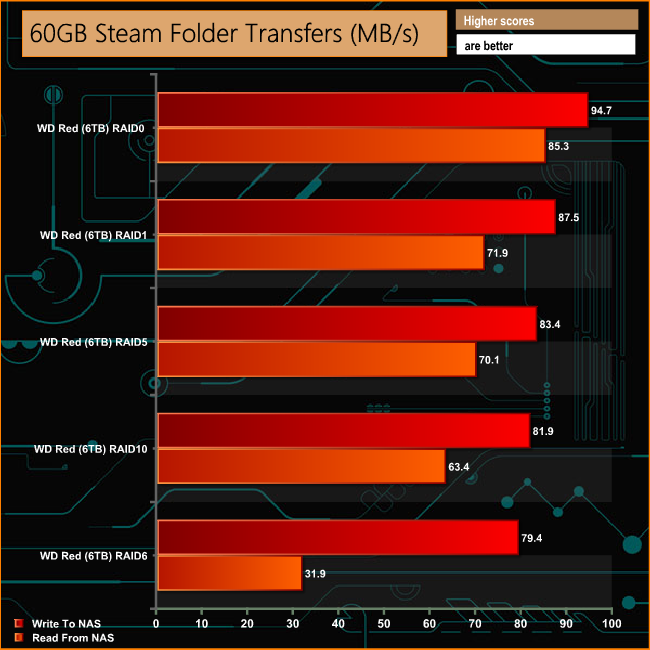
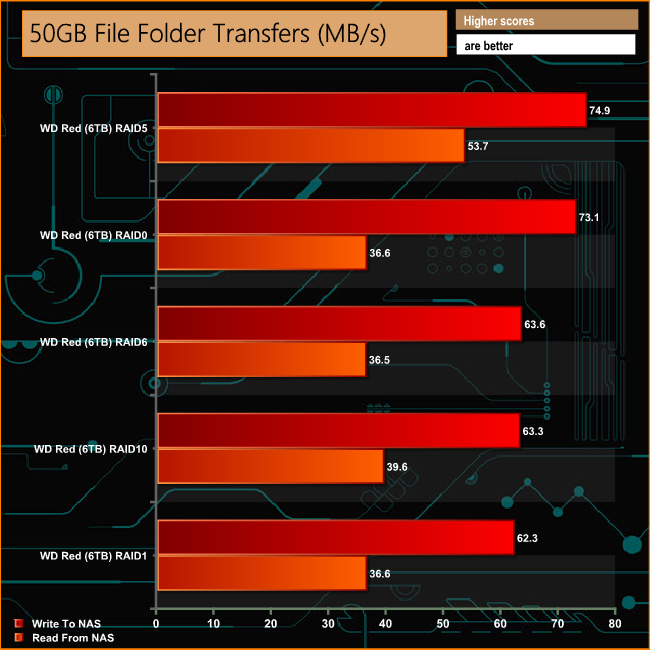
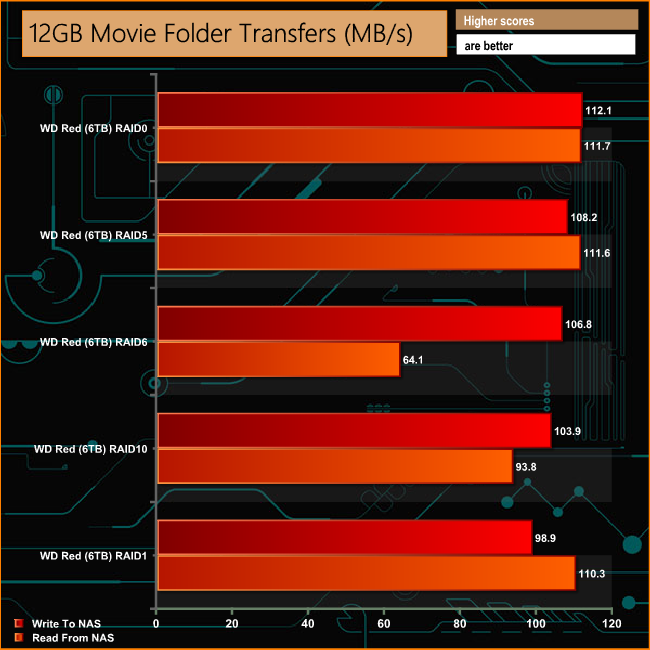
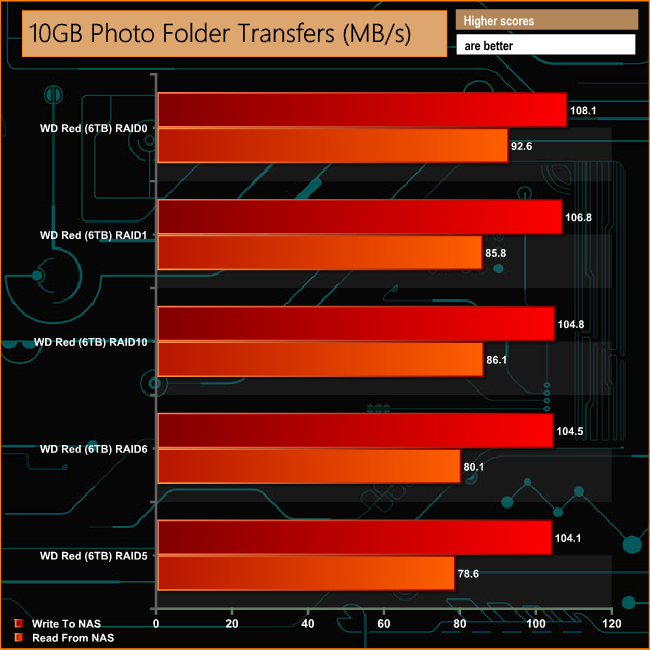
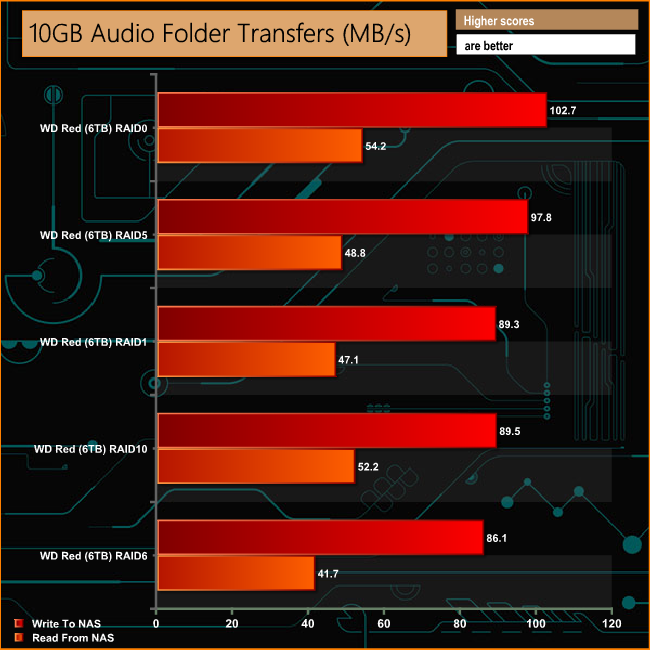
When dealing with the files of the 60GB Steam folder, the AS6204T shows a good deal of consistency in RAID 0, 1 and 5. There's a small drop off in read performance in RAID10 while in RAID6 the read performance plummets.
With the 50GB file folder transfer, the read performance in RAID 5 is strong at 53MB/s with all the other arrays struggling to get close to that read figure.
Transferring the large files of the 12GB Movie folder sees the performance breaking or getting very close to the 100MB/s mark for both reads and writes. Once again the exception being the read performance in RAID 6.
We tested the peak power consumption of a NAS at the wall during a run of CrystalDiskMark 5.0.2 as this version of the benchmark runs the read and write benchmark suites separately so its easier to monitor what power the device is using during each function.
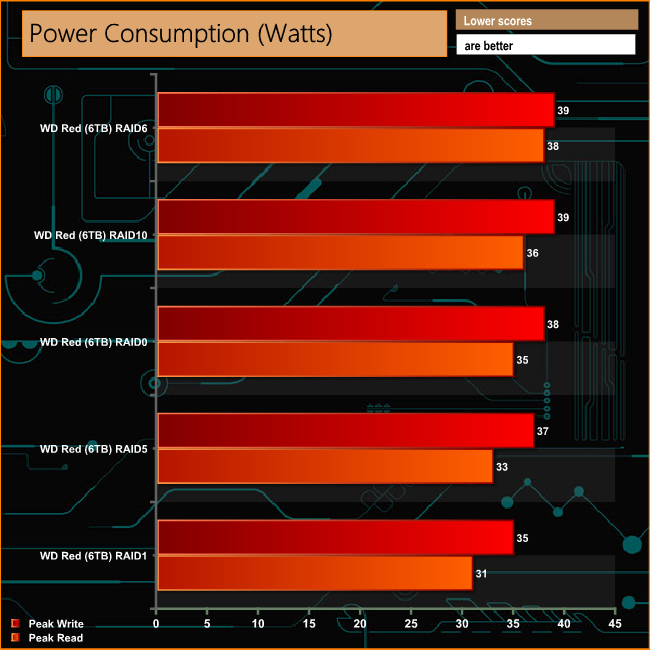
Using a processor with a TDP of just 6W, the AS6204T is a pretty energy efficient for a quad-core powered NAS. Our 6TB WD Red test drives have an average read/write power rating of just 5.3W each.
The combination of a quad-core processor and dual channel memory provides the Asustor AS6204T with strong performance, with the NAS topping the 100MB/s mark in a number of our tests. Although the performance is very strong in most of the arrays tested with a good deal of consistency, there was a noticeable and sometimes very sharp fall-off in performance in RAID6 in some tests.
The list of features the AS6204T has makes it a useful tool in both the home and office environments. Data security is key in any office and from its dedicated hardware AES-NI encryption engine to the physical locks on the drive bay doors, Asustor has built in a good deal of protection for the AS6204T. In a similar vein, the various collections of data that can be stored using the MyArchive technology are protected by AES 256-bit encryption with an added level of security afforded by being able to use a USB device as a physical encryption key.
In the home, the AS6204T's 4K playback support and HDMI port make it an ideal central hub for a multimedia collection. Add in the host of streaming software that is available via the Asustor Portal (Google Chrome, Chromium Web, Netflix and YouTube, Boxee, XBMC and Kodi), with others available through the URL-Pack, and the multimedia capability is excellent.
In its multimedia guise, the AS6204T doesn't even need a PC to be powered up to use it. Just connect the NAS to an HDMI ready display and you can use it to watch videos or browse the internet.
For a four-bay NAS, the AS6402T is a pretty compact unit with good build quality. Asustor's ADM OS allows it to be setup quickly without too much fuss. The ADM software is one of the best NAS GUI's around and Asustor continually keep it updated, adding even more apps to the mightily impressive App Central portal.

You can buy the Asustor AS6204T 4-bay NAS from Overclockers UK for £449.99 inc VAT HERE.
Discuss on our Facebook page HERE.
Pros:
- Latest Intel Celeron quad-core processor.
- Dual channel memory support.
- ADM 2.6 OS.
- Support for 10TB drives.
- Lockable drive bay doors.
- Generally very strong performance.
Cons:
- RAID 6 performance is a little weak in some areas.
Kitguru says: With a good mix of multimedia and security features, plus support for the latest 10TB hard drives, the Asustor AS6204T would make a powerful and feature-rich addition to either the home or office environment.