KitGuru KitGuru.net – Tech News | Hardware News | Hardware Reviews | IOS | Mobile | Gaming | Graphics Cards


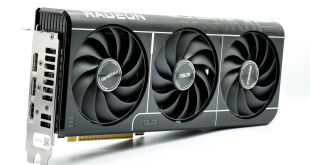
Following on from the RX 9070 and 9070 XT that hit the market earlier this year, AMD's RDNA 4 architecture is now going mainstream with the release of the RX 9060 XT. Just like the RTX 5060 Ti, this GPU is available in both 8 and 16GB variants, but it is the latter we are focused on today. With an MSRP of £315/$349, it is the only current-gen GPU to offer more than 12GB VRAM for less than £400, while it's still cheaper than even Nvidia's 5060 Ti 8GB. Interested? Let's take a closer look…
Just like the RX 9070 and 9070 XT, there's no reference (or MBA) card for the RX 9060 XT 16GB, and instead AMD sampled us with the ASUS Prime model. This card does come factory overclocked, but as regular readers will know, we manually test all GPUs at reference specifications for these day one reviews, so we can ensure that all testing is ‘apples to apples.'
Timestamps
00:00 Intro
00:48 9060 XT recap, specs
01:49 Test setup
02:46 Alan Wake 2
03:16 Black Myth: Wukong
03:43 Cyberpunk 2077
04:15 Dragon Age: The Veilguard
04:48 Final Fantasy XVI
05:10 Ghost of Tsushima
05:37 Horizon Forbidden West
06:12 Kingdom Come Deliverance 2
06:45 Plague Tale: Requiem
07:04 Ratchet and Clank
07:40 Senua’s Saga: Hellblade 2
08:08 Starfield
08:49 Performance summary
10:31 Cost per frame analysis
11:36 Ray tracing benchmarks
14:38 FSR 4
16:02 Meet the ASUS Prime model
16:46 Clocks, thermals, acoustics
17:52 Power draw + efficiency
19:36 Closing thoughts
| RX 9070 XT | RX 9070 | RX 9060 XT | RX 7600 XT | RX 7600 | |
| Architecture | RDNA 4 | RDNA 4 | RDNA 4 | RDNA 3 | RDNA 3 |
| Manufacturing Process | TSMC N4 | TSMC N4 | TSMC N4 | 6 nm | 6 nm |
| Transistor Count | 53.9 billion | 53.9 billion | 29.7 billion | 13.3 billion | 13.3 billion |
| Die Size | 357 mm² | 357 mm² | 199 mm² | 204 mm² | 204 mm² |
| Compute Units | 64 | 56 | 32 | 32 | 32 |
| Ray Accelerators | 64 | 56 | 32 | 32 | 32 |
| Stream Processors | 4096 | 3584 | 2048 | 2048 | 2048 |
| Game GPU Clock | 2400 MHz | 2070 MHz | 2530 MHz | 2470 MHz | 2250 MHz |
| Boost GPU Clock | Up to 2970 MHz | Up to 2520 MHz | Up to 3130 MHz | Up to 2755 MHz | Up to 2625 MHz |
| ROPs | 128 | 128 | 64 | 64 | 64 |
| AMD Infinity Cache | 64MB | 64MB | 32MB | 32MB | 32MB |
| Memory | 16GB GDDR6 | 16GB GDDR6 | 8/16GB GDDR6 | 16GB GDDR6 | 8GB GDDR6 |
| Memory Data Rate | 20 Gbps | 20 Gbps | 20 Gbps | 18Gbps | 18Gbps |
| Memory Bandwidth | 645 GB/s | 645 GB/s | 322 GB/s | 288 GB/s | 288 GB/s |
| Memory Interface | 256-bit | 256-bit | 128-bit | 128-bit | 128-bit |
| Board Power | 304W | 220W | 160W | 190W | 165W |
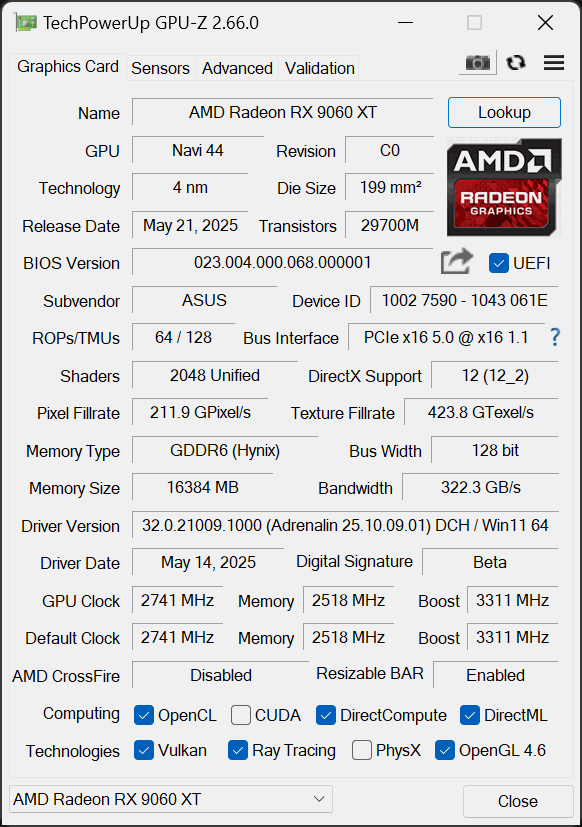
First, let's take a quick look at the specs. The RX 9060 XT is built on the new Navi 44 die, measuring just 199mm², and it's worth pointing out this is a monolithic chip, so AMD is not using a chiplet-based design as per RDNA 3. In total, Navi 44 silicon packs in 29.7 billion transistors.
As a full implementation of Navi 44, the RX 9060 XT packs in 32 Compute Units, and each CU houses 64 Stream Processors, for a total of 2048 shaders. There's also 32 Ray Accelerators – one per CU – and 64 ROPs.
As for clock speed, the RX 9060 XT has the highest speeds of any RDNA 4 GPU so far, given it sports a rated game clock of 2530MHz and a boost clock of up to 3130MHz.
The memory configuration offers either 8 or 16GB of GDDR6 memory clocked at 20Gbps, operating over a 128-bit memory interface, for total memory bandwidth of 322 GB/s. 32MB of Infinity Cache is also present.
Power draw for the RX 9060 XT is rated at 160W Total Board Power (TBP), but we are using our updated GPU power testing methodology in this review, so read on for our most detailed power and efficiency testing yet.
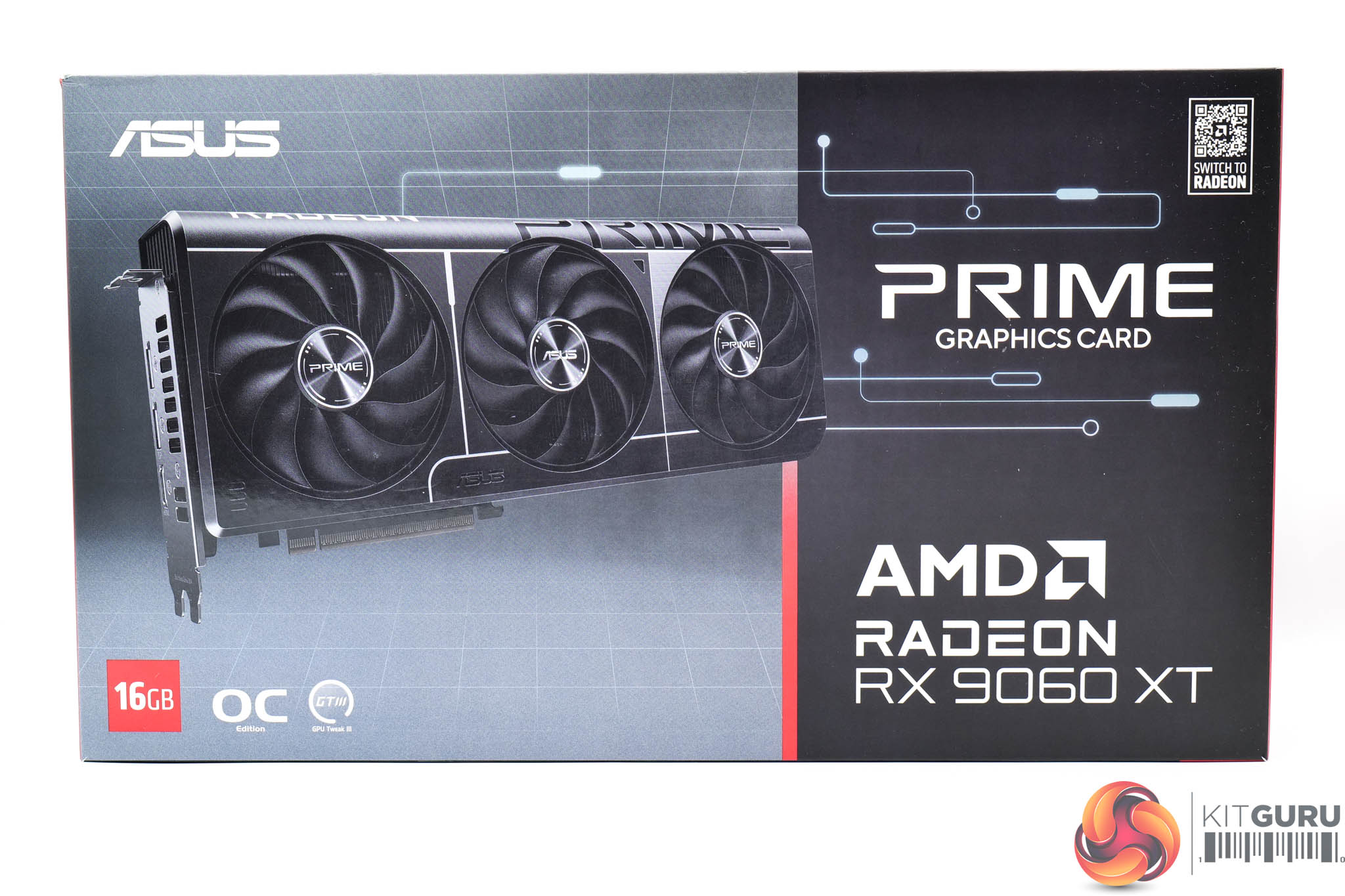
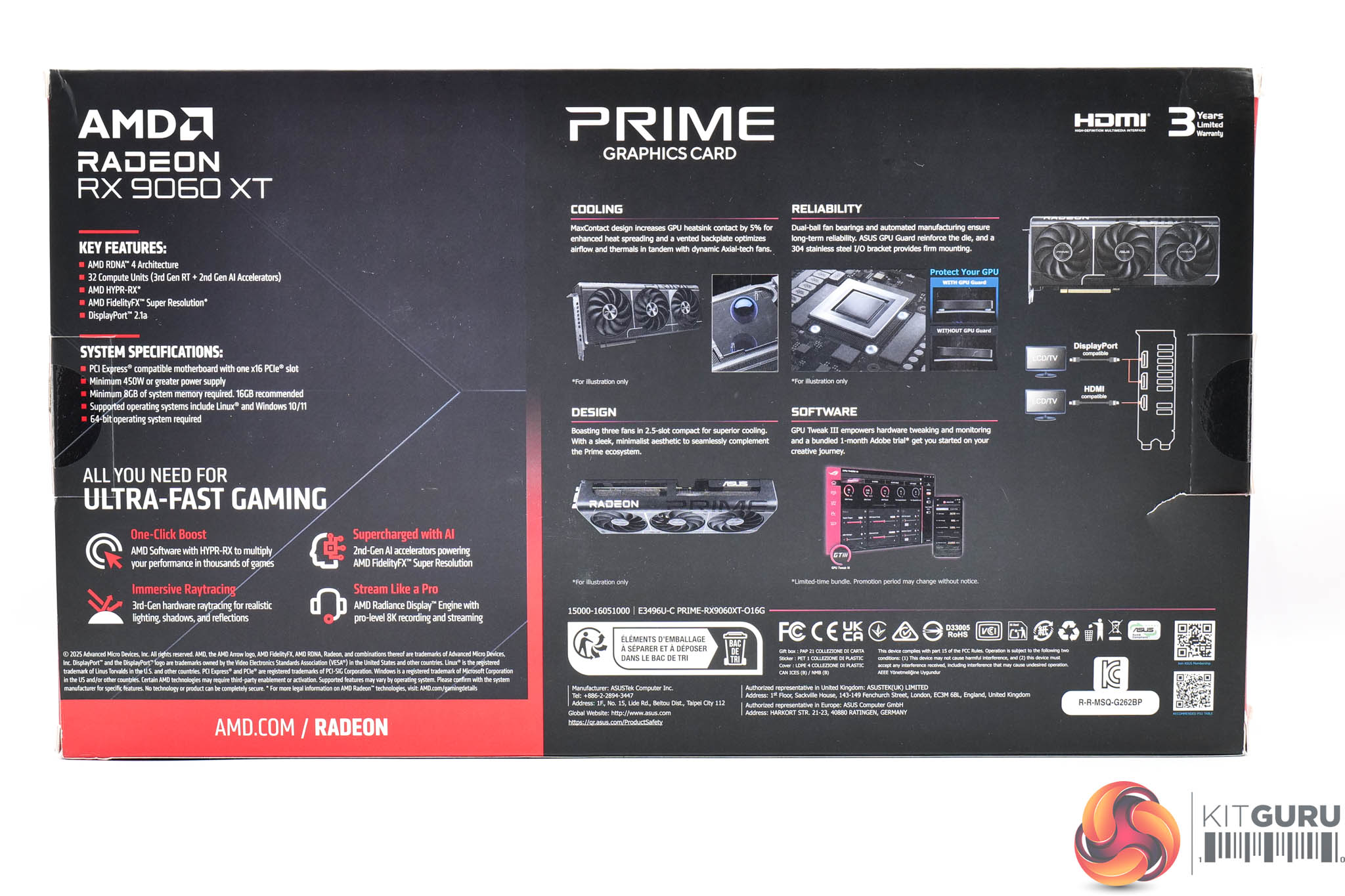
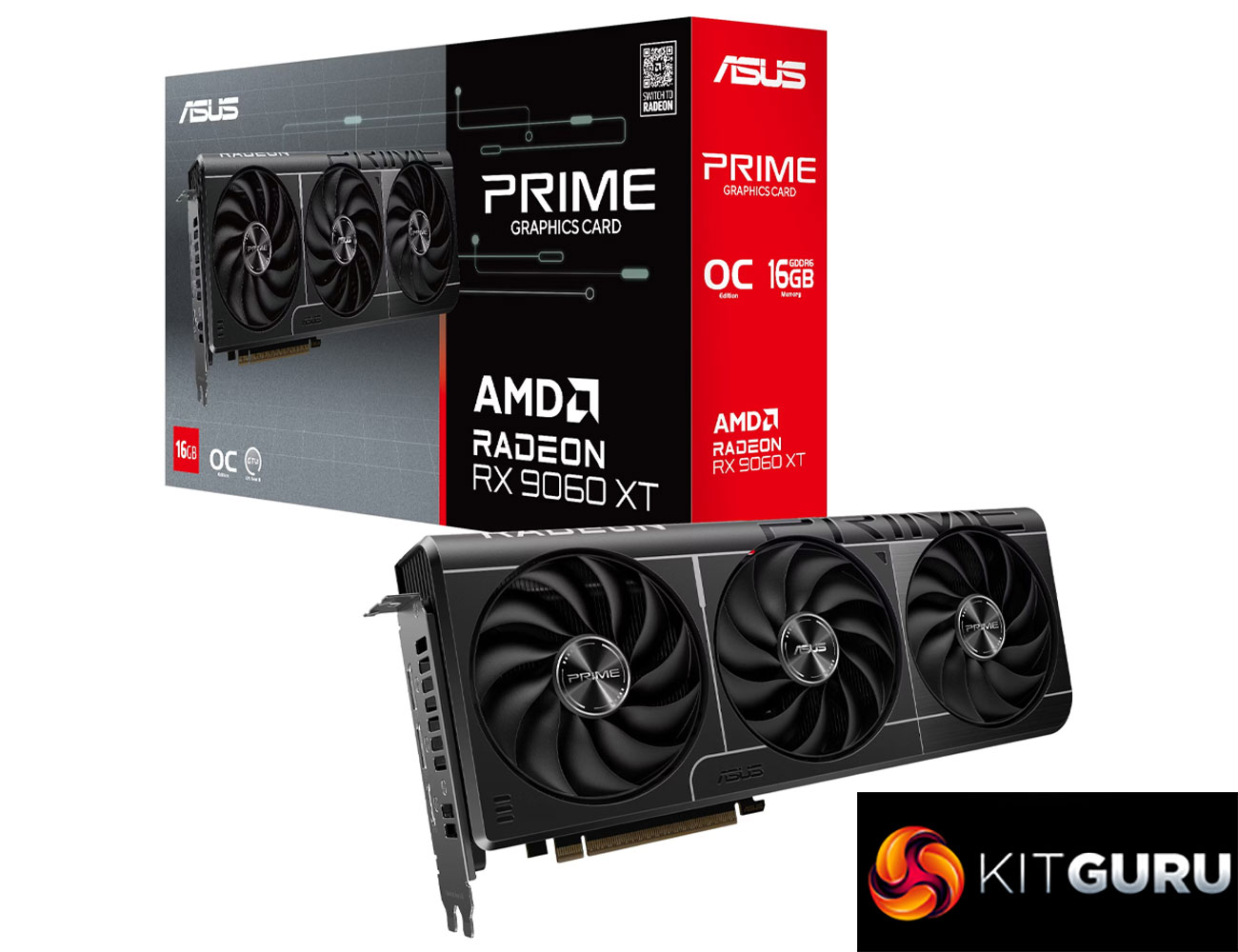
The ASUS RX 9060 XT Prime 16GB ships in a grey and black box, with an image of the card visible on the front, alongside ASUS and AMD branding.
On the back, ASUS highlights a few key features of the card, it's cooler, and the GPU architecture.

Inside, the only included accessories are these three leaflets – a thank you note, warranty note and quick start guide.
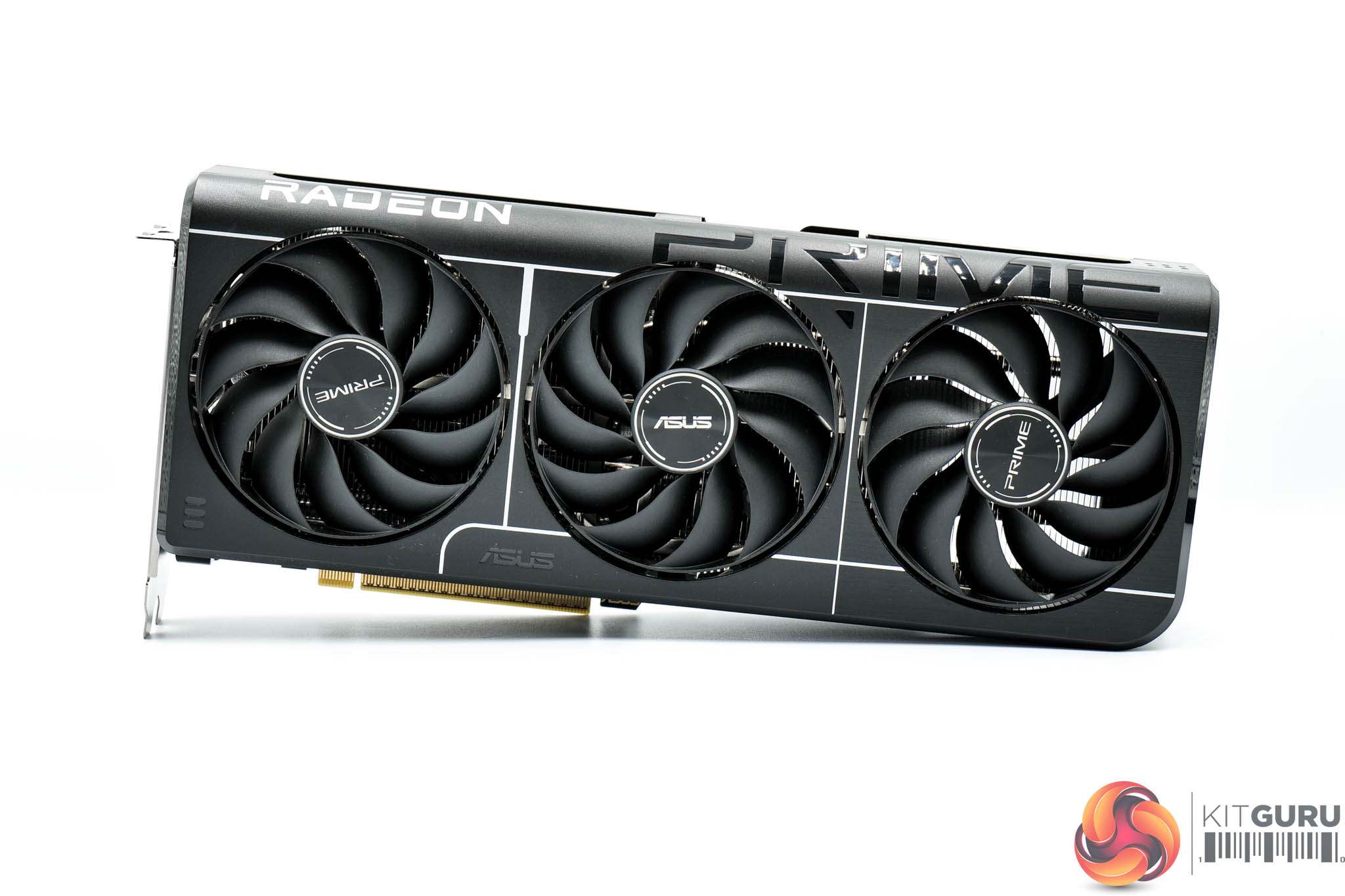

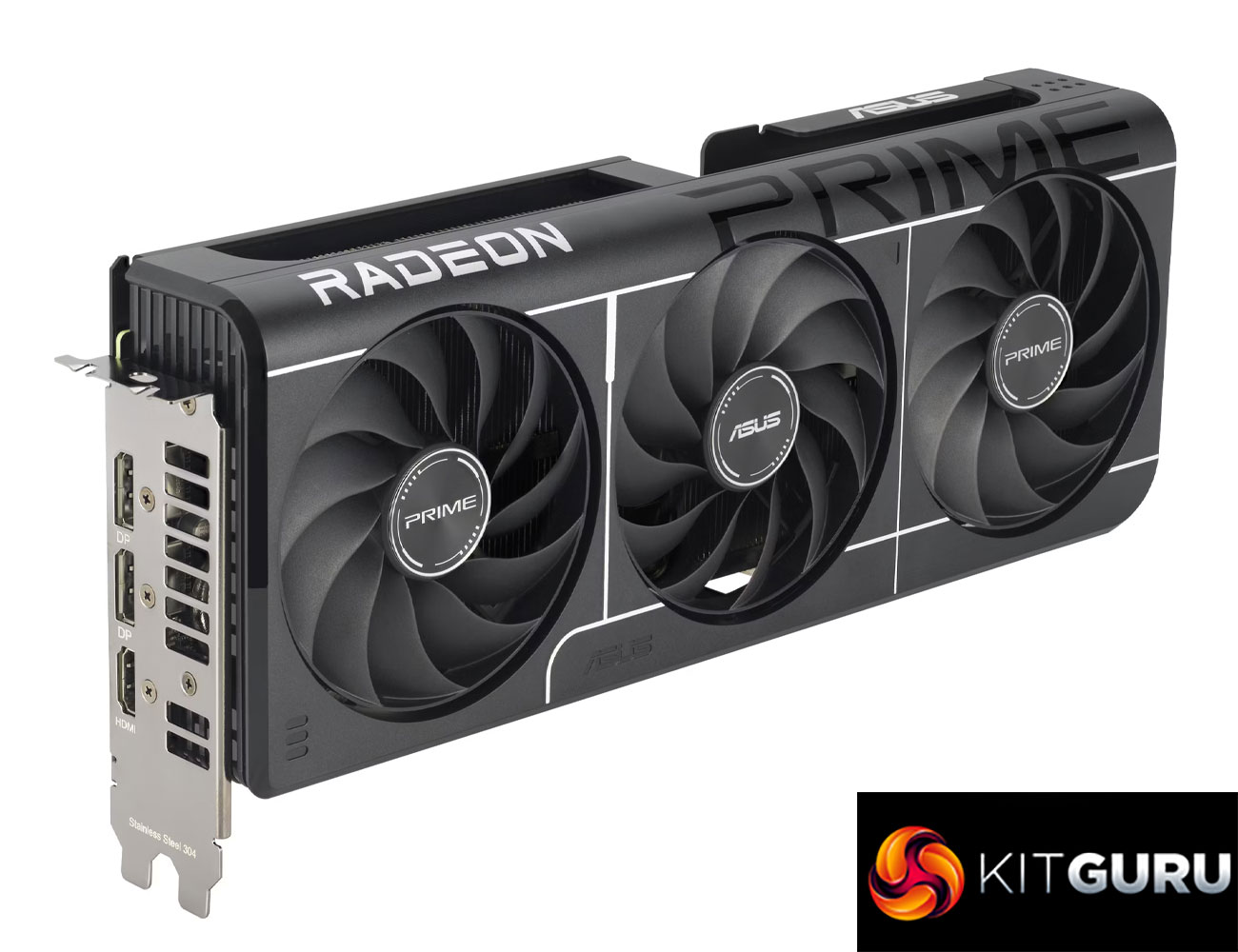
As for the graphics card itself, if you've seen any of ASUS' other Prime models, you will know what to expect here – it's a very clean design, being almost entirely matte black, but with clean white lines that add visual interest. The shroud is made entirely from plastic, but that's to be expected at this price point.
We can also note the triple-fan setup, using ASUS ‘Axial-Tech' design with dual-ball bearings. Each fan measures 90mm in diameter.

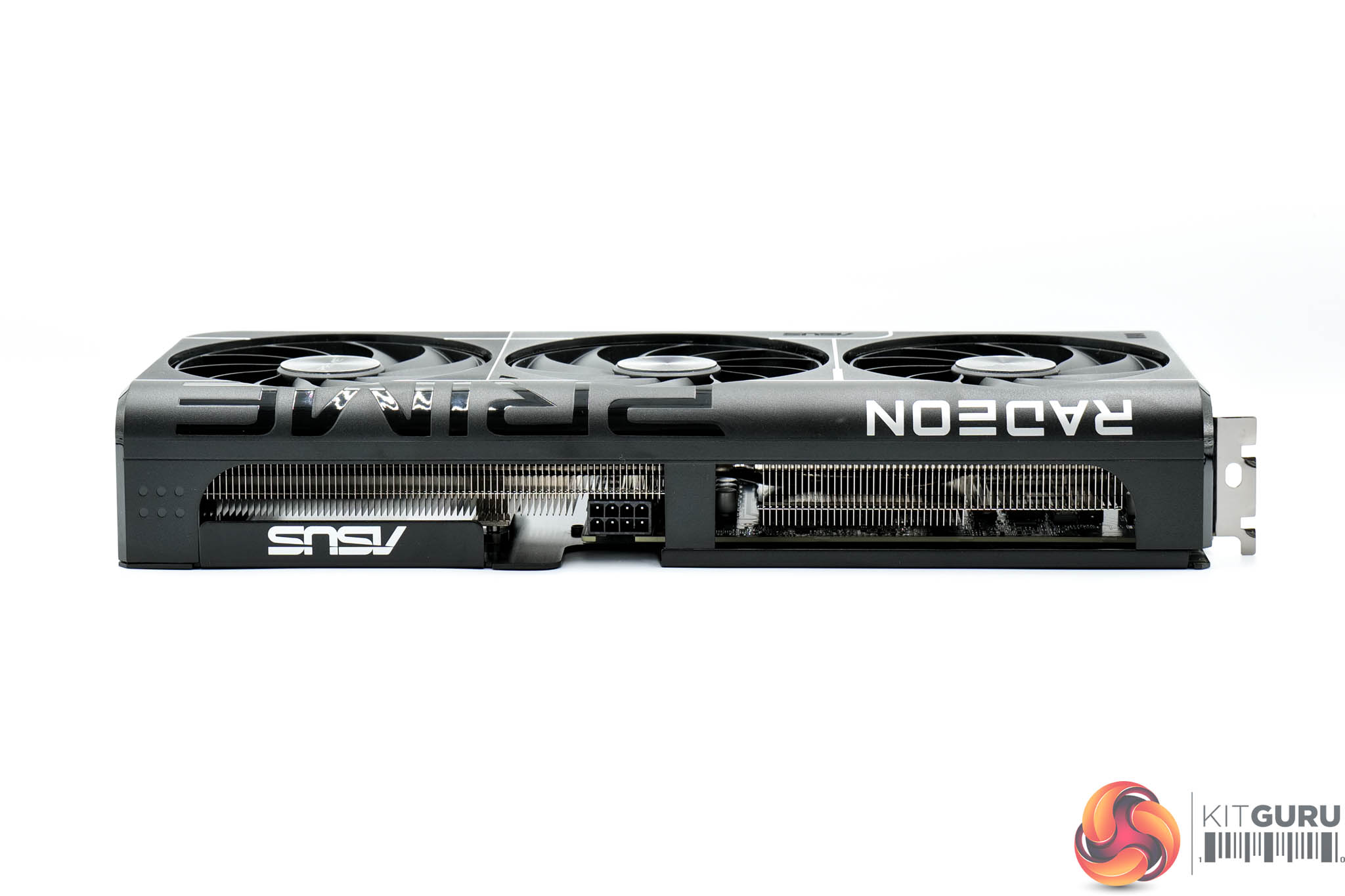
There's no denying this is a fairly large card considering the relatively low power demands – it measures 304 x 126 x 50mm, making it a 2.5 slot thickness. It weighed in at 869g on my scales.

The front side is home to the Radeon logo printed in white, as well as the outline of the Prime logo.
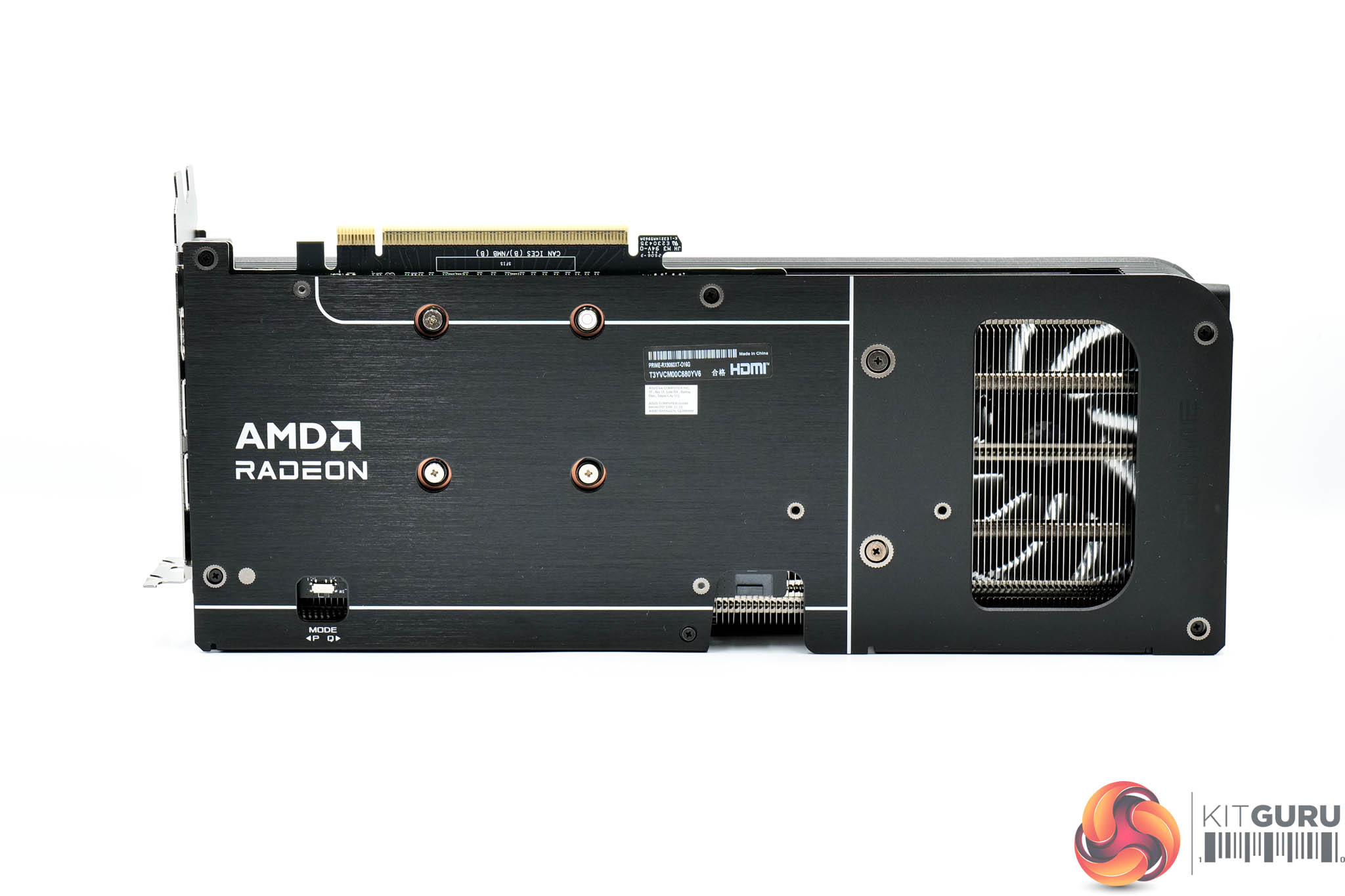
As for the backplate, this is a full length brushed metal design, with just a small flow through area towards the end of the card. ASUS has also fitted a dual-BIOS switch, offering a choice of Performance or Quiet modes.
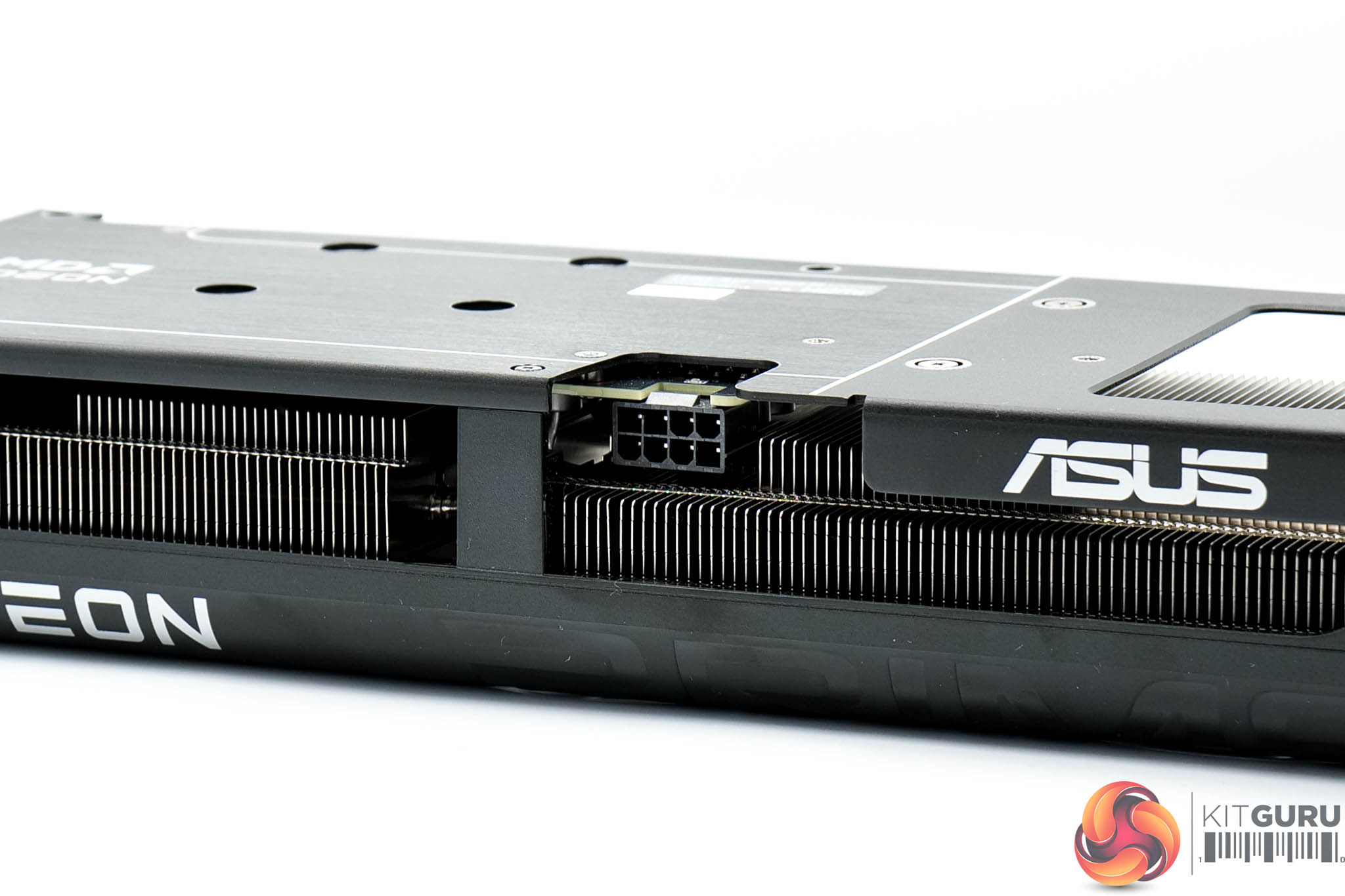

Power is delivered by a single 8-pin connector – no 12VHPWR shenanigans here!
Strangely though, there's just three display outputs, with 2x DisplayPort 2.1 and 1x HDMI 2.1.
Driver Notes
- All AMD GPUs (except RX 9060 XT) were benchmarked with the 25.3.1 driver.
- All Intel GPUs were benchmarked with the 101.6651 driver.
- All Nvidia GPUs (except for RTX 5060 Ti 8/16GB) were benchmarked with the 572.70 driver.
- RTX 5060 Ti 8/16GB were benchmarked with the 575.94 driver supplied to press.
- RX 9060 XT was benchmarked with the 25.10.09.01 driver supplied to press.
Results are only directly comparable where this exact configuration has been used.
Test System:
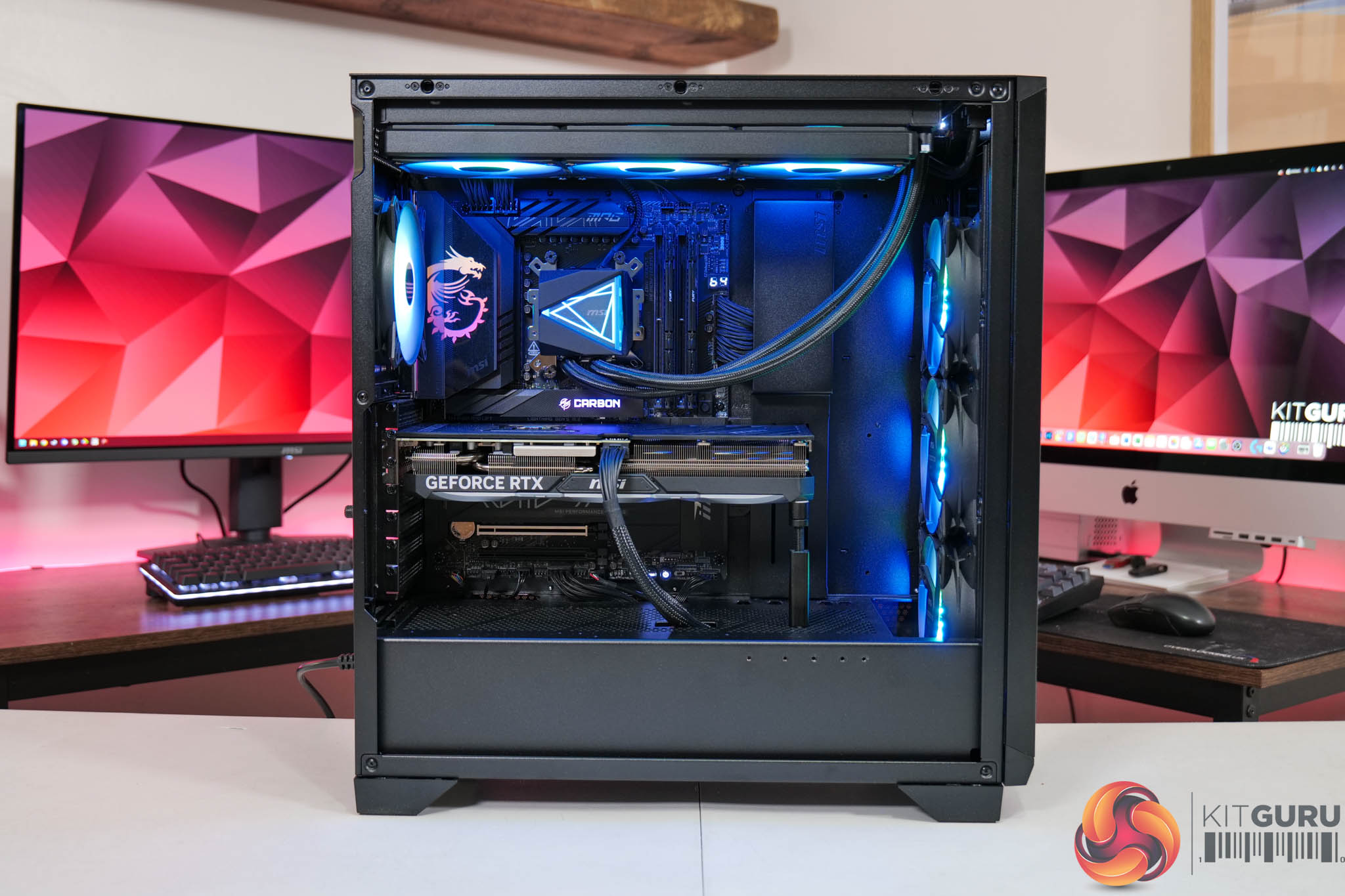
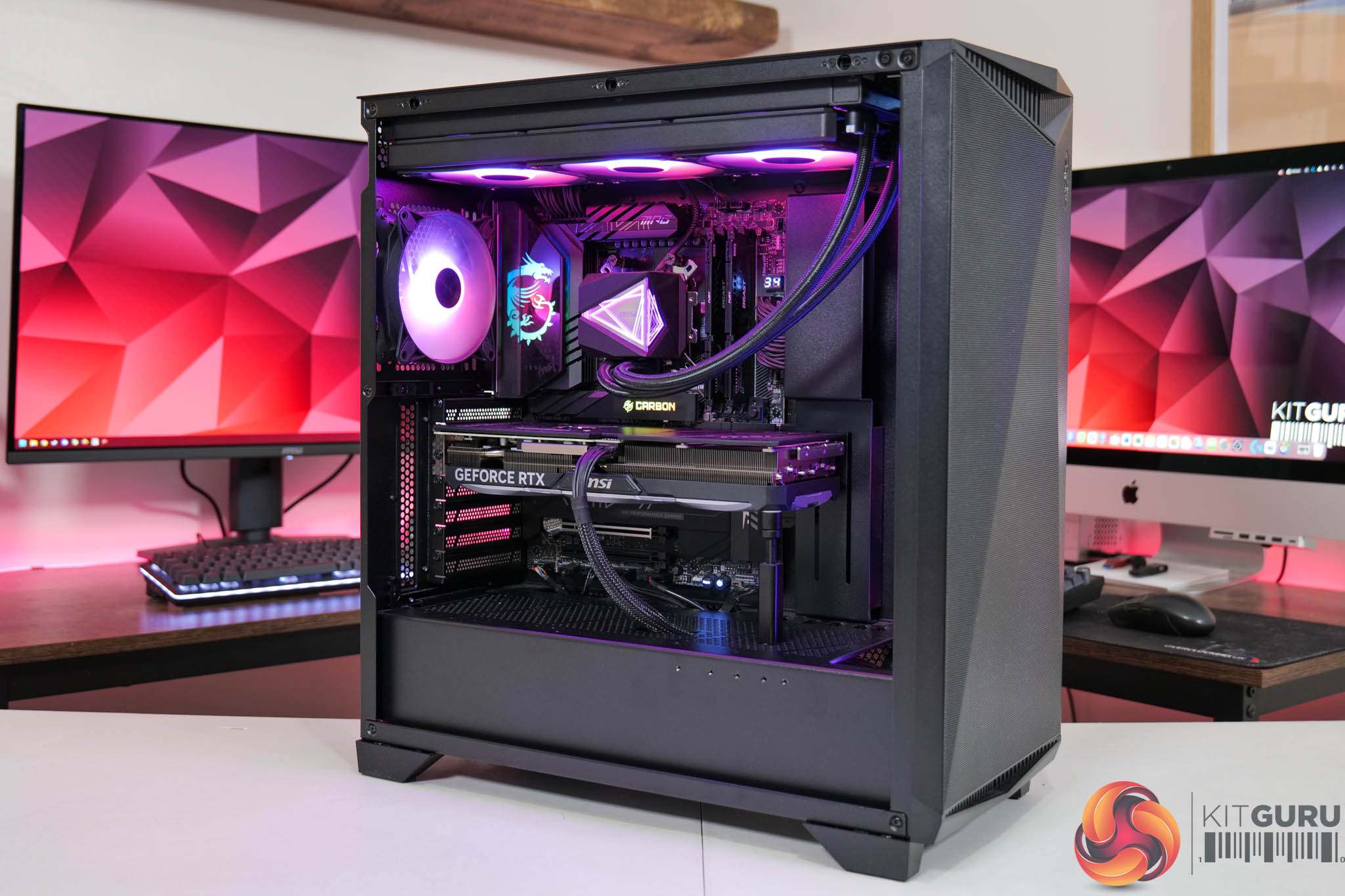
We test using a custom built system powered by MSI, based on AMD's Zen 5 platform. You can view the Powered by MSI store on AWD-IT's website HERE.
| CPU |
AMD Ryzen 7 9800X3D
|
| Motherboard |
MSI MPG X870E Carbon WiFi
|
| Memory |
64GB (2x32GB) Kingston Fury Beast DDR5 6000MT/s CL30
|
| Graphics Card |
Varies
|
| SSD |
4TB Kingston NV3 Gen 4 PCIe NVMe
|
| Chassis | MSI MPG Gungnir 300R Airflow |
| CPU Cooler |
MSI MAG CoreLiquid i360
|
| Power Supply |
MSI MEG Ai1300P
|
| Operating System |
Windows 11 23H2
|
| Monitor |
MSI MPG 321URX QD-OLED
|
| Resizable BAR |
Enabled for all supported GPUs
|
Comparison Graphics Cards List
- ASRock RX 9070 XT Taichi 16GB
- Sapphire RX 9070 Pulse 16GB
- Sapphire RX 7900 GRE Nitro+ 16GB
- AMD RX 7800 XT 16GB
- Sapphire RX 7700 XT Pulse 12GB
- Sapphire RX 7600 XT Pulse 16GB
- AMD RX 7600 8GB
- AMD RX 6700 XT 12GB
- Intel Arc A770 LE 16GB
- Intel Arc B580 LE 12GB
- MSI RTX 5070 Ti Ventus 3X 16GB
- Nvidia RTX 5070 FE 12GB
- Palit RTX 5060 Ti Infinity 3 16GB
- Palit RTX 5060 Ti Dual 8GB
- Nvidia RTX 4070 Super FE 12GB
- Nvidia RTX 4070 FE 12GB
- MSI RTX 4060 Ti Gaming 16GB
- Nvidia RTX 4060 Ti FE 8GB
- MSI RTX 4060 Ventus 2X 8GB
- Nvidia RTX 3070 FE 8GB
- Nvidia RTX 3060 Ti FE 8GB
- Palit RTX 3060 StormX 12GB
All cards were tested at reference specifications. For factory overclocked cards, this means we manually ‘undo' the overclock via MSI Afterburner or AMD/Intel's built-in tuning tools. Or, for cards like the Sapphire RX 7900 GRE Nitro+, we enable the reference-clocked BIOS instead of the default OC BIOS.
Software and Games List
- Alan Wake II (DX12)
- Black Myth: Wukong (DX12)
- Cyberpunk 2077 (DX12)
- Dragon Age: The Veilguard (DX12)
- Final Fantasy XVI (DX12)
- Ghost of Tsushima (DX12)
- Horizon Forbidden West (DX12)
- Indiana Jones and the Great Circle (Vulkan)
- Kingdom Come: Deliverance II (DX12)
- A Plague Tale: Requiem (DX12)
- Ratchet and Clank: Rift Apart (DX12)
- Returnal (DX12)
- Senua's Saga: Hellblade 2 (DX12)
- Shadow of the Tomb Raider (DX12)
- Starfield (DX12)
- Star Wars Outlaws (DX12)
We run each benchmark/game three times, and present mean averages in our graphs. We use FrameView to measure average frame rates as well as 1% low values (99th percentile) across our three runs.
Alan Wake 2 is a 2023 survival horror game developed by Remedy Entertainment and published by Epic Games Publishing. A sequel to Alan Wake, the story follows best-selling novelist Alan Wake, who has been trapped in an alternate dimension for 13 years, as he attempts to escape by writing a horror story involving an FBI special agent named Saga Anderson. The game was released for PlayStation 5, Windows, and Xbox Series X/S on 27 October 2023. (Wikipedia).
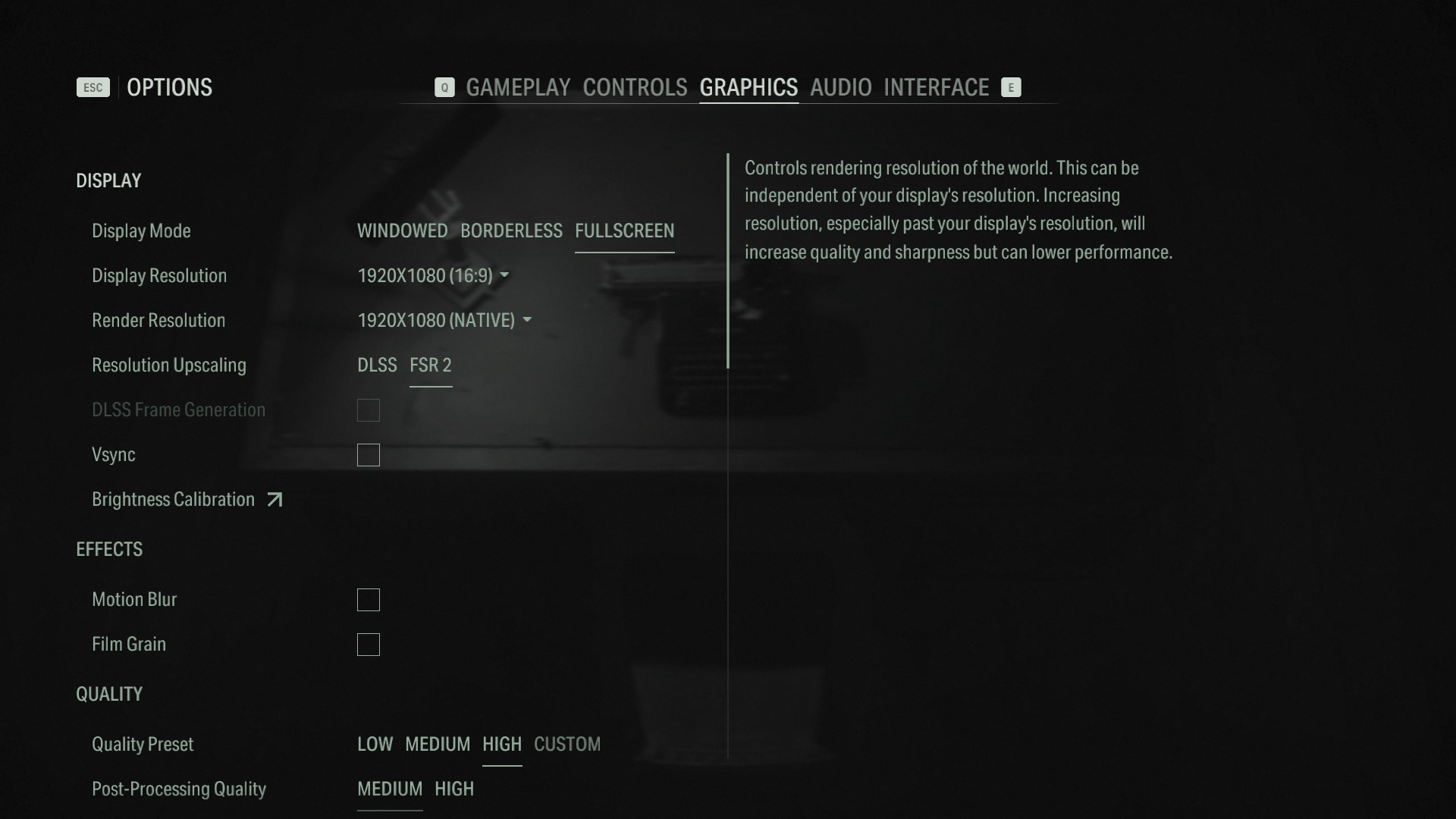
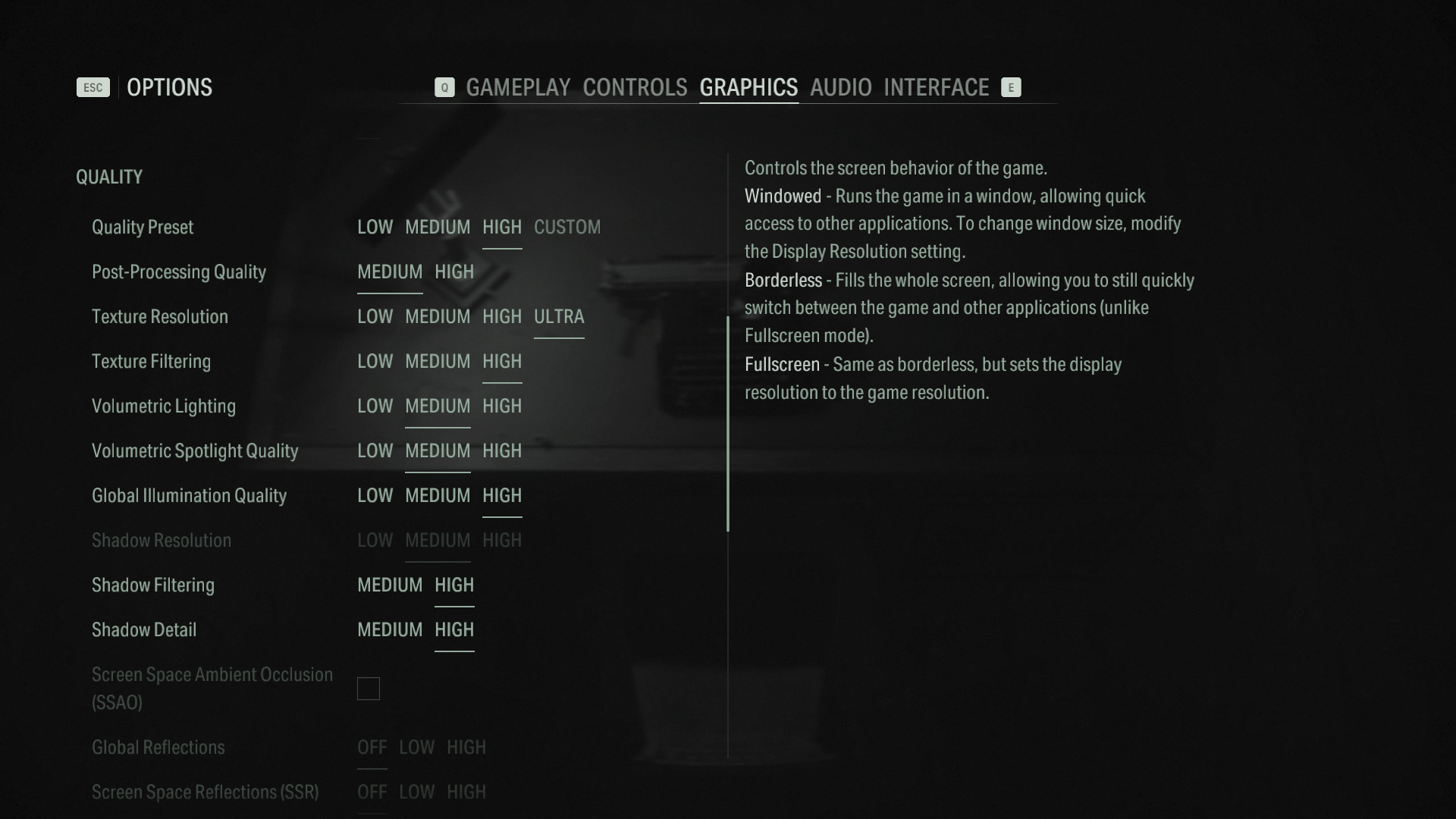
Engine: Northlight. We test using the High preset, FSR set to native resolution, DX12 API.

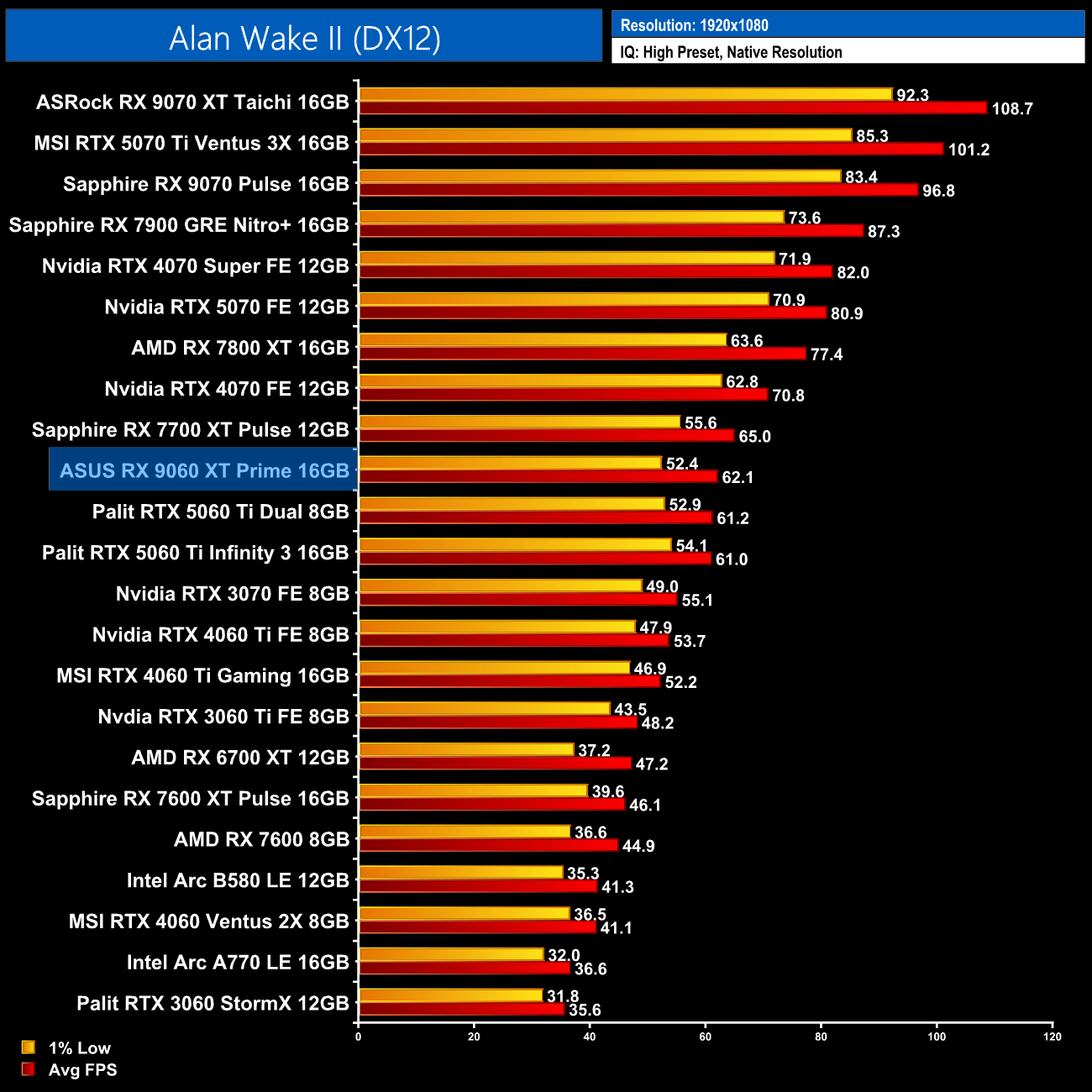
Kicking off with Alan Wake 2, at 1080p the RX 9060 XT 16GB is dead-level with both RTX 5060 Ti models, all three GPUs hit just over 60fps using the High preset, while AMD's newest GPU is just 5% slower than the RX 7700 XT.
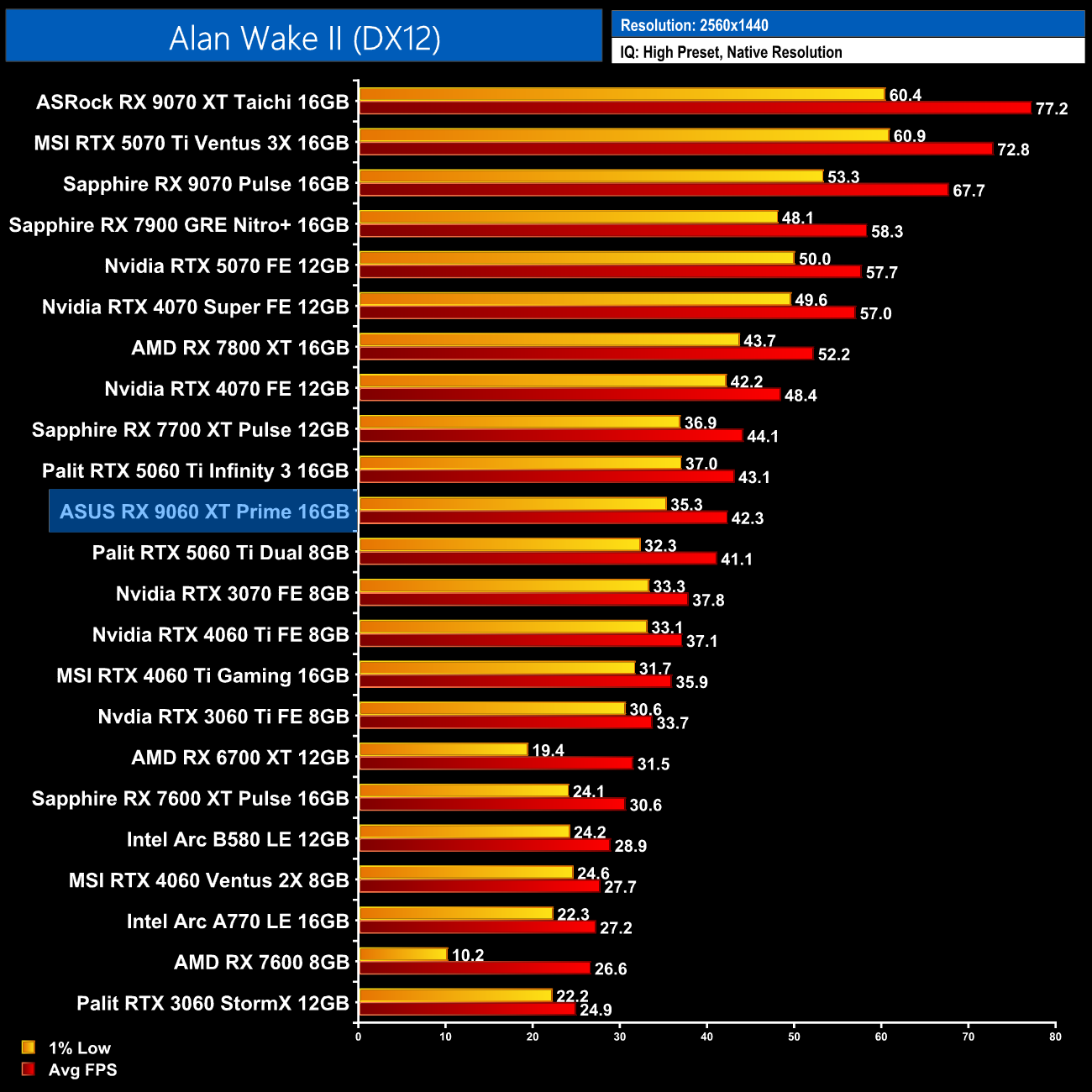
At 1440p things are still very close with the two 5060 Ti models, this time with performance just over 40fps, so it's playable, but you'd likely want to tinker with the settings or enable upscaling for smoother frame rates.
Black Myth: Wukong is a 2024 action role-playing game developed and published by Game Science. The game is inspired by the classical Chinese novel Journey to the West and follows an anthropomorphic monkey based on Sun Wukong from the novel. Black Myth: Wukong was released for PlayStation 5 and Windows on August 20, 2024, with an Xbox Series X/S version to be released at a later date. (Wikipedia).
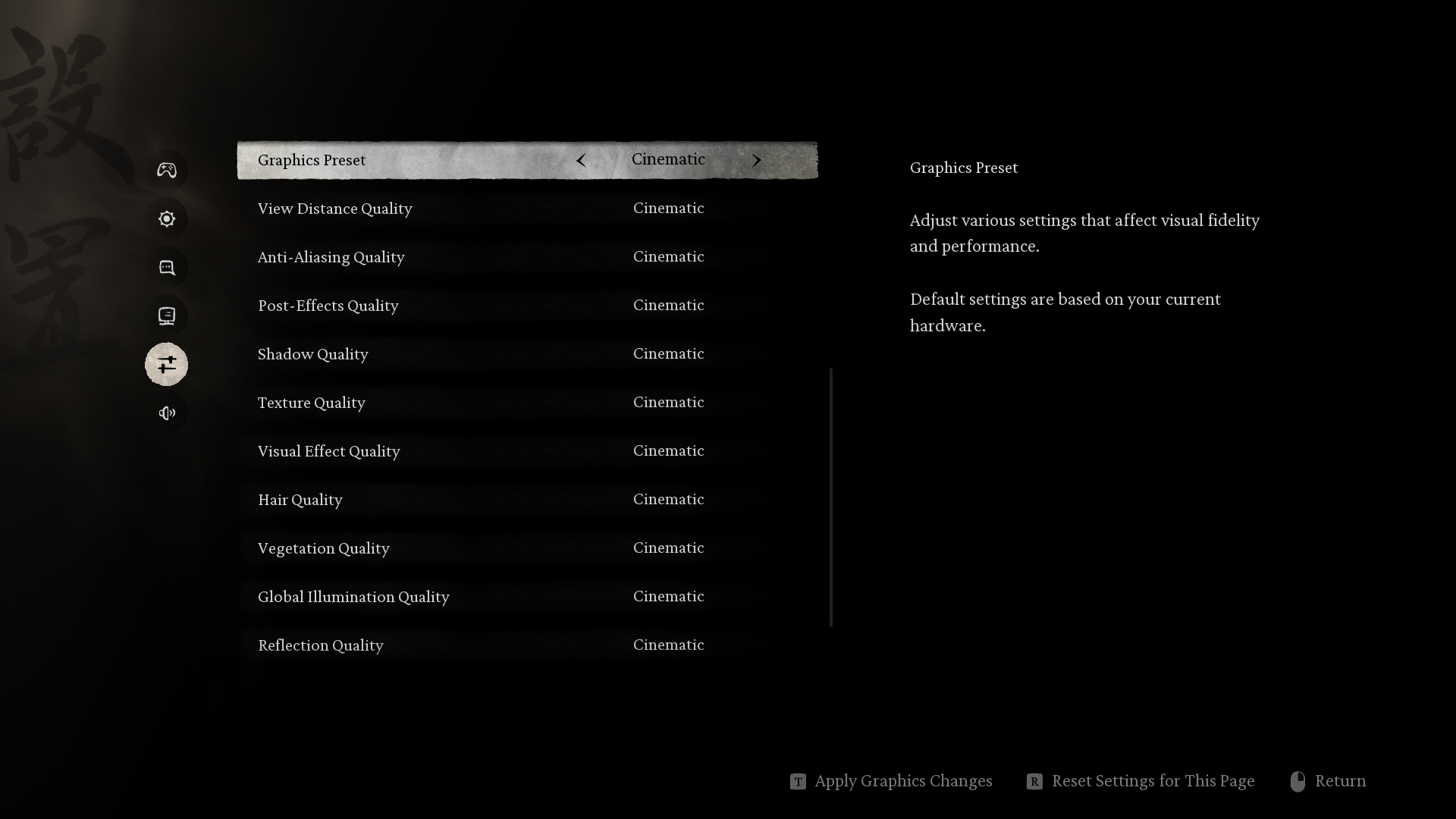
Engine: Unreal Engine 5. We test using the Cinematic preset, TSR set to 100% render scale, DX12 API.
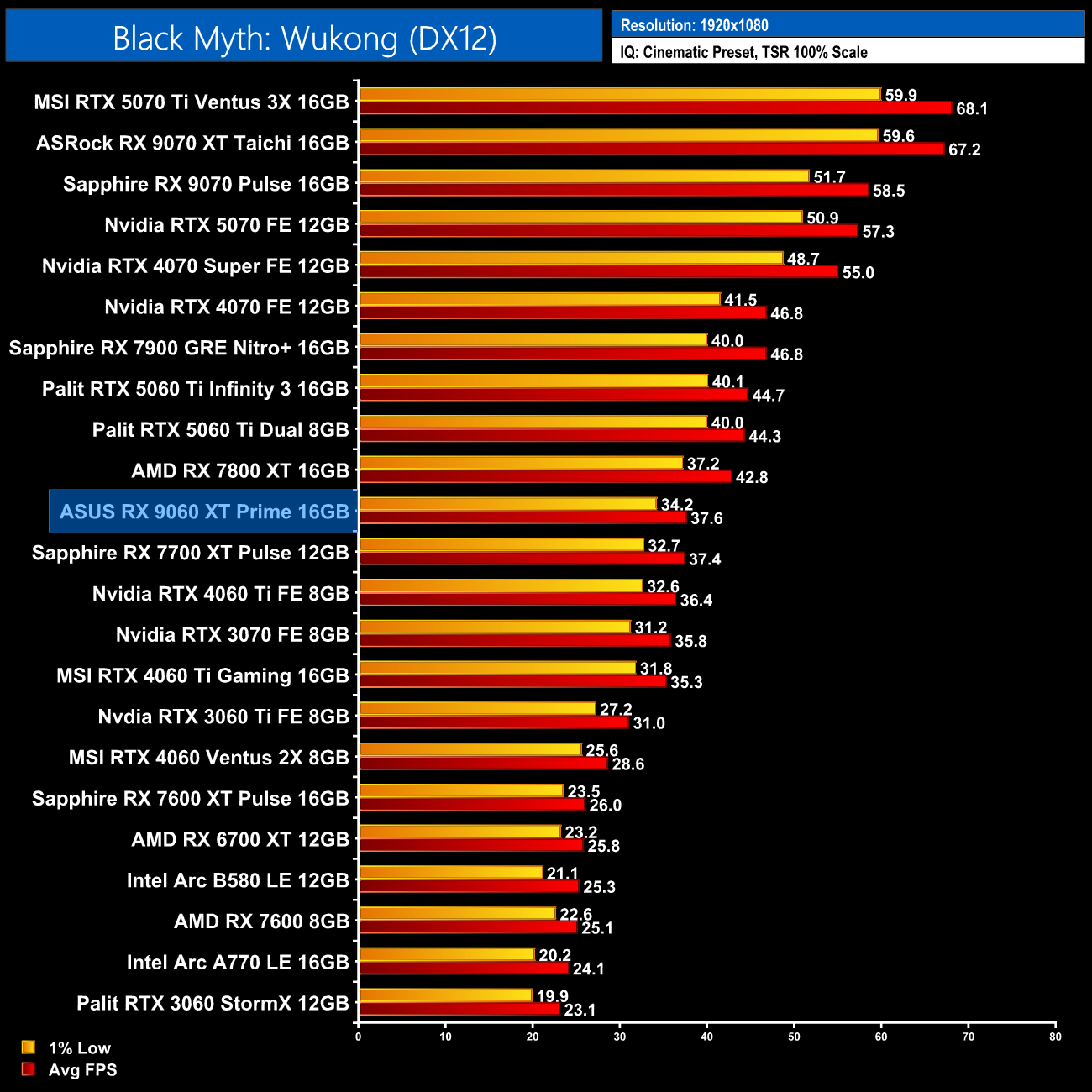
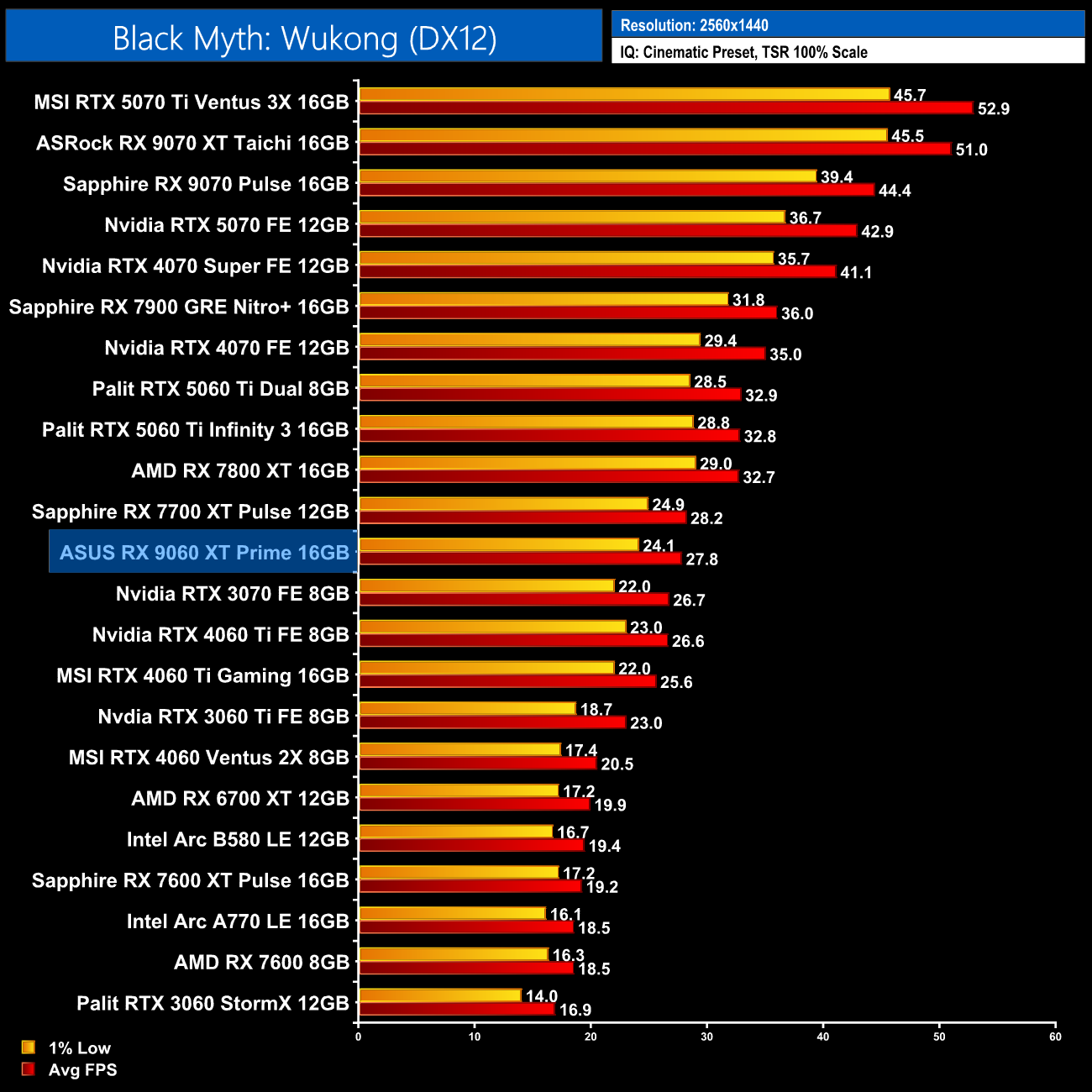
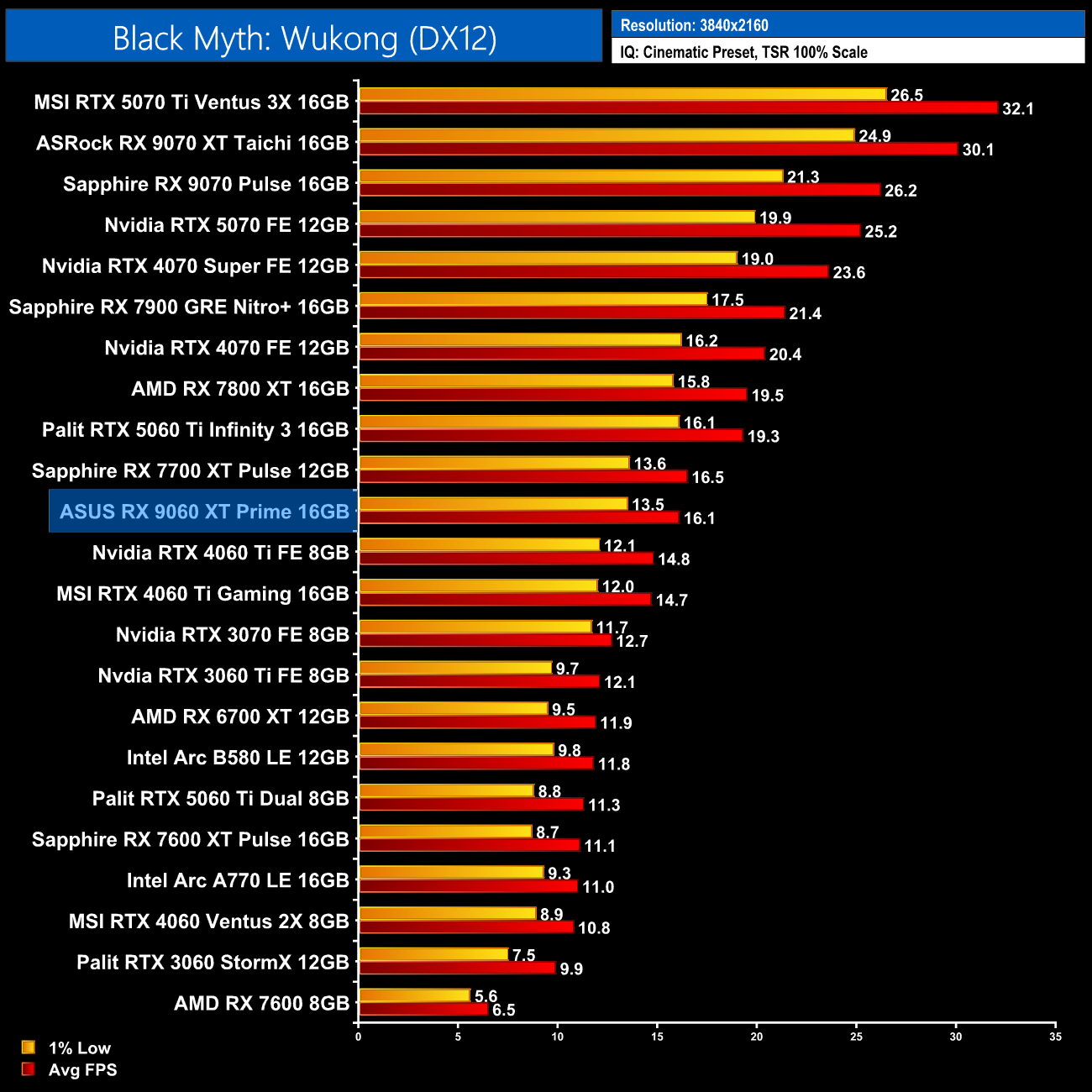
Black Myth: Wukong remains more favourable to Nvidia GPUs, and it also doesn't have a problem with 8GB cards at 1080p or 1440p – at least not without ray tracing being enabled! The 9060 XT 16GB comes in 15% slower than the 5060 Ti 8GB, while it's on par with the RX 7700 XT.
1440p is just way too demanding for this calibre of GPU when testing with the Cinematic preset, so again you'd want to dial down the quality in this title.
Cyberpunk 2077 is a 2020 action role-playing video game developed and published by CD Projekt. The story takes place in Night City, an open world set in the Cyberpunk universe. Players assume the first-person perspective of a customisable mercenary known as V, who can acquire skills in hacking and machinery with options for melee and ranged combat. Cyberpunk 2077 was released for Microsoft Windows, PlayStation 4, Stadia, and Xbox One on 10 December 2020. (Wikipedia).
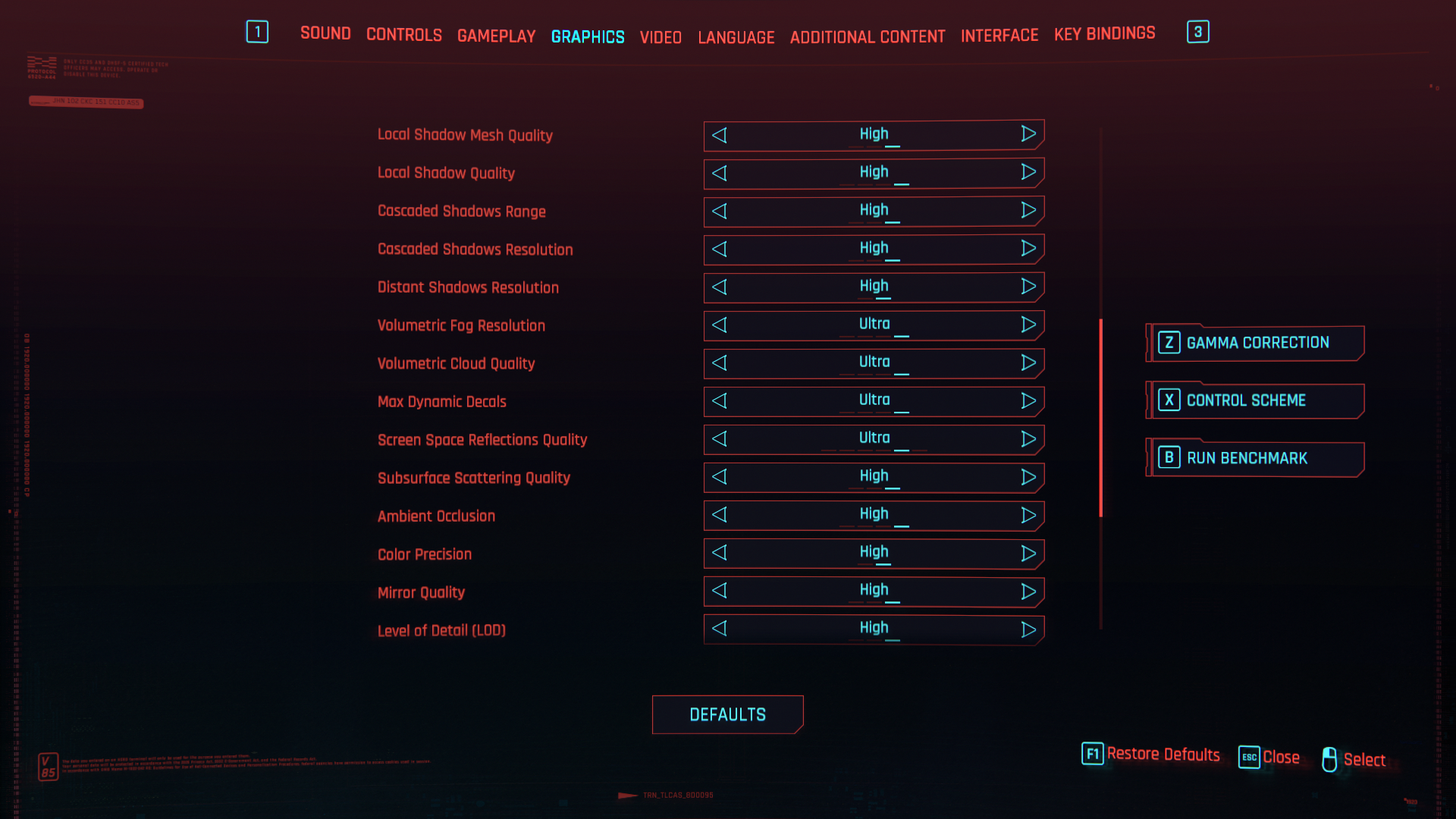
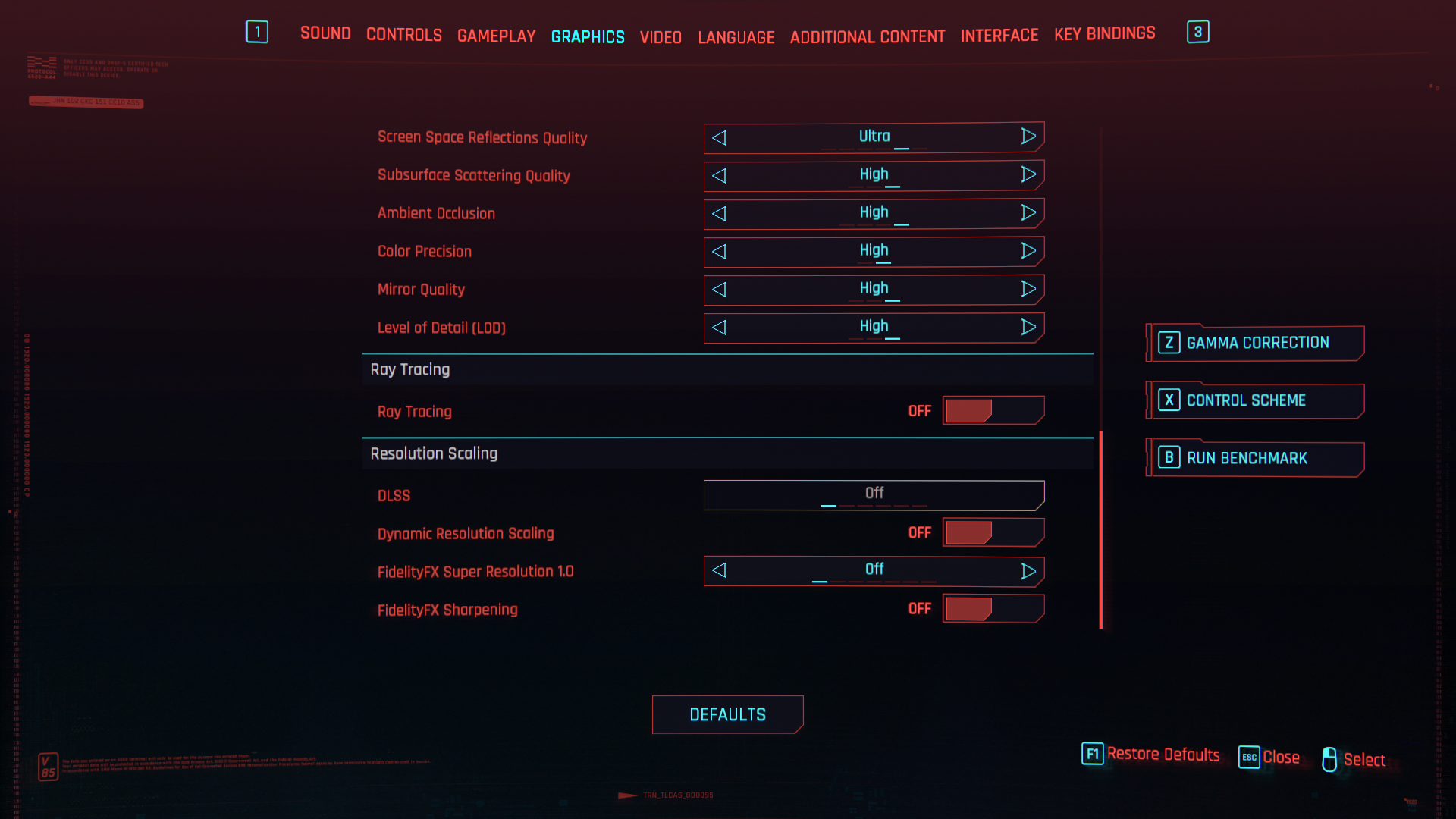
Engine: REDengine 4. We test using the Ultra preset, FSR disabled, DX12 API.
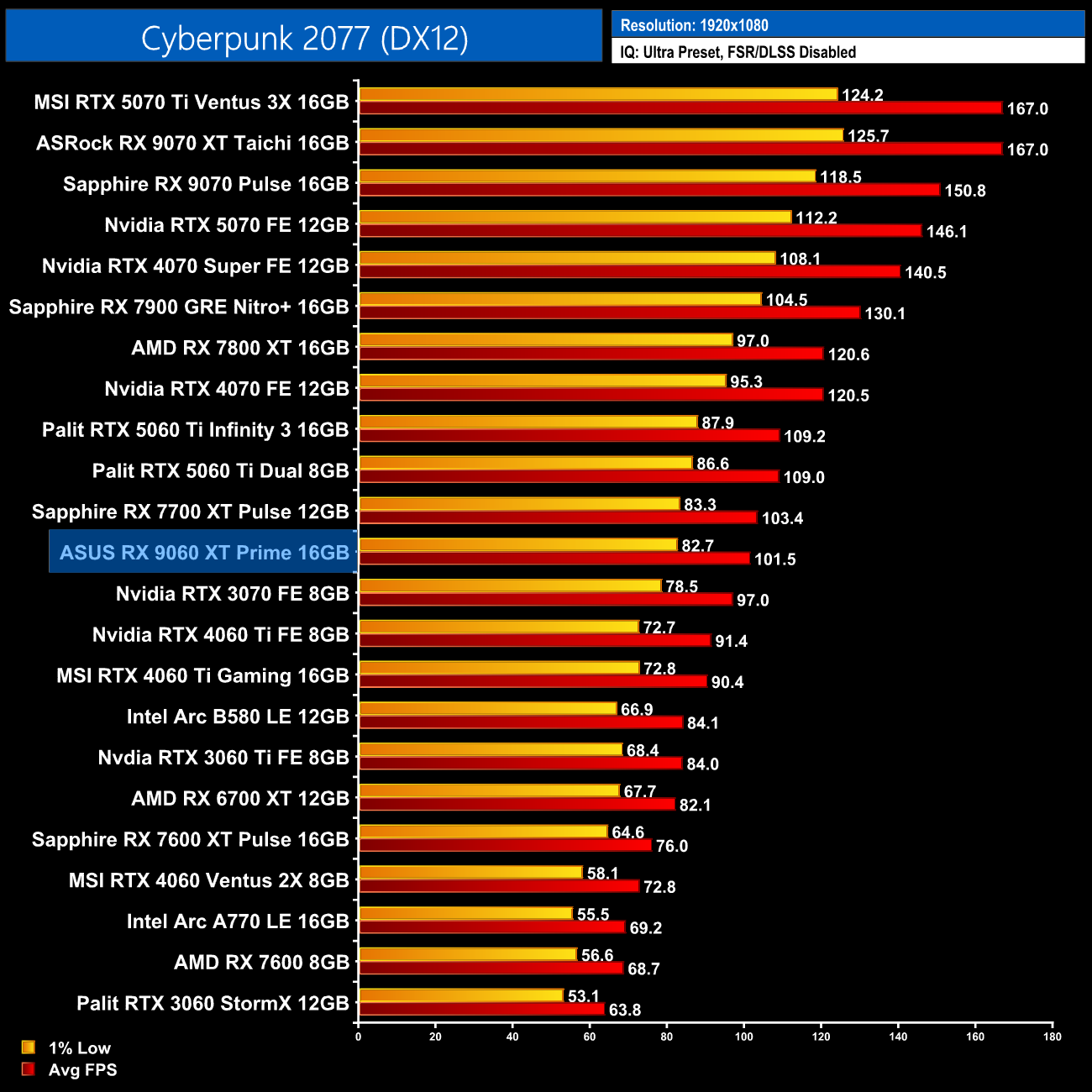

Cyberpunk 2077 is much more performant, and at 1080p Ultra we're looking at just over 100fps for the 9060 XT 16GB, again putting it on par with the 7700 XT. Versus the Nvidia competition, it's 7% slower than the two 5060 Ti models.
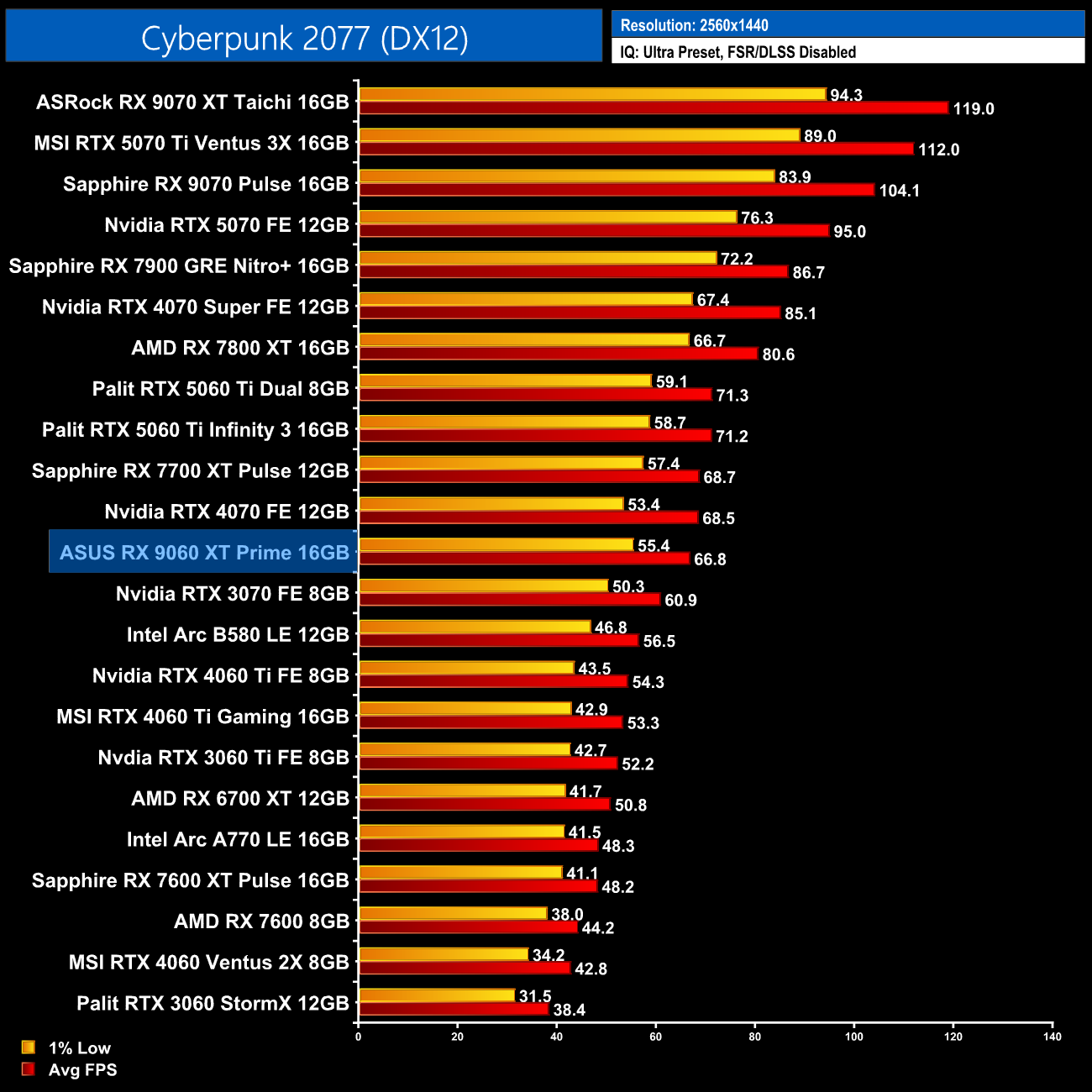
1440p is no problem either with an average of 67fps, this time making the 9060 XT 16GB 6% slower than the 5060 Ti, while it's 39% faster than its predecessor, the RX 7600 XT.
Dragon Age: The Veilguard is a 2024 action role-playing game developed by BioWare and published by Electronic Arts. It is the fourth major game in the Dragon Age franchise, and the sequel to Dragon Age: Inquisition (2014). Dragon Age: The Veilguard was released for PlayStation 5, Windows, and Xbox Series X/S on October 31, 2024.
Engine: Frostbite. We test using the Ultra preset, ray tracing disabled, DLSS/FSR disabled, DX12 API.

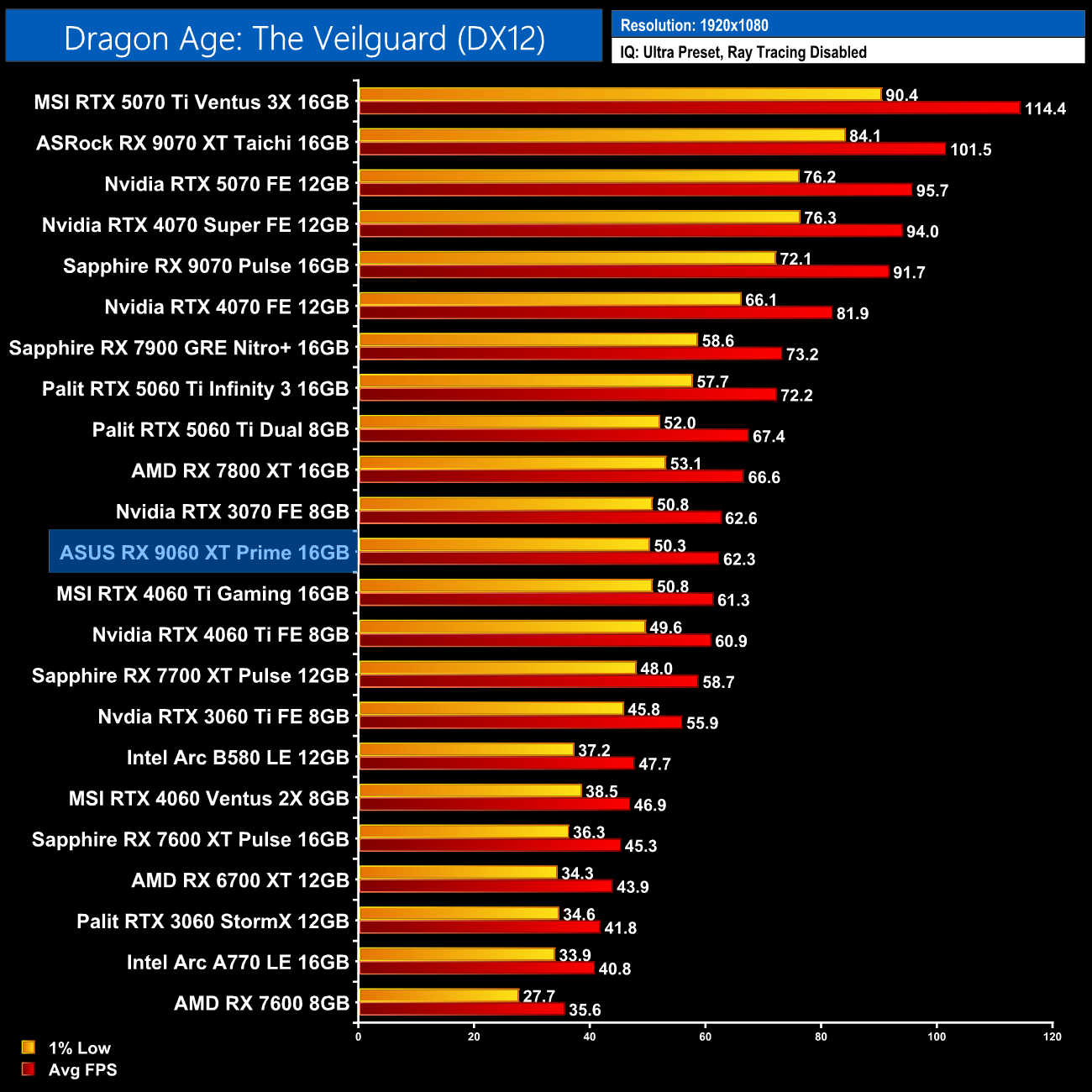
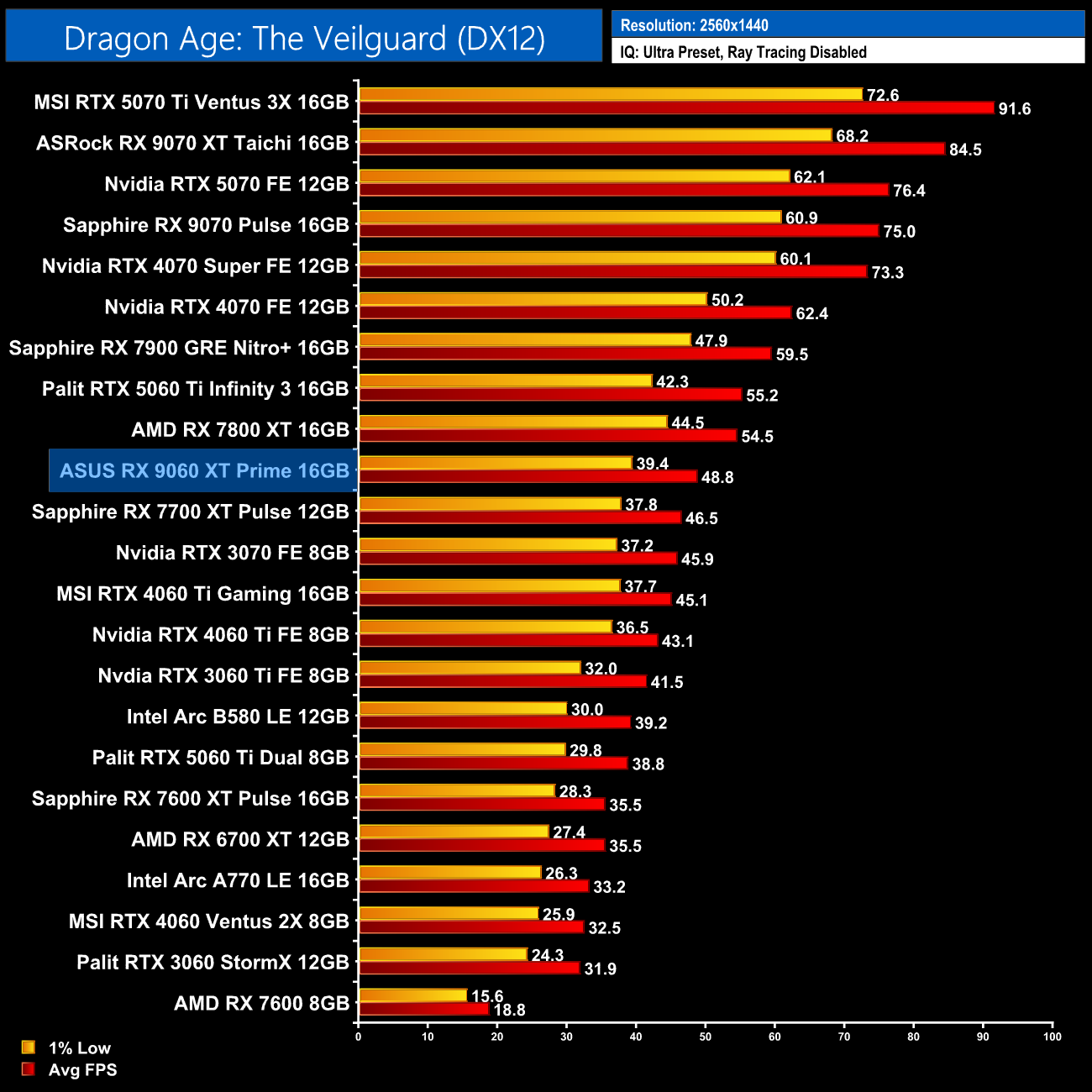
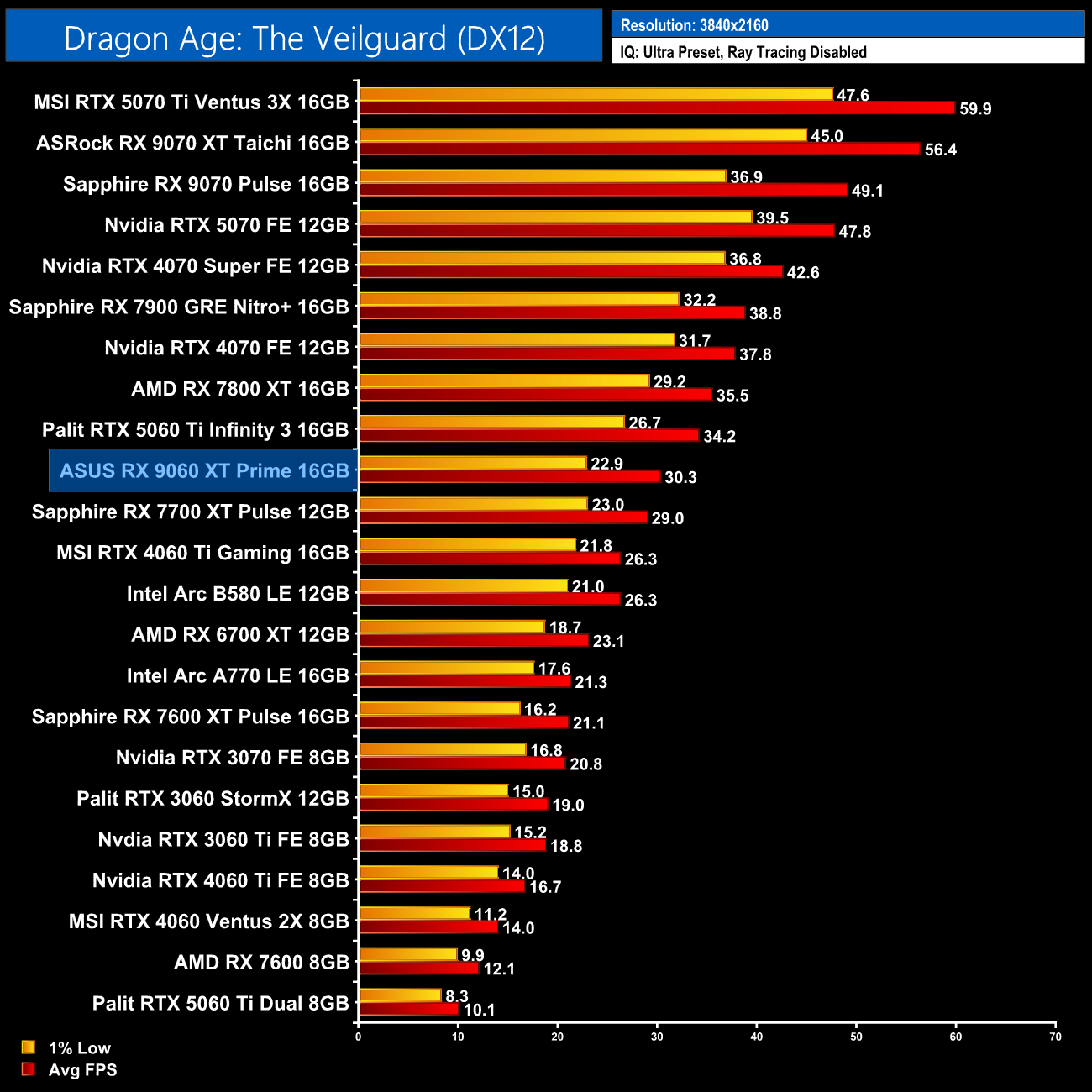
Dragon Age: The Veilguard is another game which favours Nvidia hardware, and we can see that with the 9060 XT 16GB only level with the RTX 4060 Ti, making it 14% slower than the 5060 Ti 16GB.
However, VRAM becomes a significant factor at 1440p, where the 9060 XT 16GB actually comes in 26% faster than the 5060 Ti 8GB, and that's without any ray tracing. The AMD GPU is still 12% slower than the 5060 Ti 16GB, but it does to show how important VRAM can be.
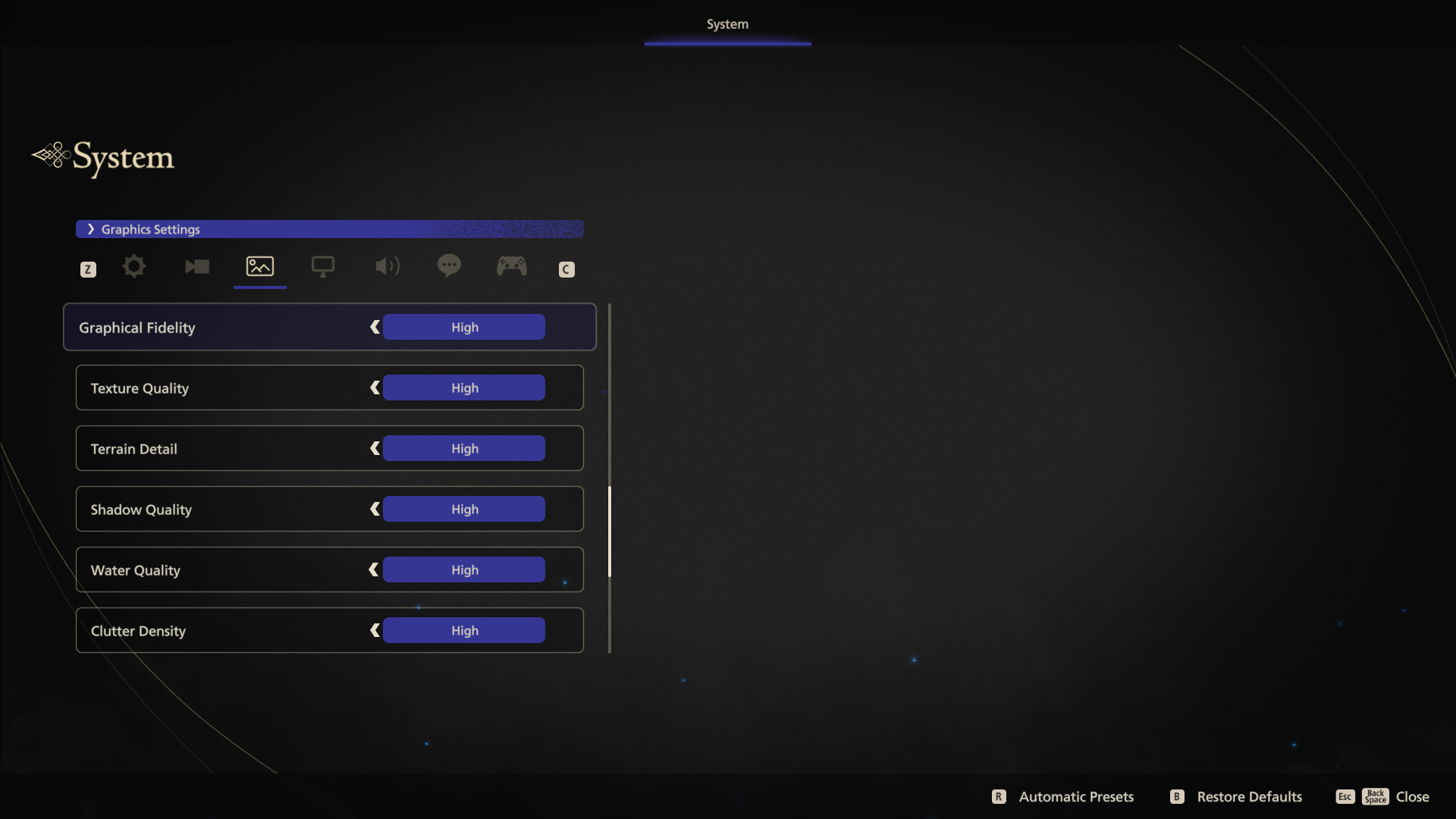
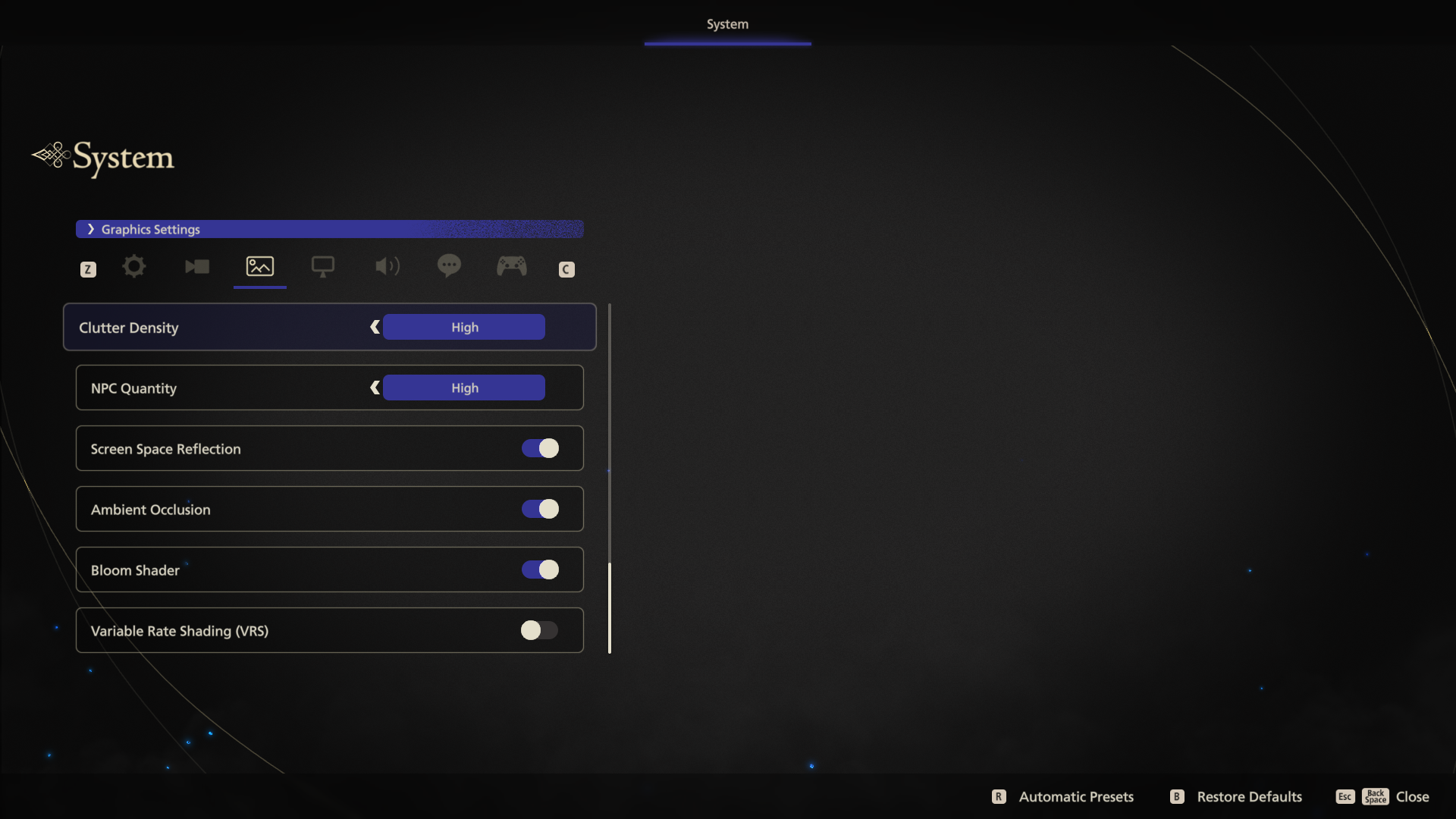
Final Fantasy XVI is a 2023 action role-playing game developed and published by Square Enix. The sixteenth main installment in the Final Fantasy series, it was released for the PlayStation 5 in June 2023, with a Windows version released in September 2024.
Engine: Square Enix in-house engine. We test using the Ultra preset, DLSS/FSR disabled, DX12 API.
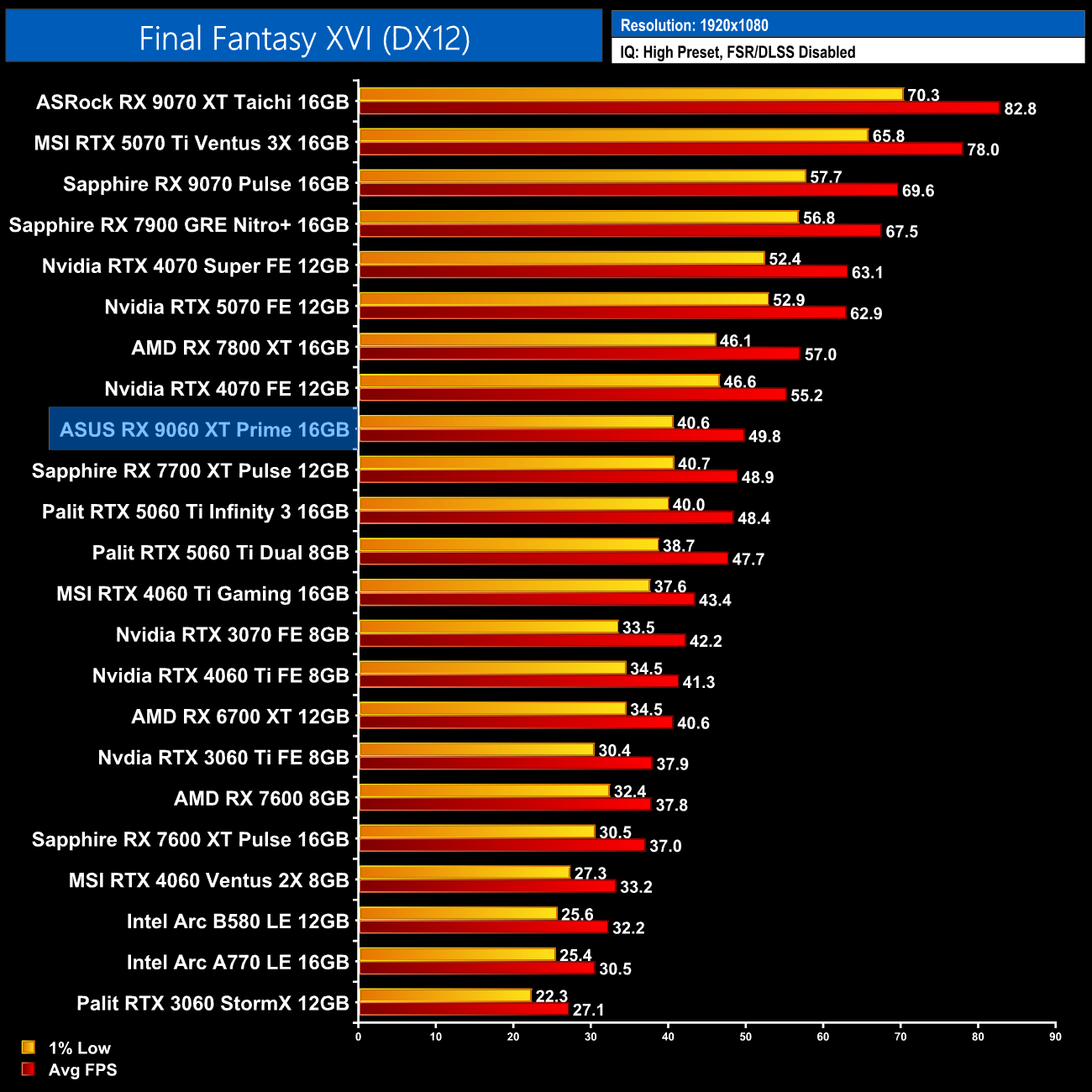
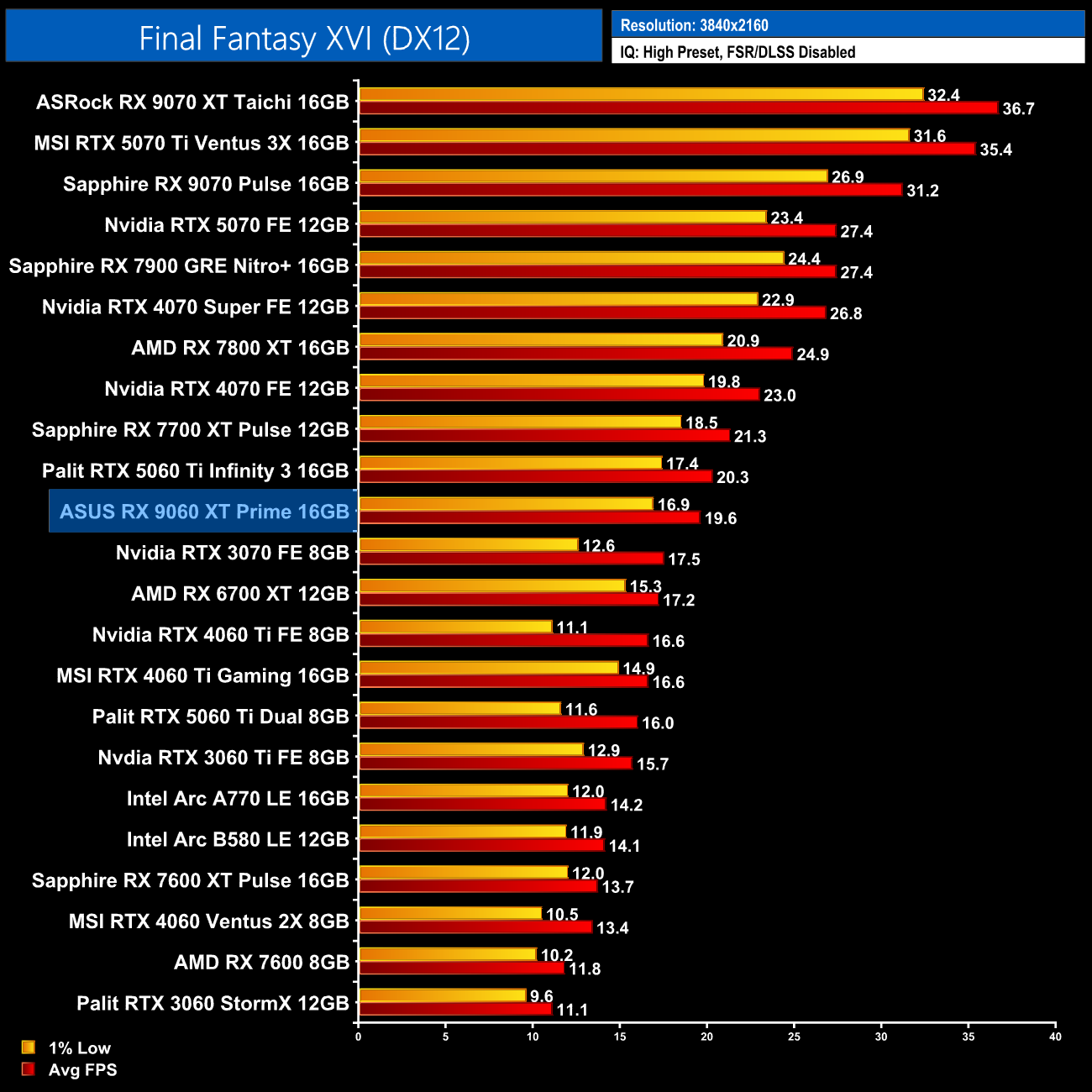
Final Fantasy XVI is next and this shows a small lead for the 9060 XT 16GB over the 5060 Ti Models, admittedly just a couple of fps, but it's a small win for Team Red at 1080p.
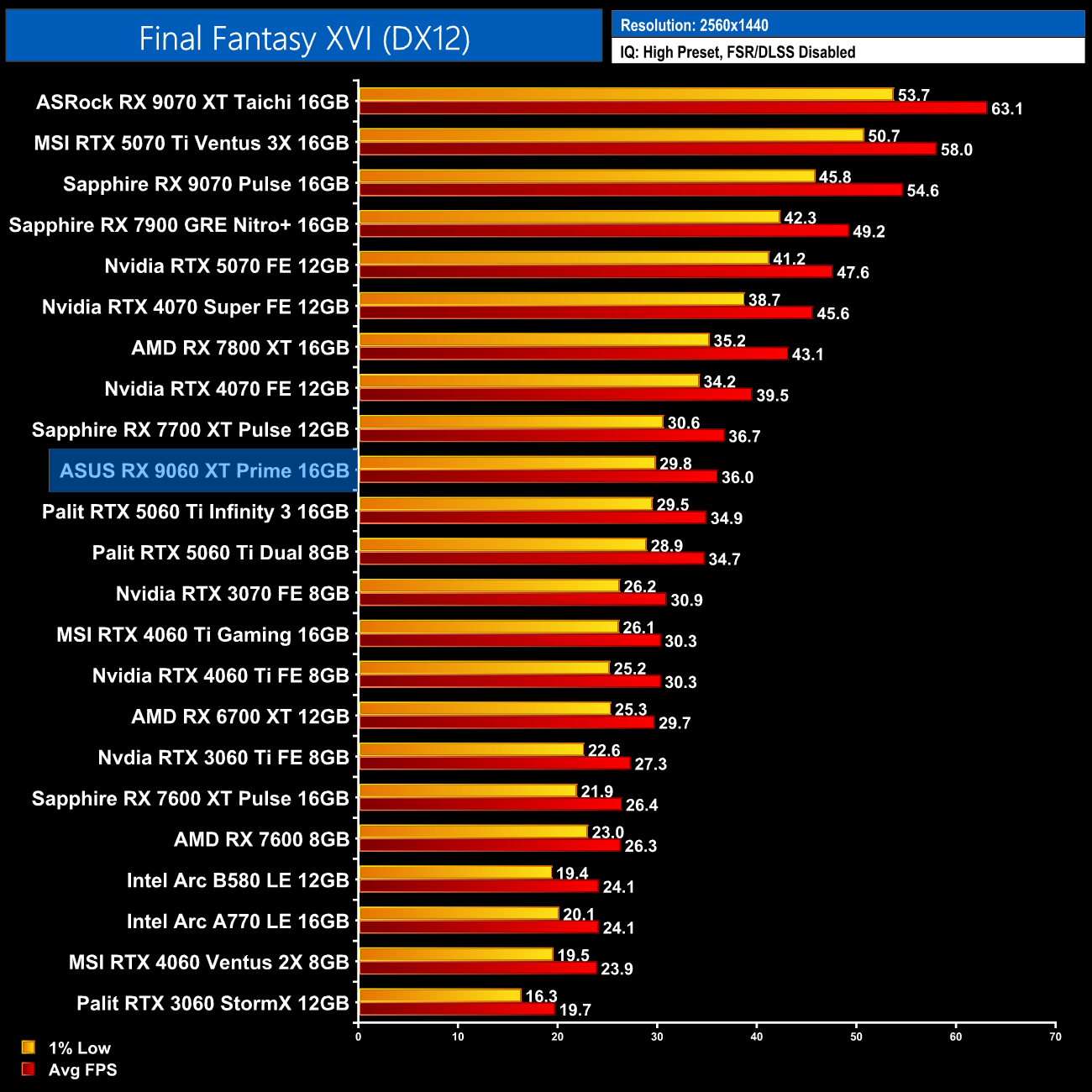
At 1440p, the 1% lows again drop below 30fps, so again it's another situation where either upscaling or lowering the image quality settings would be required.
Ghost of Tsushima is a 2020 action-adventure game developed by Sucker Punch Productions and published by Sony Interactive Entertainment. The player controls Jin Sakai, a samurai on a quest to protect Tsushima Island during the first Mongol invasion of Japan.Ghost of Tsushima was released for the PlayStation 4 in July 2020, and an expanded version for PlayStation 4 and PlayStation 5, subtitled Director's Cut and featuring the Iki Island expansion, was released in August 2021. A Windows version of Director's Cut, developed by Nixxes Software, was released in May 2024. (Wikipedia).
Engine: Sucker Punch in-house engine. We test using the Very High preset, DX12 API.
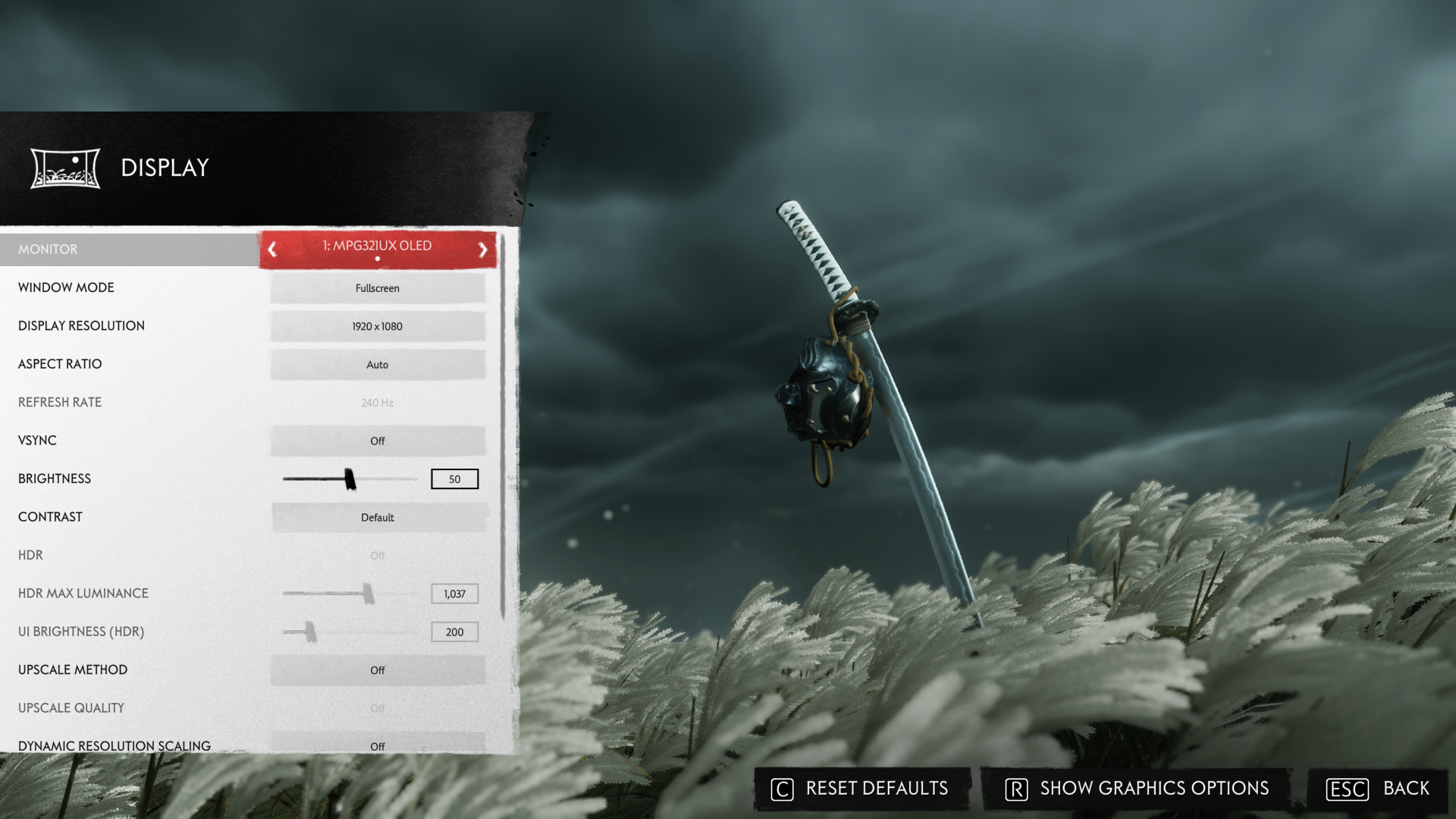
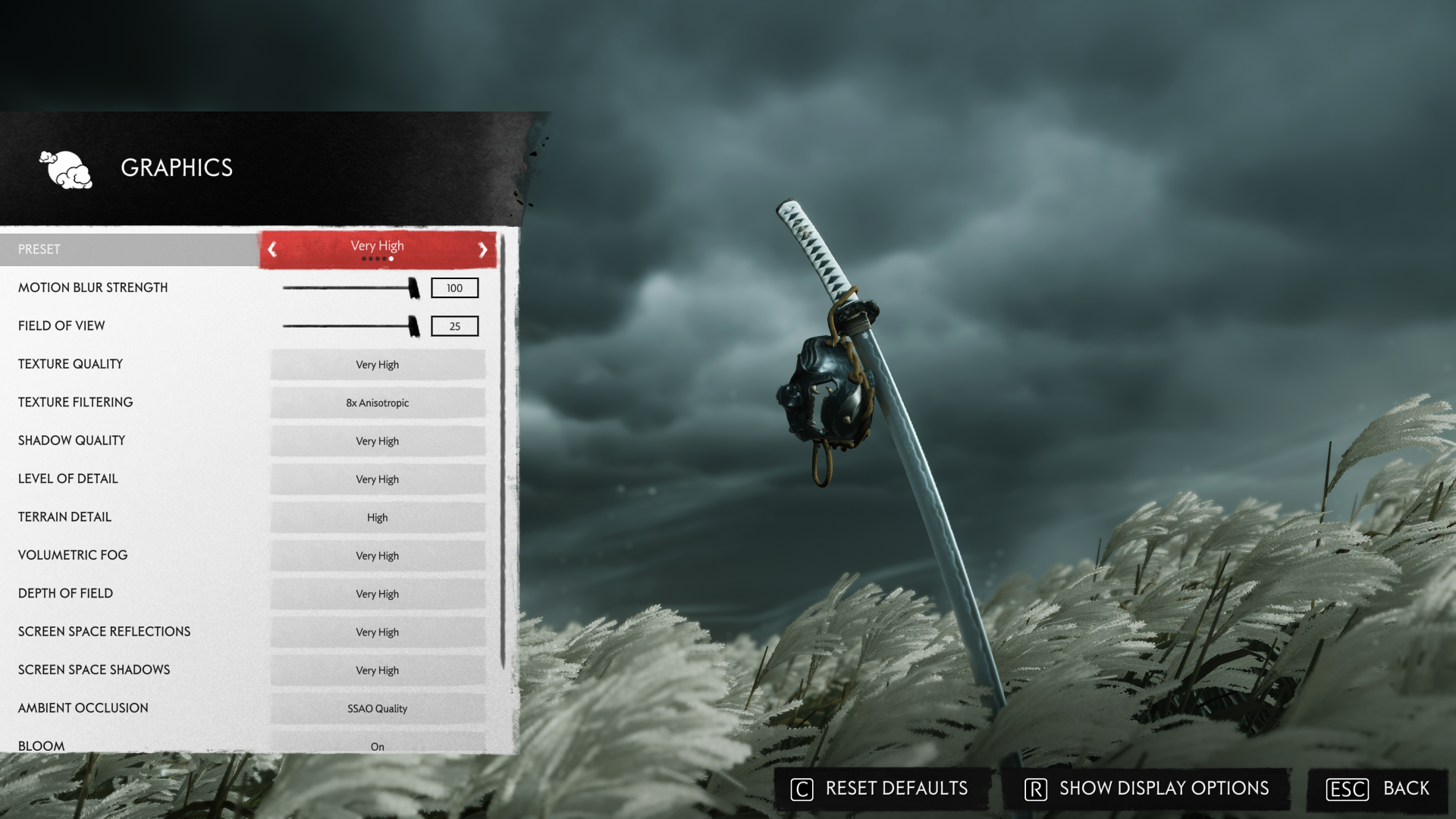
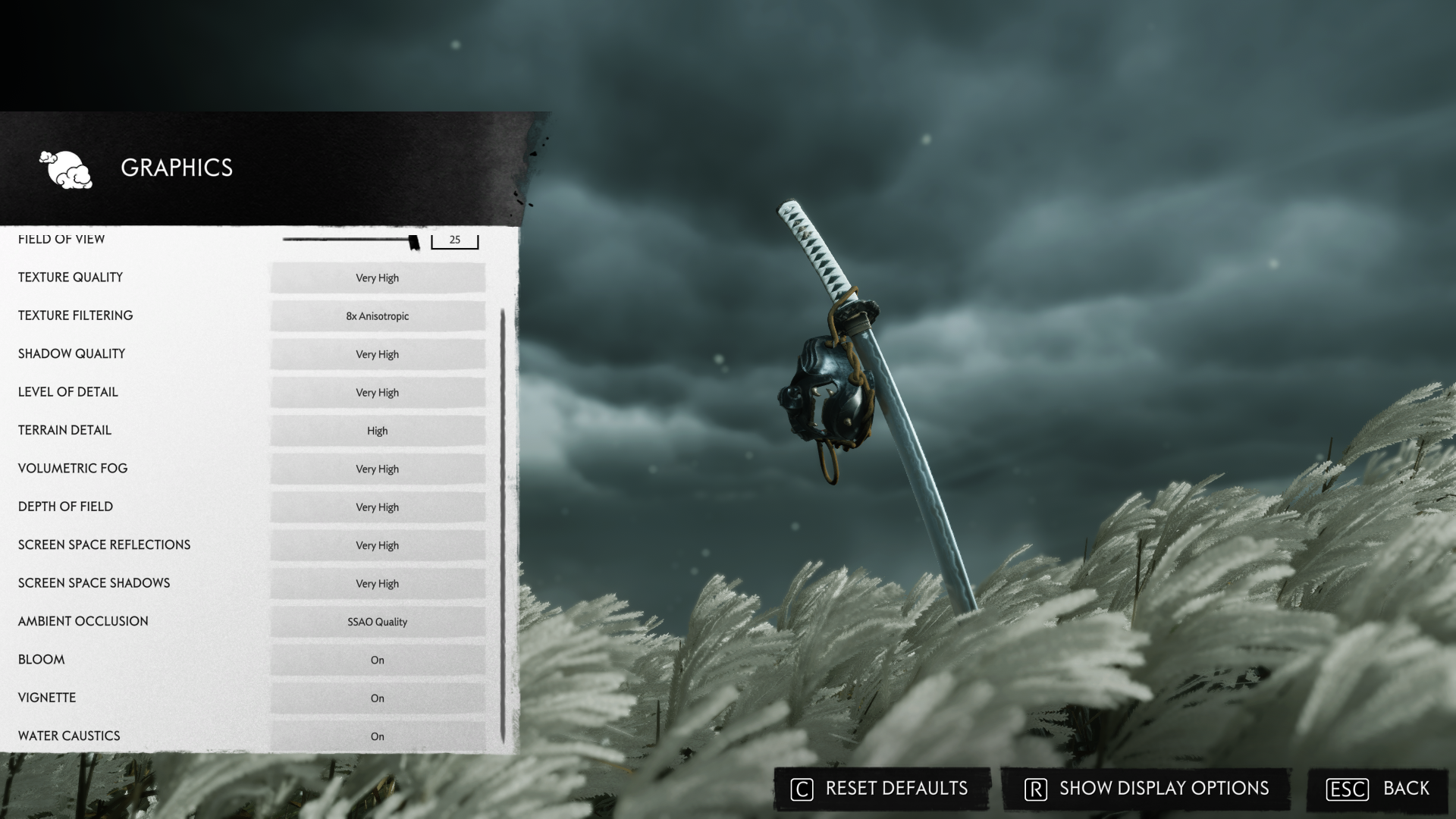
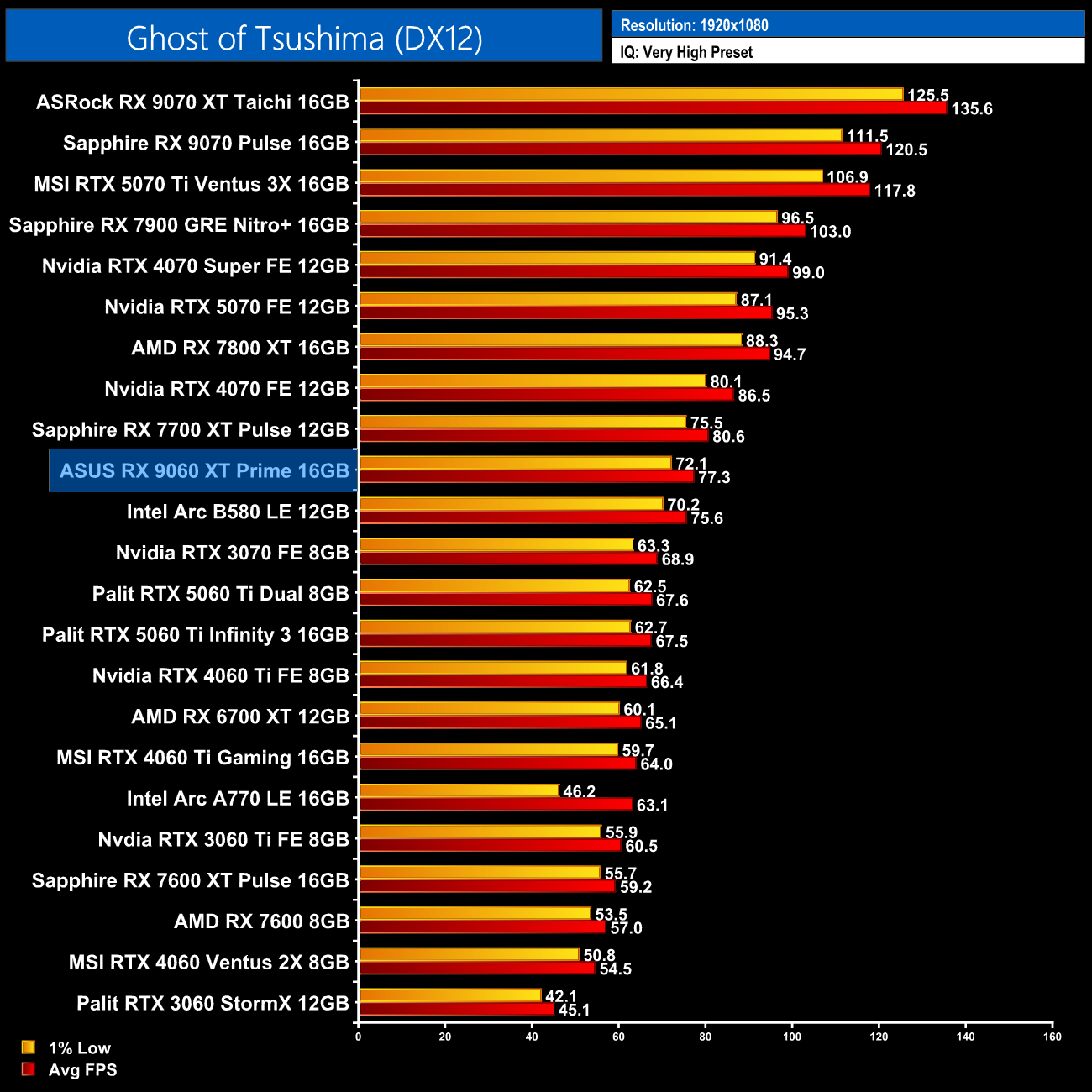
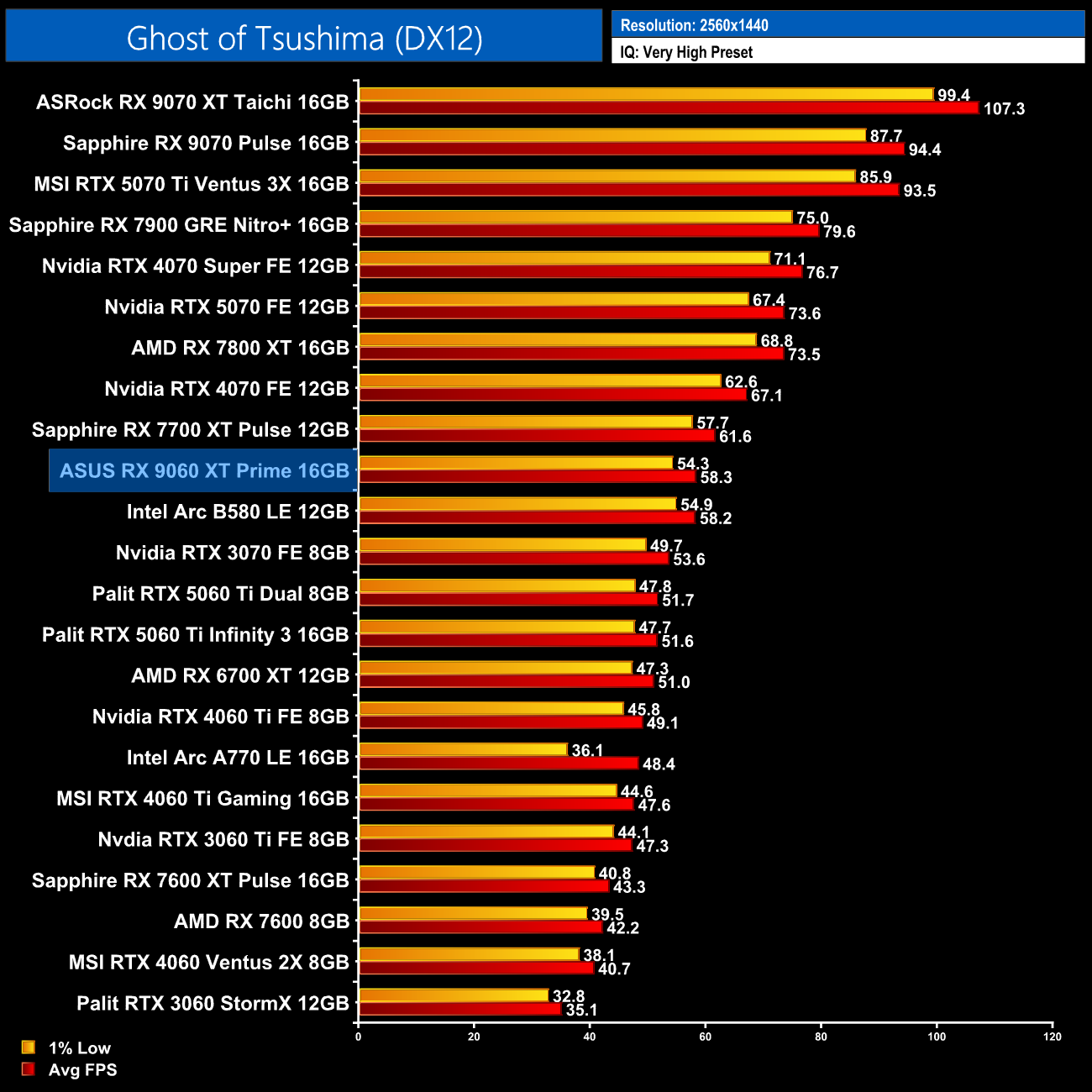
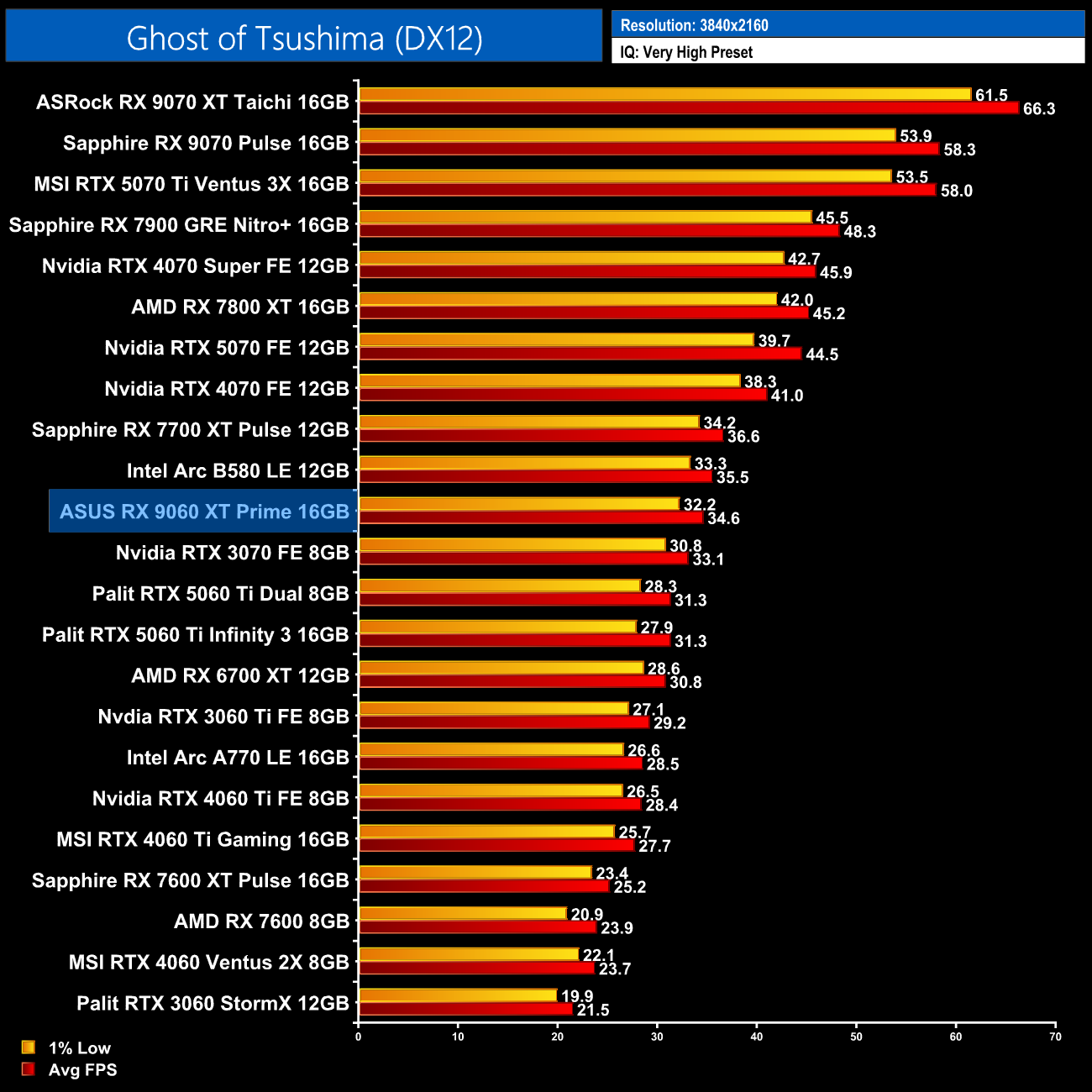
Ghost of Tsushima continues to be a strong title for AMD GPUs – or more accurately, it's a nightmare game for Nvidia hardware for some reason. The 9060 XT 16GB is 14% faster than both 5060 Ti models at 1080p for instance, hitting 77fps on average.
1440p shows a similar trend, although shoutout to the Intel B580 for also hugely over-performing in this game!
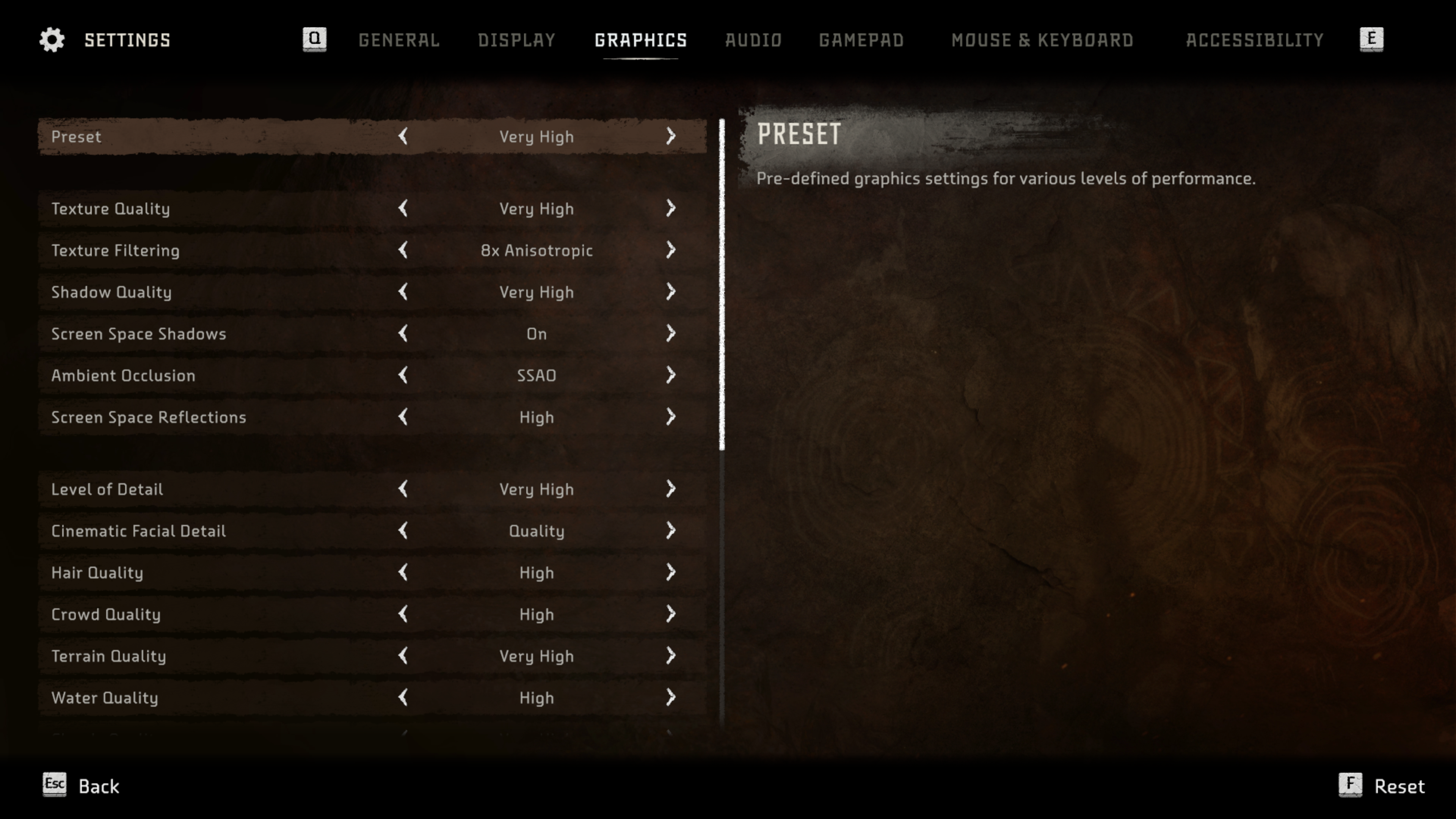
Horizon Forbidden West is a 2022 action role-playing game developed by Guerrilla Games and published by Sony Interactive Entertainment. The sequel to Horizon Zero Dawn (2017), the game is set in a post-apocalyptic version of the Western United States, recovering from the aftermath of an extinction event caused by a rogue robot swarm. The game and the Burning Shores expansion were collected together, re-released as Horizon Forbidden West Complete Edition for PlayStation 5 in October 2023, and ported to Windows by Nixxes Software in March 2024. A sequel is in development. (Wikipedia).
Engine: Decima. We test using the Very High preset, DX12 API.
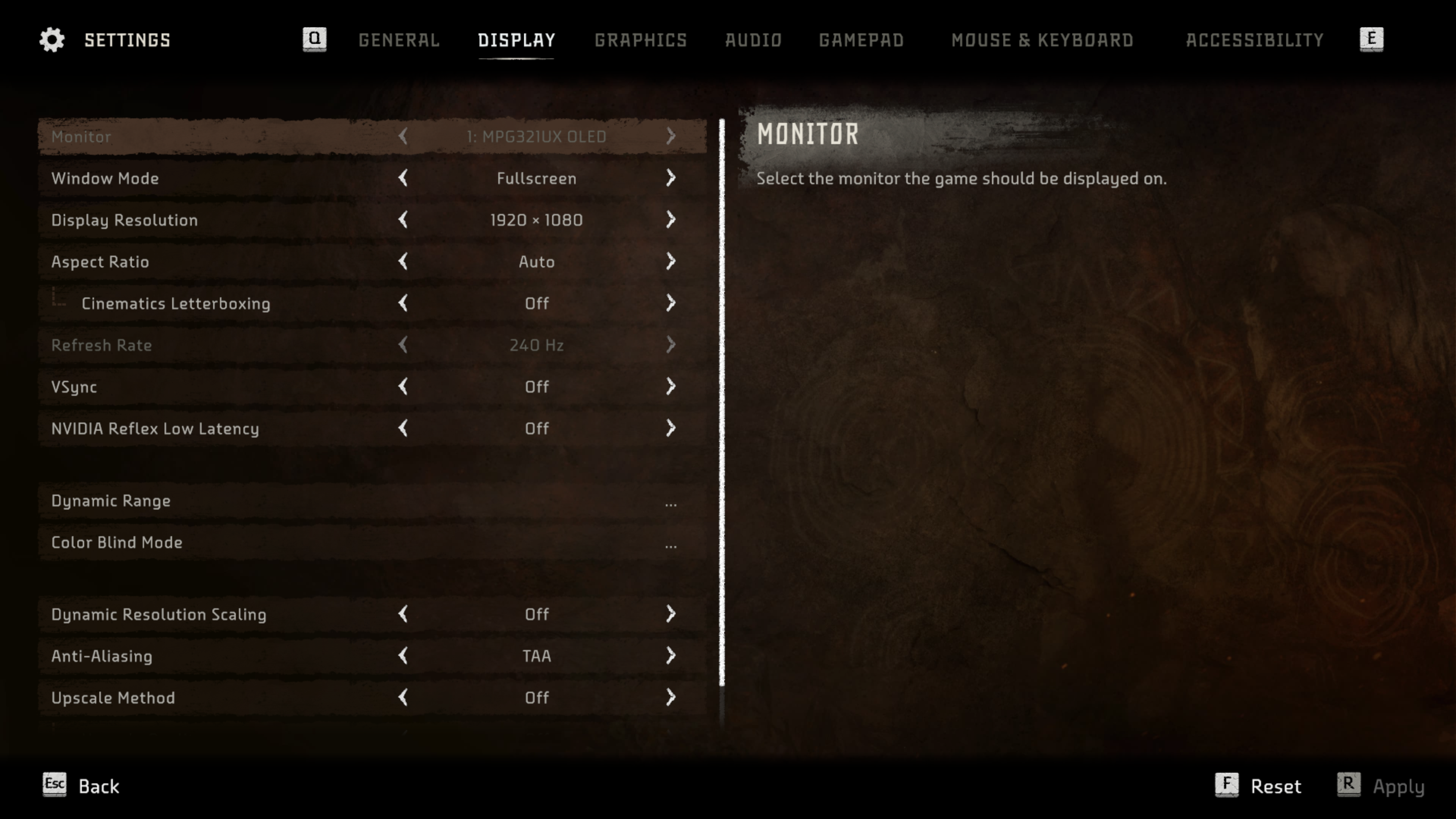
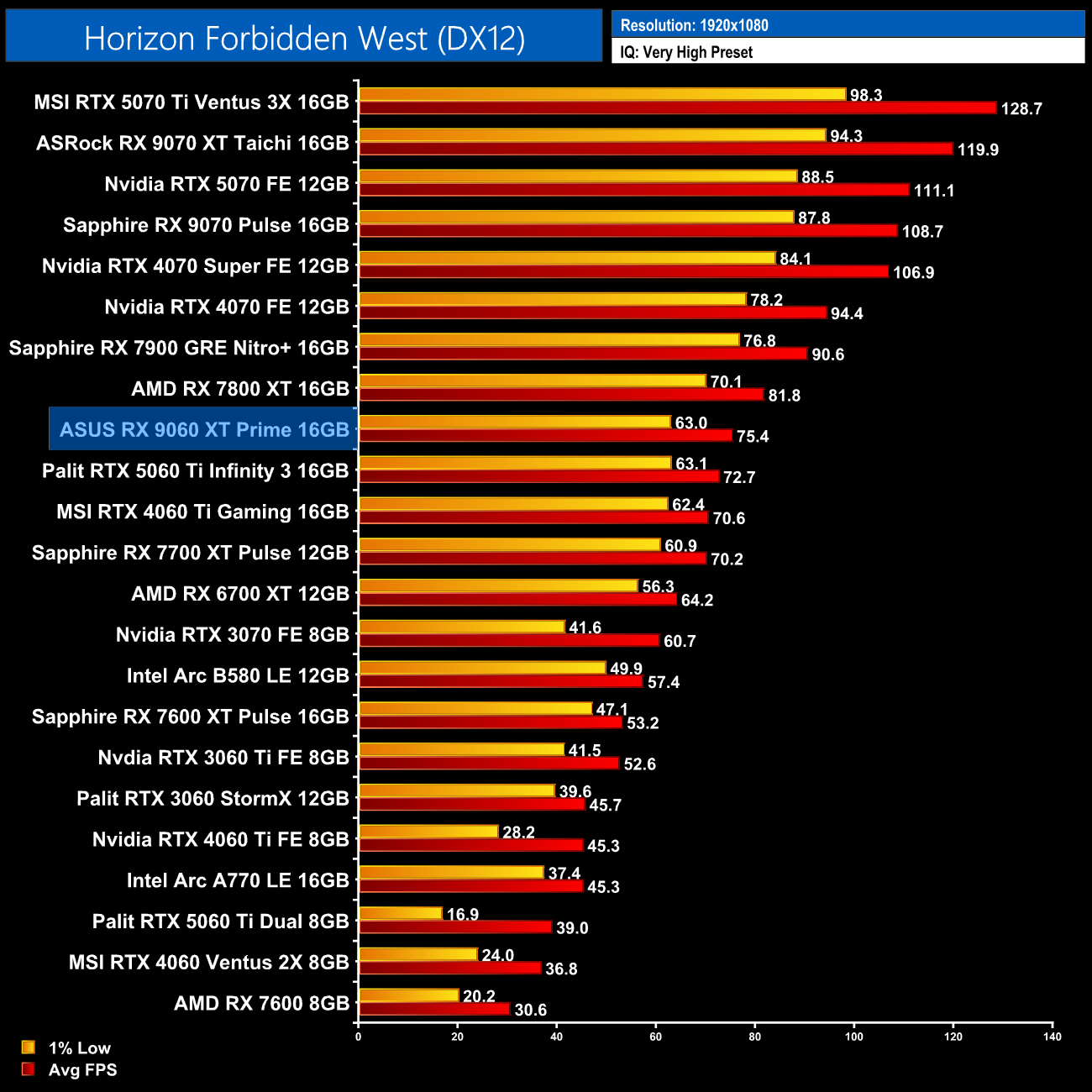
Horizon Forbidden West is another game that perfectly encapsulates the issues with 8GB GPUs – even at 1080p, with ray tracing not even supported in this game, 8GB cards can't play smoothly at Very High settings, with the 9060 XT 16GB about twice as fast as the 5060 Ti 8GB, but on par with the 16GB model.
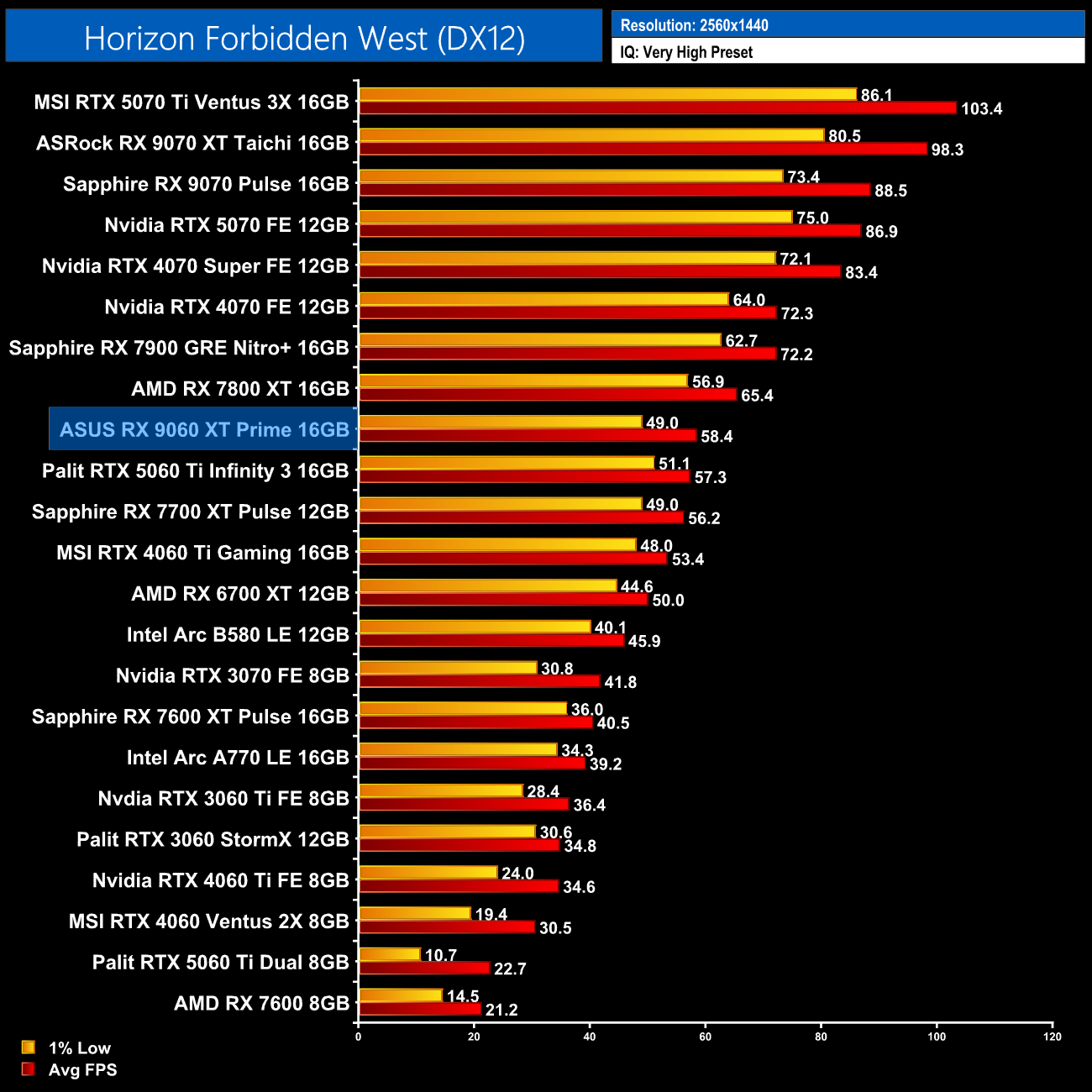
The same goes for 1440p, where the 9060 XT 16GB still delivers very strong performance, averaging just below 60fps, where it's again level with the 5060 Ti 16GB.
Kingdom Come: Deliverance II is a 2025 action role-playing game developed by Warhorse Studios and published by Deep Silver. The sequel to Kingdom Come: Deliverance (2018), the game was released for PlayStation 5, Windows, and Xbox Series X/S on 4 February 2025.
Engine: CryEngine. We test using the Ultra preset, DX12 API.
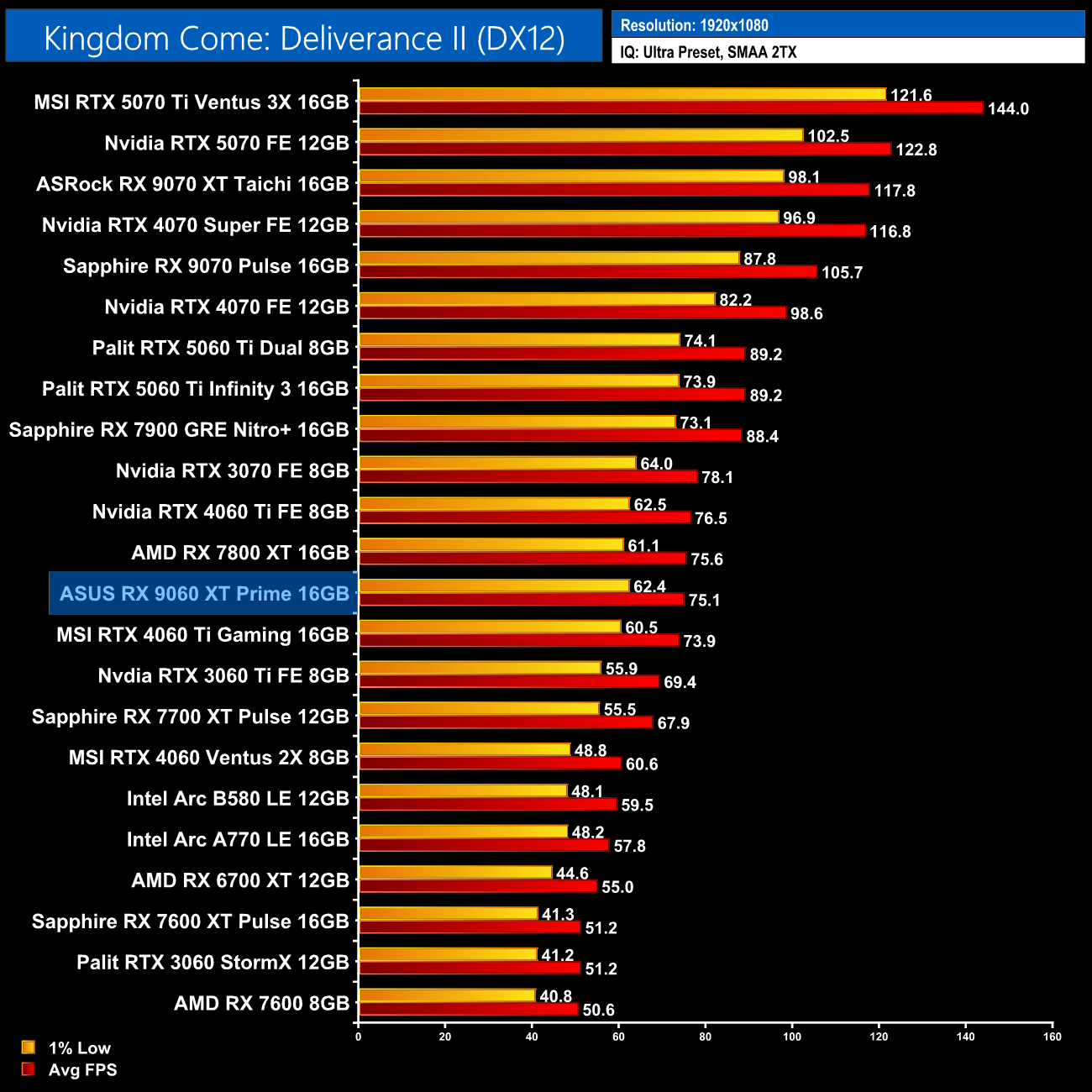
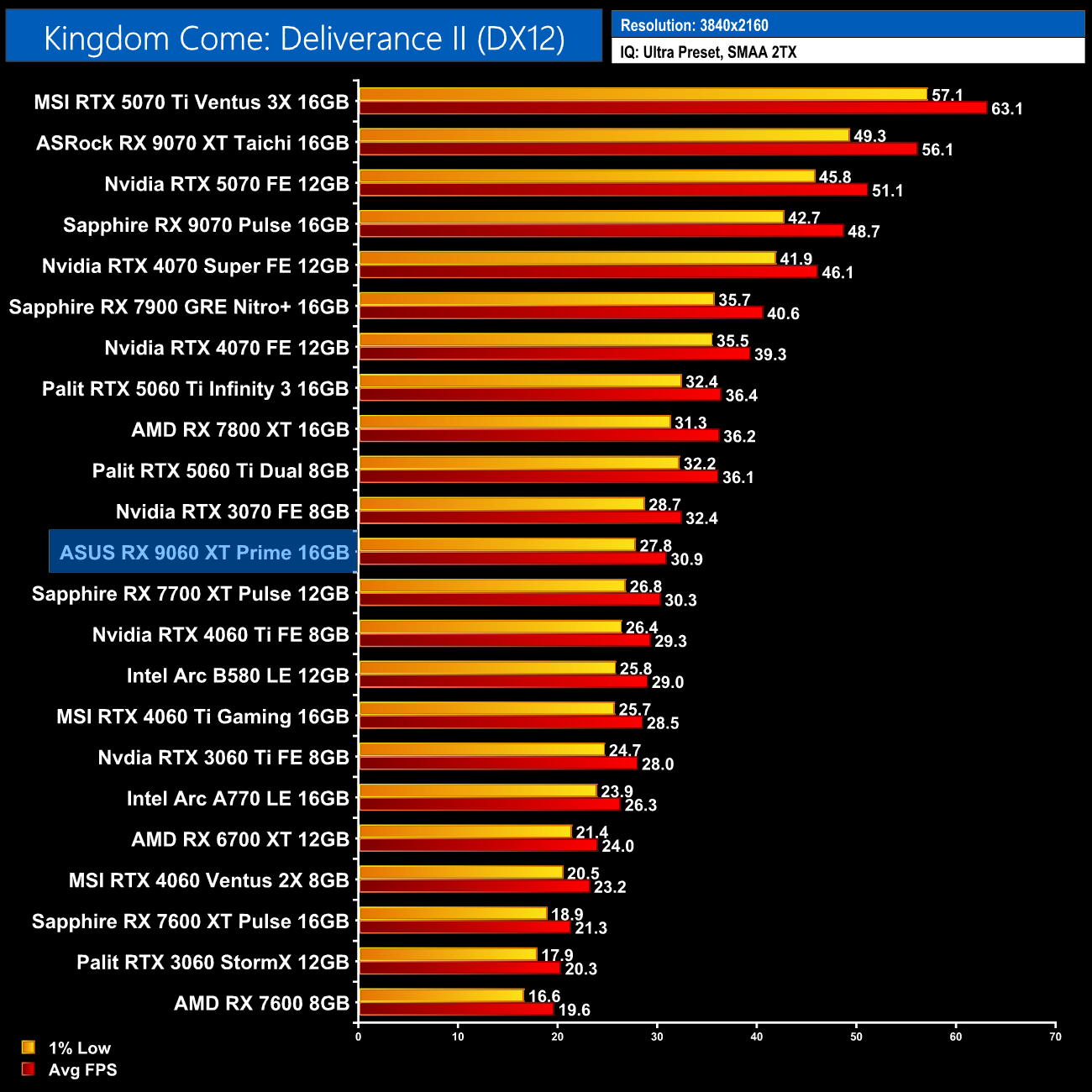
There's no such VRAM constraint in Kingdom Come: Deliverance II, where AMD GPUs continue to lag behind their Nvidia rivals, given the 9060 XT 16GB is 16% slower than both 5060 Ti models. It does, however, show strong gains for RDNA 4 over RDNA 3, given the GPU is on par with the RX 7800 XT in this title.
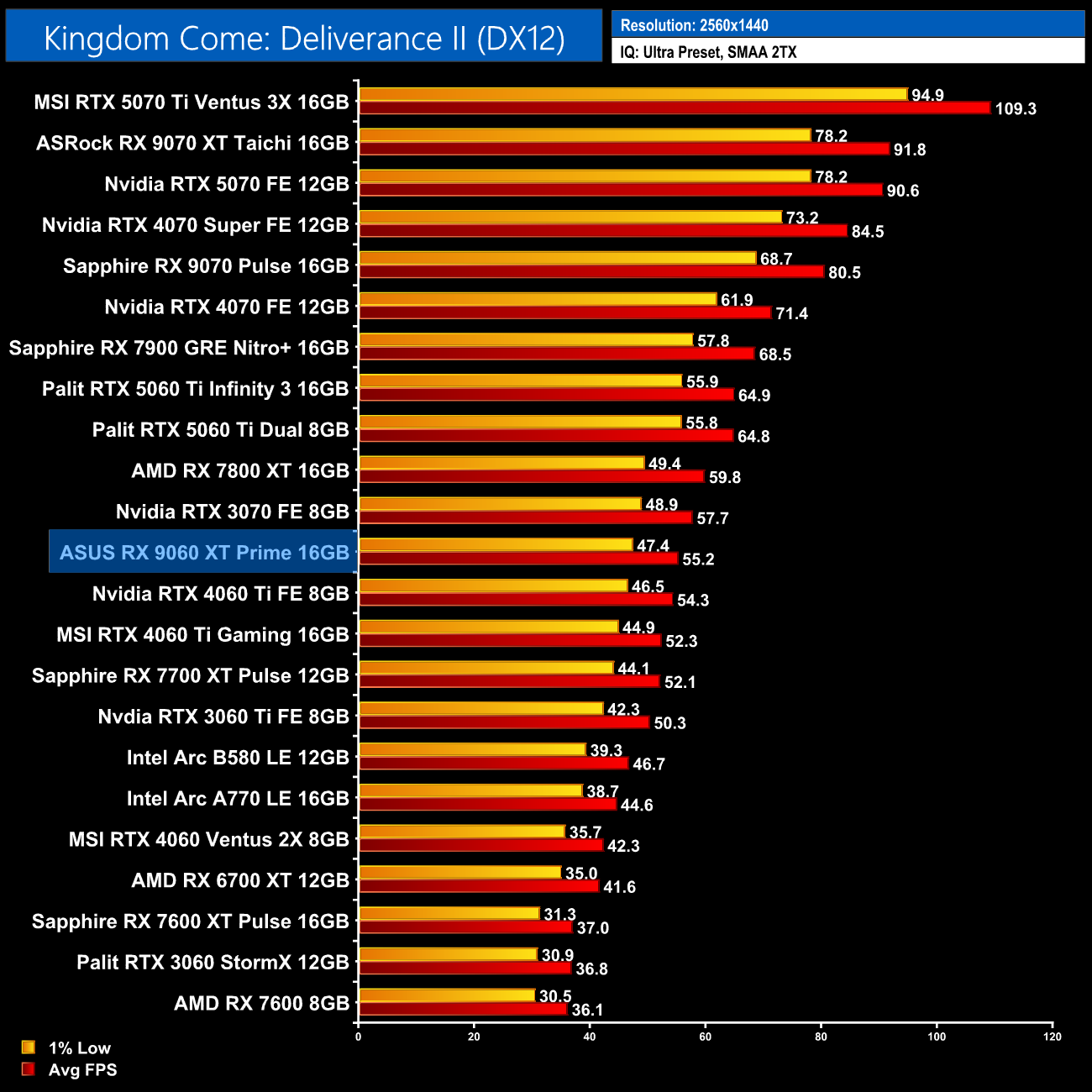
The 9060 XT 16GB does fall away slightly at 1440p relative to the 7800 XT, but it's still very playable in this well-optimised game, averaging 55fps with tight 1% lows.
A Plague Tale: Requiem is an action-adventure stealth game developed by Asobo Studio and published by Focus Entertainment. It is the sequel to A Plague Tale: Innocence (2019), and follows siblings Amicia and Hugo de Rune who must look for a cure to Hugo's blood disease in Southern France while fleeing from soldiers of the Inquisition and hordes of rats that are spreading the black plague. The game was released for Nintendo Switch, PlayStation 5, Windows, and Xbox Series X/S on 18 October 2022. (Wikipedia).
Engine: Asobo Studio in-house engine. We test using the Ultra preset, DX12 API.
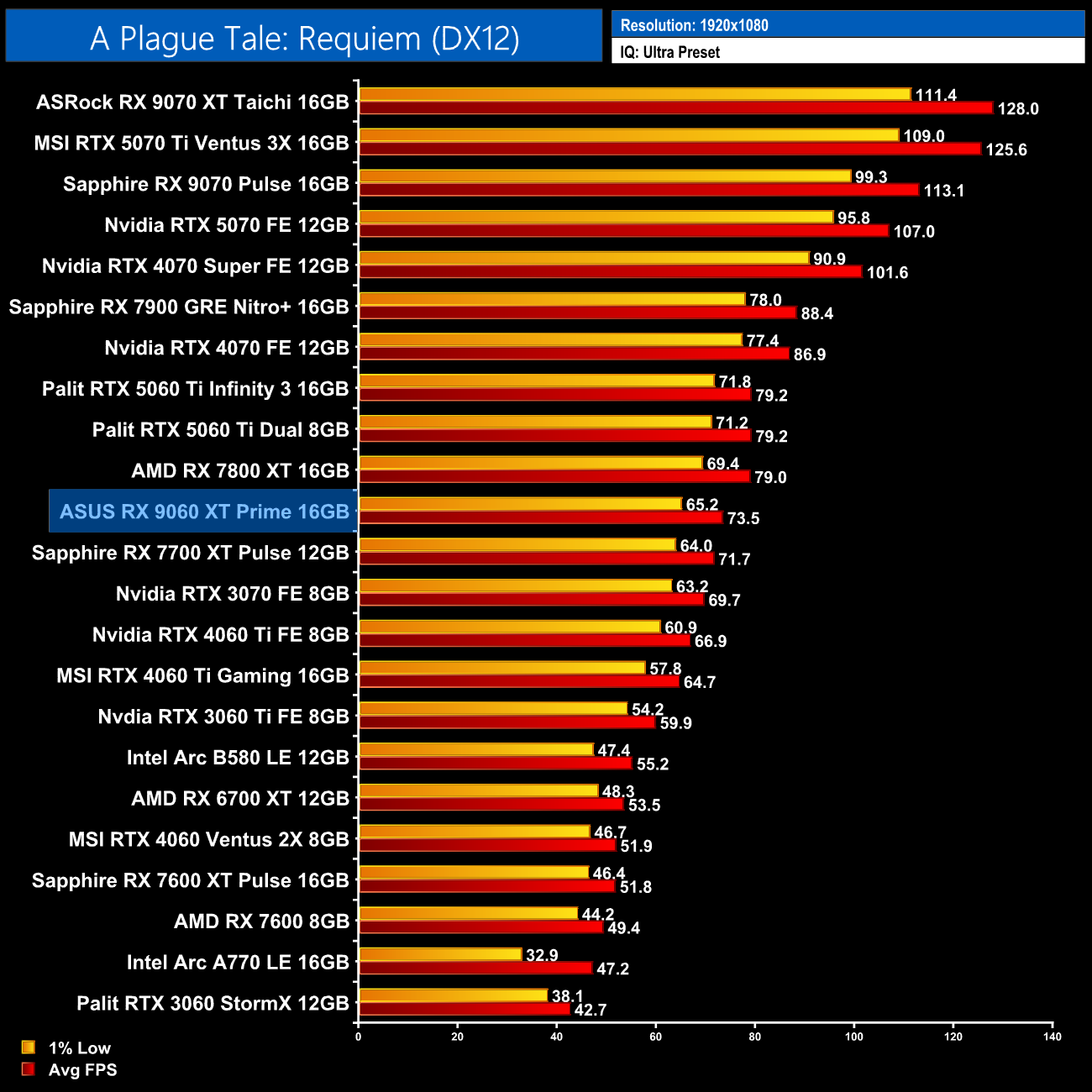
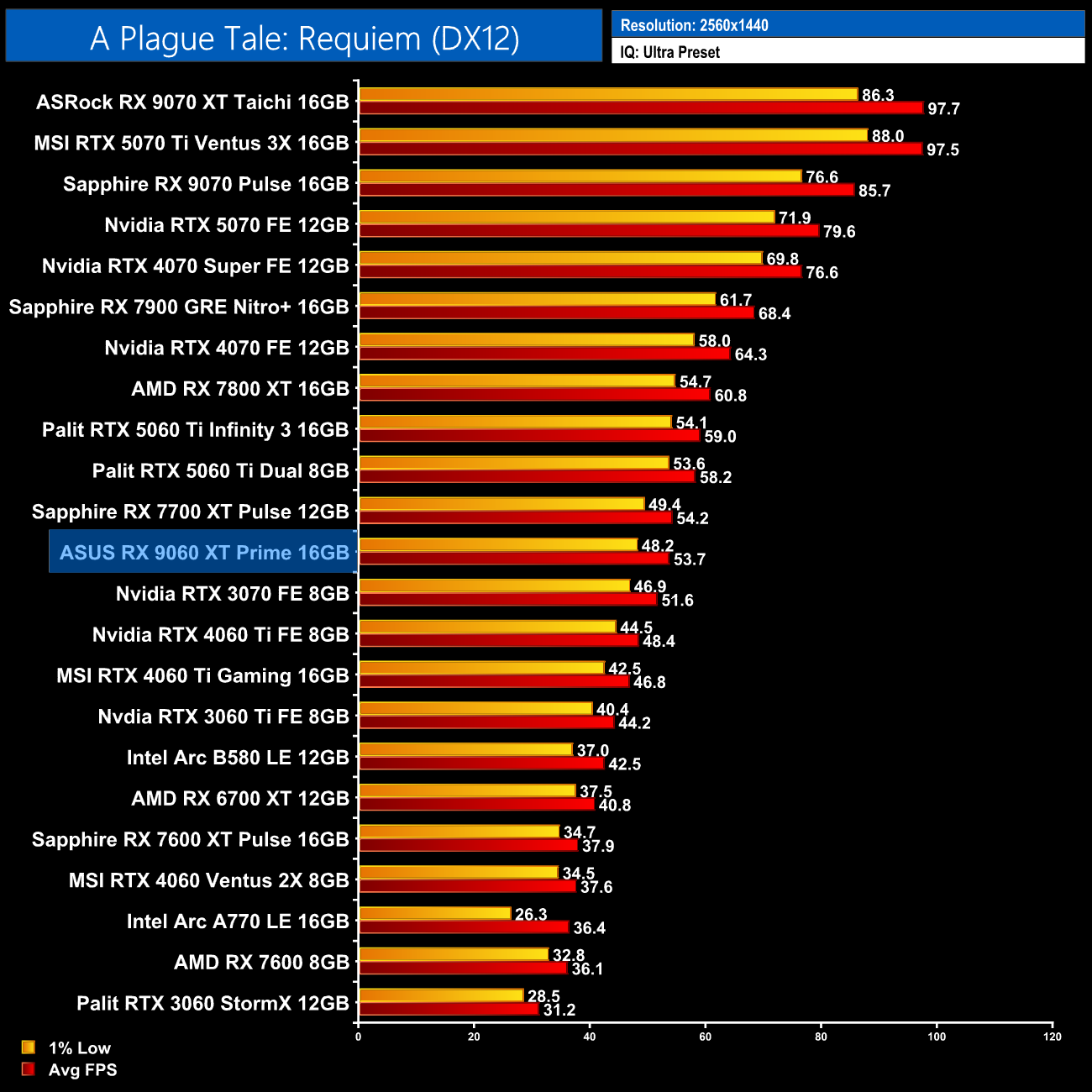
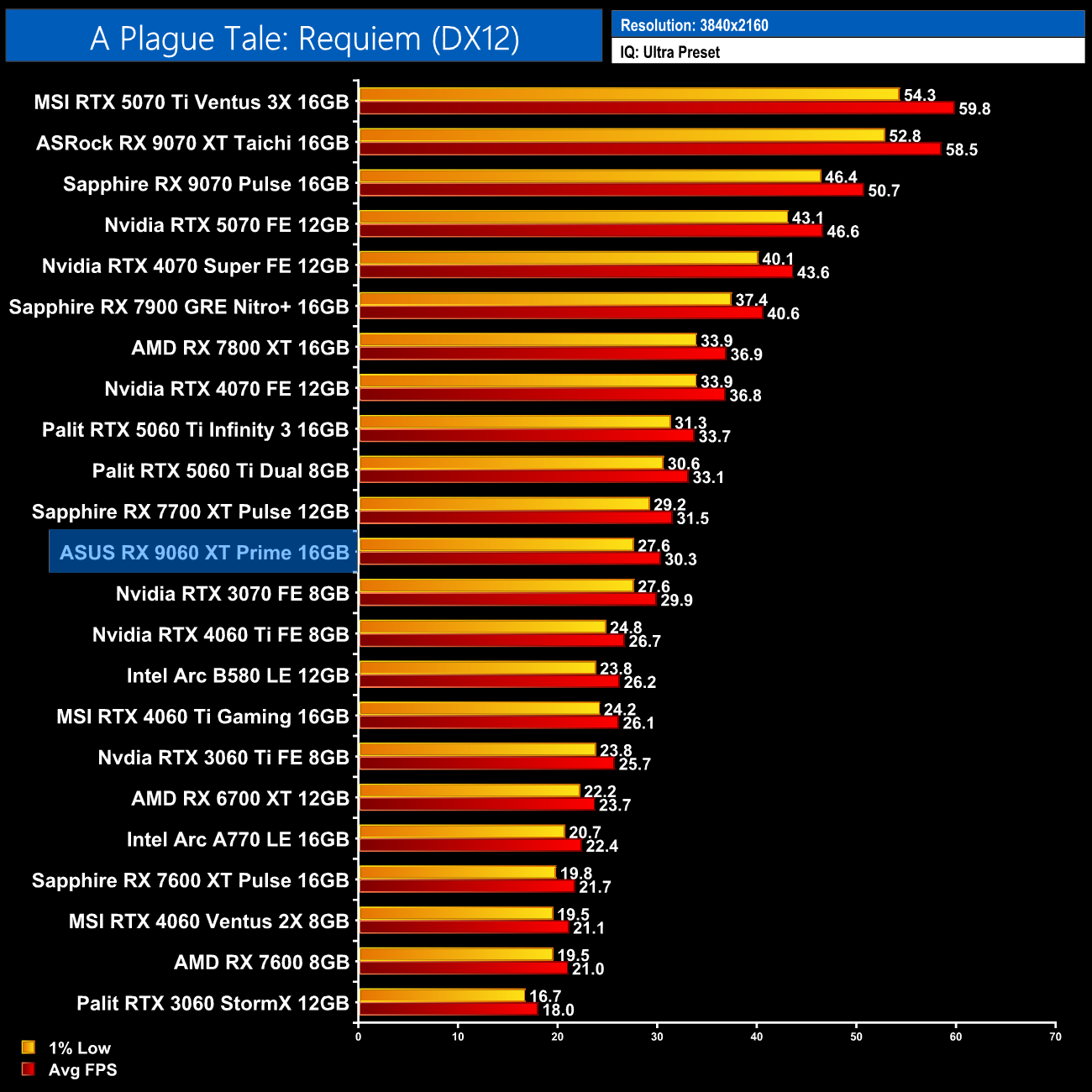
A Plague: Tale Requiem is next and we get more decent performance at 1080p from the 9060 XT 16GB, averaging 74fps and making it 7% slower than both 5060 Ti models.
1440p is similar, where it is again neck-and-neck with the 7700 XT, though this time it comes in 9% slower than the 5060 Ti 16GB.
Ratchet & Clank: Rift Apart is a 2021 third-person shooter platform game developed by Insomniac Games and published by Sony Interactive Entertainment for the PlayStation 5. It is the ninth main installment in the Ratchet & Clank series and a sequel to Ratchet & Clank: Into the Nexus. Rift Apart was announced in June 2020 and was released on June 11, 2021. A Windows port by Nixxes Software was released on July 26, 2023. (Wikipedia).
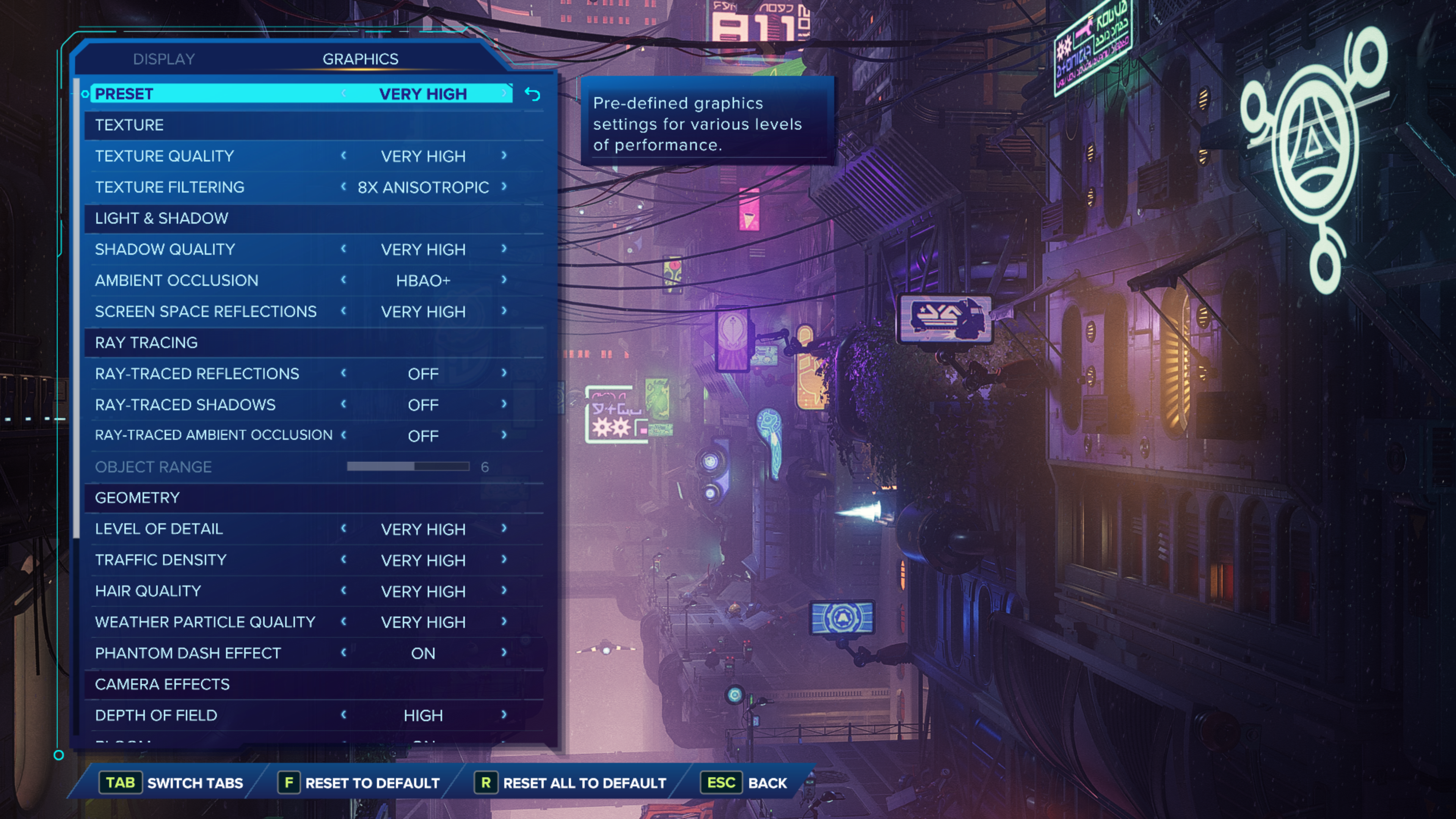
Engine: Insomniac Games in-house engine. We test using the Very High preset, DX12 API.
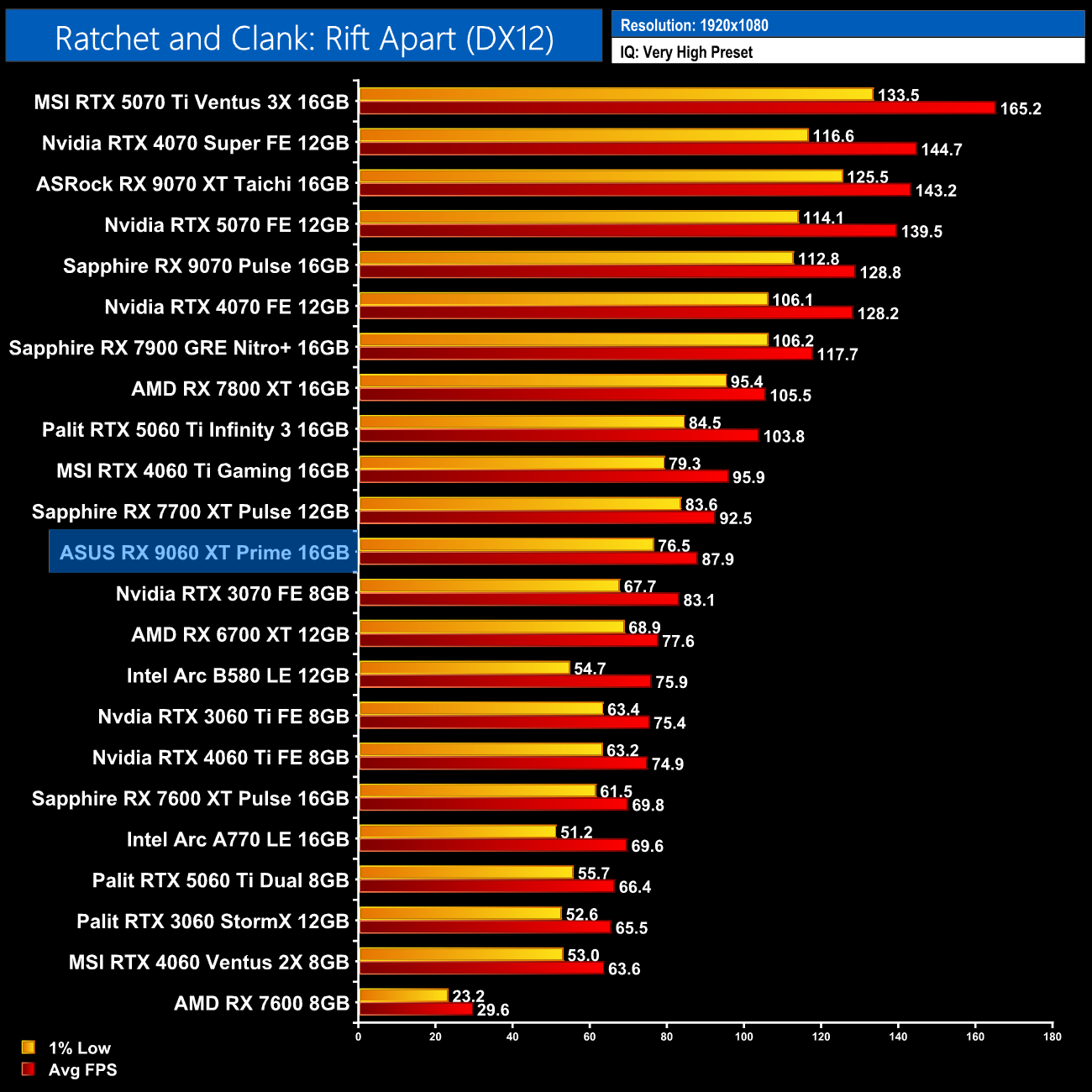
Ratchet and Clank is another game where AMD GPUs do struggle, this time showing the 9060 XT 16GB lagging behind the 5060 Ti 16GB by 15%. However, it's also a game where there's benefit to more than 8GB of VRAM, even at 1080p without ray tracing, given the AMD GPU is no less than 32% faster than the 5060 Ti 8GB.
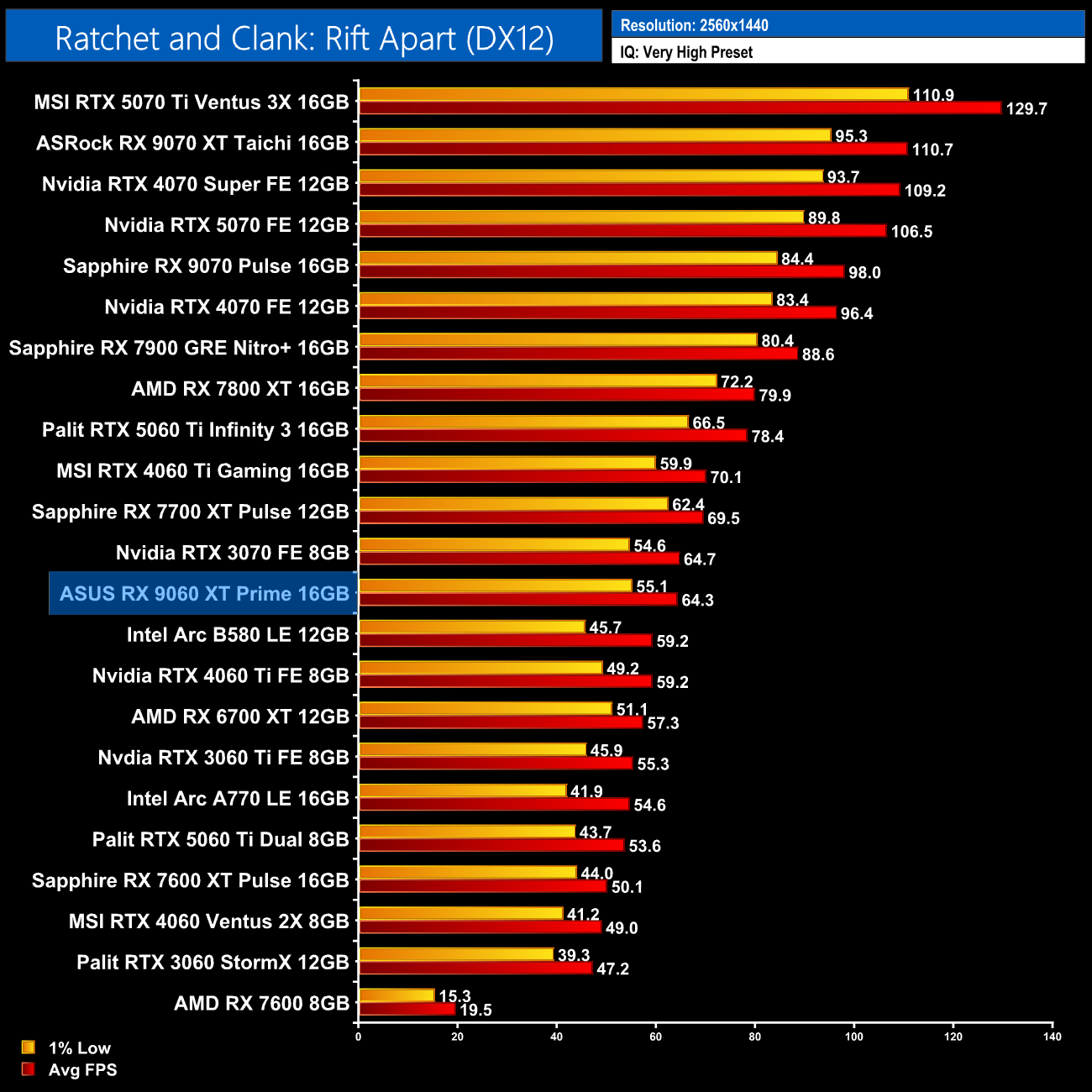
Up at 1440p, the 9060 XT 16GB is still playable, hitting 64fps on average, though it still lags behind the 5060 Ti 16GB but clearly beats the 8GB model.
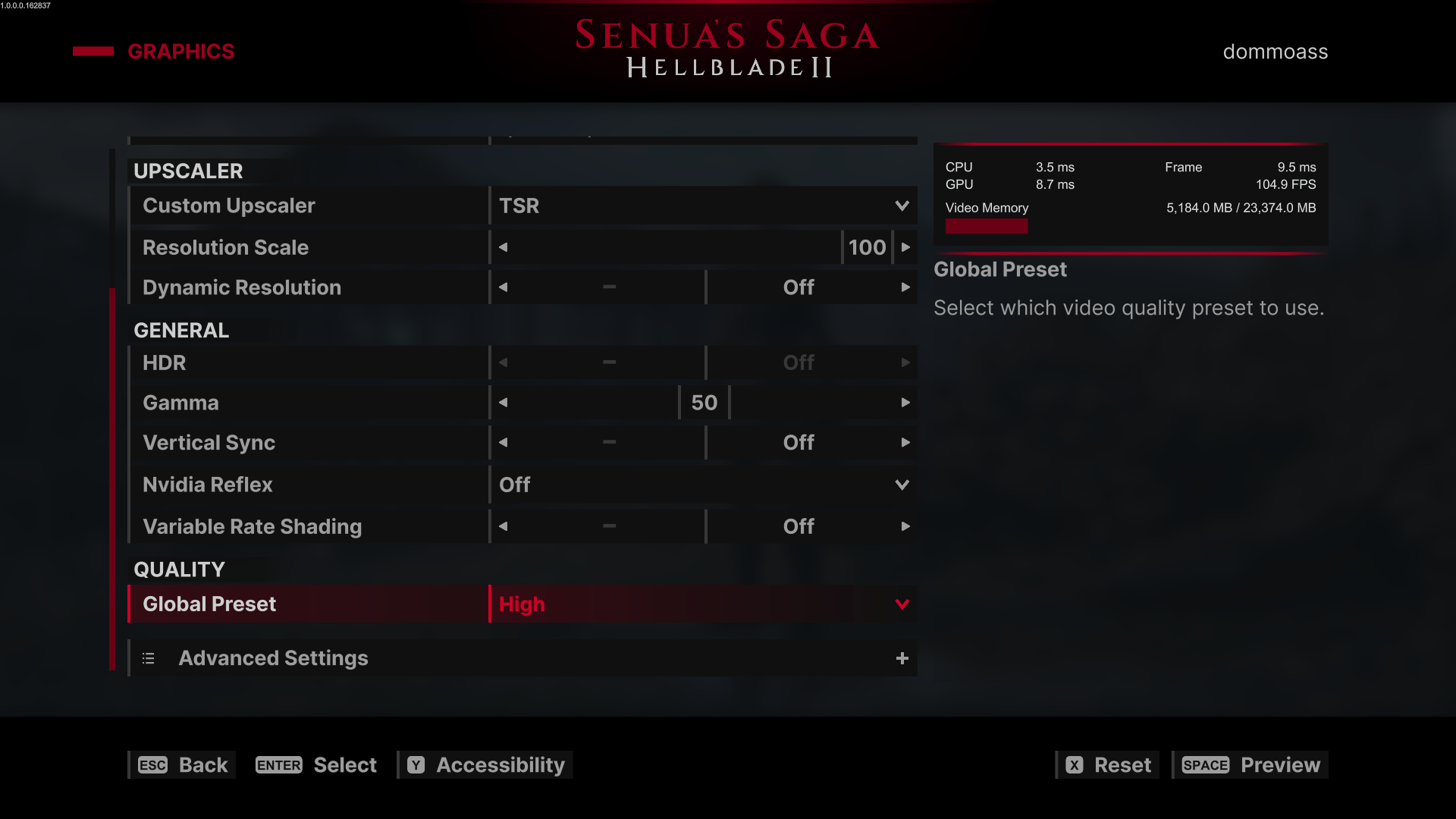
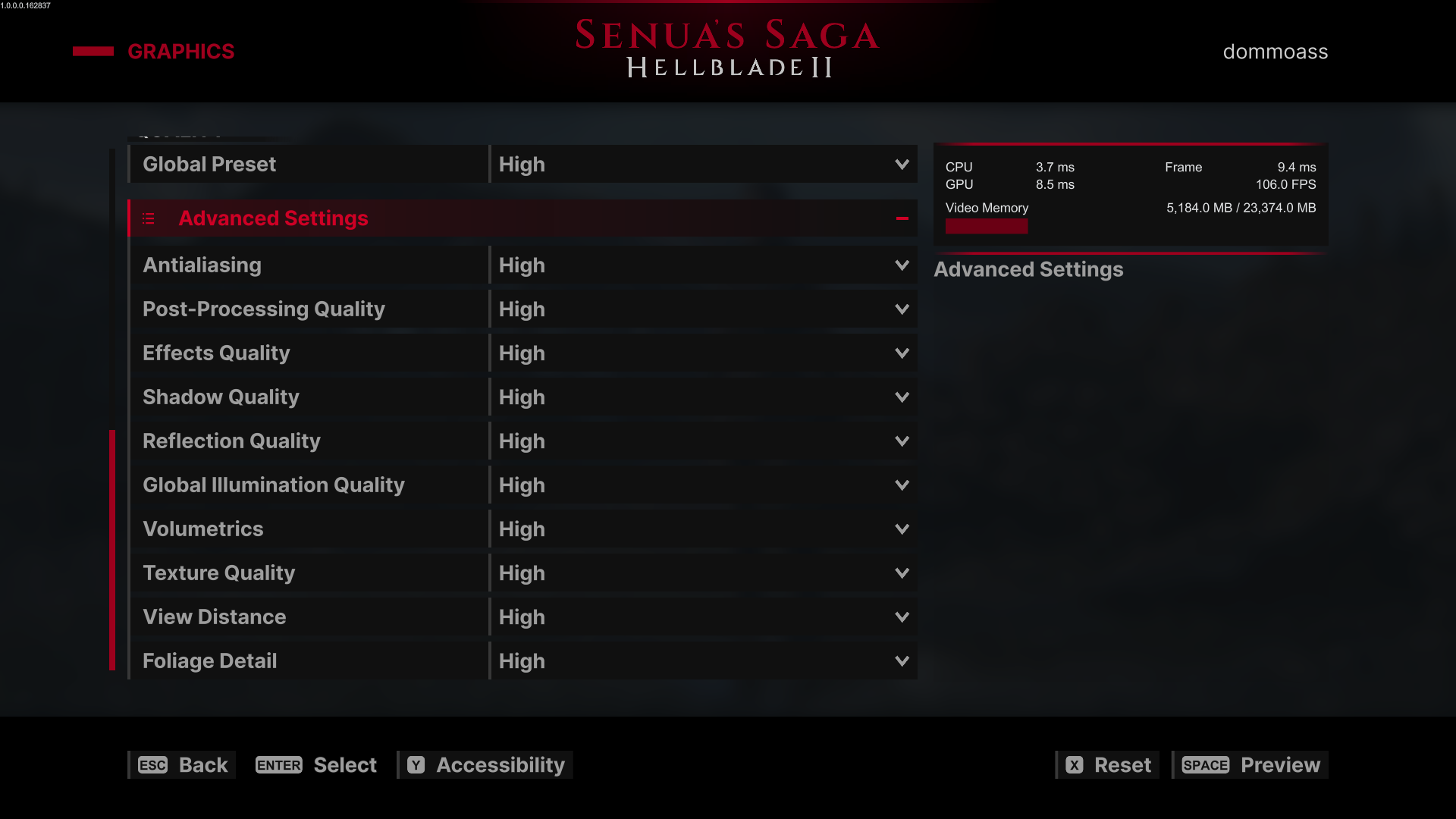
Senua's Saga: Hellblade II is a 2024 action-adventure game developed by Ninja Theory and published by Xbox Game Studios. The game serves as the sequel to Hellblade: Senua's Sacrifice (2017) and is set in 9th century Iceland, drawing inspiration from Norse mythology and culture. Senua's Saga: Hellblade II was released for Windows and Xbox Series X/S on 21 May 2024.
Engine: Unreal Engine 5. We test using the High preset, TSR set to 100% render scale, DX12 API.

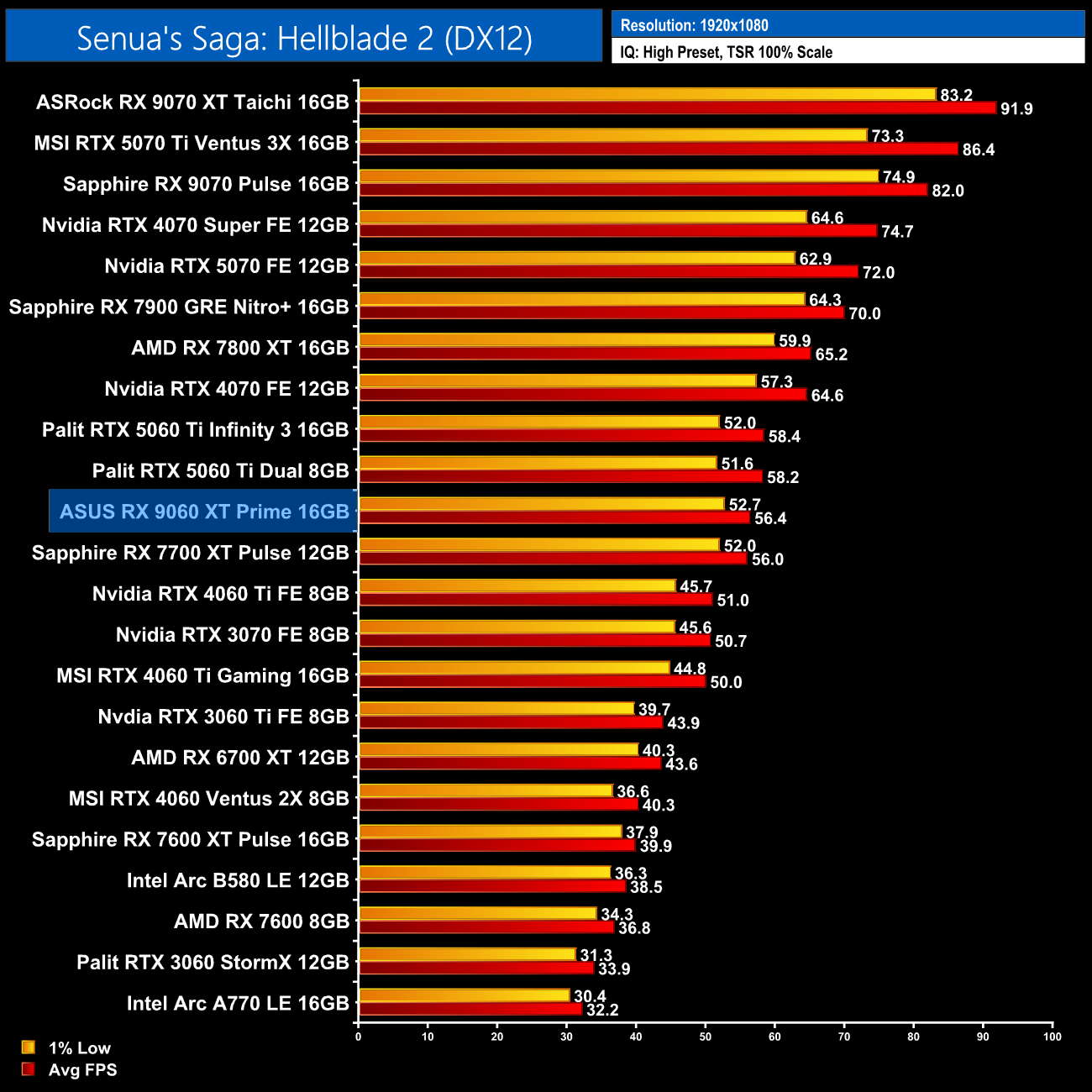
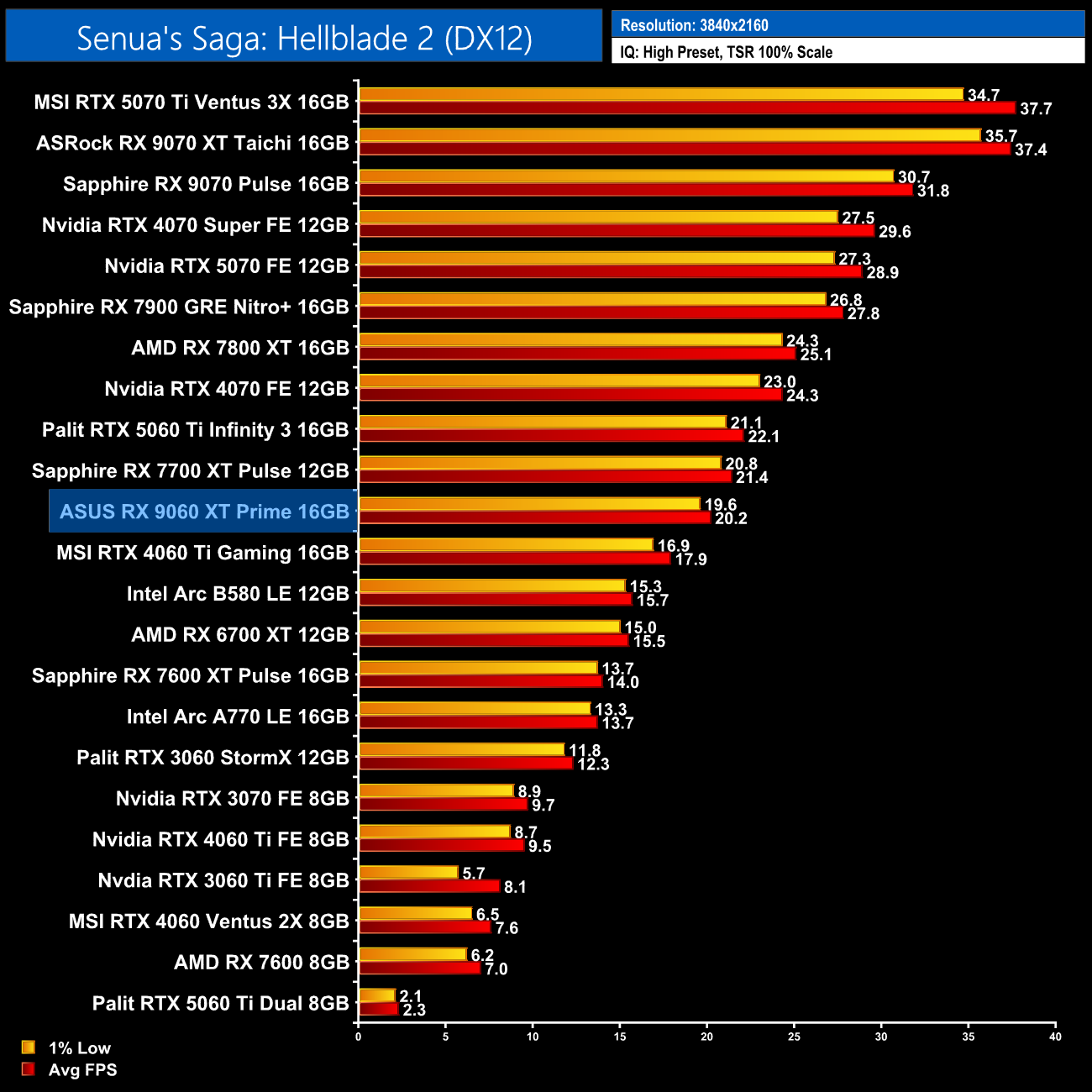
Senua's Saga: Hellblade 2 is another title where things are very even between the 9060 XT 16GB and the two 5060 Ti models – there's no benefit to more than 8GB VRAM here, and all three GPUs average just below 60fps at 1080p.
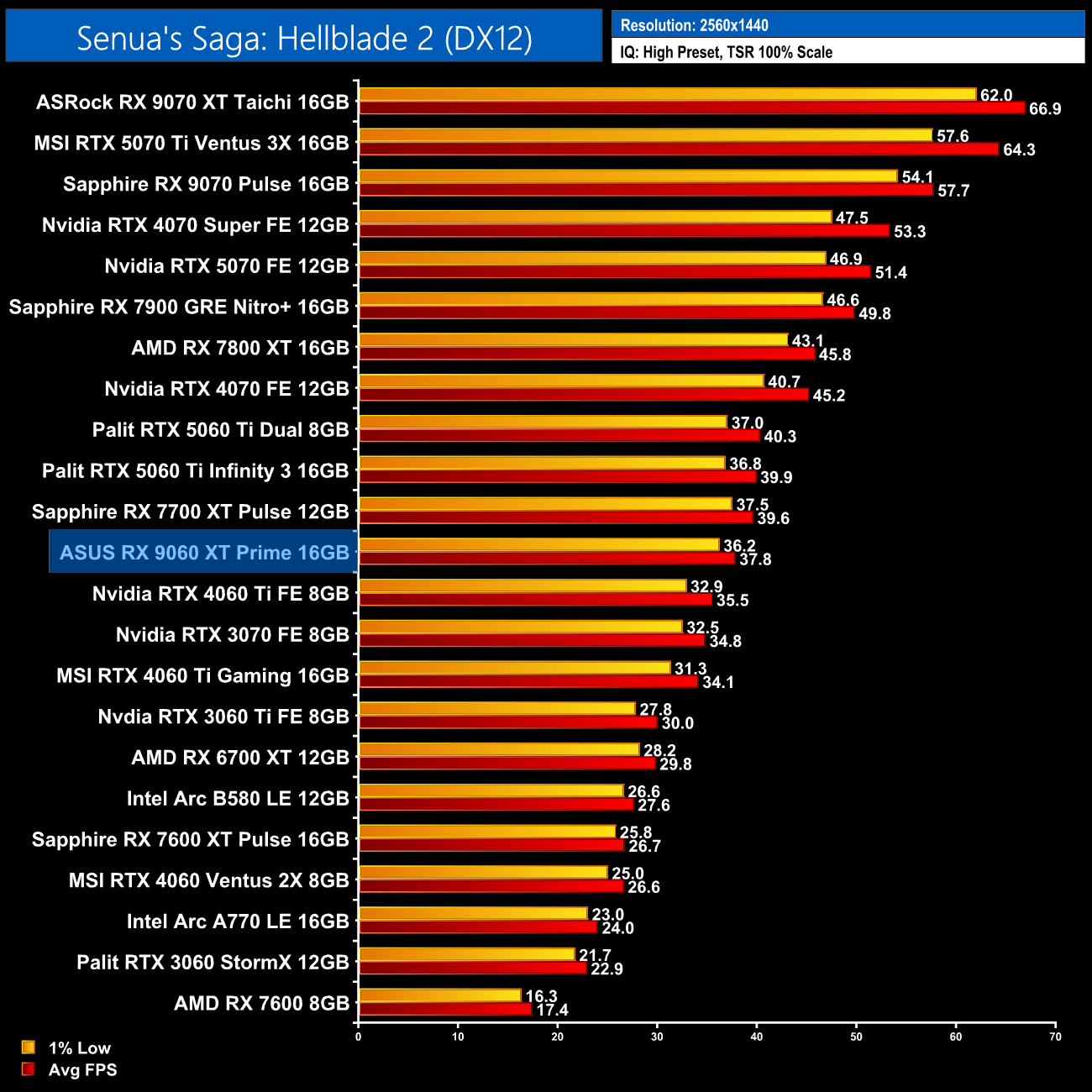
At 1440p the 9060 XT 16GB falls slightly further behind, but not by much as it's only 5% slower than the 5060 Ti 16GB, and it's also dead level with the 7700 XT.
Starfield is a 2023 action role-playing game developed by Bethesda Game Studios and published by Bethesda Softworks. Announced in 2018, Starfield was delayed several times. The game was released for Windows and Xbox Series X/S on September 6, 2023. (Wikipedia).
Engine: Creation Engine 2. We test using the Ultra preset, with 100% resolution scale, dynamic resolution disabled, DX12 API.
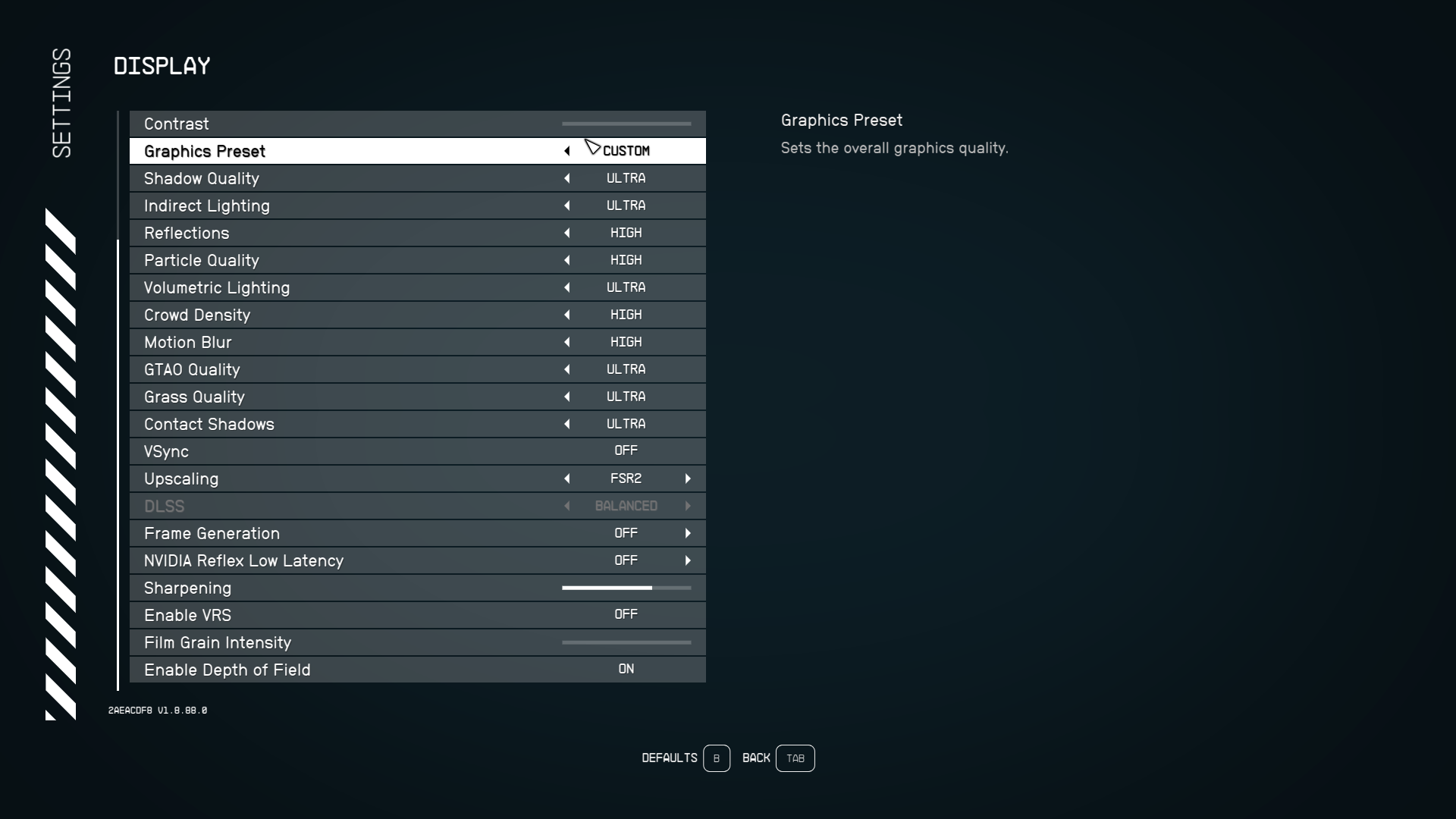
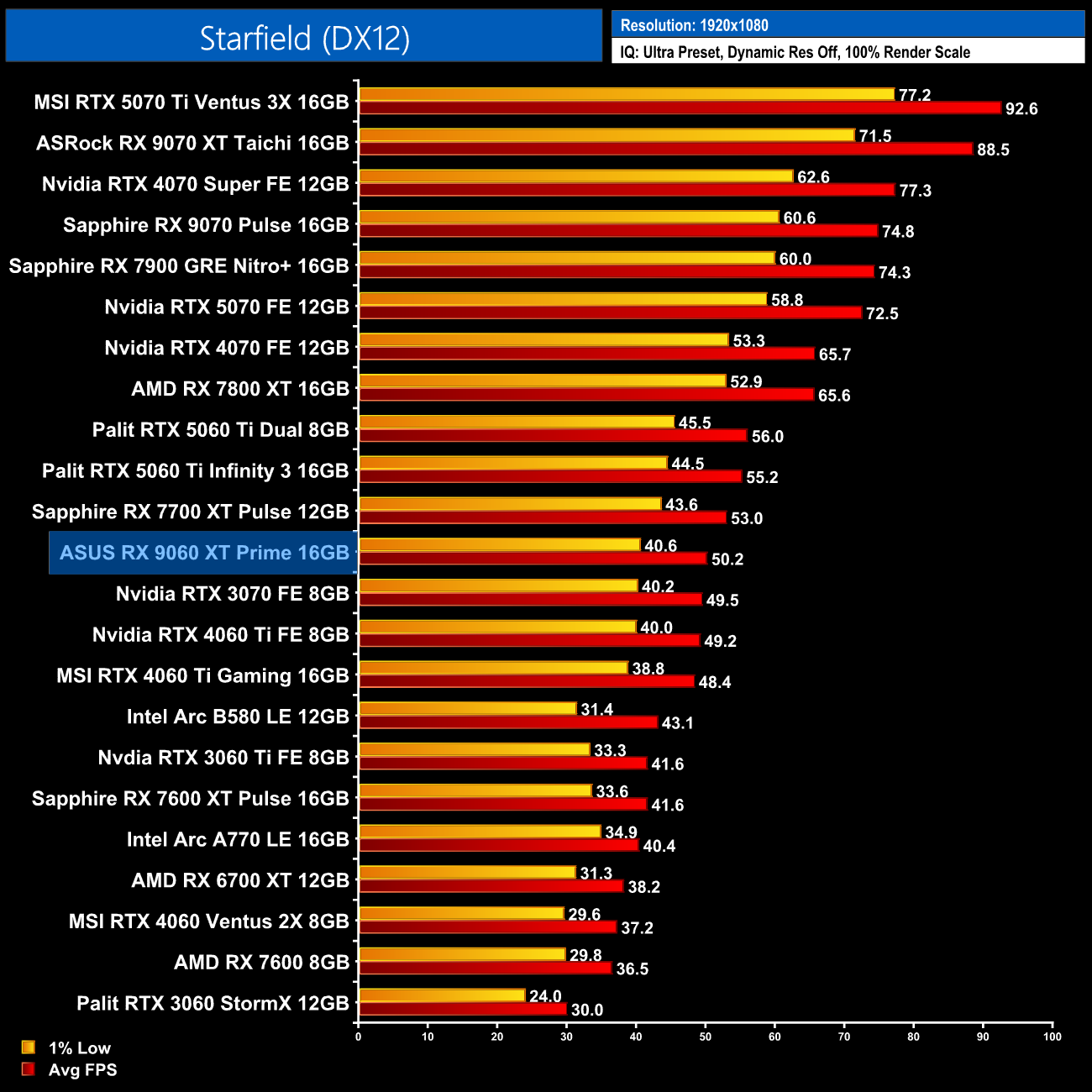
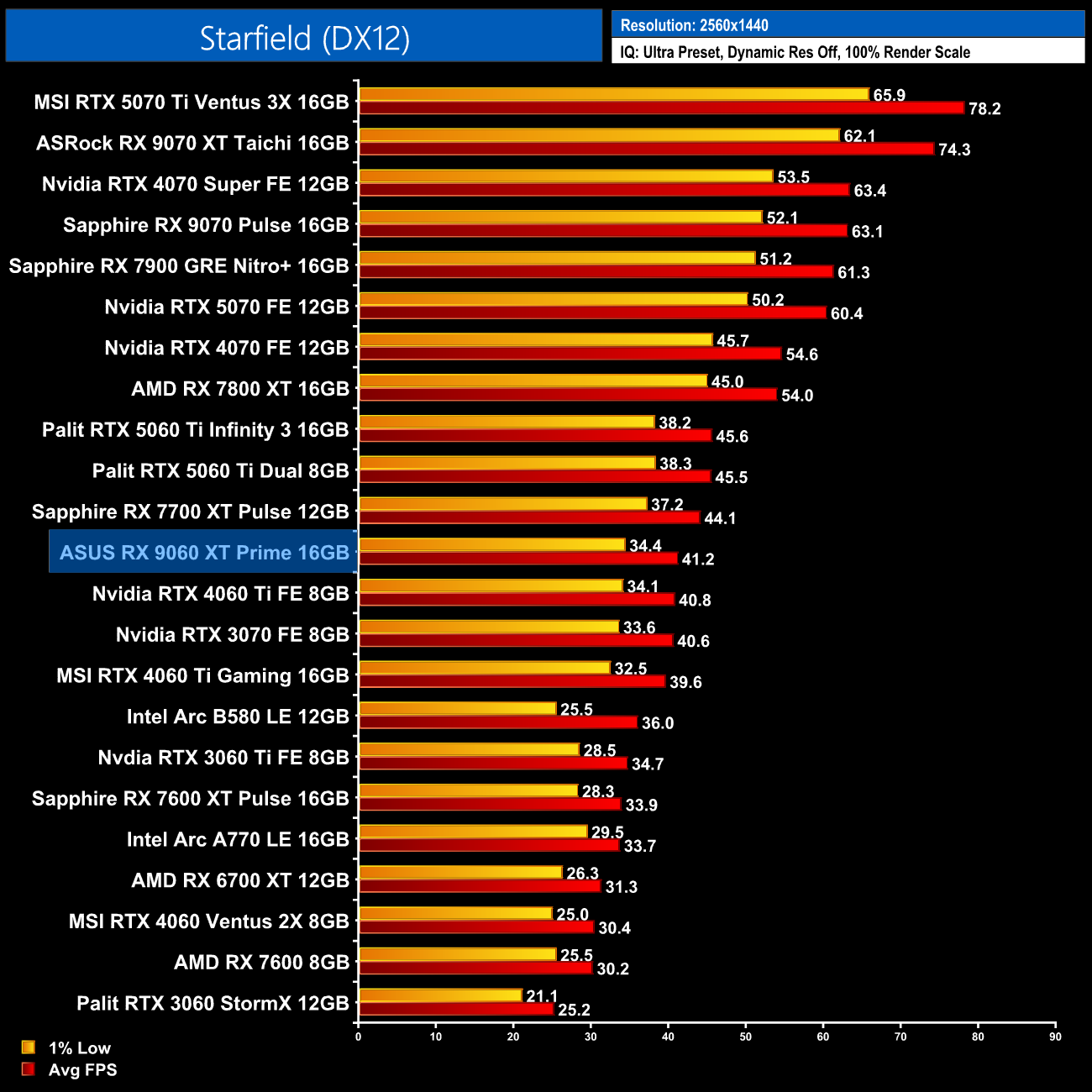
Lastly, we close up with Starfield, a game that used to favour AMD hardware but several updates and possibly driver tweaks have changed that behaviour. Still, 50fps at 1080p isn't bad, though it's a touch behind the 7700 XT and 9% slower than the 5060 Ti 16GB.
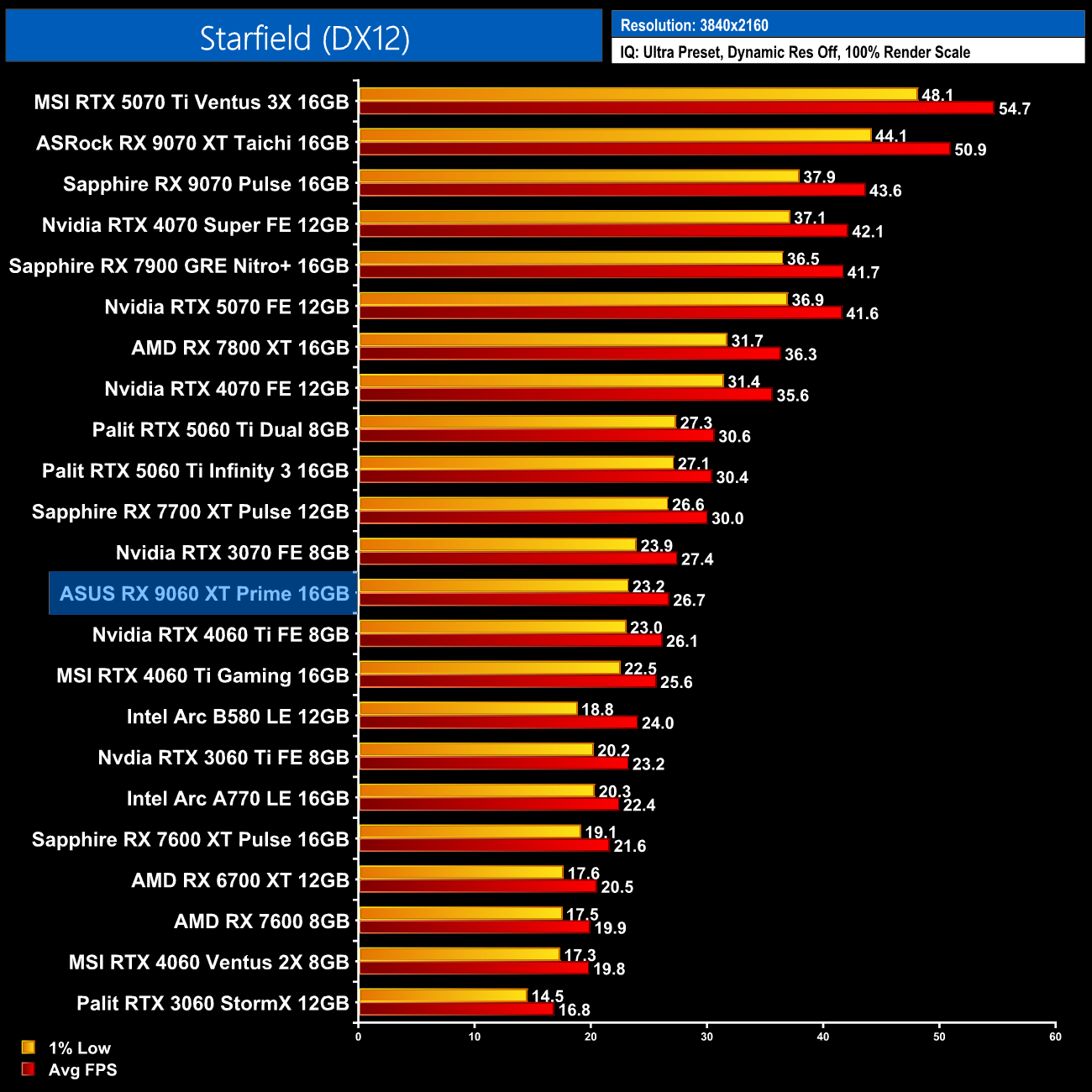
1440p sees that deficit increase to a 10% margin, though we do have to remember the 9060 XT 16GB has a 21% lower MSRP than the 5060 Ti 16GB.
Here we present frame rate figures for each graphics card, averaged across all 12 games on test today. We've recently switched to using the geometric mean instead of the arithmetic mean for overall performance, given it provides a more accurate and balanced representation of GPU performance across different games.
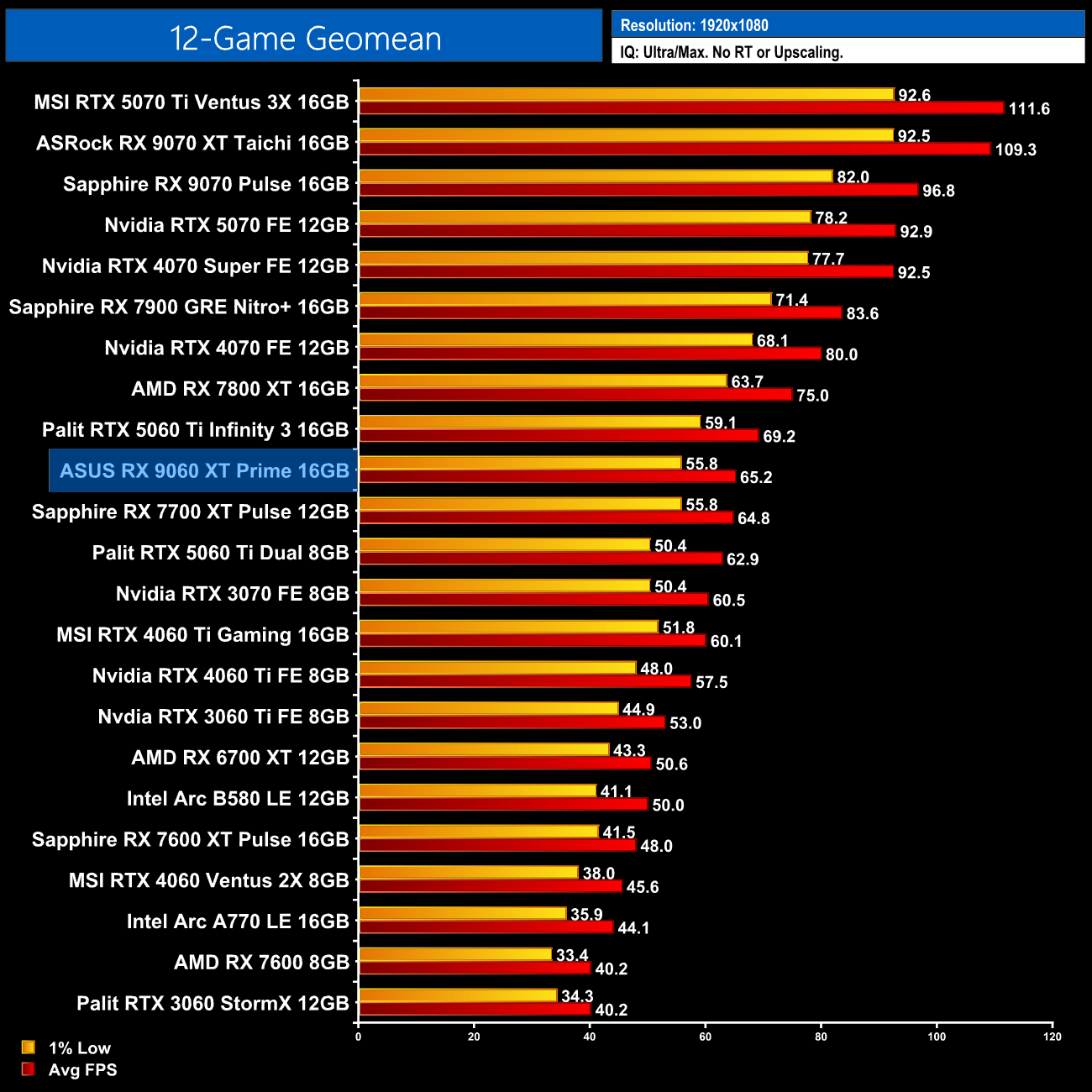

Overall then, at 1080p our 12-game geomean data shows the RX 9060 XT 16GB to be dead level with the RX 7700 XT, 4% faster than the 5060 Ti 8GB, but then 6% slower than the RTX 5060 Ti 16GB – although that's pretty good considering the difference in MSRP.
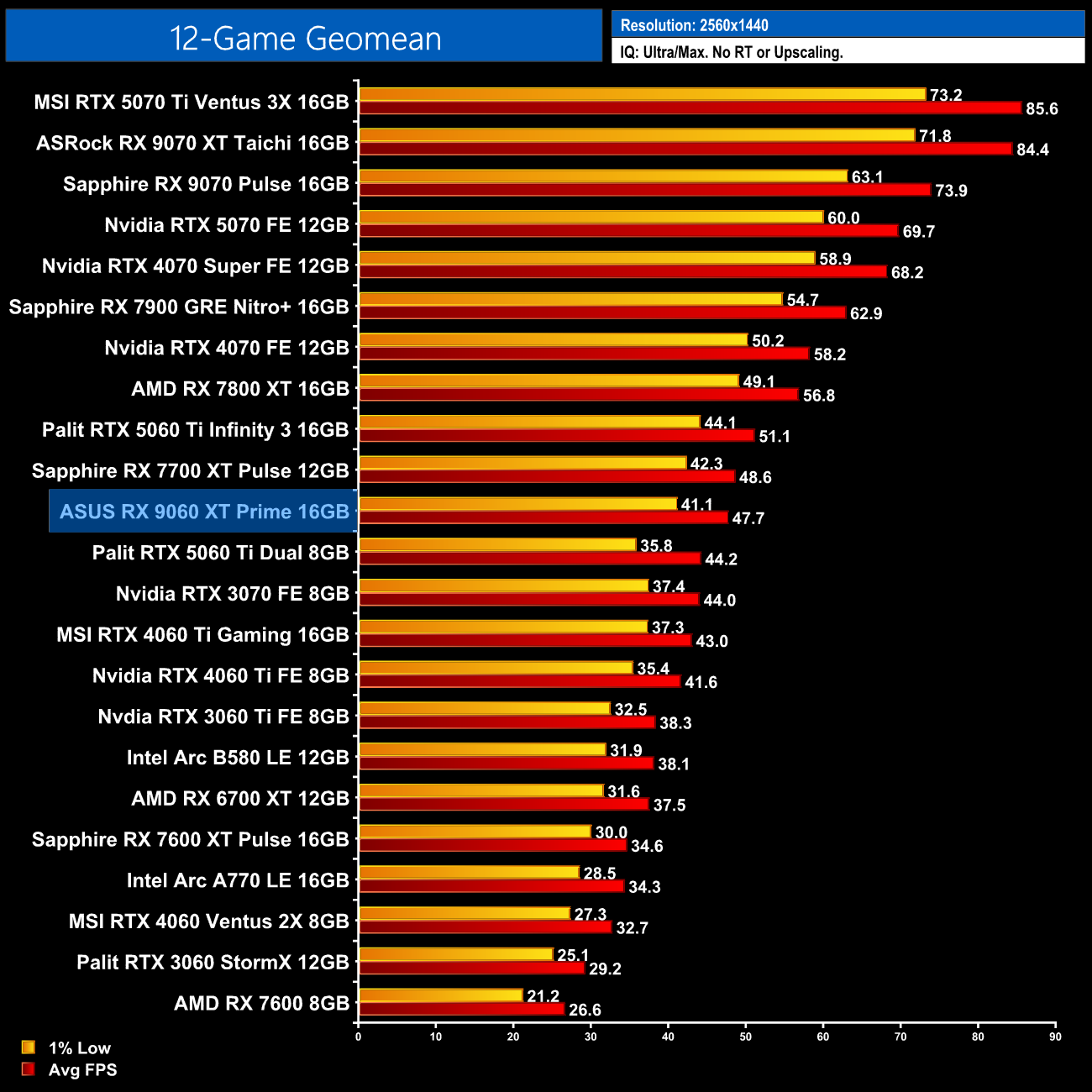
It's a capable 1440p GPU, too, still about level with the 7700 XT but now 8% faster than the 5060 Ti 8GB, or 7% slower than the 5060 Ti 16GB. We've not spoken too much about the RX 7600 XT today either, but as the realistic predecessor to the the 9060 XT 16GB, the new GPU is 38% faster.
Versus RTX 5060 Ti 16GB
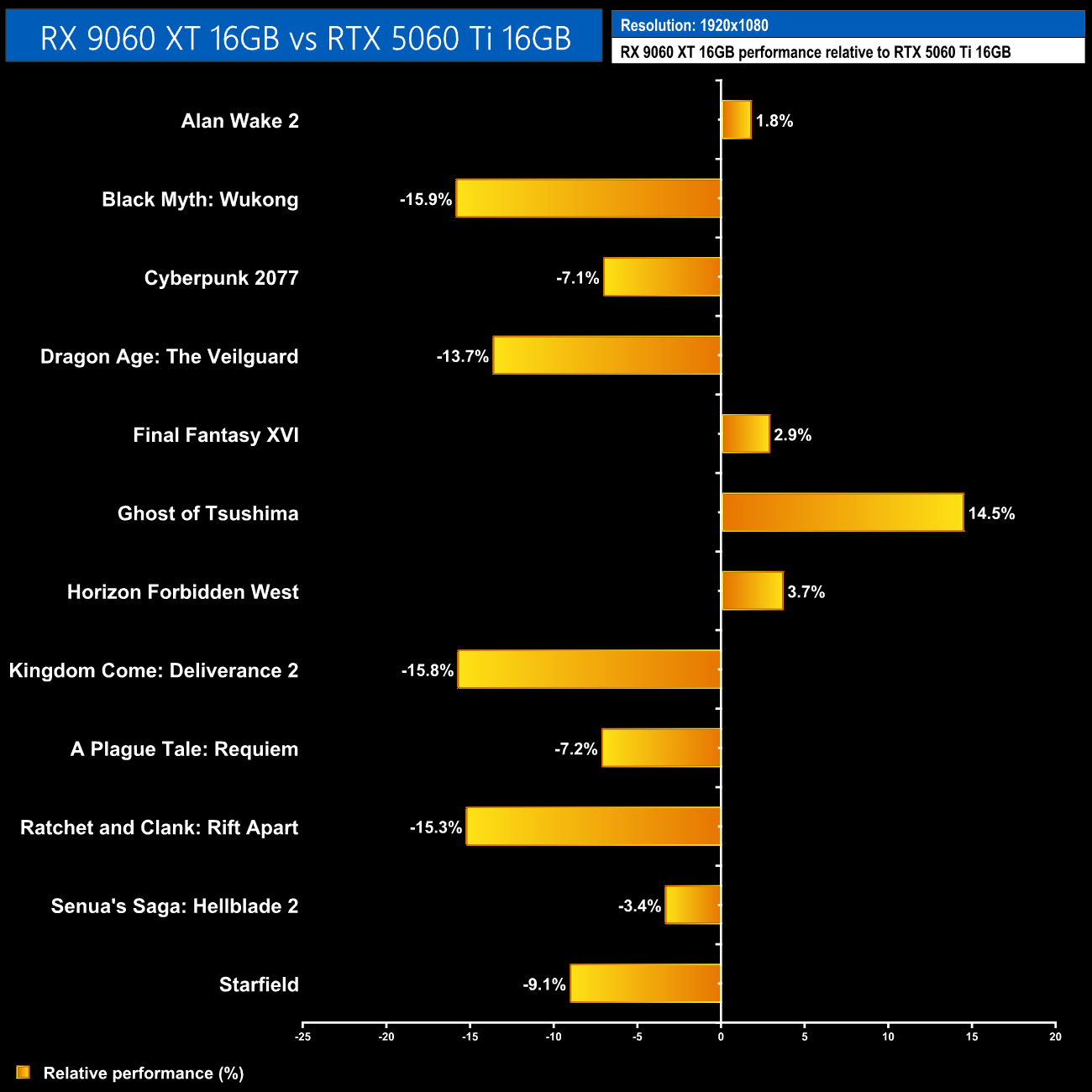
To look into the comparison versus the 5060 Ti 16GB a little closer, the 9060 XT 16GB proved slower in eight of the twelve games tested. While it was faster in the other four, three of those four showed differences of less than 5%, with Ghost of Tsushima being the only game where the AMD GPU was noticeably faster.
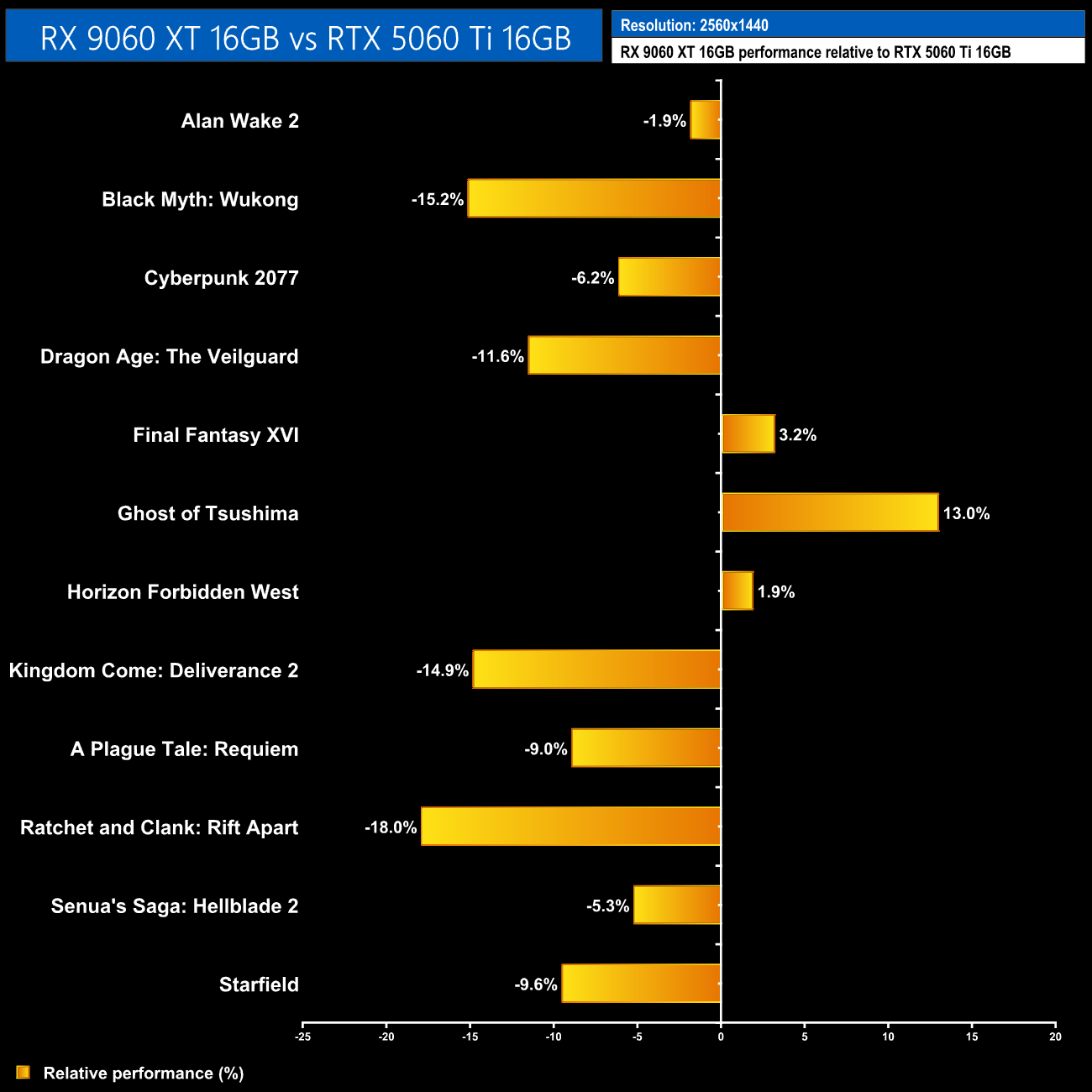
At 1440p the 9060 XT 16GB scales just slightly worse compared to the 5060 Ti 16GB, we saw it come in 7% slower on average, but four of the twelve games show it behind by more than a 10% margin.
Versus RTX 5060 Ti 8GB
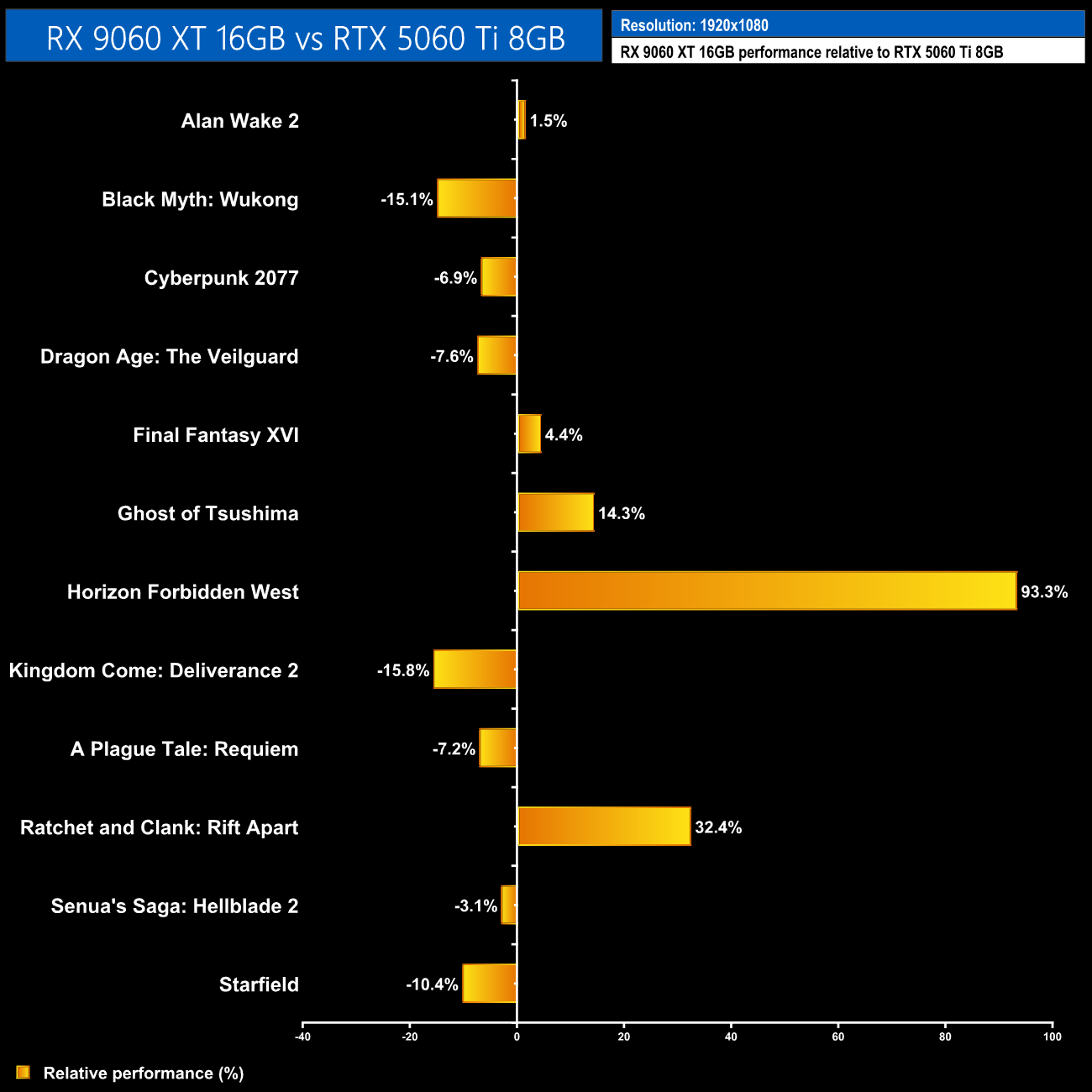
The comparison versus the 5060 Ti 8GB is a different story however – some games still perform the same, but there's a couple of clear examples where – even at 1080p! – an 8GB VRAM buffer just does not cut it anymore, resulting in huge wins for the 9060 XT 16GB.
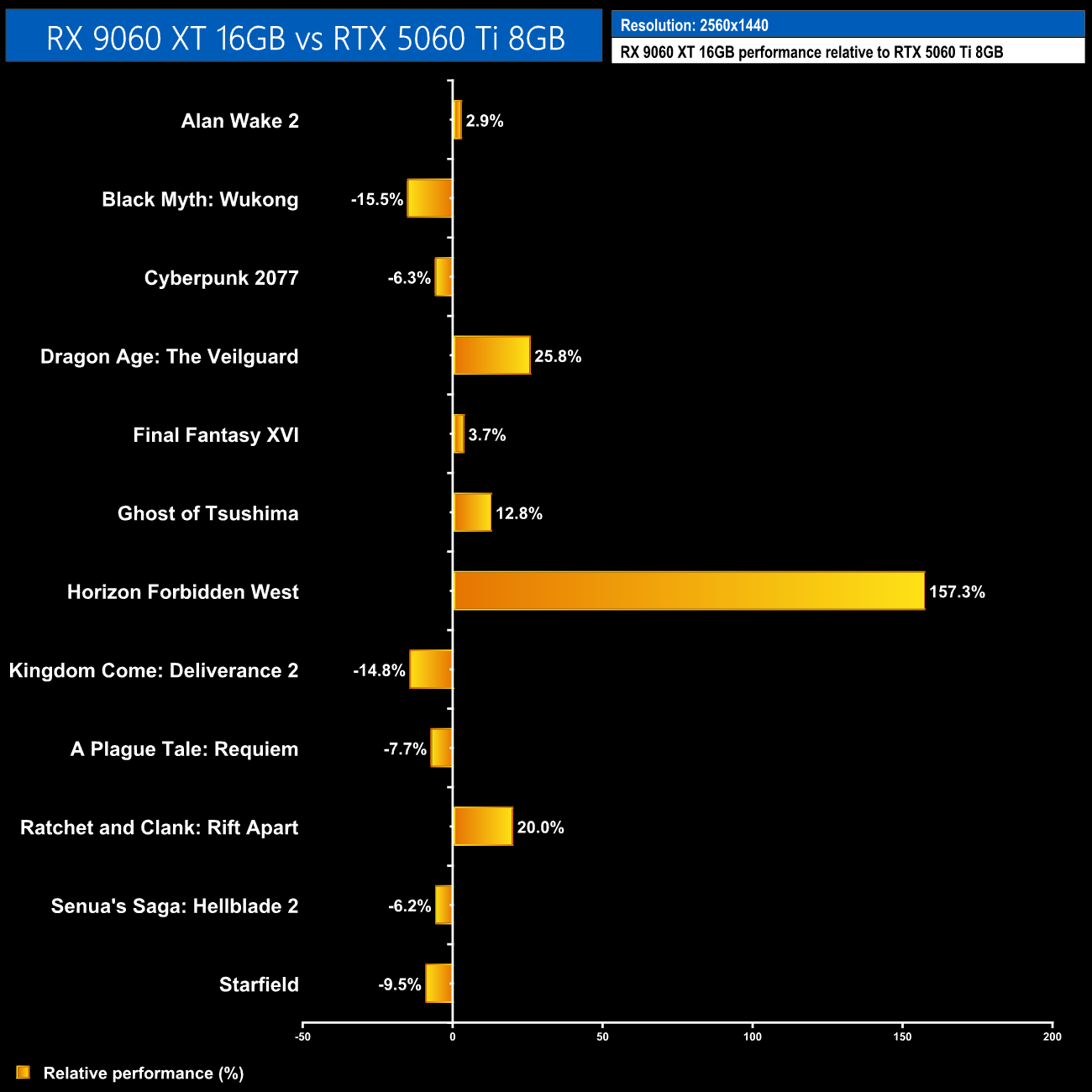
Those trends are only exacerbated at 1440p, too – just look at that result for Forbidden West!
The MSRPs
Using the average frame rate data presented earlier in the review, here we look at the cost per frame using the UK MSRP launch prices for each GPU. Please note this only compares rasterised performance and value.
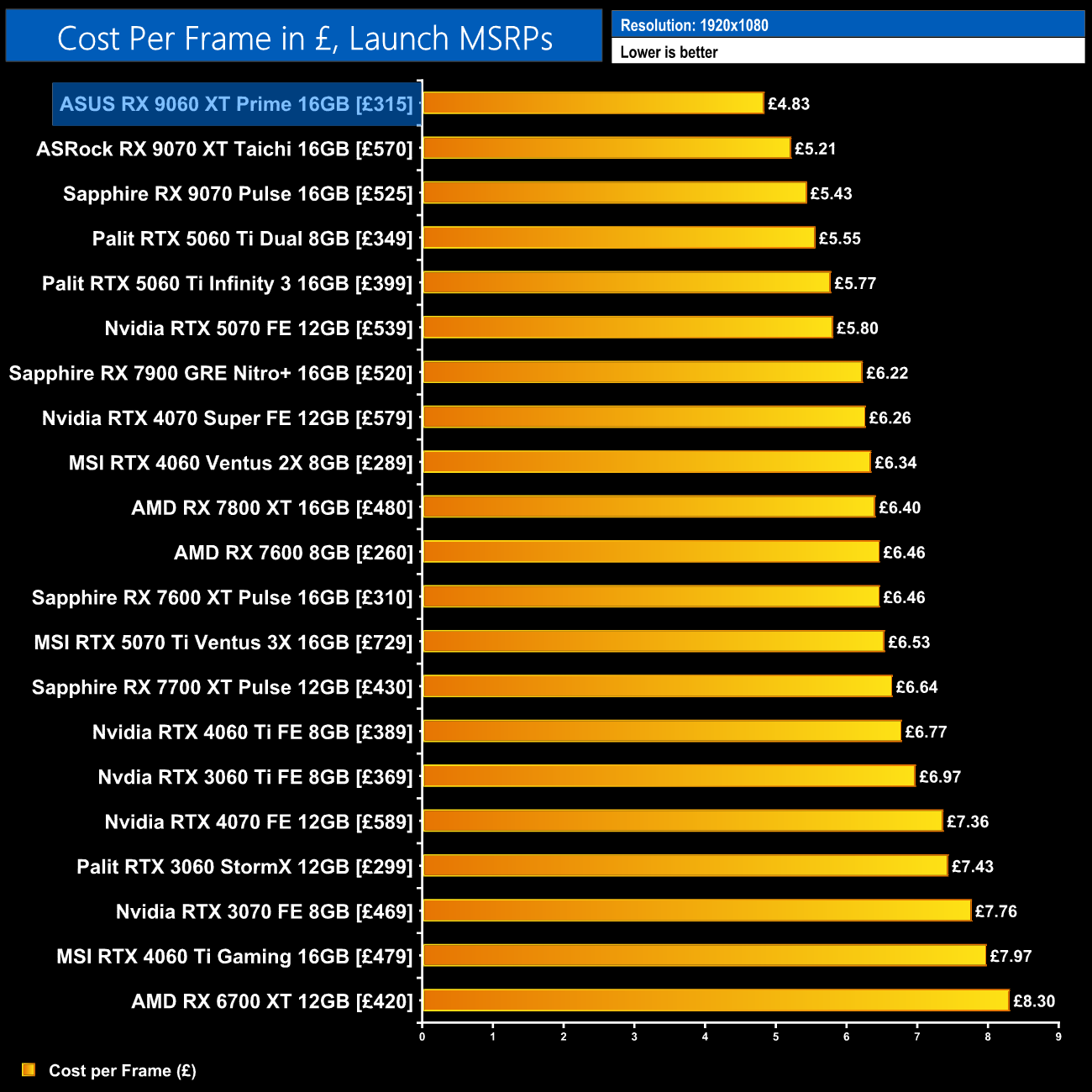
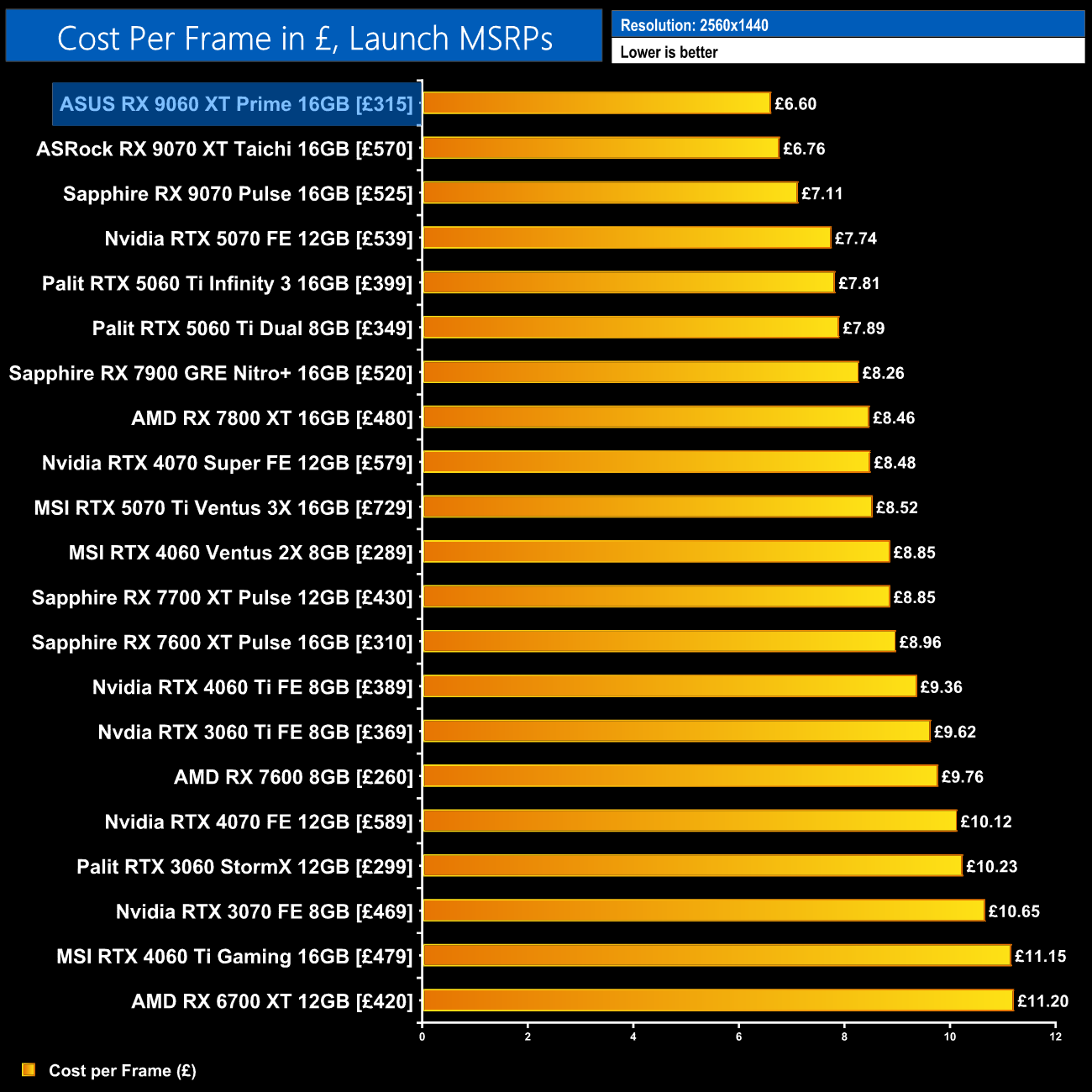
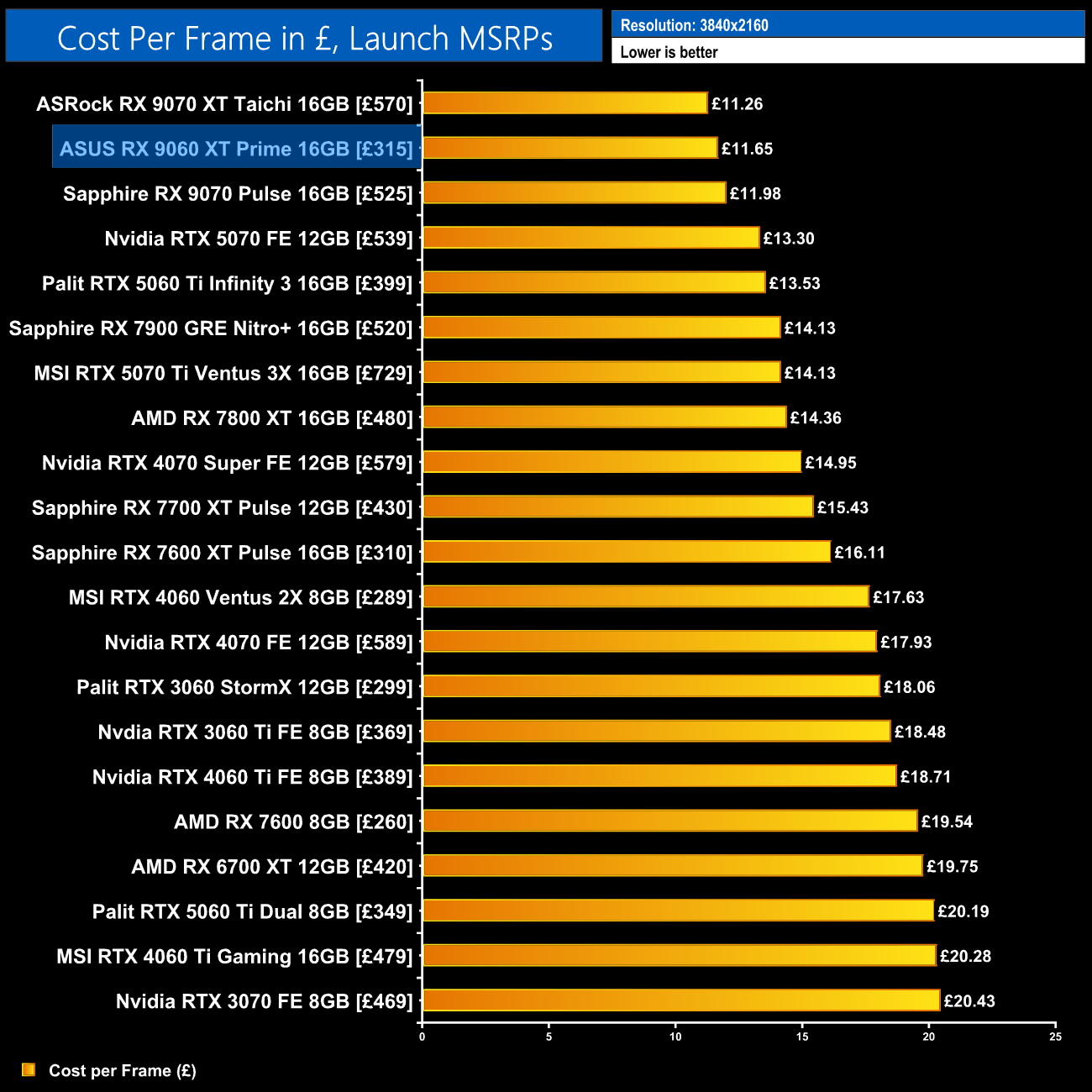
As for what that data means in terms of cost per frame, using UK launch MSRPs, the 9060 XT 16GB is comfortably the best value GPU tested – in fact AMD holds every spot on the podium with the 9070 XT and 9070 in second and third, respectively. Versus the 5060 Ti 16GB, the 9060 XT 16GB is 16% cheaper per frame.
Those margins barely change at 1440p, with the 9060 XT 16GB now 15% cheaper per frame compared to the 5060 Ti 16GB. Its lead over the 9070 XT has shrunk however, to just a 2% difference.
Current retail pricing
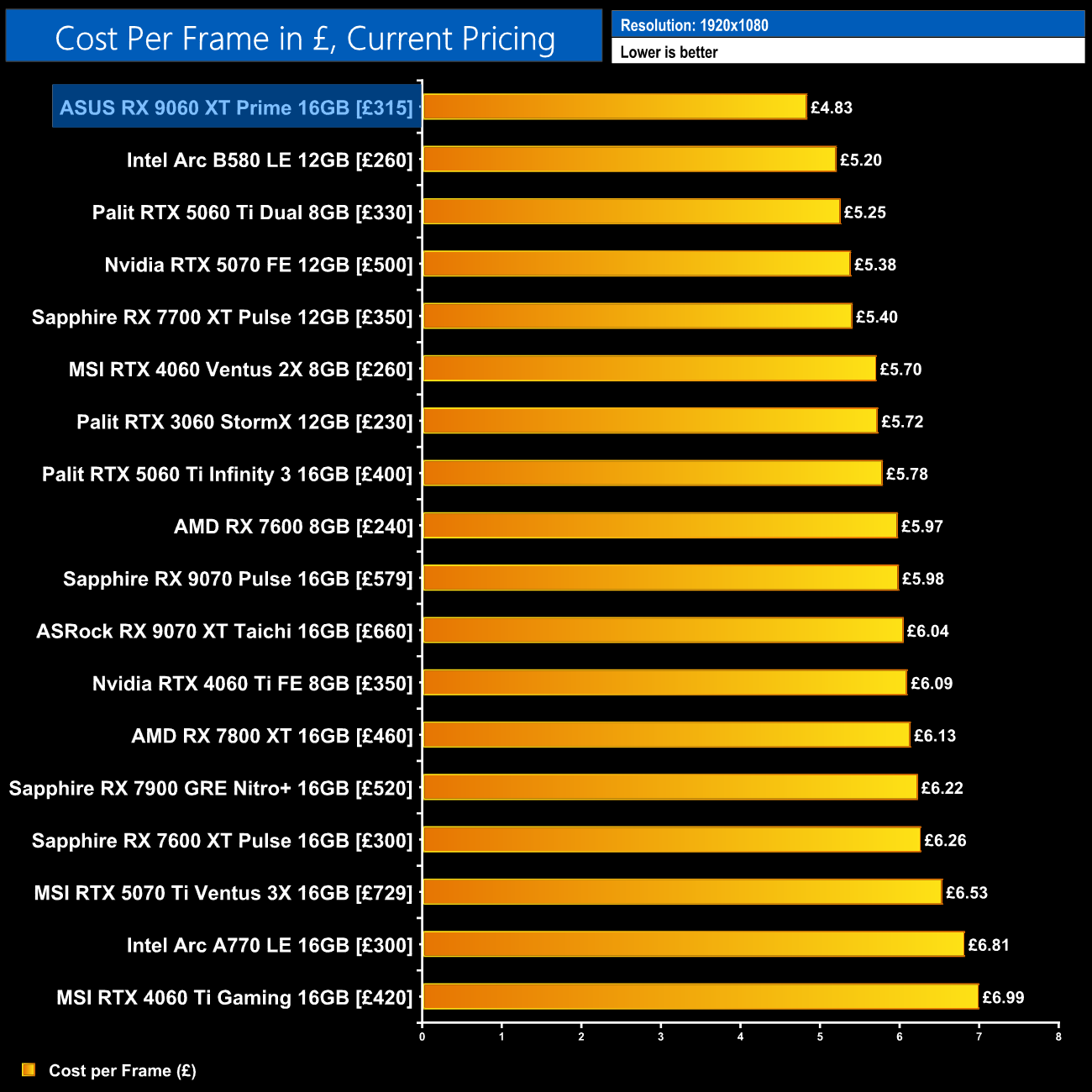
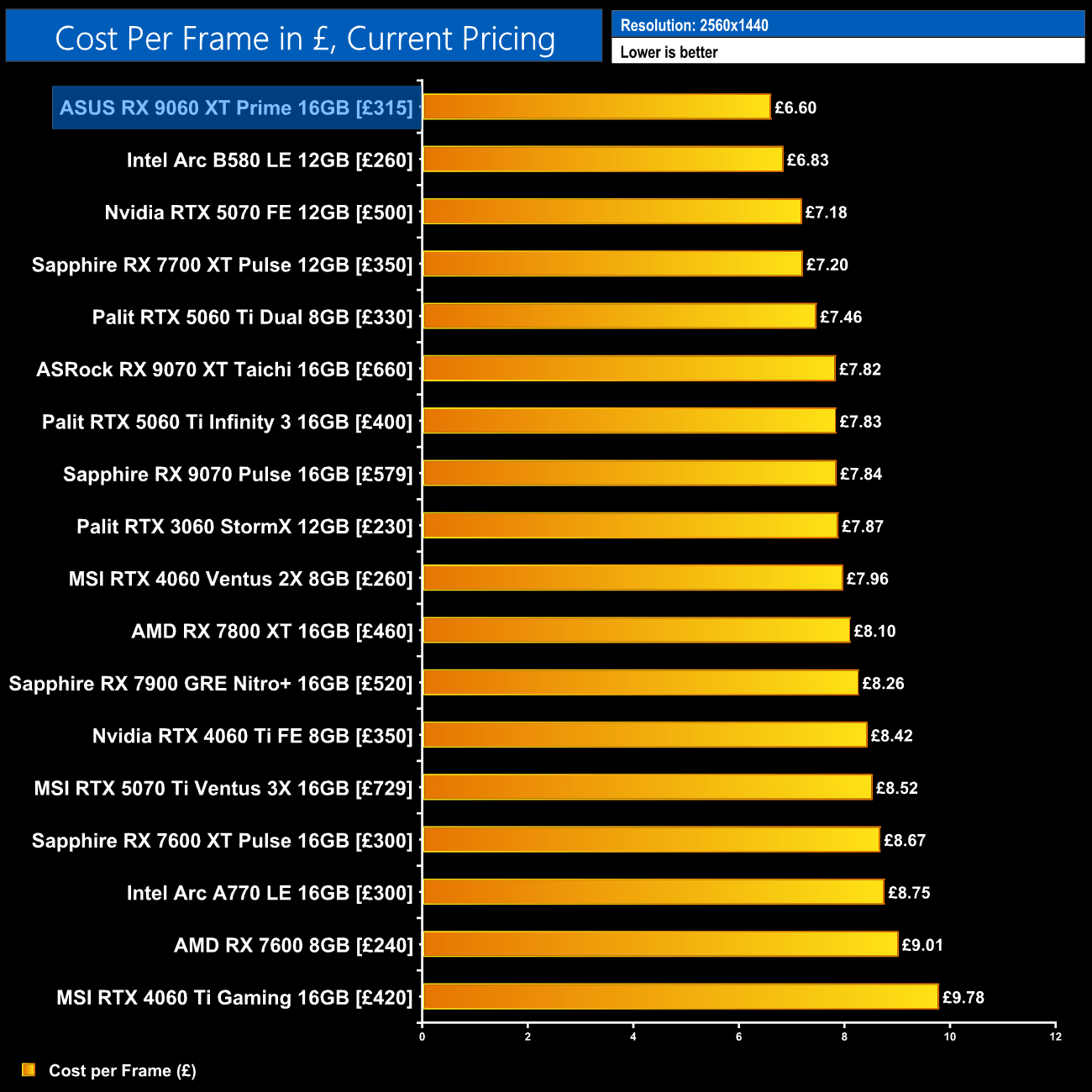
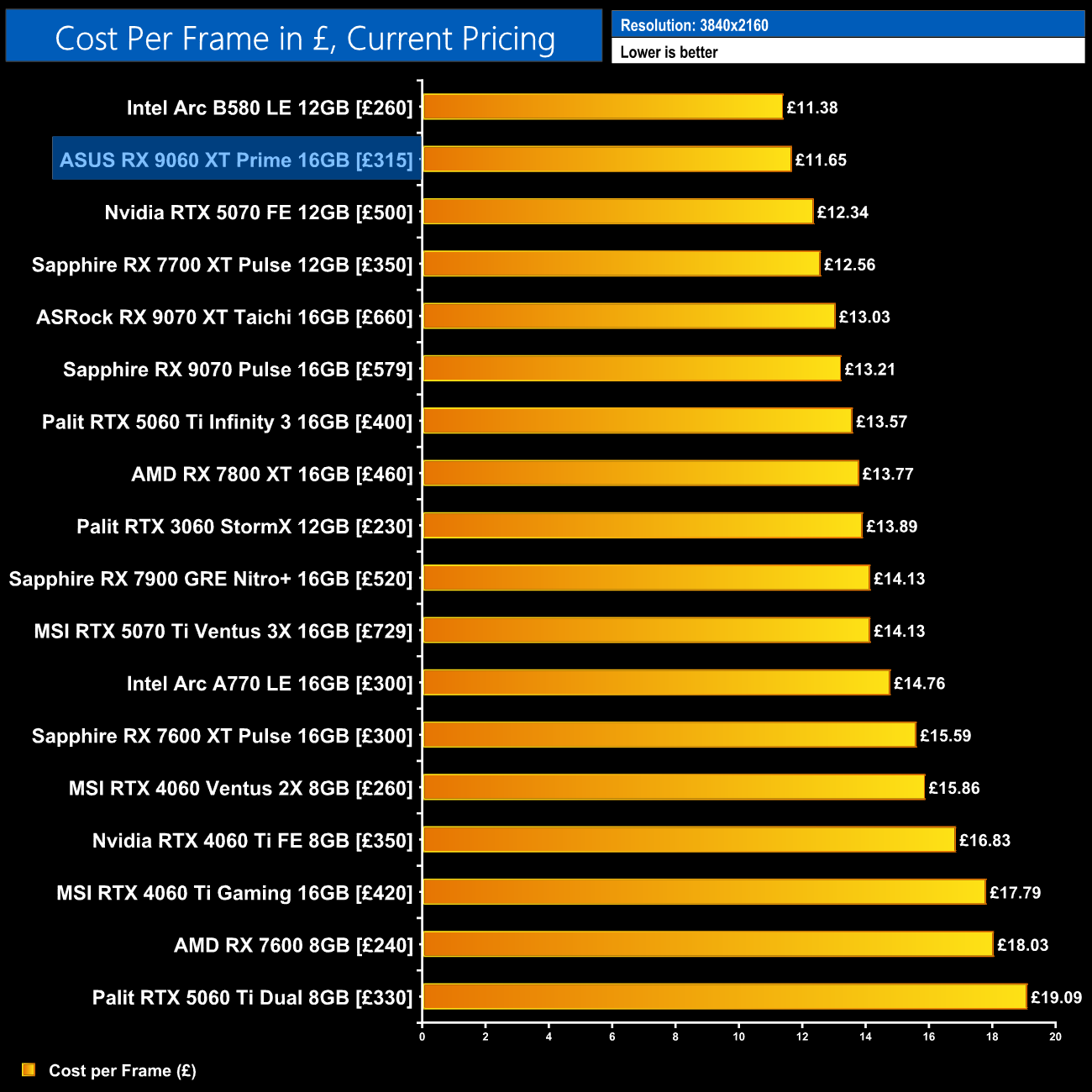
Of course, the picture changes when looking at data based on current street pricing – the 9060 XT 16GB still tops the chart, but Intel's B580 has shot up given it can be found for £260 at the moment.
The 9060 XT 16GB is still leading the value race at 1440p, too – not by much over the B580, but compared to the 5070, which is Nvidia's best value GPU based on our data, it's still 8% cheaper per frame.
Alan Wake 2 is a 2023 survival horror game developed by Remedy Entertainment and published by Epic Games Publishing. A sequel to Alan Wake, the story follows best-selling novelist Alan Wake, who has been trapped in an alternate dimension for 13 years, as he attempts to escape by writing a horror story involving an FBI special agent named Saga Anderson. The game was released for PlayStation 5, Windows, and Xbox Series X/S on 27 October 2023. (Wikipedia)
Engine: Northlight. We test using the High preset, High Ray Tracing preset, FSR set to Quality upscaling, DXR API.
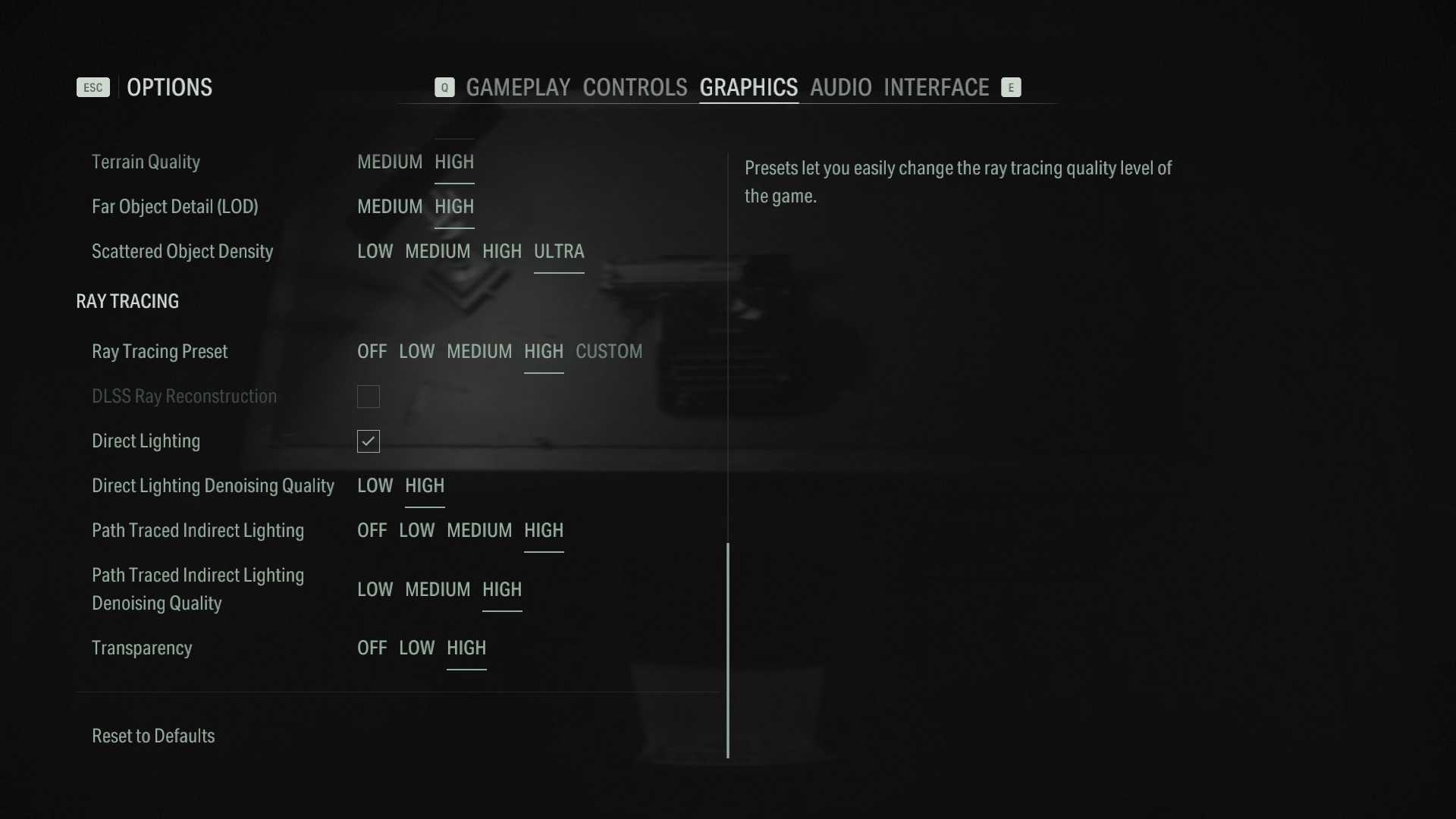
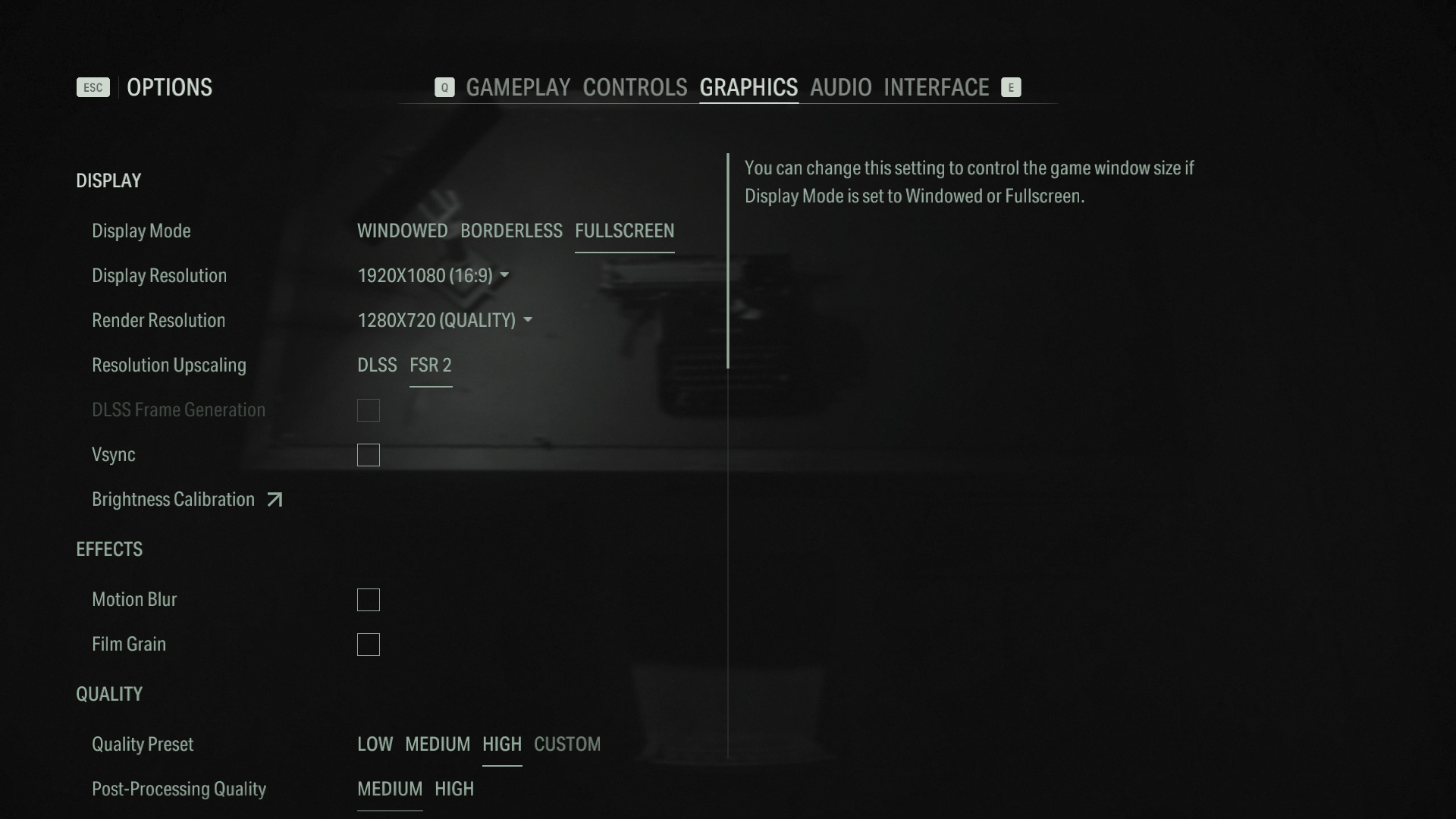
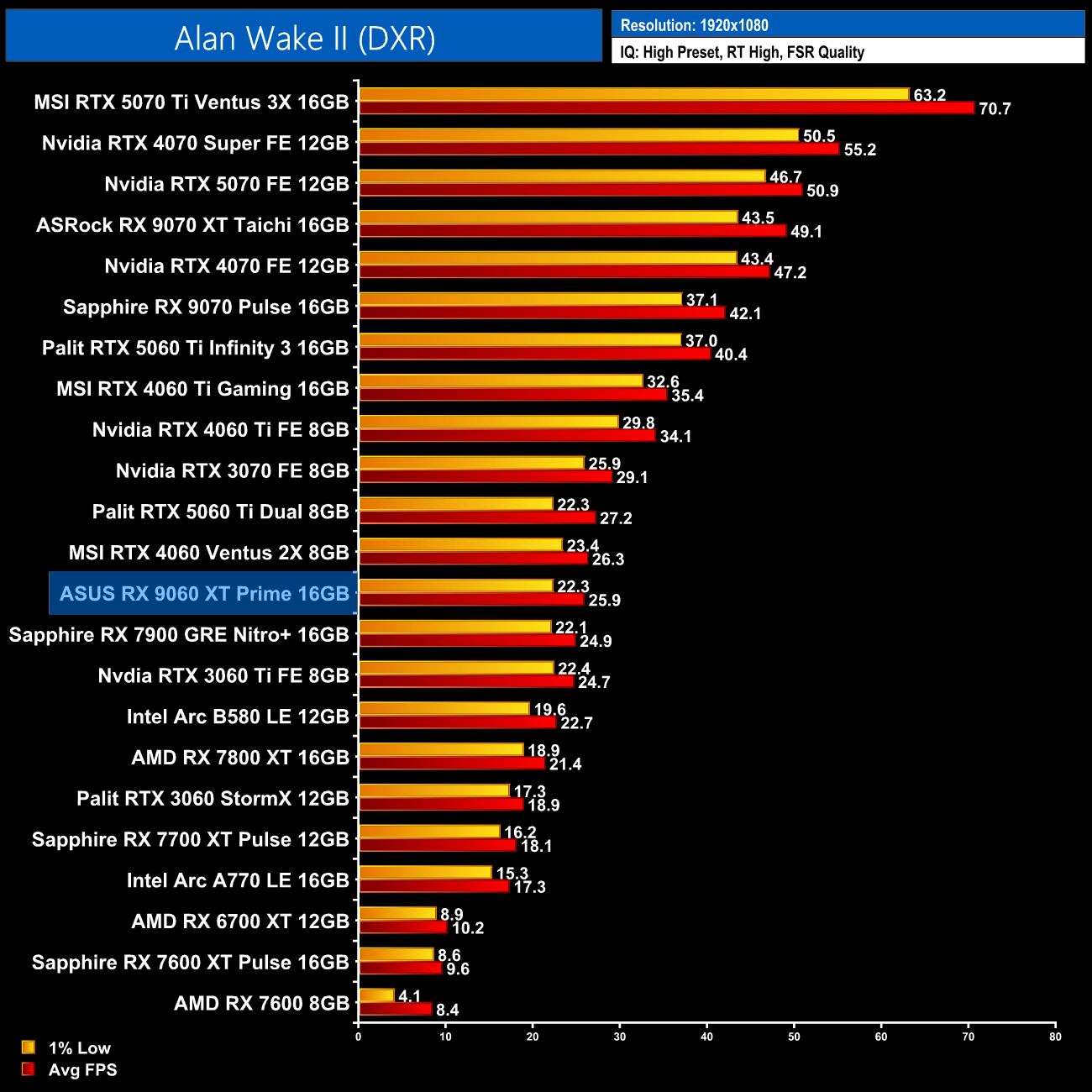
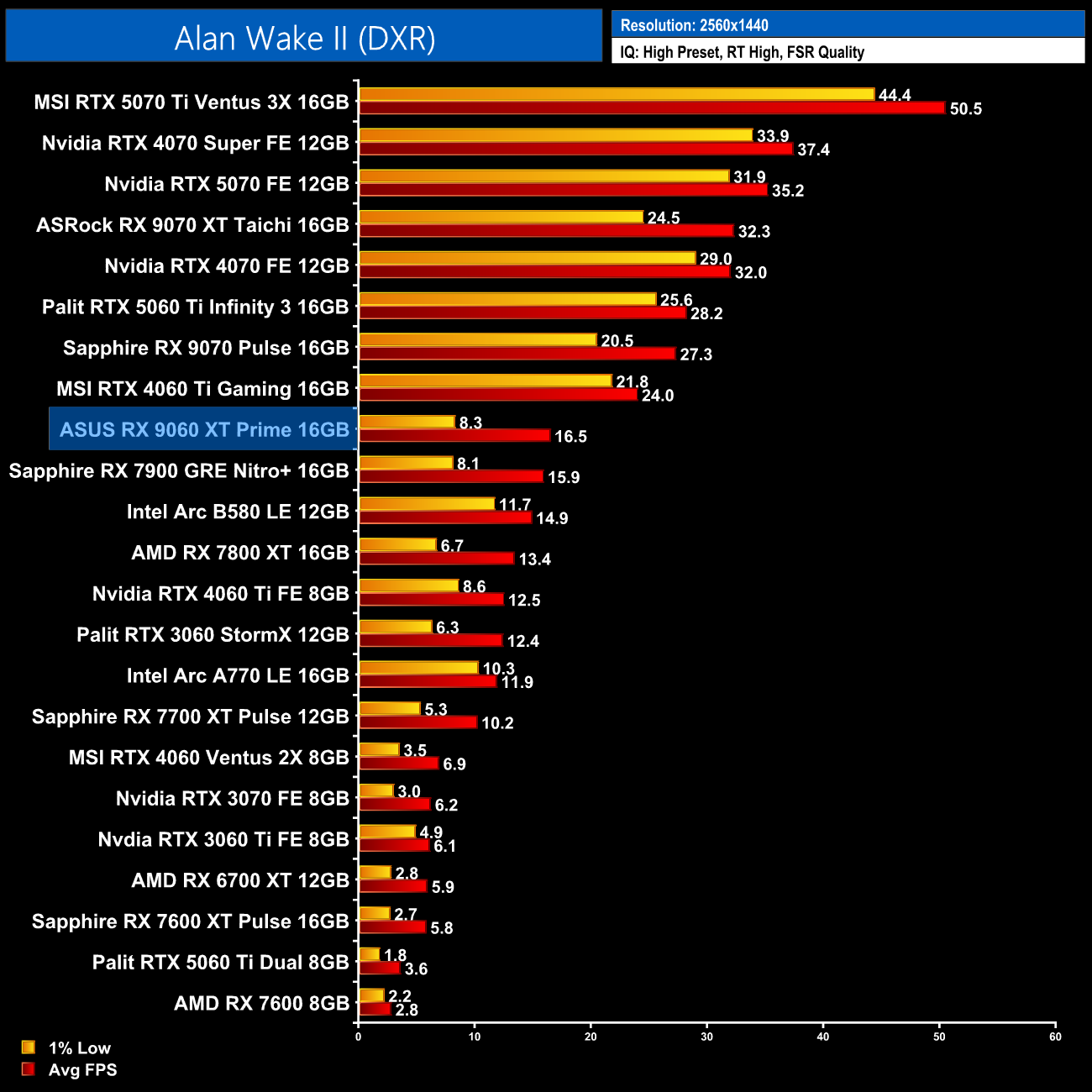
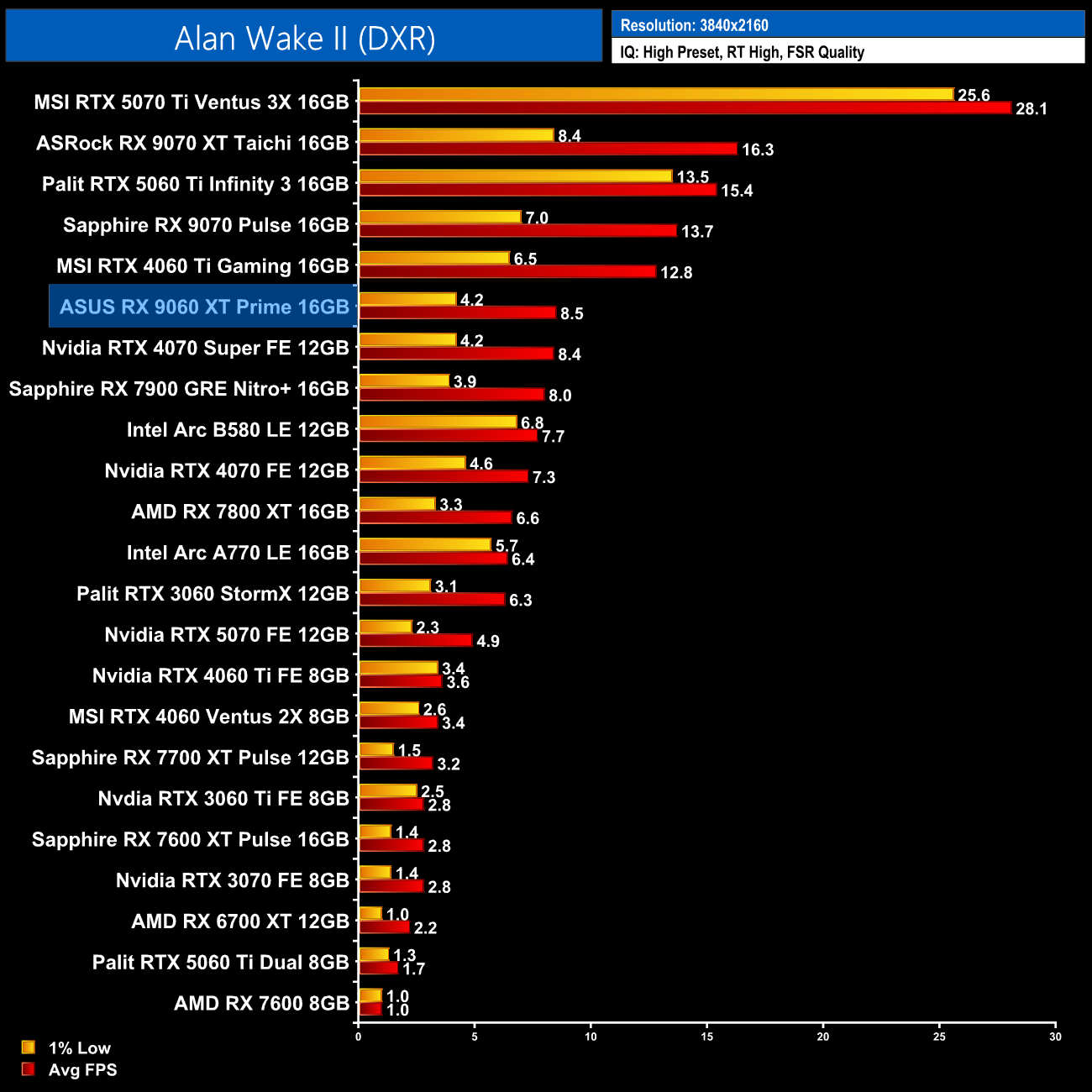
Moving onto ray tracing, there's clearly a huge improvement from RDNA 3 to RDNA 4 in this department, given the 9060 XT 16GB is actually level with the 7900 GRE – but that doesn't make it playable, even at 1080p using Quality upscaling.
Black Myth: Wukong is a 2024 action role-playing game developed and published by Game Science. The game is inspired by the classical Chinese novel Journey to the West and follows an anthropomorphic monkey based on Sun Wukong from the novel. Black Myth: Wukong was released for PlayStation 5 and Windows on August 20, 2024, with an Xbox Series X/S version to be released at a later date. (Wikipedia).
Engine: Unreal Engine 5. We test using the Cinematic preset, Ray Tracing set to Very High, TSR set to 67% render scale, DXR API.
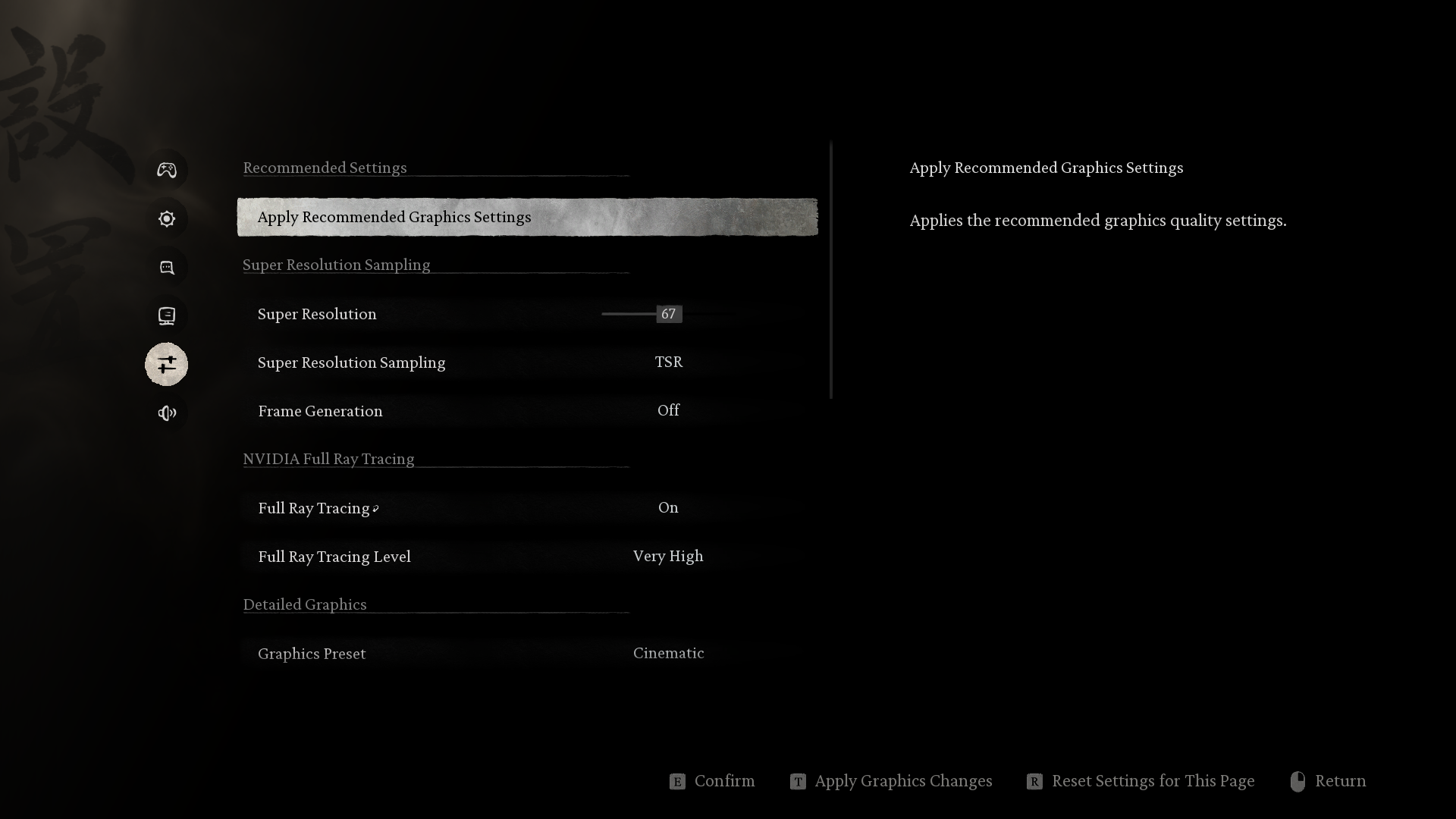
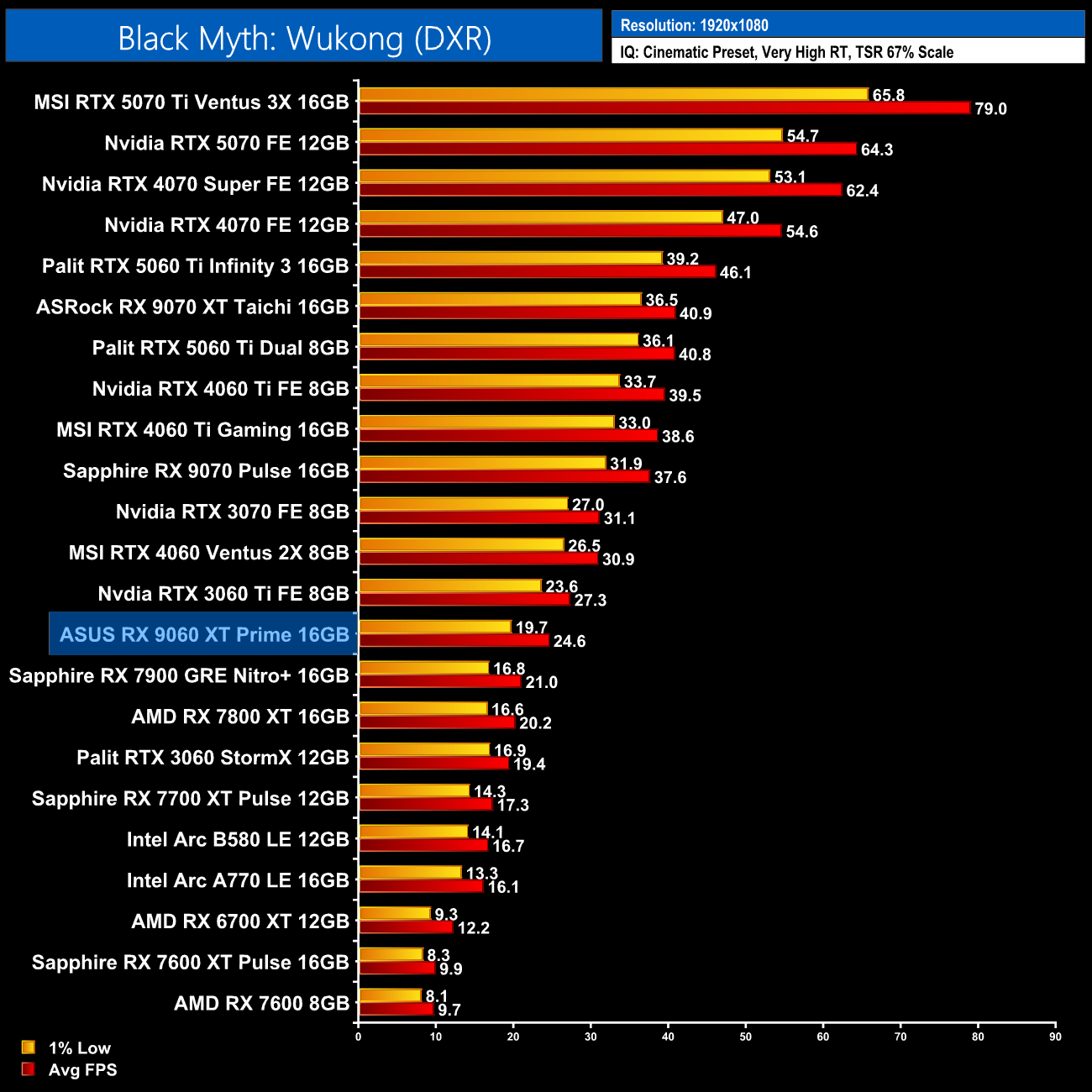
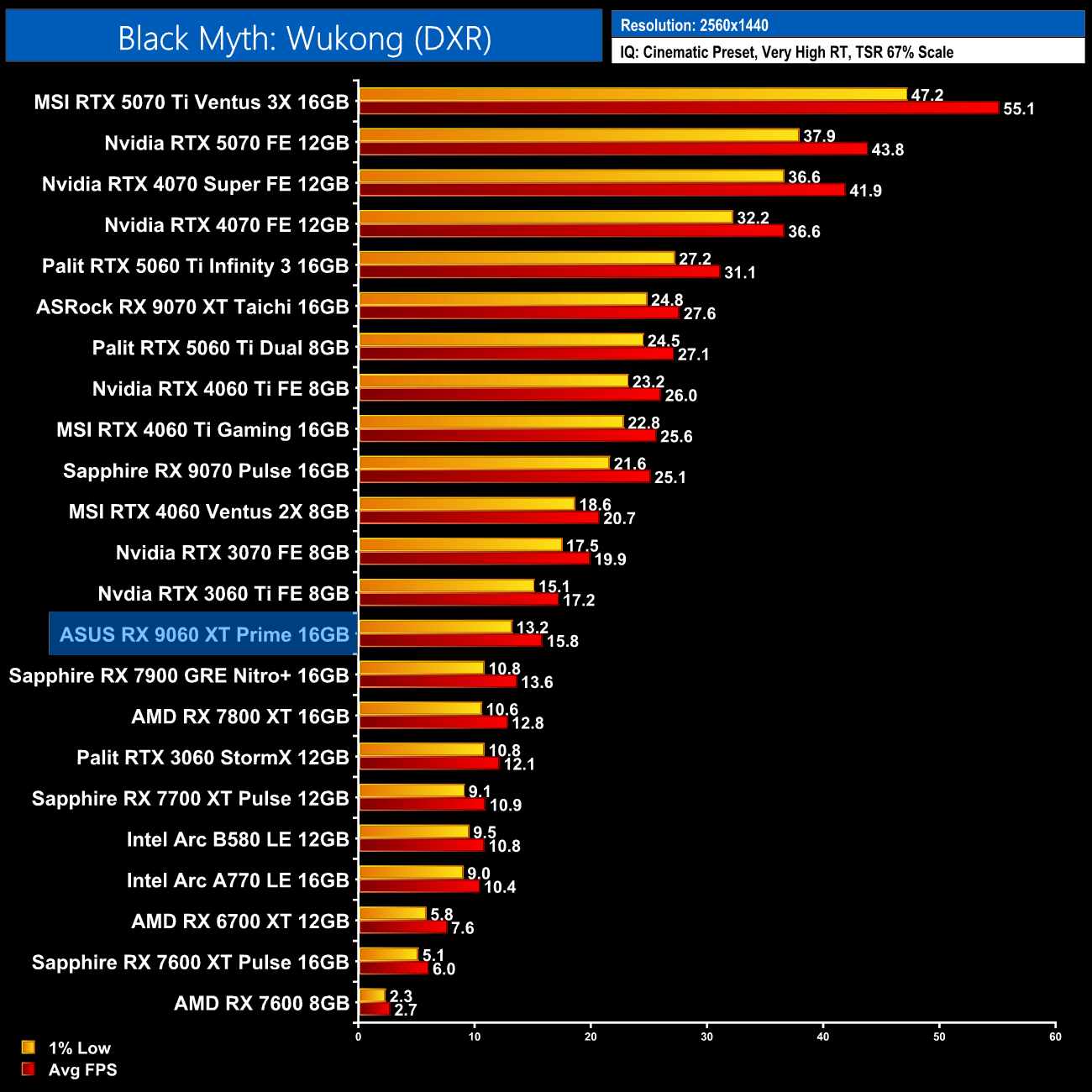
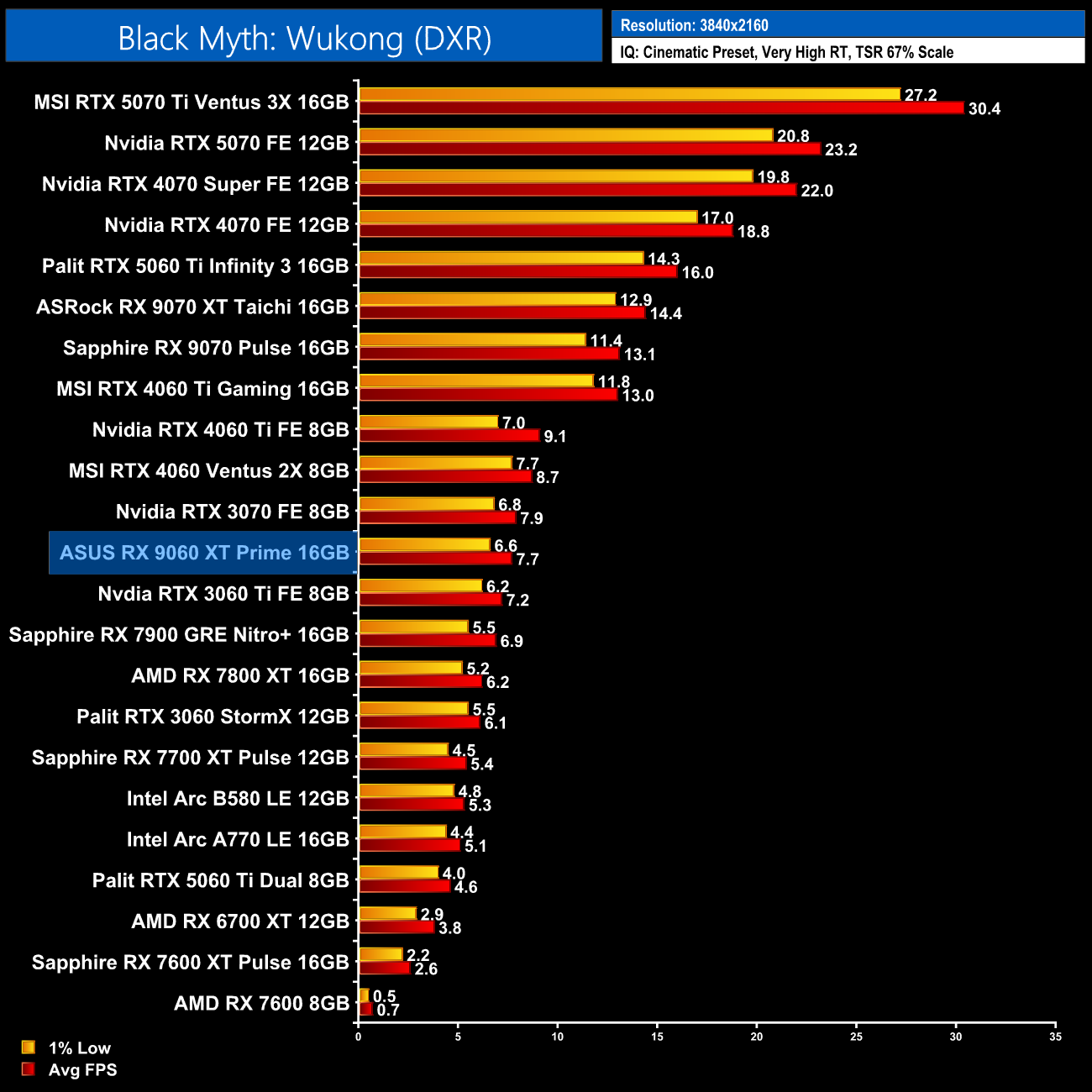
The same goes for Black Myth: Wukong, another highly demanding title when using path tracing. Even at 1080p with Quality upscaling, performance just isn't playable on this sort of GPU – you'd need an RX 9070 as the bare minimum.
Cyberpunk 2077 is a 2020 action role-playing video game developed and published by CD Projekt. The story takes place in Night City, an open world set in the Cyberpunk universe. Players assume the first-person perspective of a customisable mercenary known as V, who can acquire skills in hacking and machinery with options for melee and ranged combat. Cyberpunk 2077 was released for Microsoft Windows, PlayStation 4, Stadia, and Xbox One on 10 December 2020. (Wikipedia).
Engine: REDengine 4. We test using the Ray Tracing: Ultra preset, DXR API. DLSS/FSR are disabled.
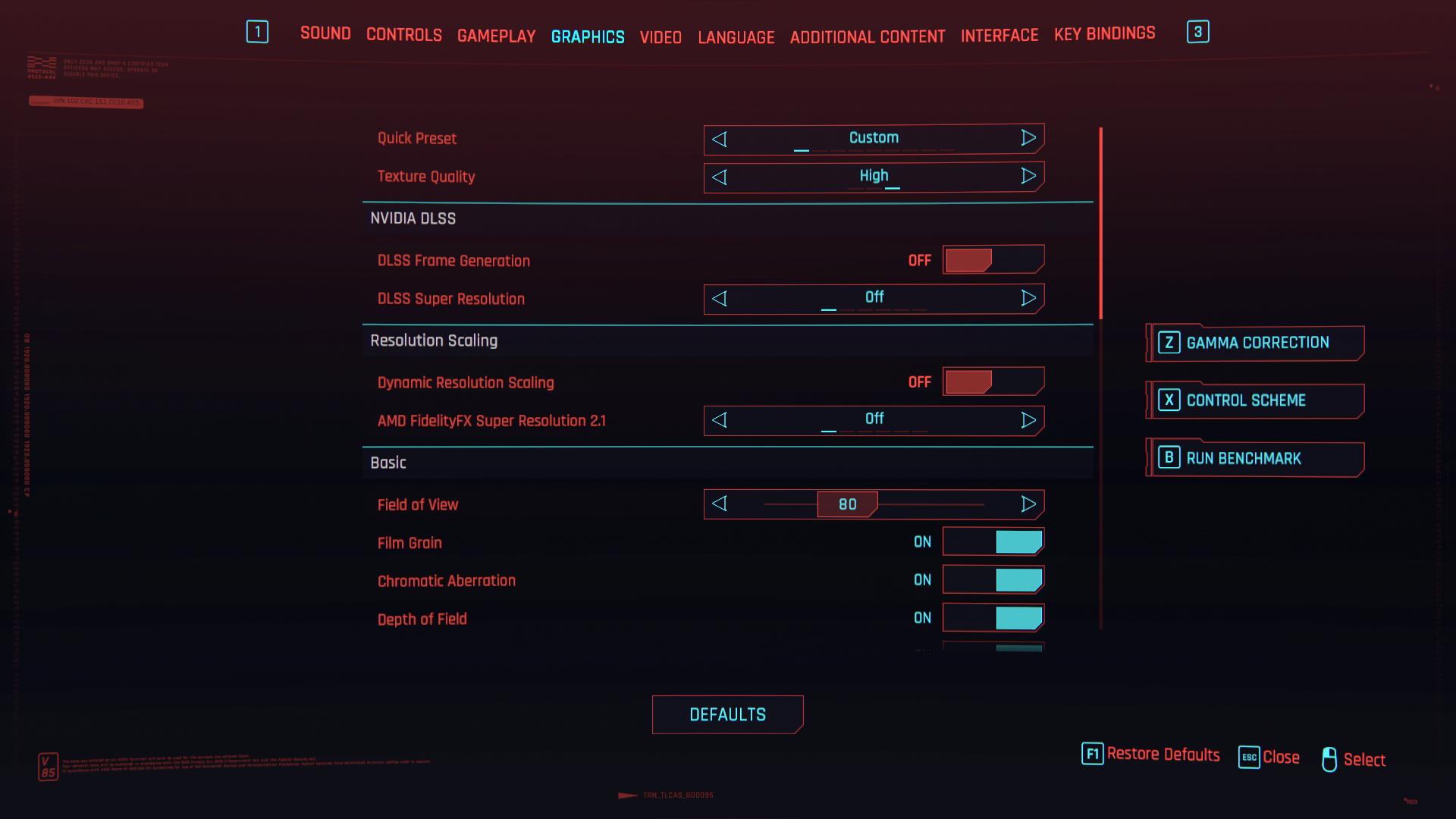
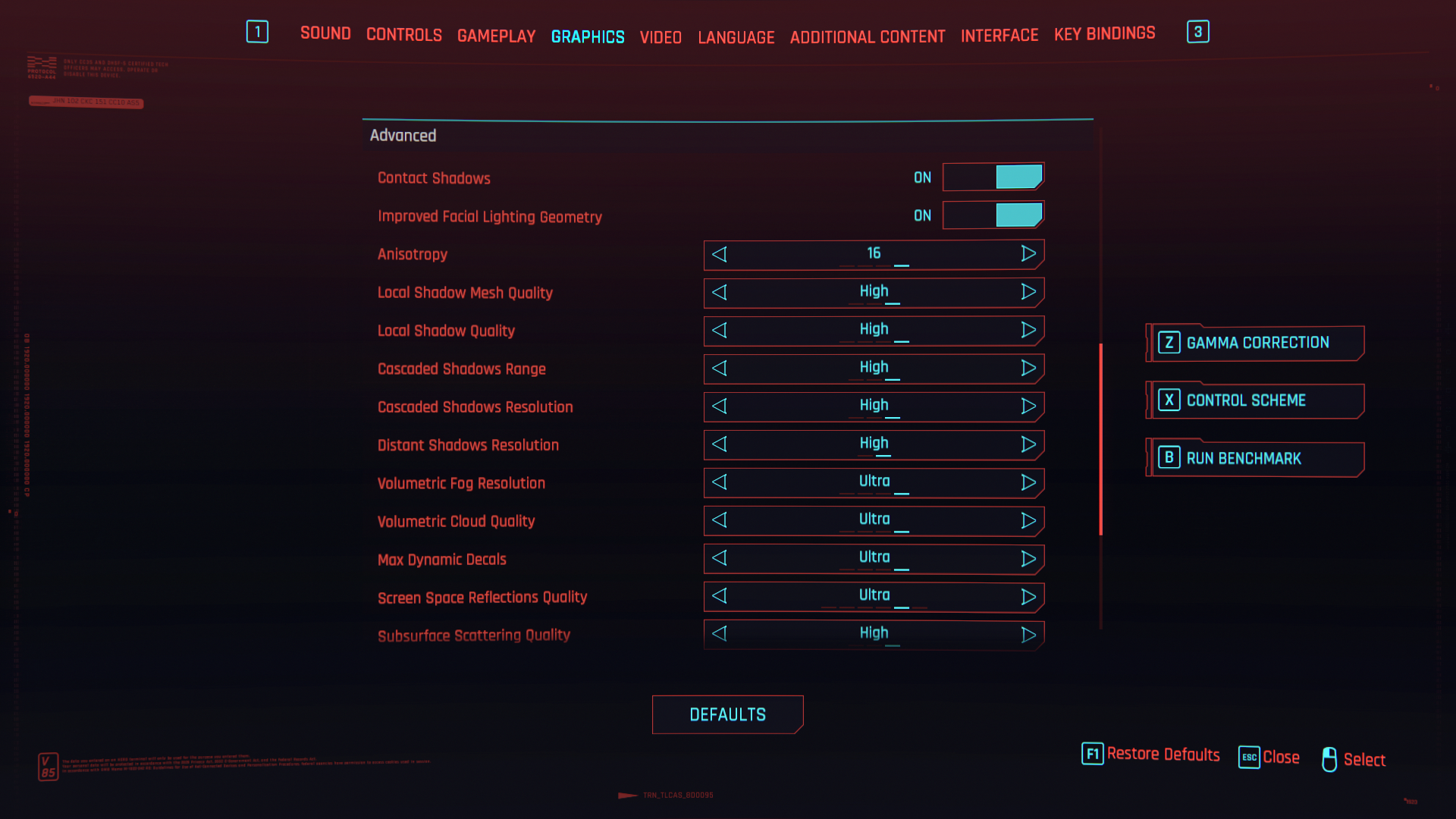
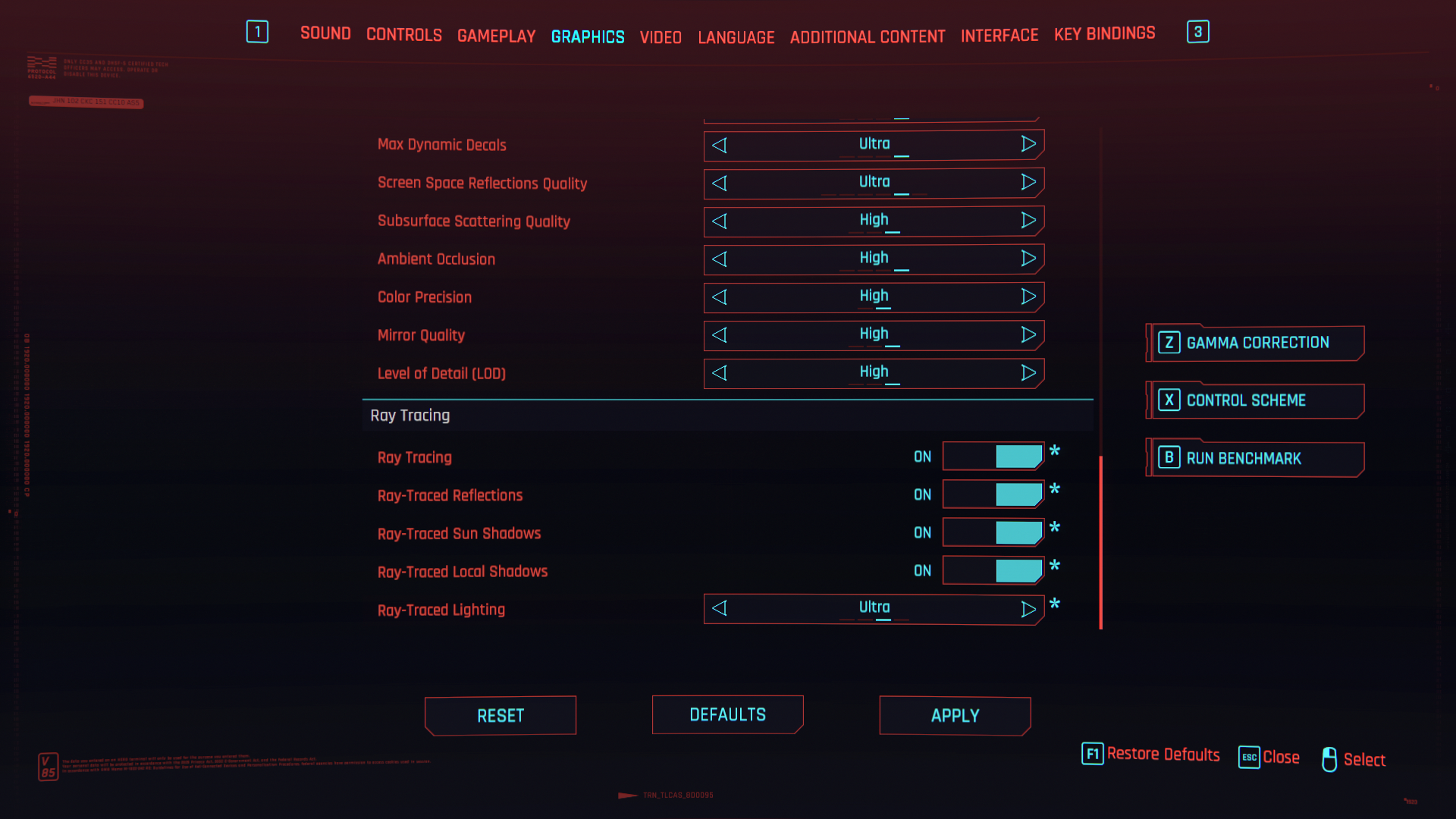
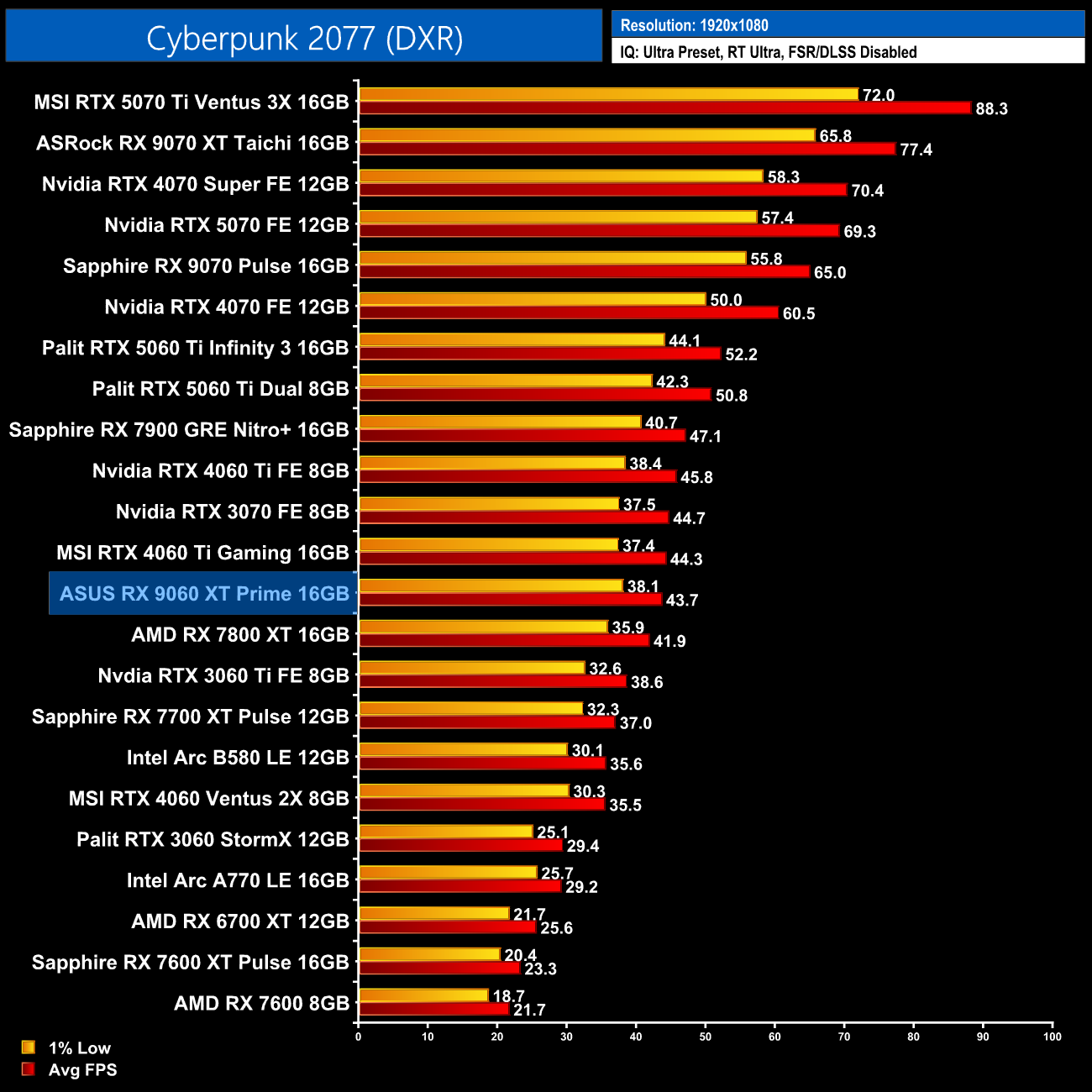
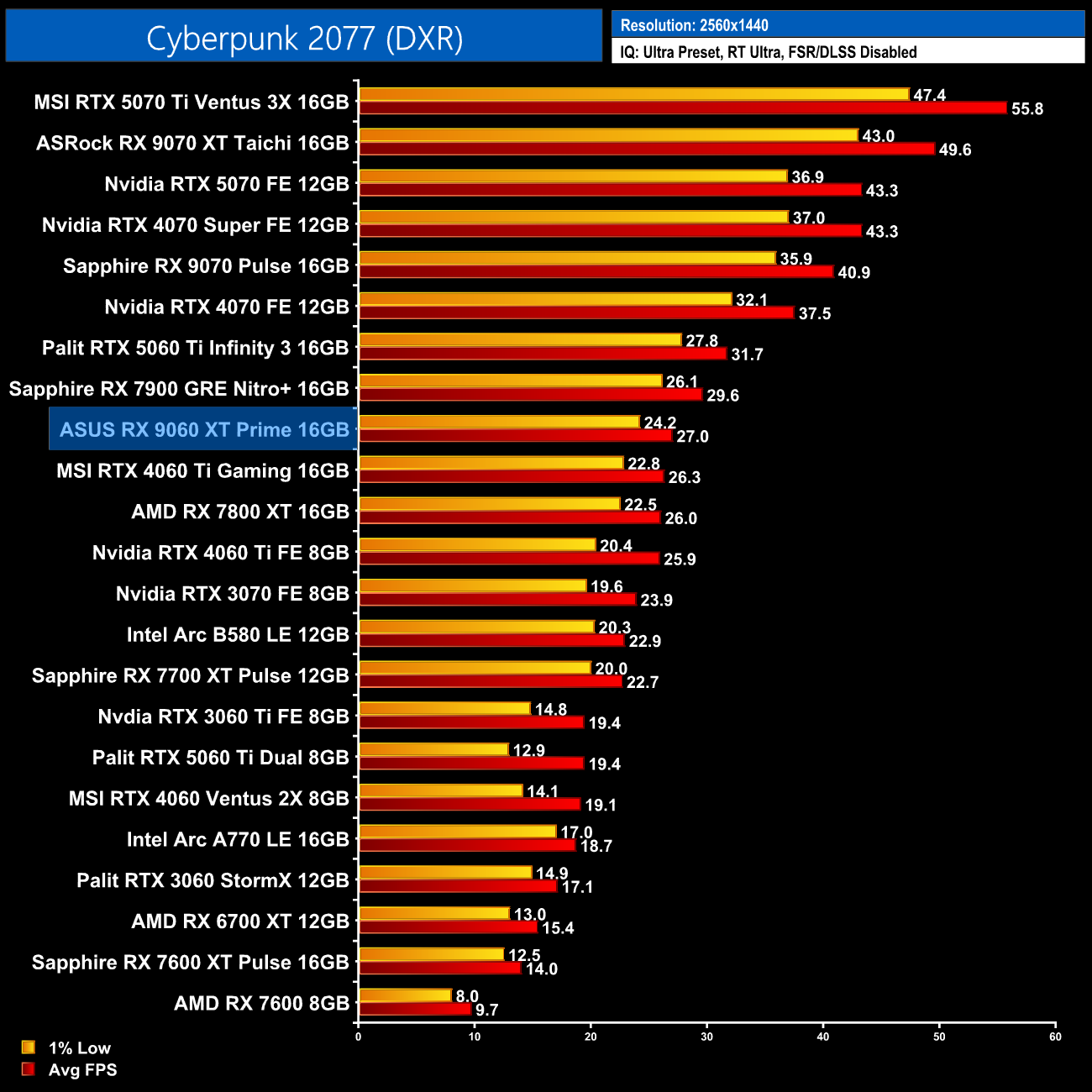
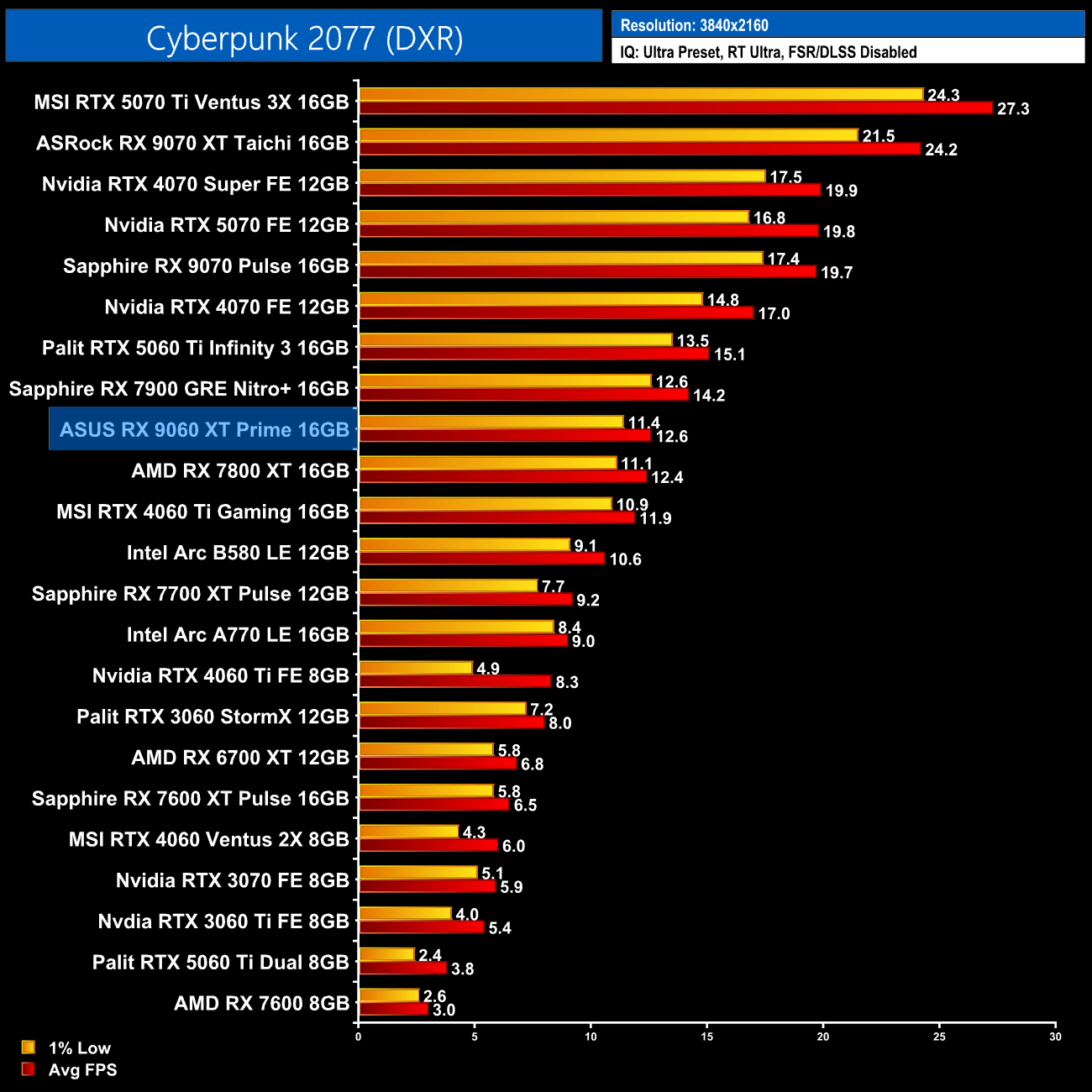
Cyberpunk 2077 isn't so bad though, using the Ultra preset but with no upscaling. Here the 9060 XT 16GB managed 47fps, making it a touch faster than the 7800 XT, but of course still well behind Nvidia as it's about 16% slower than the 5060 Ti 16GB.
Indiana Jones and the Great Circle is a 2024 action-adventure game developed by MachineGames and published by Bethesda Softworks. It is based on the Indiana Jones franchise and features an original narrative that draws from the film series. Indiana Jones and the Great Circle was released for Windows and Xbox Series X/S on December 9, 2024. A PlayStation 5 version is scheduled to release on April 17, 2025.
Engine: Motor (based on id Tech 7). We test using the Supreme preset, path tracing disabled, Vulkan API. DLSS/FSR are disabled.
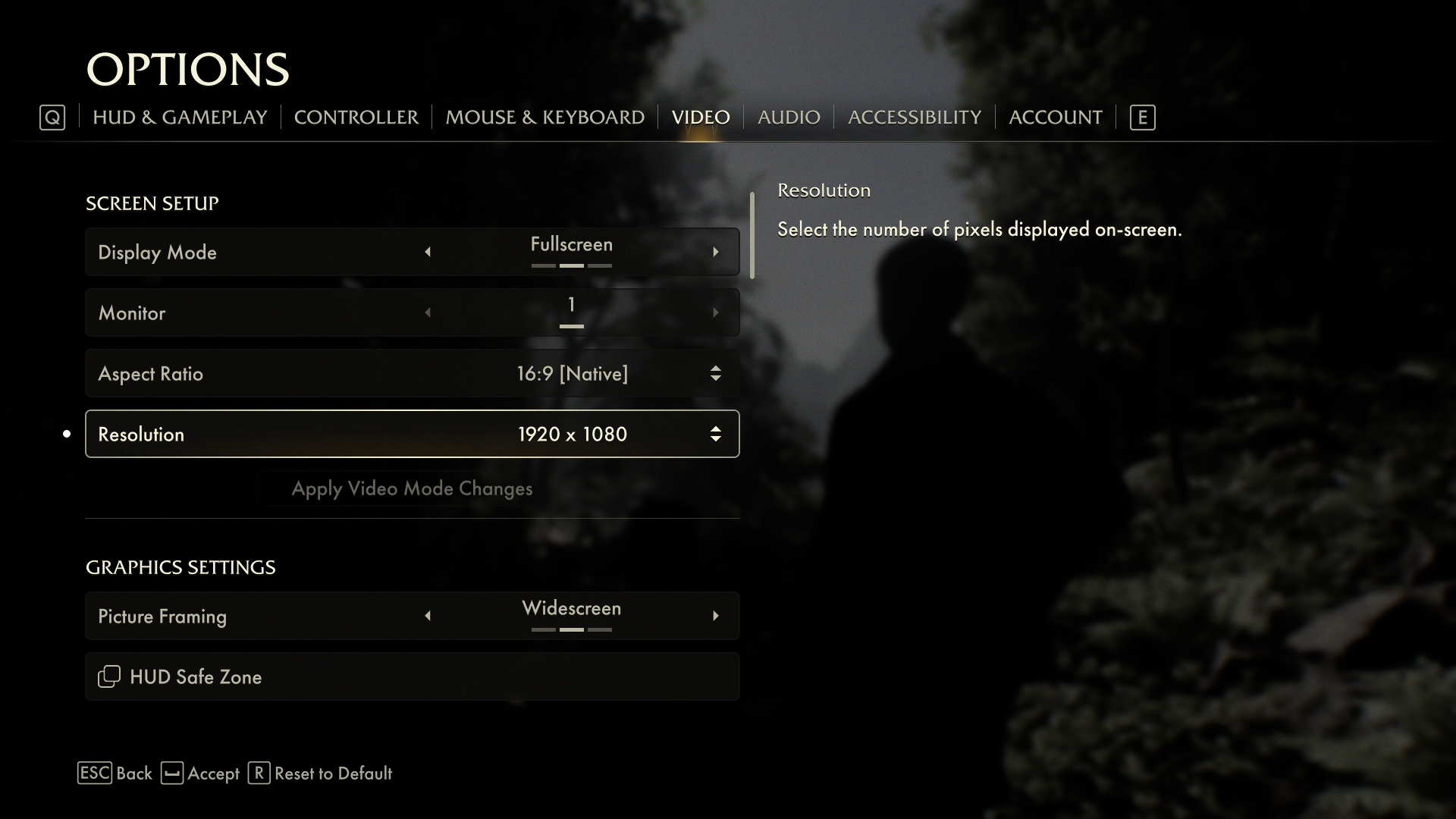
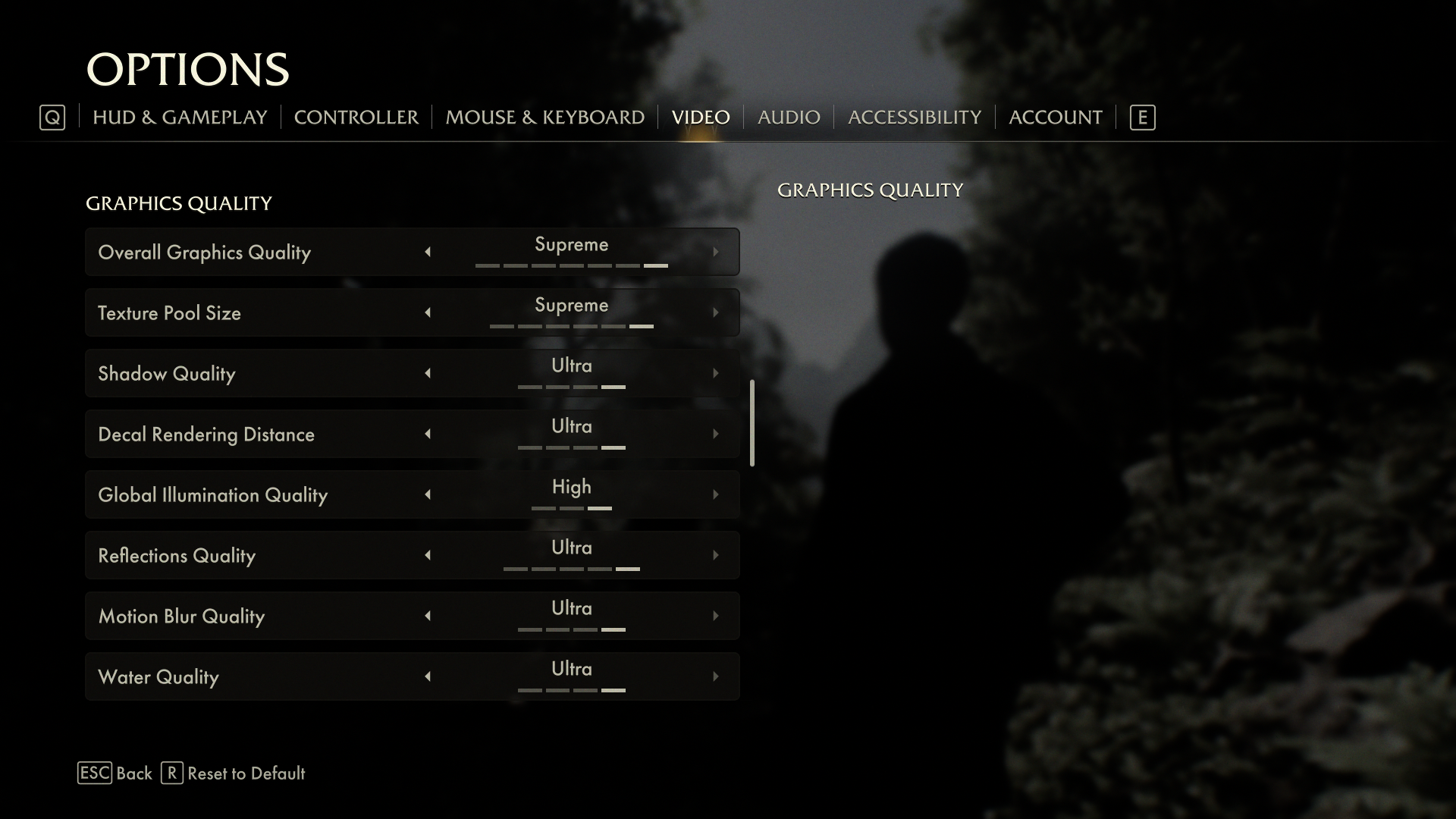
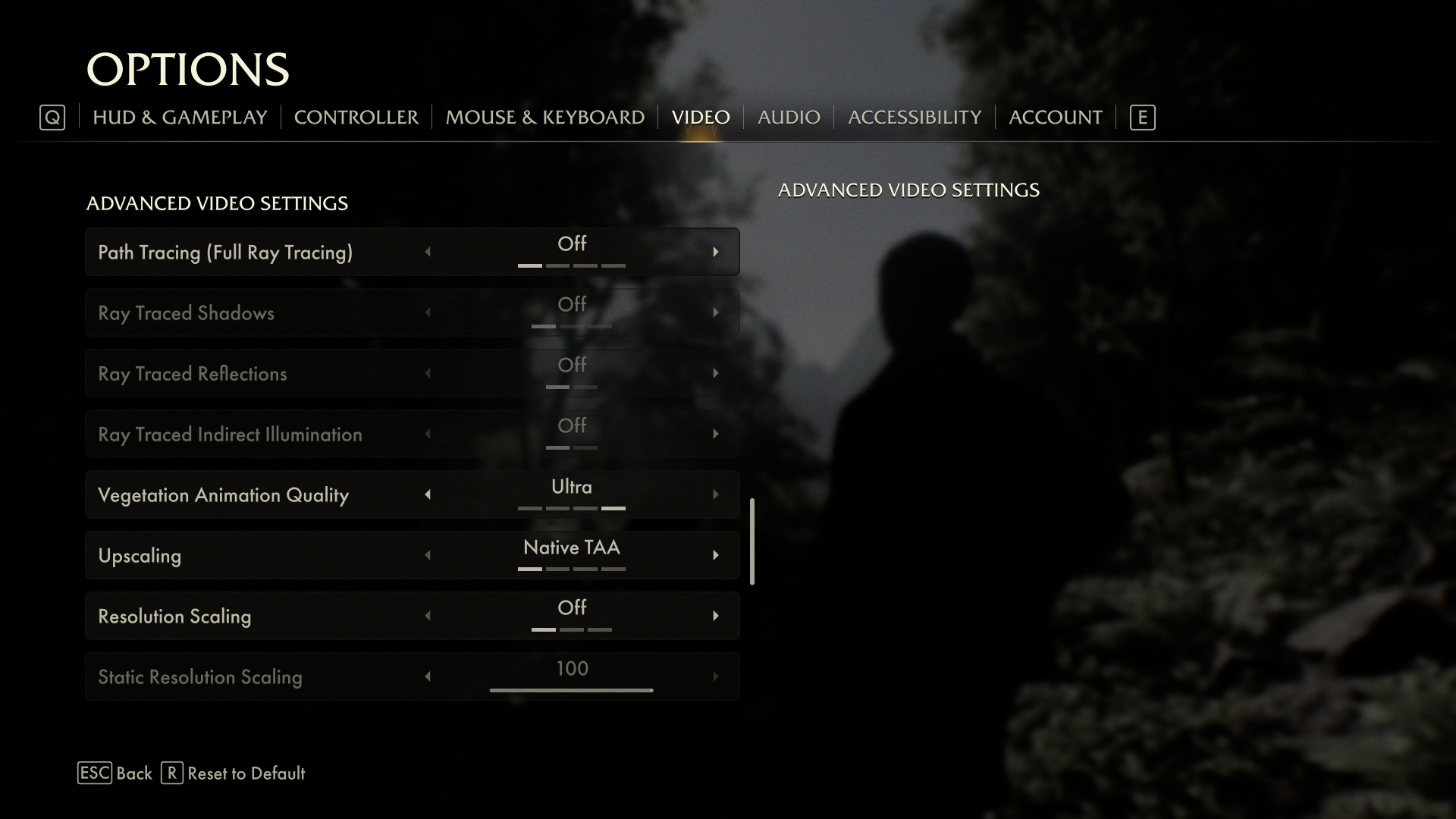

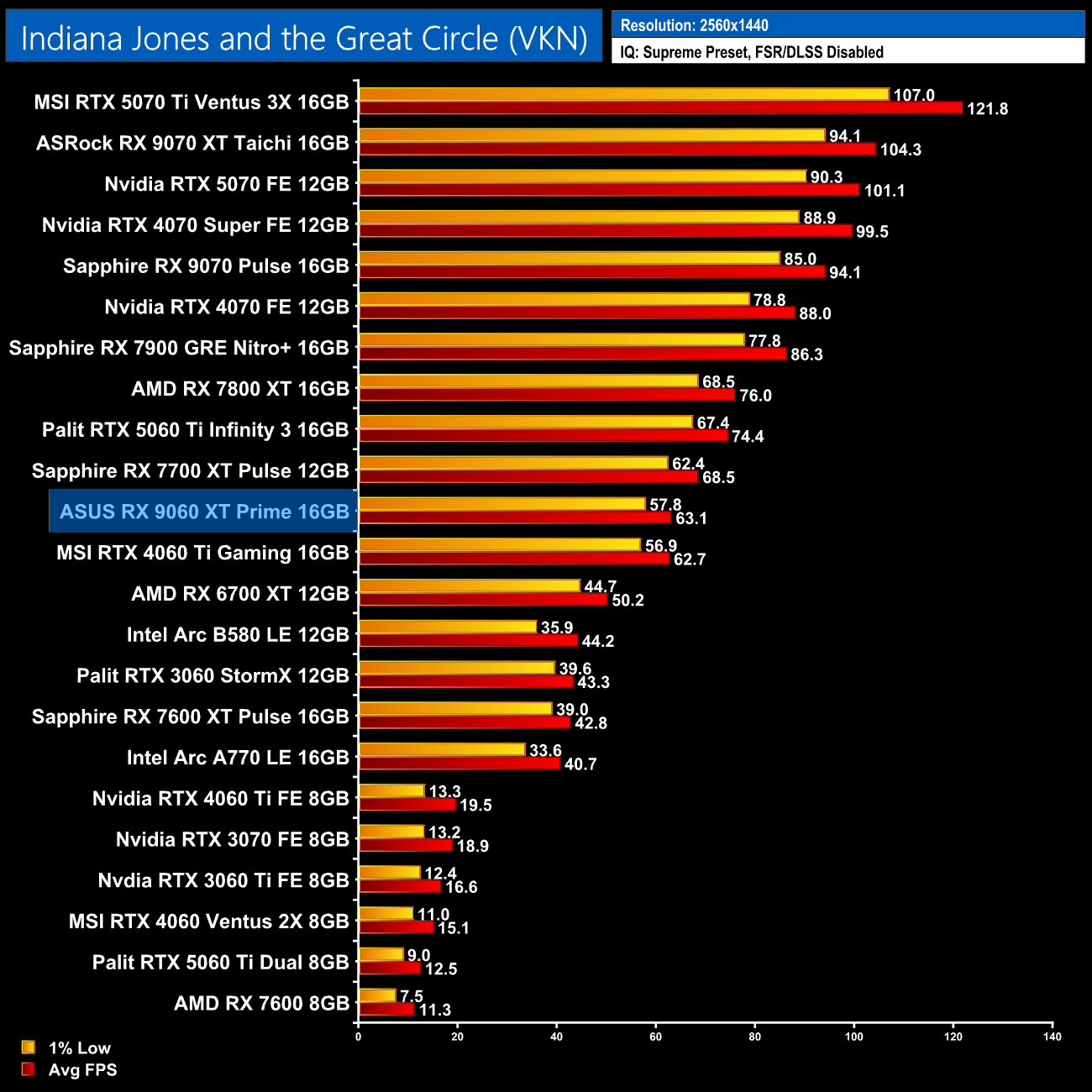

Indiana Jones is well documented for requiring more than 8GB VRAM, we had loads of crashes just trying to complete the benchmark on the 5060 Ti 8GB, but performance is very solid on the 9060 XT 16GB, averaging 84fps. That does mean it's actually slower than the RX 7700 XT, though, and sill 11% behind the 5060 Ti 16GB.
Ratchet & Clank: Rift Apart is a 2021 third-person shooter platform game developed by Insomniac Games and published by Sony Interactive Entertainment for the PlayStation 5. It is the ninth main installment in the Ratchet & Clank series and a sequel to Ratchet & Clank: Into the Nexus. Rift Apart was announced in June 2020 and was released on June 11, 2021. A Windows port by Nixxes Software was released on July 26, 2023. (Wikipedia).
Engine: Insomniac Games in-house engine. We test using the Very High preset, Very High ray tracing, DXR API. DLSS/FSR are disabled.
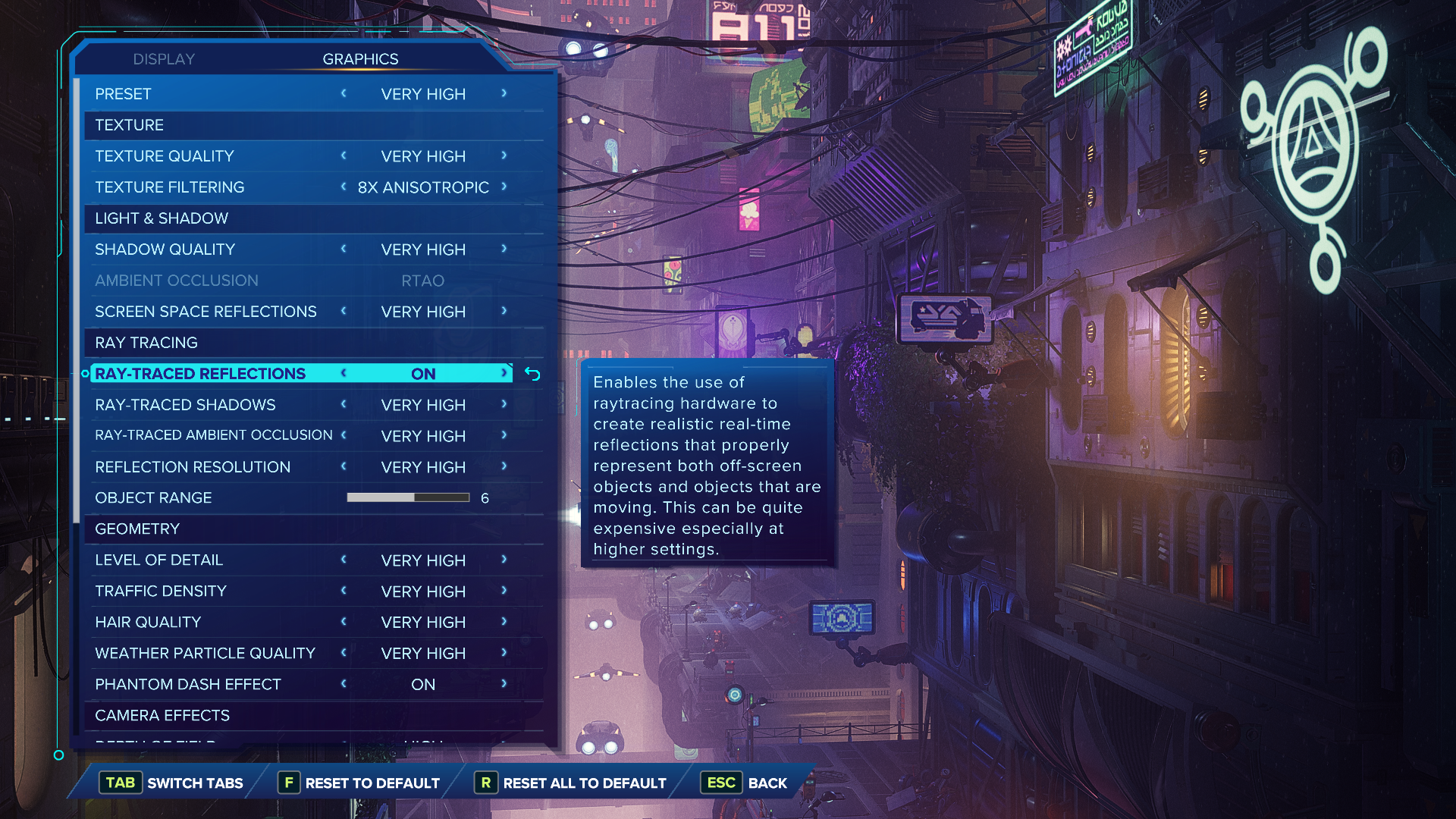
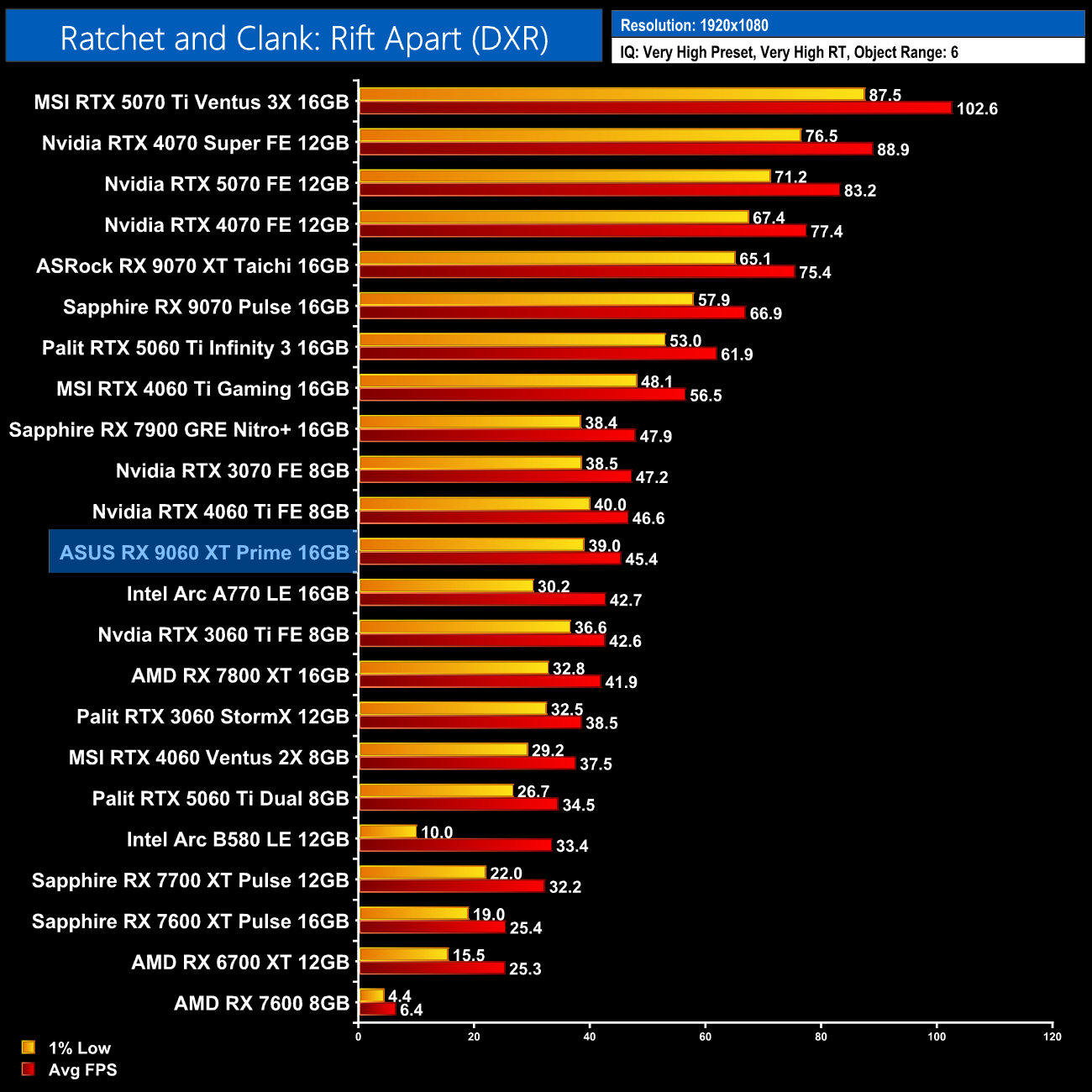
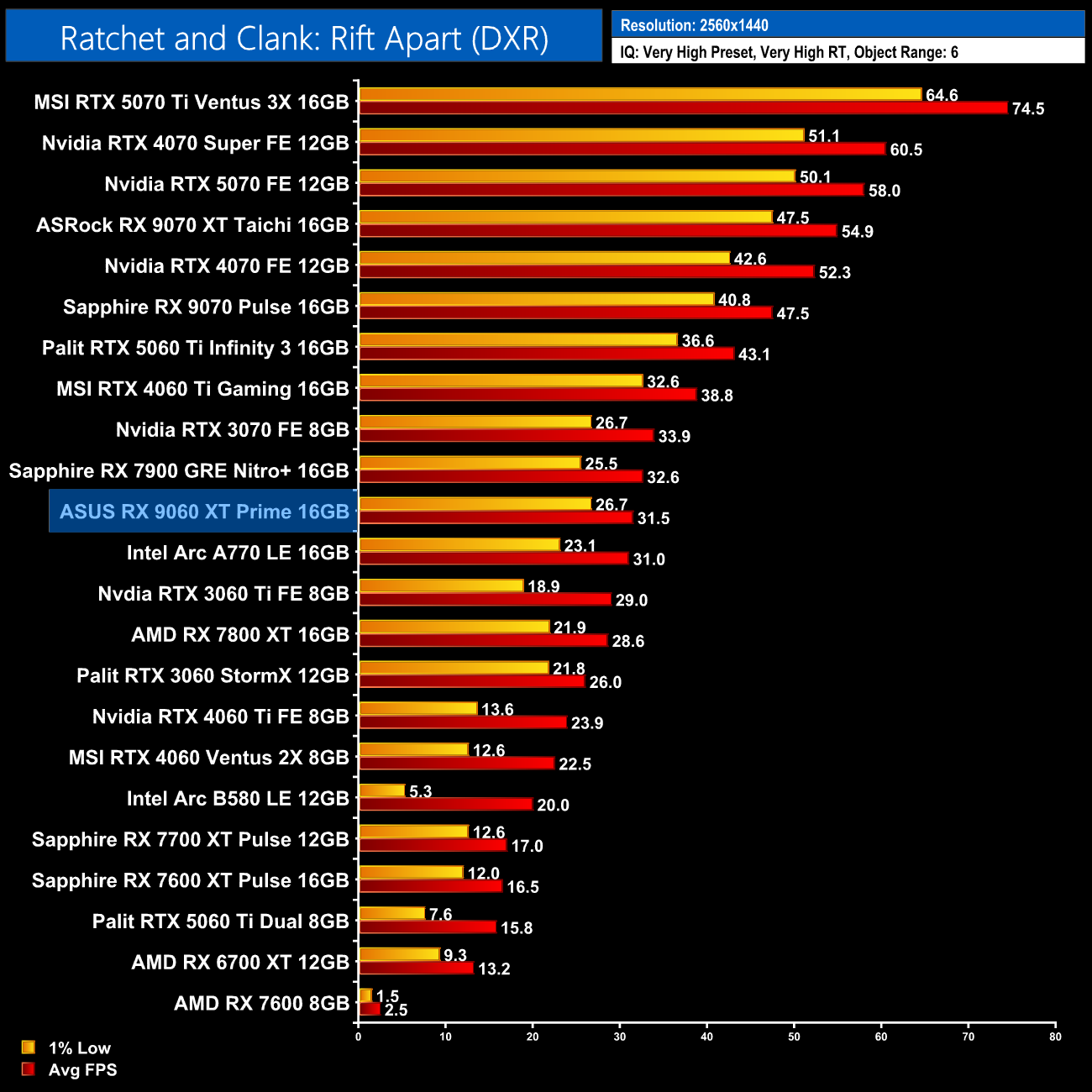
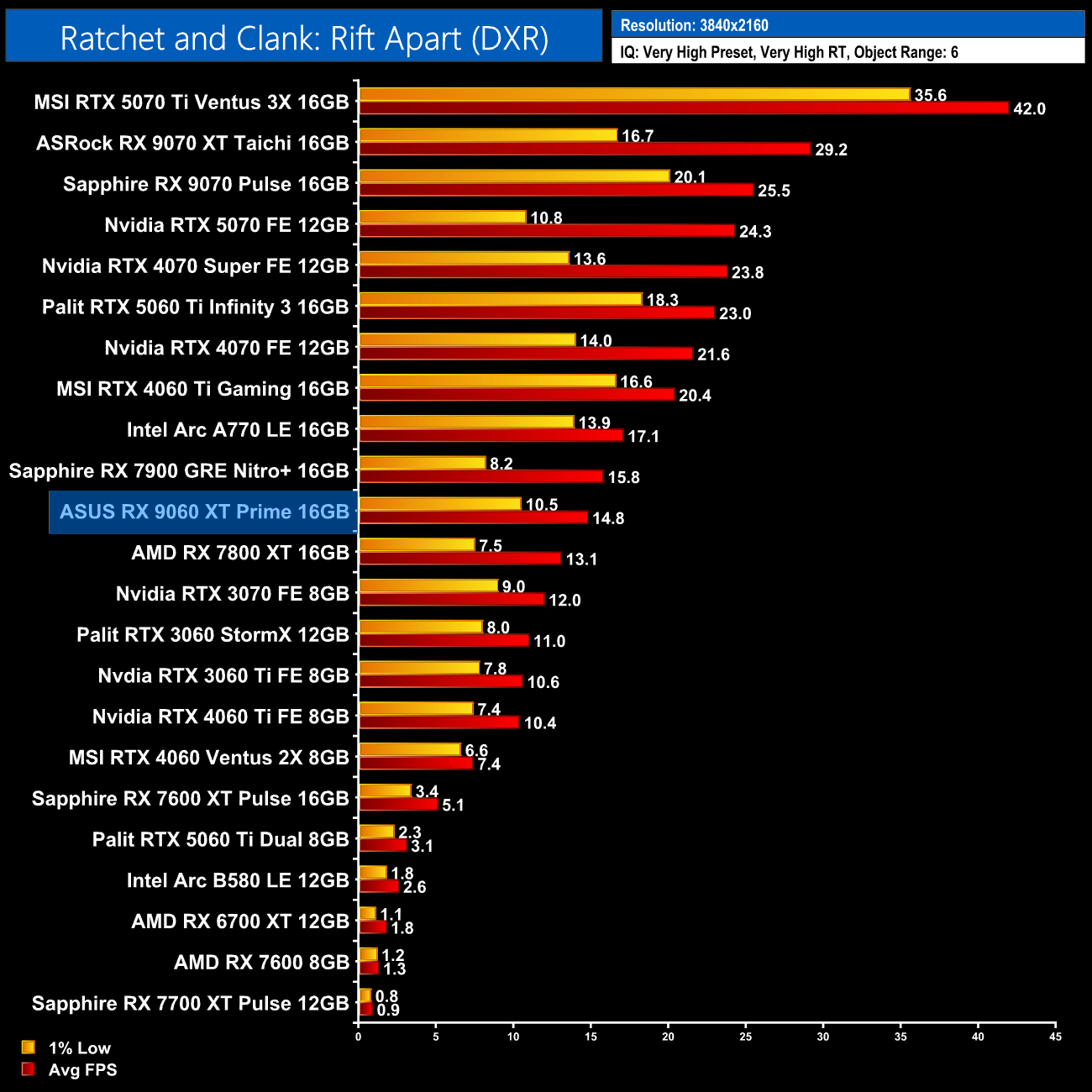
There are clear gains to be seen in Ratchet and Clank though, given the 9060 XT 16GB is only 3fps behind the 7900 GRE. Once more, VRAM is an issue for 8GB cards, and the 9060 XT 16GB is 32% faster than the 5060 Ti 8GB.
Returnal is a 2021 roguelike video game developed by Housemarque and published by Sony Interactive Entertainment. It was released for the PlayStation 5 on April 30, 2021 and Windows on February 15, 2023. The game follows Selene Vassos, an astronaut who lands on the planet Atropos in search of the mysterious “White Shadow” signal and finds herself trapped in a time loop. (Wikipedia).
Engine: Unreal Engine 4. We test using the Epic preset, Epic ray traced shadows and reflections, DXR API. DLSS/FSR are disabled.
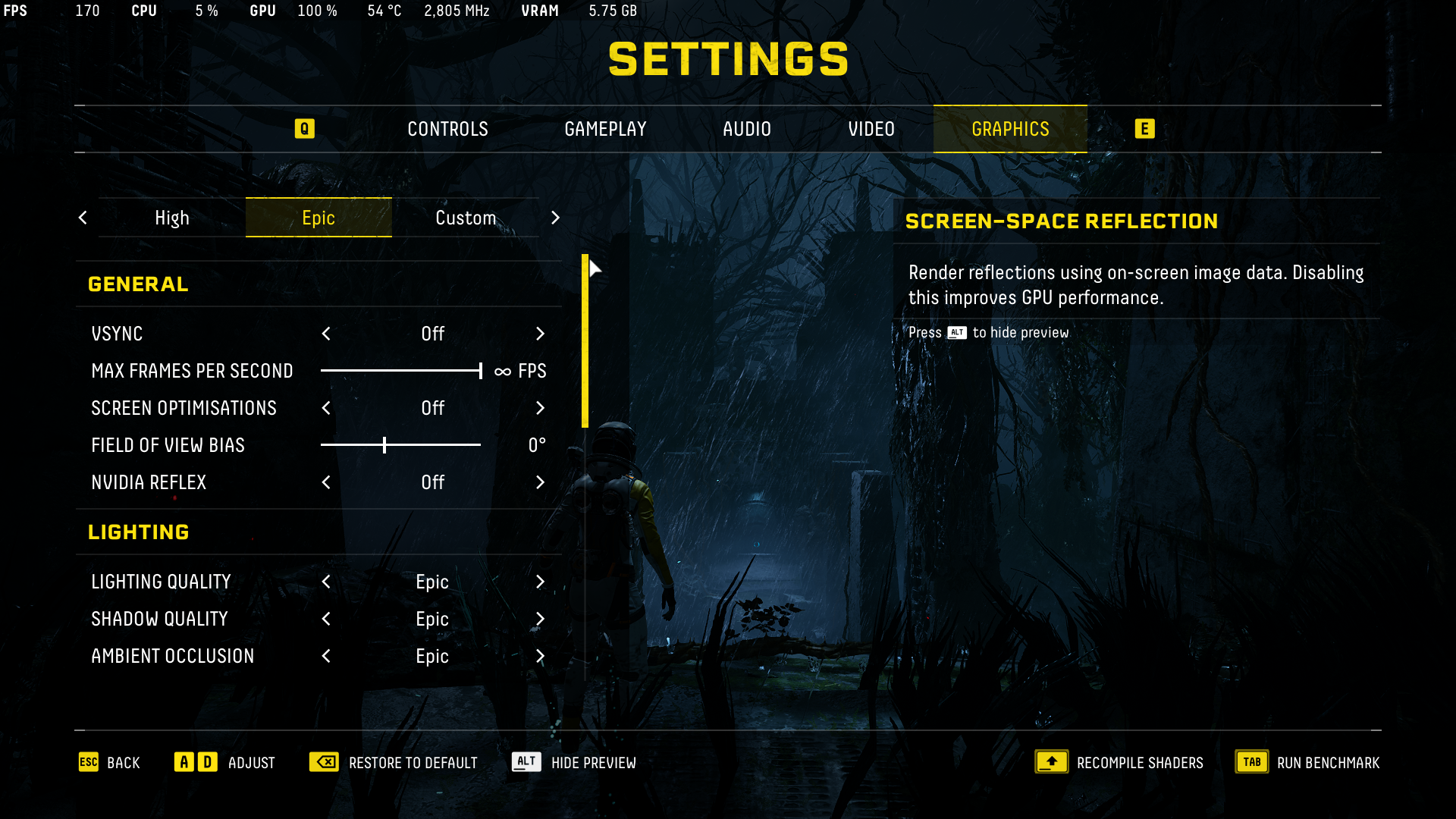
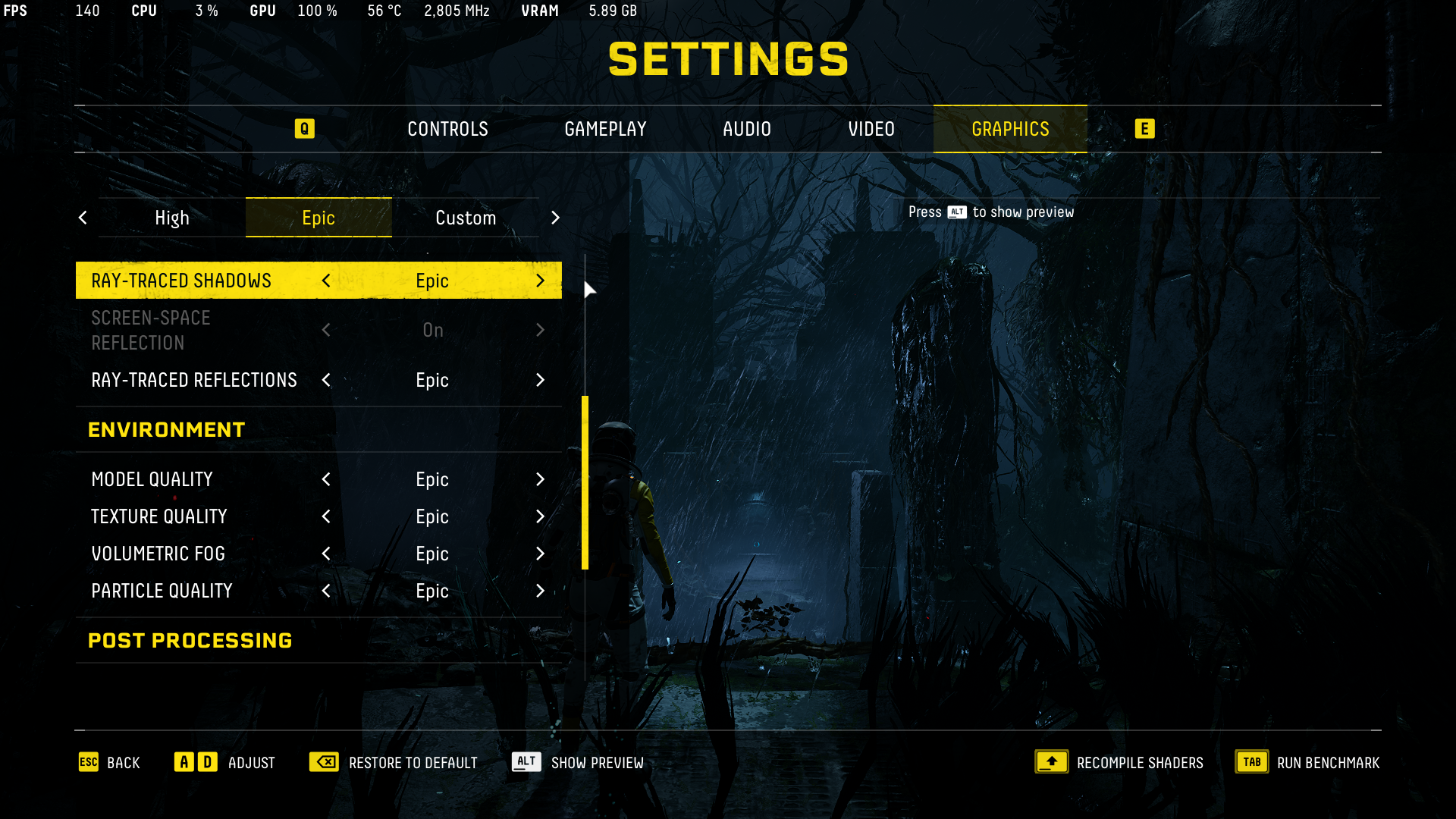
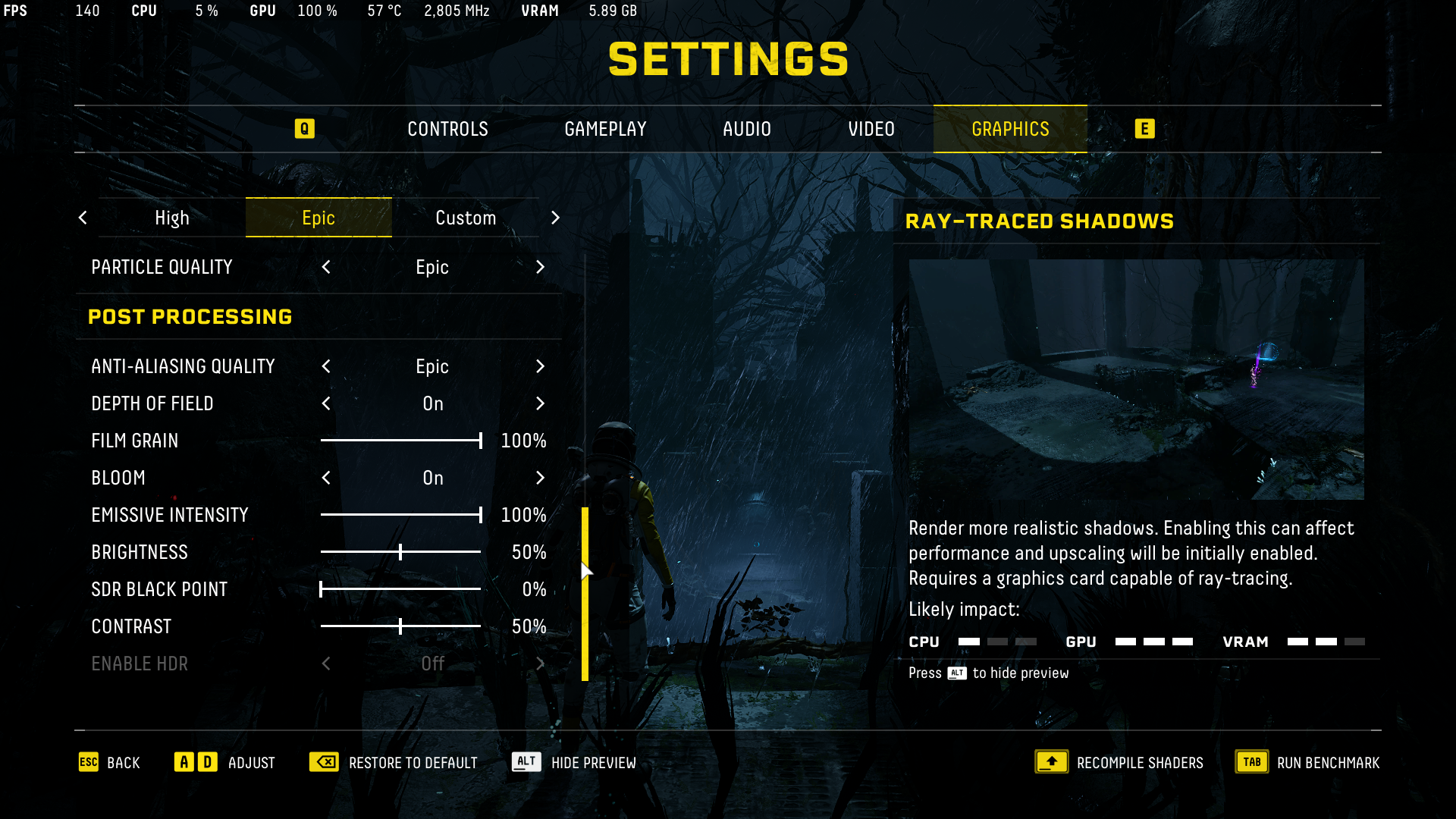
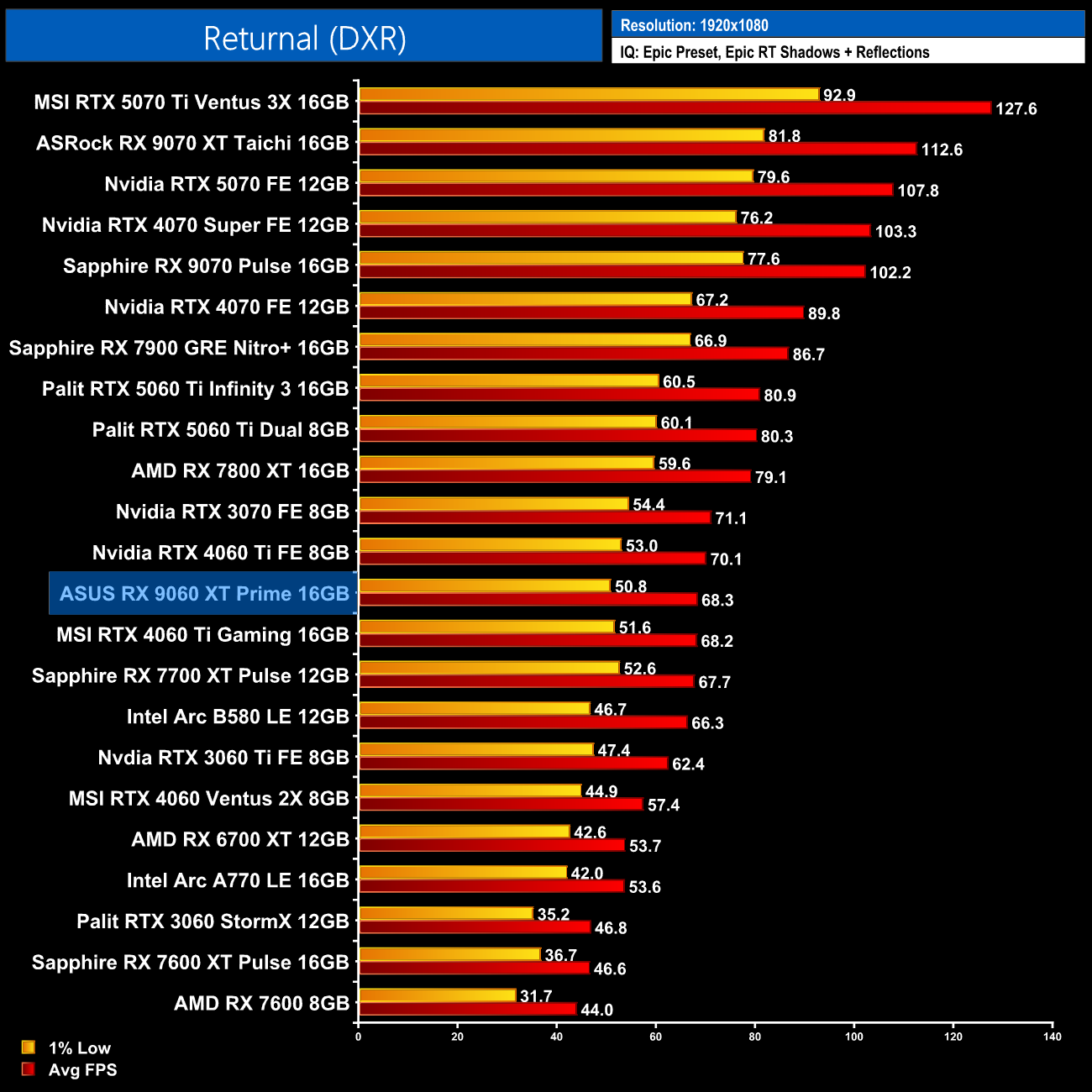
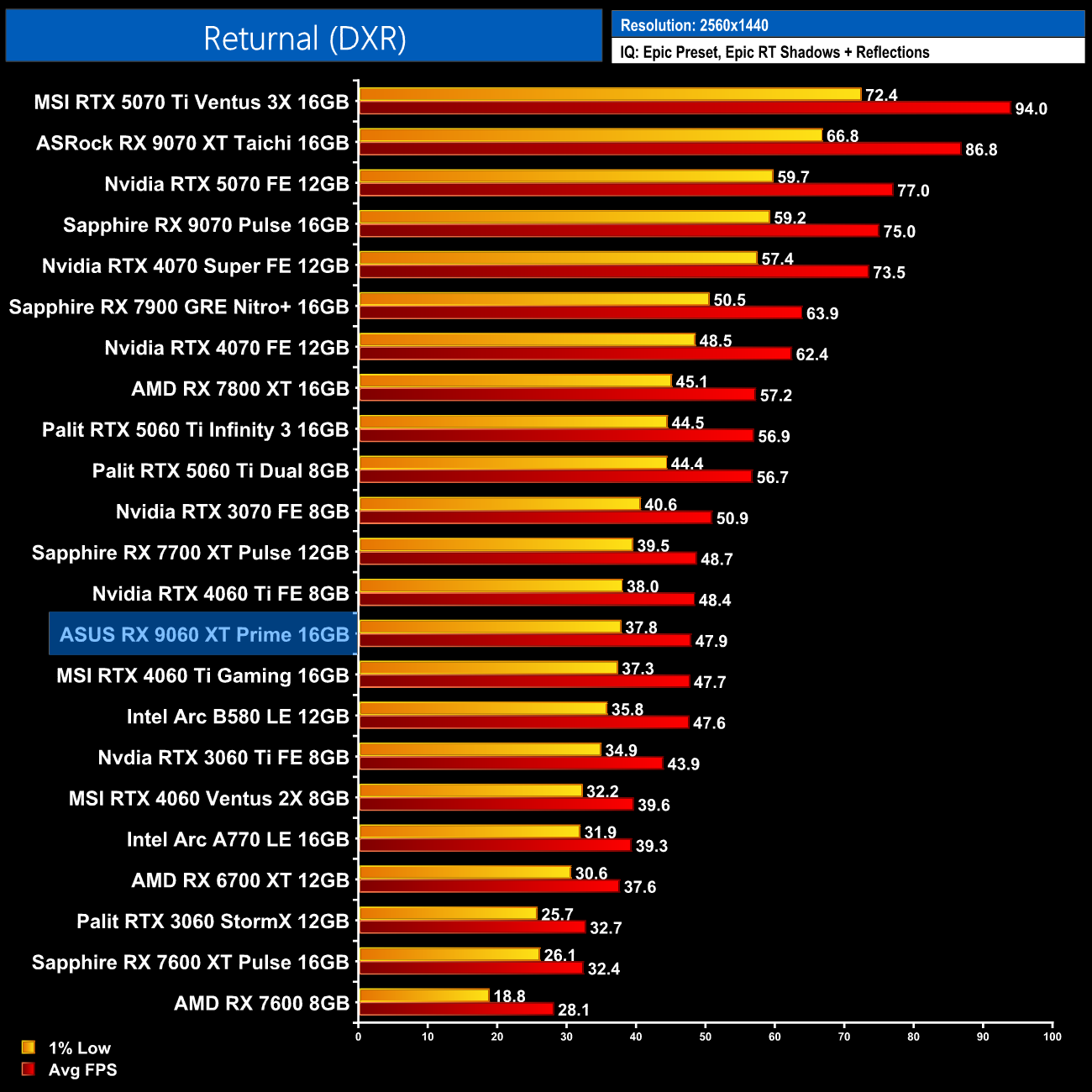
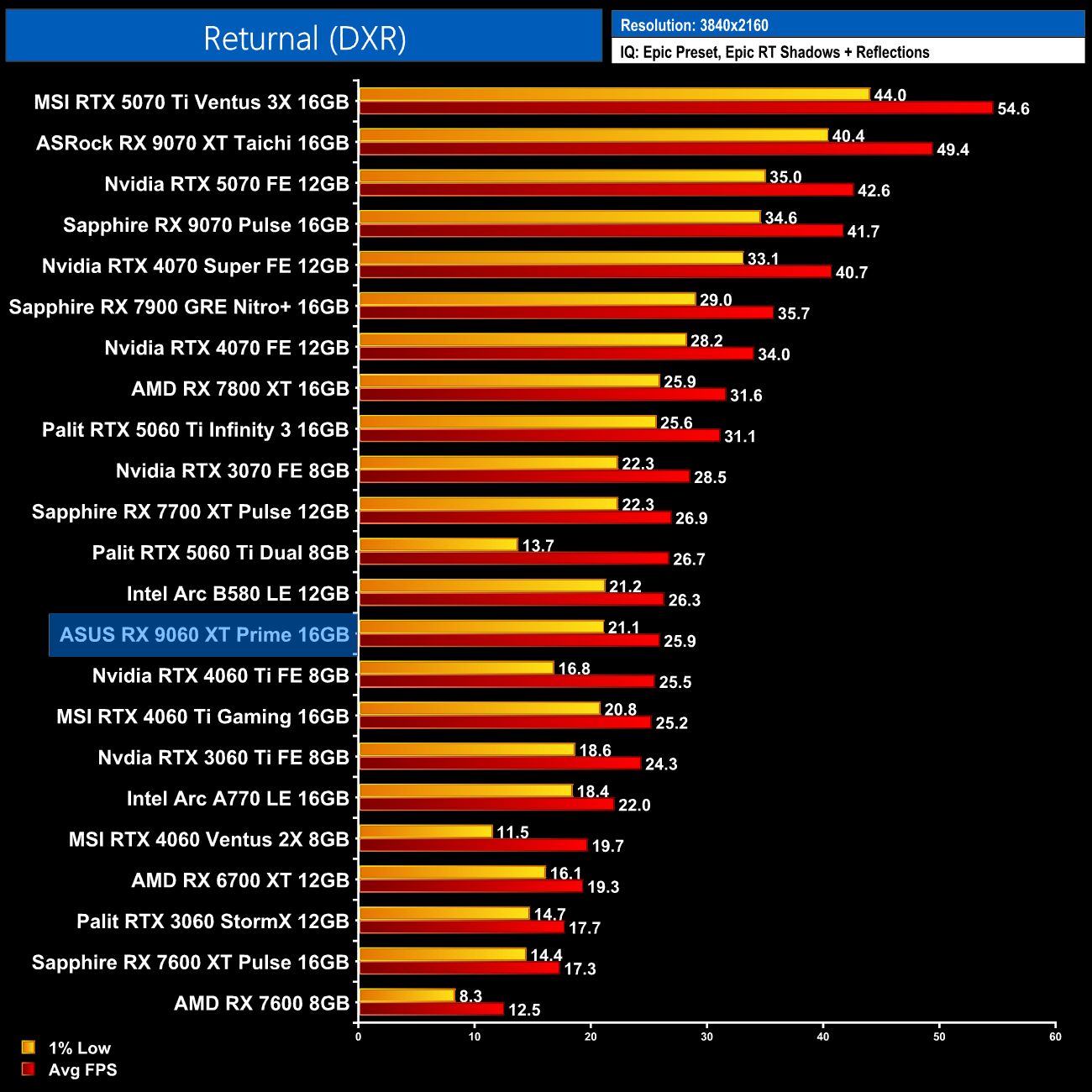
Returnal is a less demanding title with RT enabled, and here performance for the 9060 XT 16GB isn't any better than the 7700 XT. That means it is still some 15% slower than even the 5060 Ti 8GB.
Shadow of the Tomb Raider is a 2018 action-adventure video game developed by Eidos-Montréal and published by Square Enix's European subsidiary. It continues the narrative from the 2015 game Rise of the Tomb Raider and is the twelfth mainline entry in the Tomb Raider series, as well as the third and final entry of the Survivor trilogy. The game was originally released worldwide for PlayStation 4, Windows, and Xbox One. (Wikipedia).
Engine: Foundation Engine. We test using the Highest preset, RT Ultra Shadows, DXR API. DLSS/FSR are disabled.
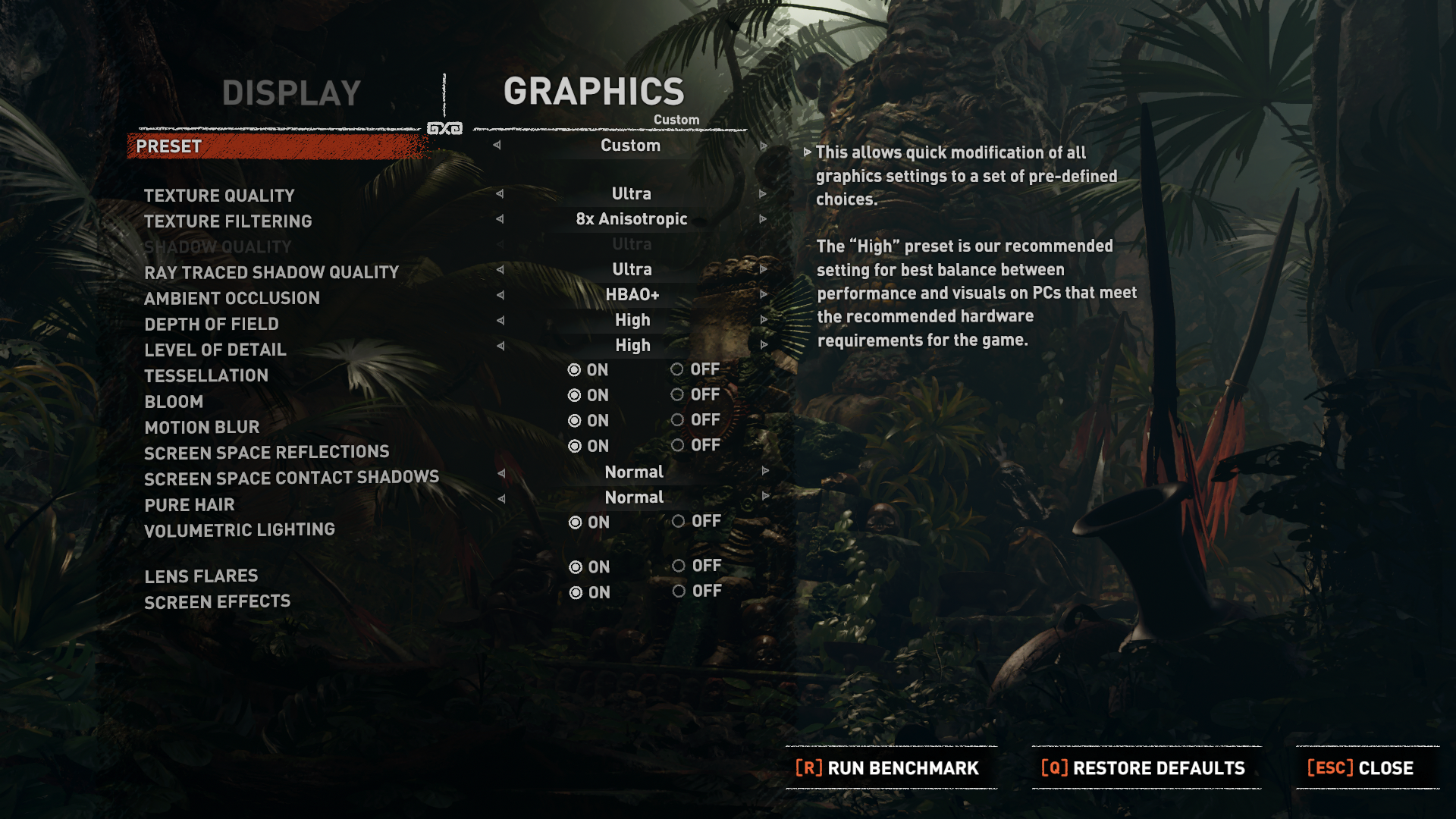
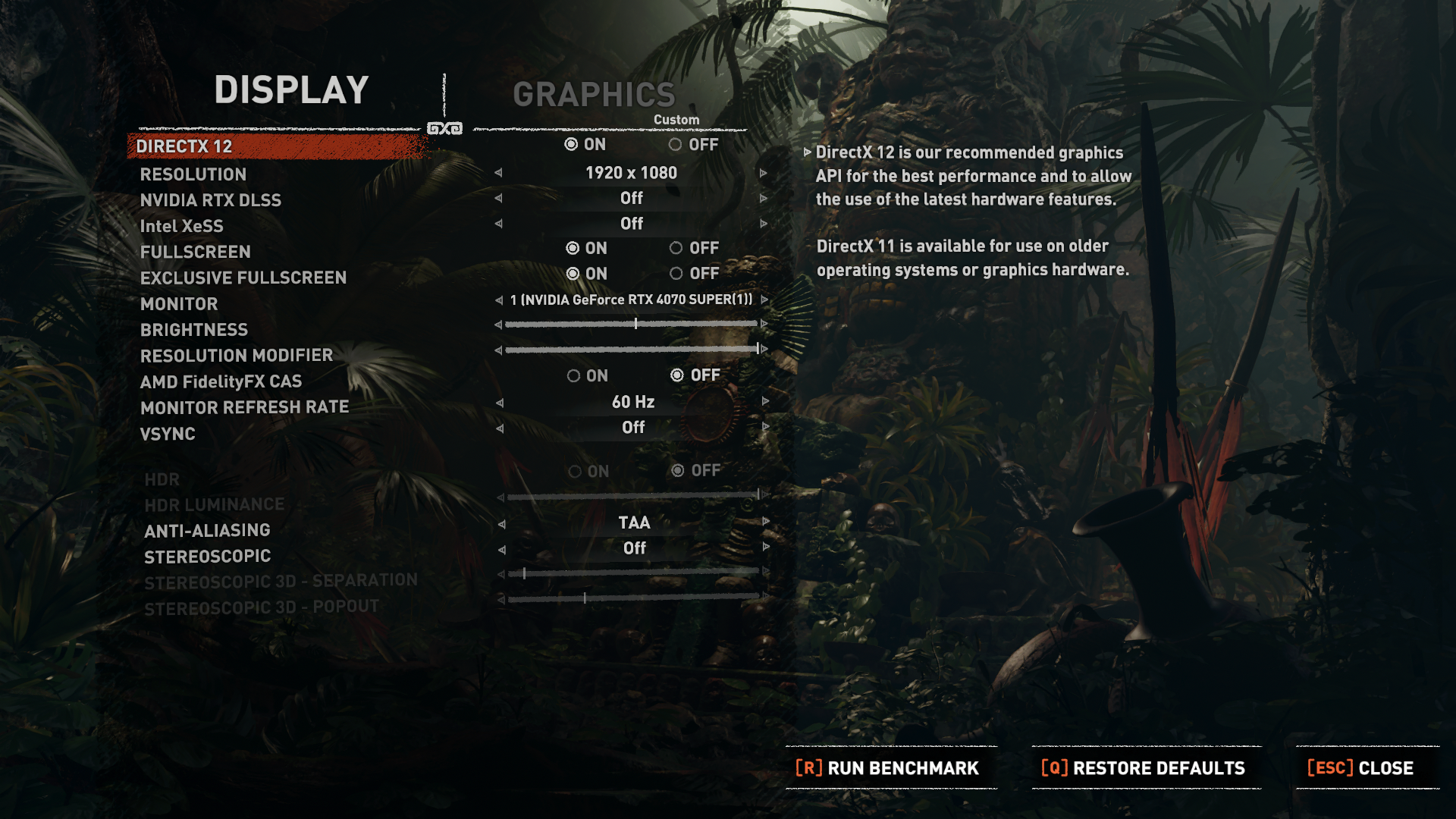
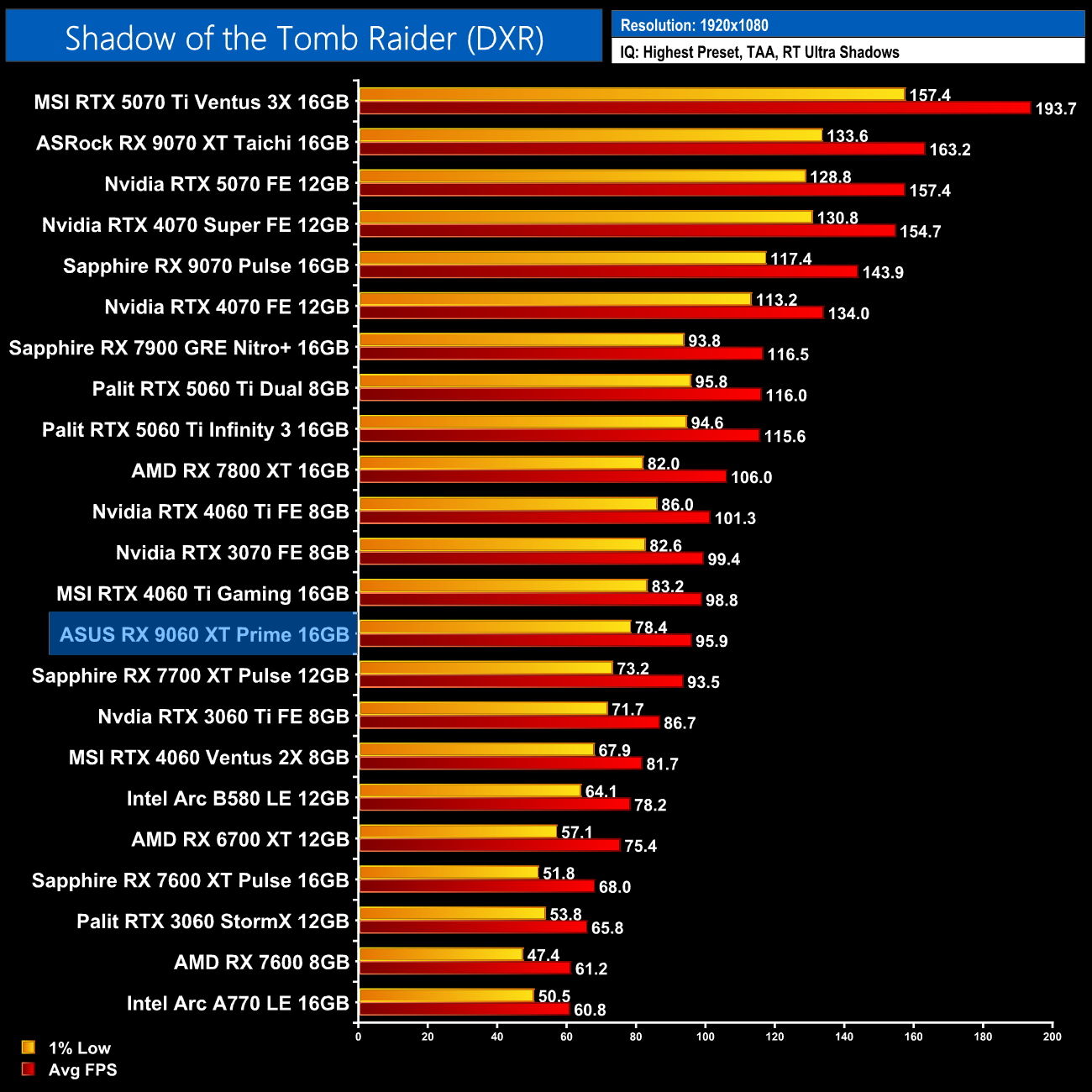
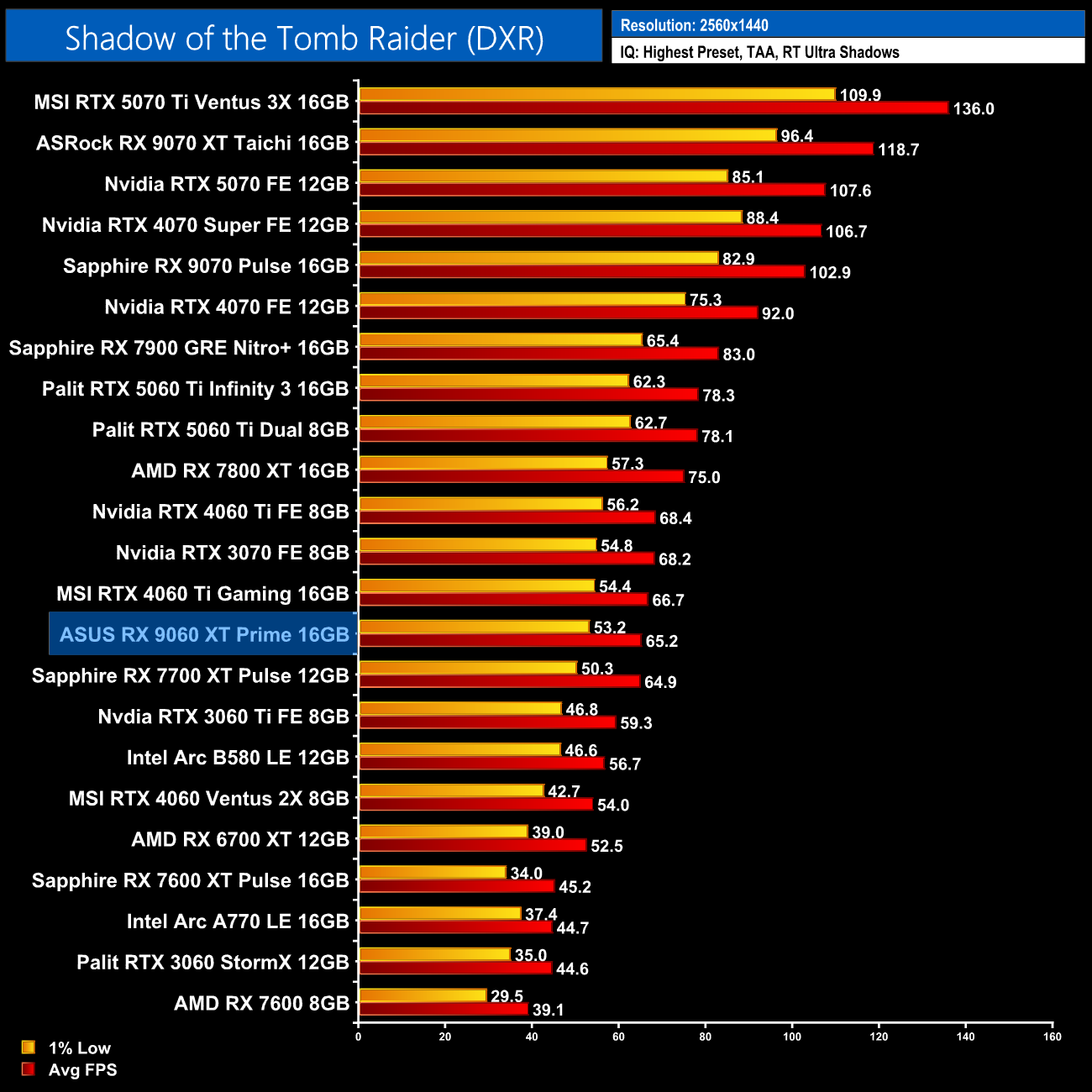
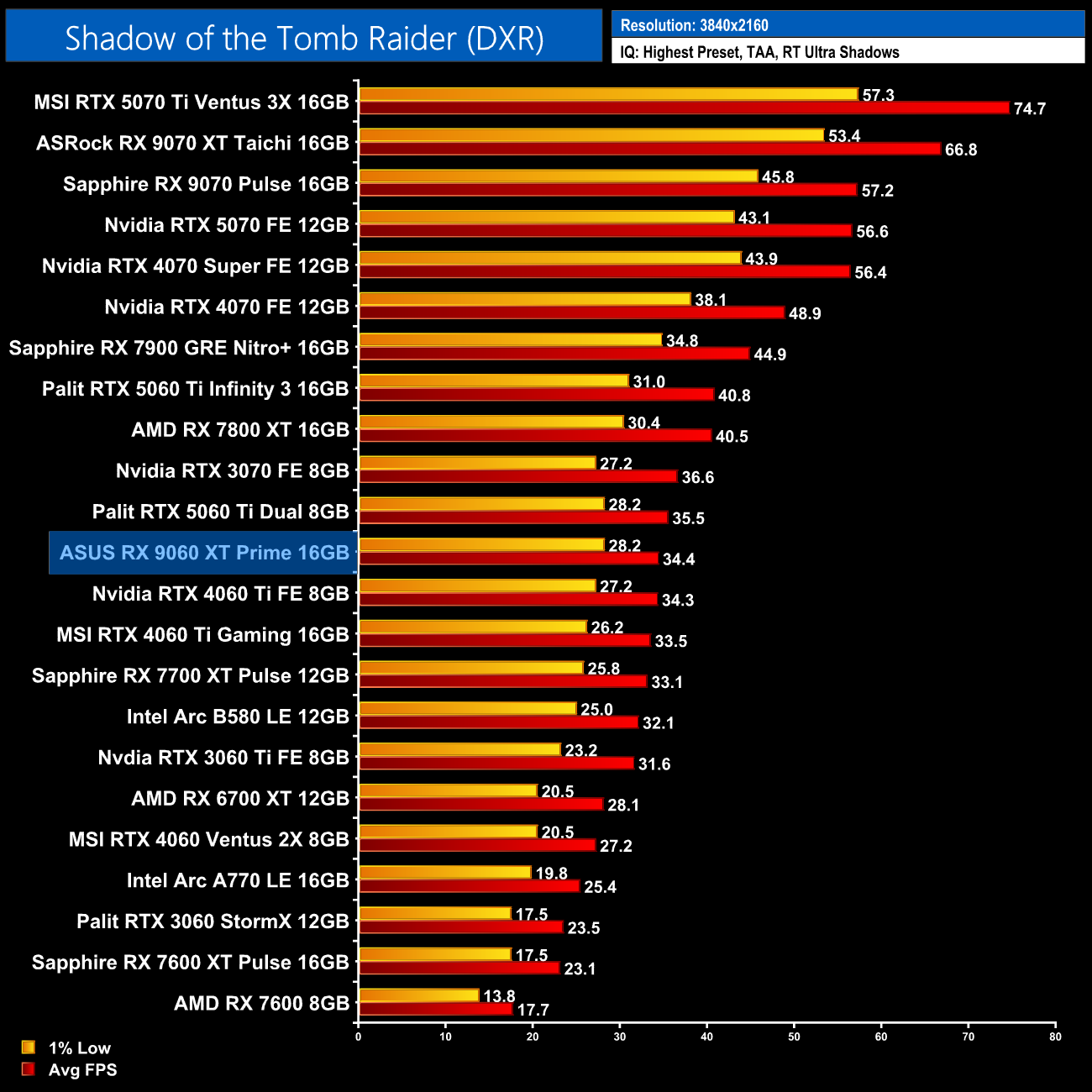
The same goes for Shadow of the Tomb Raider. Utilising just ray traced shadows, it's not particularly demanding – that's good, as fps is still very high for the 9060 XT 16GB, but performance is on par with the 7700 XT and about 17% behind the 5060 Ti 16GB.
Star Wars Outlaws is a 2024 action-adventure game developed by Massive Entertainment and published by Ubisoft. Set in the Star Wars universe between the events of The Empire Strikes Back (1980) and Return of the Jedi (1983), the story follows Kay Vess, a young scoundrel who assembles a team for a massive heist in order to pay off a crime syndicate. Star Wars Outlaws was released for PlayStation 5, Windows, and Xbox Series X/S on August 30, 2024.
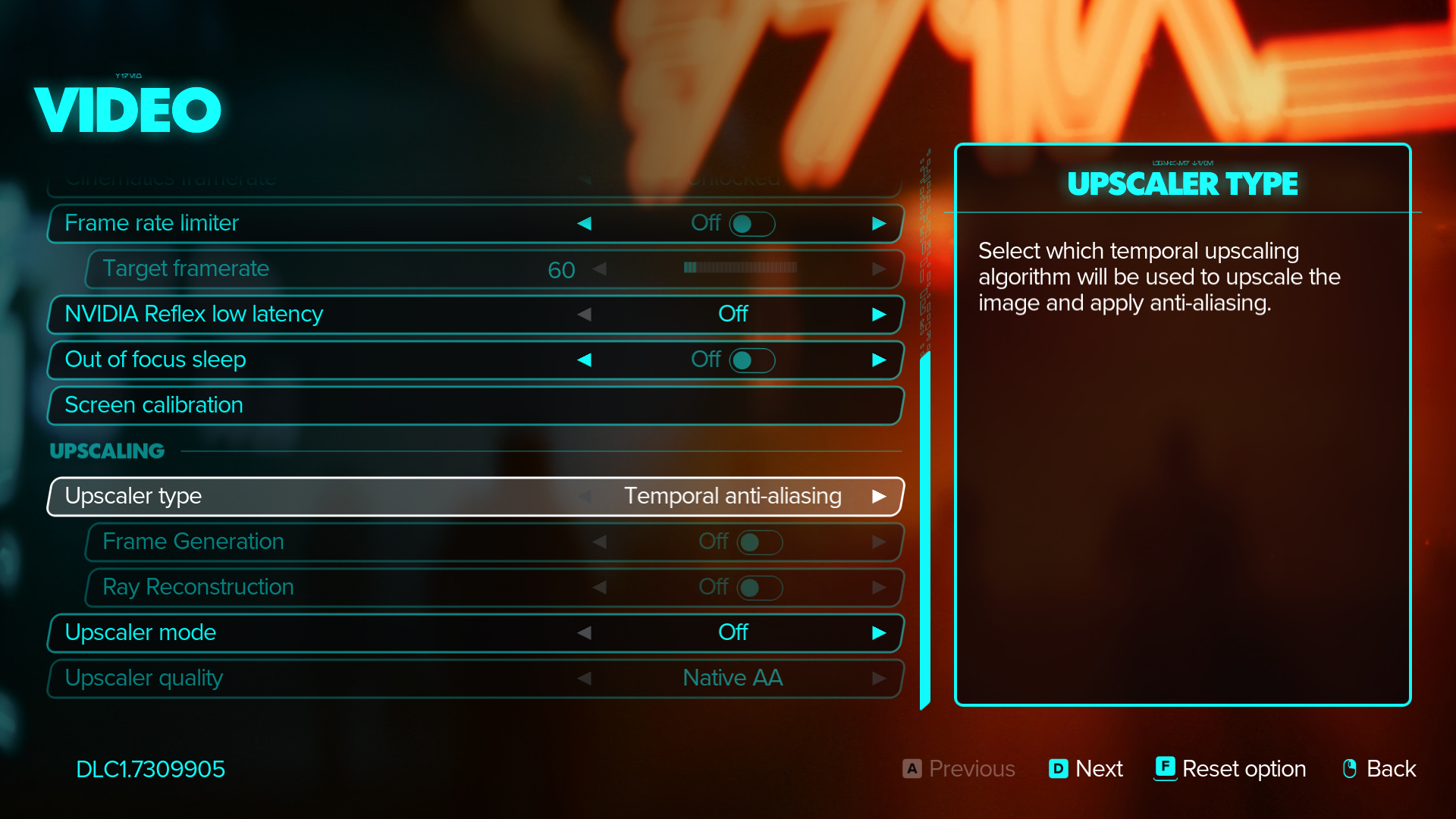
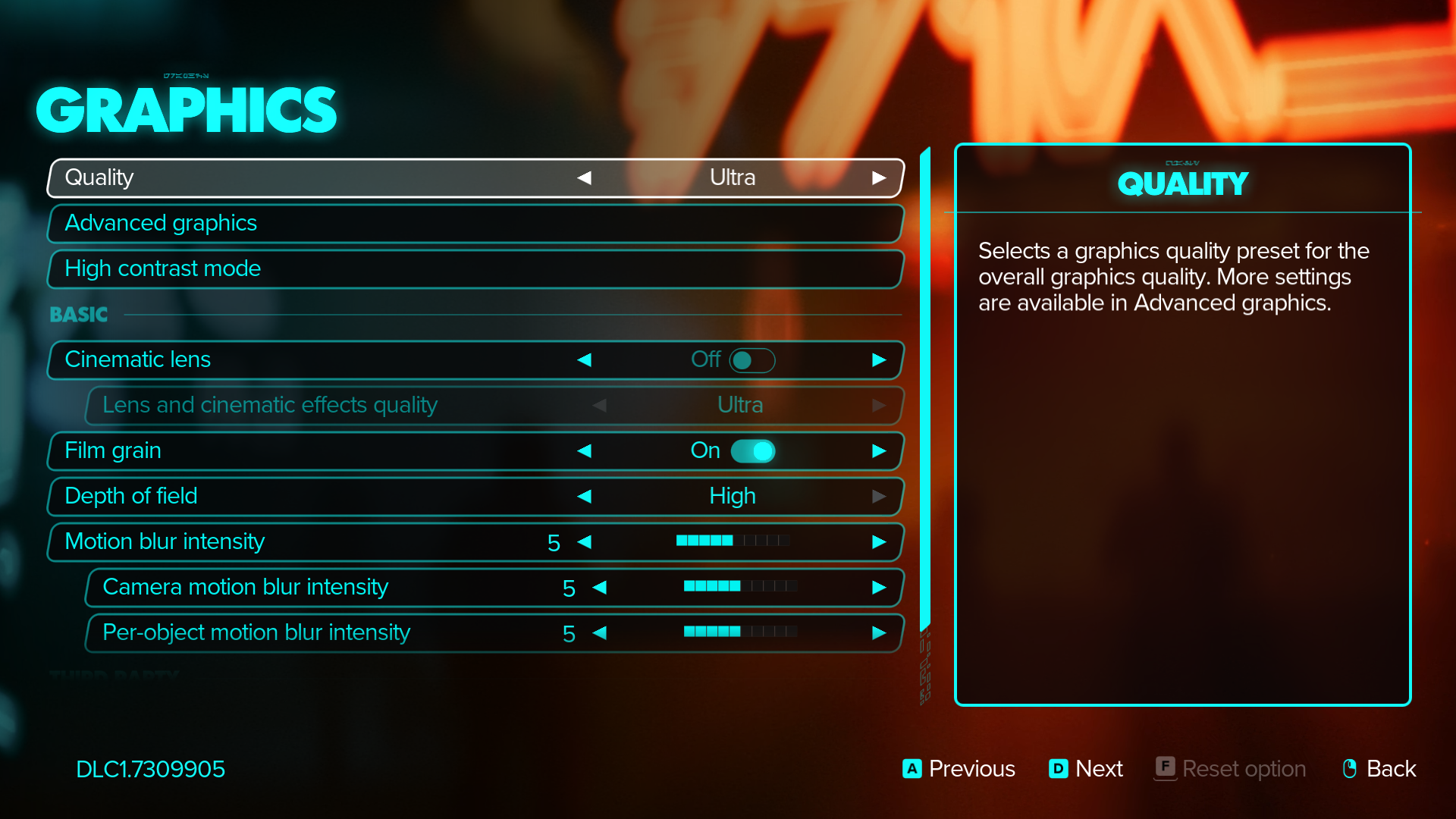
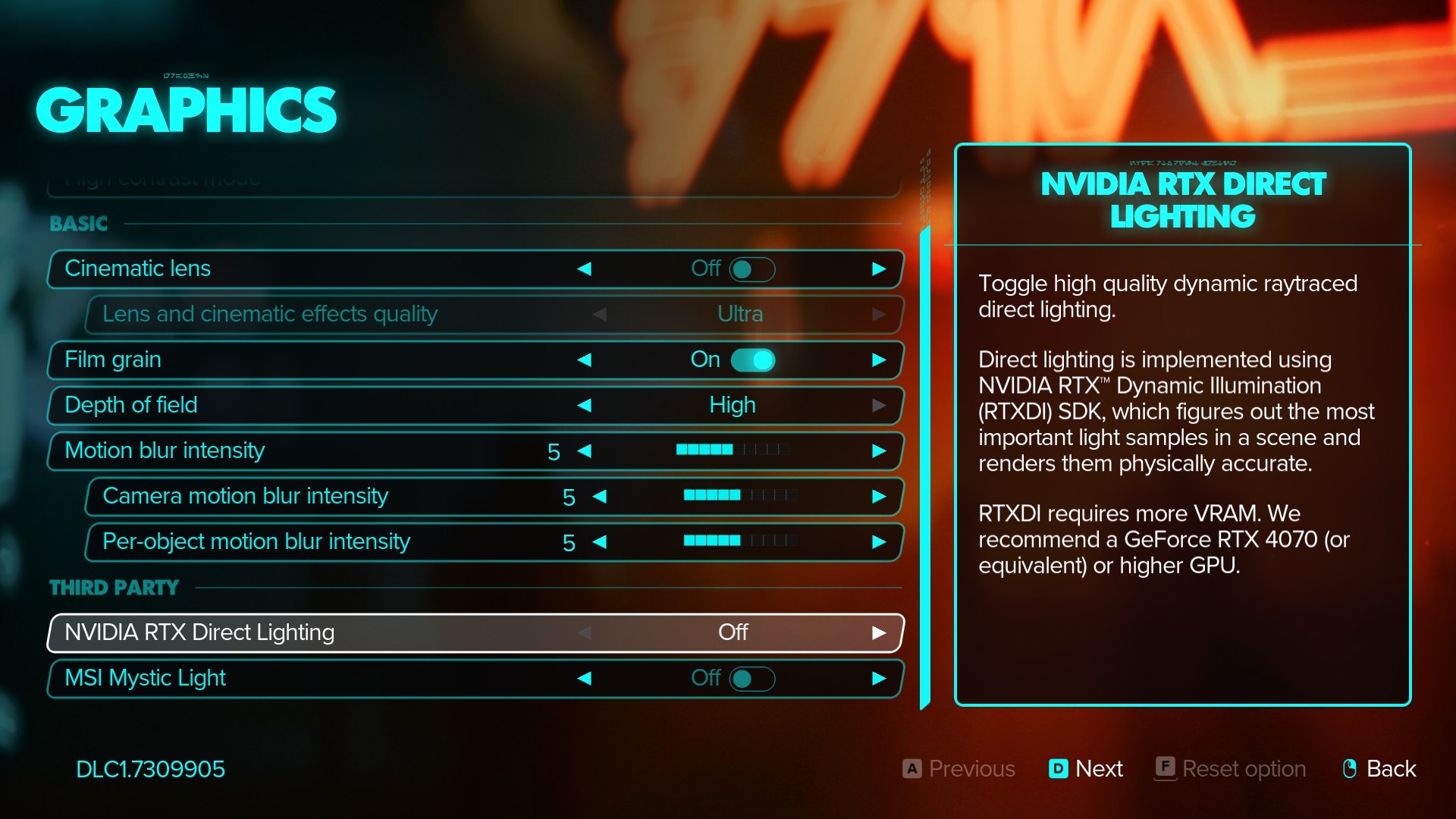
Engine: Snowdrop. We test using the Ultra preset but with Nvidia RTXDI disabled, DXR API. DLSS/FSR are disabled.
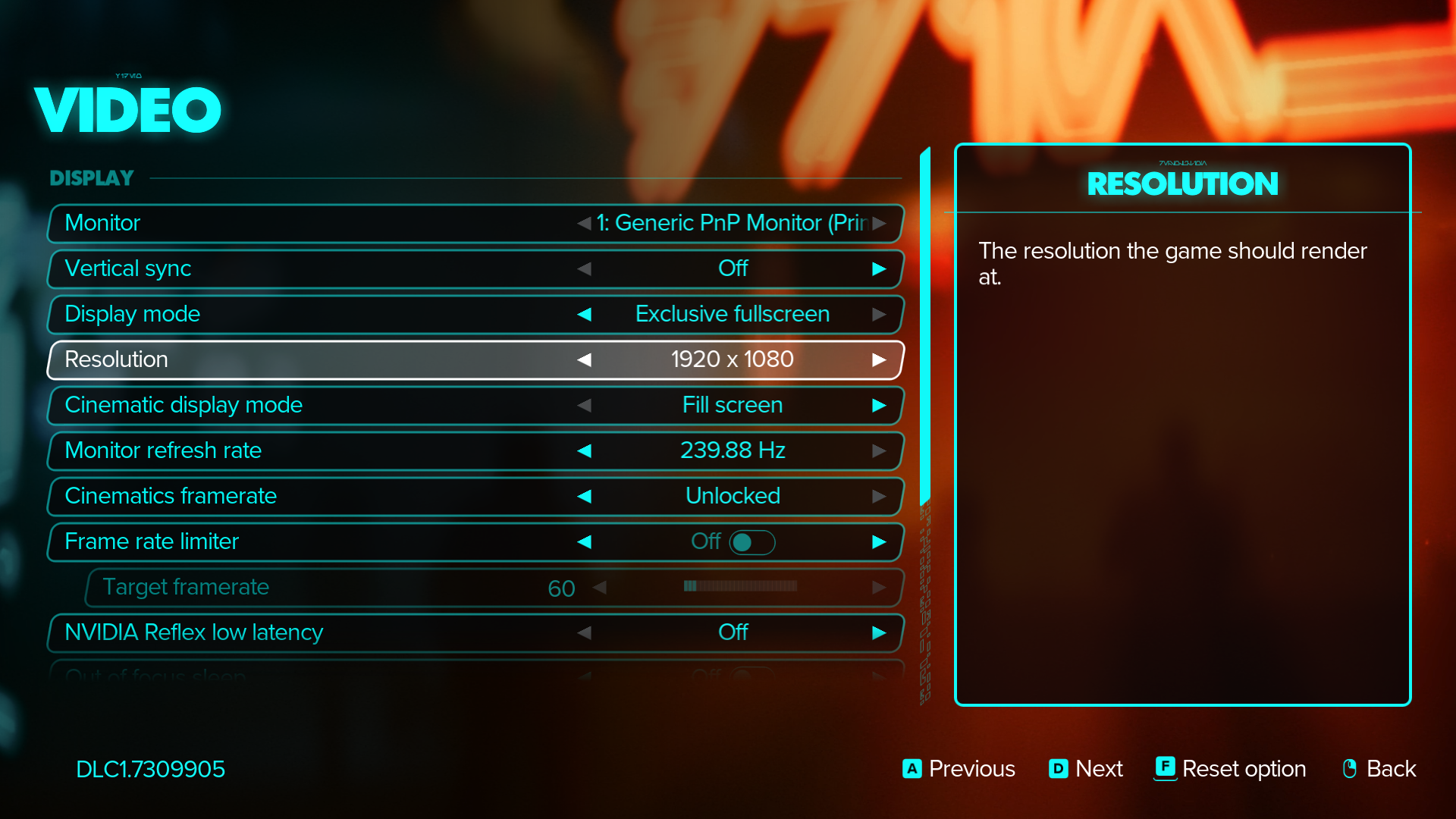
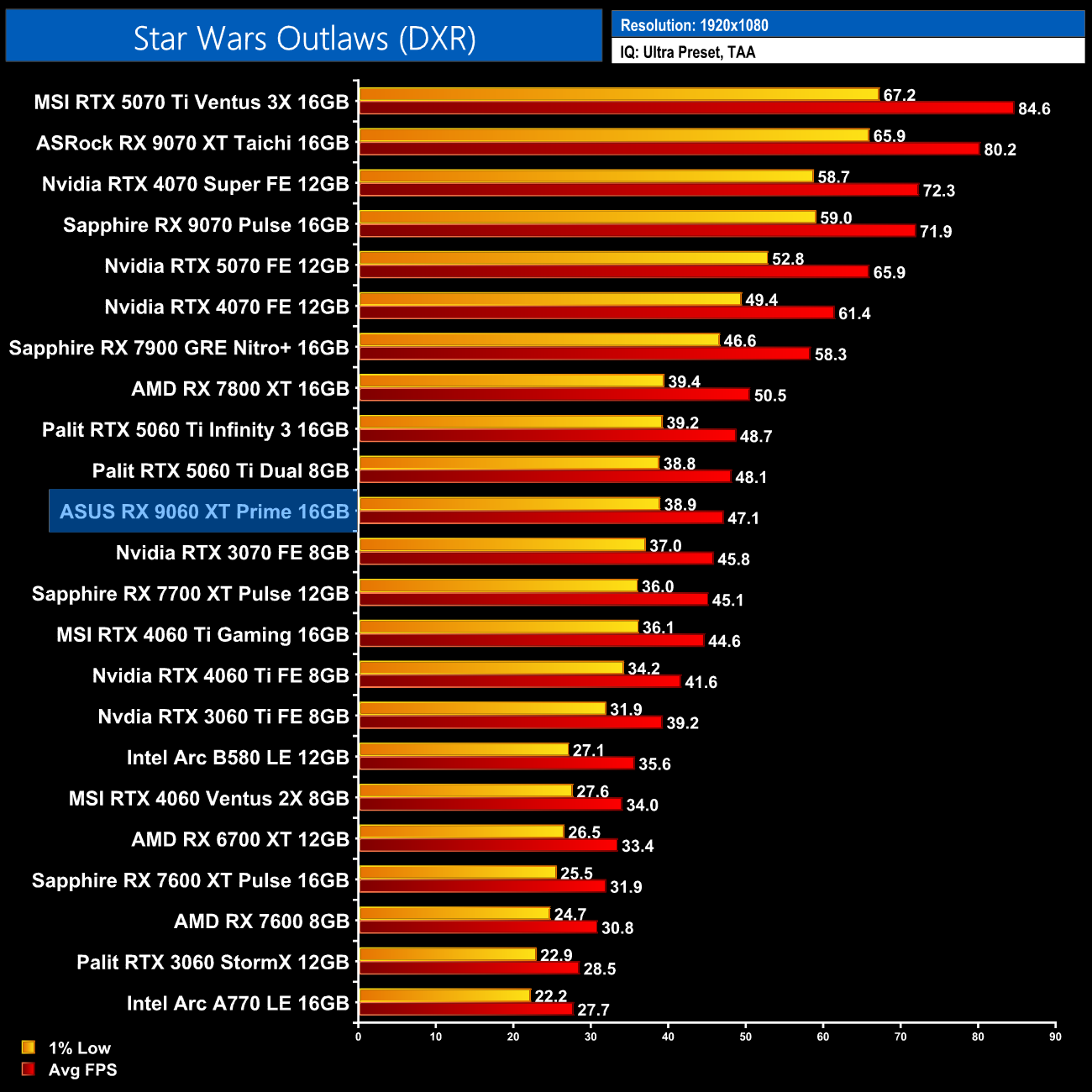
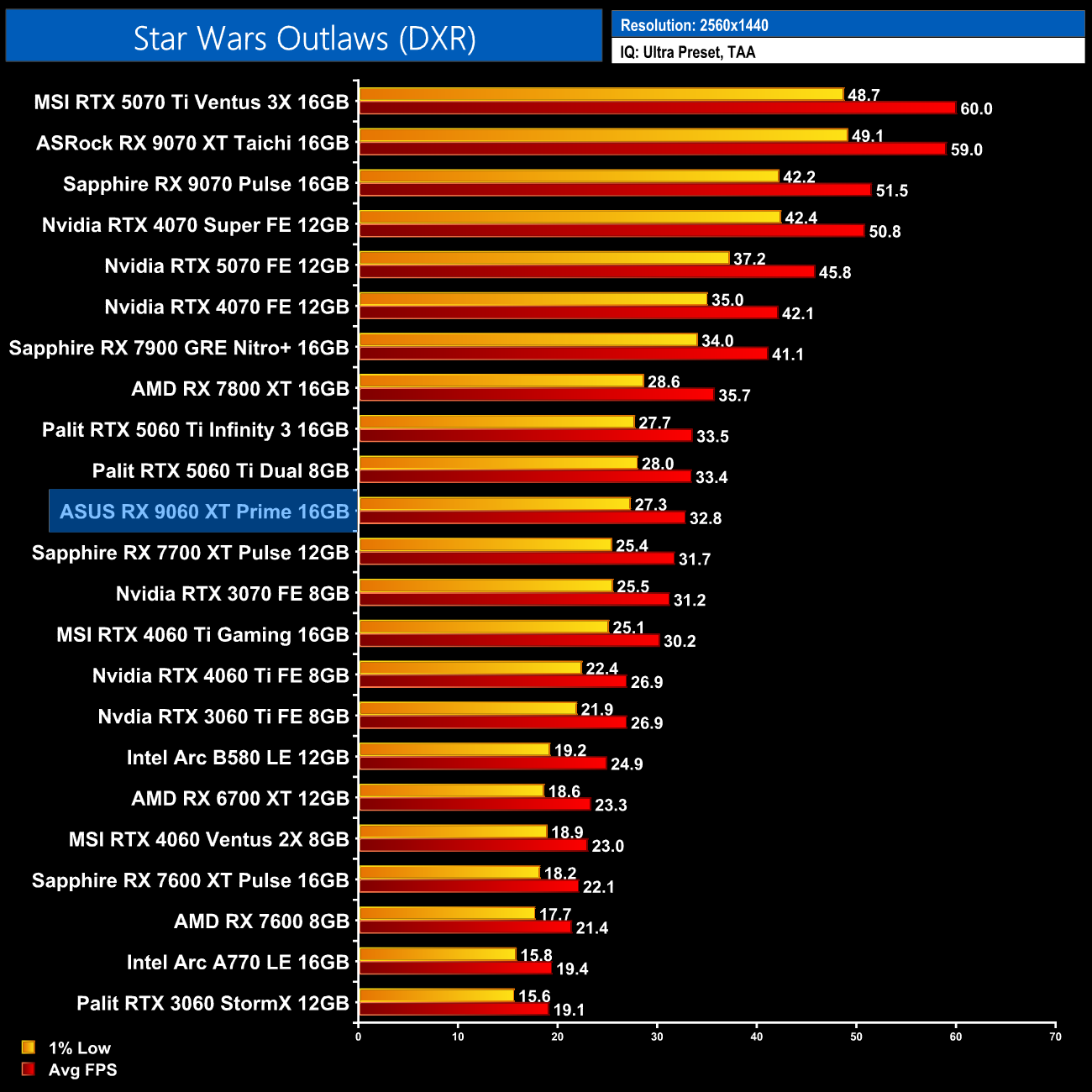
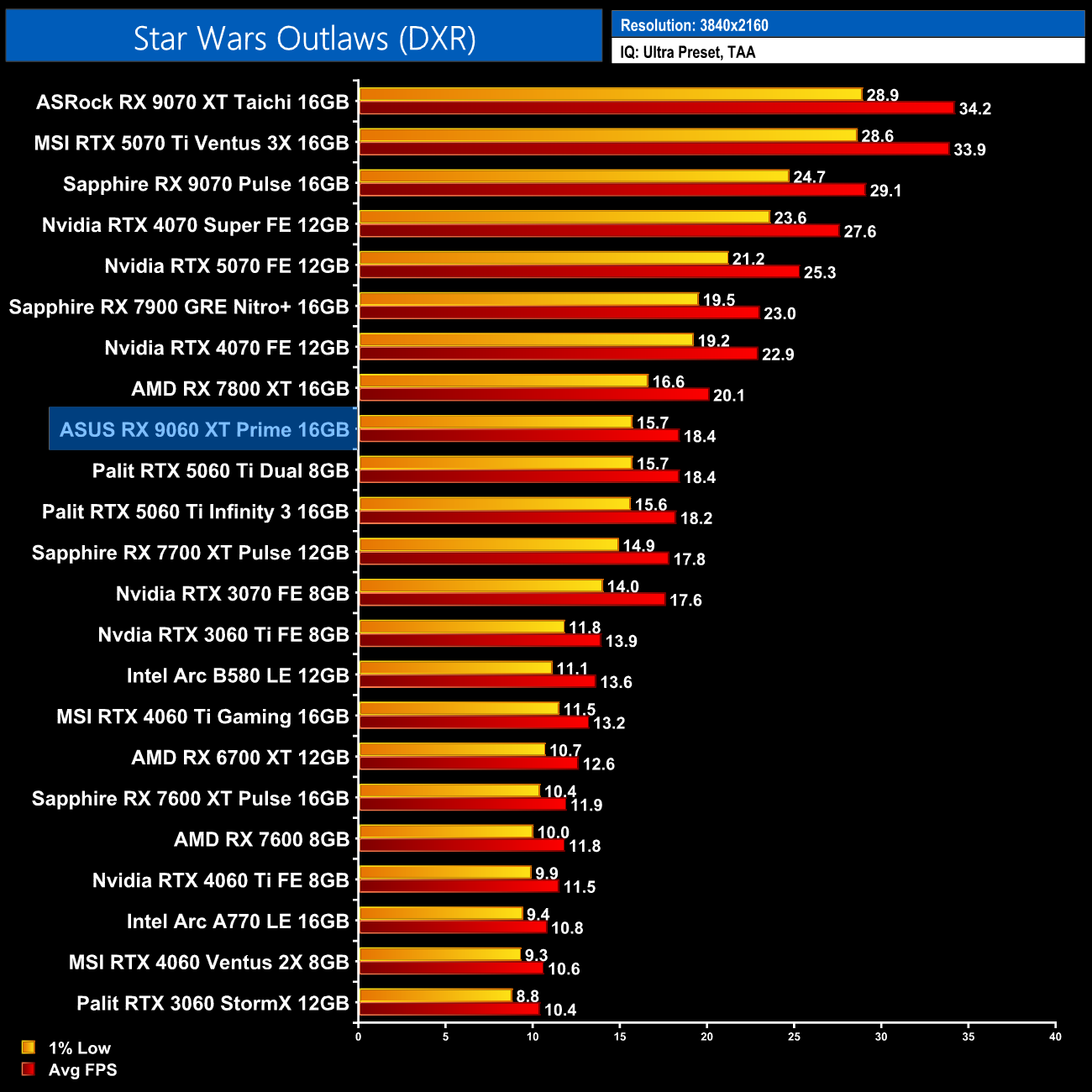
Lastly, we finish up the Star Wars Outlaws – a title that doesn't perform particularly well with Blackwell GPUs, and as such the 9060 XT 16GB is actually level with both 5060 Ti models at 1080p.
Ray tracing 8-game average FPS
Here we present frame rate figures for each graphics card, averaged across all 8 ray traced games on test today. We've recently switched to using the geometric mean instead of the arithmetic mean for overall performance, given it provides a more accurate and balanced representation of GPU performance across different games.
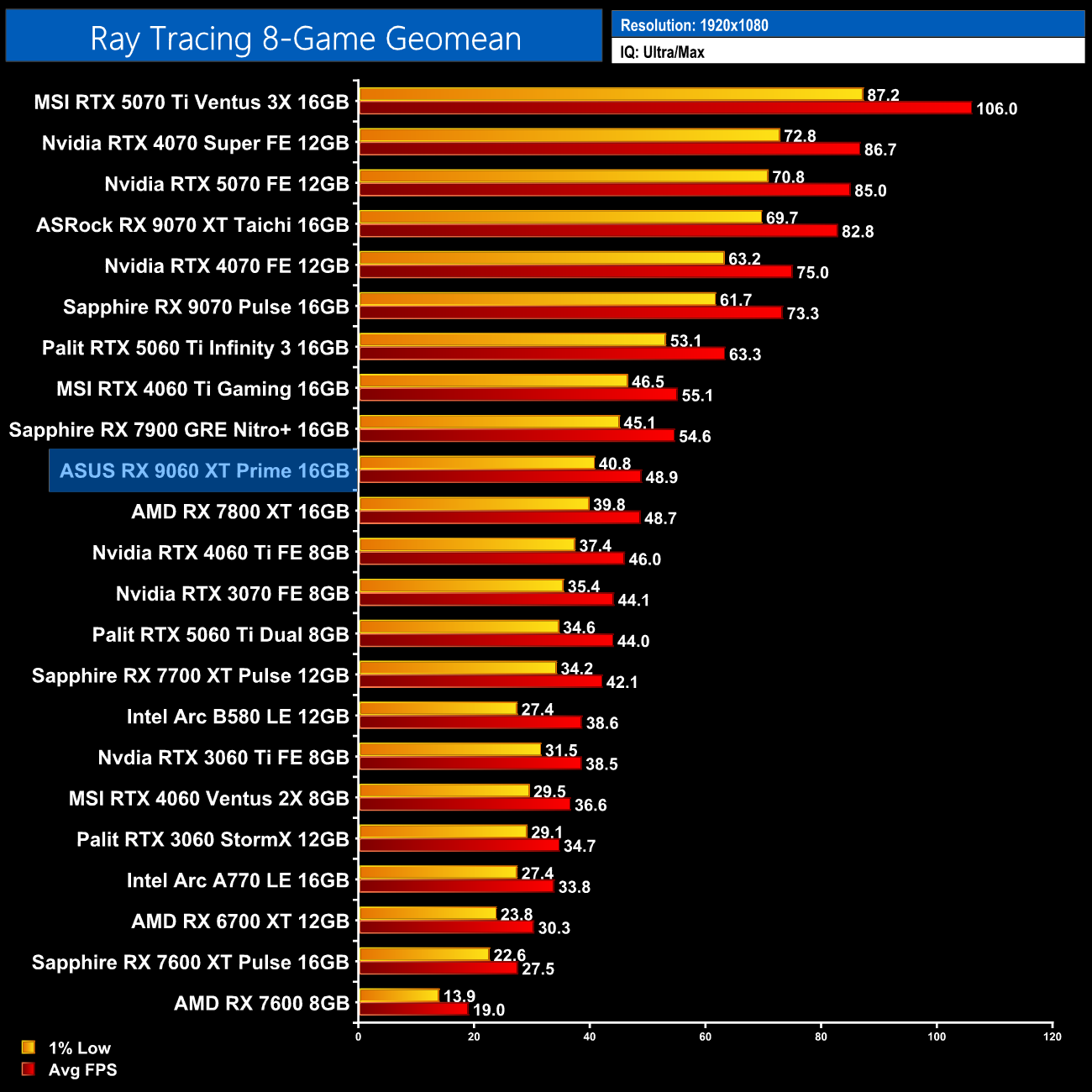
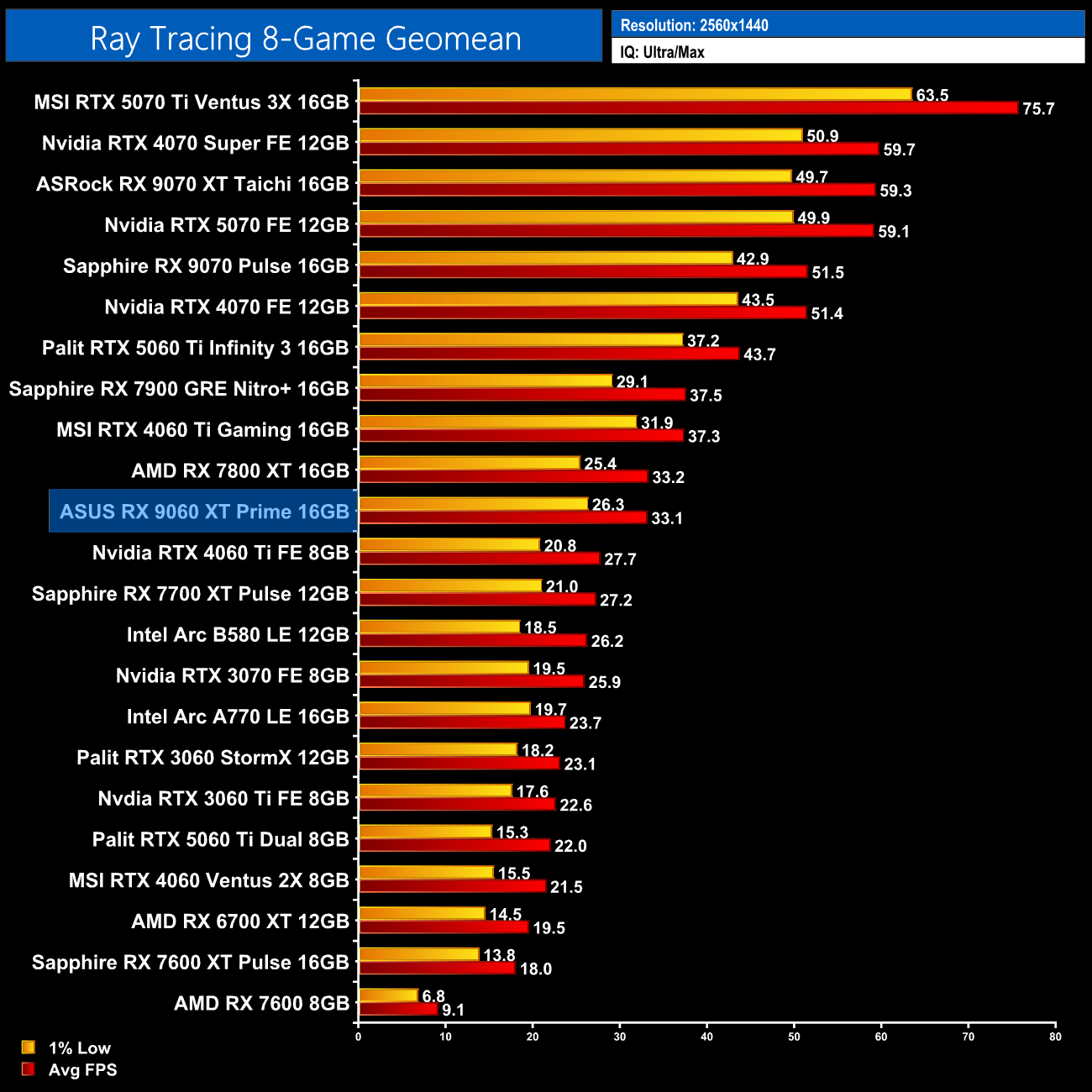
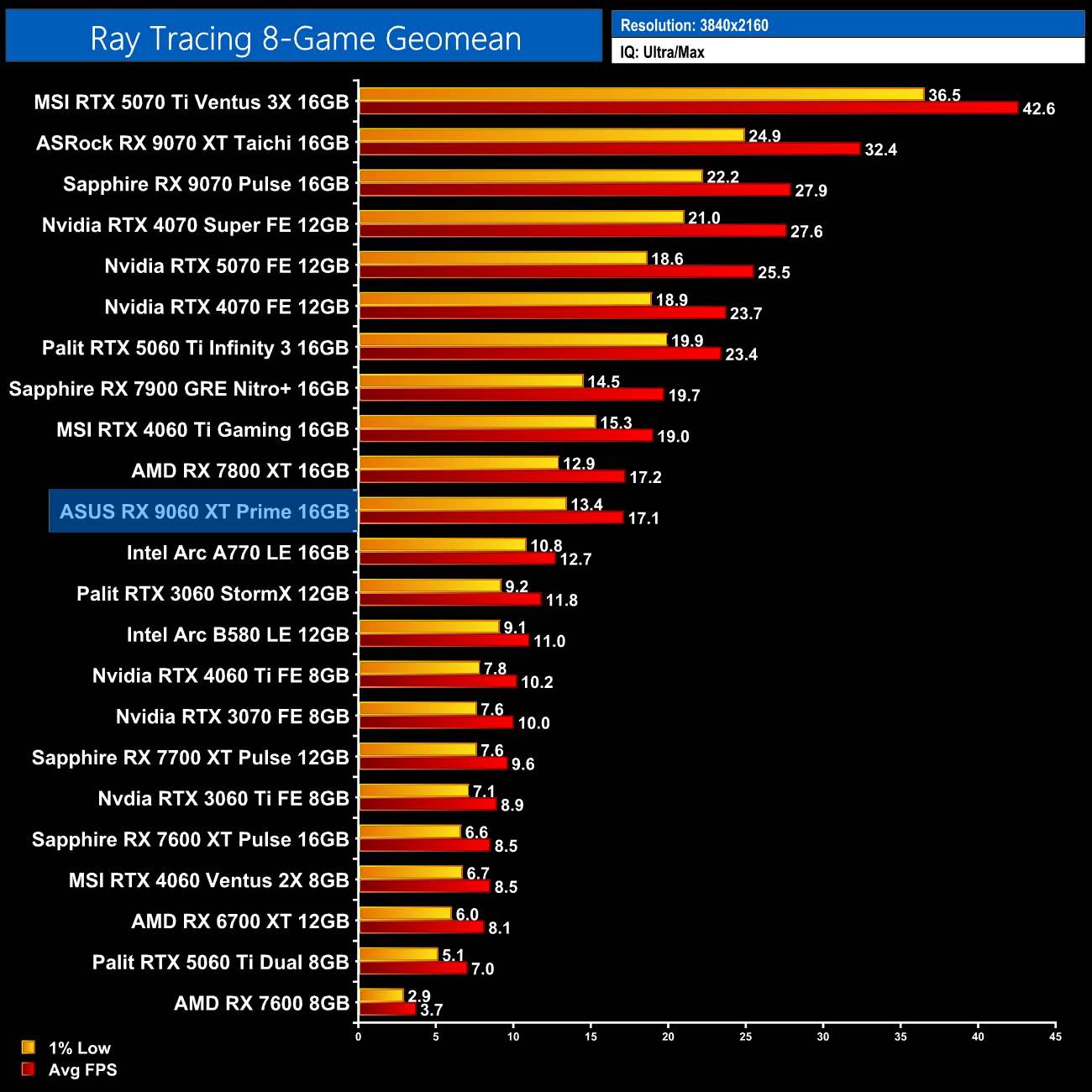
Overall, there's no doubt that ray tracing has improved significantly from RDNA 3 – we can see that as the 9060 XT is on par with the 7800 XT, despite being the slower GPU in our rasterisation tests. It's also an eye-watering 78% faster than the RX 7600 XT, despite that number being closer to 38% for our raster benchmarks.
However, there's no getting away from the fact that Nvidia still has the upper hand in this area. Compared to the 5060 Ti 16GB, the 9060 XT 16GB is some 23% slower, though it does still average a higher frame rate than the 5060 Ti 8GB model due to its superior VRAM capacity.
Cost per frame, launch MSRP data
Please note this only compares ray traced performance and value.
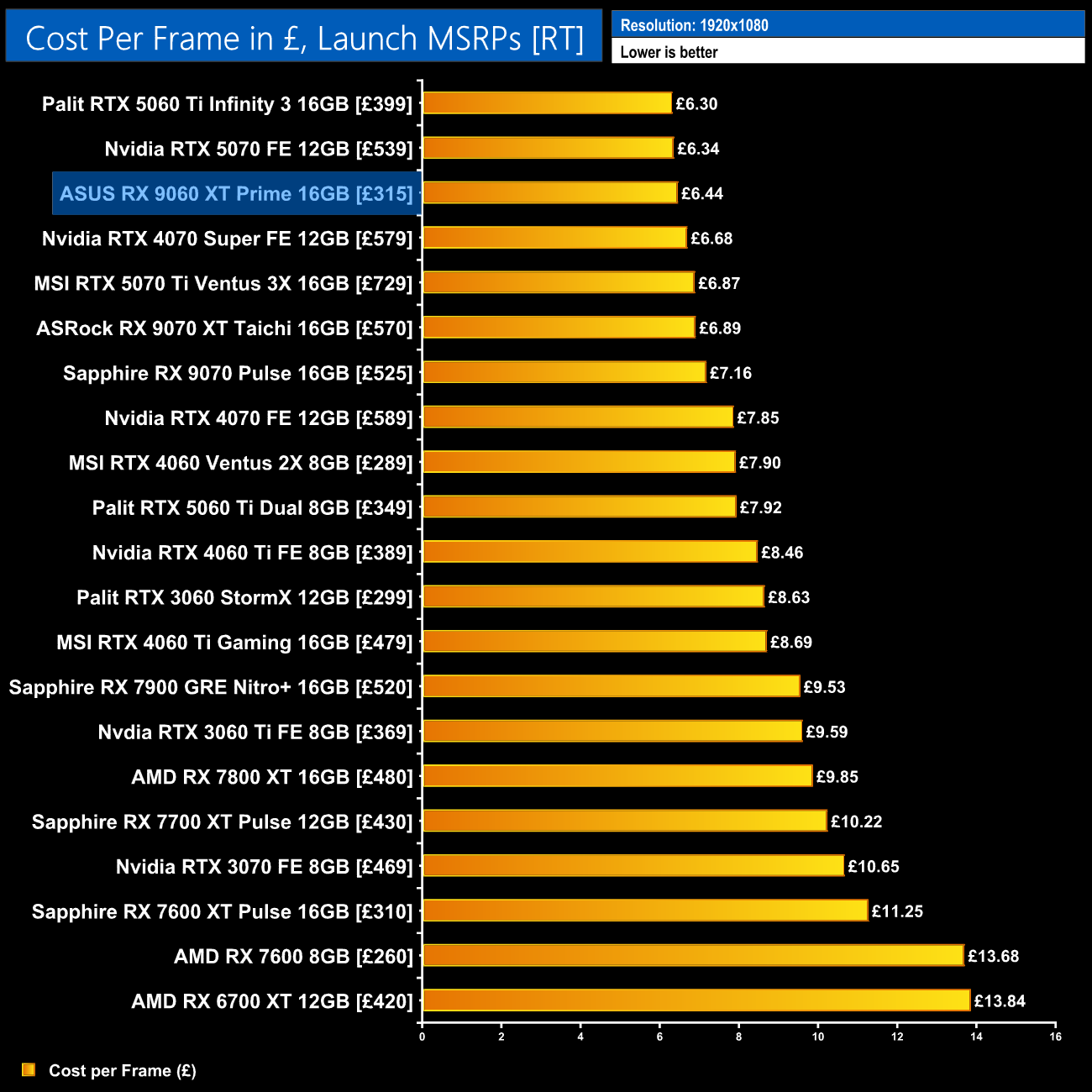
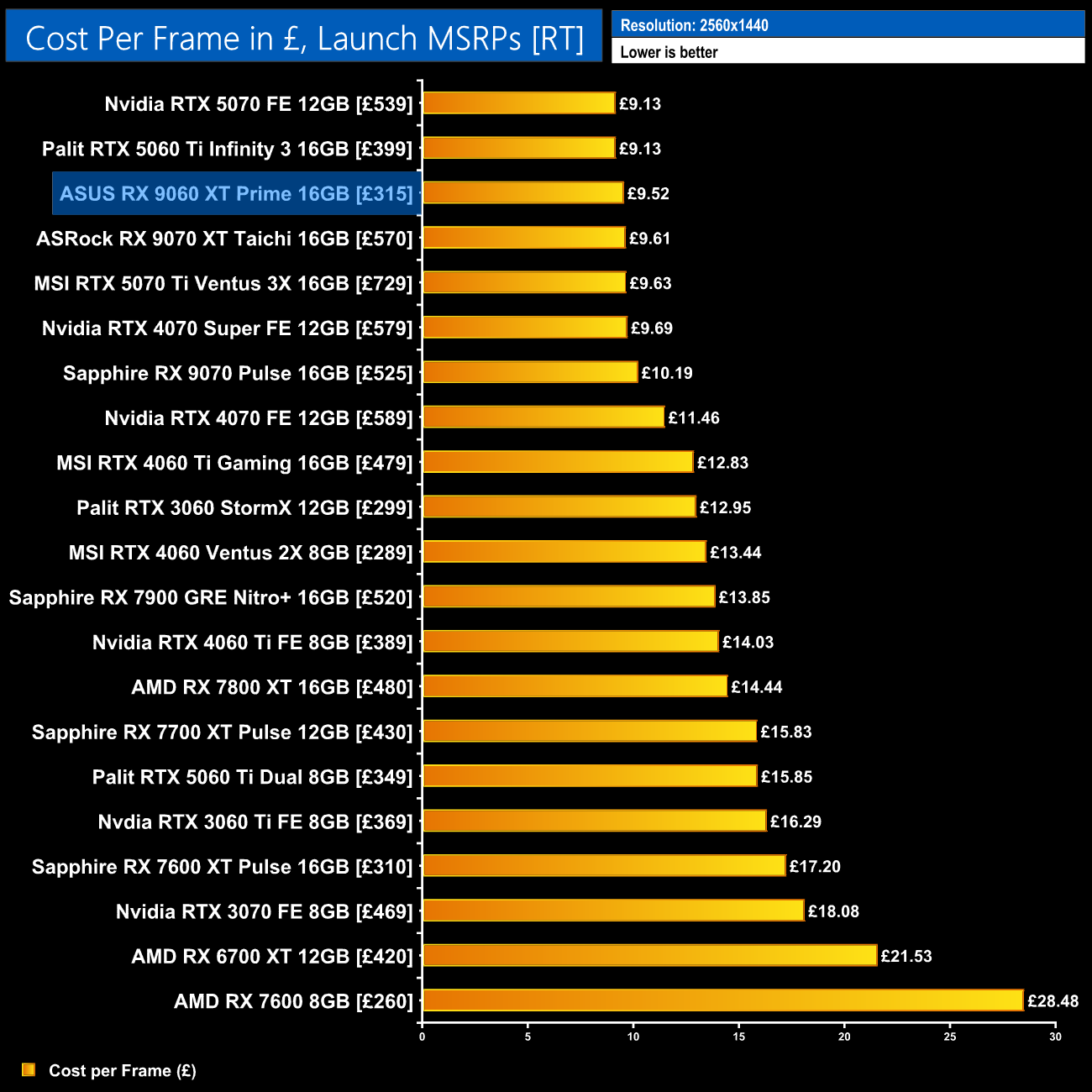
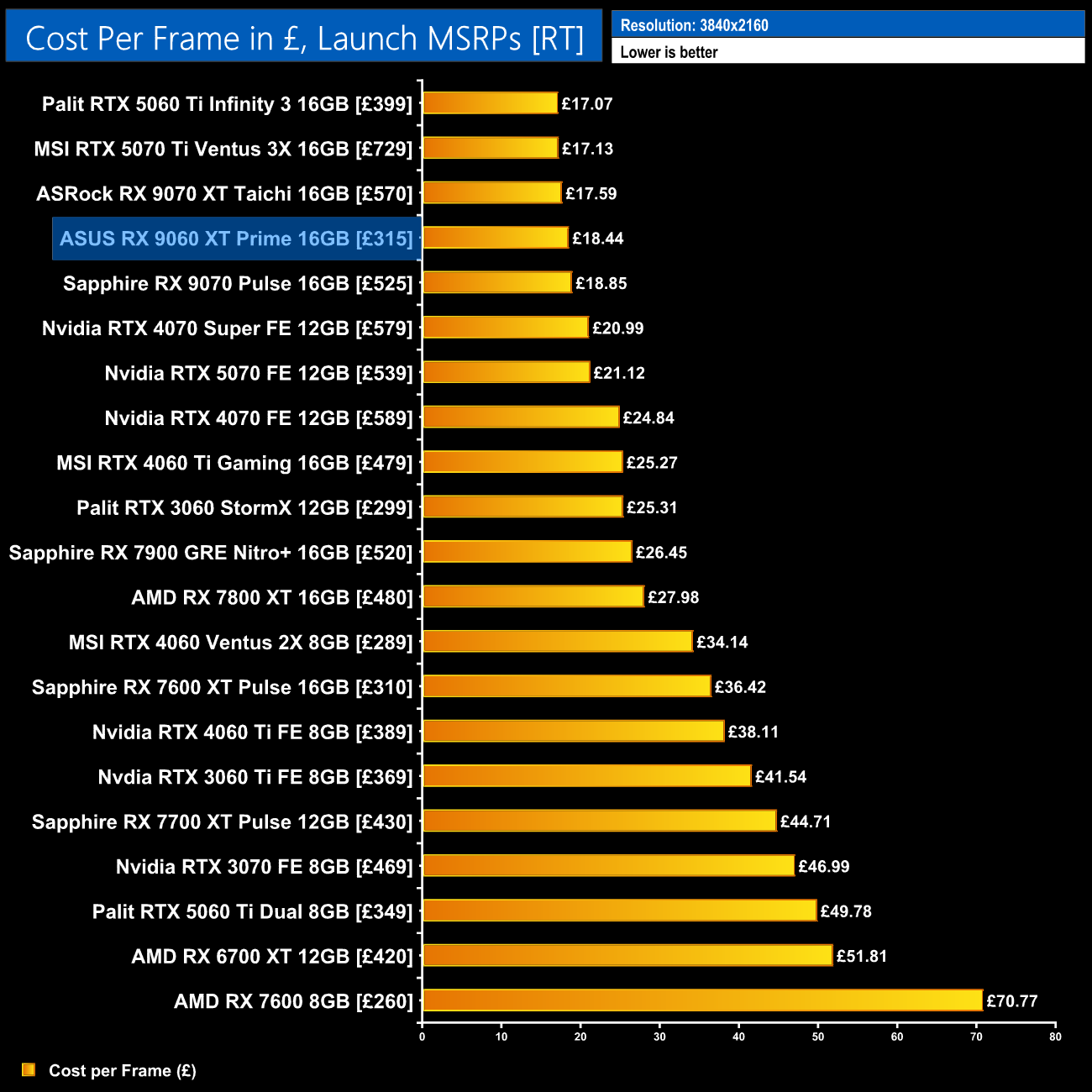
Despite that, the 9060 XT 16GB is still a very compelling option for ray traced cost per frame – it's not quite at the top of the chart, but this is so much better than anything we saw from the RX 7000 series.
Cost per frame, current pricing data
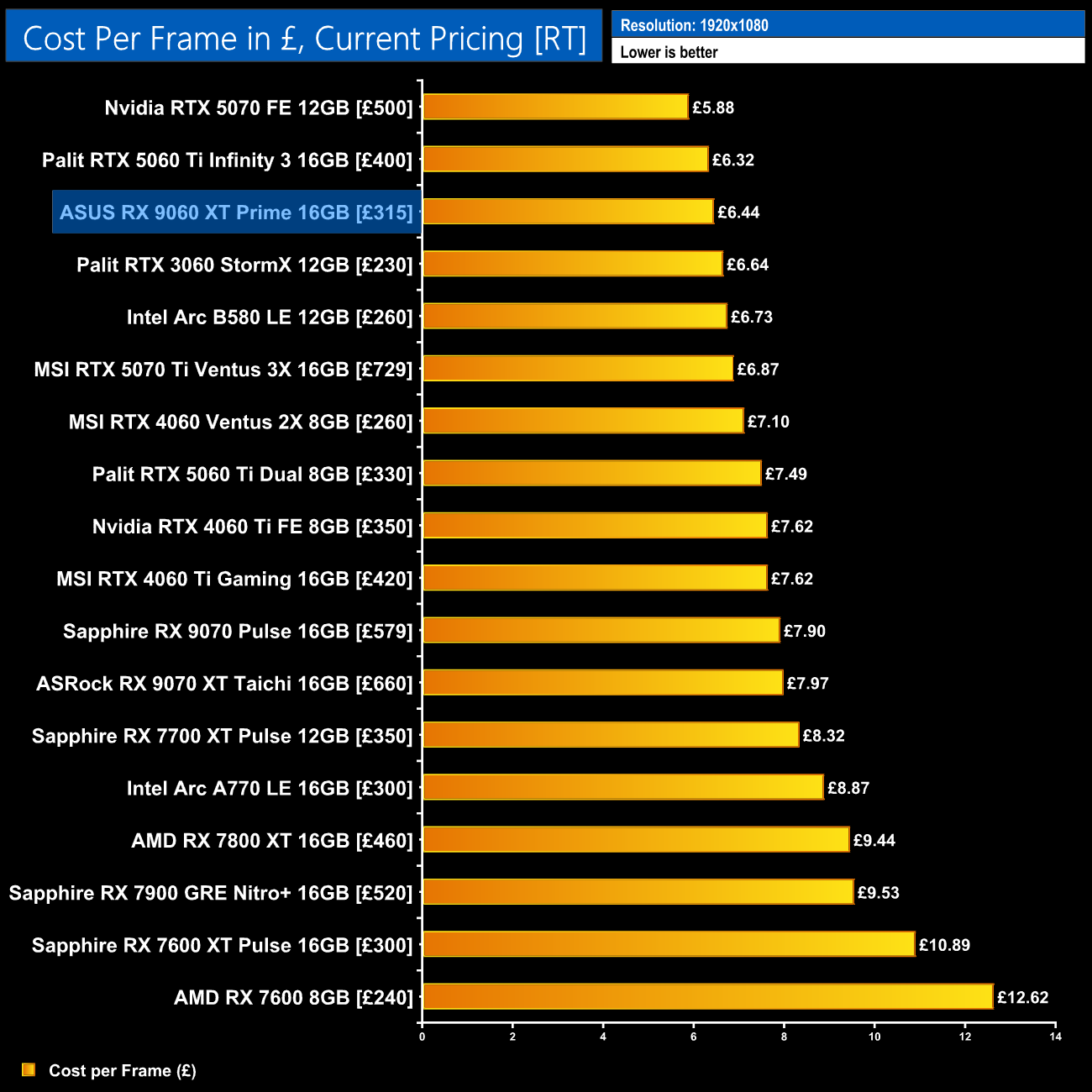
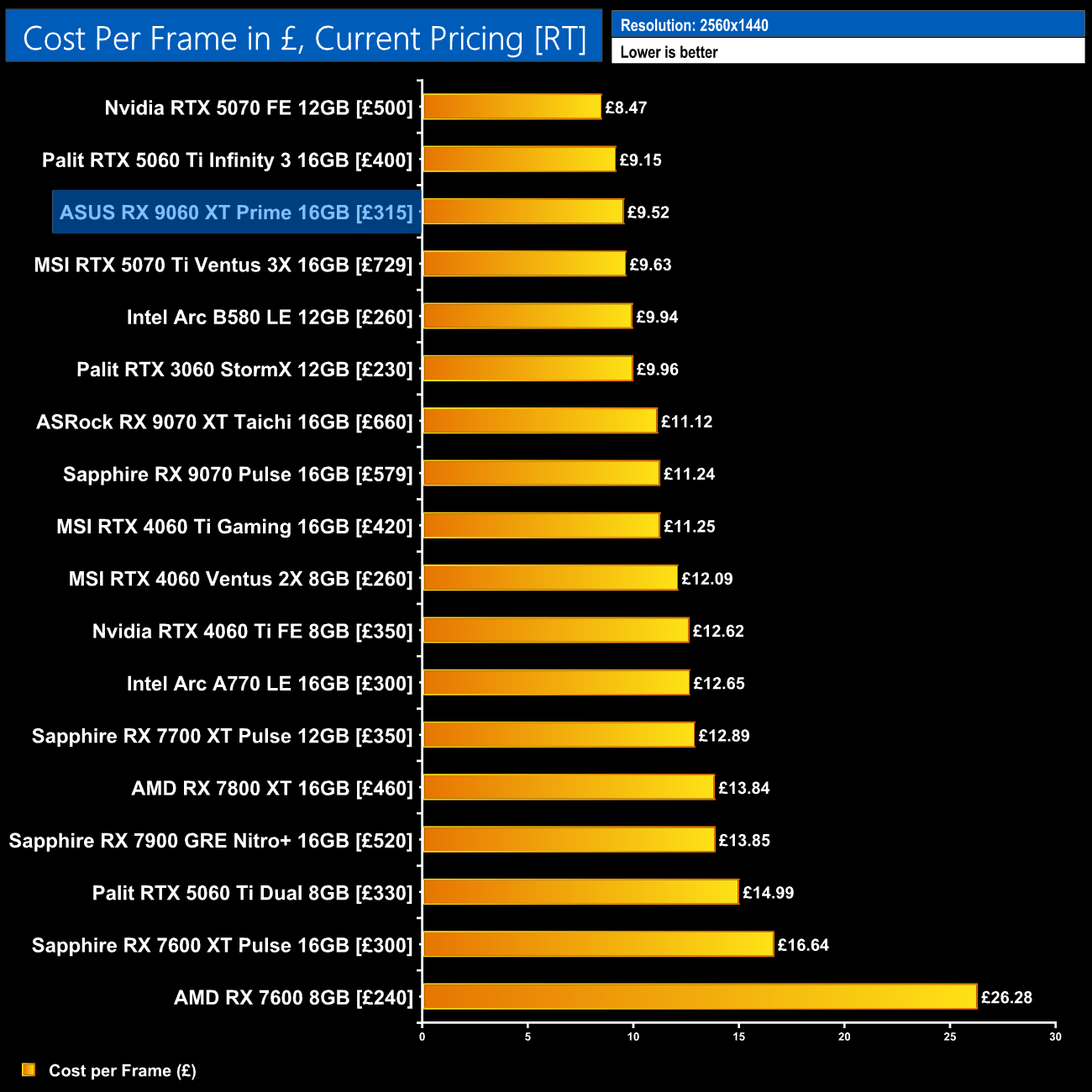
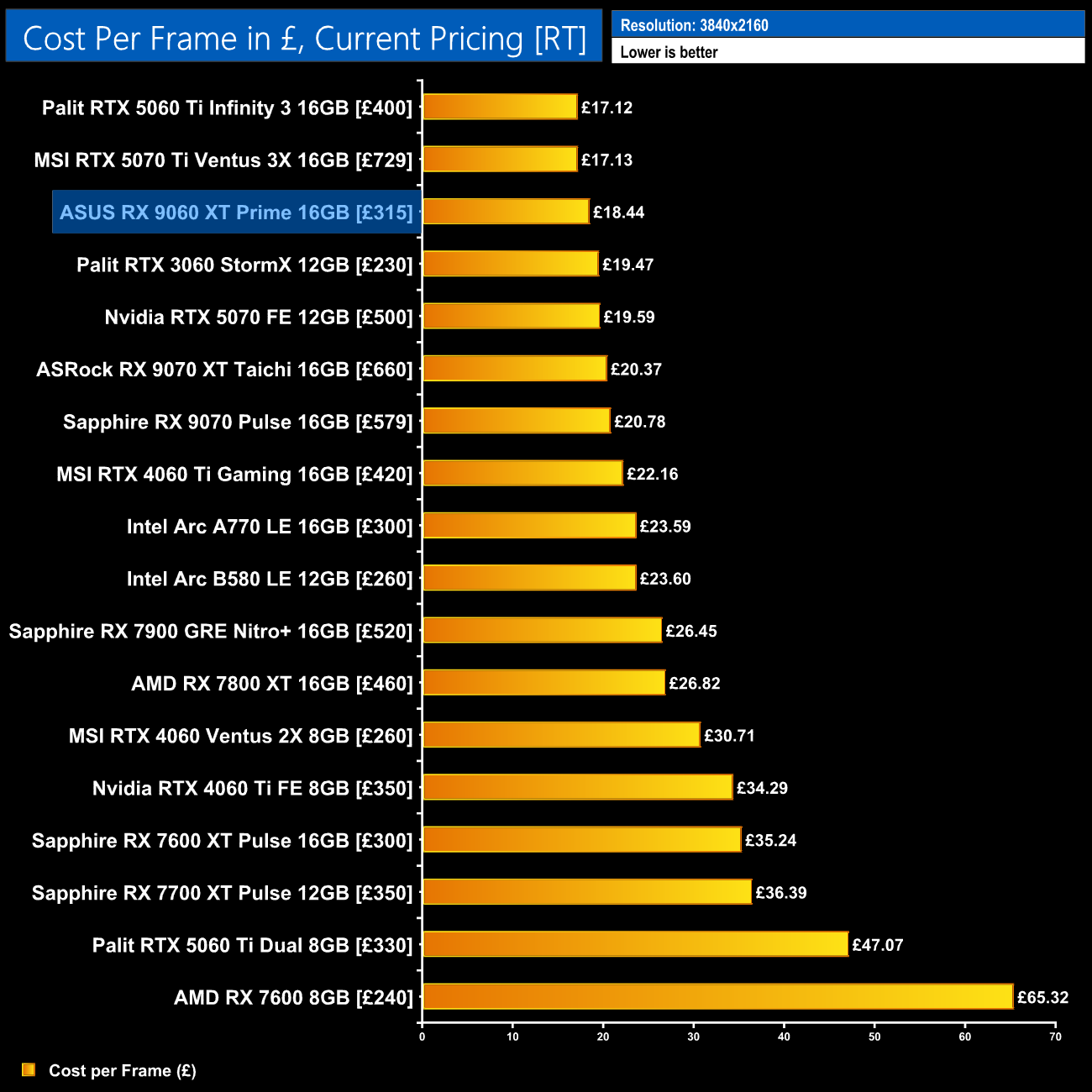
The same goes for the data based on current pricing – the RTX 5070 at £500 is the ray tracing value champ, but the 9060 XT 16GB is still very compelling at £315.
Here we present a range of AI and productivity benchmarks, designed to offer insight into the sort of workloads that might be undertaken by someone purchasing this calibre of GPU.
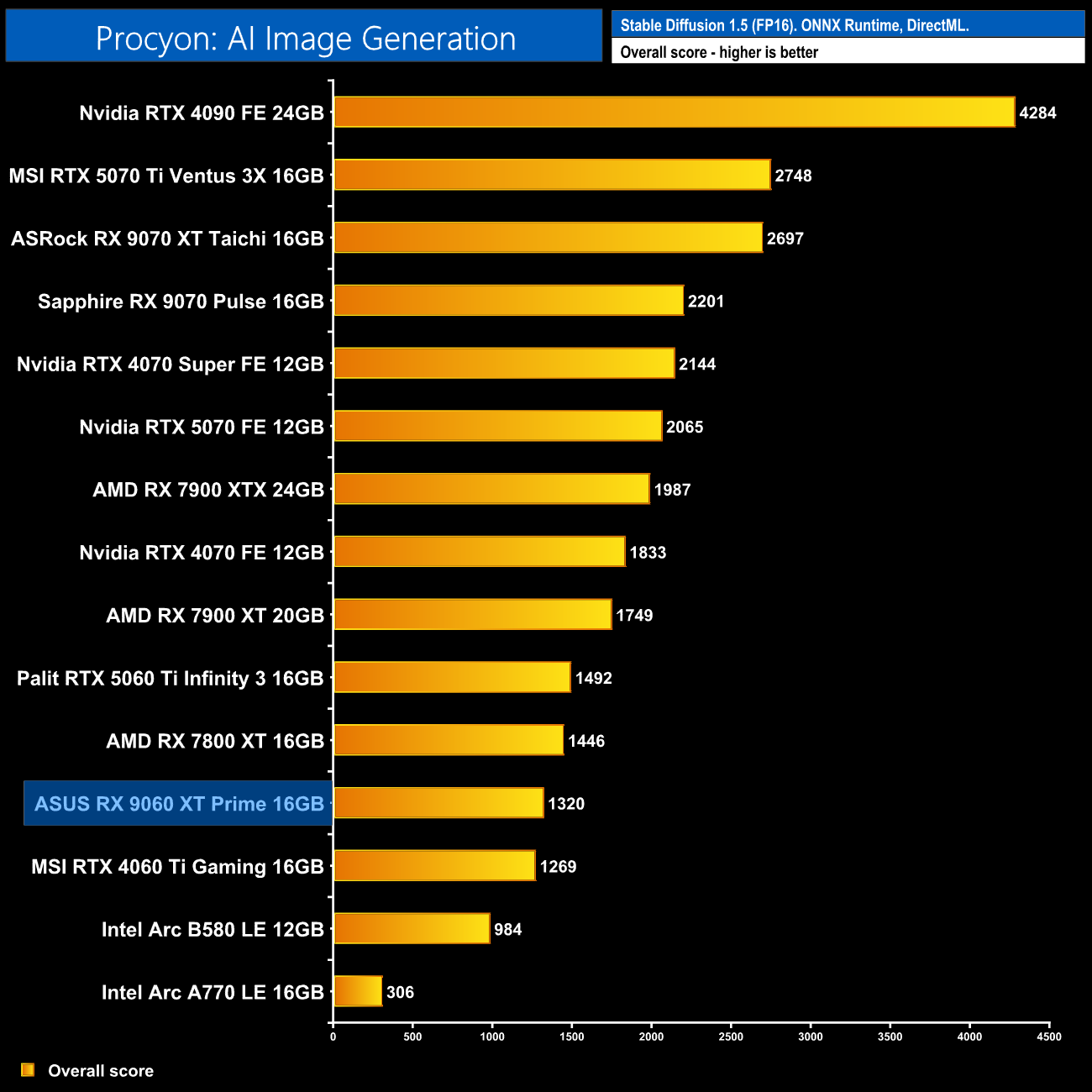
We start with the Stable Diffusion 1.5 benchmark. This shows performance that's between the 4060 Ti 16GB and the RX 7800 XT, though some 12% slower than the 5060 Ti 16GB.
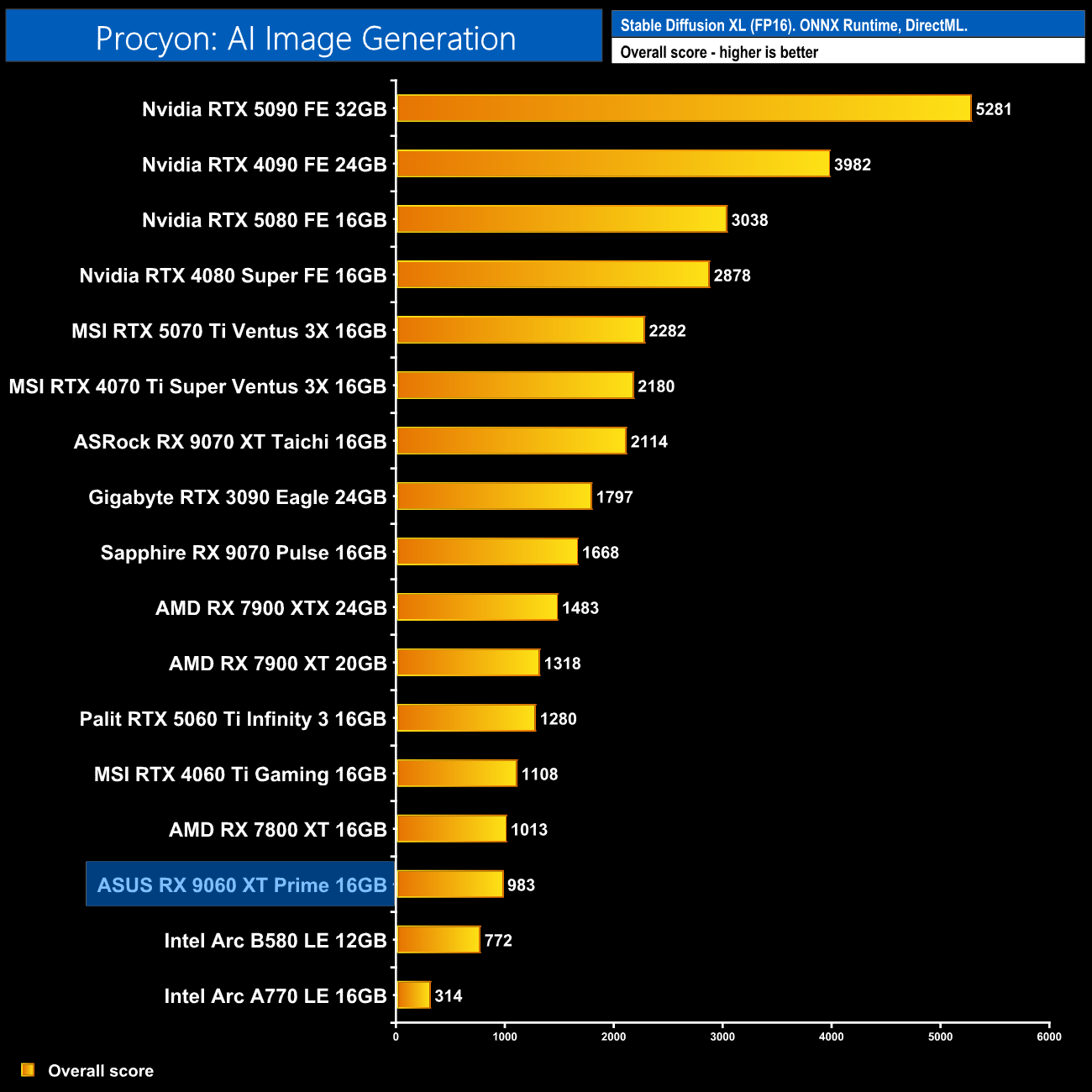
The deficit against the 5060 Ti 16GB grows to 23% in the Stable Diffusion XL test, though performance here is about level with the 7800 XT.
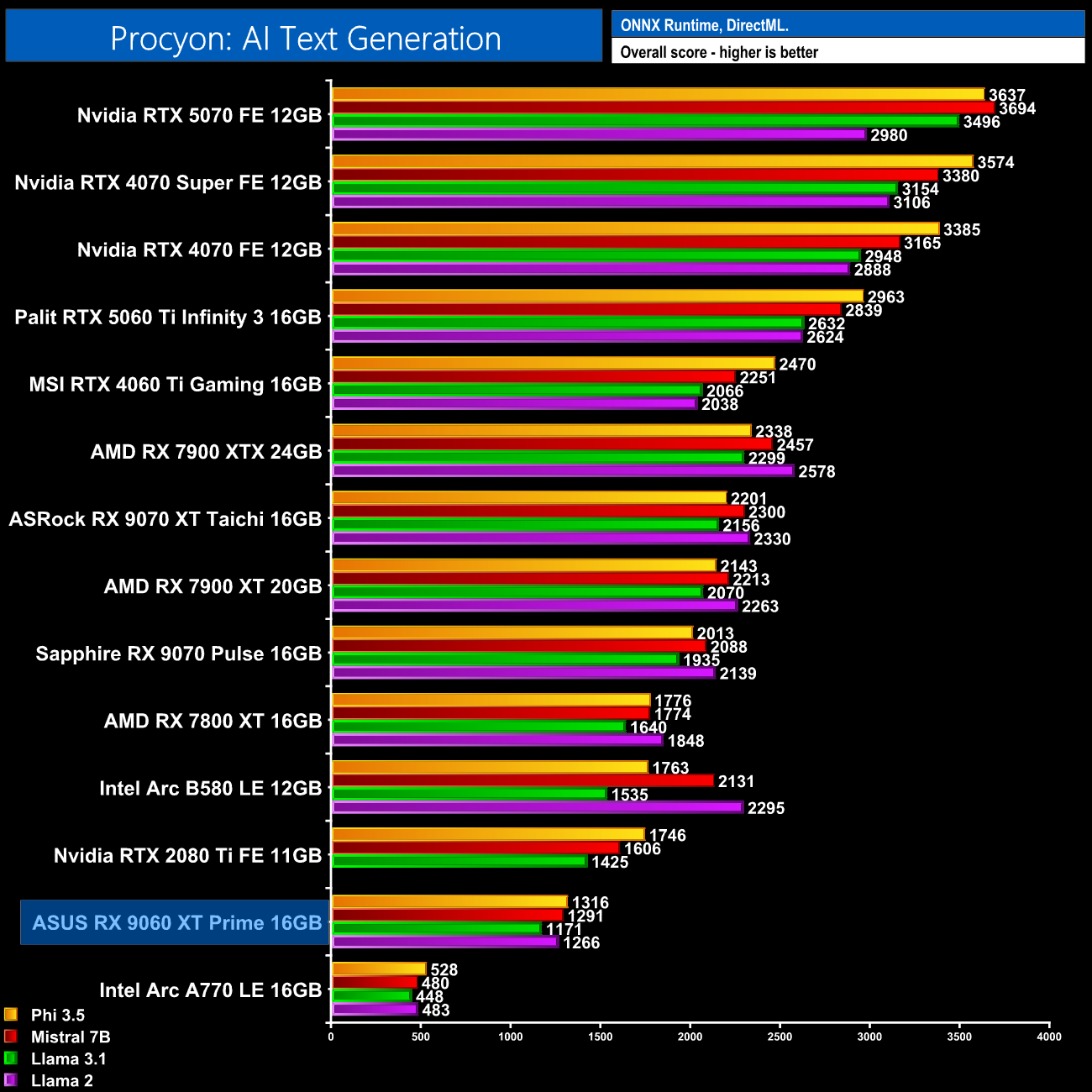
AI text generation is towards the bottom of the chart however, only beating the Arc A770 and slower than the B580 across all four models tested.
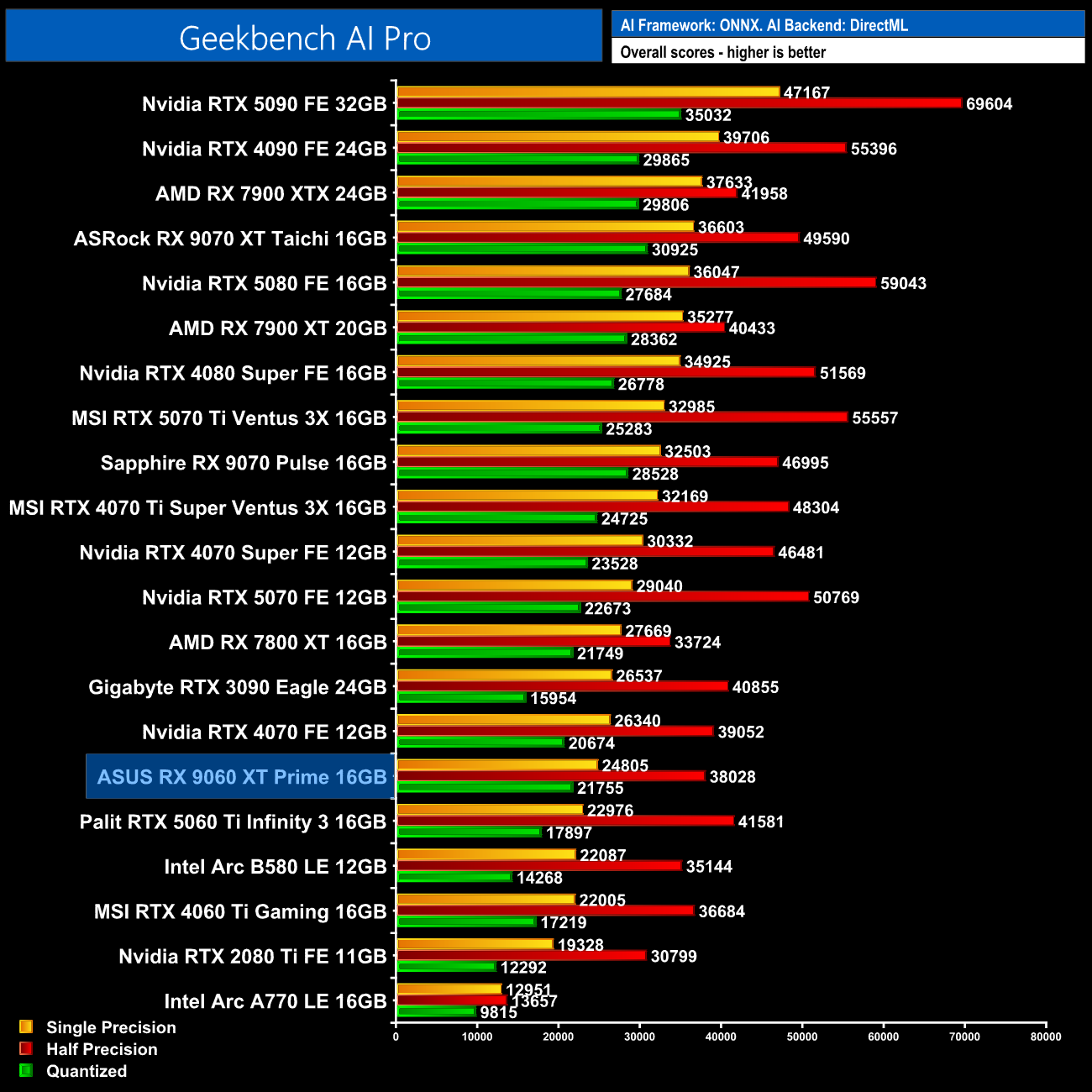
Closing out with Geekbench AI Pro, AMD does very well in the single precision test, coming out ahead of the 5060 Ti 16GB, though the half precision result shows much more ‘mixed' performance, though even that shows a big gain versus the 7800 XT.
Here we present the average clock speed for each graphics card while running A Plague Tale: Requiem for 30 minutes. We use GPU-Z to record the GPU core frequency during gameplay. We calculate the average core frequency during the 30 minute run to present here.
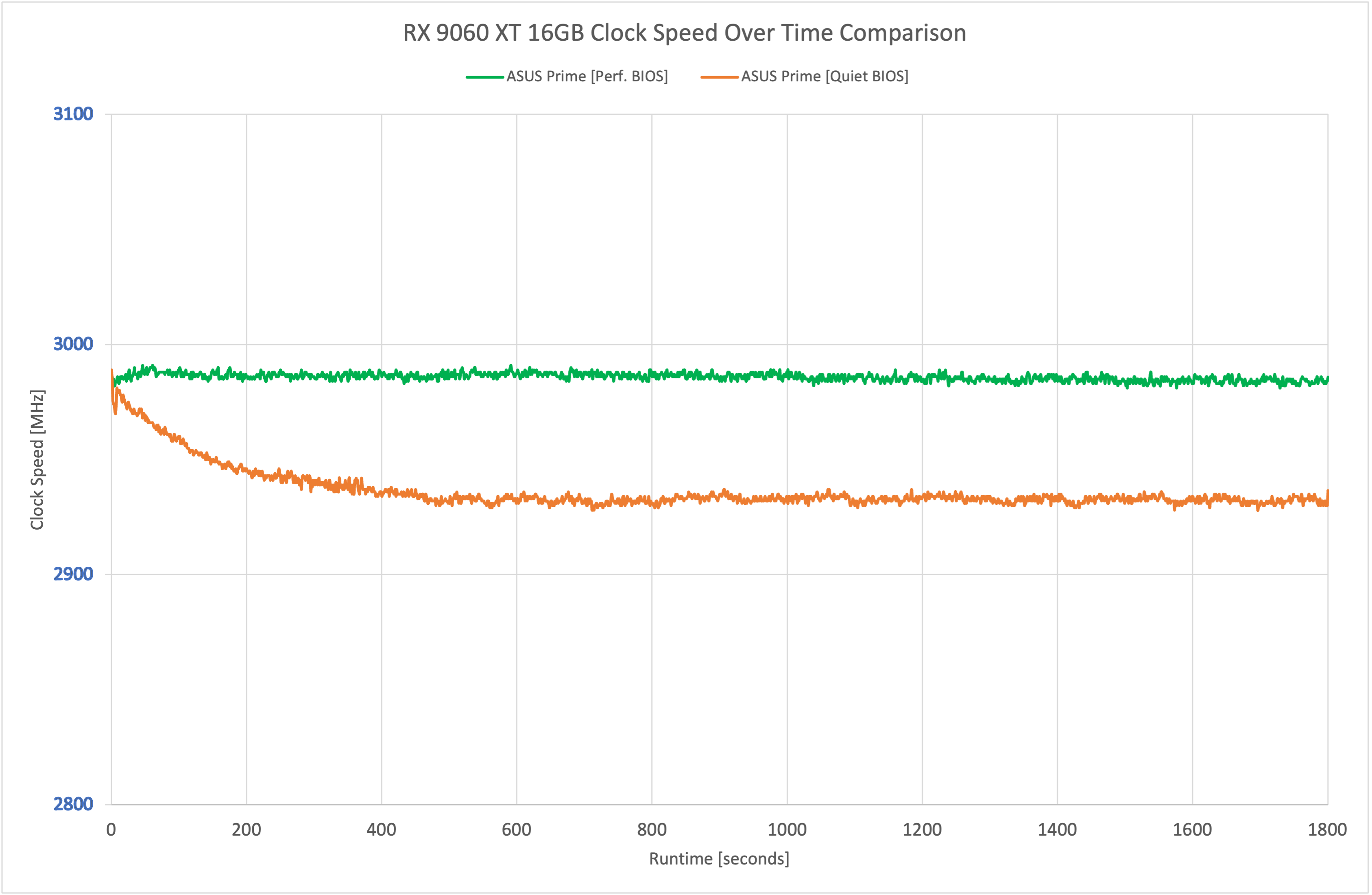
Testing both Performance and Quiet BIOS modes on the ASUS Prime reveals a small difference between the two, with the Performance running slightly faster as expected.
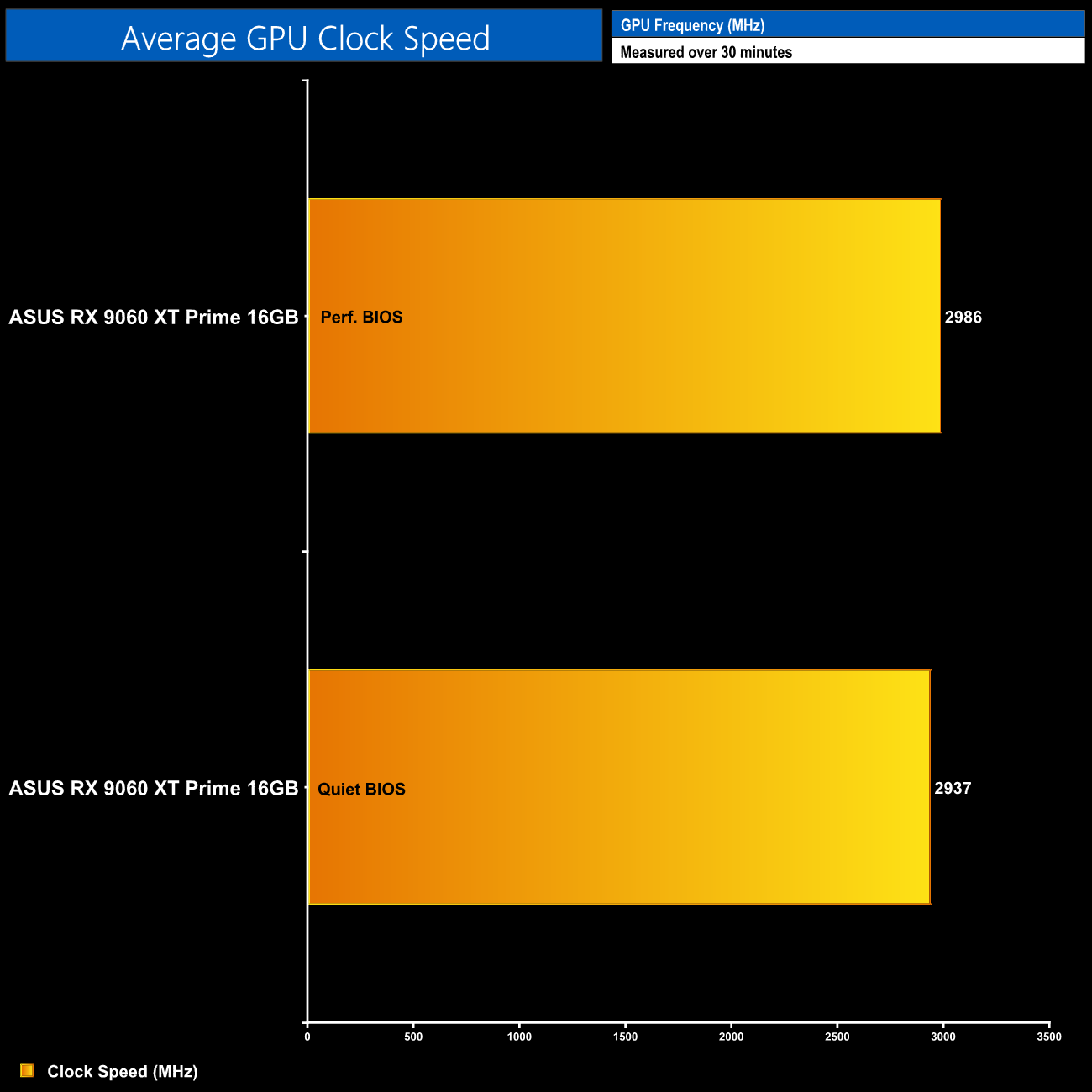
Averaged over the thirty minute stress test, it hit 2986MHz, compared to 2937MHz for the Quiet BIOS.
For our temperature testing, we measure steady-state GPU temperatures under load. A reading under load comes from running A Plague Tale: Requiem for 30 minutes.
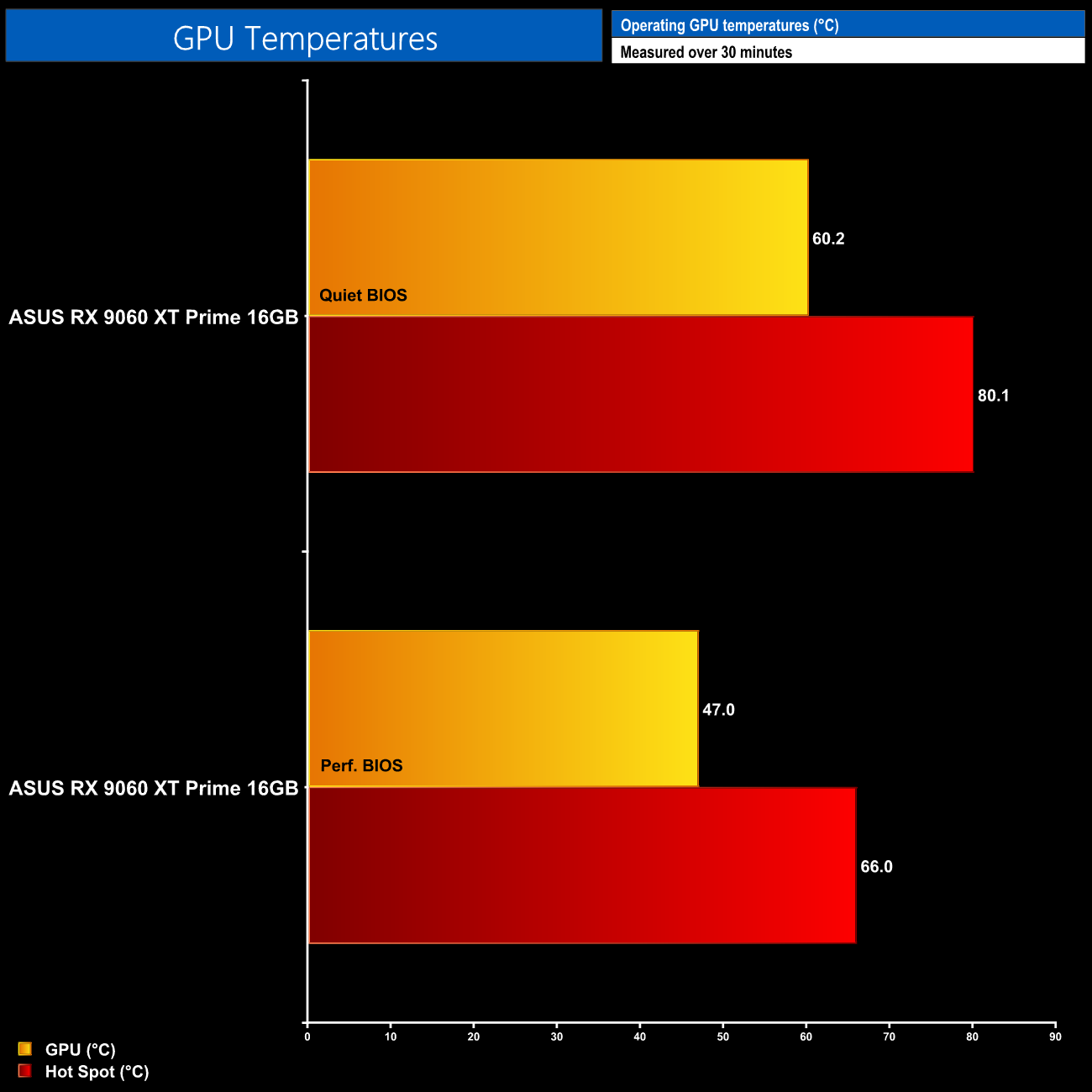
The Performance BIOS has a clear advantage for thermal performance, too, given the GPU hit just 47C in my testing, with the hot spot at 66C. The Quiet BIOS runs warmer, but is still well within safe limits given the hot spot hit 80.1C.
For our temperature testing, we measure the peak memory temperature under load. A reading under load comes from running A Plague Tale: Requiem for 30 minutes.
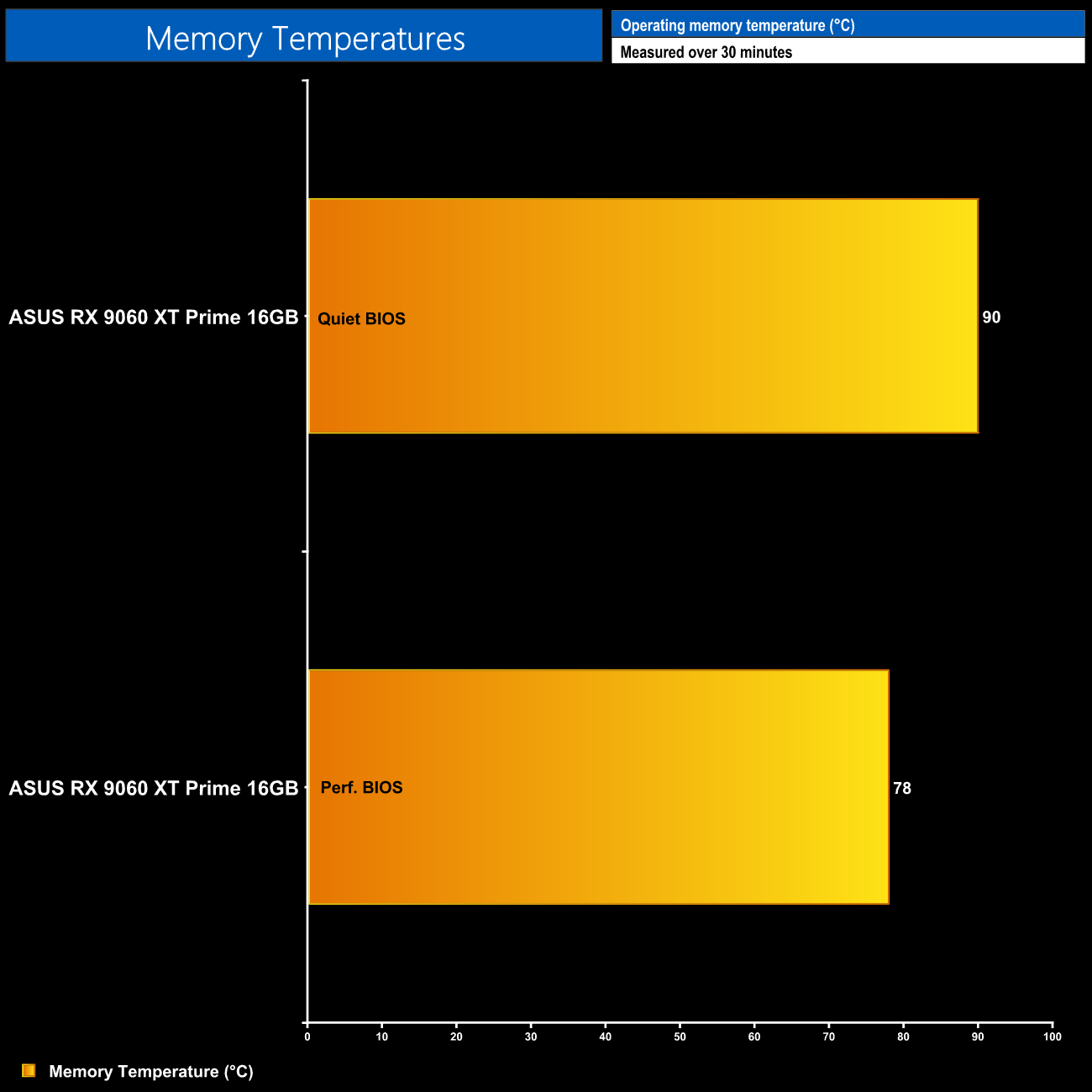
Memory temperatures follow a similar trend, with the Performance BIOS hitting 78C, while the Quiet BIOS saw that figure increase by 12C. That's a bit warmer, but we observed similar during our 9070 XT reviews.
We take our noise measurements with the sound meter positioned 1 foot from the graphics card. I measured the noise floor to be 32 dBA, thus anything above this level can be attributed to the graphics cards. The power supply is passive for the entire power output range we tested all graphics cards in, while all CPU and system fans were disabled. A reading under load comes from running A Plague Tale: Requiem for 30 minutes.
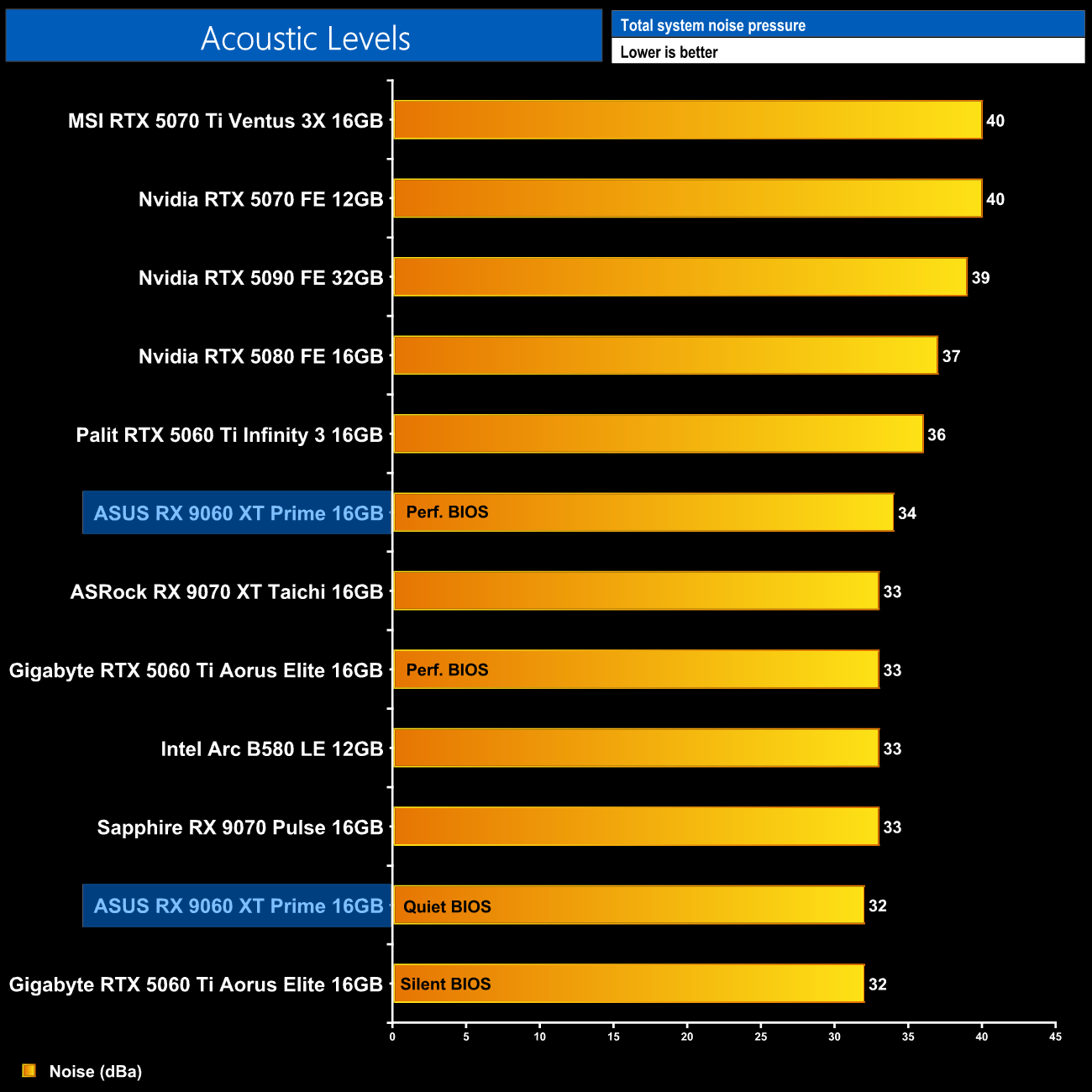
Noise levels of the ASUS Prime are absolutely fantastic, it has to be said. The Quiet BIOS saw the fans run at below 800rpm, not even registering on my sound meter. The Performance BIOS only increased speed to 1350rpm, so it was still very easy on the ears.
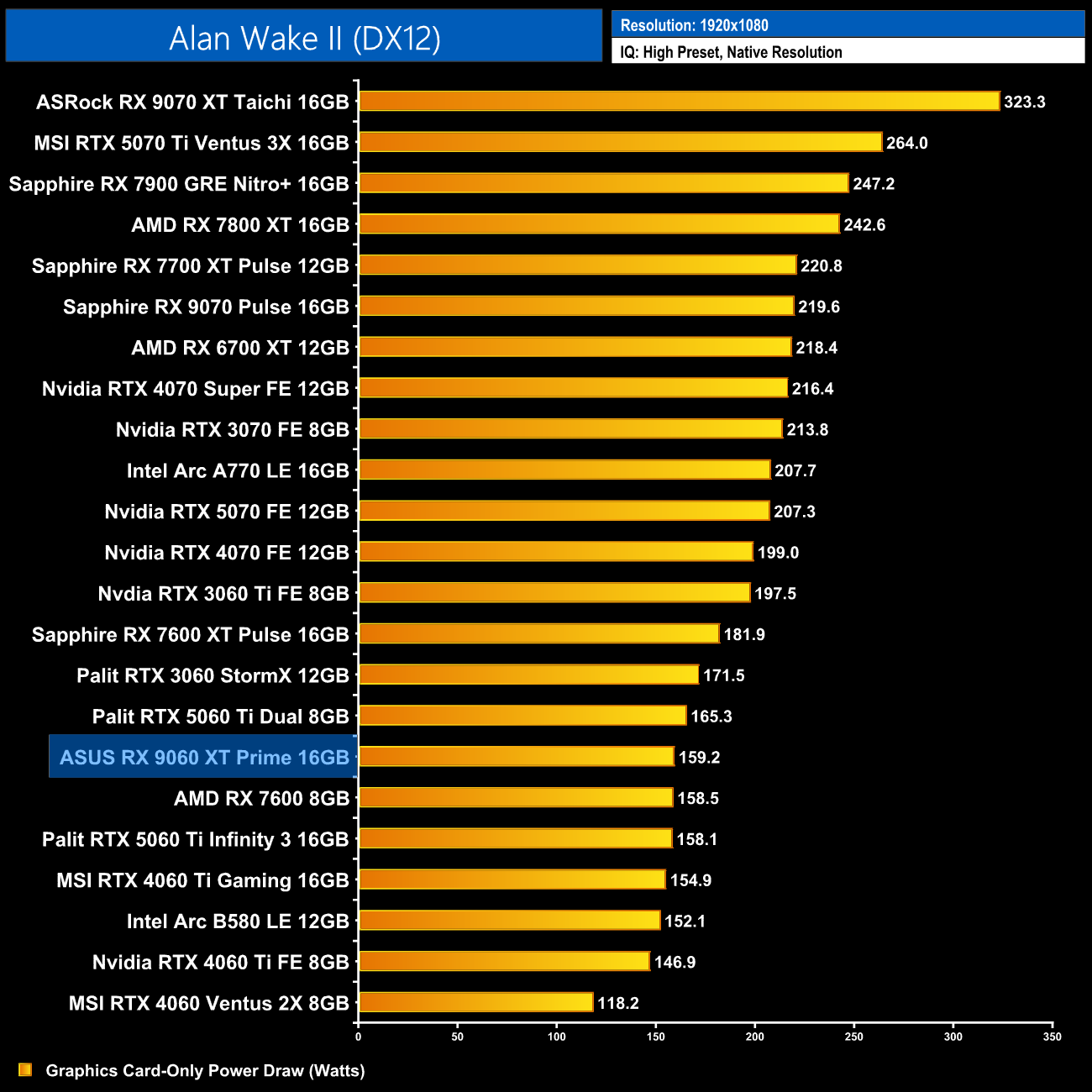
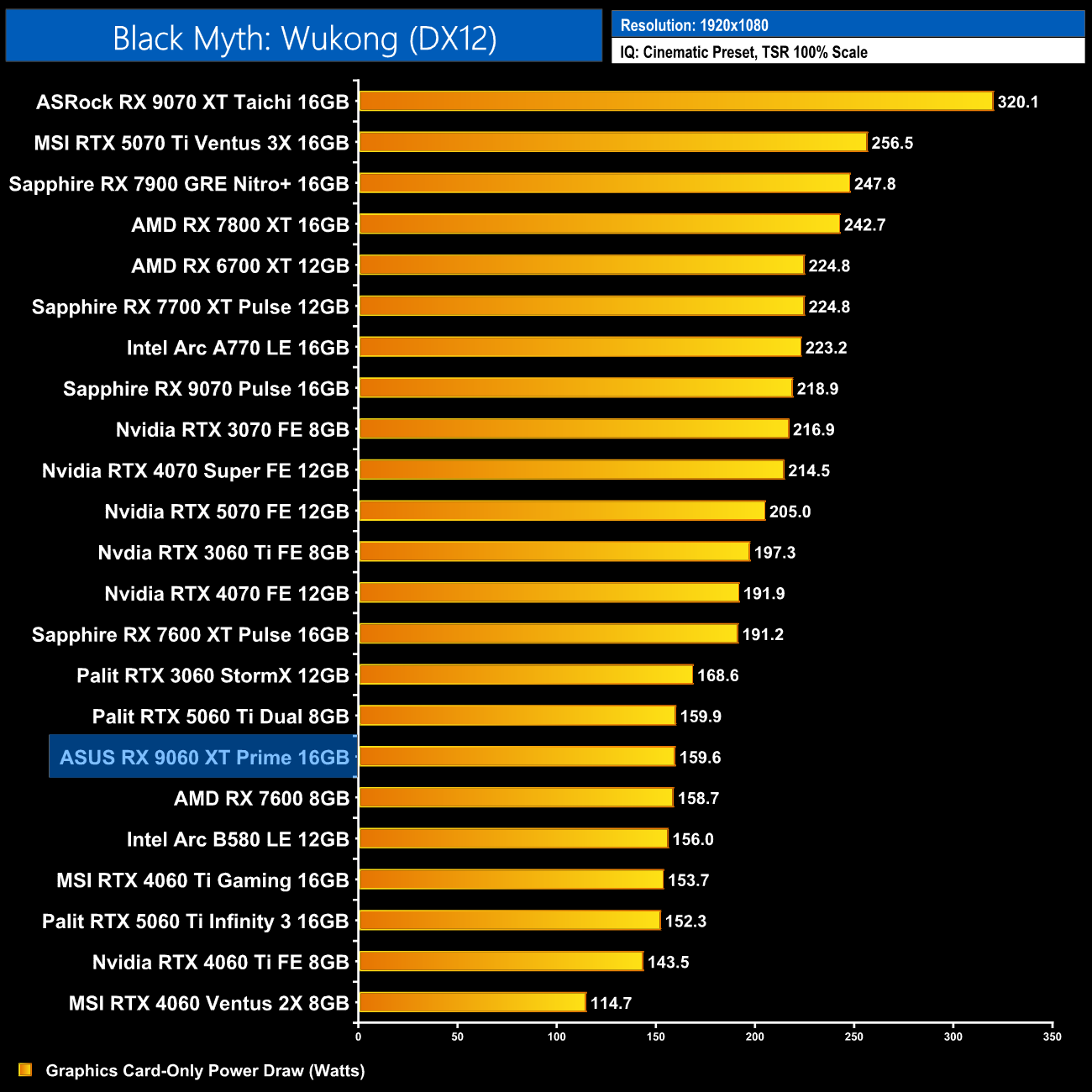
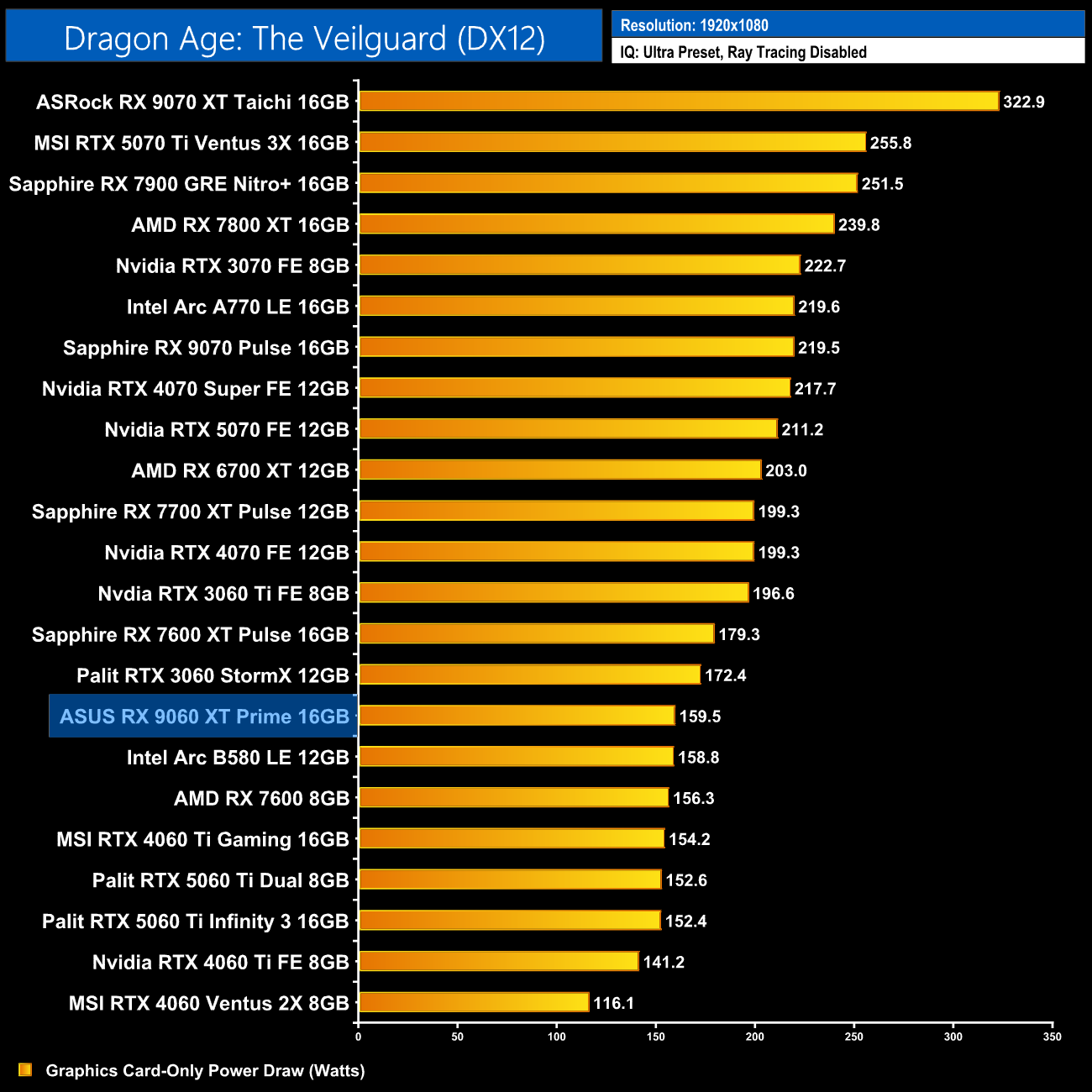
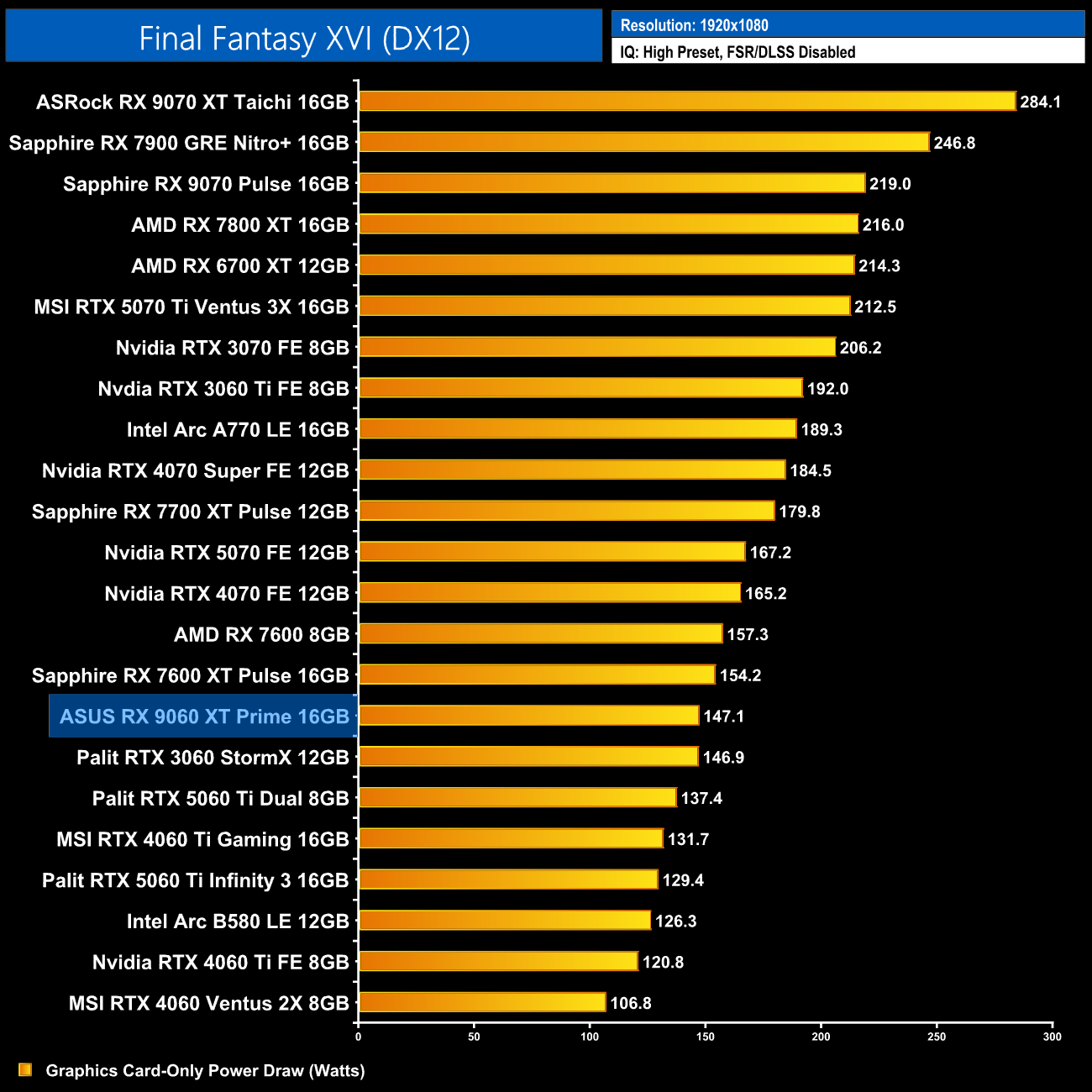
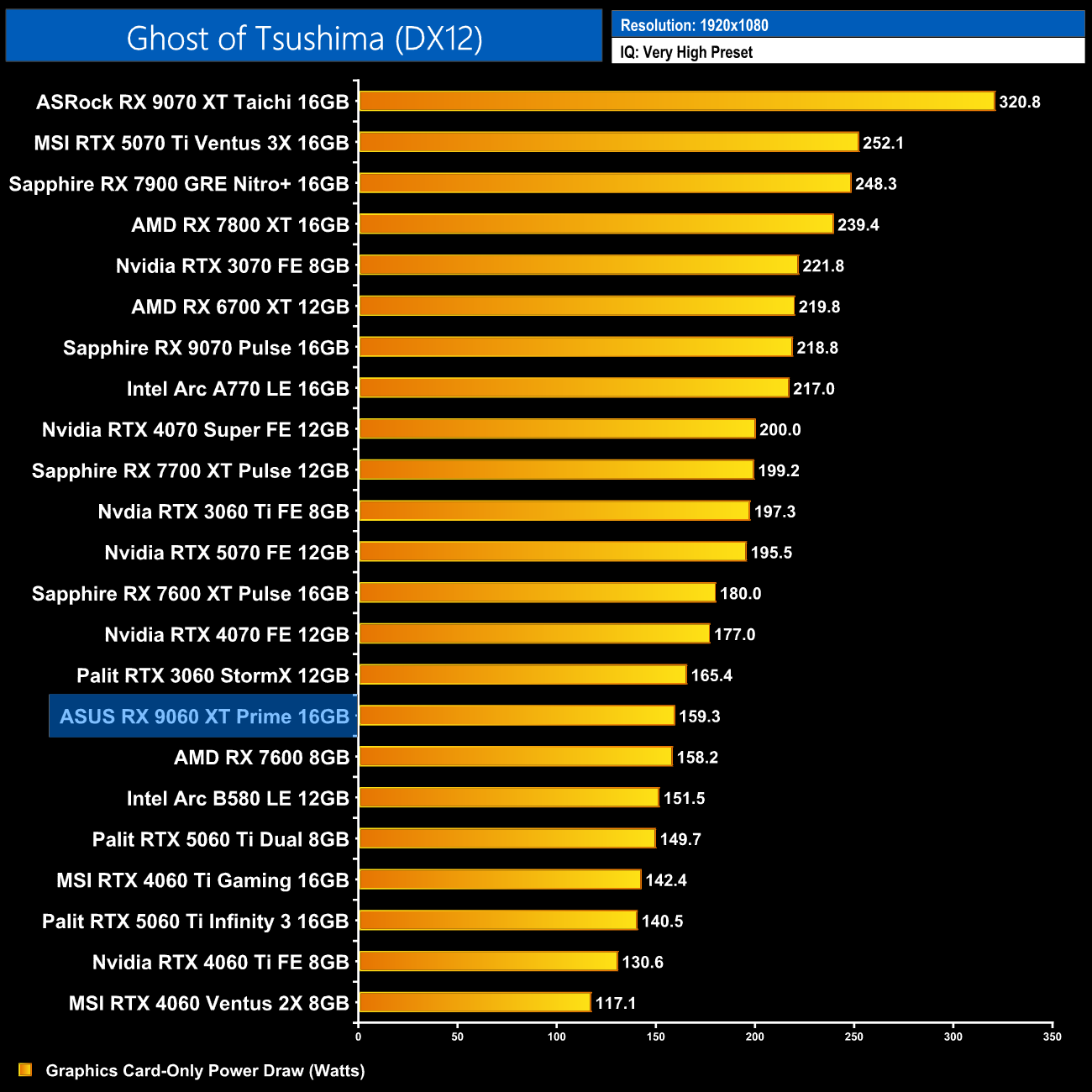
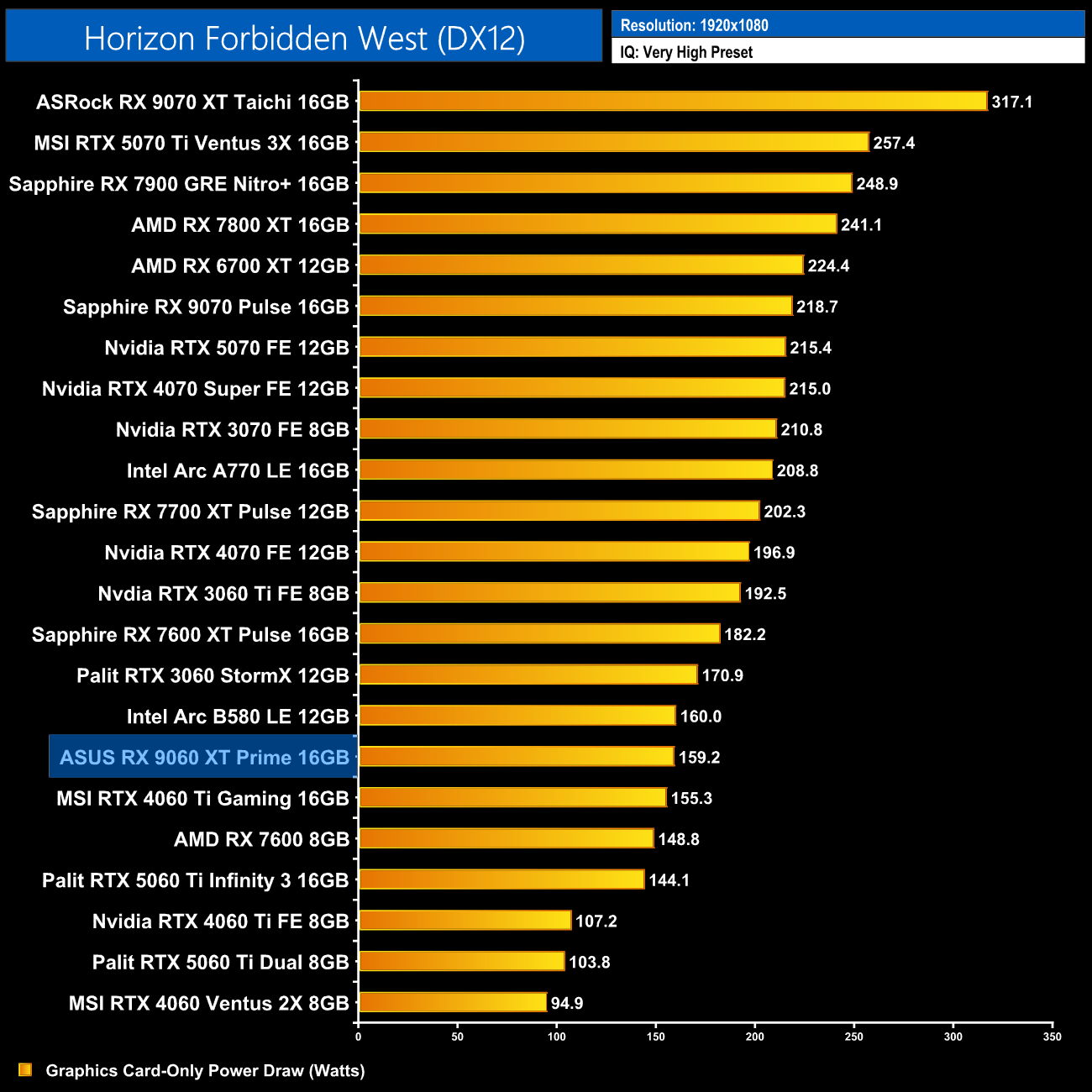
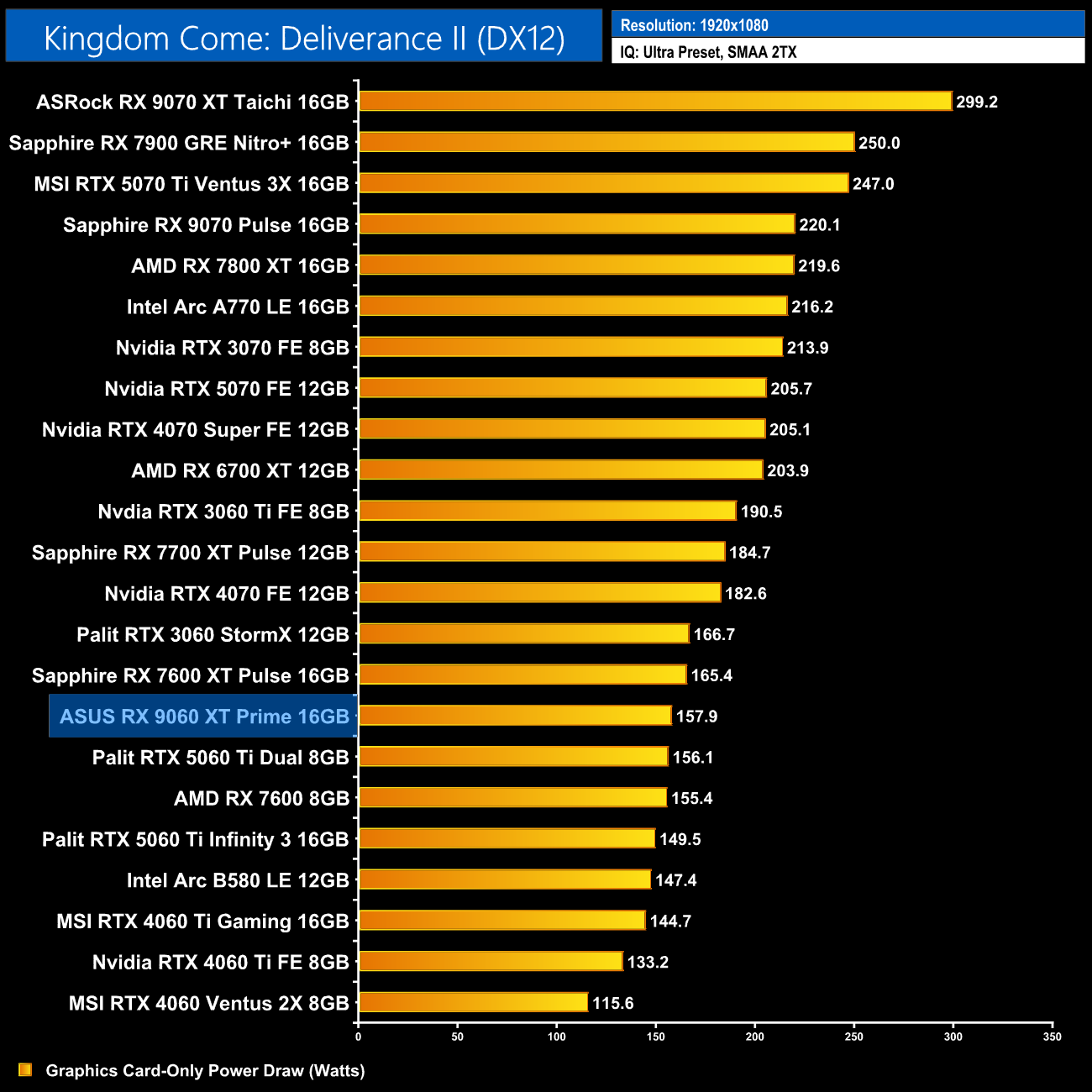
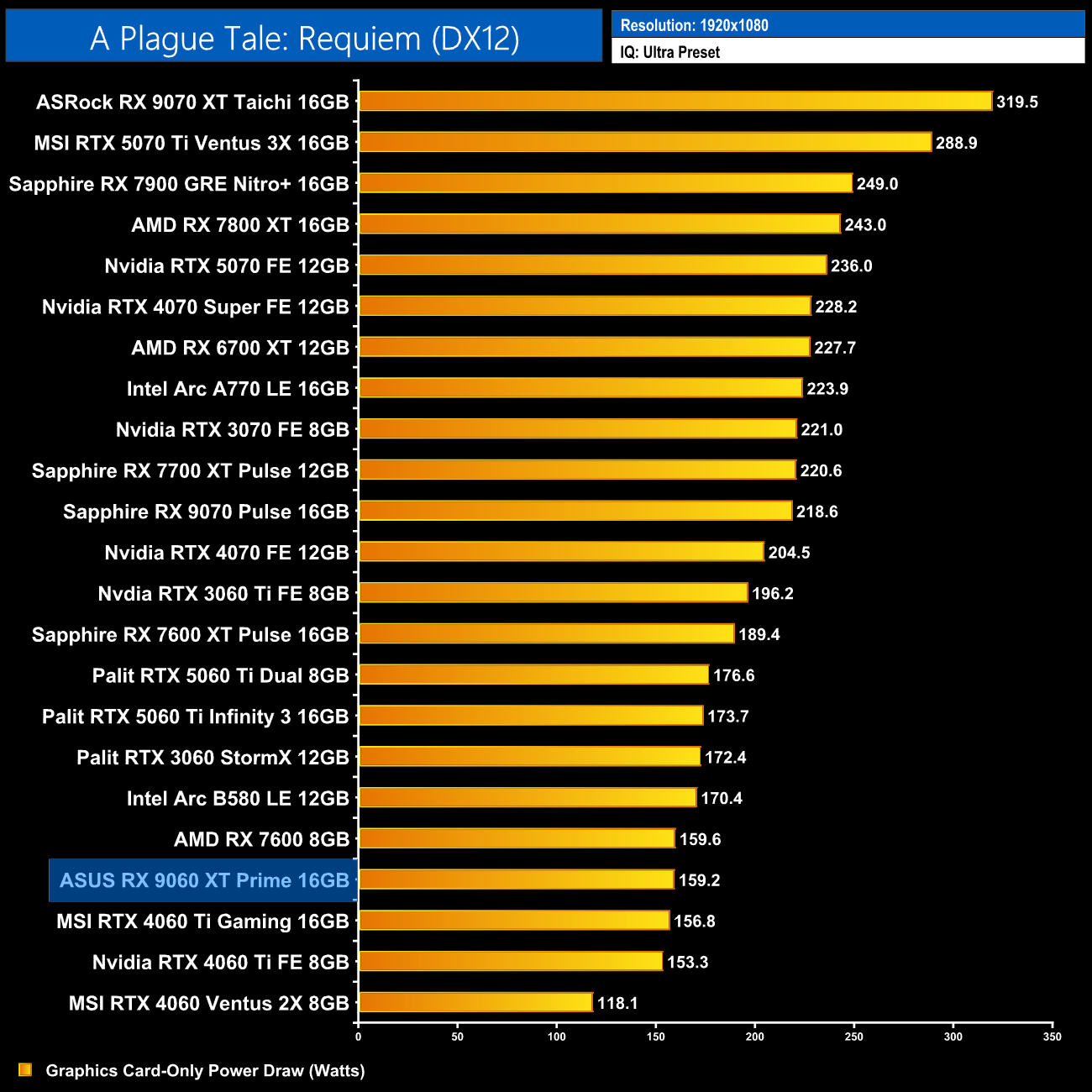
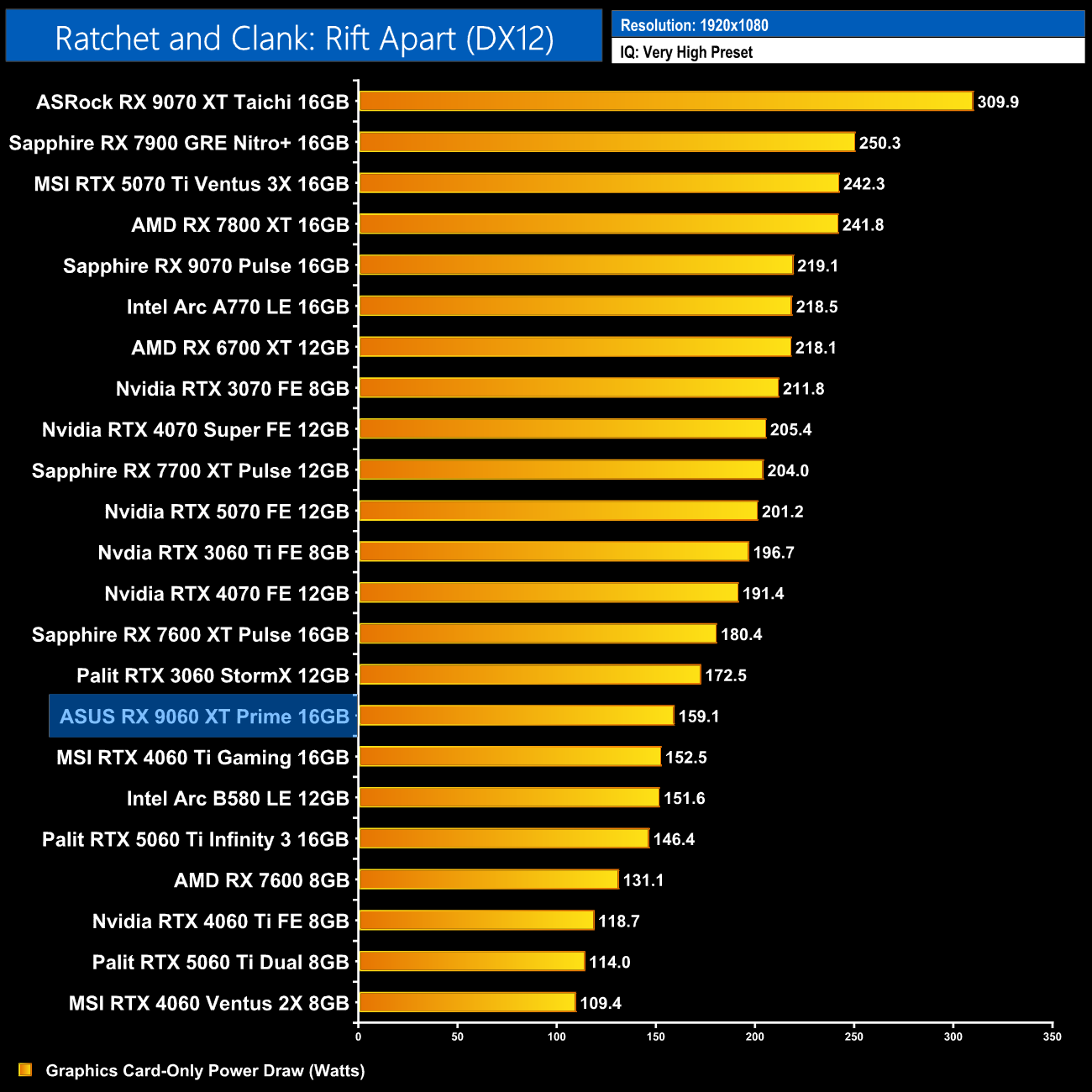
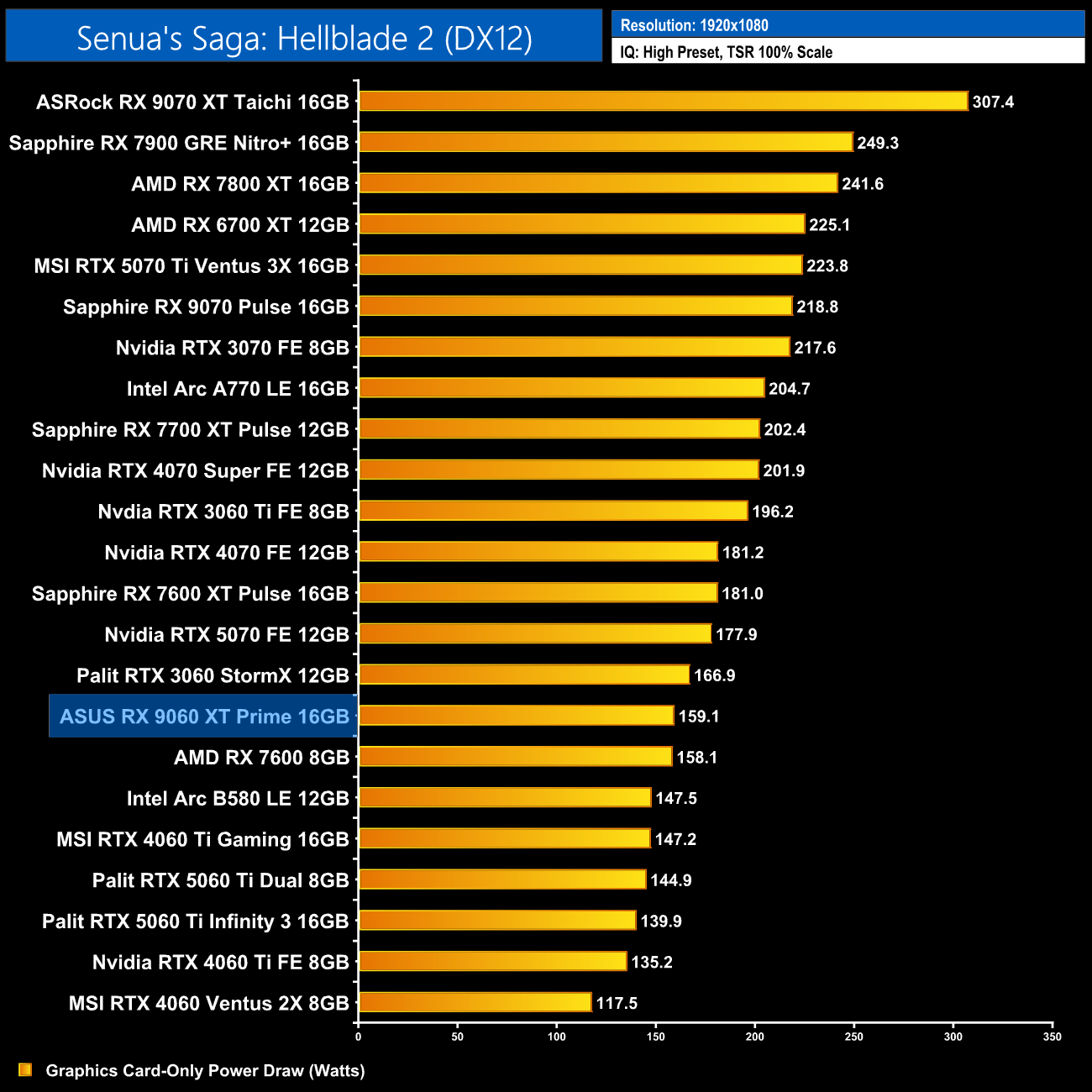
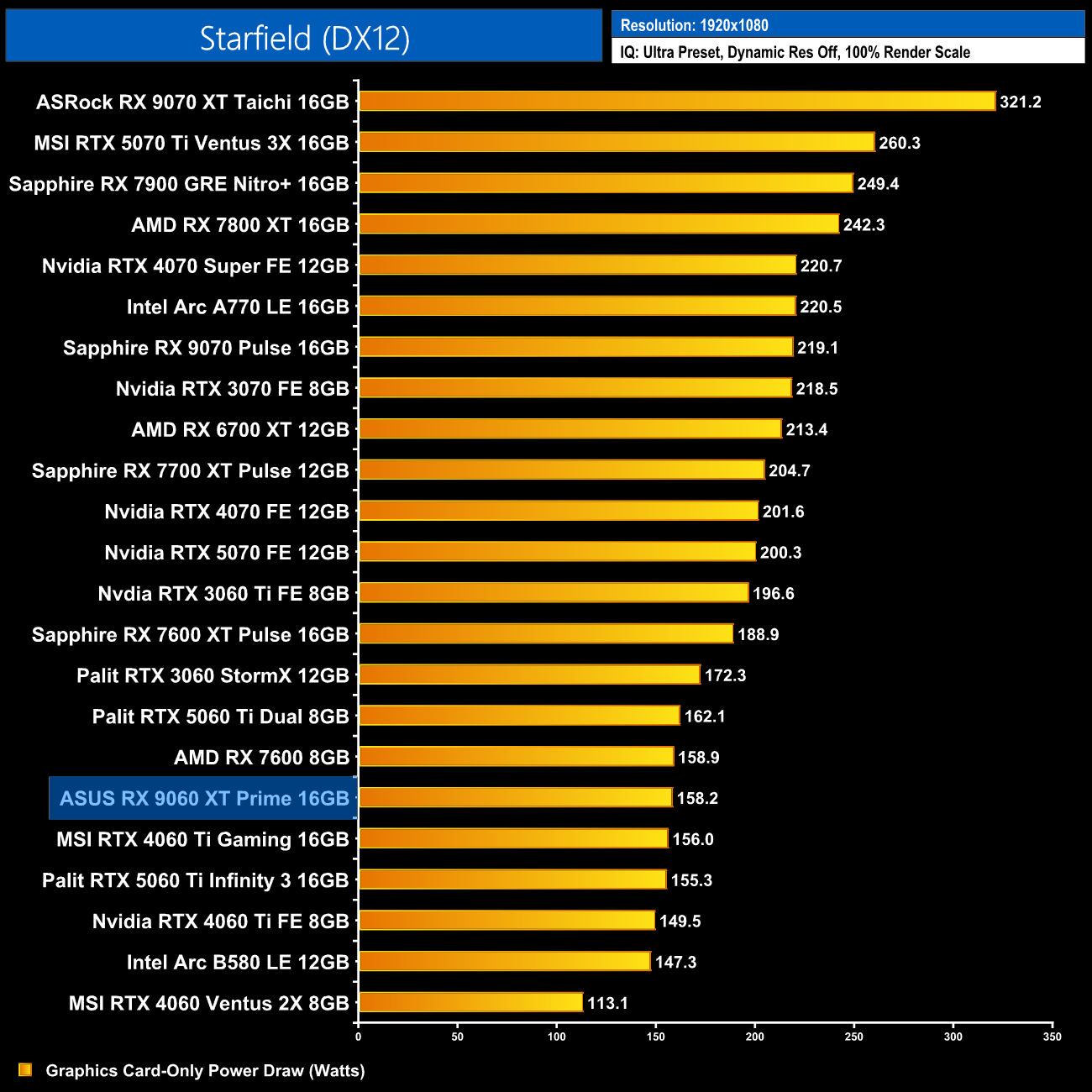
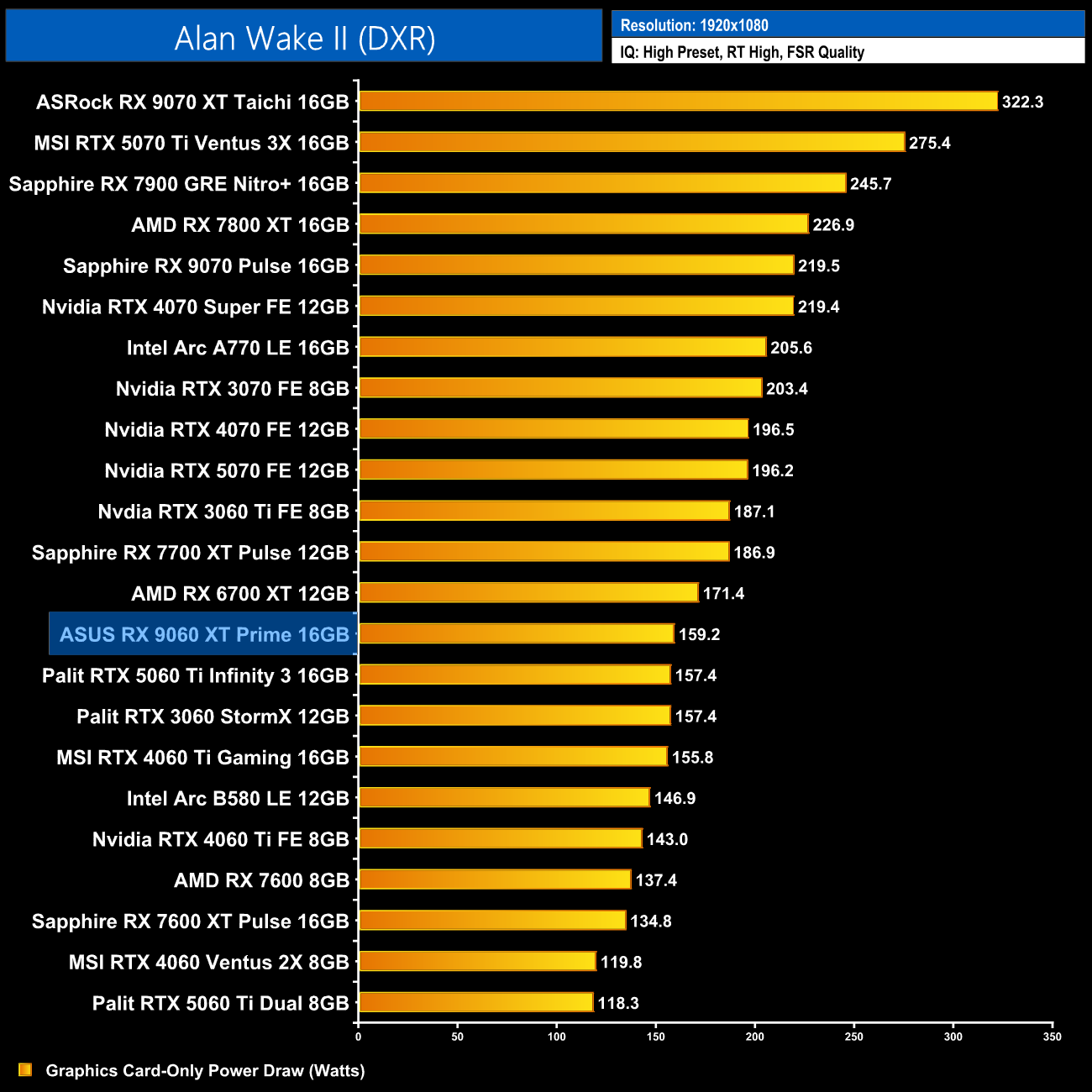
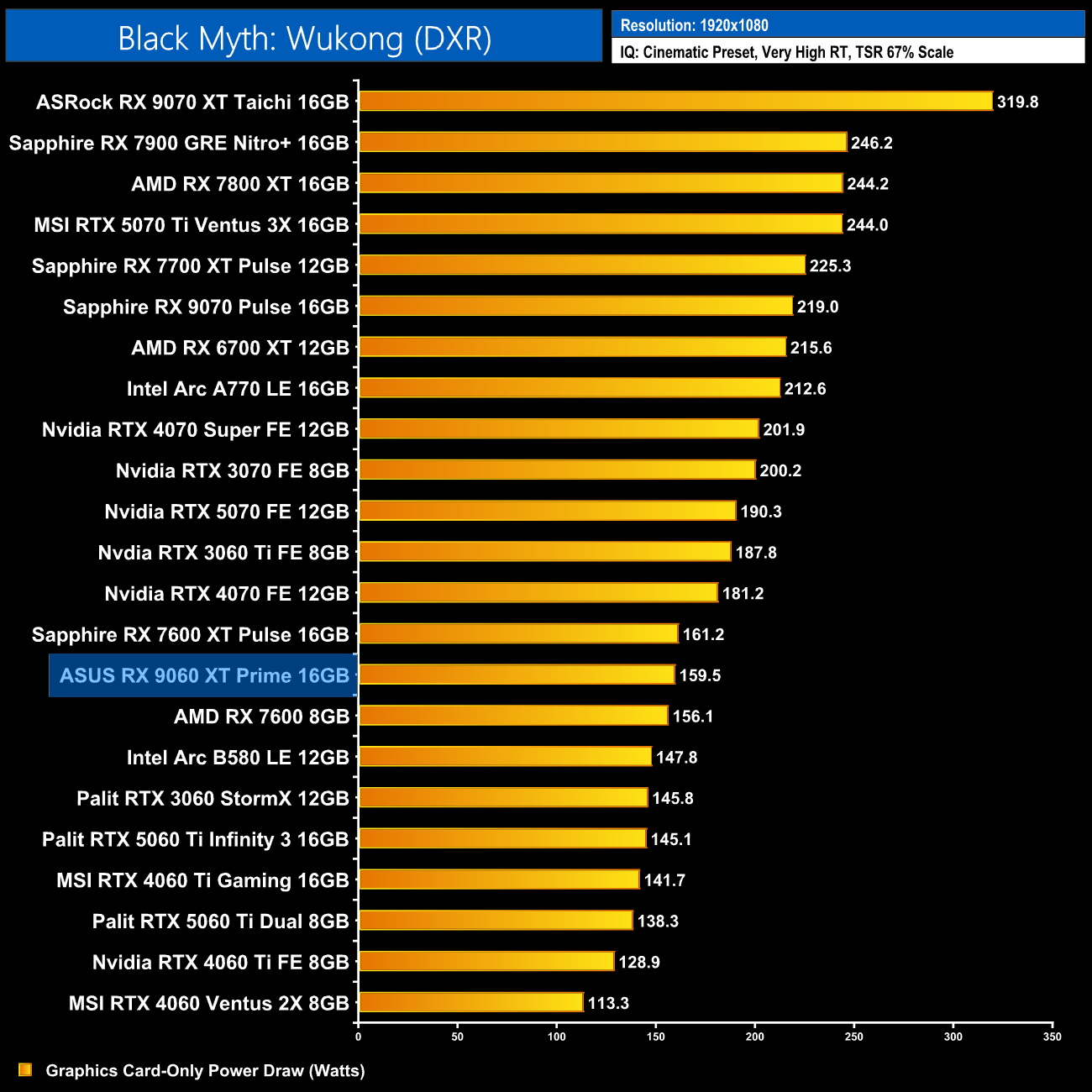
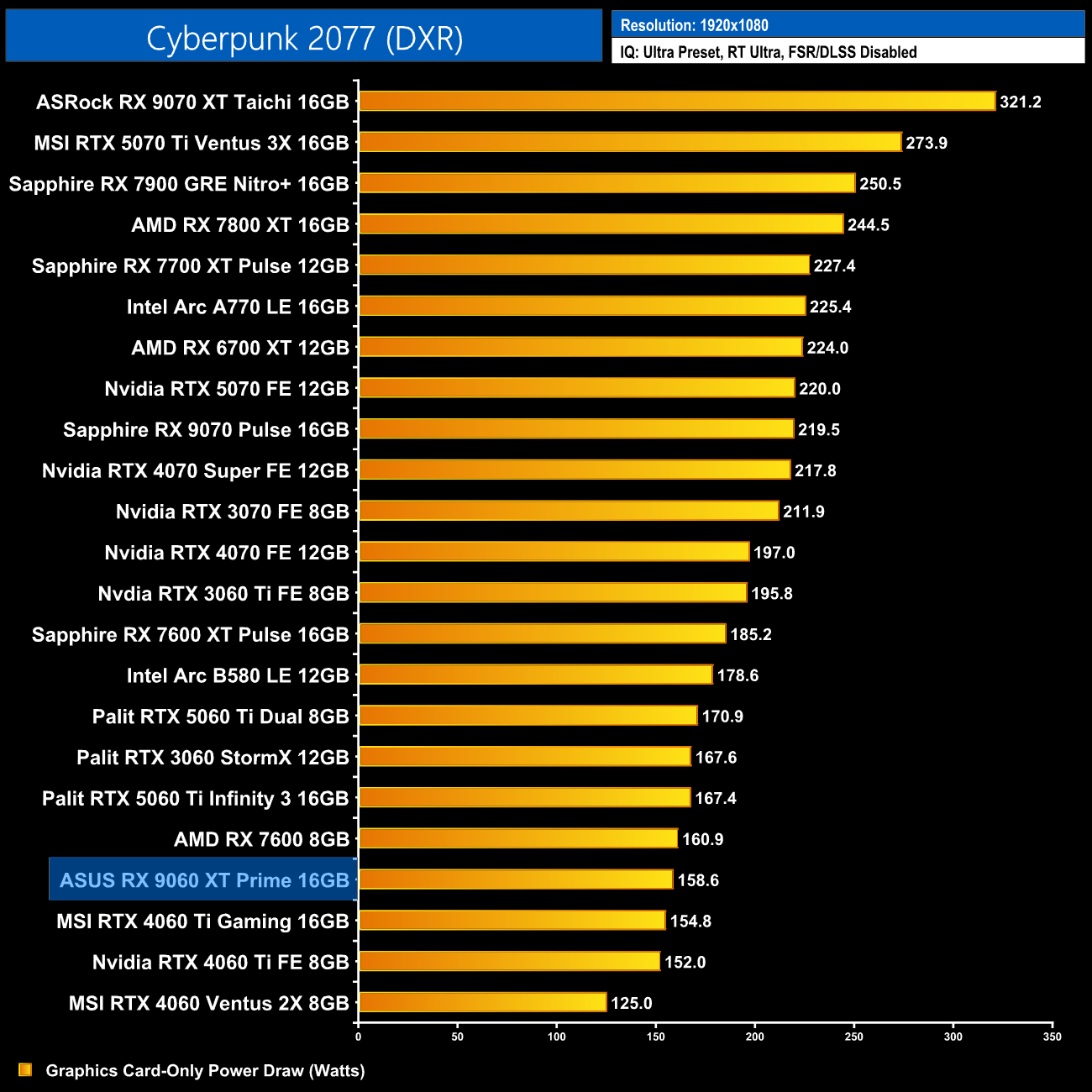
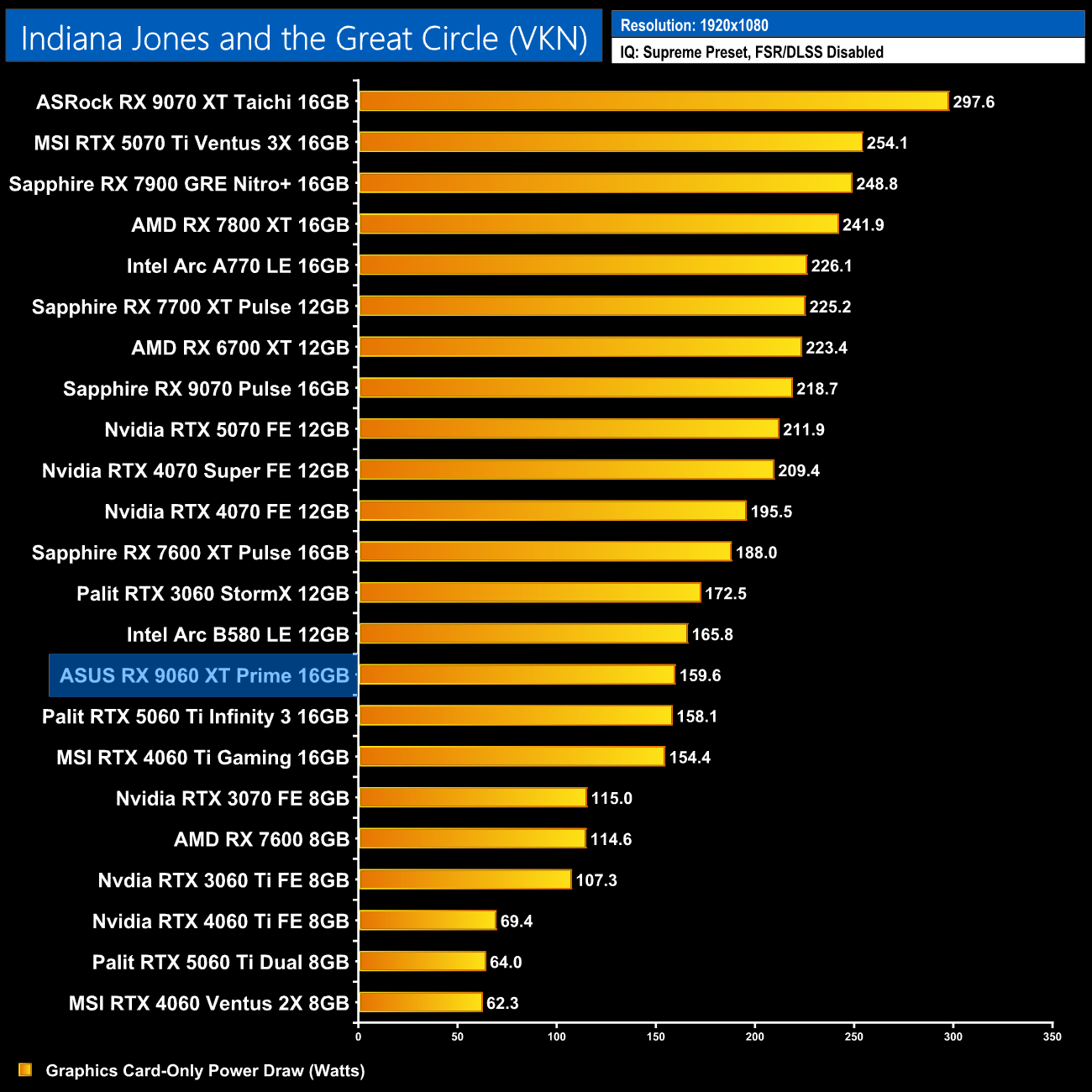
Here we present power draw figures for the graphics card-only, on a per-game basis for all twelve games we tested at 1080p. This is measured using Nvidia's Power Capture Analysis Tool, also known as PCAT. You can read more about our updated power draw testing methodology HERE.
Per-Game Results at 1080p:

Click to enlarge.
12-Game Average at 1080p:
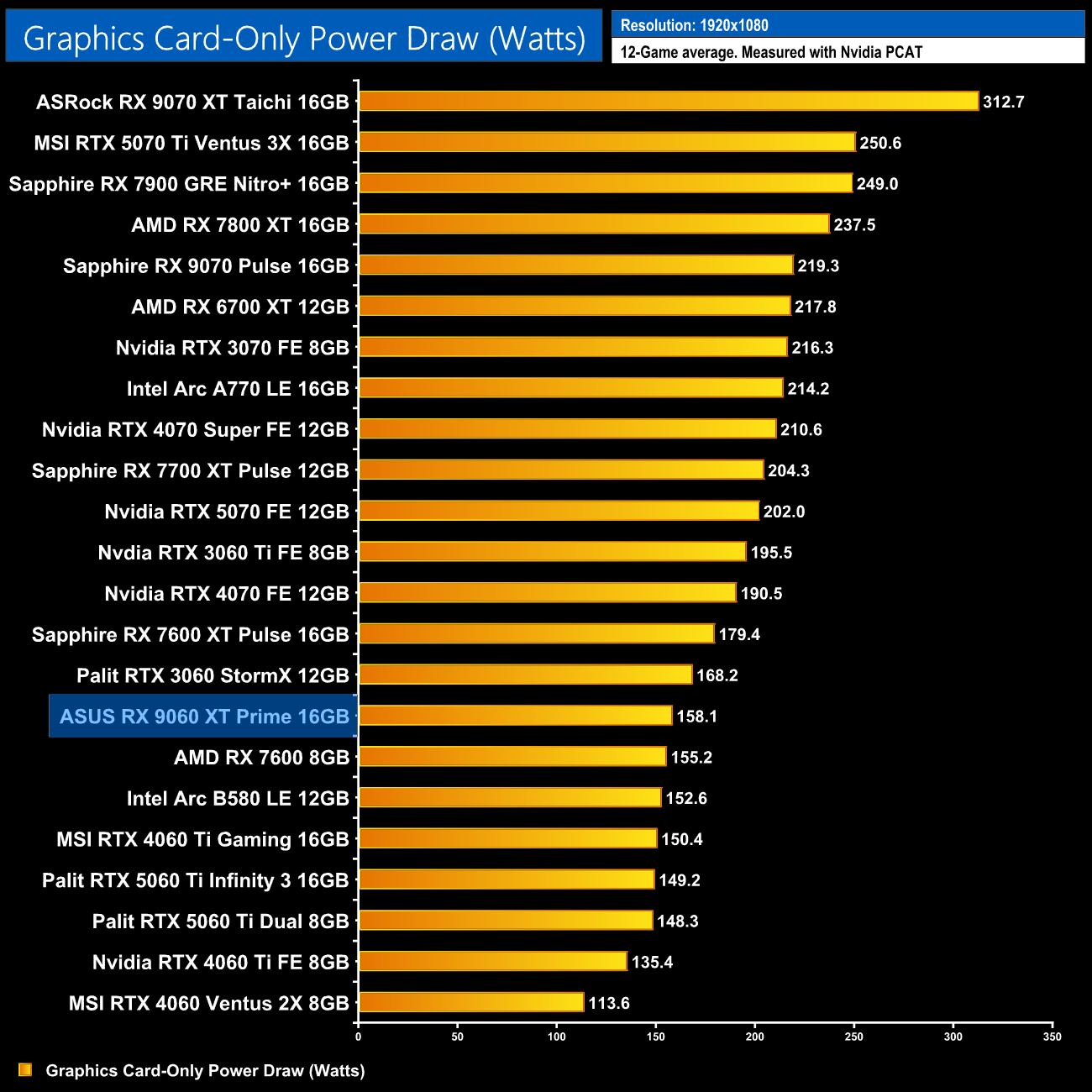
Power draw of our ASUS Prime came in right in-line with AMD's claimed 160W TBP. Over the twelve games tested at 1080p, it averaged 158.1W, so it's actually more frugal than the RX 7600 XT, despite being much faster.
Ray tracing results
As a bonus, we now include the power figures for all eight games we test with ray tracing enabled.
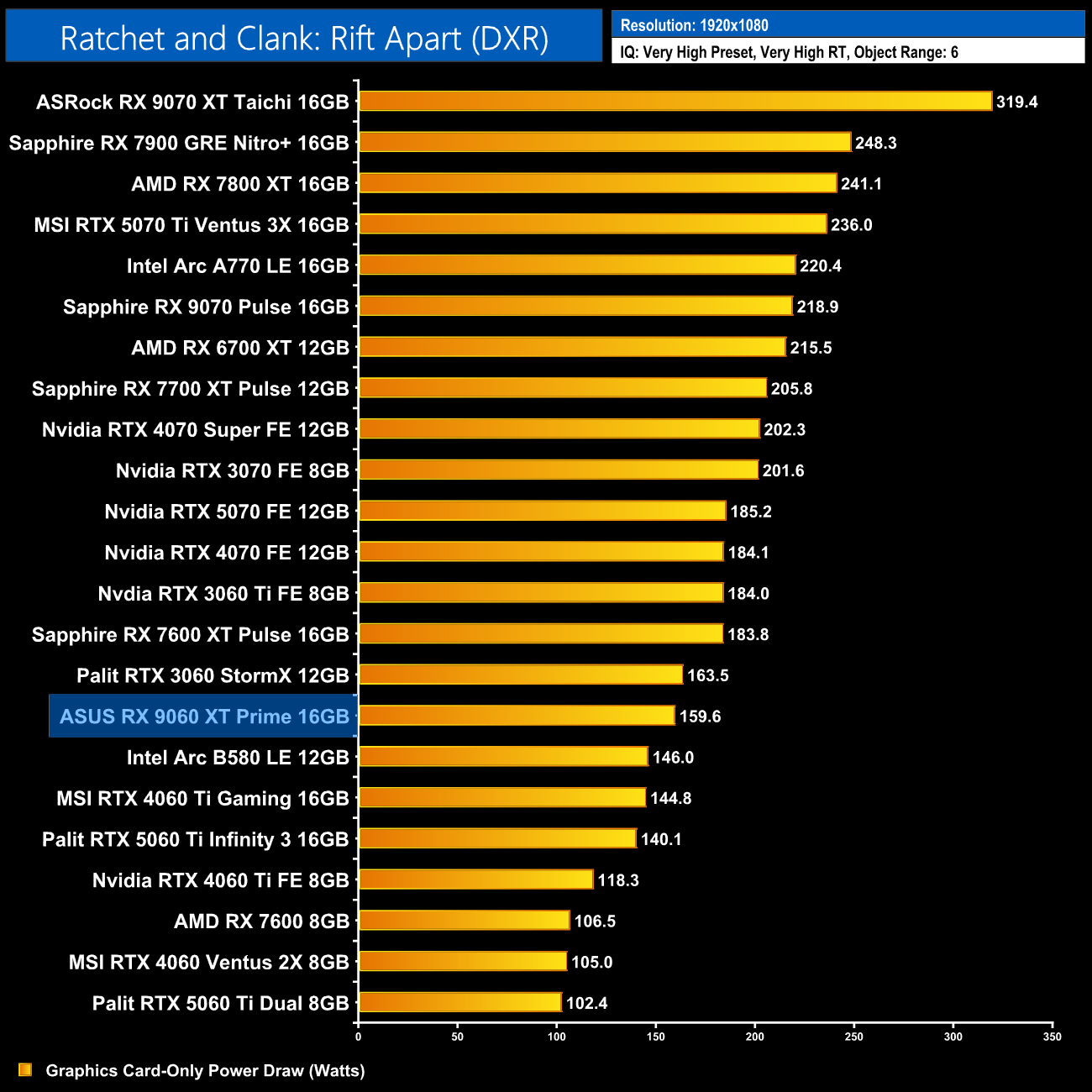
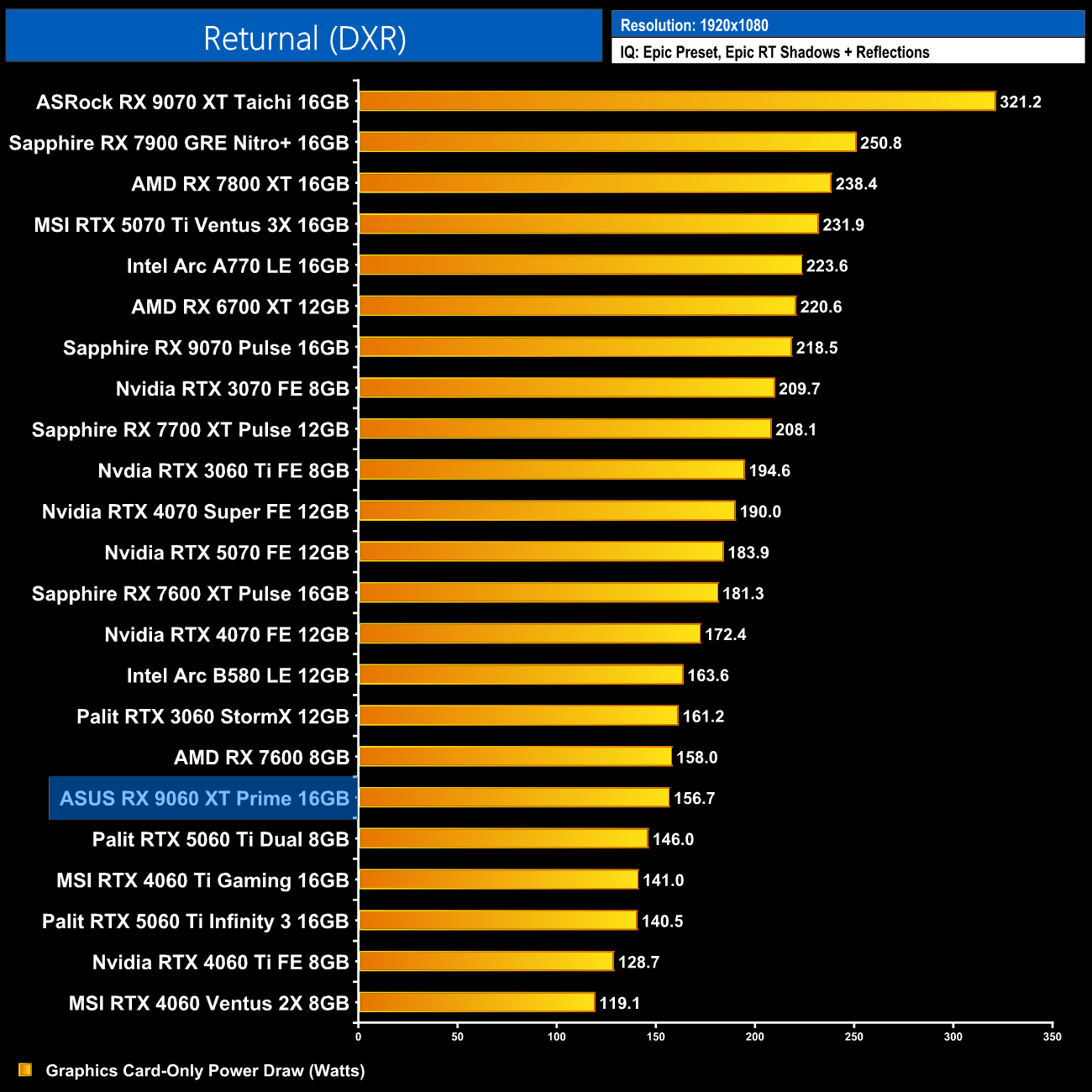
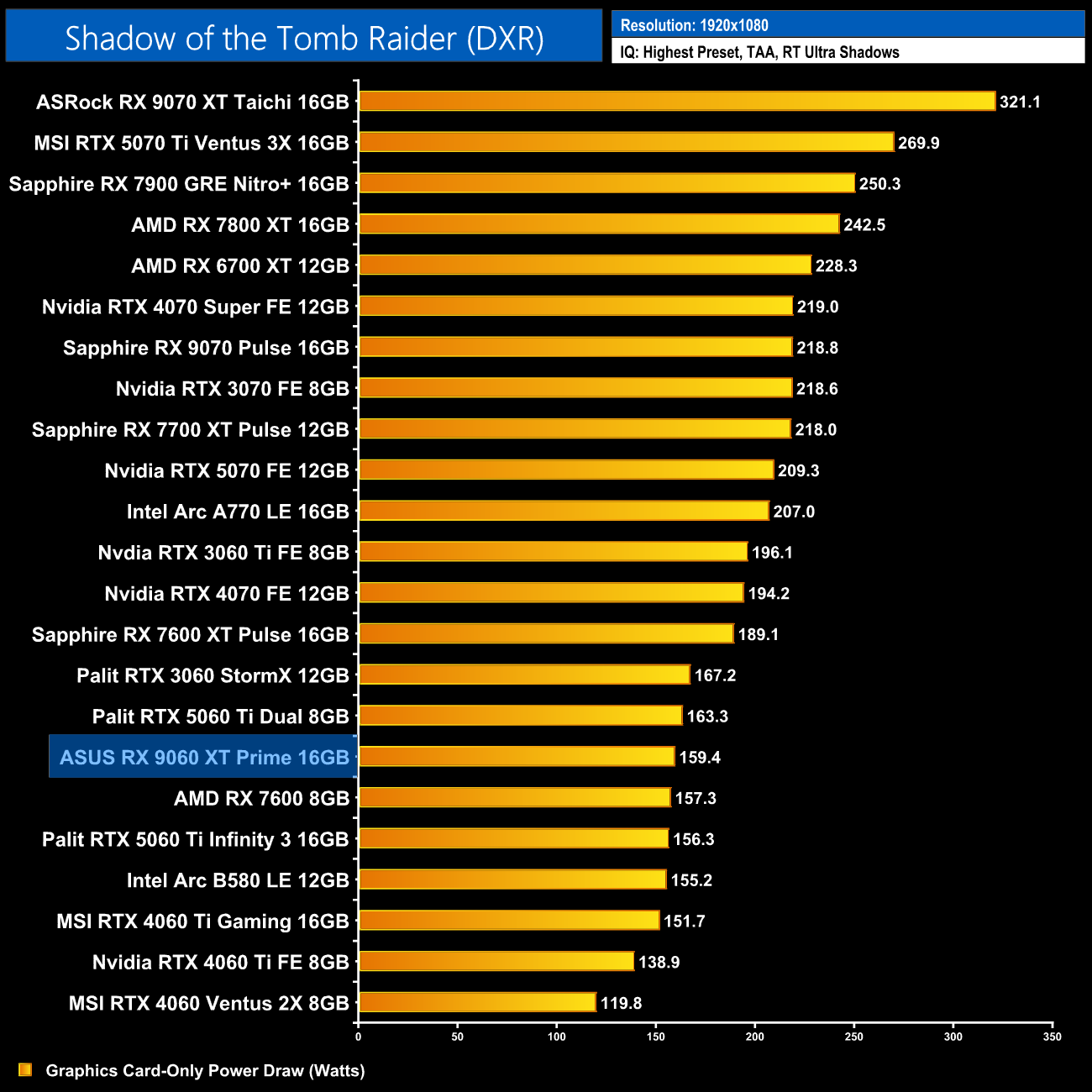
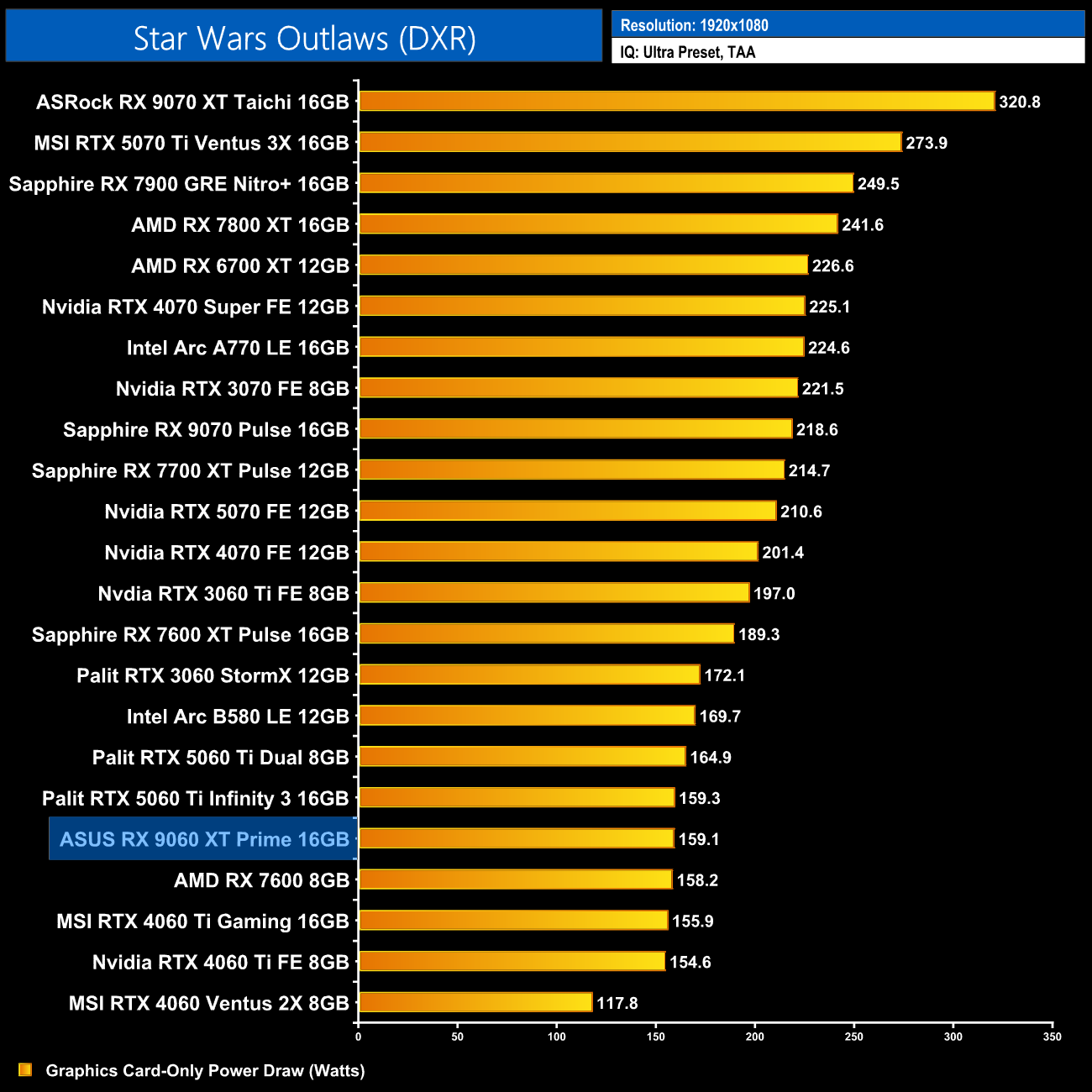
8-Game ray tracing average:
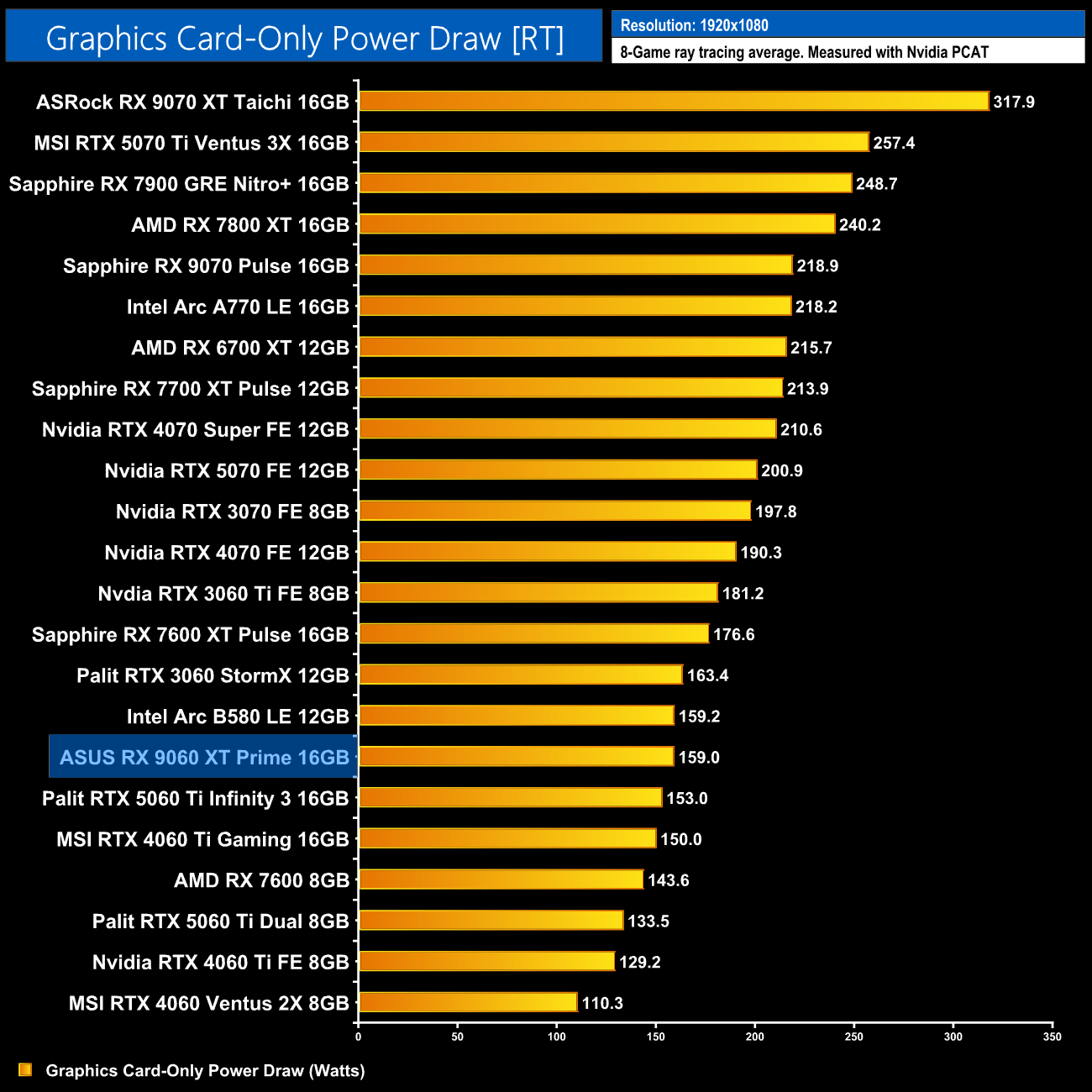
Ray tracing power draw is very similar at 159W average.
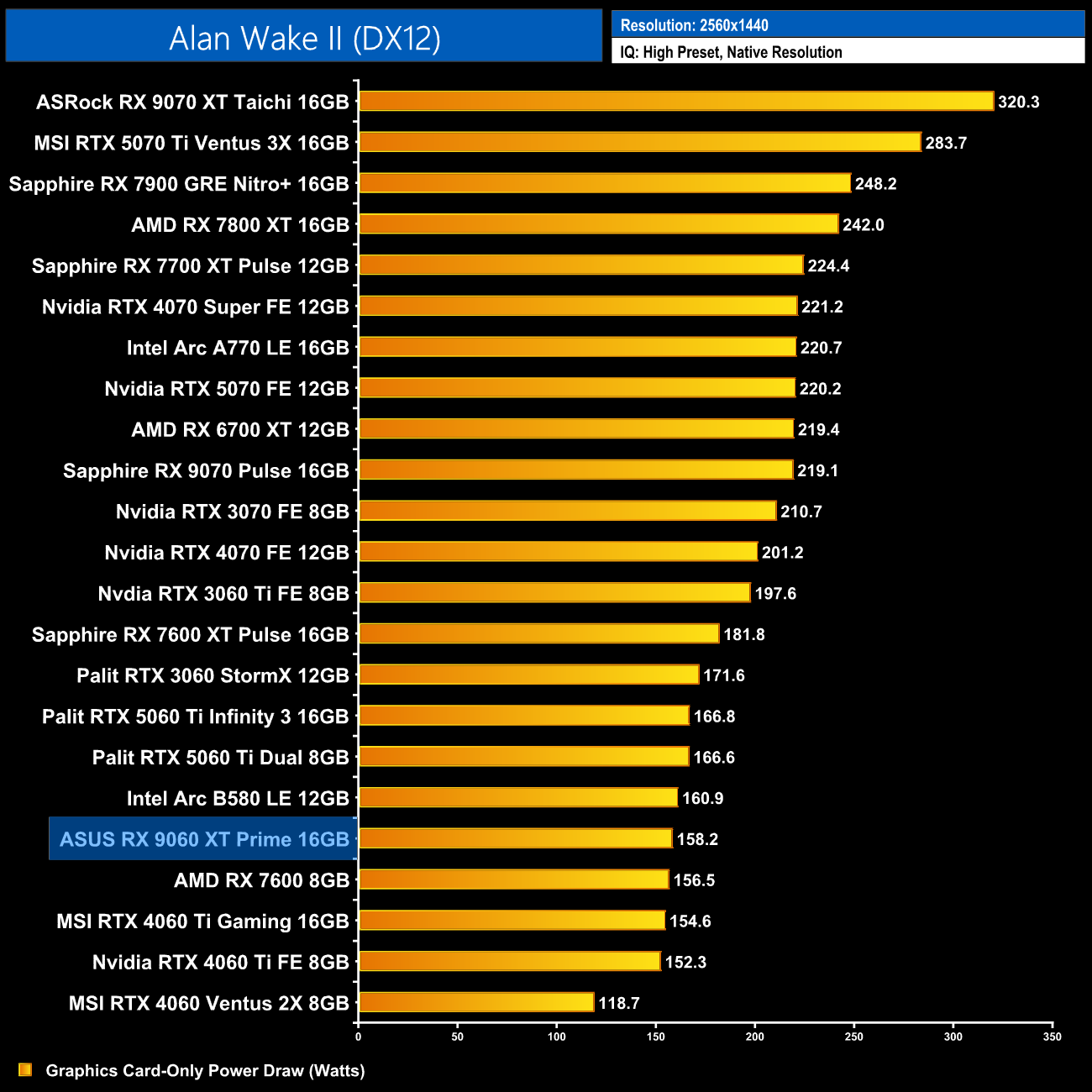
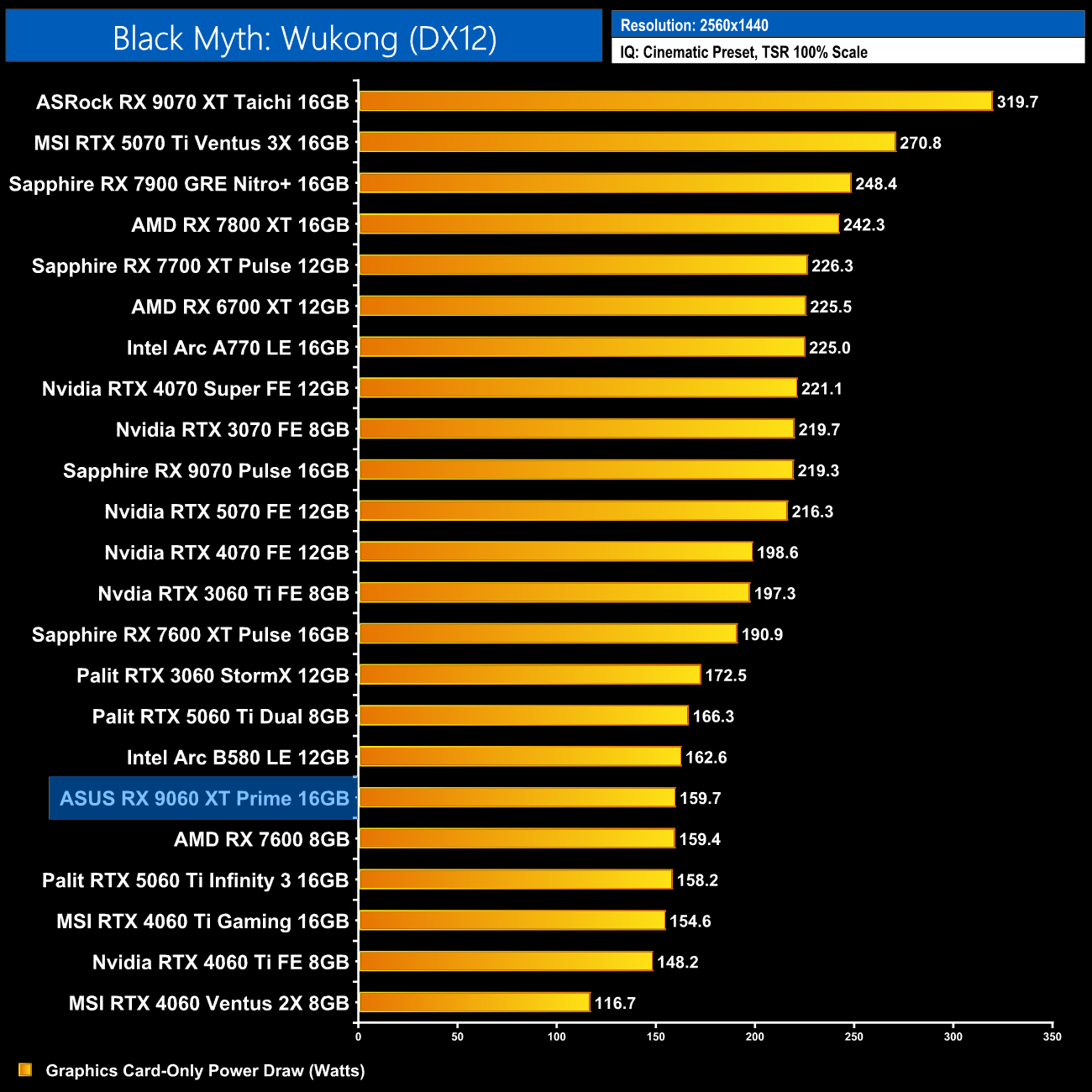
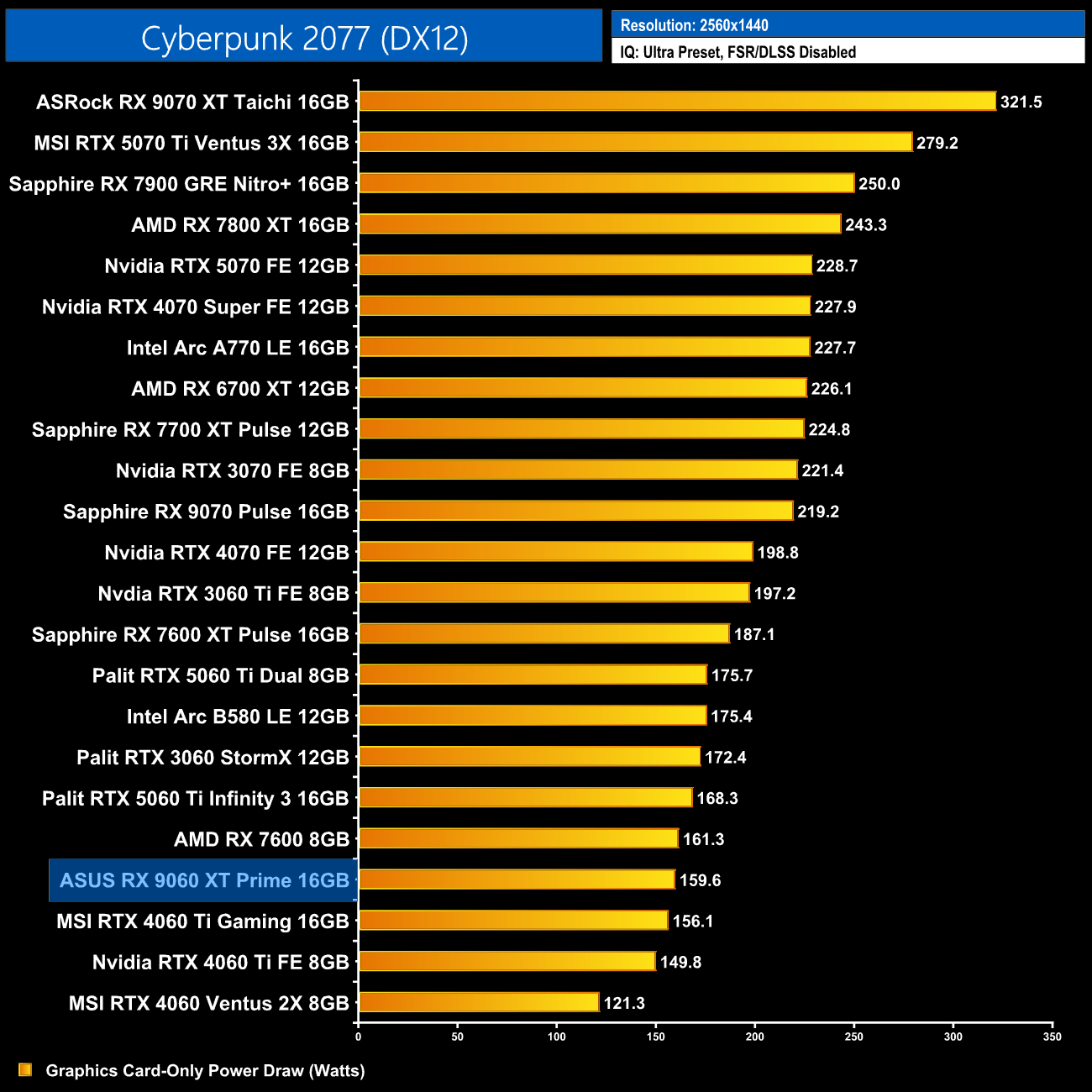
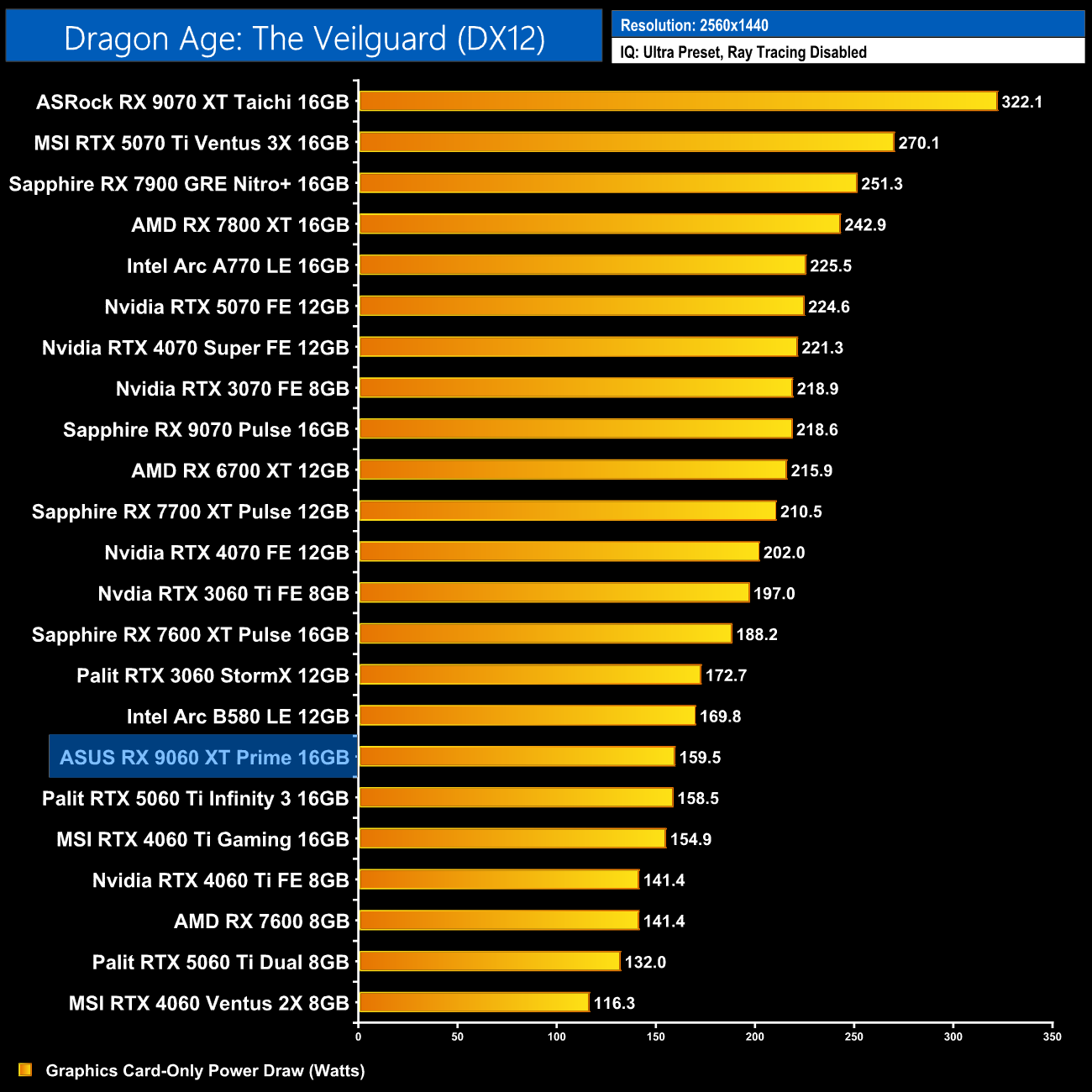
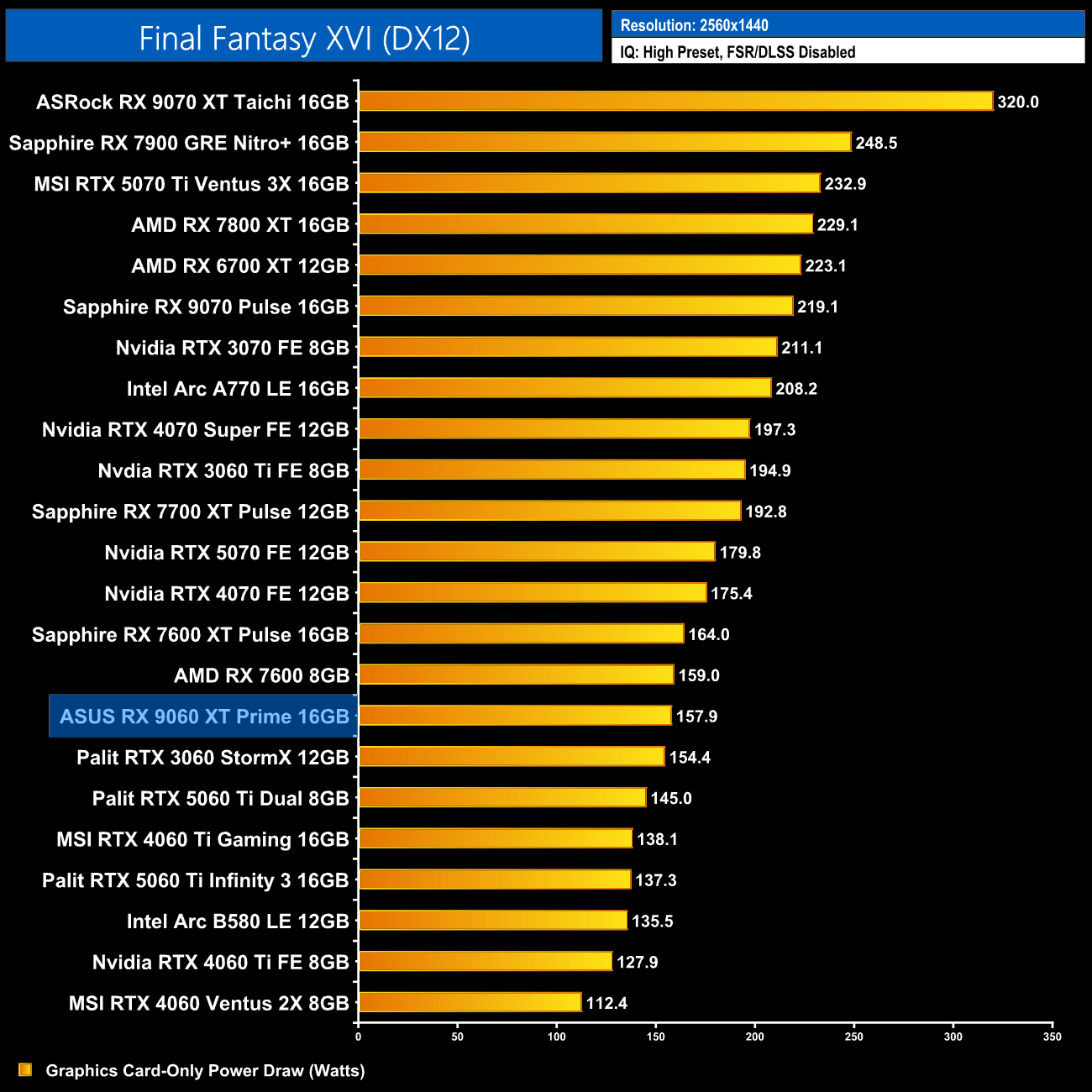
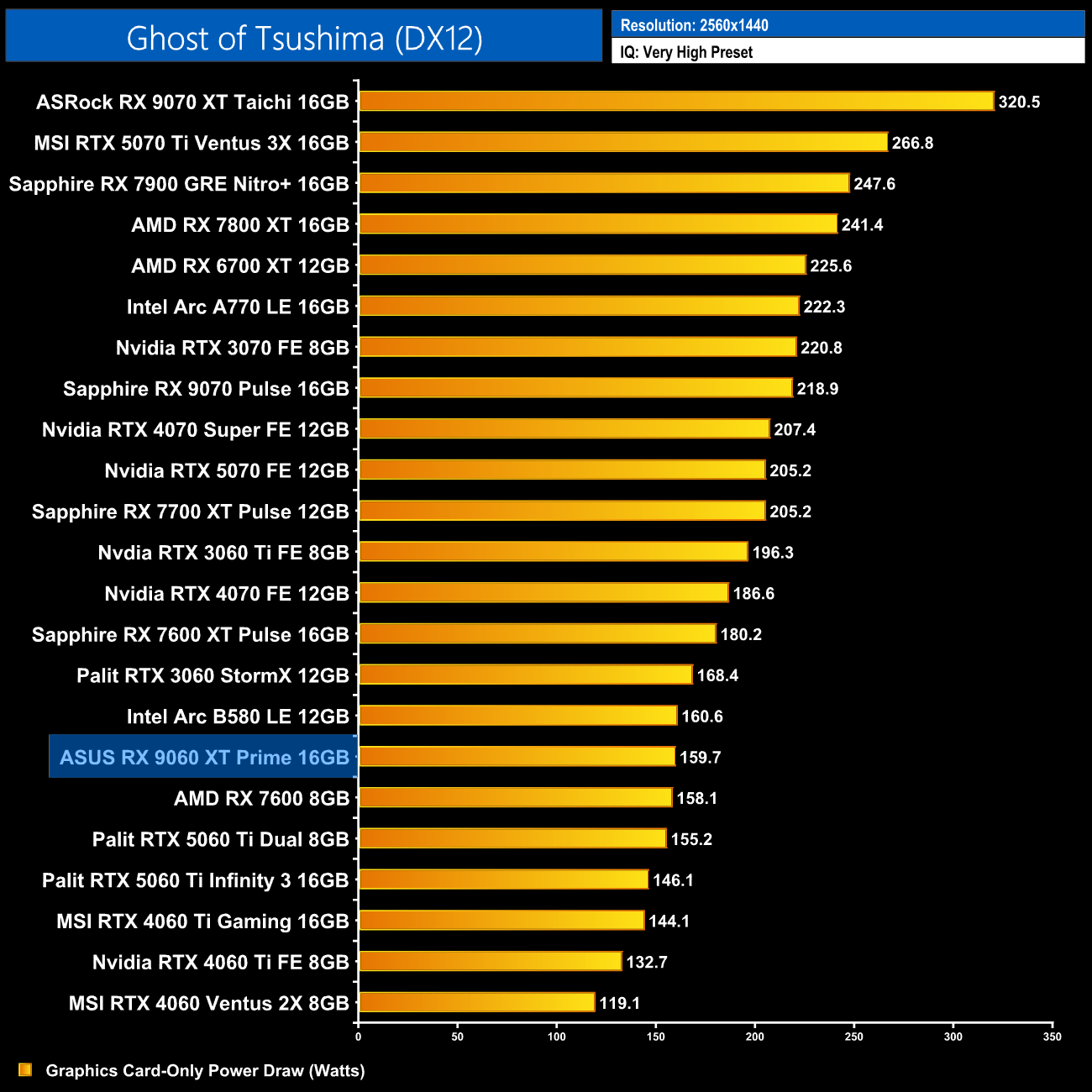
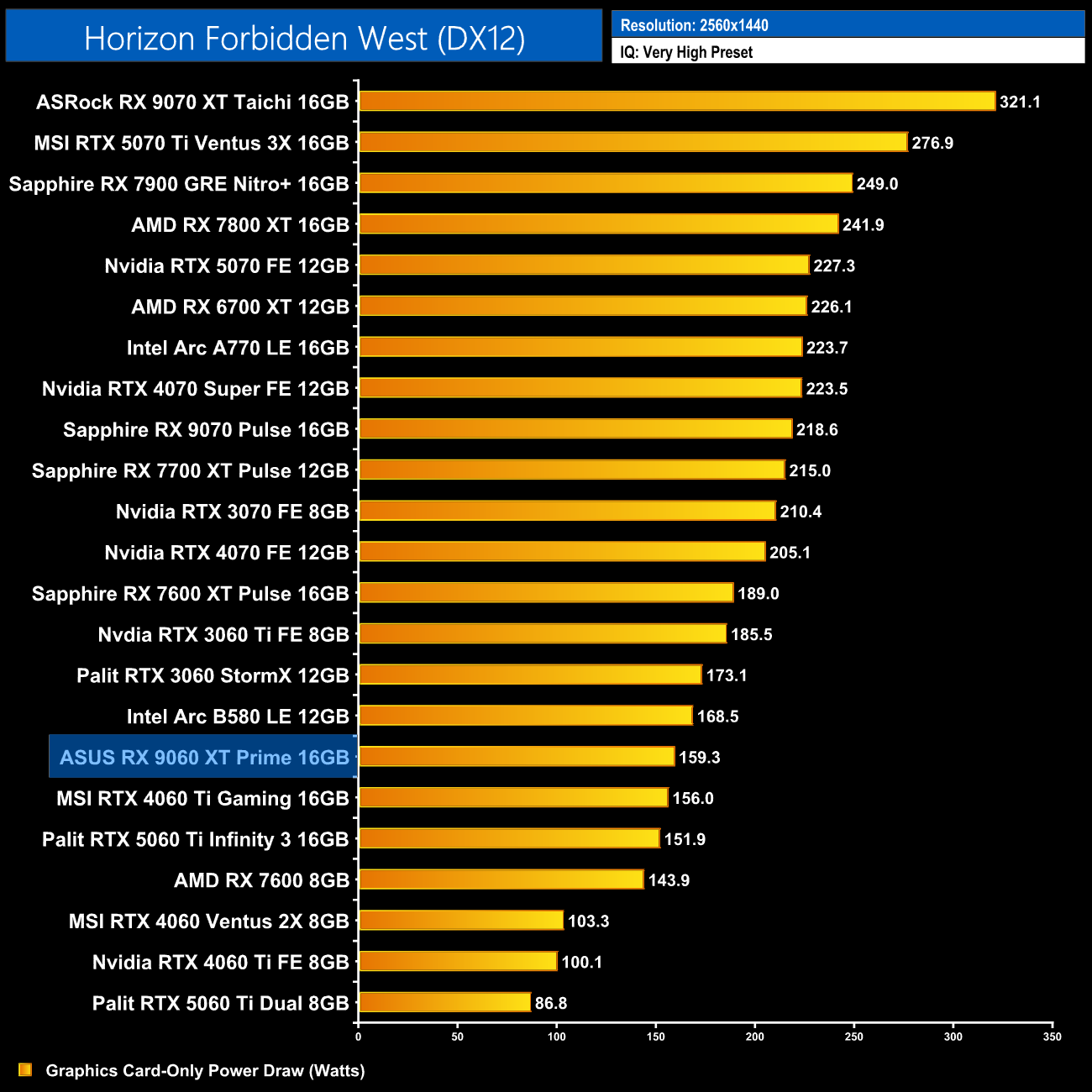
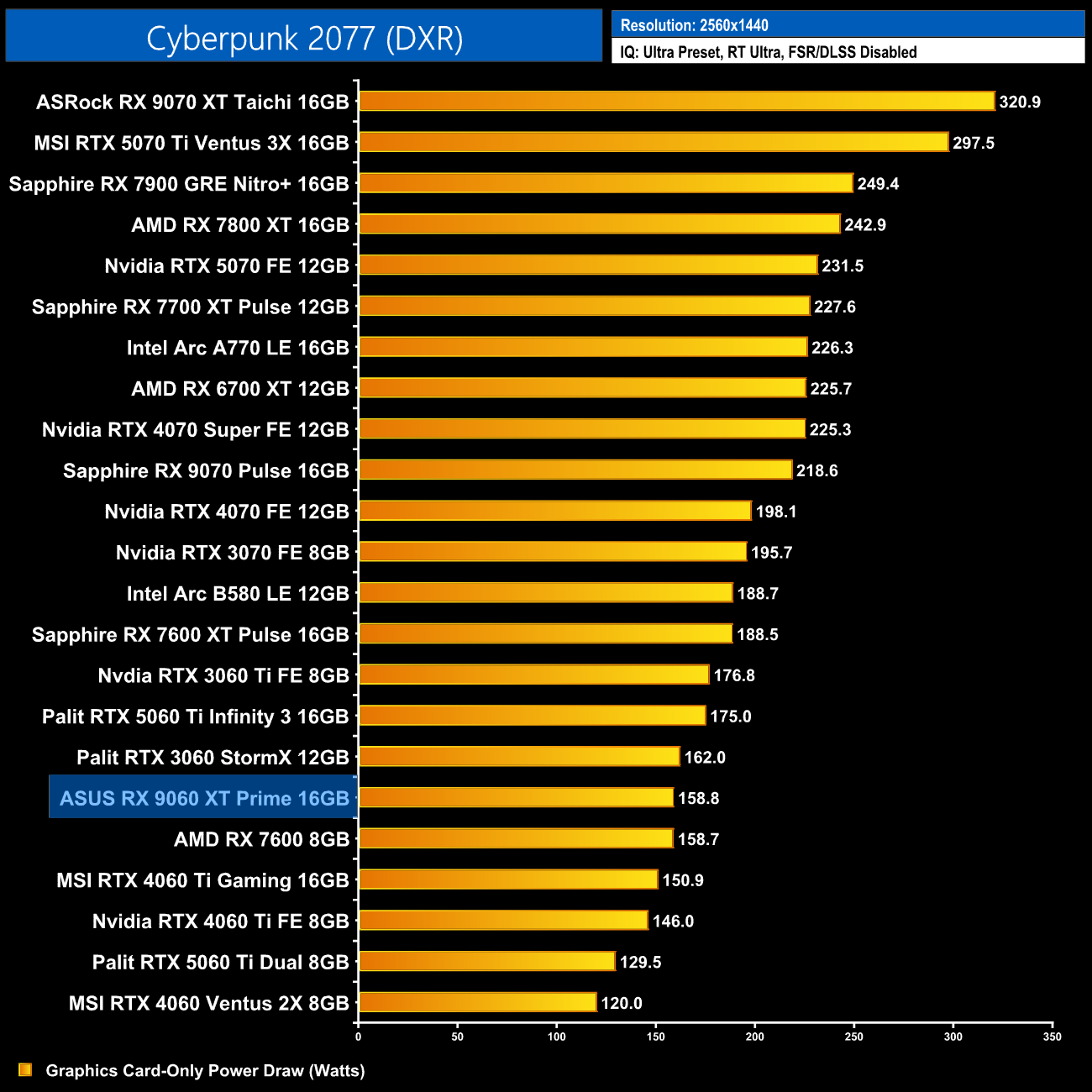
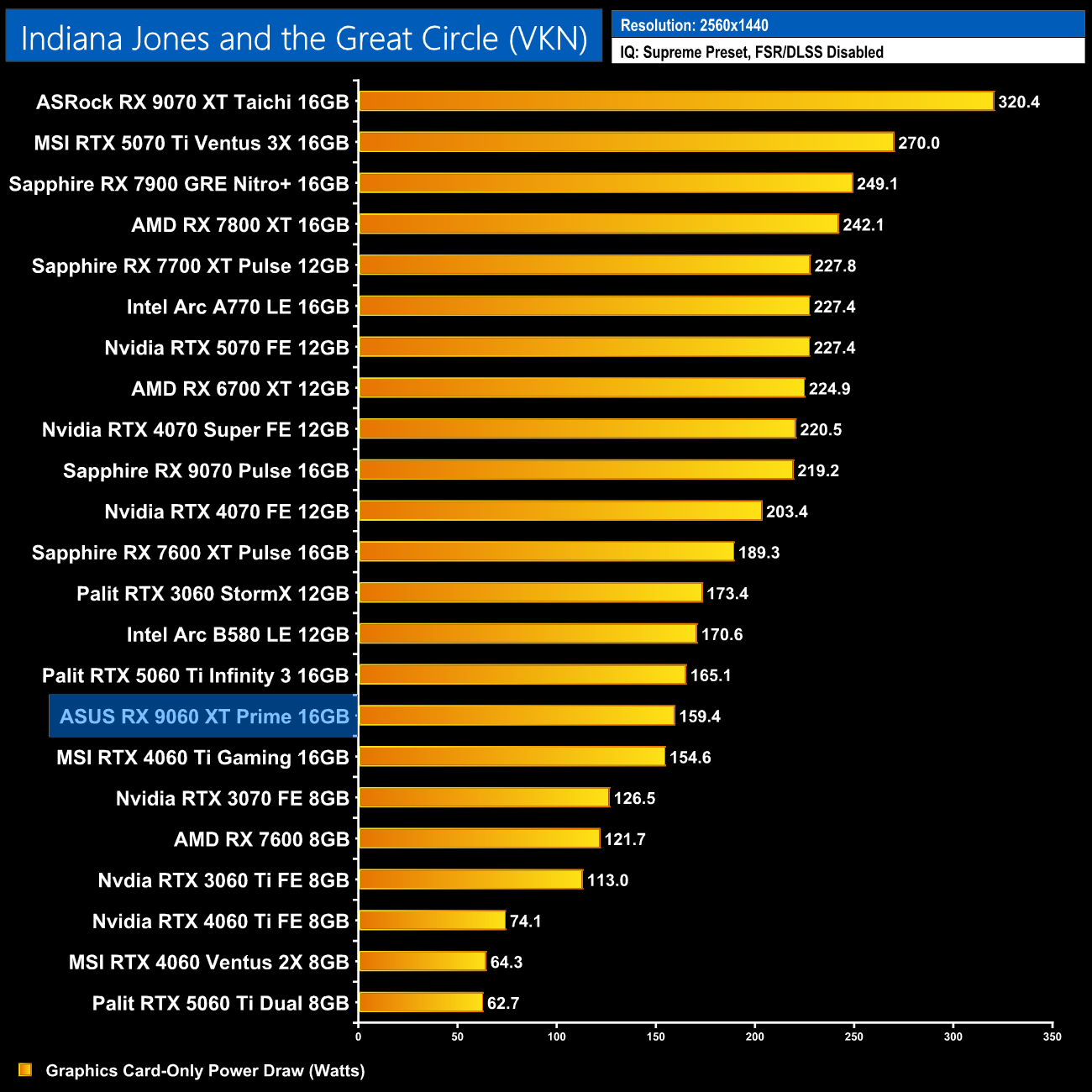
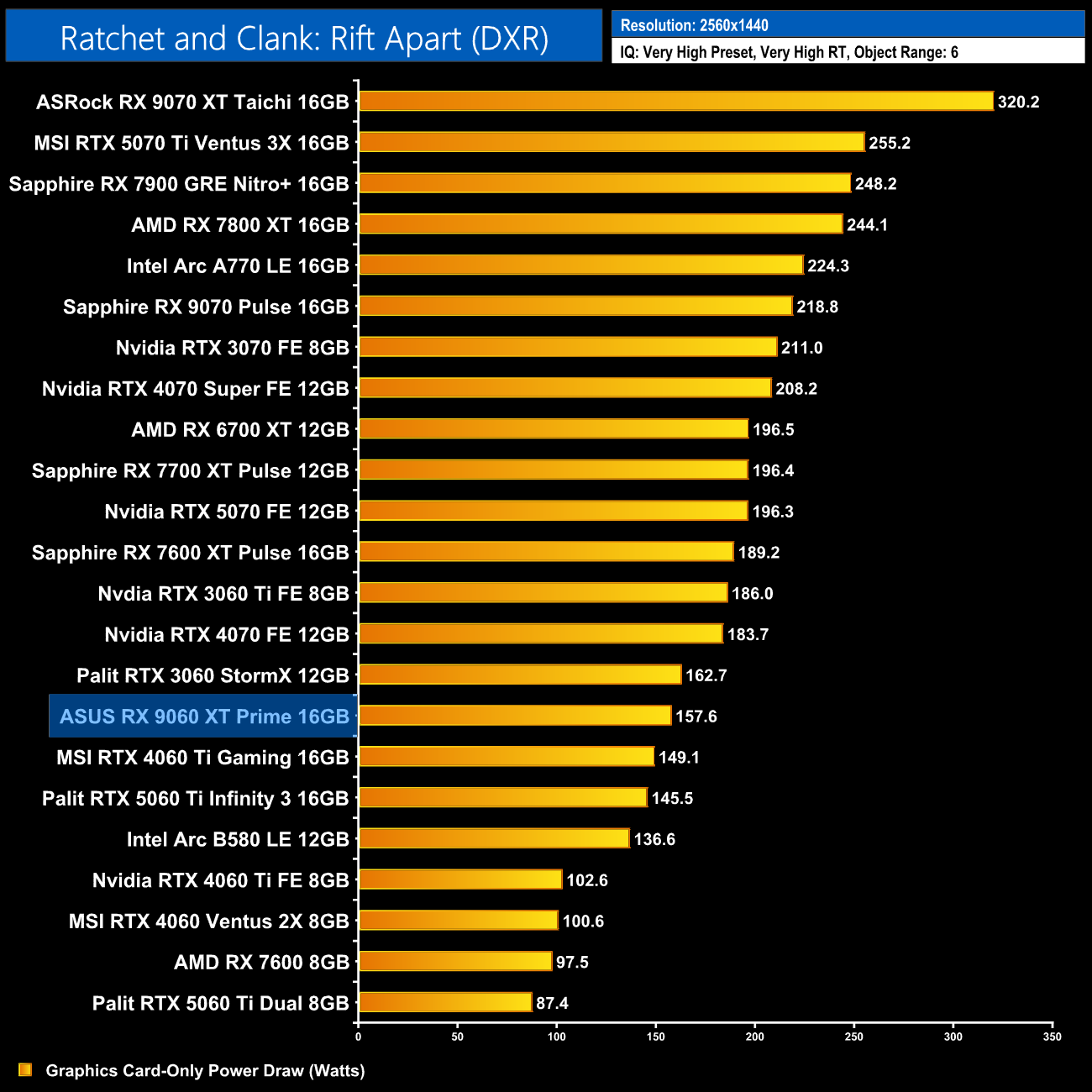
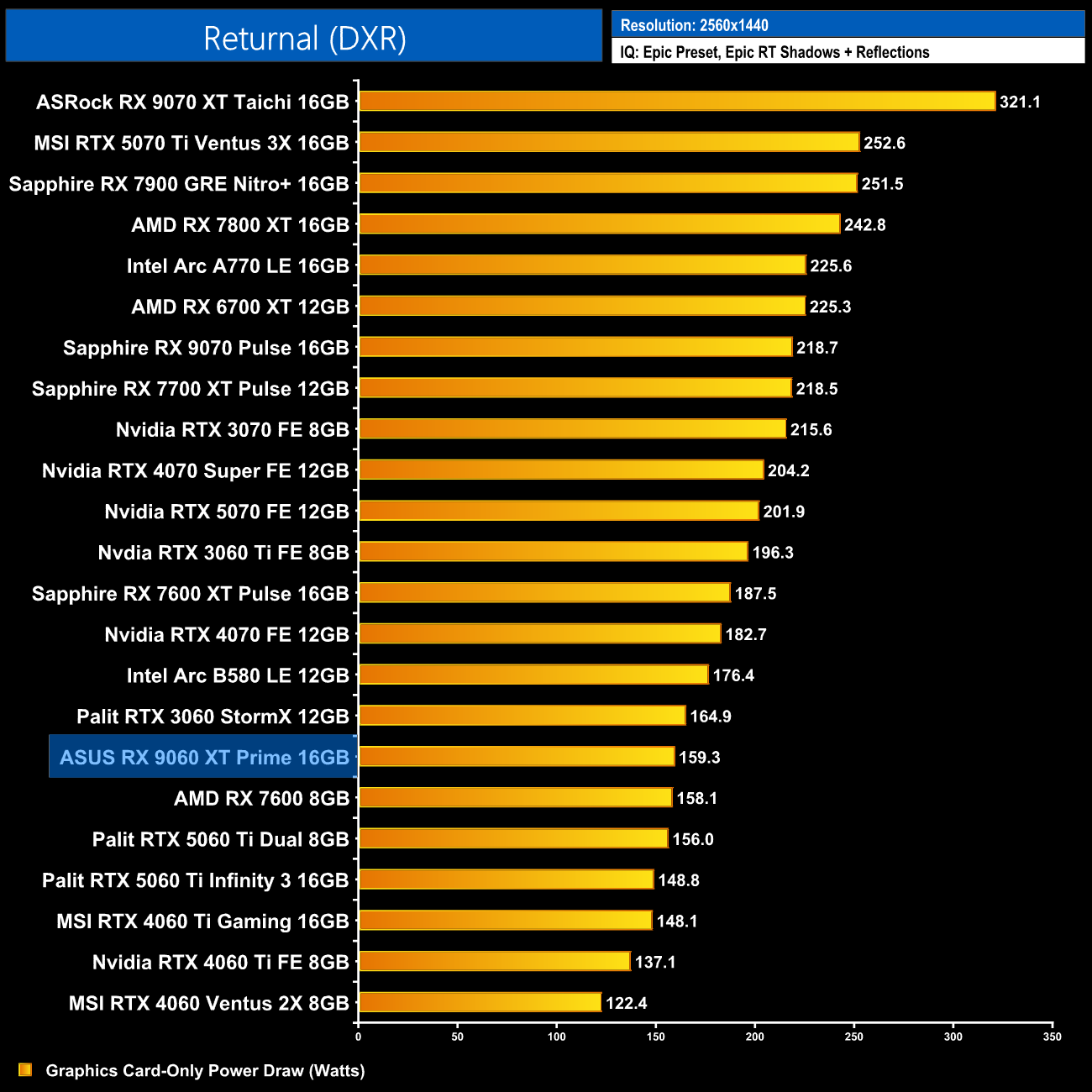
Here we present power draw figures for the graphics card-only, on a per-game basis for all twelve games we tested at 1440p. This is measured using Nvidia's Power Capture Analysis Tool, also known as PCAT. You can read more about our updated power draw testing methodology HERE.
Per-Game Results at 1440p:
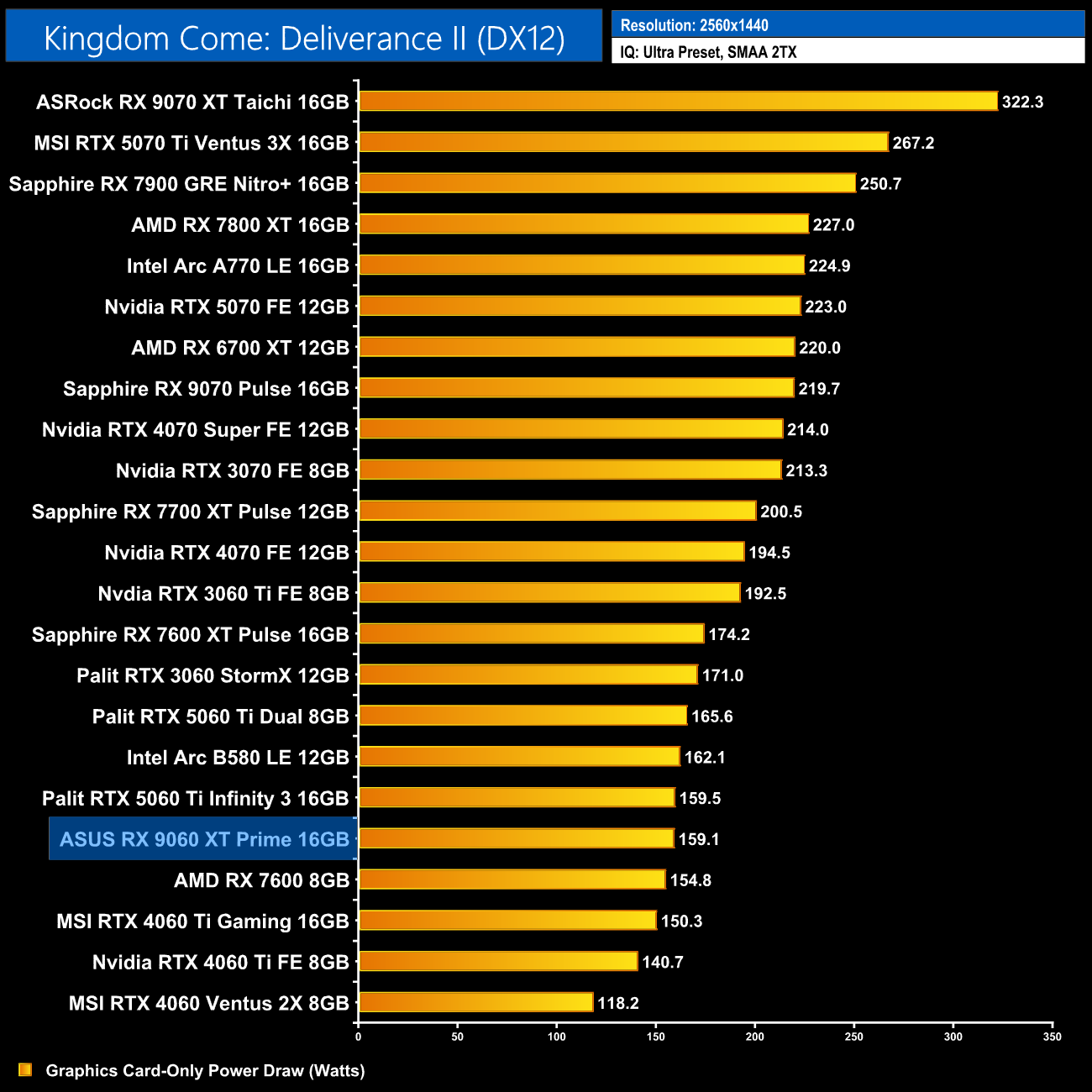
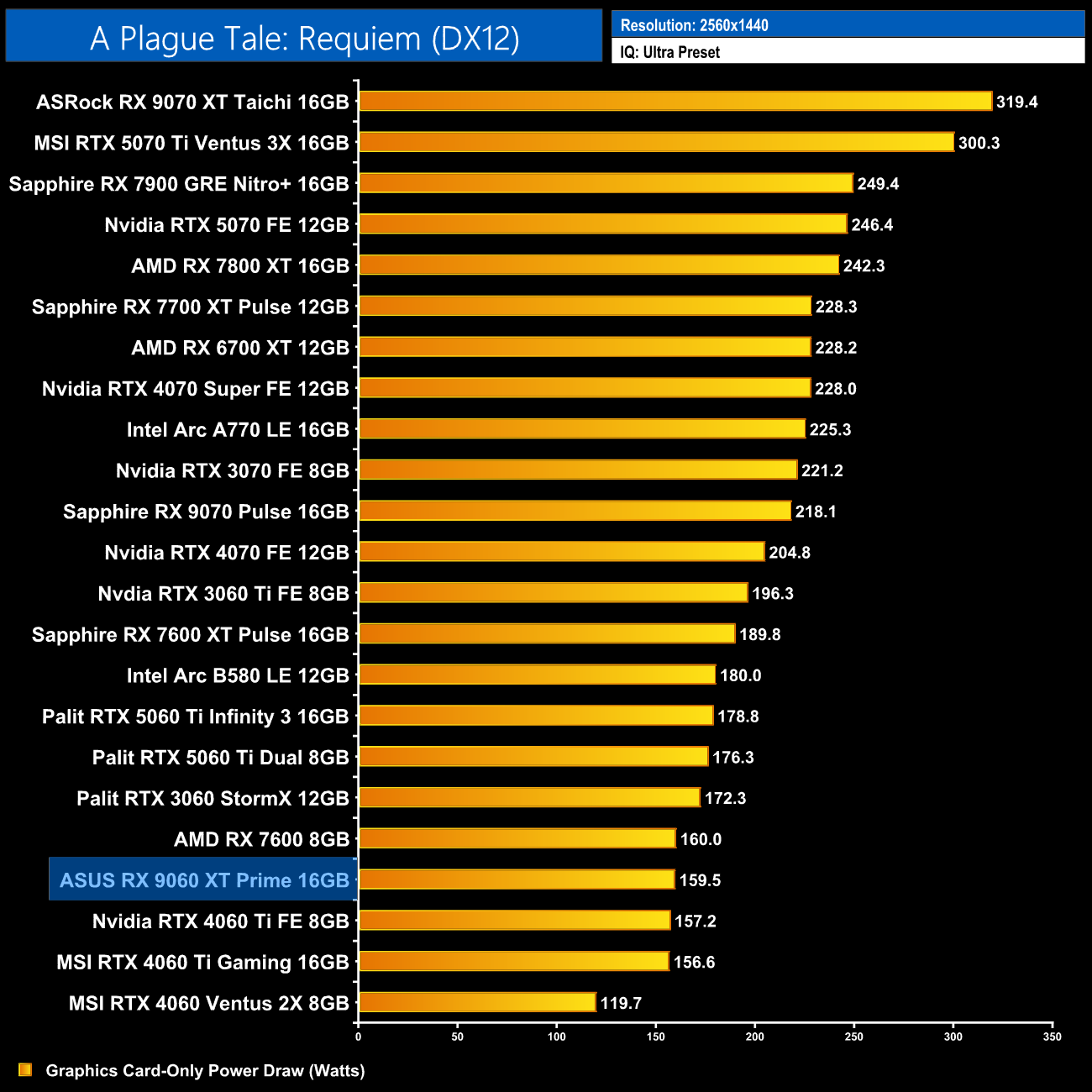
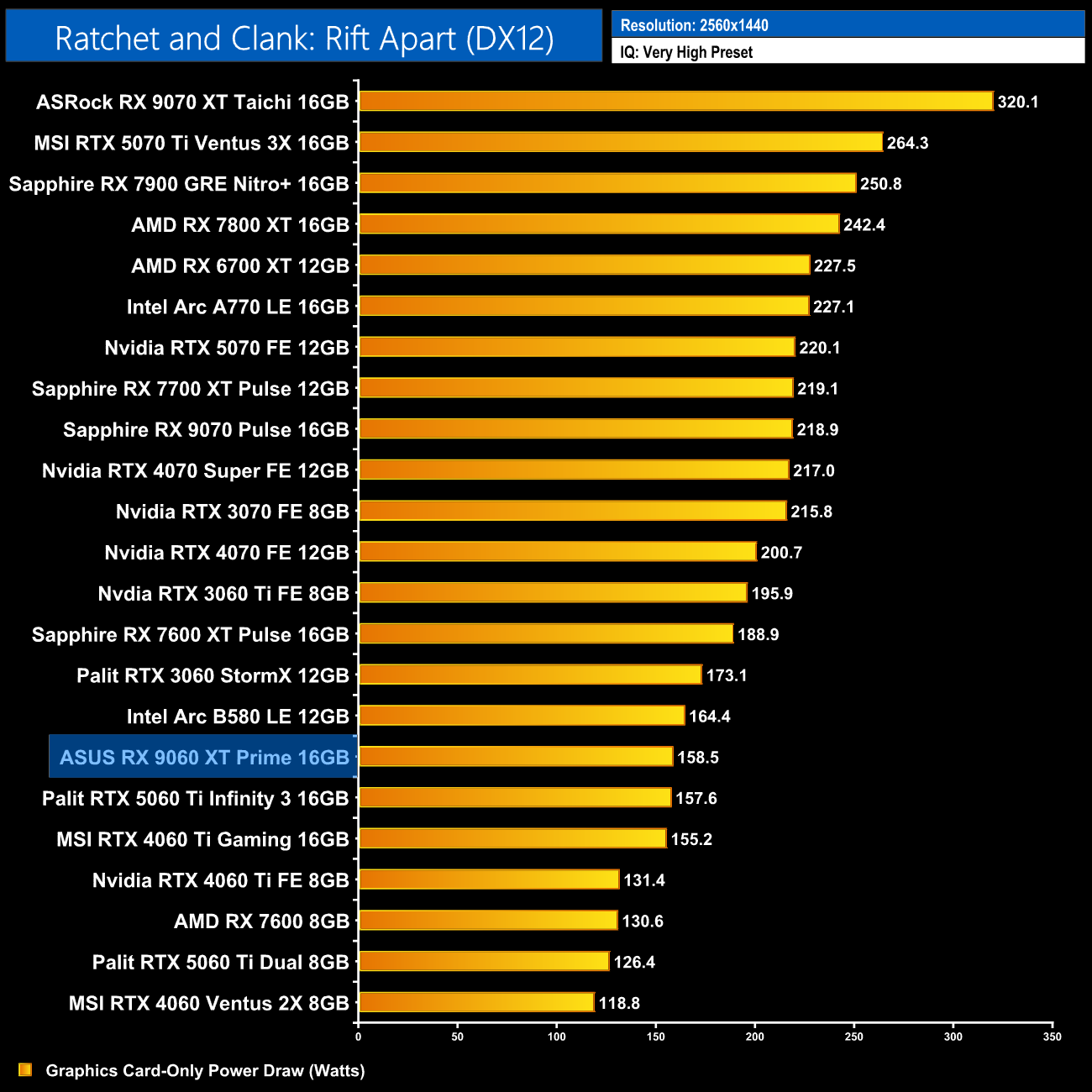
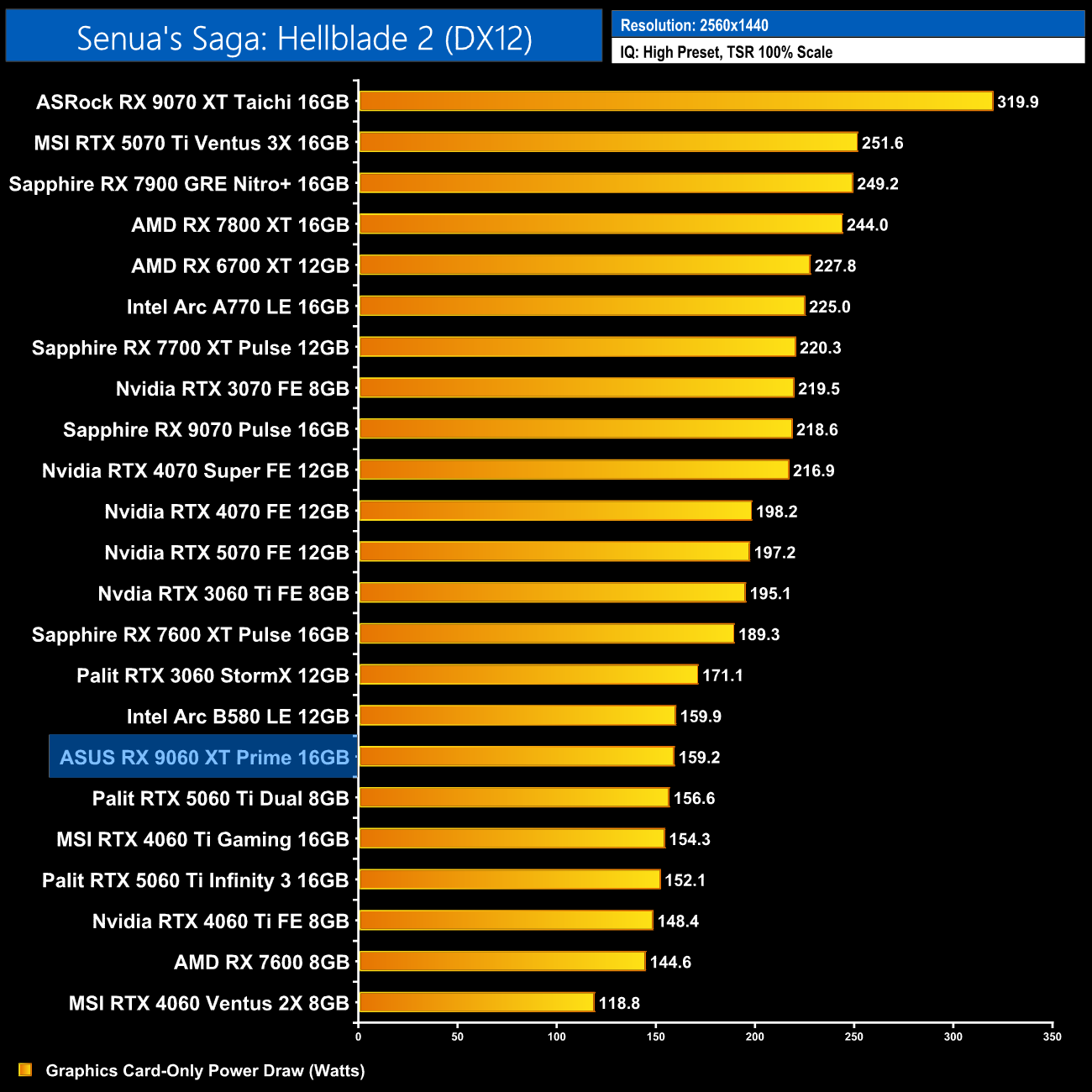
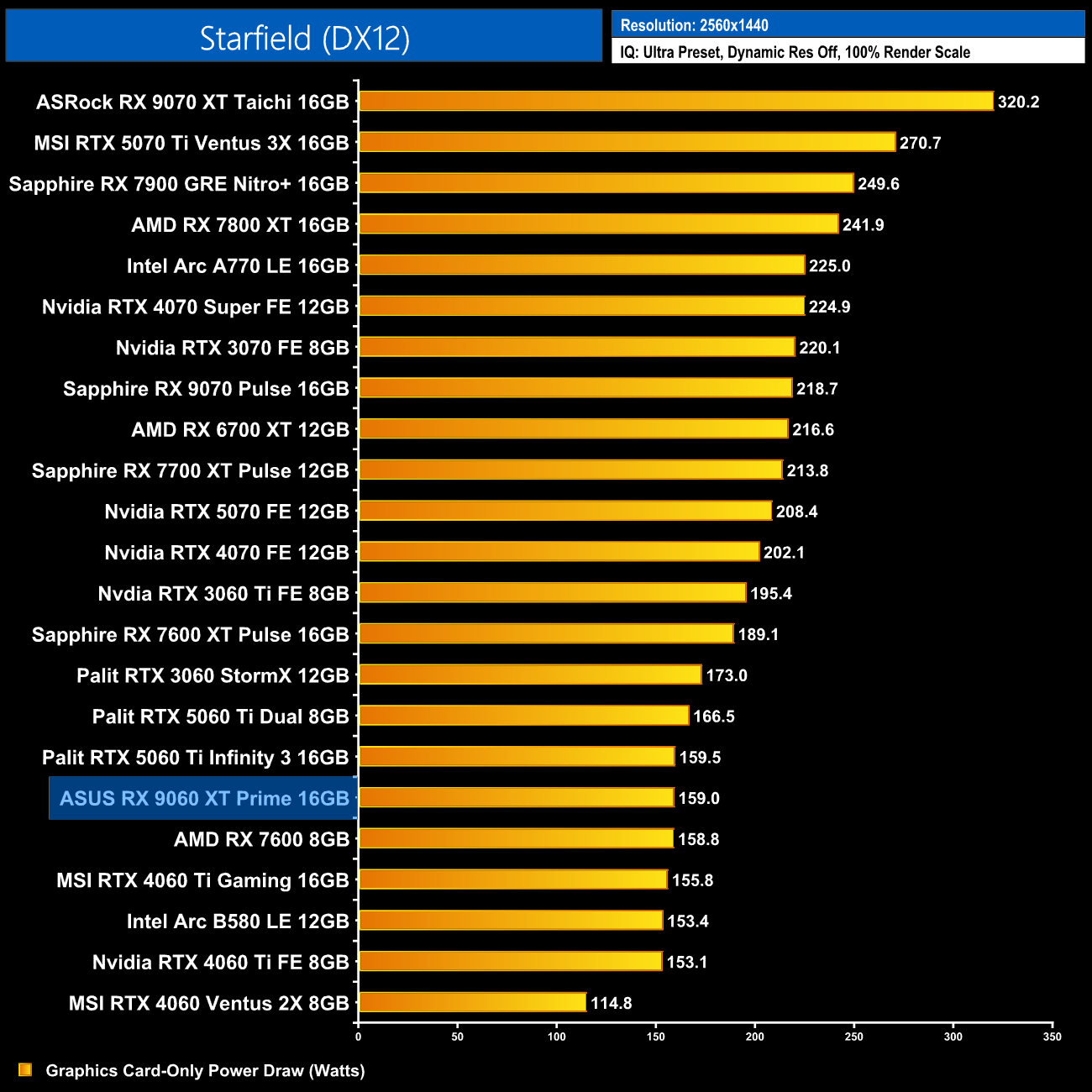
Click to enlarge.
12-Game Average at 1440p:
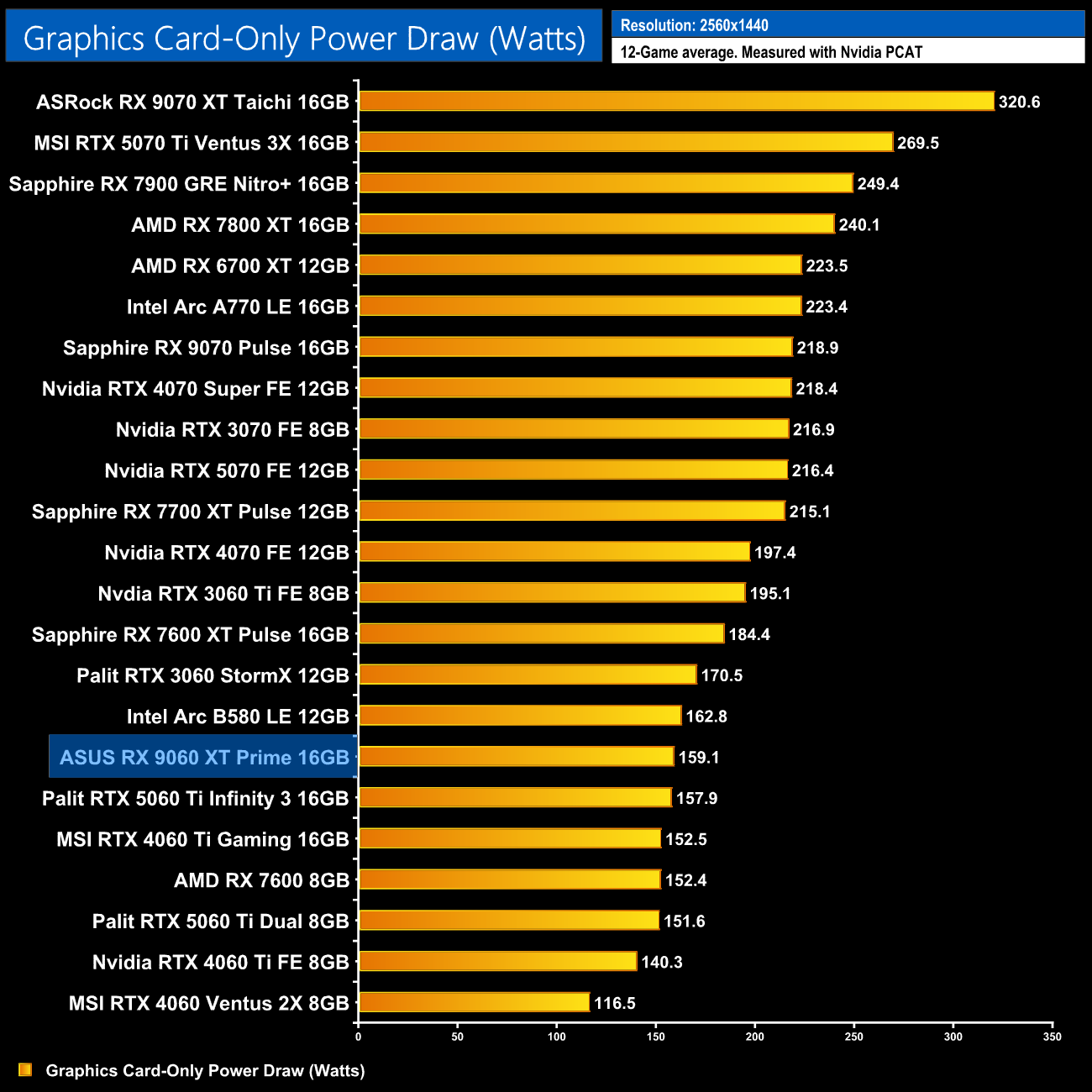
1440p power draw doesn't change much, still just below the rated limit, averaging 159.1W over my testing, so power draw is very similar to the RTX 5060 Ti 16GB as you can see.
Ray tracing results
As a bonus, we now include the power figures for all eight games we test with ray tracing enabled.
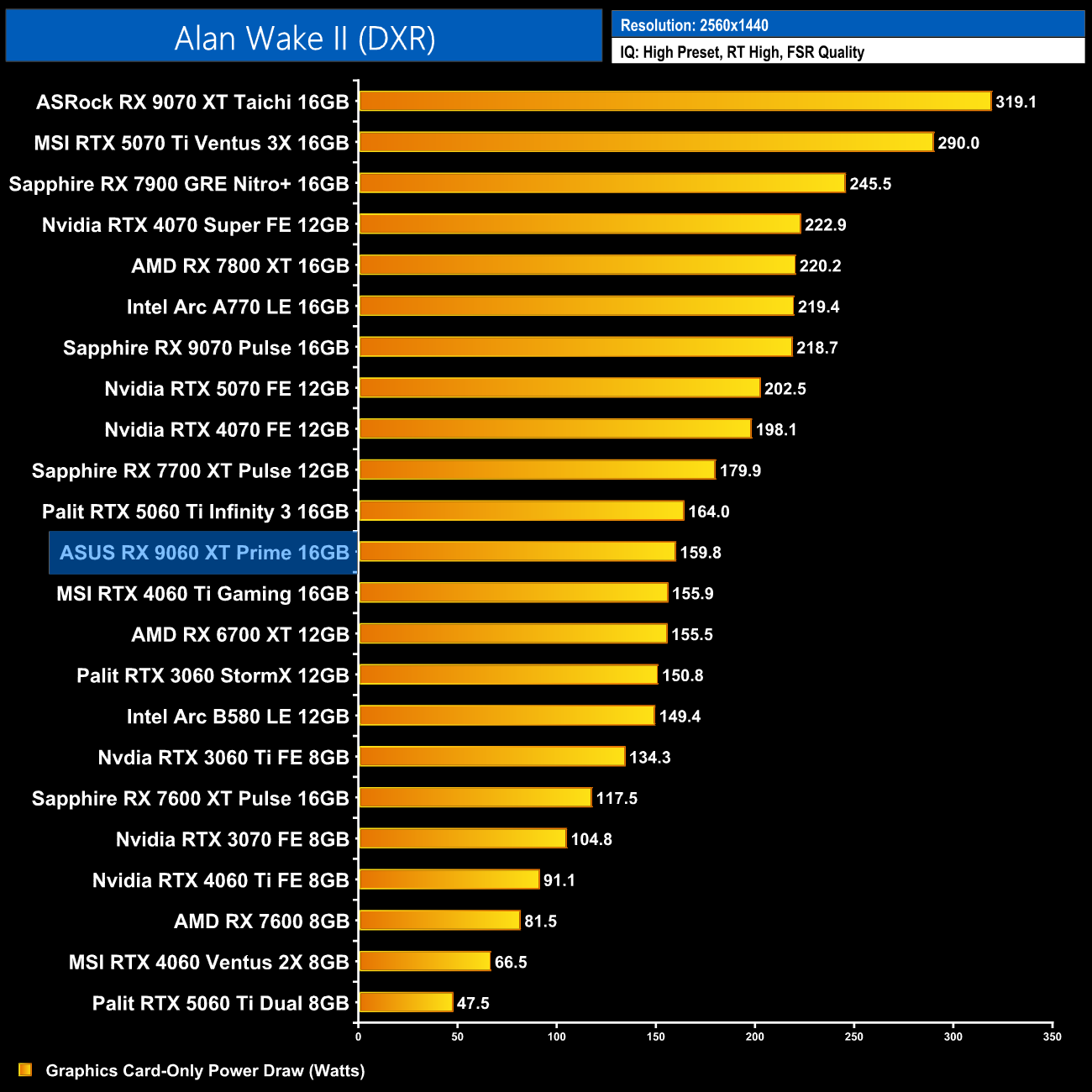
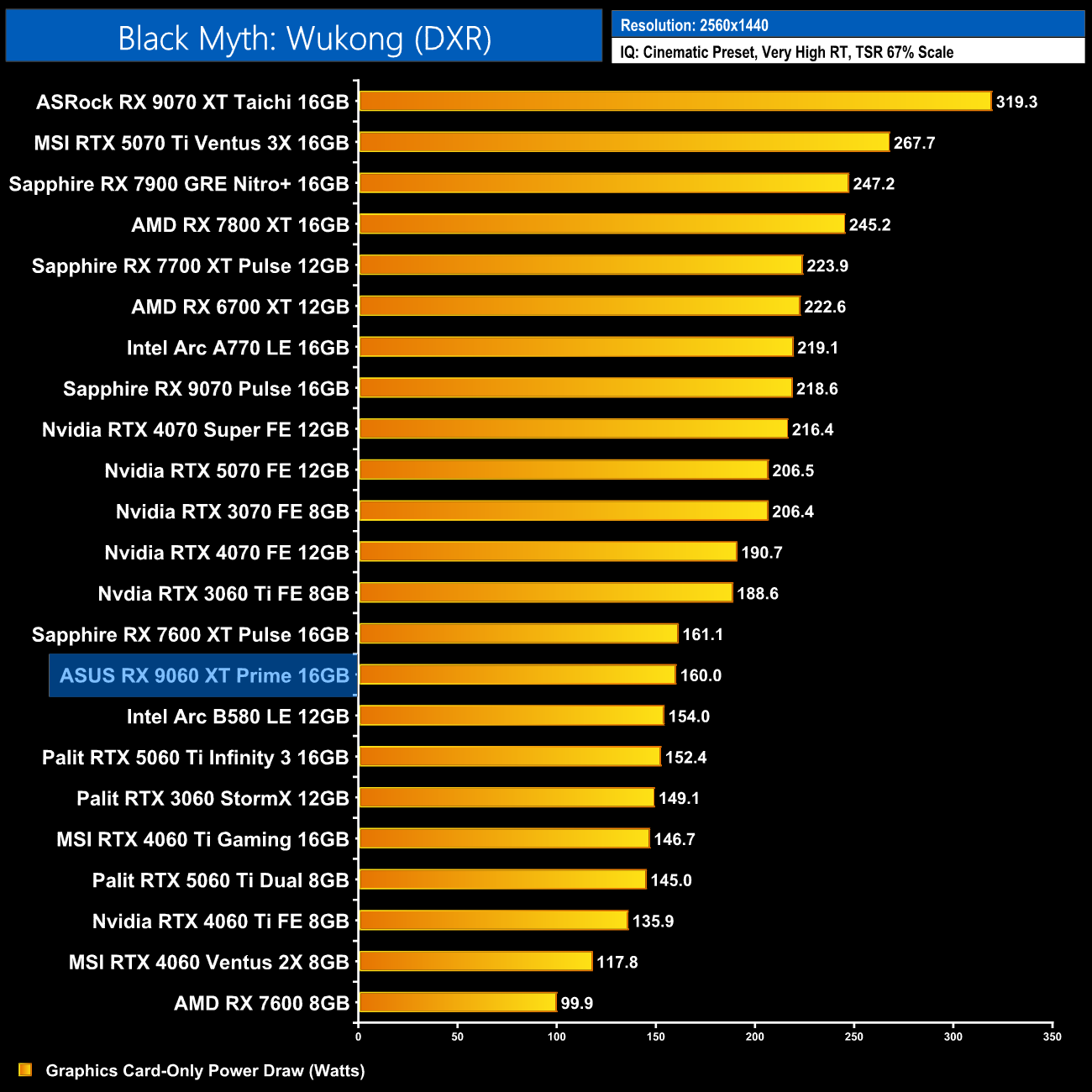
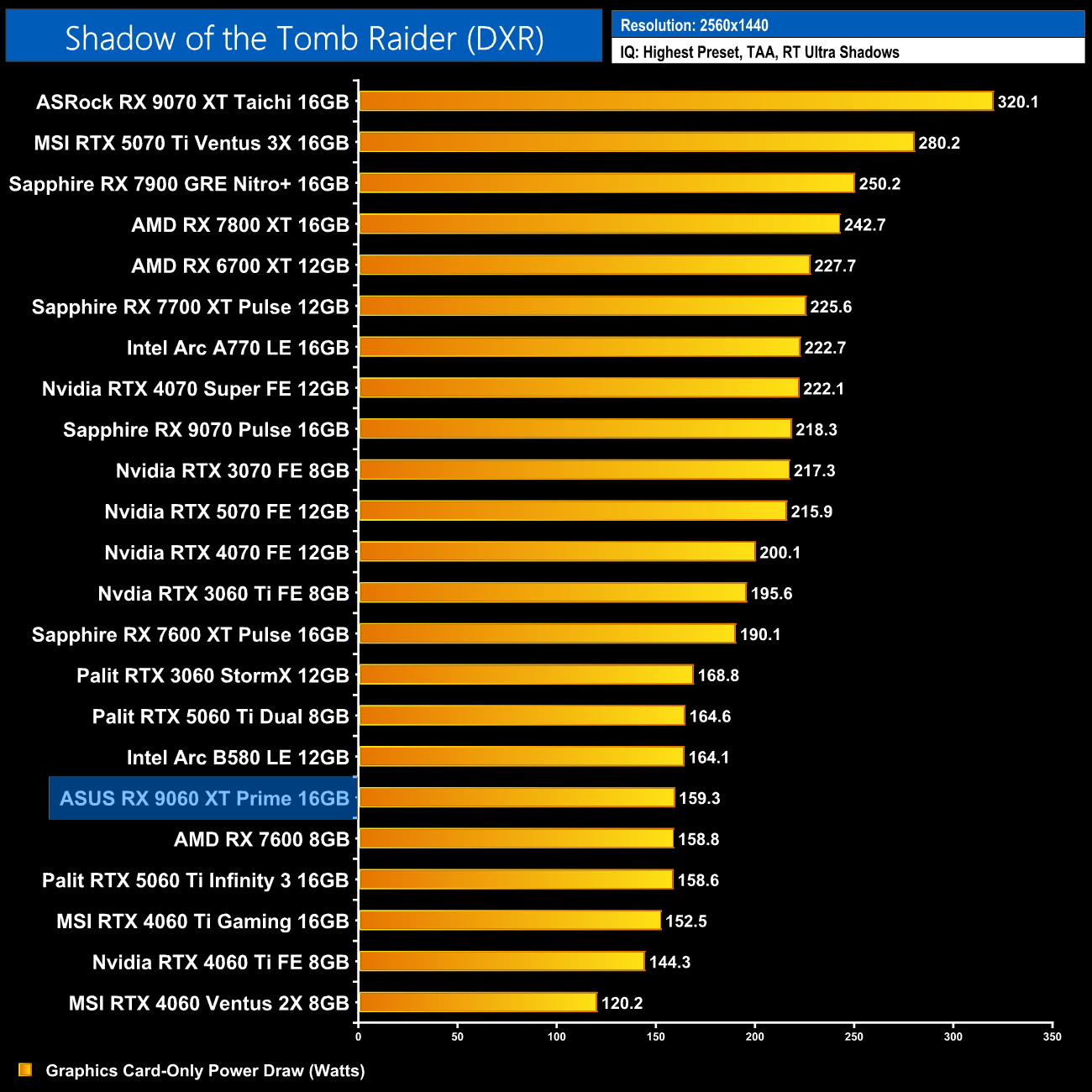
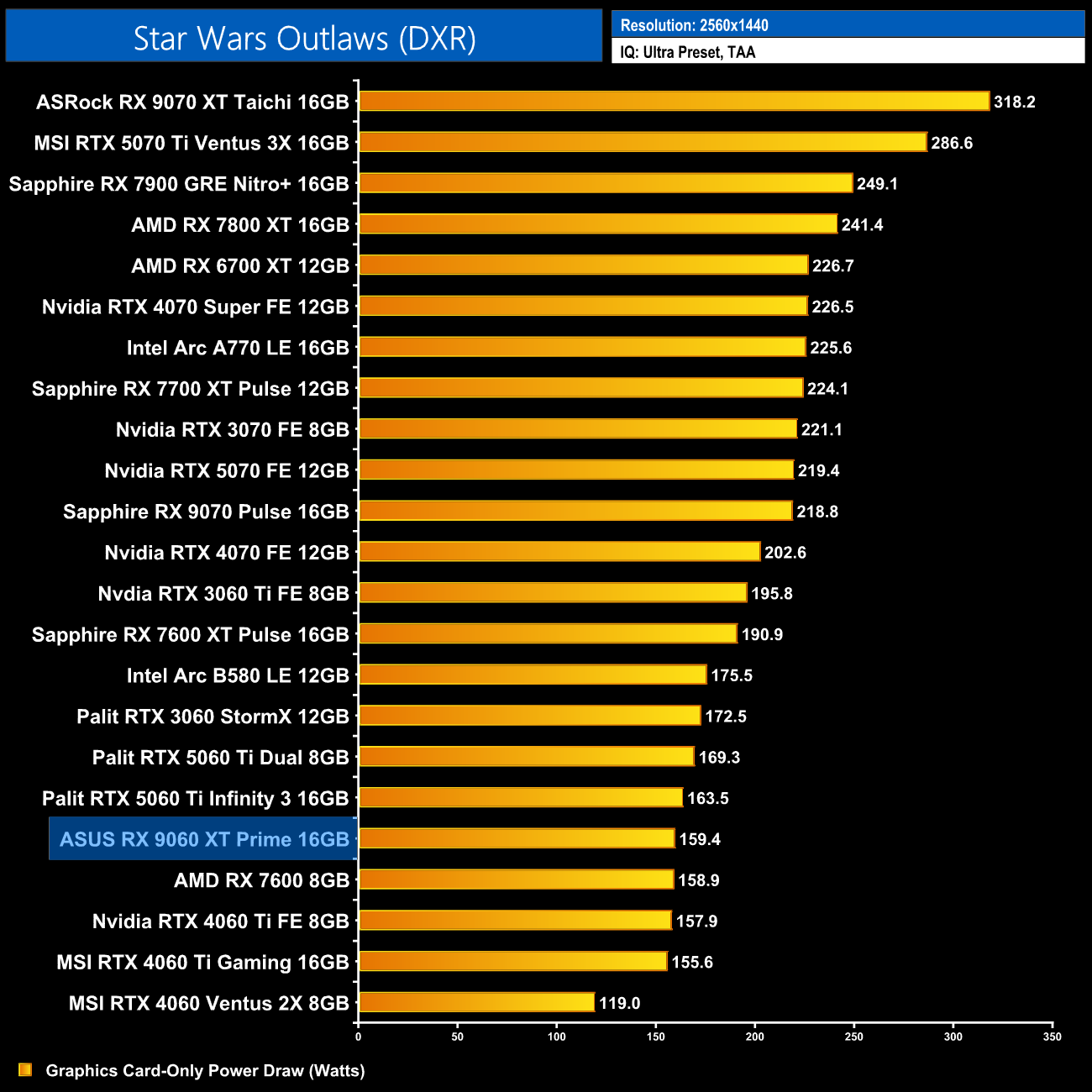
8-Game ray tracing average:
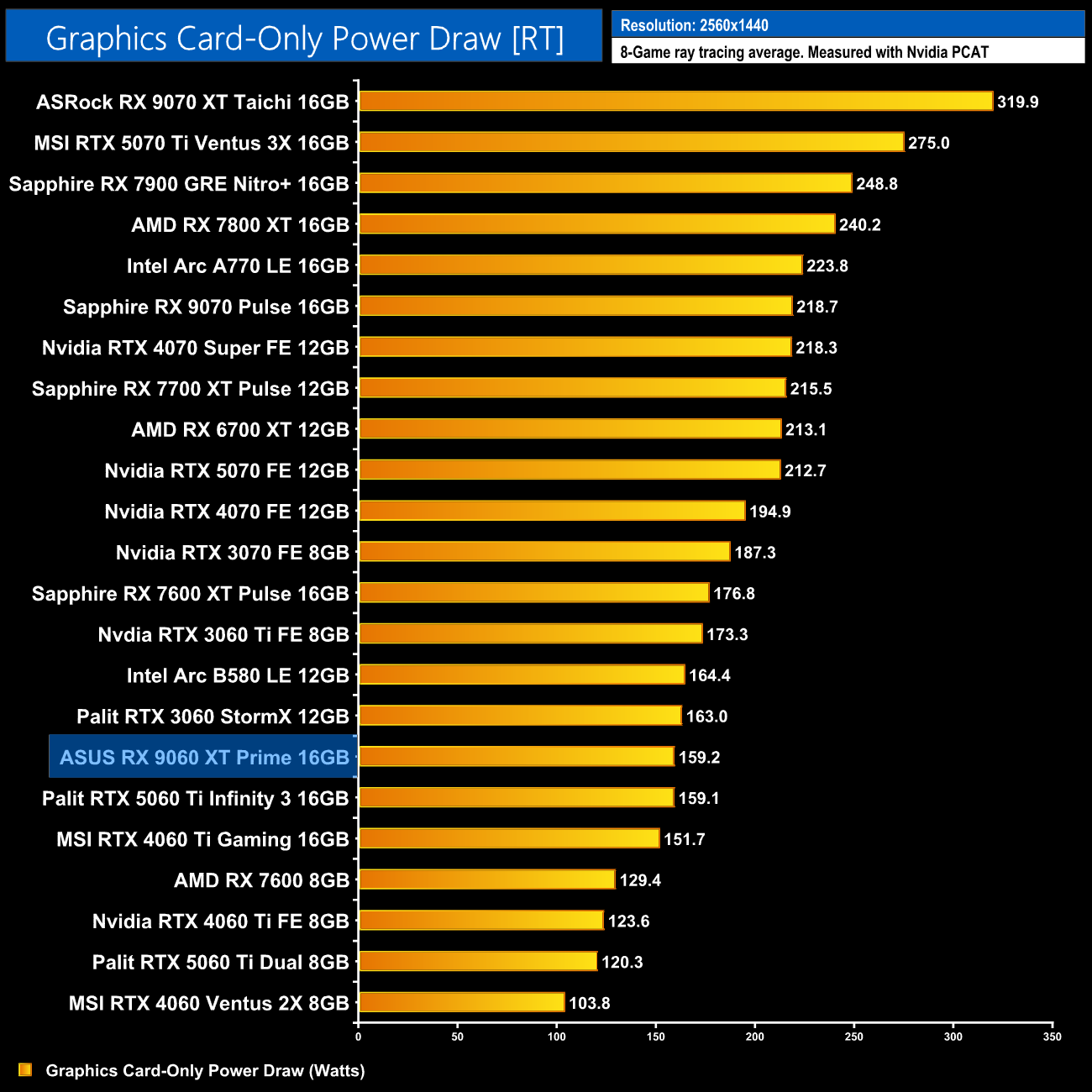
And again, the same can be send for our 8-game ray tracing average.
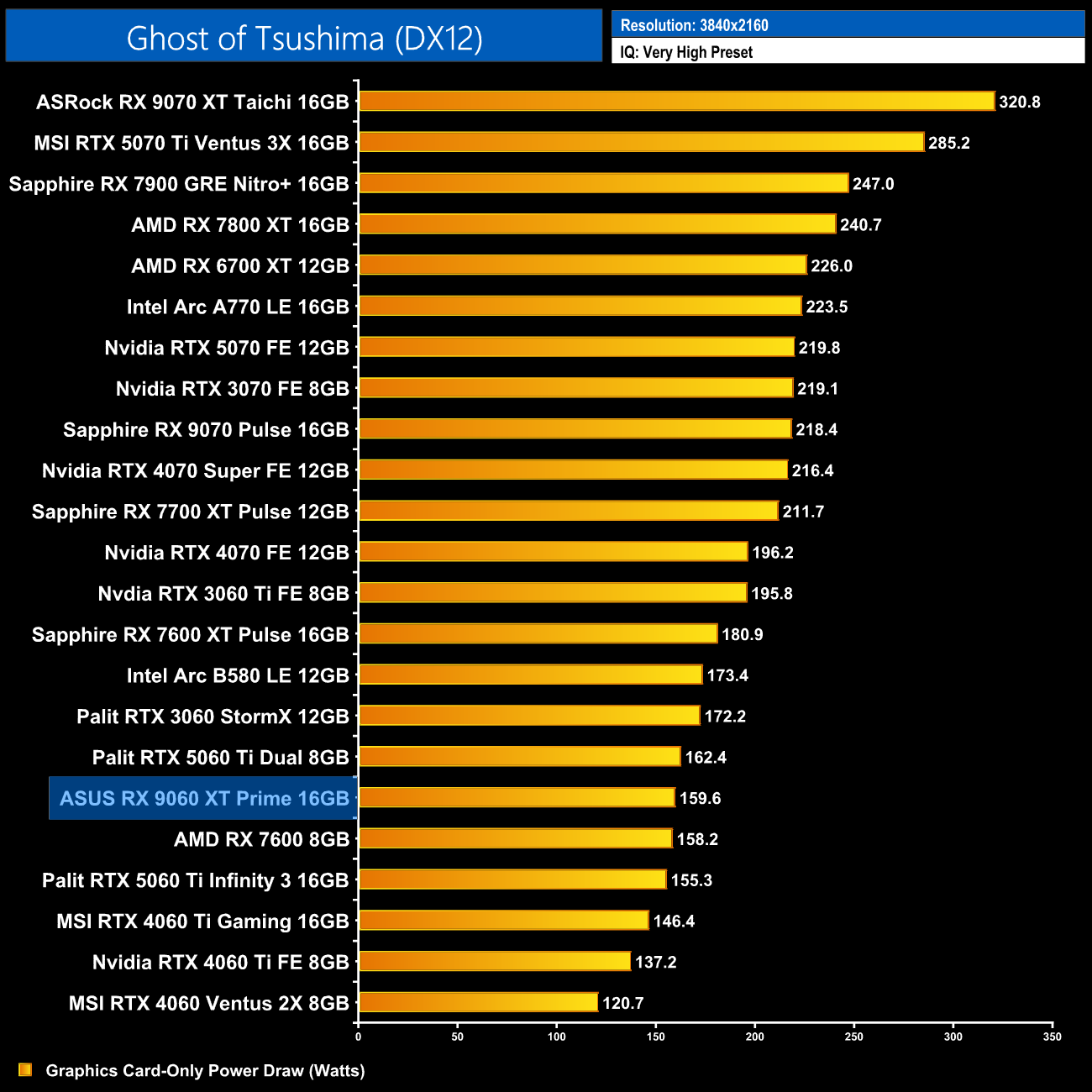
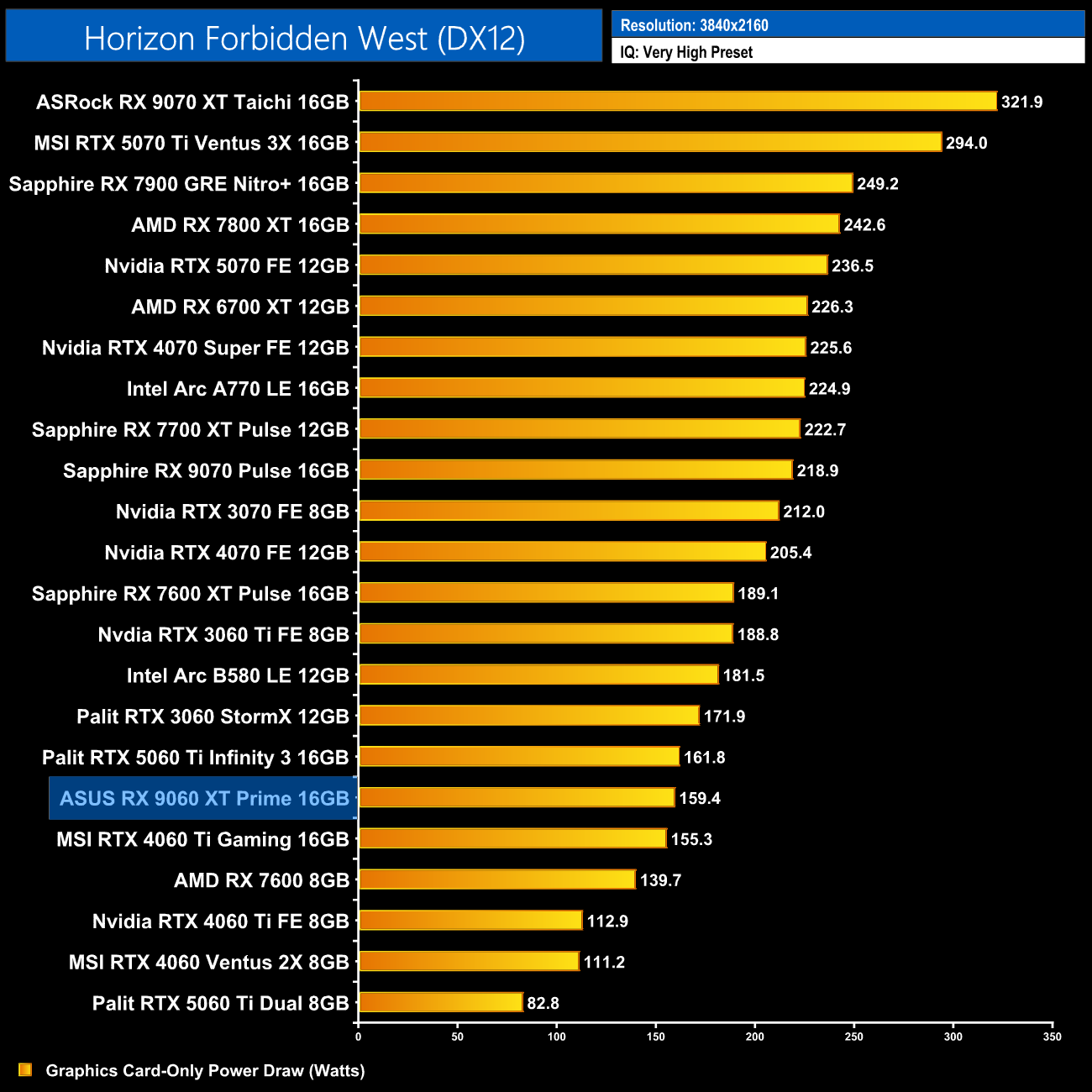
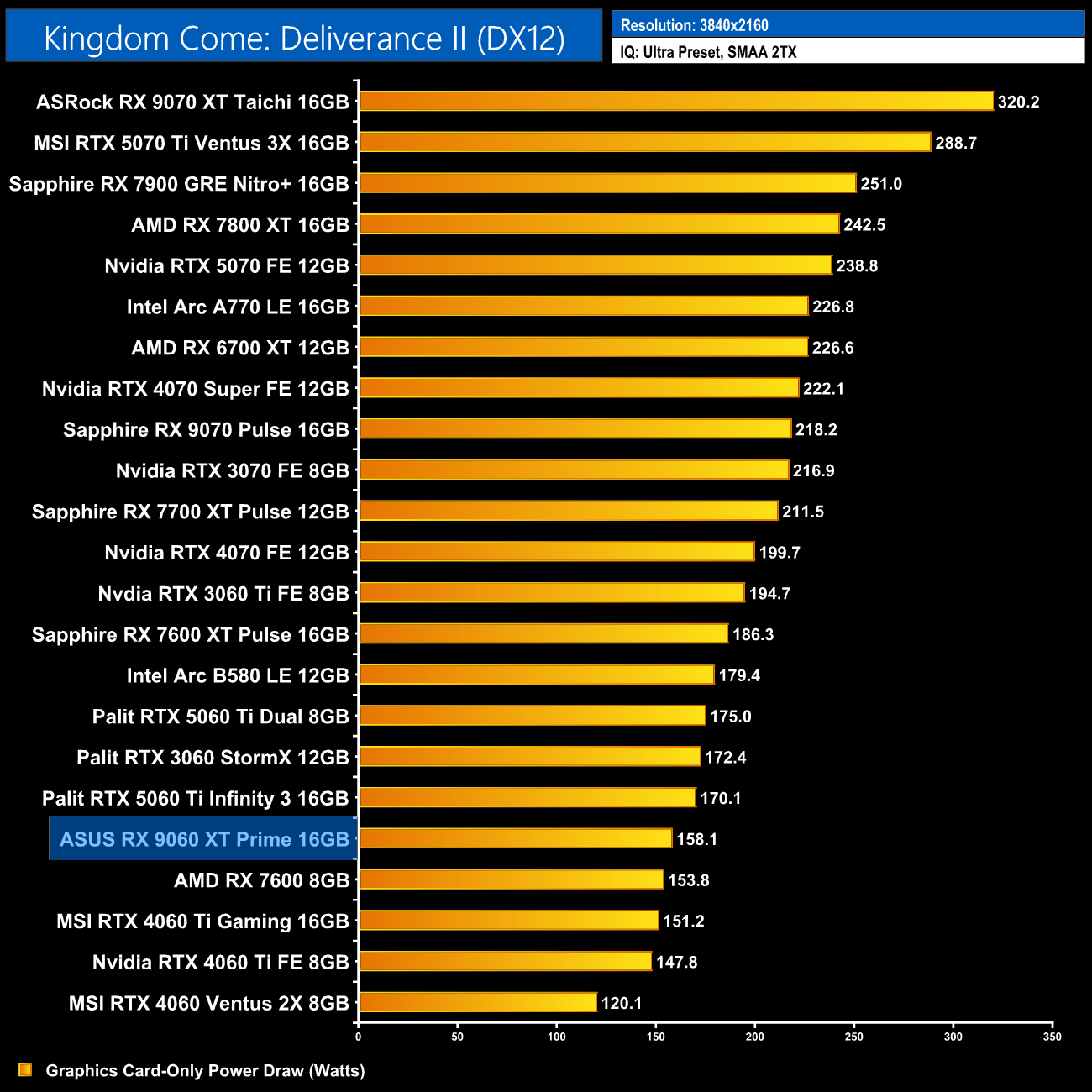
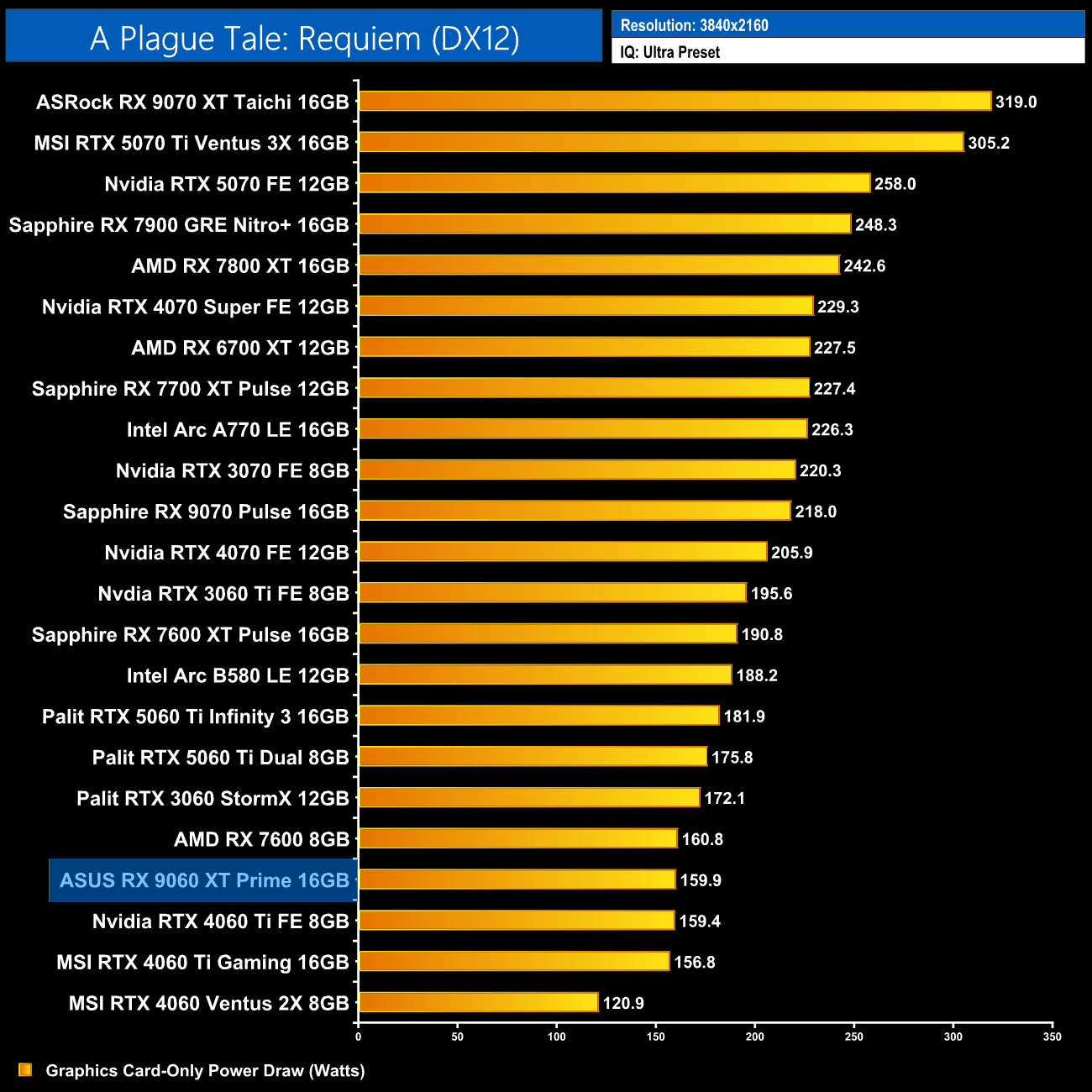
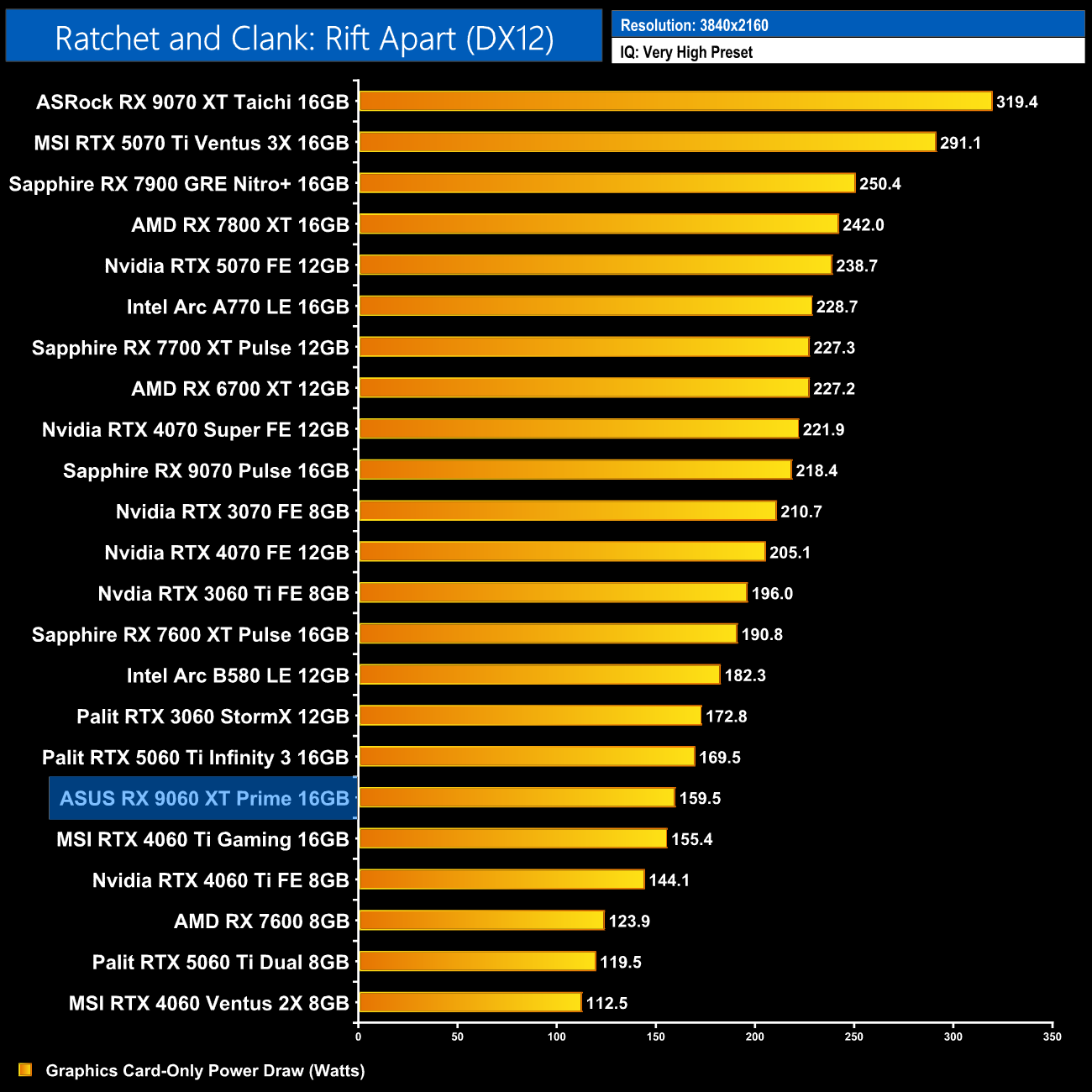
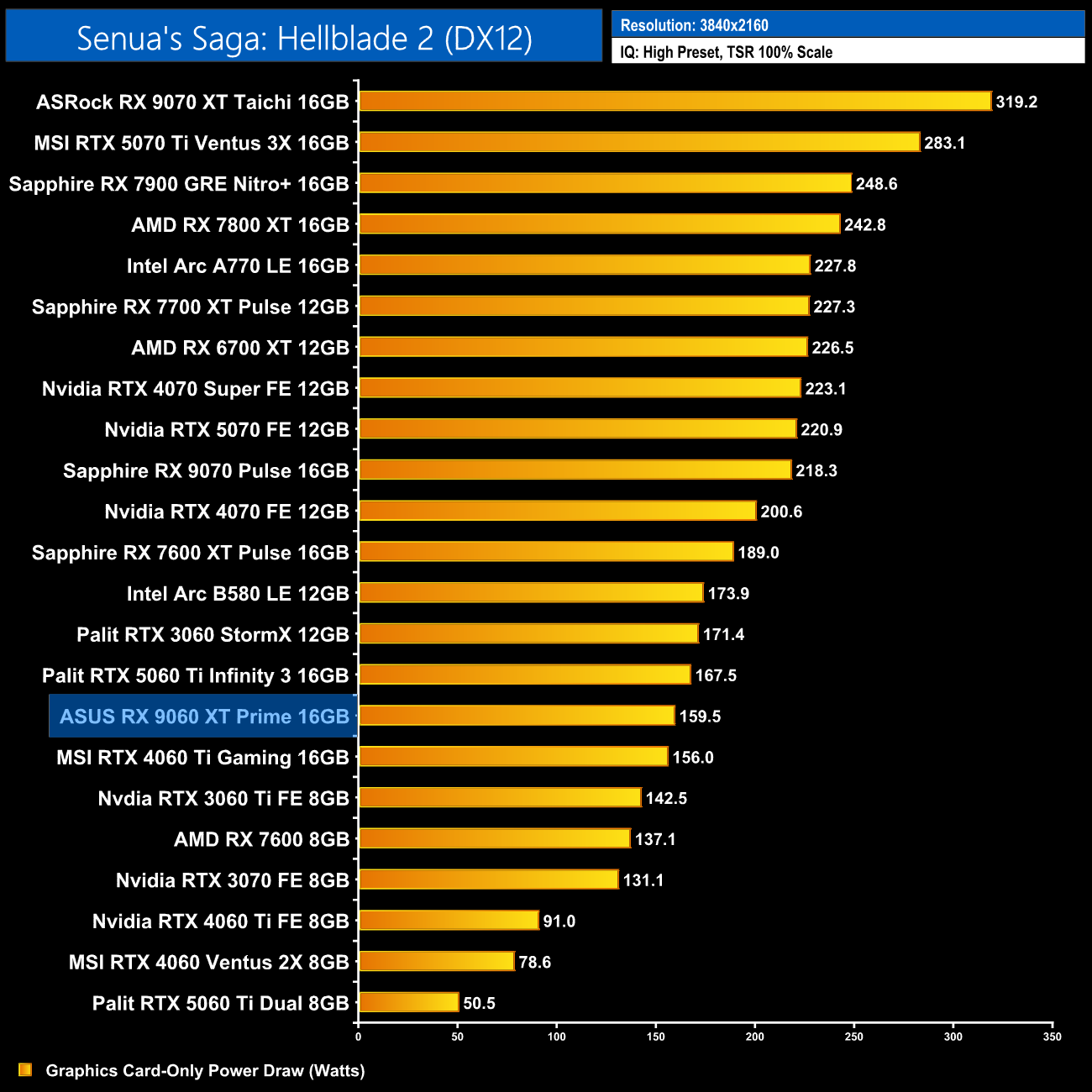
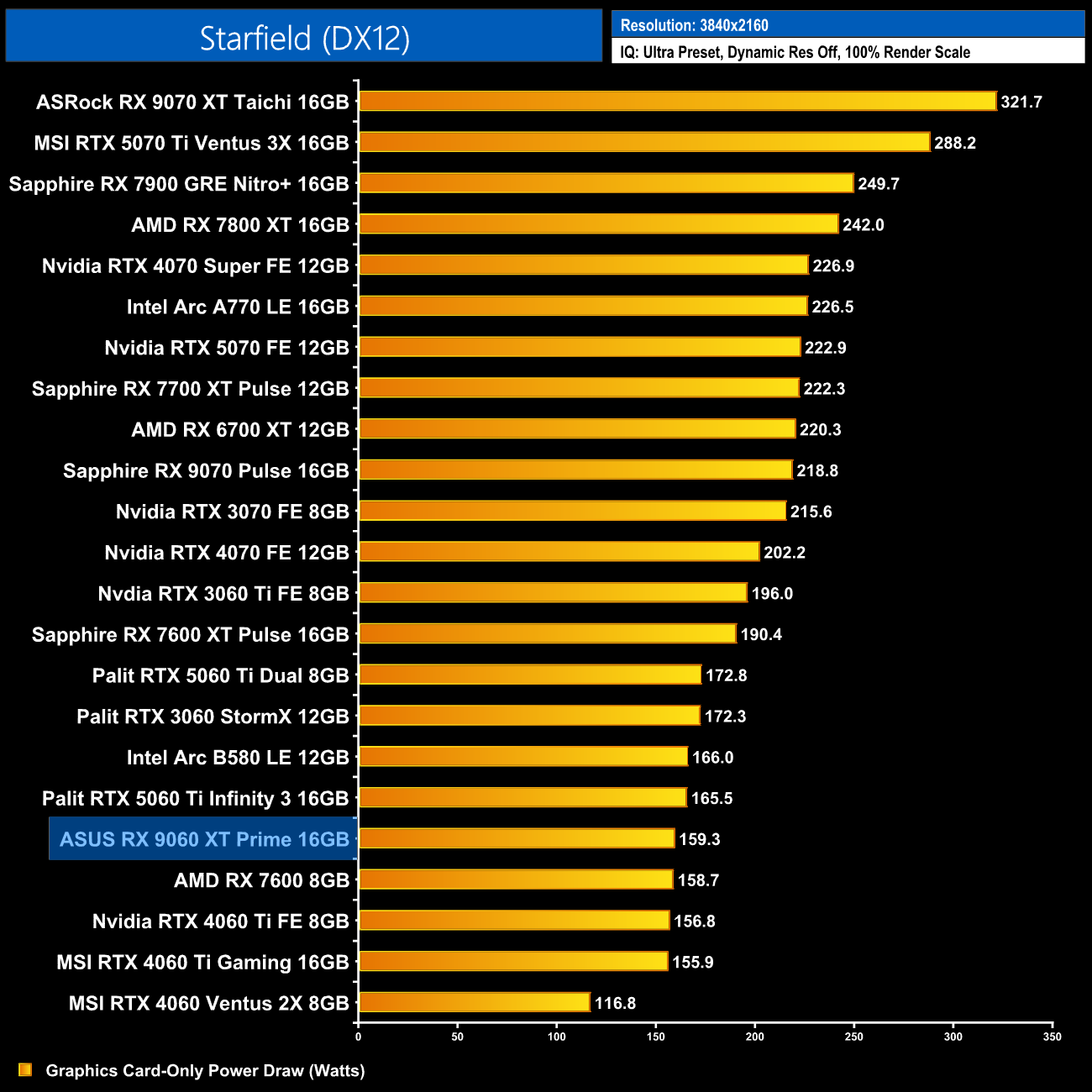
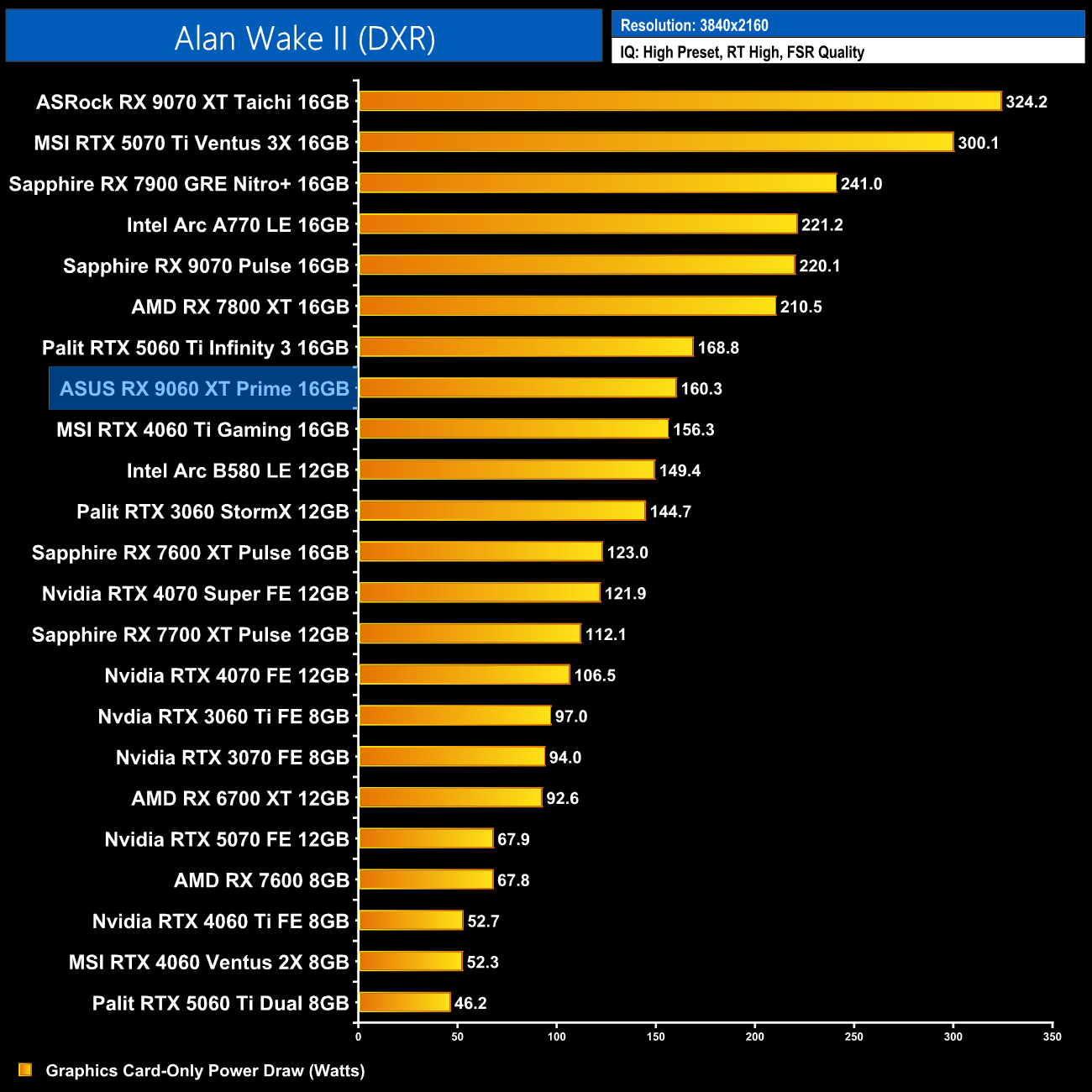
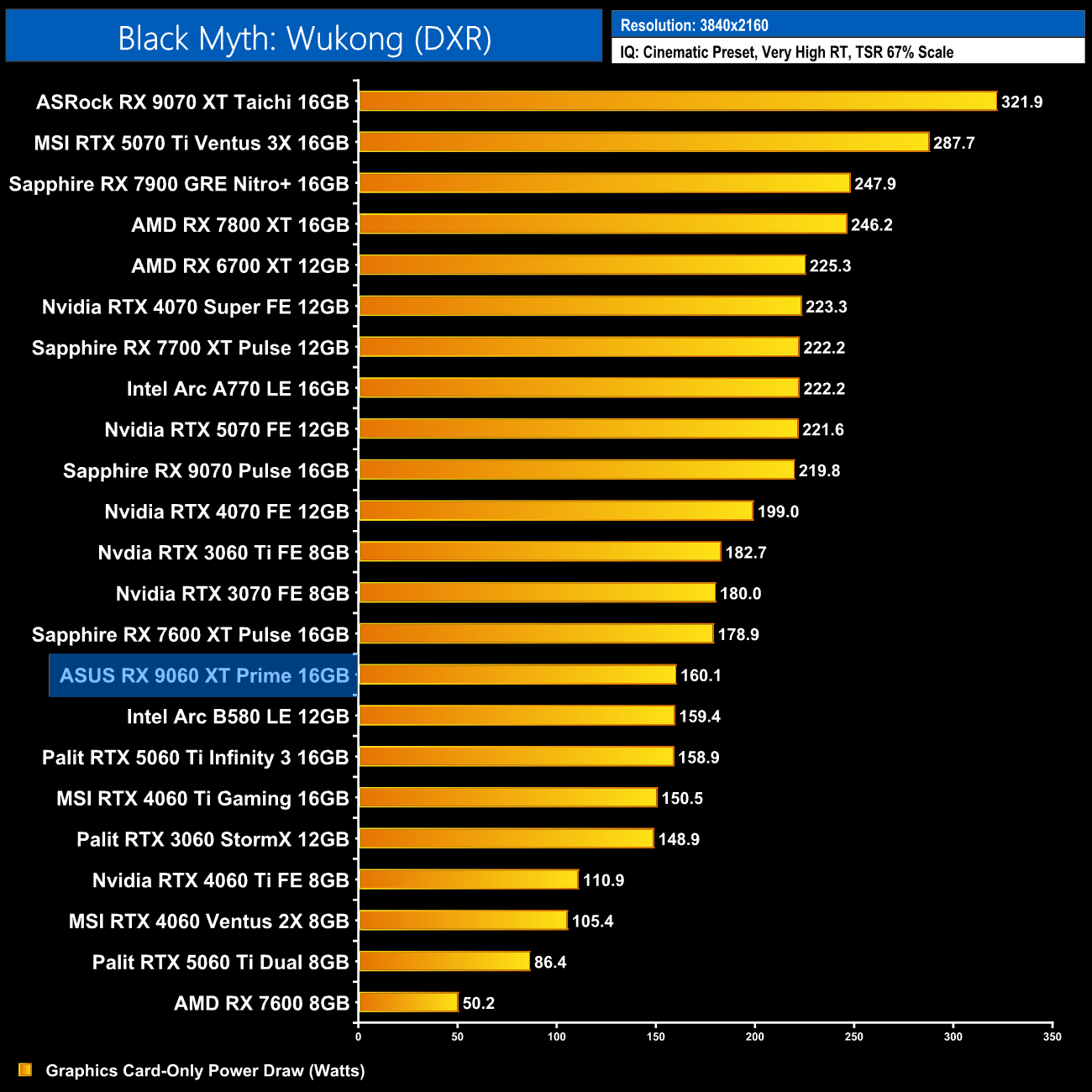
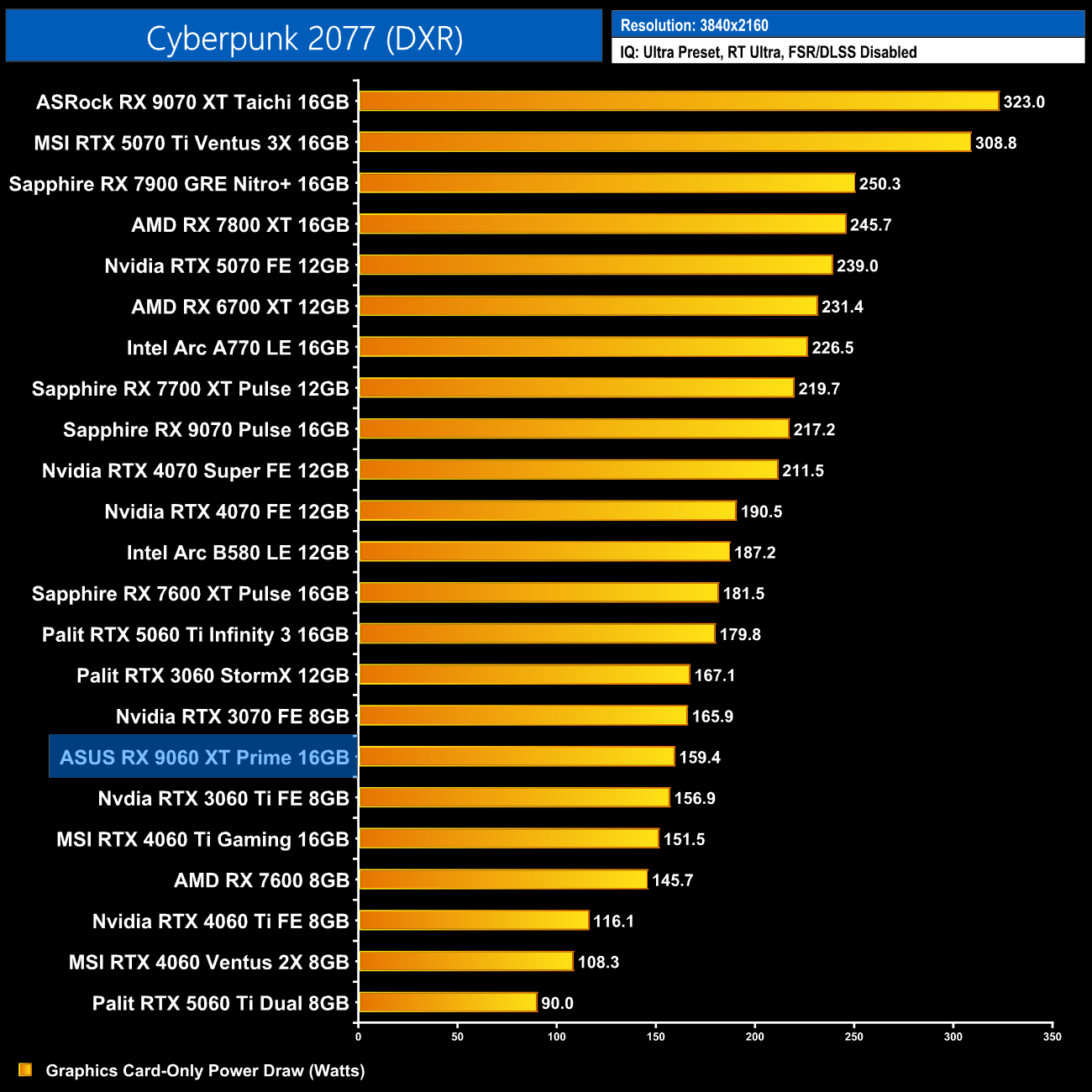
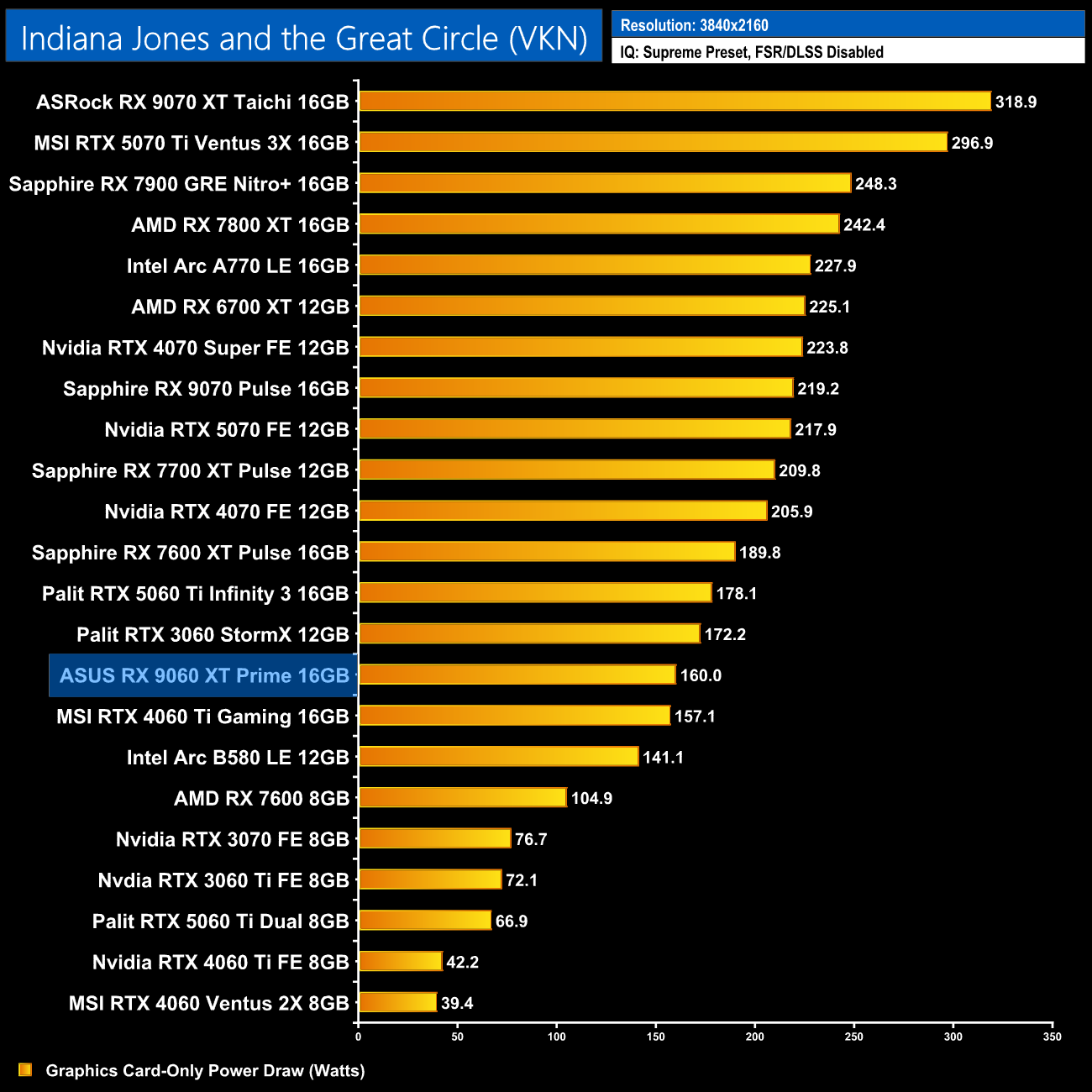
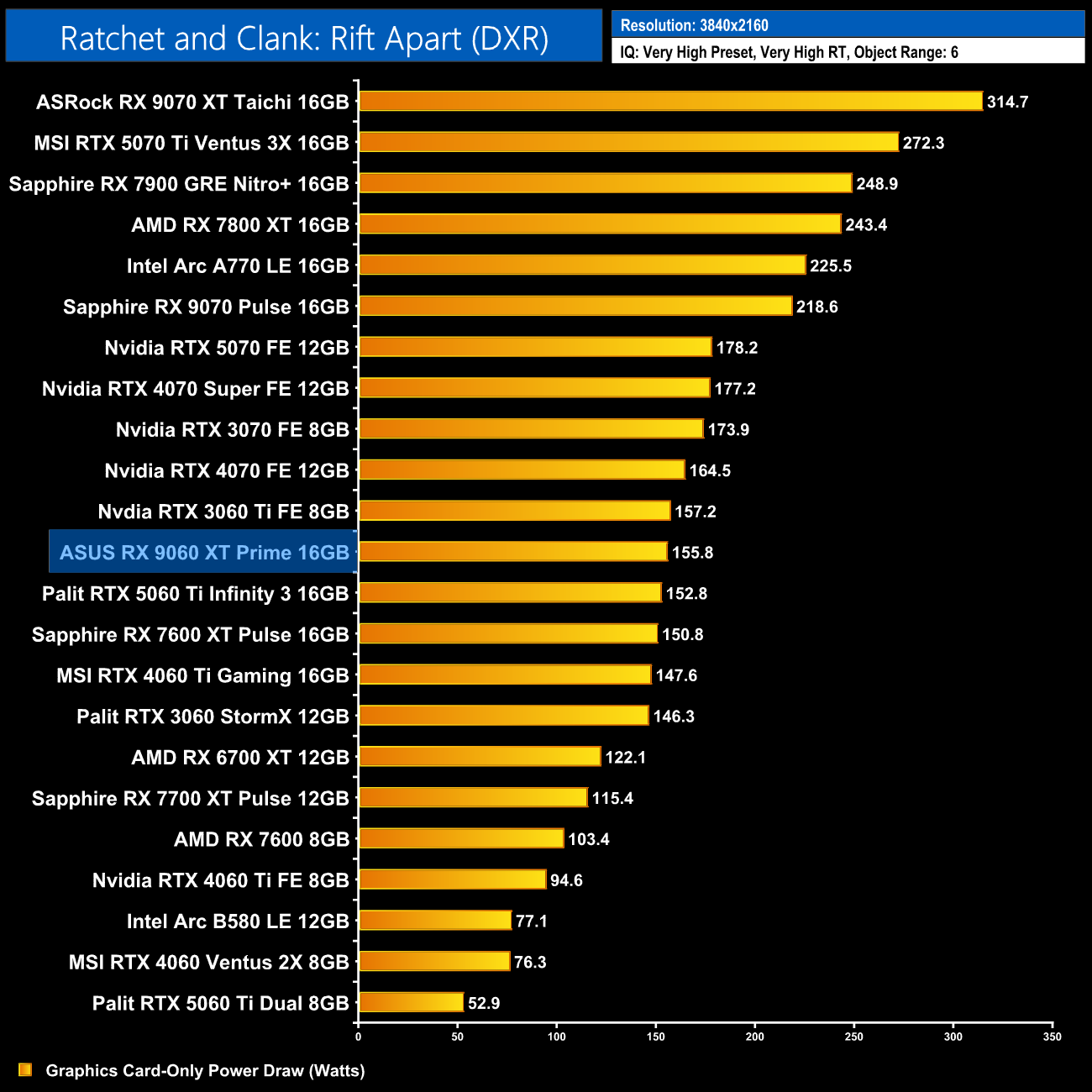
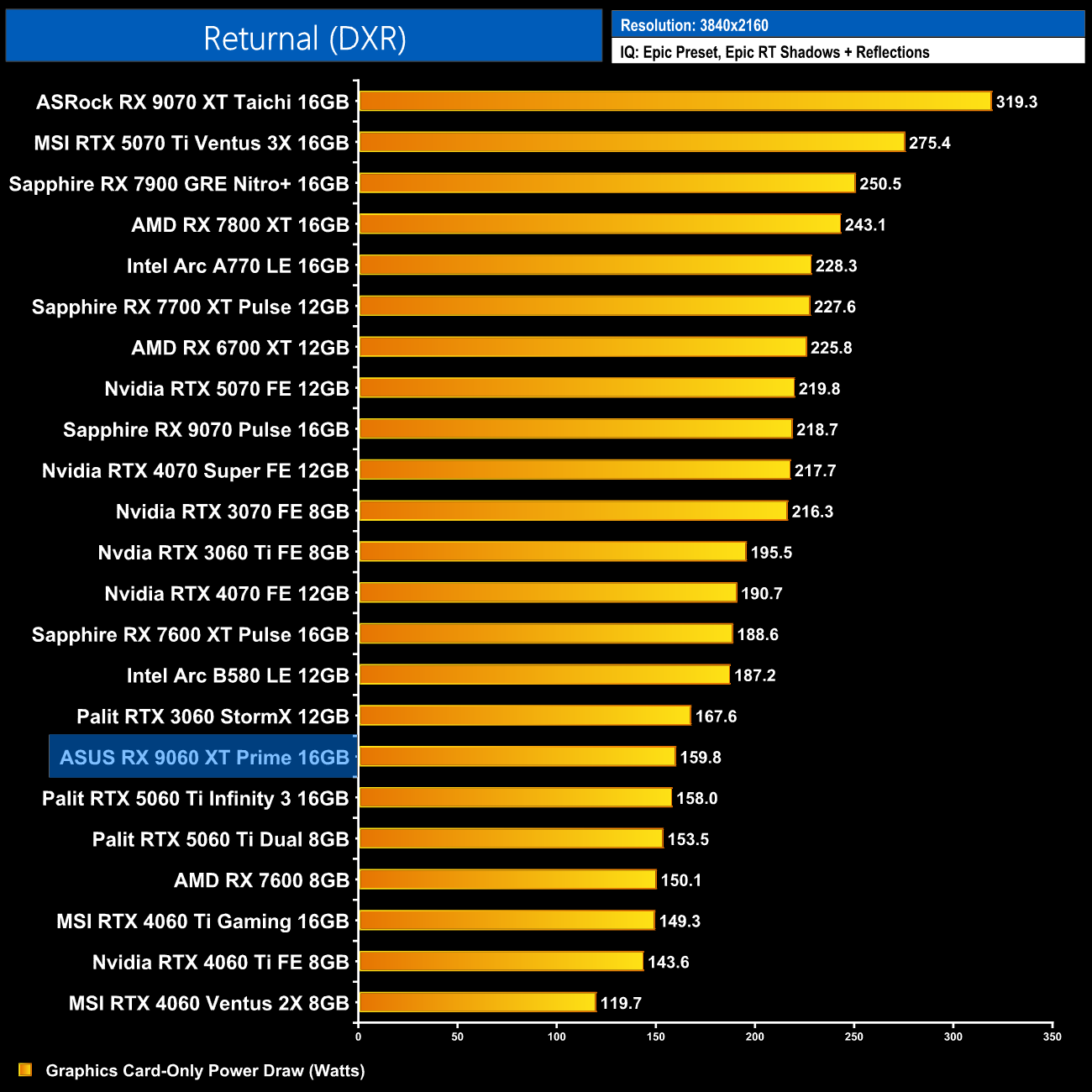
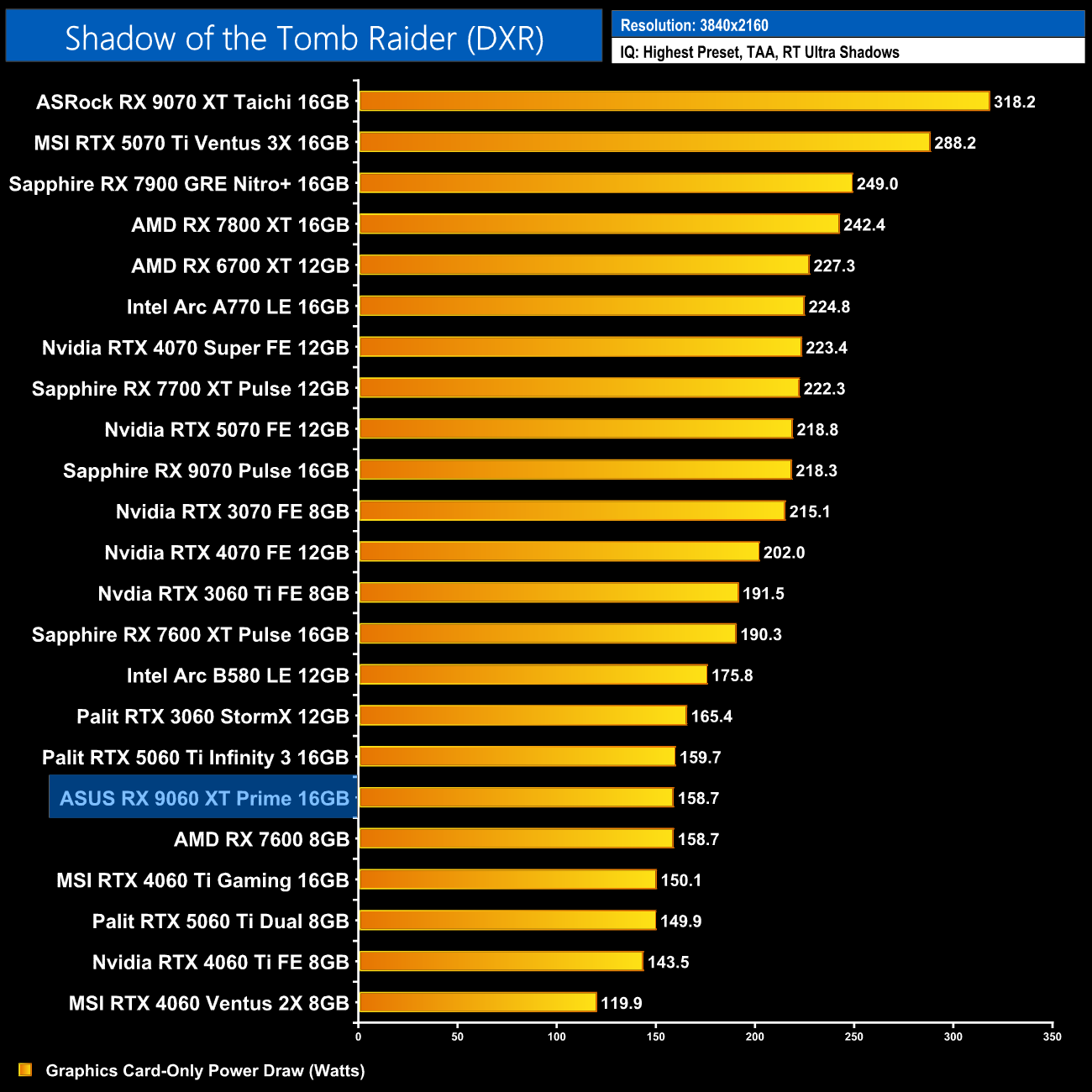
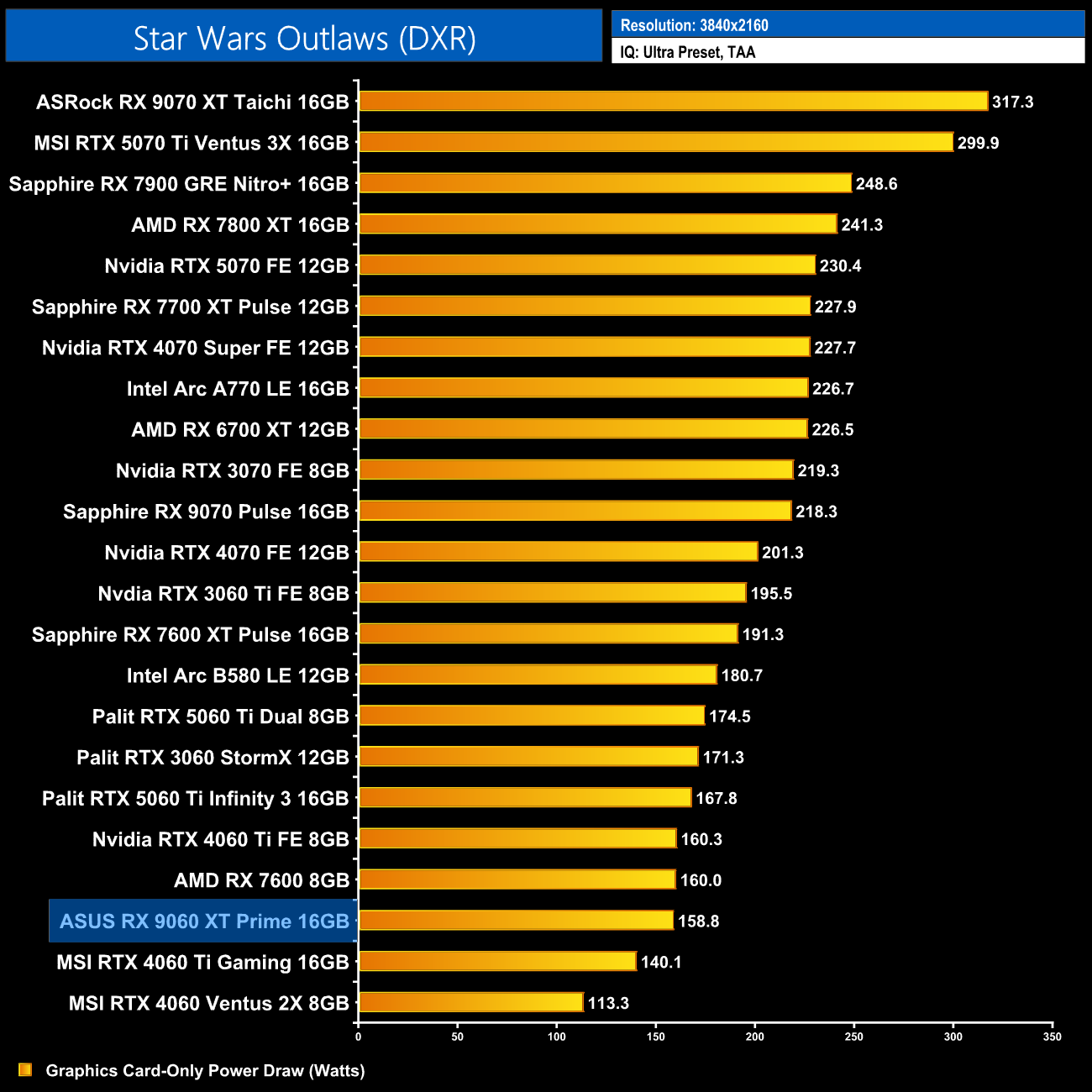
Here we present power draw figures for the graphics card-only, on a per-game basis for all twelve games we tested at 2160p (4K). This is measured using Nvidia's Power Capture Analysis Tool, also known as PCAT. You can read more about our updated power draw testing methodology HERE.
Per-Game Results at 2160p (4K):
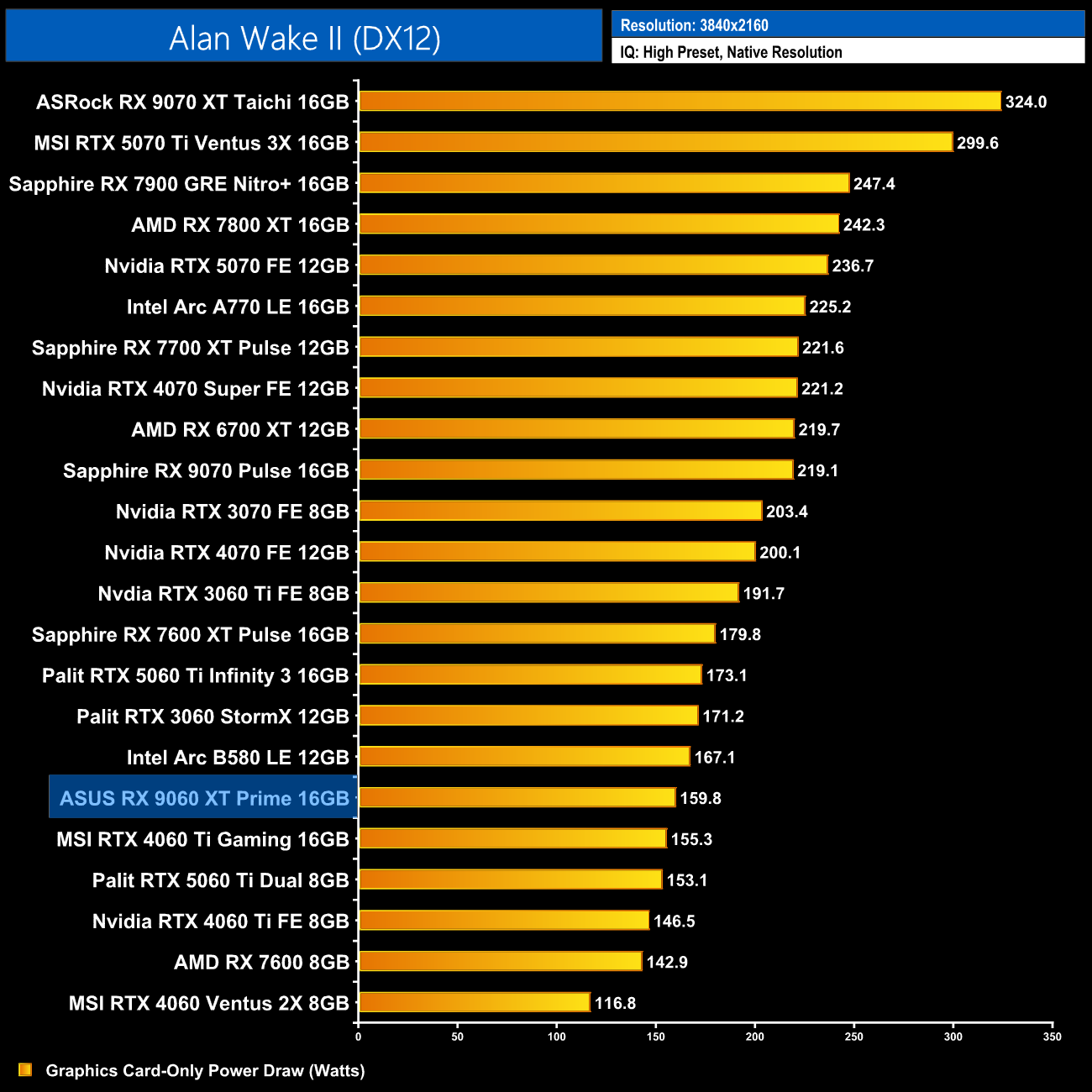
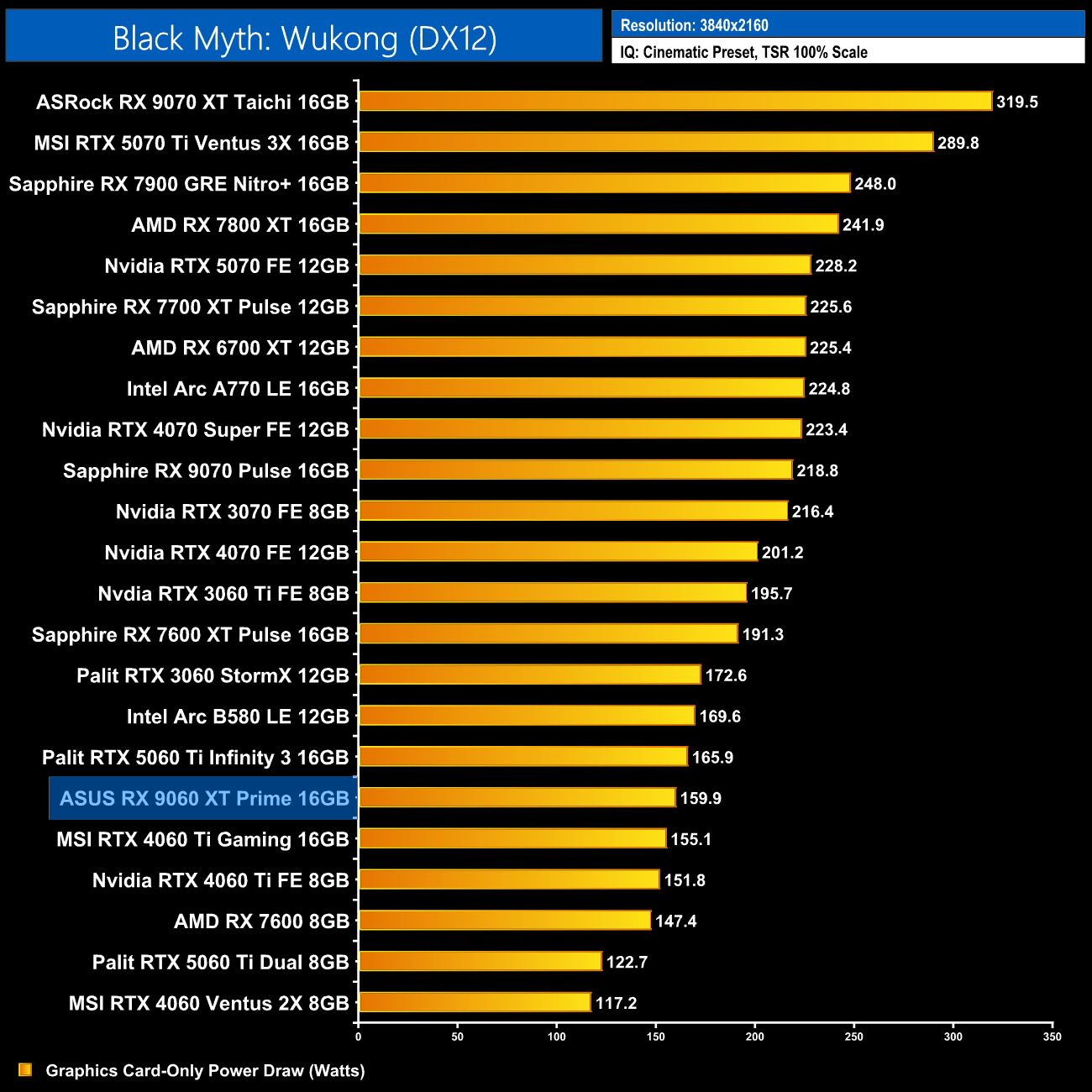
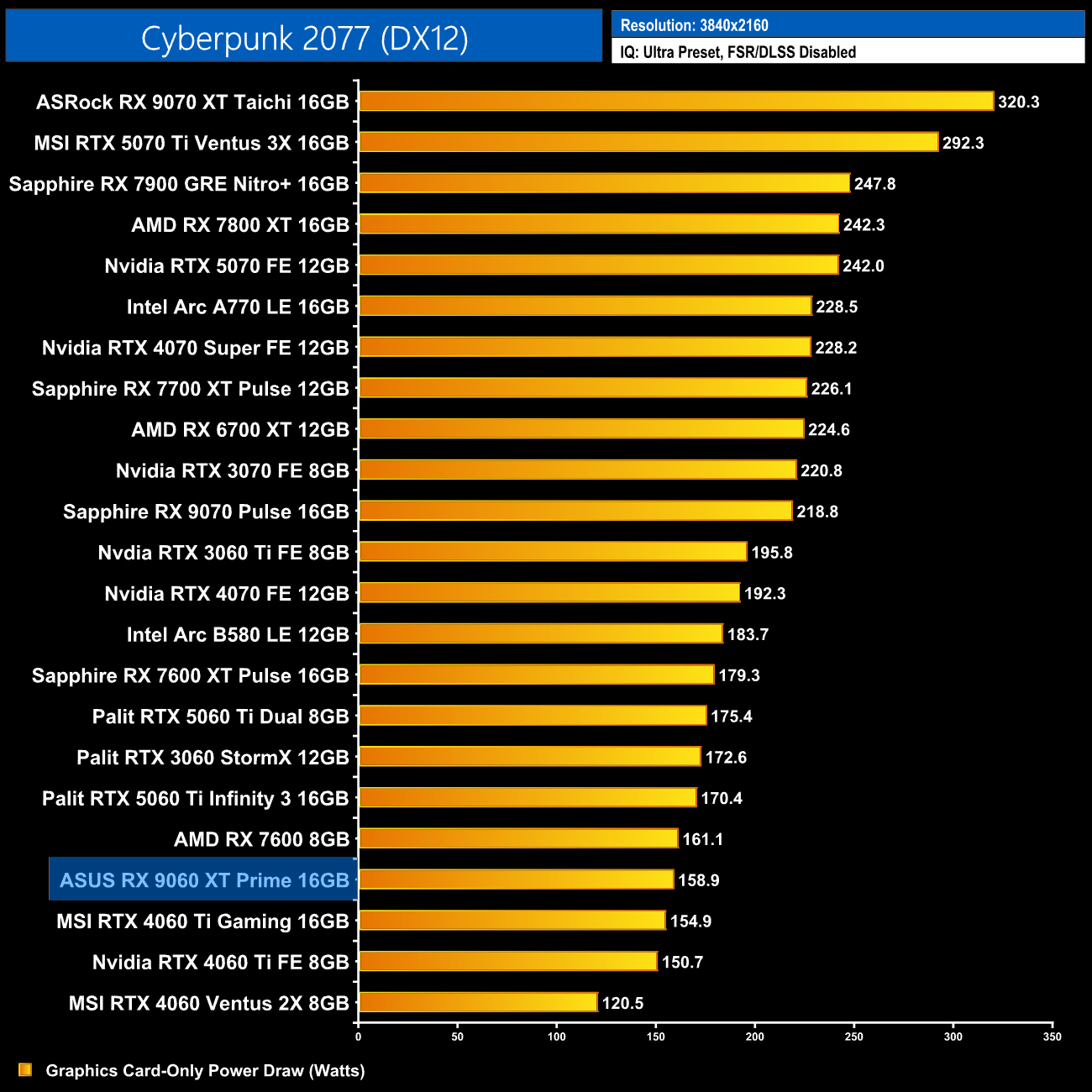
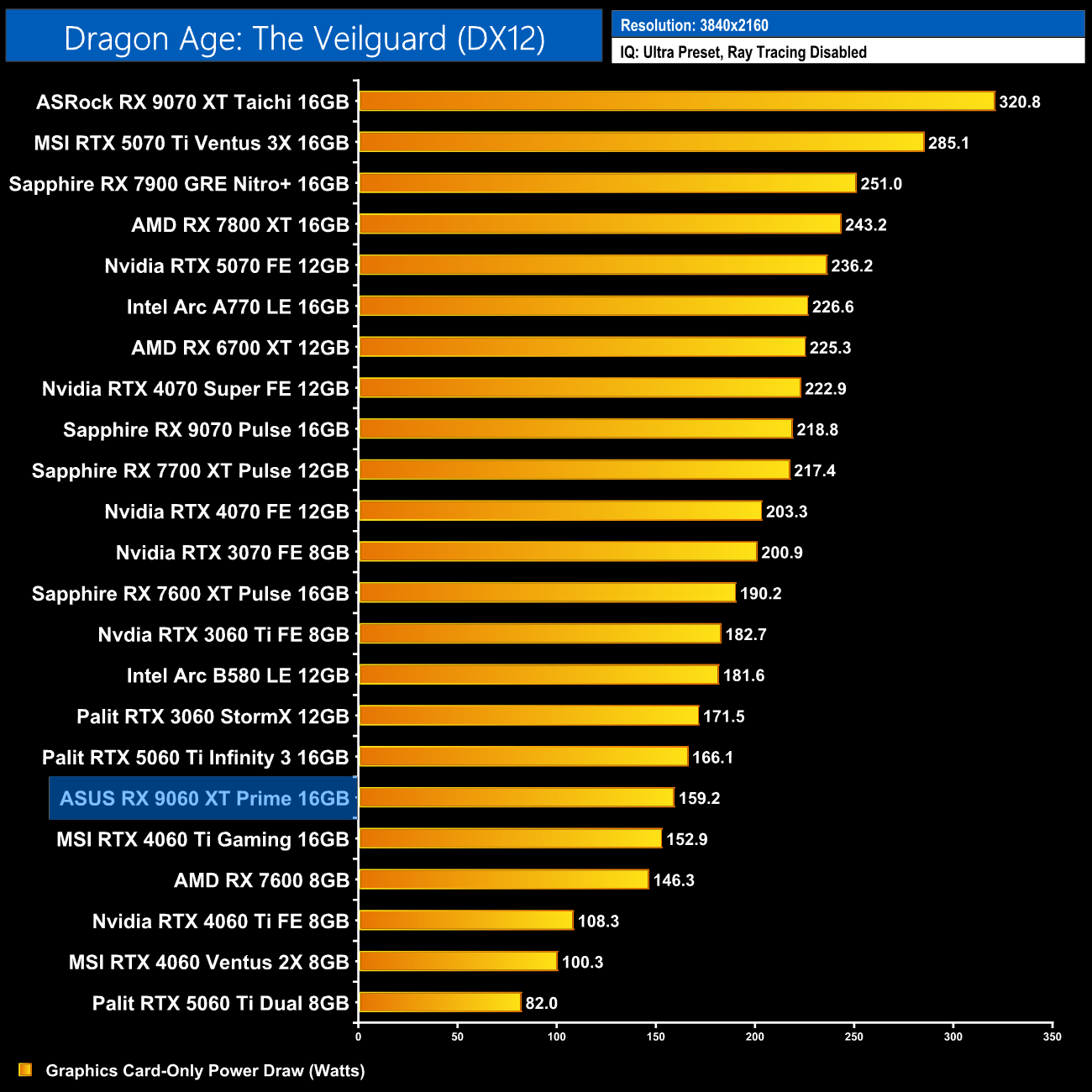
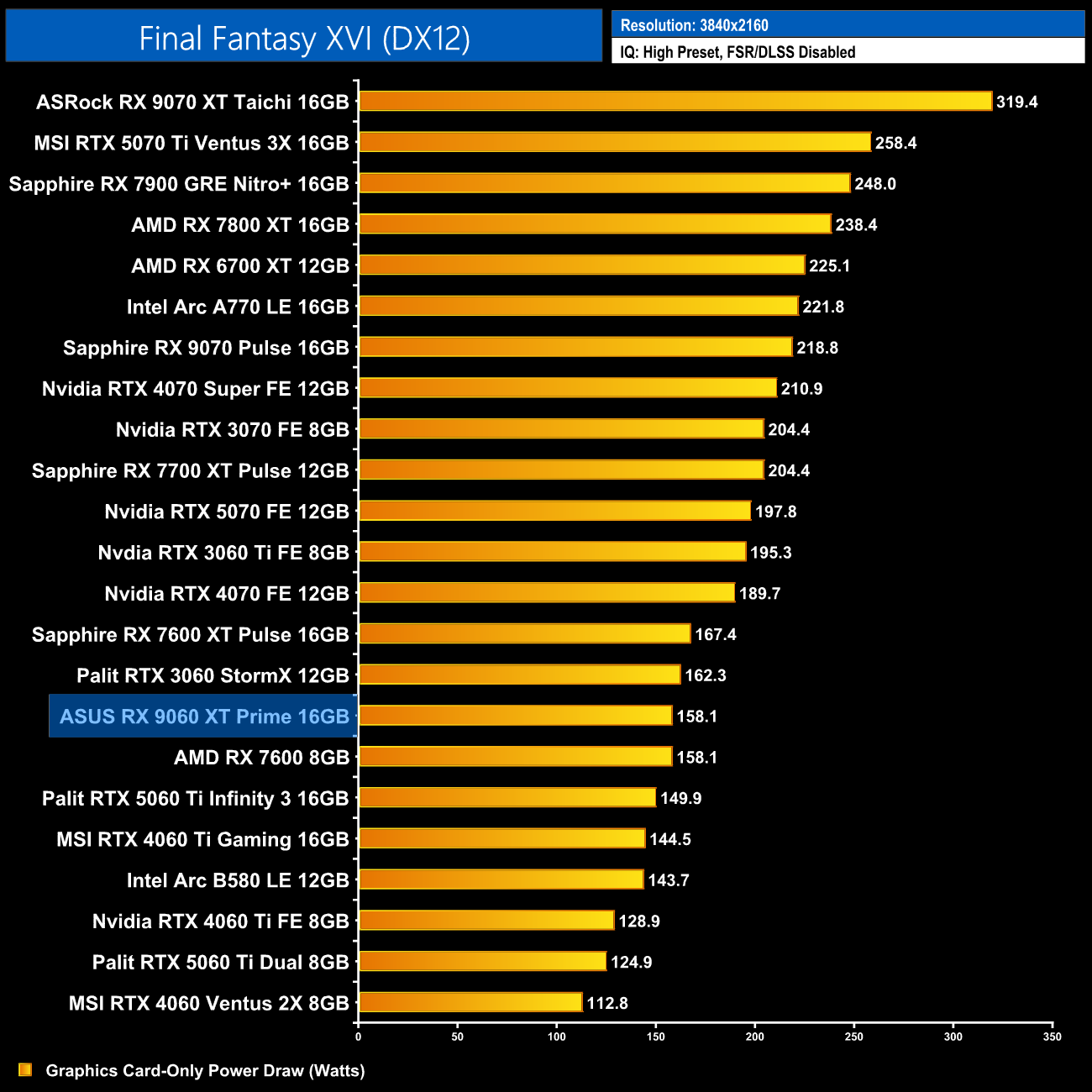
Click to enlarge.
12-Game Average at 2160p (4K):
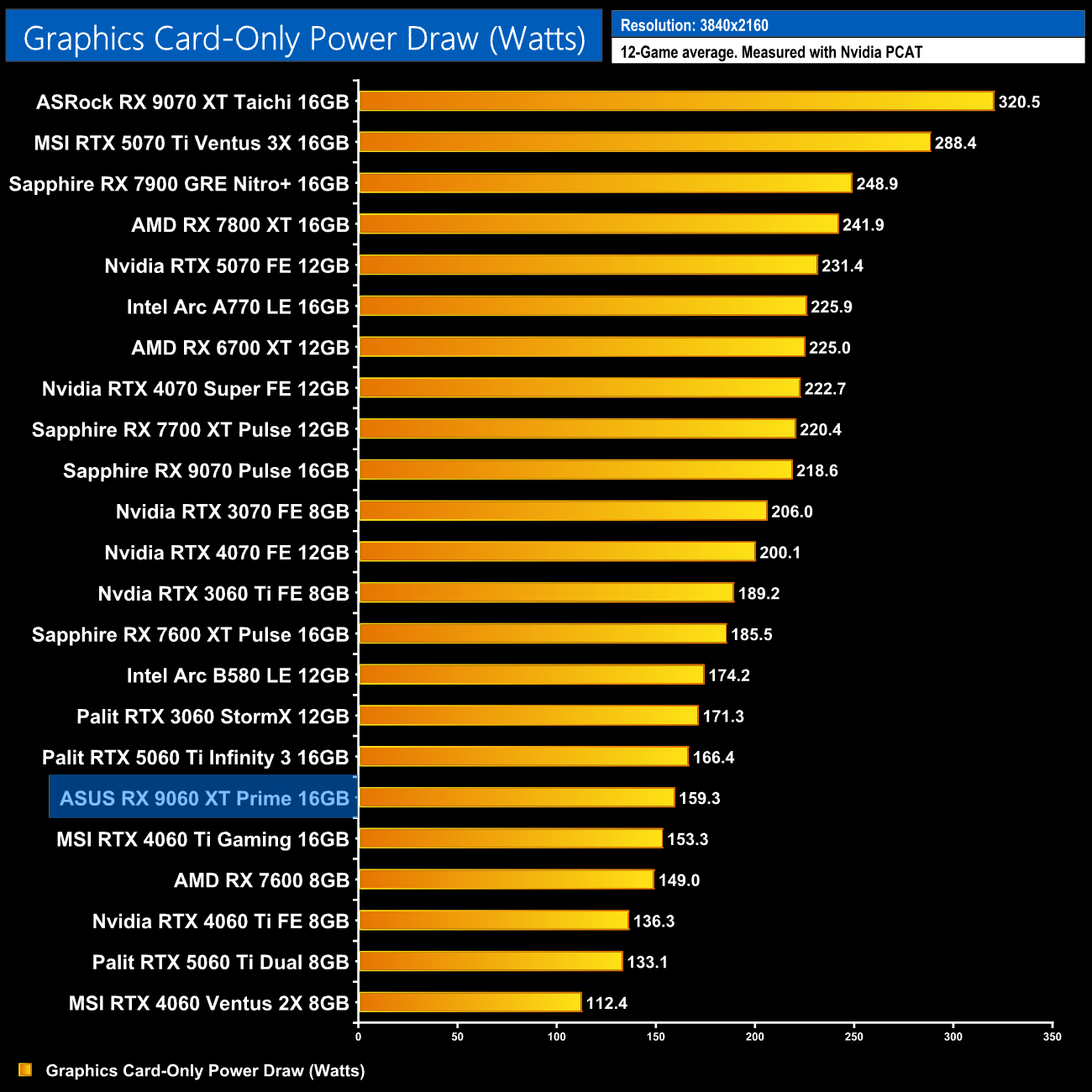
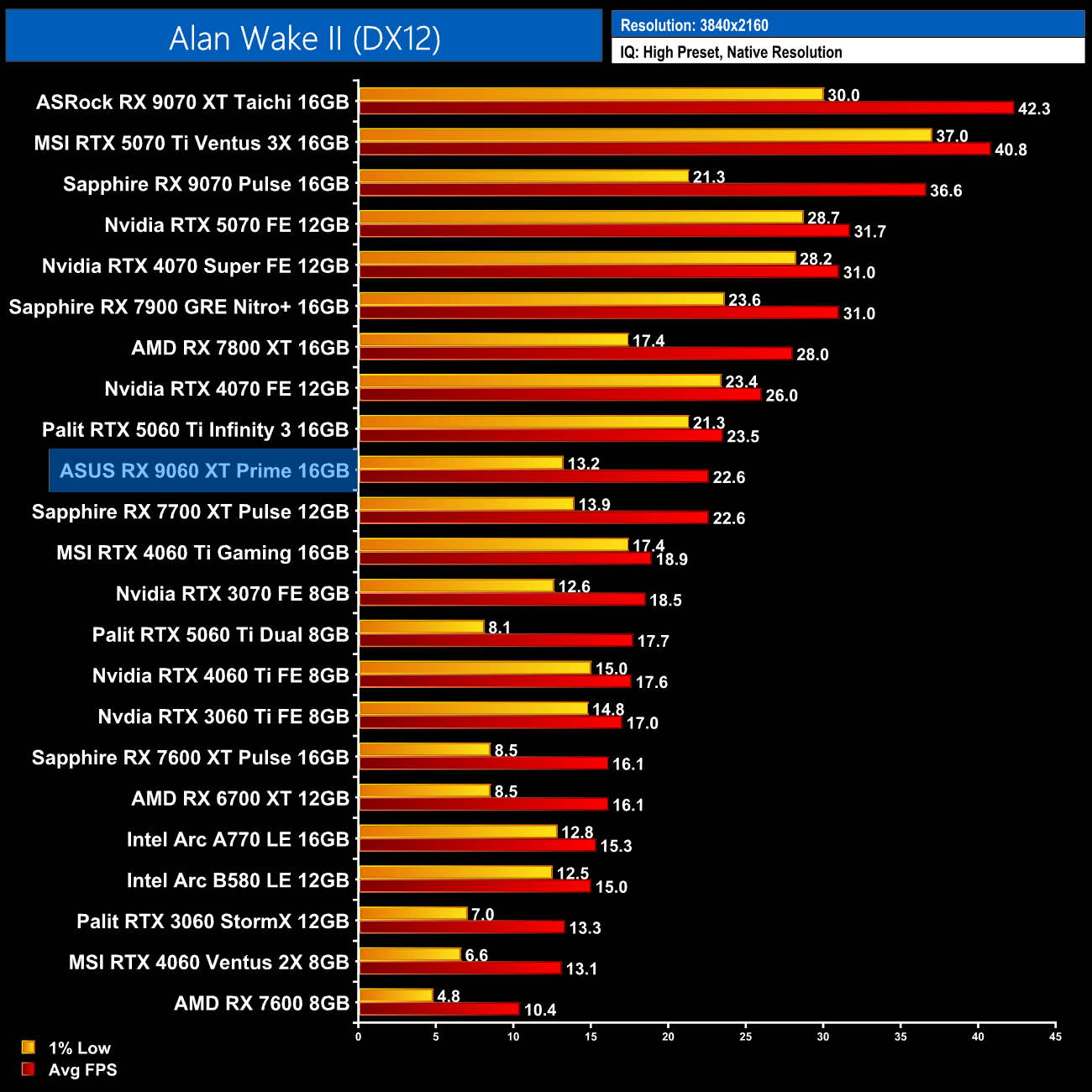
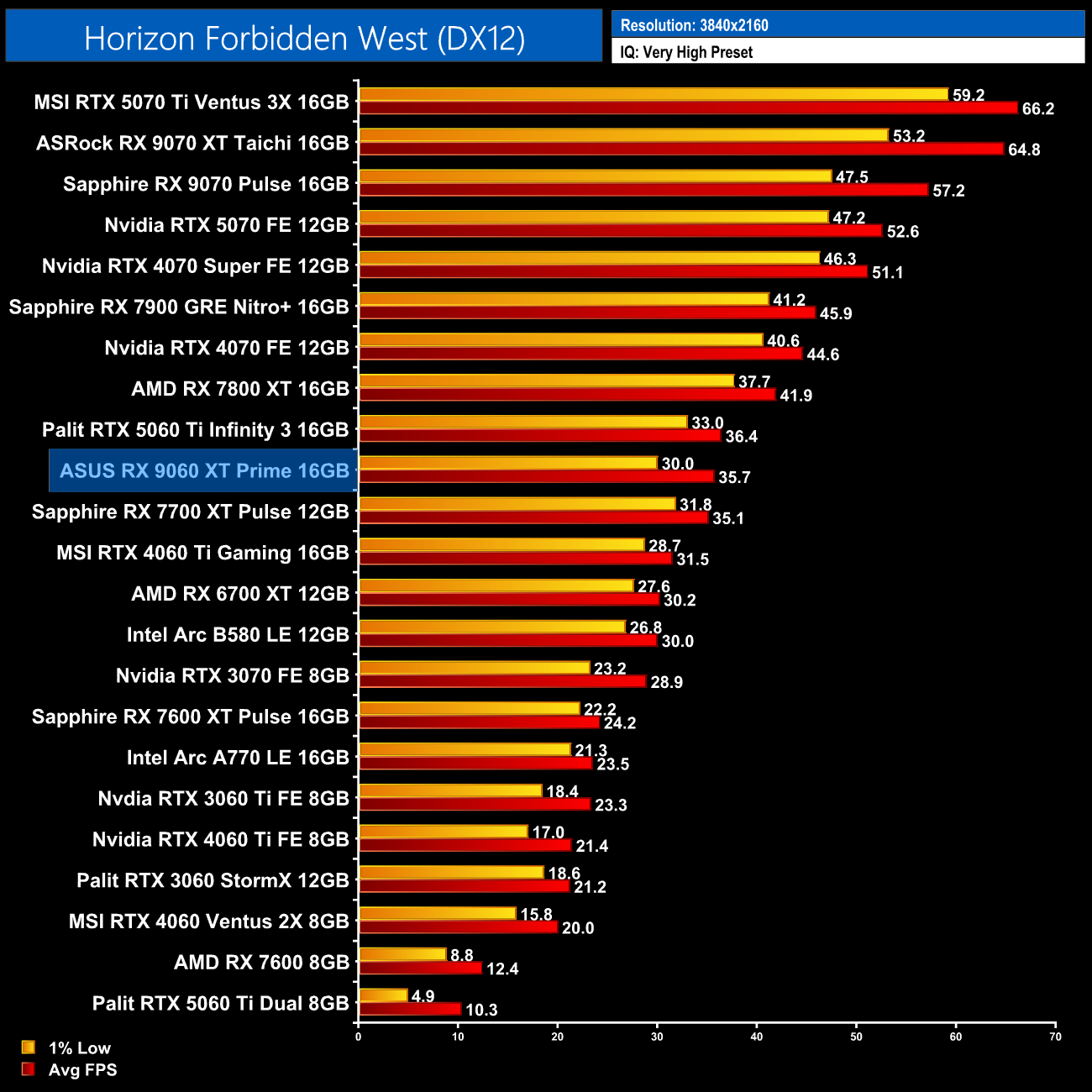
We also test at 4K, but I don't think that's a realistic scenario for this GPU – but power is now slightly below the 5060 Ti 16GB.
Ray tracing results
As a bonus, we now include the power figures for all eight games we test with ray tracing enabled.
8-Game ray tracing average:
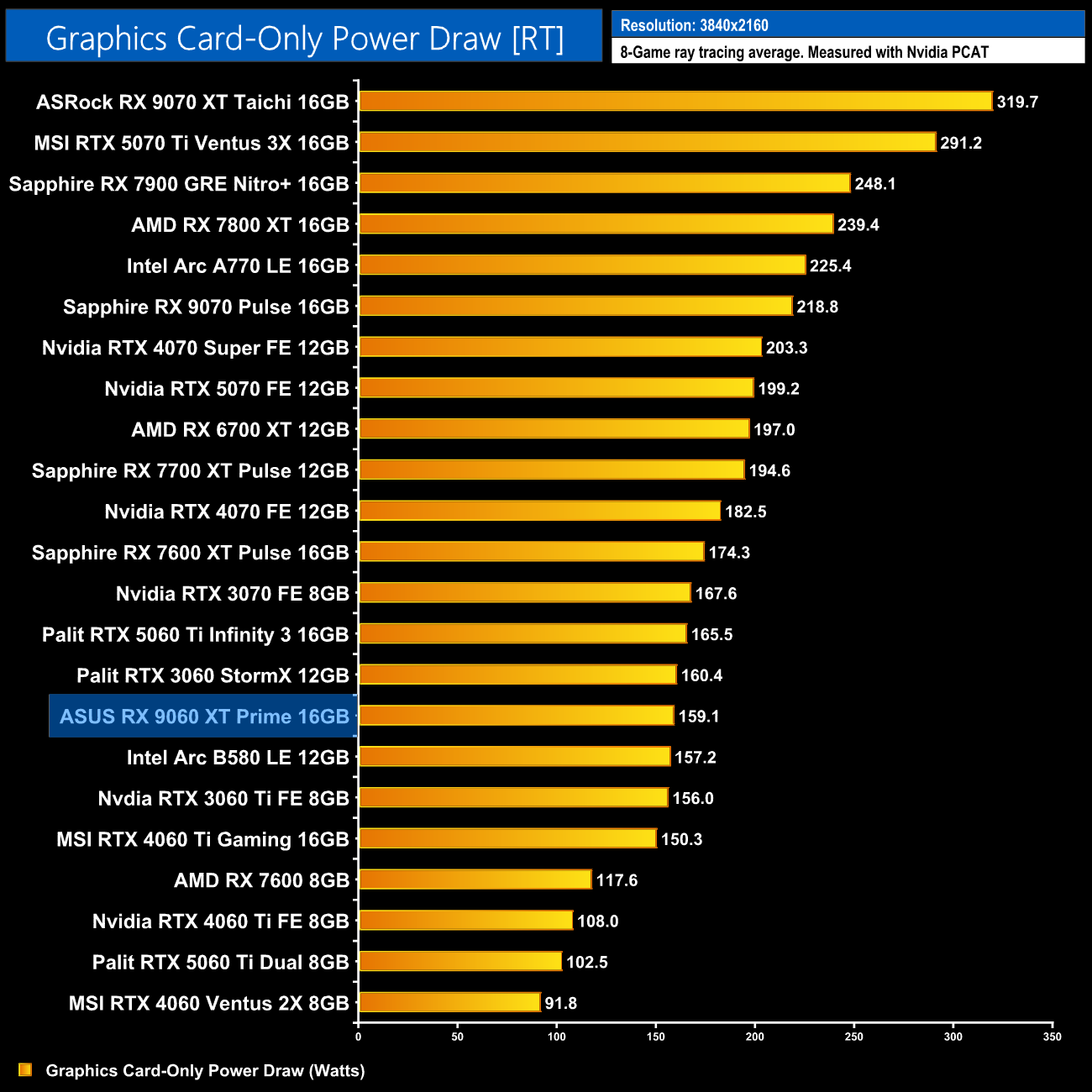
The same trend can be observed with ray tracing.
Using the graphics card-only power draw figures presented earlier in the review, here we present performance per Watt on a per-game basis for all twelve games we tested at 1080p.
Per-Game Results at 1080p:
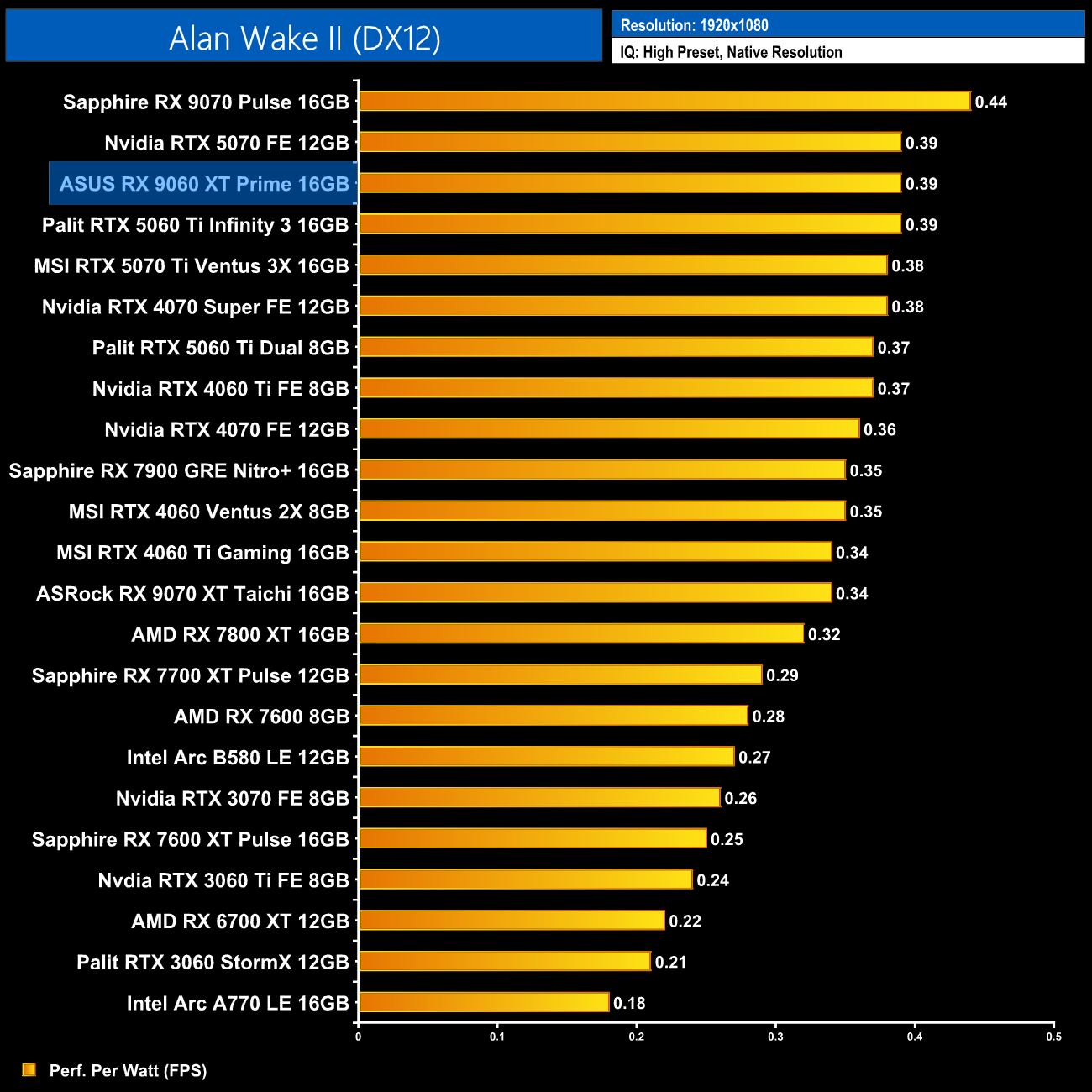
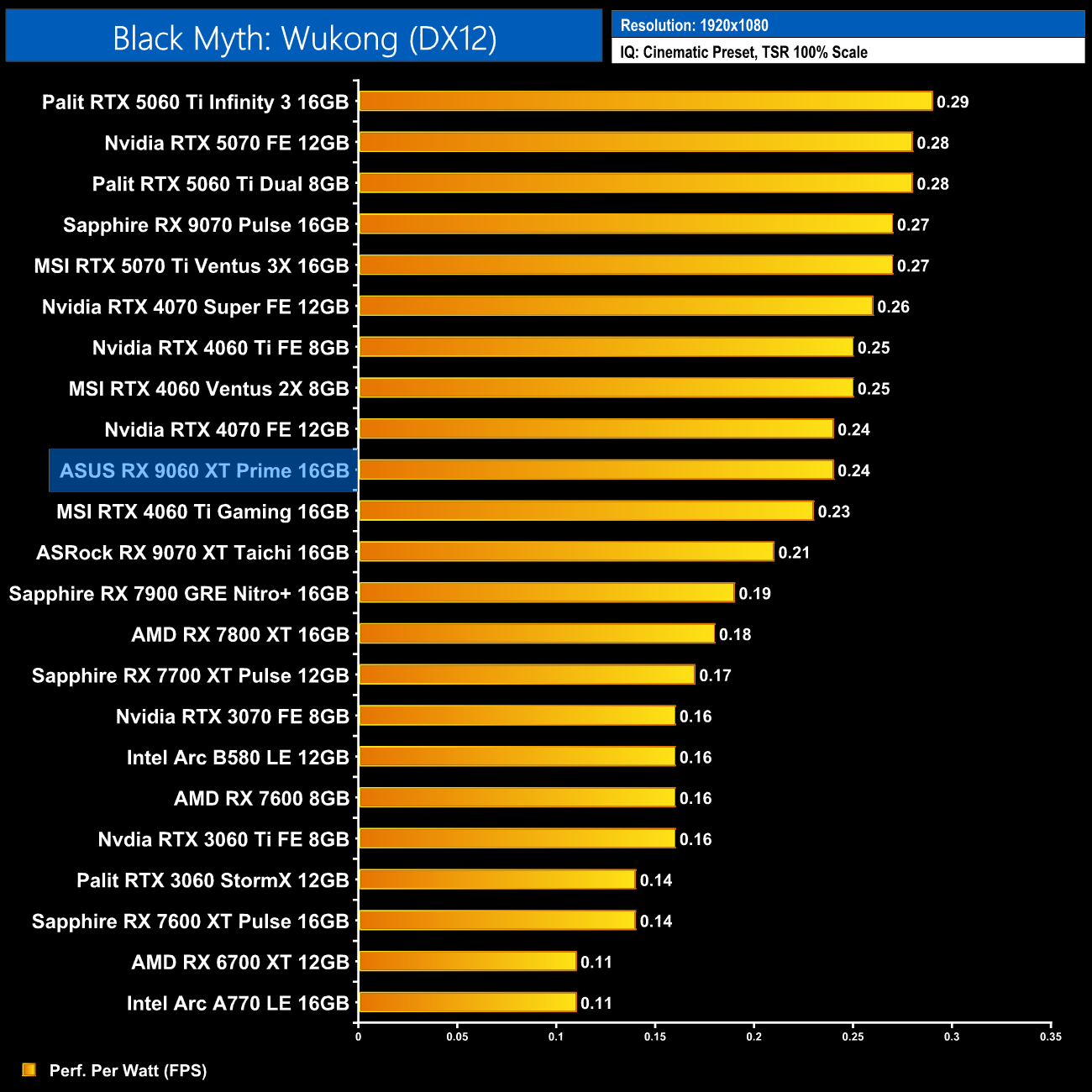
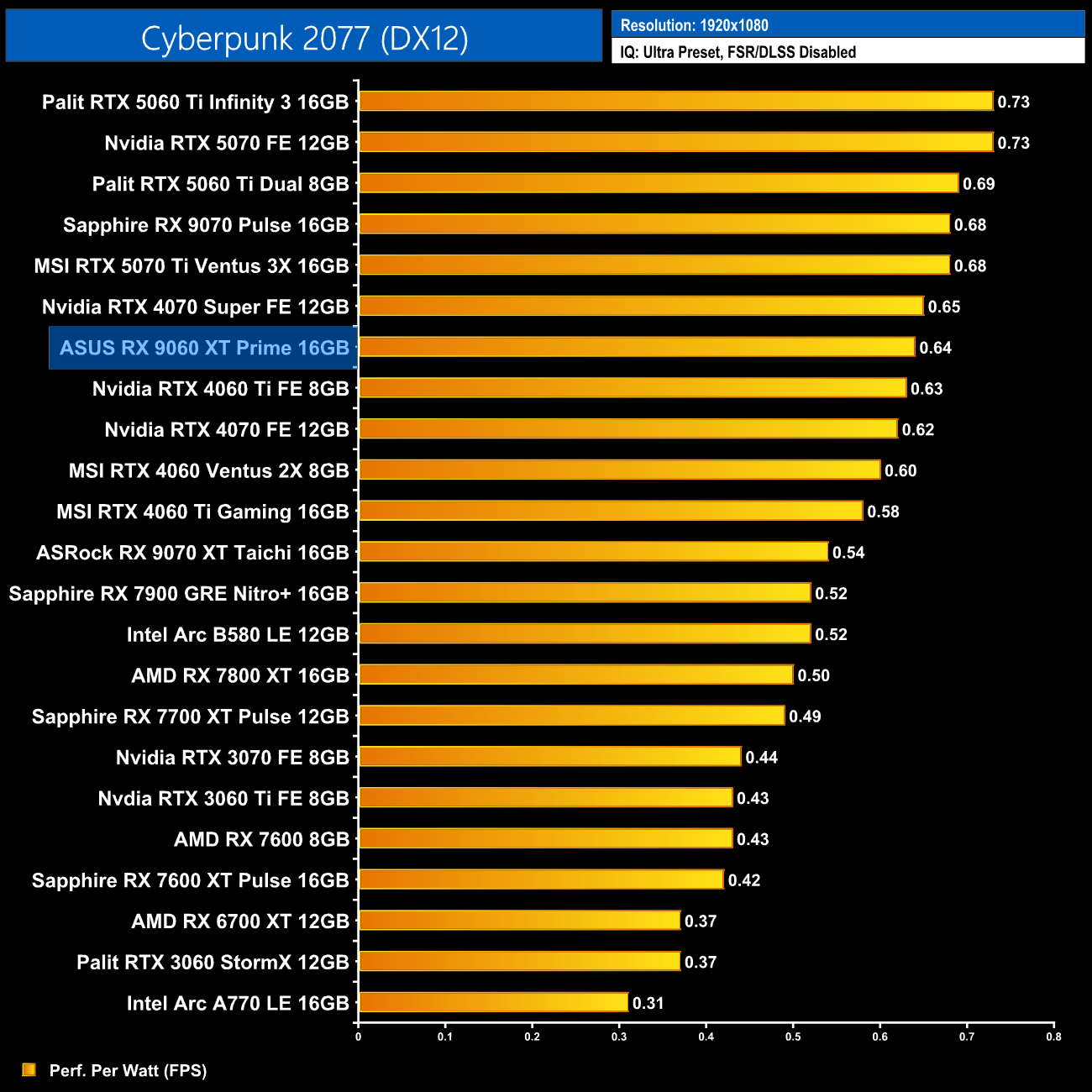
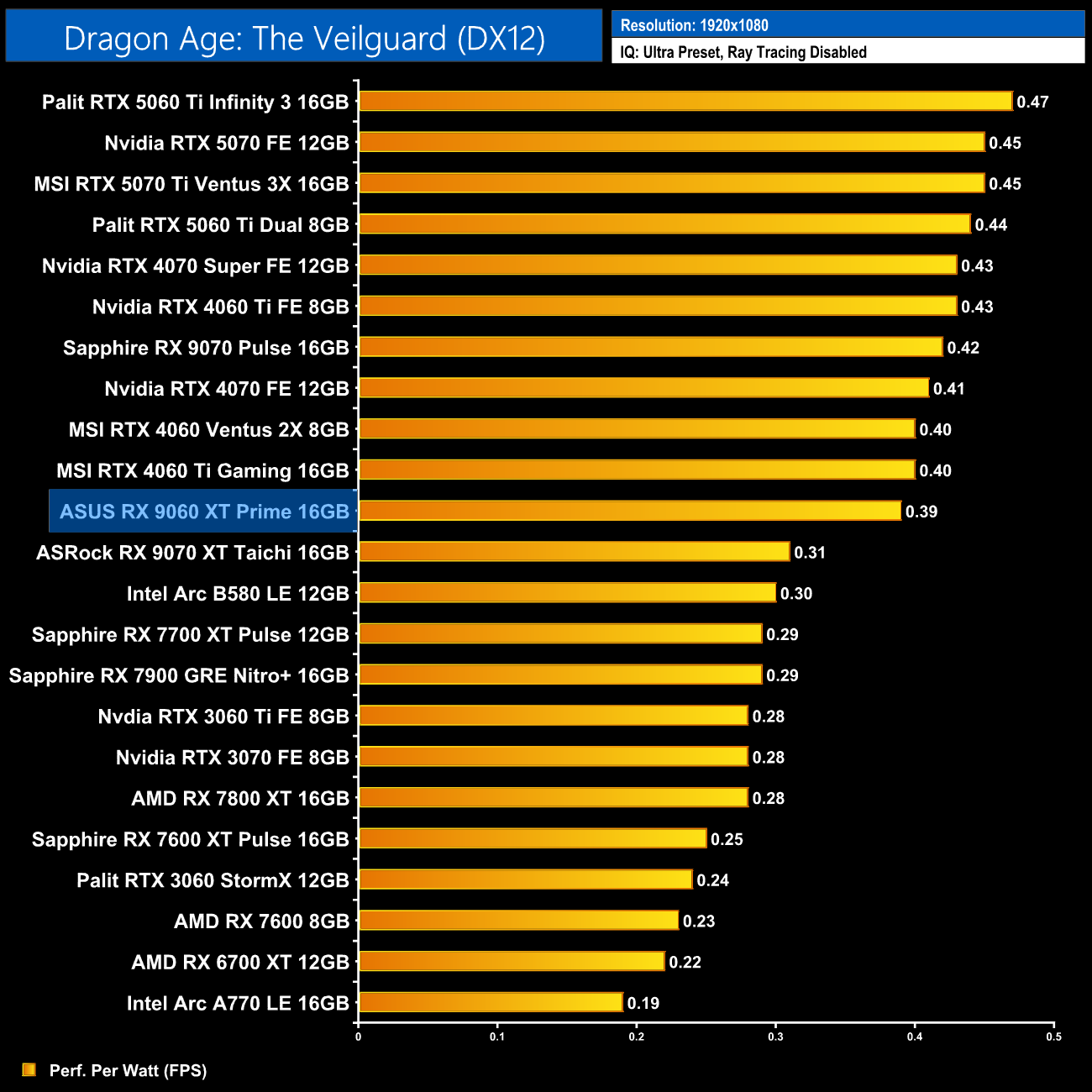
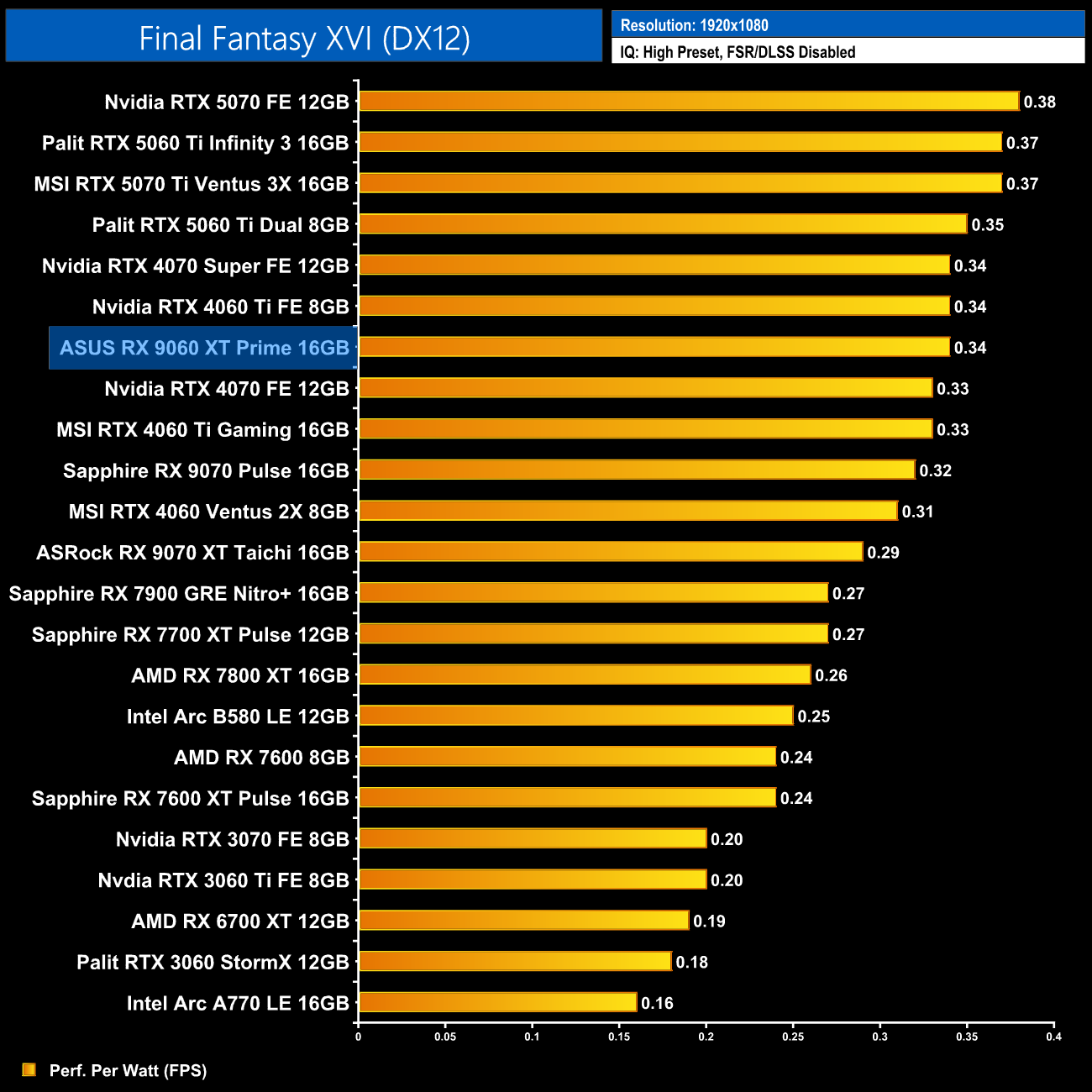
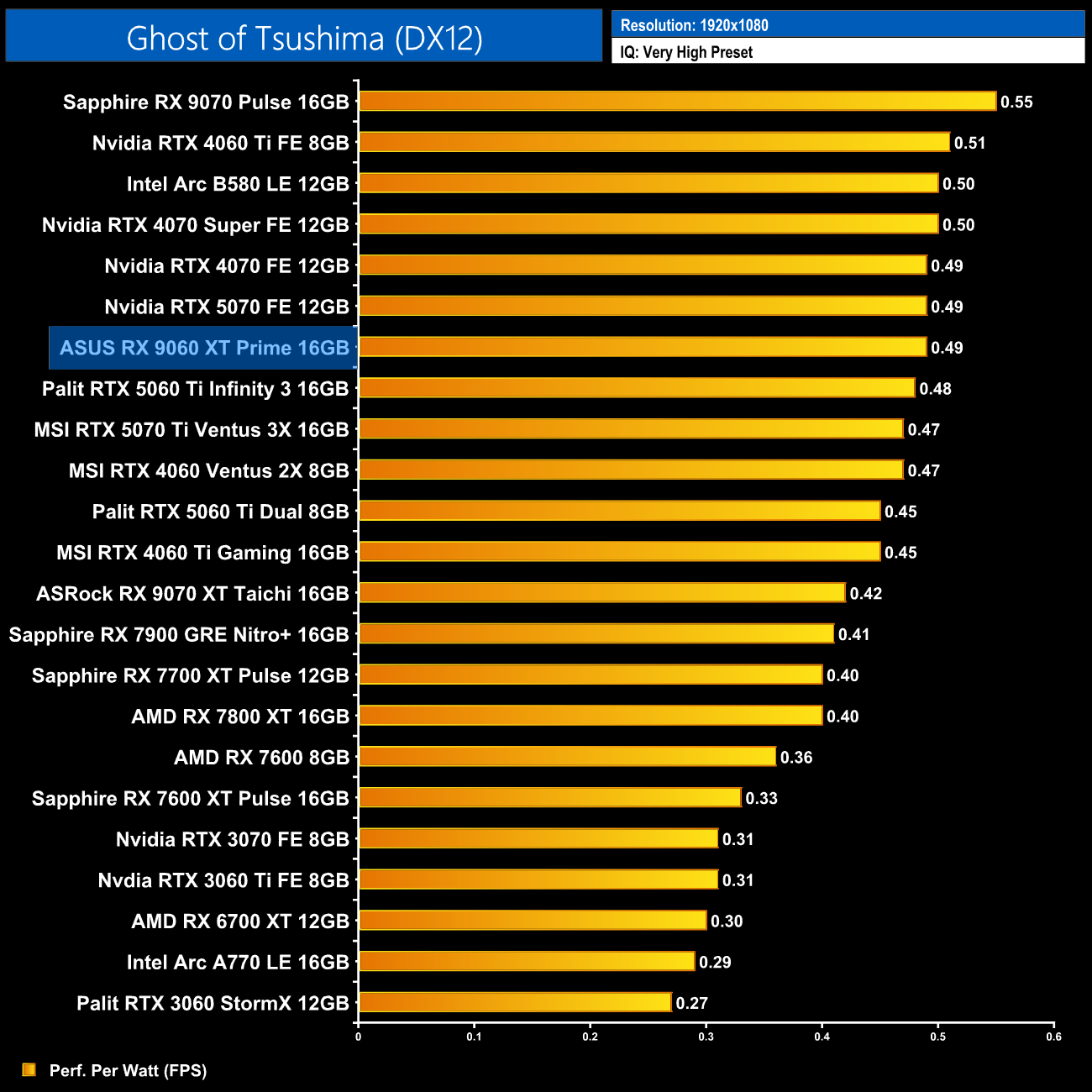
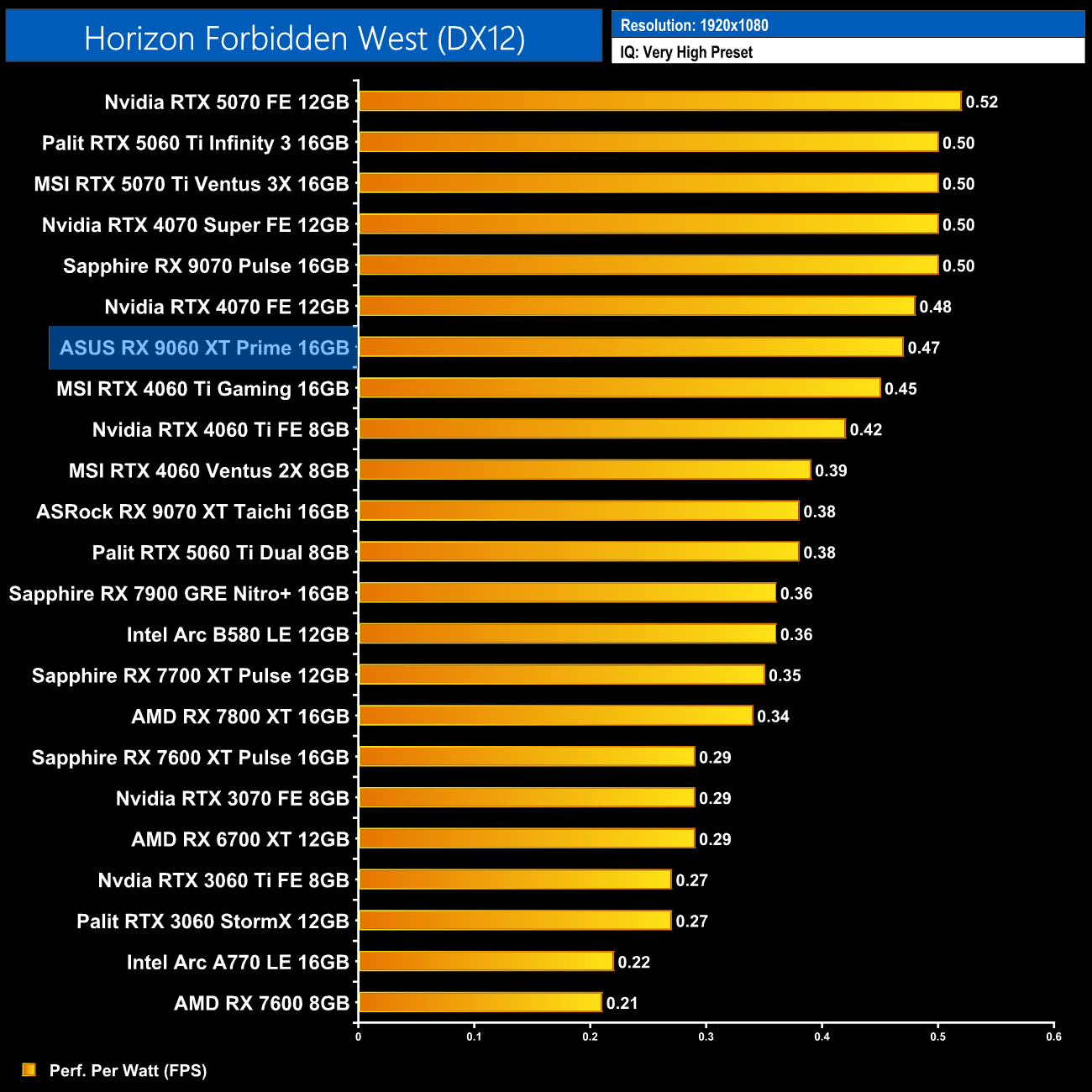
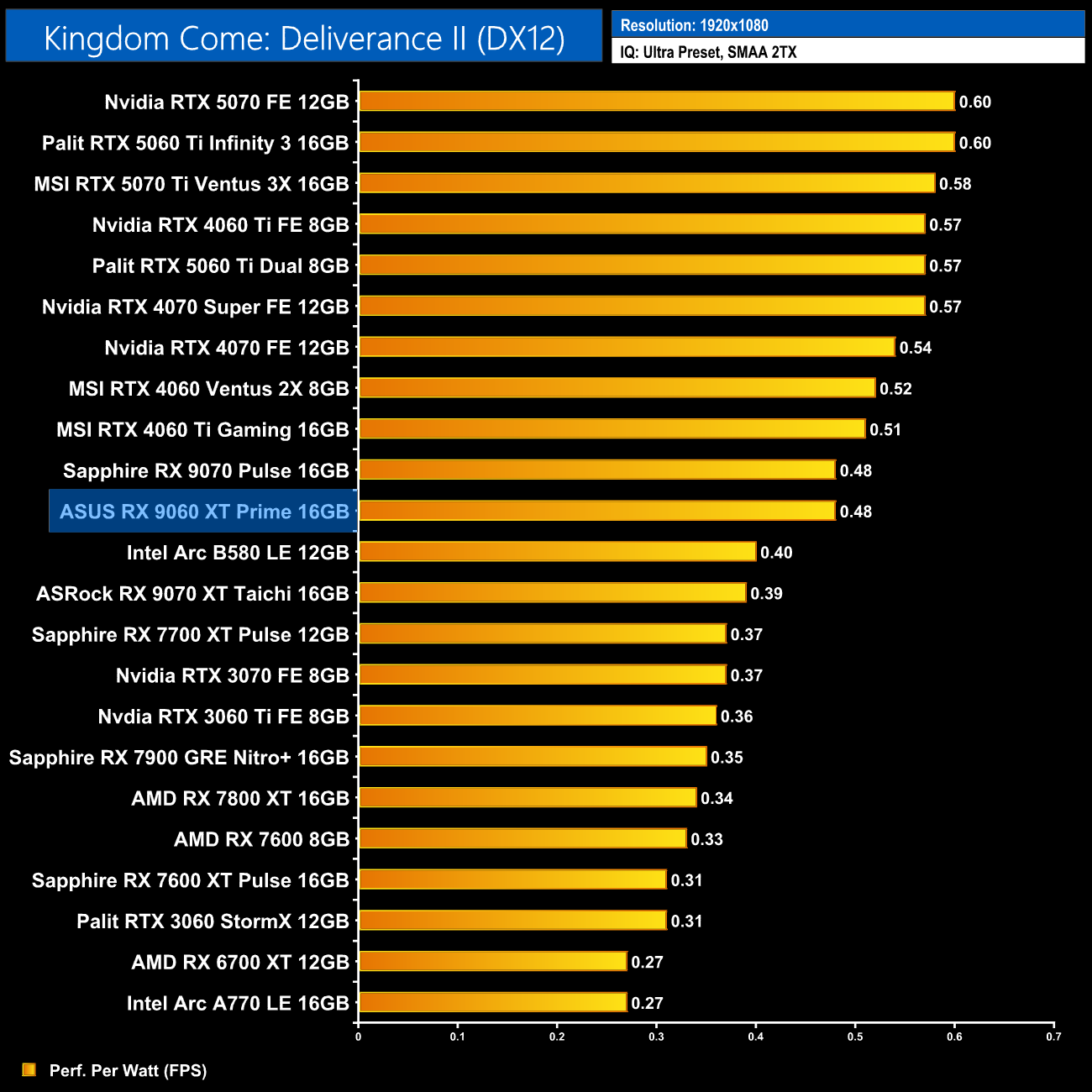
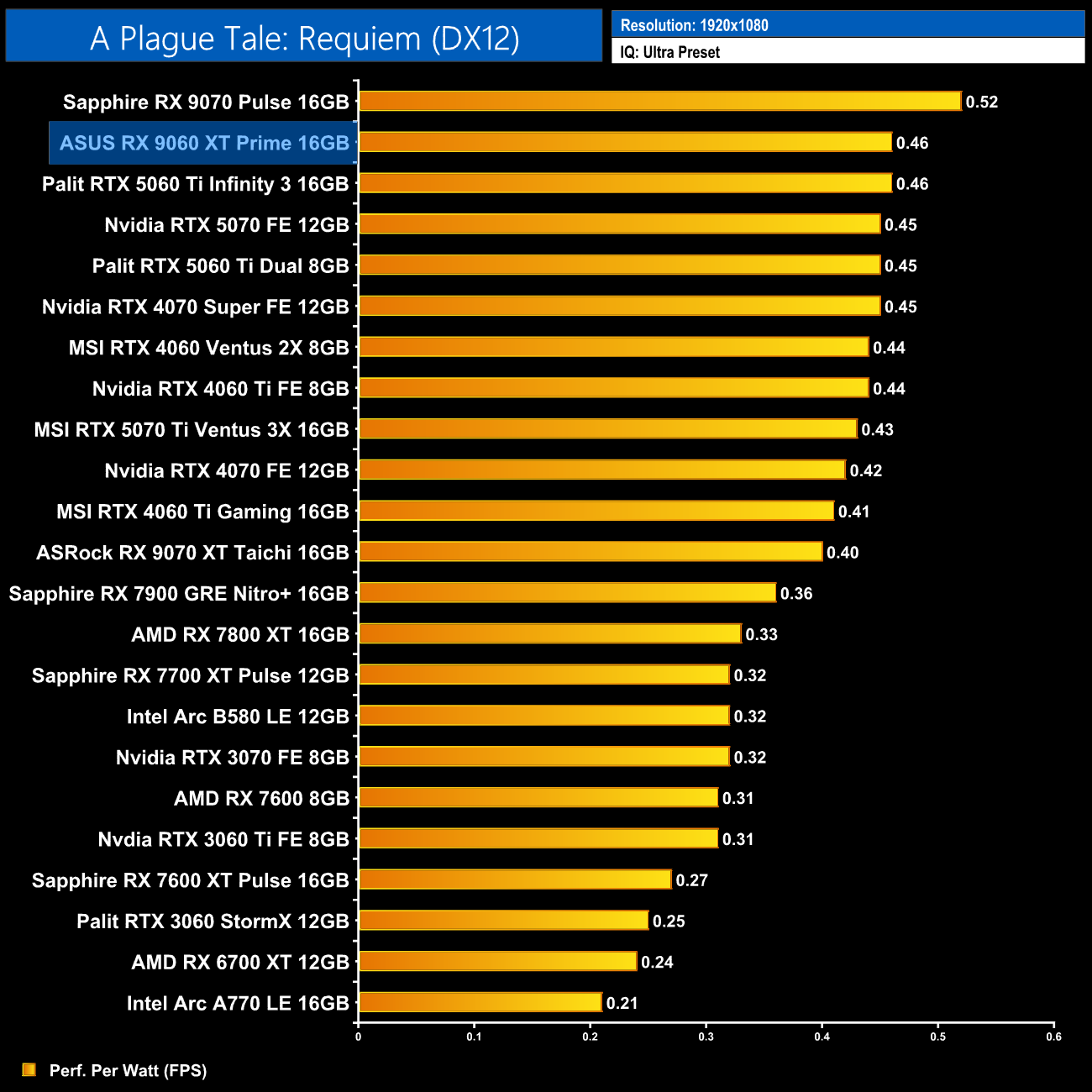
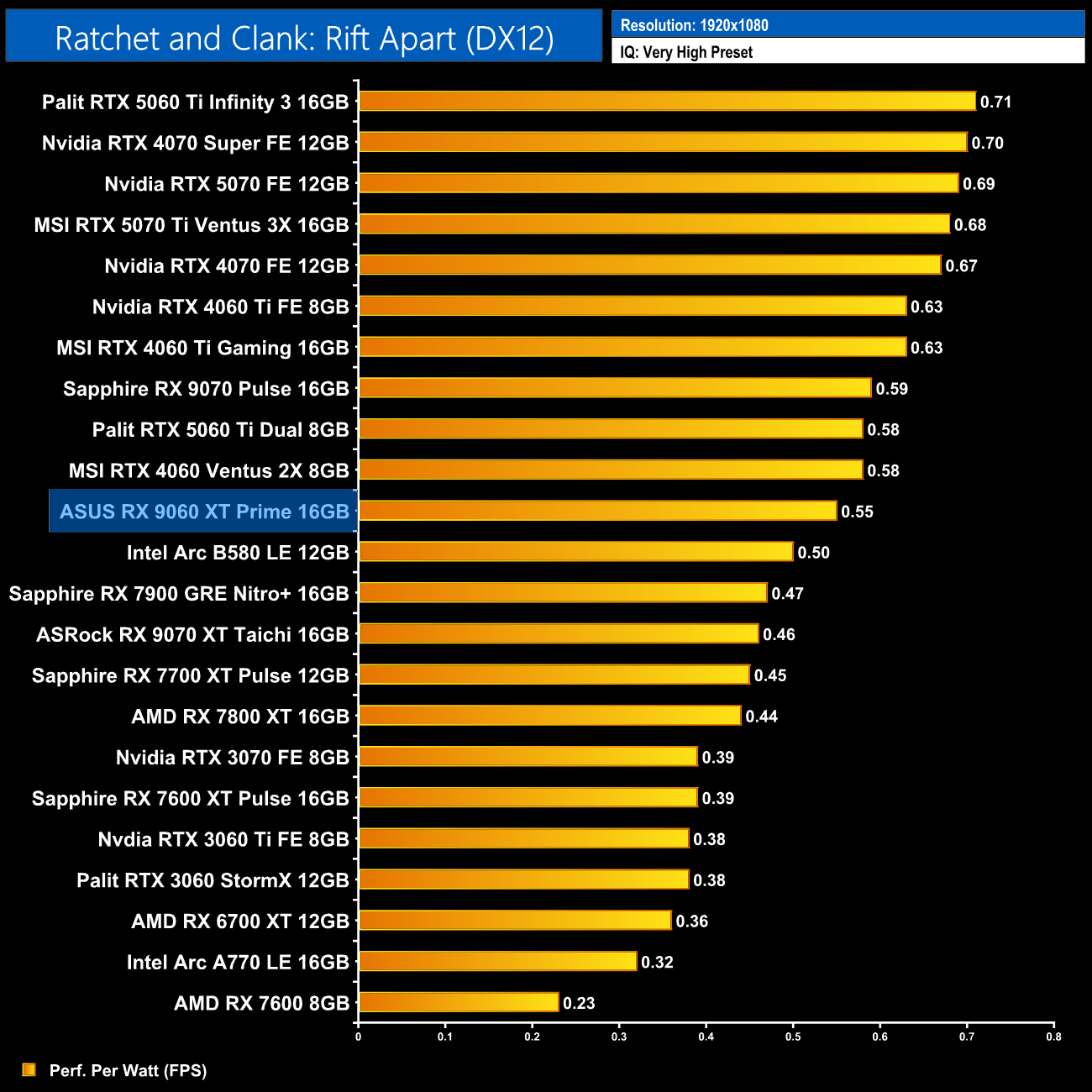
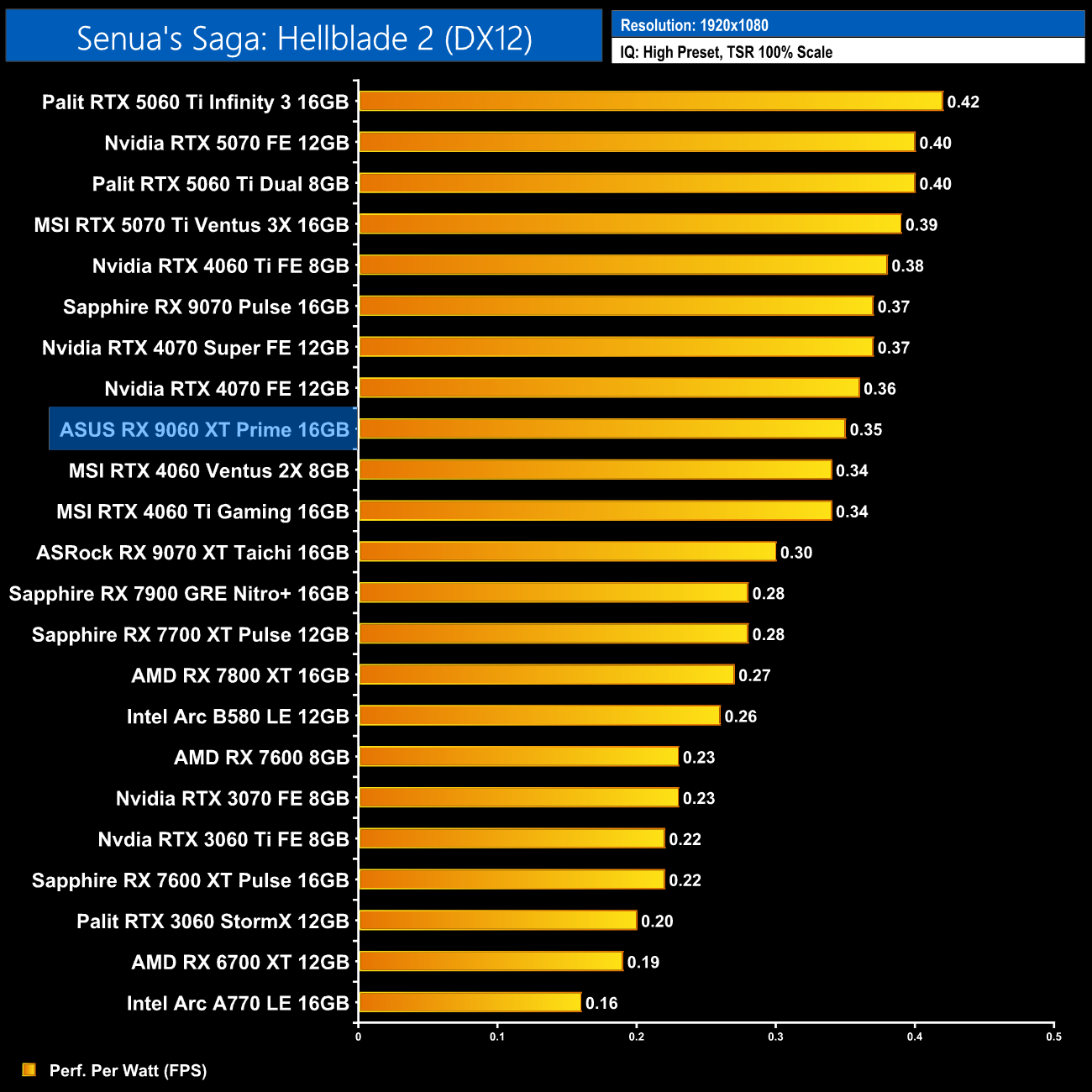
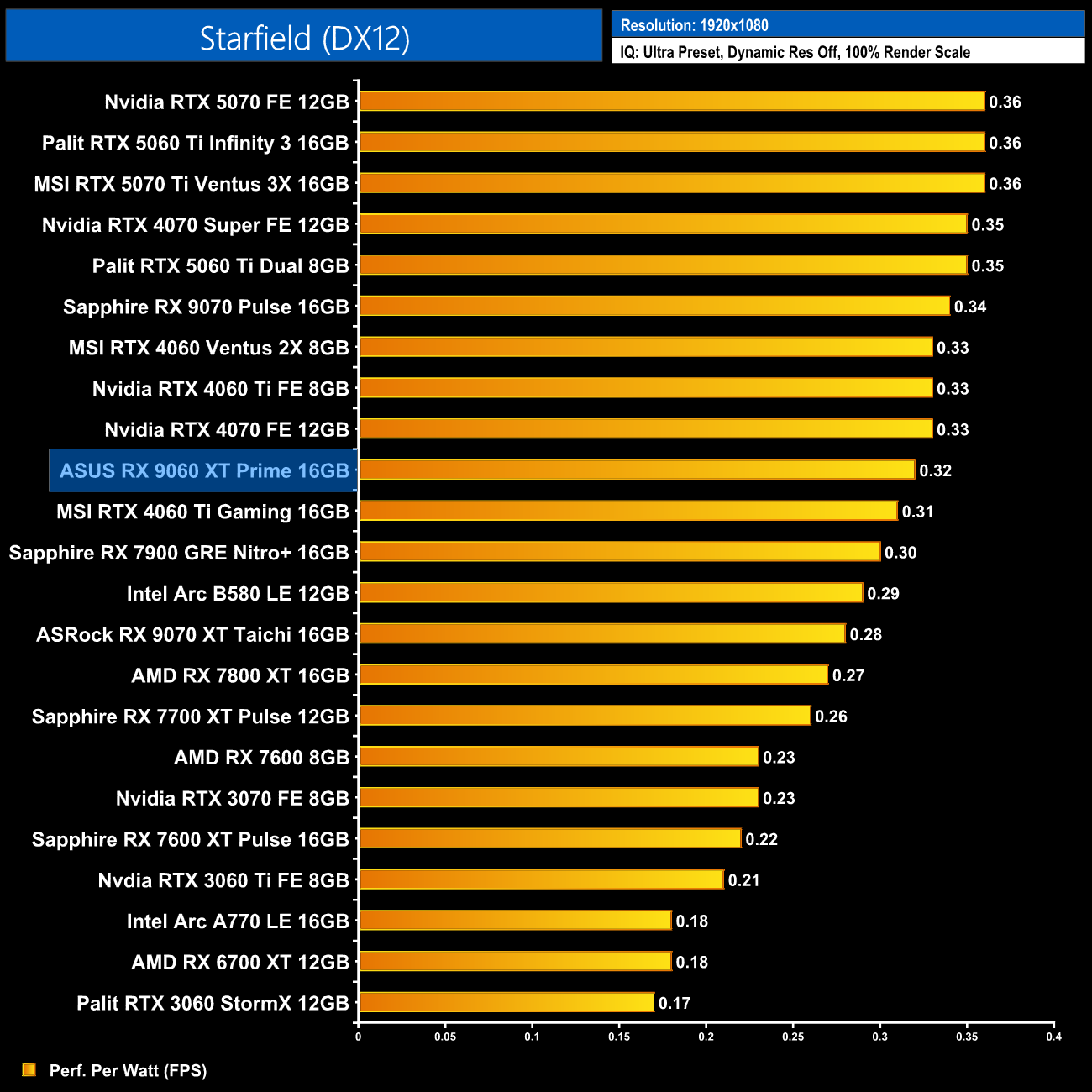
Click to enlarge.
12-Game Average at 1080p:
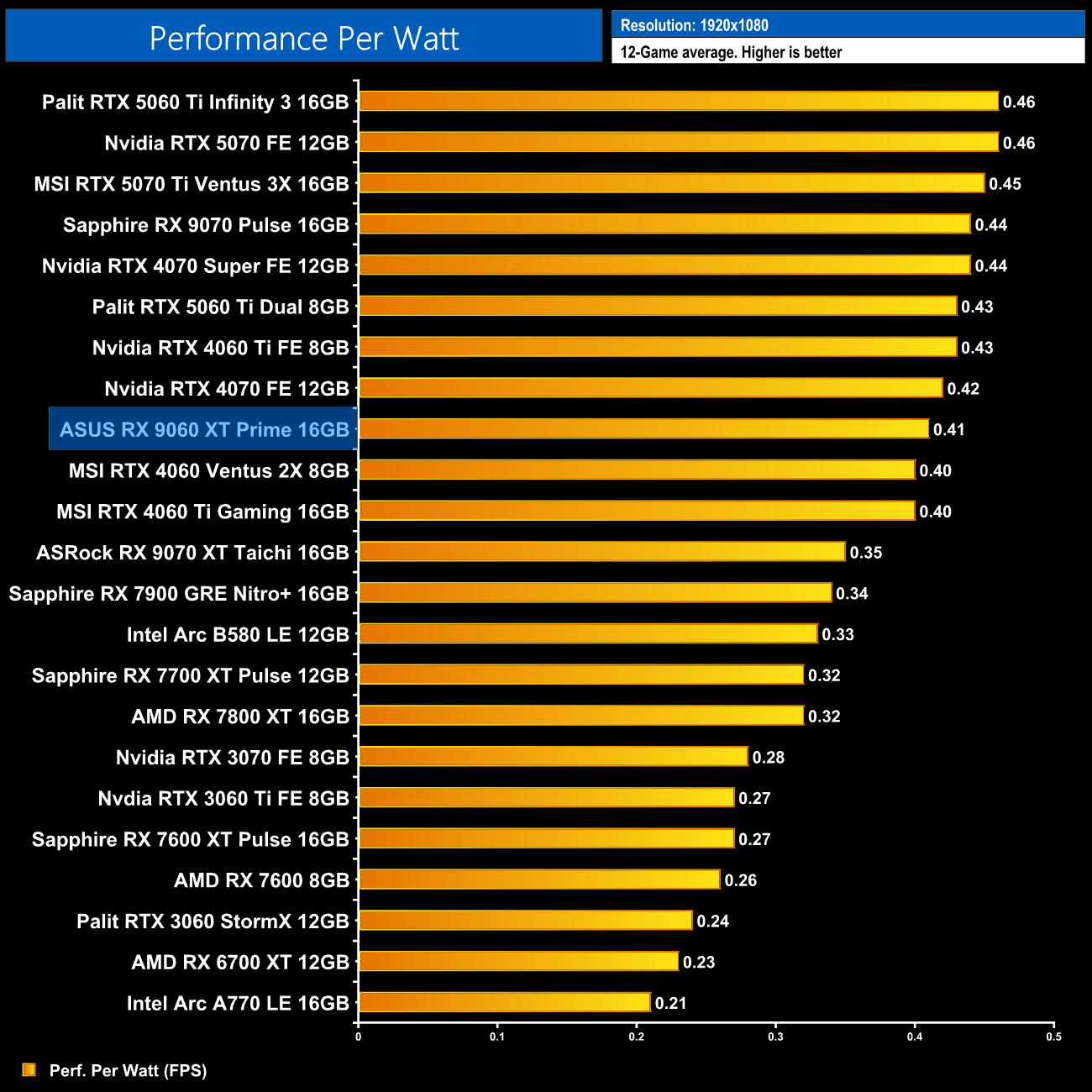
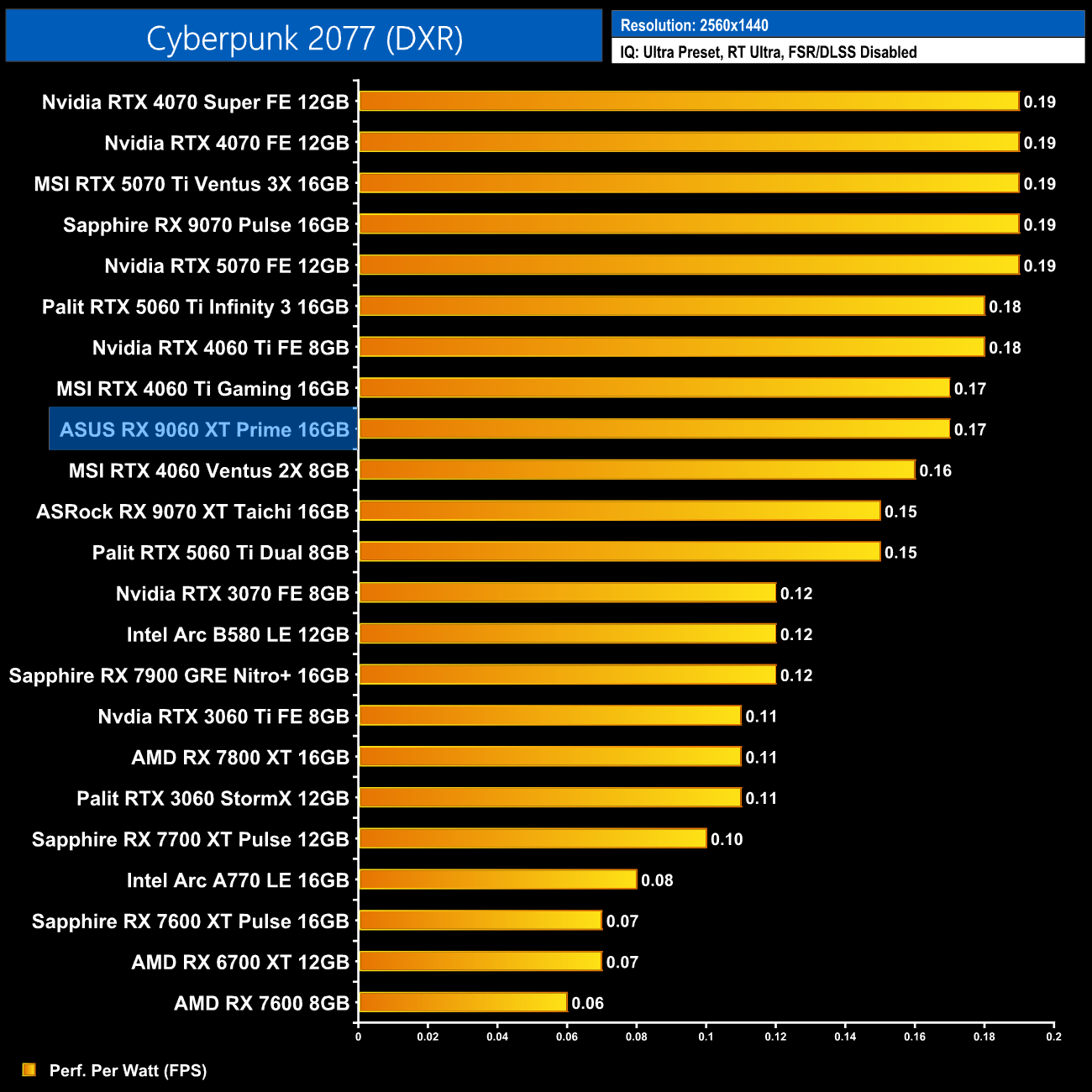
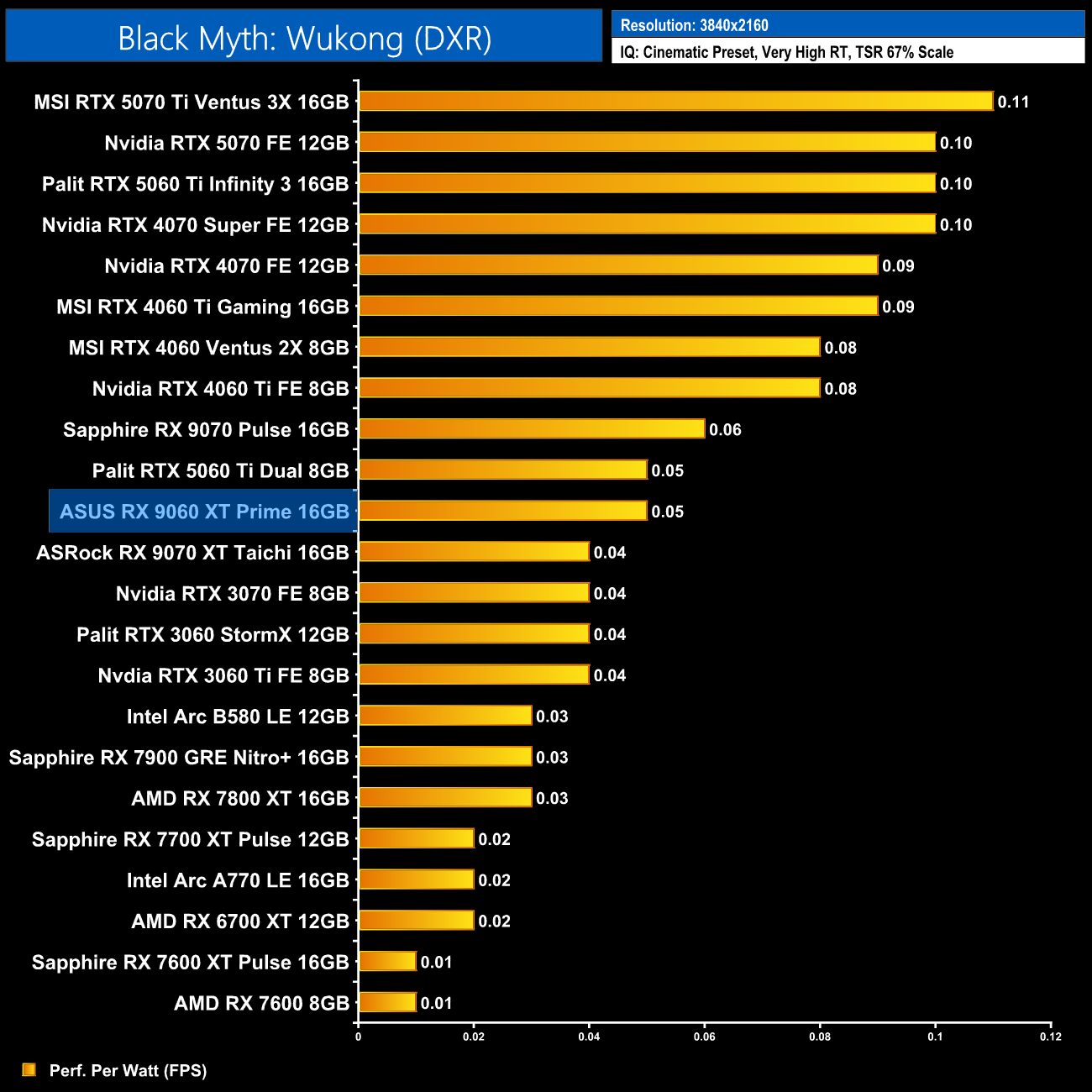
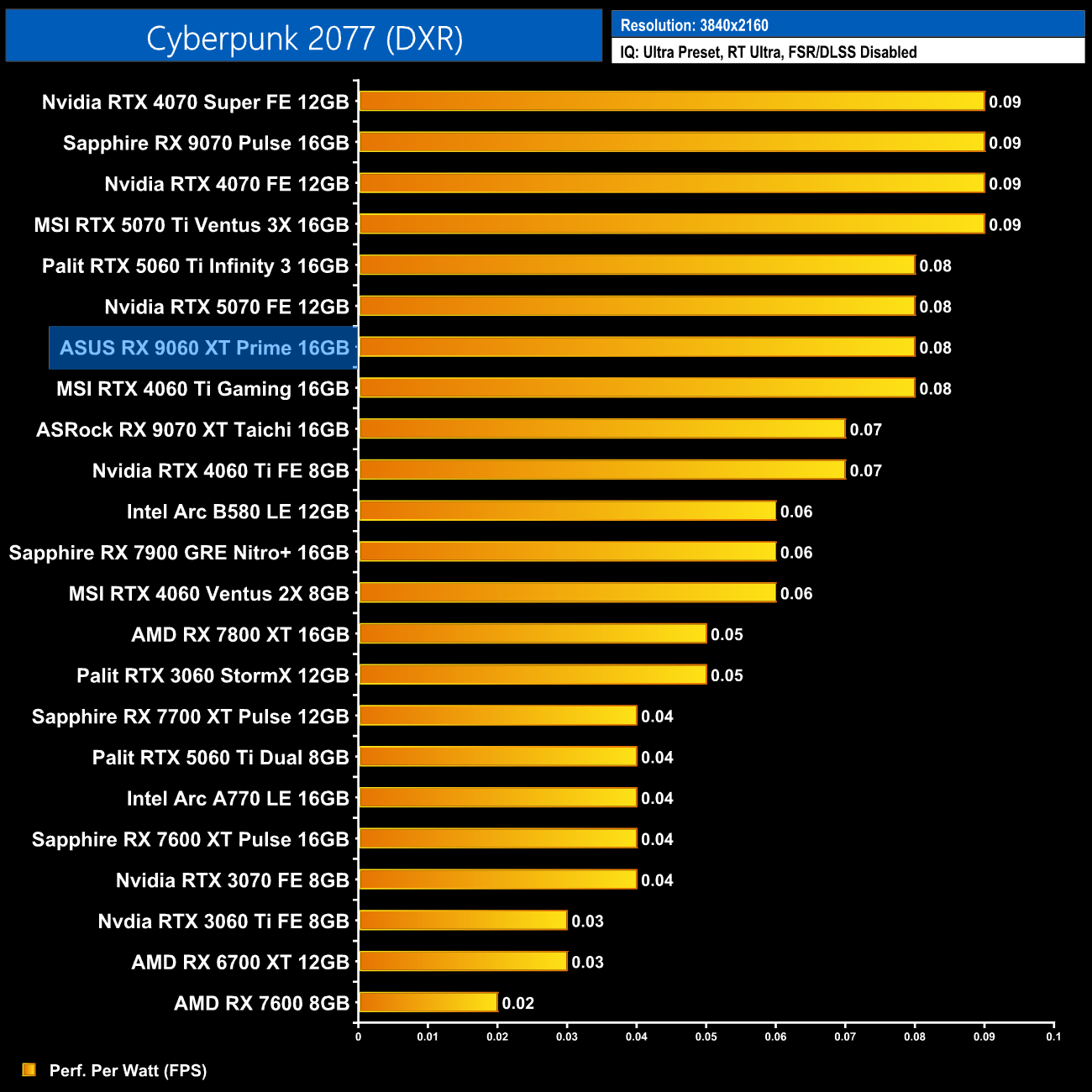
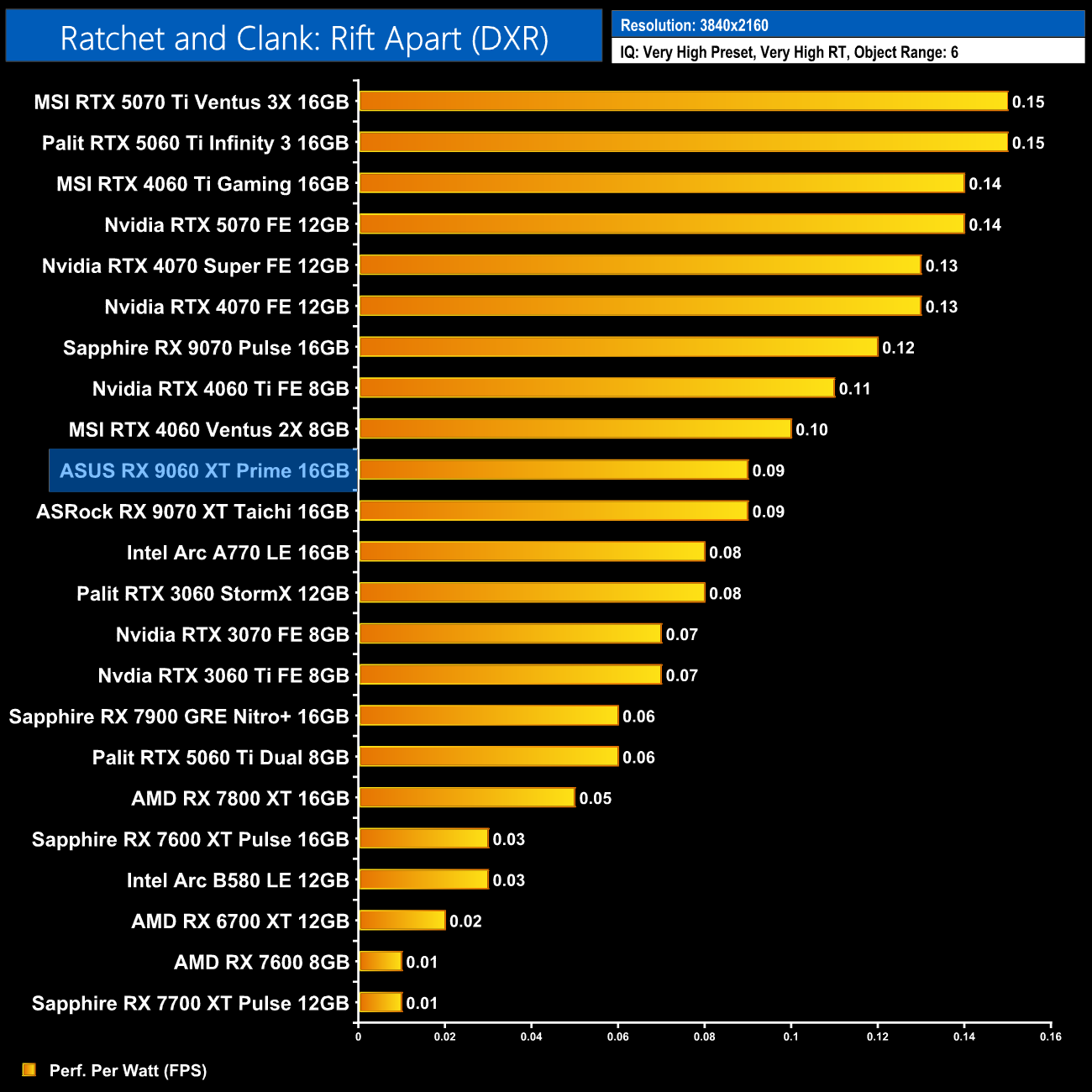
As for what the power testing and performance data means in terms of overall efficiency, it's not bad at all, but it's not chart topping either. Efficiency is very similar to the RTX 40-series GPUs, and even then, the 9060 XT 16GB is only 11% less performant per Watt than the 5060 Ti 16GB is, so we're talking relatively small margins.
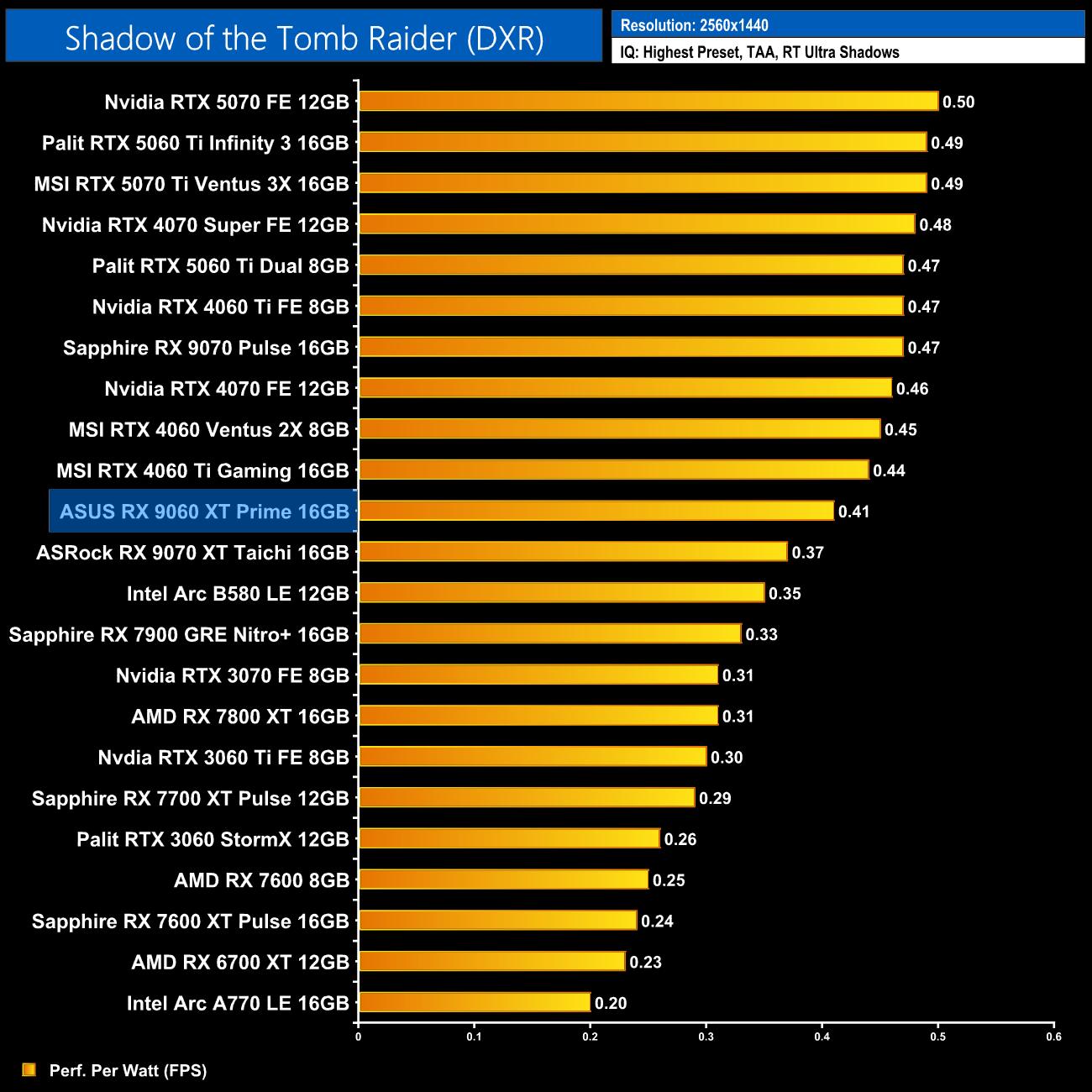
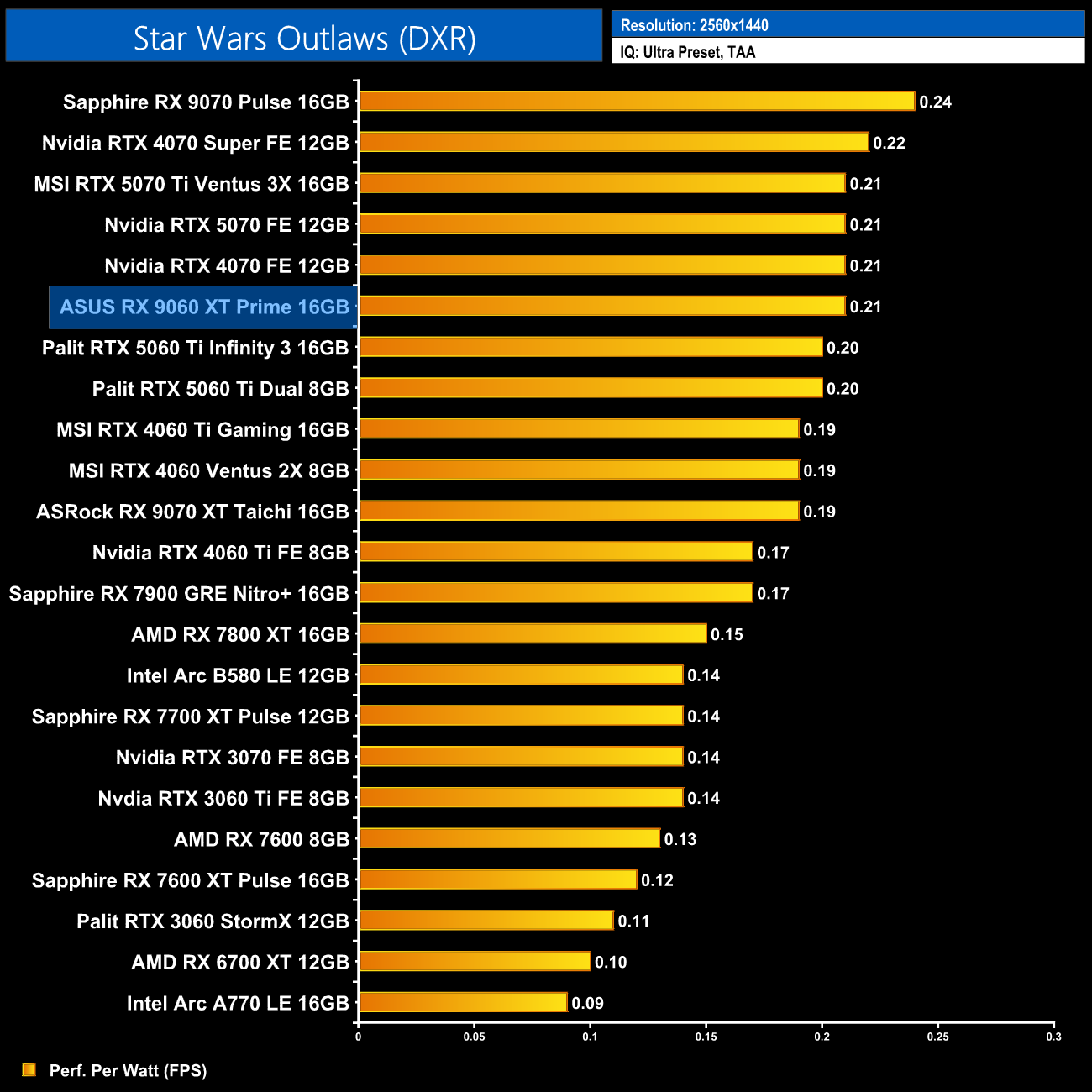
Ray tracing results
As a bonus, we now include the efficiency figures for all eight games we test with ray tracing enabled.
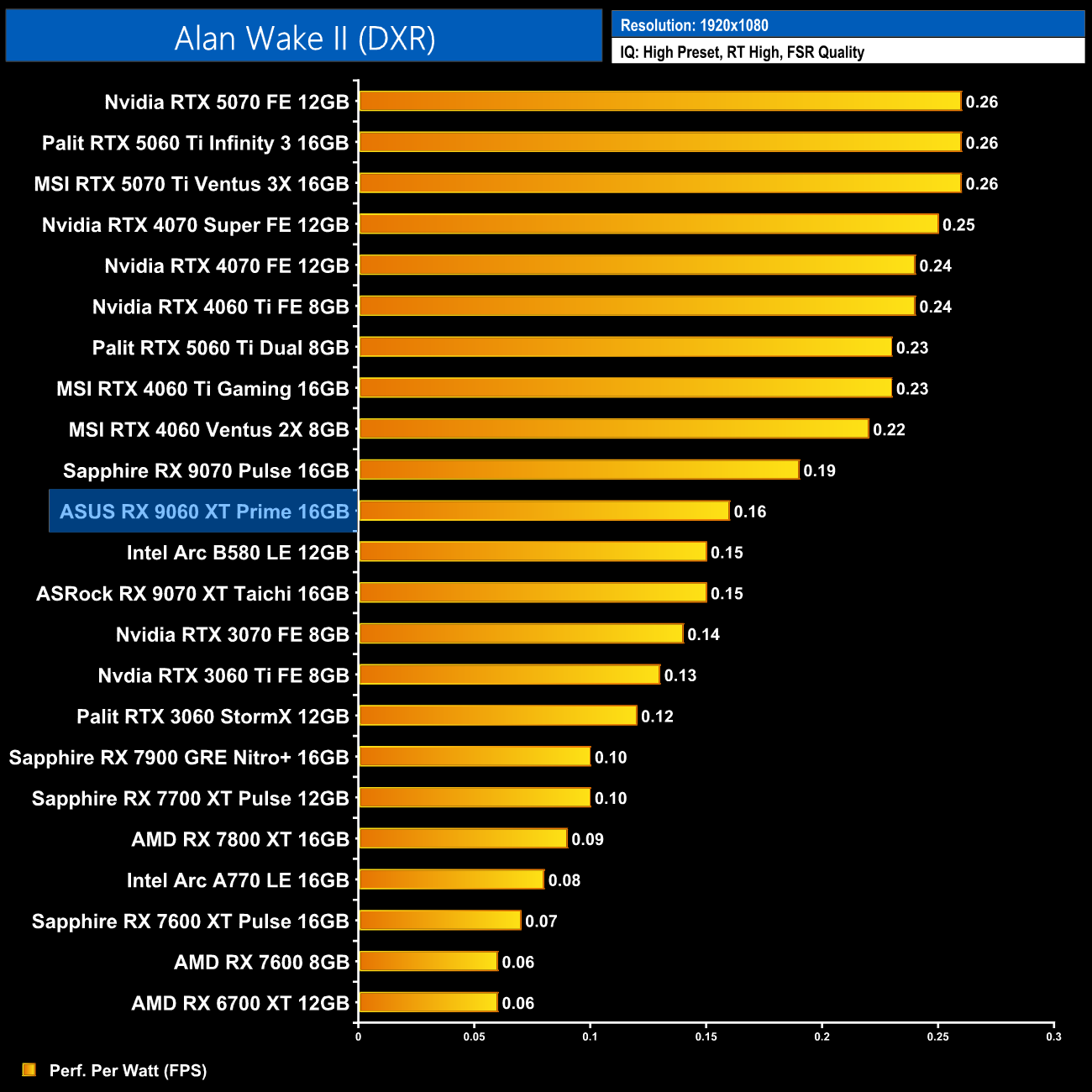
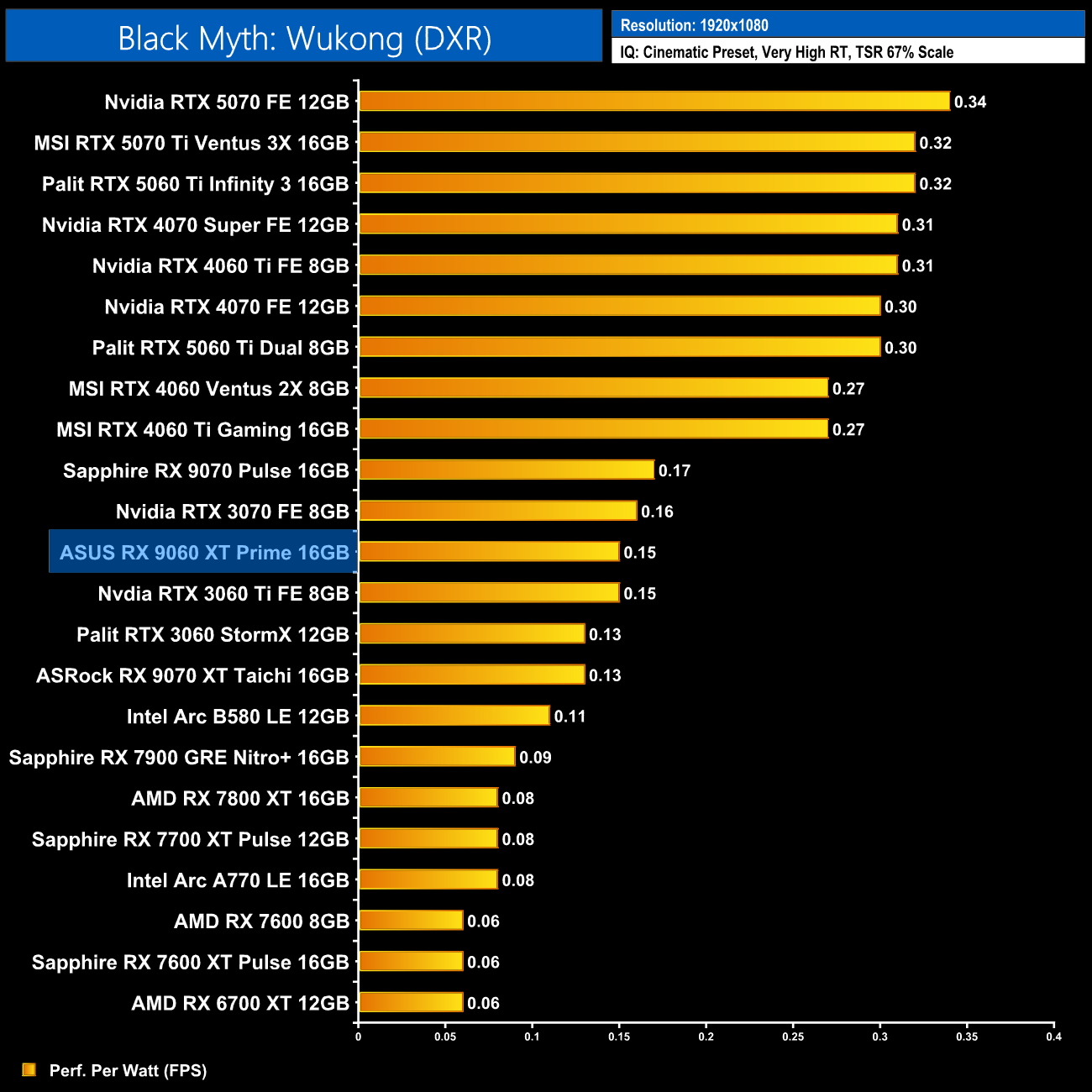
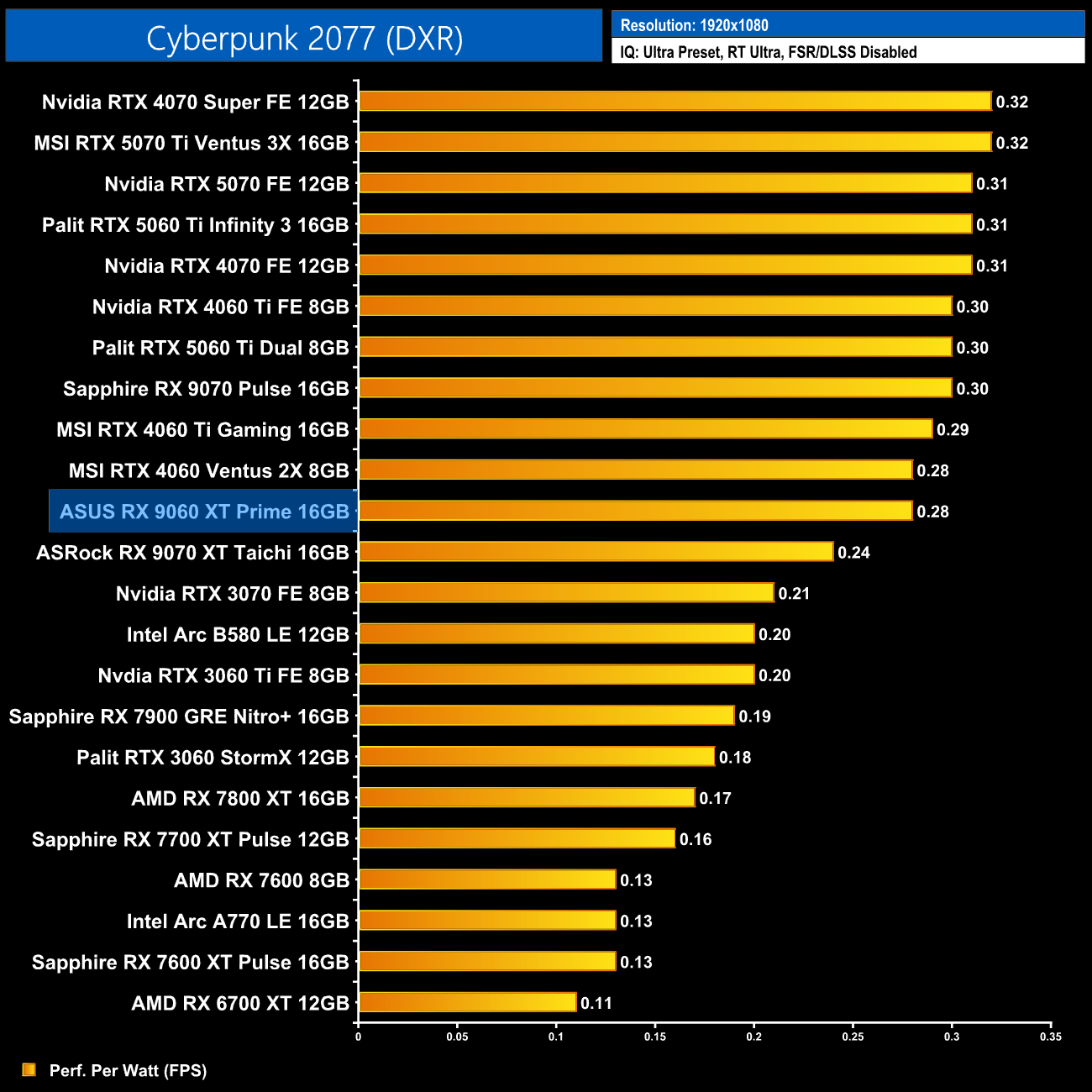

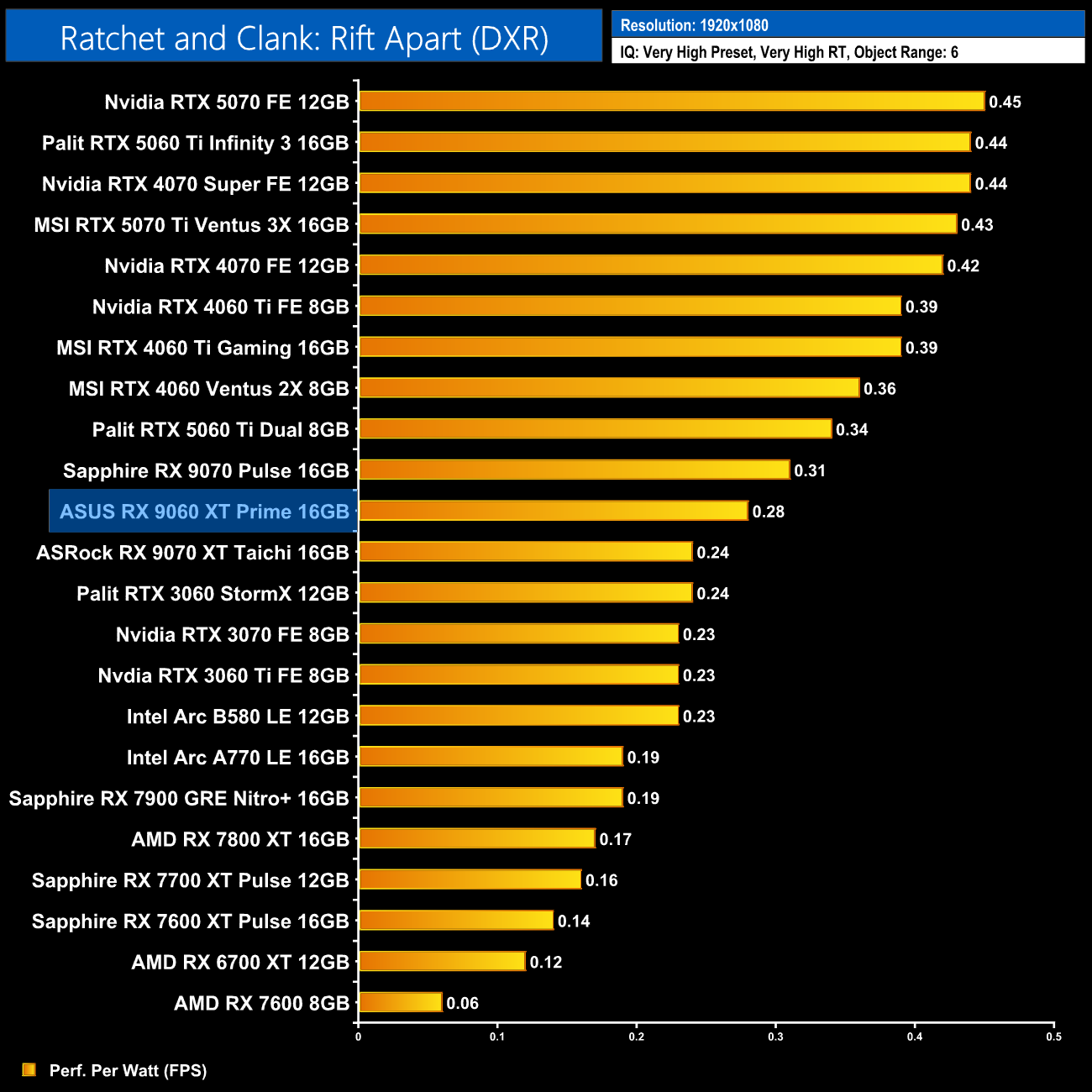
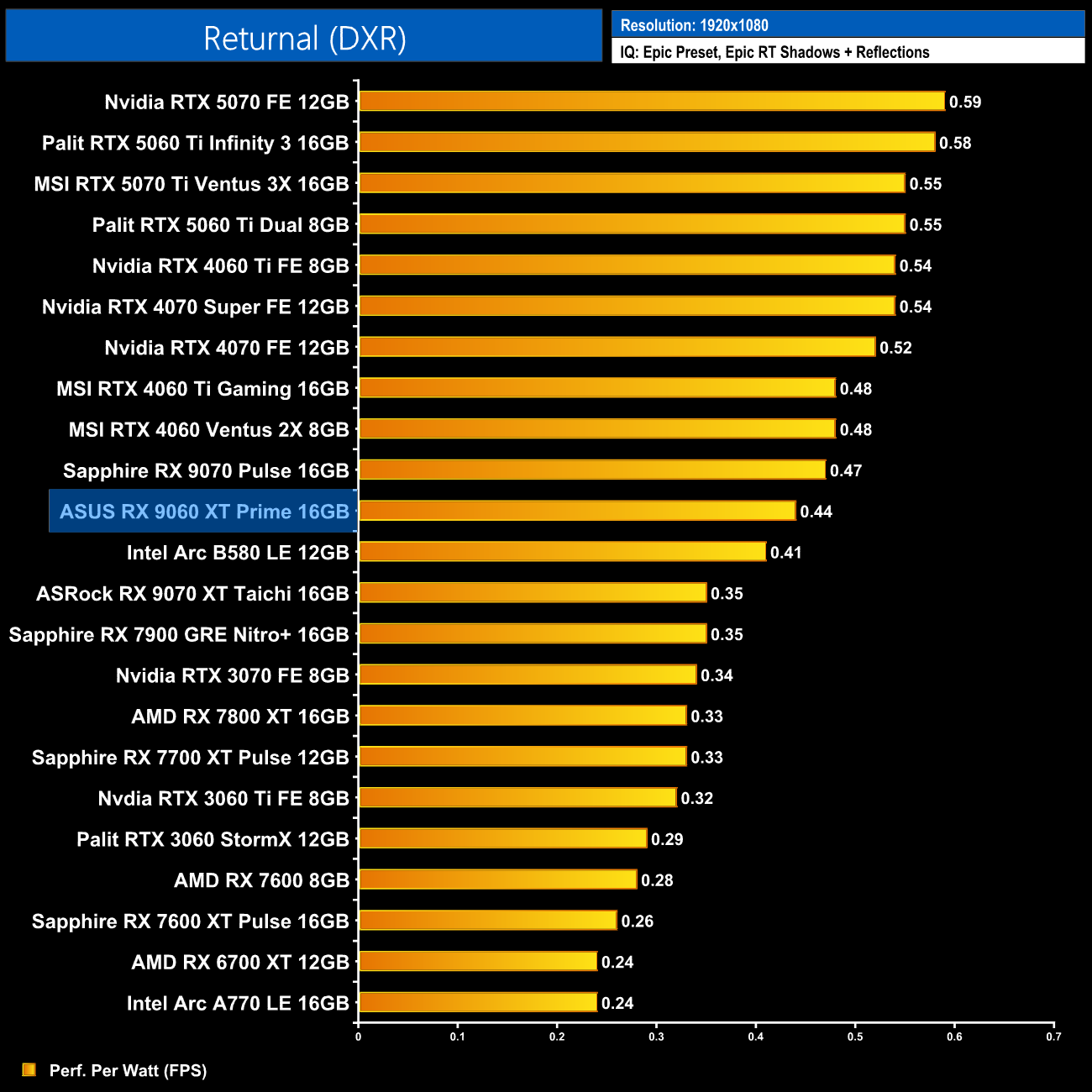
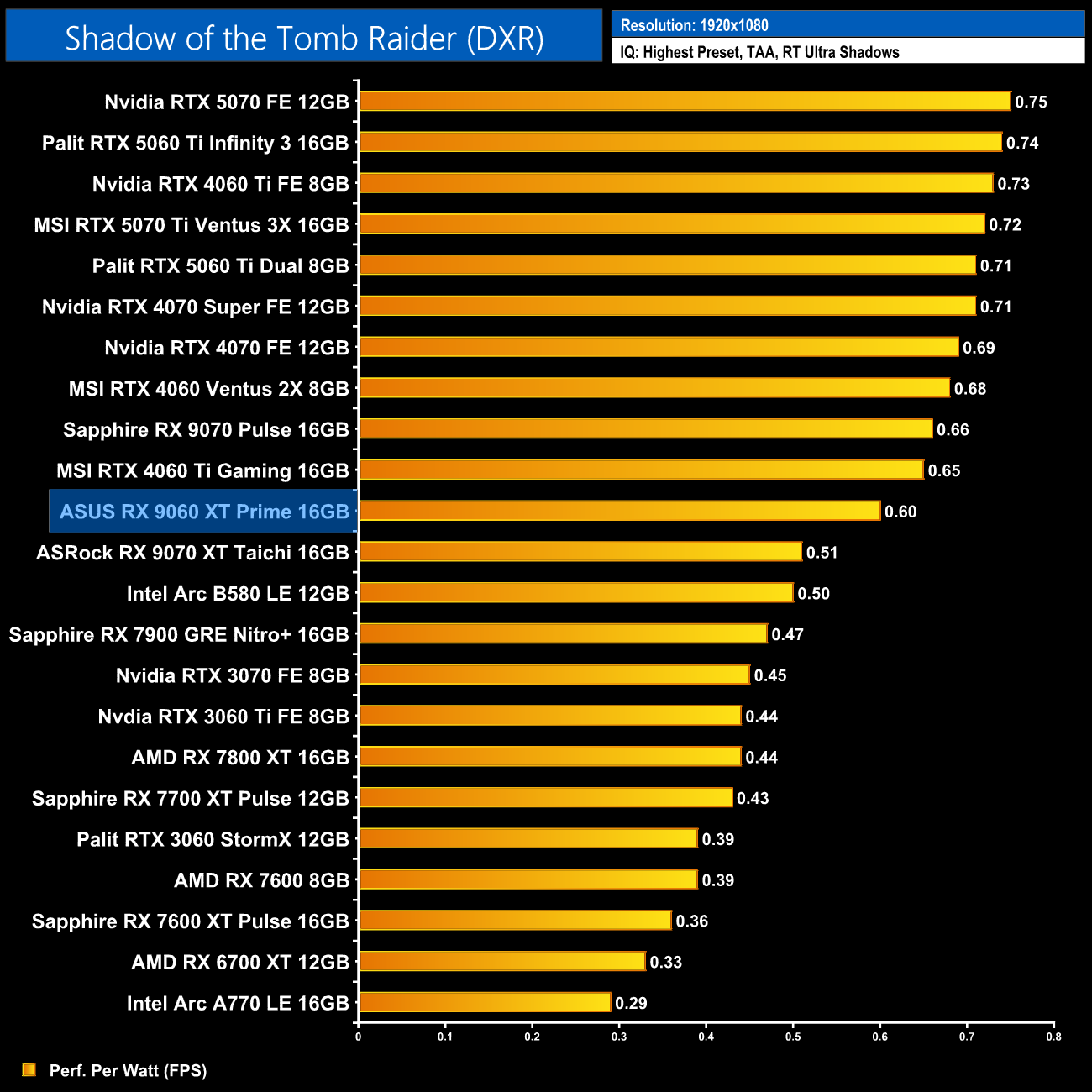
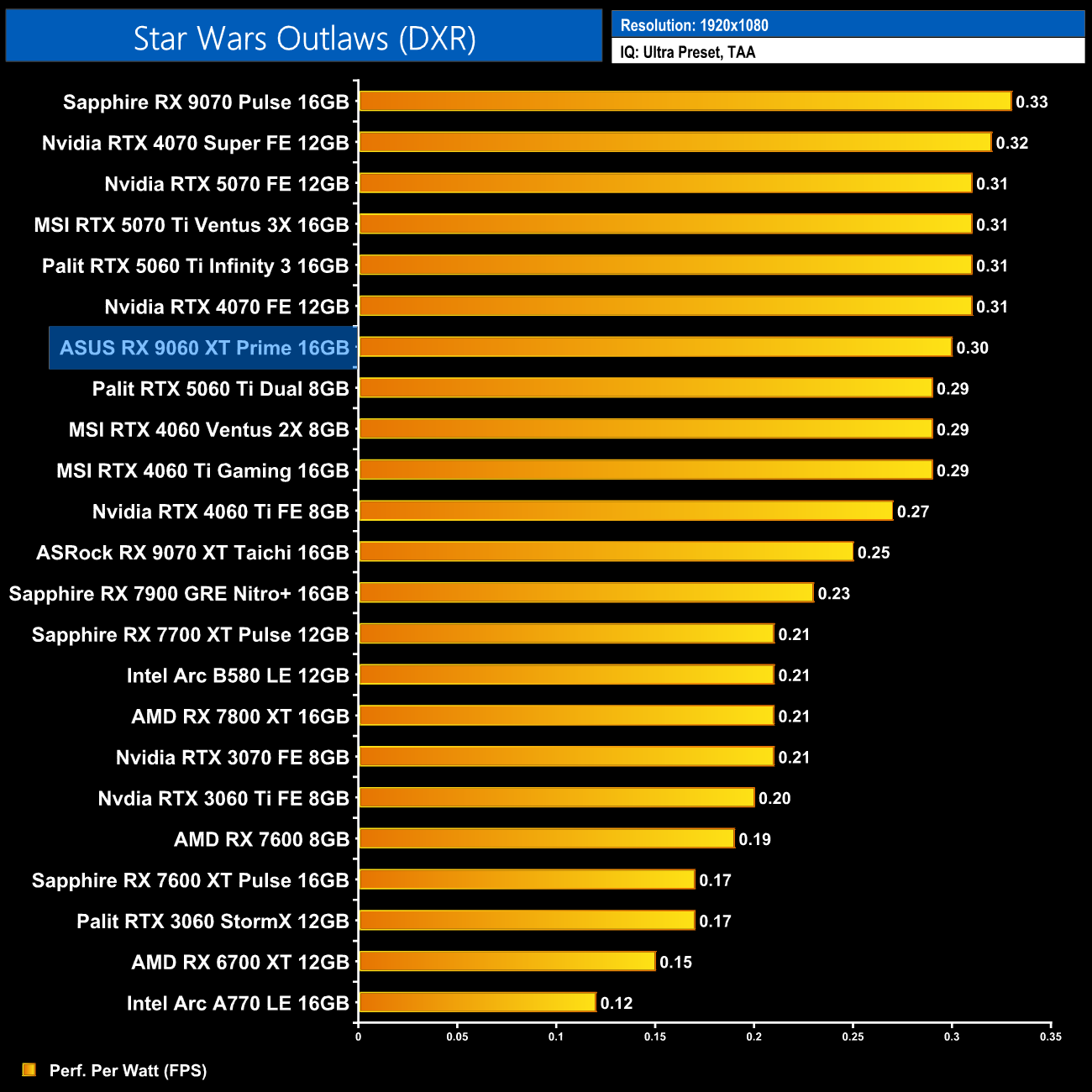
8-Game ray tracing average:
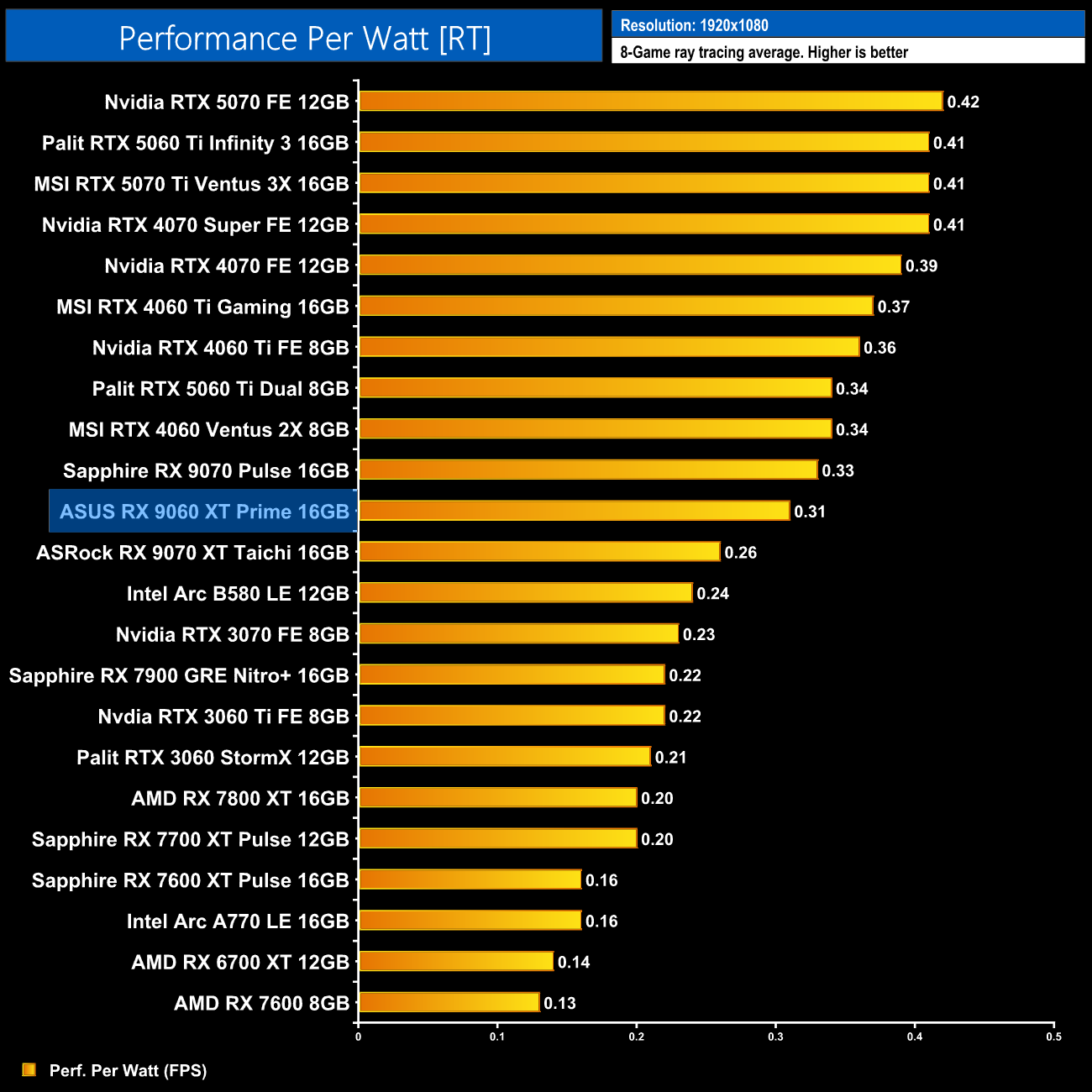
That margin does extend to 24 when ray tracing is enabled.
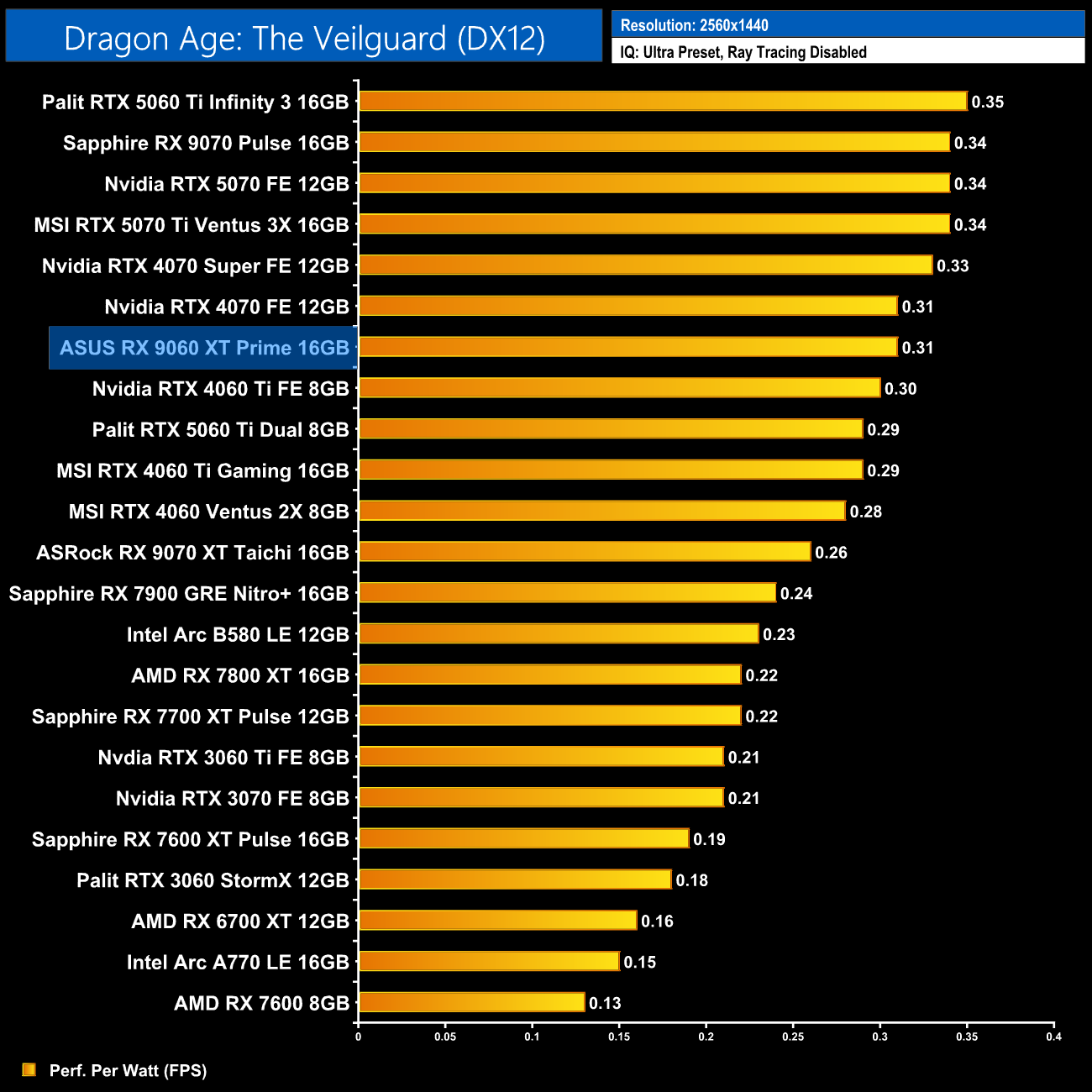
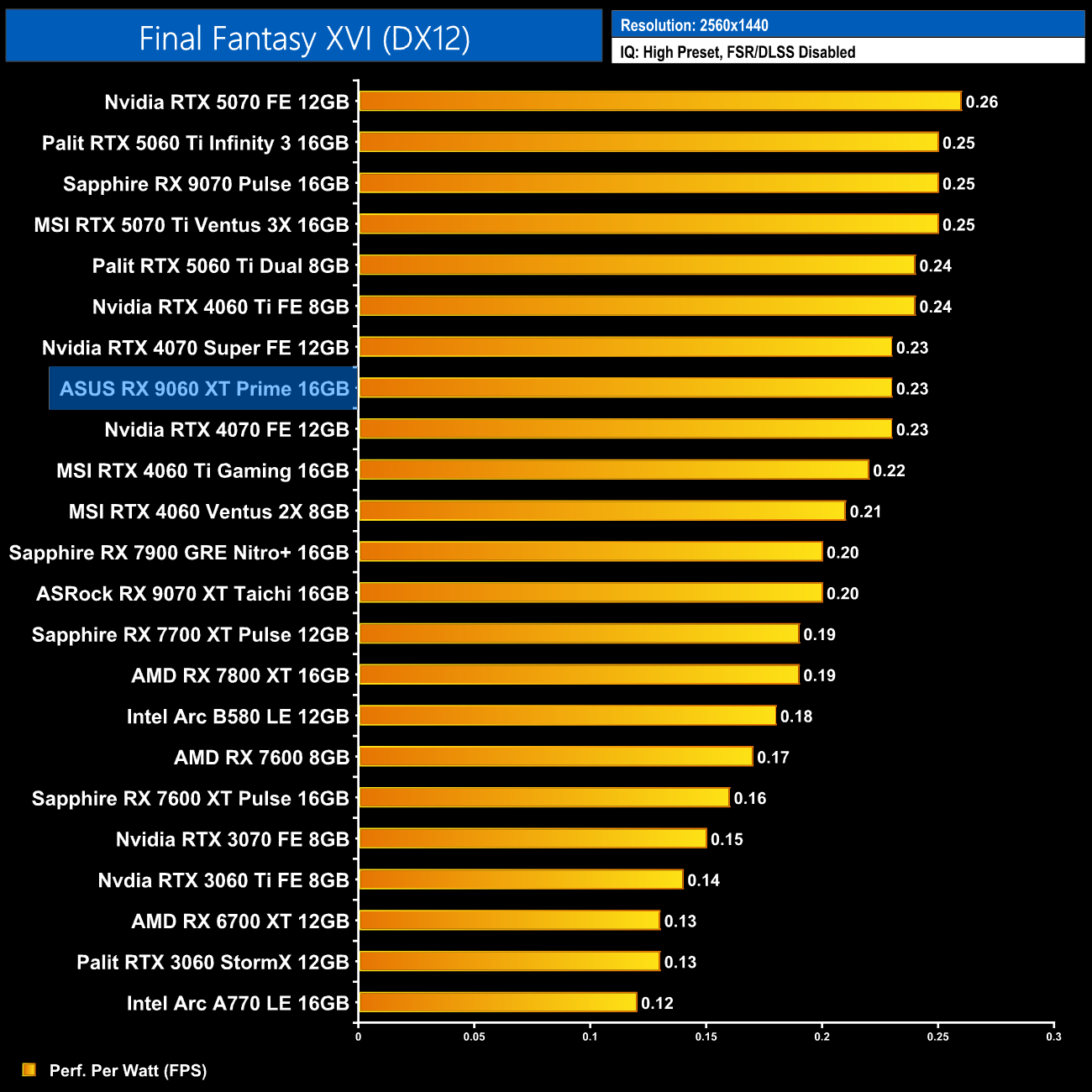
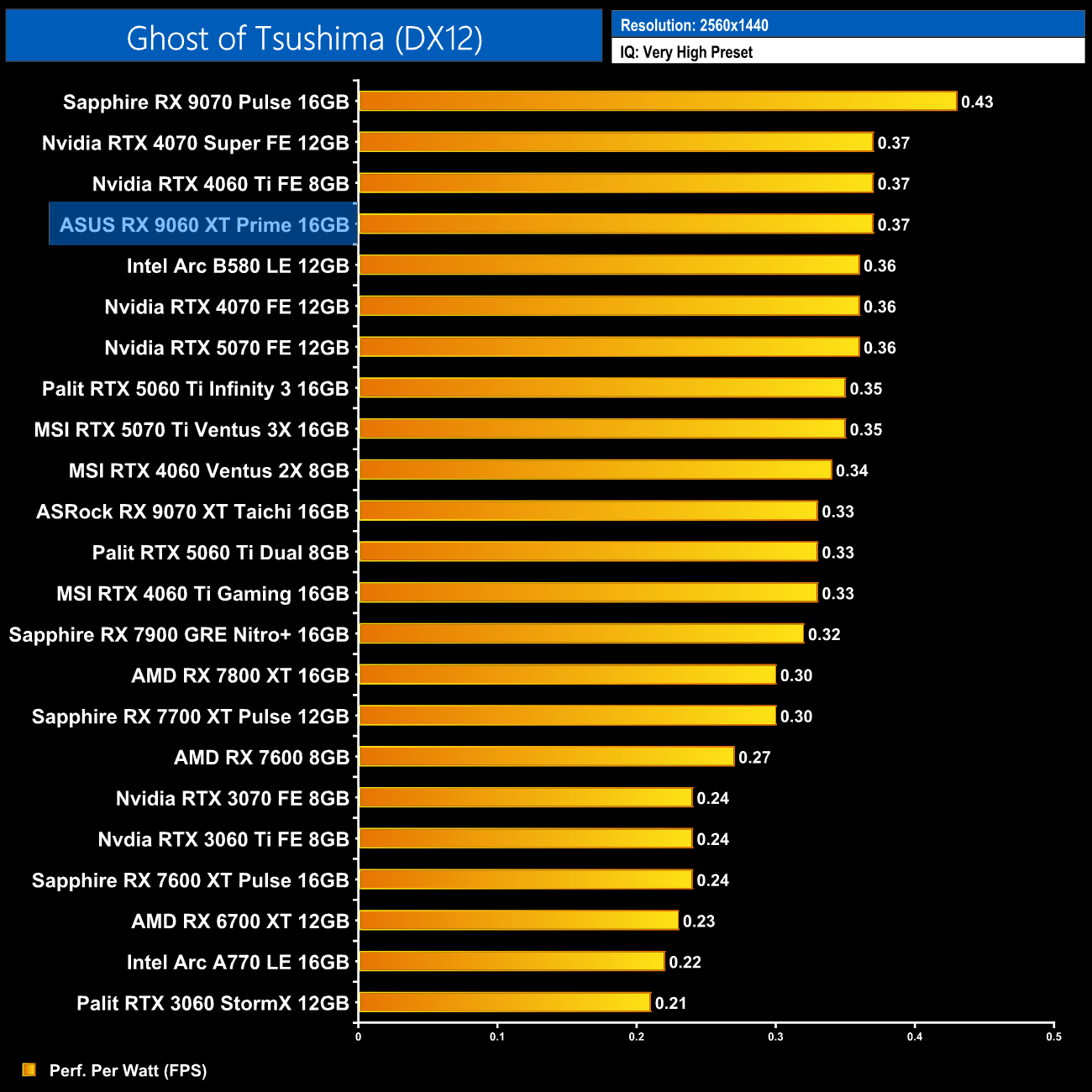
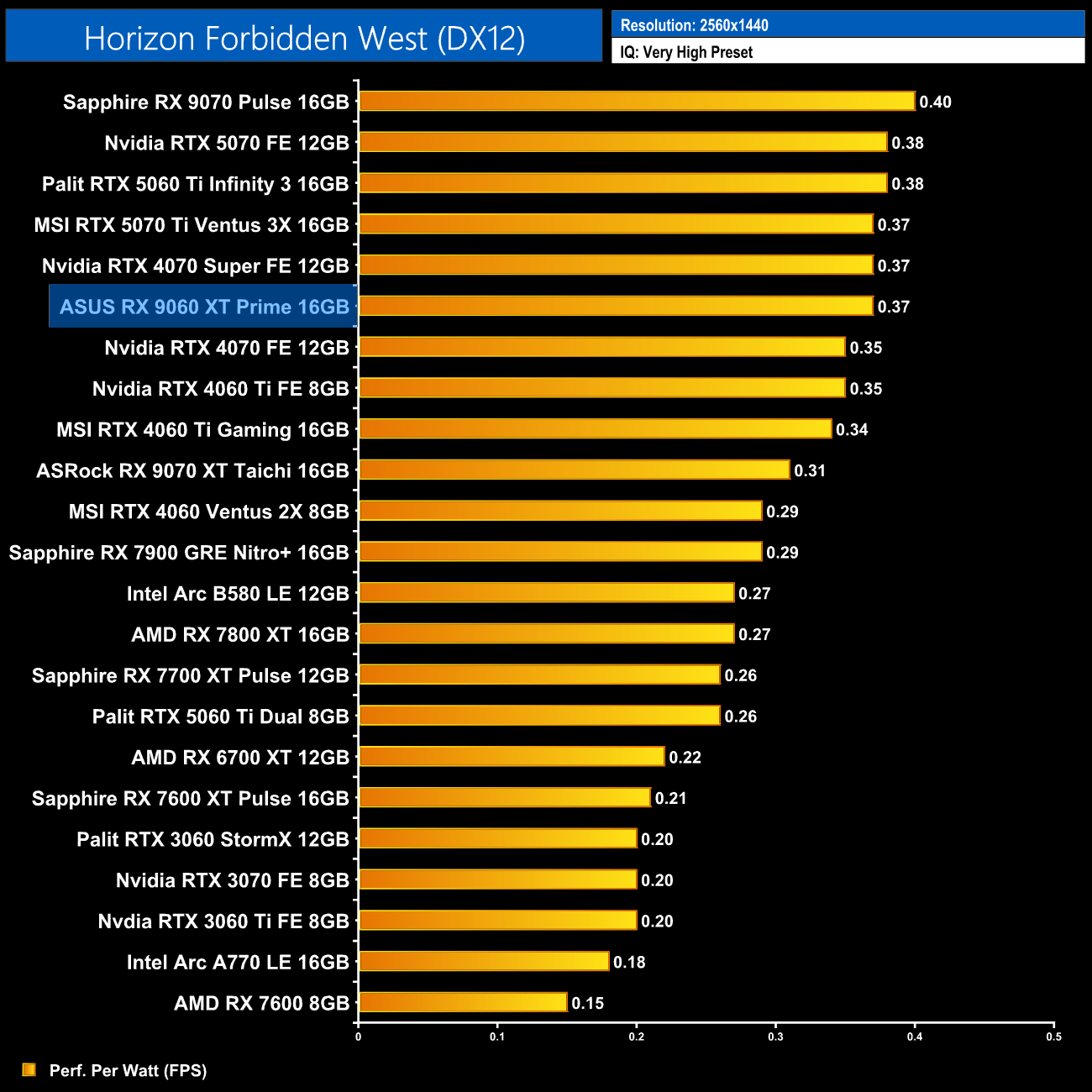
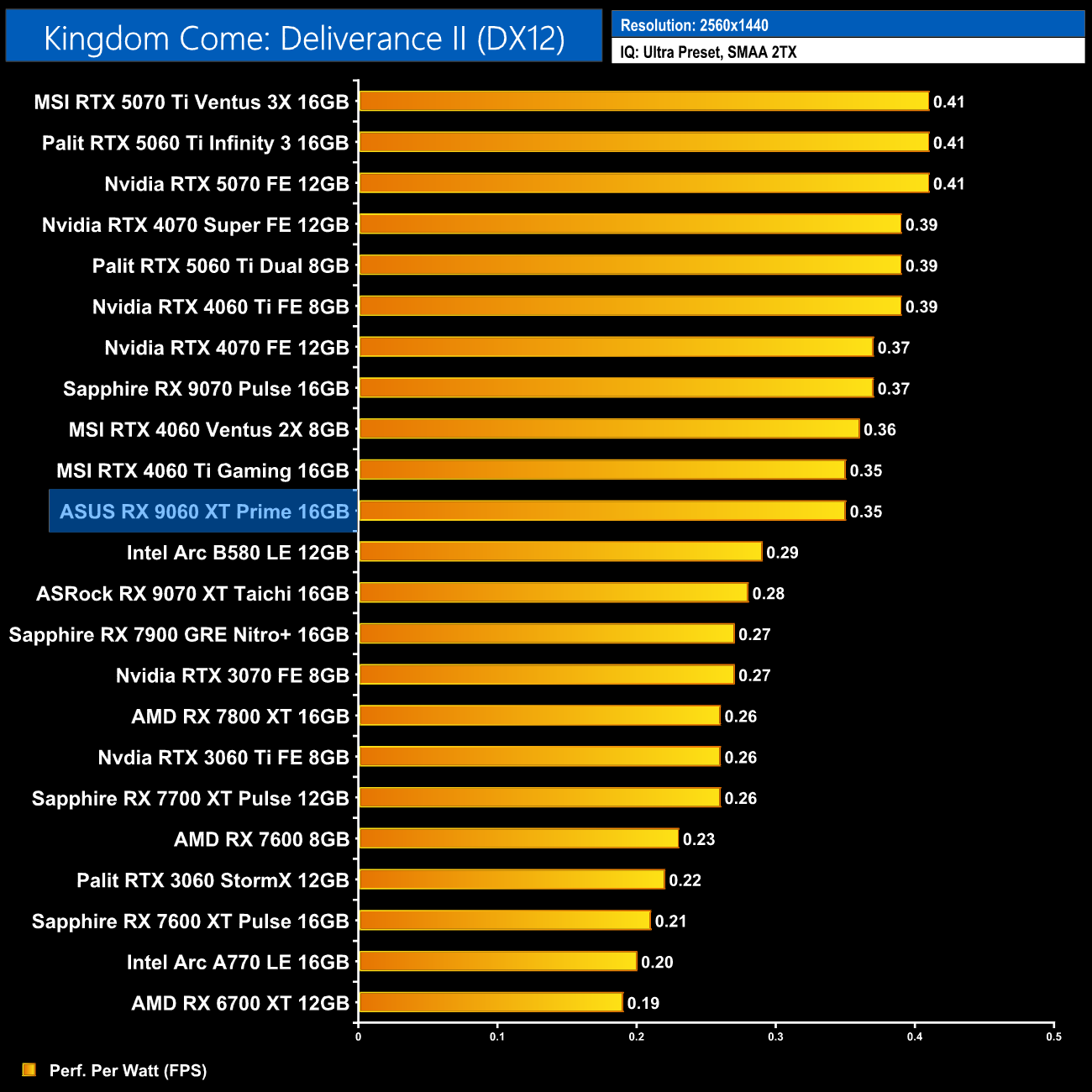
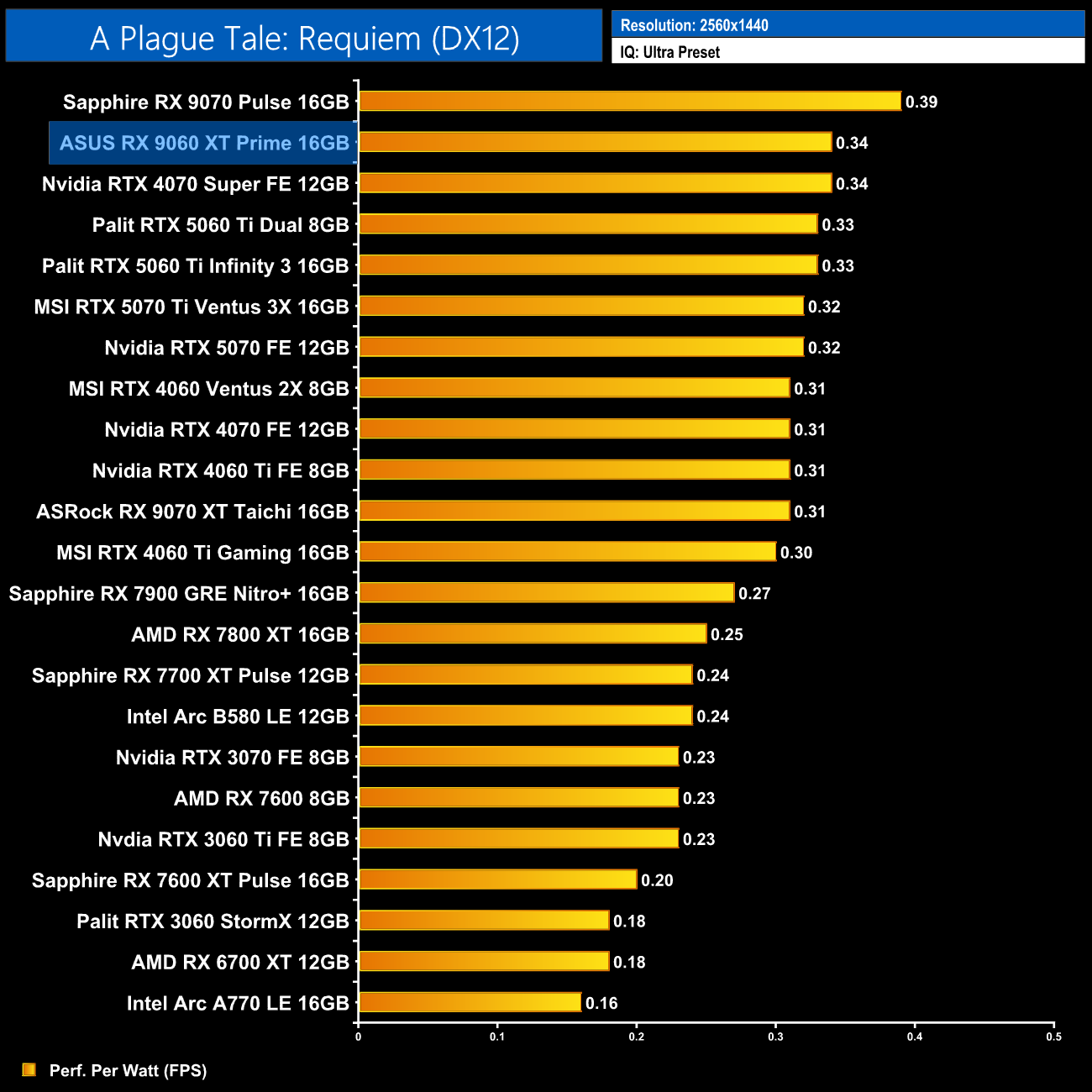
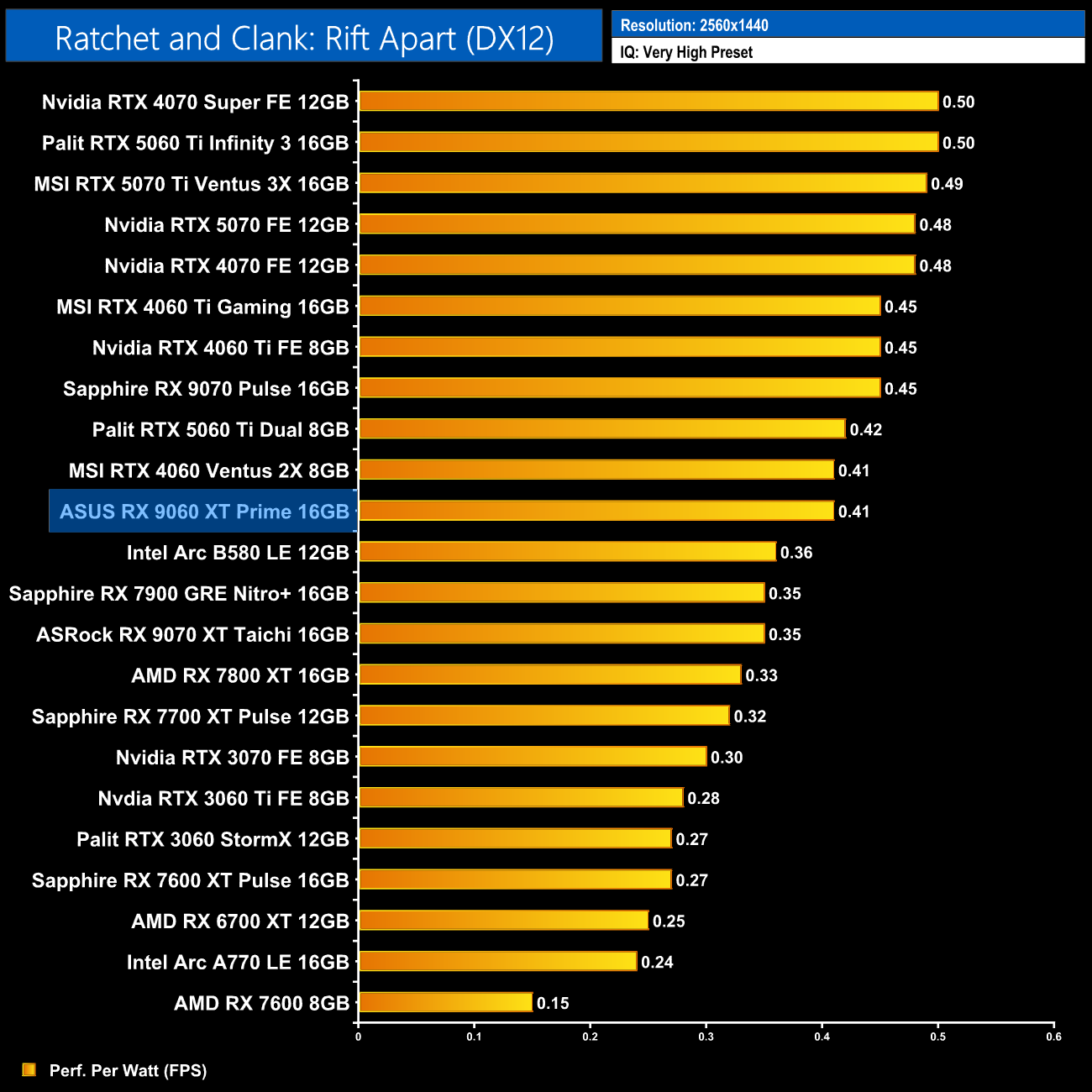
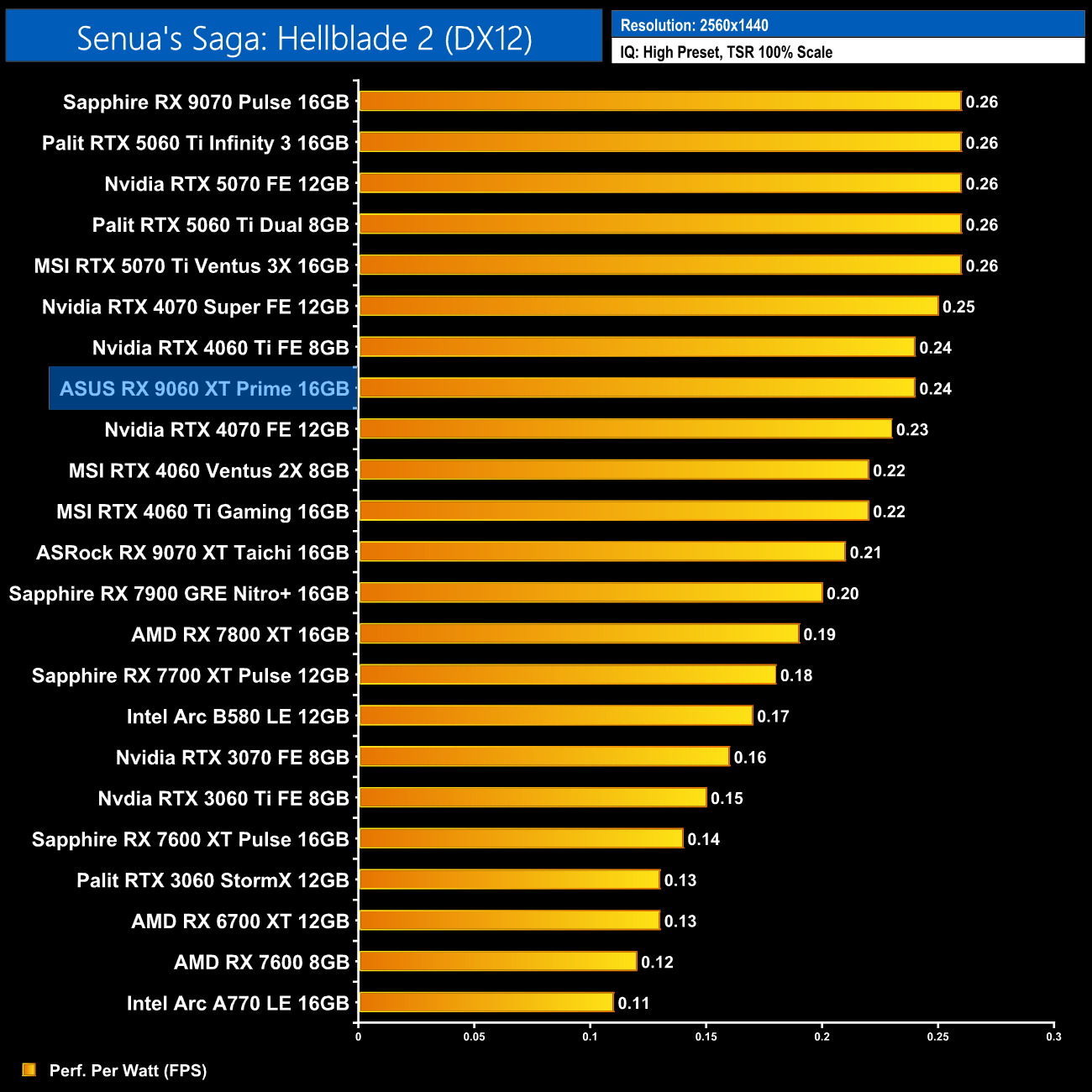
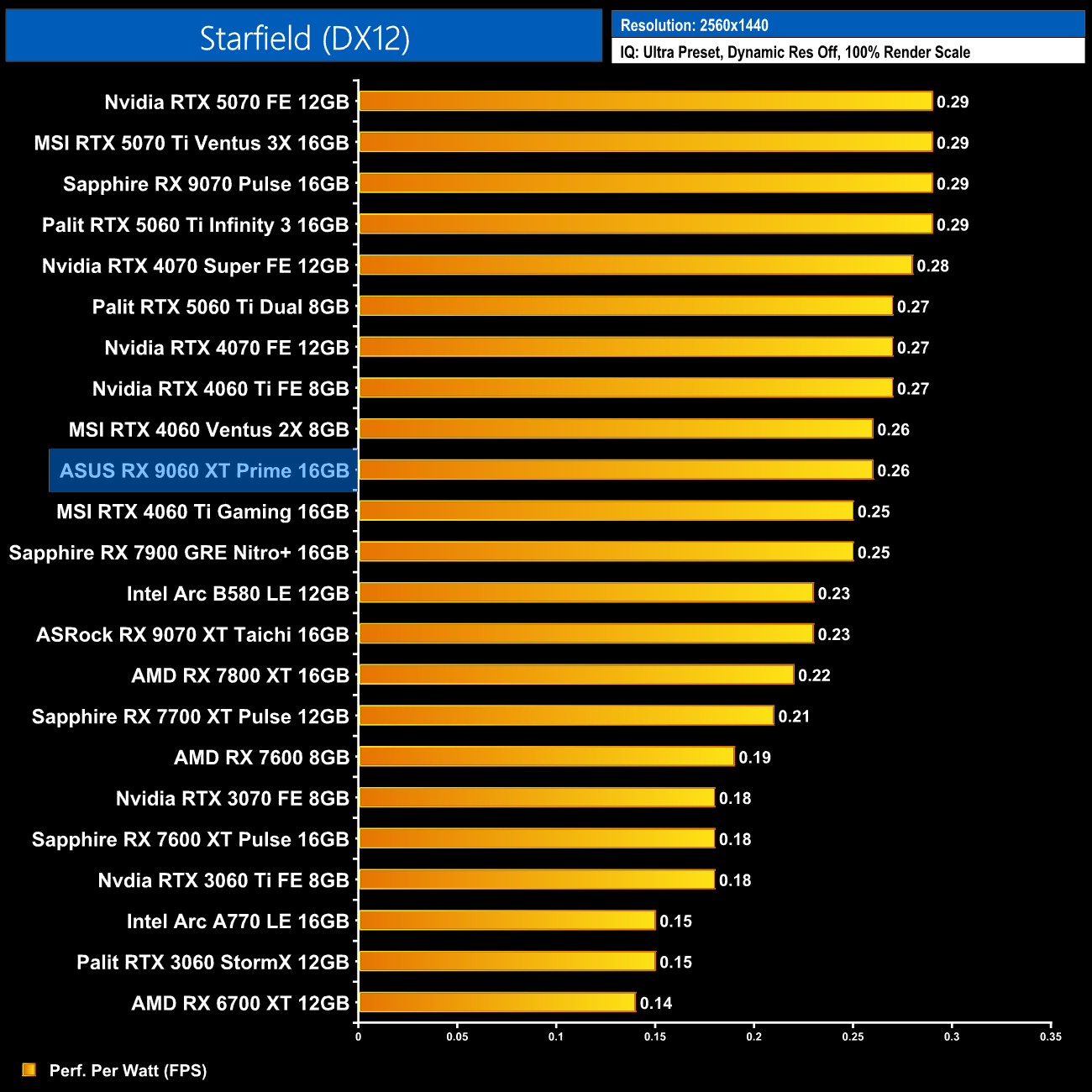
Using the graphics card-only power draw figures presented earlier in the review, here we present performance per Watt on a per-game basis for all twelve games we tested at 1440p.
Per-Game Results at 1440p:
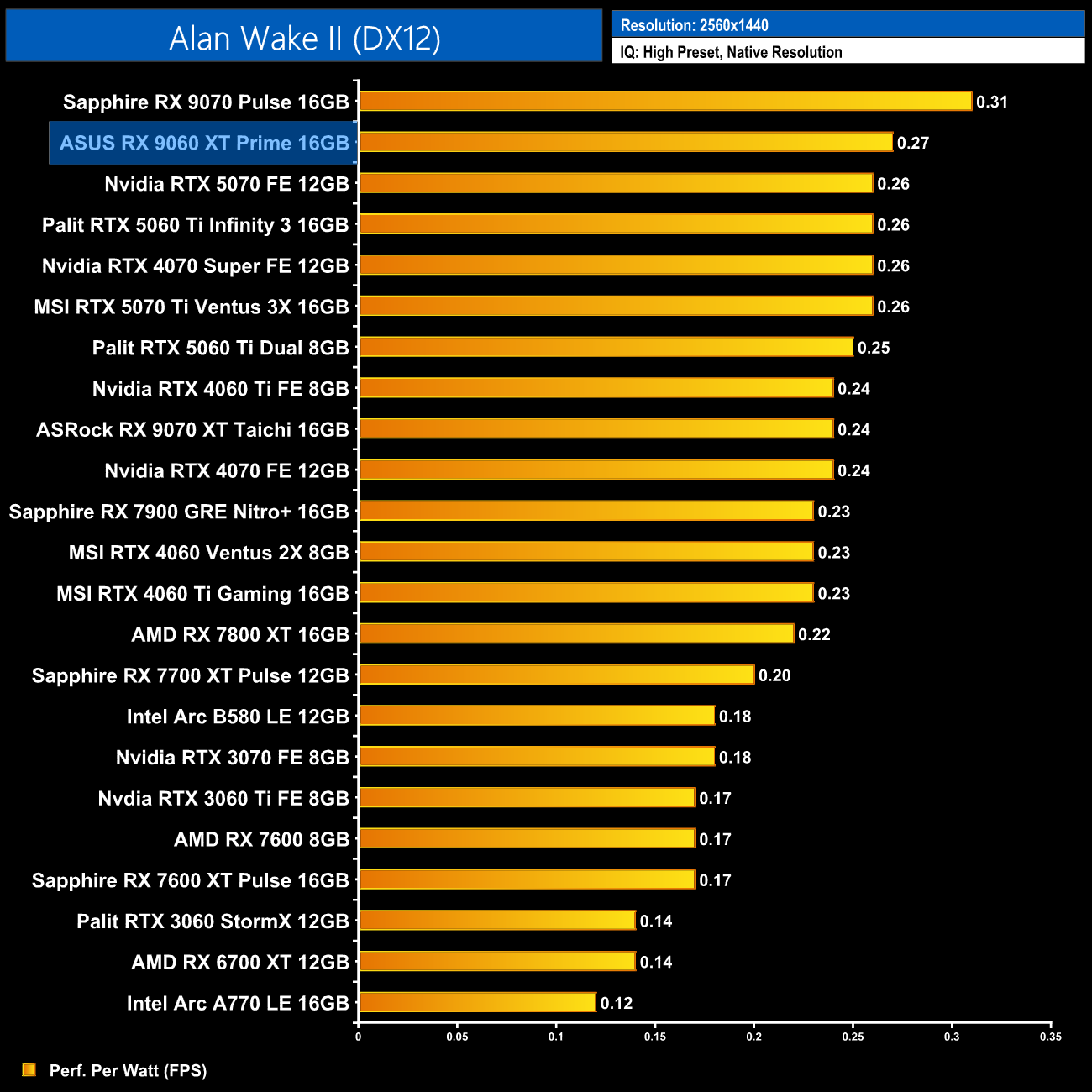
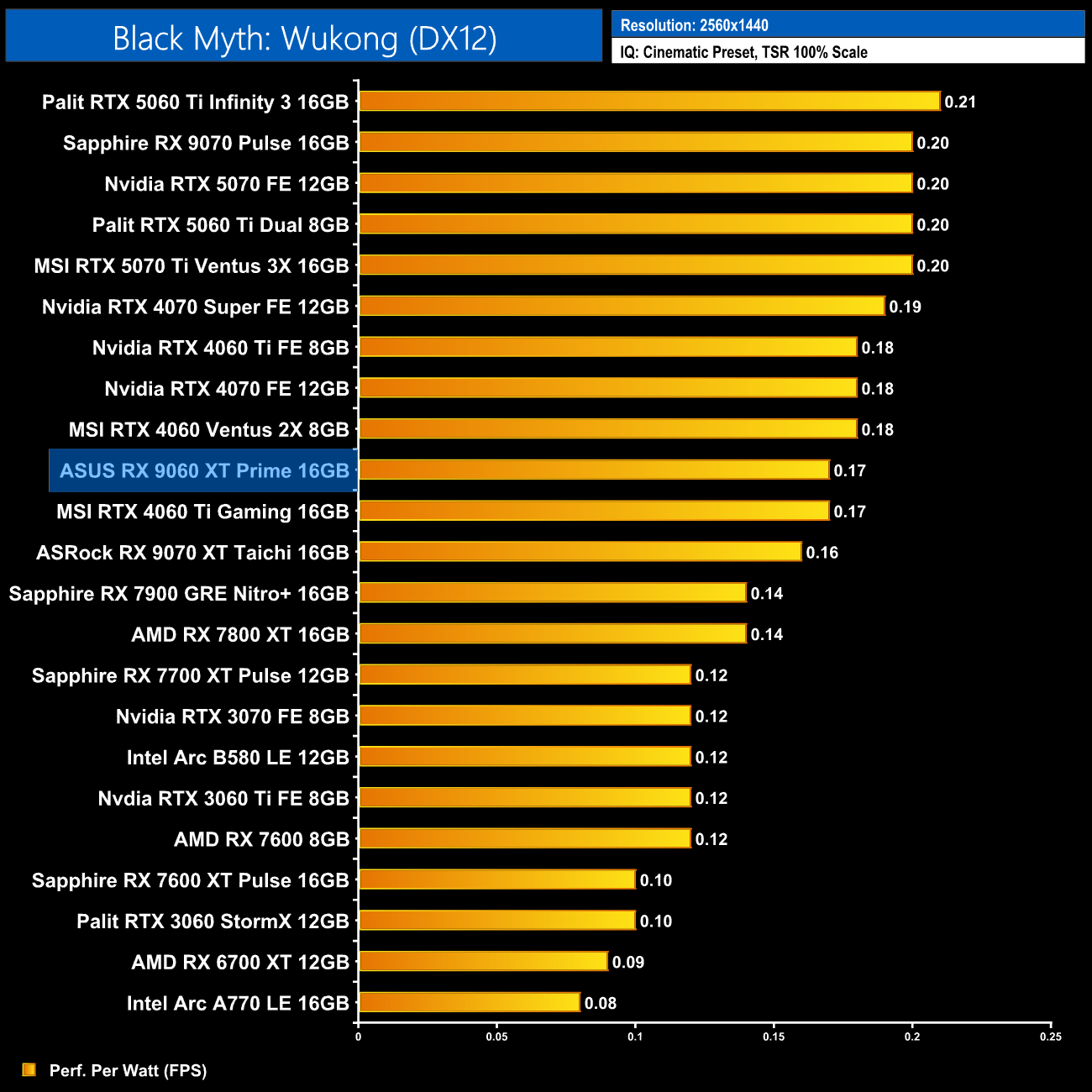

Click to enlarge.
12-Game Average at 1440p:
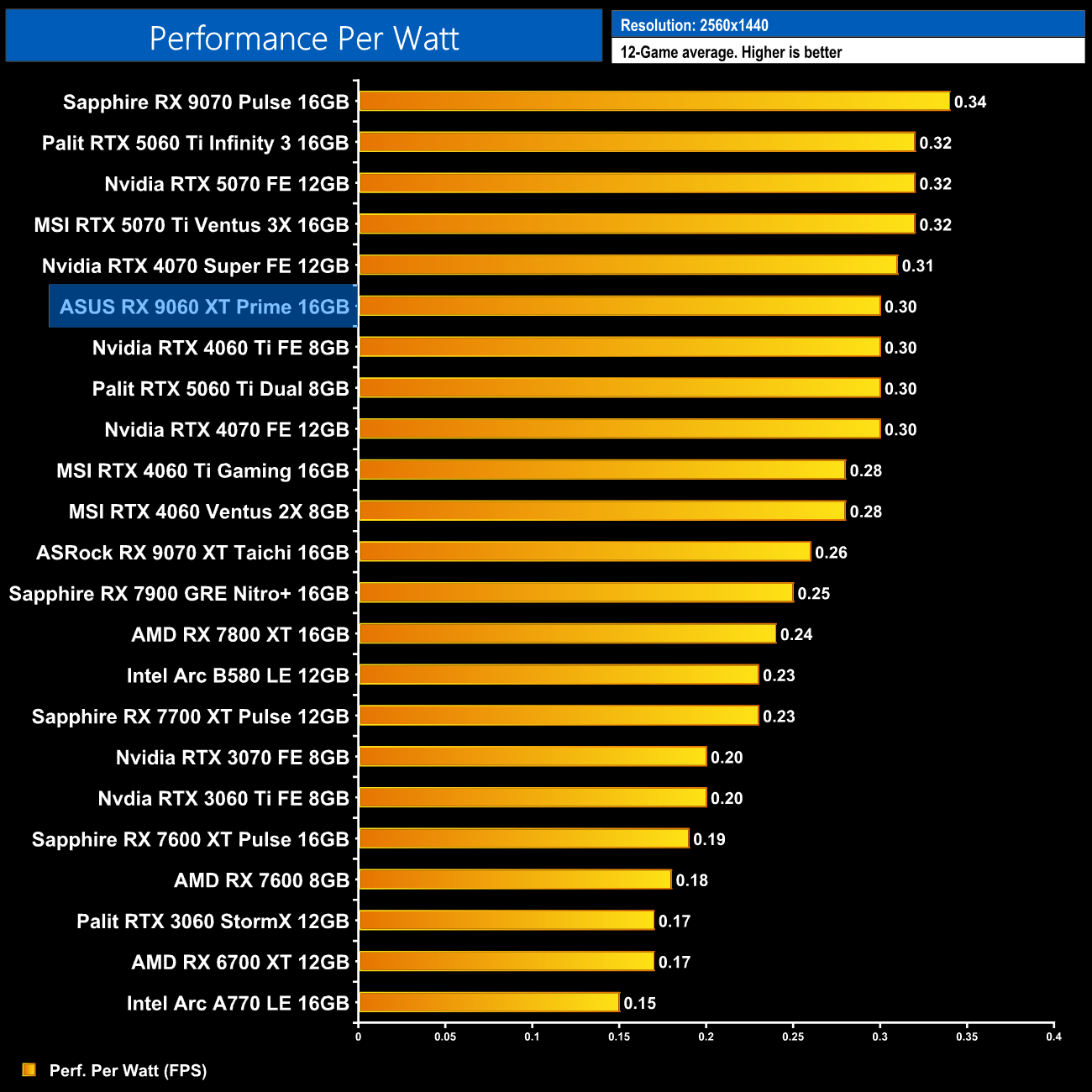
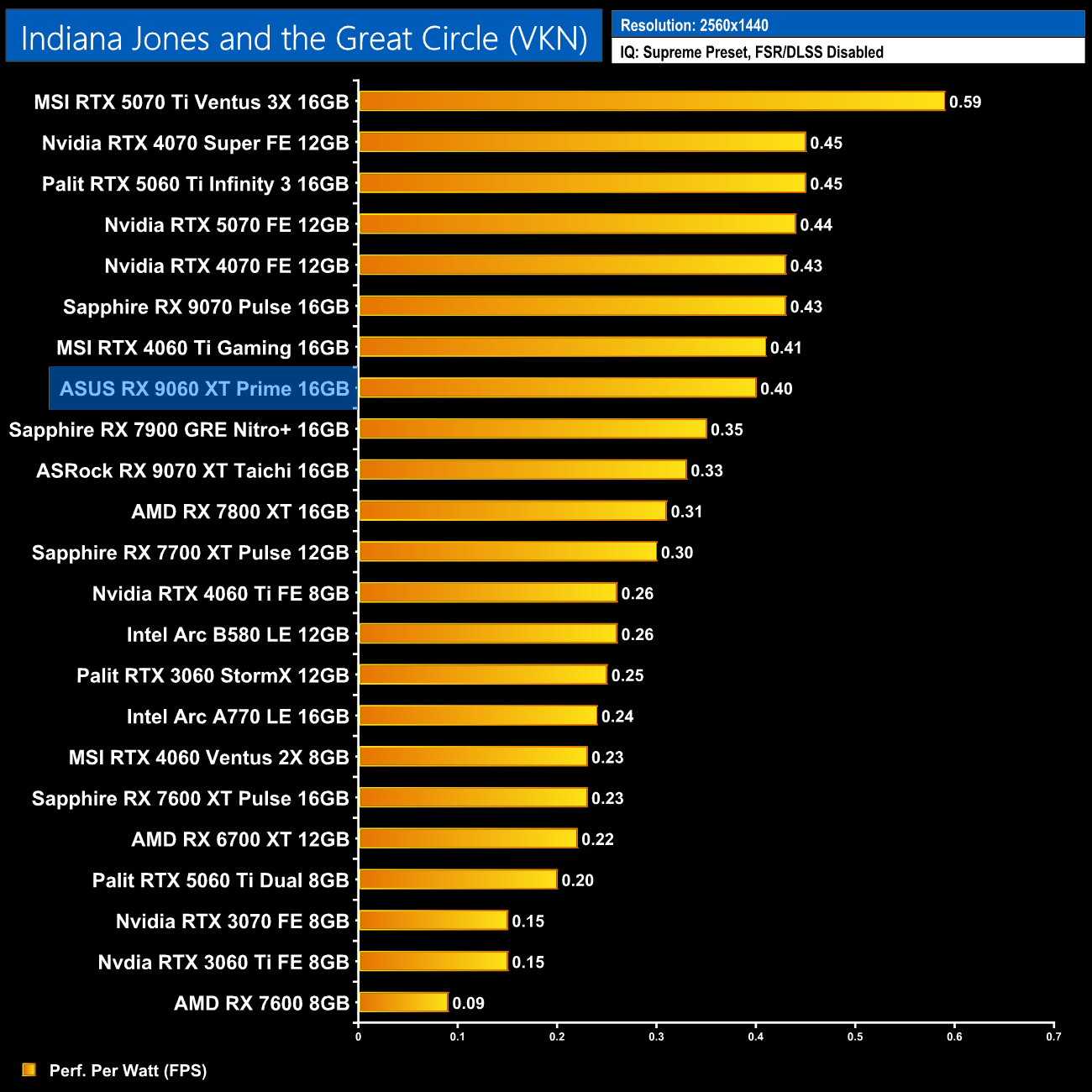
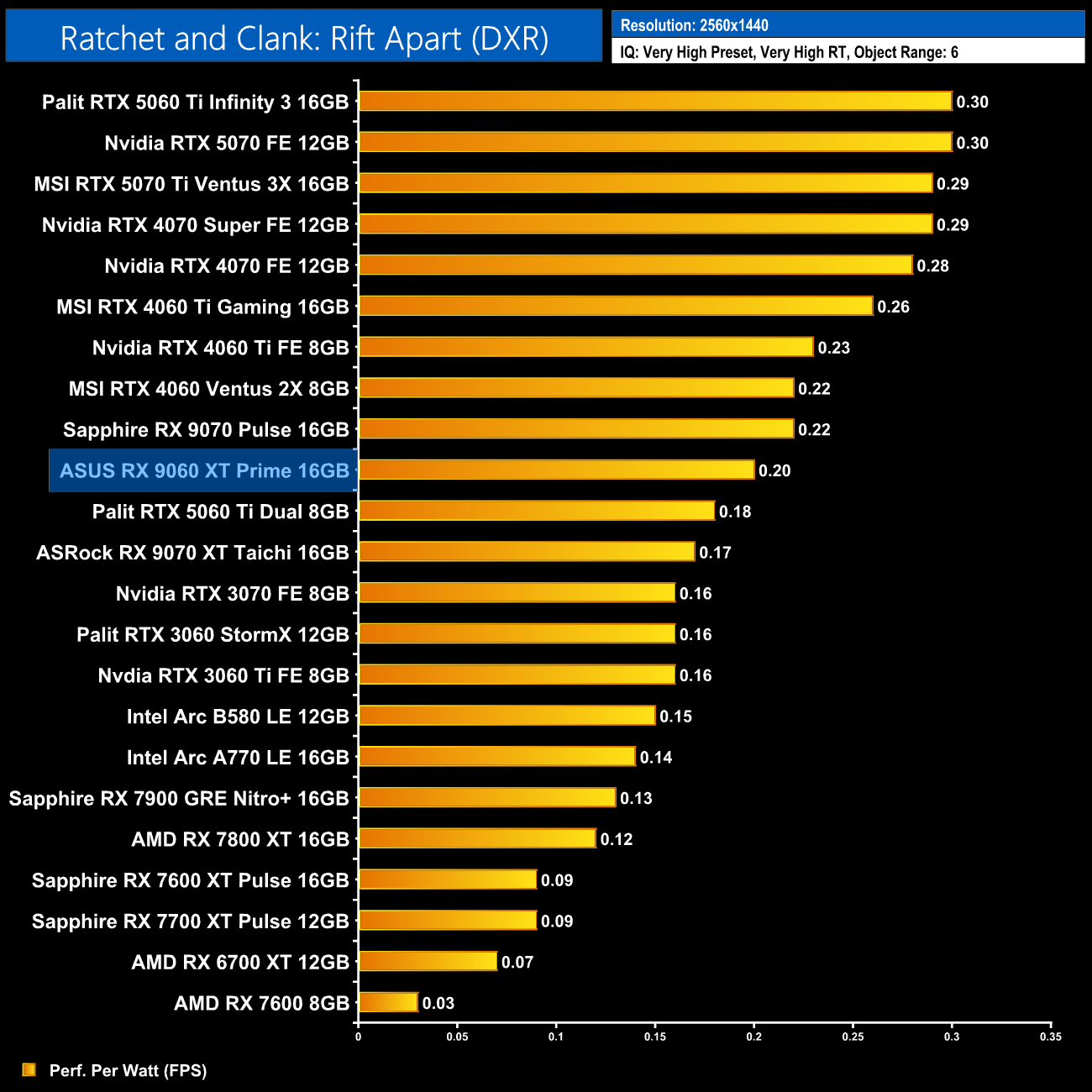
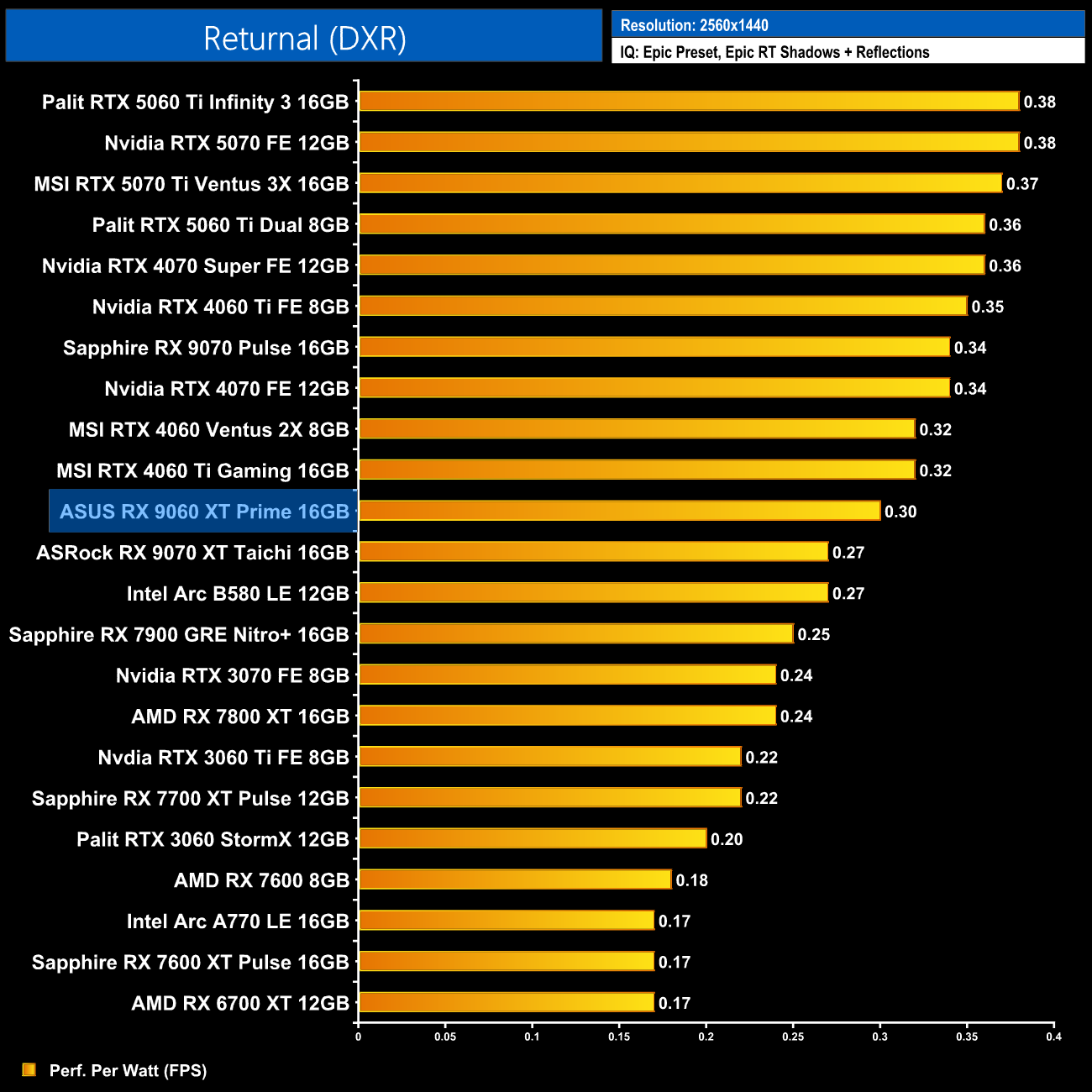
At 1440p, relative efficiency of the 9060 XT 16GB does increase slightly, given it's now just 7% less efficient than the 5060 Ti 16GB, while it's the RX 9070 non-XT that tops the chart at this resolution. That shows the strides AMD has made from RDNA 3, given how far down the chart the likes of the 7700 XT and 7600 XT are.
Ray tracing results
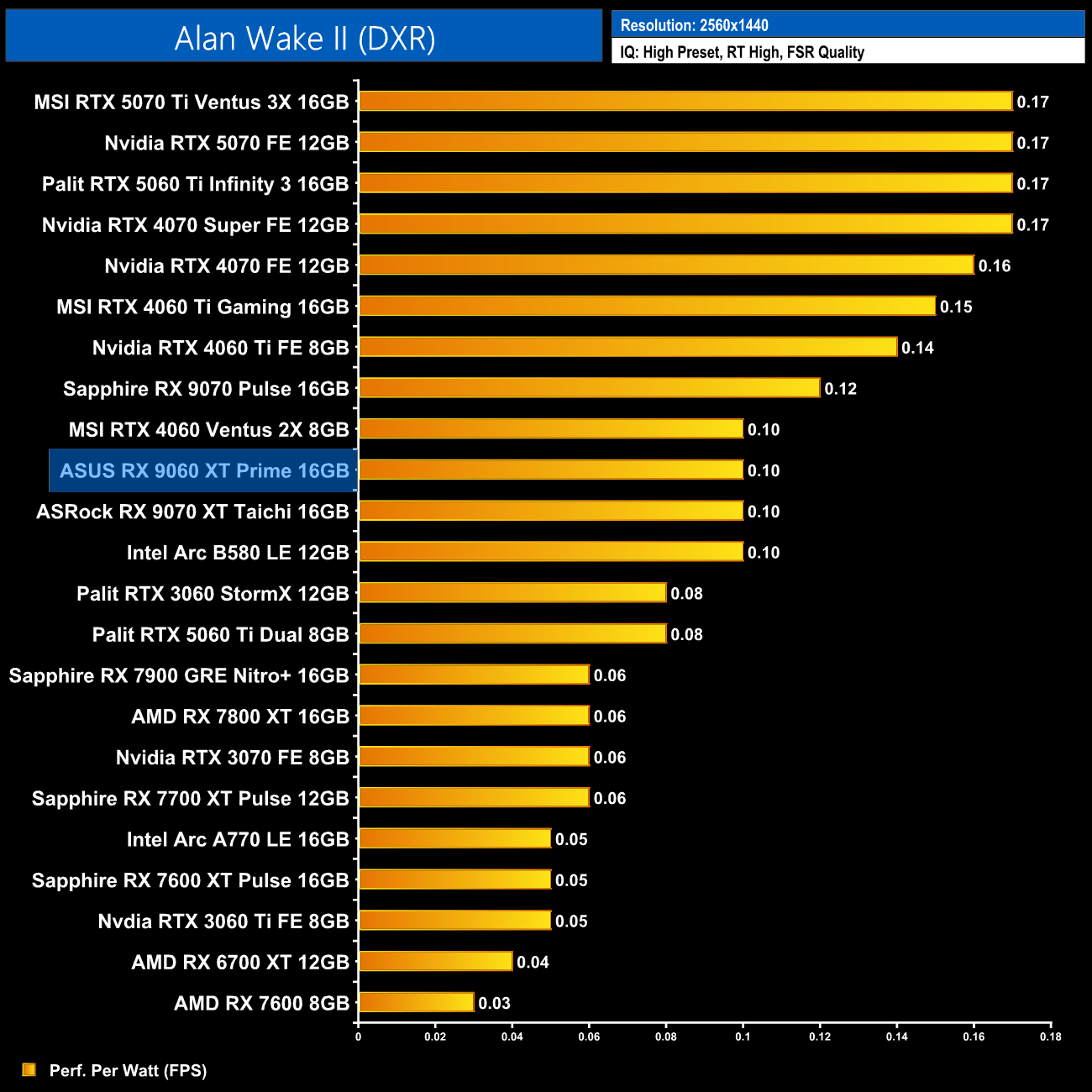
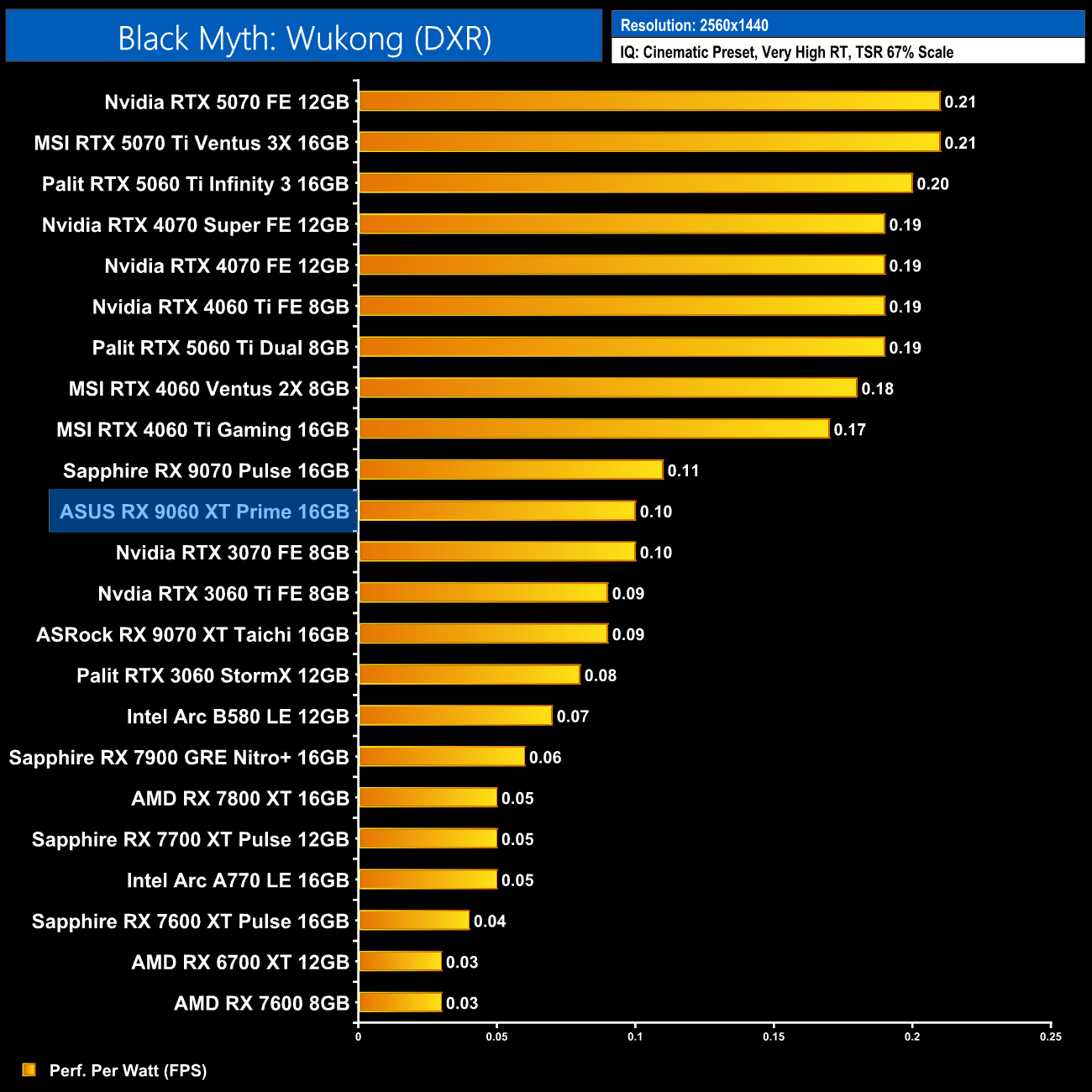
As a bonus, we now include the efficiency figures for all eight games we test with ray tracing enabled.
8-Game ray tracing average:
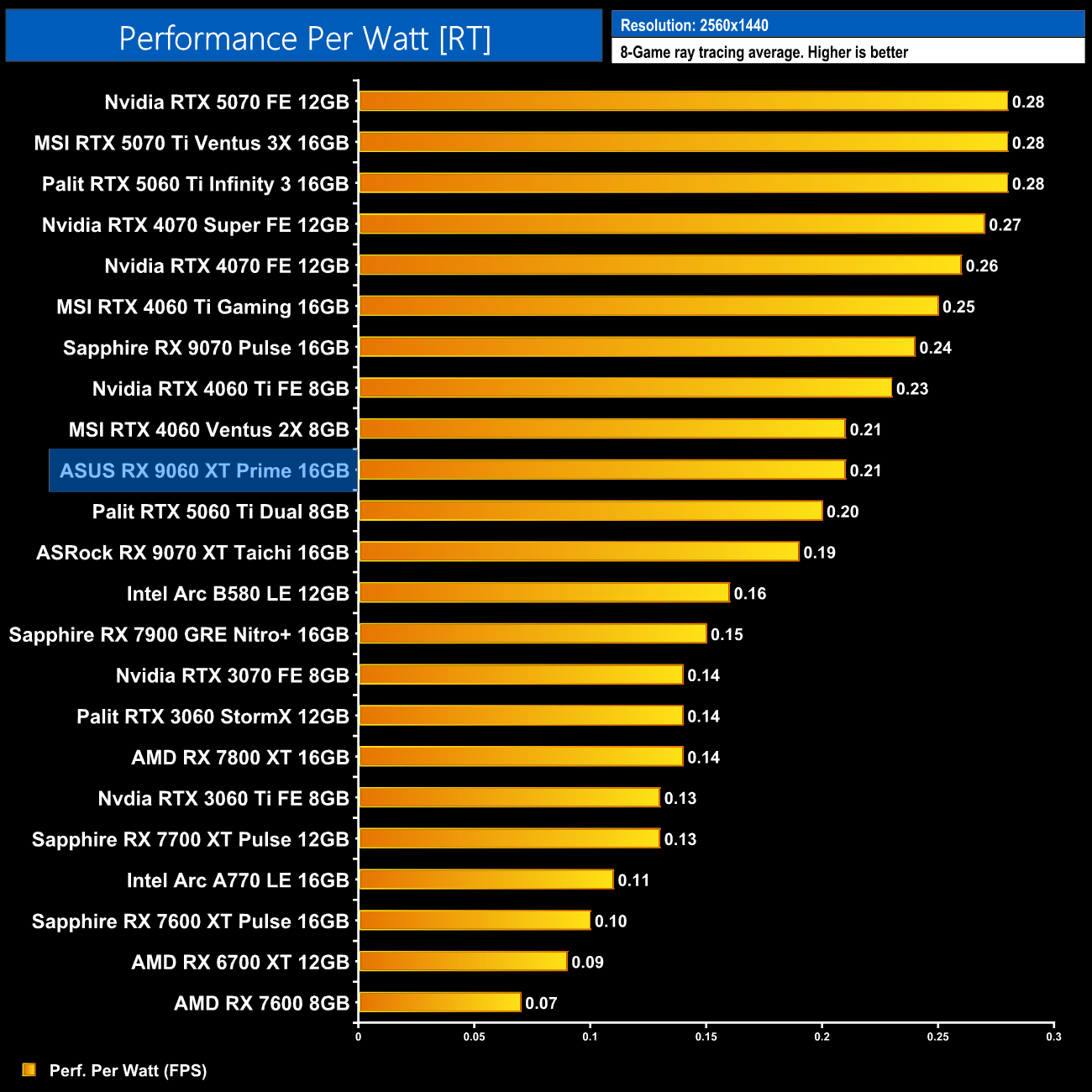
Once again, Nvidia's 5070 is top of the efficiency chart when looking at ray tracing workloads for 1440p.
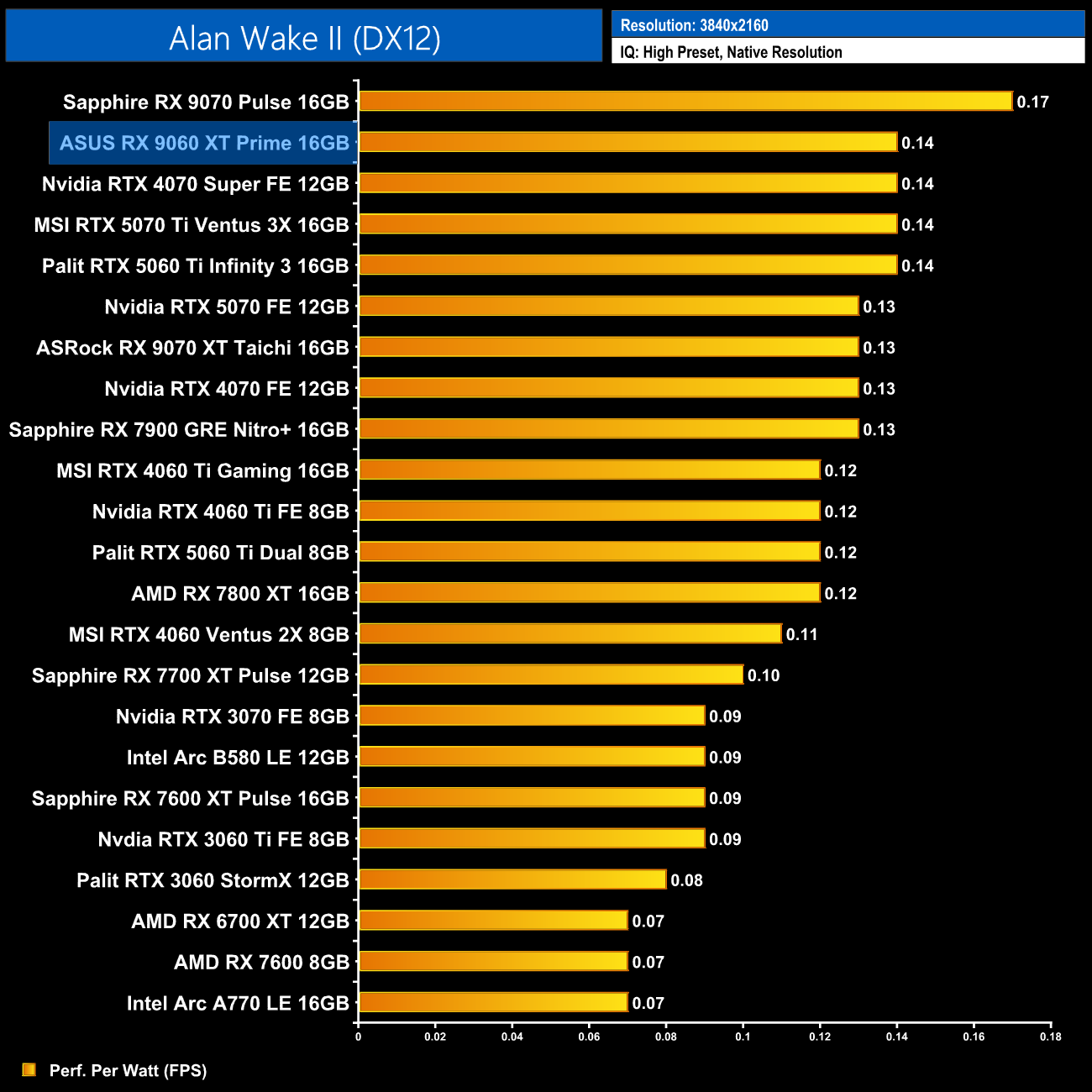
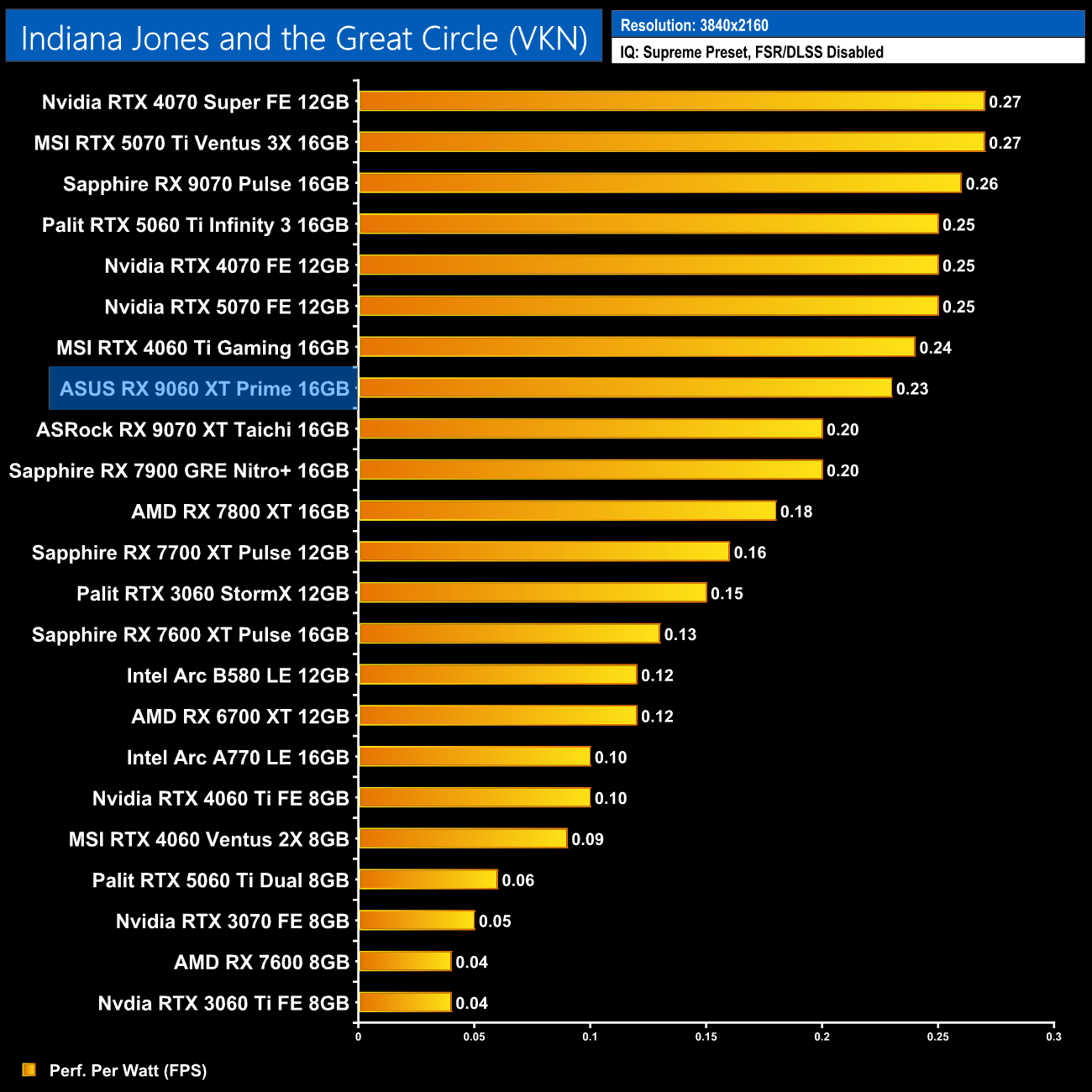
Using the graphics card-only power draw figures presented earlier in the review, here we present performance per Watt on a per-game basis for all twelve games we tested at 2160p (4K).
Per-Game Results at 2160p (4K):
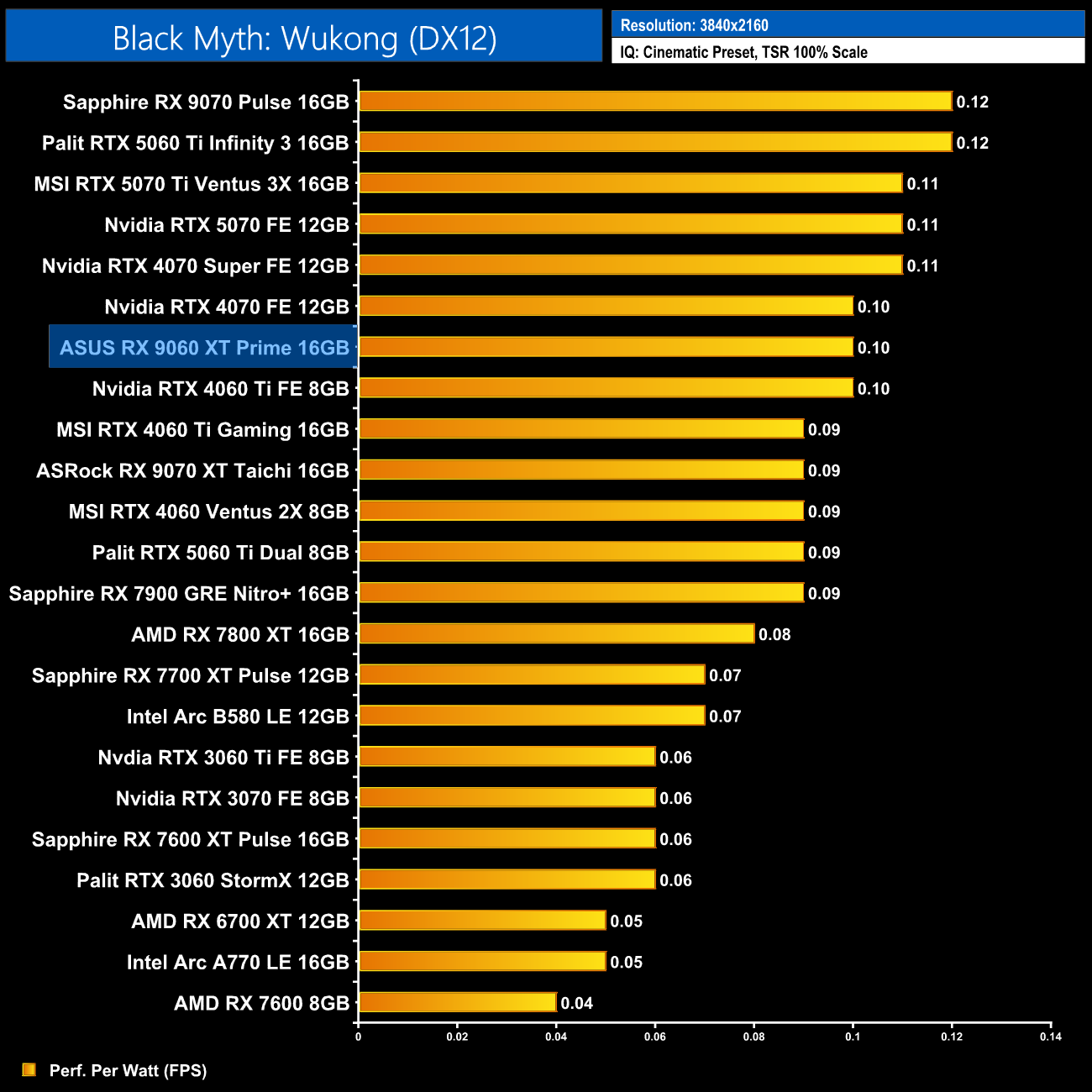

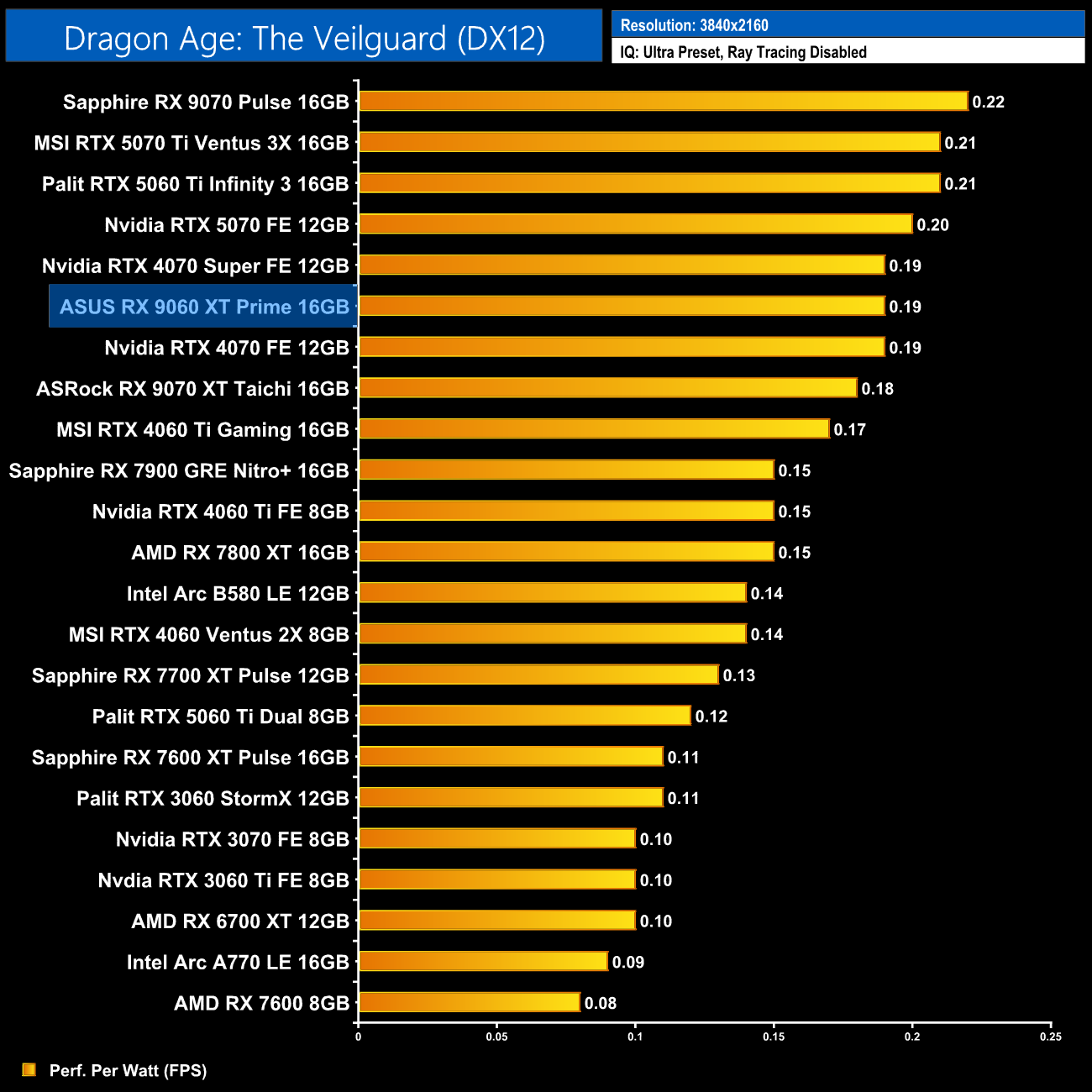
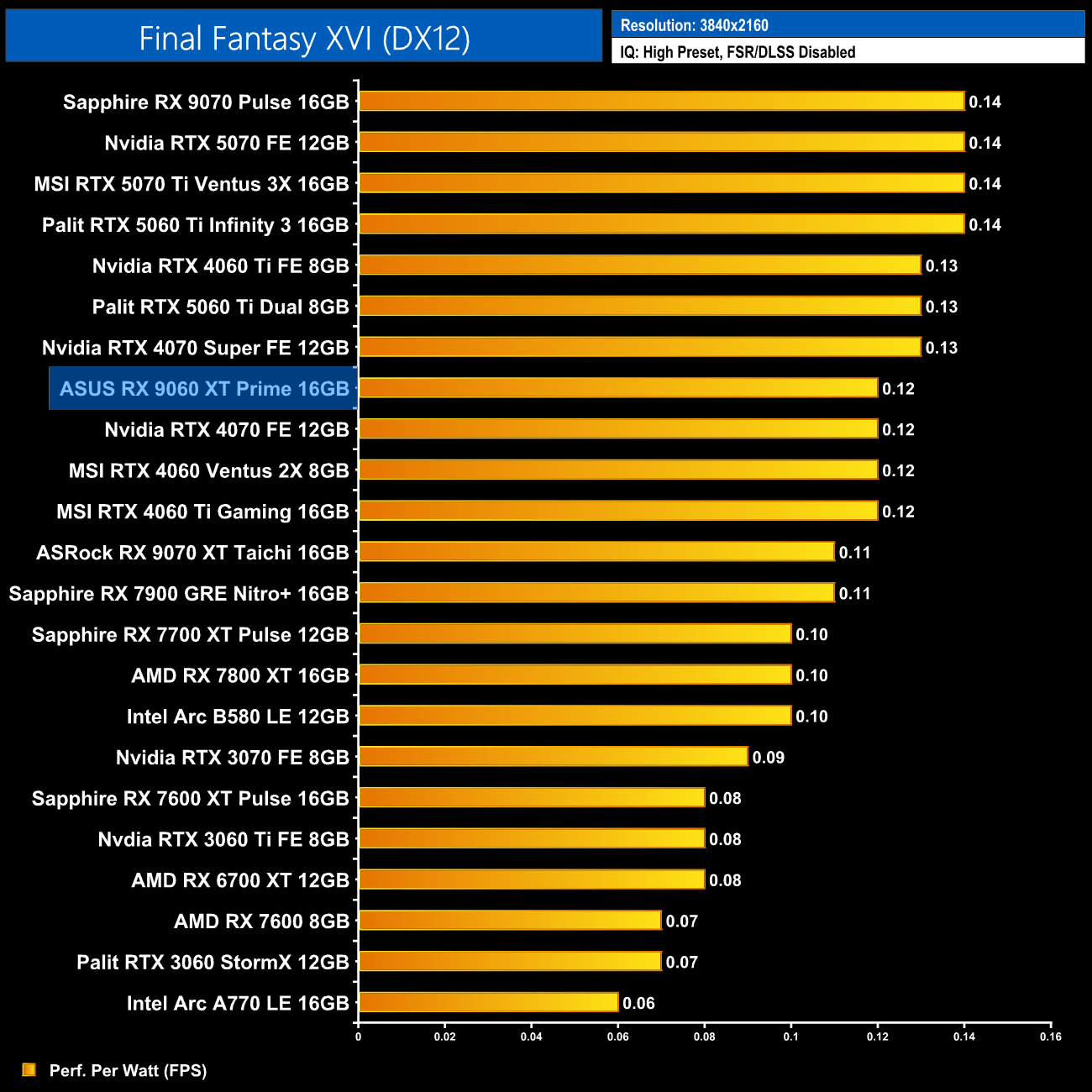
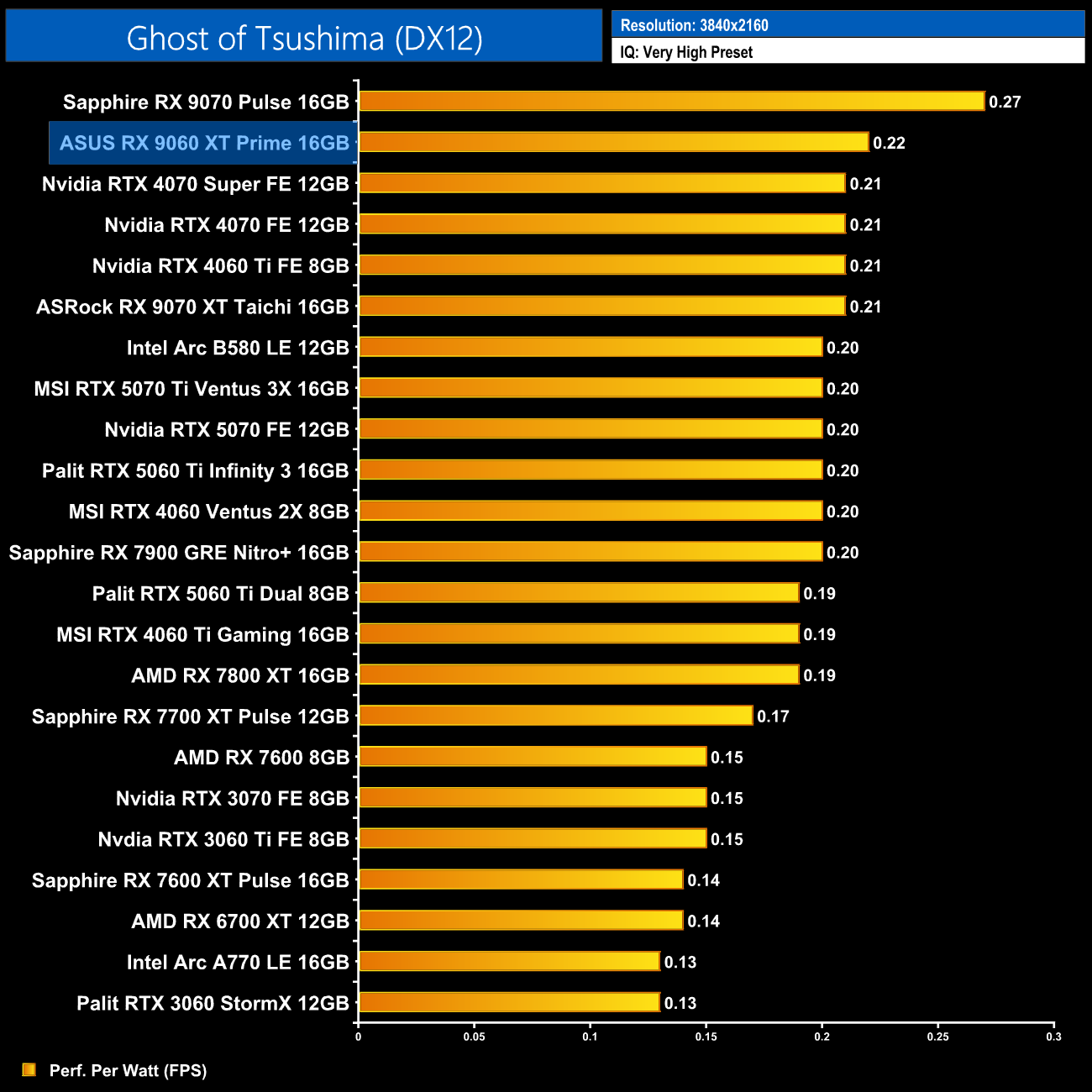
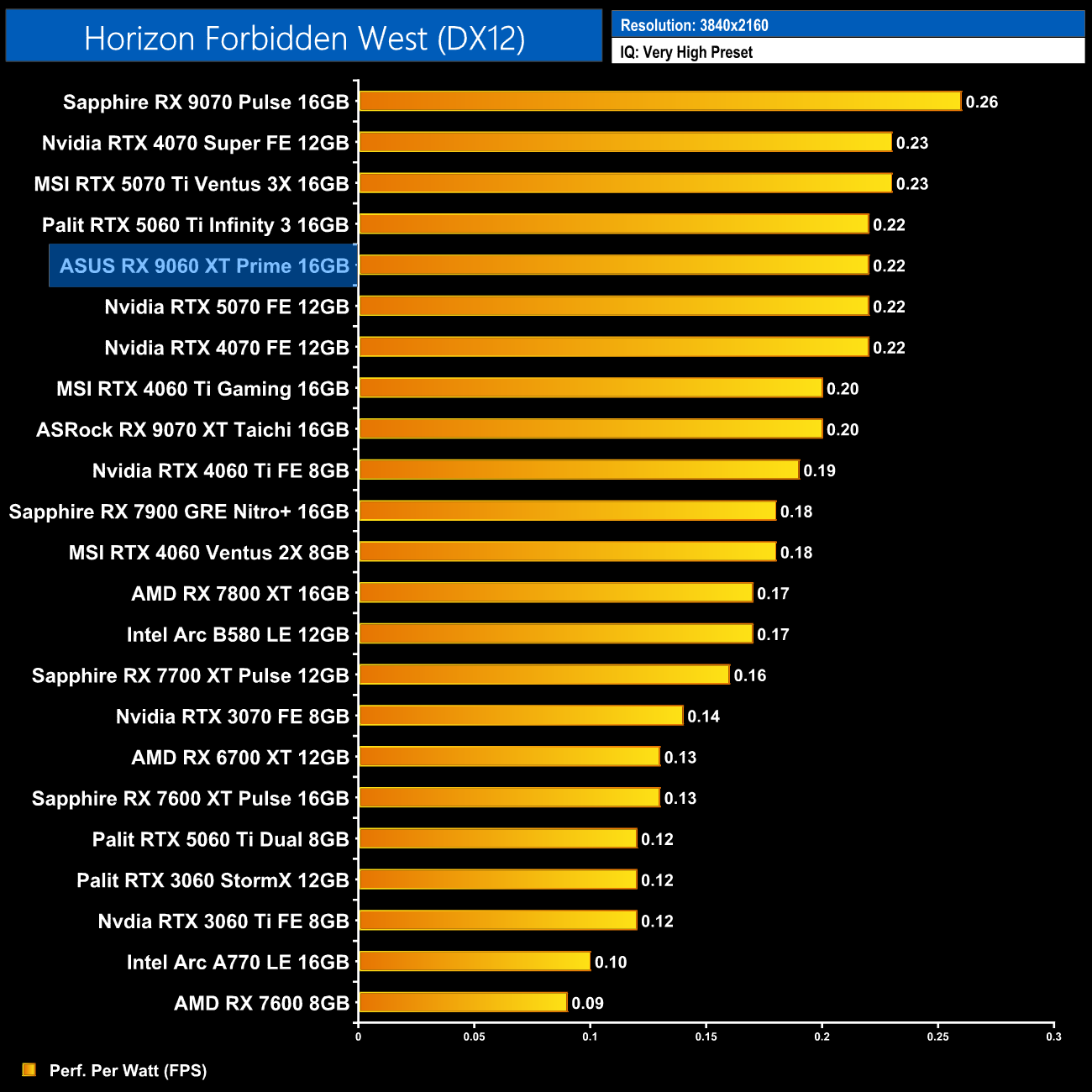
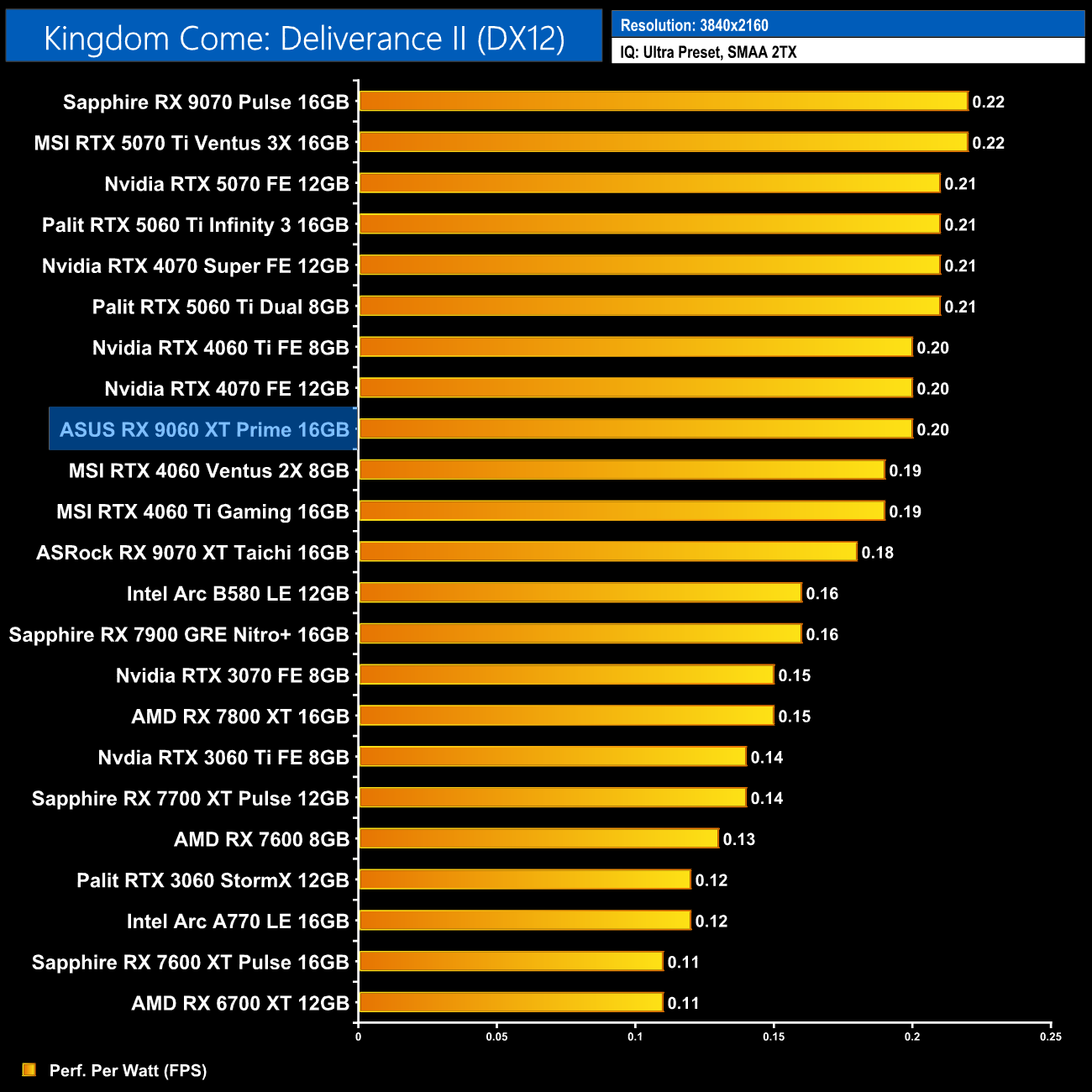
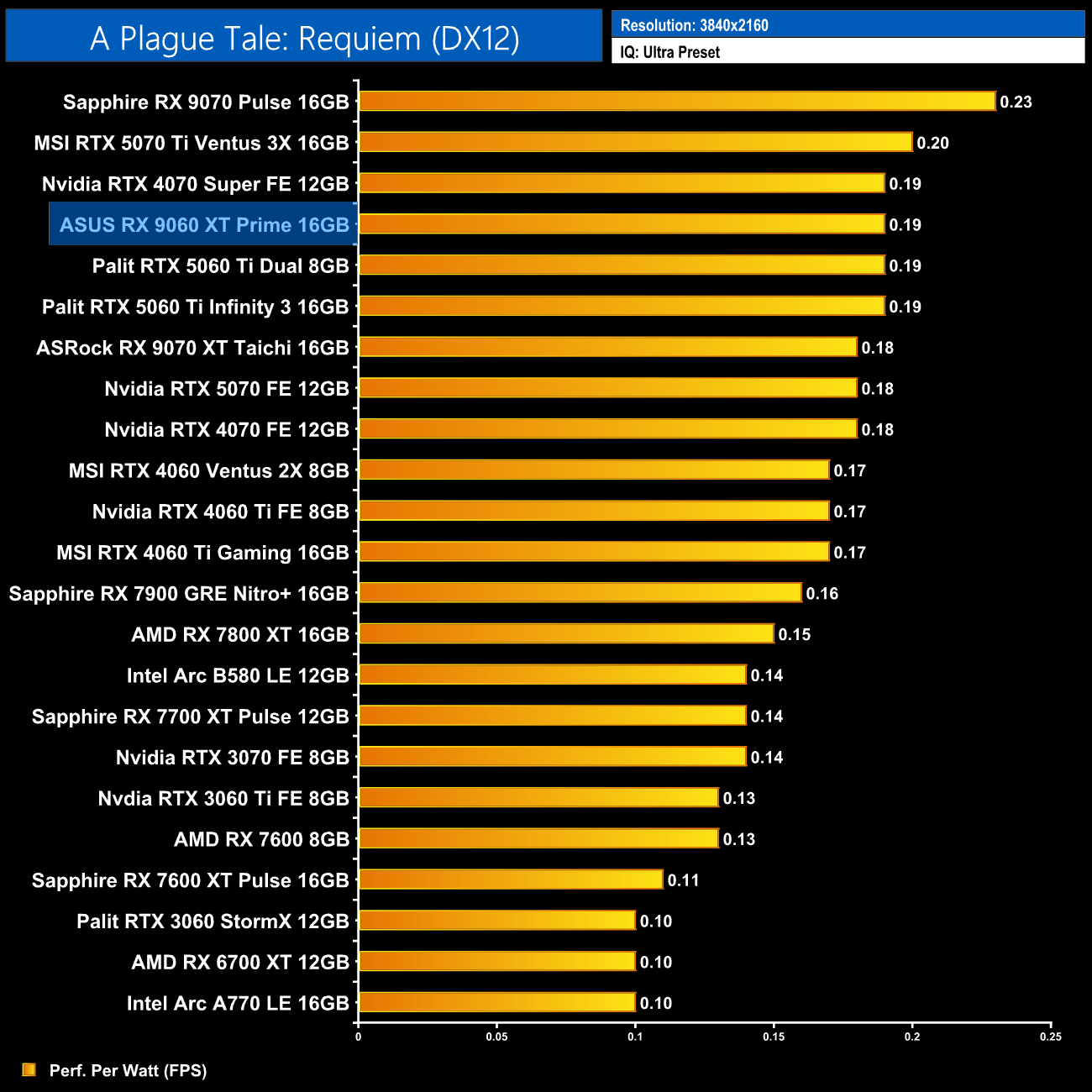
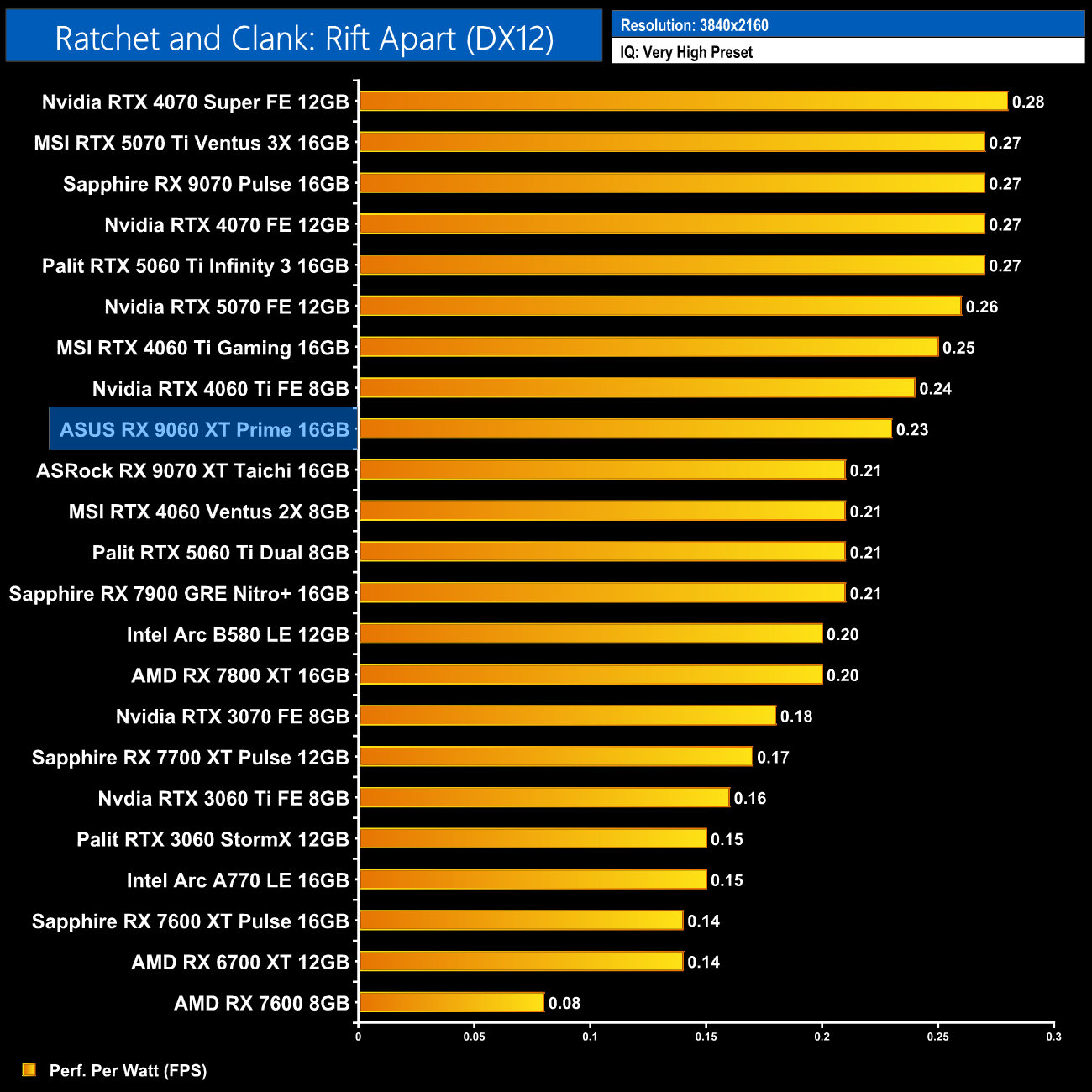
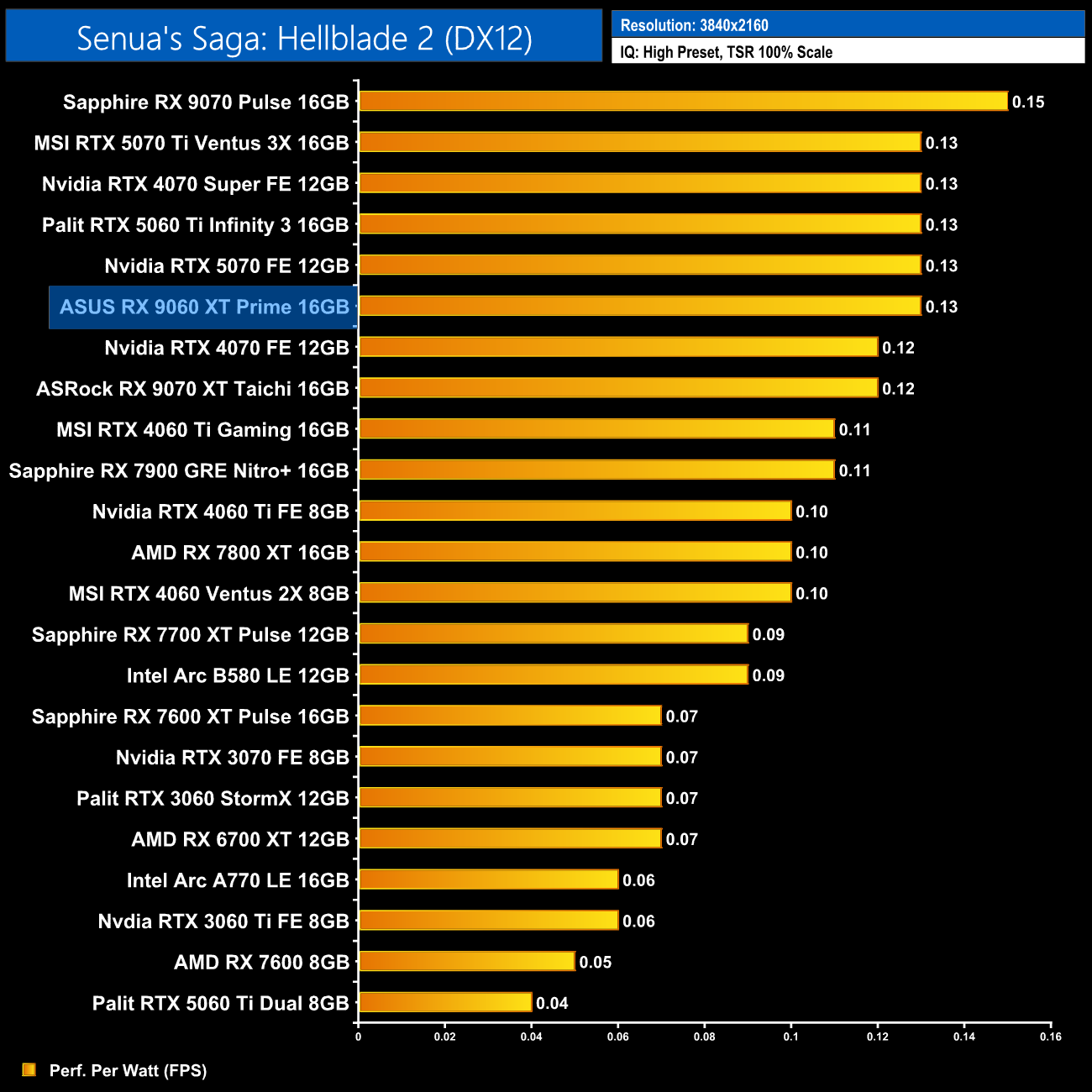
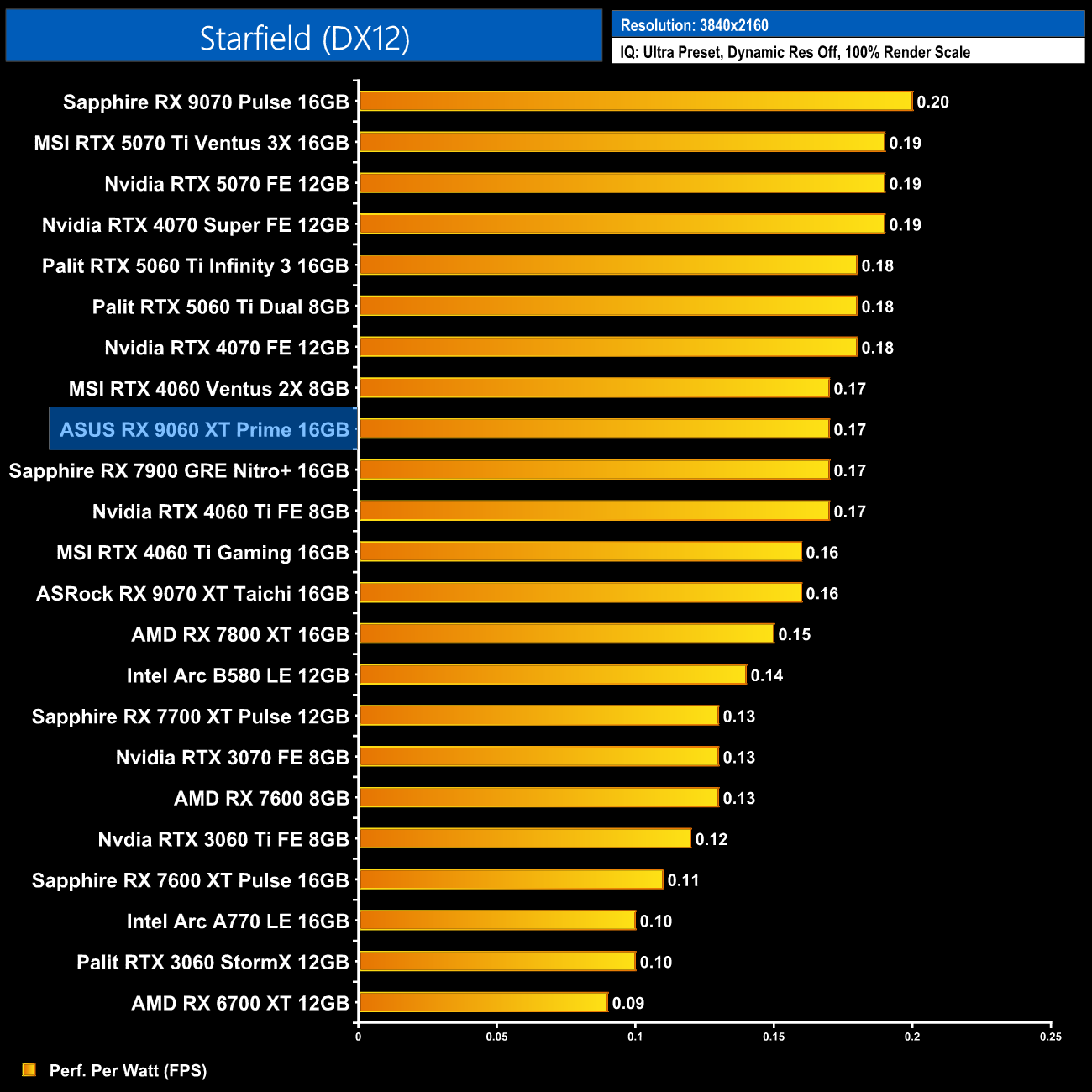
Click to enlarge.
12-Game Average at 2160p (4K):
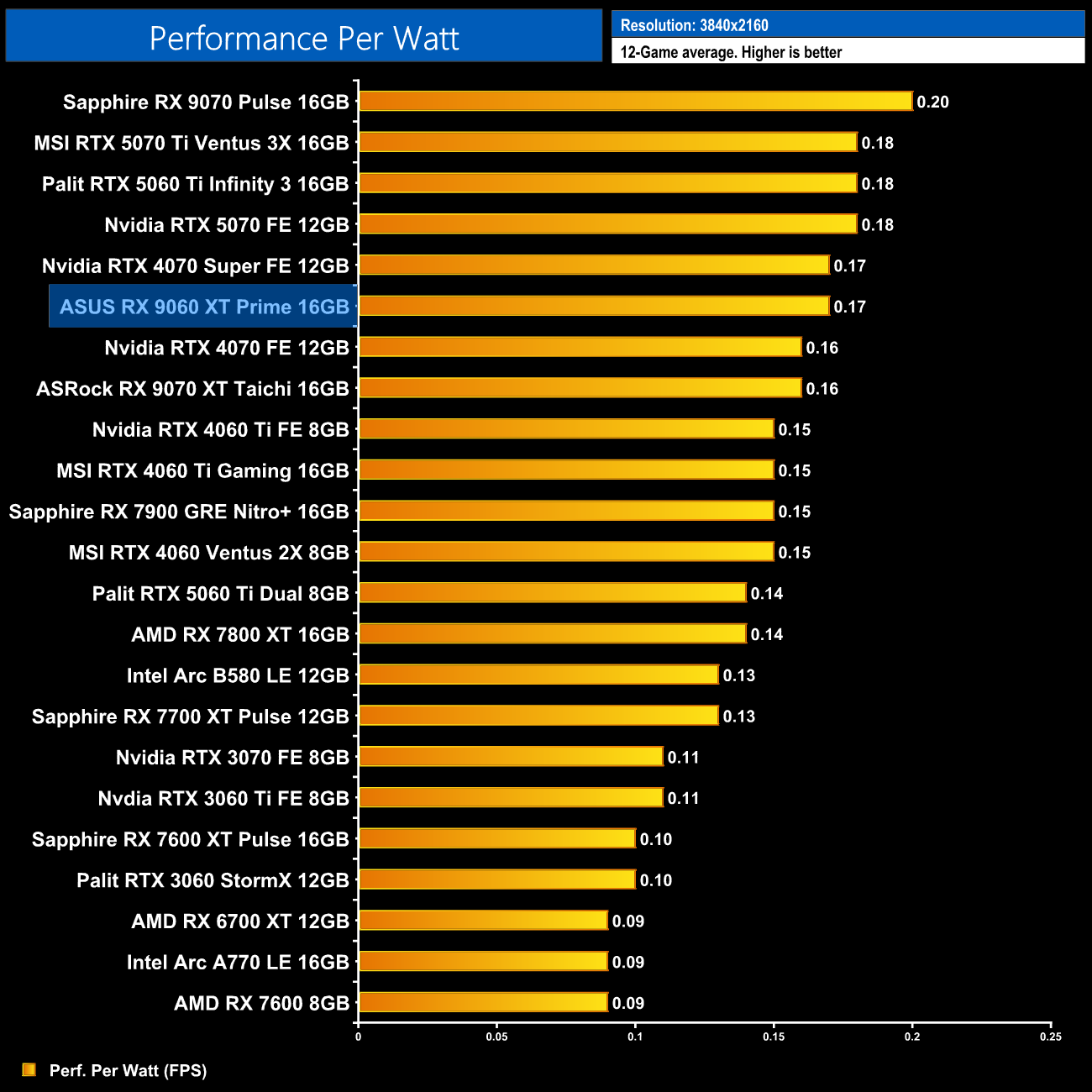
The 4K data is above for those interested.
Ray tracing results
As a bonus, we now include the efficiency figures for all eight games we test with ray tracing enabled.
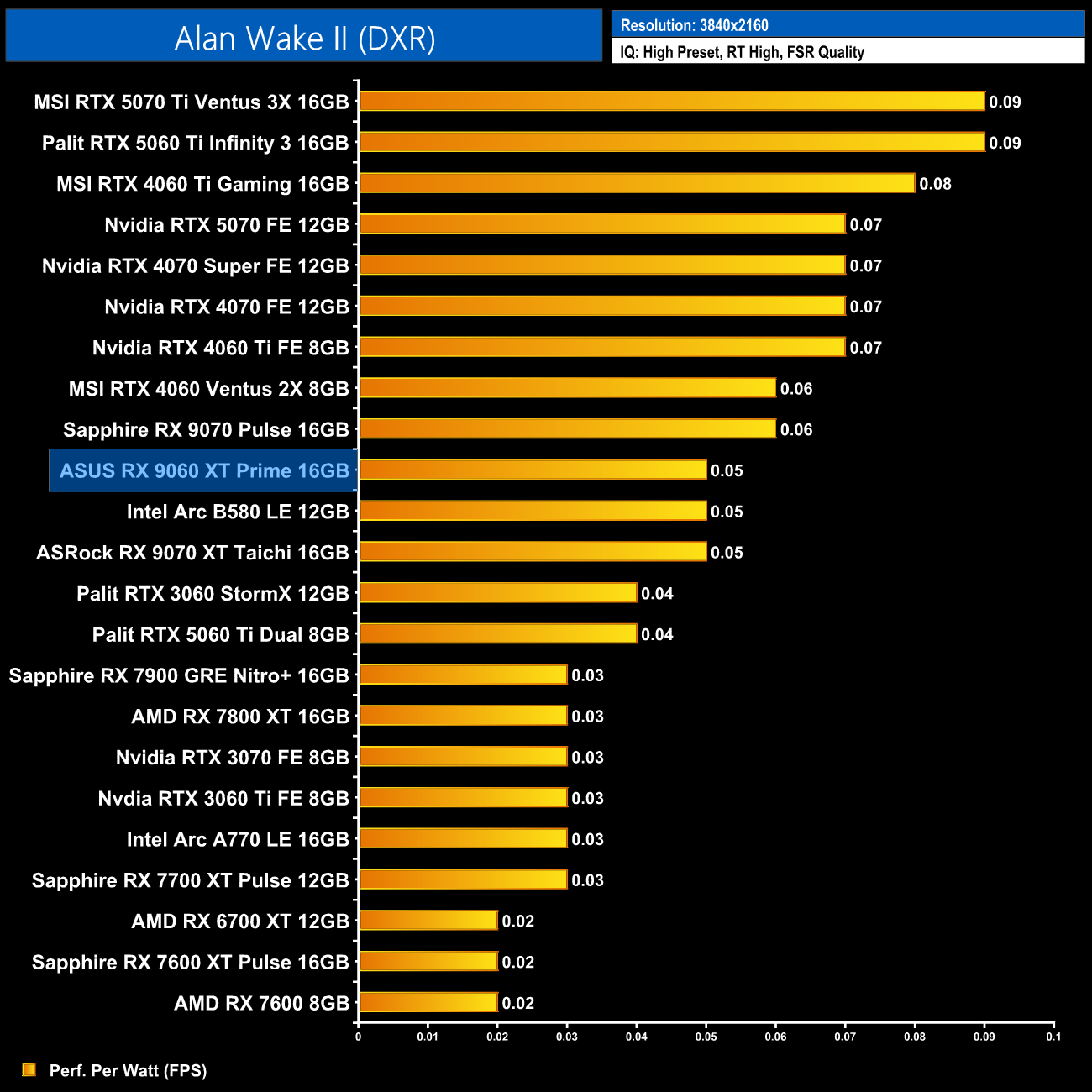
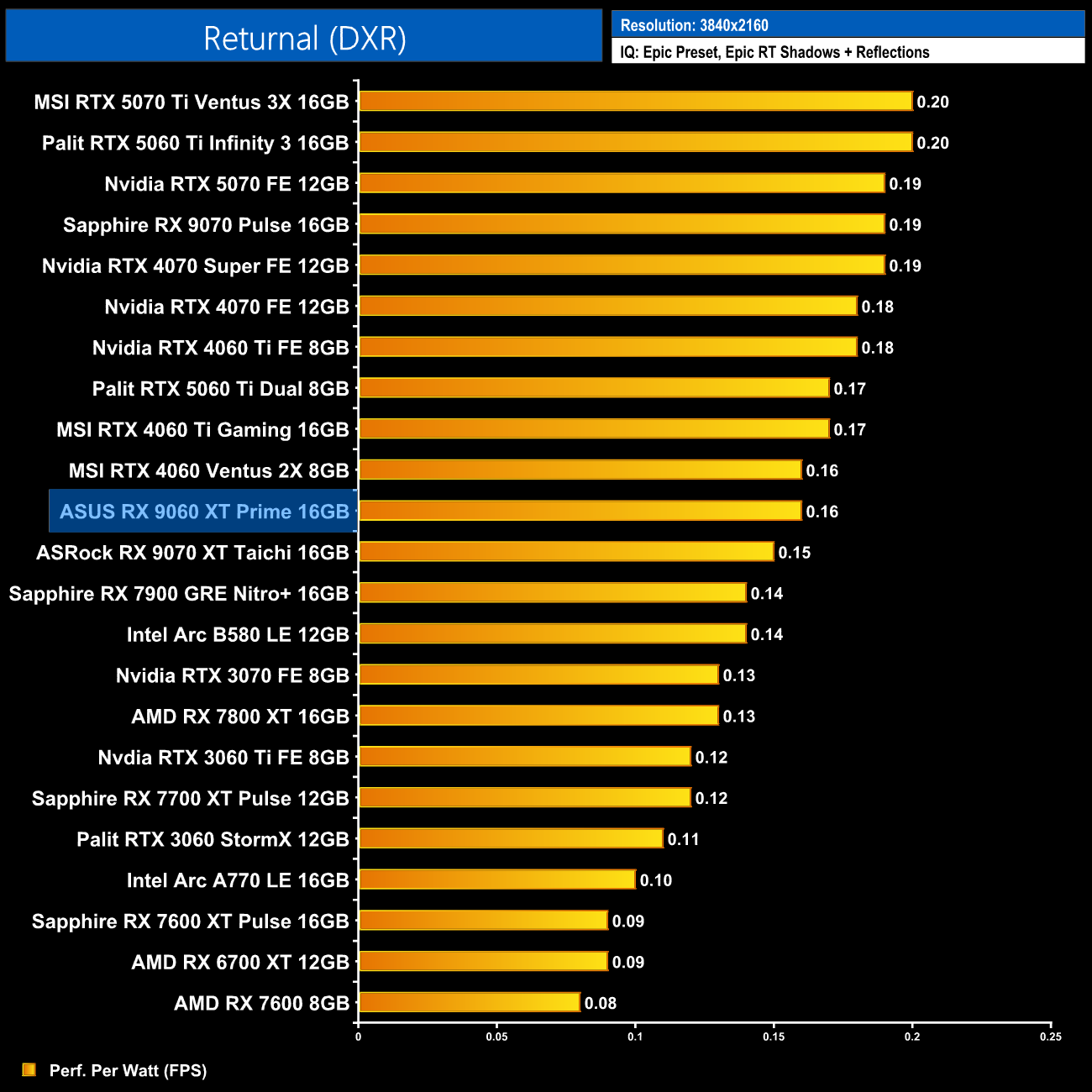
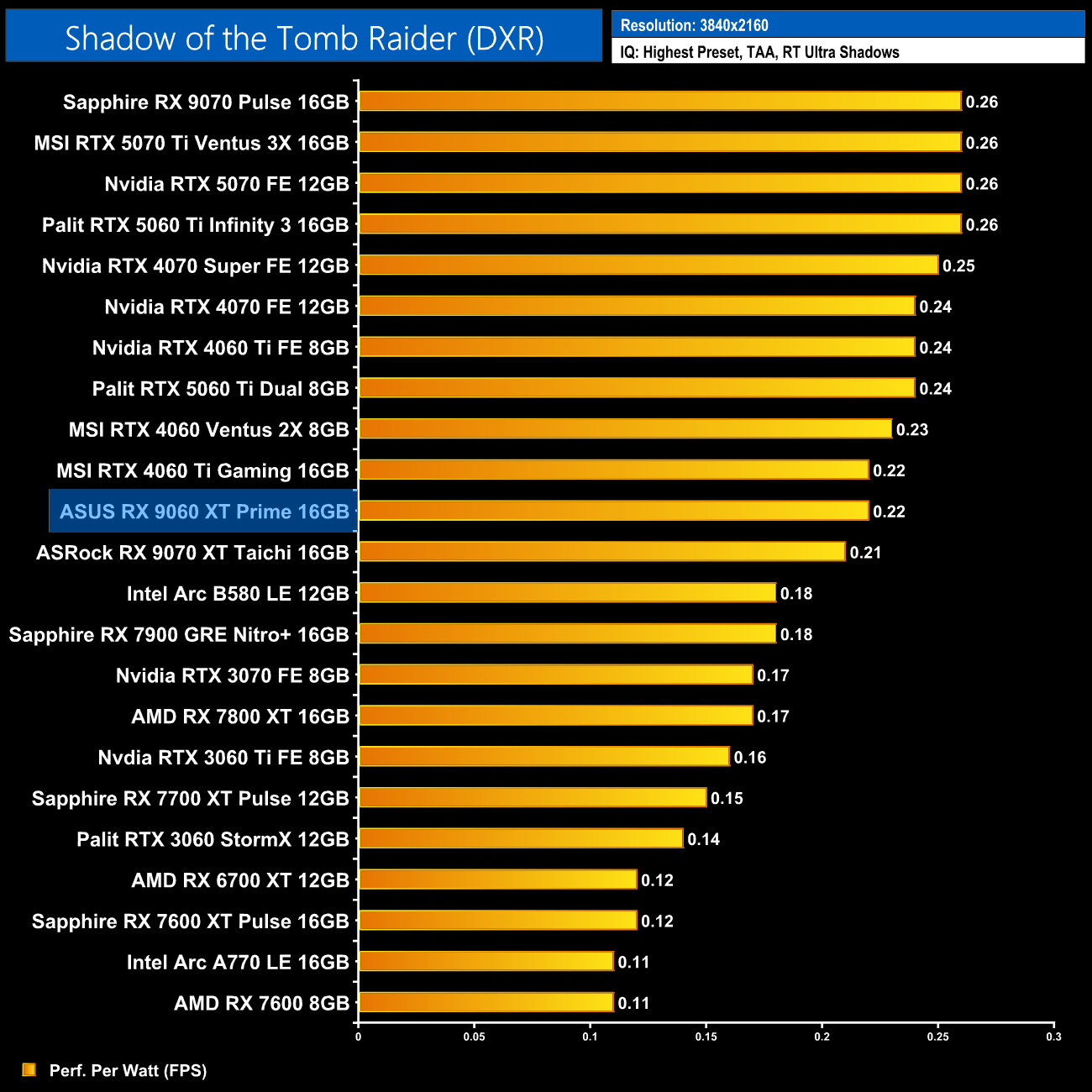
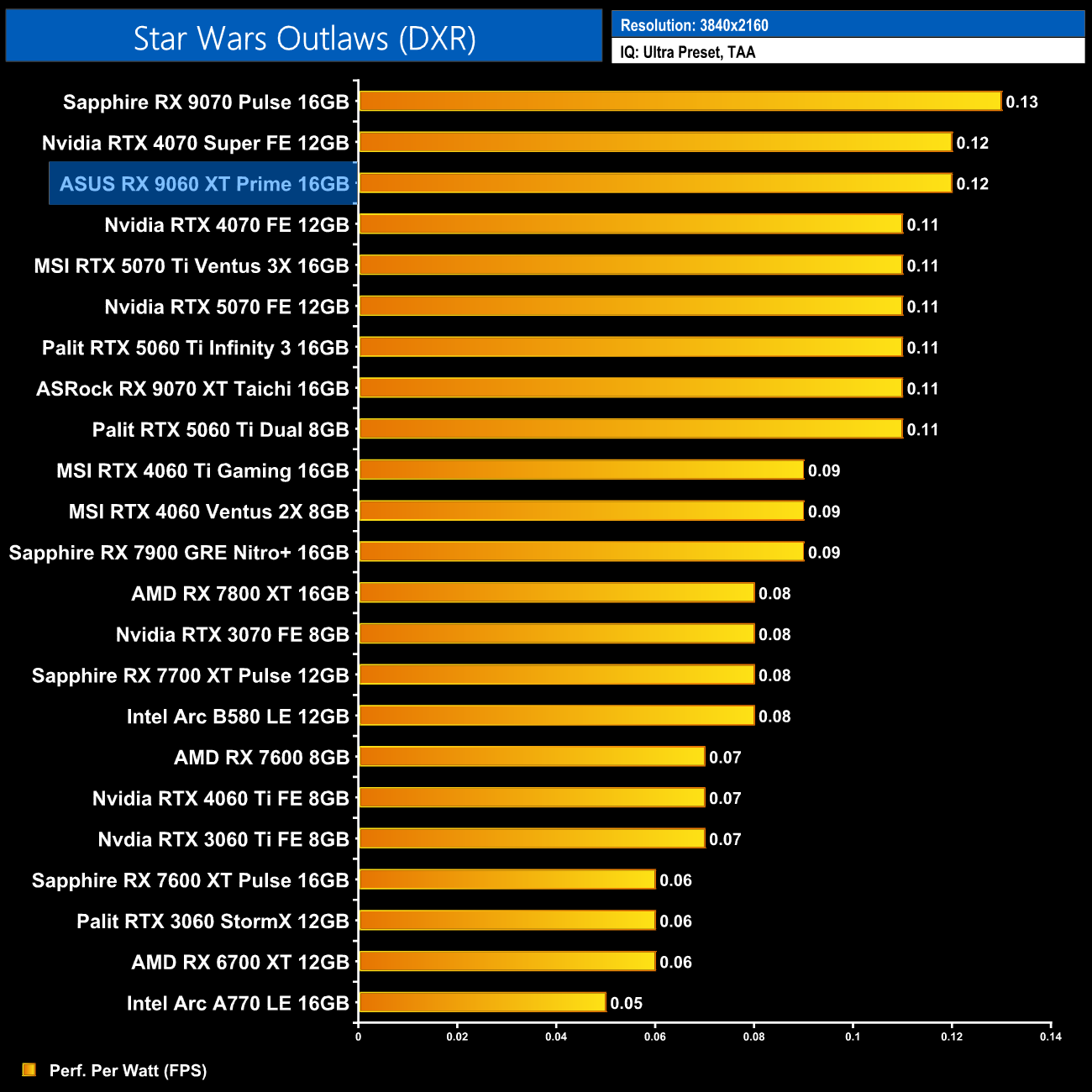
8-Game ray tracing average:
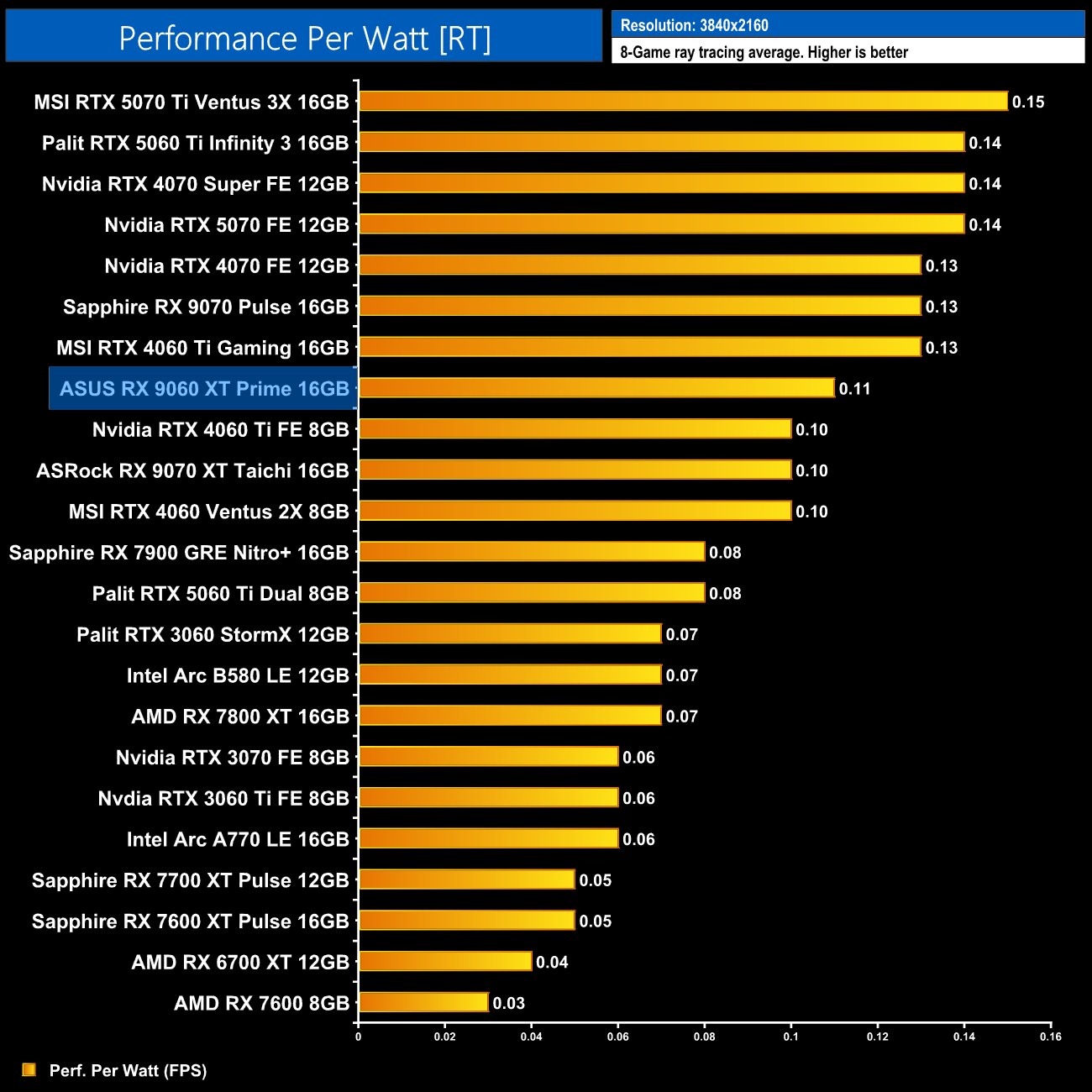
And then with ray tracing enabled!
We measure system-wide power draw from the wall while running A Plague Tale: Requiem for 30 minutes (4K resolution).
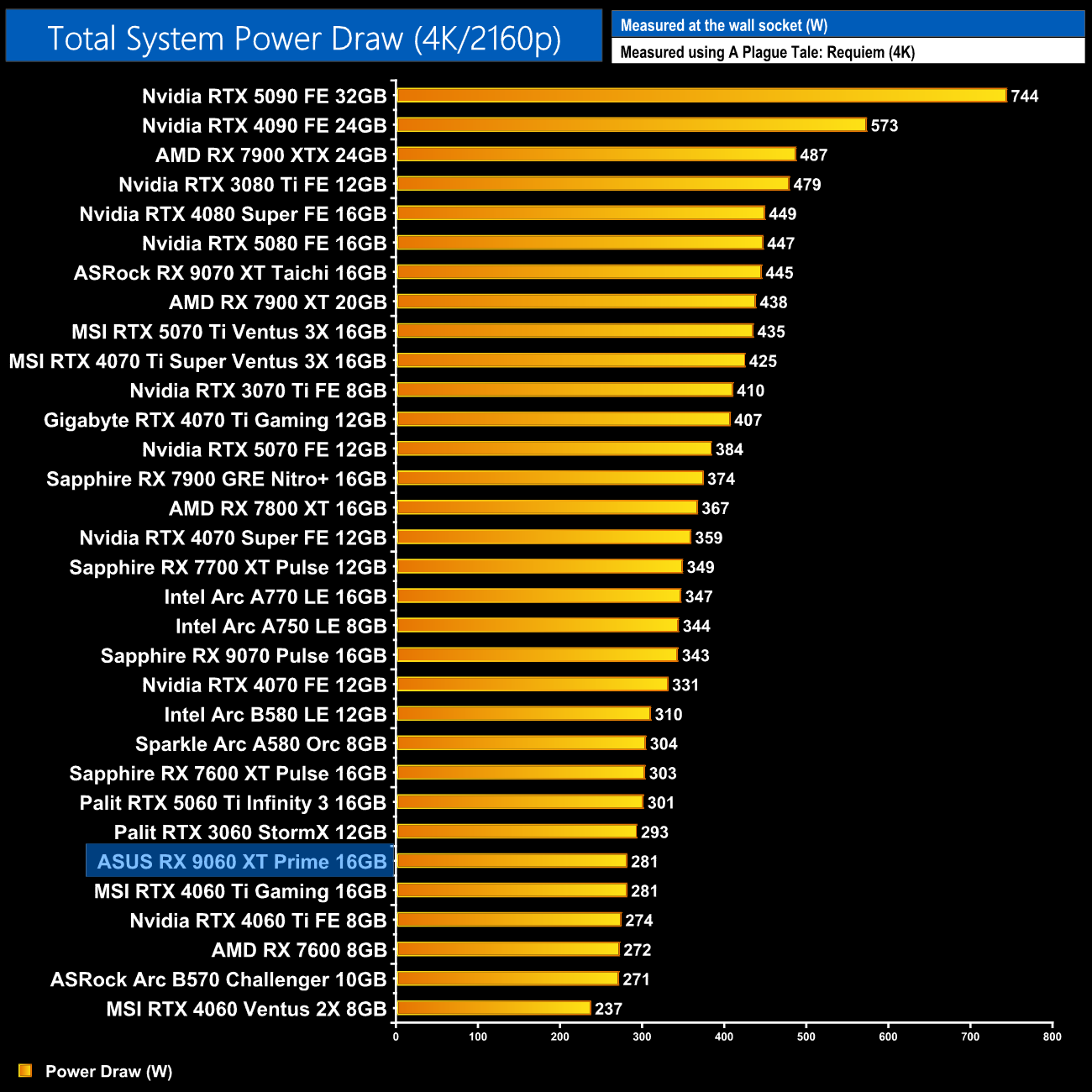
Total system power pulled less than 300W at the wall socket so you won't need a beefy PSU for this one.
A couple of weeks on from its official unveiling at Computex 2025, today we have put the AMD RX 9060 XT 16GB through its paces. Anyone shopping for a new gaming graphics card under £350 will certainly want to pay close attention to this one.
That all starts with the 9060 XT 16GB's rasterisation performance, which trades blows with the RTX 5060 Ti 16GB. On average we found the AMD GPU to be 6% slower at 1080p, while it's essentially dead level with the RX 7700 XT. I do encourage our readers to check out as many reviews as possible though, as performance versus the GeForce competition can vary dramatically from game to game, so other outlets may well find different overall margins.
It's a capable 1440p card too, though you won't be able to max out every game – some settings tweaks, or upscaling, will be required. Even then, we still hit over 60fps on average in the likes of Cyberpunk 2077 and Ratchet & Clank using Ultra/Very High settings, so it's certainly possible depending on the game.
Our testing in this review also revealed a number of occasions where having more than 8GB VRAM is an immediate benefit today, let alone two or three years down the line. Games like Horizon Forbidden West, Dragon Age: The Veilguard and the aforementioned Ratchet & Clank all guzzle more than 8GB even before ray tracing is enabled, resulting in some interesting performance dynamics. For example, while the 5060 Ti 16GB is the faster card on average, the same can't be said for the 8GB model, which is actually 7% slower at 1440p due to VRAM-related performance issues. AMD still deserves stick for releasing an 8GB 9060 XT model, despite sharing the same name, but there's no getting around the fact that a 16GB card at this price point is a real value add.
Speaking of ray tracing, this is another area where AMD has made big strides compared to RDNA 3. Several ray traced games we tested today were over twice as fast as the outgoing RX 7600 XT, with average performance better than even the RX 7800 XT in this department. It seems like the more ray traced effects a game deploys, the bigger the uplift versus RDNA 3.
However, there are still games where the RX 9060 XT 16GB can't deliver a playable experience, even at 1080p, particularly when path tracing comes into play – just look at the results in Alan Wake 2 and Black Myth: Wukong, and those were tested with Quality upscaling too! There's no denying ray tracing performance has improved hugely, but it's clear Nvidia still holds the advantage here, especially considering the increasing number of path traced games hitting the market.
I also looked at FSR 4 upscaling as part of this review, with AMD's new ML-based algorithm delivering substantial improvements to image quality when compared to FSR 3.1. I personally think the visual quality is now good enough that I wouldn't mind using either DLSS 4 or FSR 4 upscaling, but AMD still needs to improve its marketshare. More and more games have been announced to support the technology, with AMD claiming '60+' by June 2025, but Nvidia has built up a huge head-start with its DLSS library over the last seven years, so AMD has plenty of work to do to try and make up lost ground.
Power draw is also nice and low, averaging close to AMD's claimed 160W TBP in my testing. Overclocked partner cards will draw more like 180W, but we specifically test all GPUs at reference specifications for an apples-to-apples comparison. With that in mind, overall efficiency is certainly decent and another huge improvement over RDNA 3. It can't quite match the RTX 5060 Ti 16GB, which is the most efficient GPU in its class, but the difference is less than 10% at 1440p, so it's not a hugely significant factor in your buying decision.
Pricing, on the other hand, is a much more significant factor for a potential purchasing decision. With an MSRP of £315 here in the UK, AMD has done well to undercut the RTX 5060 Ti 16GB by £85, making the 9060 XT 16GB some 21% cheaper, despite being just 6-7% slower on average for rasterisation. Nvidia has other advantages, such as ray tracing and wider DLSS support, alongside AI-based Multi Frame Generation. If you can stump up the extra cash for the Nvidia GPU, I do think it is a superior overall product for those reasons, but an extra 20% cash is quite a big jump – particularly in this end of the market segment.
The real competition comes from the 8GB 5060 Ti, priced at £349, and I have no hesitation in recommending the RX 9060 XT 16GB over that GPU. The fact Nvidia doesn't offer a GPU below £400 with more than an 8GB framebuffer really does make the decision quite easy given the way modern games are going – there are already so many games on the market today that benefit from having more than 8GB VRAM, never mind how things will look two or three years down the line, and for me that's a key consideration.
The 9060 XT 16GB looks like a solid upgrade compared against AMD's own stack, too. It's some 35-40% faster than the 7600 XT for rasterisation, often 80%+ faster when ray tracing is enabled, and the launch MSRP is basically the same as the 7600 XT's when it hit the market in January 2024. Even the comparison against the 7700 XT is favourable – the new part is just as fast for raster, much faster for ray tracing, while offering more VRAM, lower power draw, superior upscaling technology and a lower price.
We've also spoken with a couple of retailers who are expecting a good amount of supply at launch, and it also sounds like the pricing situation will be much more straightforward this time around. Unlike the 9070 XT which still can't be found at MSRP in the UK, the £315 base price for the RX 9060 XT 16GB is said to be realistic, so expect to see cards in stock around that mark. If that MSRP doesn’t materialise, however, the 5060 Ti 16GB becomes a strong alternative, particularly if 9060 XT 16GB pricing drifts within 10-15% of the Nvidia GPU. It’s certainly something to keep a close eye on.
The bottom line – AMD has a very good thing on its hands with the RX 9060 XT 16GB. Simply offering 16GB of VRAM at this price point is enough to give it a huge advantage over the competition, not to mention its solid gaming performance, much improved ray tracing and FSR 4 support. We'd expect this to sell very well indeed at the £315 MSRP.
Pros
- Strong 1080p performance, while also viable at 1440p.
- No other current-gen GPU offers a 16GB framebuffer under £400.
- Extra VRAM can make a huge difference versus the 5060 Ti 8GB.
- Ray tracing is significantly more viable than with RDNA 3.
- £315 MSRP translates to a strong value proposition.
- FSR 4 is much improved compared to FSR 3.1.
- Low power draw at around 160W.
- Offers decent, if not chart-topping, efficiency.
- ASUS Prime model runs quiet and cool.
Cons
- RTX 5060 Ti 16GB is faster and offers more features – but costs 27% more.
- Still struggles in more demanding ray traced/path traced games.
- FSR, while significantly better, lacks the near-universal game support of DLSS.
- Nvidia has the edge when it comes to AI.
KitGuru says: AMD's RX 9060 XT 16GB is a compelling addition to the sub-£350 market. If it can hold at the £315 MSRP, we'd expect AMD to shift a large number of units.