KitGuru KitGuru.net – Tech News | Hardware News | Hardware Reviews | IOS | Mobile | Gaming | Graphics Cards


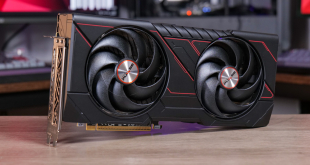
Today, as part of its Computex 2026 programme, AMD has announced worldwide availability for the RX 9070 GRE. Technically, this GPU launched over a year ago as a Chinese exclusive, but it is now rolling out globally. Offering what is essentially a cut-down RX 9070 die, the 9070 GRE features fewer cores, 4GB less memory and a narrower memory interface. But what does that mean for performance, and is it still worth buying? We find out today.
Timestamps
00:00 Intro
00:50 Key info, pricing
01:21 Core specs
02:15 Test setup
03:02 Game benchmarks
03:57 Performance summary, comparison vs RTX 5070
05:01 Cost per frame analysis
05:39 Ray tracing performance
07:07 FSR 4 upscaling
07:51 The Sapphire Pulse card
08:32 Thermals and noise
09:23 Power + efficiency
10:12 Closing thoughts
The RX 9070 GRE launched to little fanfare back in April 2025, given it was only on sale in China, but today AMD has announced global availability, with a $549 price tag. In the UK we're told to expect pricing in the £469-479 region, so it's a similar ballpark to the RTX 5070 that can be regularly found at £500.
Like the rest of the RDNA 4 family, there's no reference model, and instead we have tested the Sapphire Pulse edition. This card does come factory overclocked, but as regular readers will know, we manually test all GPUs at reference specifications for these day one reviews, so we can ensure that all testing is ‘apples to apples.'
| RX 9070 XT | RX 9070 | RX 9070 GRE | RX 9060 XT | |
| Architecture | RDNA 4 | RDNA 4 | RDNA 4 | RDNA 4 |
| Manufacturing Process | TSMC N4 | TSMC N4 | TSMC N4 | TSMC N4 |
| Transistor Count | 53.9 billion | 53.9 billion | 53.9 billion | 29.7 billion |
| Die Size | 357 mm² | 357 mm² | 357 mm² | 199 mm² |
| Compute Units | 64 | 56 | 48 | 32 |
| Ray Accelerators | 64 | 56 | 48 | 32 |
| Stream Processors | 4096 | 3584 | 3072 | 2048 |
| Game GPU Clock | 2400 MHz | 2070 MHz | 2220 MHz | 2530 MHz |
| Boost GPU Clock | Up to 2970 MHz | Up to 2520 MHz | Up to 2790 MHz | Up to 3130 MHz |
| ROPs | 128 | 128 | 96 | 64 |
| AMD Infinity Cache | 64MB | 64MB | 48MB | 32MB |
| Memory | 16GB GDDR6 | 16GB GDDR6 | 12GB GDDR6 | 8/16GB GDDR6 |
| Memory Data Rate | 20 Gbps | 20 Gbps | 18 Gbps | 20 Gbps |
| Memory Bandwidth | 645 GB/s | 645 GB/s | 432 GB/s | 322 GB/s |
| Memory Interface | 256-bit | 256-bit | 192-bit | 128-bit |
| Board Power | 304W | 220W | 220W | 160W |
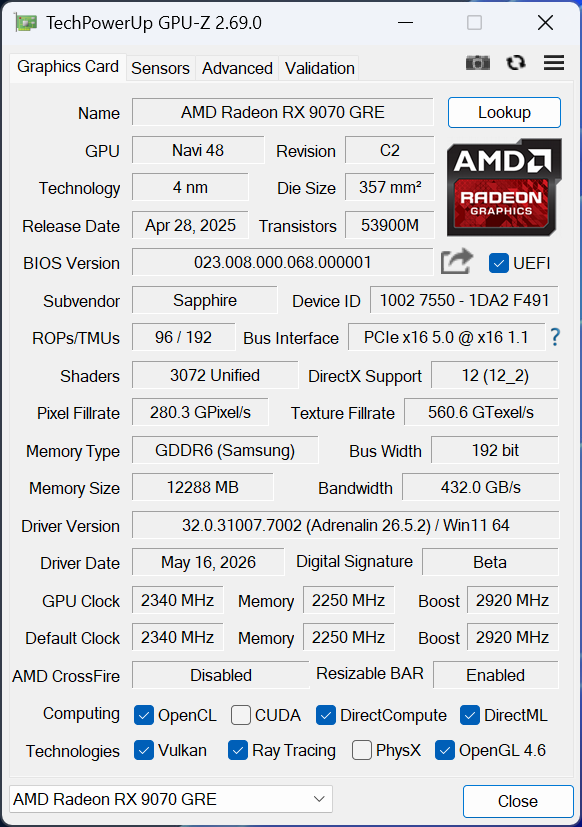
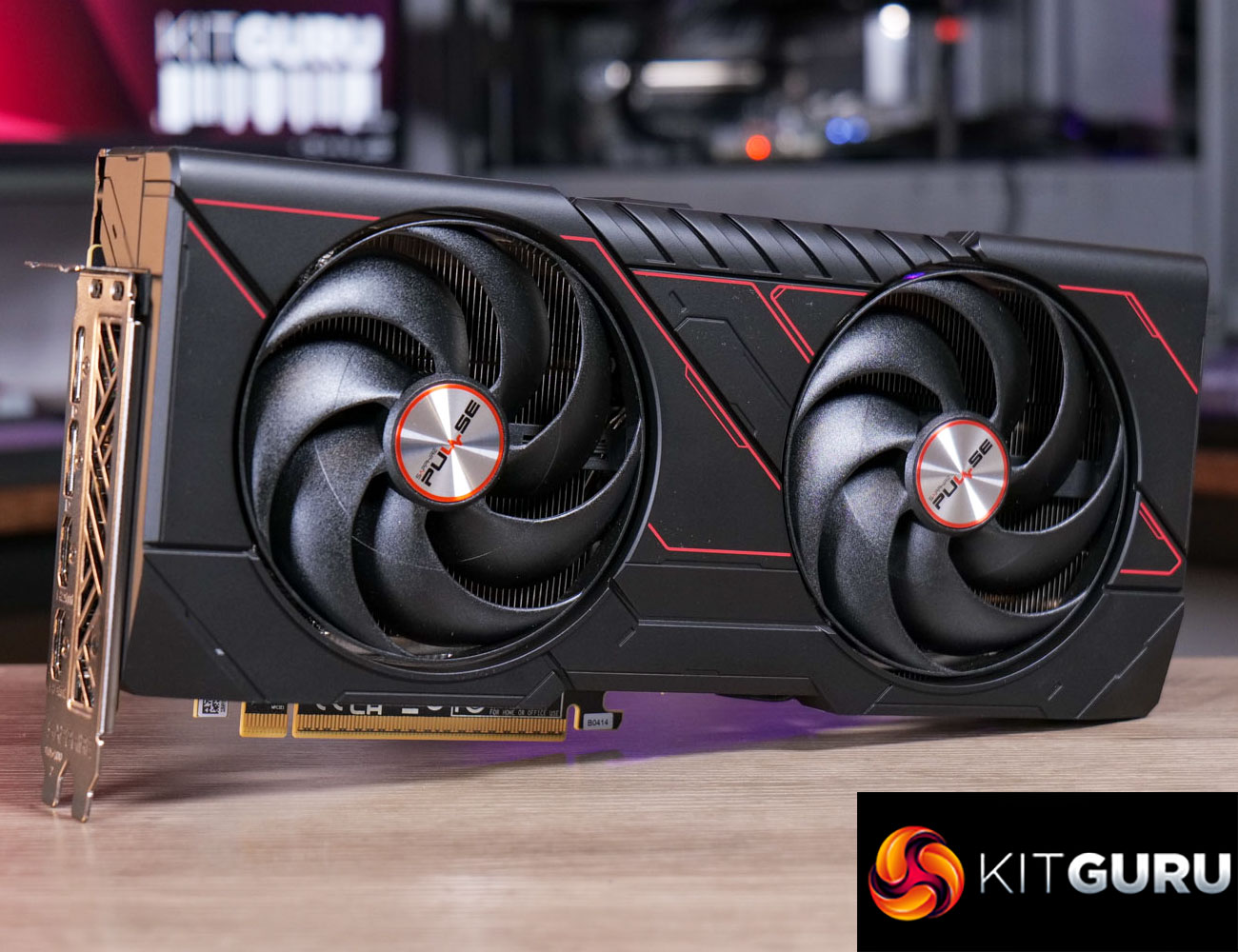
First, let's take a quick look at the specs. The RX 9070 GRE is built on the same Navi 48 die as the RX 9070 and 9070 XT. It measures 357mm², and it's worth pointing out this is a monolithic chip, so AMD is not using a chiplet-based design as per RDNA 3. In total, Navi 48 silicon packs in 53.9 billion transistors.
While a full Navi 48 GPU packs in 64 Compute Units, the 9070 GRE is cut down to 48 CUs, and each CU houses 64 Stream Processors, for a total of 3072 shaders. There's also 48 Ray Accelerators – one per CU – and 96 ROPs.
As for clock speed, the RX 9070 GRE runs faster than the regular 9070, sporting a rated game clock of 2220MHz and a boost clock of up to 2790MHz.
The memory configuration is cut down however, with 12GB of GDDR6 memory clocked at 18Gbps, operating over a 192-bit memory interface, for total memory bandwidth of 432 GB/s. 48MB of Infinity Cache is also present.
Power draw for the RX 9070 GRE is rated at 220W Total Board Power (TBP), but we are using our updated GPU power testing methodology in this review, so read on for our most detailed power and efficiency testing yet.
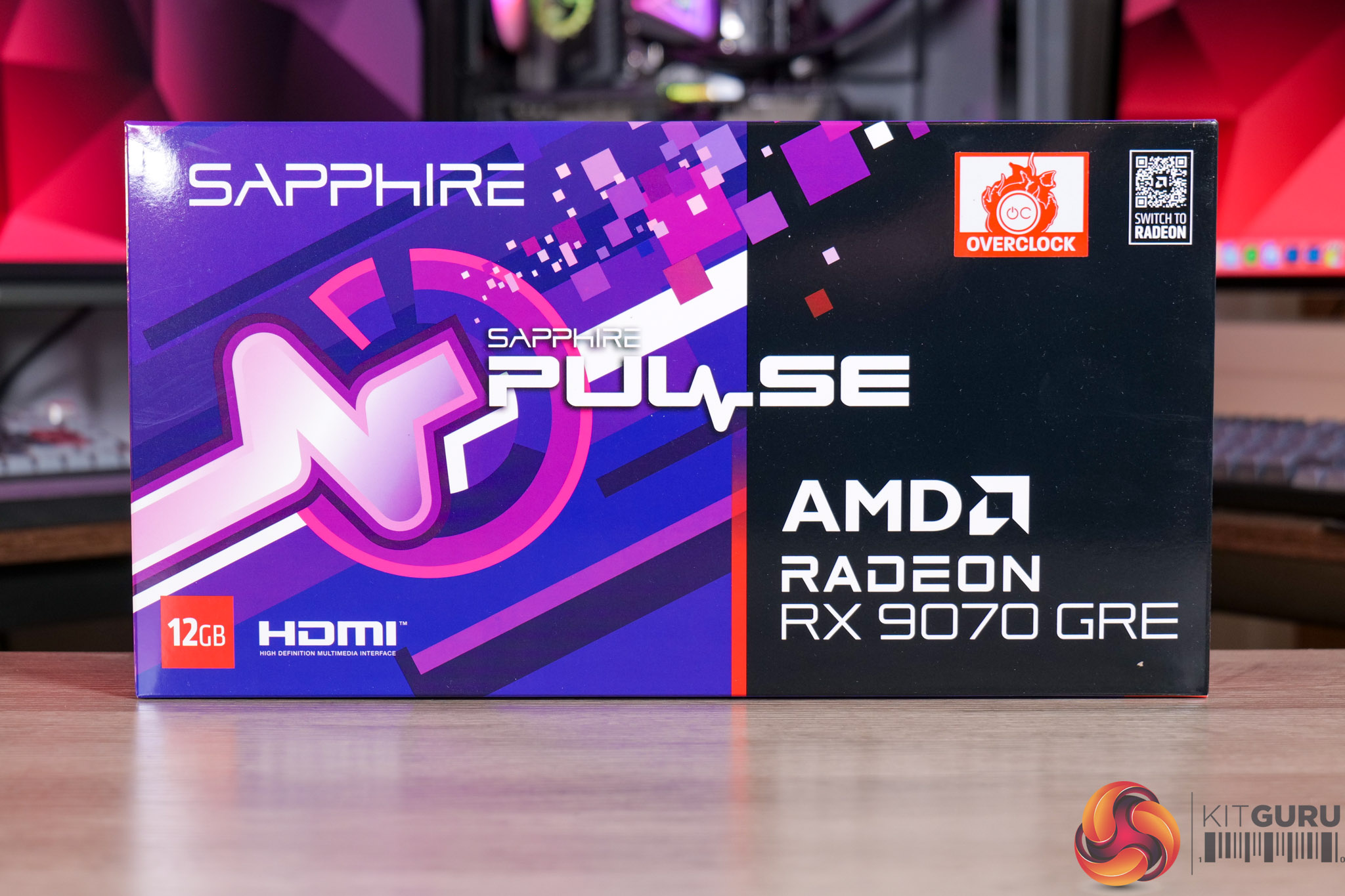
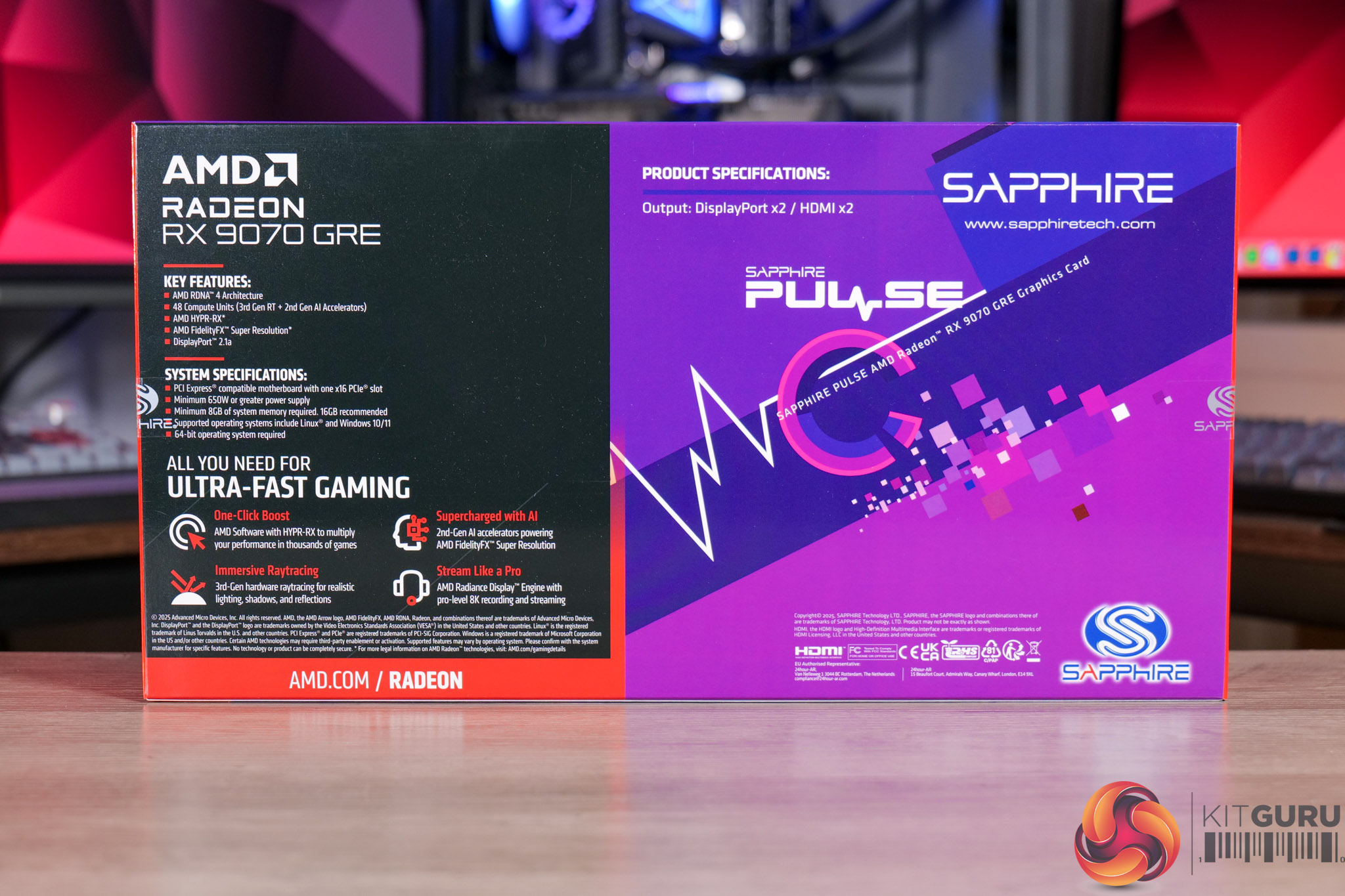
The Sapphire RX 9070 GRE Pulse ships in a colour box, with the Pulse logo taking centre stage on the front. On the back, Sapphire highlights key features of the GPU and RDNA 4 architecture.
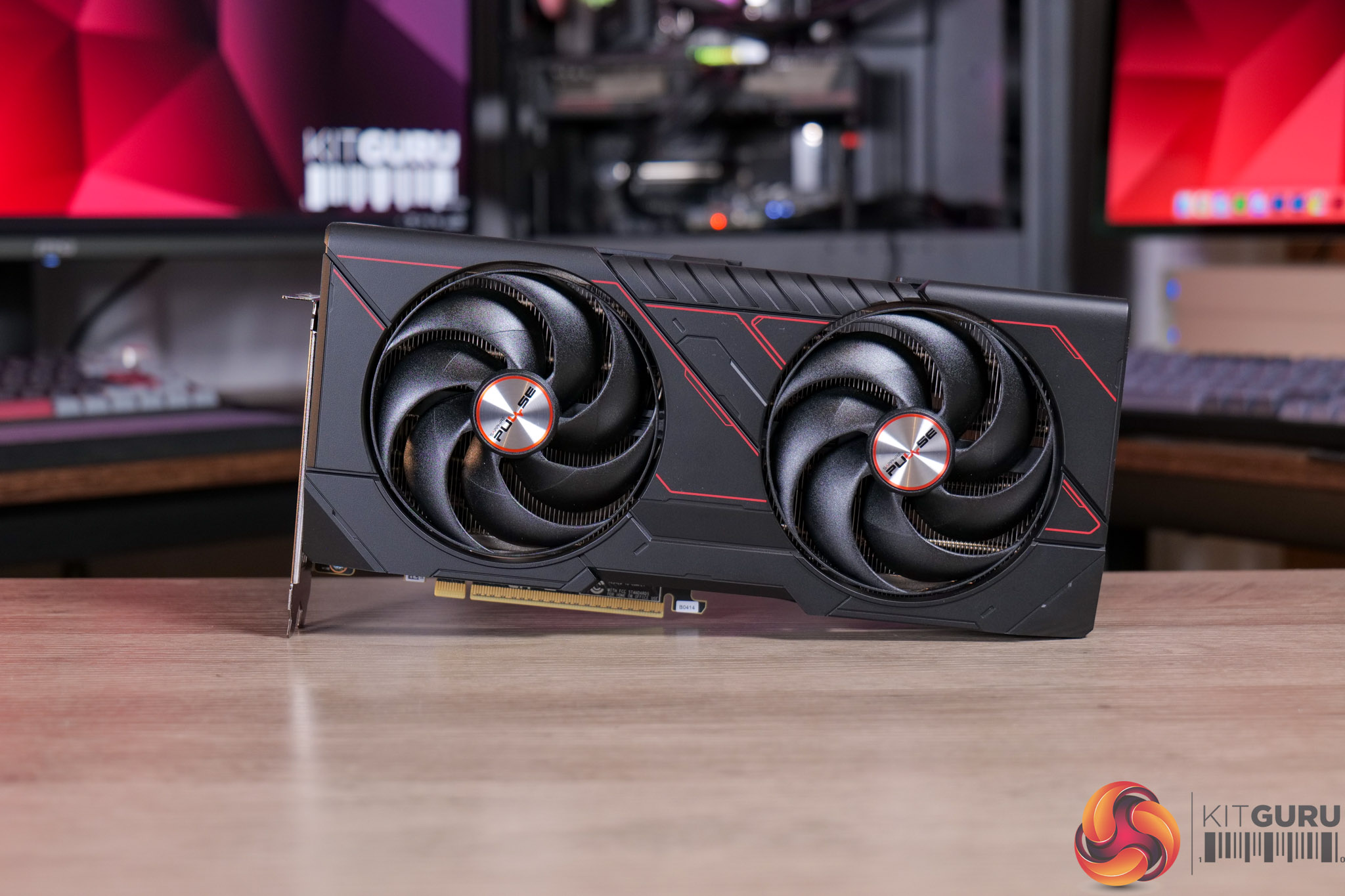
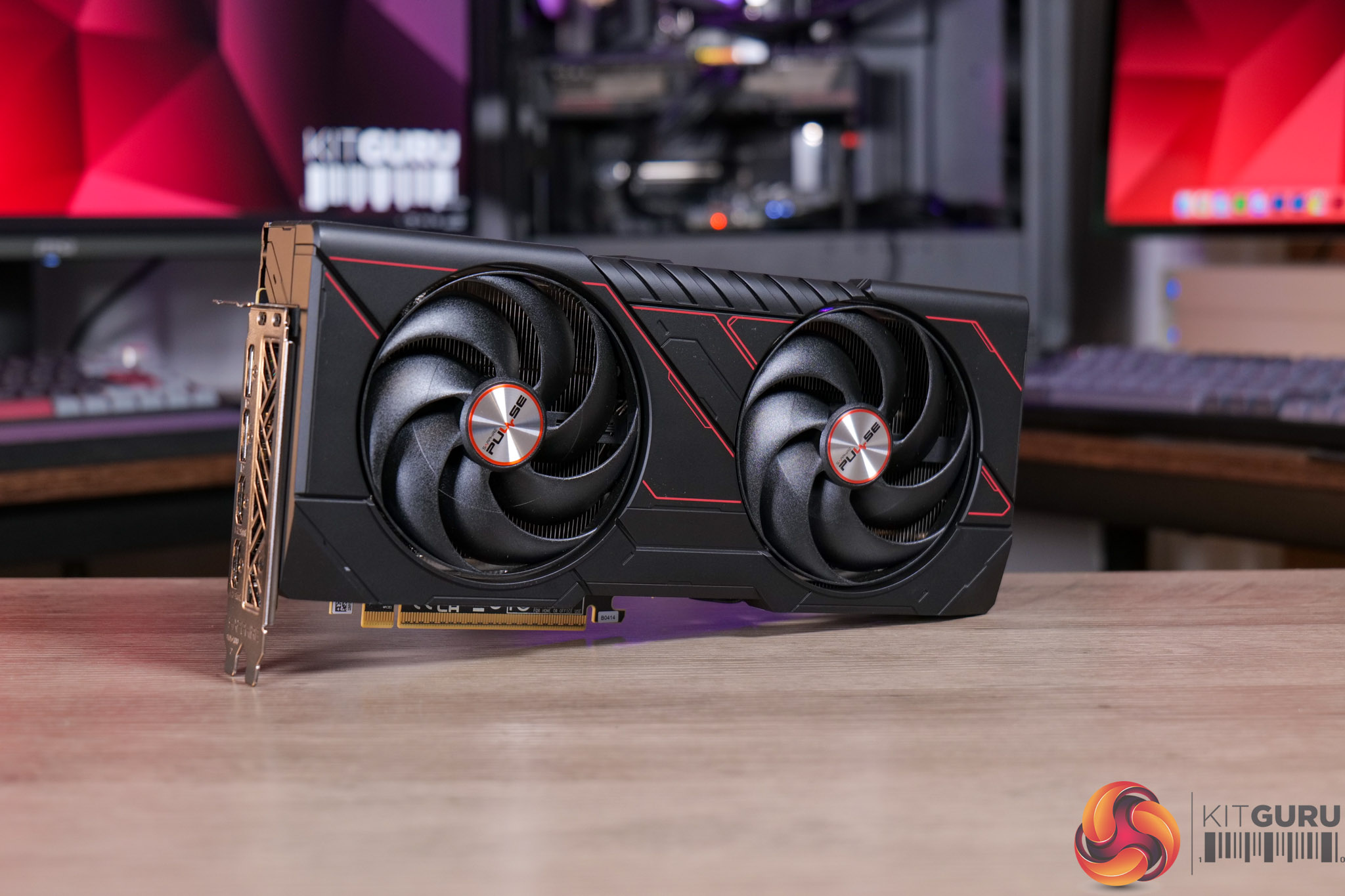
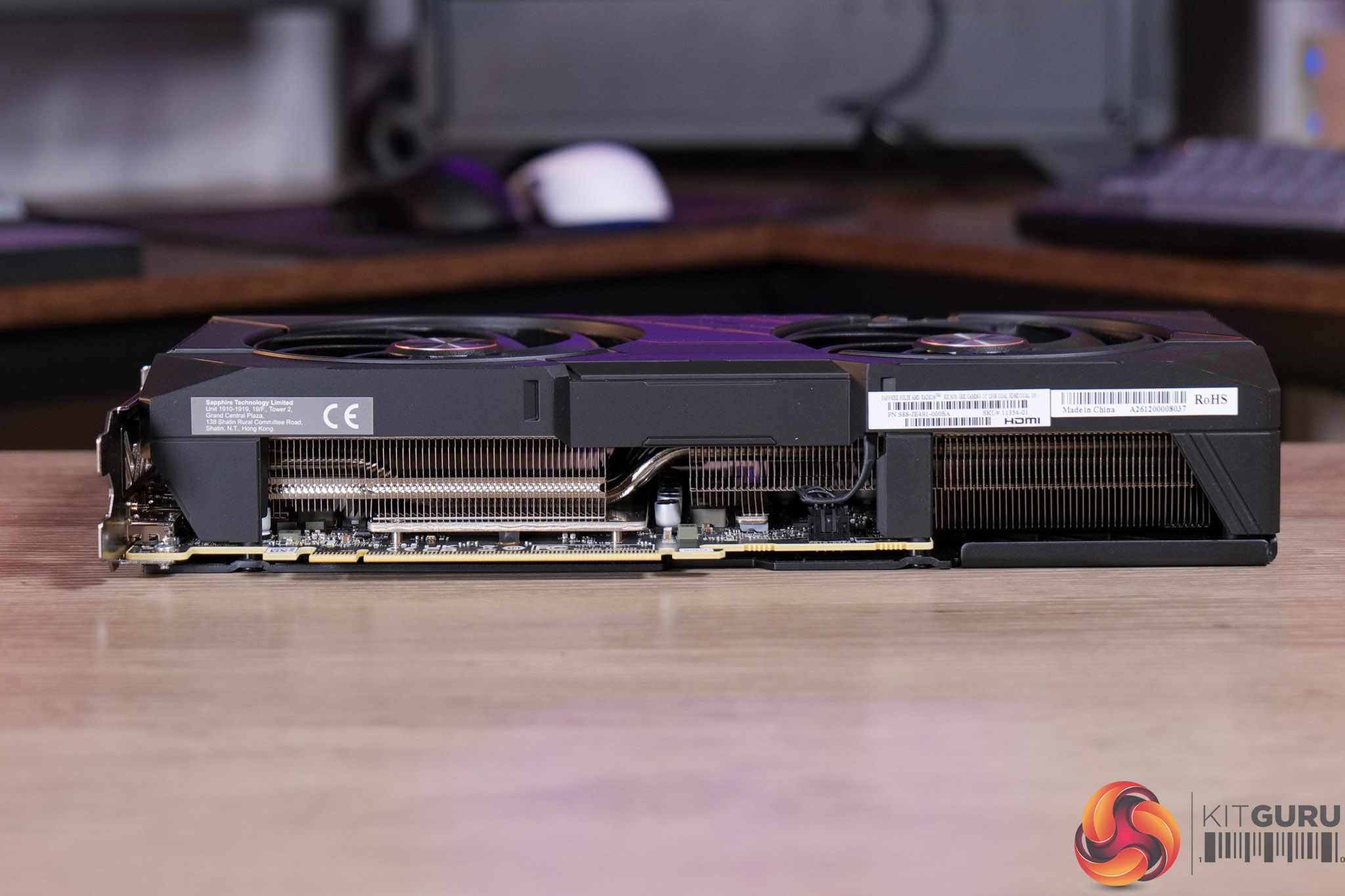
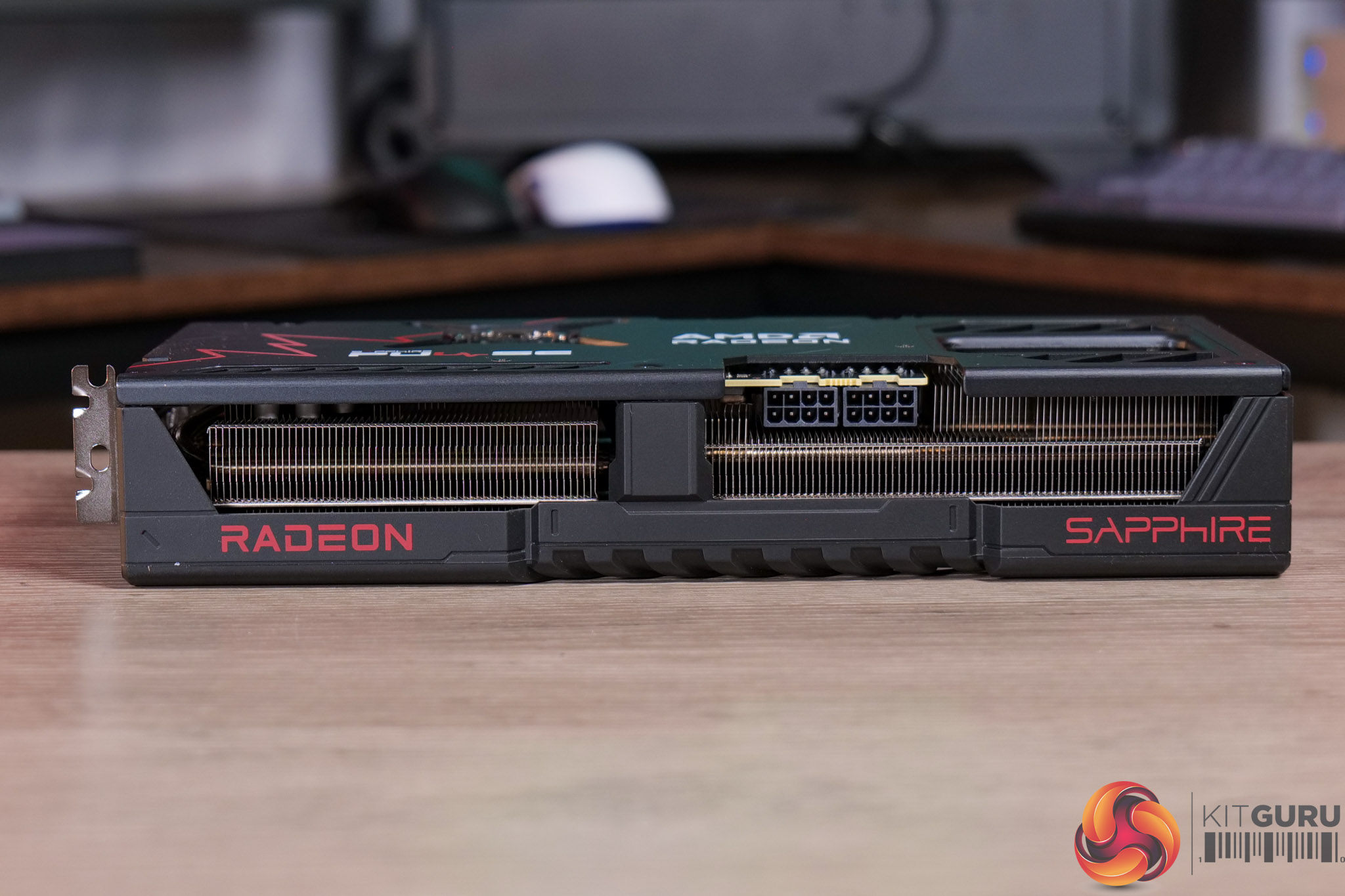
In terms of design, it's very similar overall to the RX 9070 Pulse that we reviewed last year – but that's no bad thing. It features a black plastic shroud with some red accents, while the cooling setup incorporates two 100mm fans.
It's also pretty compact by modern standards, given Sapphire lists the dimensions at measuring 280 x 120.25 x 51.5mm. It's nice to know it should fit in pretty much all but the smallest cases on the market!
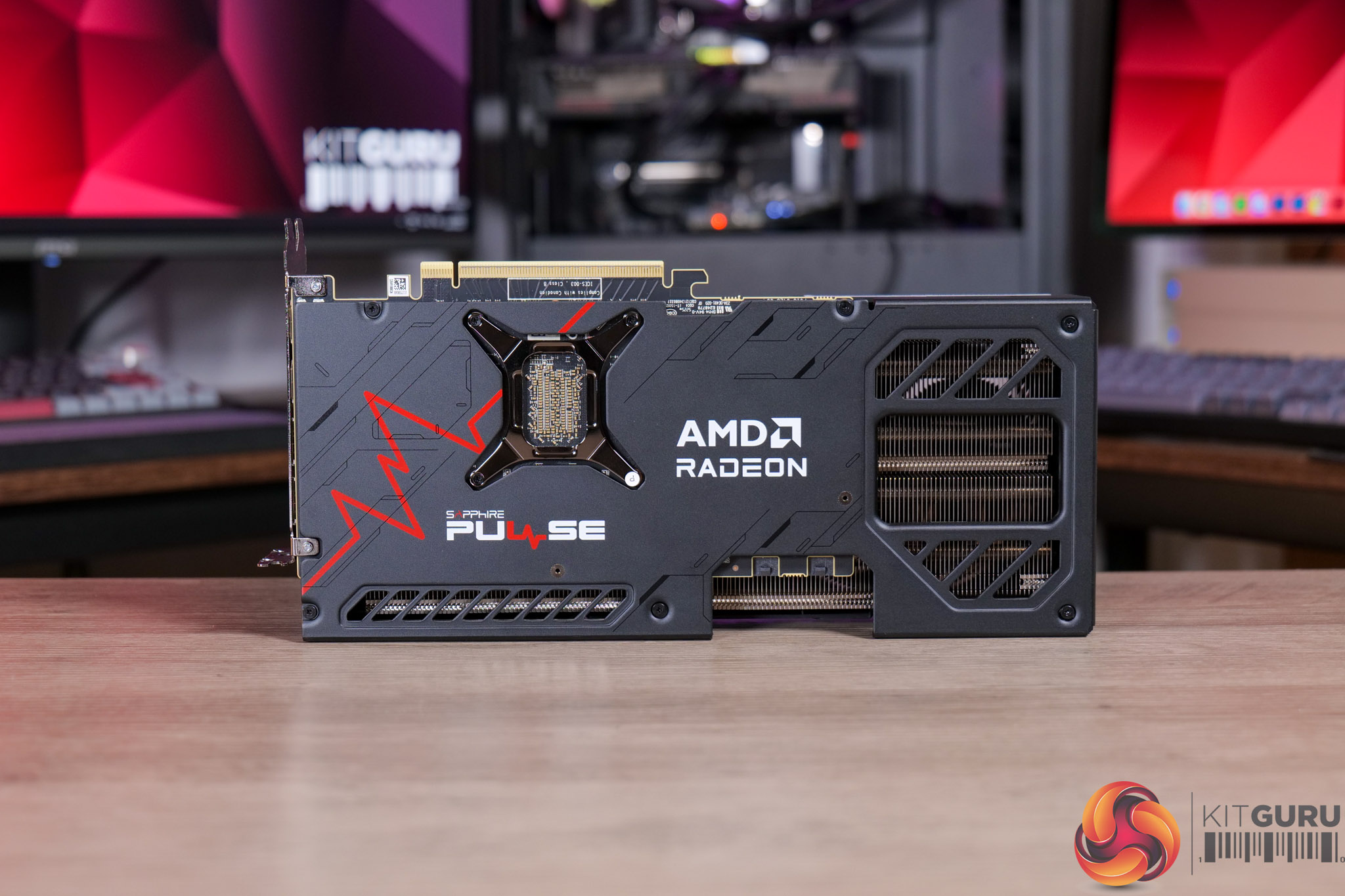
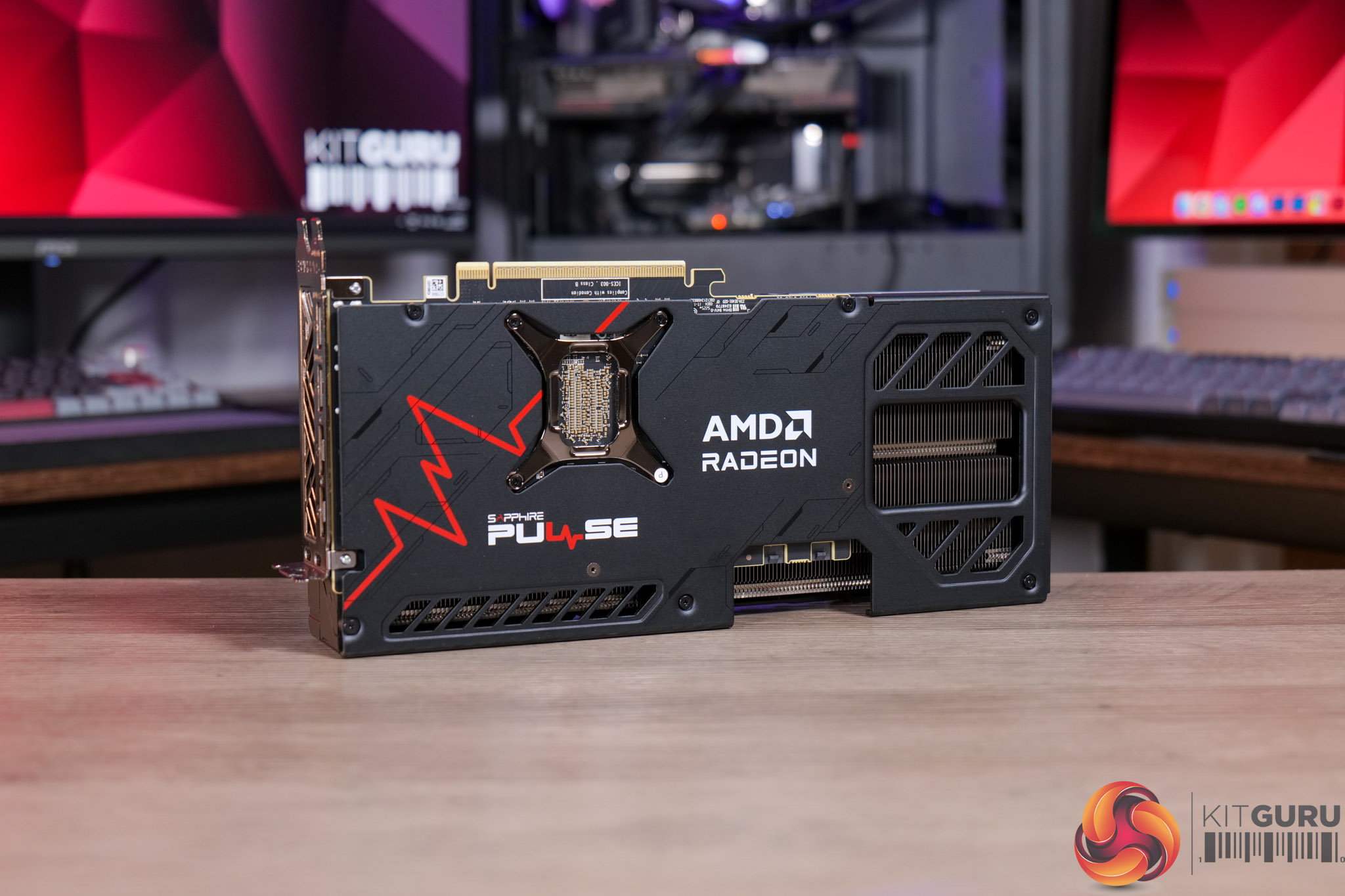
We find a metal backplate, too, with some more red accenting, an EKG graph, plus a moderately sized flow-through area.
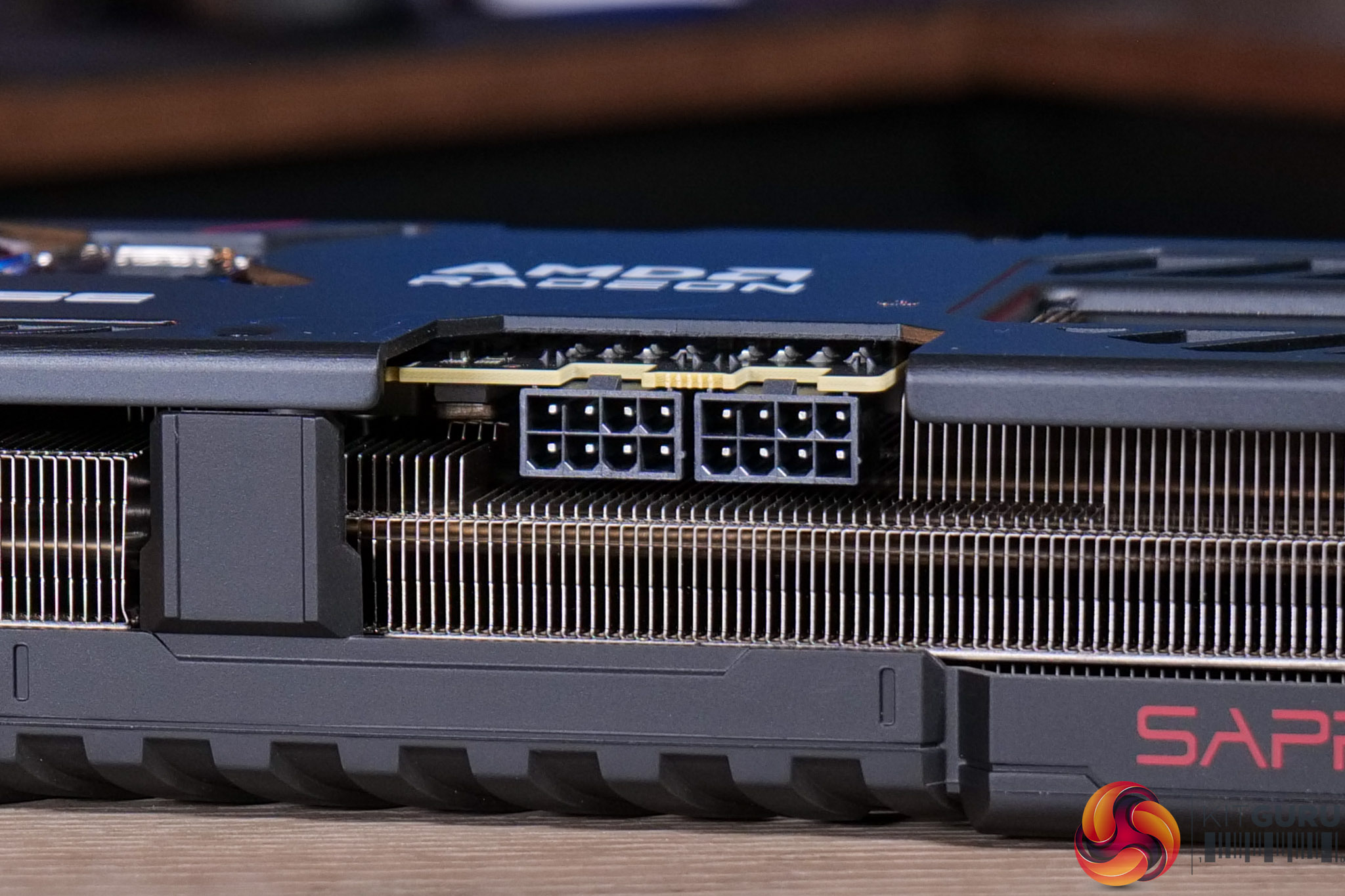
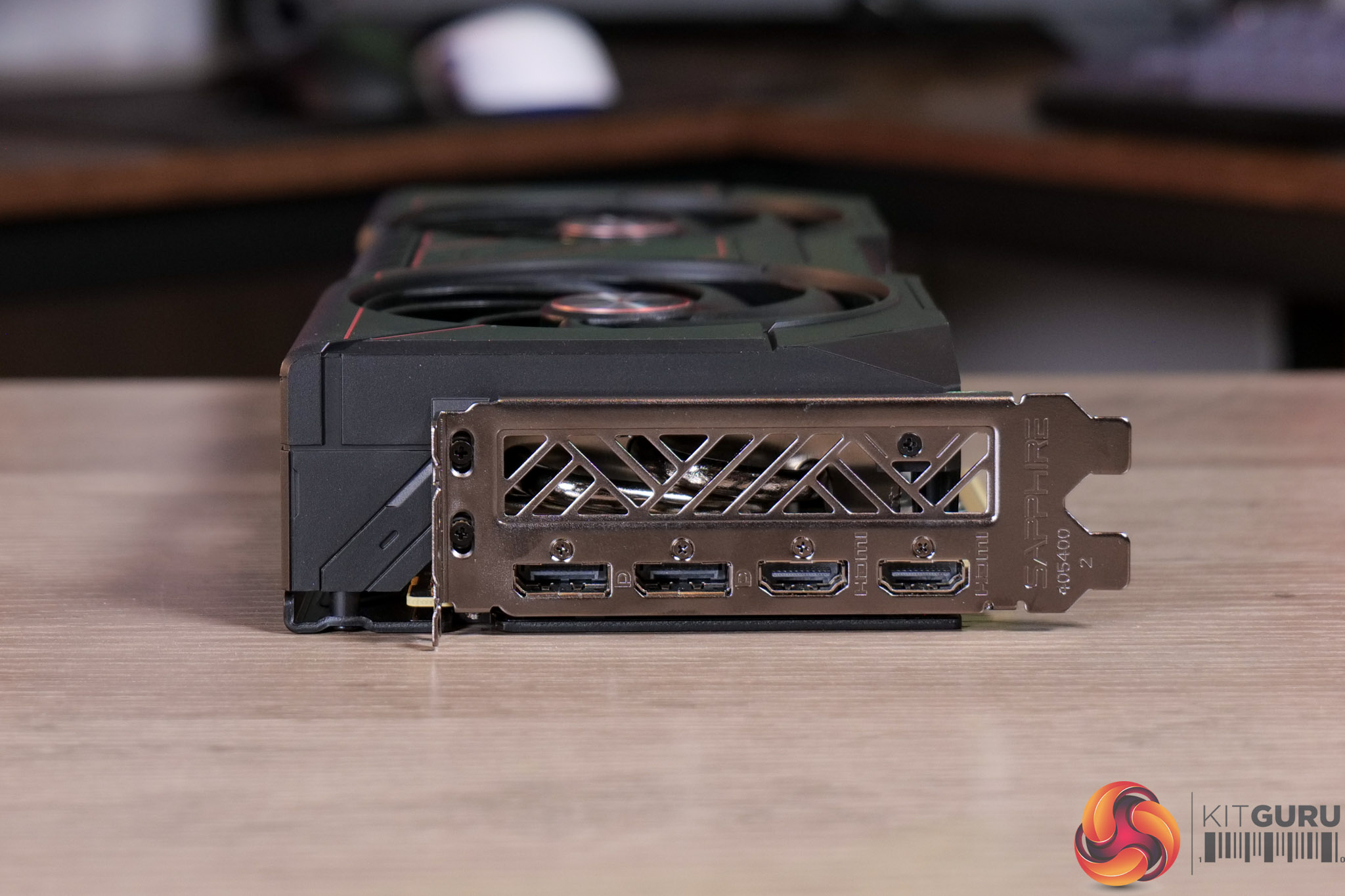
Power is delivered by 2x 8-pin PCIe connectors – no 12VHPWR here! – while display outputs consist of 2x HDMI 2.1 and 2x DisplayPort 2.1 (UHBR13.5).
Driver Notes
- All AMD GPUs (except RX 9070 GRE) were benchmarked with the 26.5.2 driver.
- All Nvidia GPUs were benchmarked with the 596.49 driver.
- AMD RX 9070 GRE was benchmarked with the 26.5.2-Win11-C driver supplied to press.
Results are only directly comparable where this exact configuration has been used.
Test System:
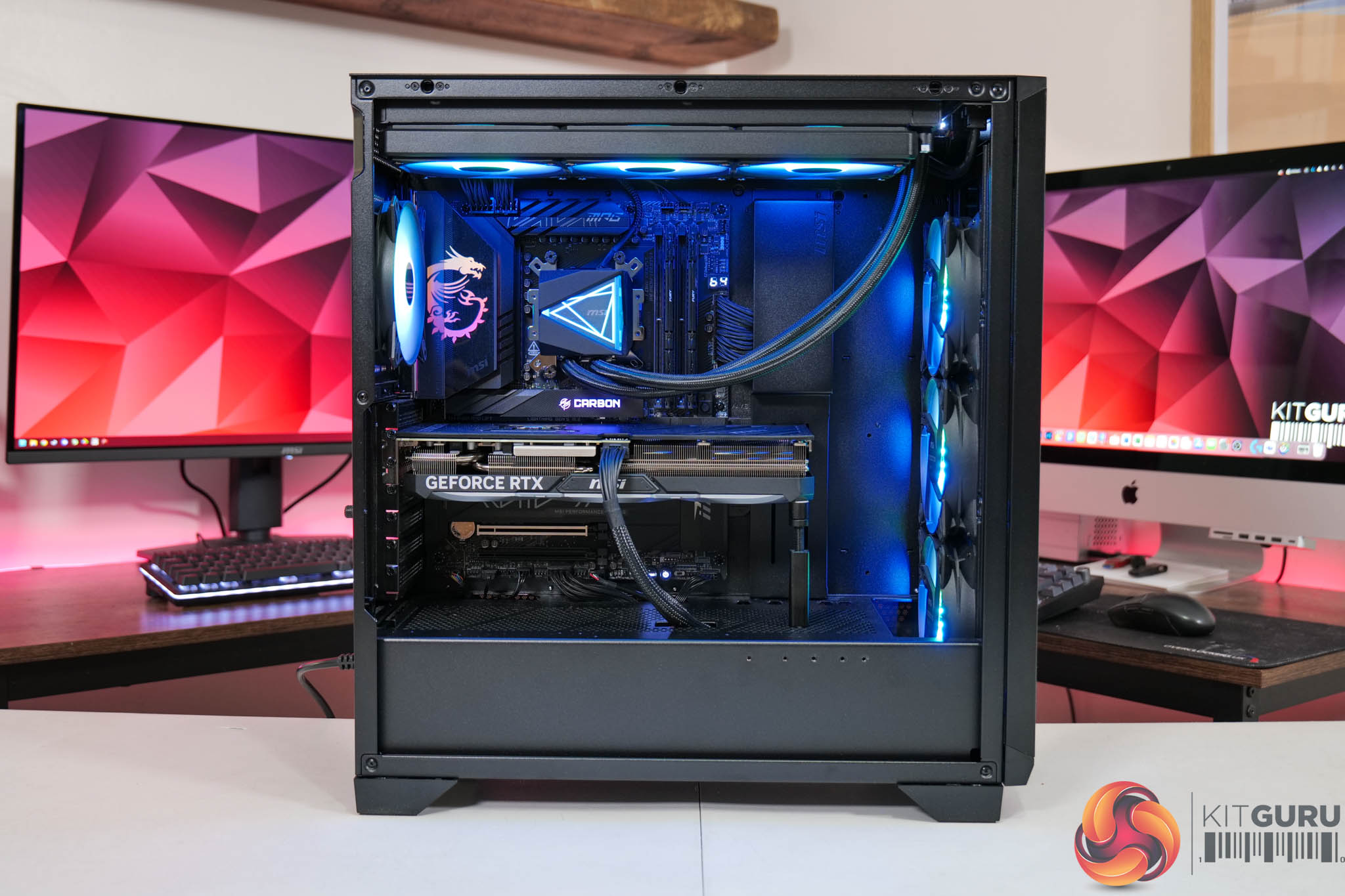
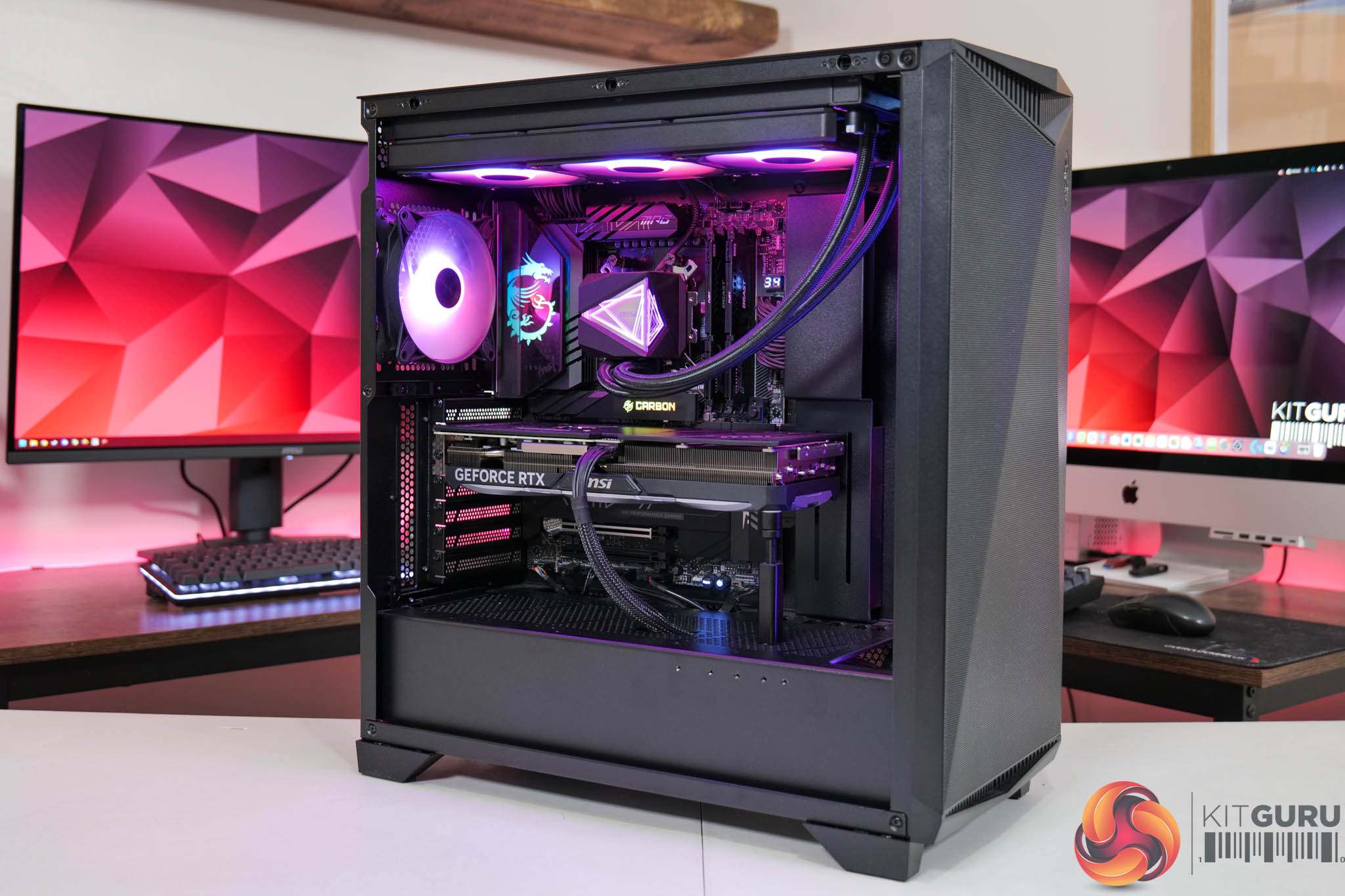
We test using a custom built system powered by MSI, based on AMD's Zen 5 platform. You can view the Powered by MSI store on AWD-IT's website HERE.
| CPU |
AMD Ryzen 7 9800X3D
|
| Motherboard |
MSI MPG X870E Carbon WiFi
|
| Memory |
64GB (2x32GB) Kingston Fury Beast DDR5 6000MT/s CL30
|
| Graphics Card |
Varies
|
| SSD |
4TB Kingston NV3 Gen 4 PCIe NVMe
|
| Chassis | MSI MPG Gungnir 300R Airflow |
| CPU Cooler |
MSI MAG CoreLiquid i360
|
| Power Supply |
MSI MPG Ai1600TS
|
| Operating System |
Windows 11 25H2
|
| Monitor |
MSI MPG 321URX QD-OLED
|
| Resizable BAR |
Enabled for all supported GPUs
|
Comparison Graphics Cards List
- PowerColor RX 9060 XT Hellhound 16GB
- Sapphire RX 9070 Pulse 16GB
- Sapphire RX 9070 XT Pulse 16GB
- Palit RTX 5060 Ti Infinity 3 16GB
- Nvidia RTX 5070 FE 12GB
- MSI RTX 5070 Ti Ventus 3X 16GB
All cards were tested at reference specifications. For factory overclocked cards, this means we manually ‘undo' the overclock via MSI Afterburner or AMD/Intel's built-in tuning tools. Or, for cards like the Sapphire RX 7900 GRE Nitro+, we enable the reference-clocked BIOS instead of the default OC BIOS.
Software and Games List
- Alan Wake II (DX12)
- Assassin's Creed Shadows (DX12)
- Black Myth: Wukong (DX12)
- Clair Obscur: Expedition 33 (DX12)
- Cyberpunk 2077 (DX12)
- Death Stranding 2: On the Beach (DX12)
- Doom: The Dark Ages (Vulkan)
- Final Fantasy XVI (DX12)
- Forza Horizon 6 (DX12)
- Horizon Forbidden West (DX12)
- Kingdom Come: Deliverance II (DX12)
- A Plague Tale: Requiem (DX12)
- Resident Evil Requiem (DX12)
- Starfield (DX12)
- Star Wars Outlaws (DX12)
We run each benchmark/game three times, and present mean averages in our graphs. We use FrameView to measure average frame rates as well as 1% low values (99th percentile) across our three runs.
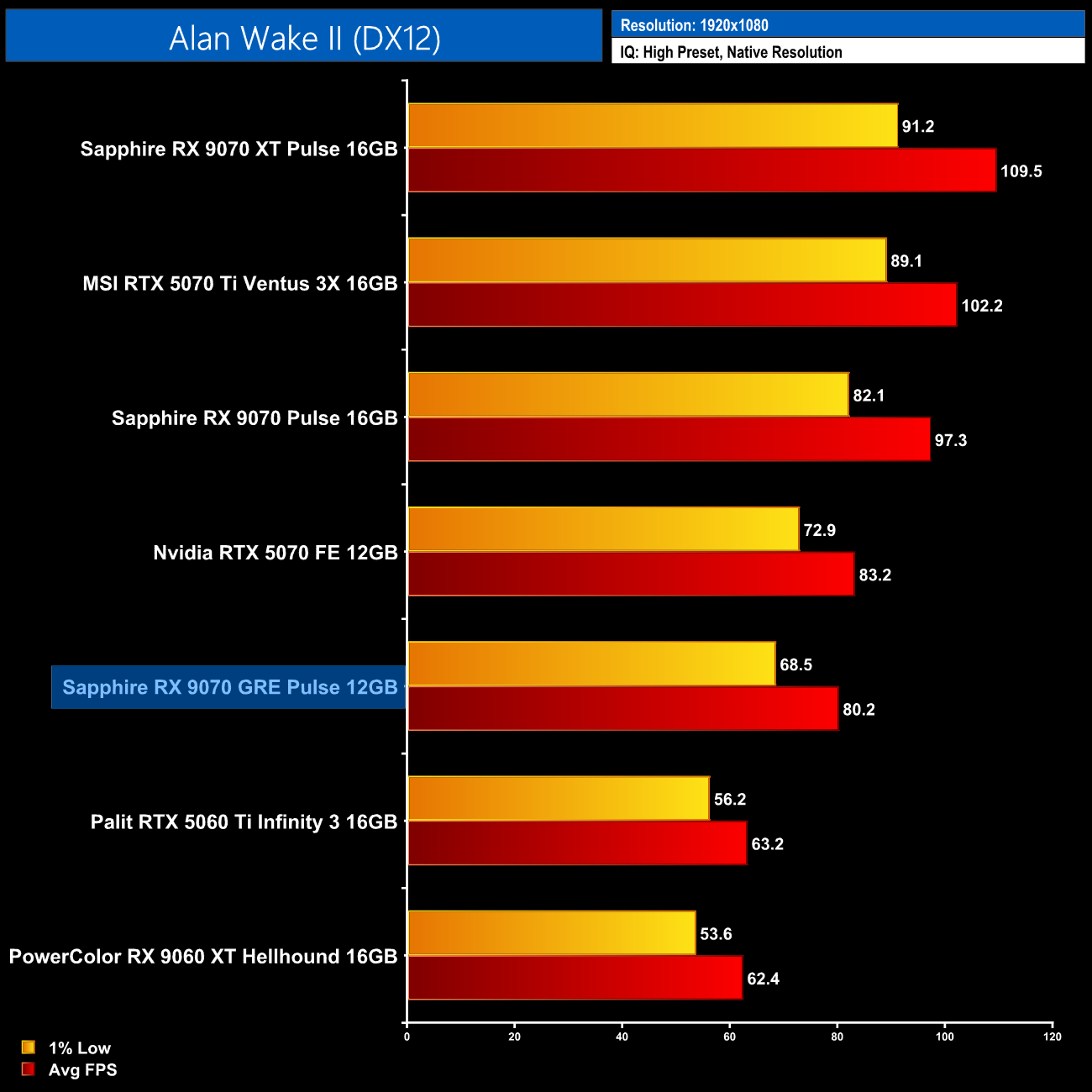
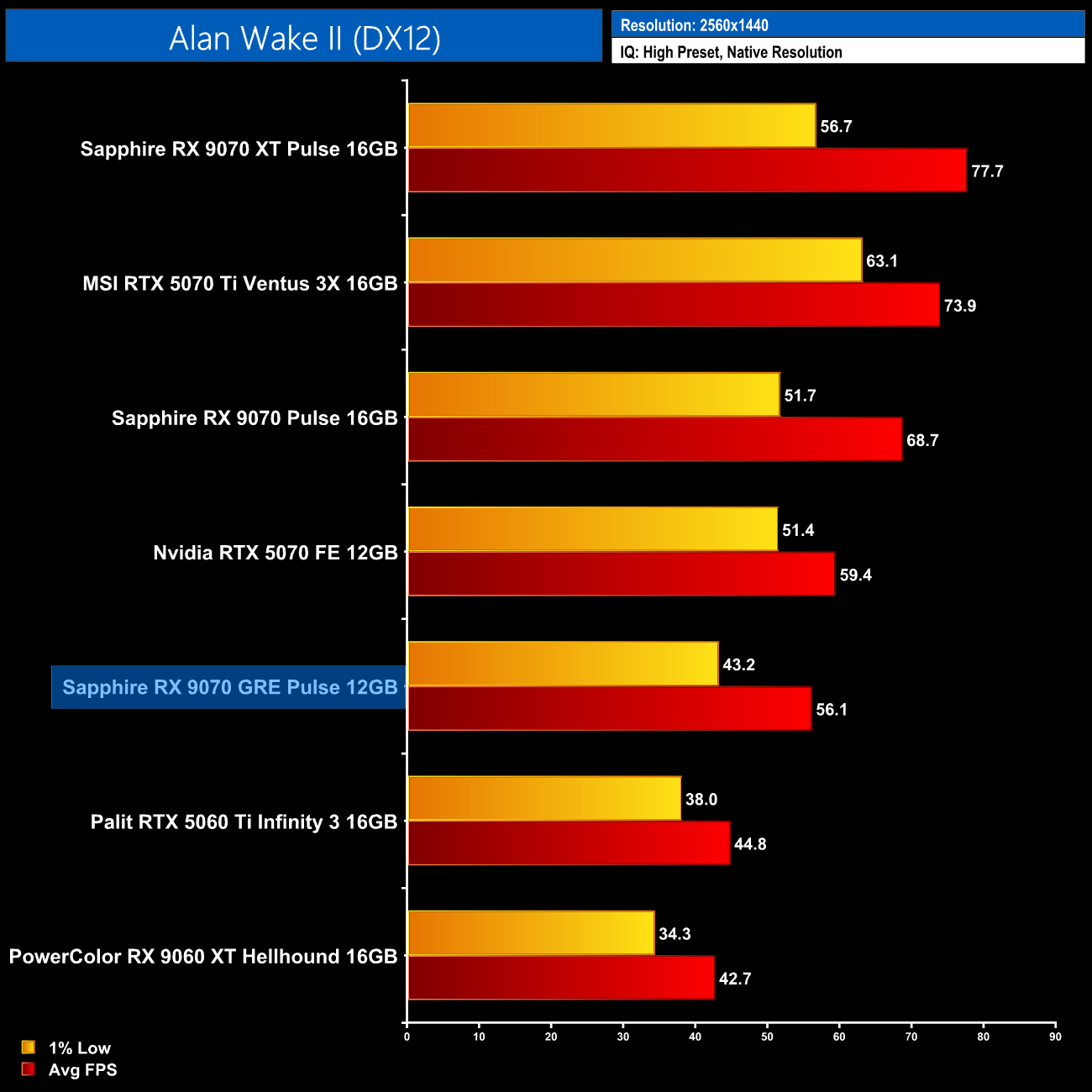
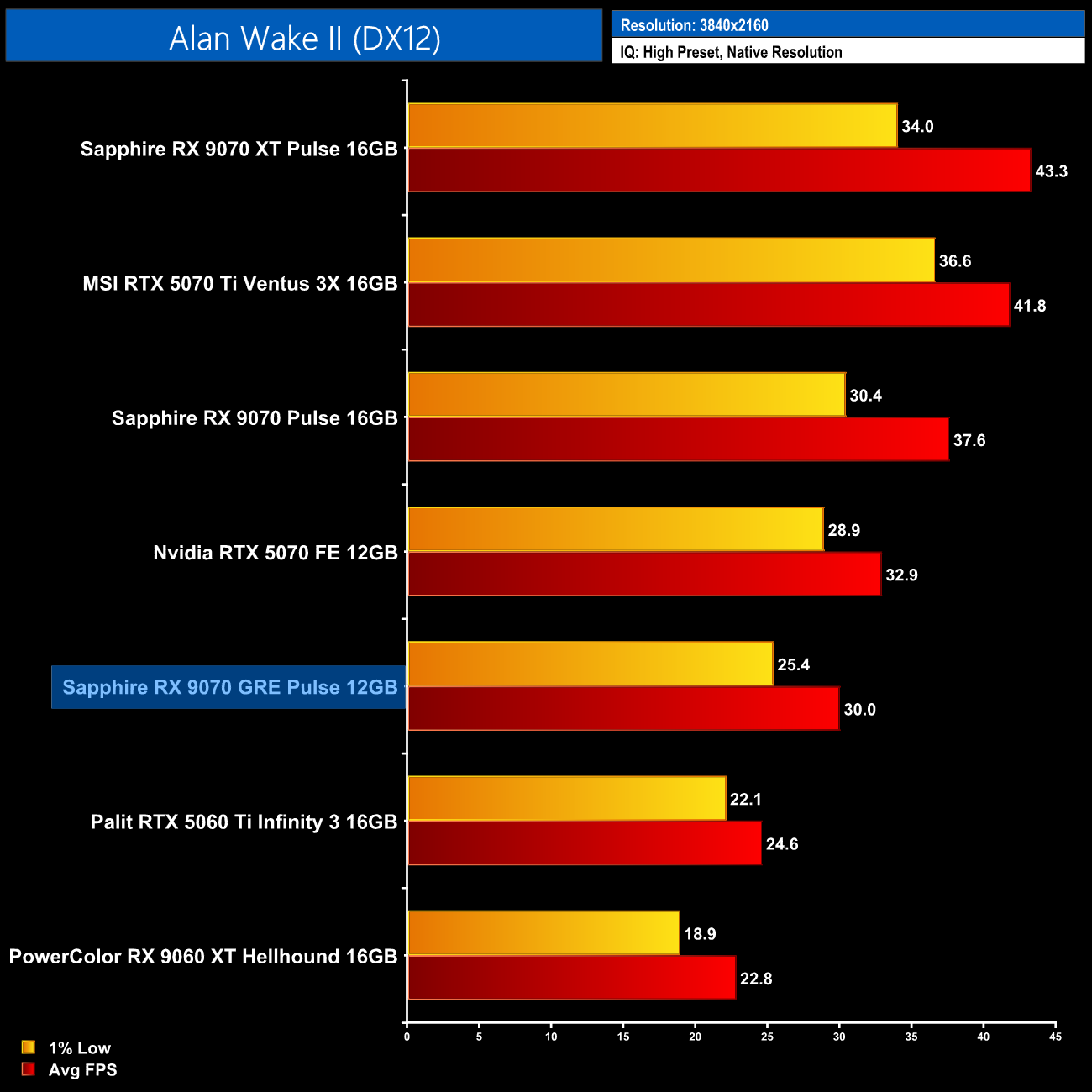
Alan Wake 2 is a 2023 survival horror game developed by Remedy Entertainment and published by Epic Games Publishing. A sequel to Alan Wake, the story follows best-selling novelist Alan Wake, who has been trapped in an alternate dimension for 13 years, as he attempts to escape by writing a horror story involving an FBI special agent named Saga Anderson. The game was released for PlayStation 5, Windows, and Xbox Series X/S on 27 October 2023. (Wikipedia).
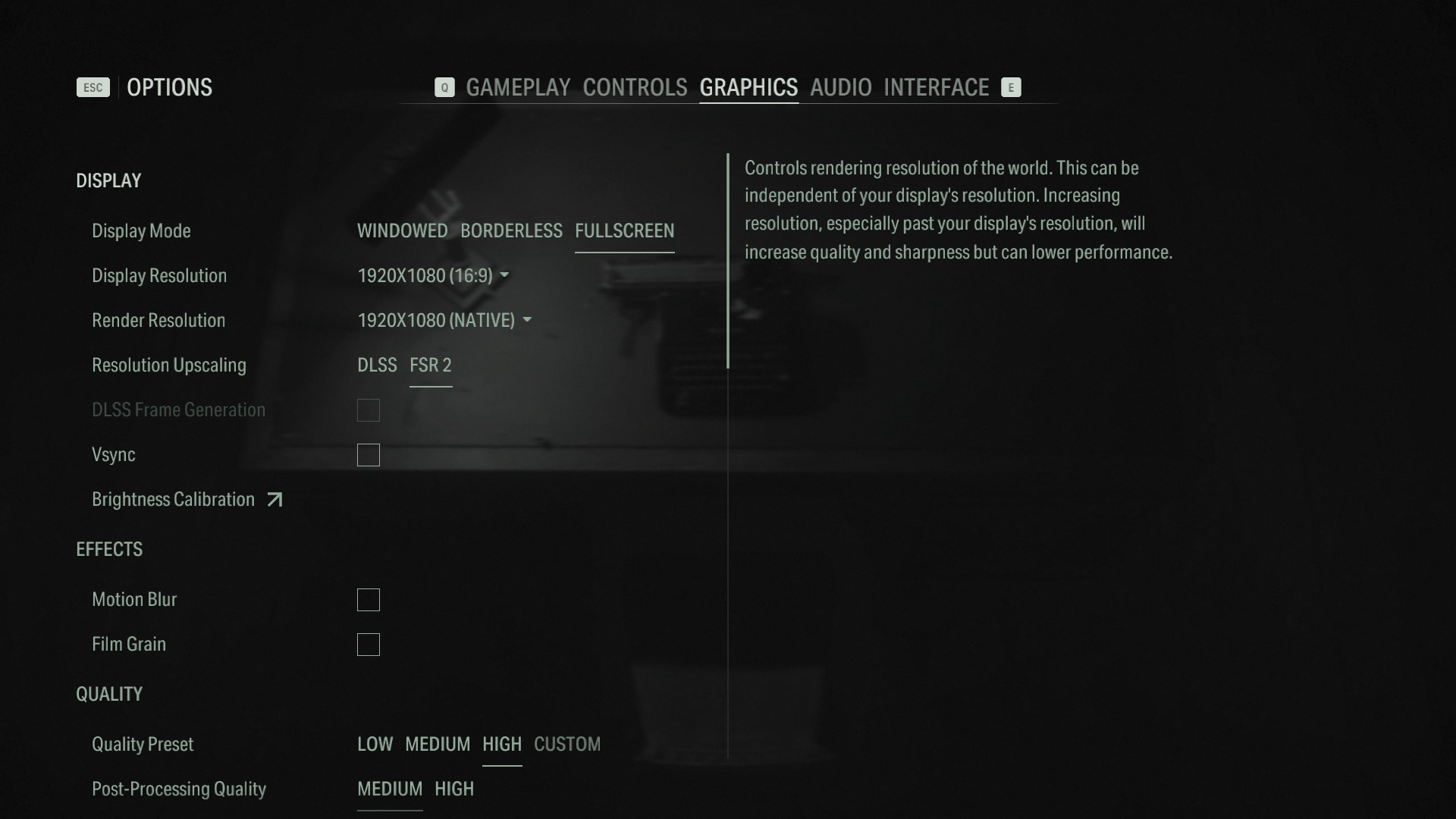
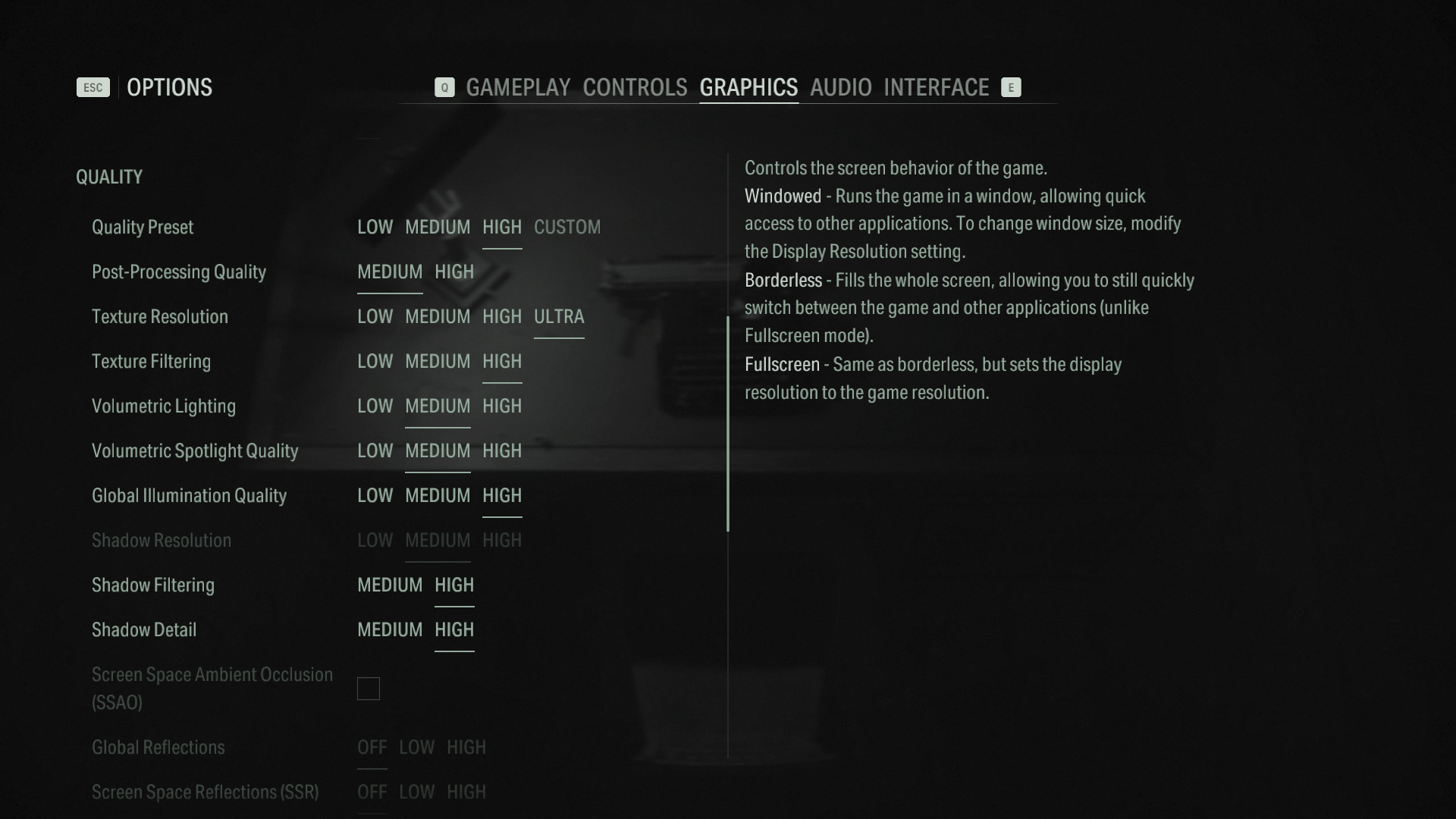
Engine: Northlight. We test using the High preset, FSR set to native resolution, DX12 API.

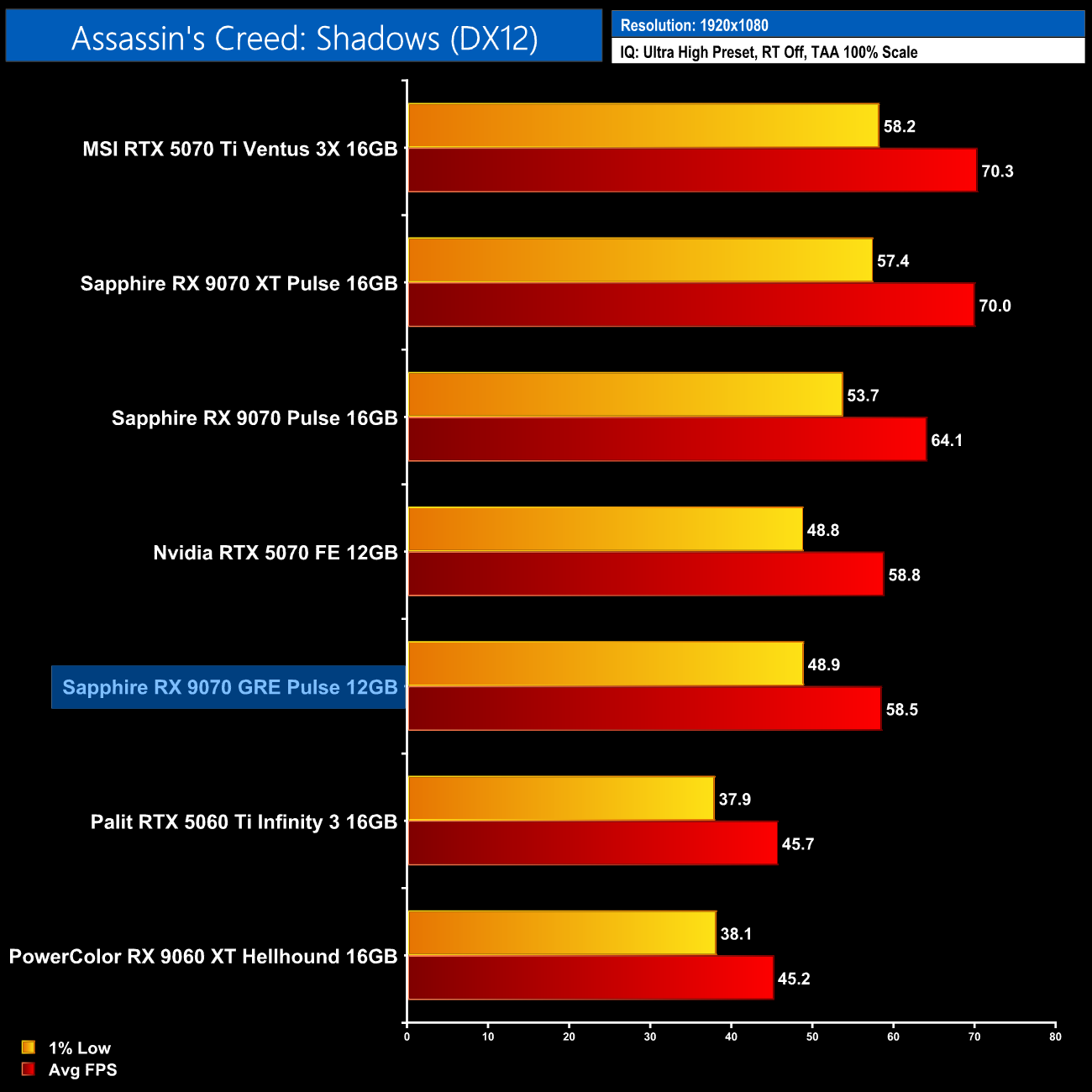
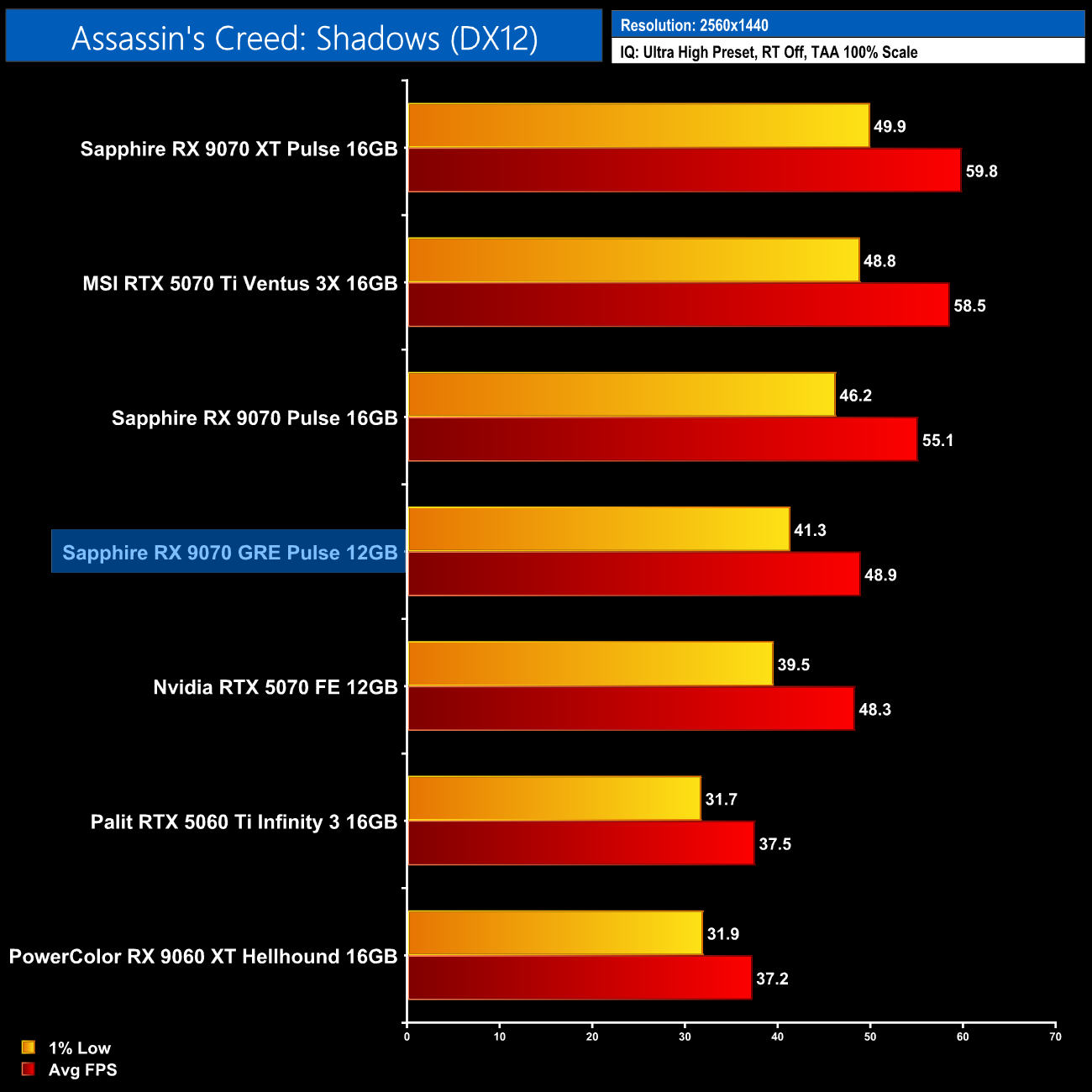
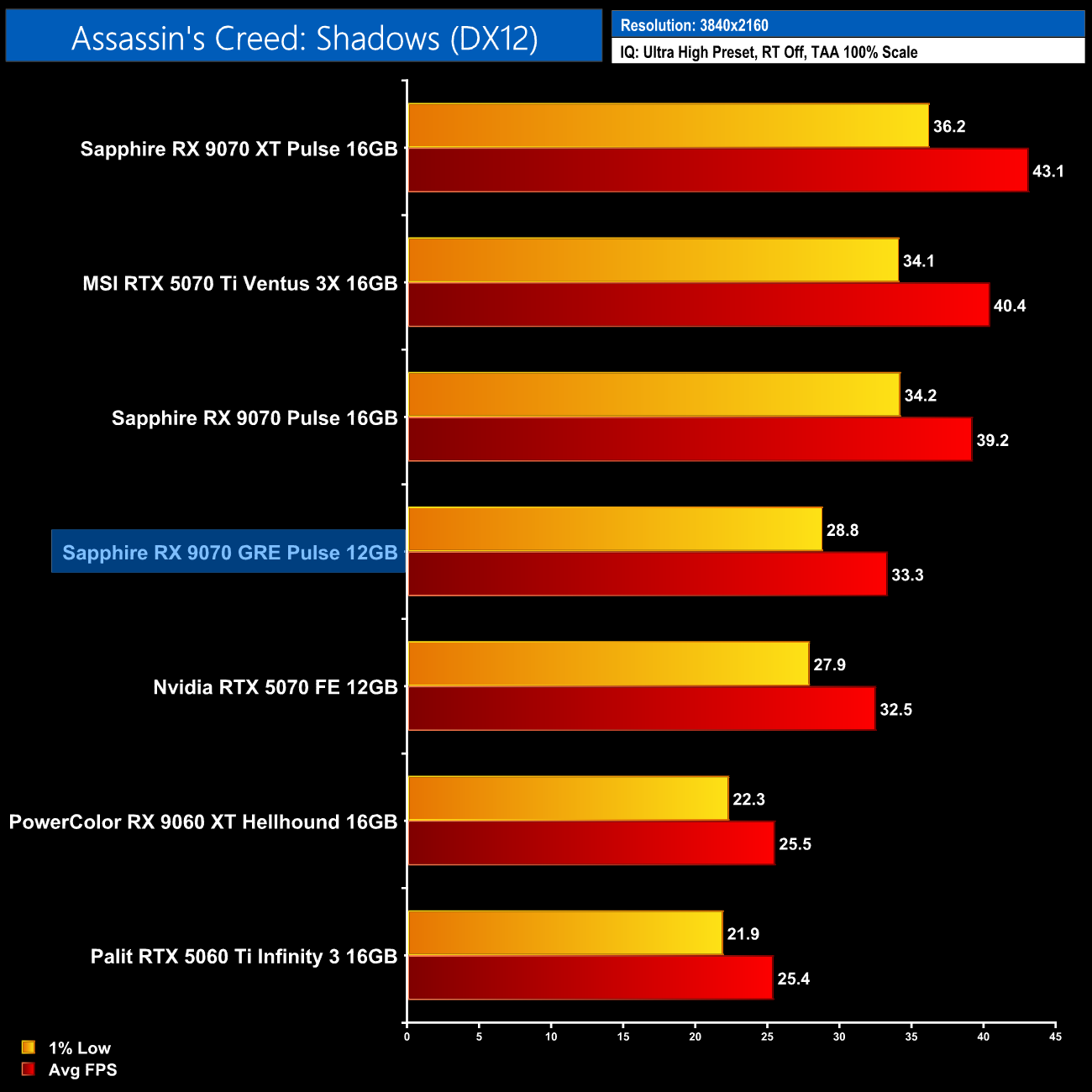
Assassin's Creed Shadows is a 2025 action role-playing game developed by Ubisoft Quebec and published by Ubisoft. The game is the fourteenth major installment in the Assassin's Creed series and the successor to Assassin's Creed Mirage (2023). Shadows was released for macOS, PlayStation 5, Windows, and Xbox Series X/S on March 20, 2025. (Wikipedia).
Engine: Ubisoft Anvil. We test using the Ultra High preset, RT Off, TAA 100% scale, DX12 API.
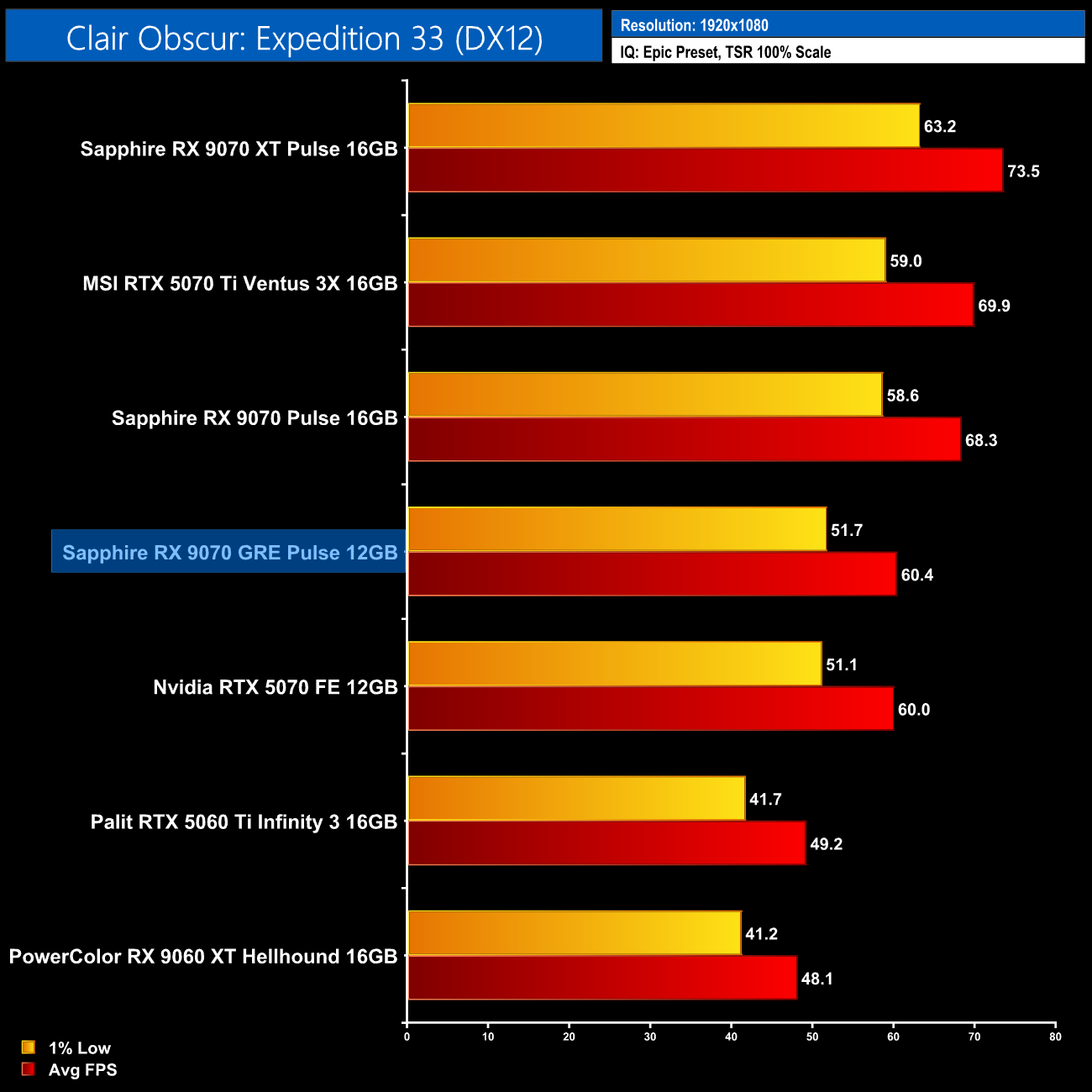
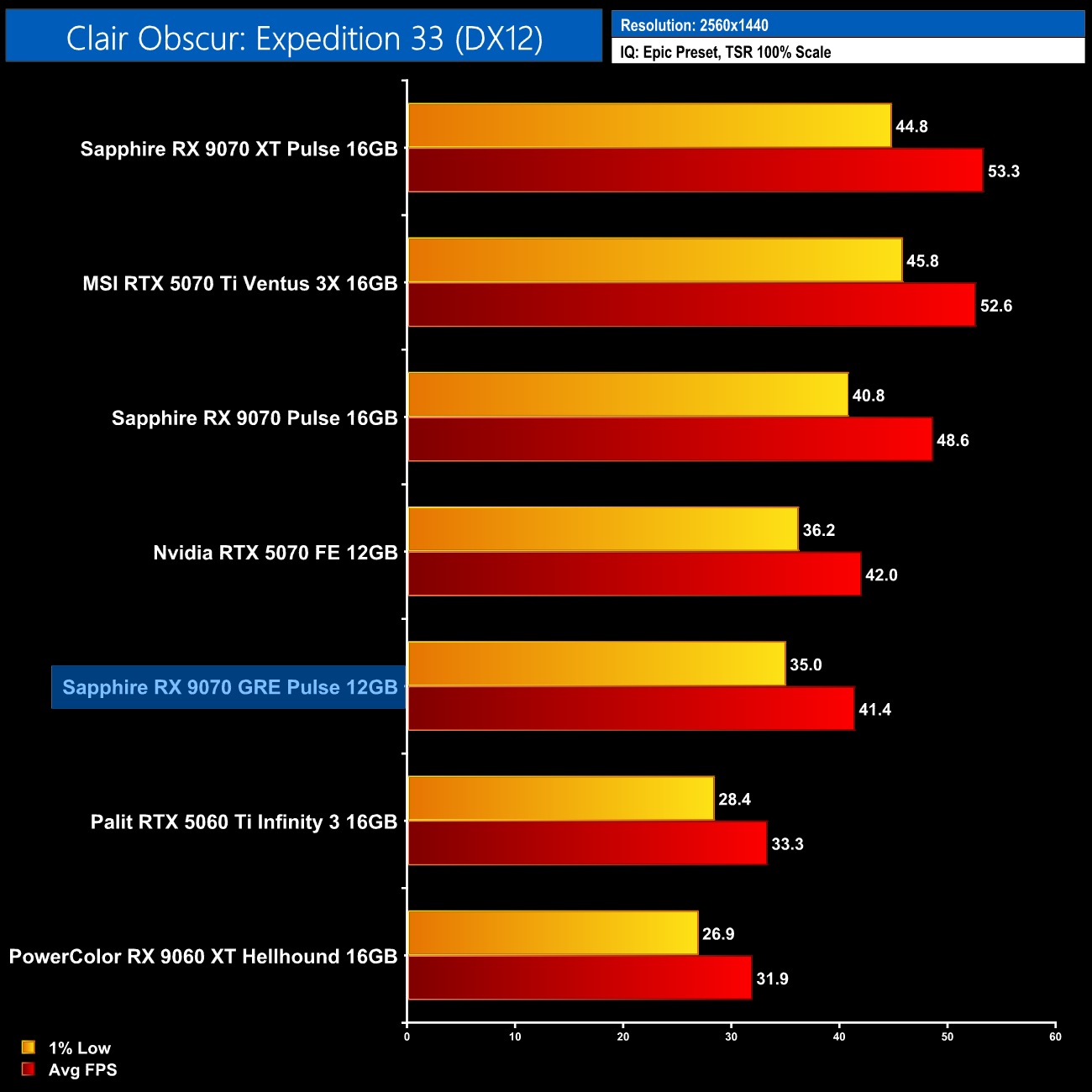
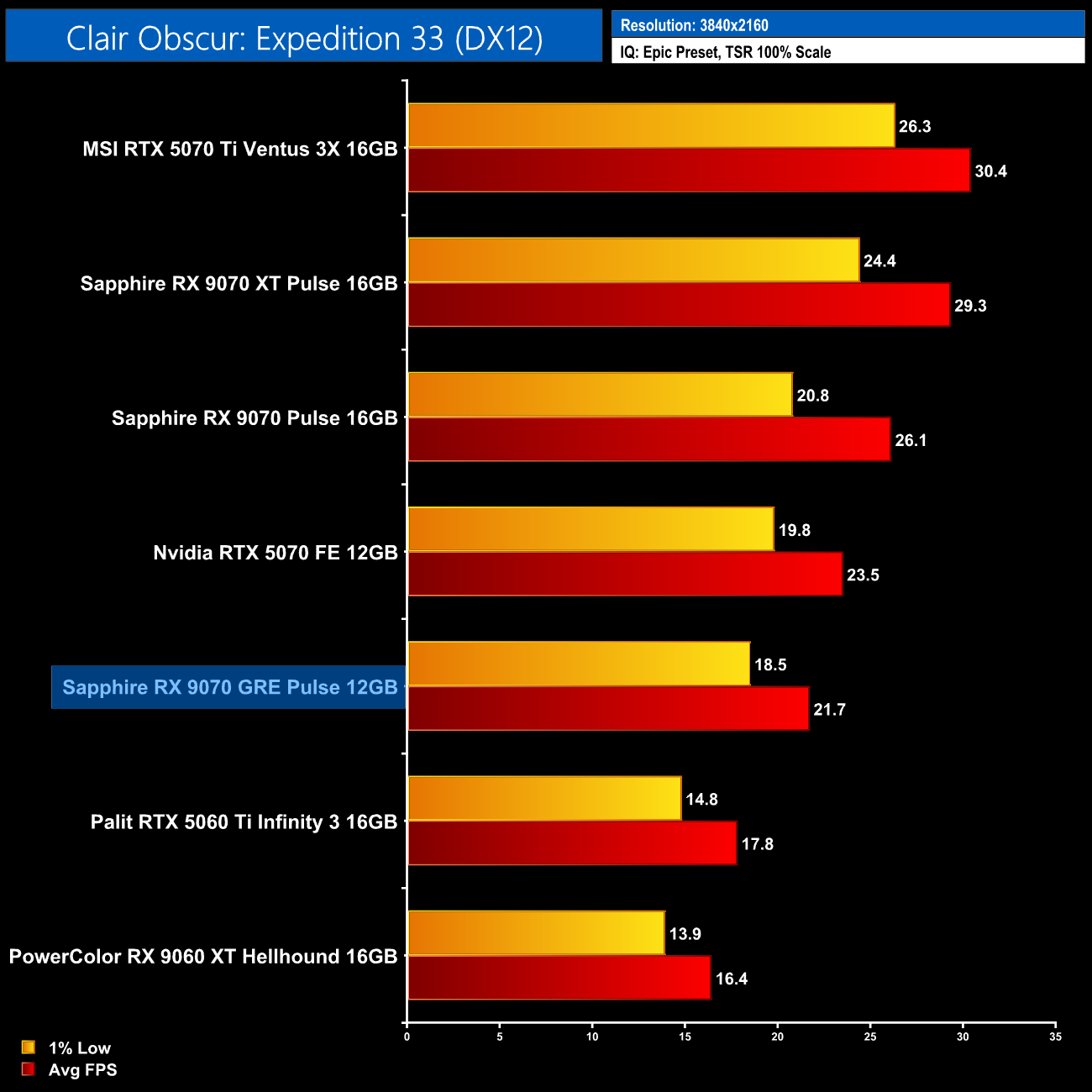
Clair Obscur: Expedition 33 is a 2025 role-playing video game developed by Sandfall Interactive and published by Kepler Interactive. Clair Obscur: Expedition 33 was released for PlayStation 5, Windows and Xbox Series X/S on 24 April 2025, and was available day one on Xbox Game Pass. The game received universal acclaim from critics for its narrative and themes, art direction, game direction, original soundtrack, gameplay, and performances. (Wikipedia).
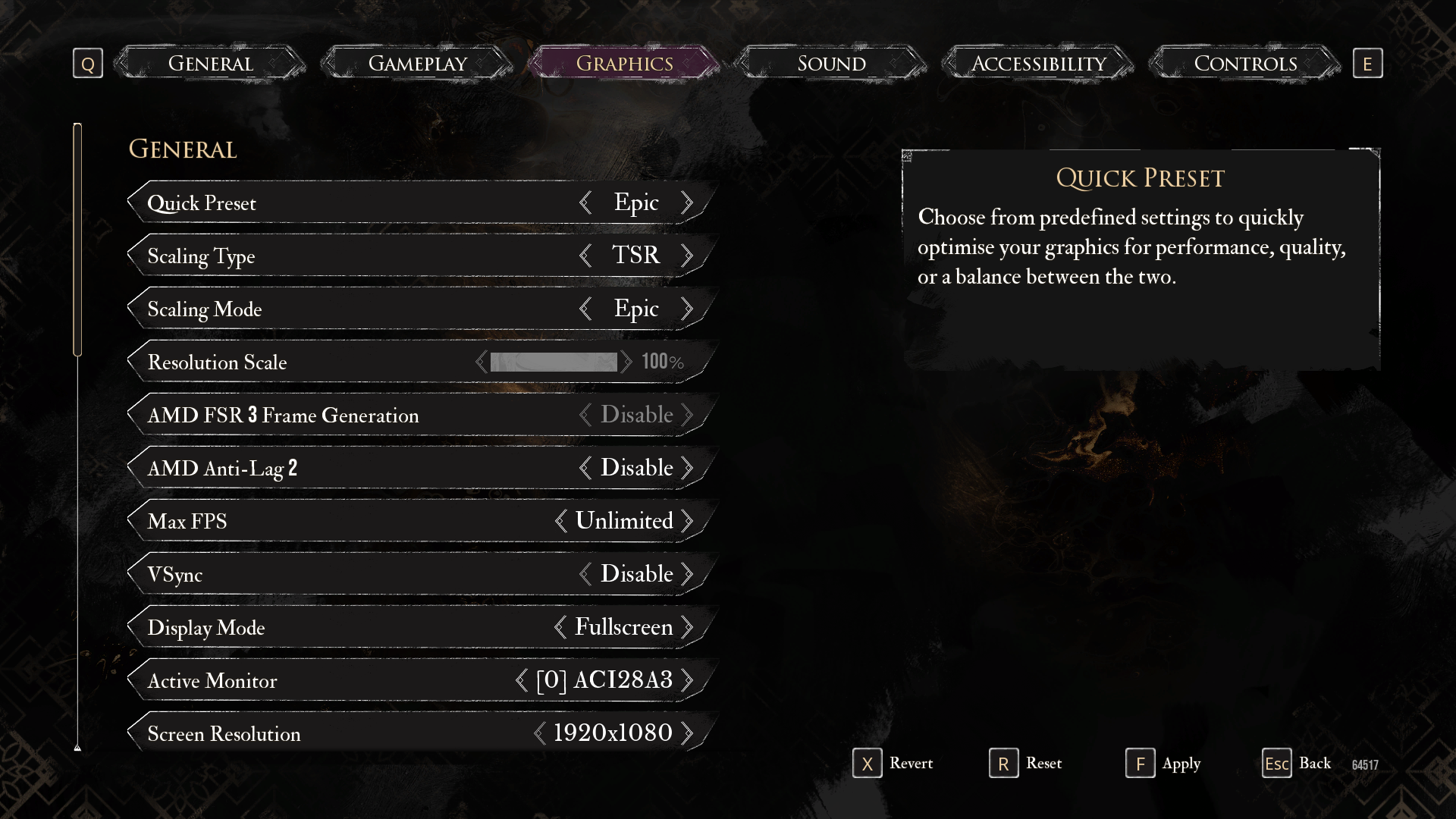
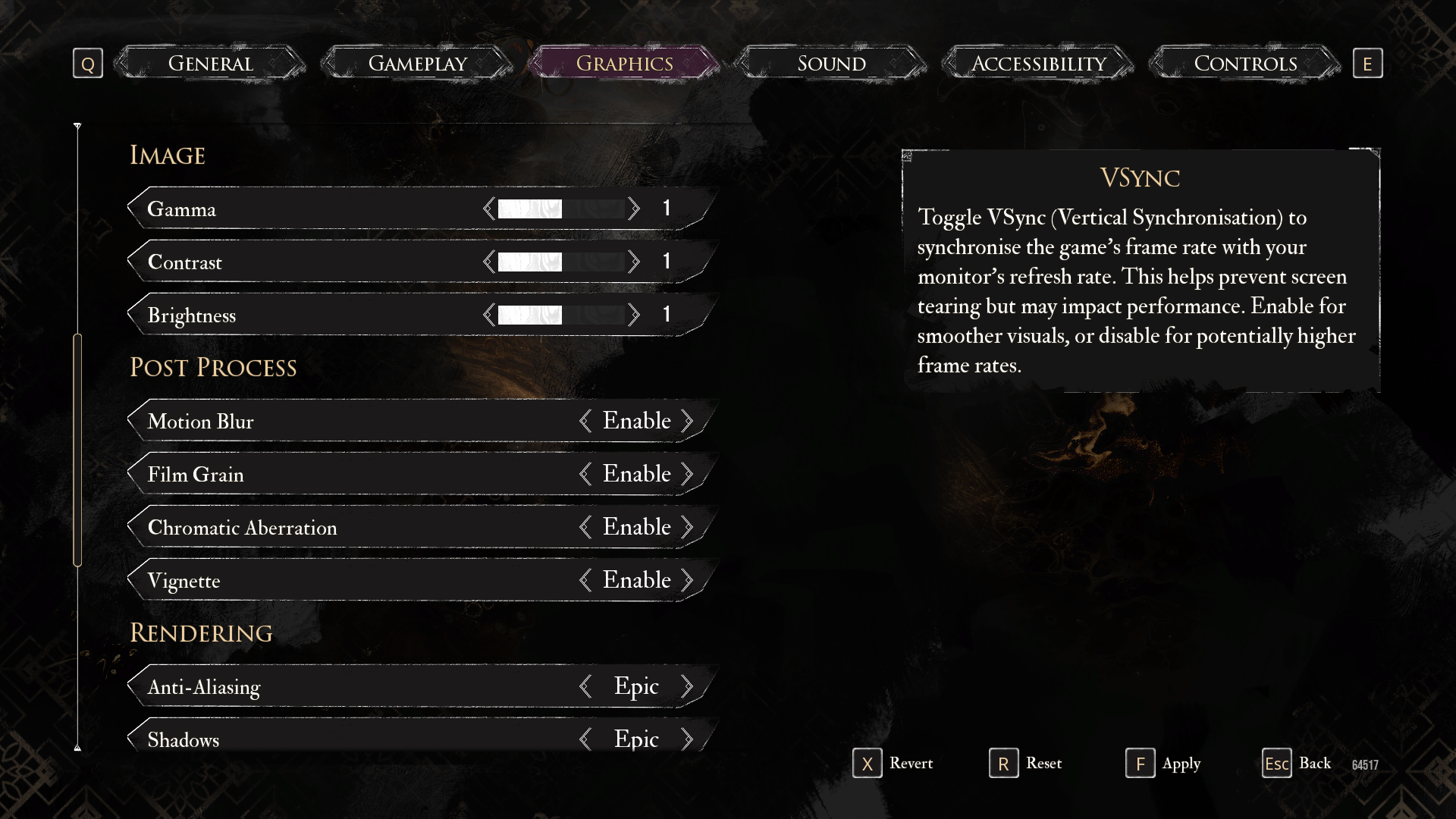
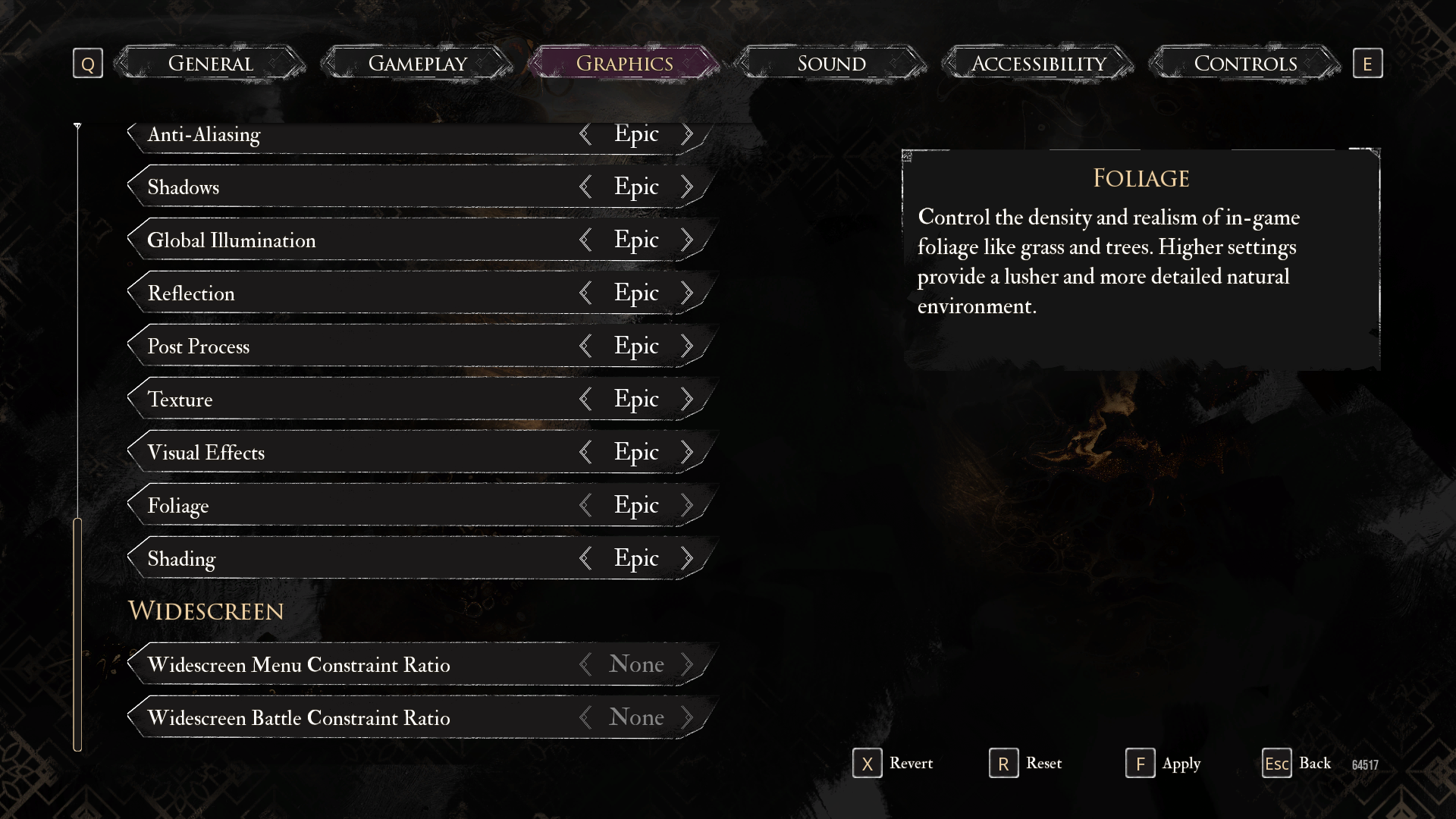
Engine: Unreal Engine 5. We test using the Epic preset, TSR 100% scale, DX12 API.
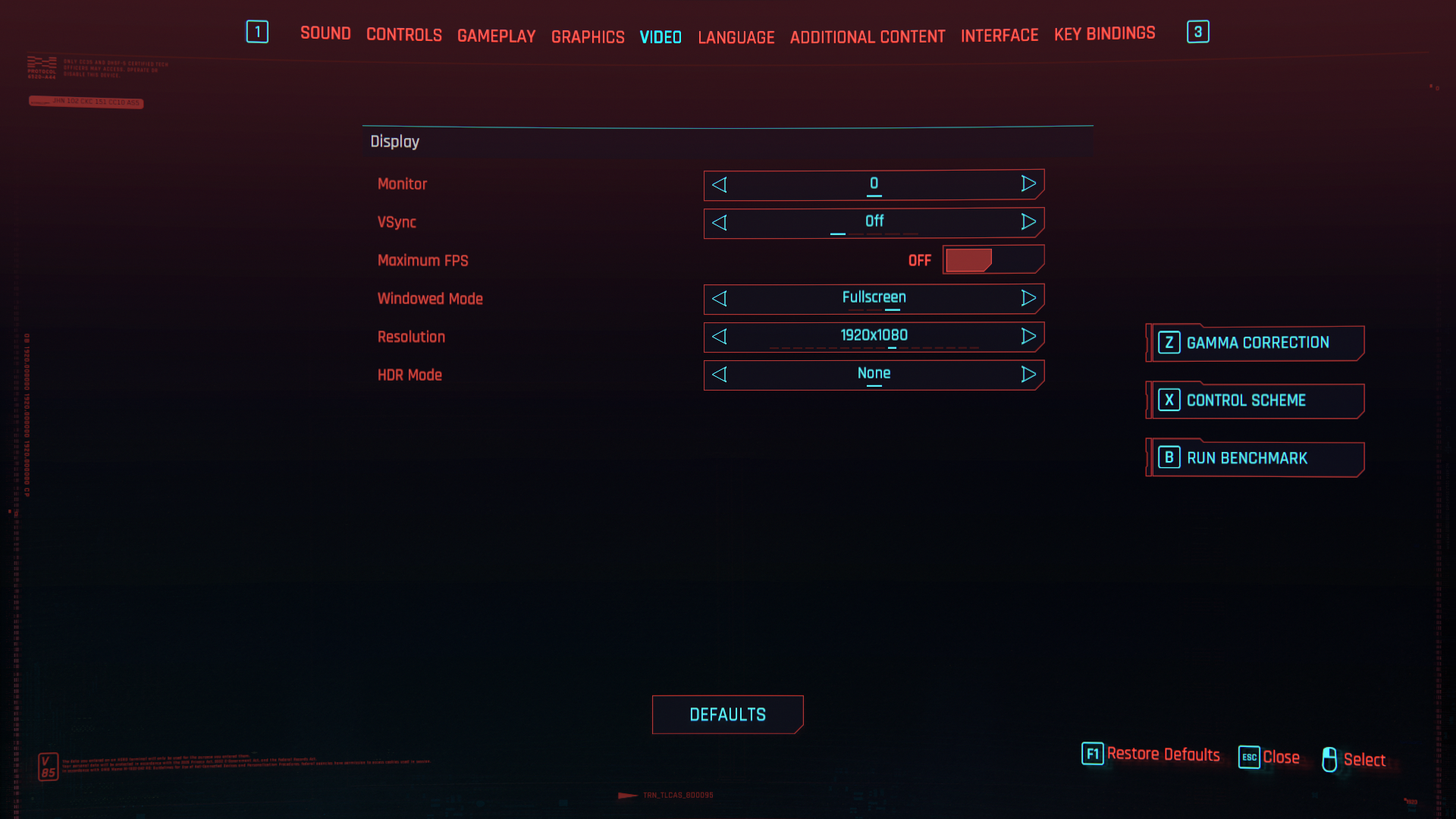
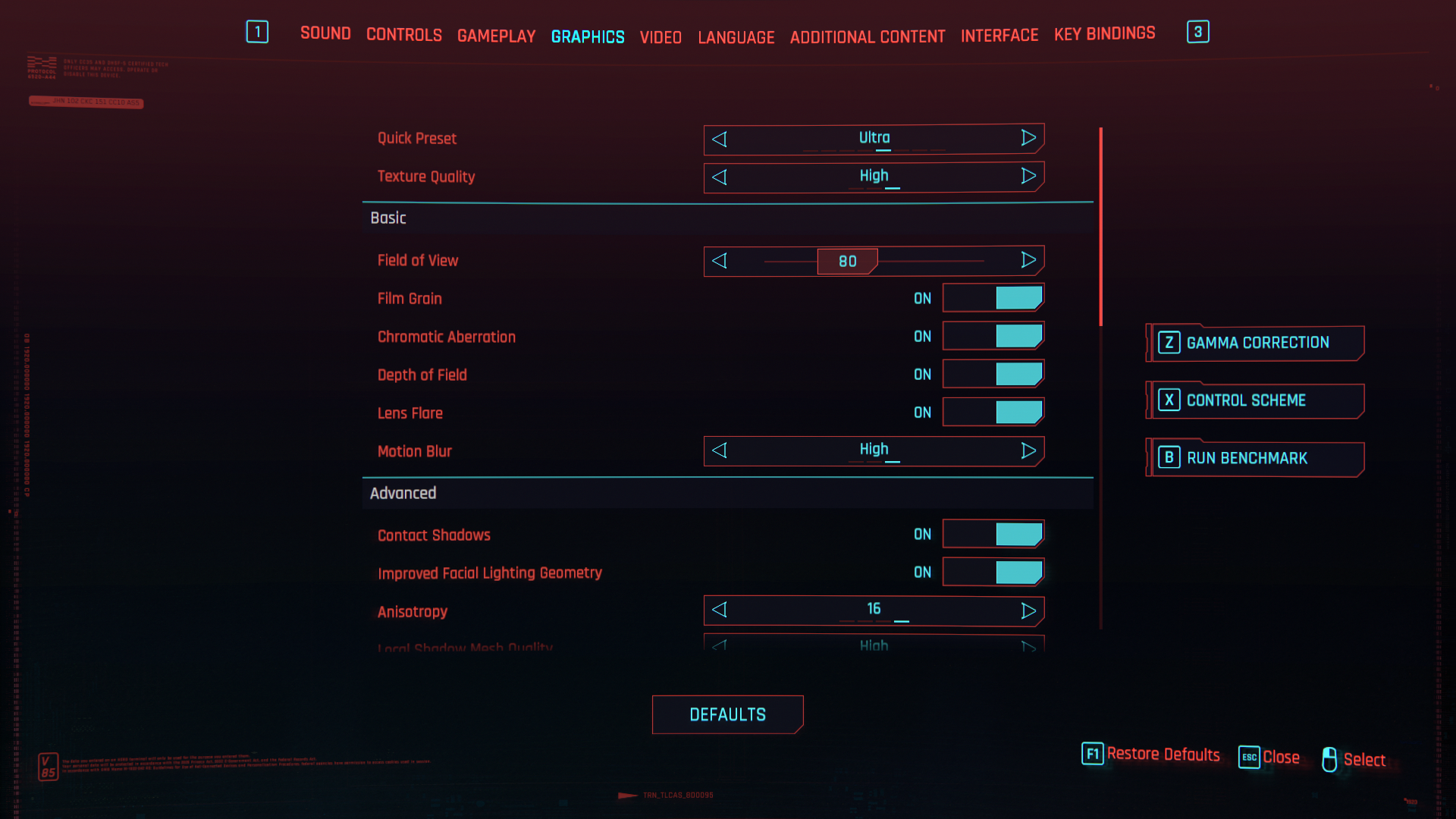
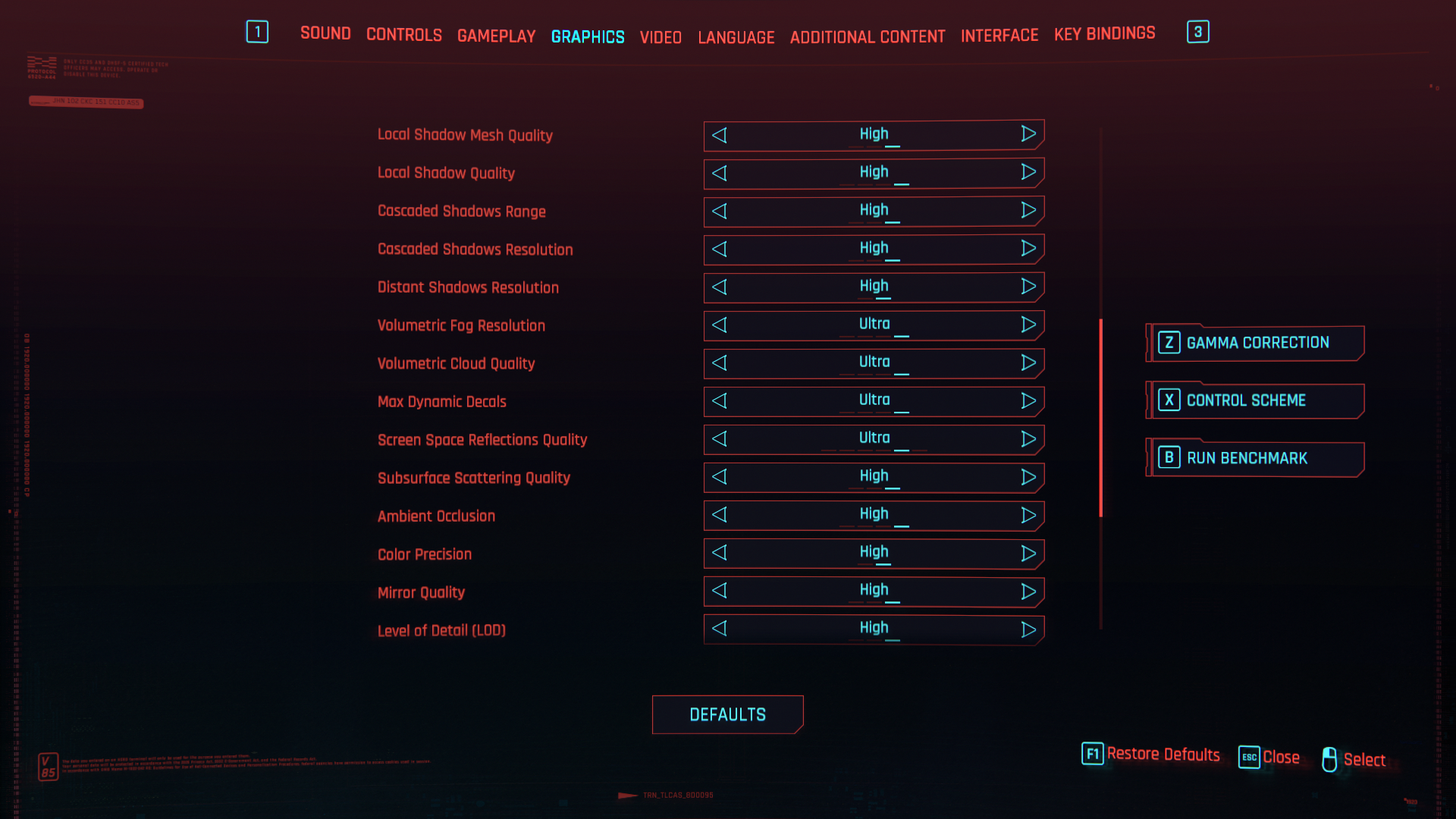
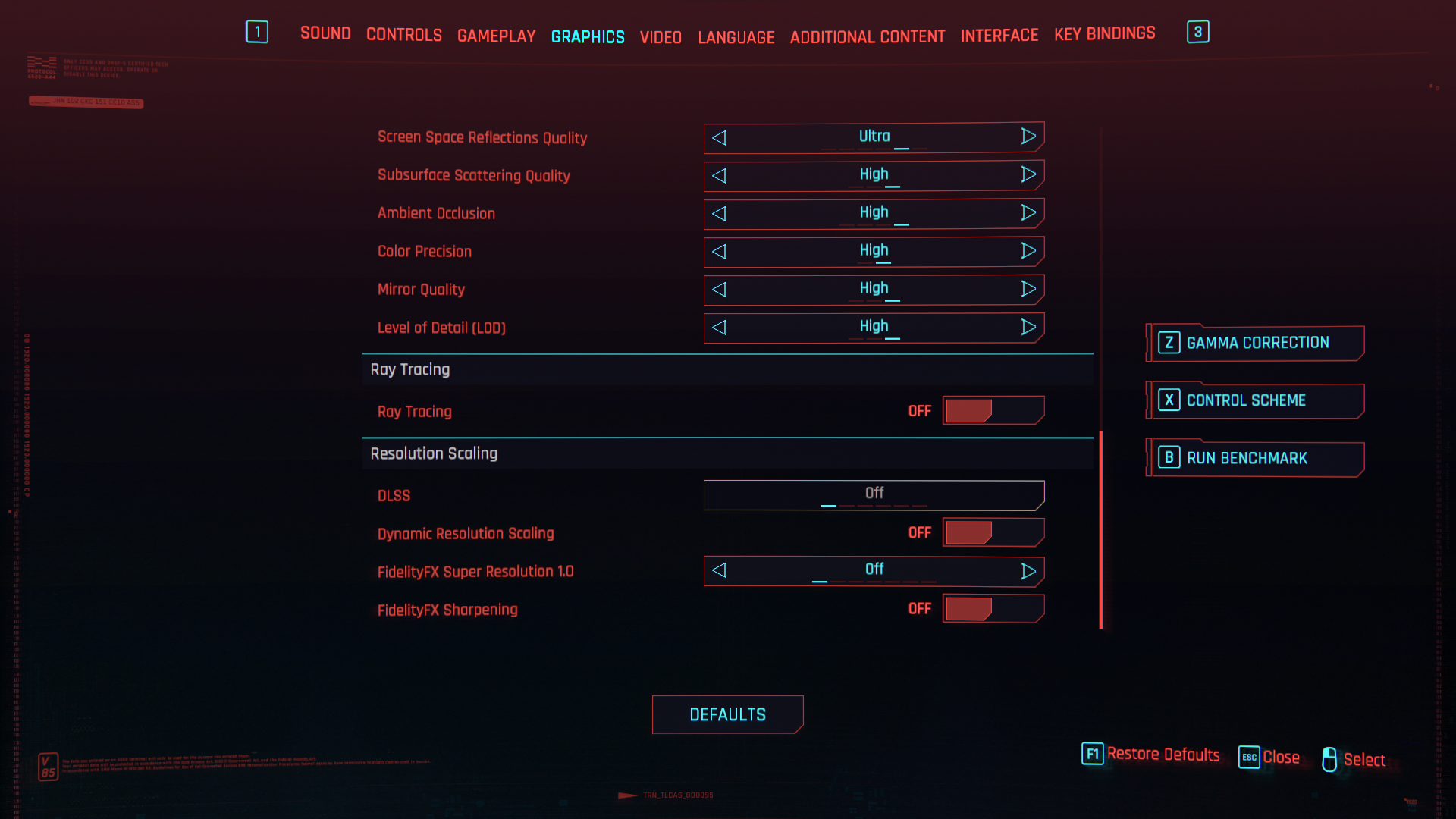
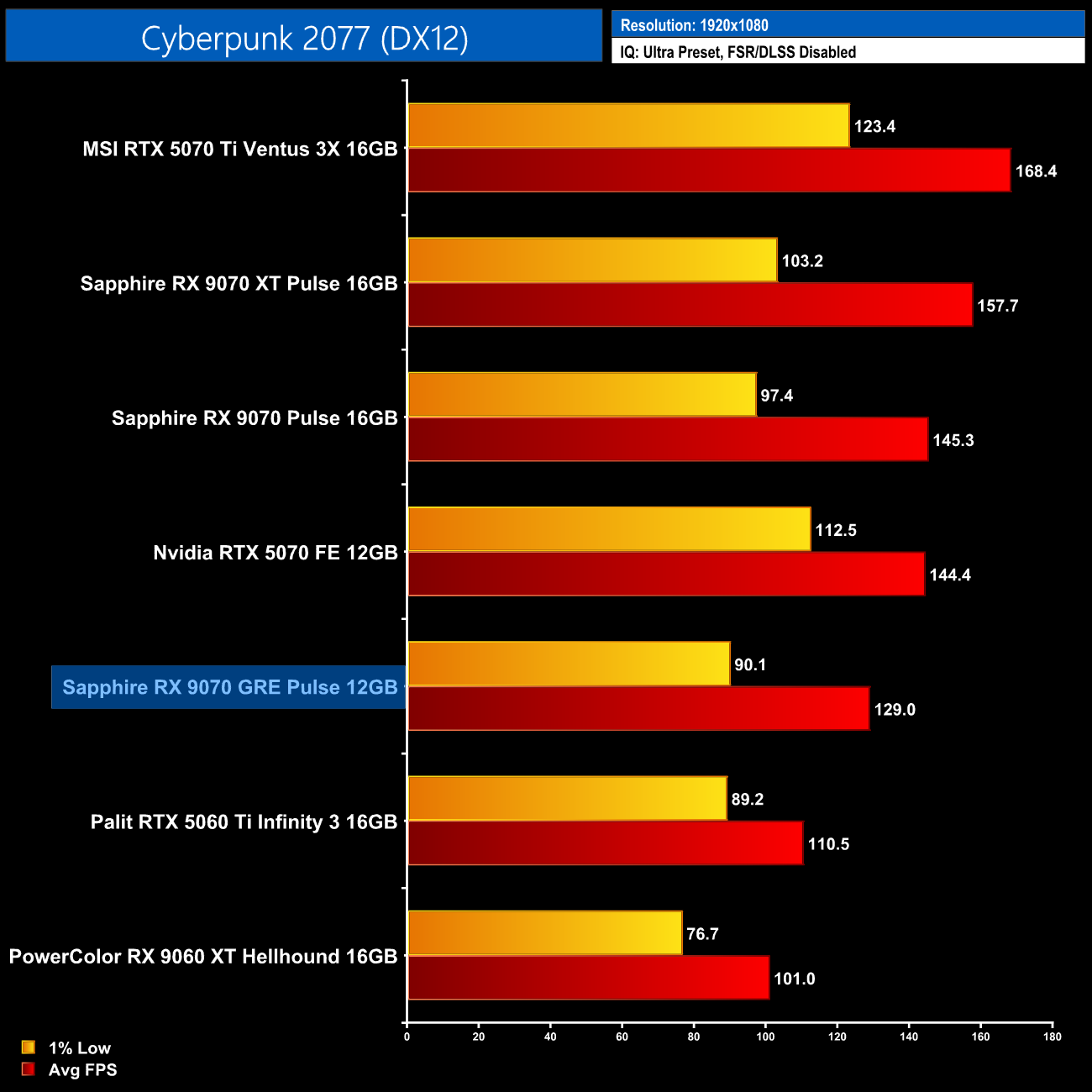
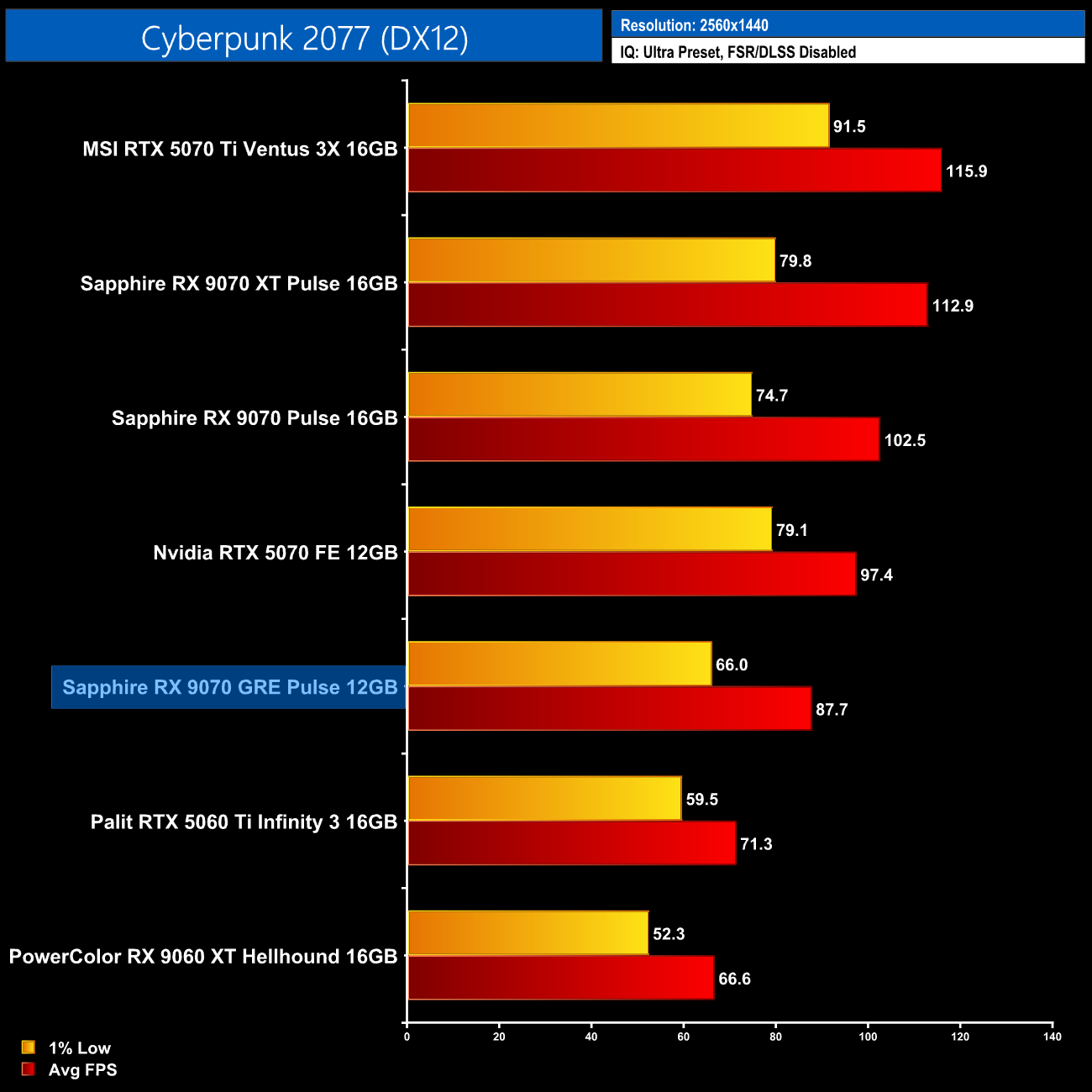
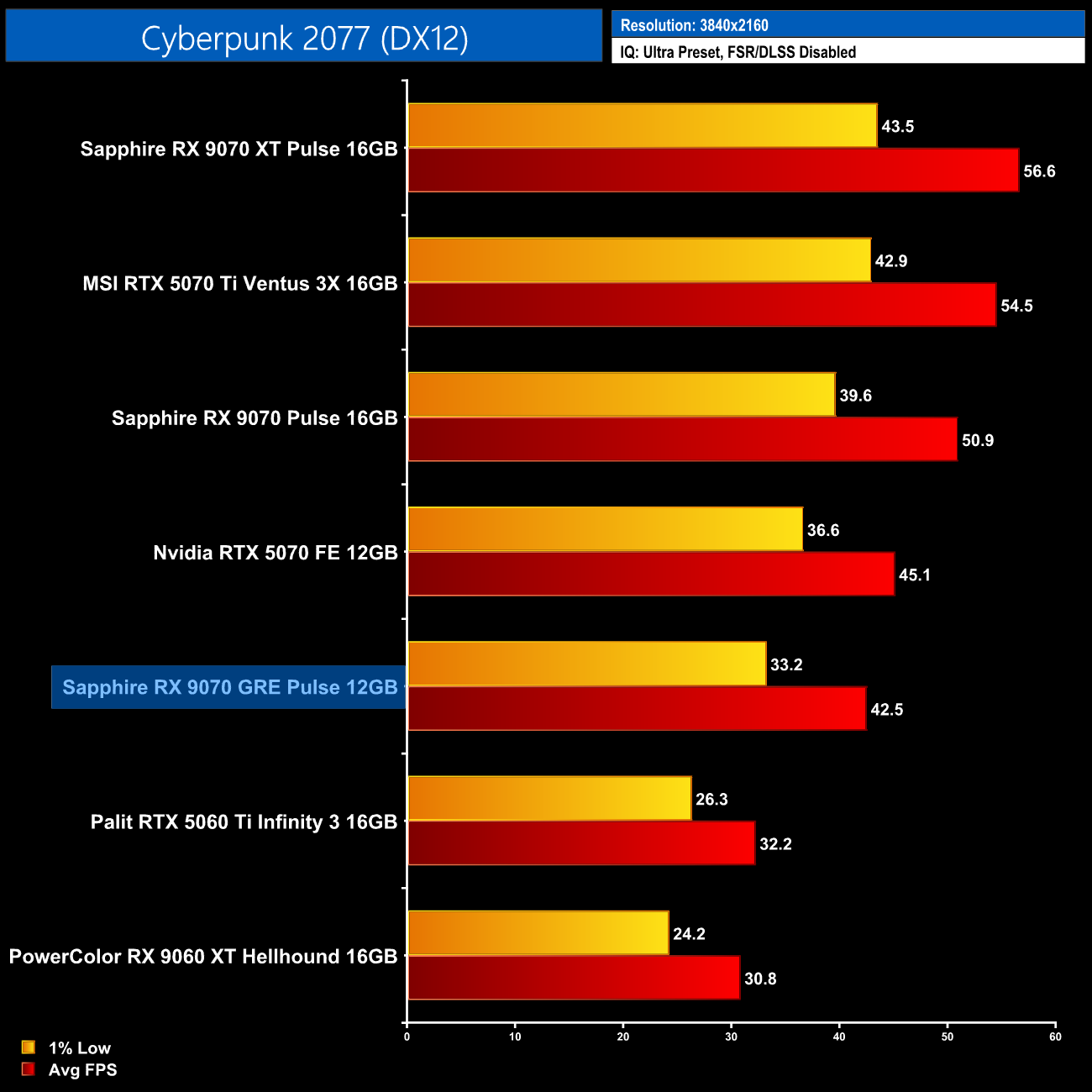
Cyberpunk 2077 is a 2020 action role-playing video game developed and published by CD Projekt. The story takes place in Night City, an open world set in the Cyberpunk universe. Players assume the first-person perspective of a customisable mercenary known as V, who can acquire skills in hacking and machinery with options for melee and ranged combat. Cyberpunk 2077 was released for Microsoft Windows, PlayStation 4, Stadia, and Xbox One on 10 December 2020. (Wikipedia).
Engine: REDengine 4. We test using the Ultra preset, FSR disabled, DX12 API.
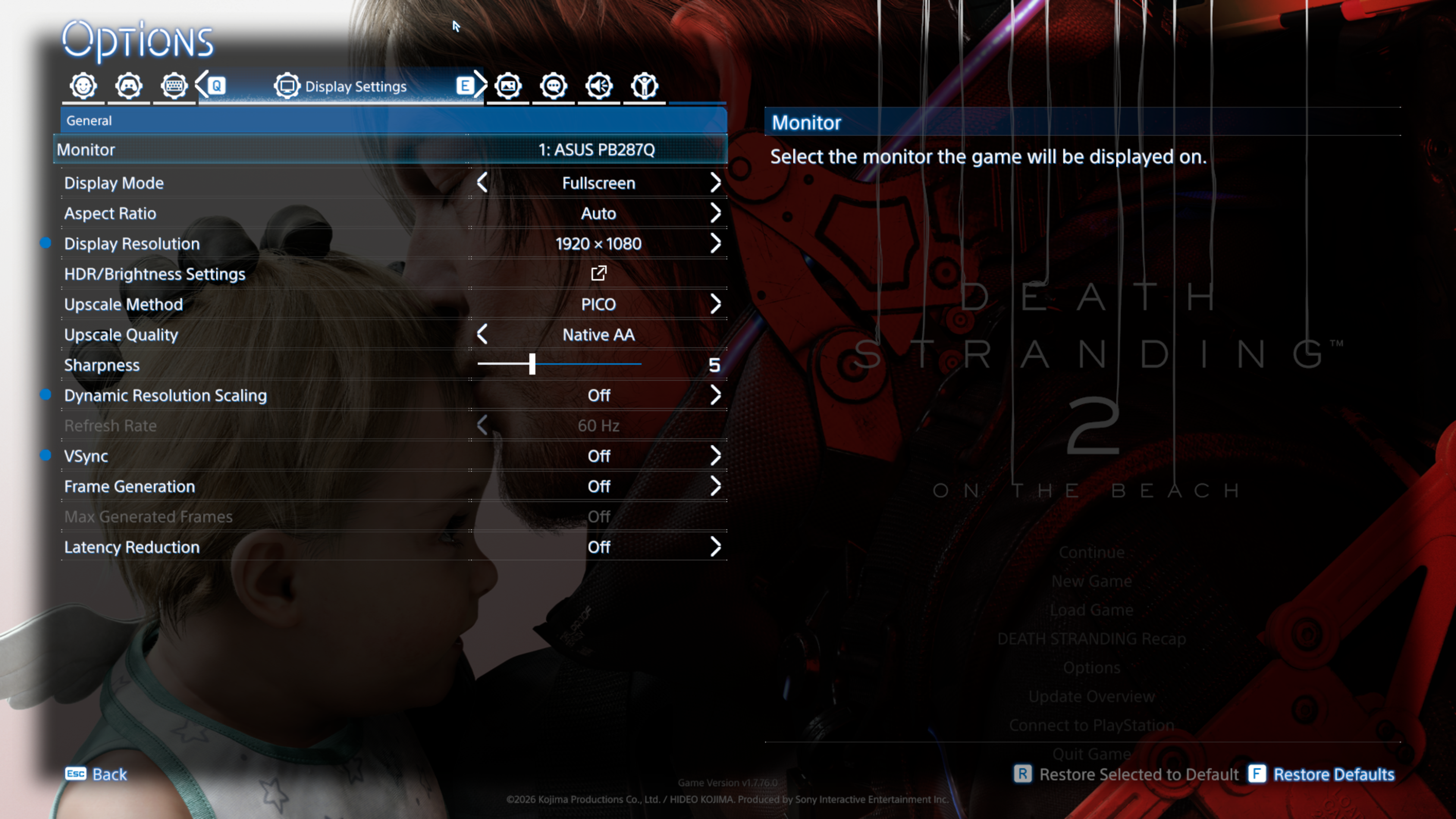
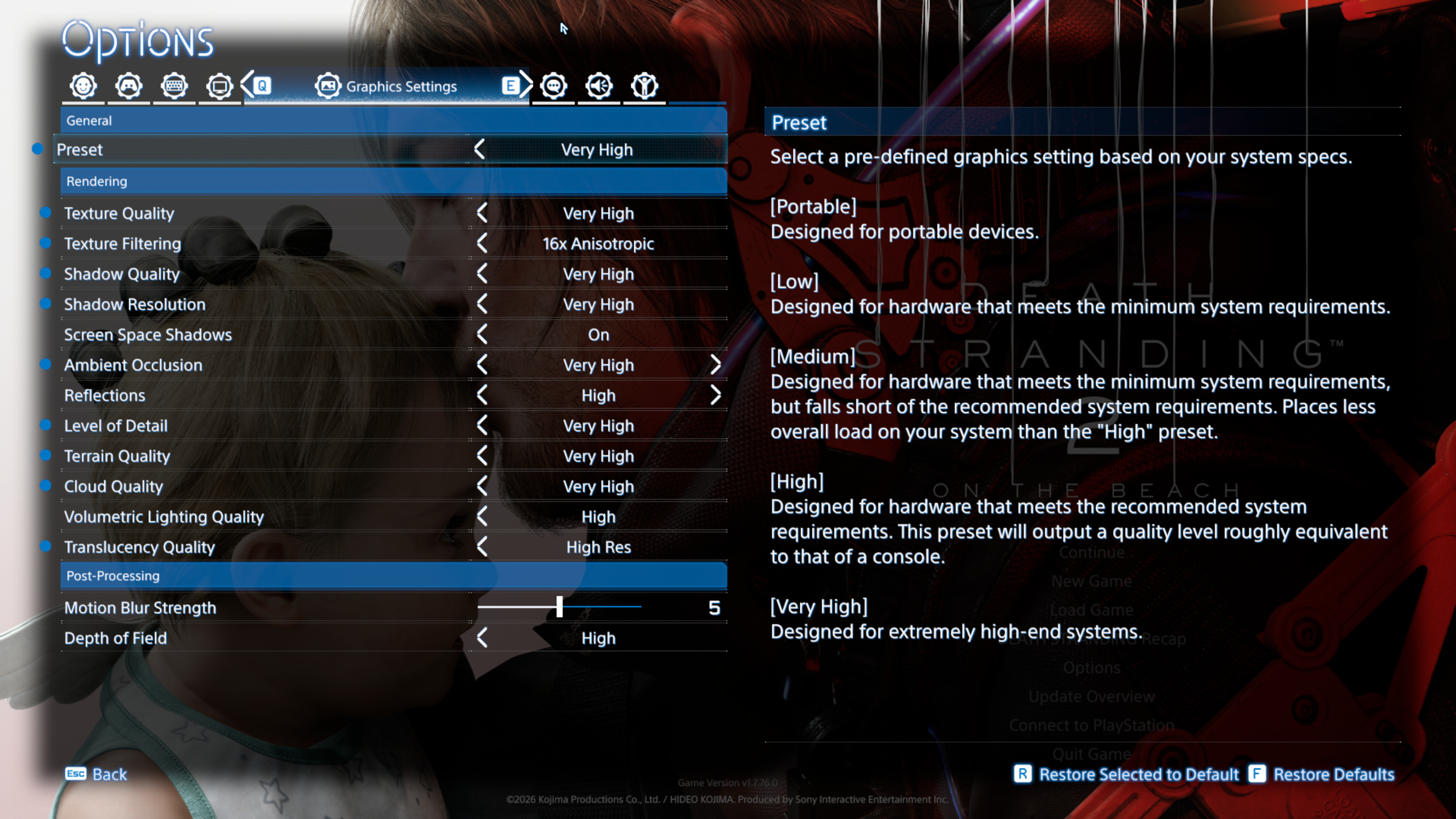
Death Stranding 2: On the Beach is a 2025 action-adventure game written, produced, designed, and directed by Hideo Kojima, developed by Kojima Productions and published by Sony Interactive Entertainment. On the Beach was released for the PlayStation 5 on June 26, 2025 to generally favorable reviews. A Windows port was released on March 19, 2026. (Wikipedia).
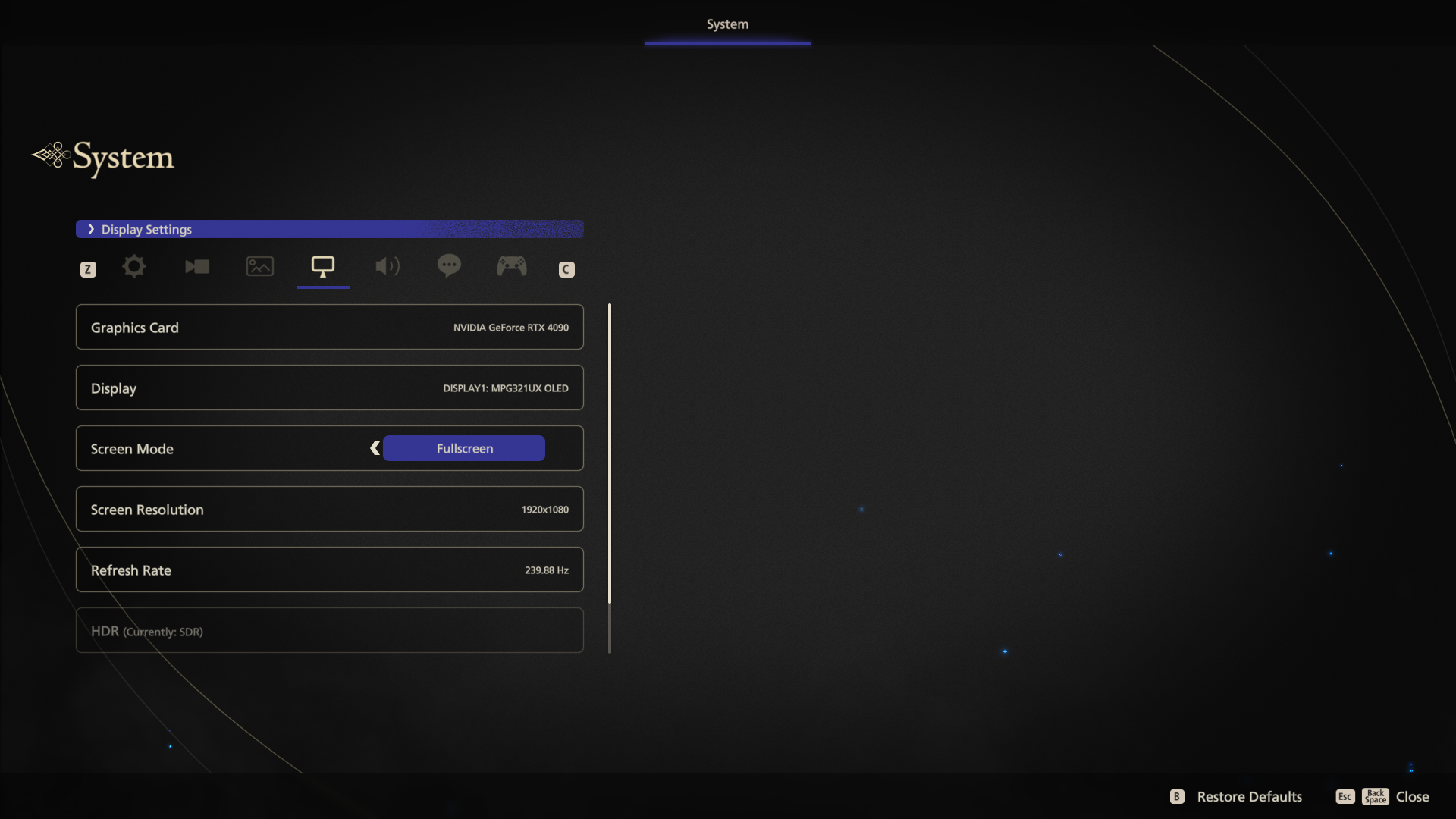
Engine: Decima. We test using the Very High preset, PICO 100% scale, DX12 API.
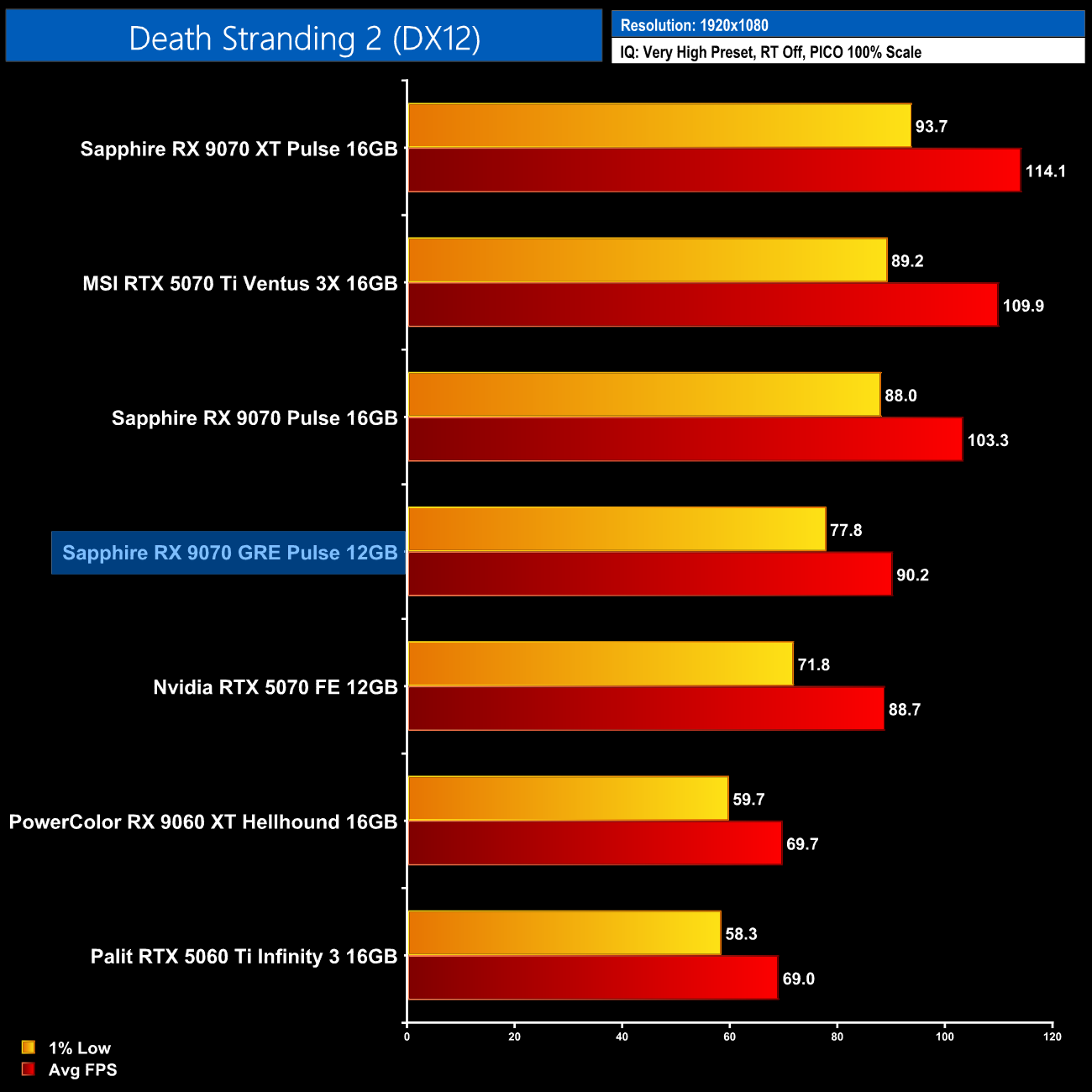
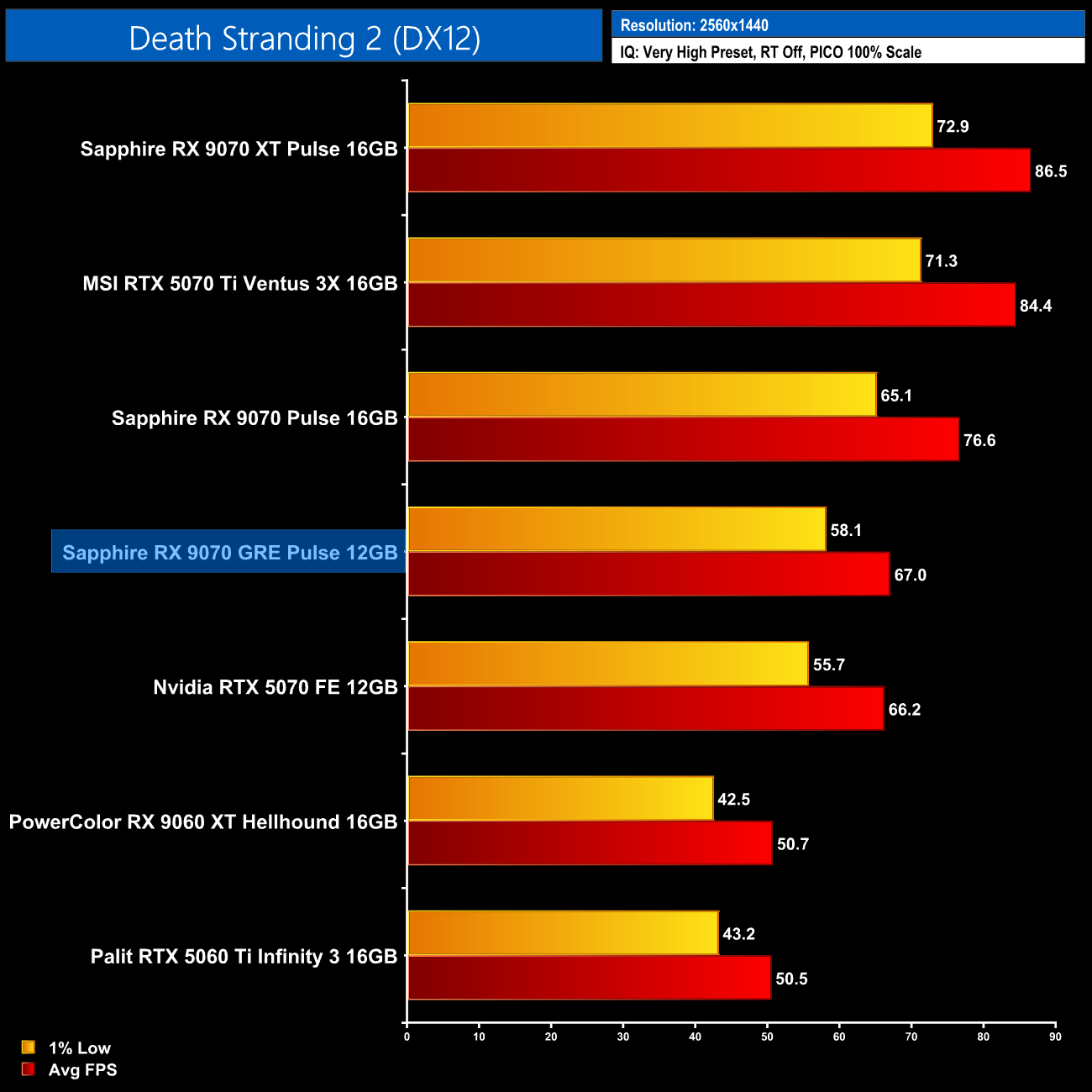
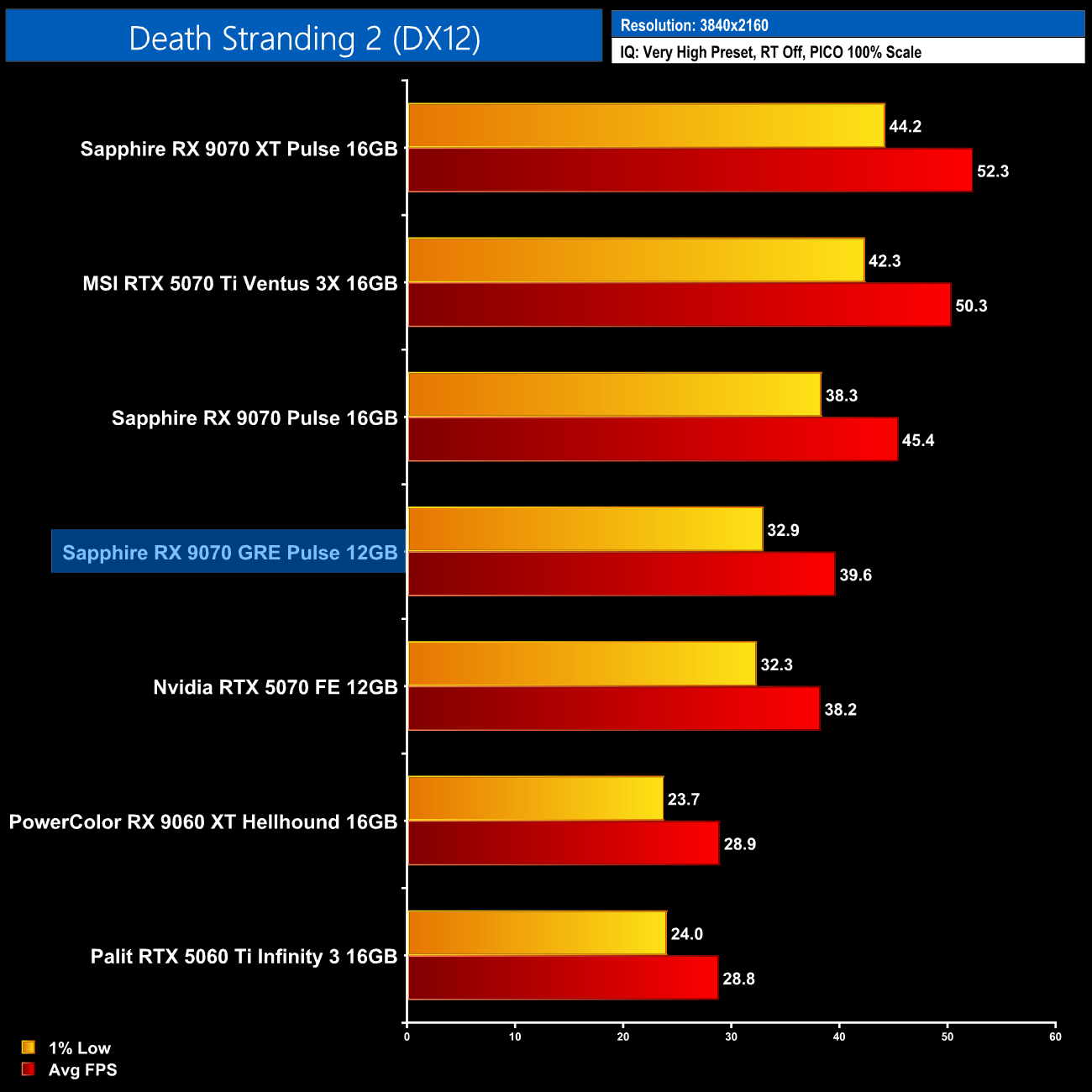
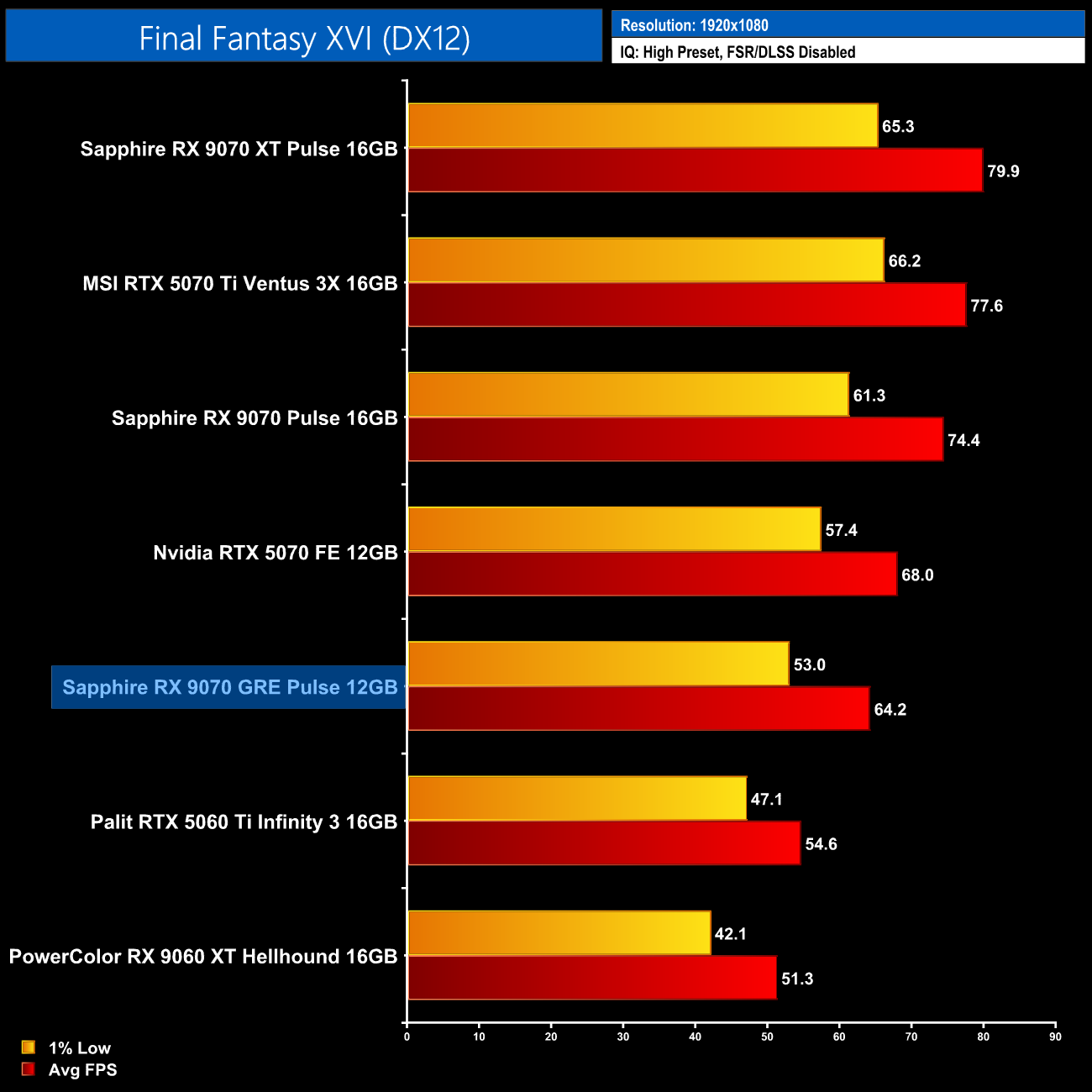
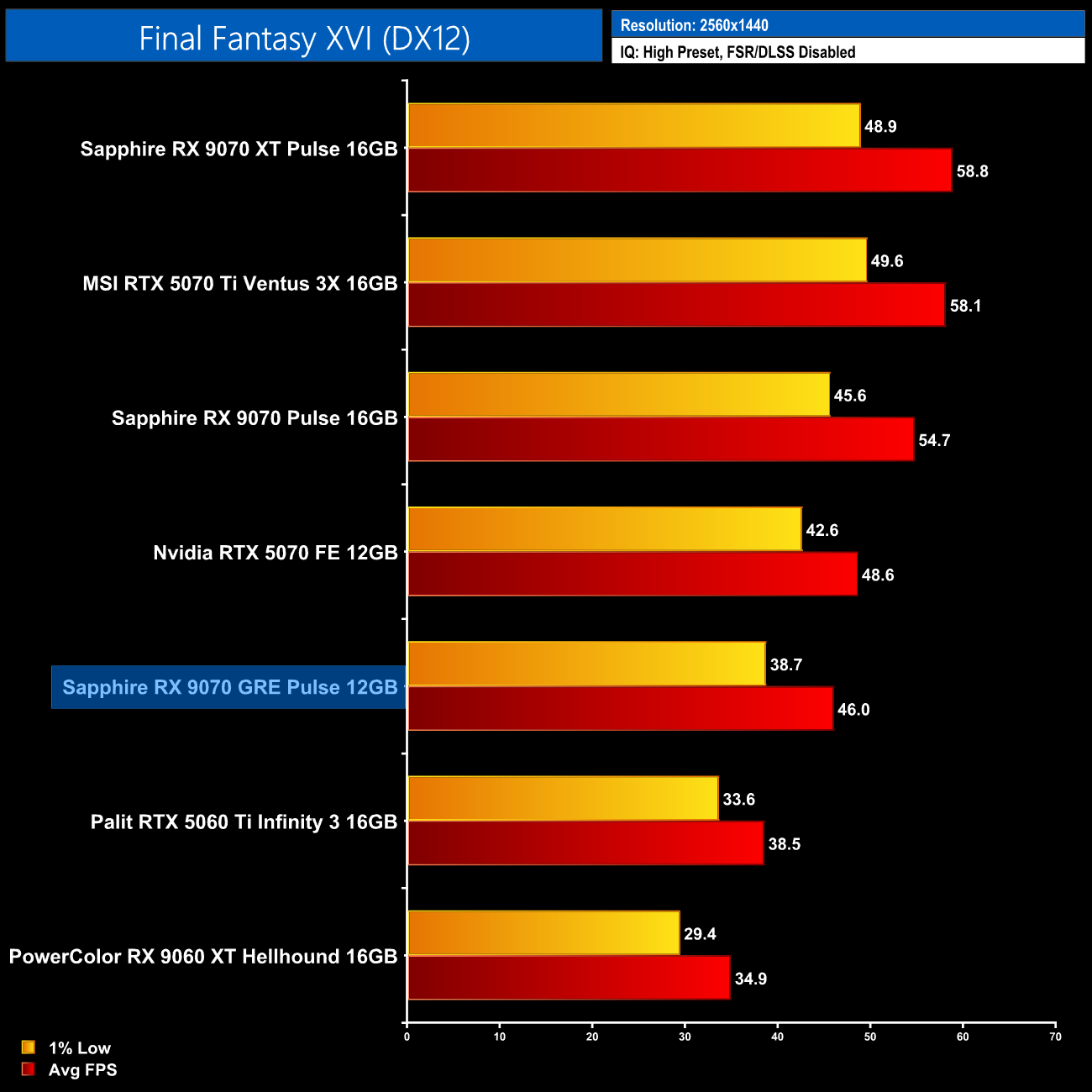
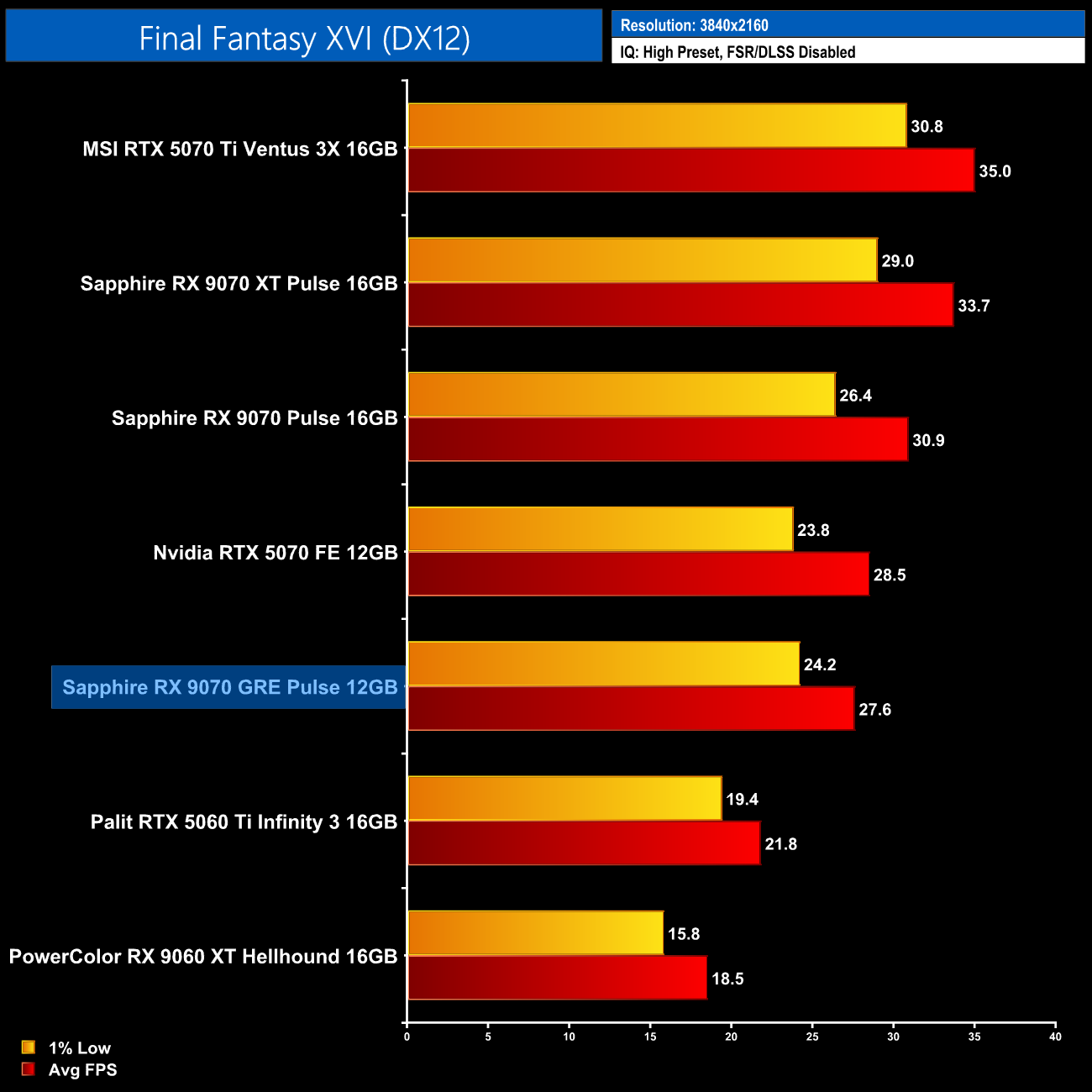
Final Fantasy XVI is a 2023 action role-playing game developed and published by Square Enix. The sixteenth main installment in the Final Fantasy series, it was released for the PlayStation 5 in June 2023, with a Windows version released in September 2024.
Engine: Square Enix in-house engine. We test using the Ultra preset, DLSS/FSR disabled, DX12 API.
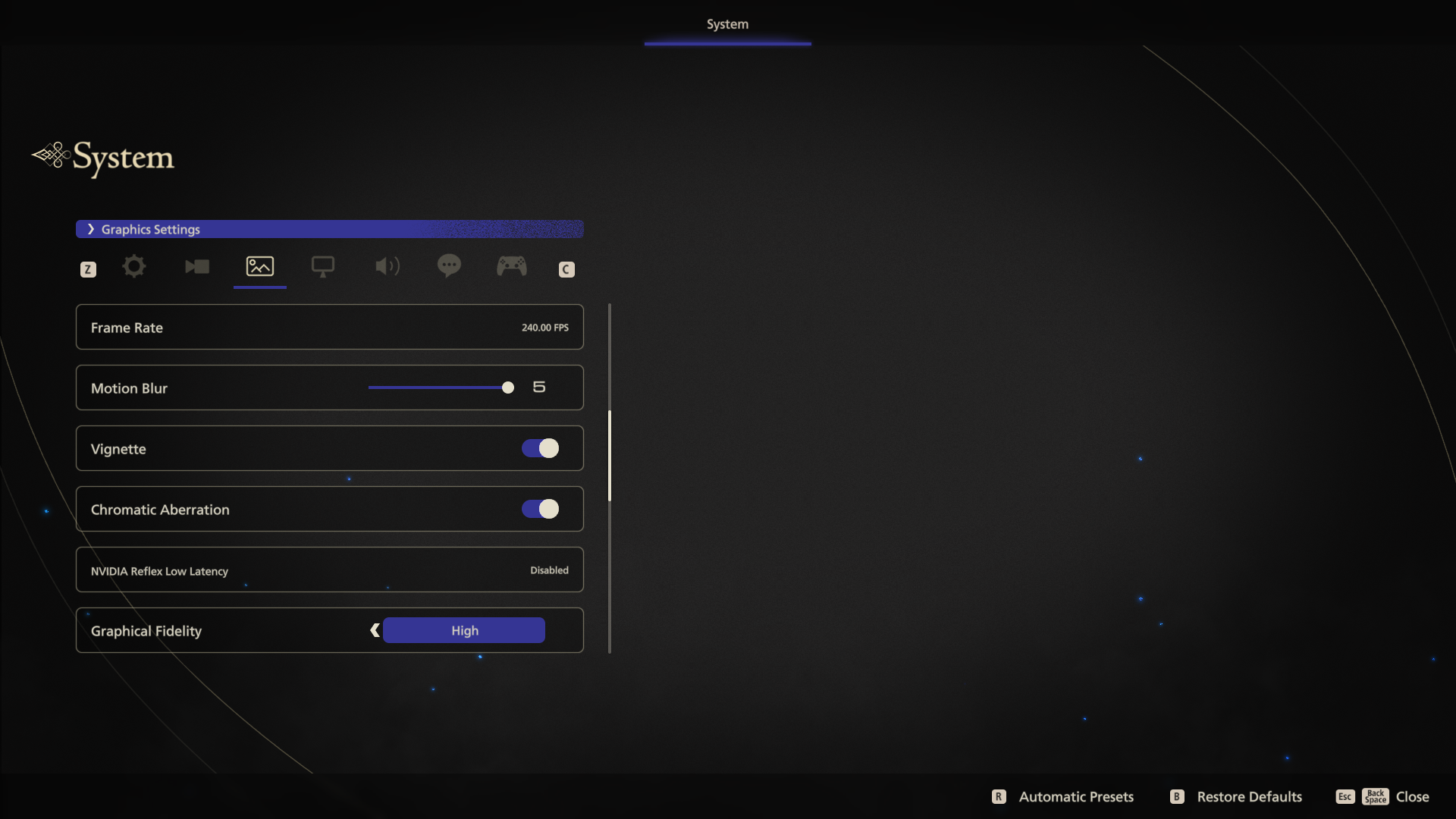
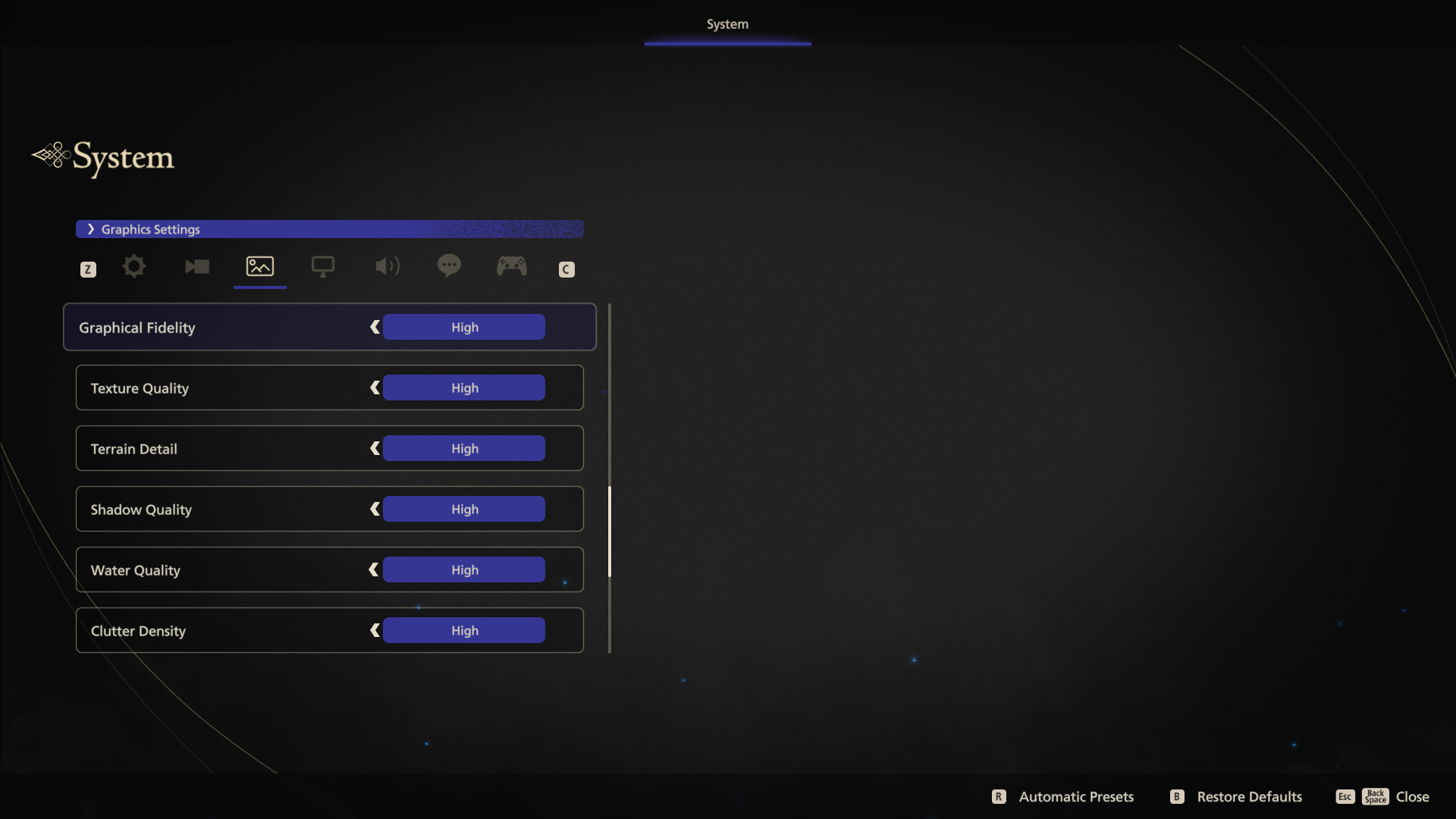
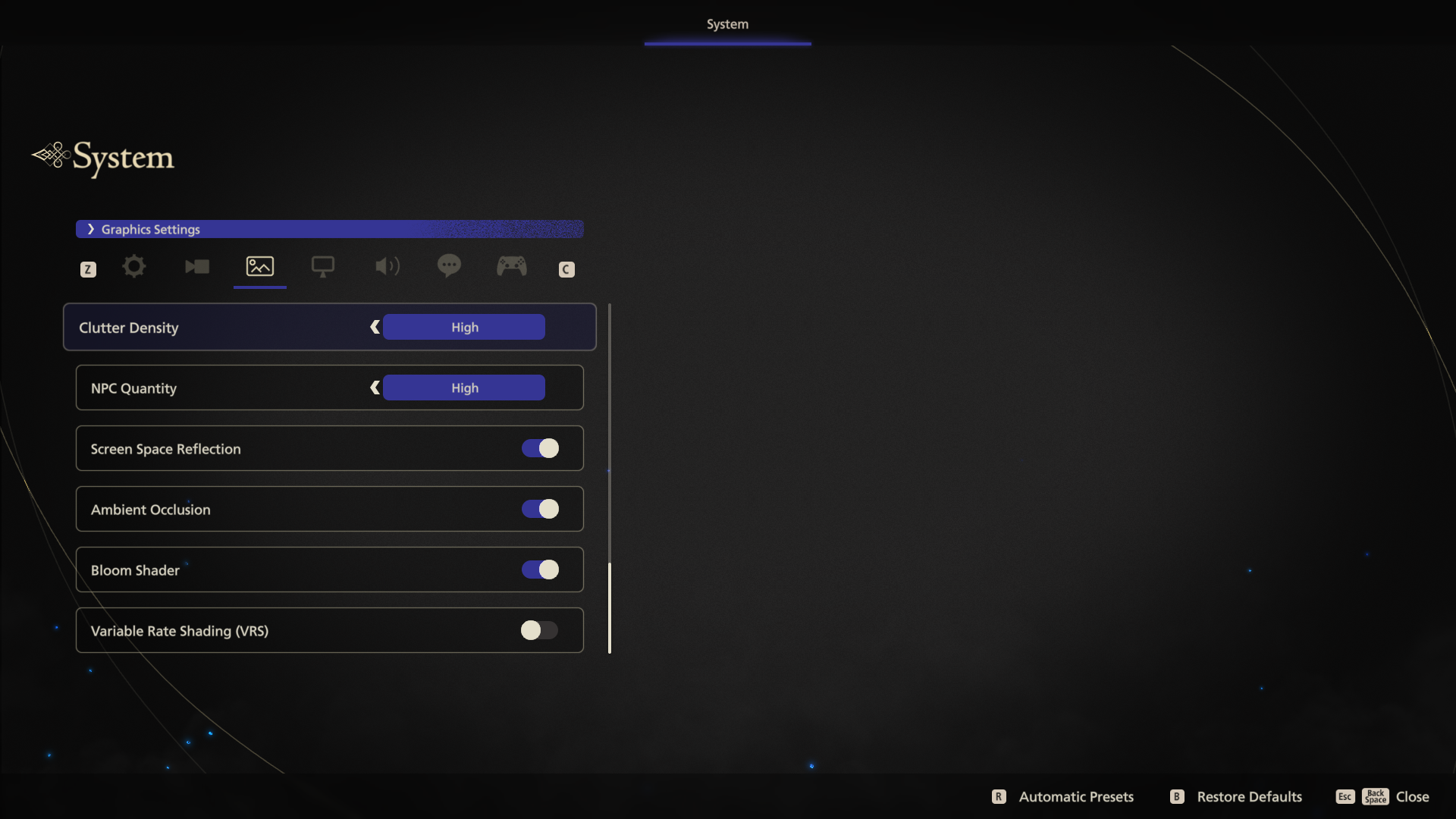
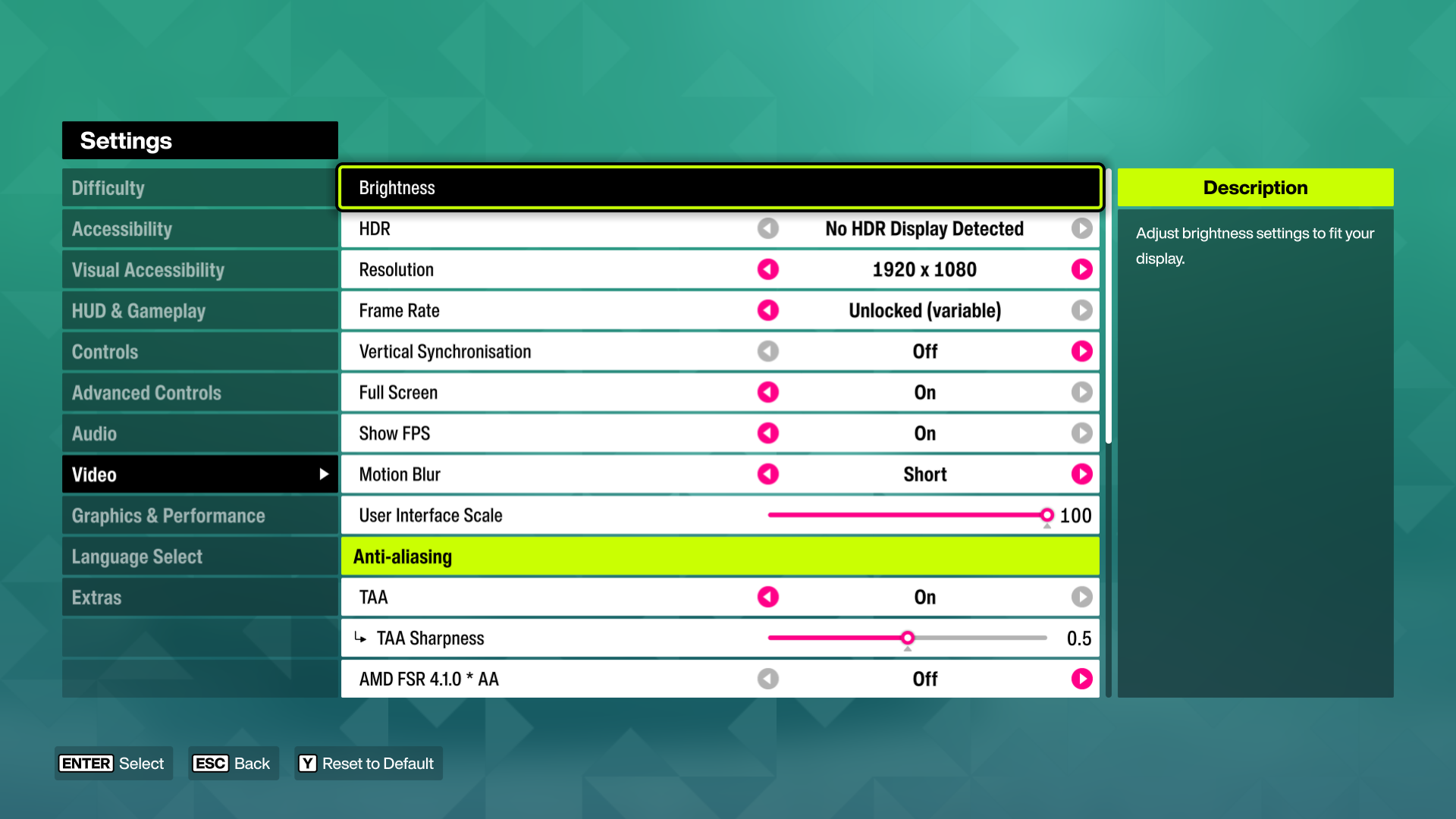
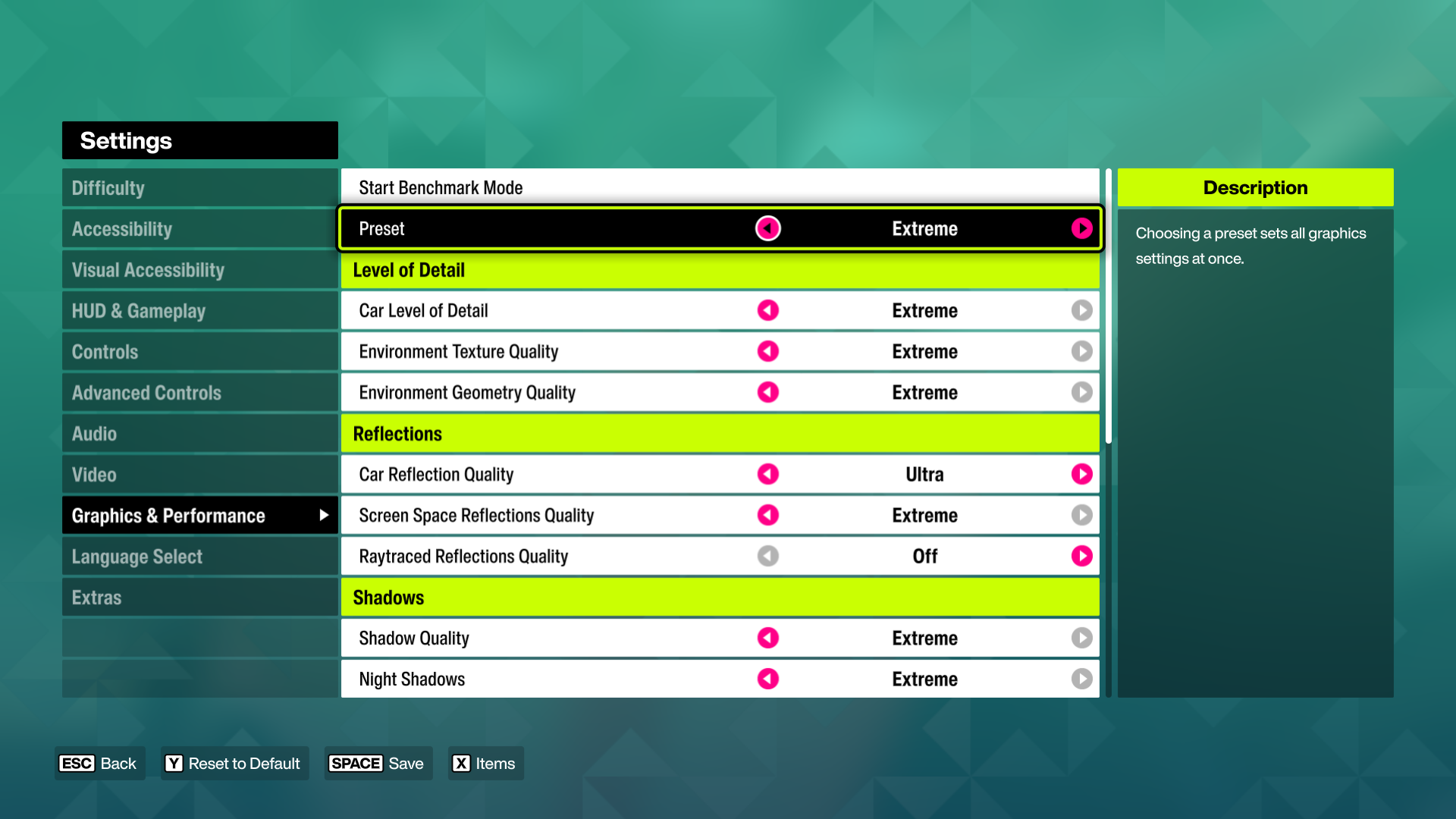
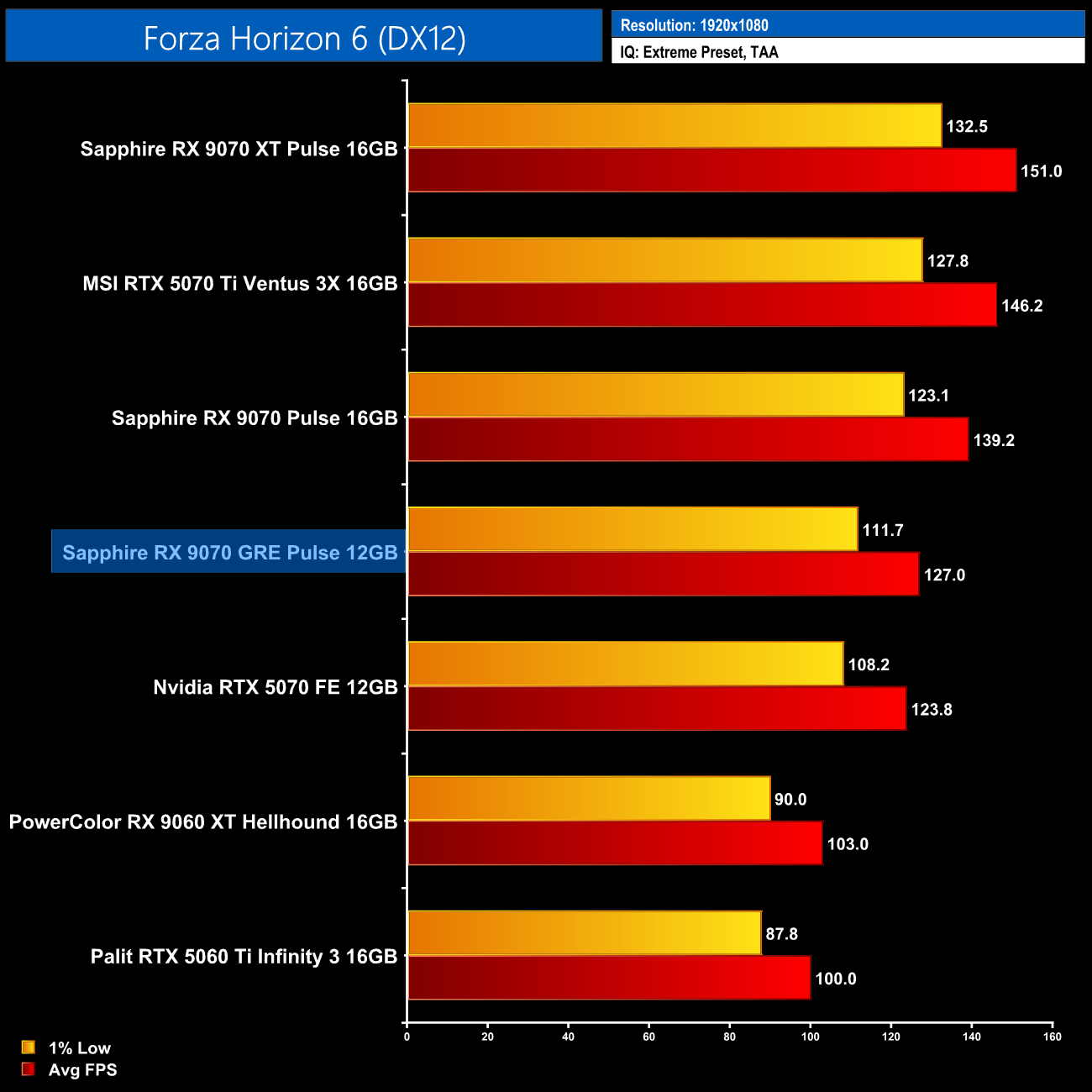
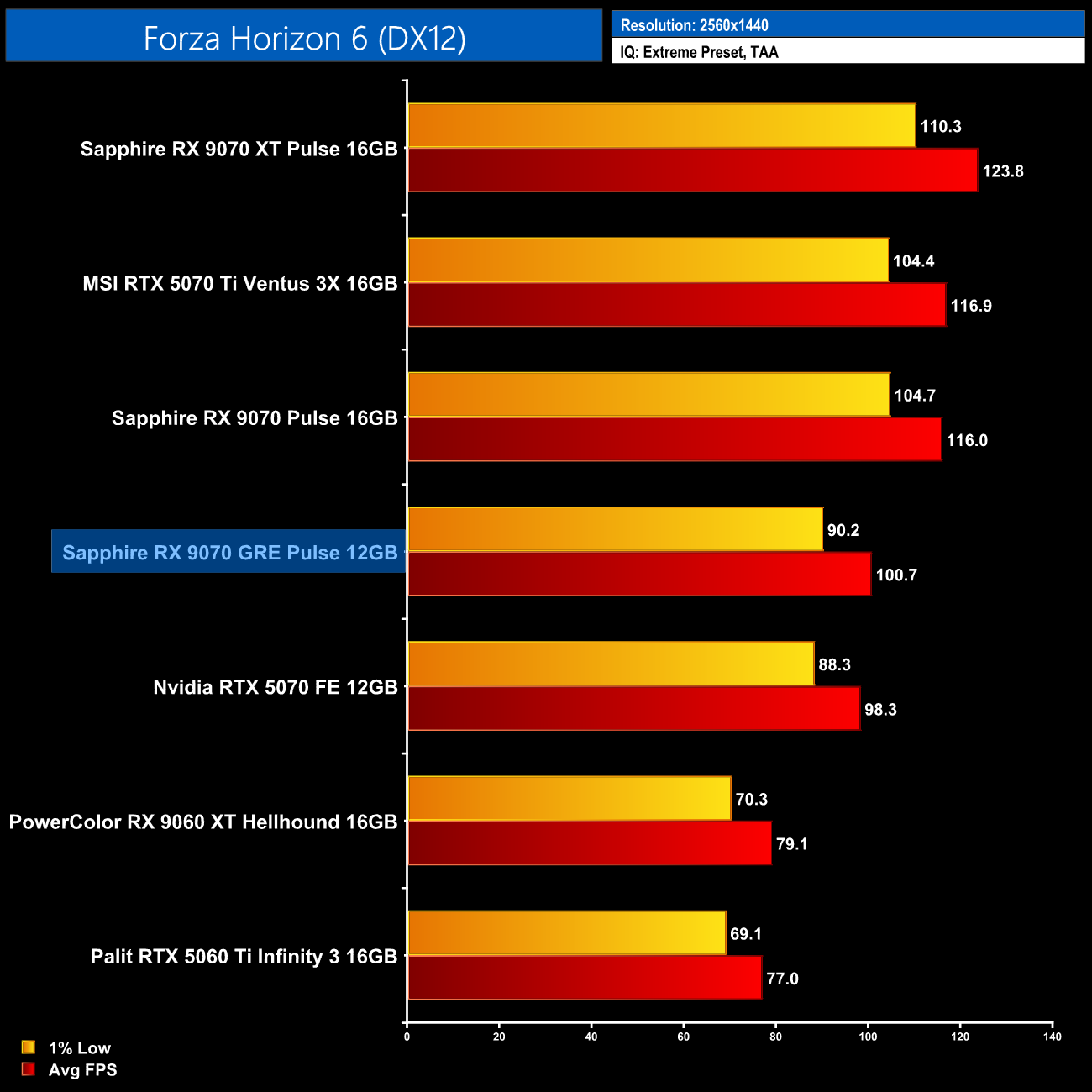
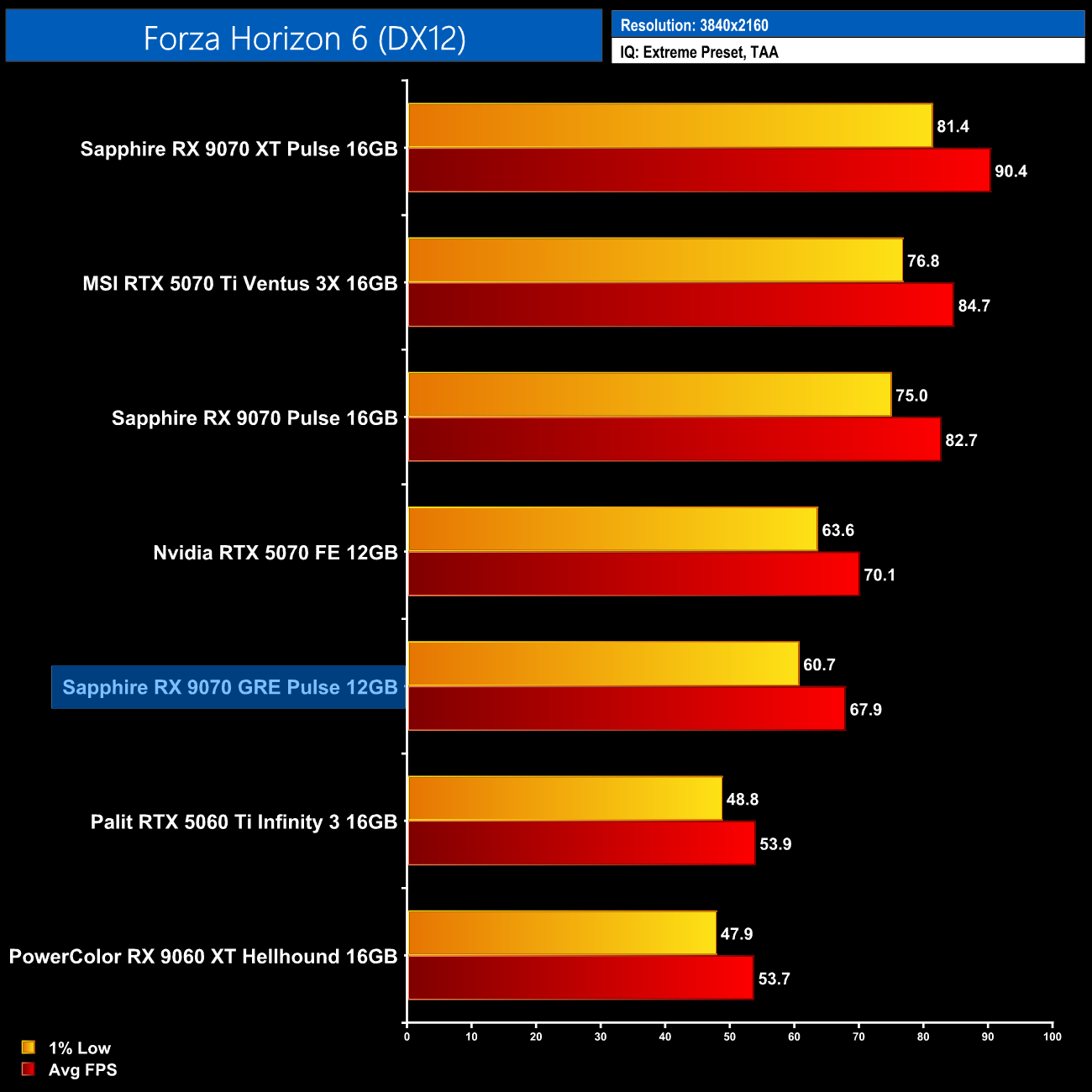
Forza Horizon 6 is a 2026 racing game developed by Playground Games and published by Xbox Game Studios. It is the sixth Forza Horizon title, following Forza Horizon 5, and the fourteenth main instalment in the Forza franchise. Set in a fictionalised representation of Japan, it features a stylised version of Tokyo as the game world's main city. It was released for Windows and Xbox Series X/S on 19 May 2026,[a] with a release for PlayStation 5 later in 2026. (Wikipedia).
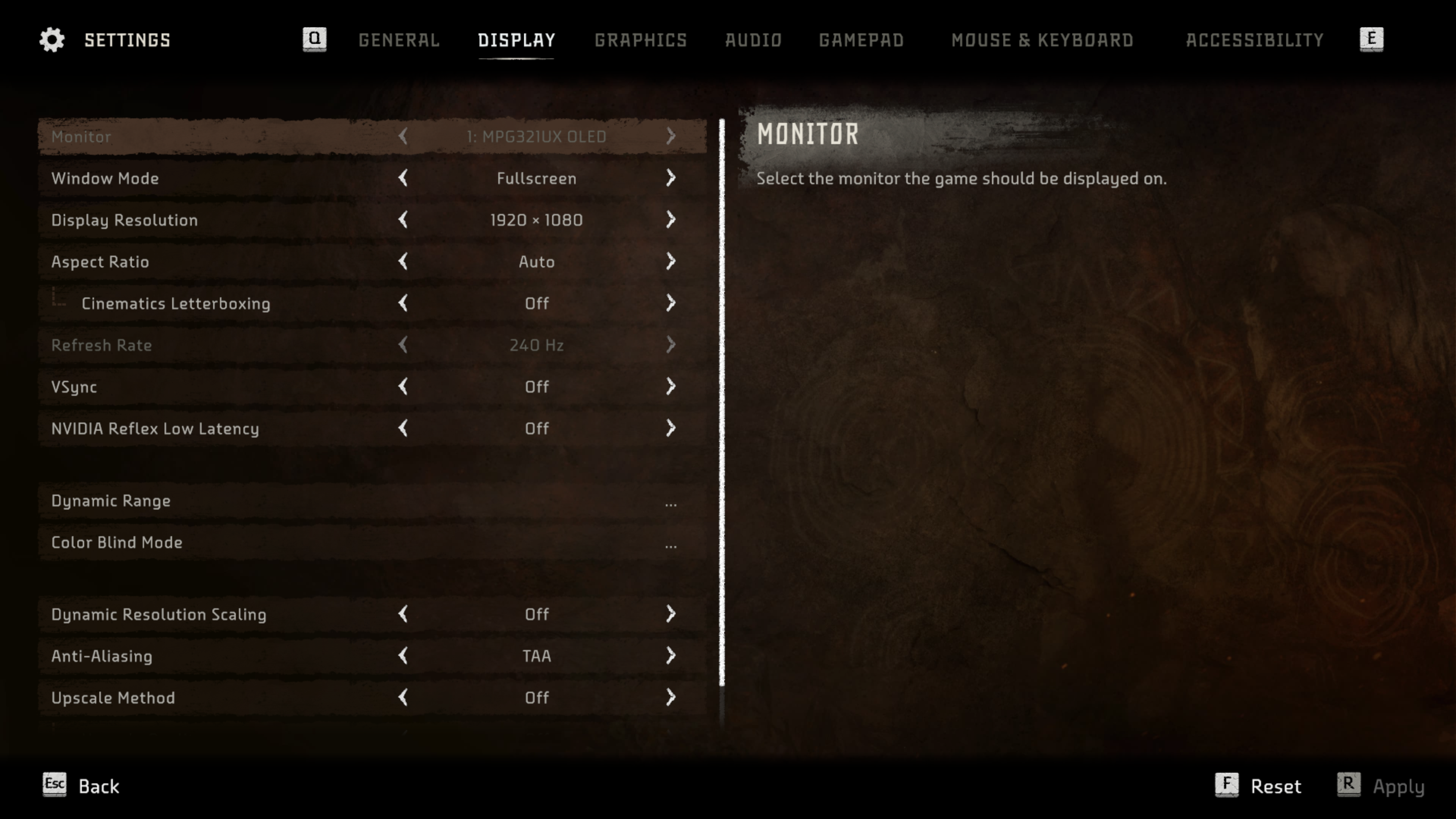
Engine: ForzaTech. We test using the Extreme preset, TAA, DX12 API.
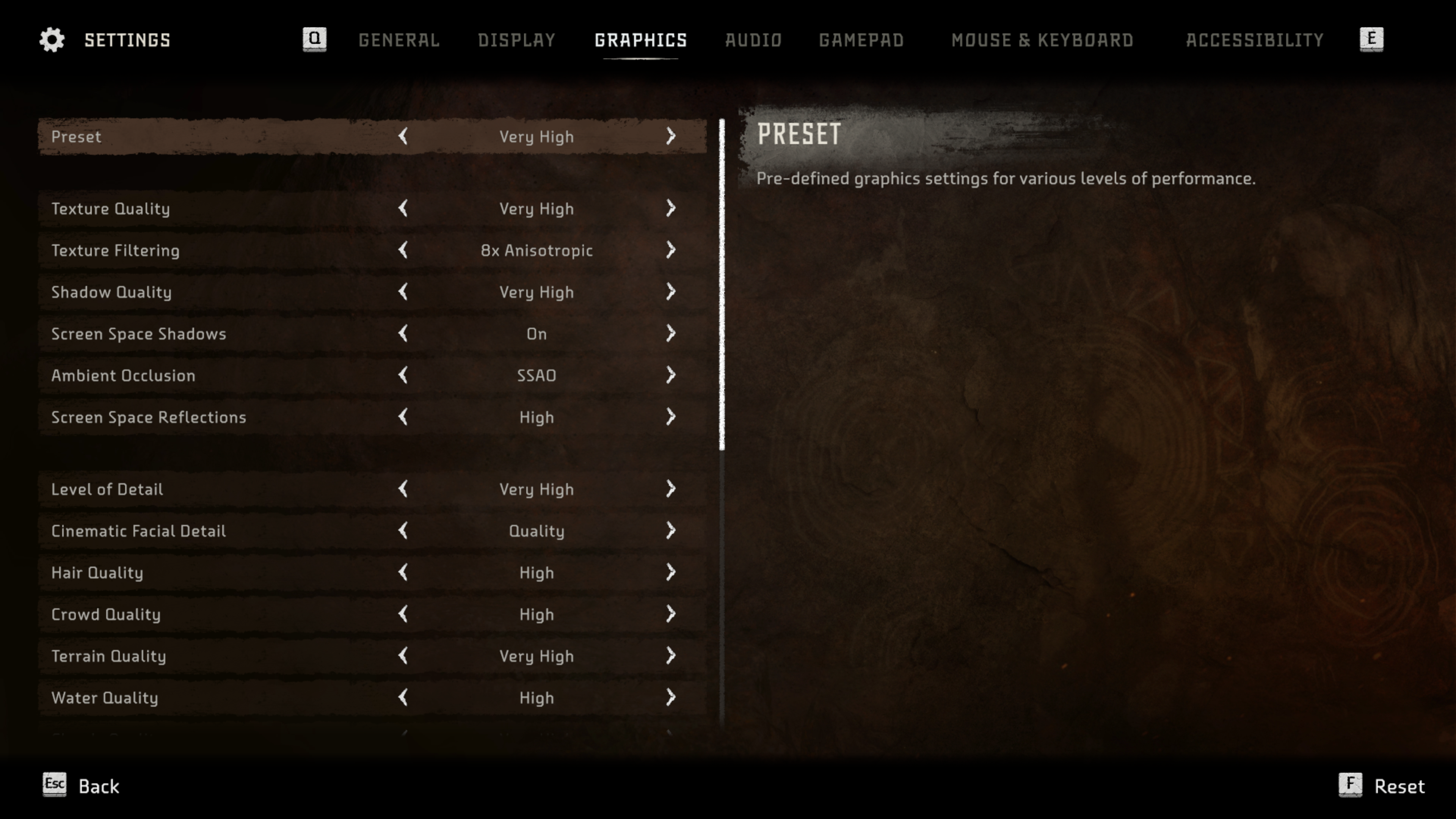
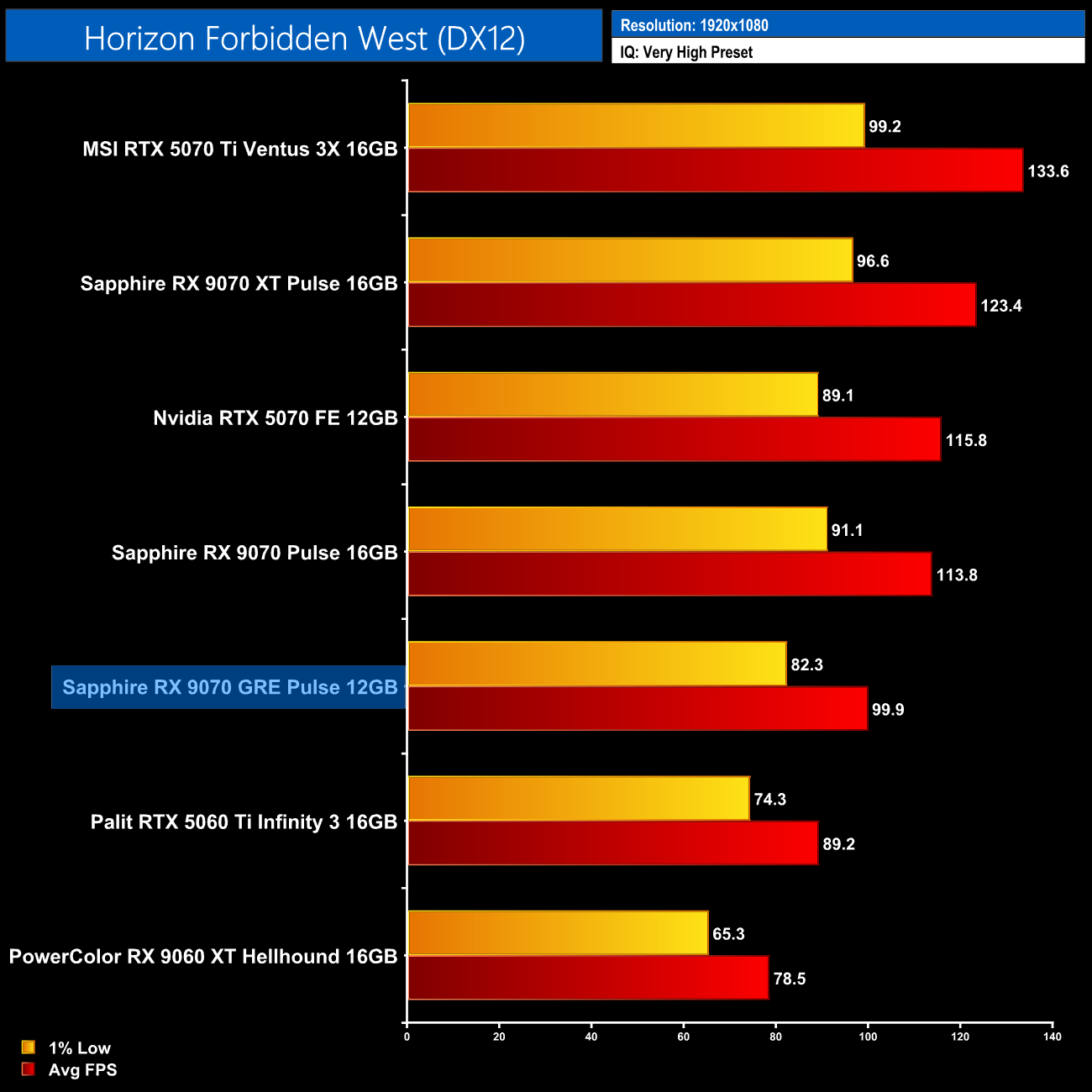
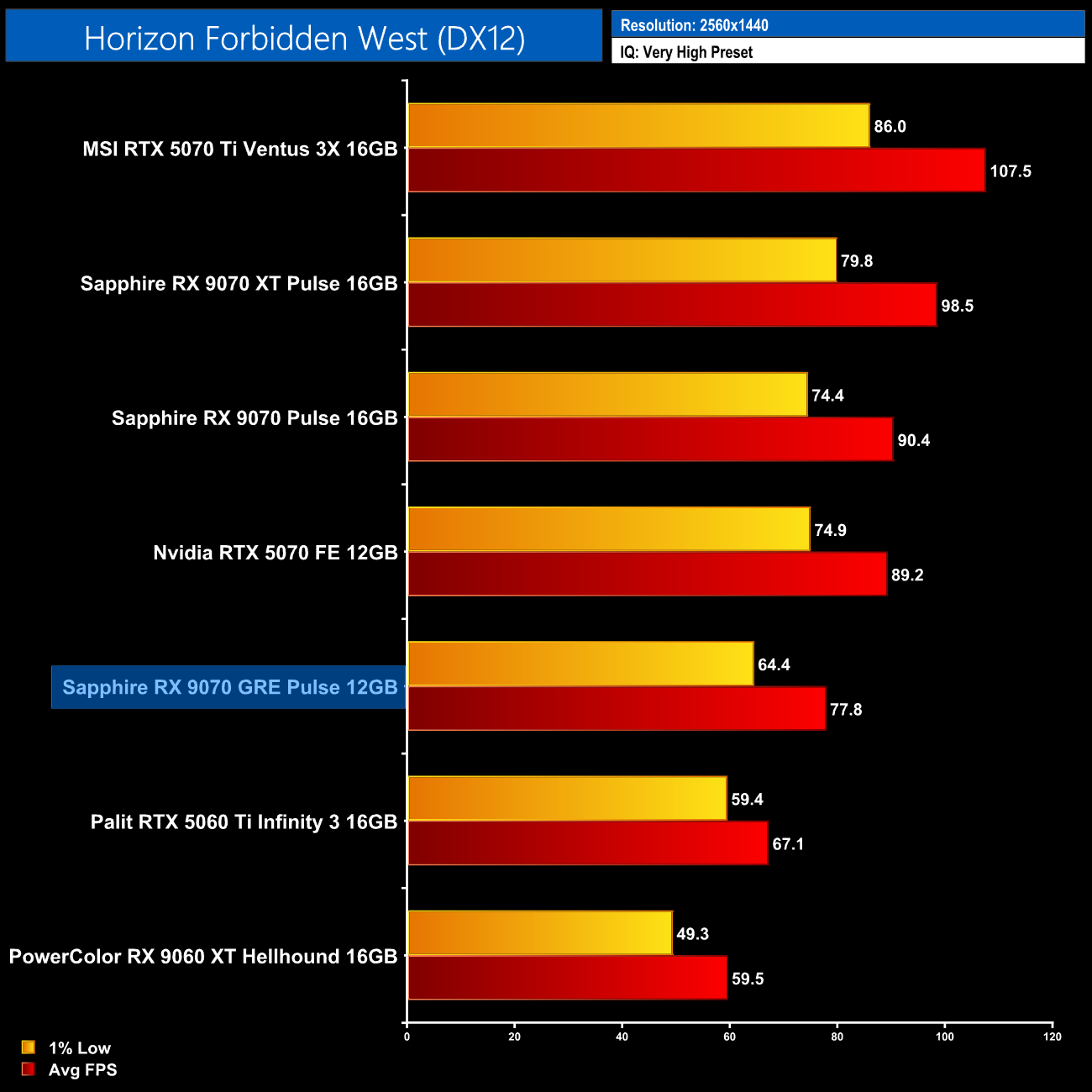
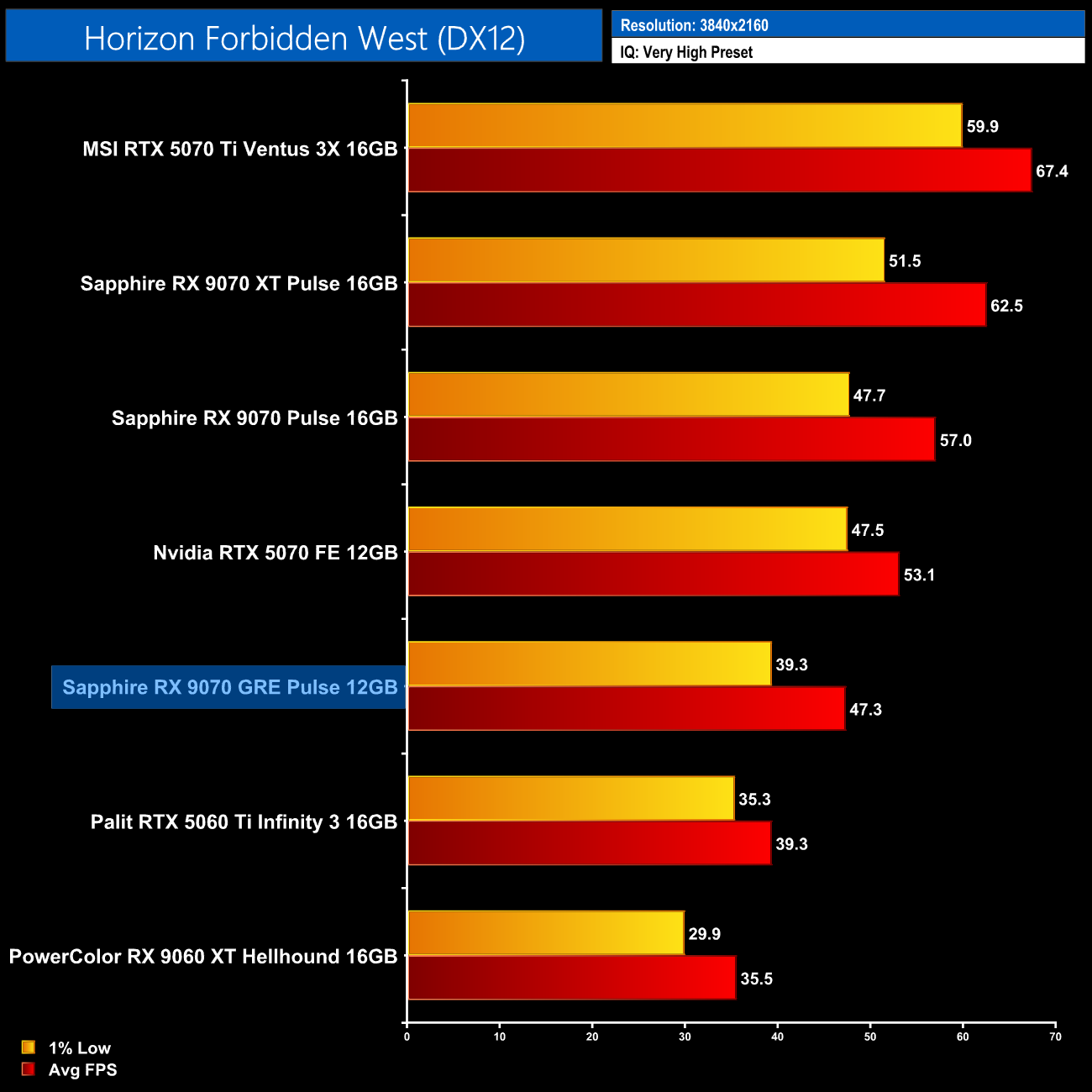
Horizon Forbidden West is a 2022 action role-playing game developed by Guerrilla Games and published by Sony Interactive Entertainment. The sequel to Horizon Zero Dawn (2017), the game is set in a post-apocalyptic version of the Western United States, recovering from the aftermath of an extinction event caused by a rogue robot swarm. The game and the Burning Shores expansion were collected together, re-released as Horizon Forbidden West Complete Edition for PlayStation 5 in October 2023, and ported to Windows by Nixxes Software in March 2024. A sequel is in development. (Wikipedia).
Engine: Decima. We test using the Very High preset, DX12 API.
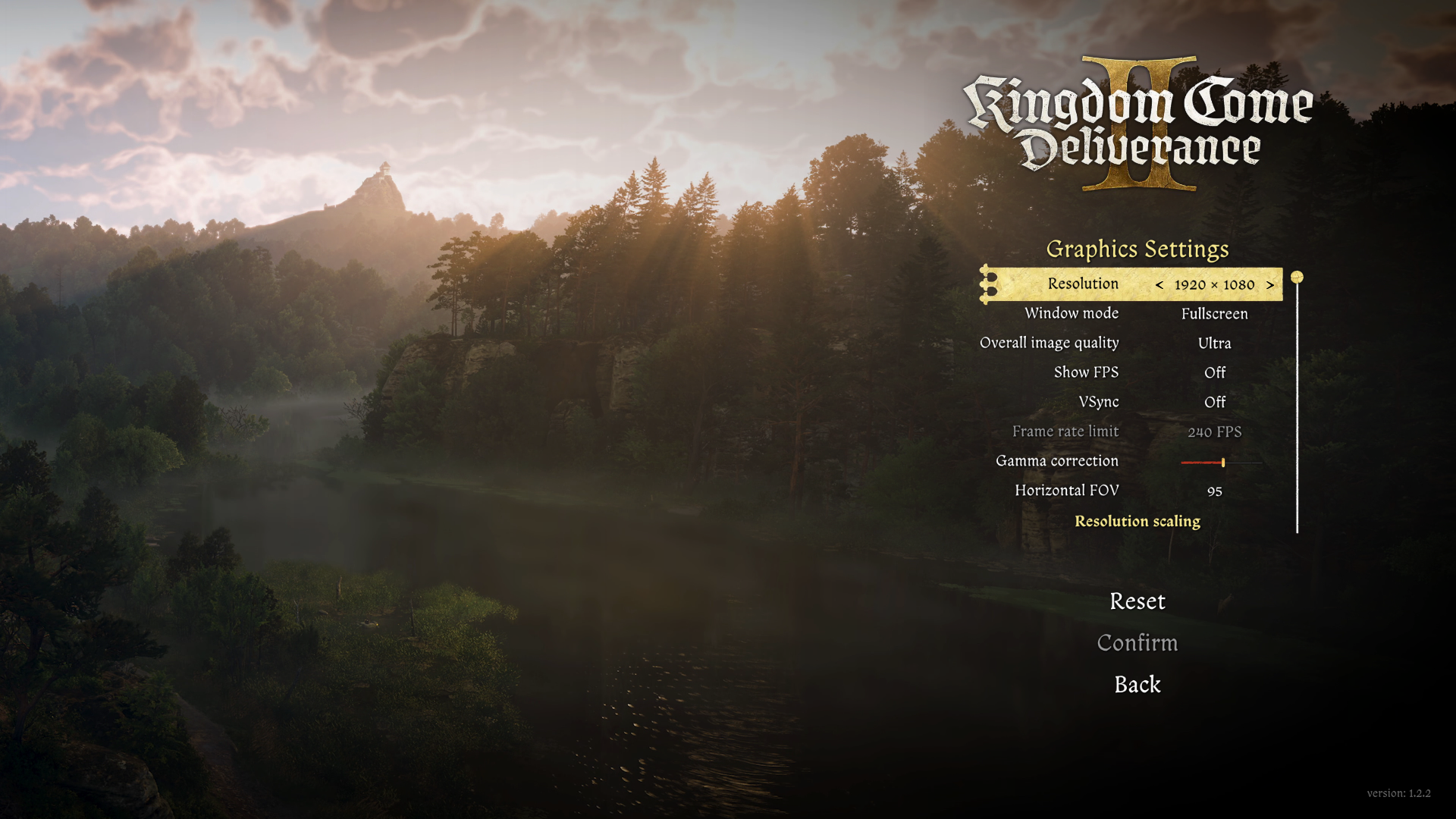
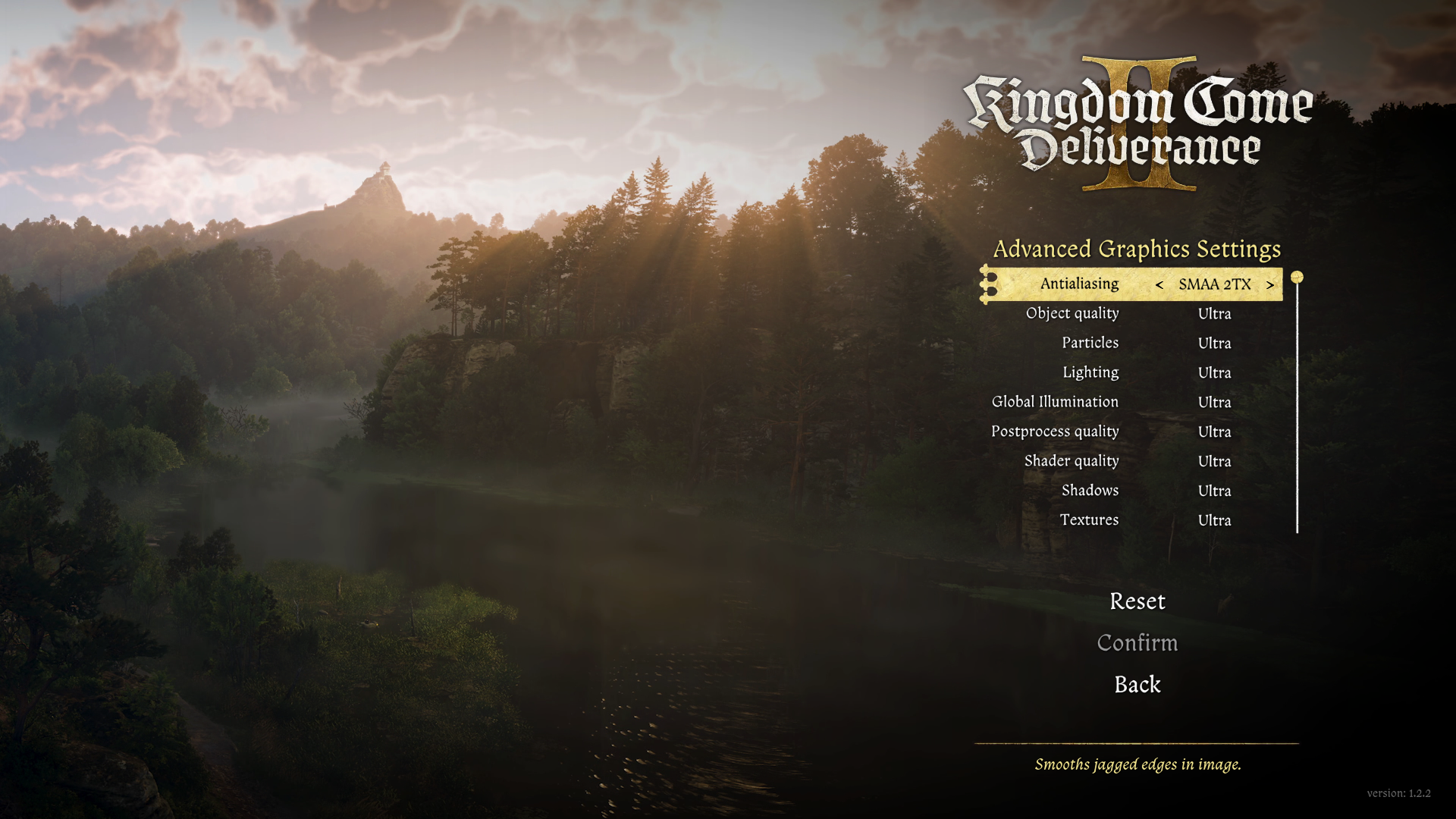
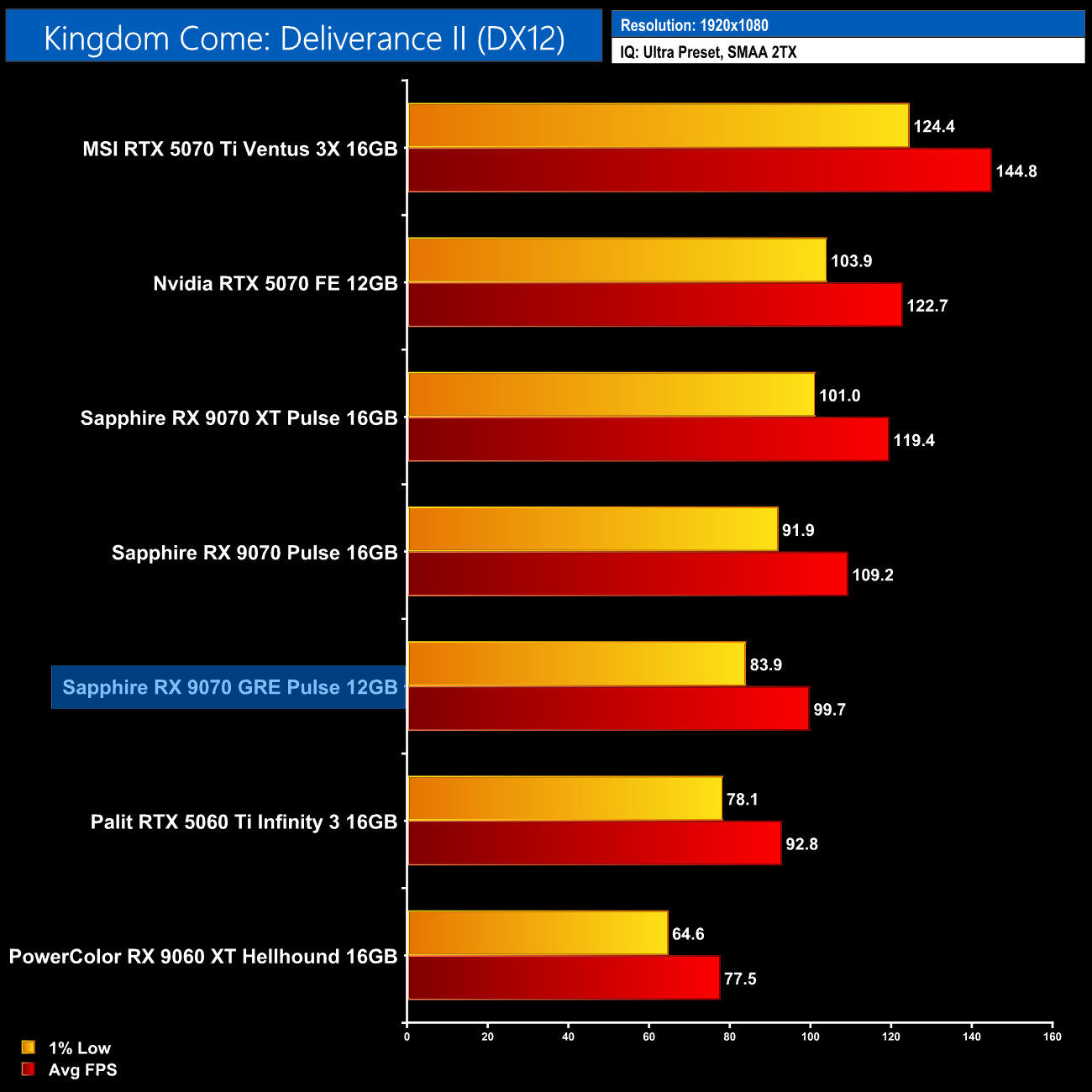
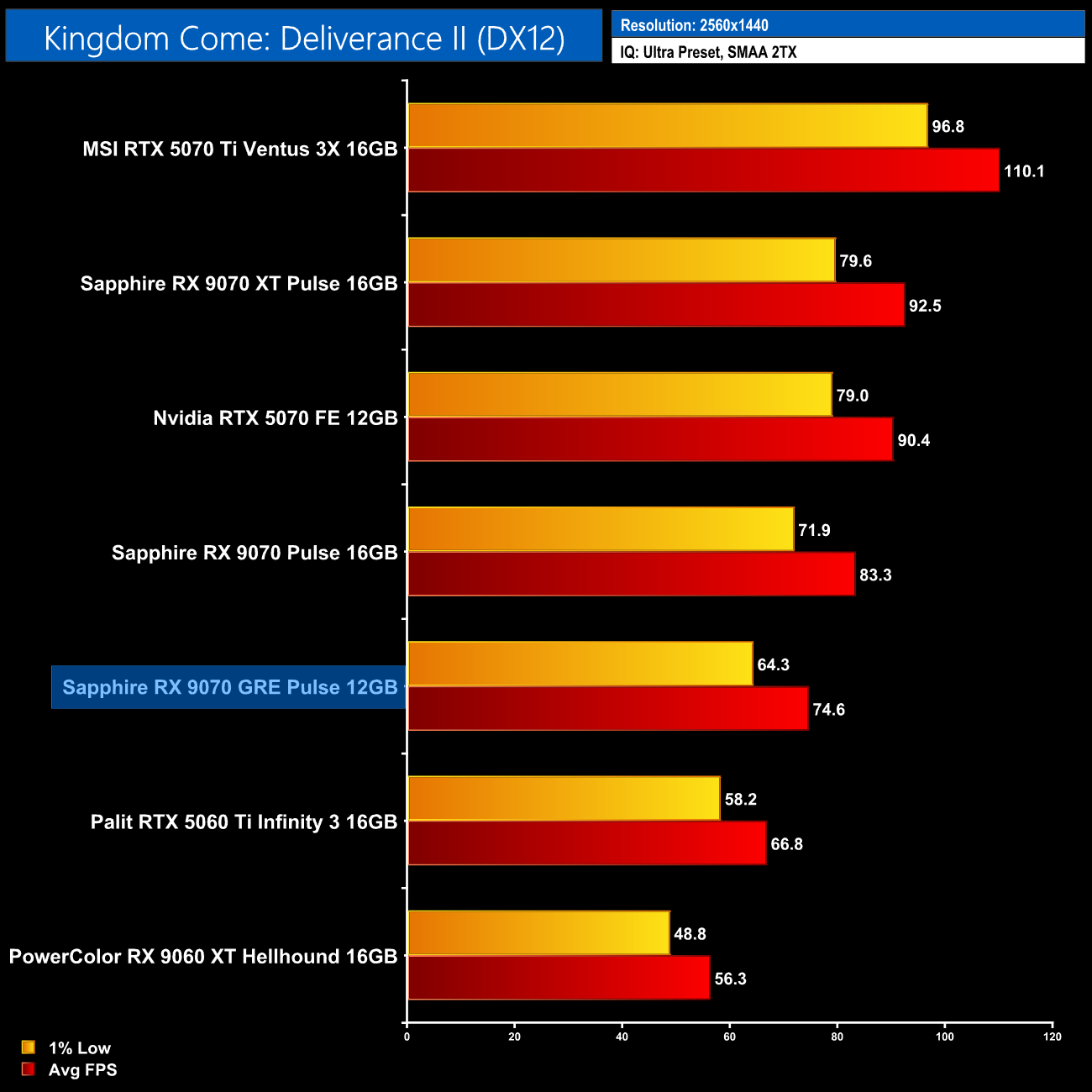
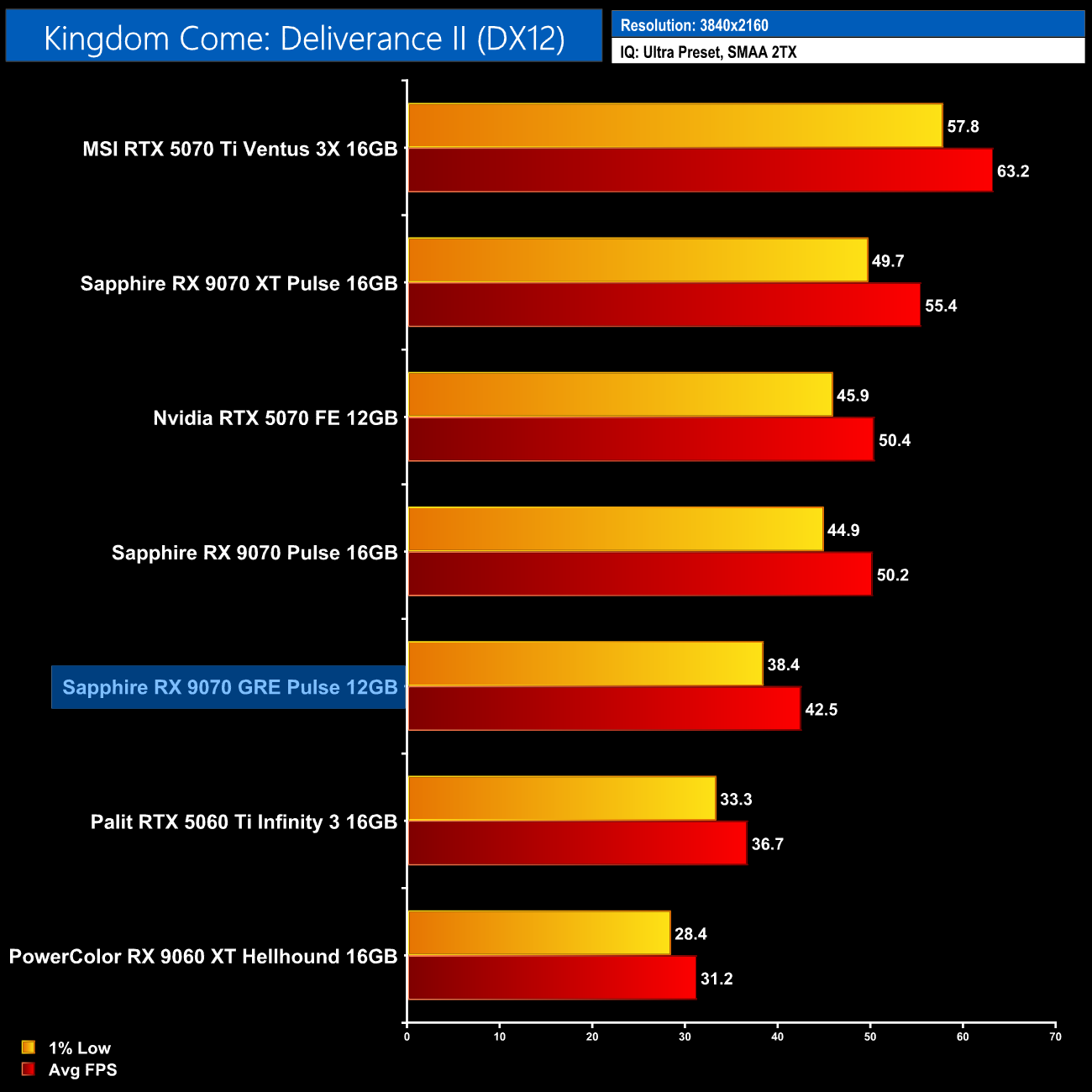
Kingdom Come: Deliverance II is a 2025 action role-playing game developed by Warhorse Studios and published by Deep Silver. The sequel to Kingdom Come: Deliverance (2018), the game was released for PlayStation 5, Windows, and Xbox Series X/S on 4 February 2025.
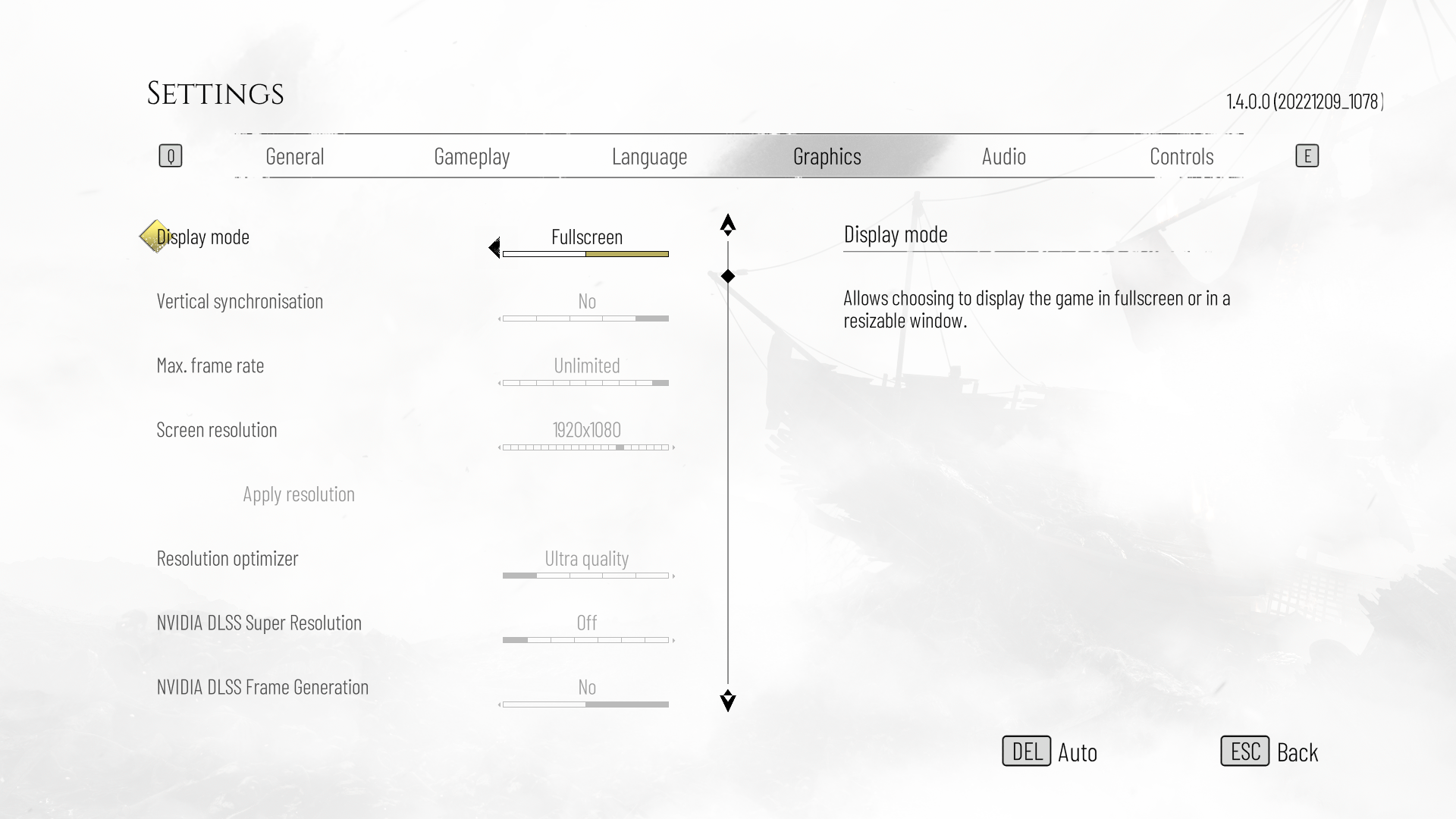
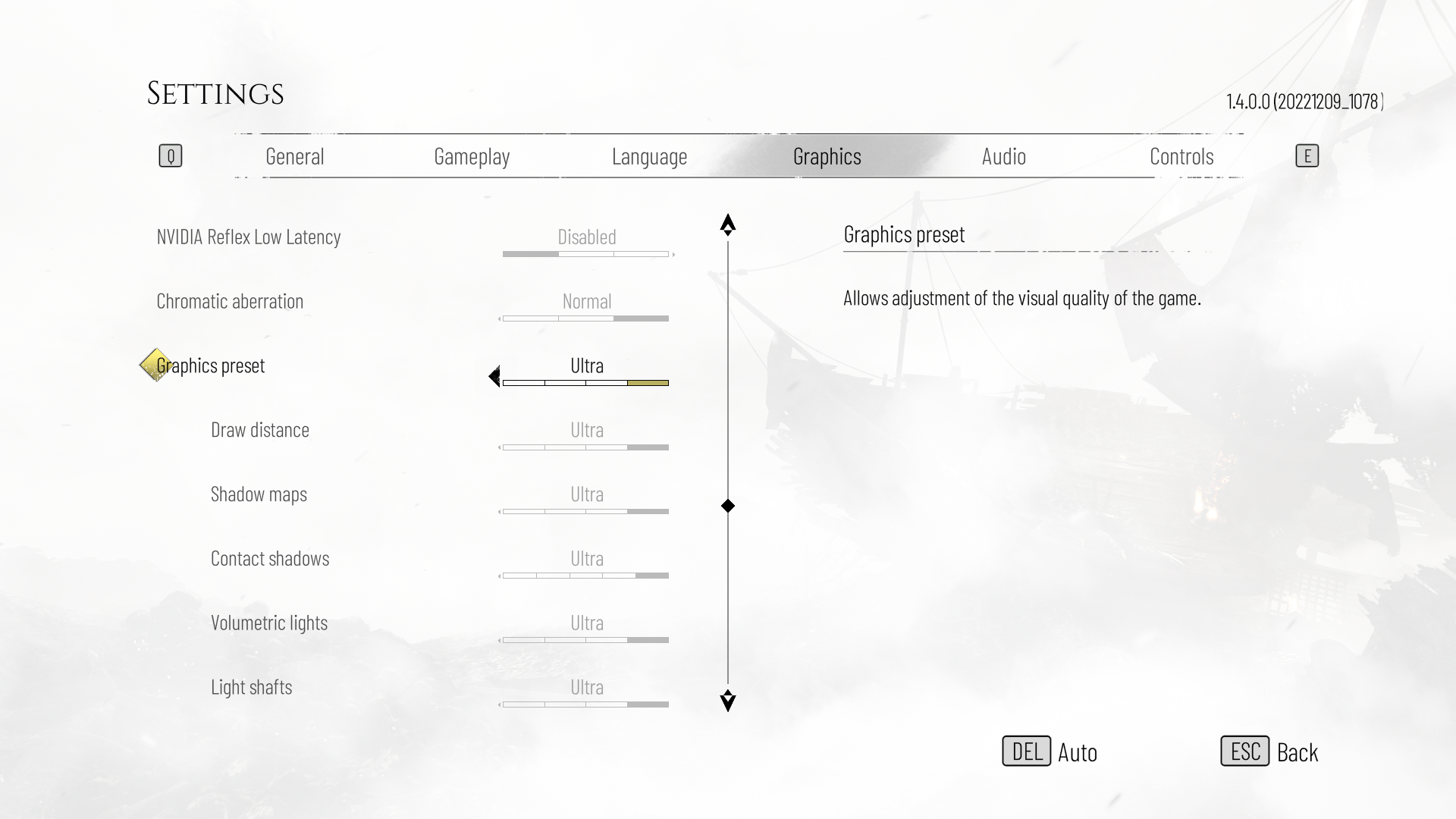
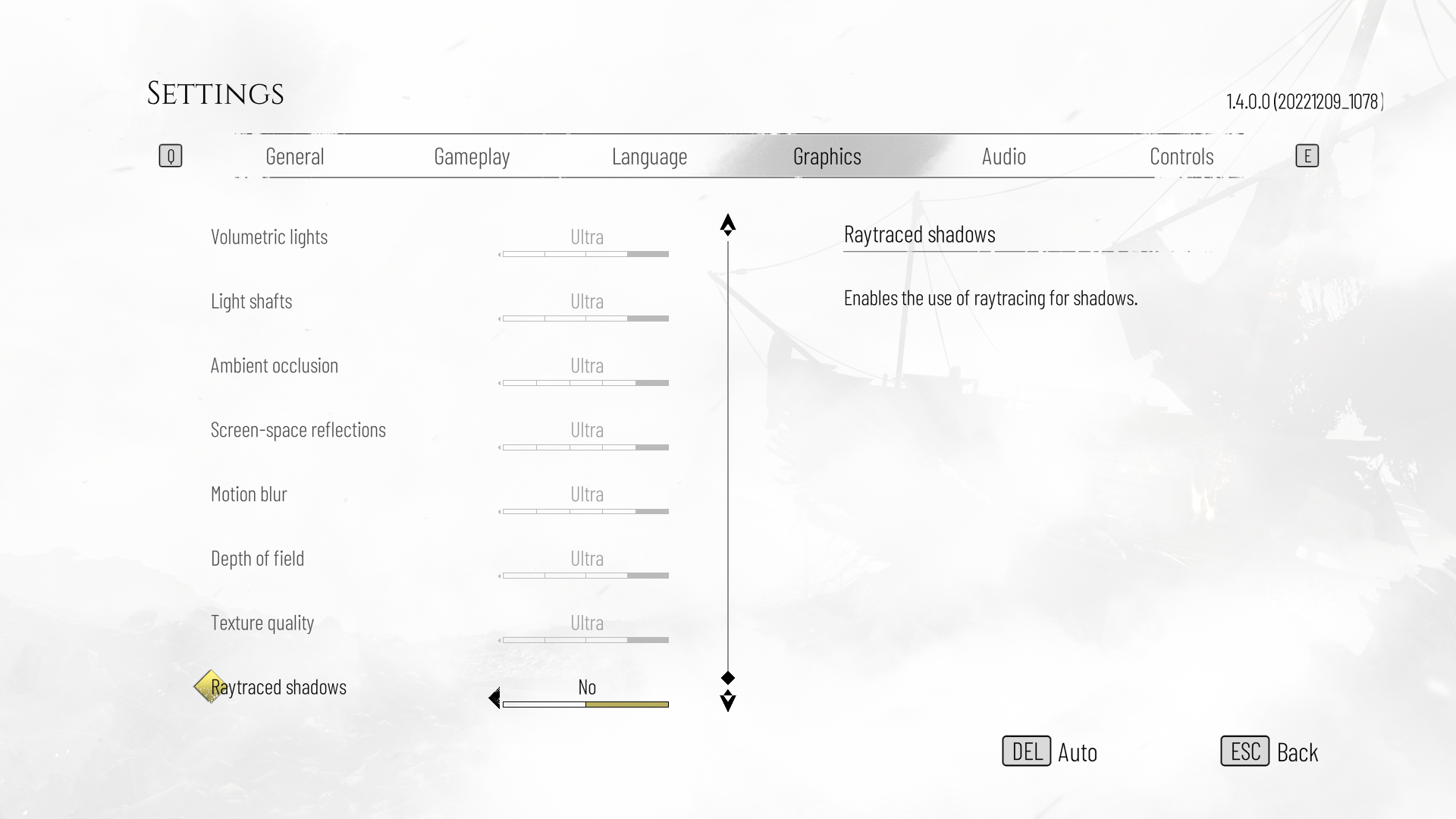
Engine: CryEngine. We test using the Ultra preset, DX12 API.
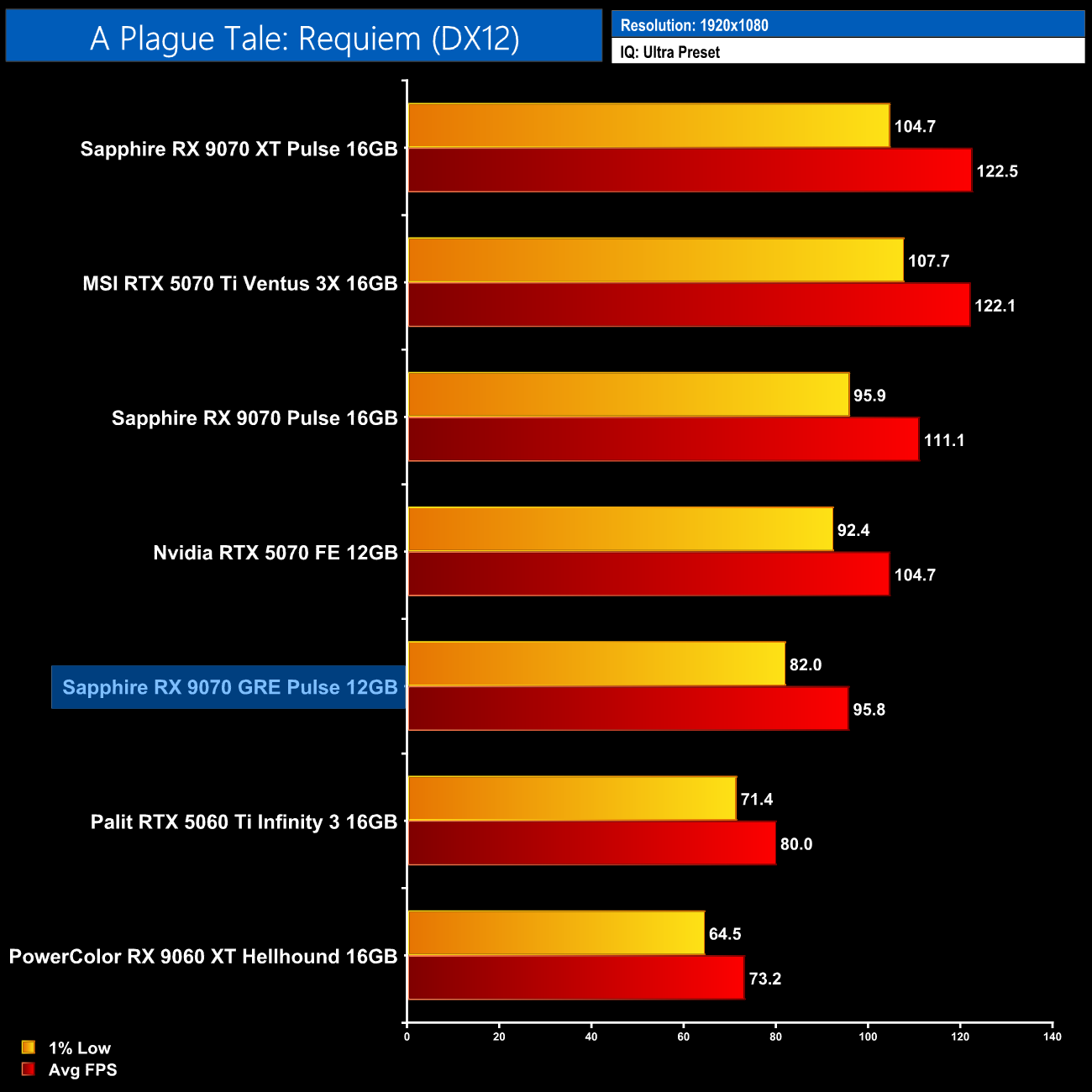
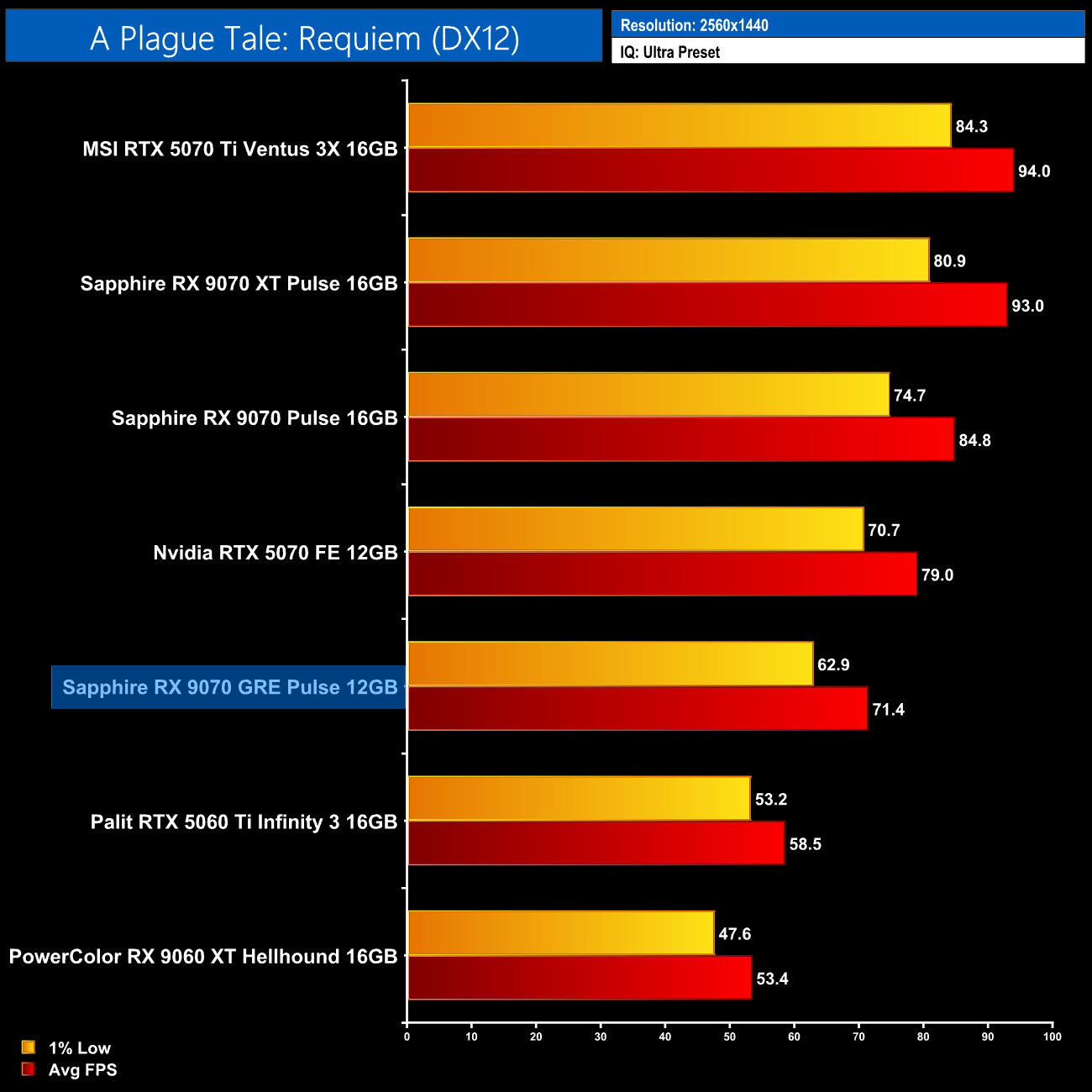
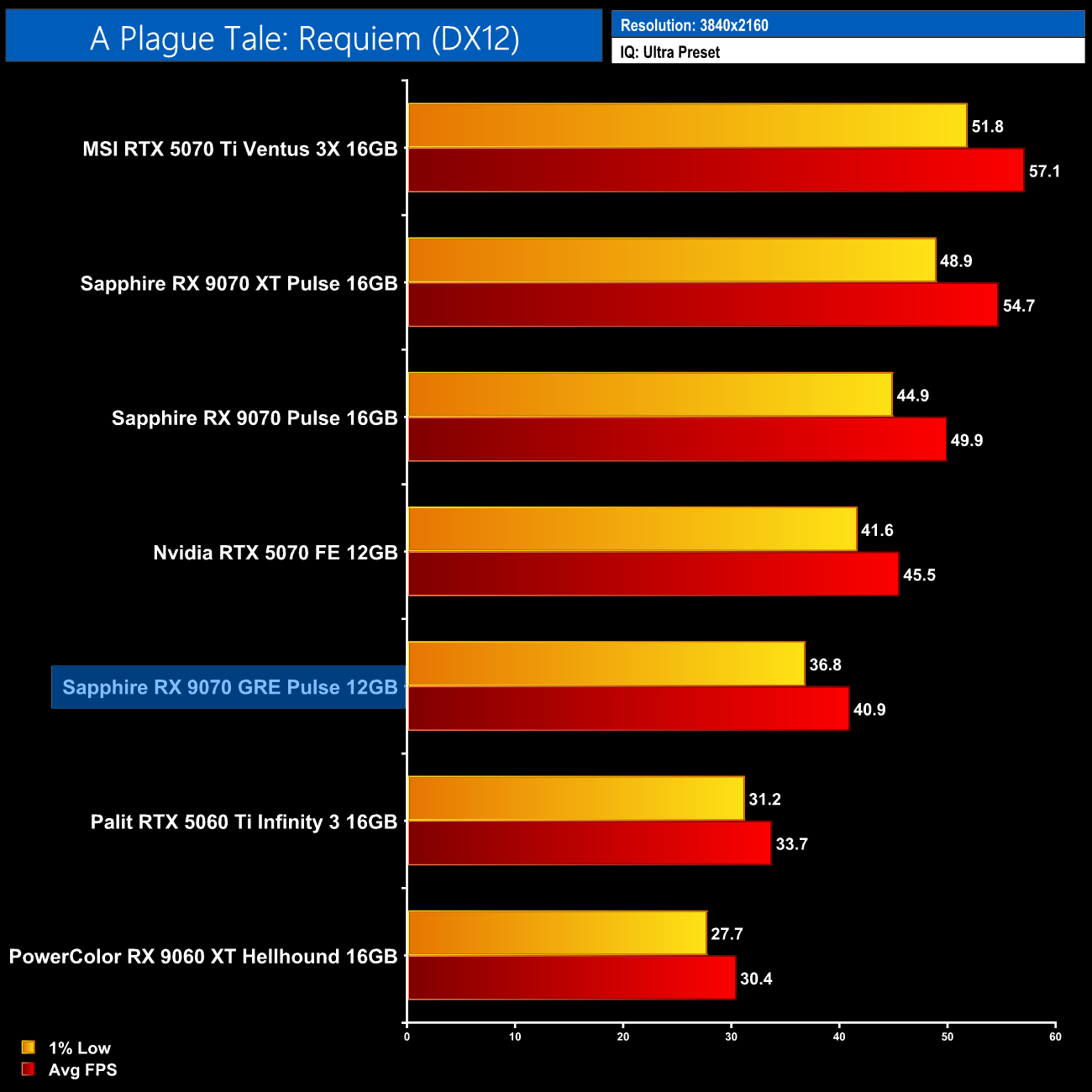
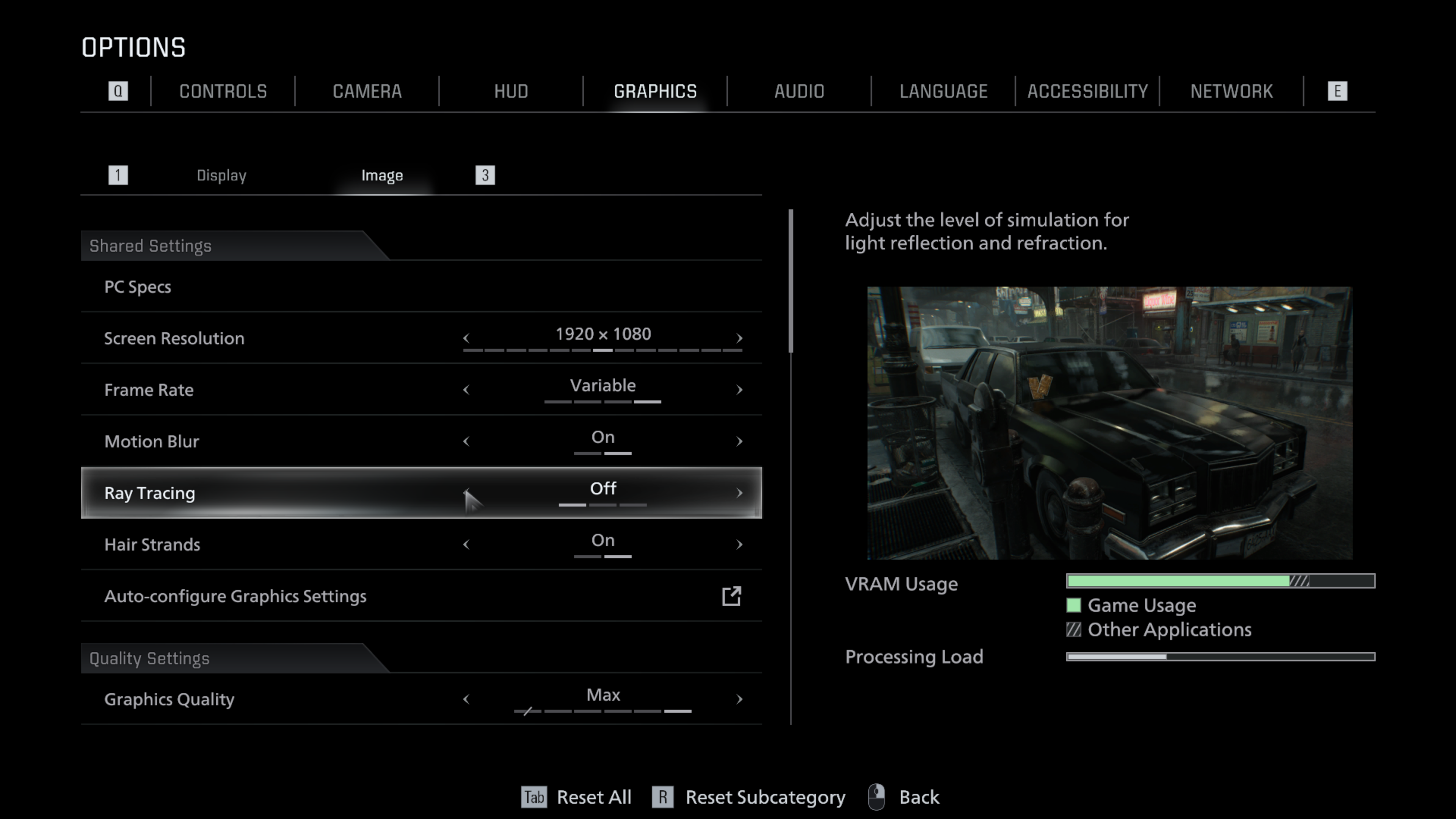
A Plague Tale: Requiem is an action-adventure stealth game developed by Asobo Studio and published by Focus Entertainment. It is the sequel to A Plague Tale: Innocence (2019), and follows siblings Amicia and Hugo de Rune who must look for a cure to Hugo's blood disease in Southern France while fleeing from soldiers of the Inquisition and hordes of rats that are spreading the black plague. The game was released for Nintendo Switch, PlayStation 5, Windows, and Xbox Series X/S on 18 October 2022. (Wikipedia).
Engine: Asobo Studio in-house engine. We test using the Ultra preset, DX12 API.
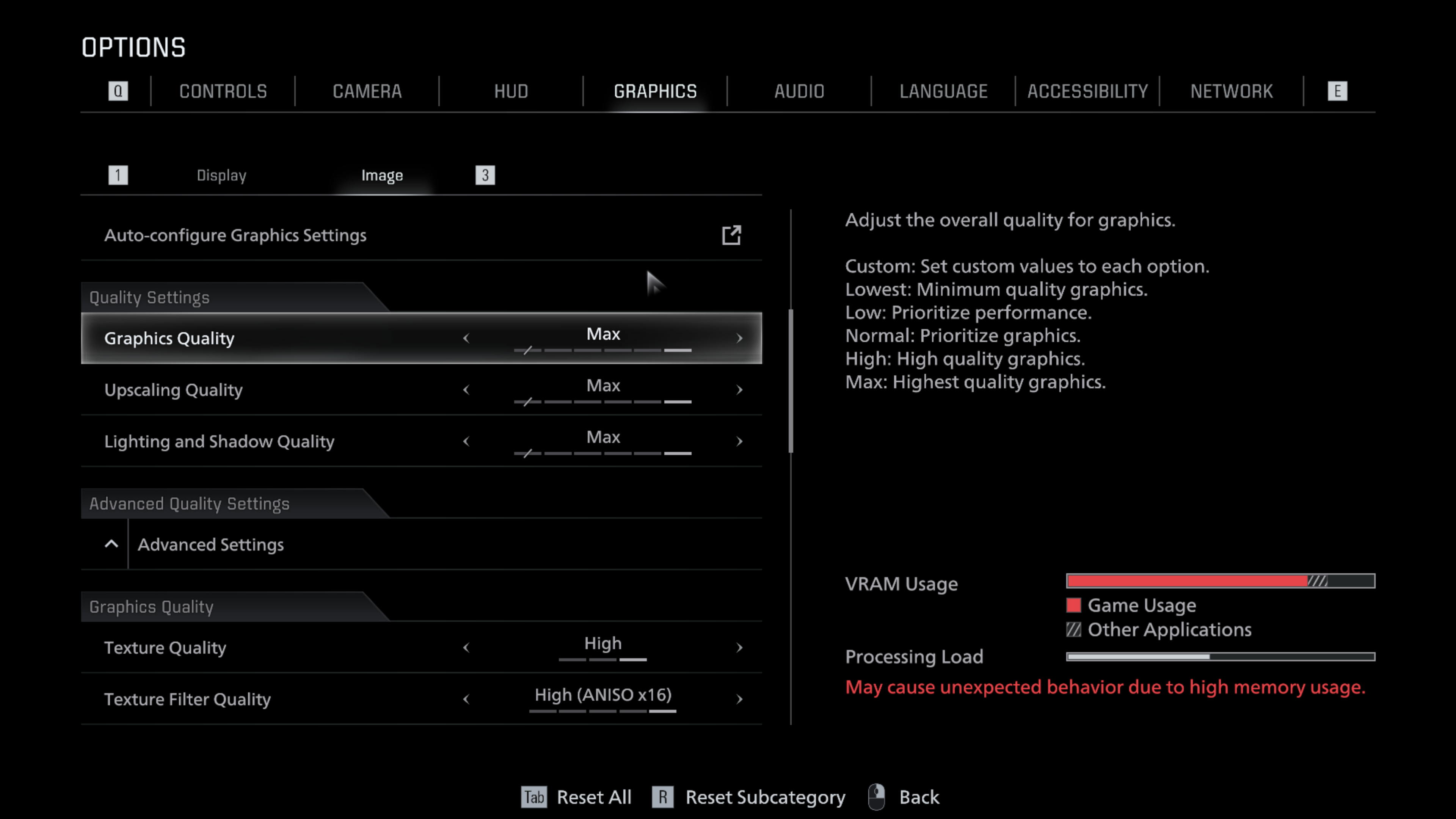
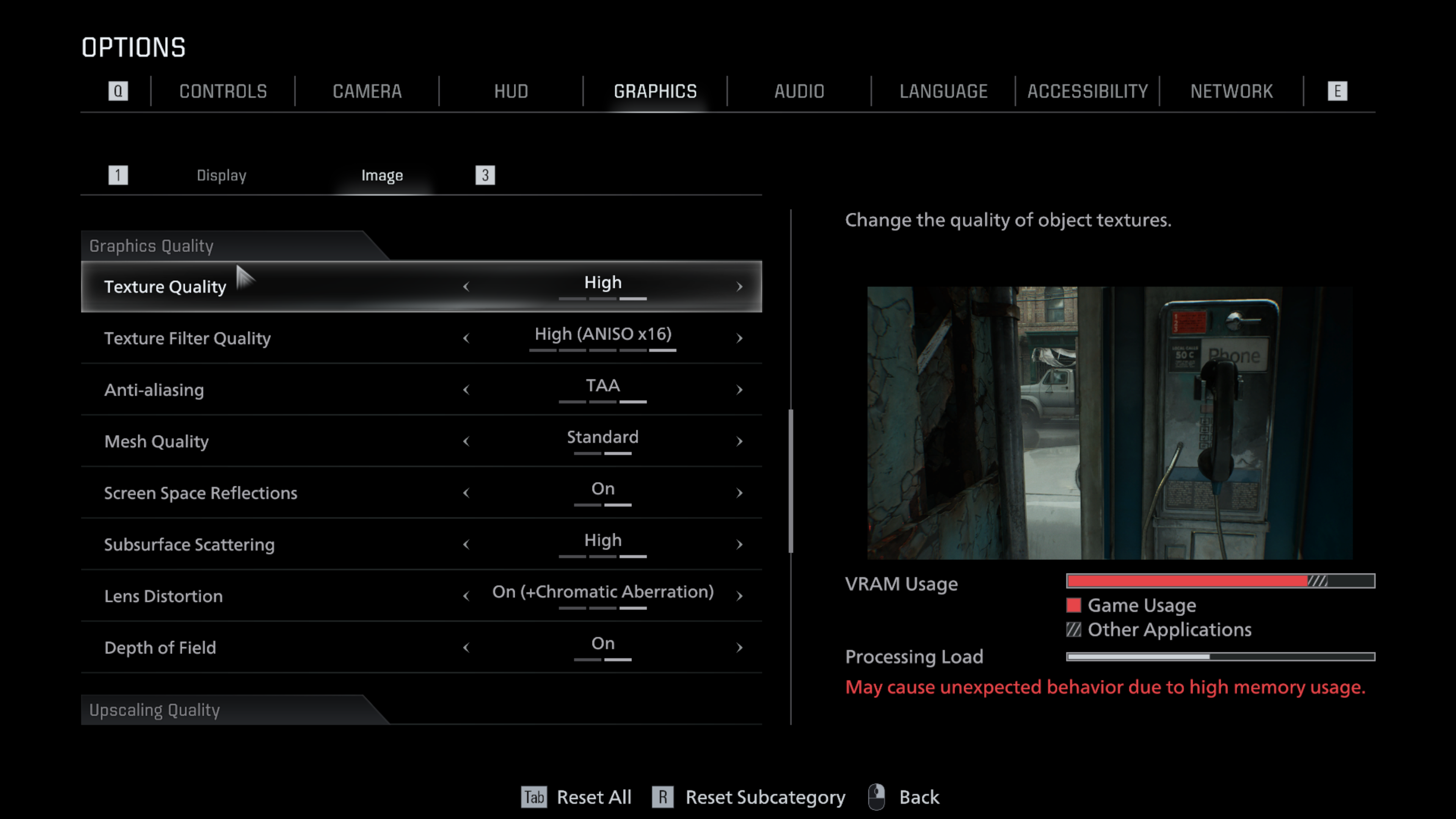
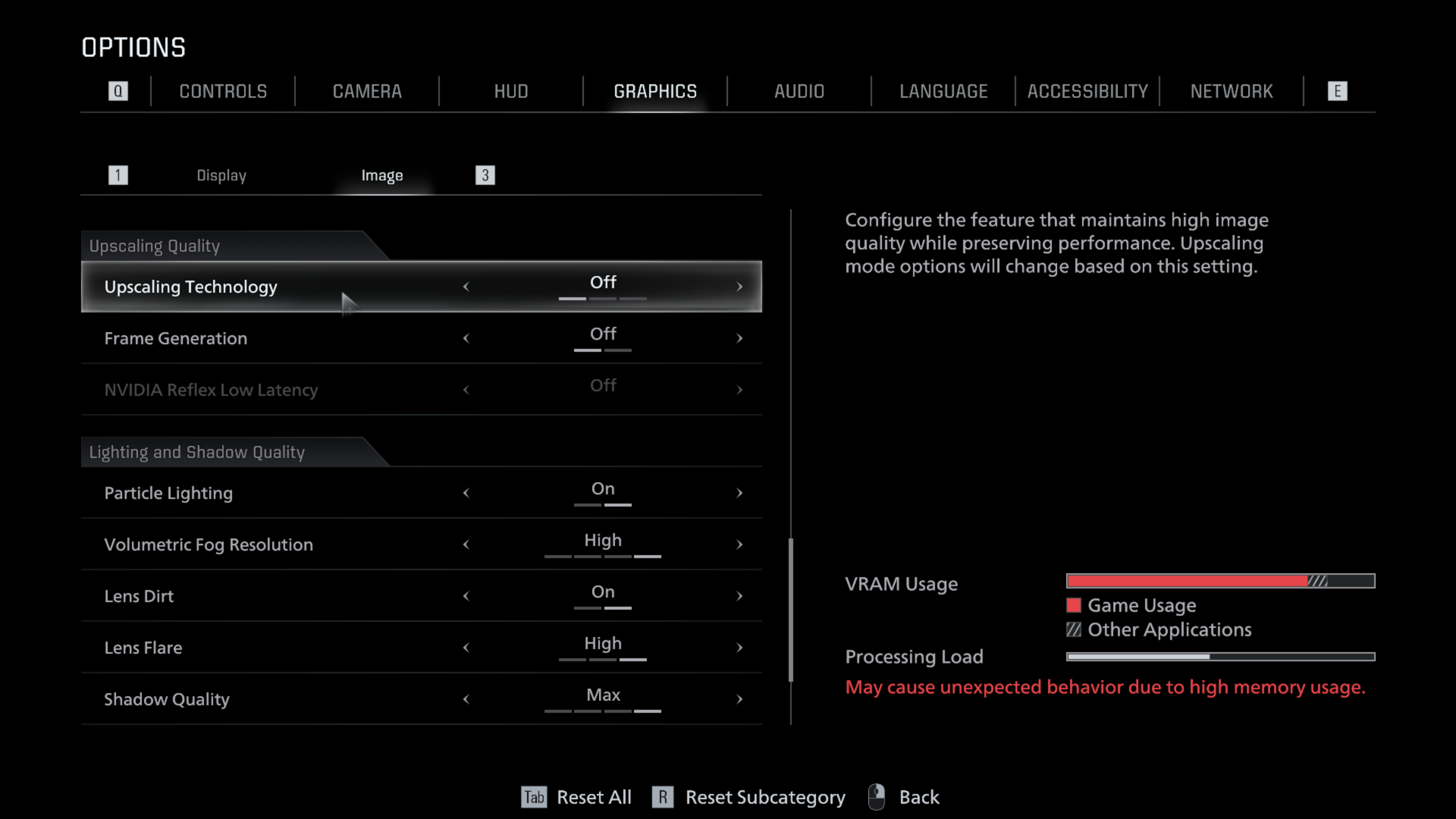
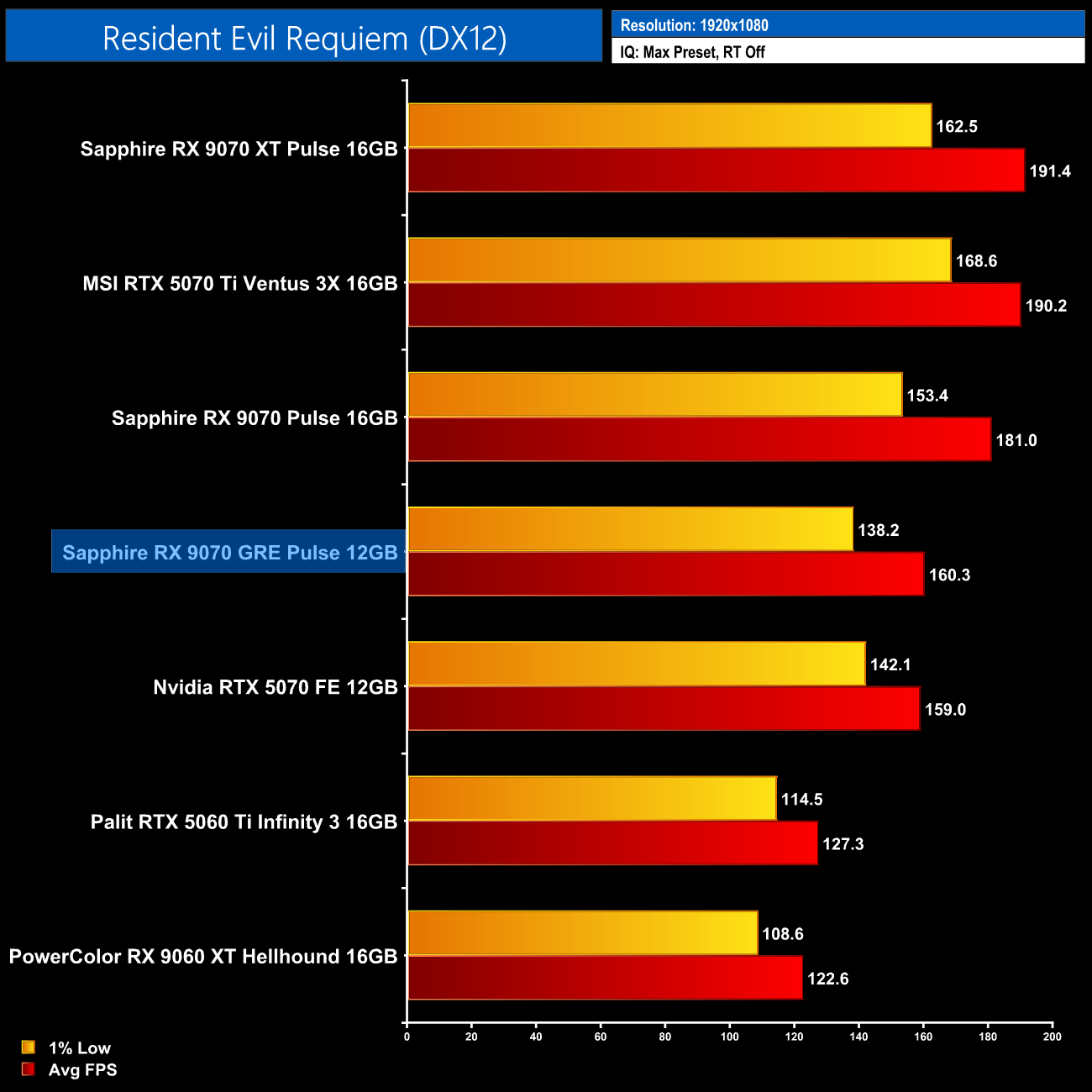
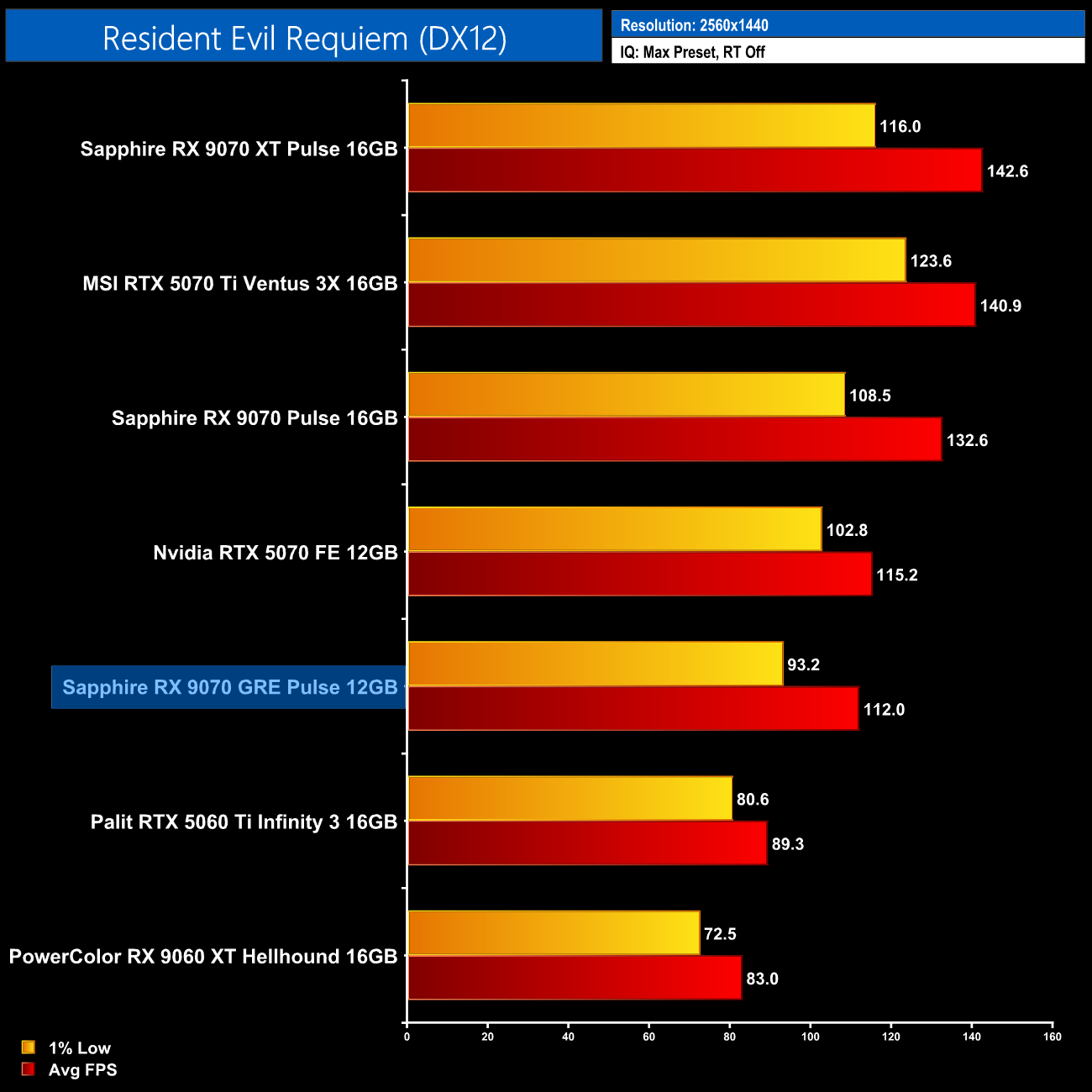
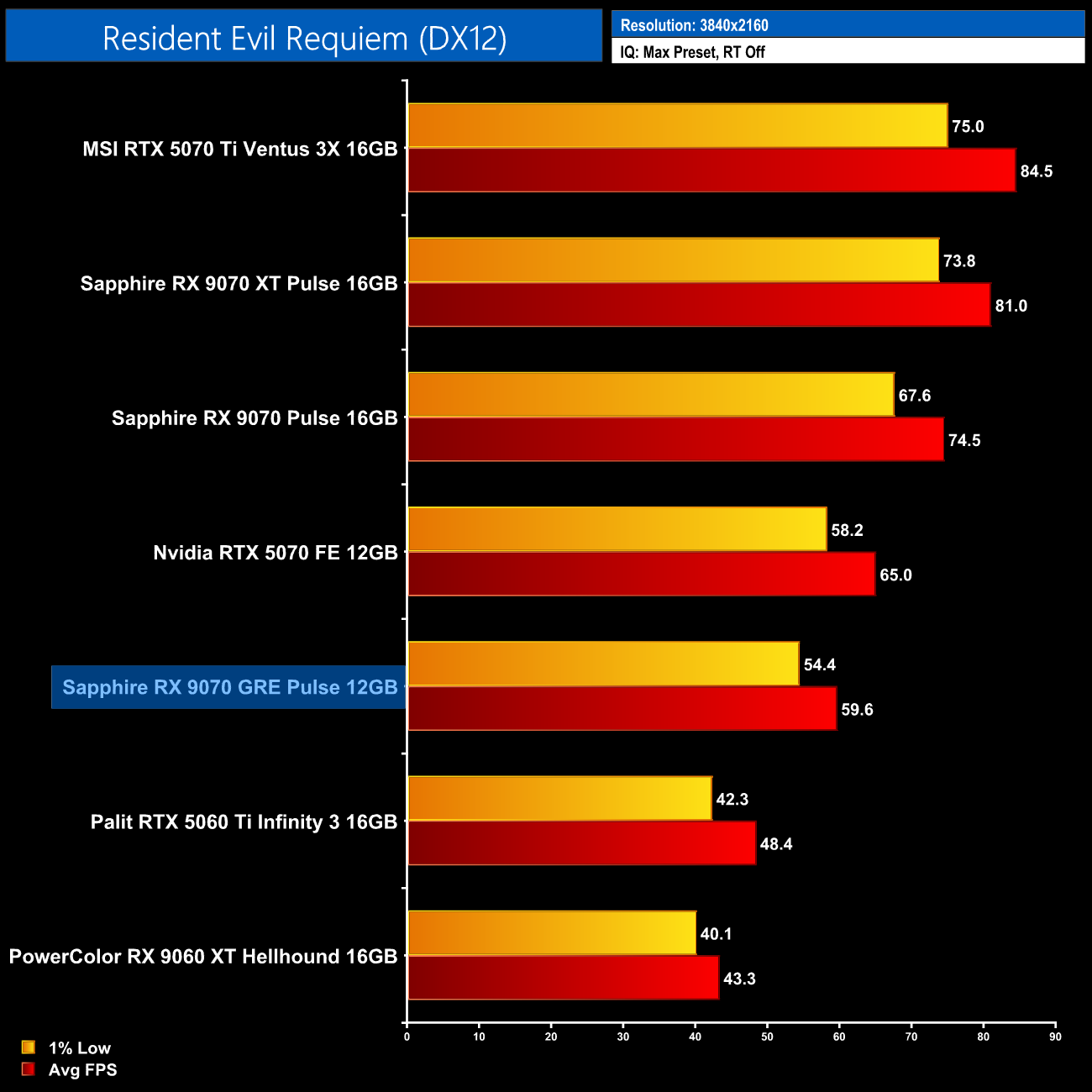
Resident Evil Requiem is a 2026 survival horror game developed and published by Capcom. It is the ninth main game in the Resident Evil series, following Resident Evil Village (2021). Requiem was released for Nintendo Switch 2, PlayStation 5, Windows, and Xbox Series X/S on February 27, 2026, to acclaim. Critics praised the dark tone, story, atmosphere, and balance between survival horror and action. (Wikipedia).
Engine: RE Engine. We test using the Max preset, DX12 API.
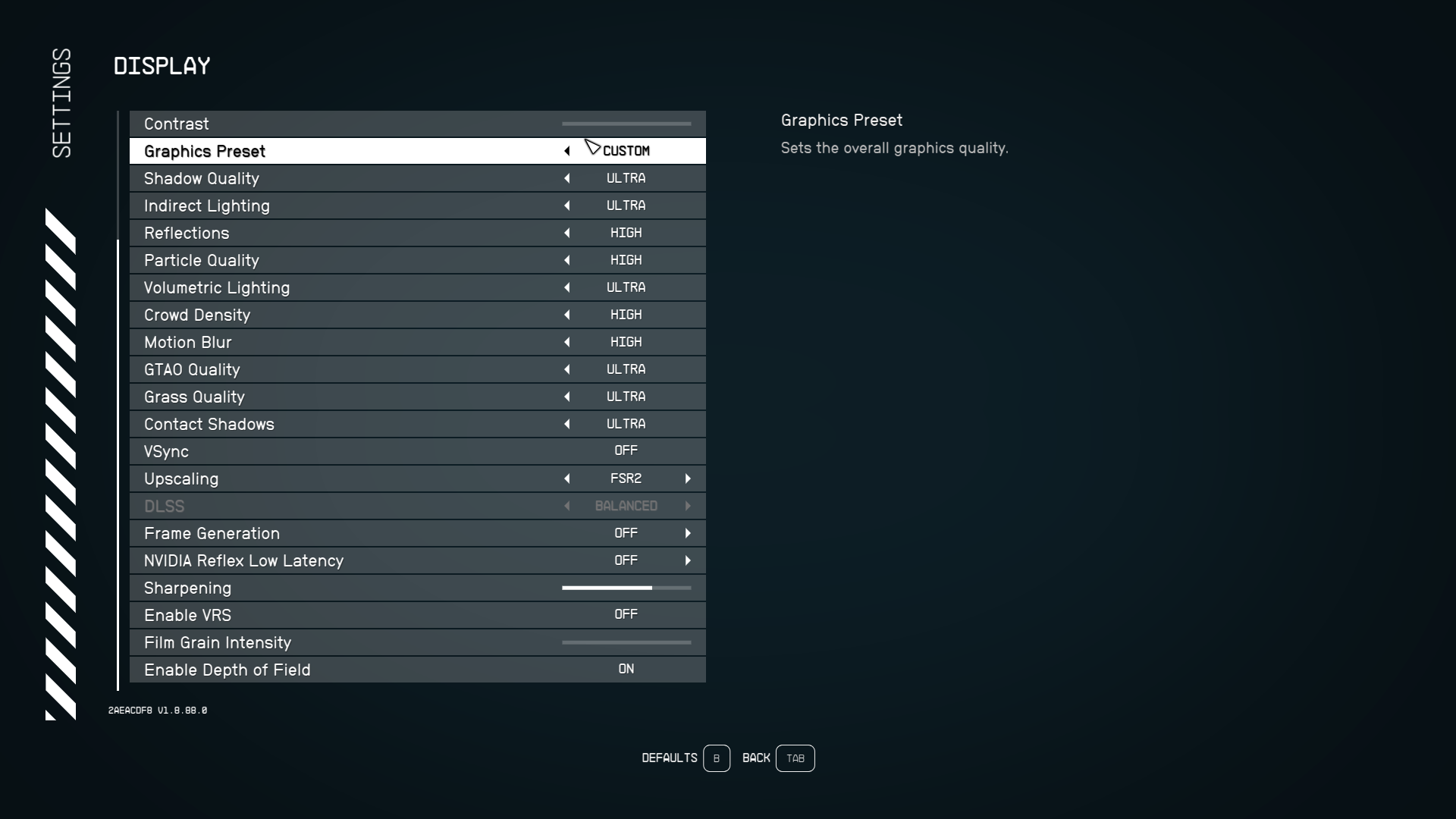
Starfield is a 2023 action role-playing game developed by Bethesda Game Studios and published by Bethesda Softworks. Announced in 2018, Starfield was delayed several times. The game was released for Windows and Xbox Series X/S on September 6, 2023. (Wikipedia).
Engine: Creation Engine 2. We test using the Ultra preset, with 100% resolution scale, dynamic resolution disabled, DX12 API.
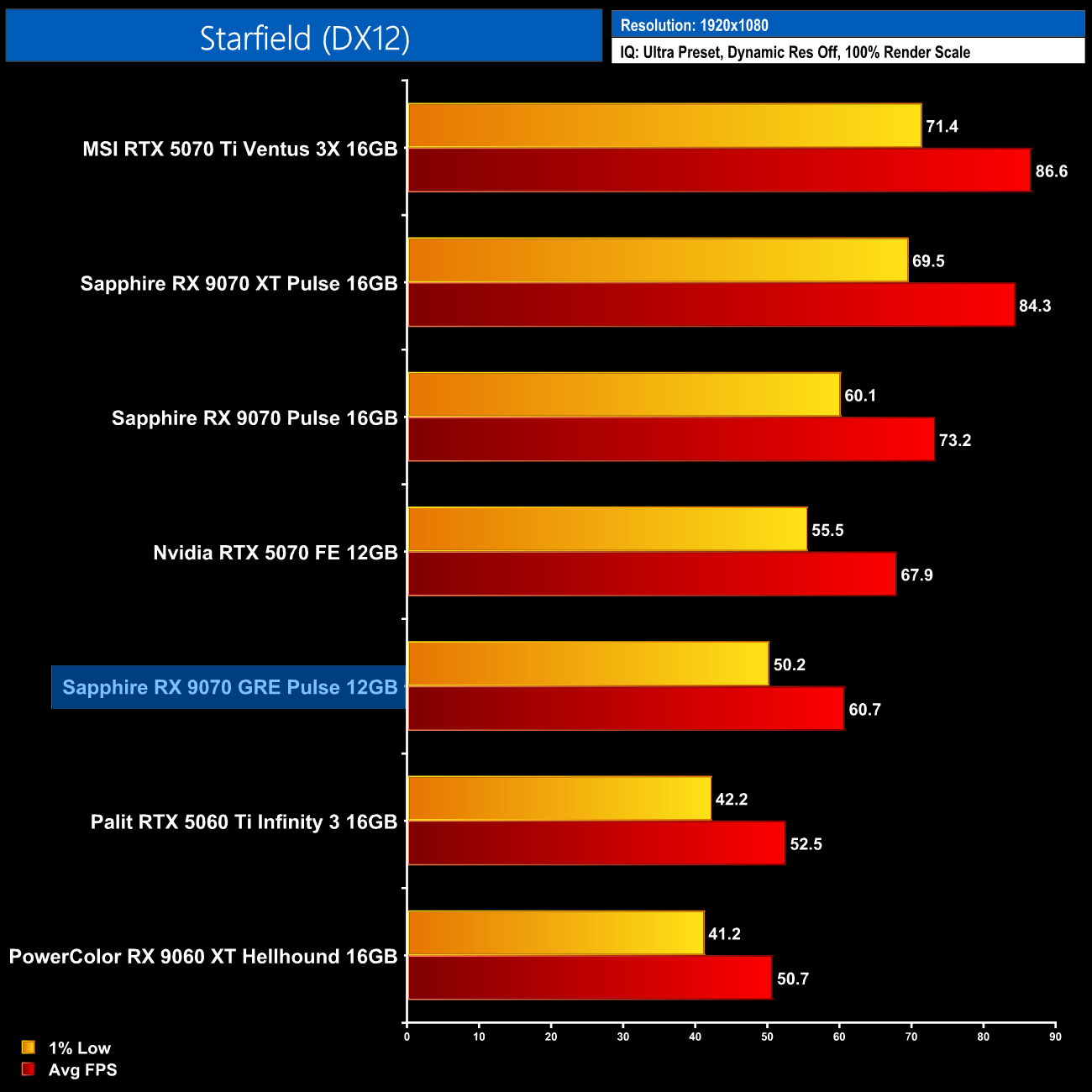
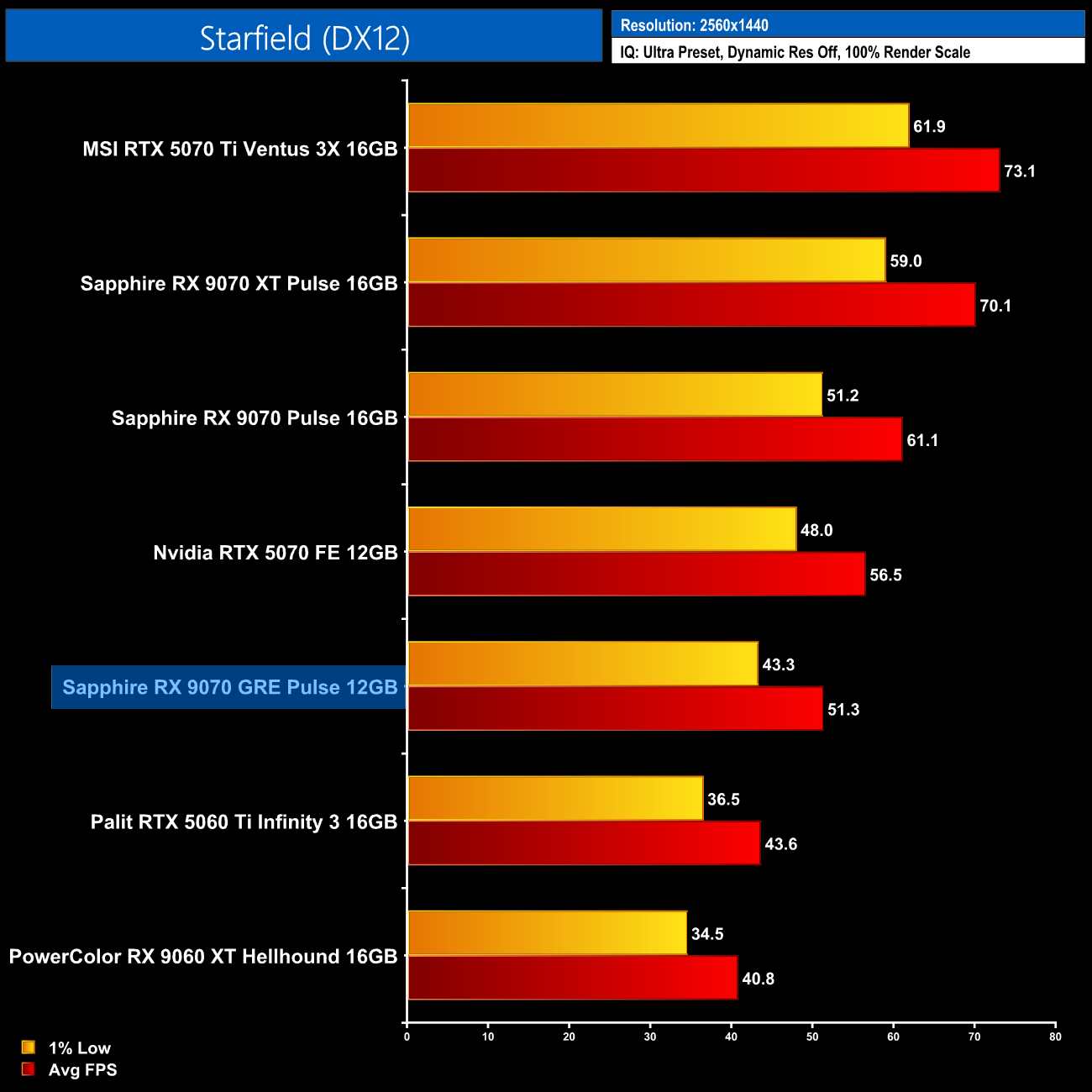
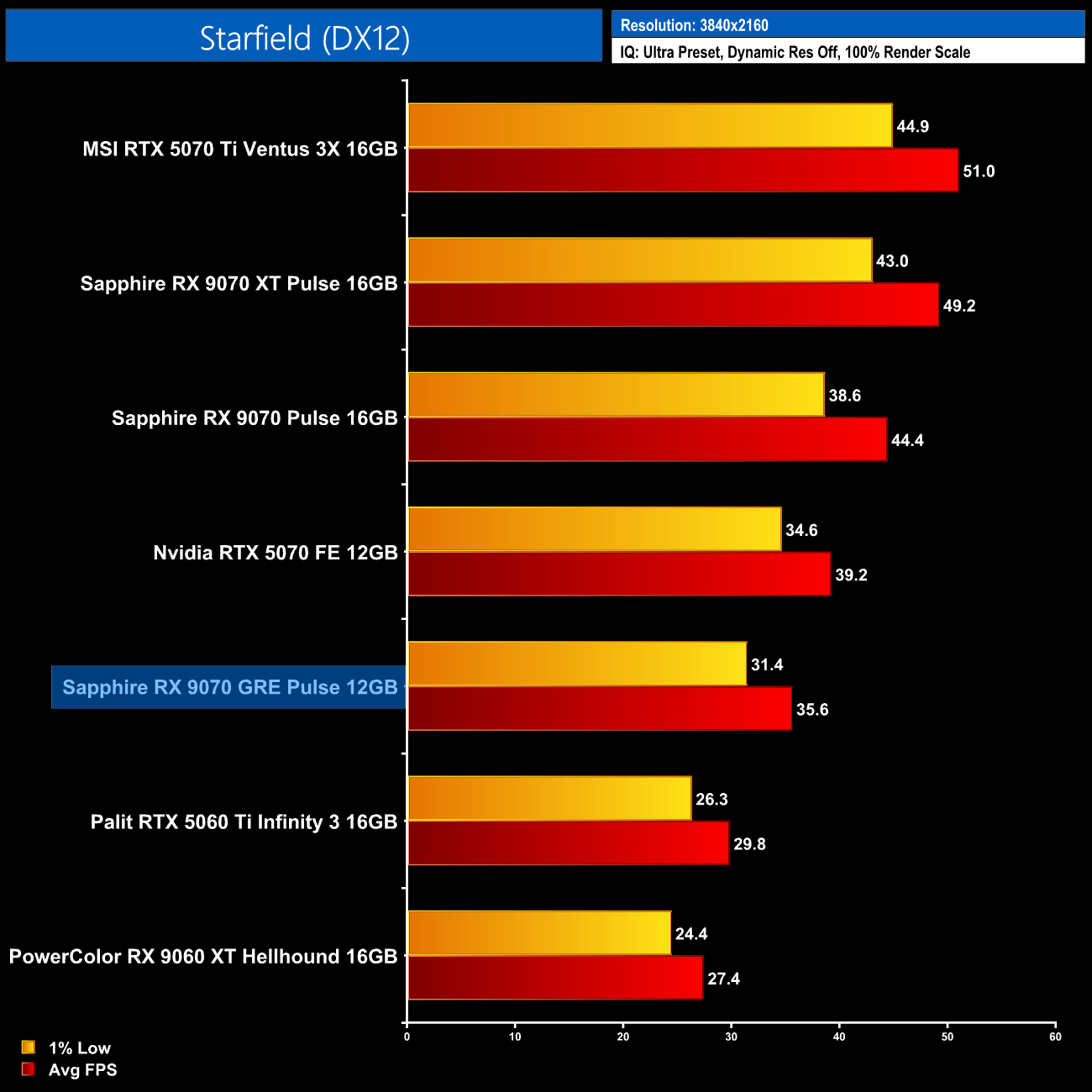
Here we present frame rate figures for each graphics card, averaged across all 12 games on test today. We use the geometric mean instead of the arithmetic mean for overall performance, given it provides a more accurate and balanced representation of GPU performance across different games.
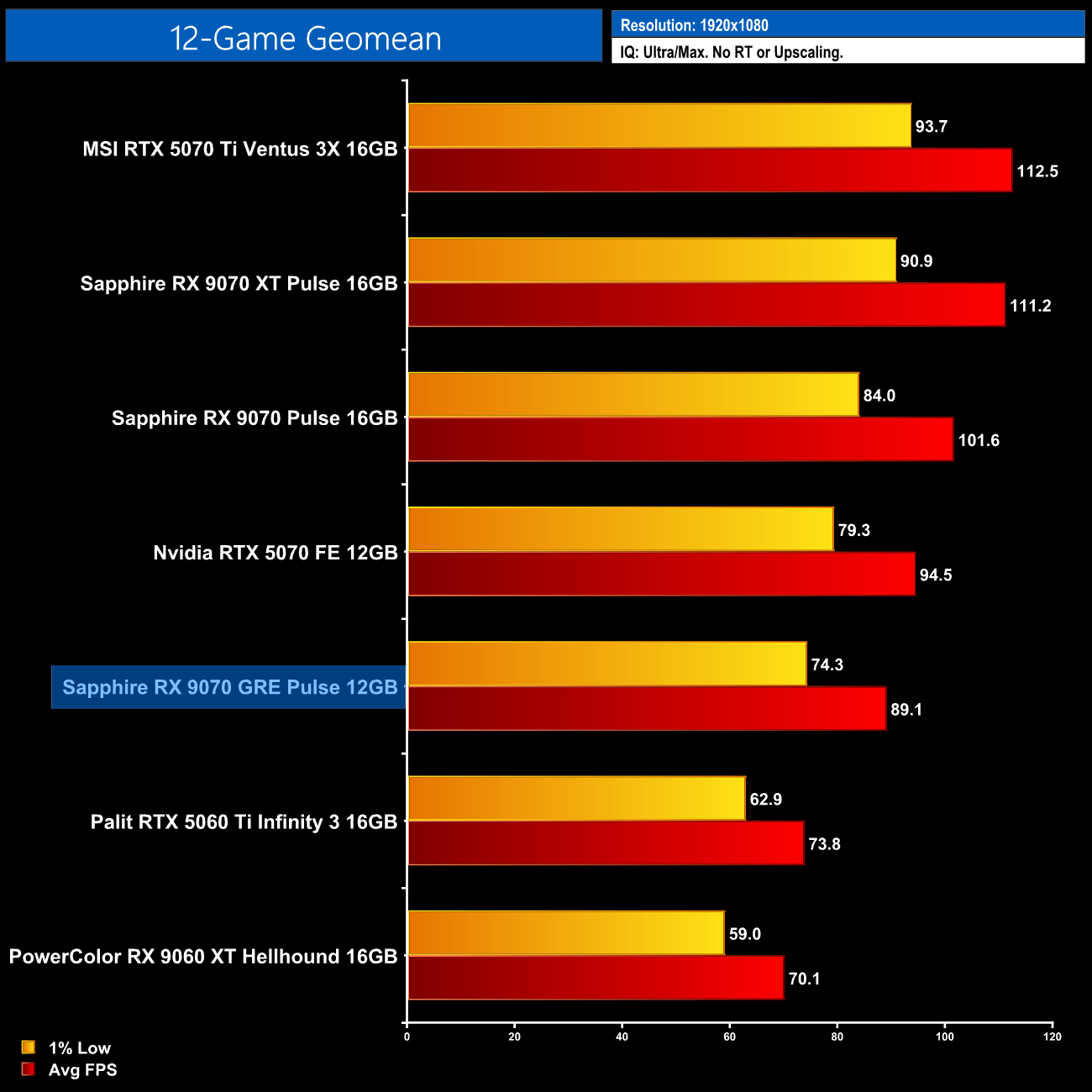
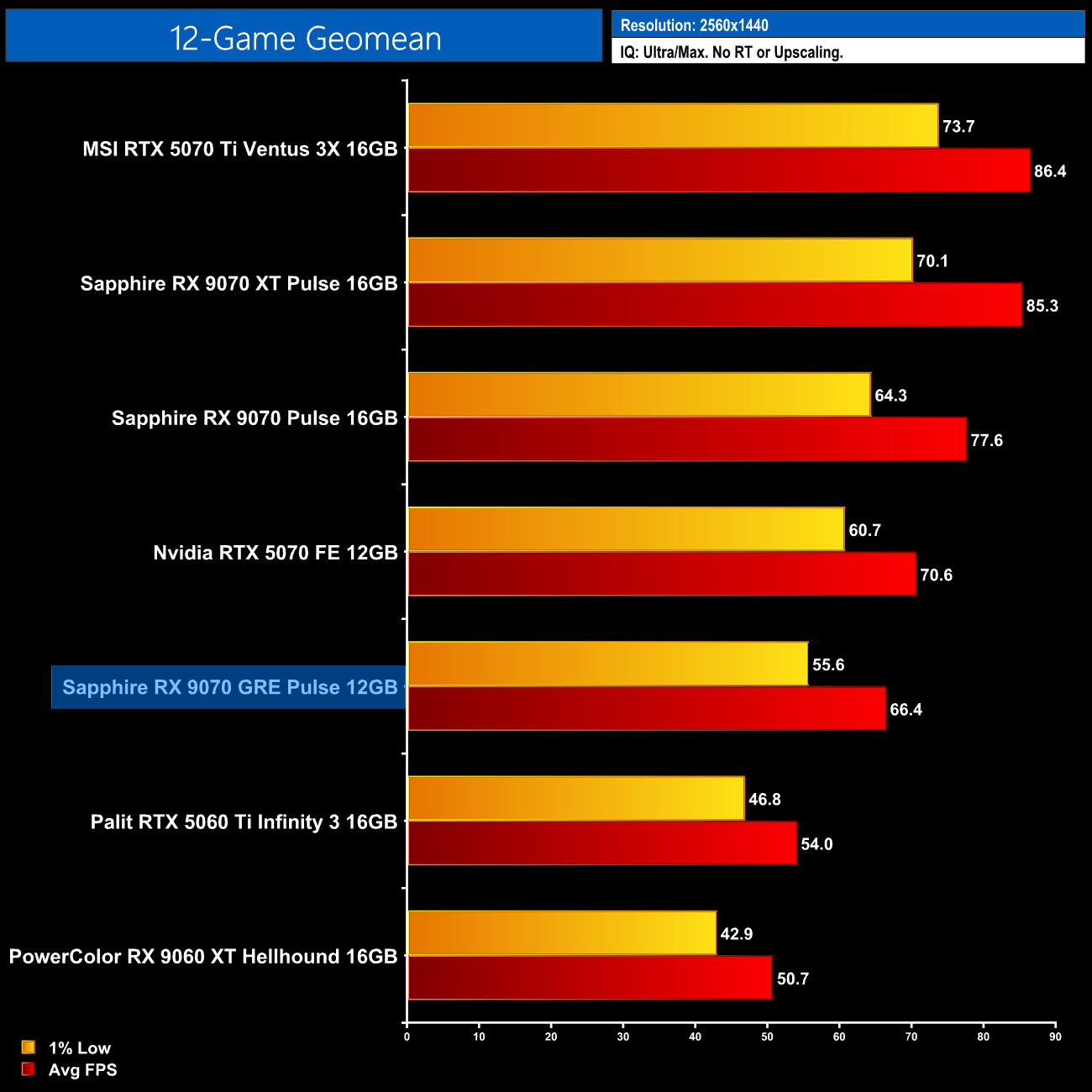
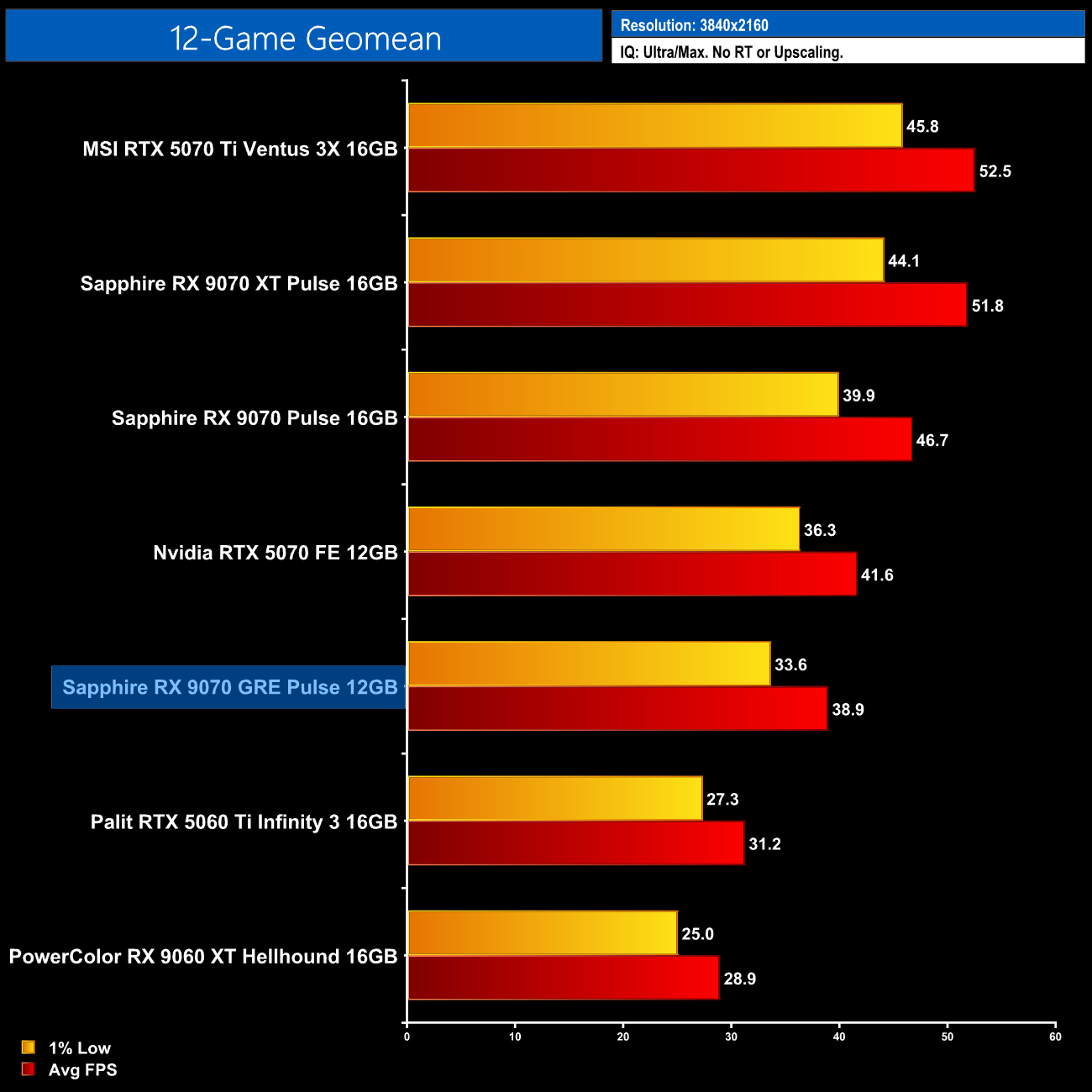
Overall performance of the RX 9070 GRE is probably about as expected given the specs. It has 14% fewer cores than the RX 9070, and funnily enough, at 1440p it is 14% slower on average, while it is some 31% faster than the RX 9060 XT. It generally trades blows with the RTX 5070, but is 6% slower on average and we didn't see any games where it offered a meaningful performance improvement over the GeForce card.
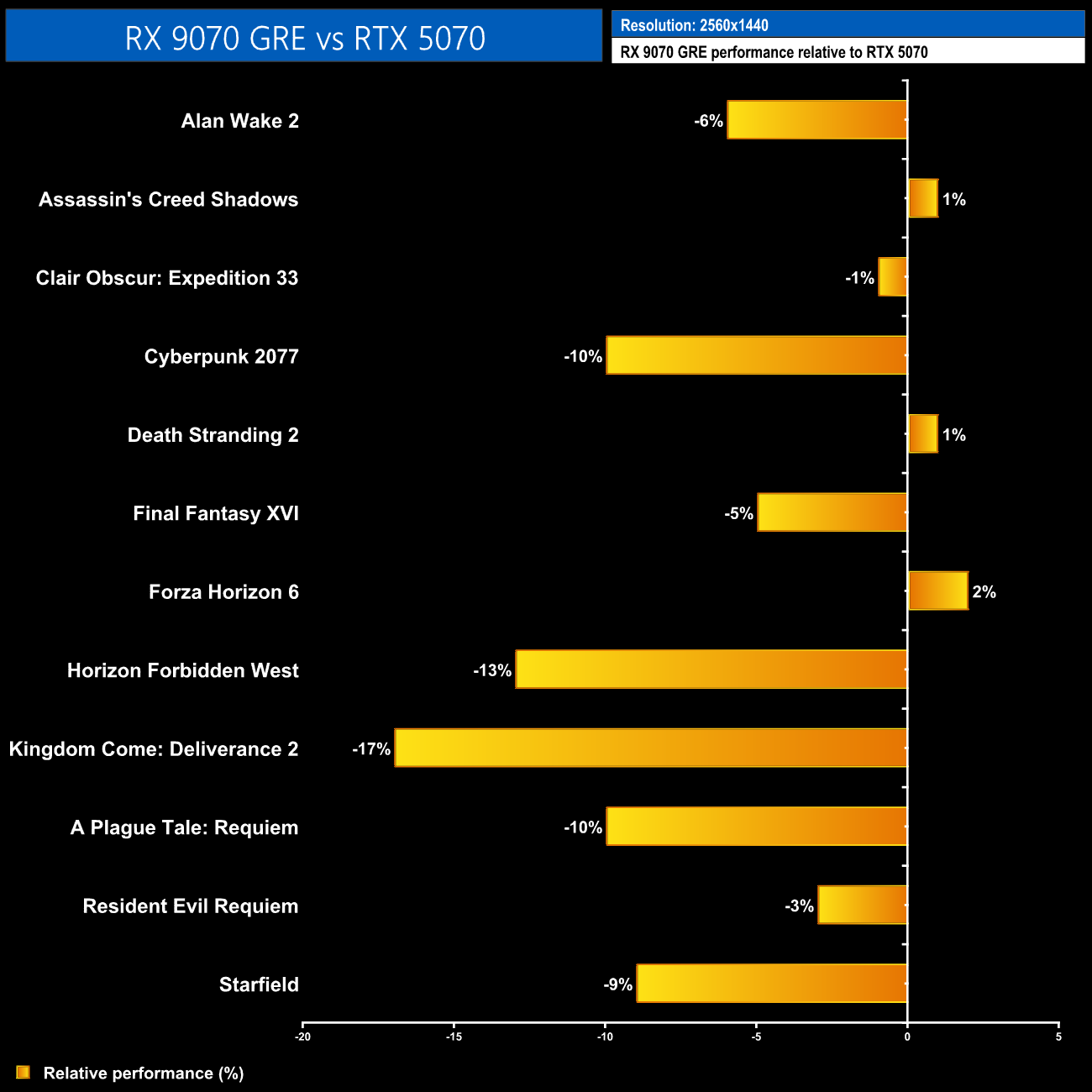
To illustrate that, we've broken down performance of the RX 9070 GRE, relative to the RTX 5070, at 1440p. Across all 12 games tested, it was at best 2% faster than the 5070 – in Forza Horizon 6, as it happens – but that is close enough where the results are functionally identical. On the other hand, 7 of the 12 games tested saw the GRE come in at least 5% slower than the 5070.
Don't get me wrong, it's still a capable 1440p-class GPU, but as we will come to later in the review, the price-to-performance ratio could well need adjusting…
Current retail pricing
Using the average frame rate data presented earlier in the review, here we look at the cost per frame using the current UK prices for each GPU. Please note this only compares rasterised performance and value.
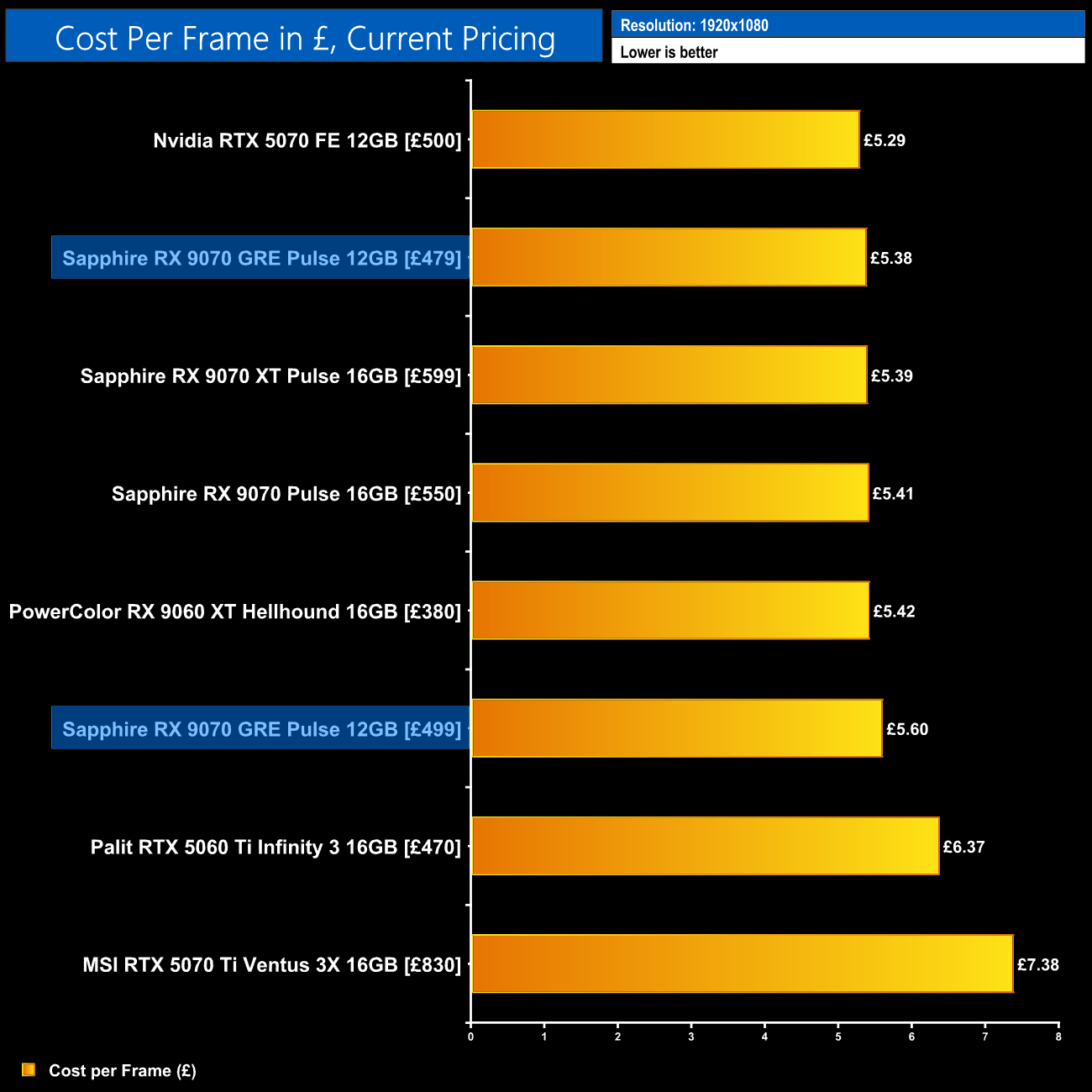
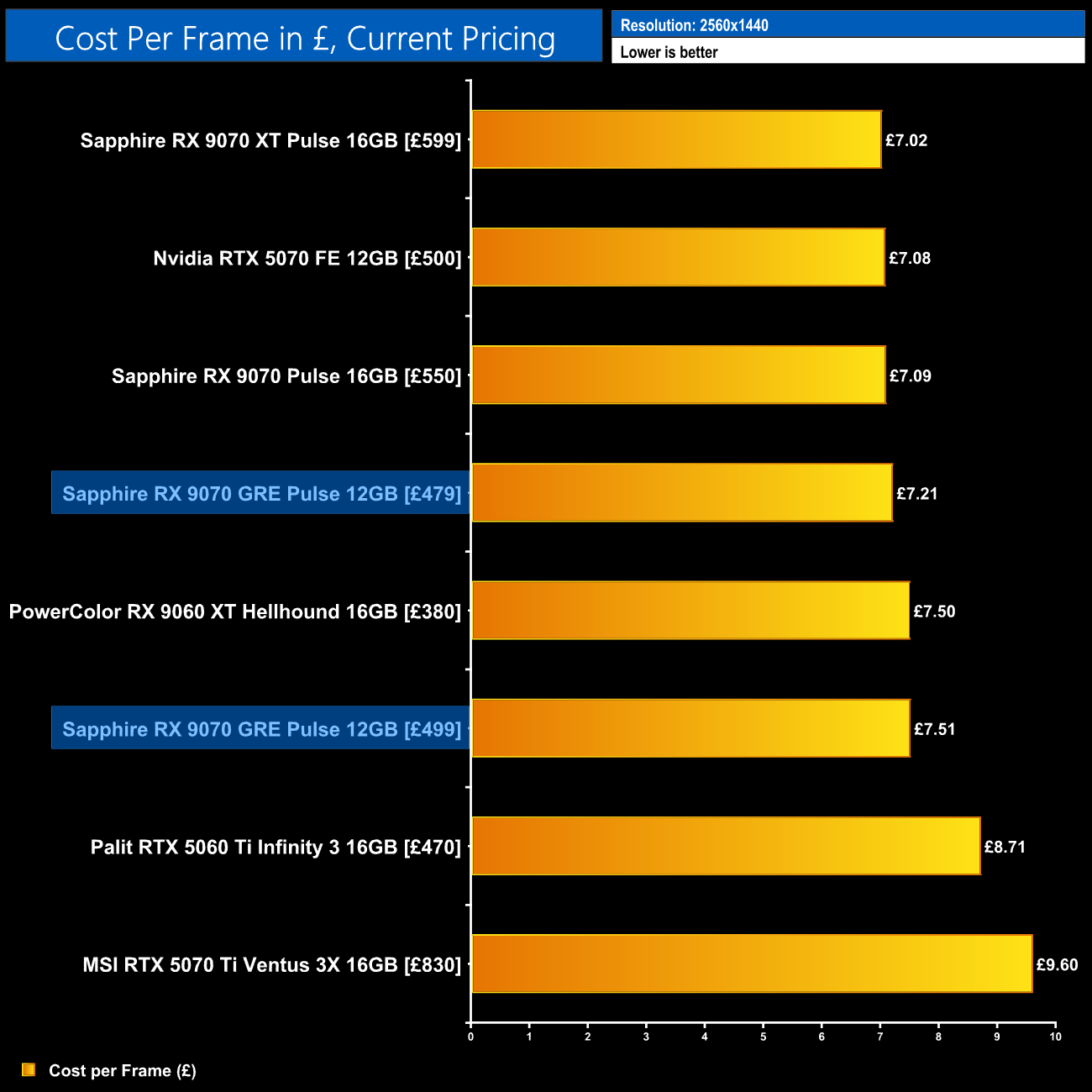
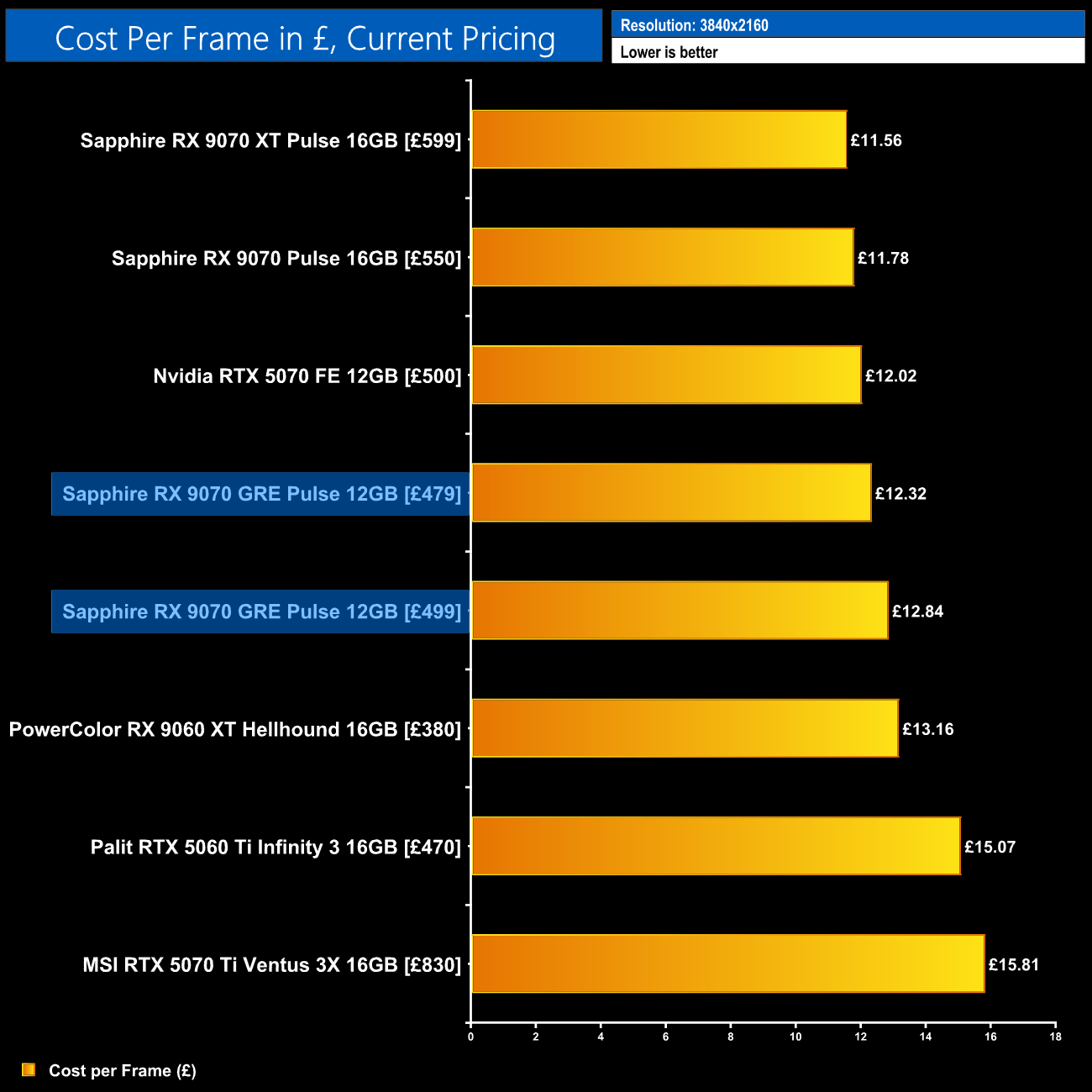
That brings us nicely onto cost per frame. At the time of writing, exact UK pricing hasn't been confirmed for the 9070 GRE, which is why we've included two data points. We spoke with one retailer that expects pricing to land around £469-479, but we've also heard the MSRP for the Pulse could be £499.
Either way, the GRE isn't going to offer exceptional value. It's by no means bad value, but nor is it a clear improvement over the likes of the RTX 5070 – and given the other advantages that GPU can offer – I think that is problematic for the GRE.
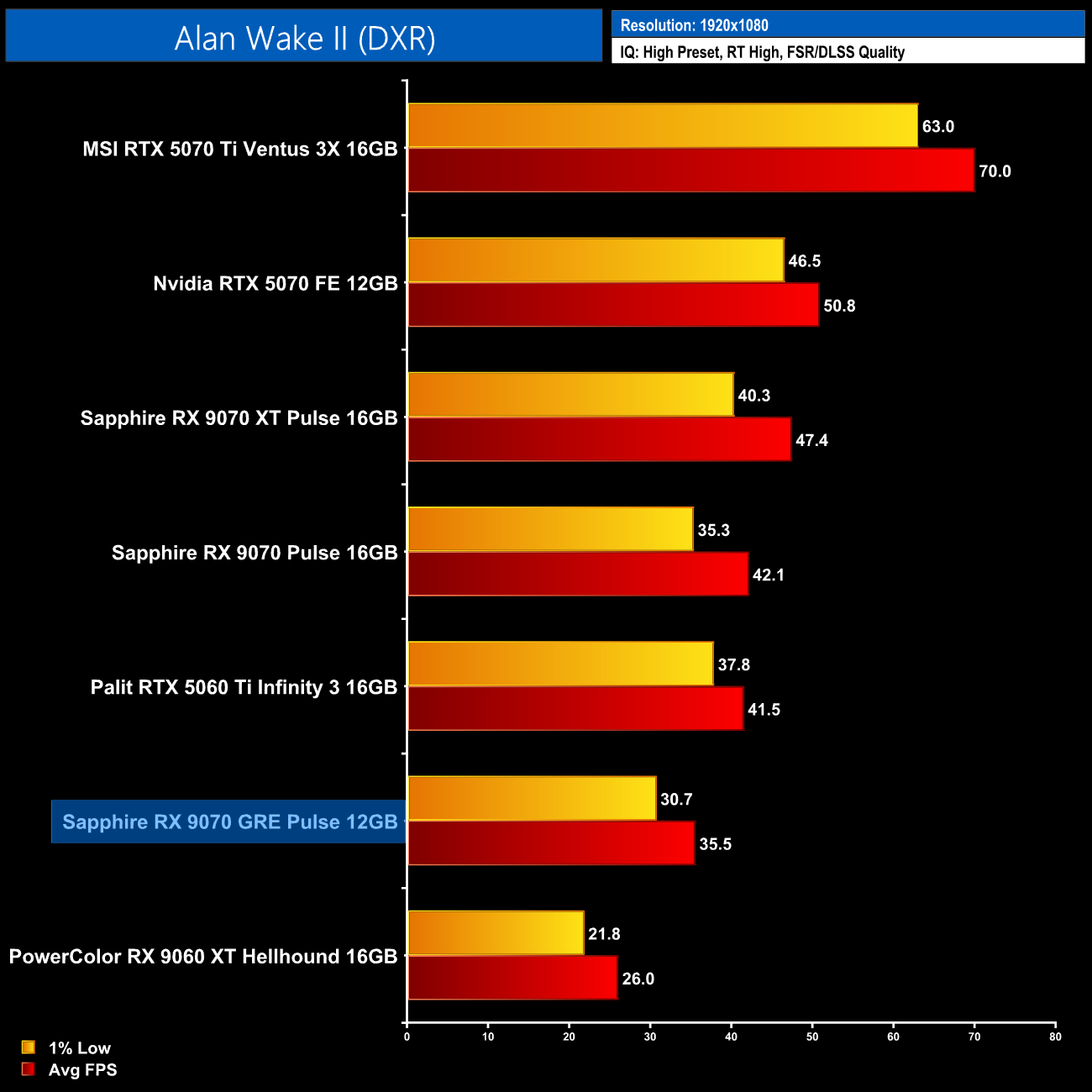
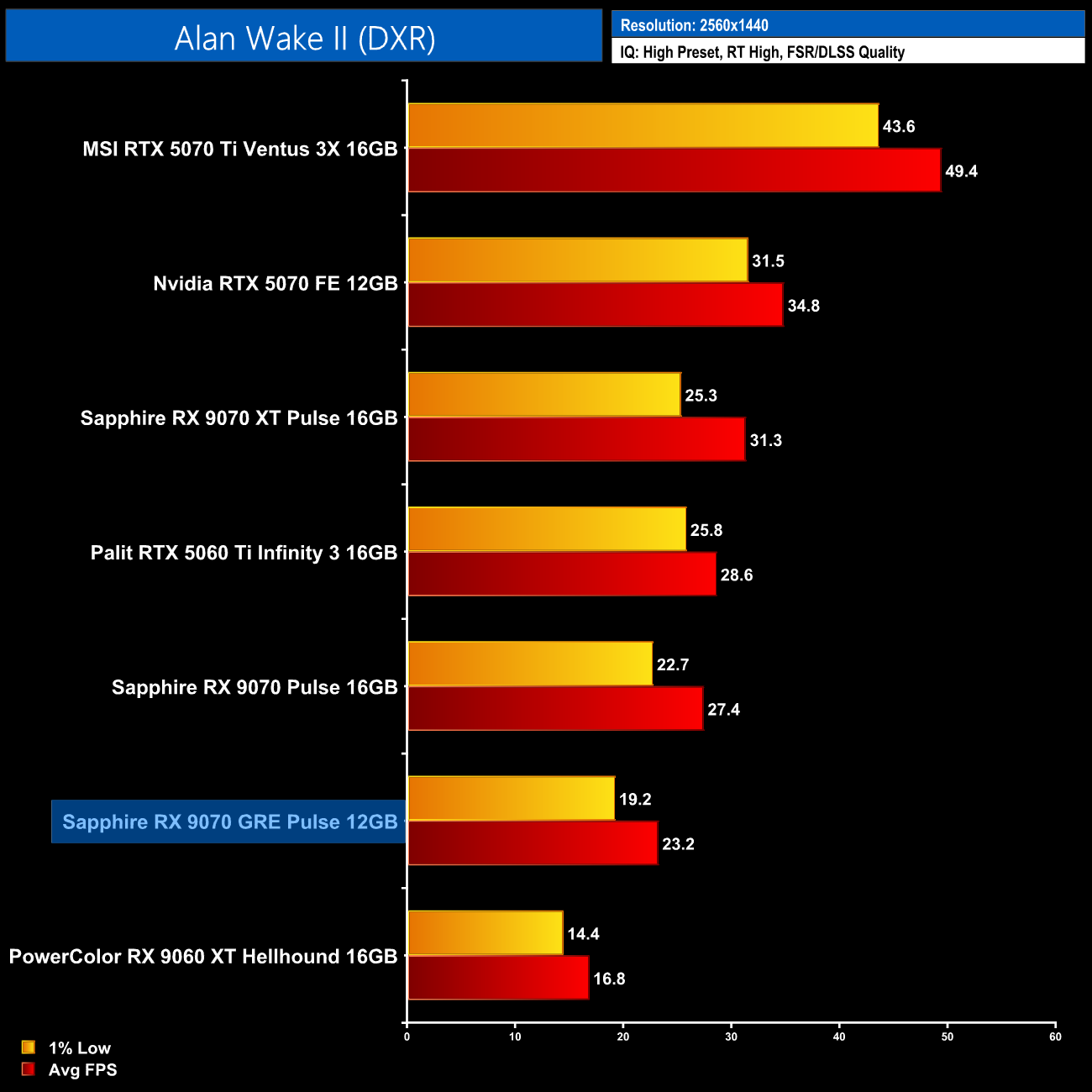
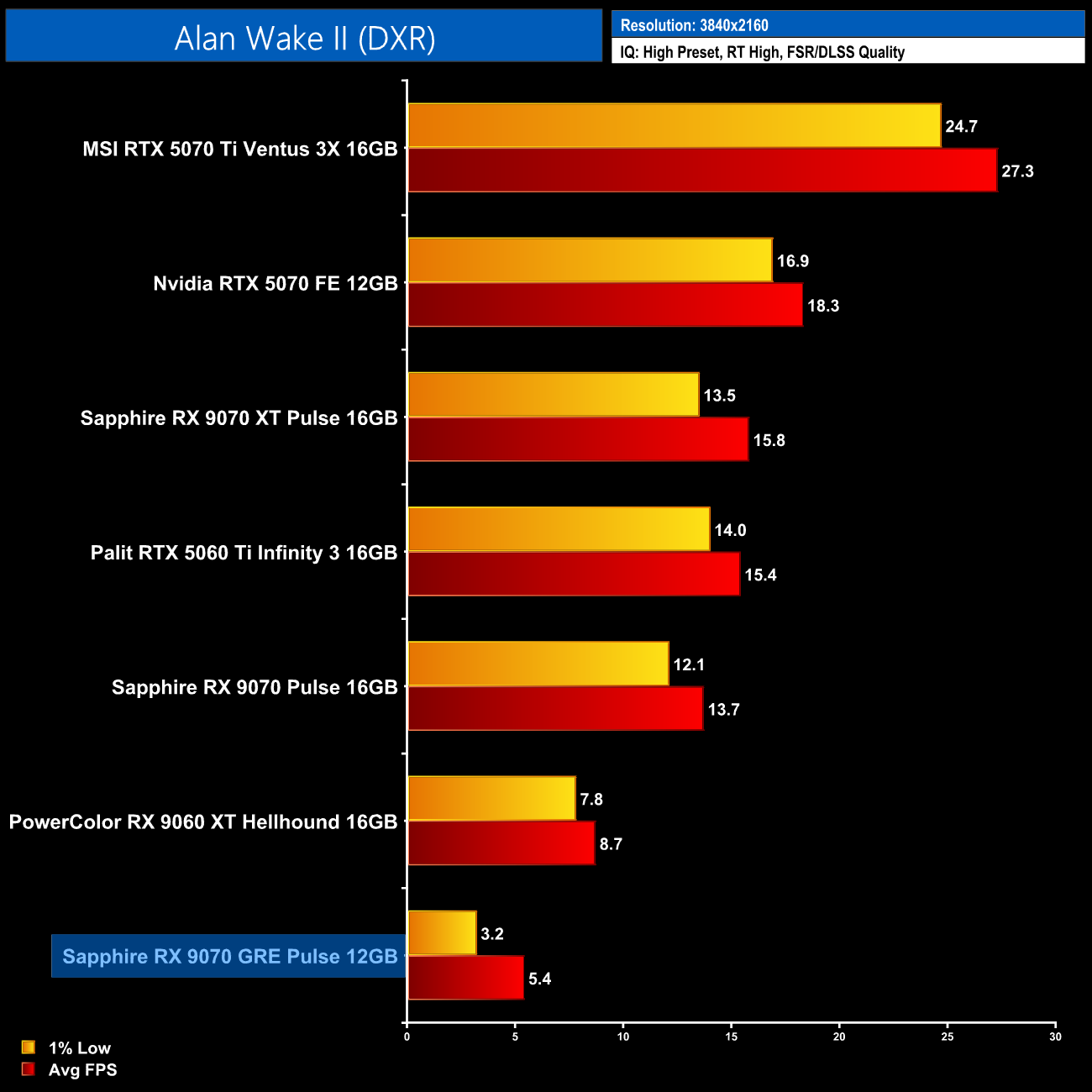
Alan Wake 2 is a 2023 survival horror game developed by Remedy Entertainment and published by Epic Games Publishing. A sequel to Alan Wake, the story follows best-selling novelist Alan Wake, who has been trapped in an alternate dimension for 13 years, as he attempts to escape by writing a horror story involving an FBI special agent named Saga Anderson. The game was released for PlayStation 5, Windows, and Xbox Series X/S on 27 October 2023. (Wikipedia)
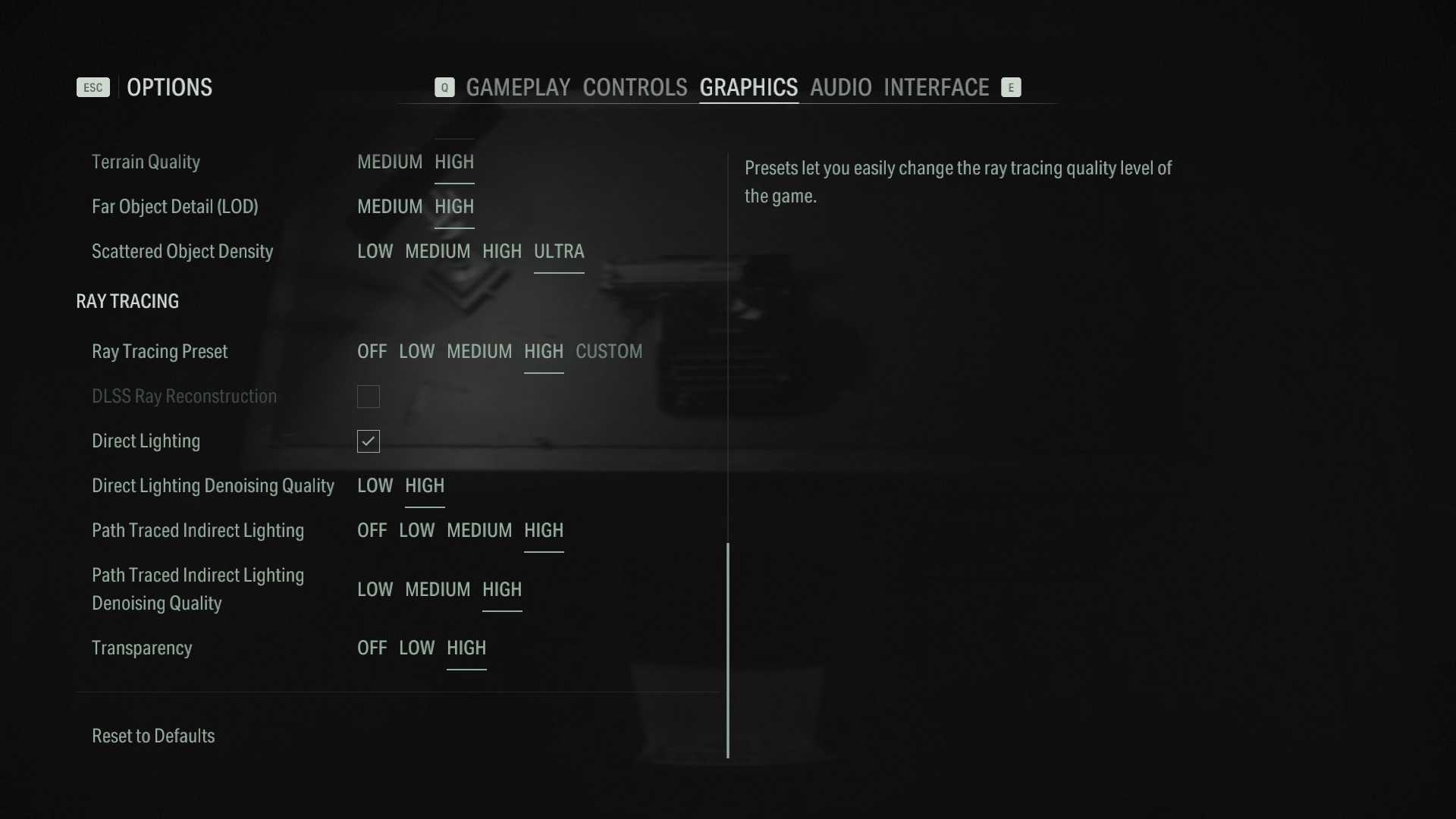
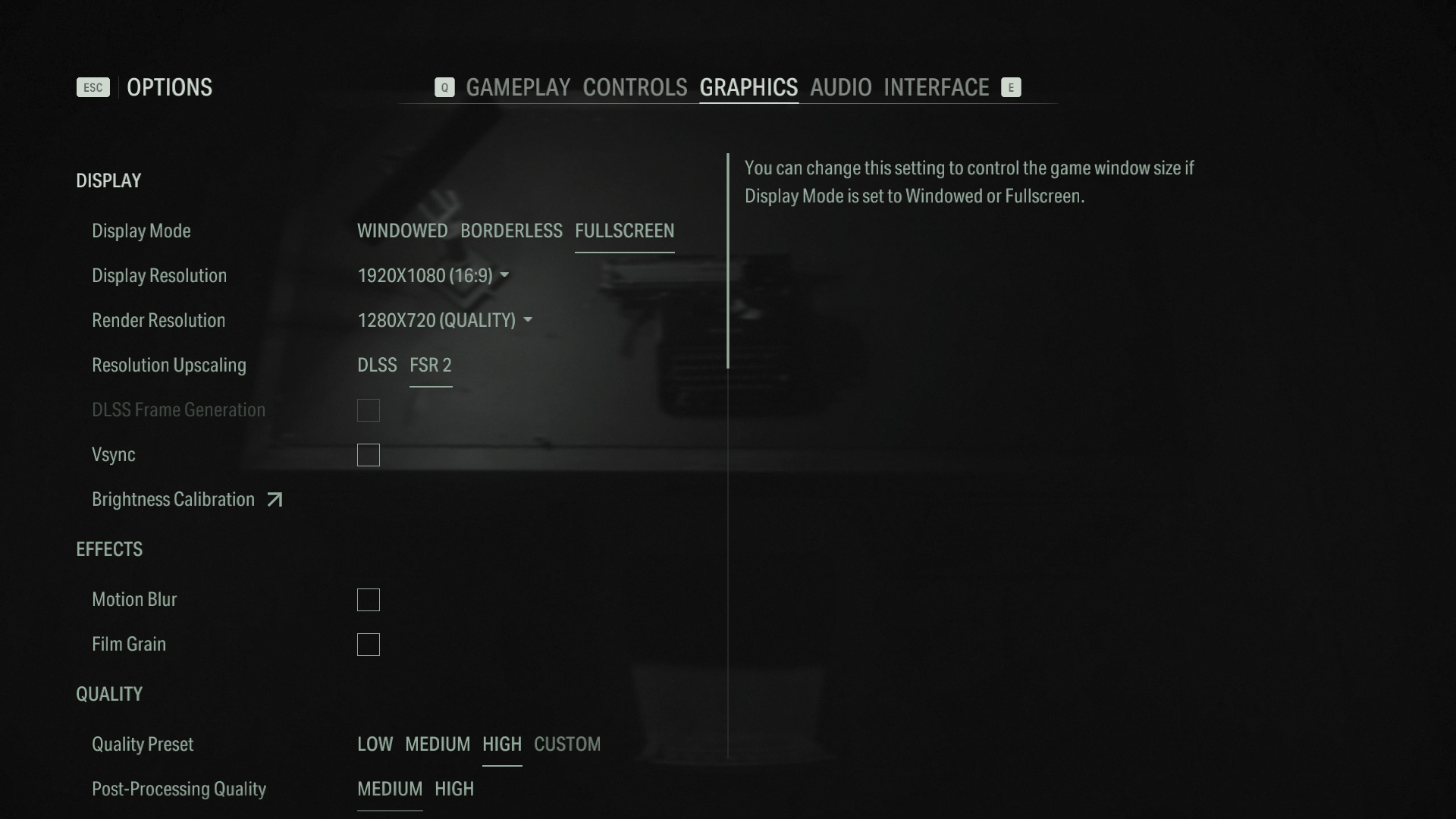
Engine: Northlight. We test using the High preset, High Ray Tracing preset, FSR/DLSS Quality upscaling, DXR API.
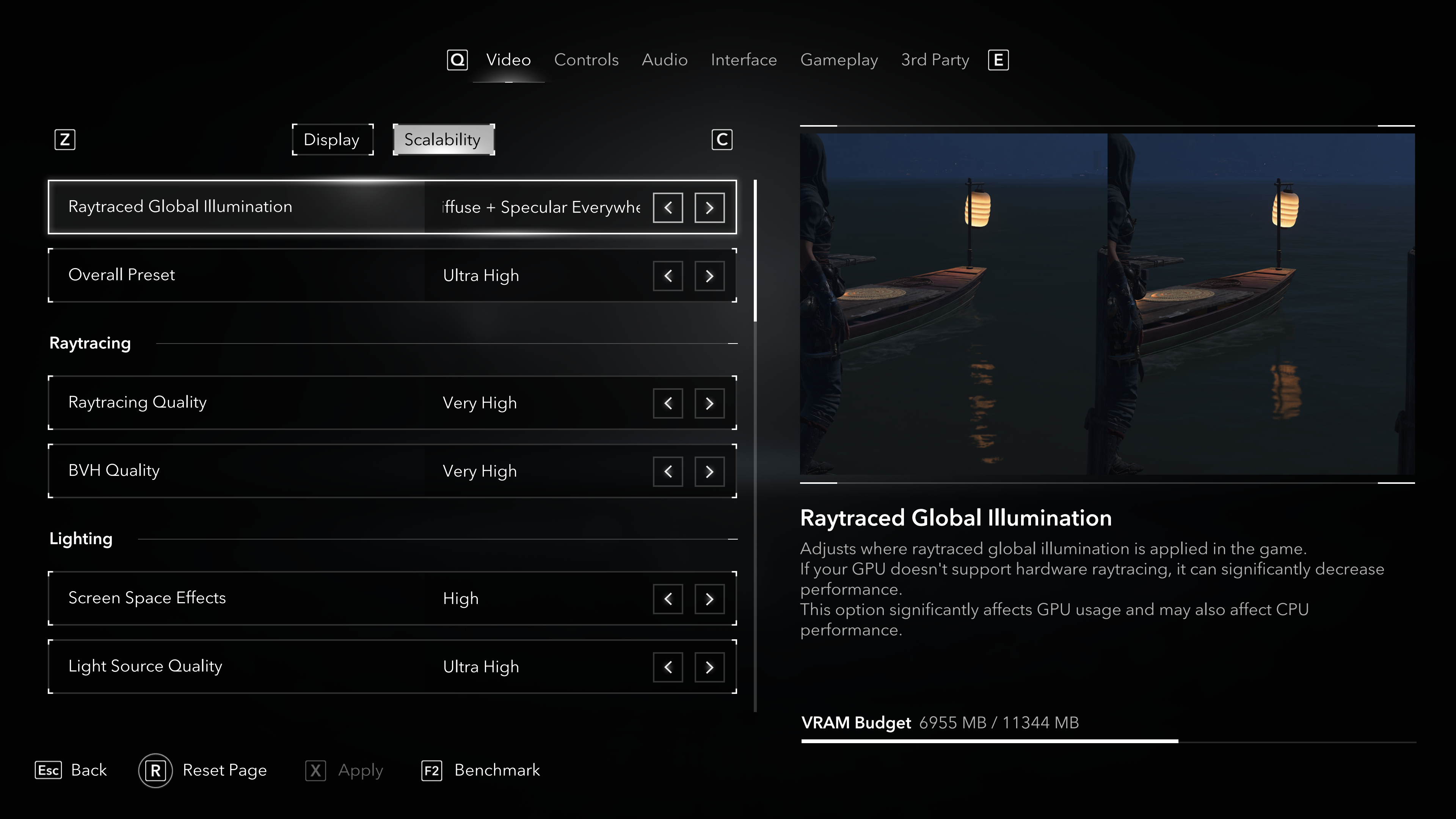
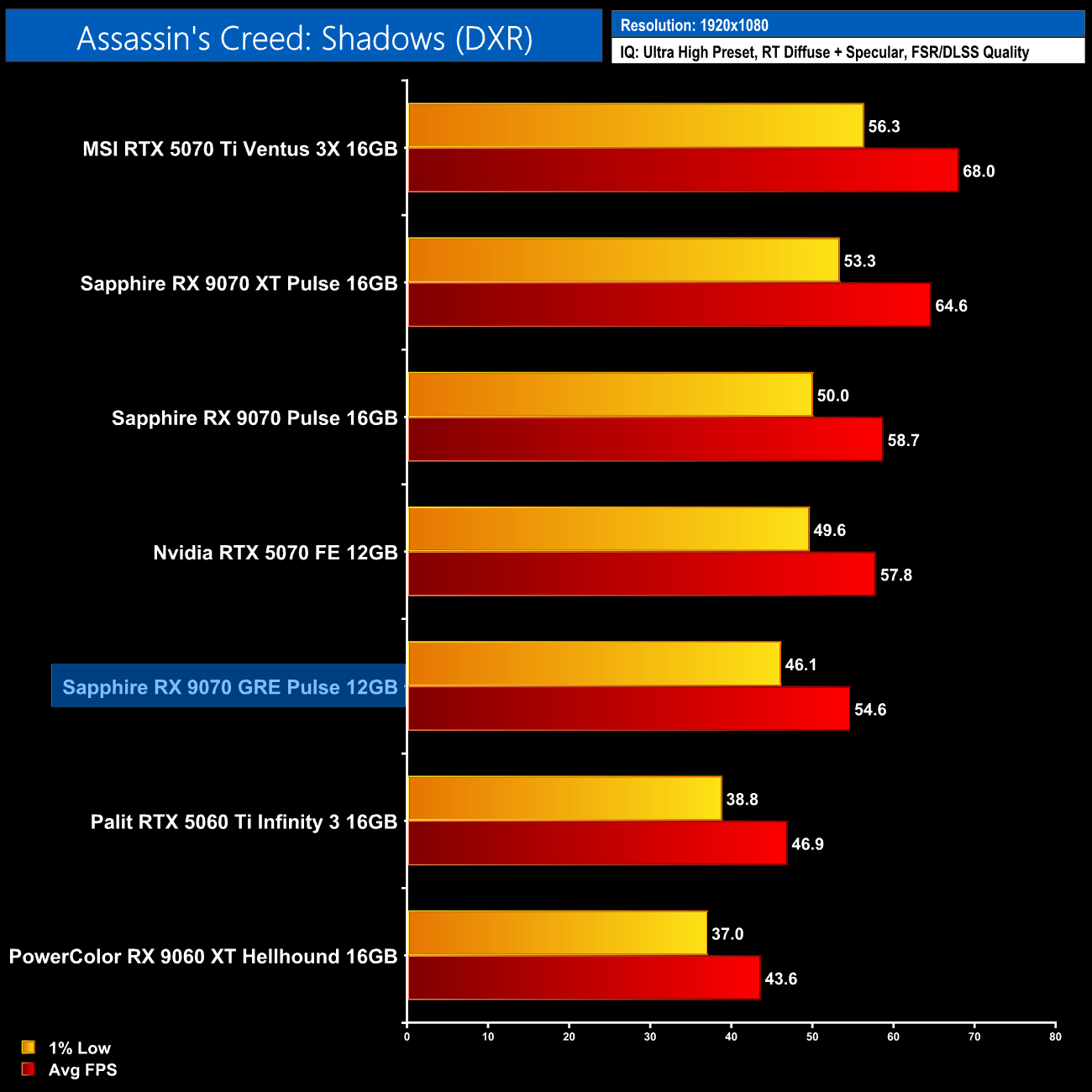
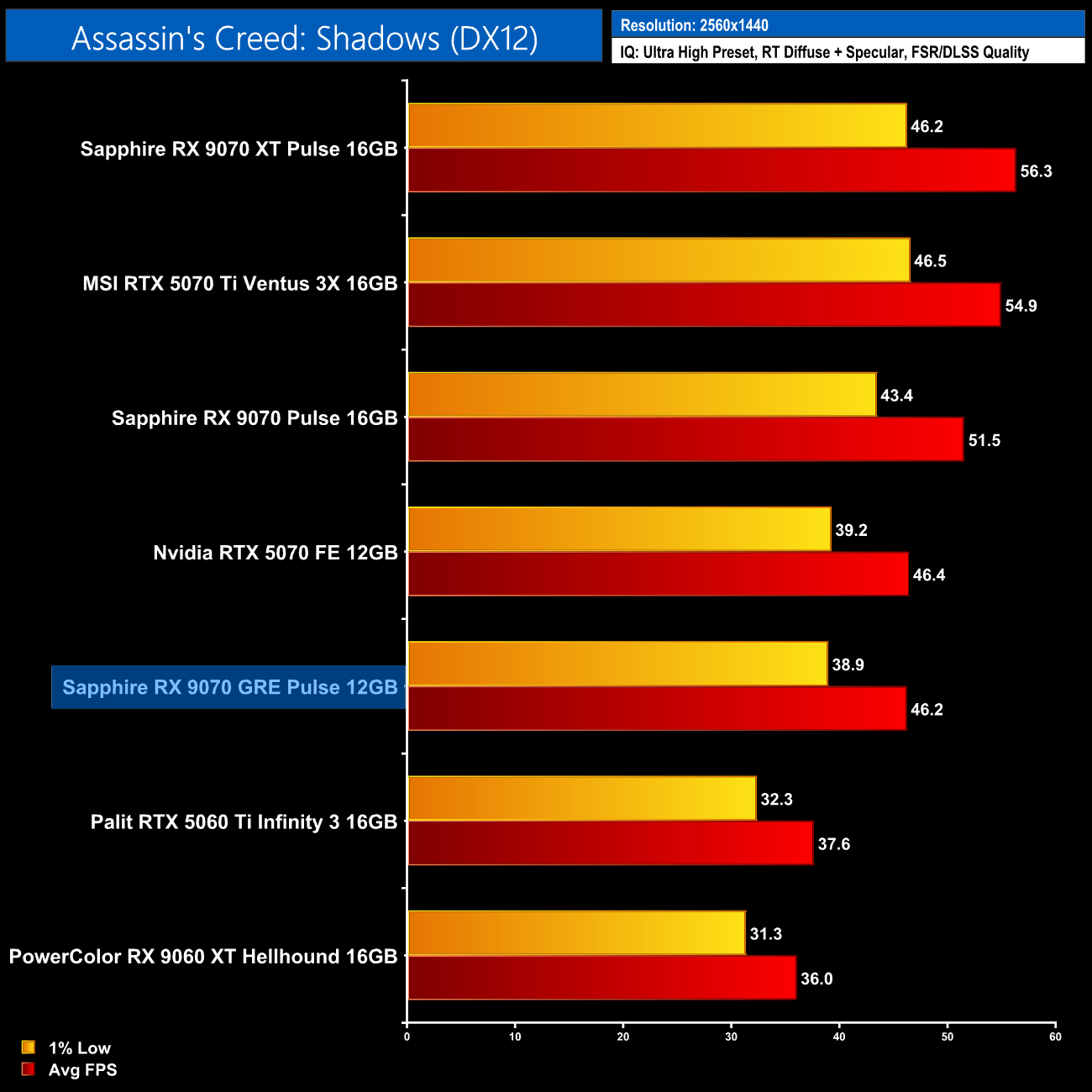
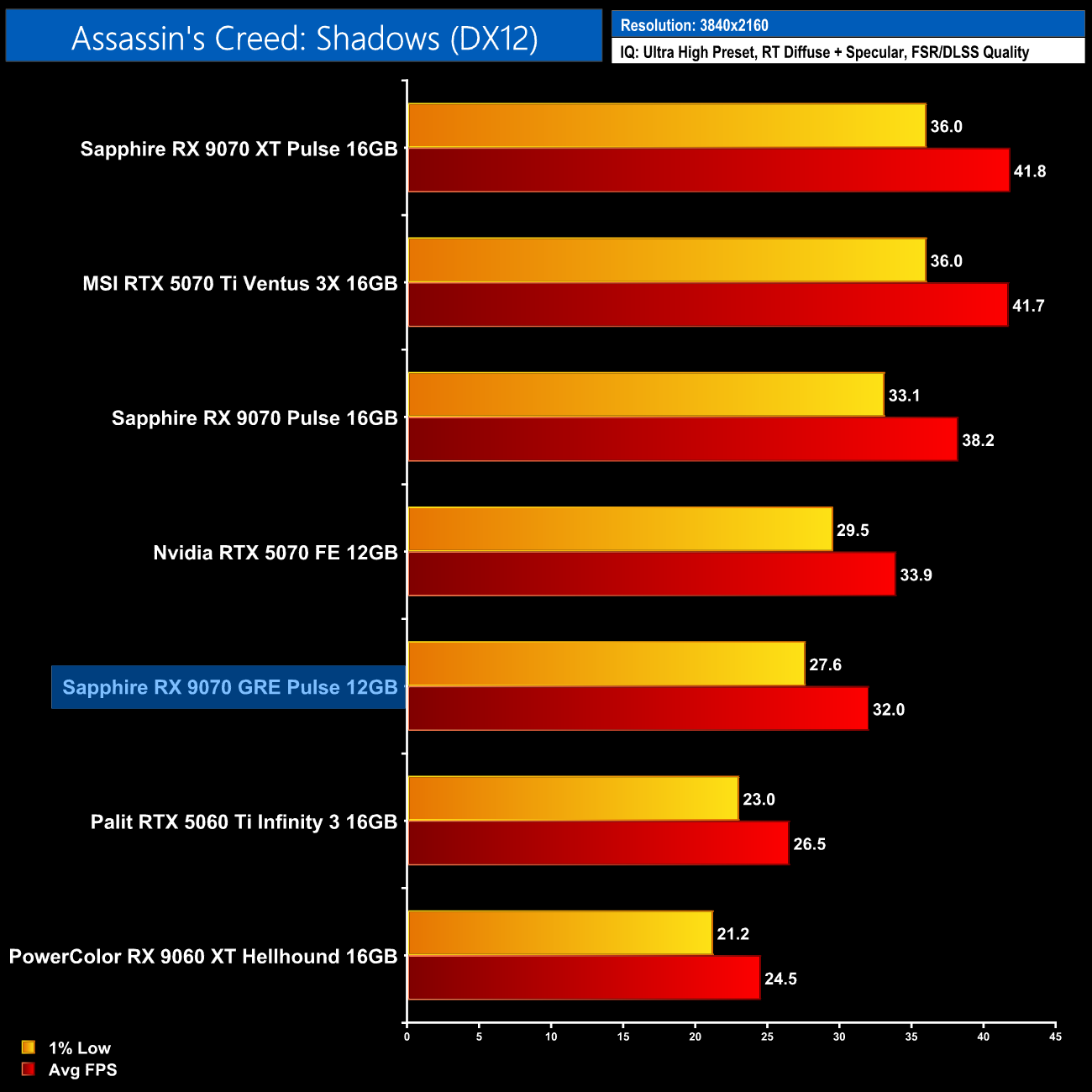
Assassin's Creed Shadows is a 2025 action role-playing game developed by Ubisoft Quebec and published by Ubisoft. The game is the fourteenth major installment in the Assassin's Creed series and the successor to Assassin's Creed Mirage (2023). Shadows was released for macOS, PlayStation 5, Windows, and Xbox Series X/S on March 20, 2025. (Wikipedia).
Engine: Ubisoft Anvil. We test using the Ultra High preset, RT Diffuse + Specular Everywhere, FSR/DLSS Quality upscaling, DXR API.
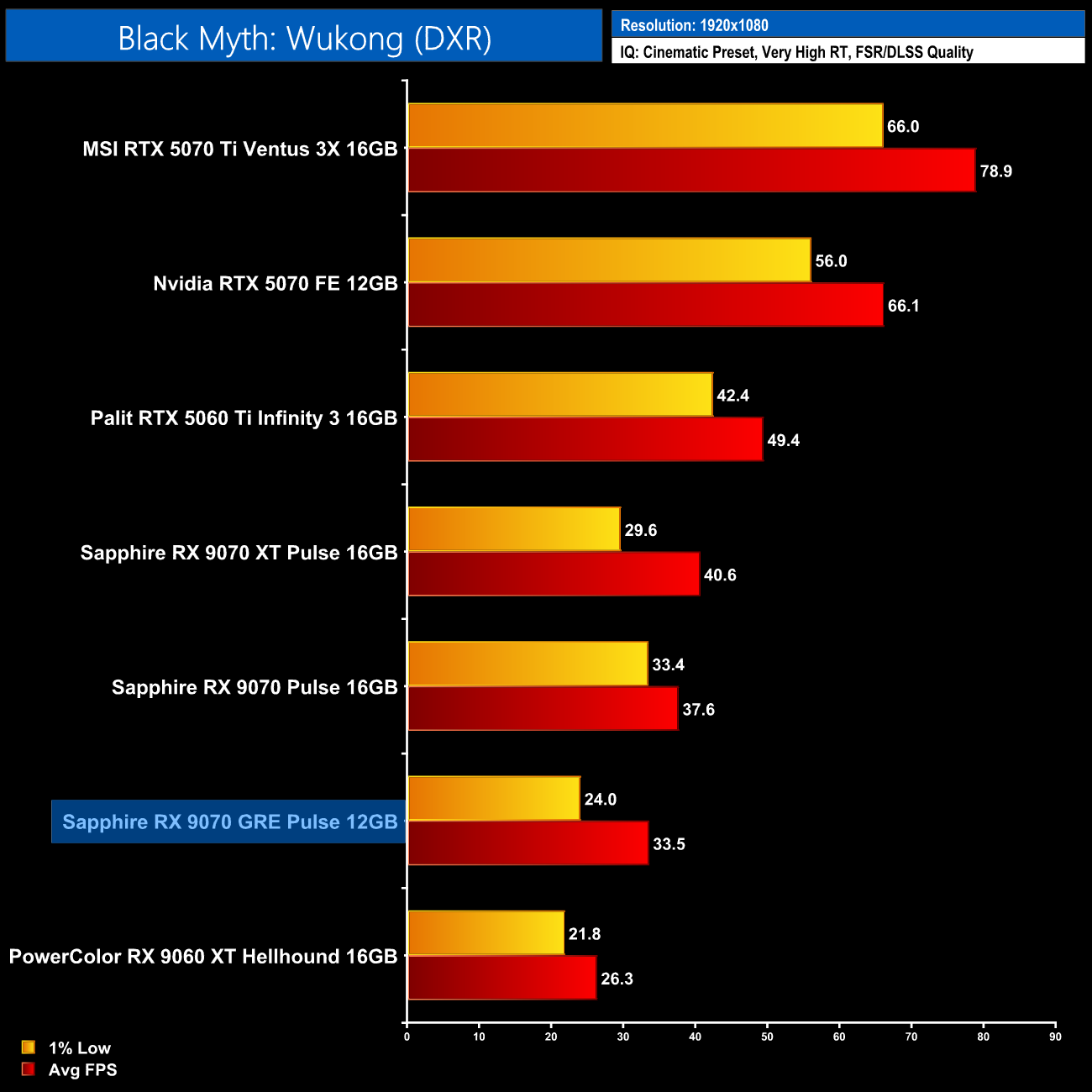
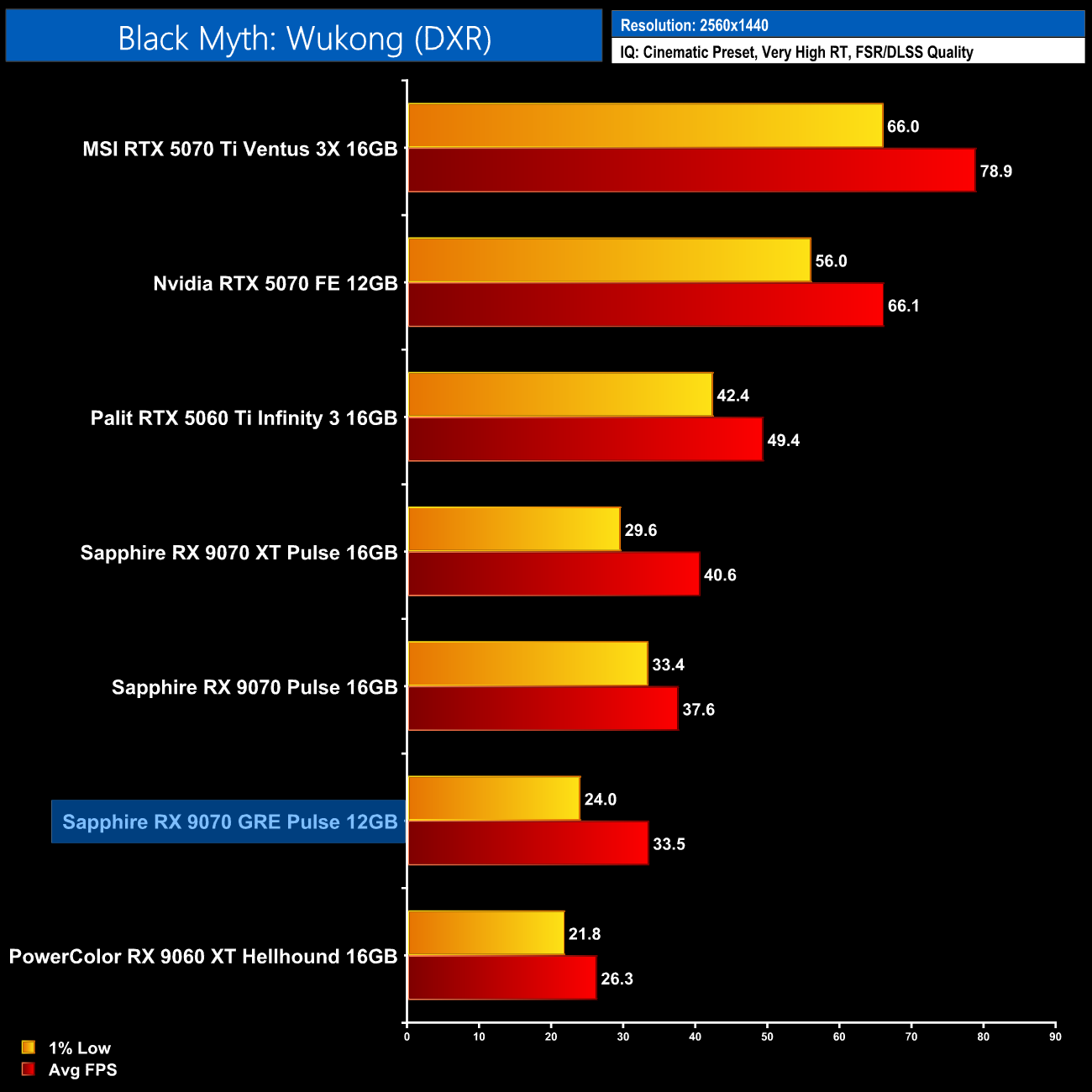
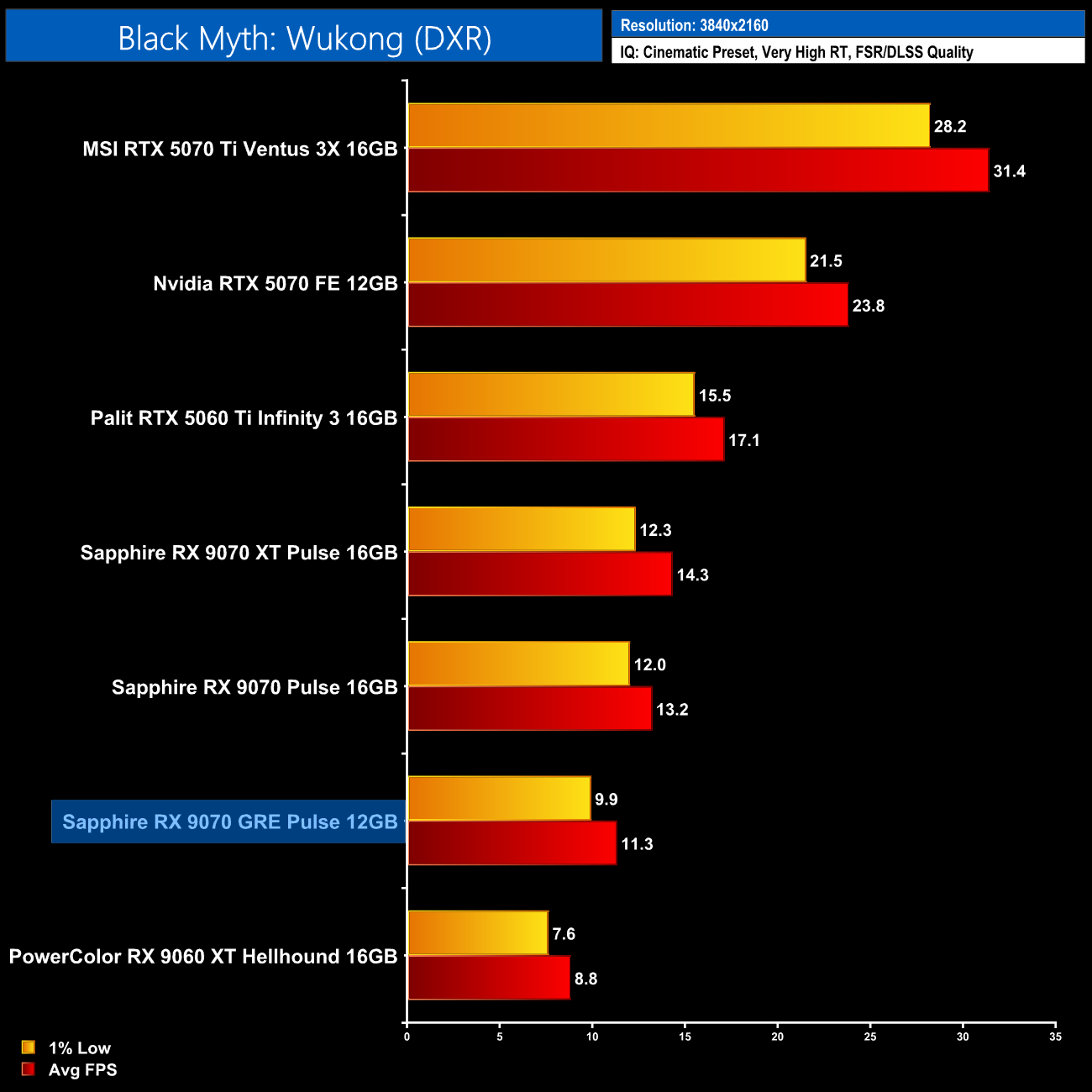
Black Myth: Wukong is a 2024 action role-playing game developed and published by Game Science. The game is inspired by the classical Chinese novel Journey to the West and follows an anthropomorphic monkey based on Sun Wukong from the novel. Black Myth: Wukong was released for PlayStation 5 and Windows on August 20, 2024, with an Xbox Series X/S version to be released at a later date. (Wikipedia).
Engine: Unreal Engine 5. We test using the Cinematic preset, Ray Tracing set to Very High, FSR/DLSS Quality upscaling, DXR API.
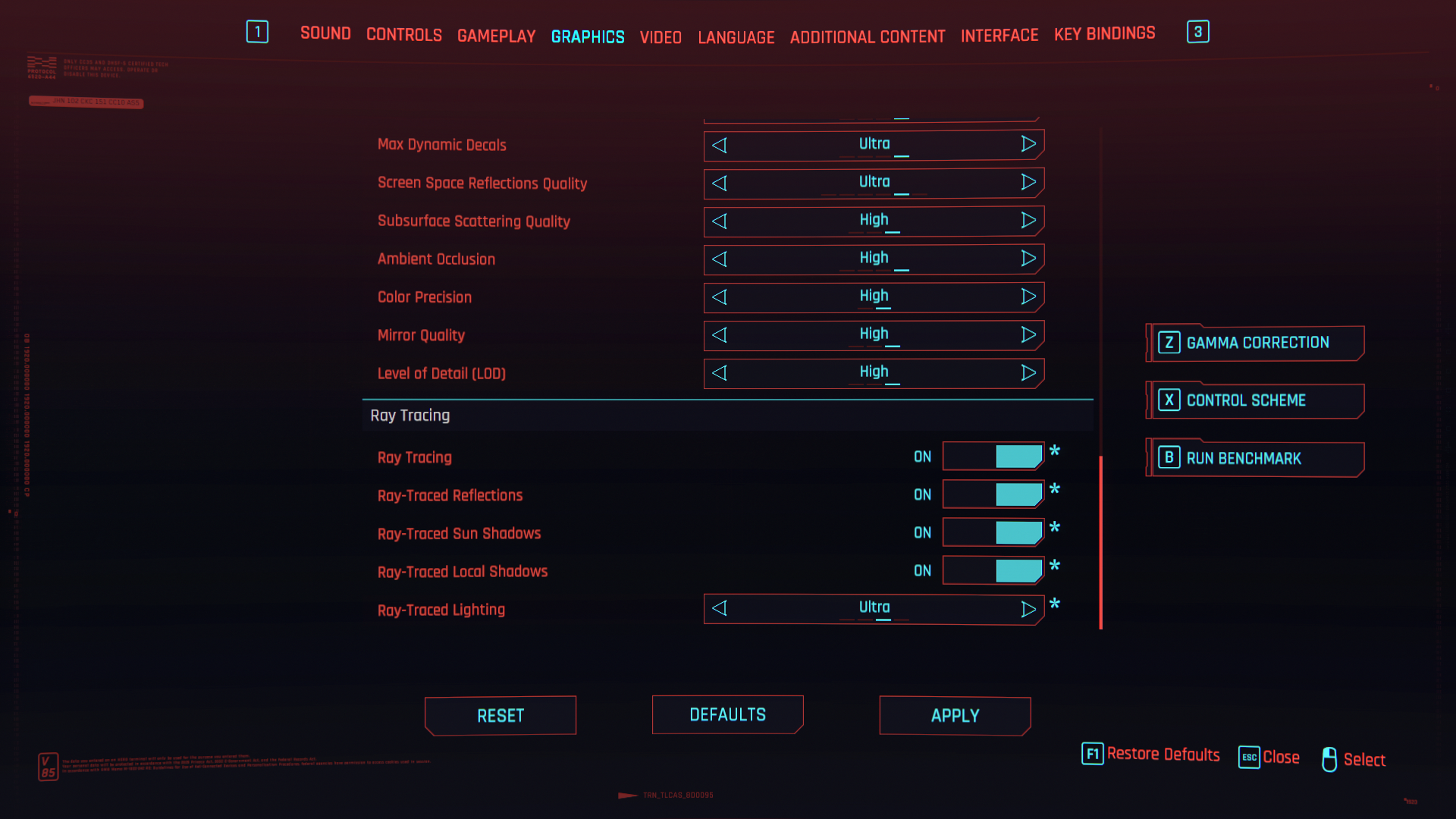
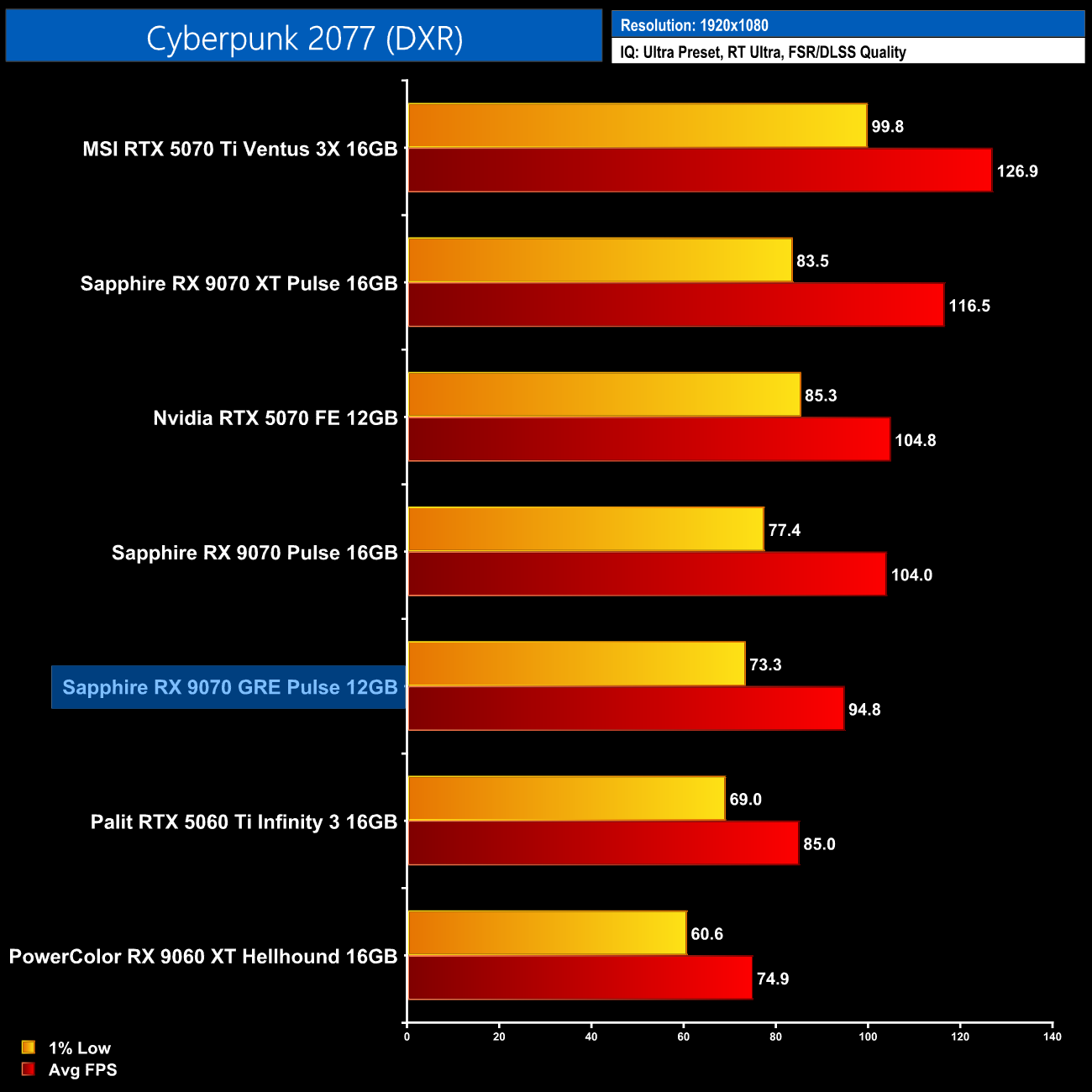
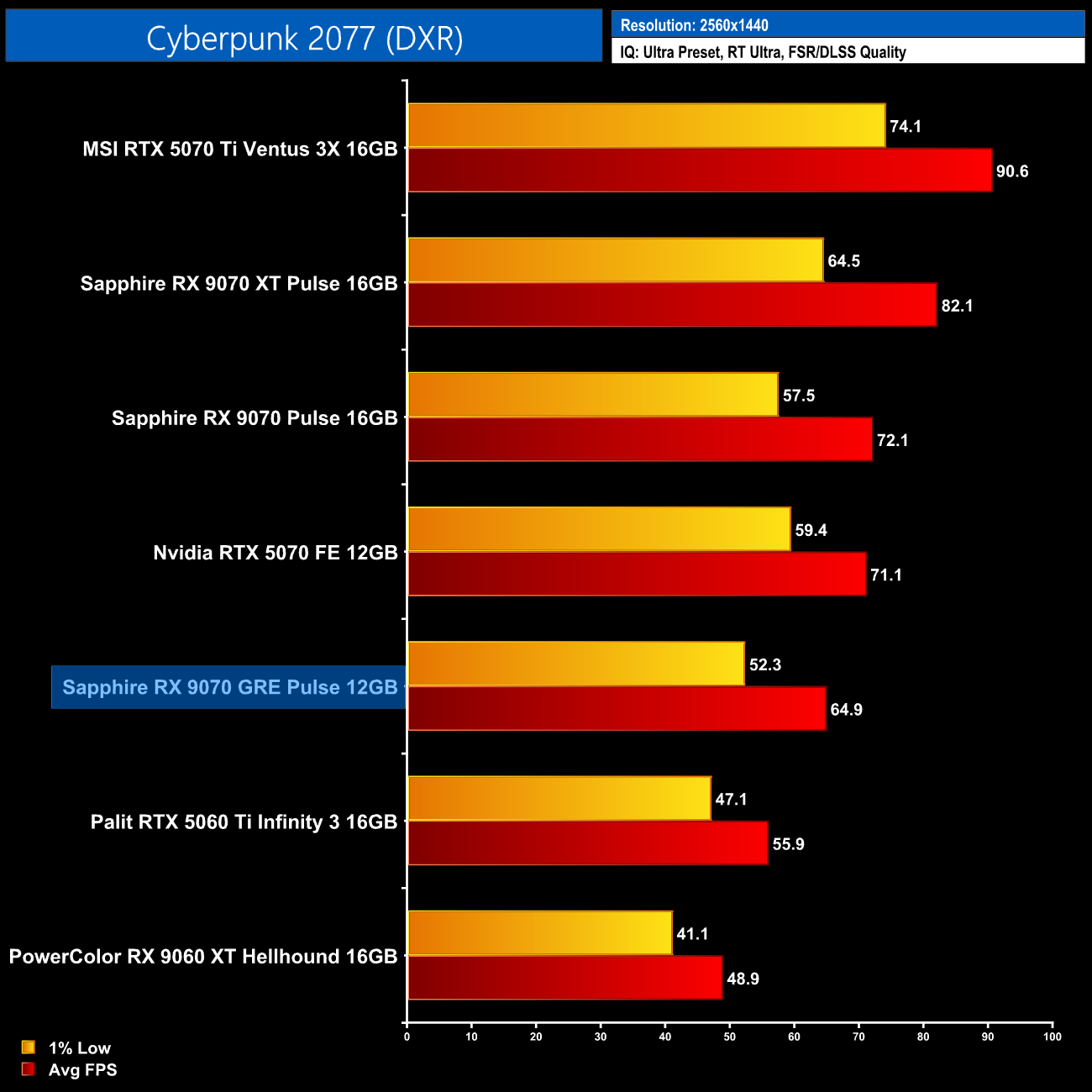
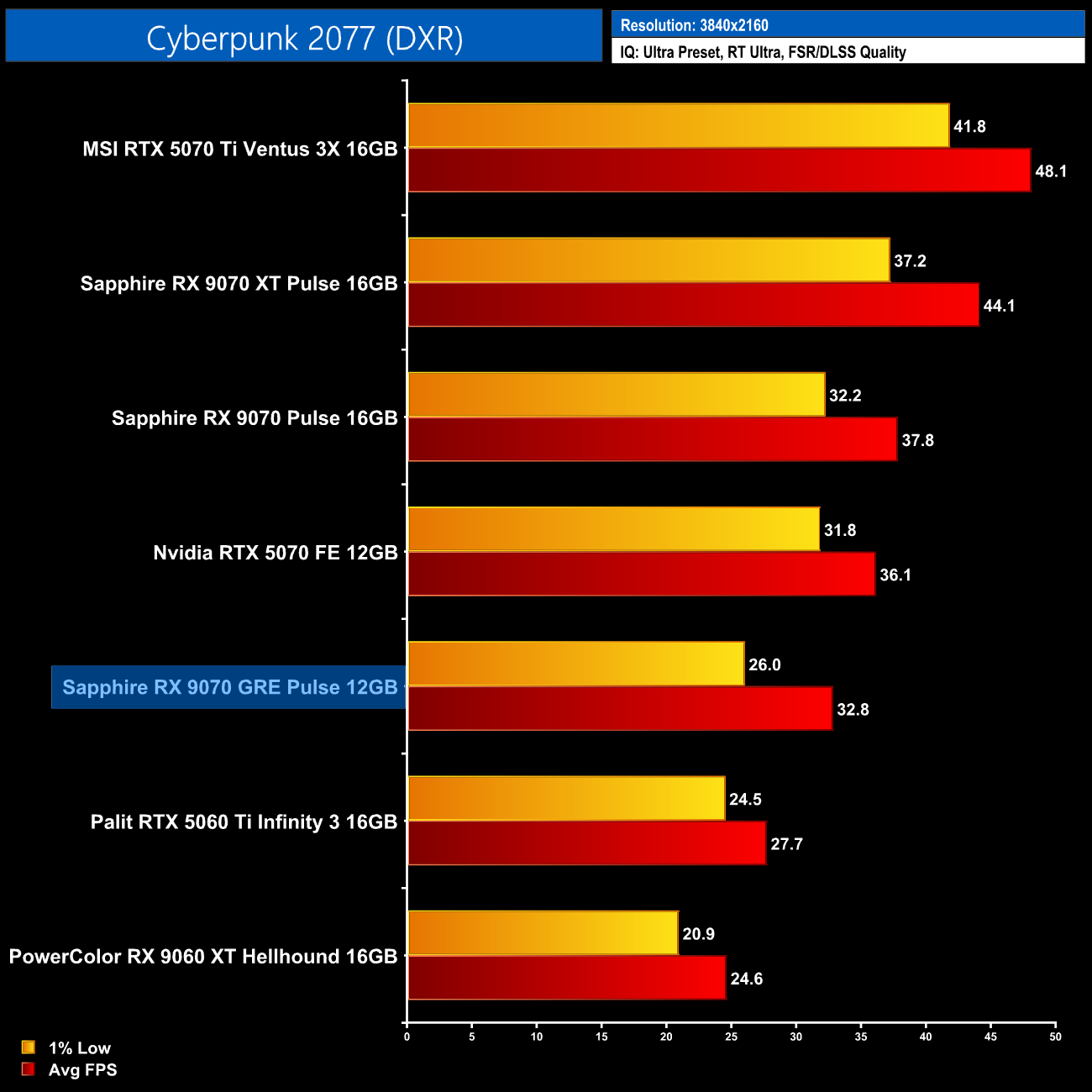
Cyberpunk 2077 is a 2020 action role-playing video game developed and published by CD Projekt. The story takes place in Night City, an open world set in the Cyberpunk universe. Players assume the first-person perspective of a customisable mercenary known as V, who can acquire skills in hacking and machinery with options for melee and ranged combat. Cyberpunk 2077 was released for Microsoft Windows, PlayStation 4, Stadia, and Xbox One on 10 December 2020. (Wikipedia).
Engine: REDengine 4. We test using the Ray Tracing: Ultra preset, FSR/DLSS Quality upscaling, DXR API.
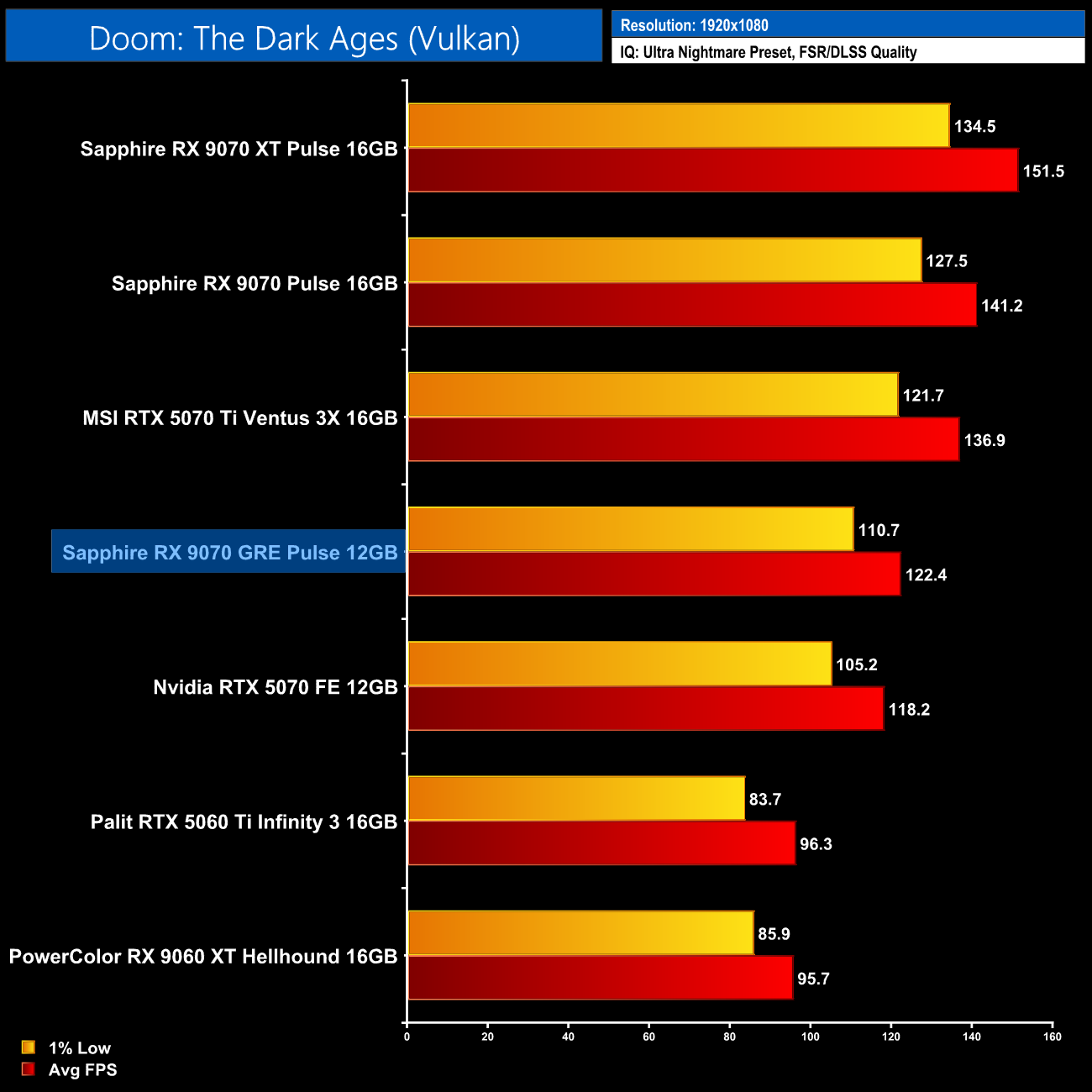
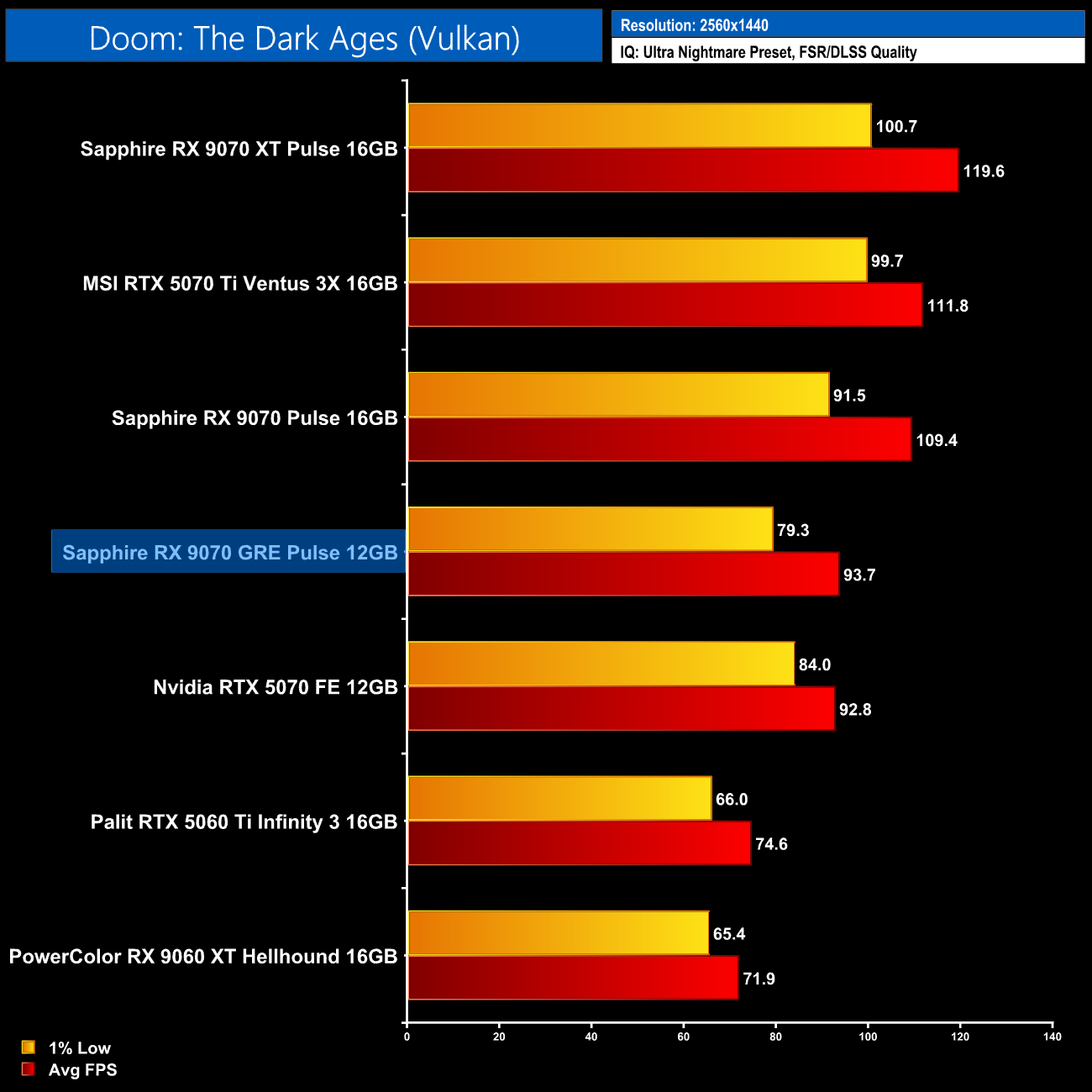
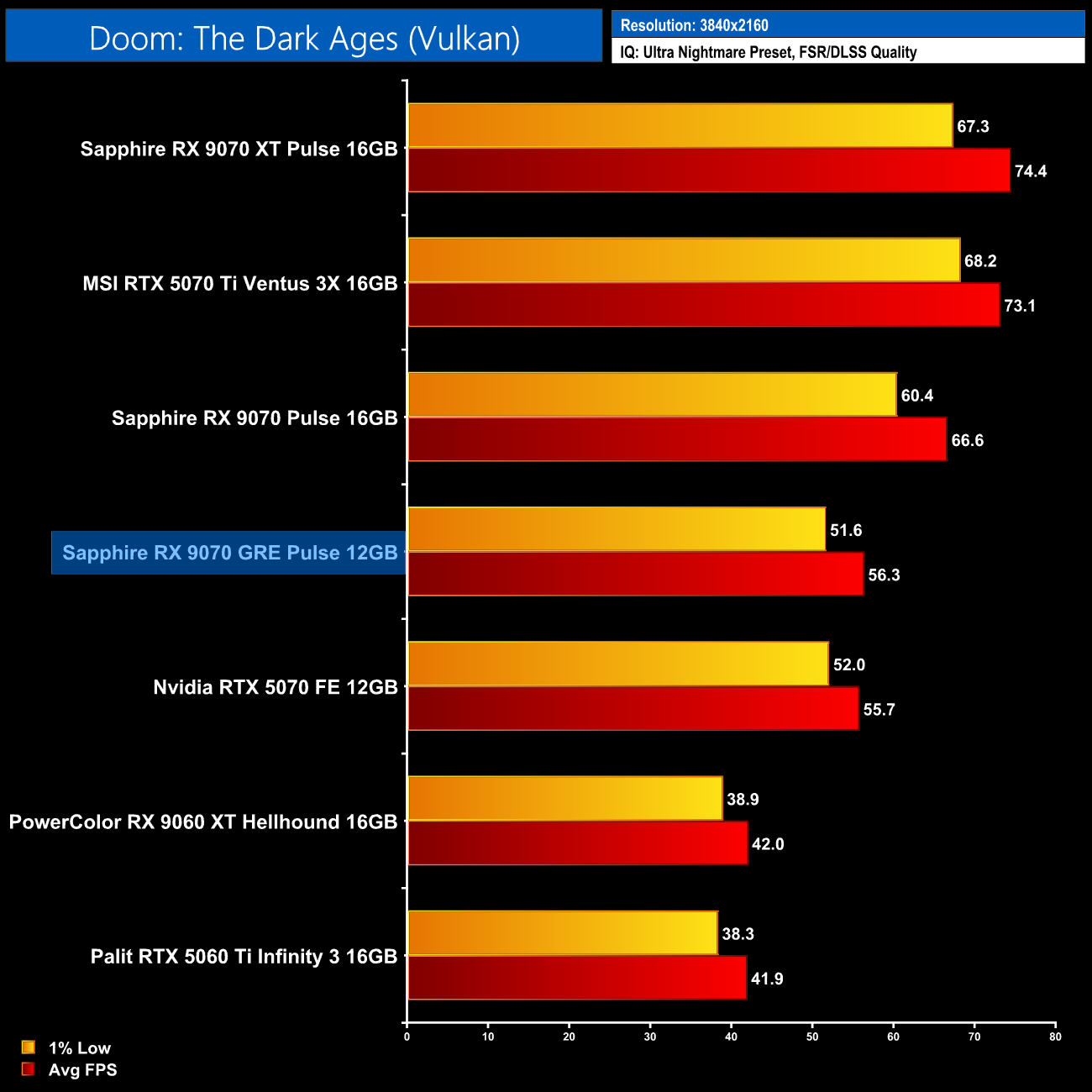
Doom: The Dark Ages is a 2025 first-person shooter game developed by id Software and published by Bethesda Softworks. It is the eighth main entry in the Doom franchise, following Doom Eternal (2020). The game is set many years prior to Doom (2016) and follows the Doom Slayer's efforts to save humanity during a war against Hell. Doom: The Dark Ages was released on PlayStation 5, Windows, and Xbox Series X/S on May 15, 2025. (Wikipedia).
Engine: id Tech 8. We test using the Ultra Nightmare preset, FSR/DLSS Quality upscaling, Vulkan API.
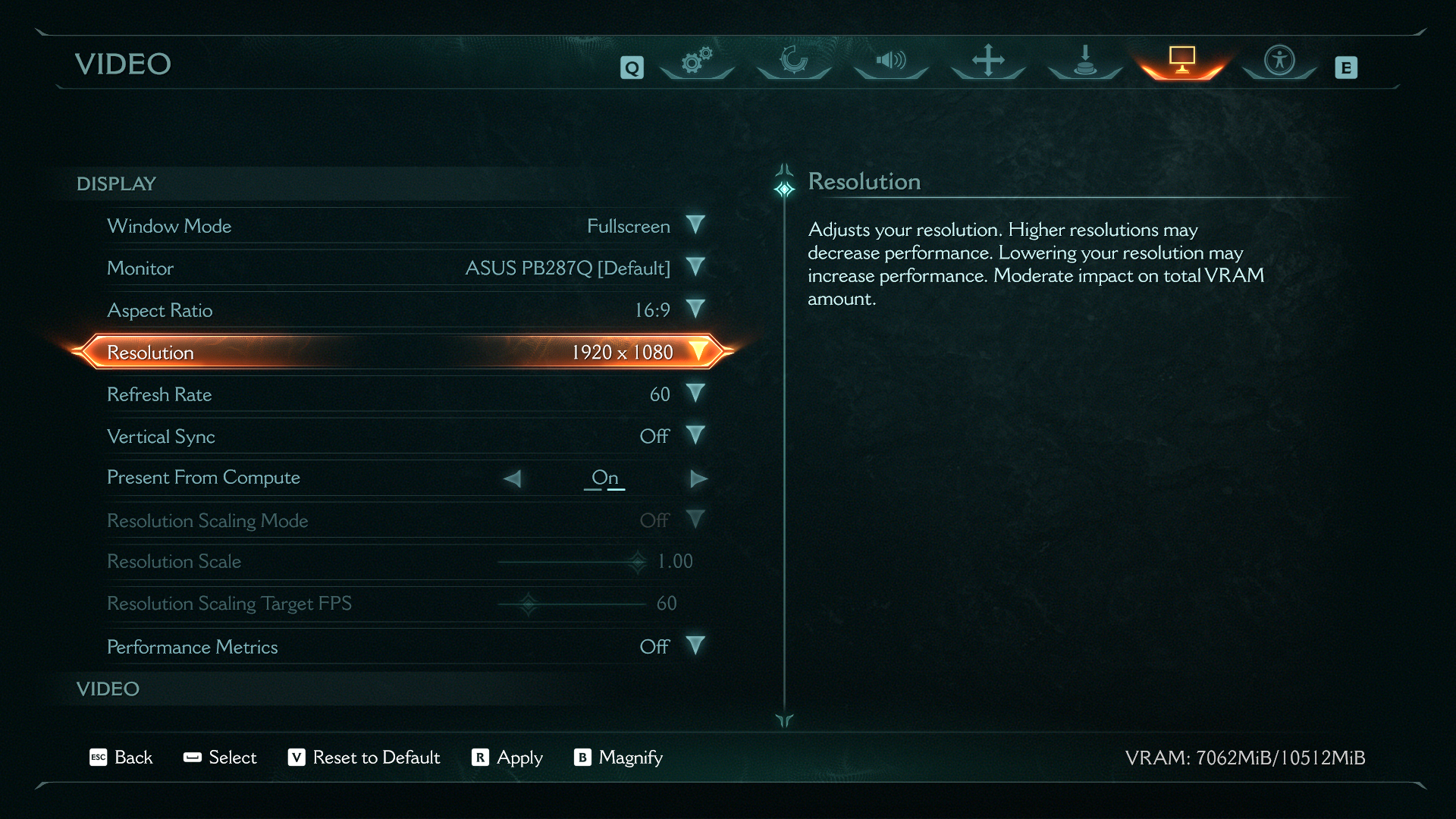
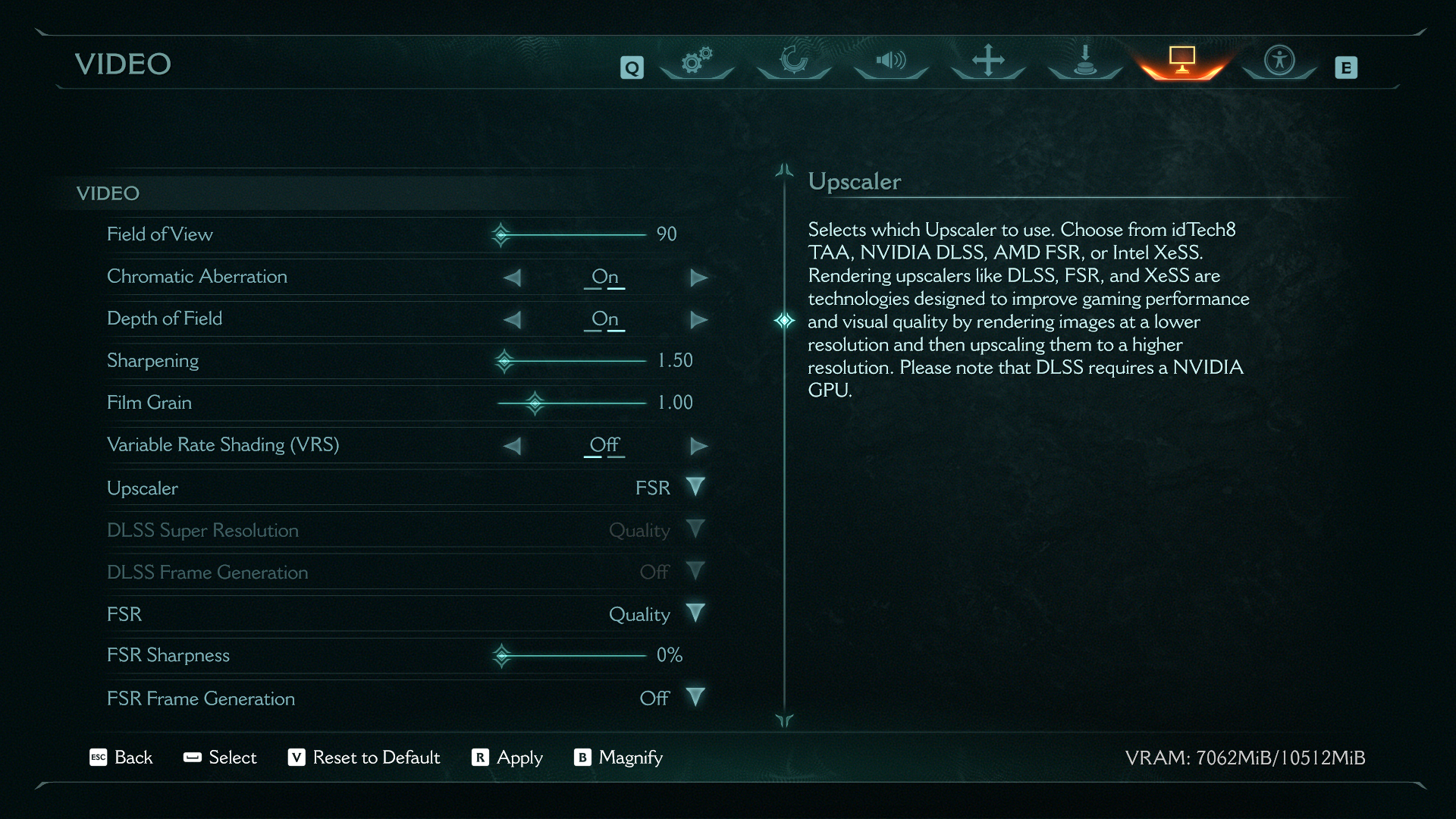
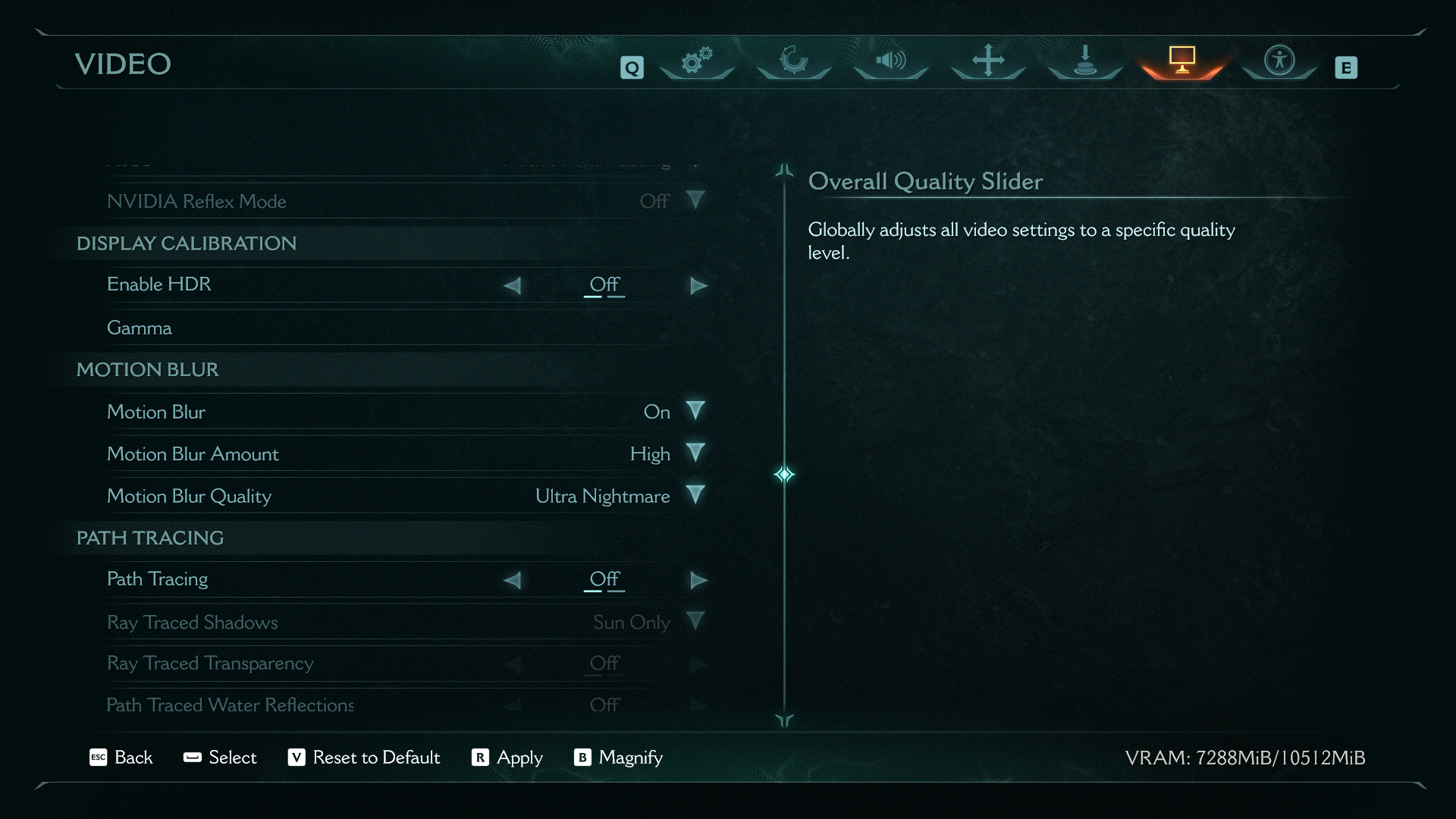
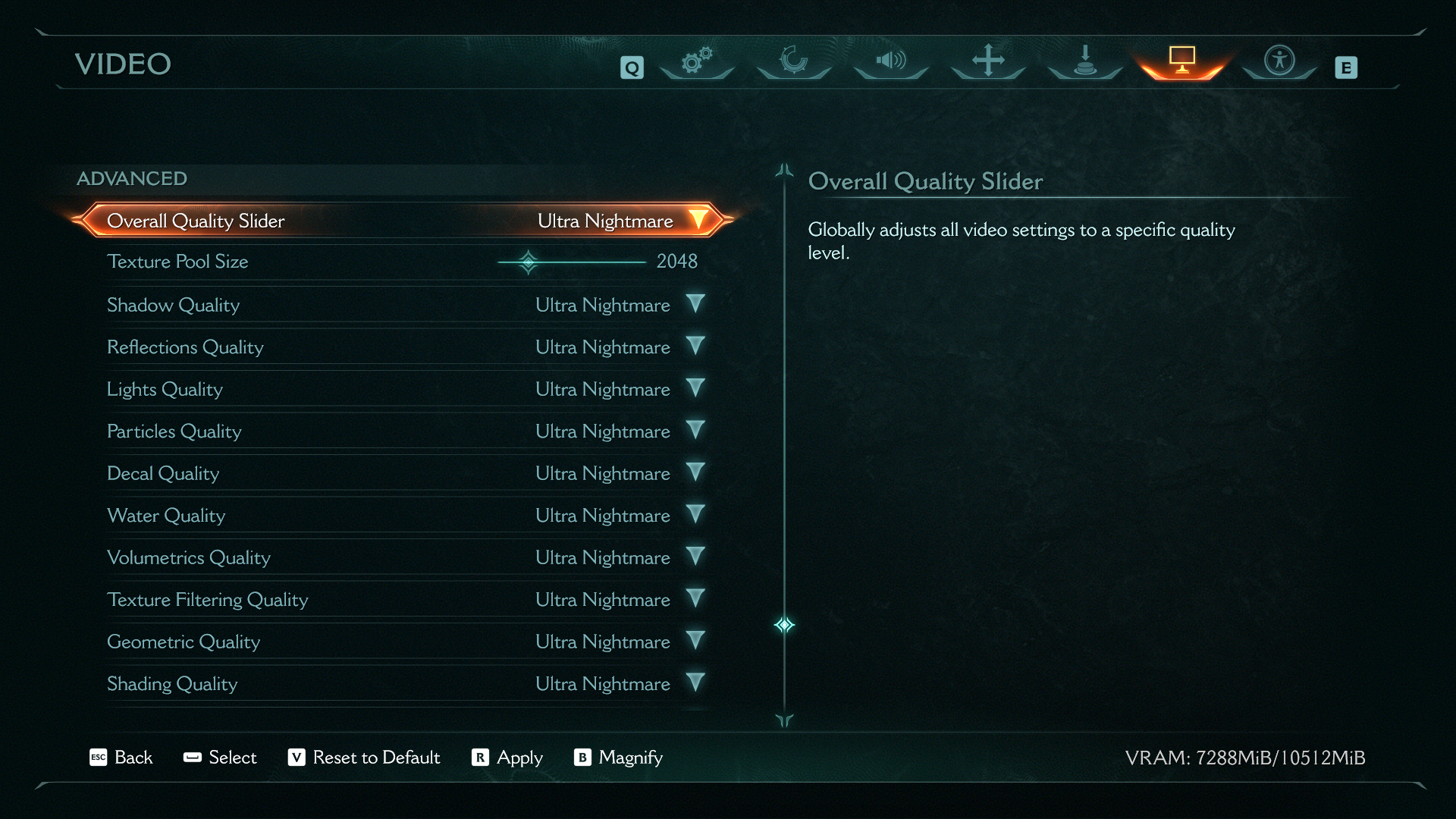
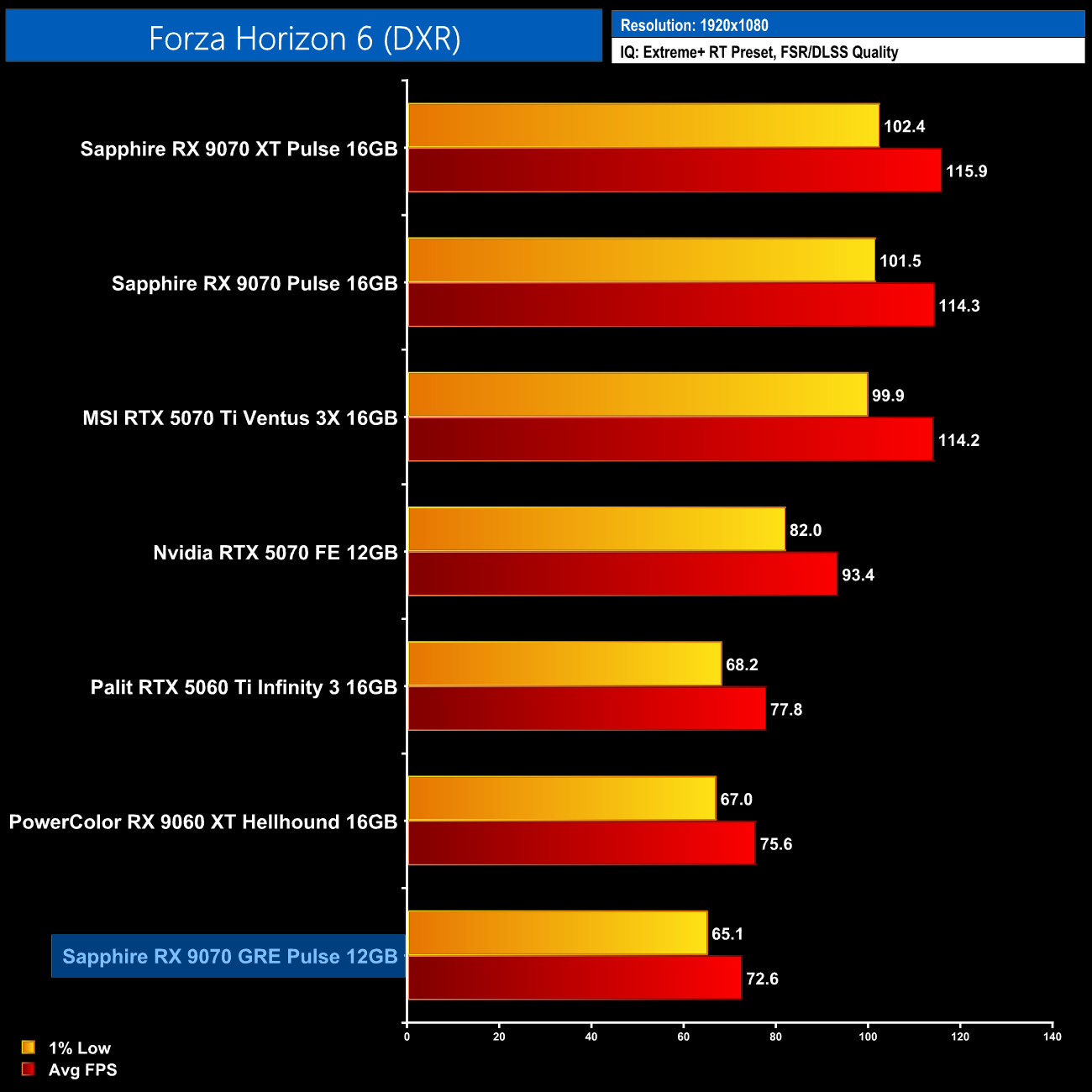
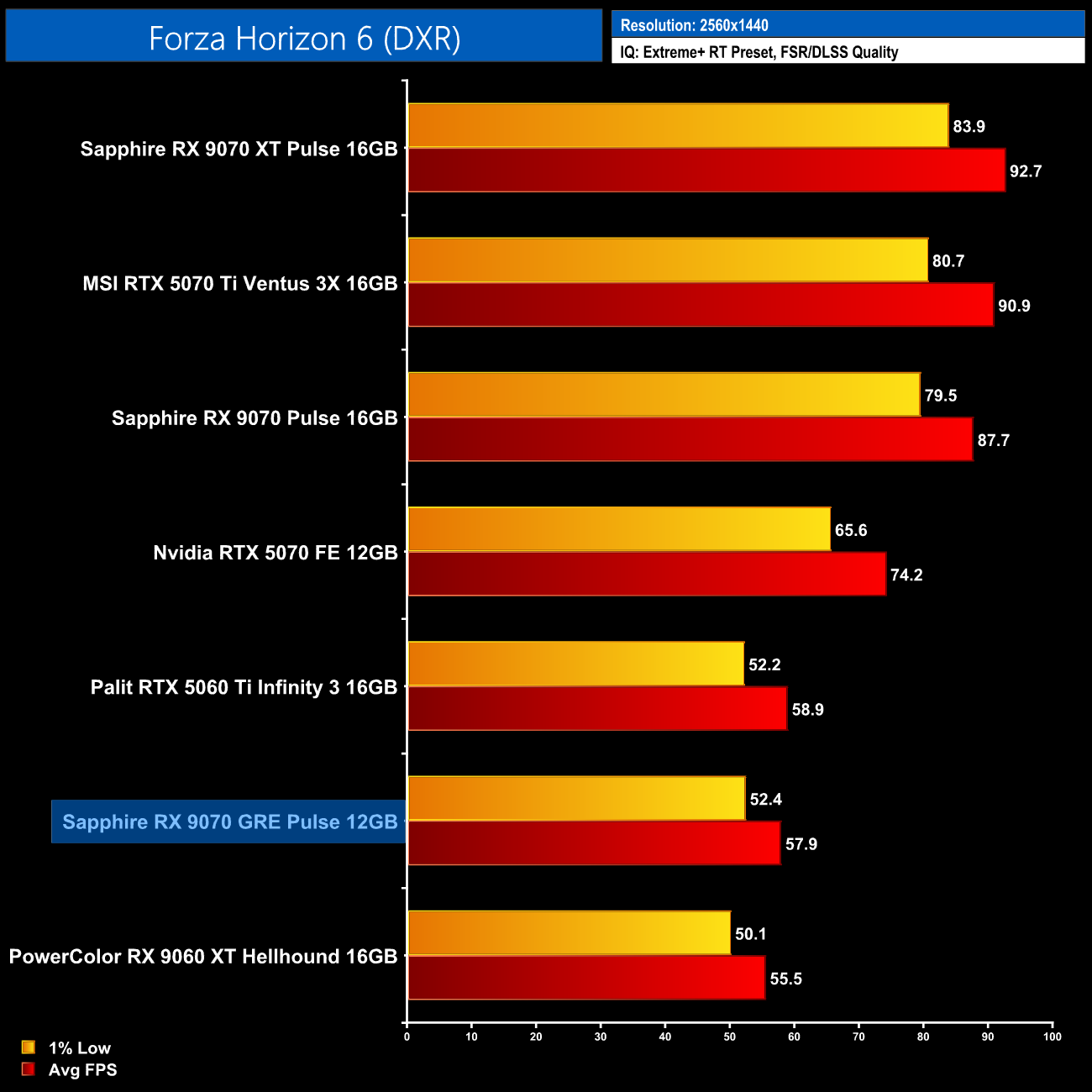
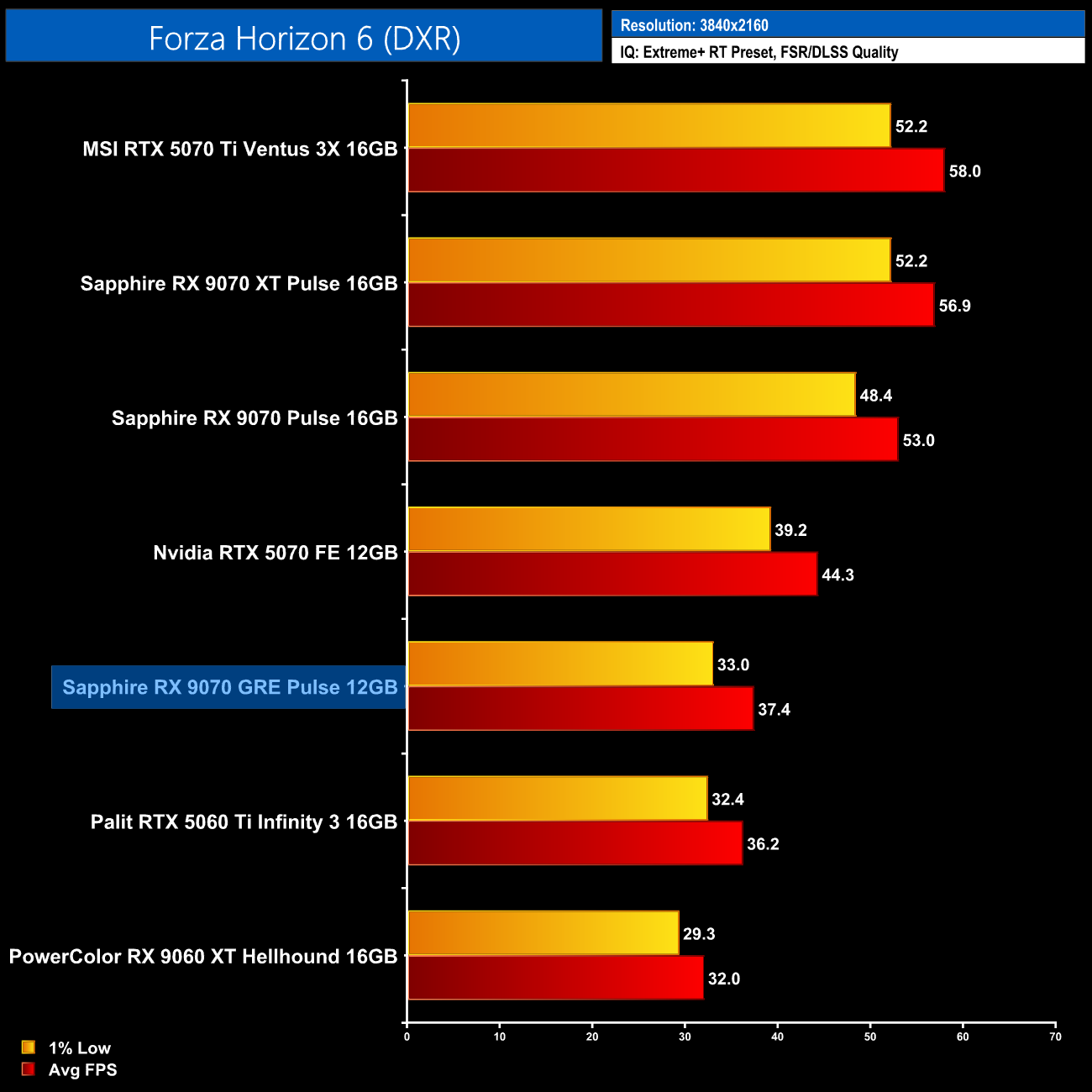
Forza Horizon 6 is a 2026 racing game developed by Playground Games and published by Xbox Game Studios. It is the sixth Forza Horizon title, following Forza Horizon 5, and the fourteenth main instalment in the Forza franchise. Set in a fictionalised representation of Japan, it features a stylised version of Tokyo as the game world's main city. It was released for Windows and Xbox Series X/S on 19 May 2026,[a] with a release for PlayStation 5 later in 2026. (Wikipedia).
Engine: ForzaTech. We test using the Extreme + RT preset, FSR/DLSS Quality upscaling, DXR API.
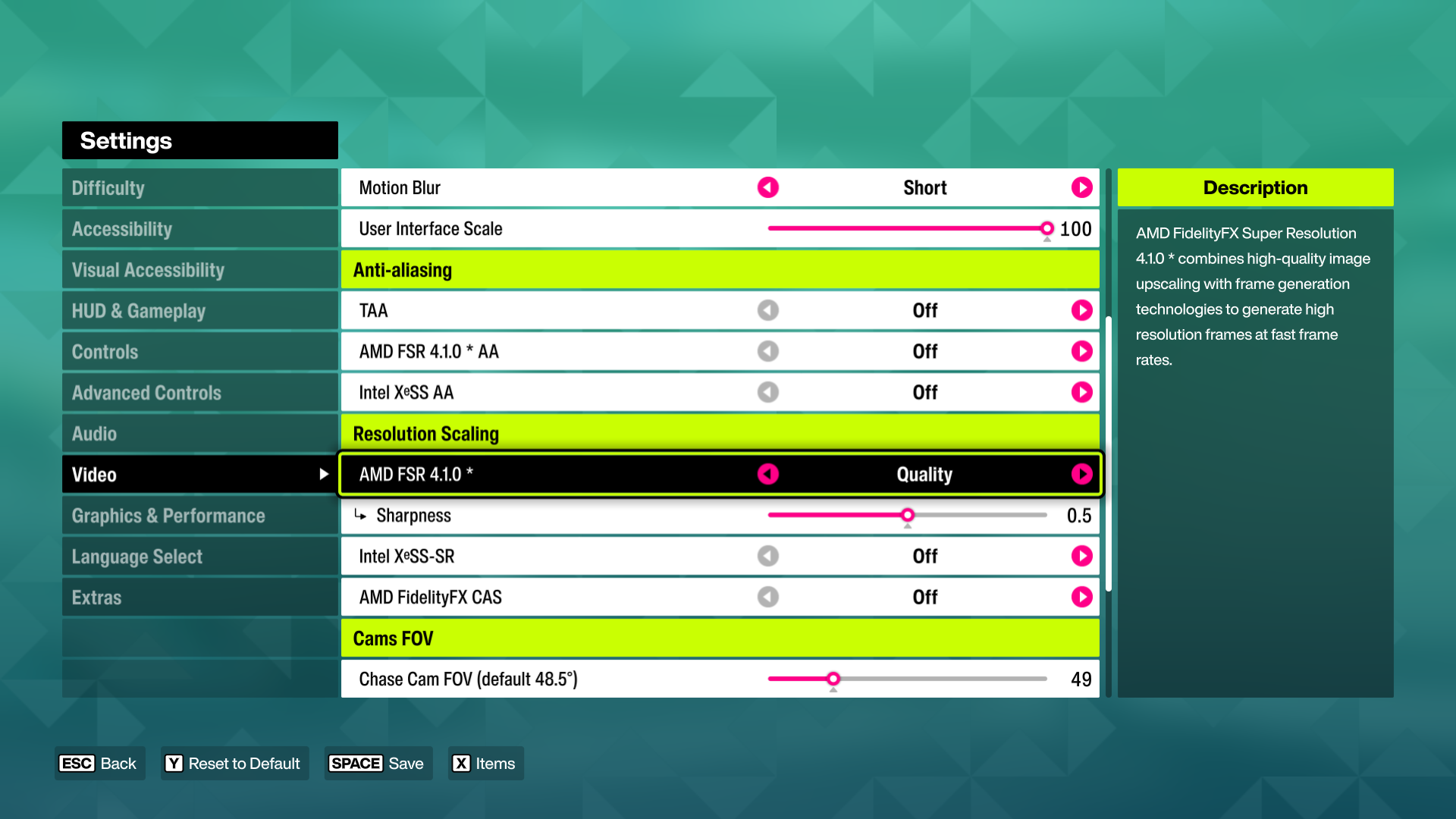
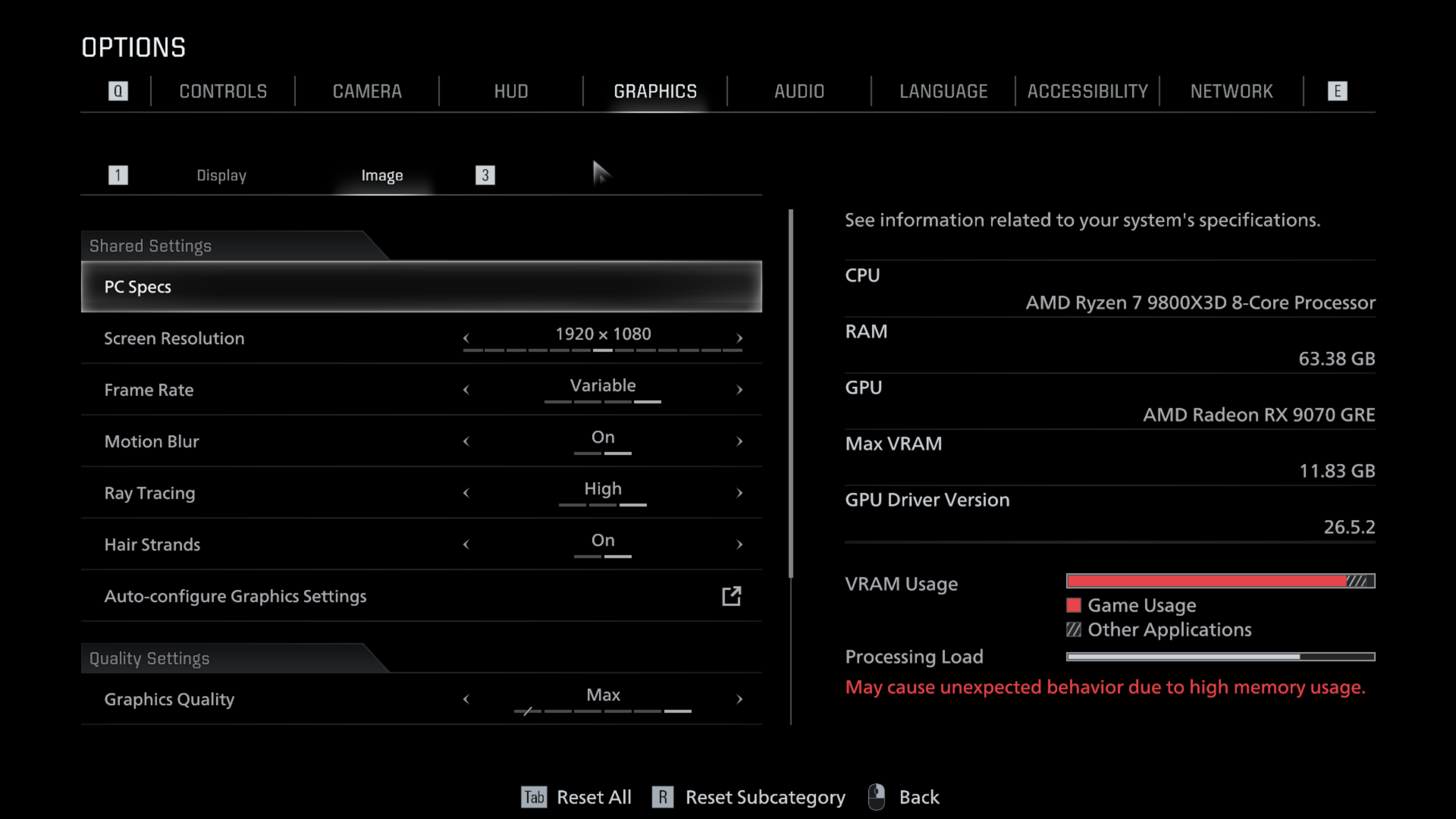
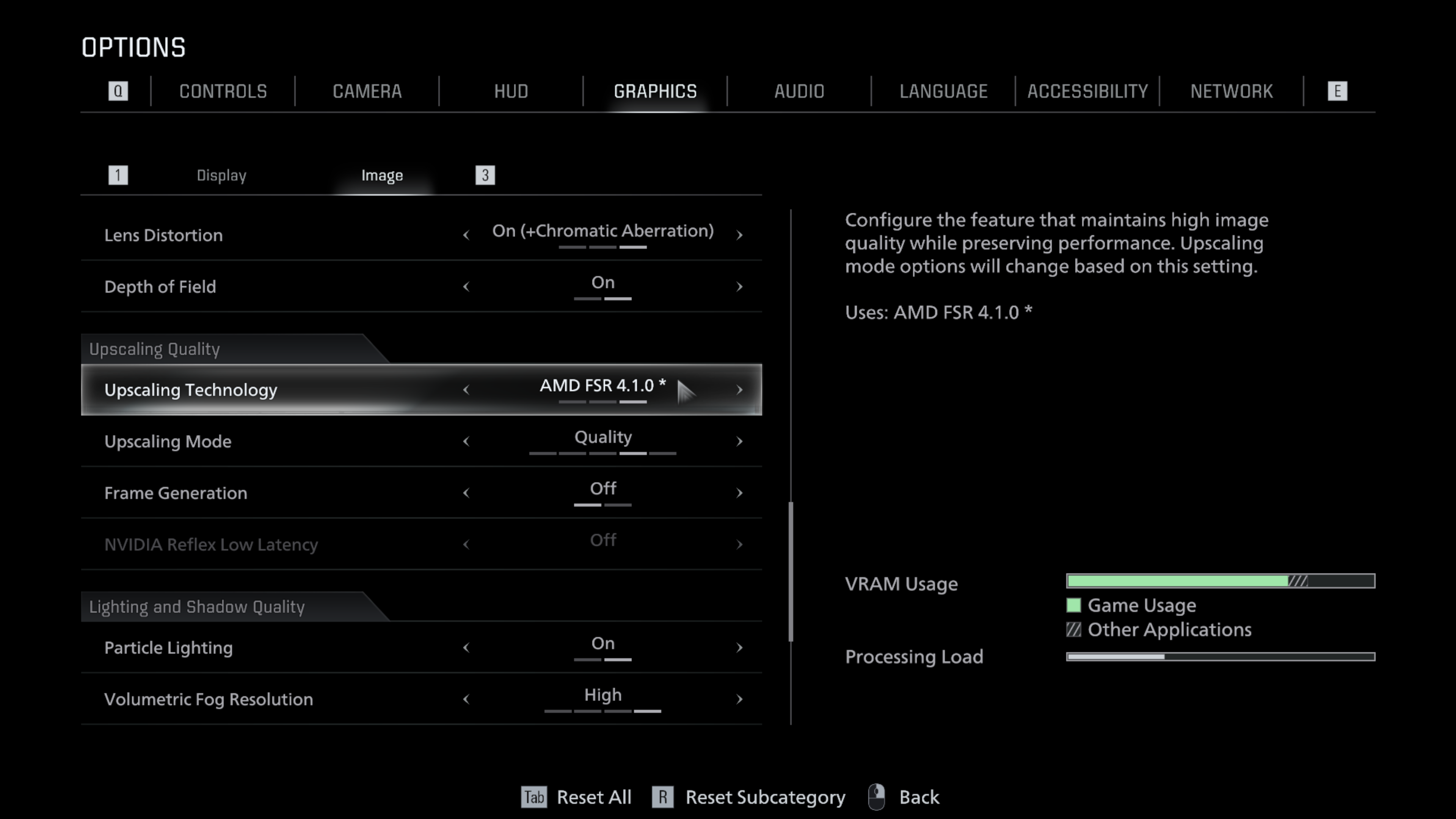
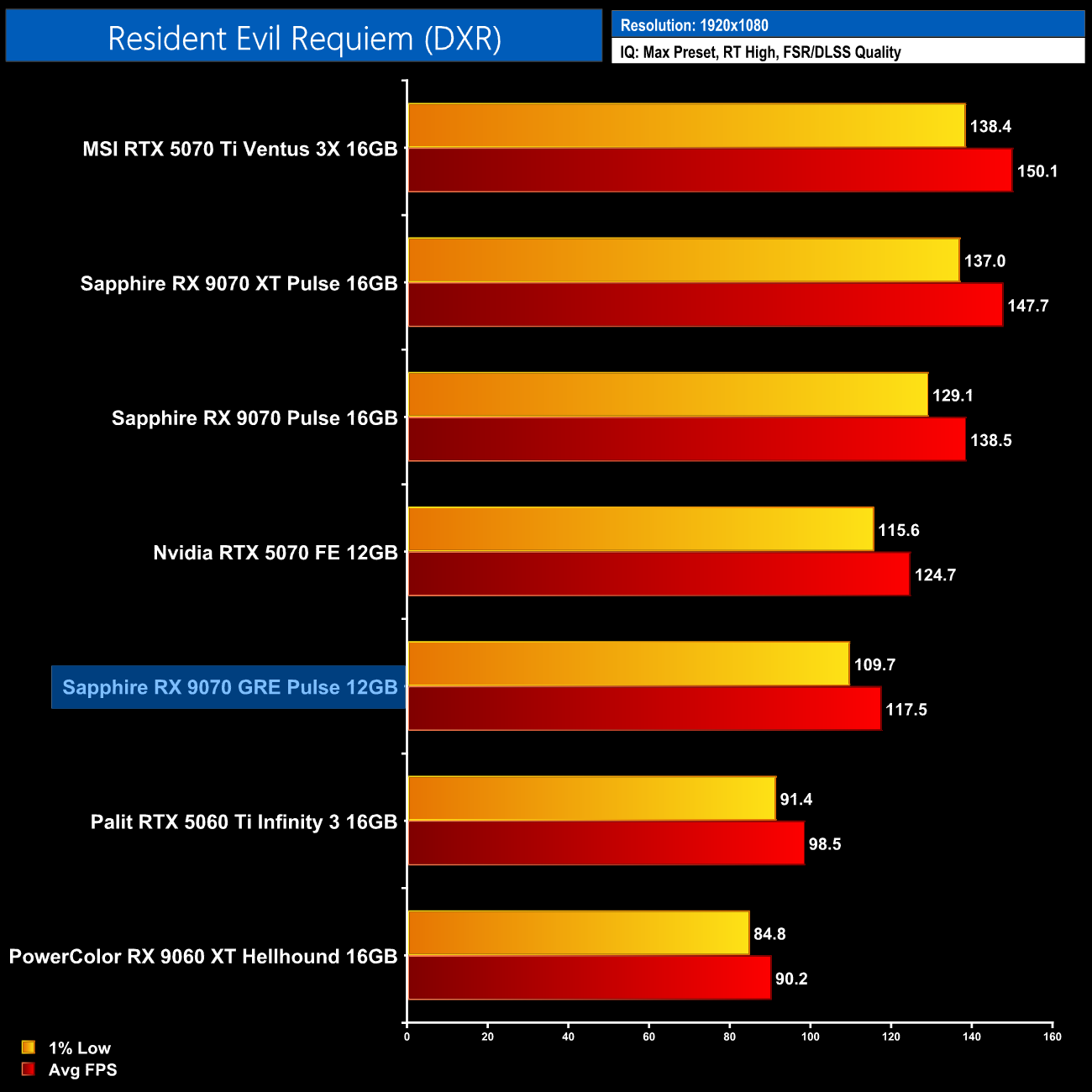
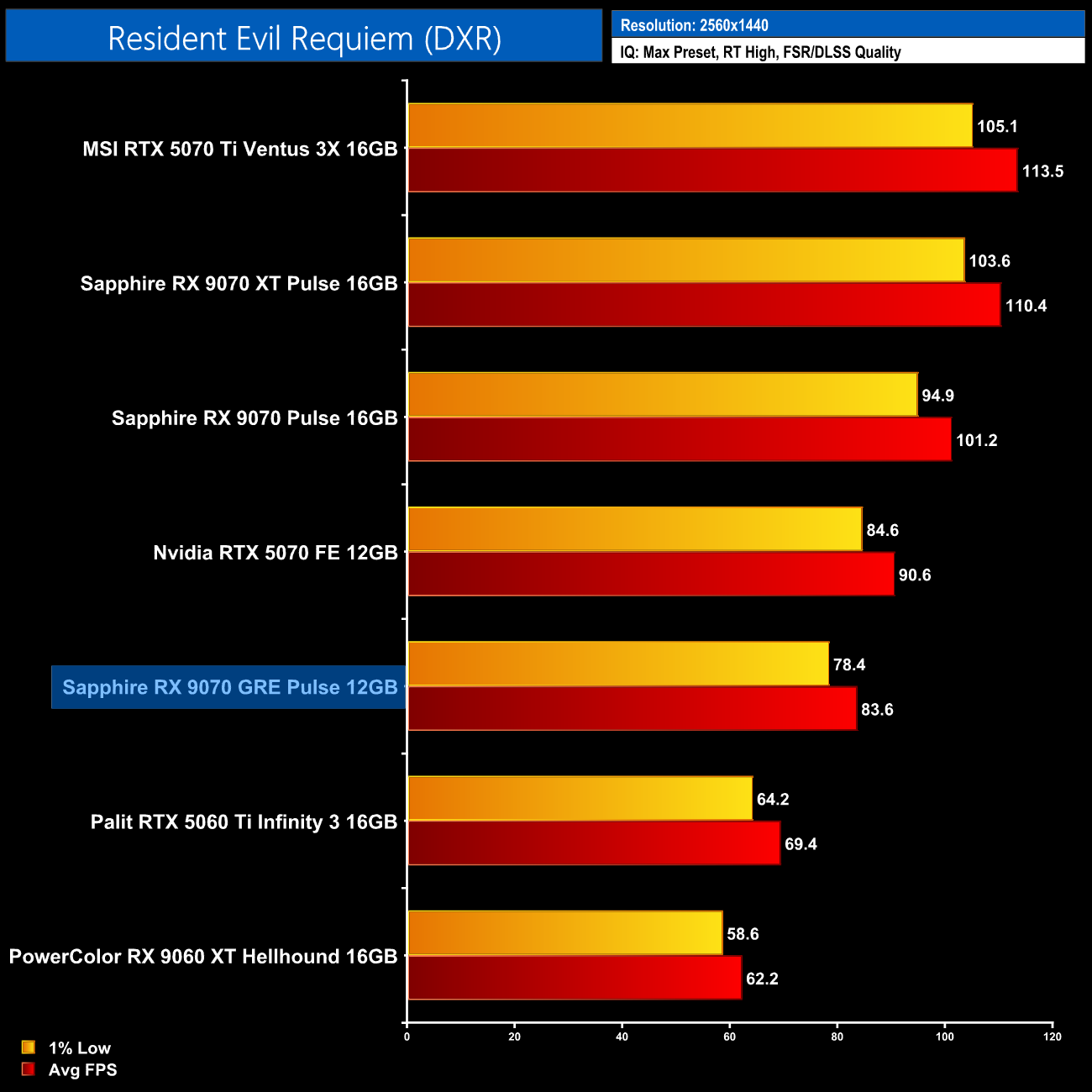
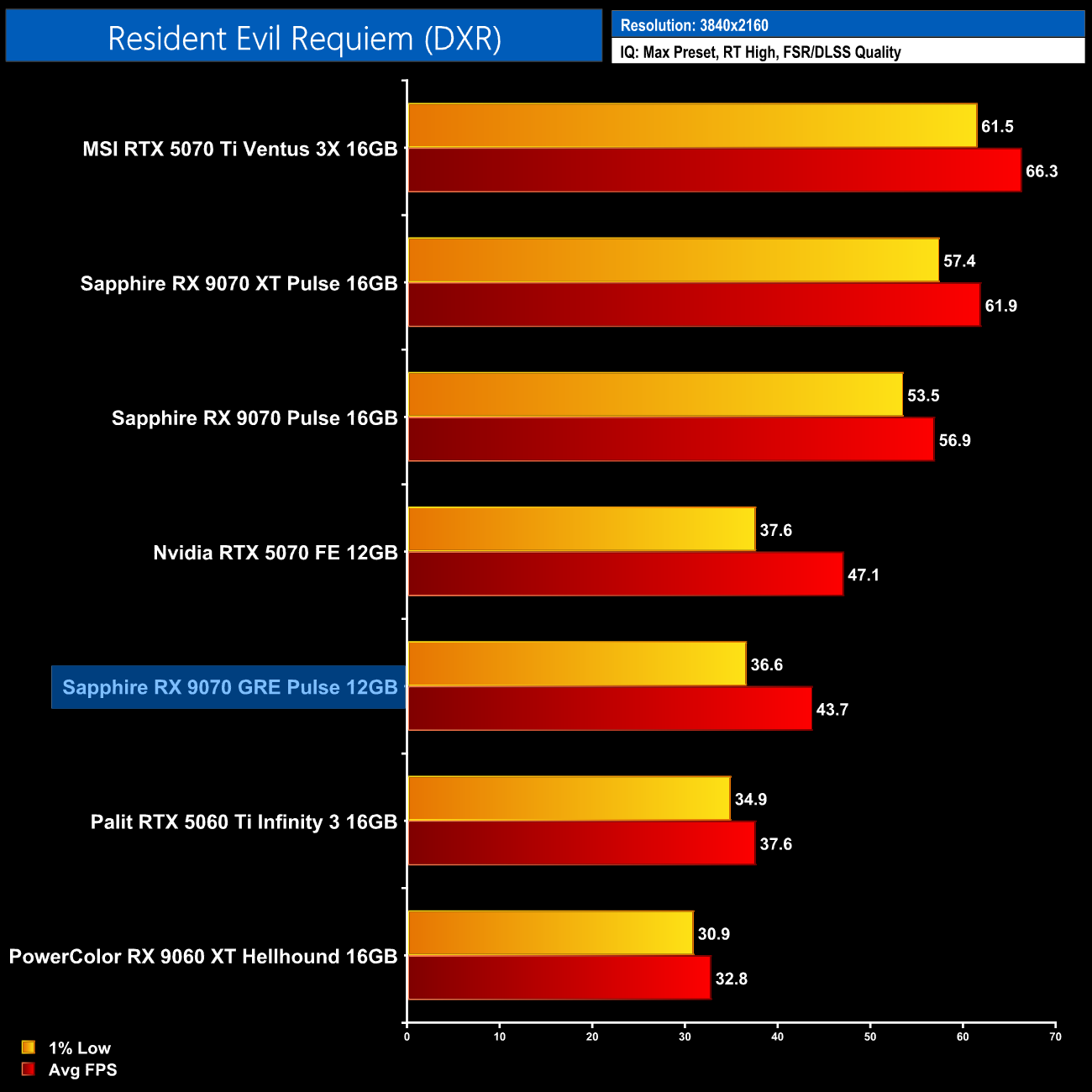
Resident Evil Requiem is a 2026 survival horror game developed and published by Capcom. It is the ninth main game in the Resident Evil series, following Resident Evil Village (2021). Requiem was released for Nintendo Switch 2, PlayStation 5, Windows, and Xbox Series X/S on February 27, 2026, to acclaim. Critics praised the dark tone, story, atmosphere, and balance between survival horror and action. (Wikipedia).
Engine: RE Engine. We test using the Max preset, RT High, FSR/DLSS Quality upscaling, DXR API.
Star Wars Outlaws is a 2024 action-adventure game developed by Massive Entertainment and published by Ubisoft. Set in the Star Wars universe between the events of The Empire Strikes Back (1980) and Return of the Jedi (1983), the story follows Kay Vess, a young scoundrel who assembles a team for a massive heist in order to pay off a crime syndicate. Star Wars Outlaws was released for PlayStation 5, Windows, and Xbox Series X/S on August 30, 2024.
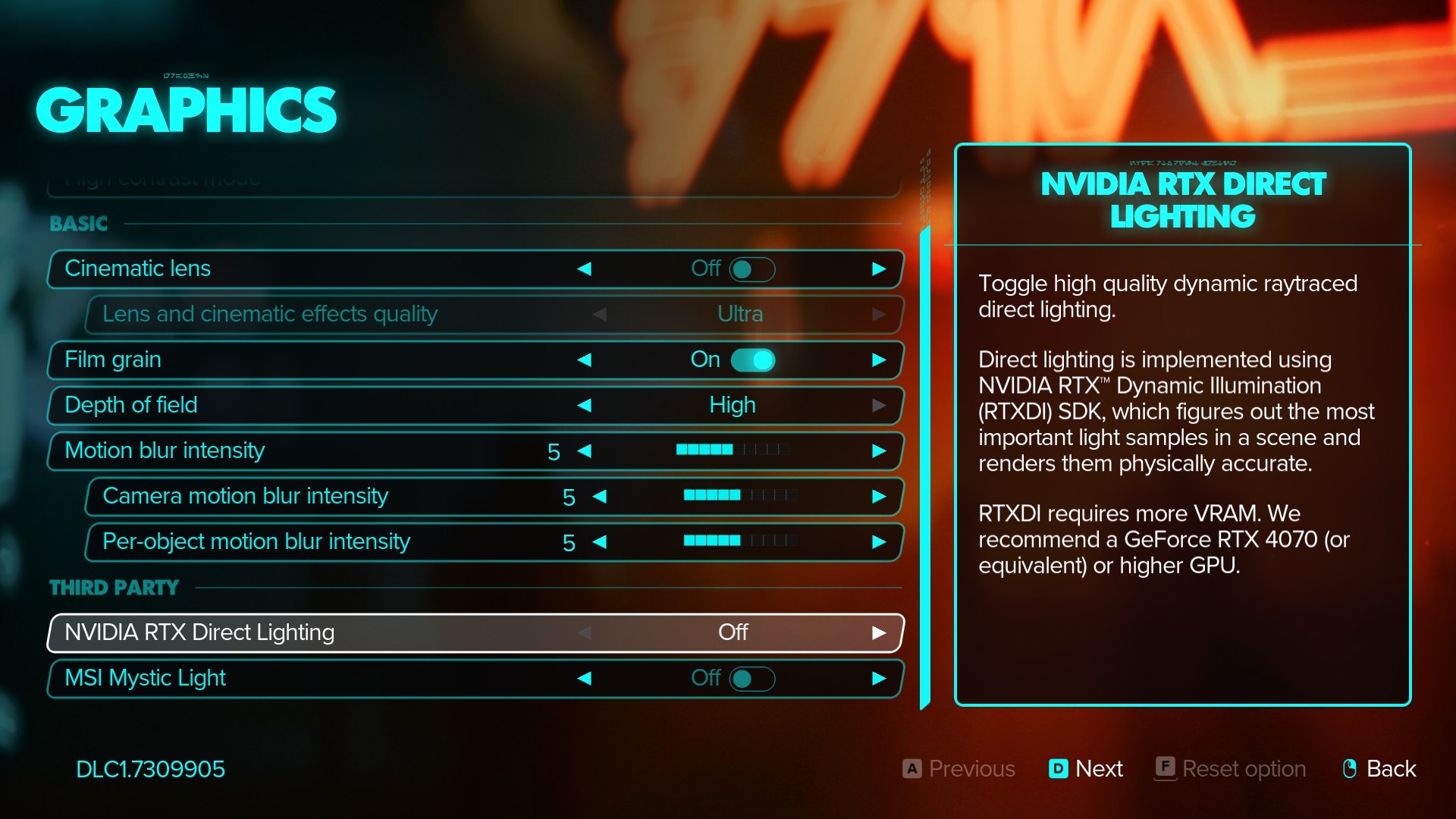
Engine: Snowdrop. We test using the Ultra preset but with Nvidia RTXDI disabled, DXR API. DLSS/FSR are disabled.
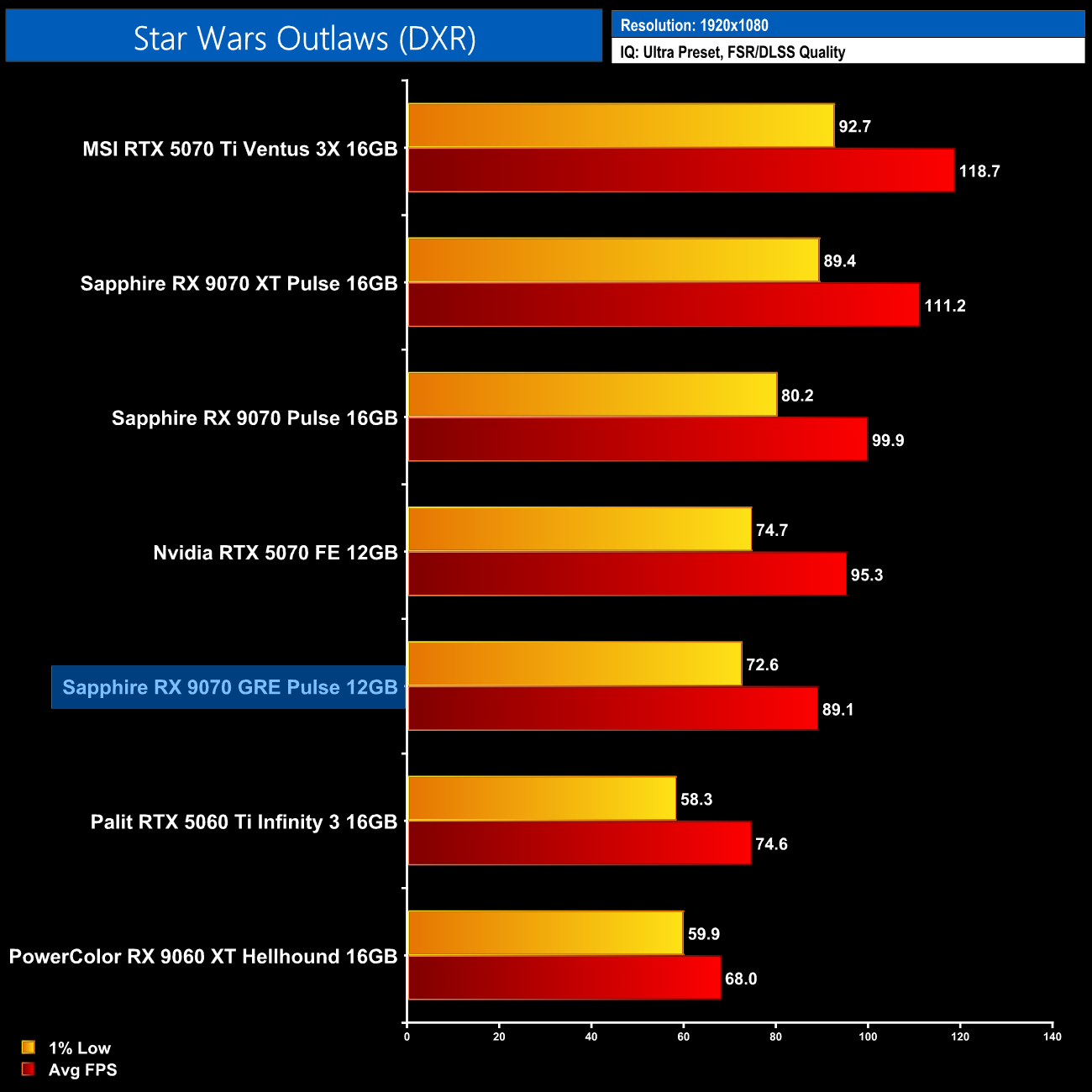
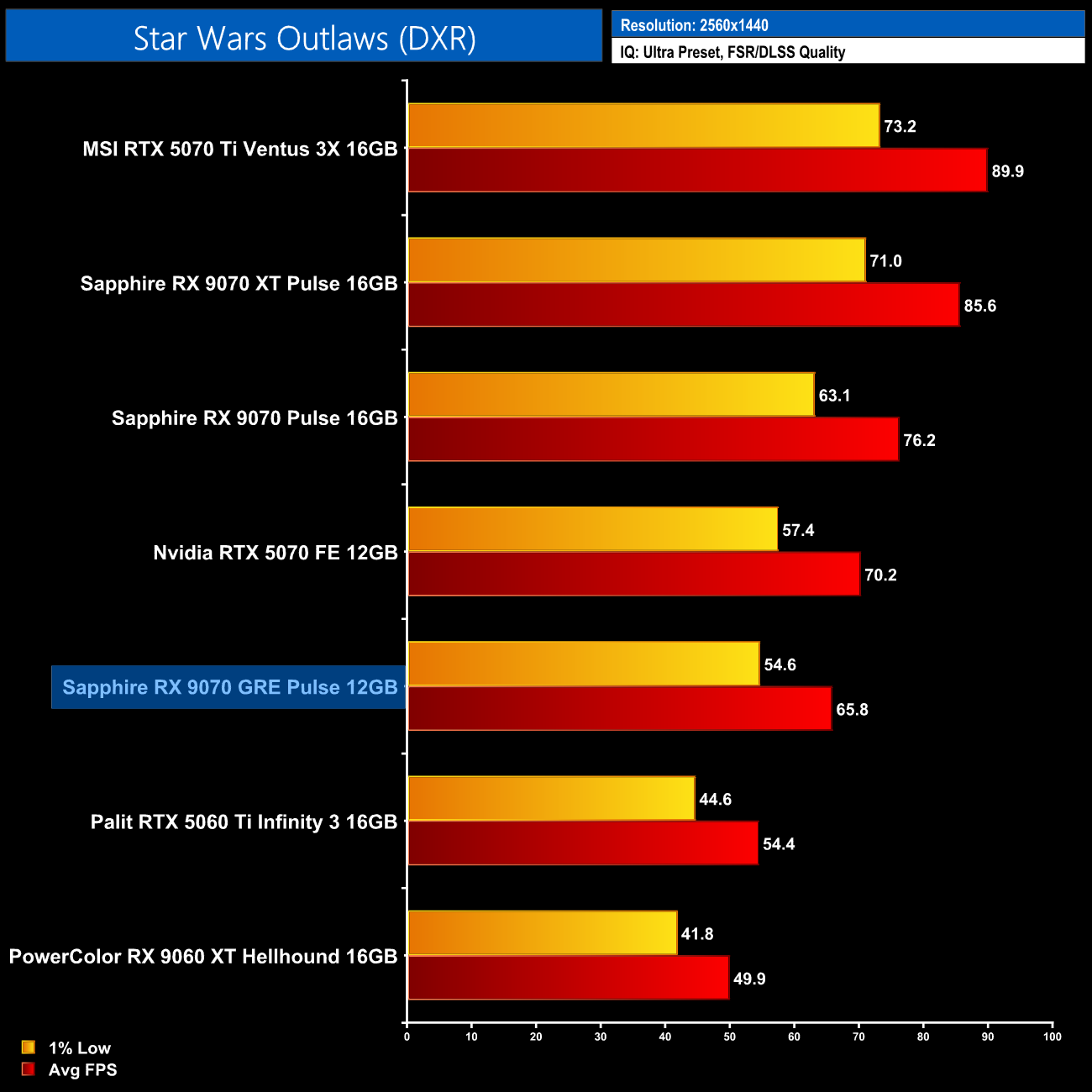
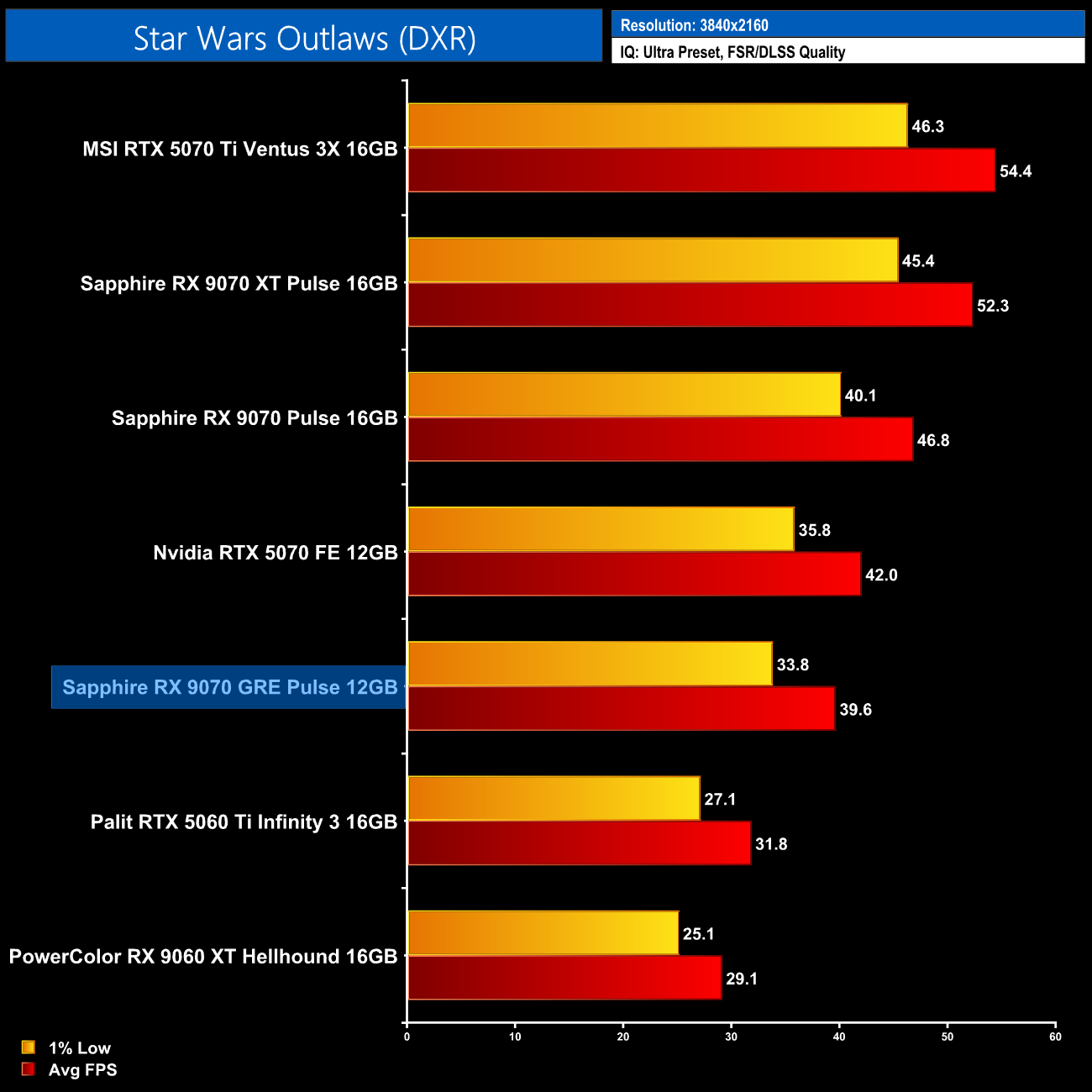
Ray tracing 8-game average FPS
Here we present frame rate figures for each graphics card, averaged across all 8 ray traced games on test today. We use the geometric mean instead of the arithmetic mean for overall performance, given it provides a more accurate and balanced representation of GPU performance across different games.
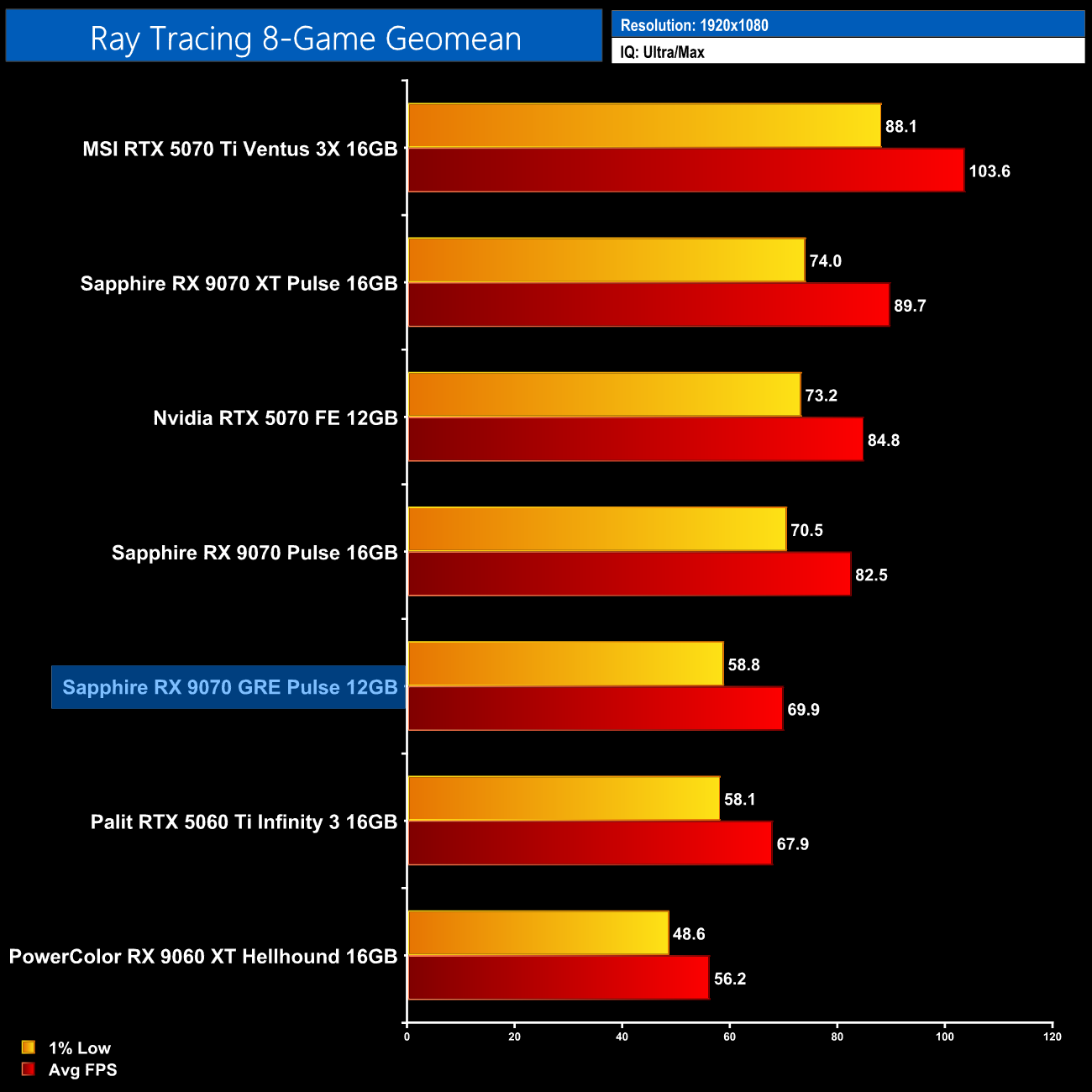
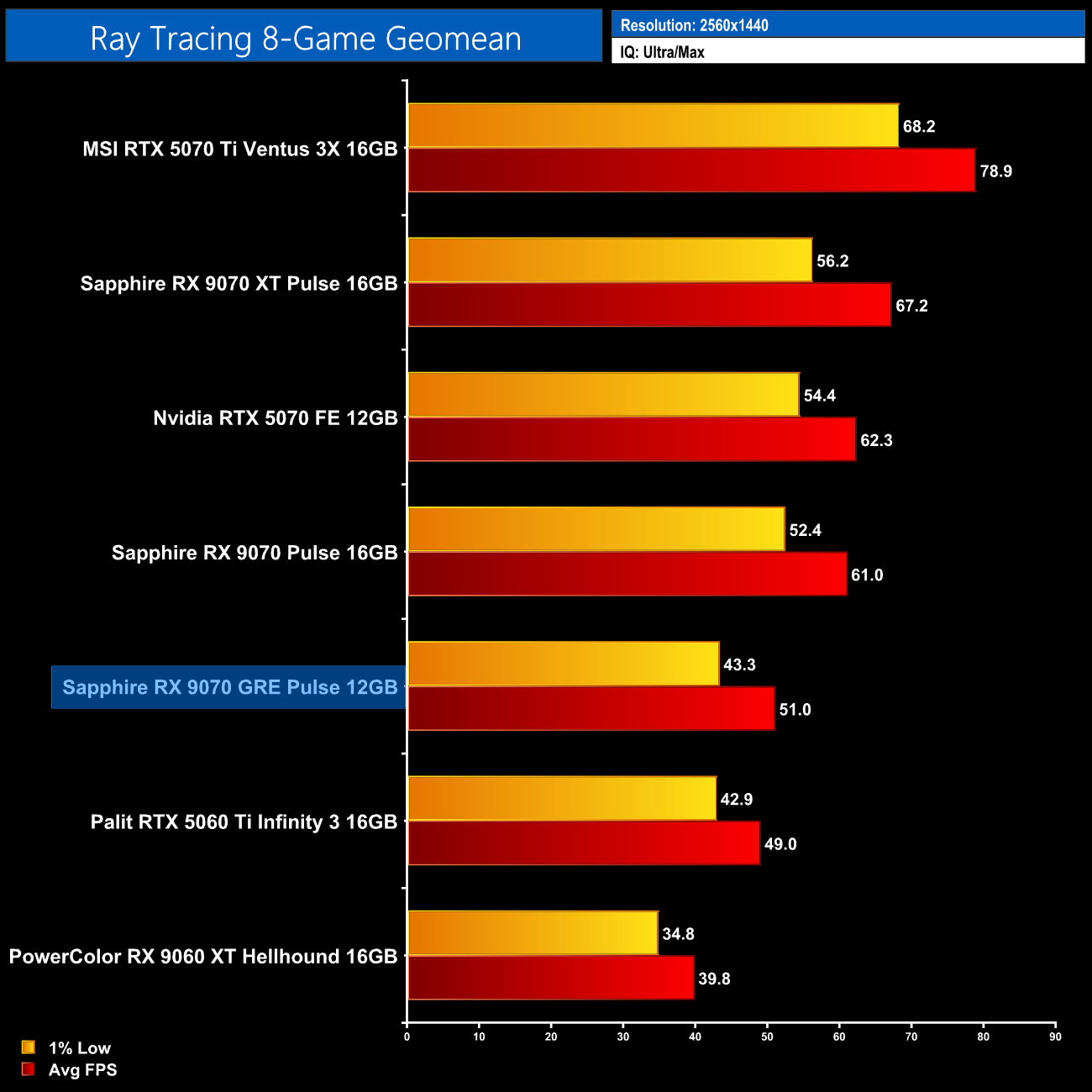
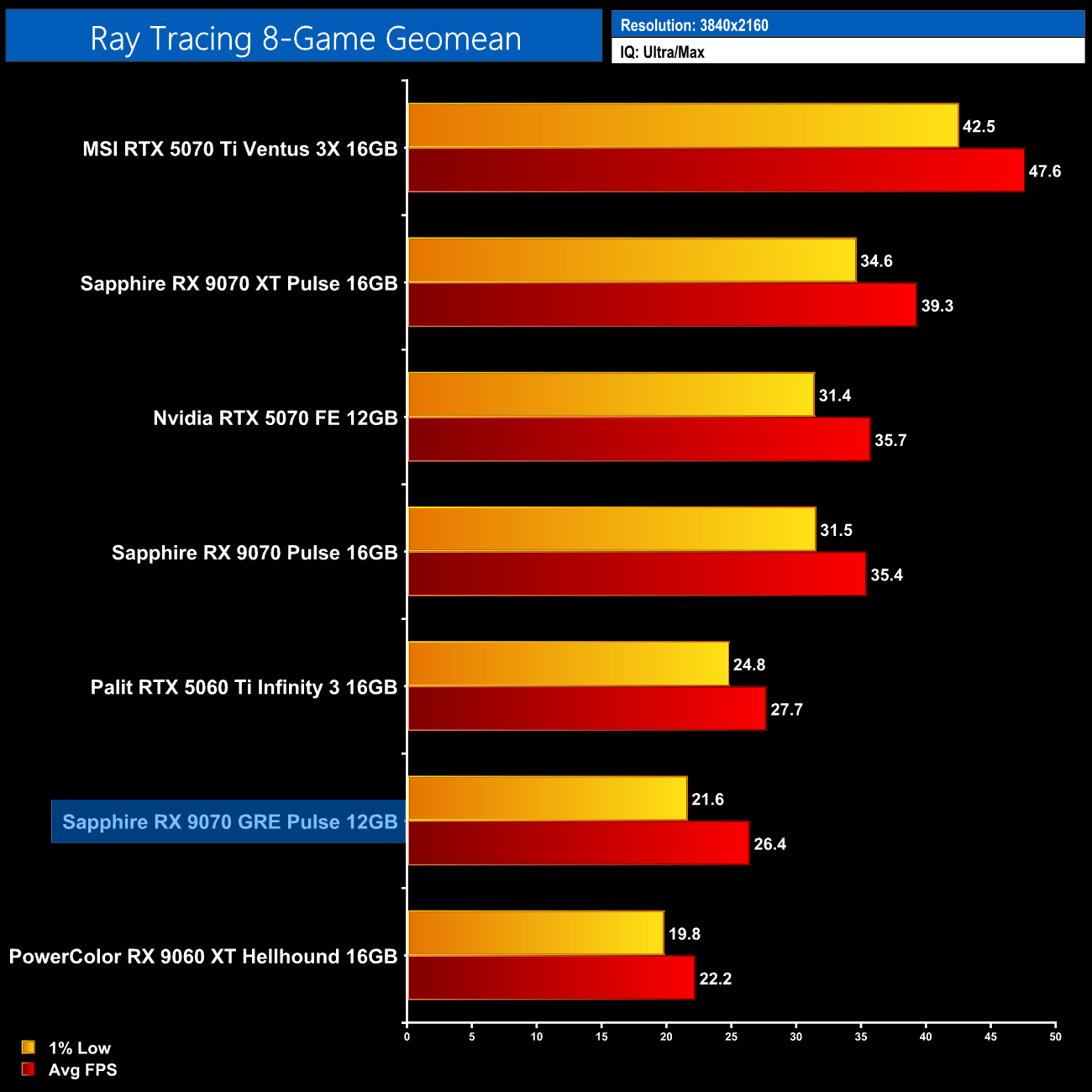
Ray tracing performance continues to scale as expected versus the RX 9070, with the 9070 GRE 16% slower on average at 1440p. As we have known for a while, though, Nvidia does offer the upper-hand in this department, and the 9070 GRE is only a hair faster than the RTX 5060 Ti 16GB, while it's 18% slower than the RTX 5070.
As we saw, there are some games where the margins are much closer, and the 9070 GRE is certainly able to deliver good ray tracing experiences depending on what you are playing. In games with heavier ray traced effects, though – particularly those using path tracing – Nvidia has a clear lead.
For our temperature testing, we measure steady-state GPU temperatures under load. A reading under load comes from running A Plague Tale: Requiem for 30 minutes.
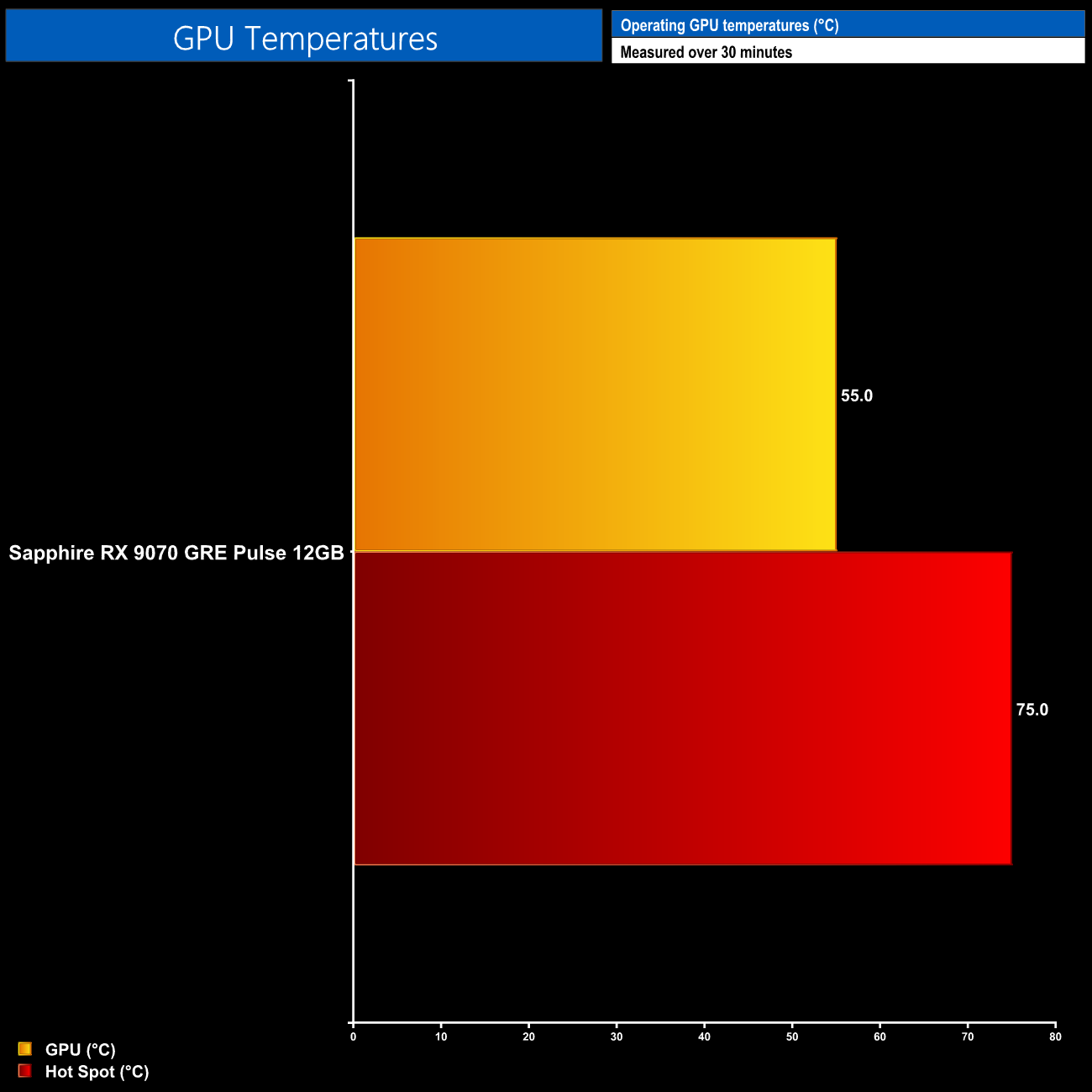
The good news is that the Sapphire Pulse model we are testing as part of this review runs nice and cool. We saw a peak of just 55C on the GPU and 75C on the hot spot, so both indicate thermals are well under control.
For our temperature testing, we measure the peak memory temperature under load. A reading under load comes from running A Plague Tale: Requiem for 30 minutes.
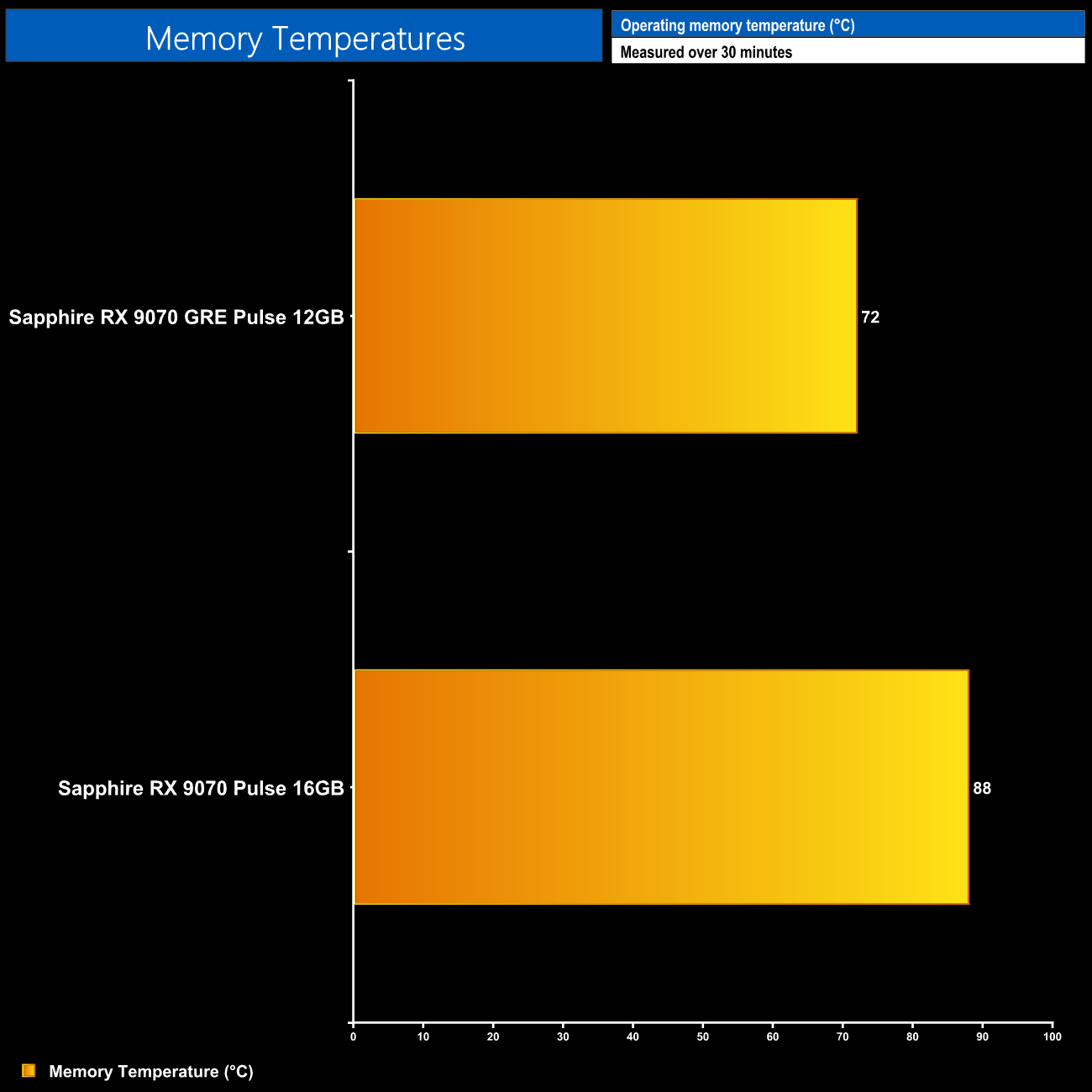
GDDR6 thermals are also impressive, with the 9070 GRE Pulse recording a 72C peak. For context, the RX 9070 Pulse (non-GRE and non-XT) has much warmer memory thermals, peaking at 88C, so it's good to see a reduction with this new card.
We take our noise measurements with the sound meter positioned 1 foot from the graphics card. I measured the noise floor to be 32 dBA, thus anything above this level can be attributed to the graphics cards. The power supply is passive for the entire power output range we tested all graphics cards in, while all CPU and system fans were disabled. A reading under load comes from running A Plague Tale: Requiem for 30 minutes.
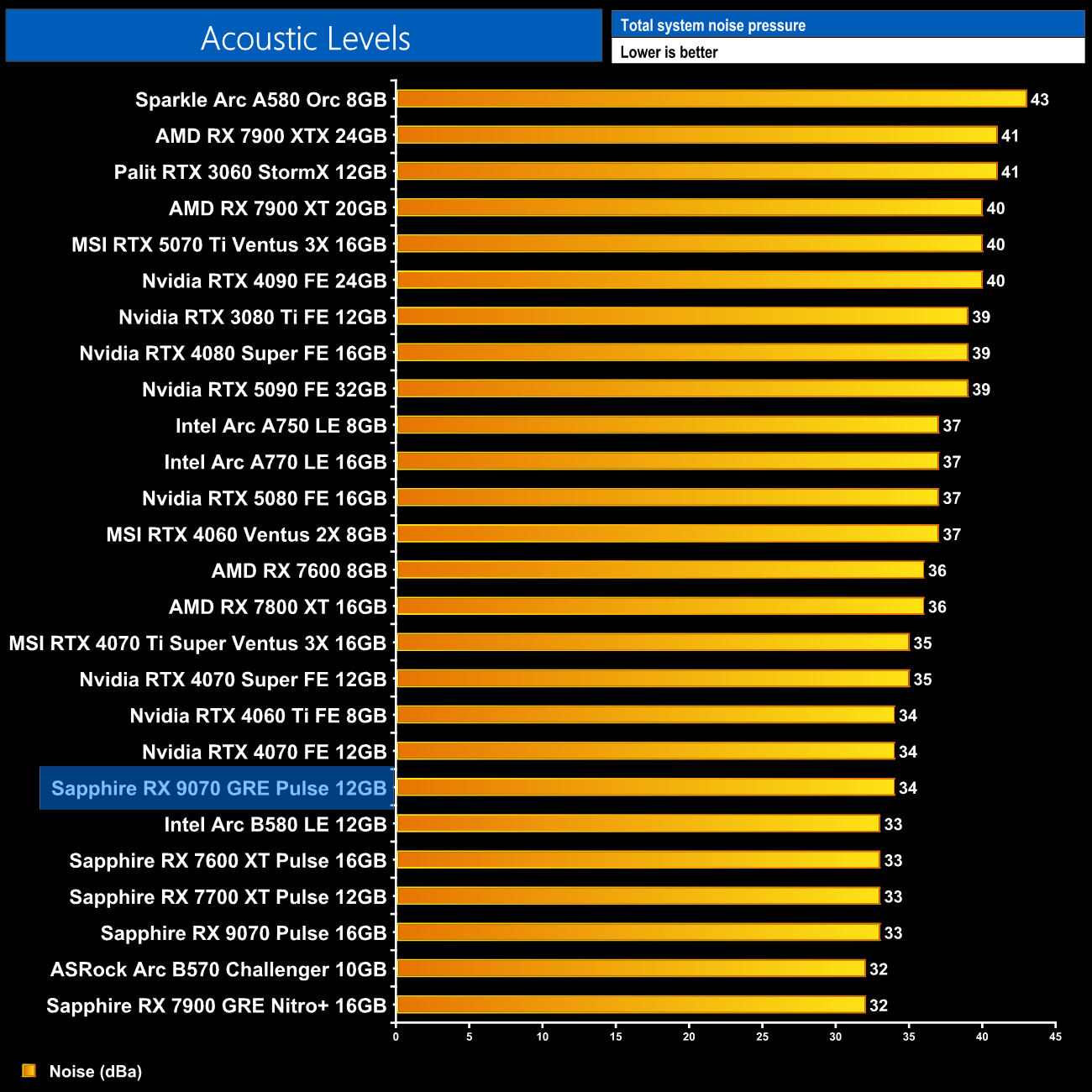
As we've come to expect from a Sapphire Pulse model, it runs very quiet as well. In our testing the fans spun up to just 31%, or about 1260rpm, producing just 34dBa on our sound meter, which is very competitive.
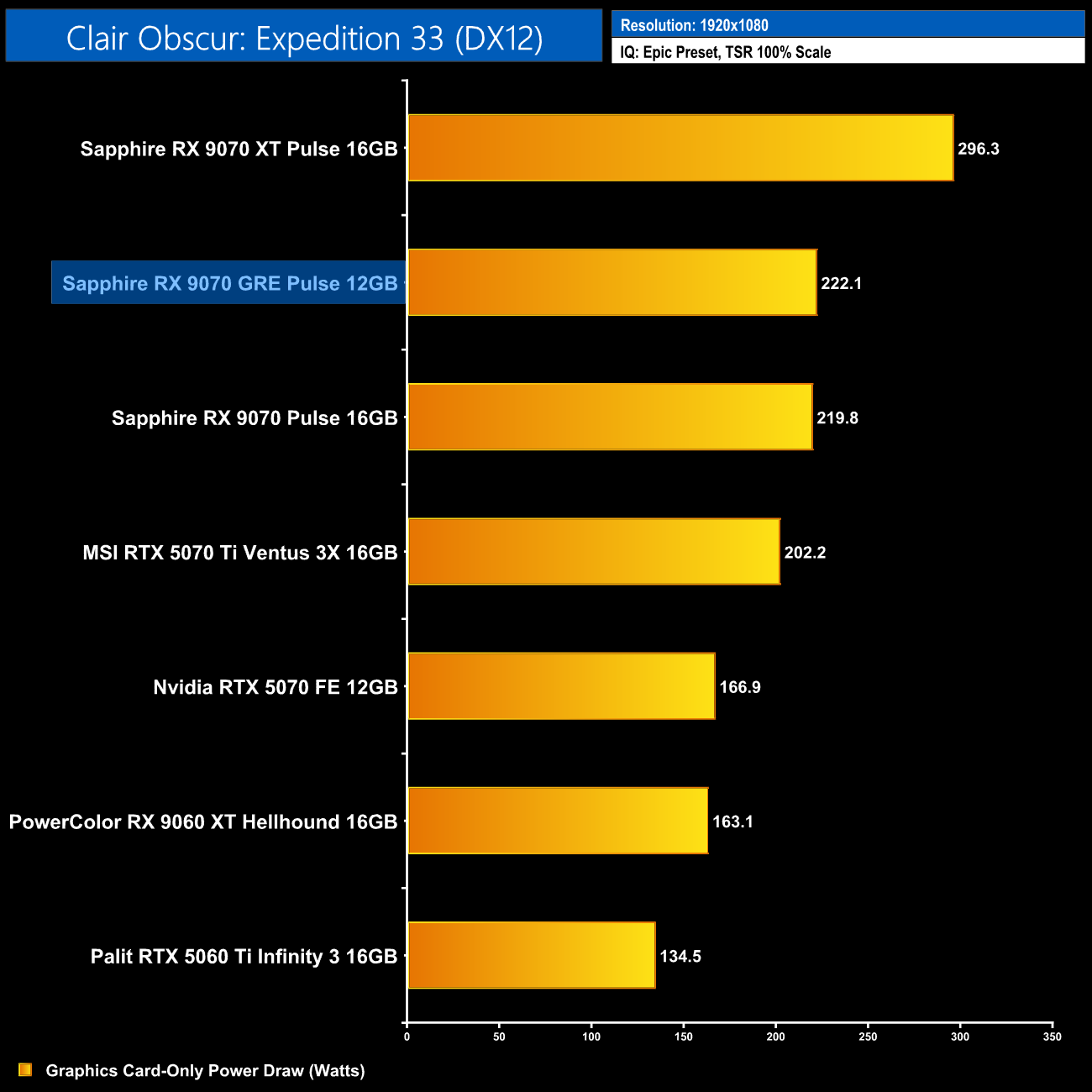
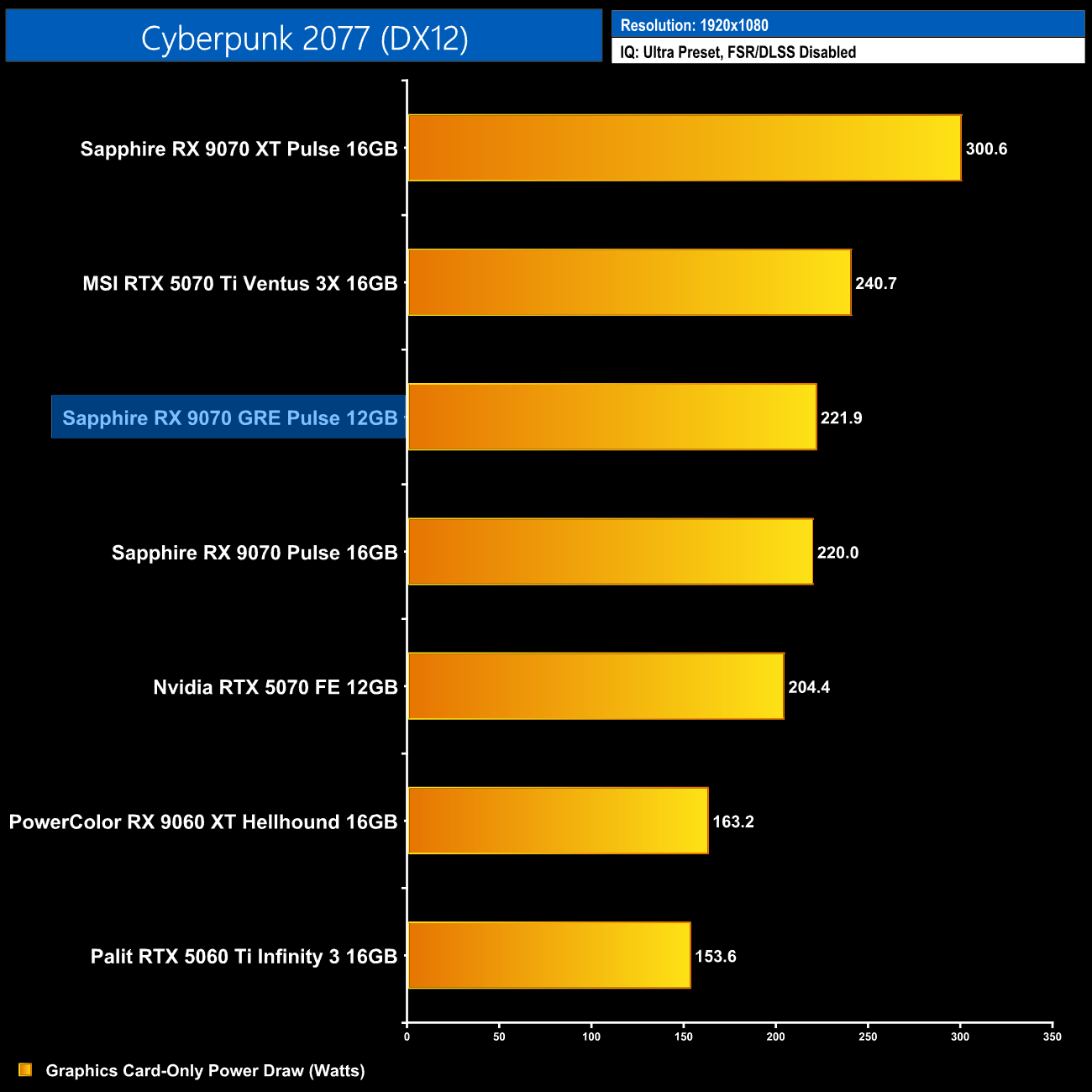
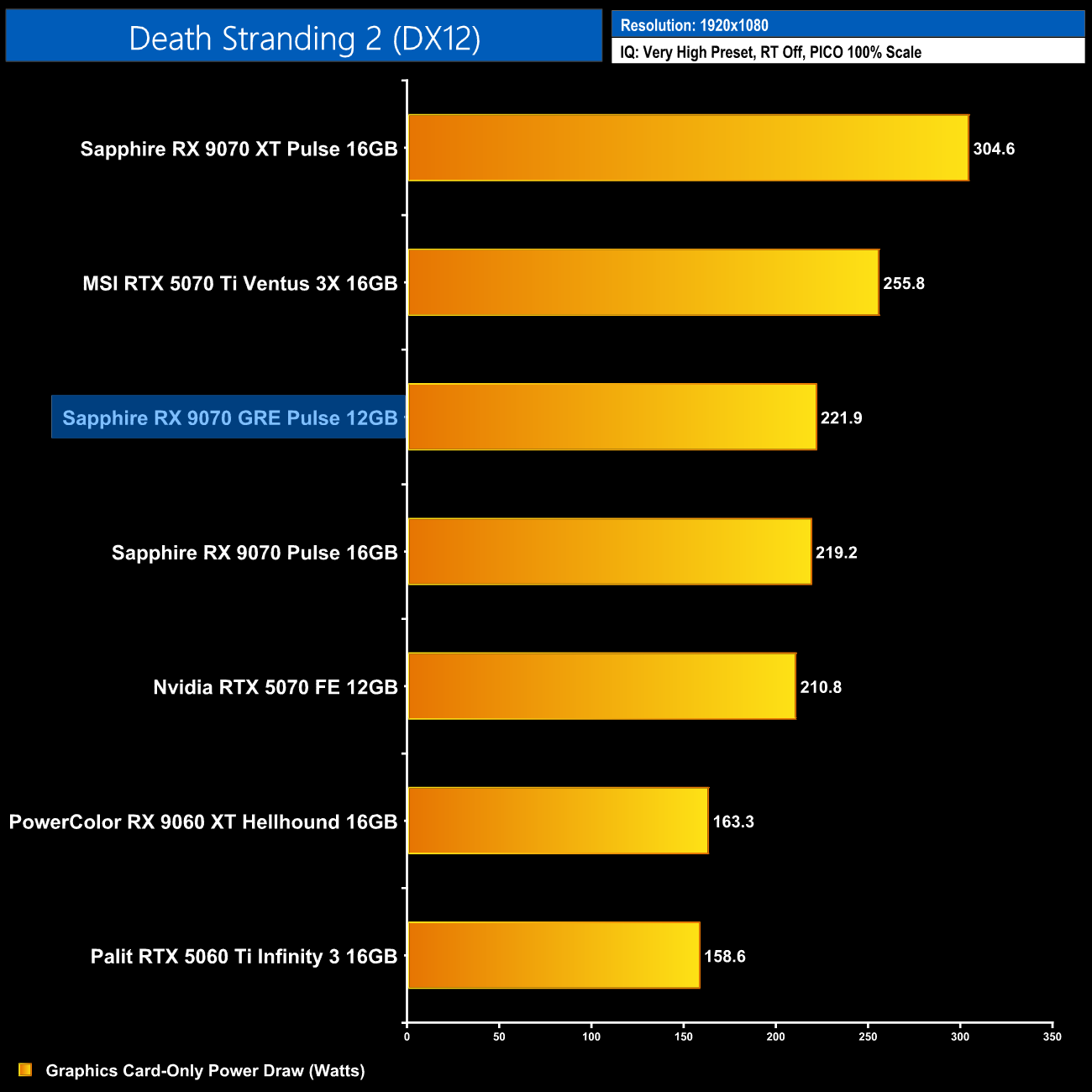
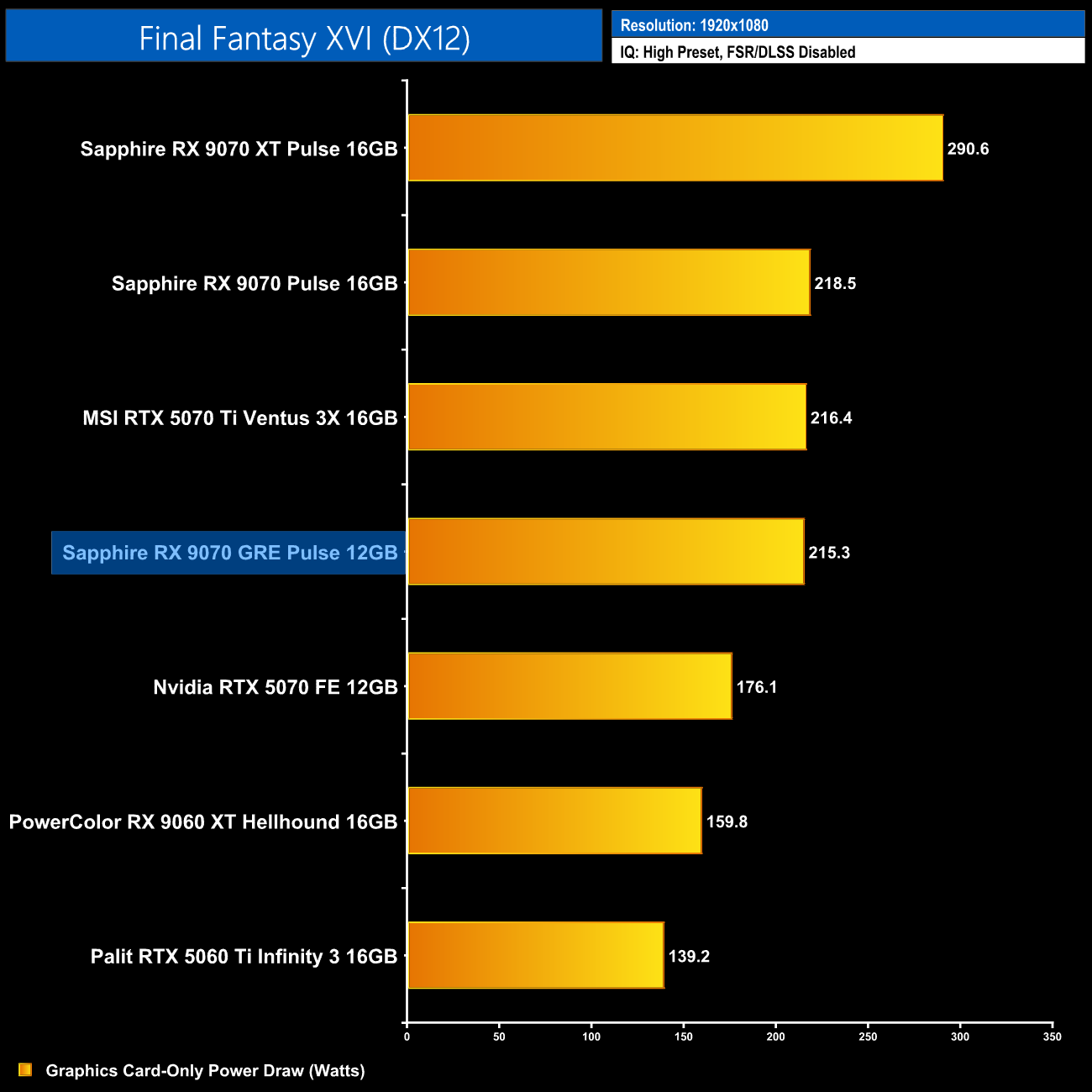
Here we present power draw figures for the graphics card-only, on a per-game basis for all twelve games we tested at 1080p. This is measured using Nvidia's Power Capture Analysis Tool, also known as PCAT. You can read more about our updated power draw testing methodology HERE.
Per-Game Results at 1080p:
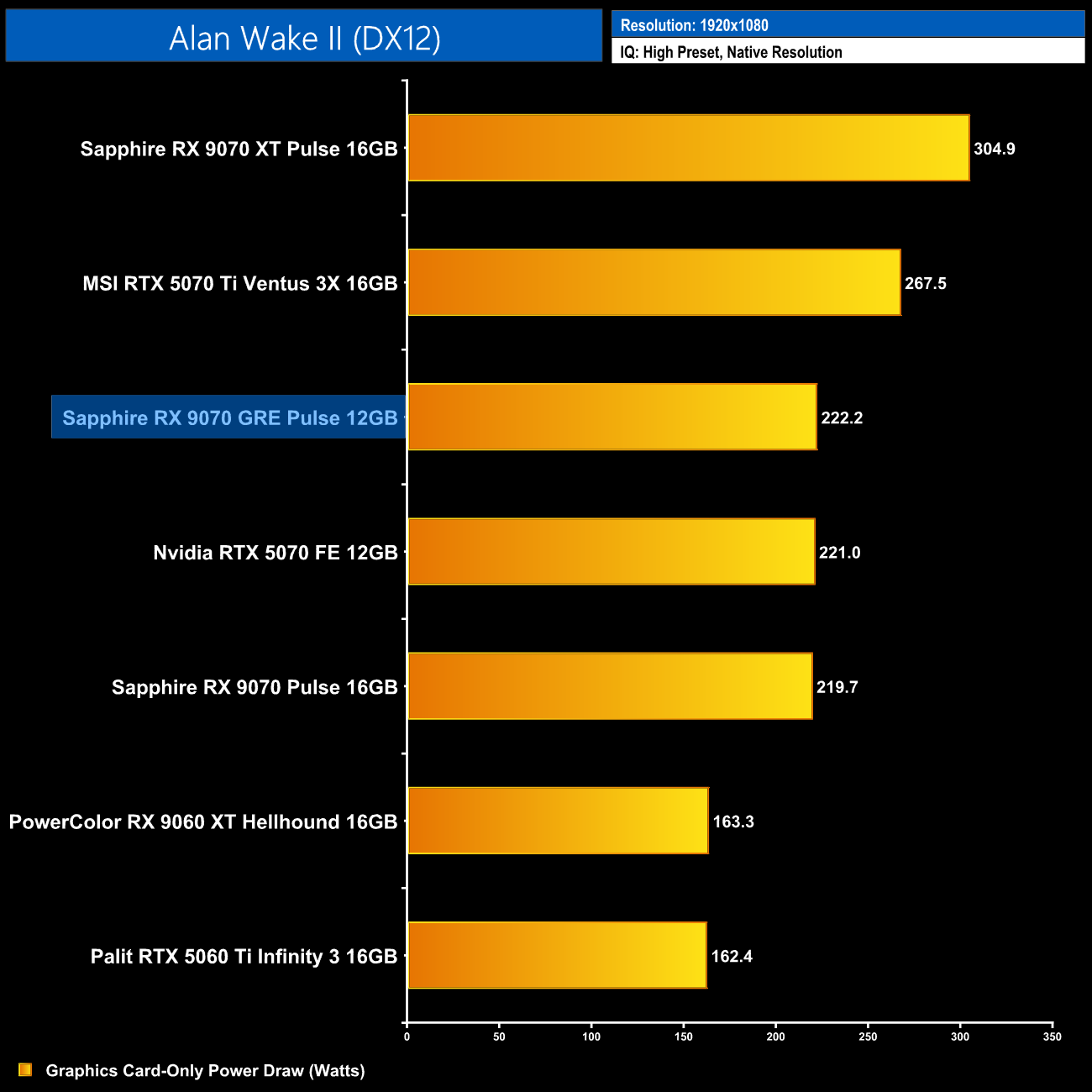
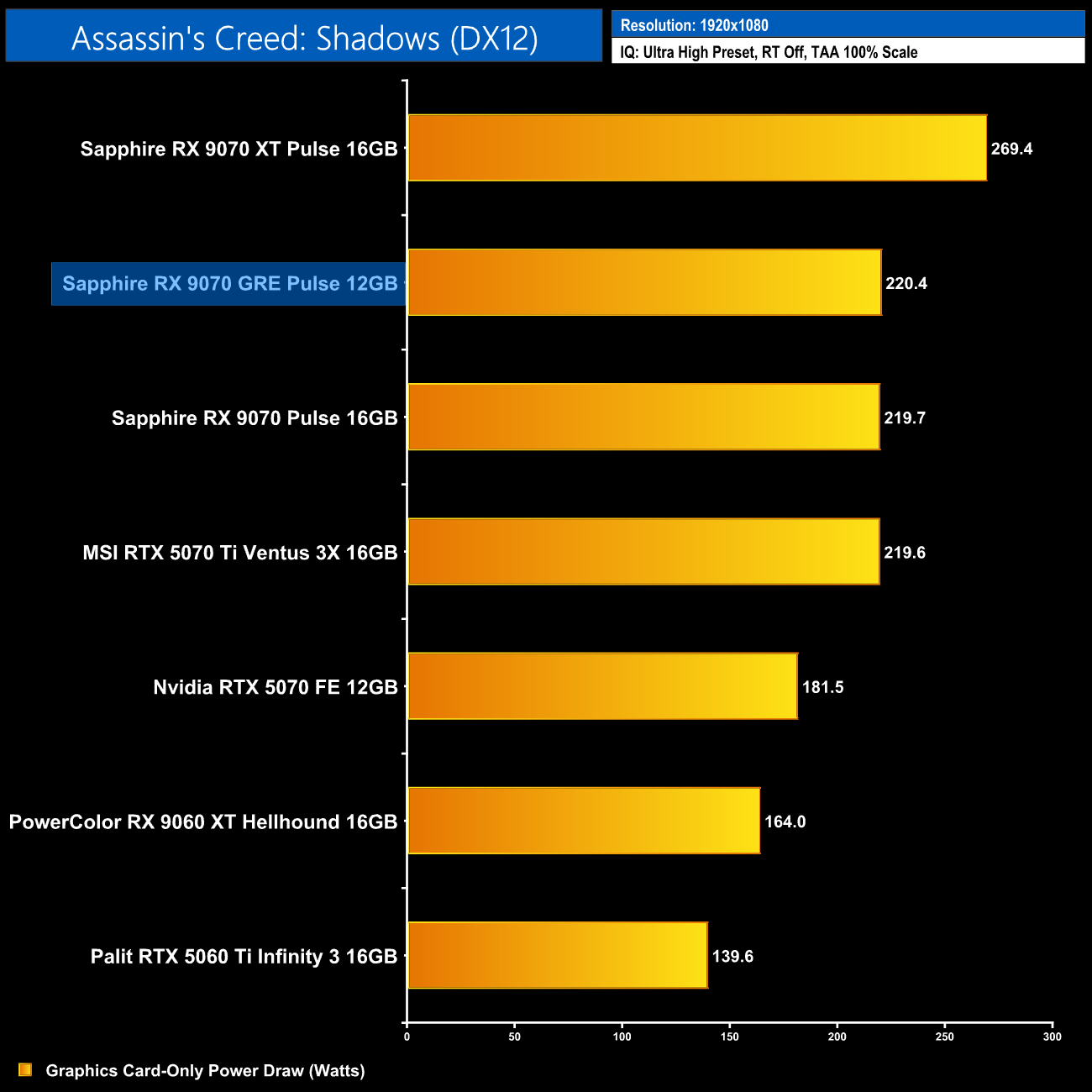
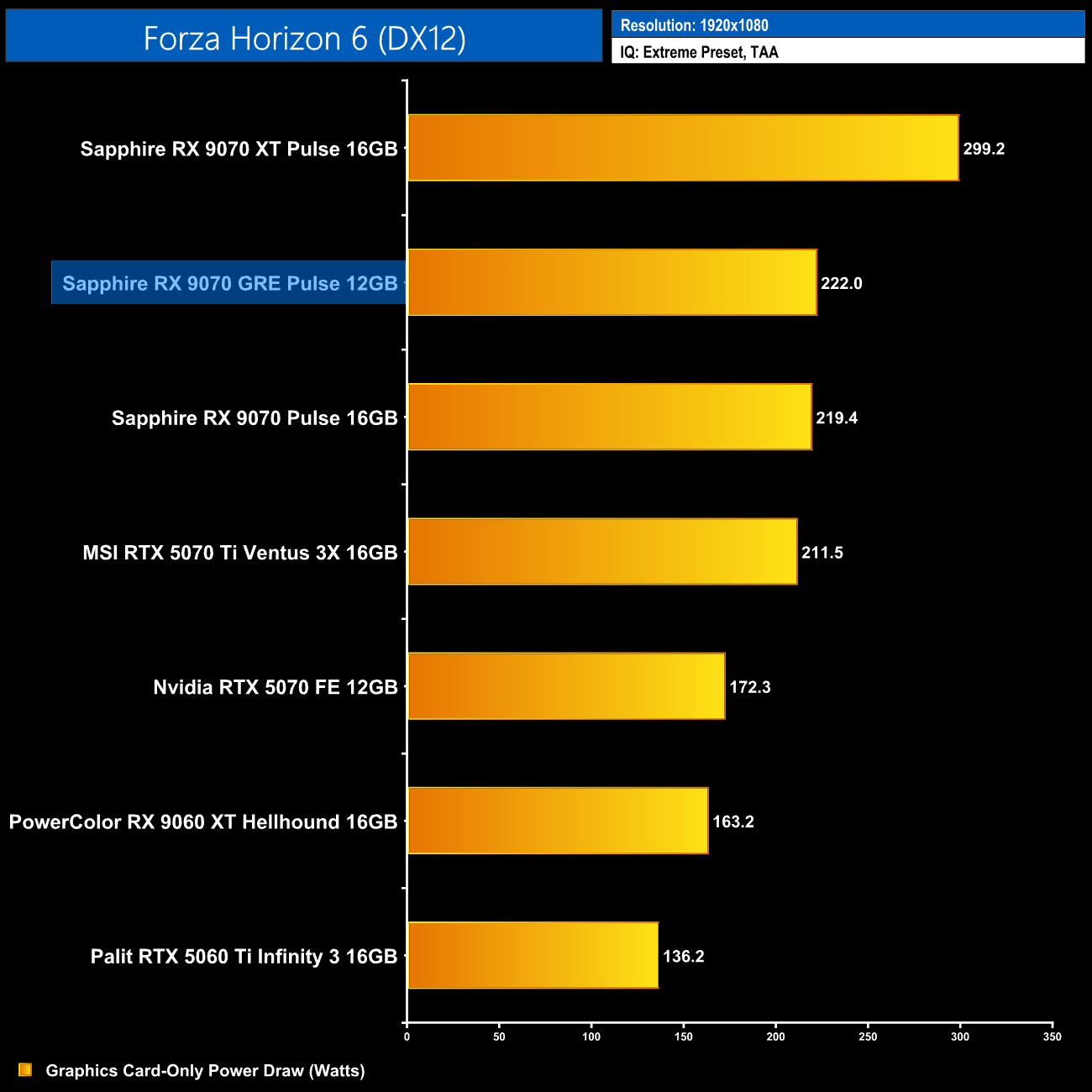
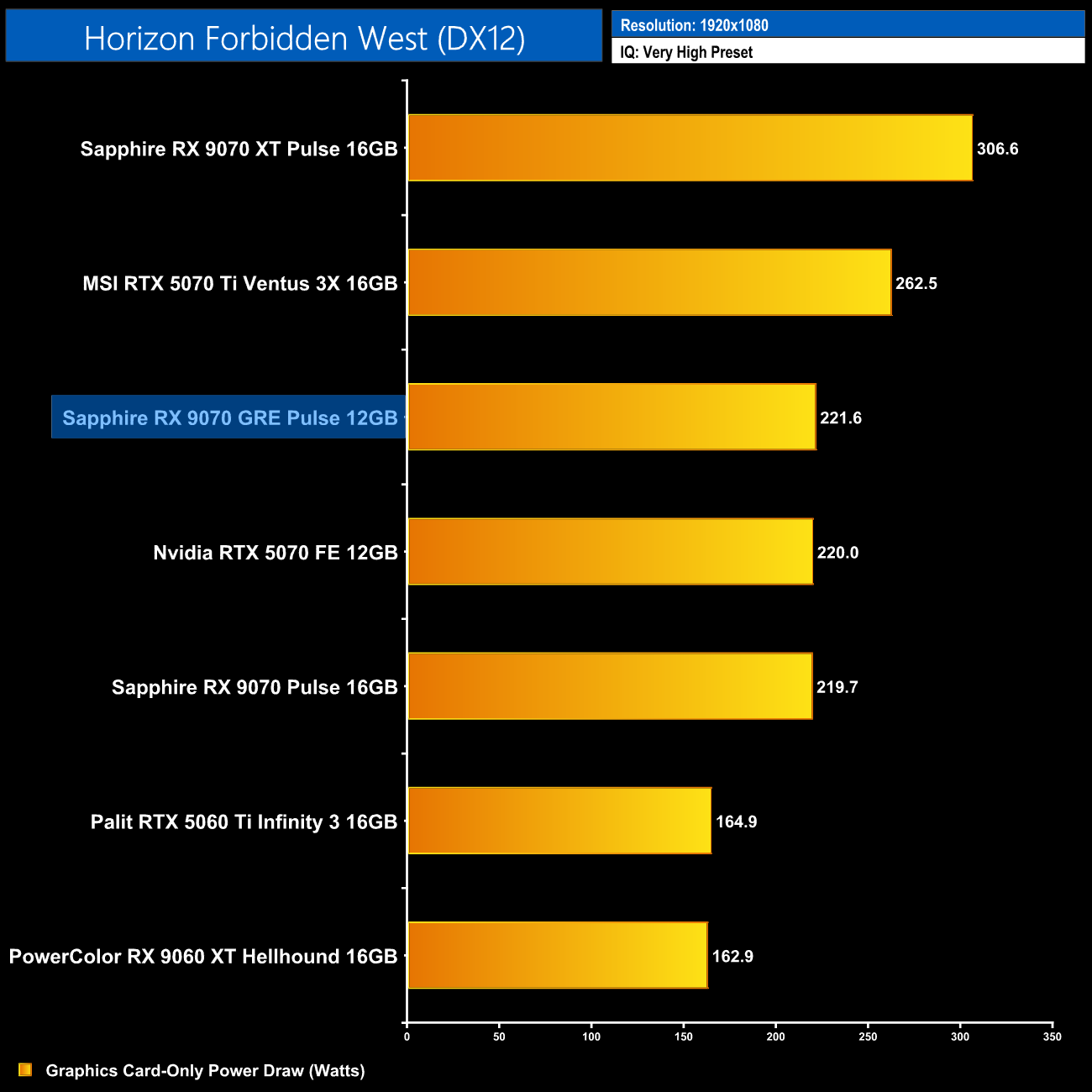
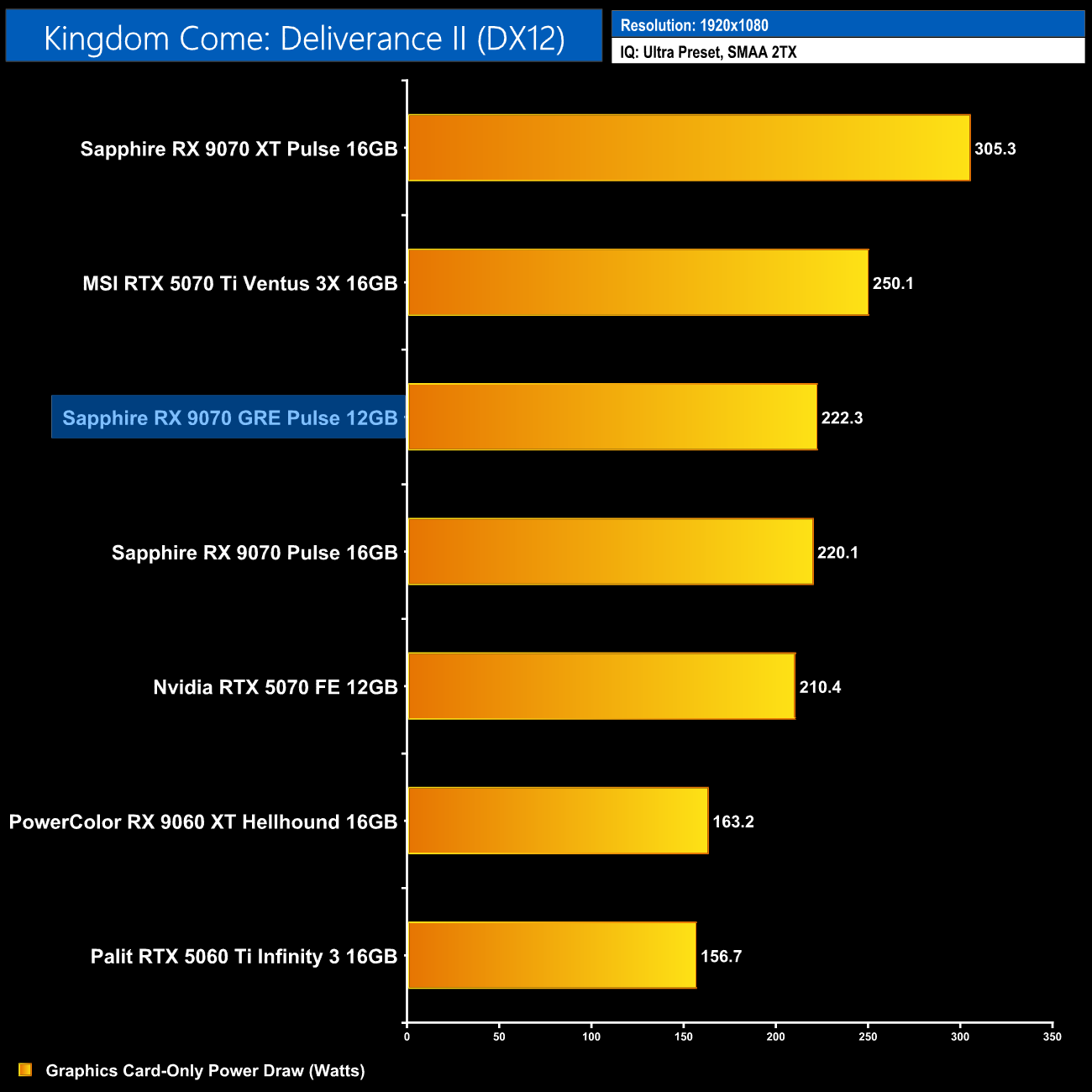
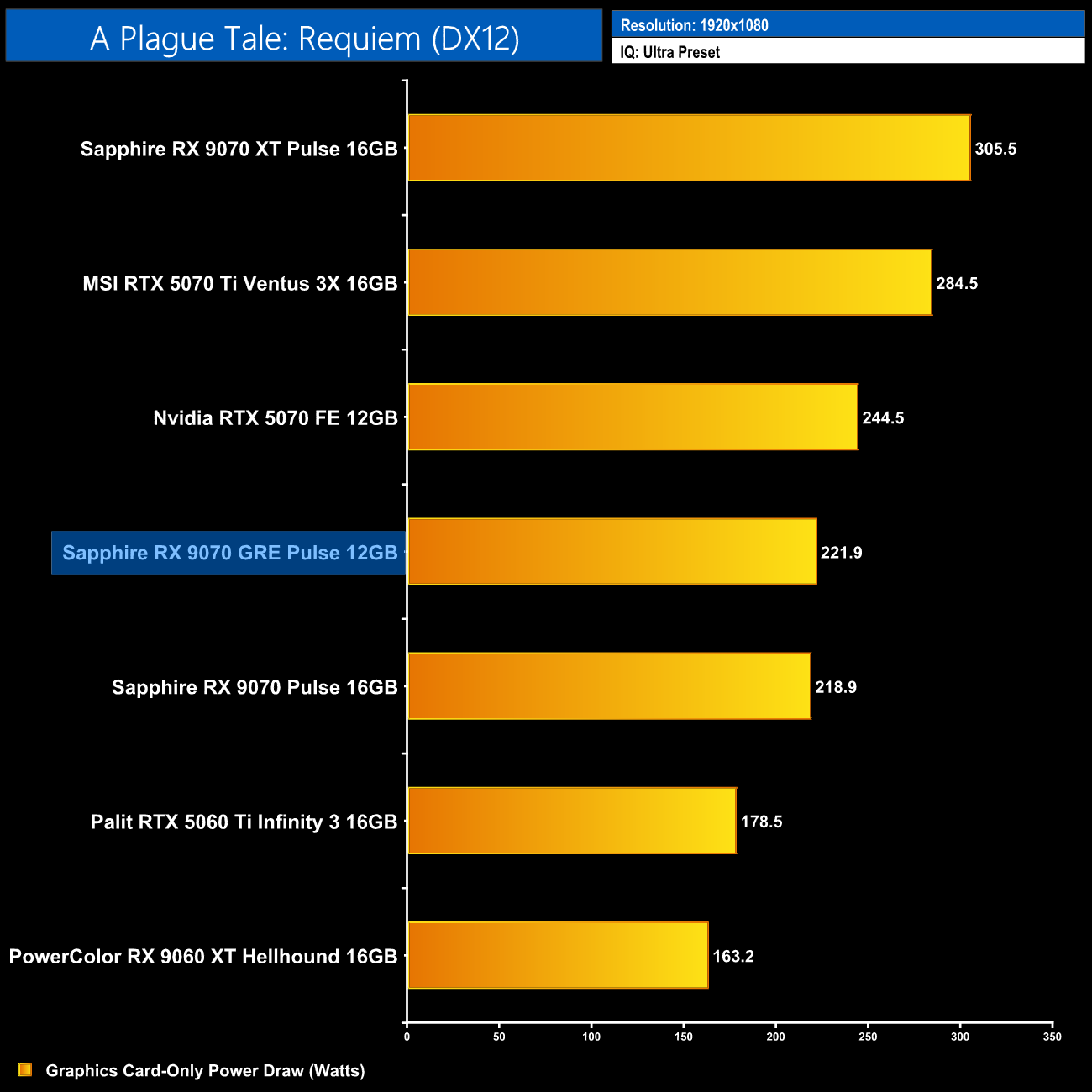
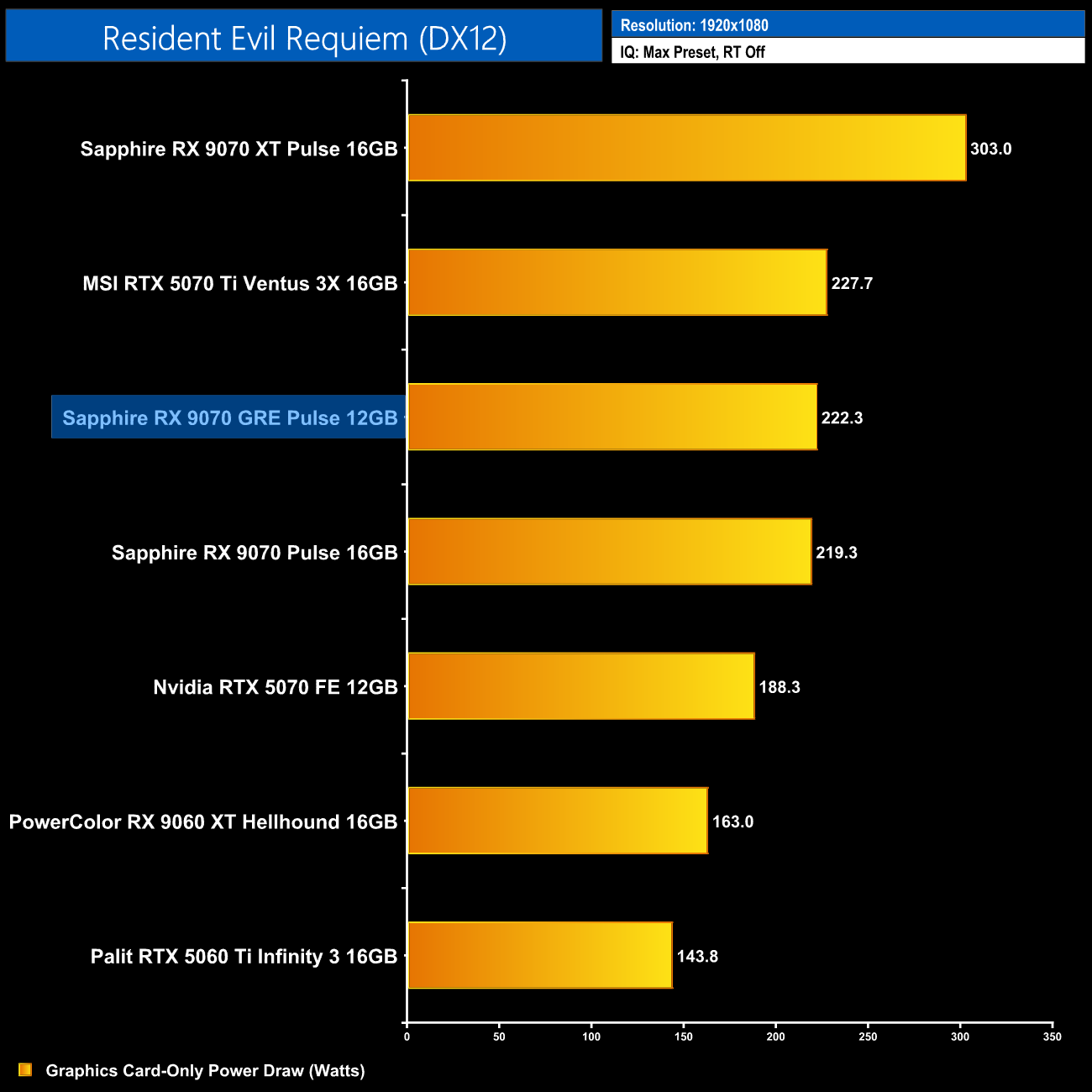
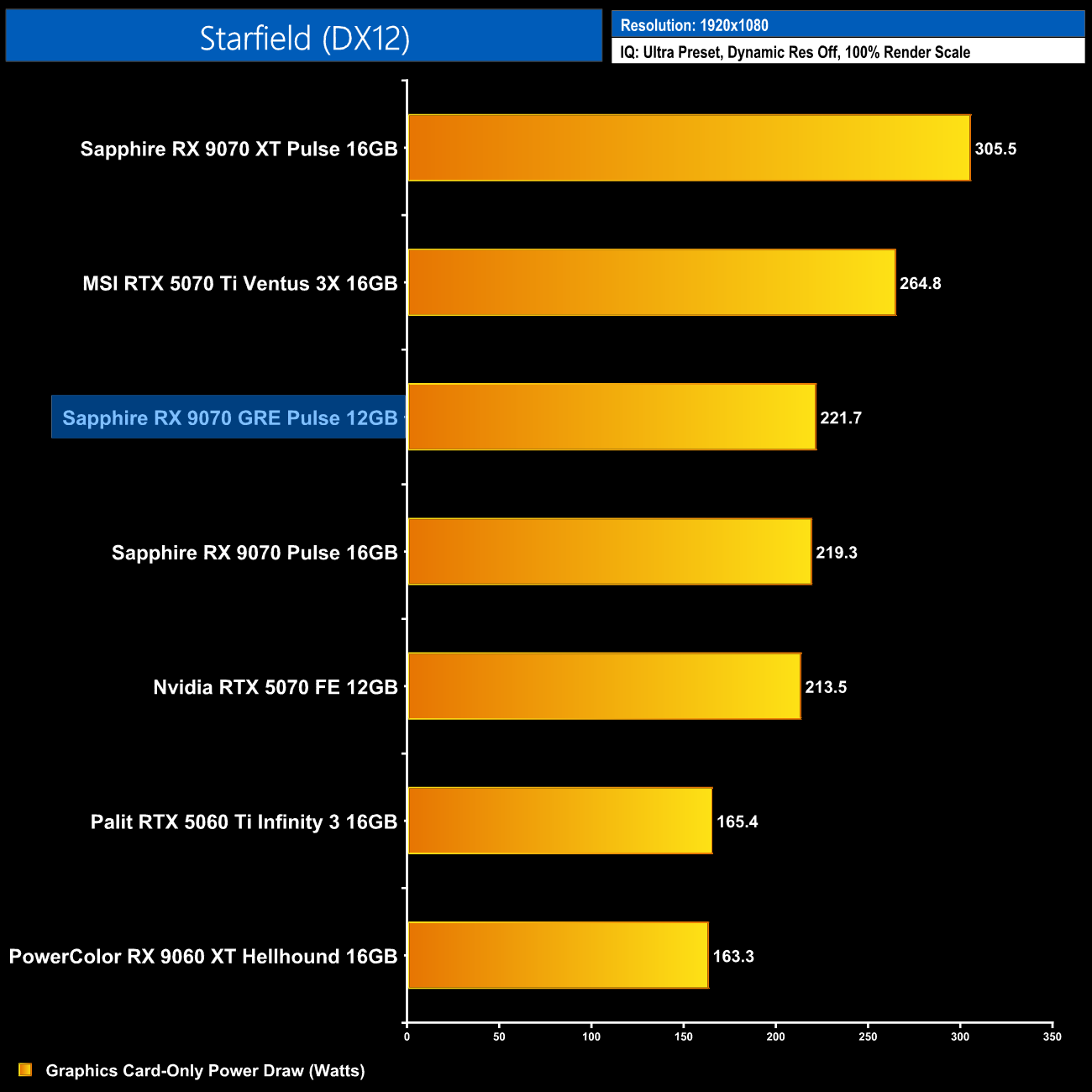
Click to enlarge.
12-Game Average at 1080p:
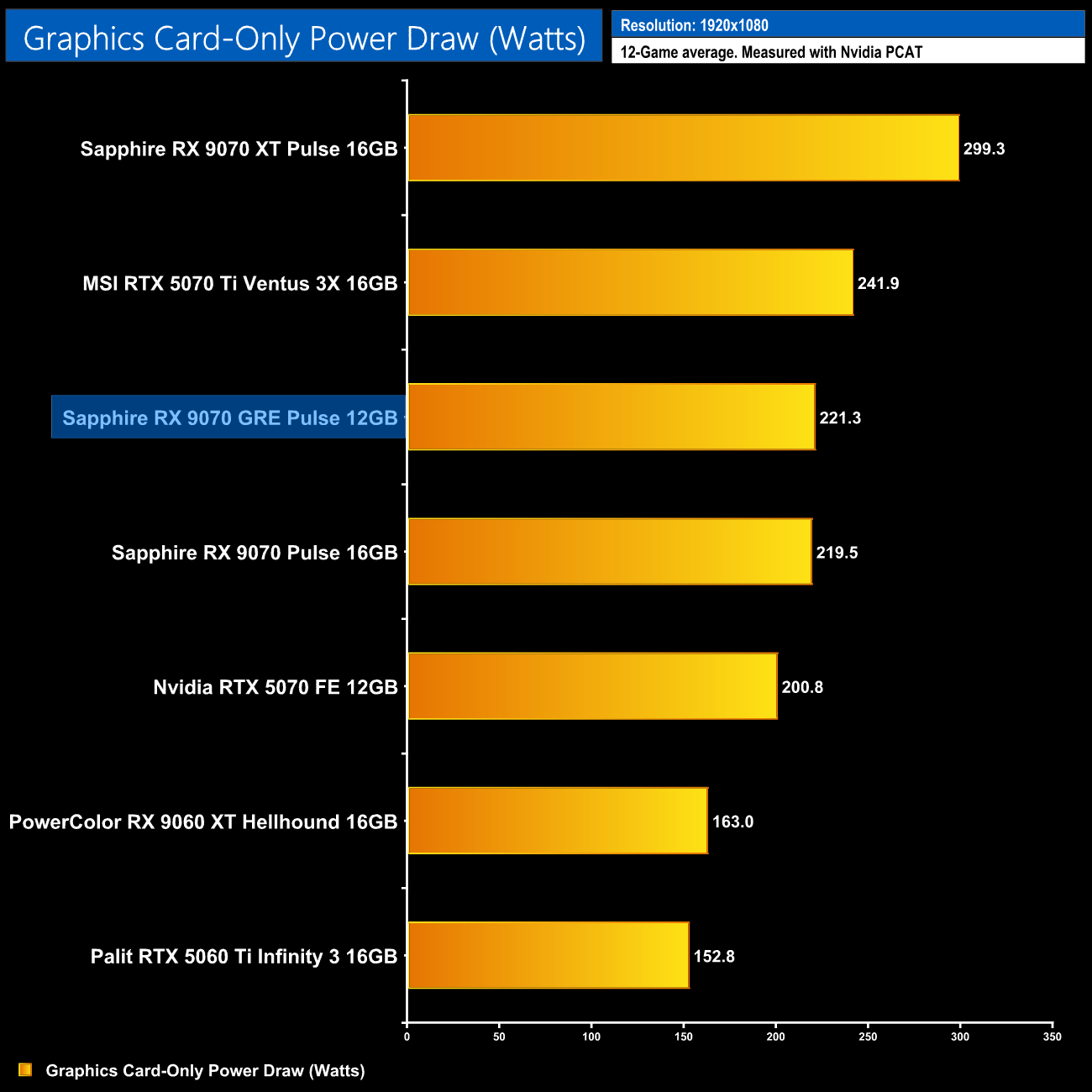
Power draw is pretty locked at the 220W rating, given we averaged 221.3W over the 12 games tested.
Ray tracing results
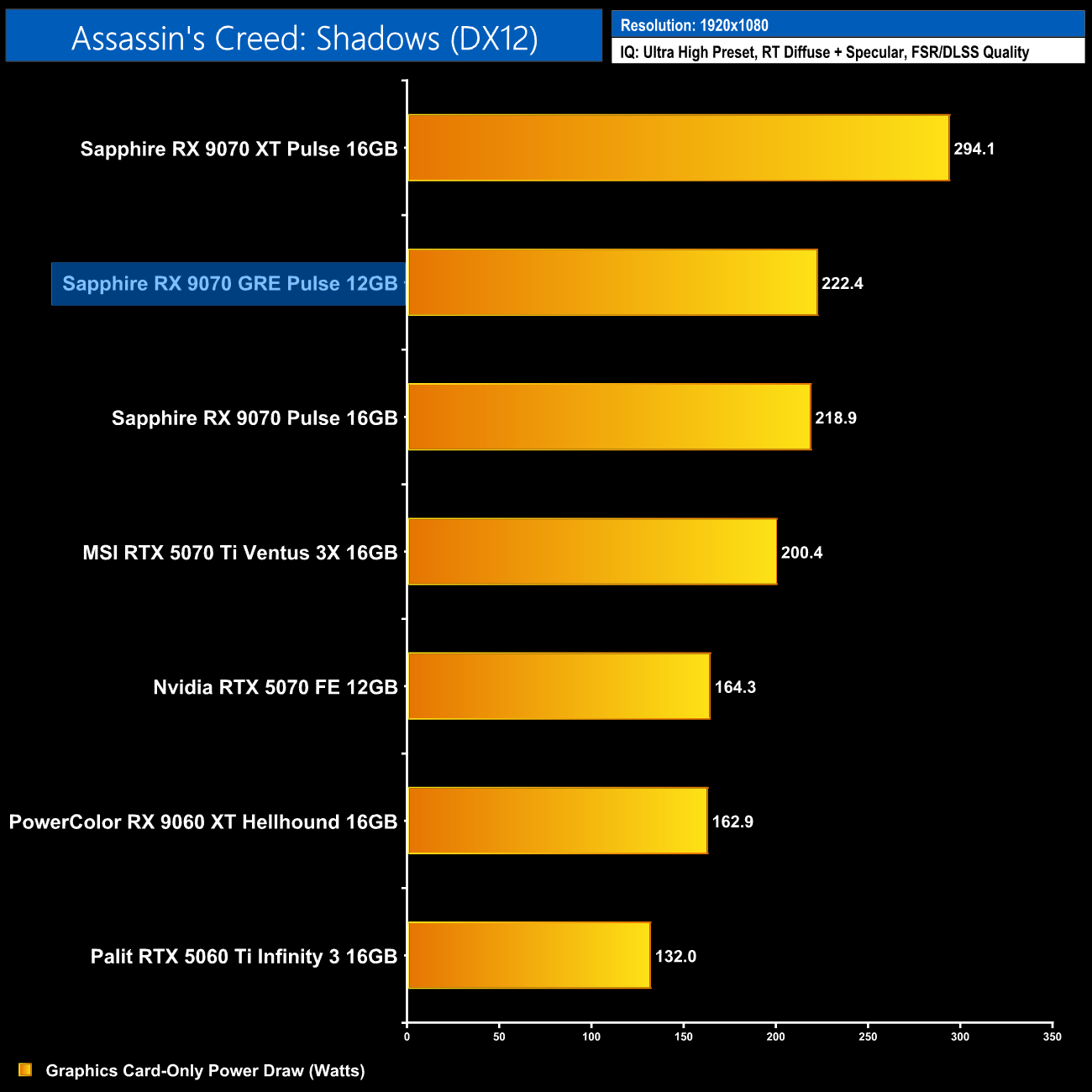
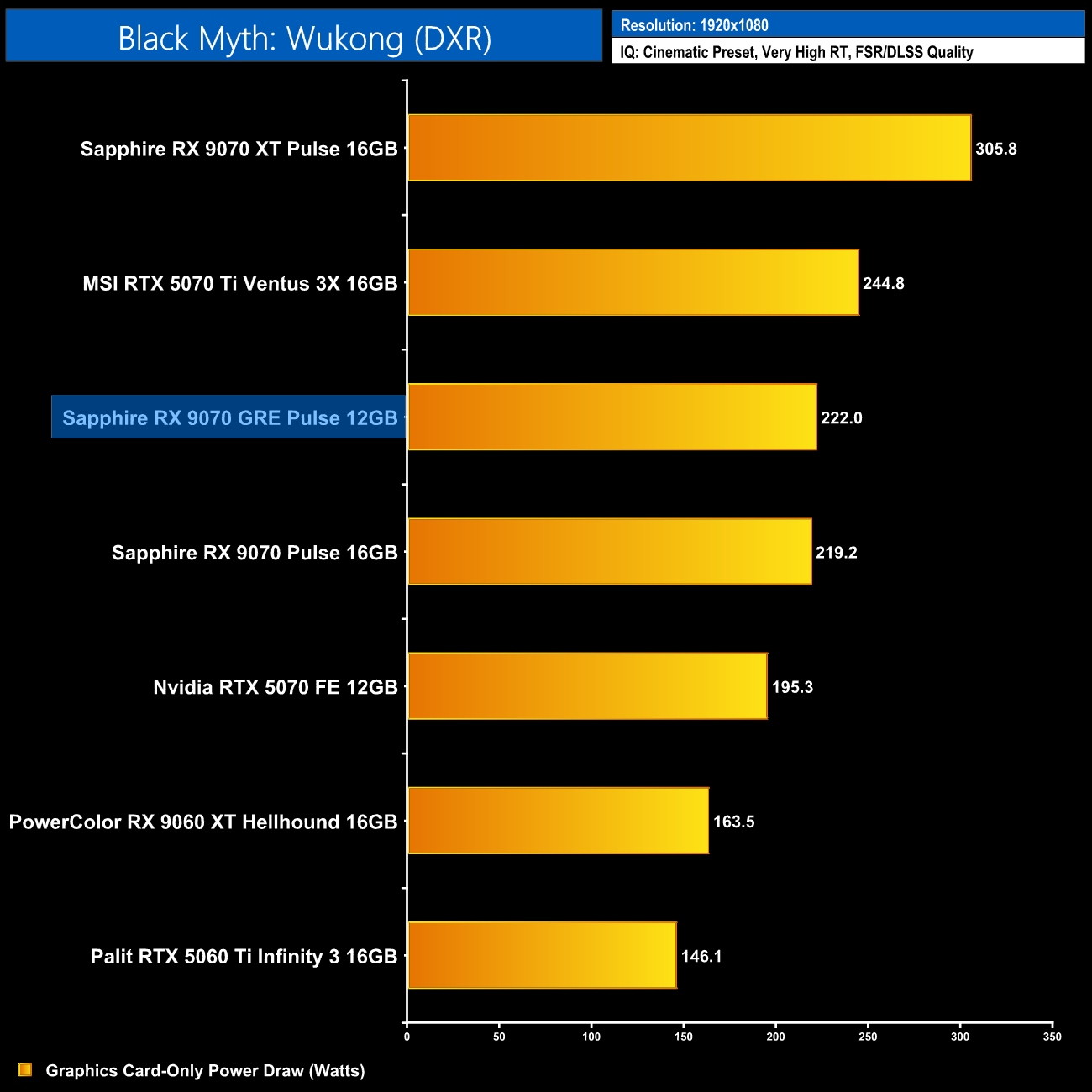
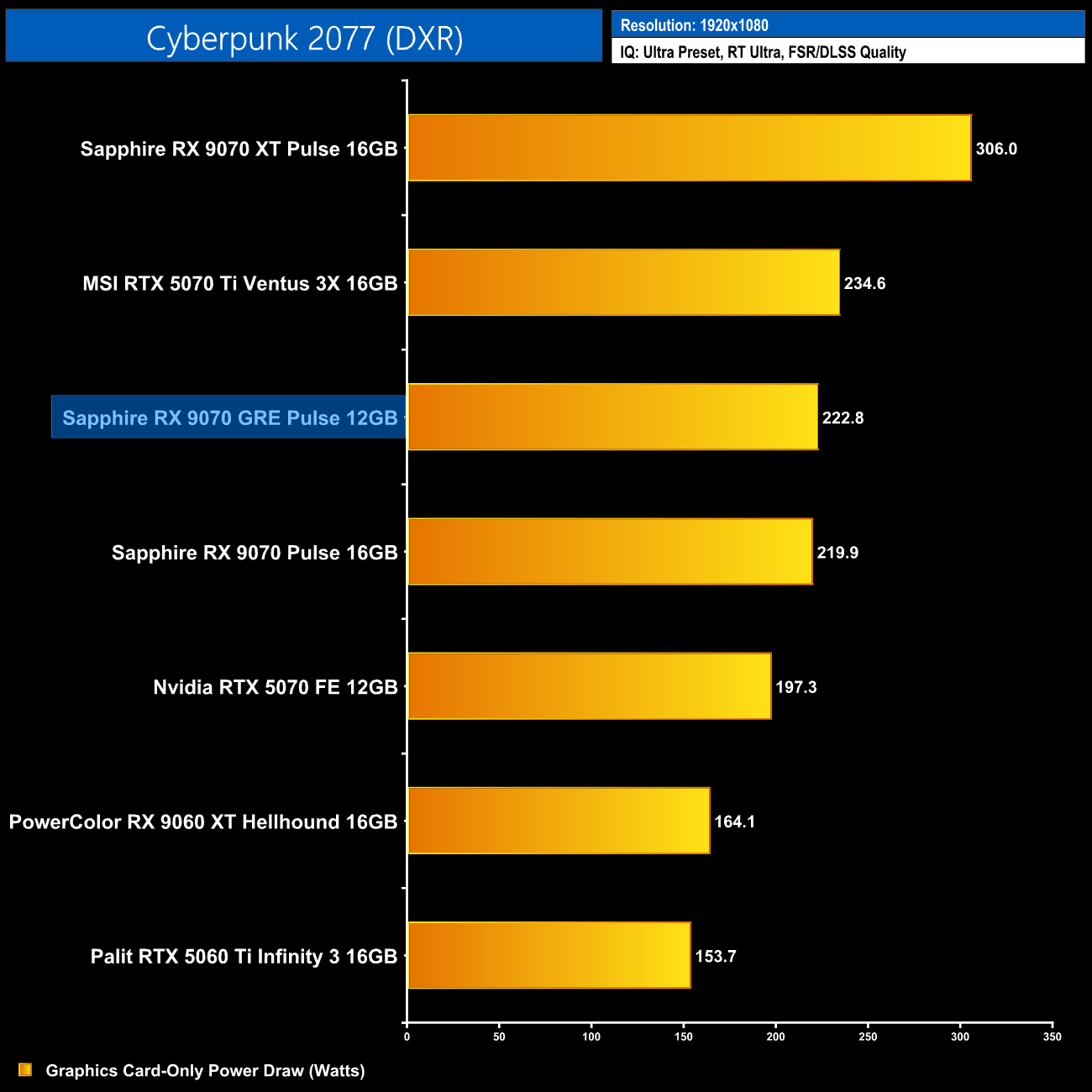
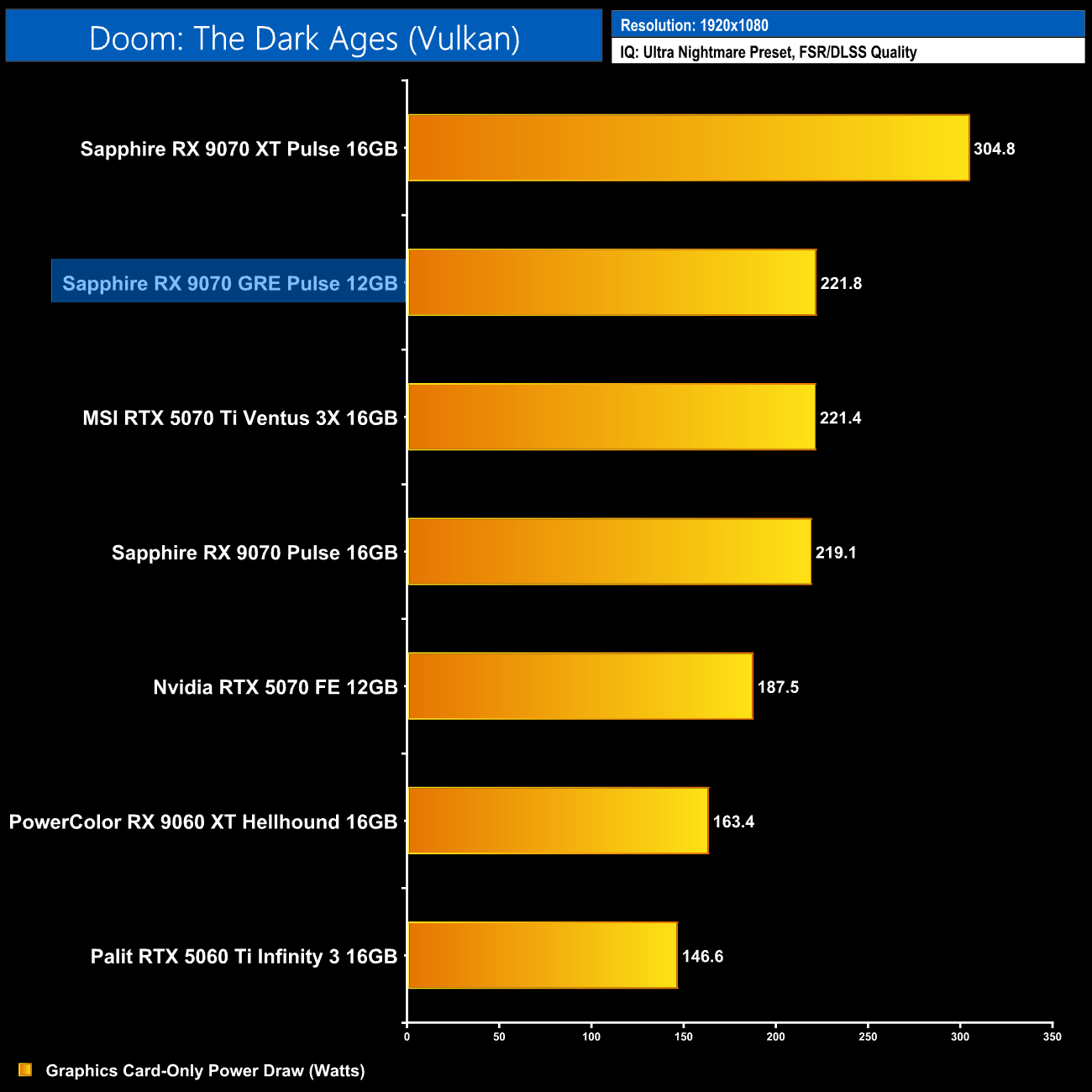
As a bonus, we now include the power figures for all eight games we test with ray tracing enabled.
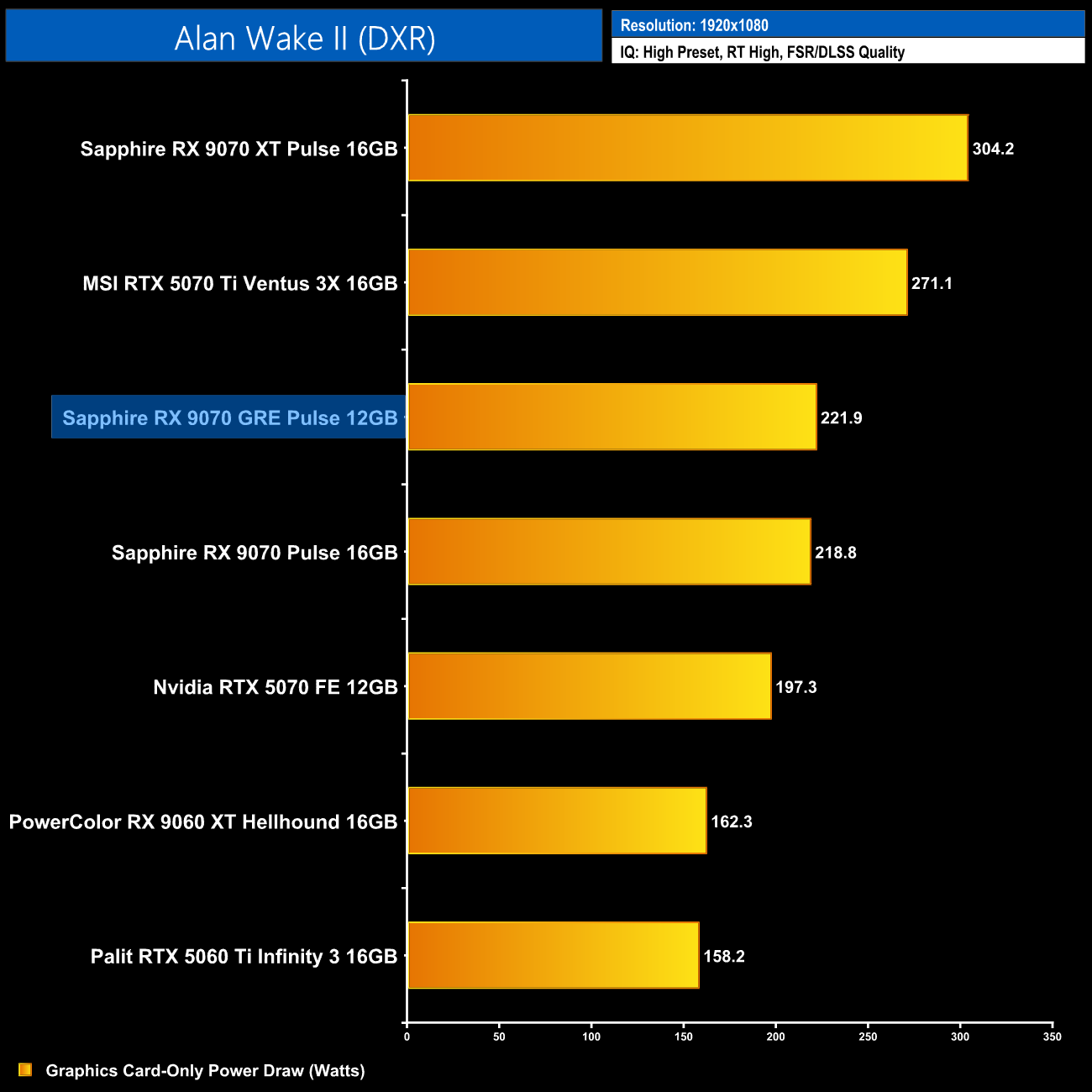
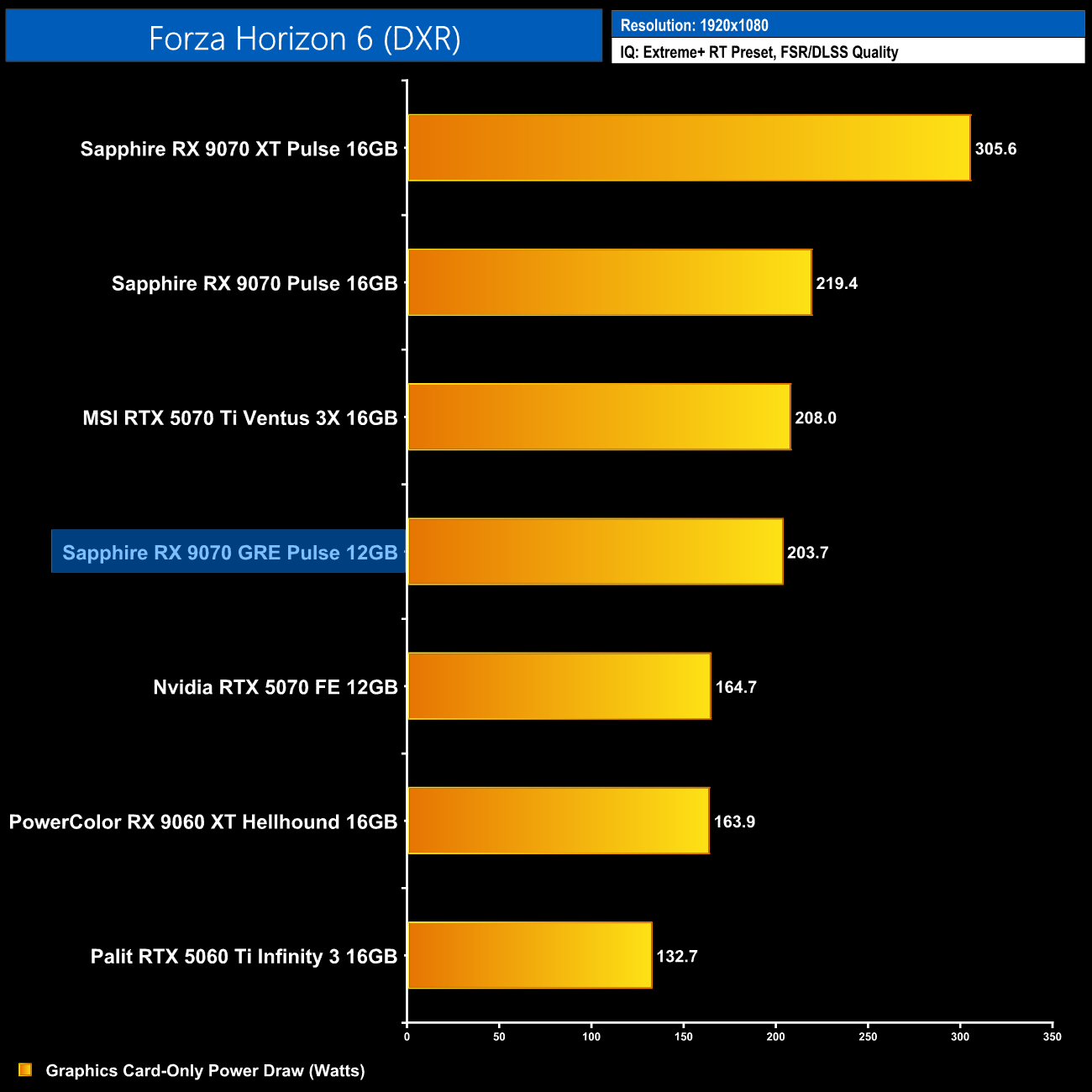
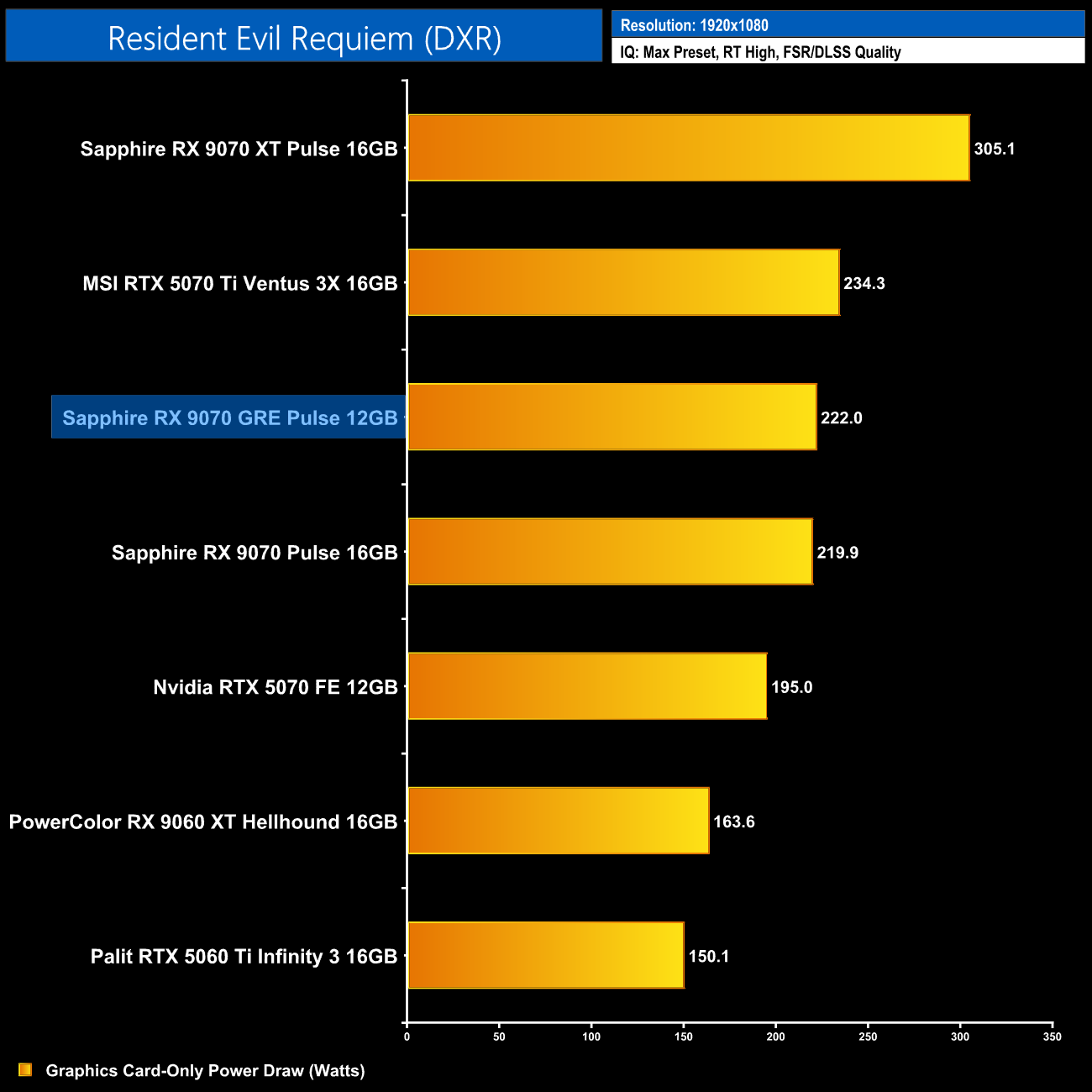
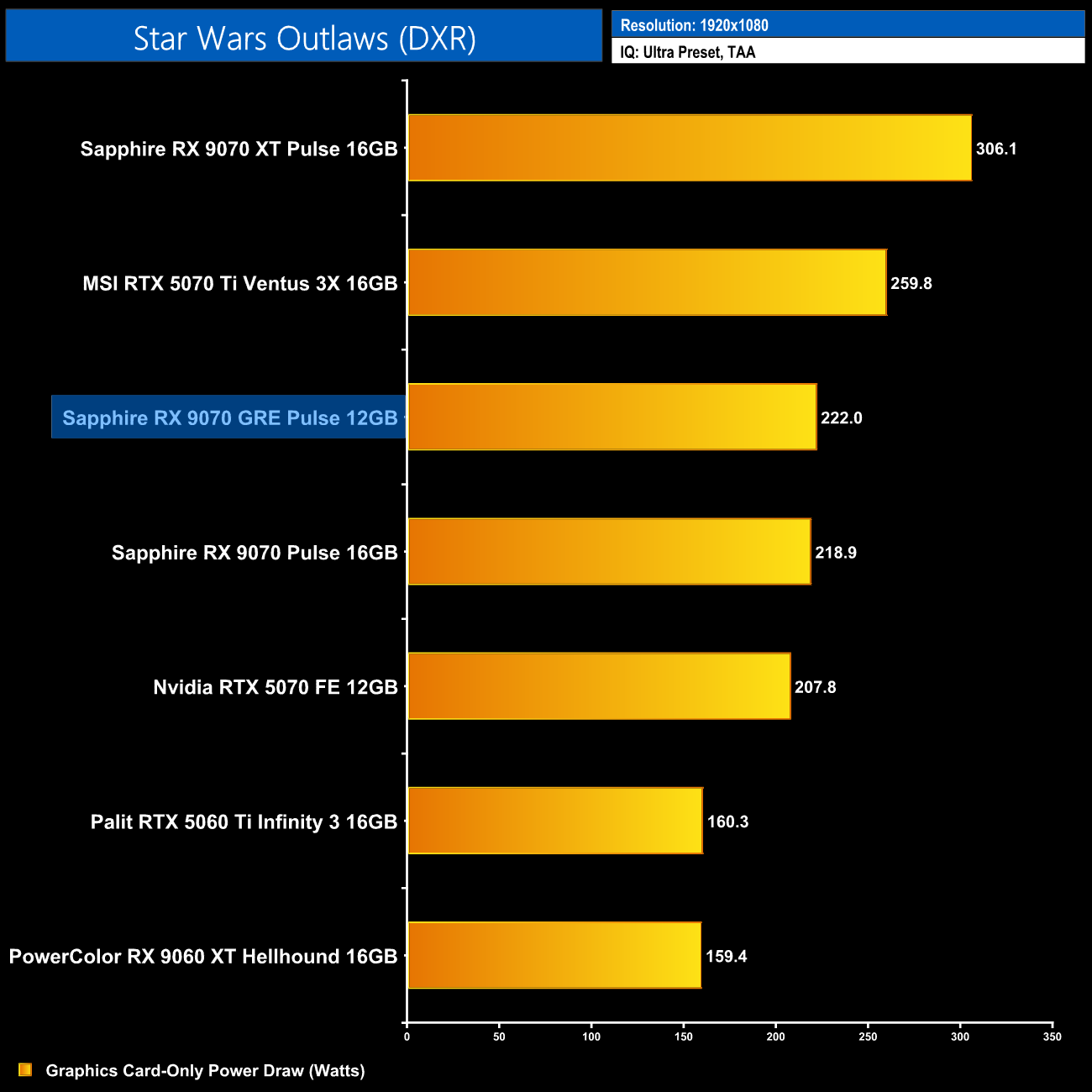
8-Game ray tracing average:
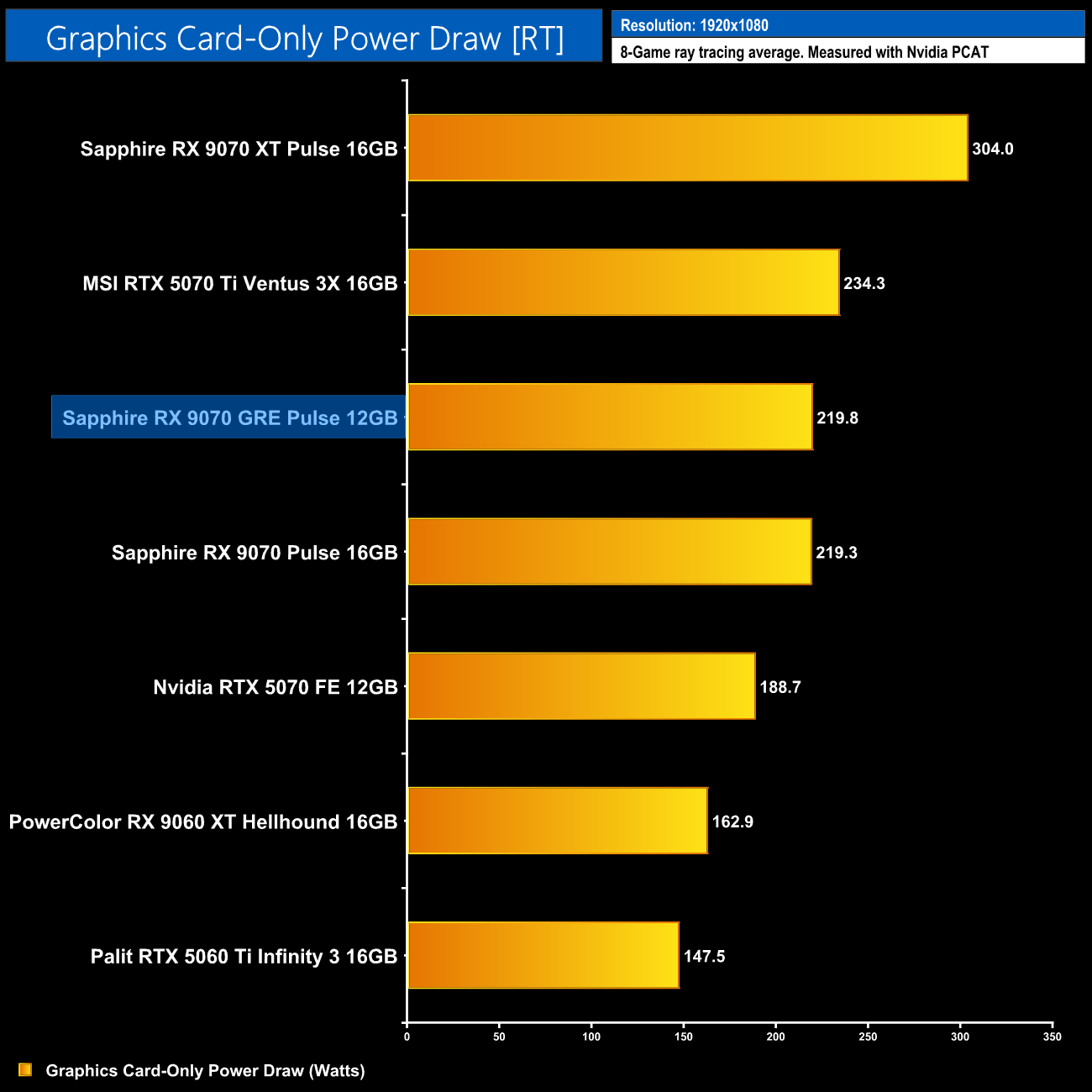
For 1080p ray tracing results, we averaged 219.8W.
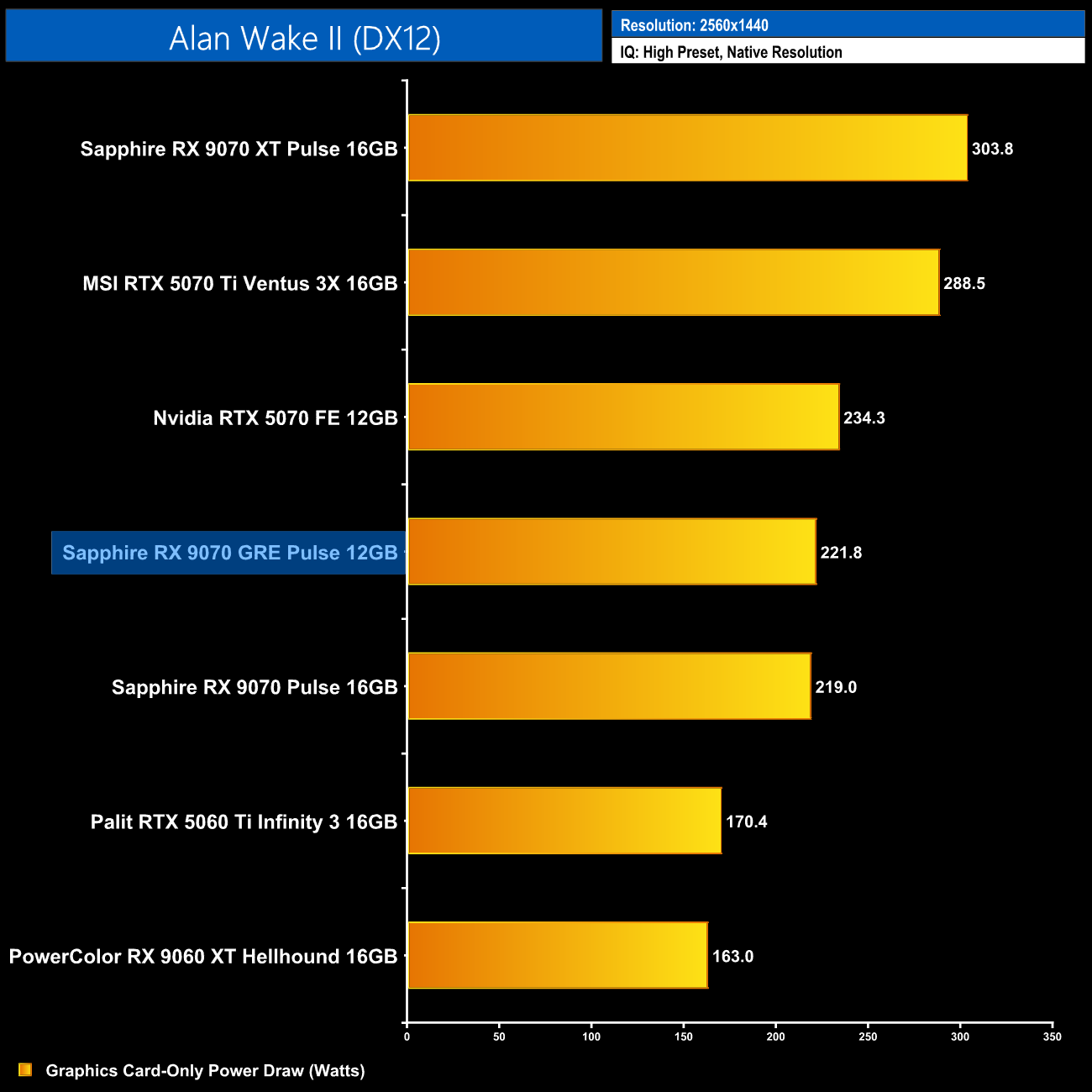
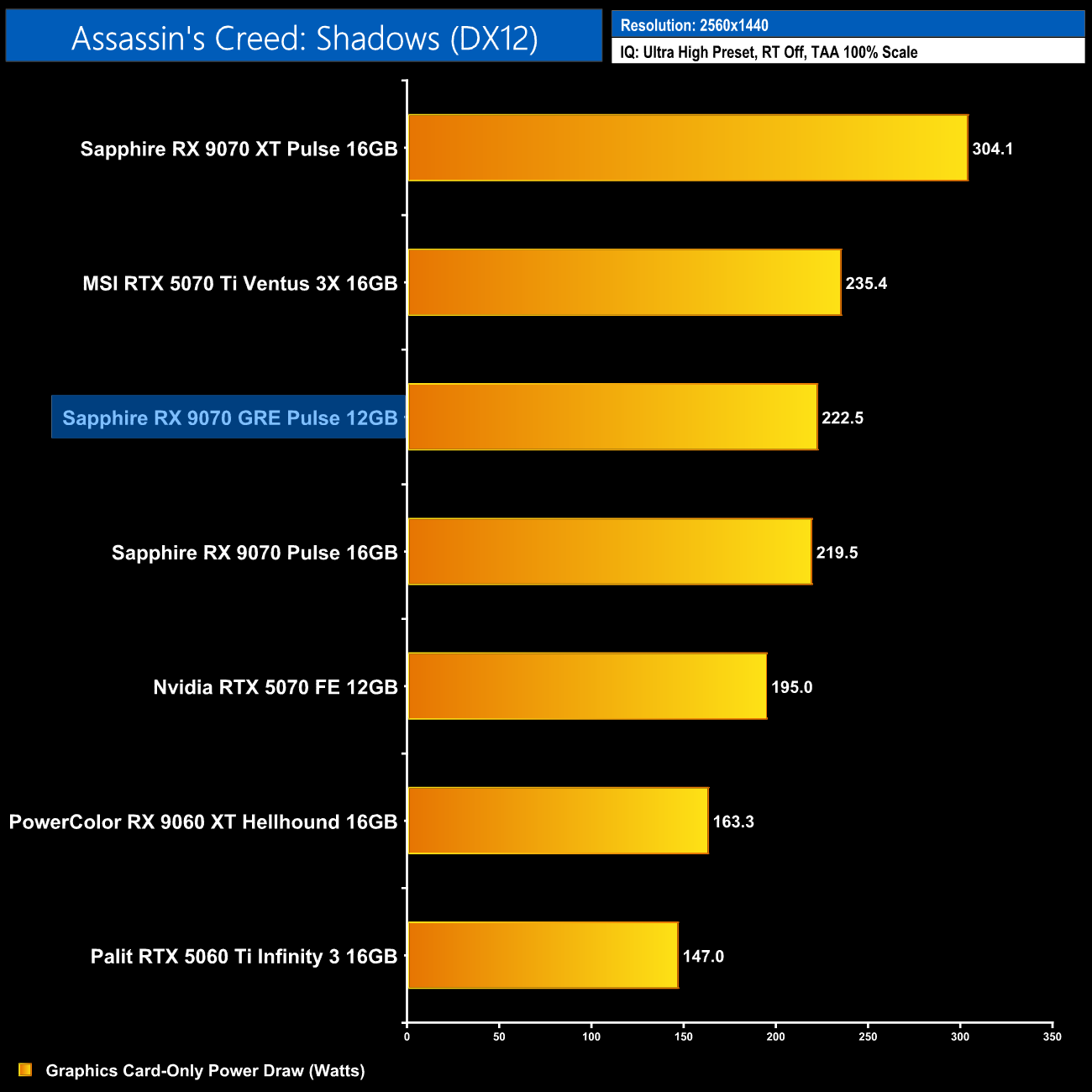
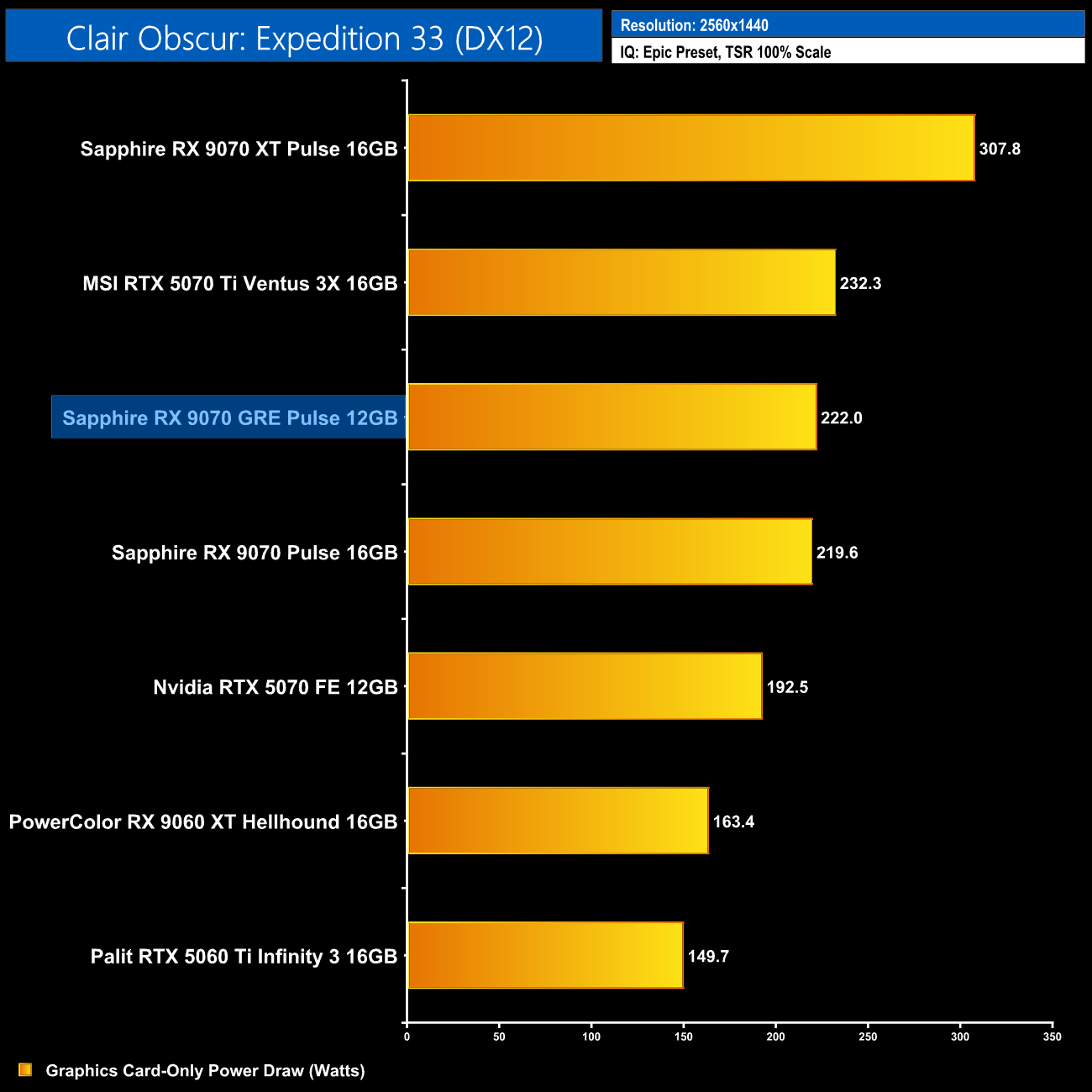
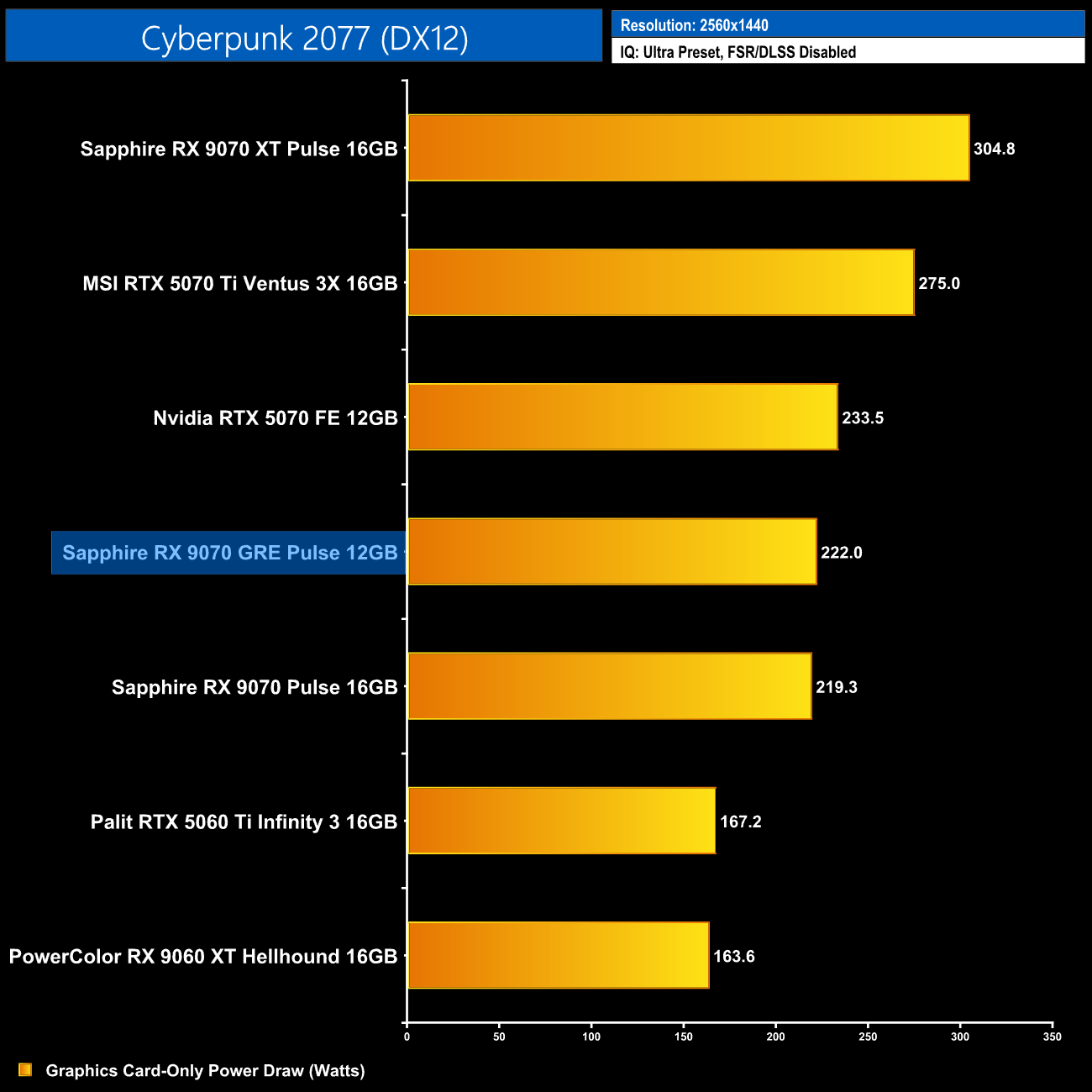
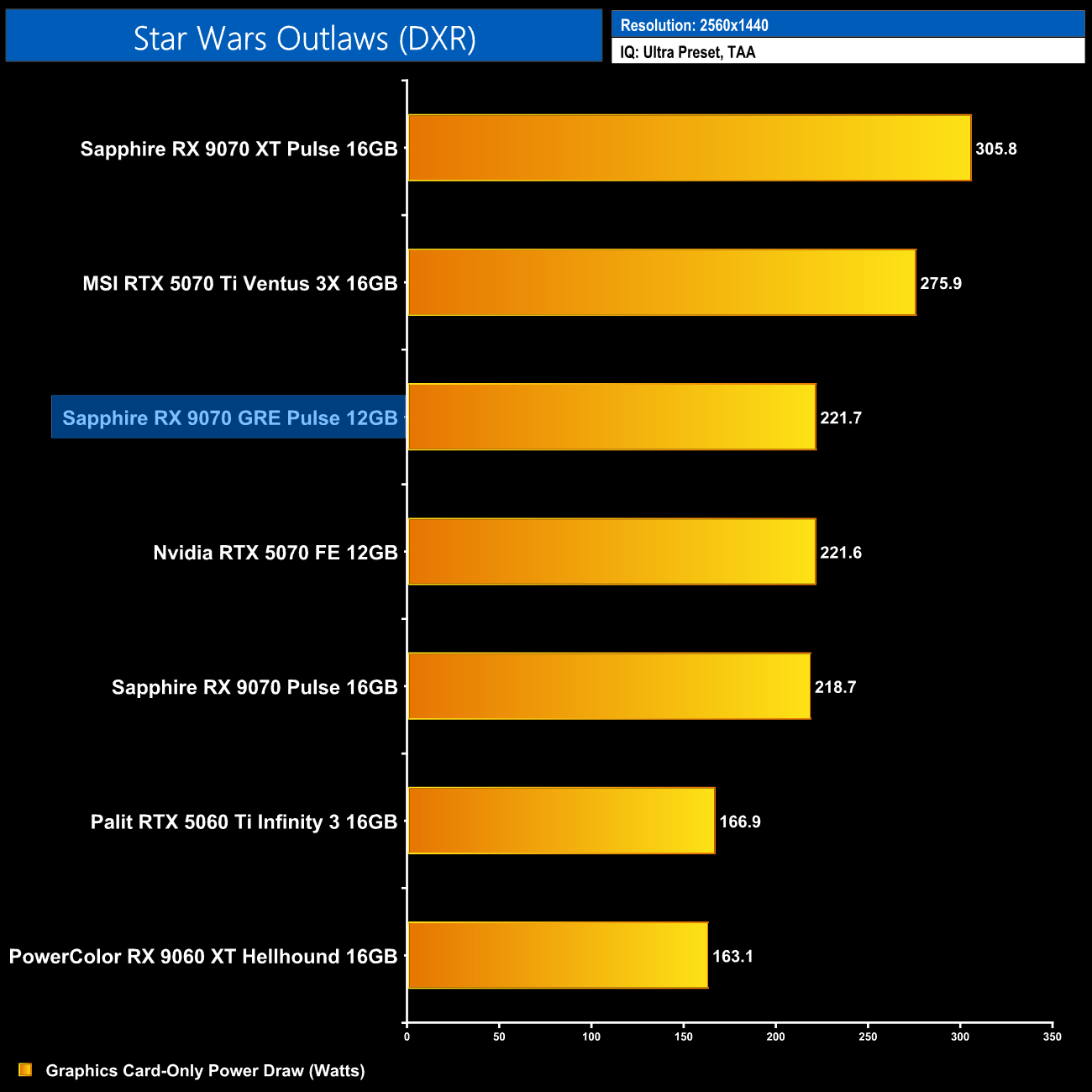
Here we present power draw figures for the graphics card-only, on a per-game basis for all twelve games we tested at 1440p. This is measured using Nvidia's Power Capture Analysis Tool, also known as PCAT. You can read more about our updated power draw testing methodology HERE.
Per-Game Results at 1440p:
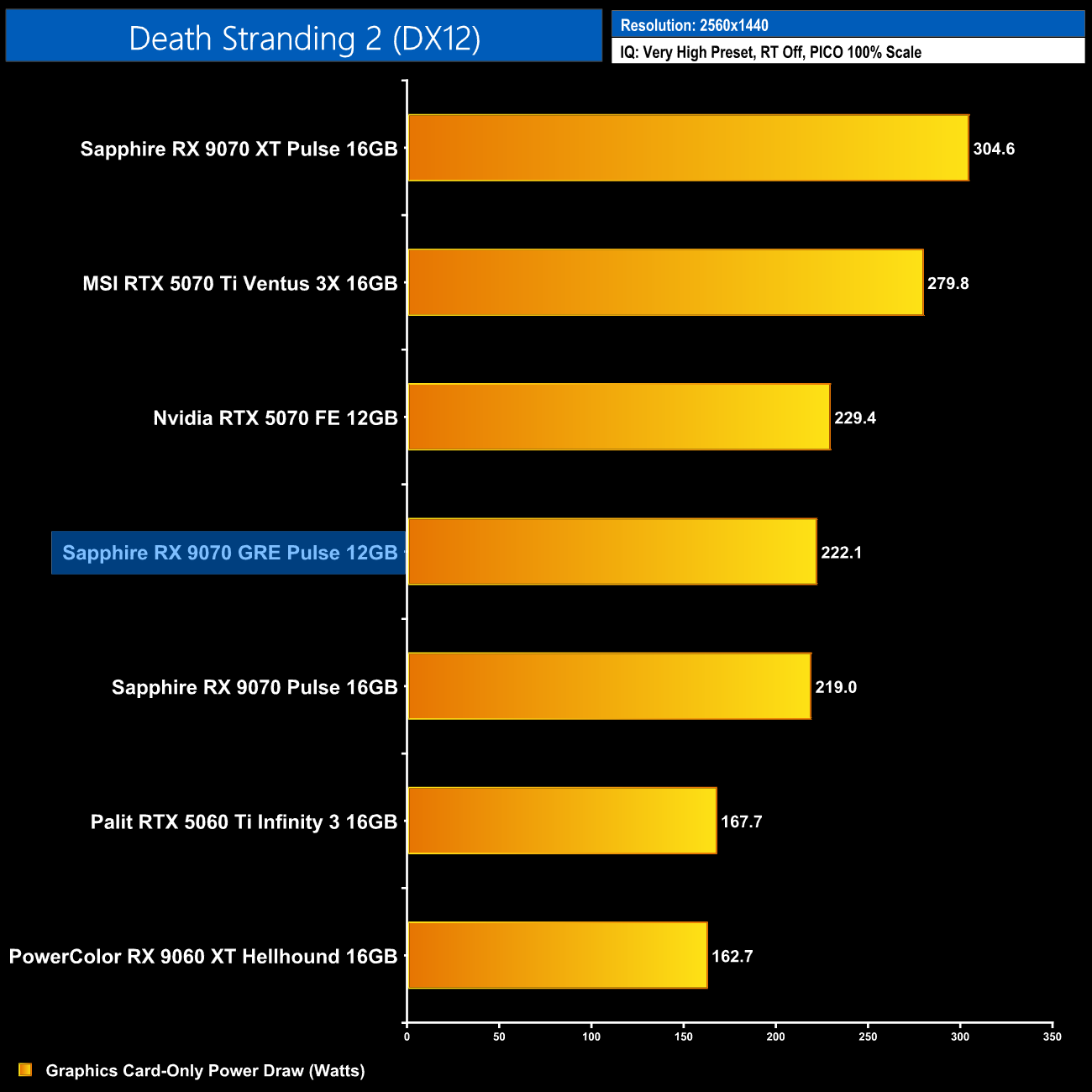
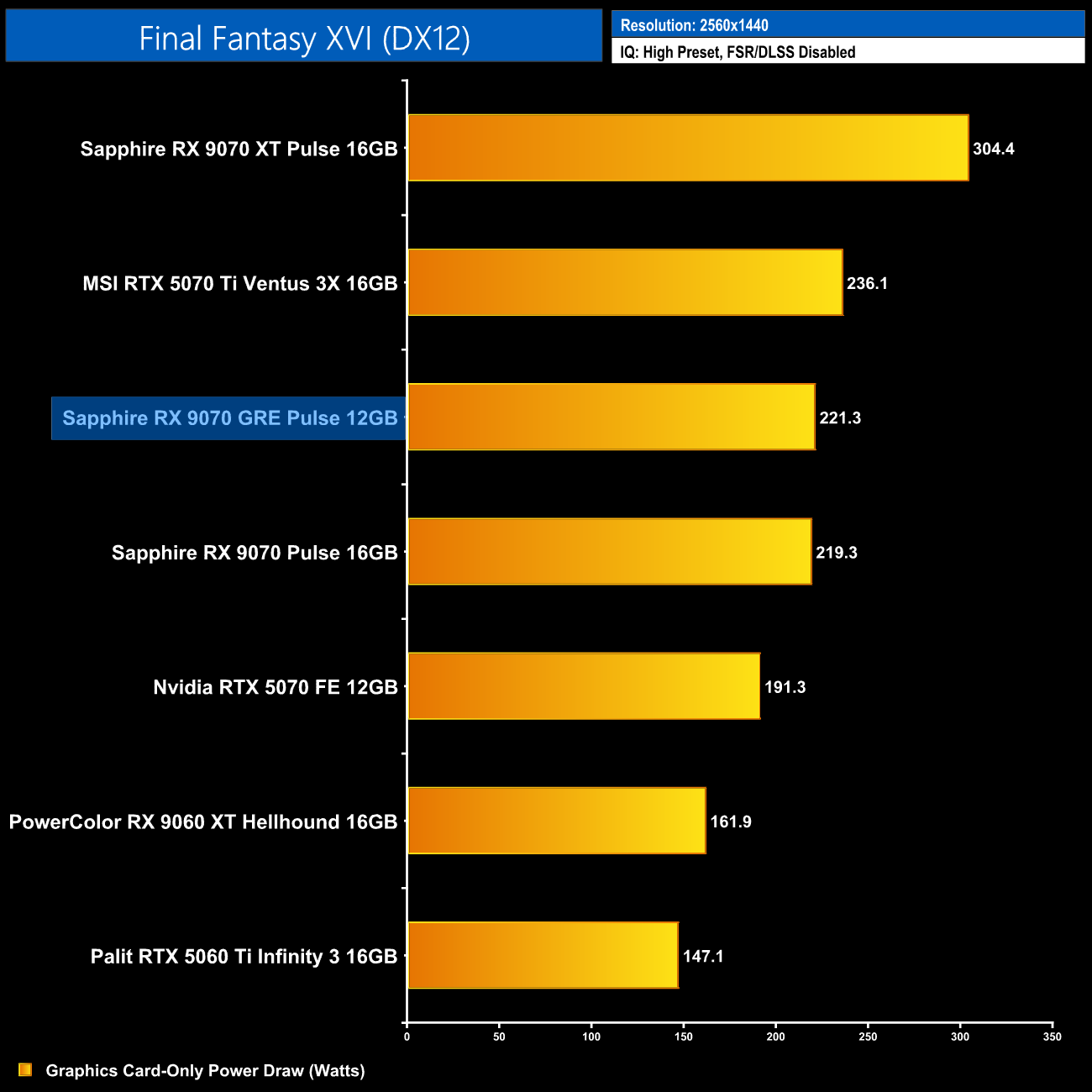
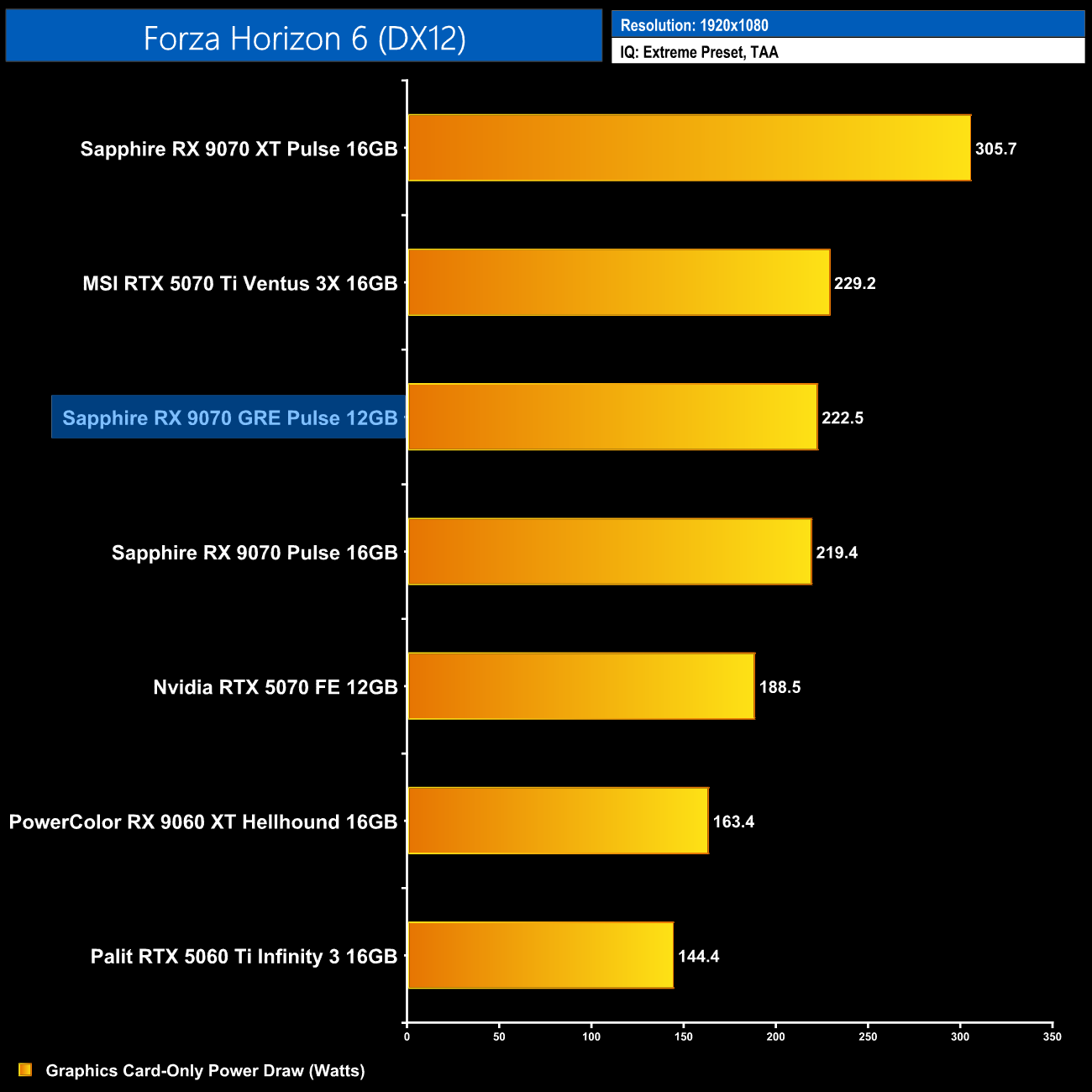
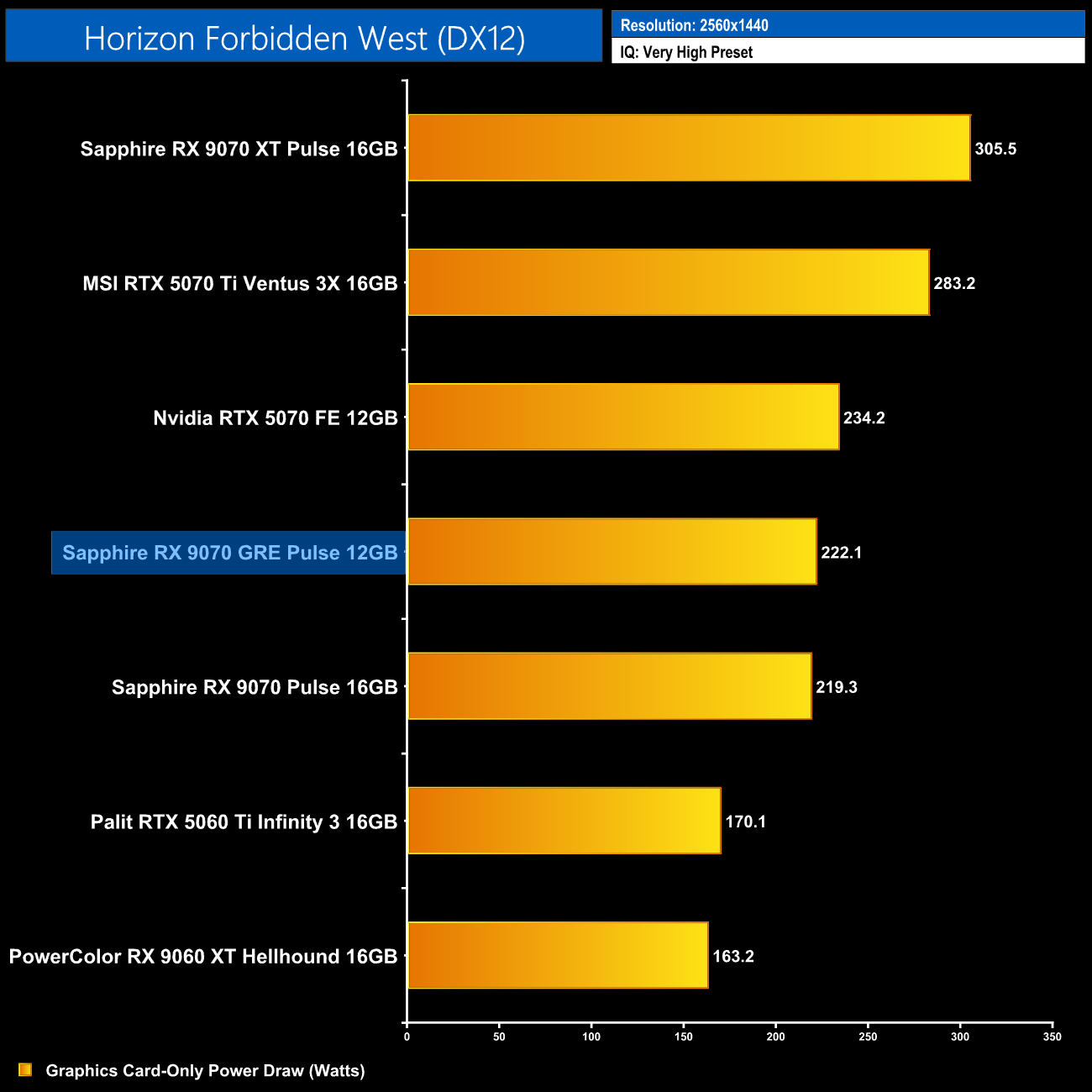
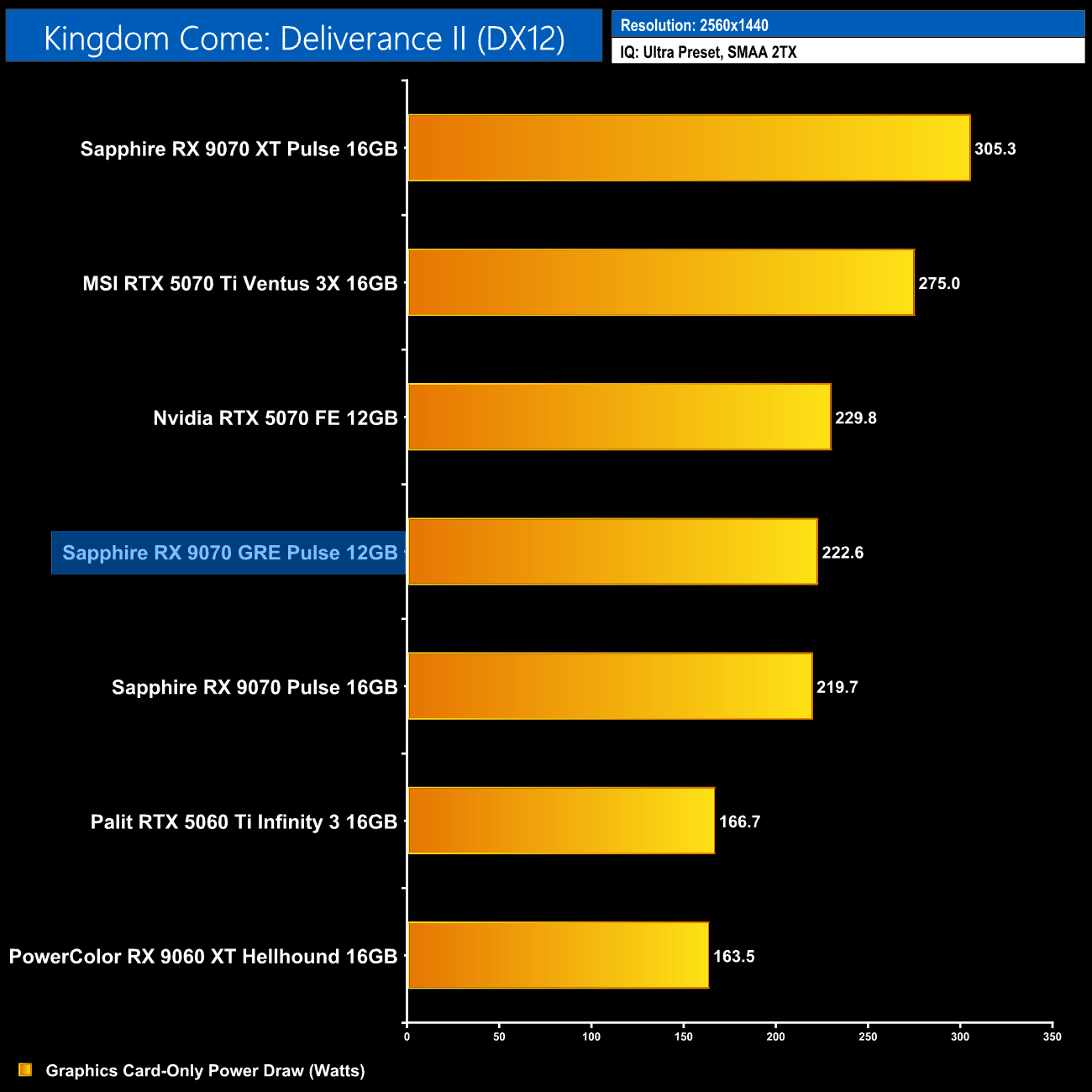
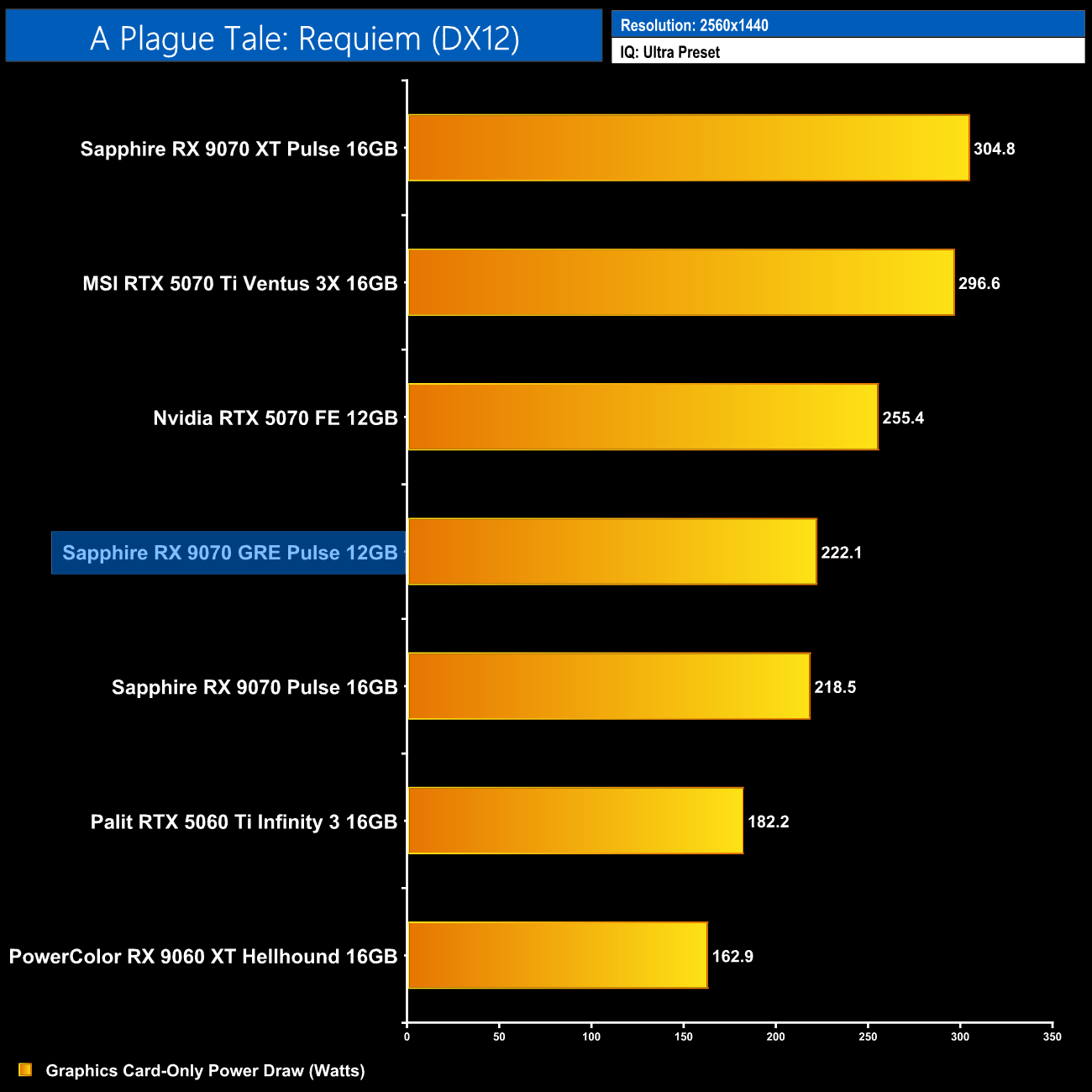
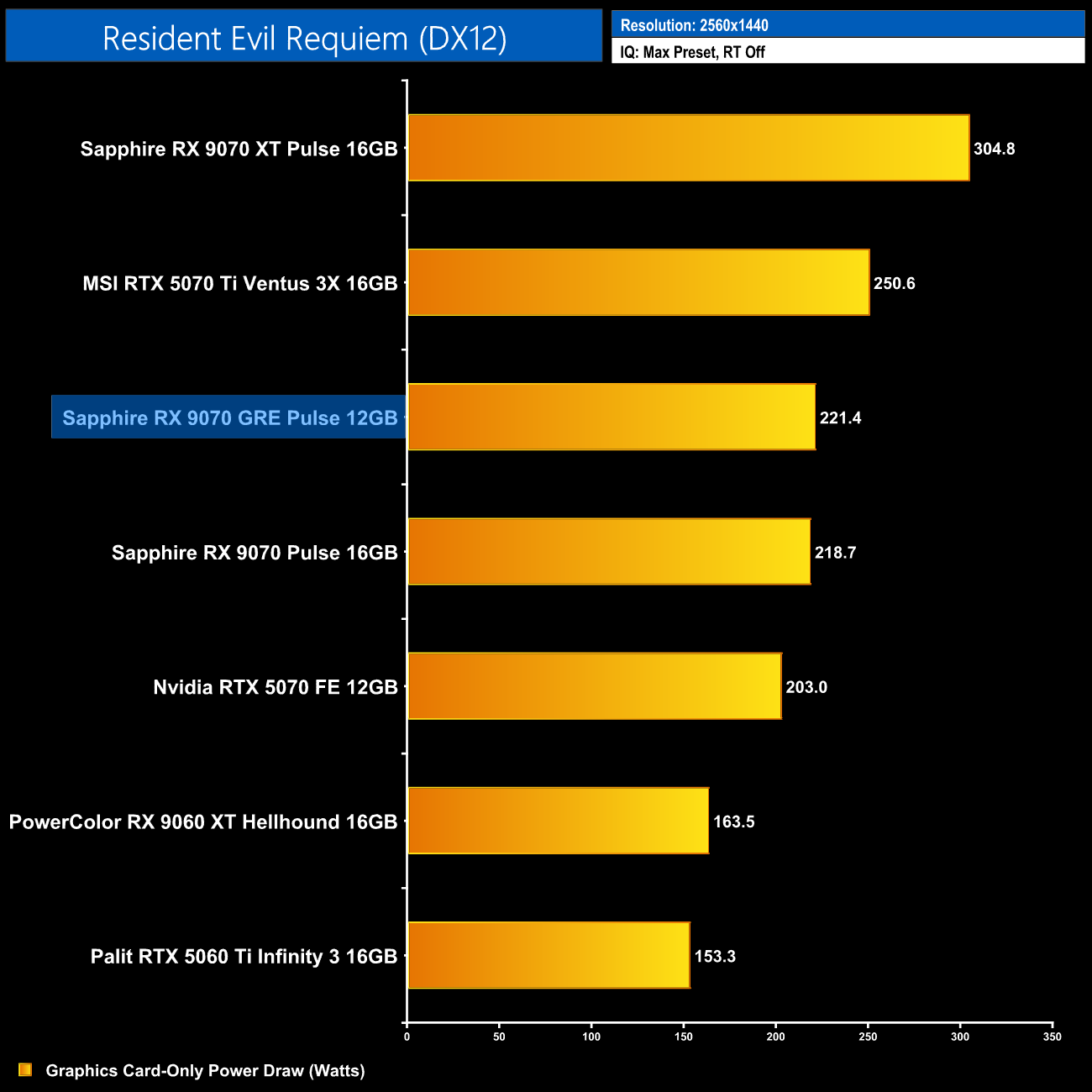
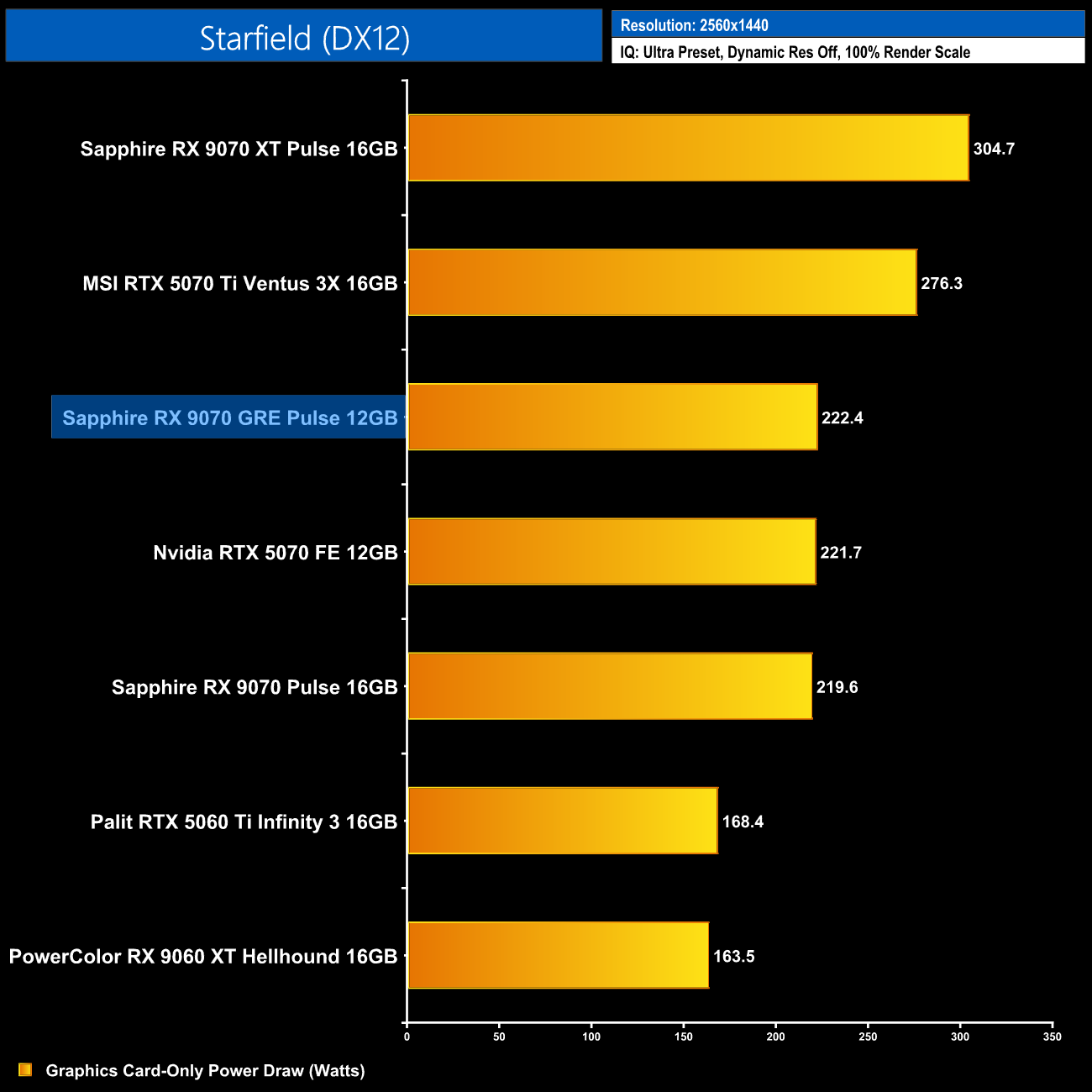
Click to enlarge.
12-Game Average at 1440p:
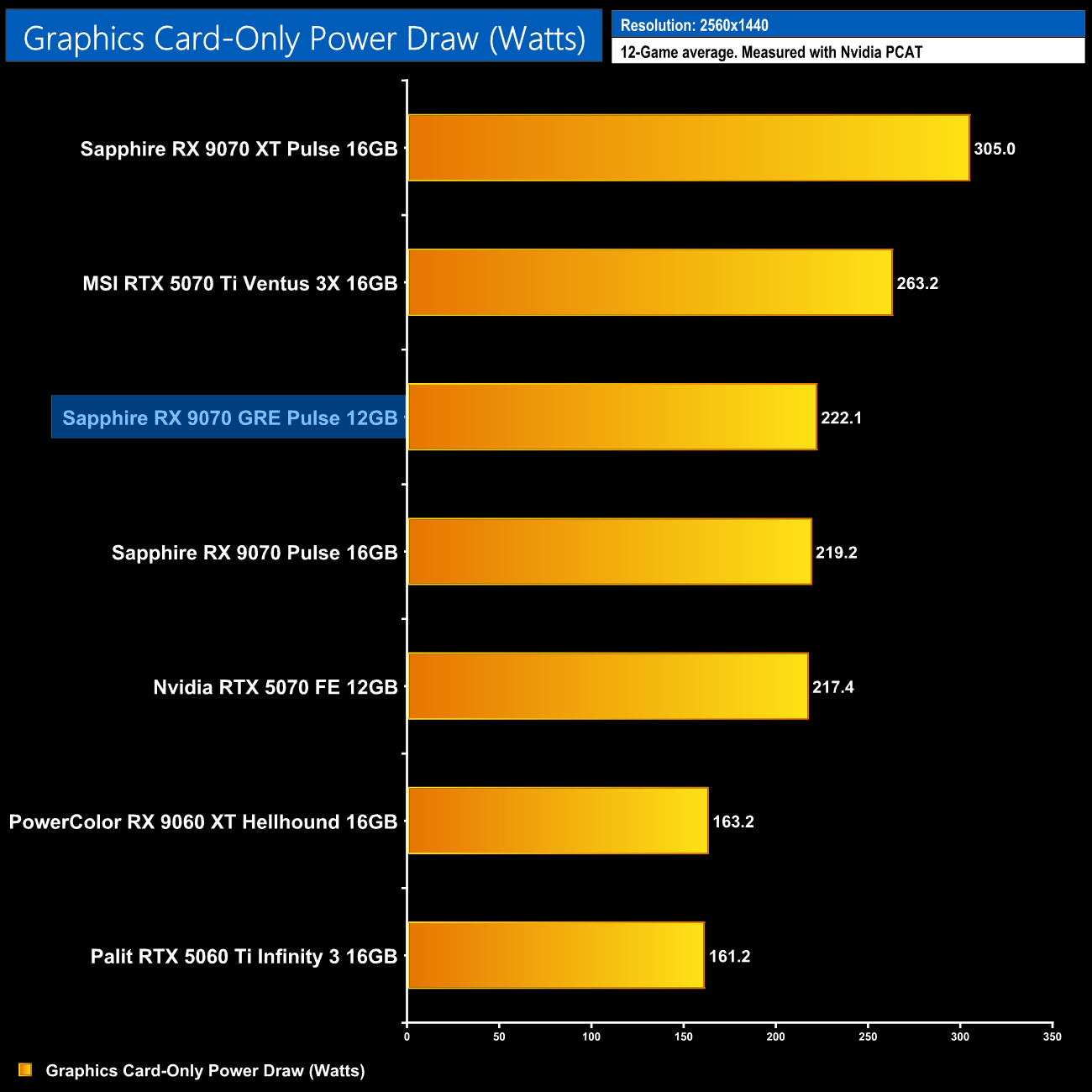
At 1440p, average power draw hit 222.1W.
Ray tracing results
As a bonus, we now include the power figures for all eight games we test with ray tracing enabled.
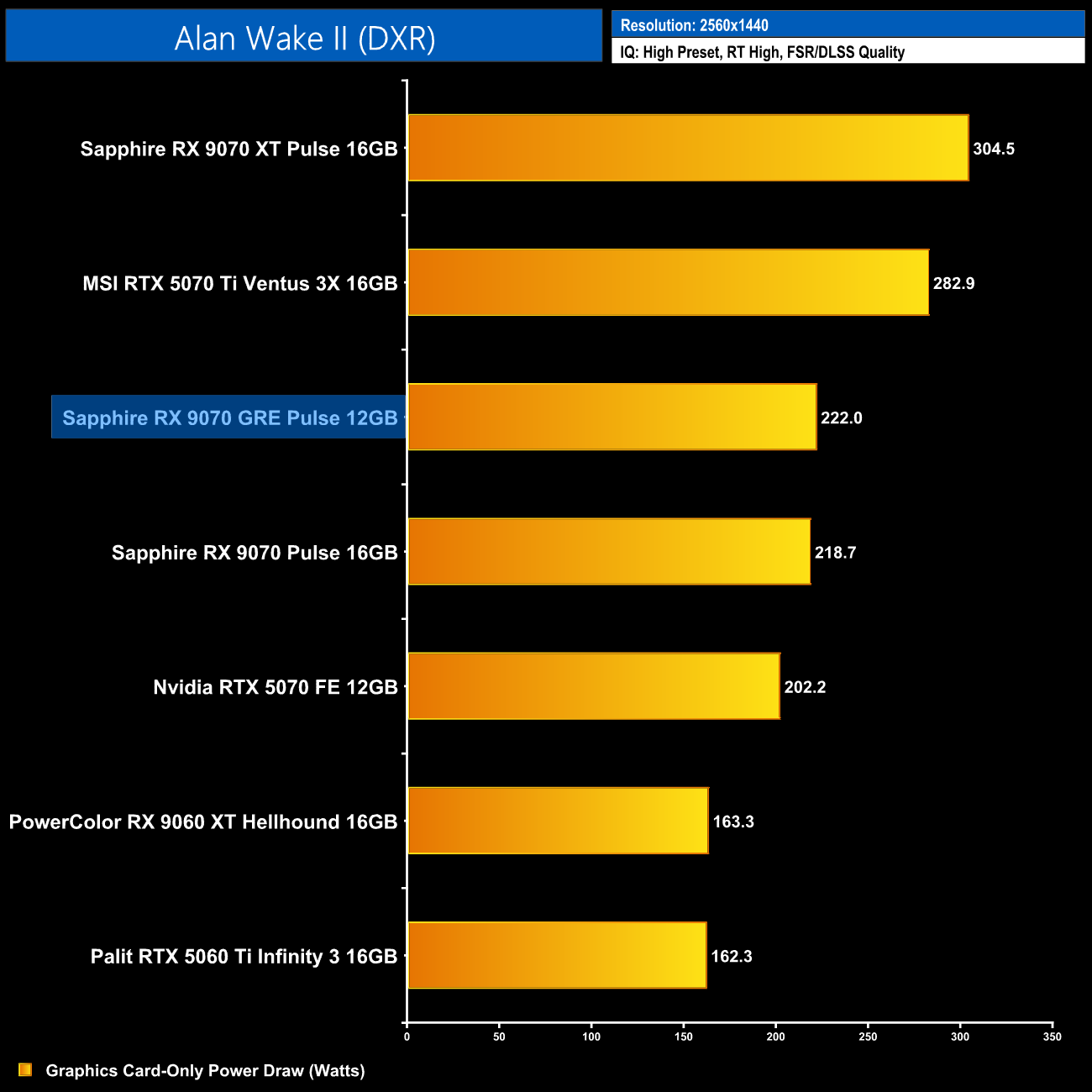
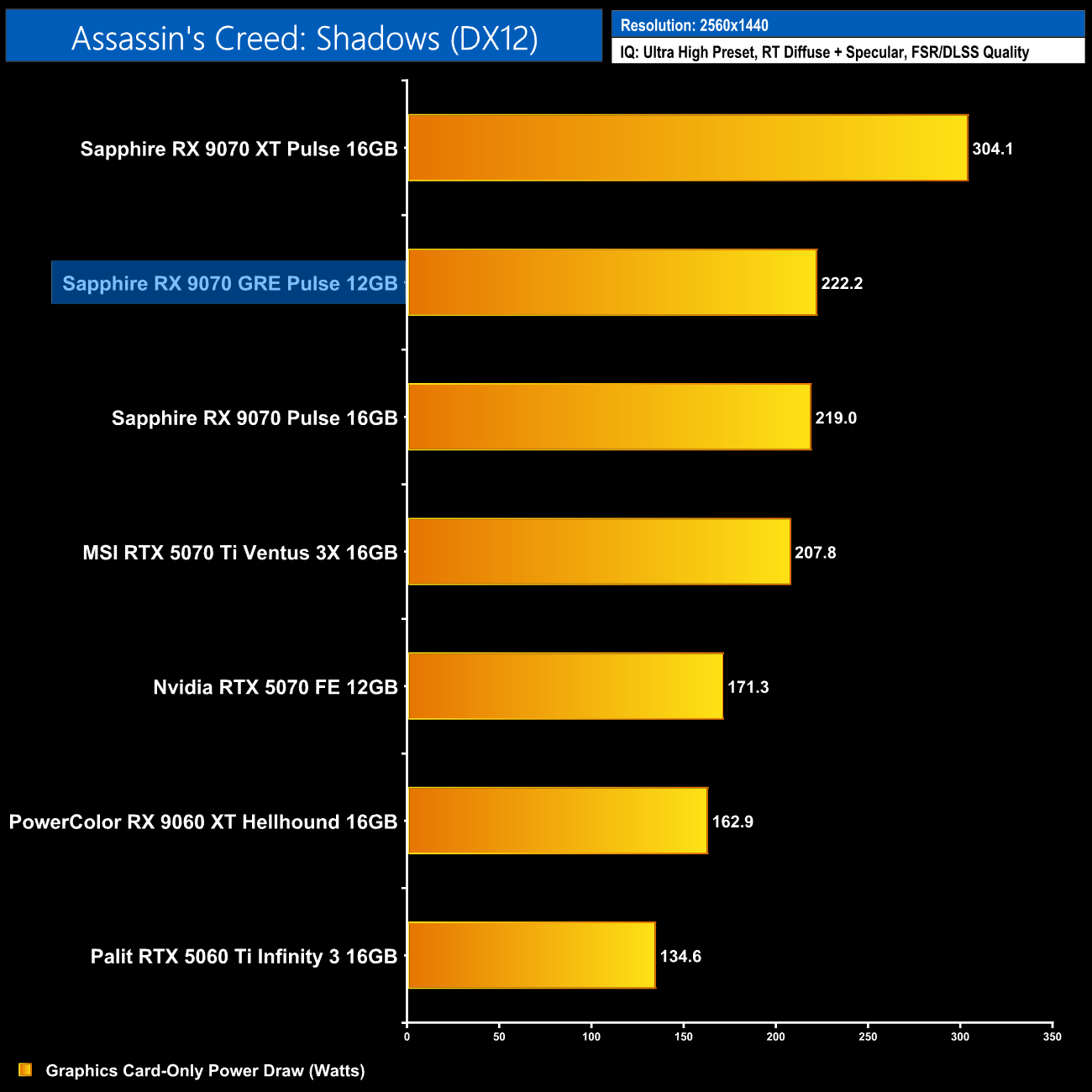
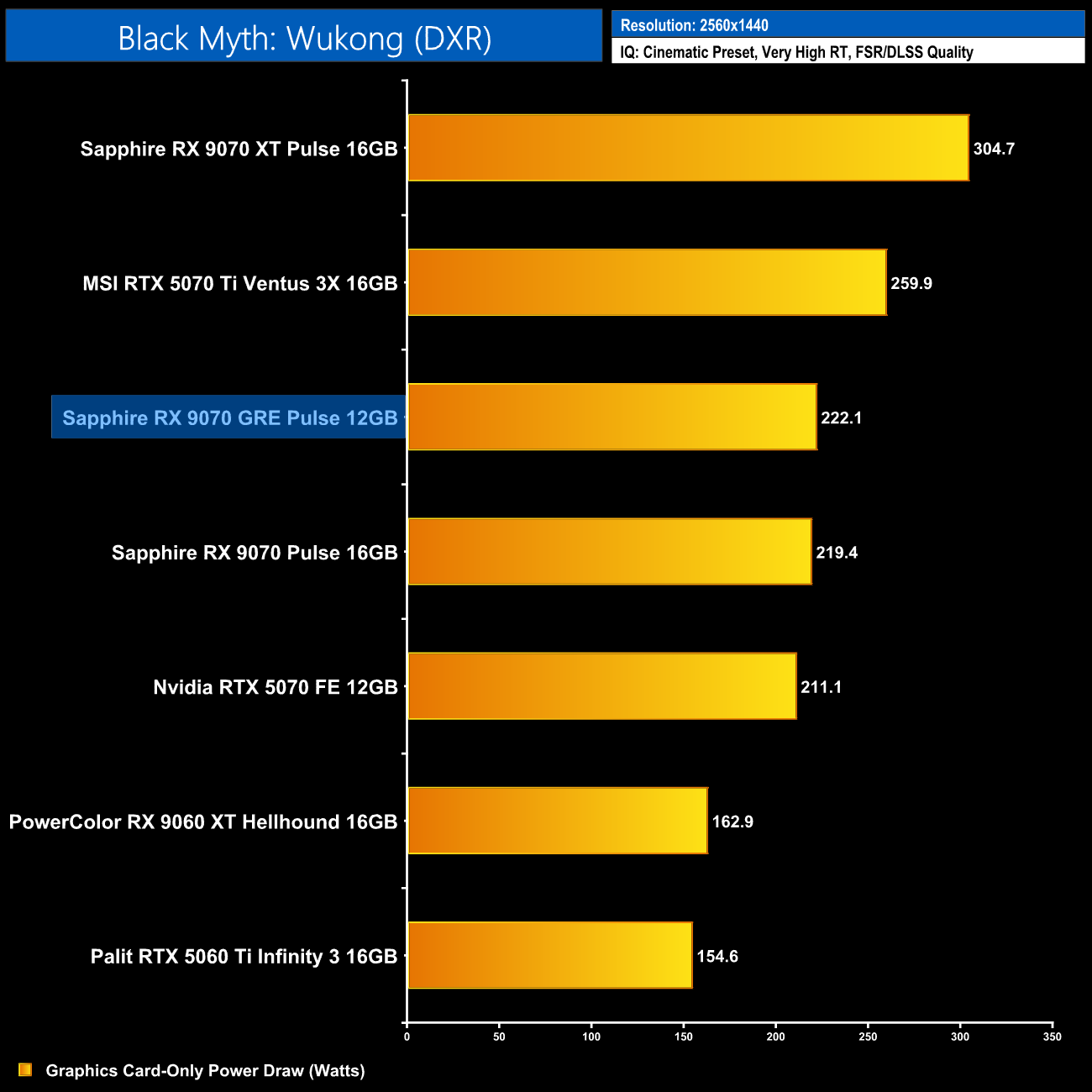
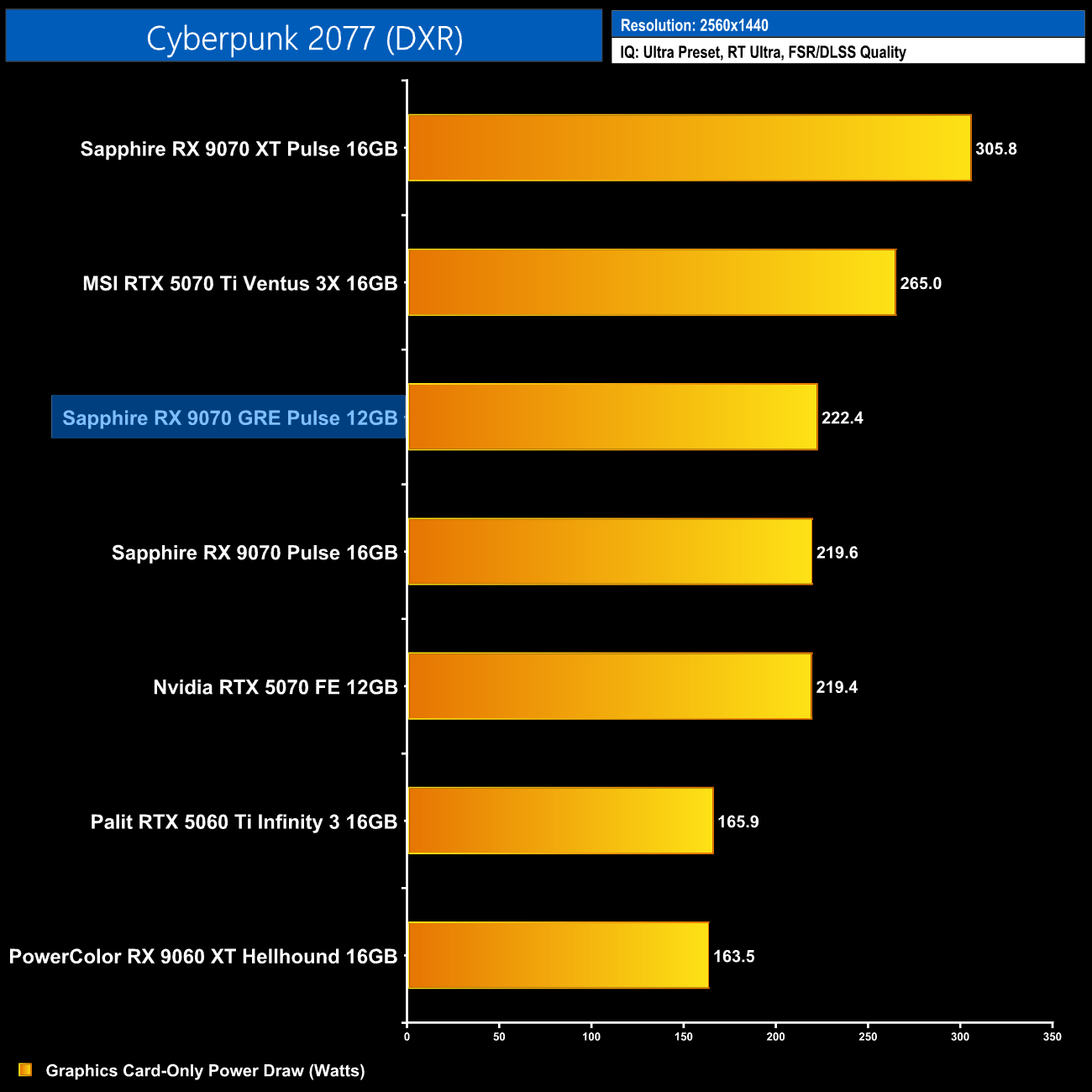
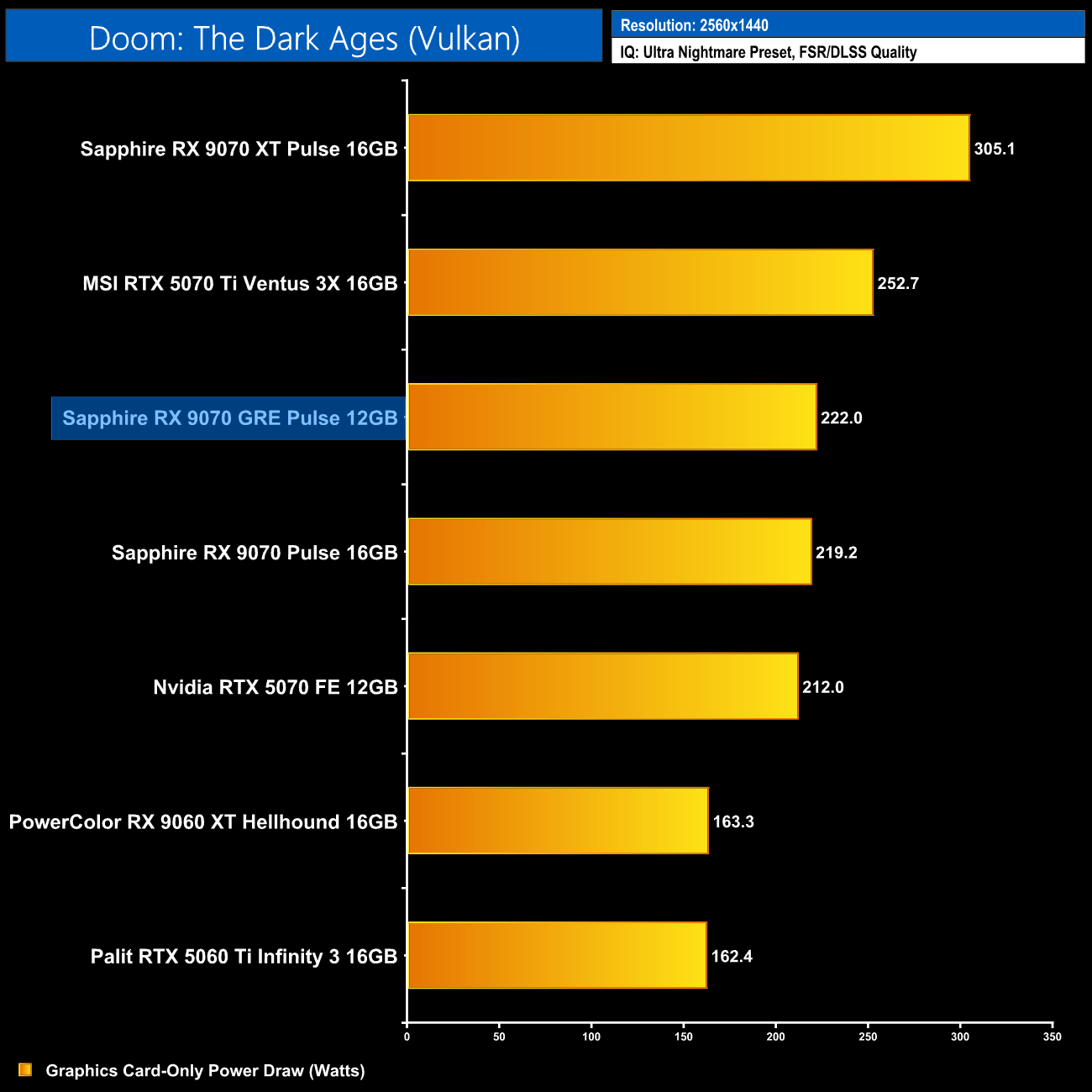
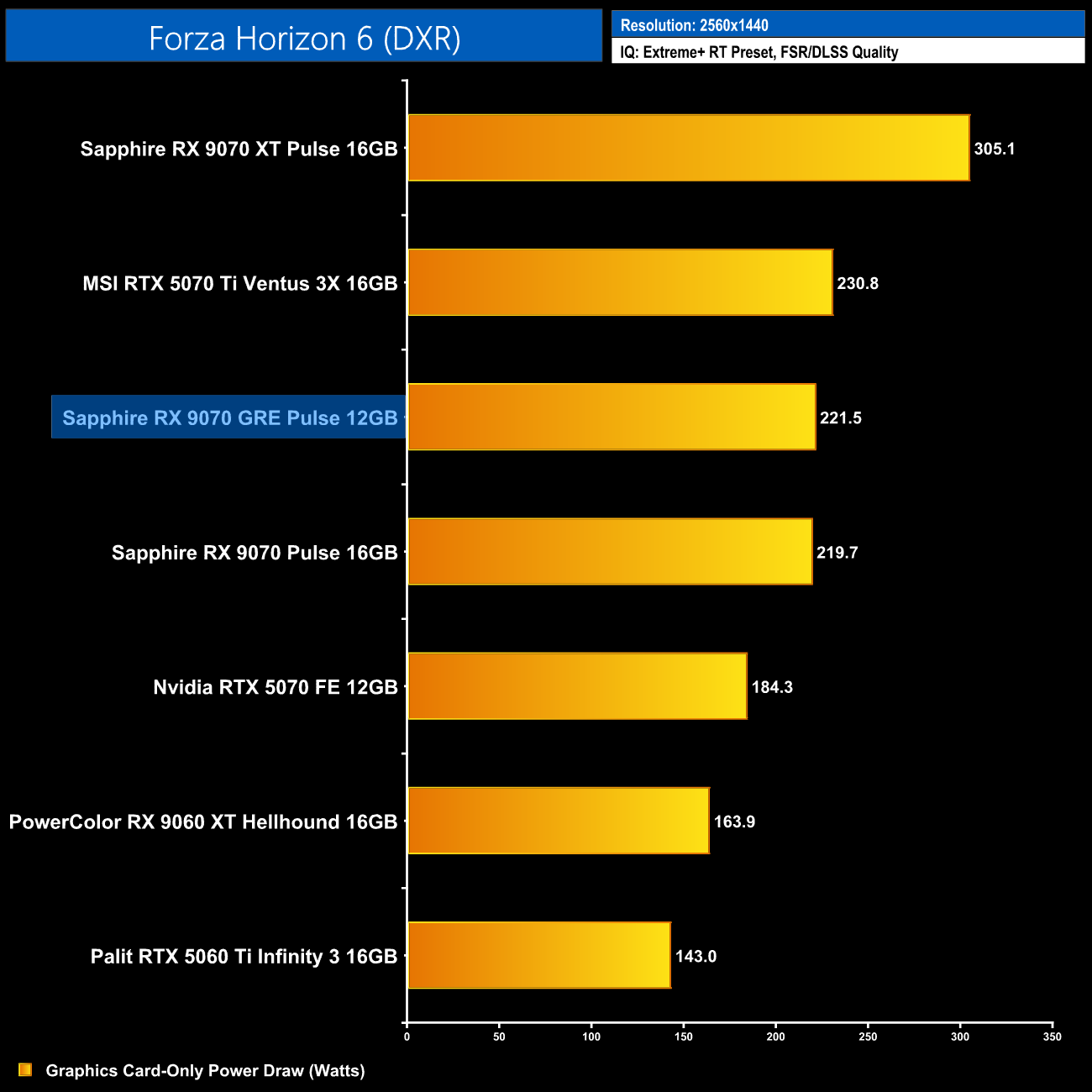
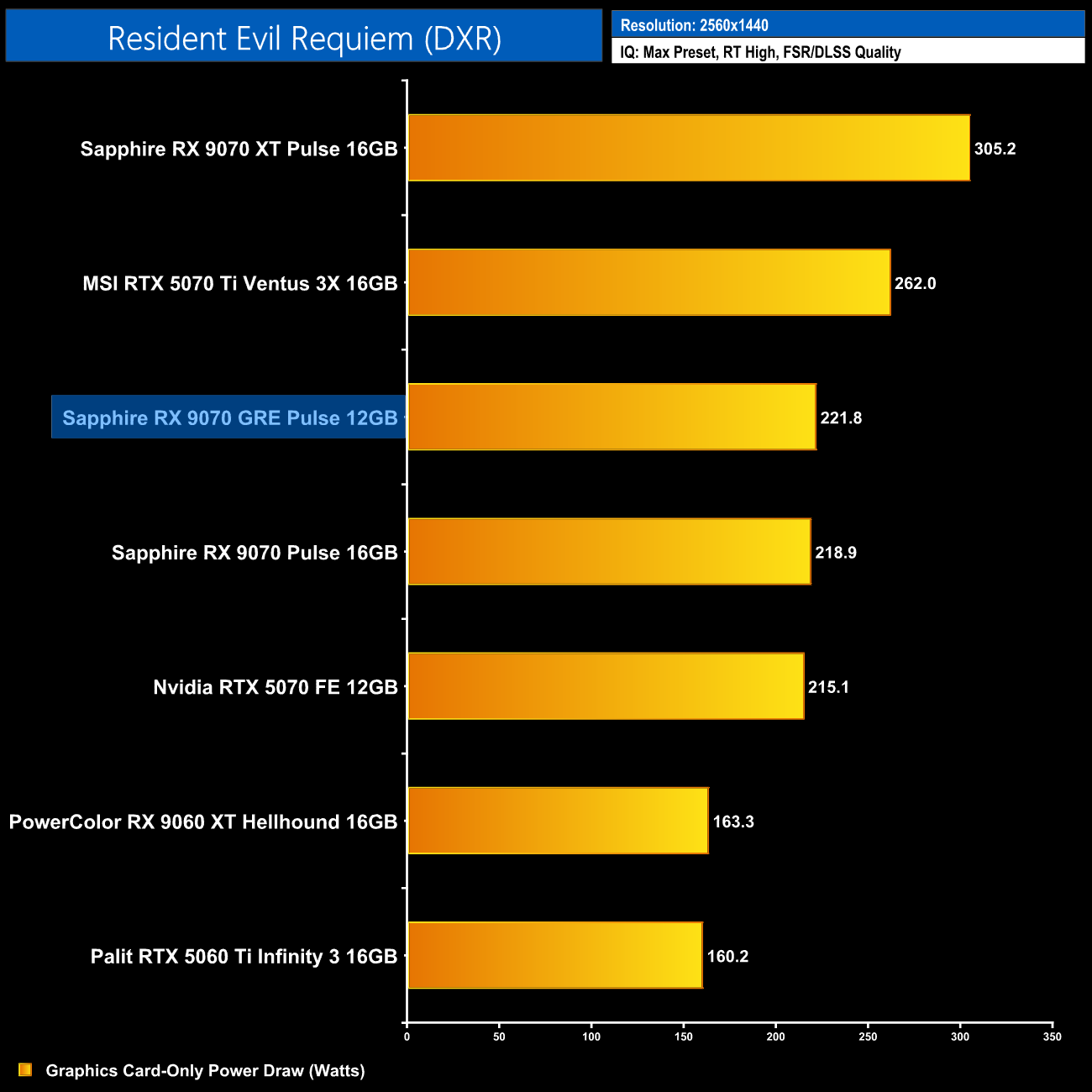
8-Game ray tracing average:
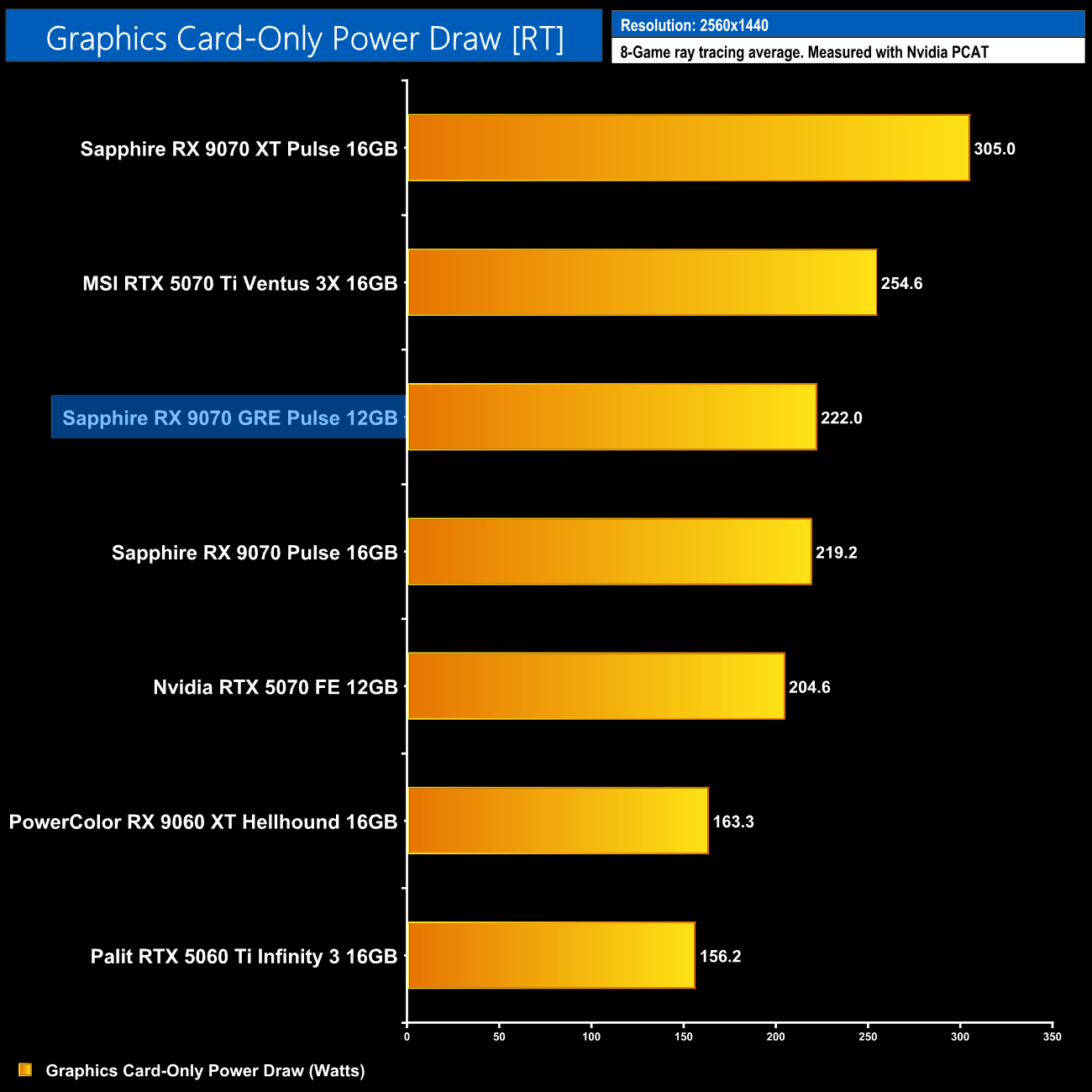
Ray tracing at 1440p was again coming in at 222W.
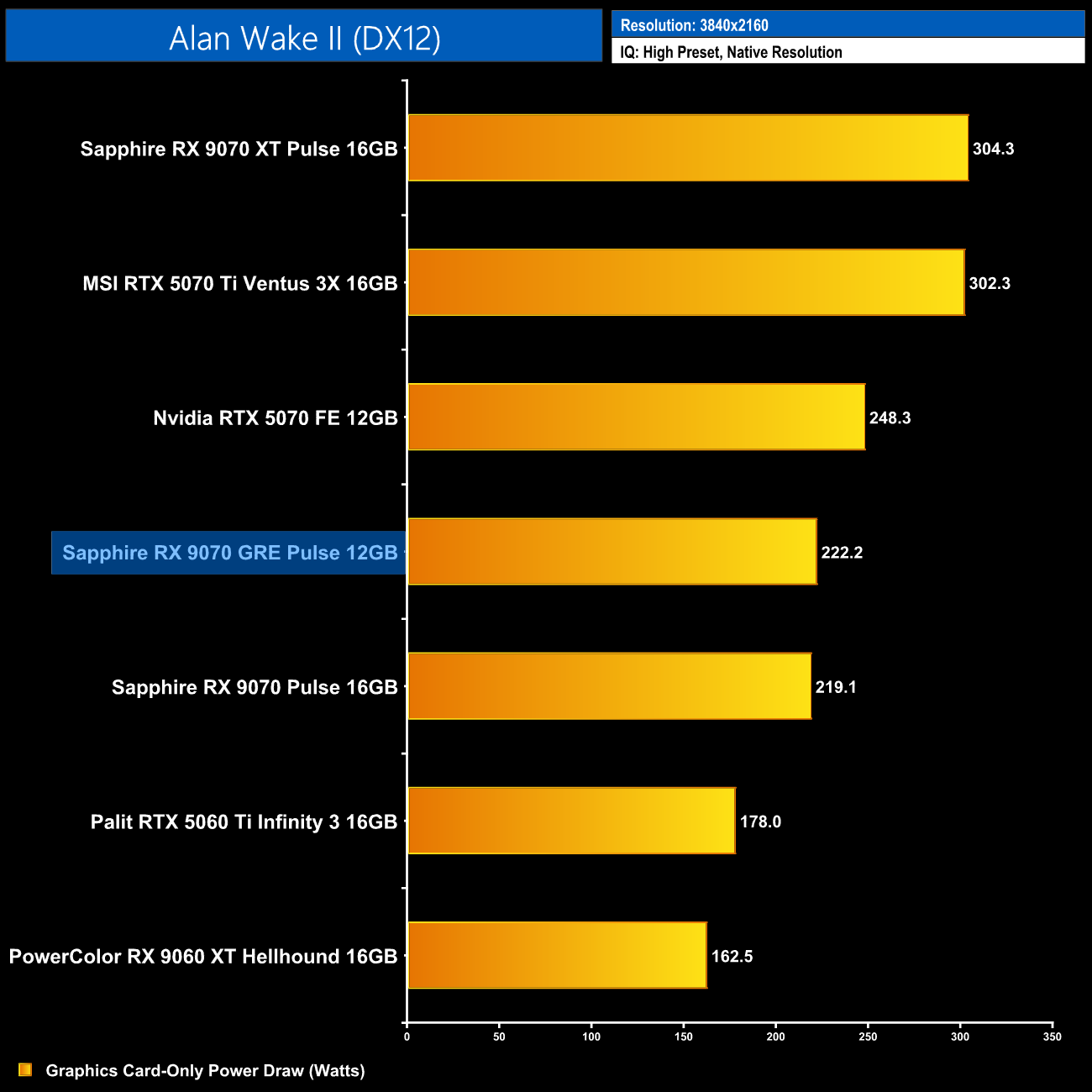
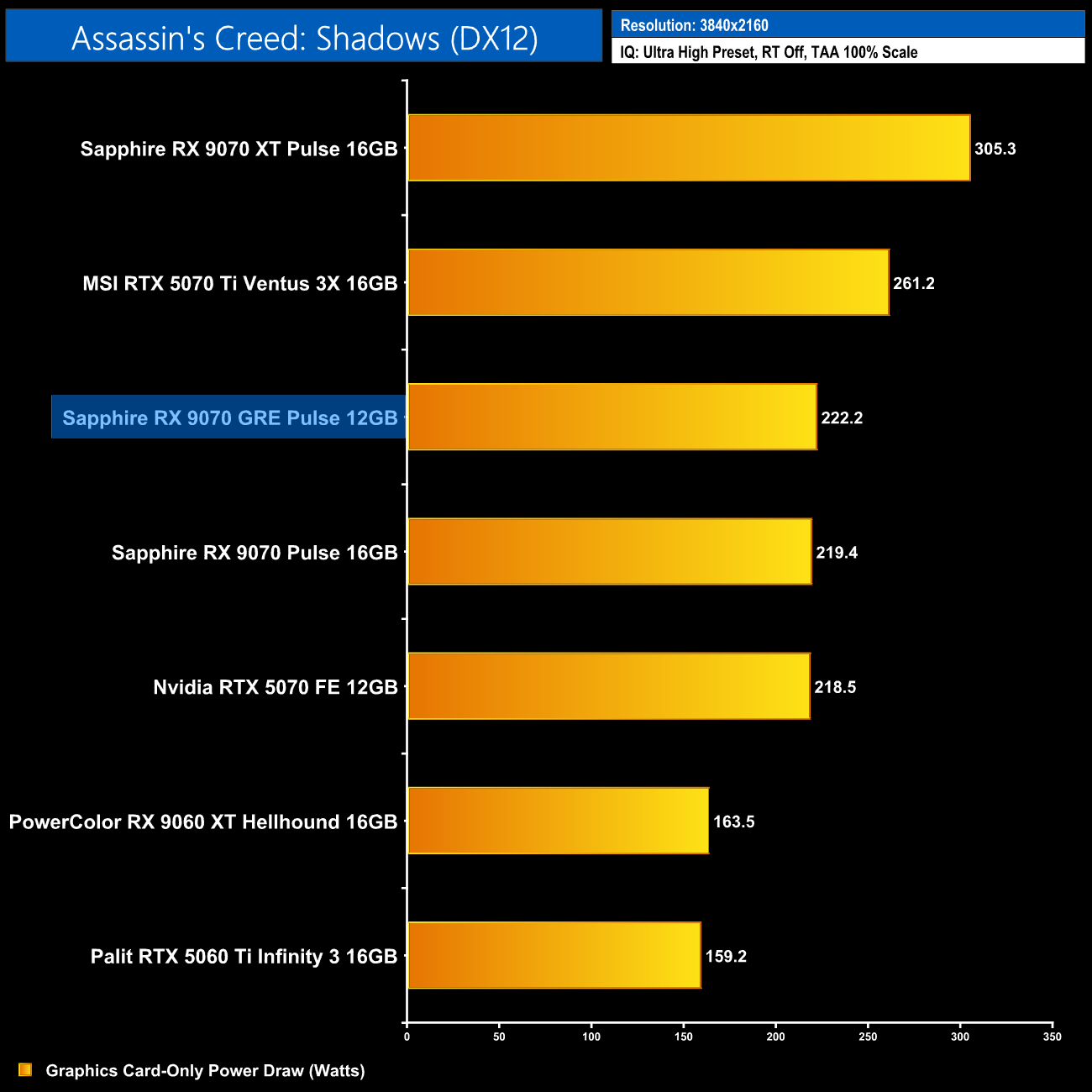
Here we present power draw figures for the graphics card-only, on a per-game basis for all twelve games we tested at 2160p (4K). This is measured using Nvidia's Power Capture Analysis Tool, also known as PCAT. You can read more about our updated power draw testing methodology HERE.
Per-Game Results at 2160p (4K):
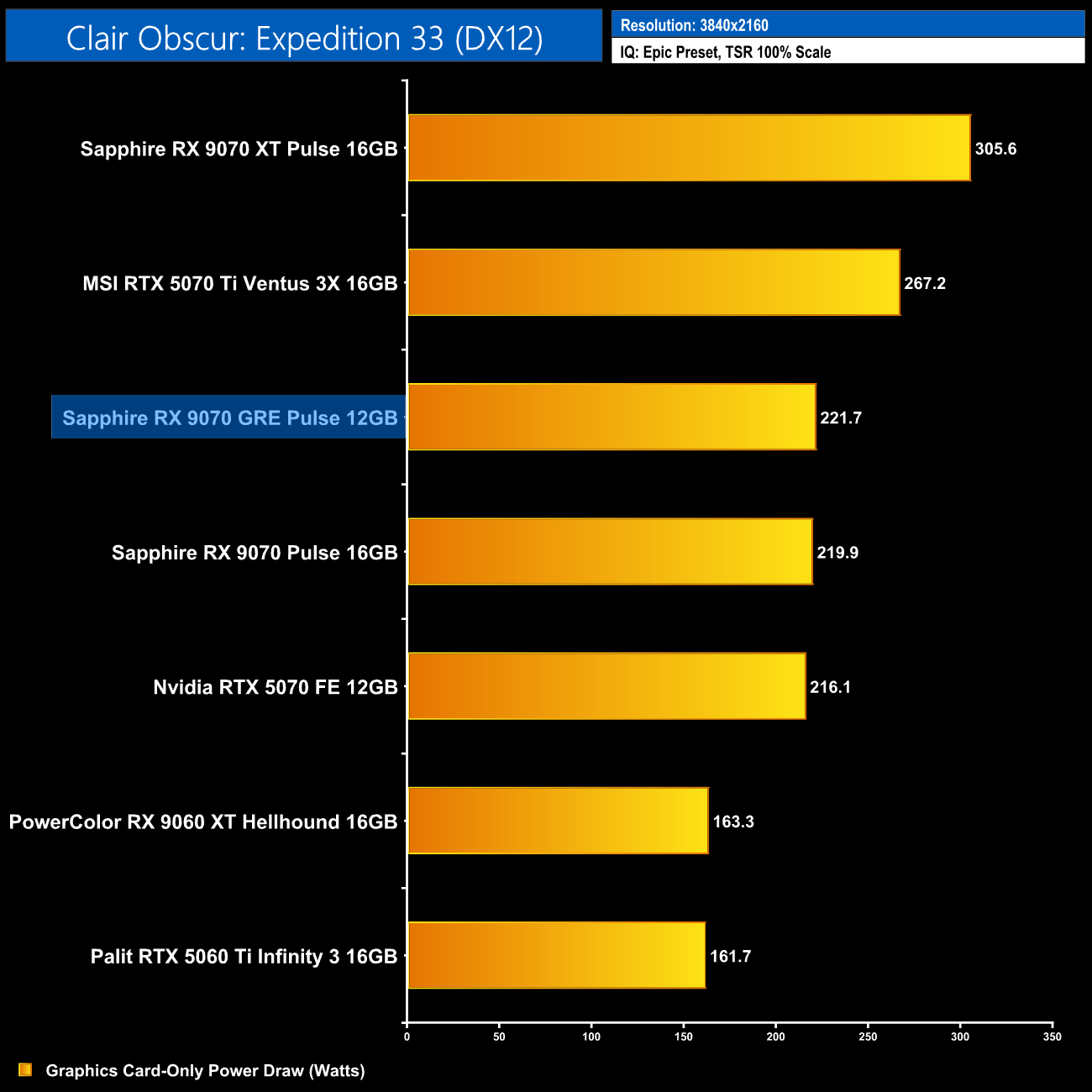
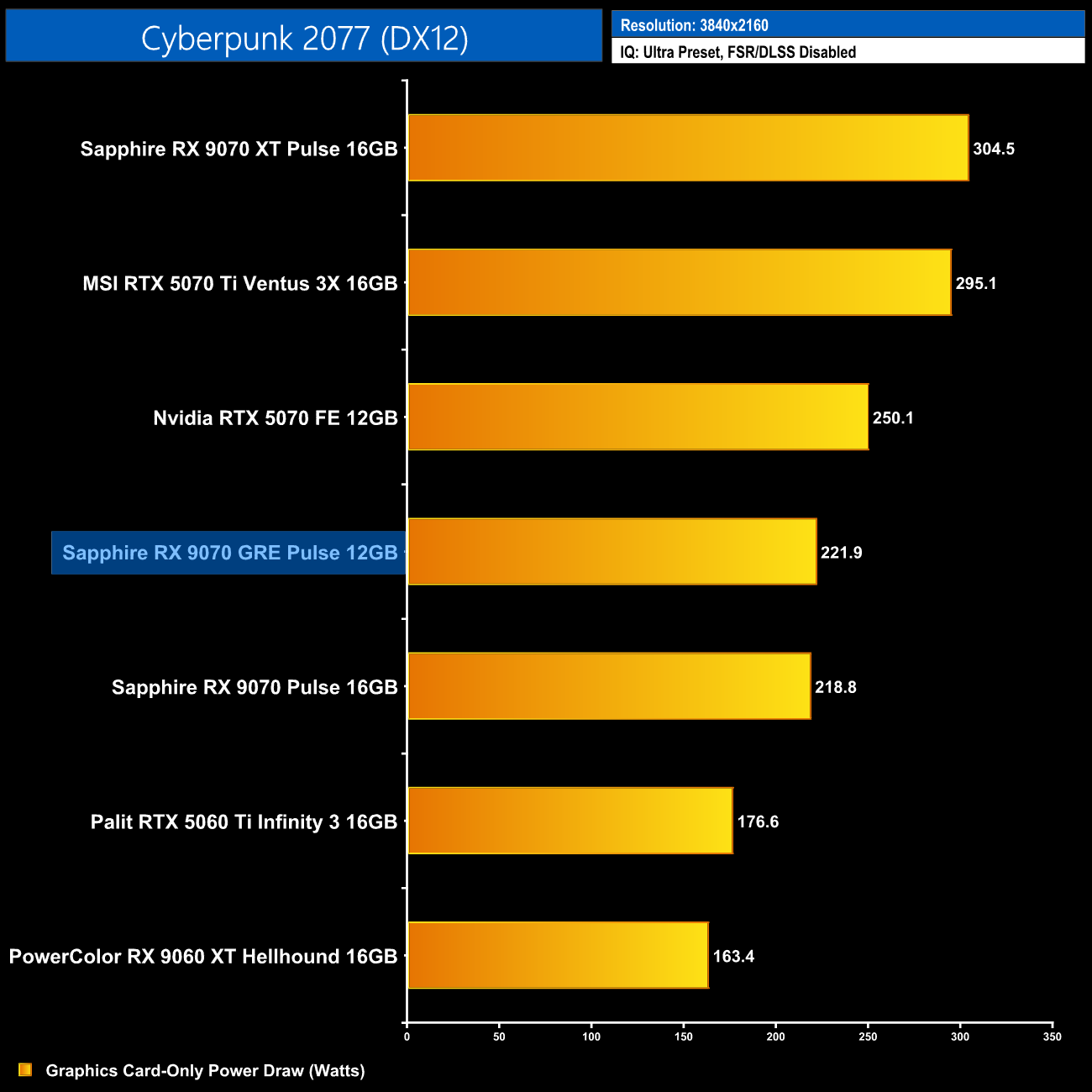
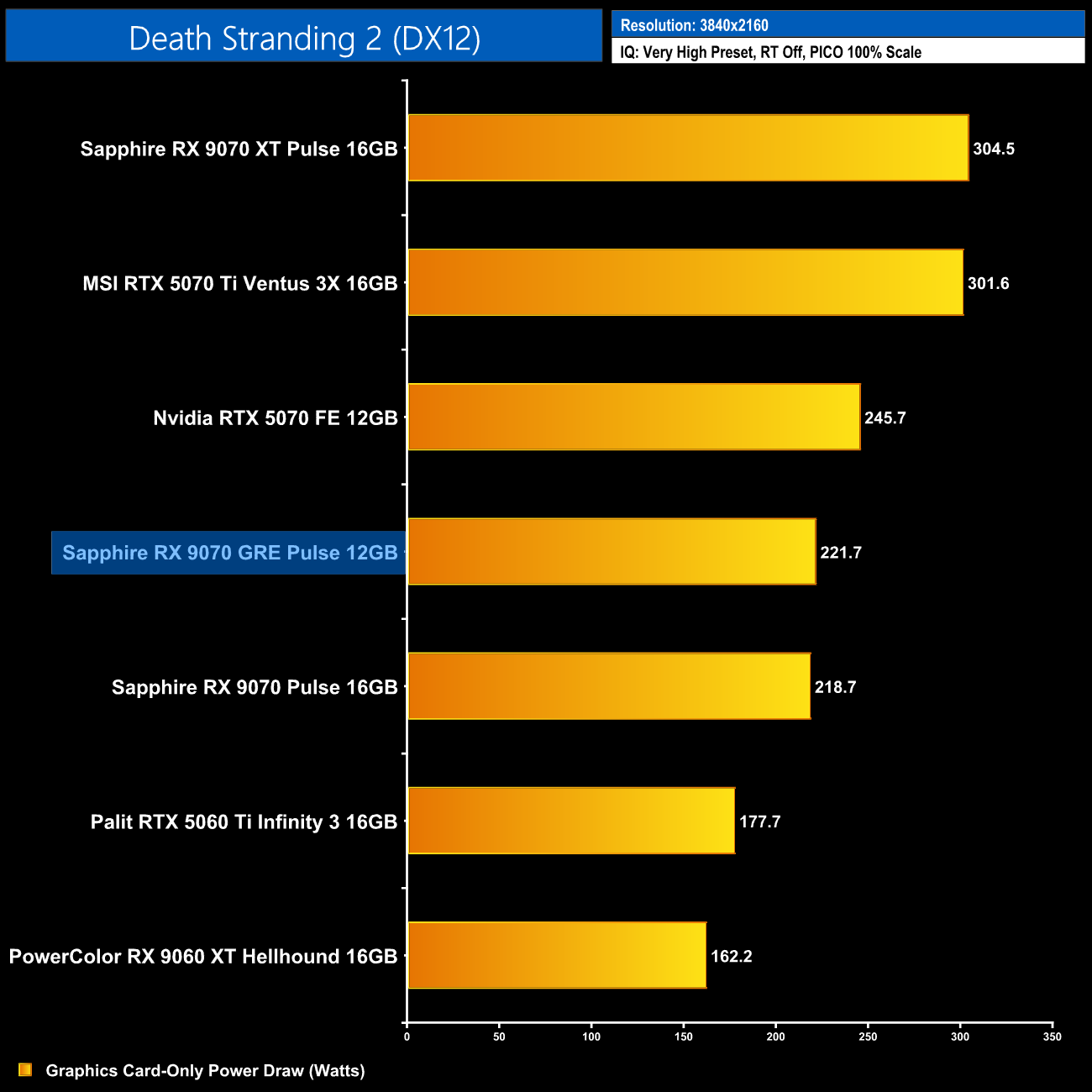
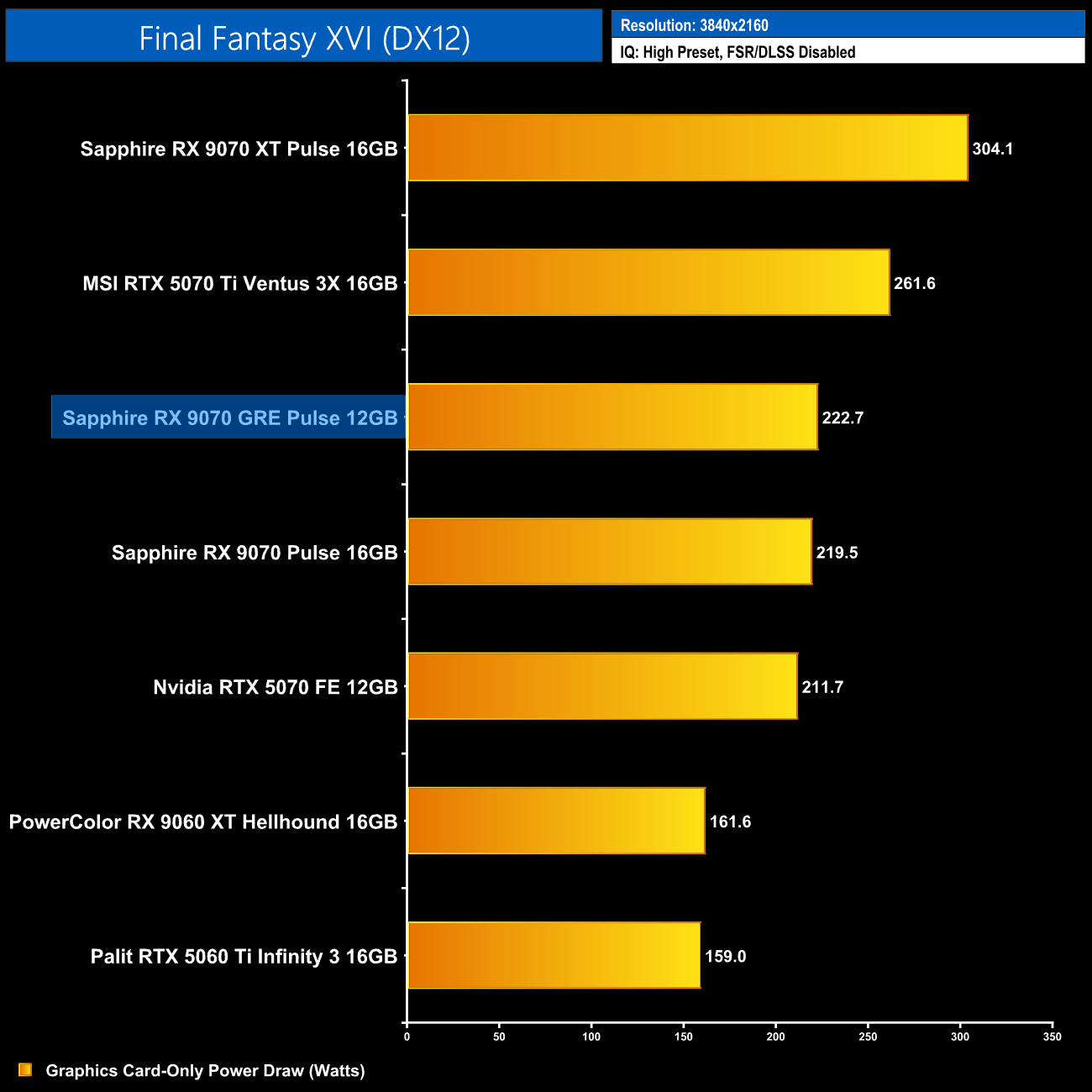
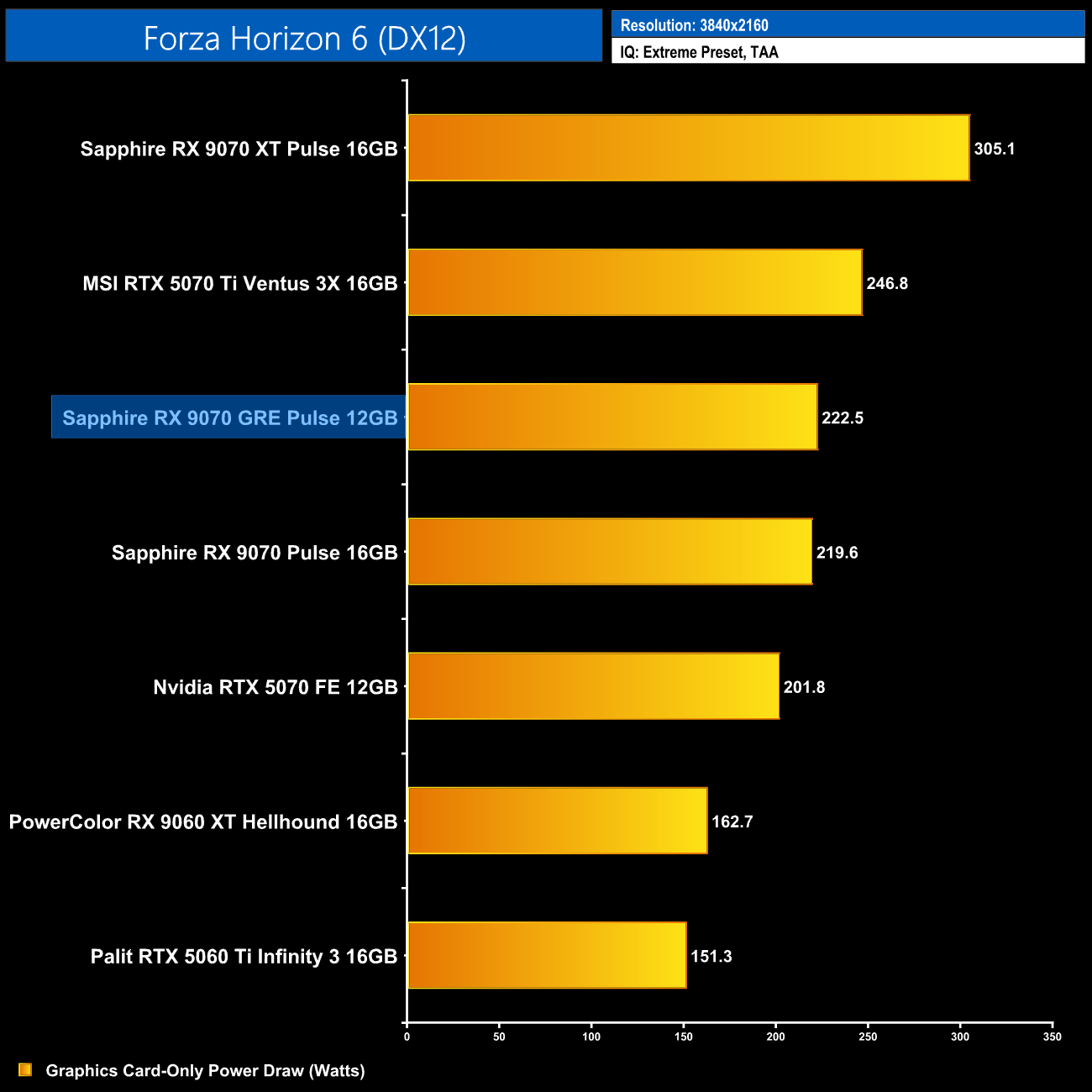
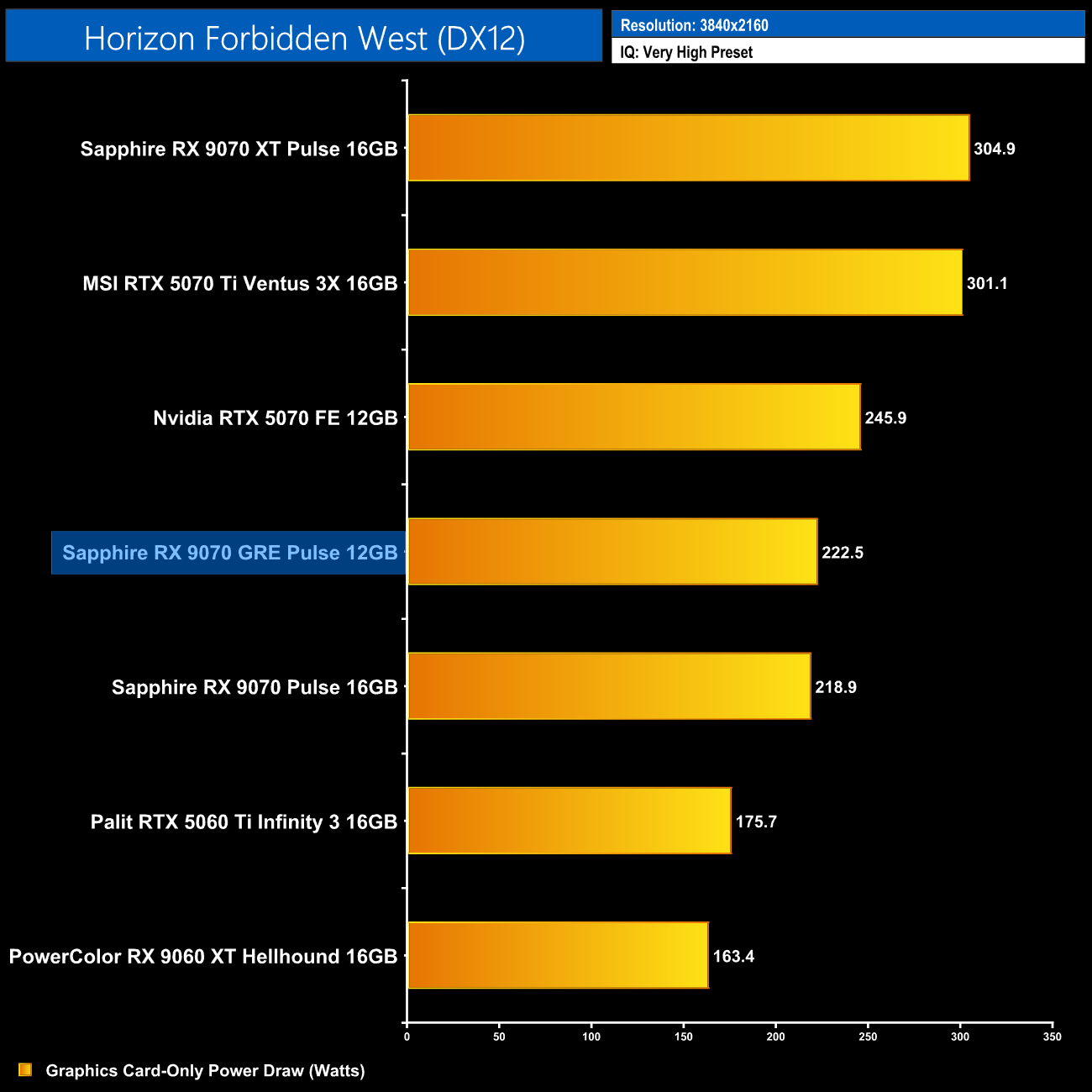
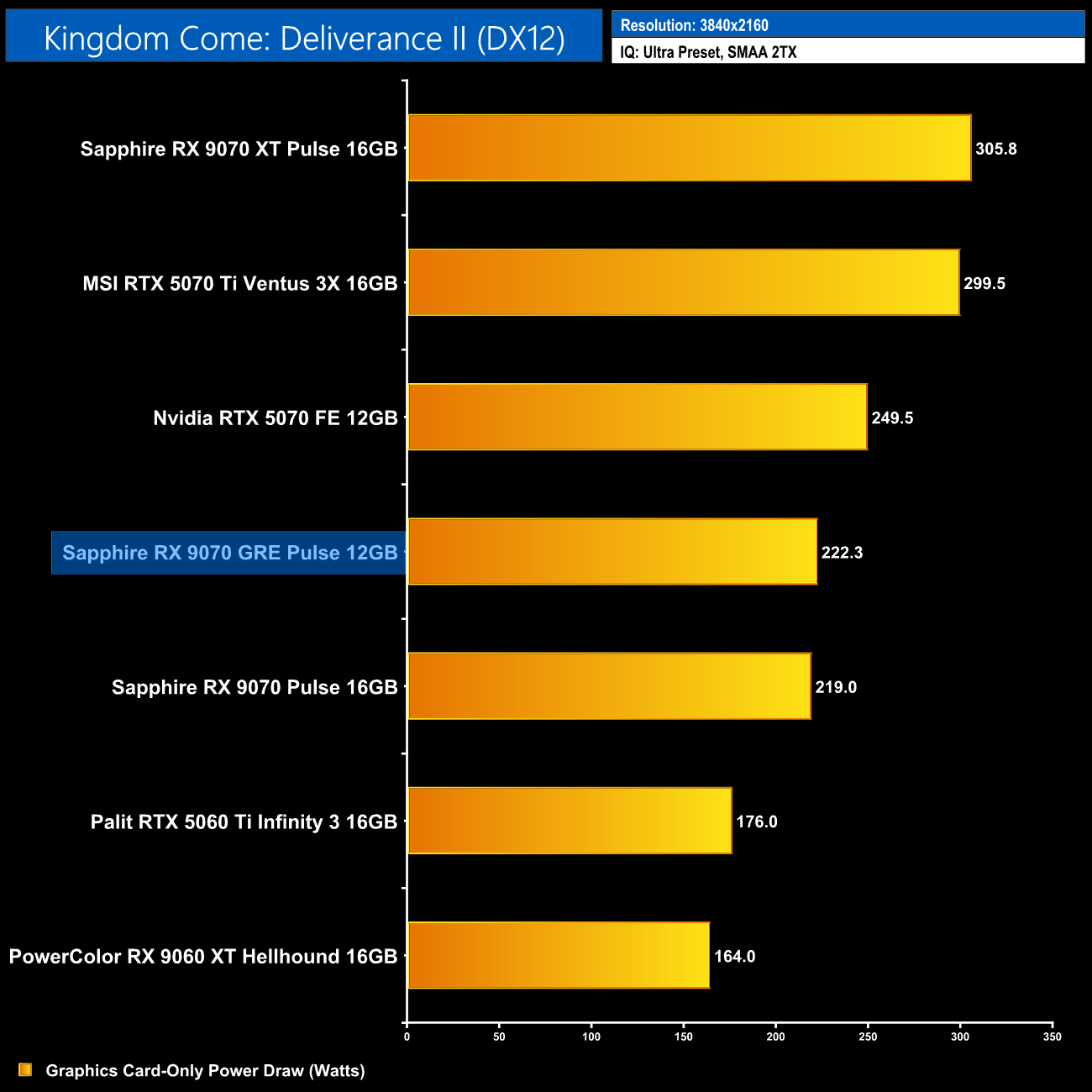
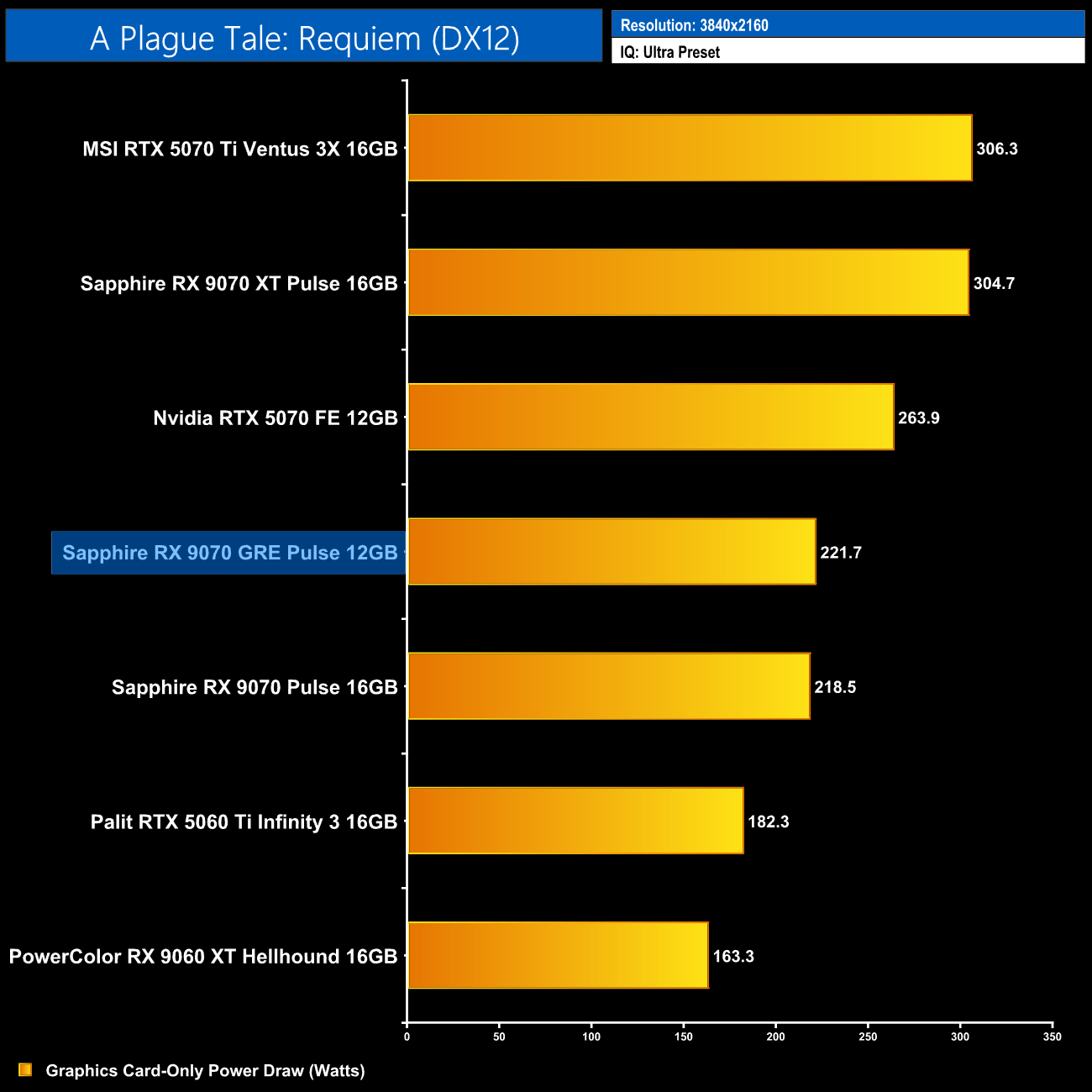
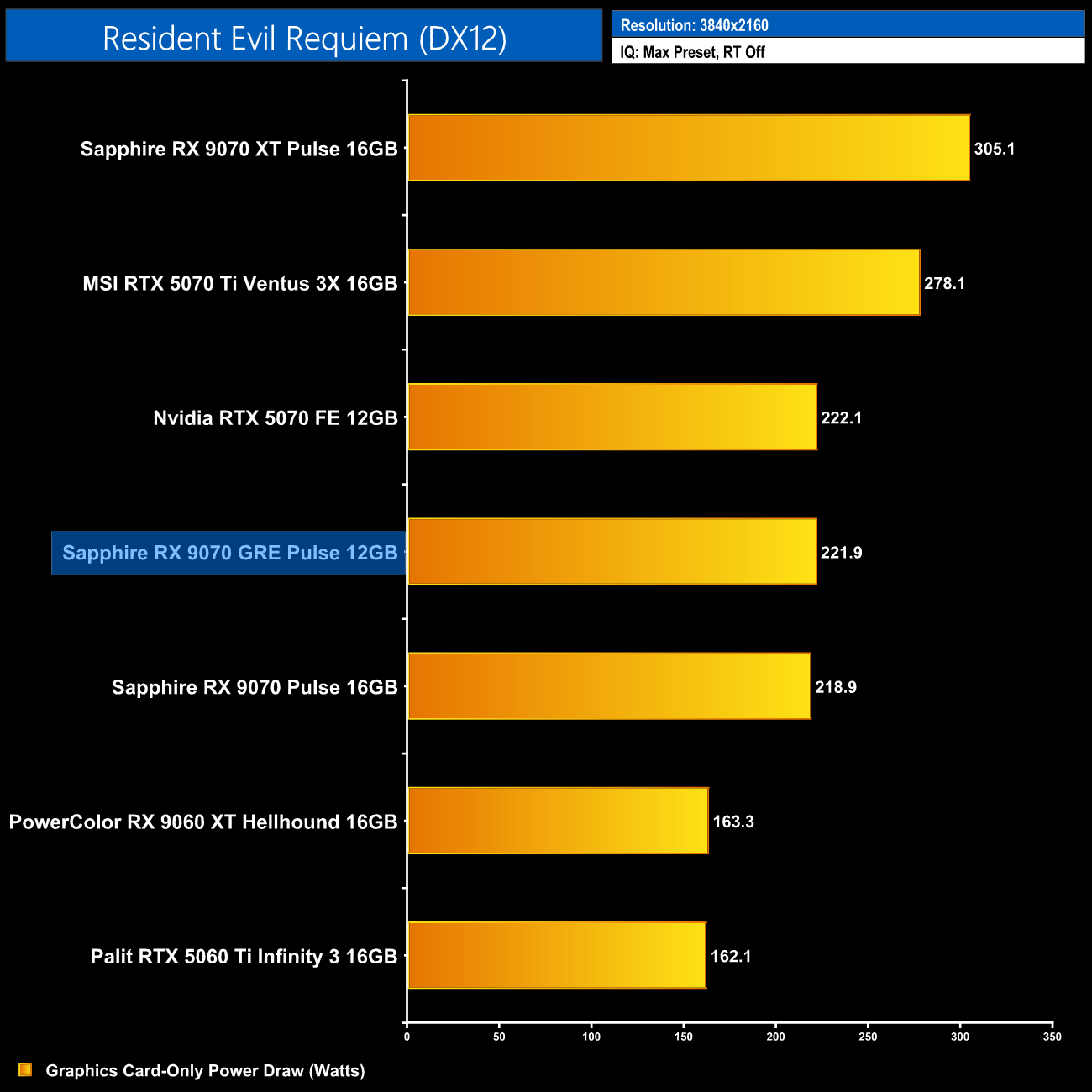
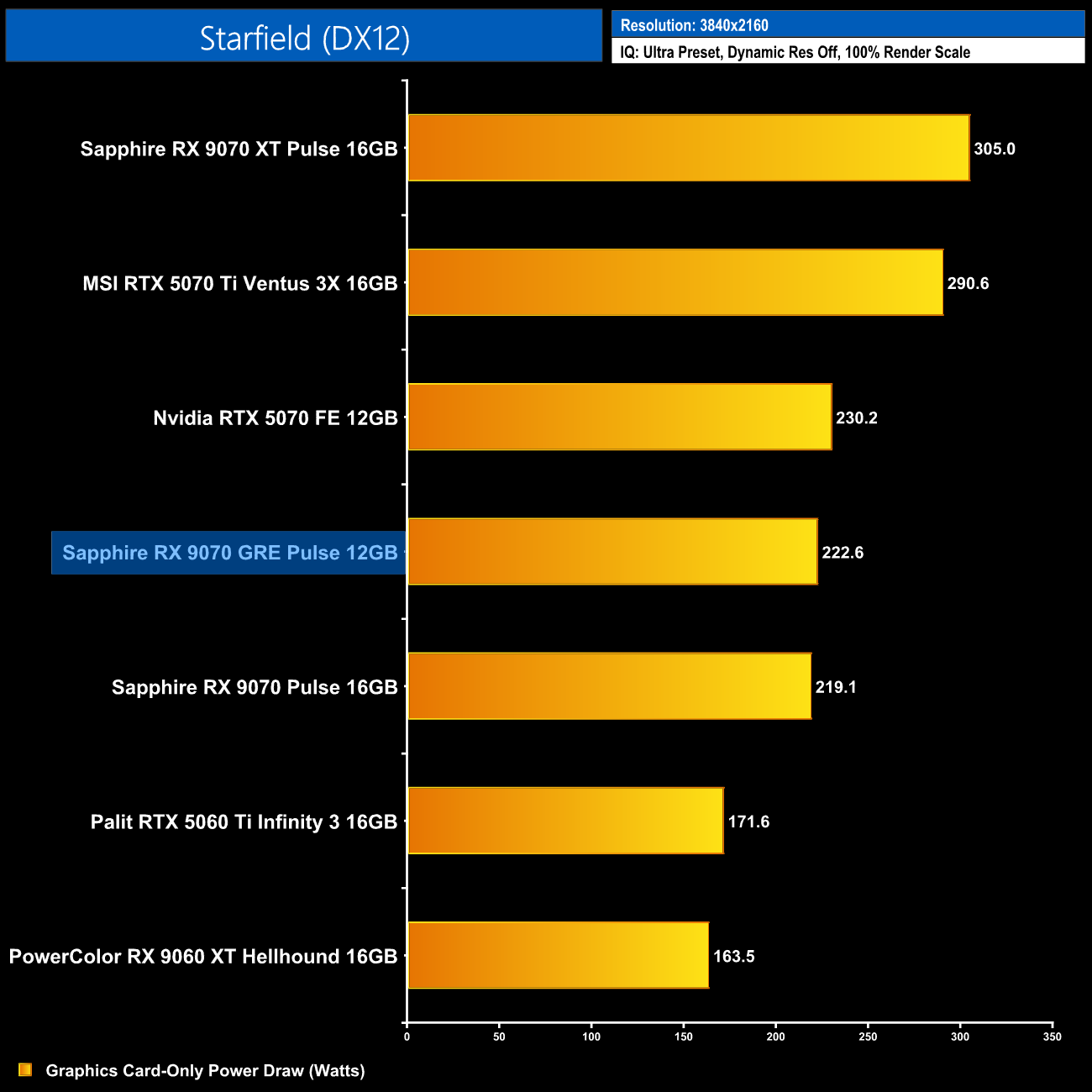
Click to enlarge.
12-Game Average at 2160p (4K):
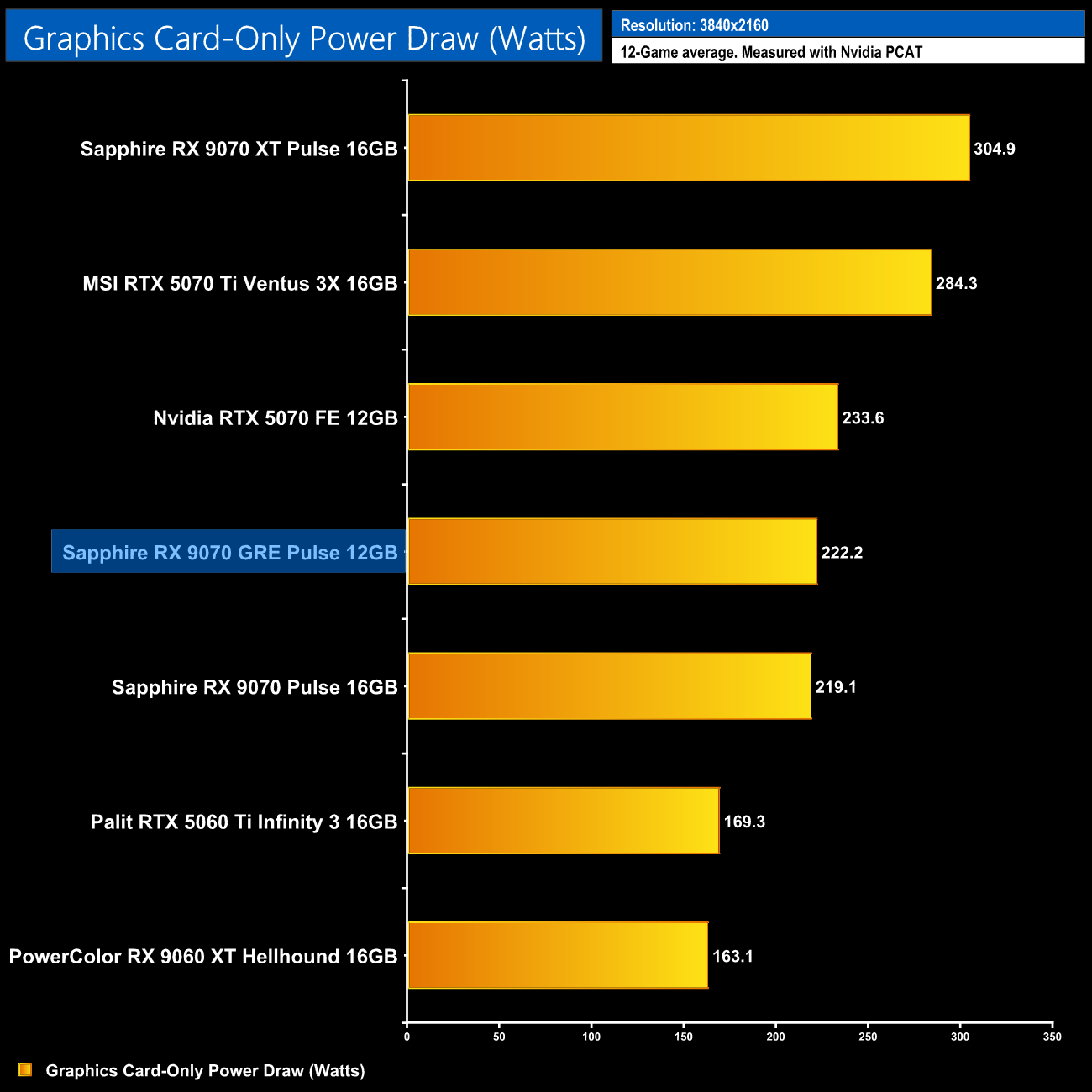
For 4K, we saw similar power draw, this time averaging 222.2W over the 12 games tested.
Ray tracing results
As a bonus, we now include the power figures for all eight games we test with ray tracing enabled.
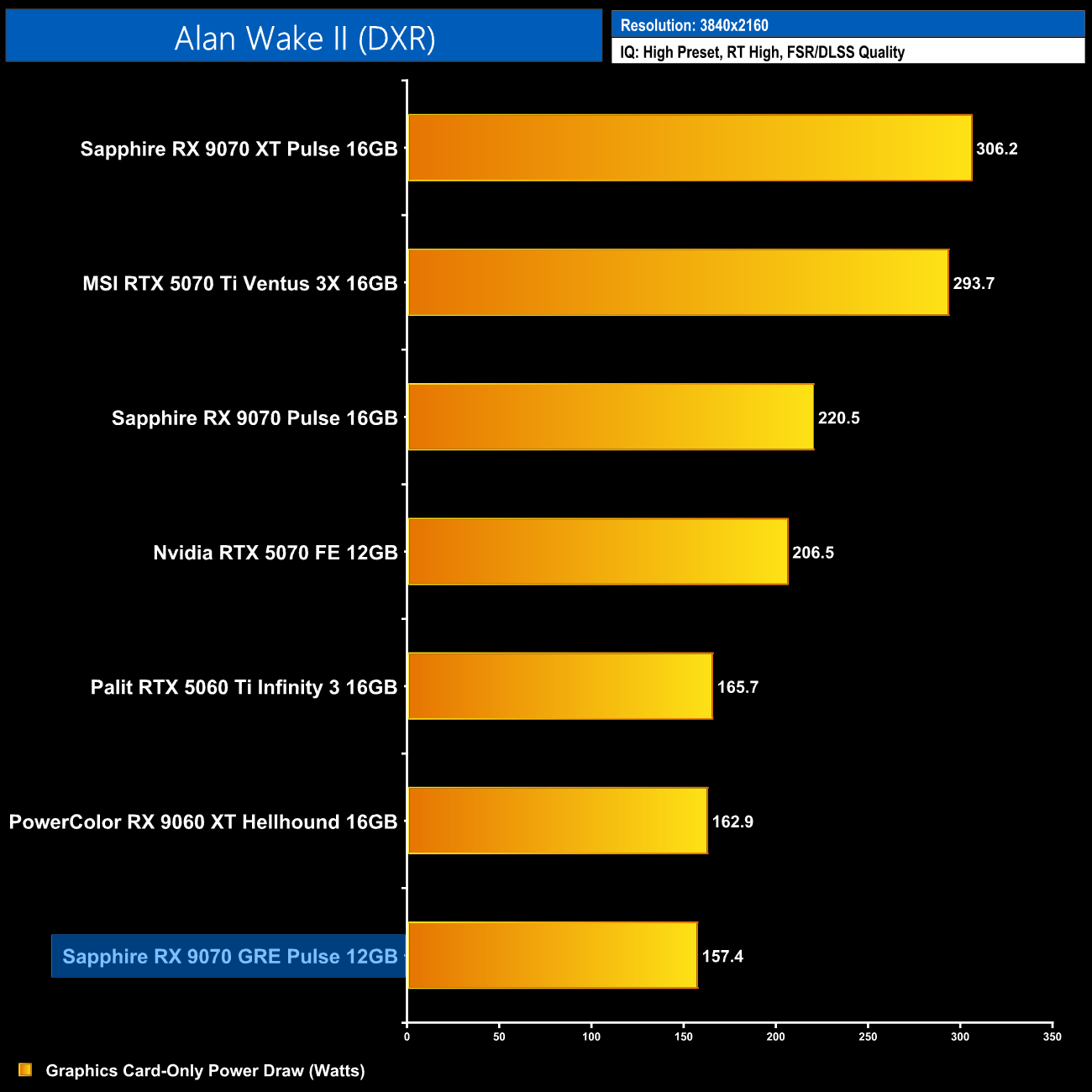
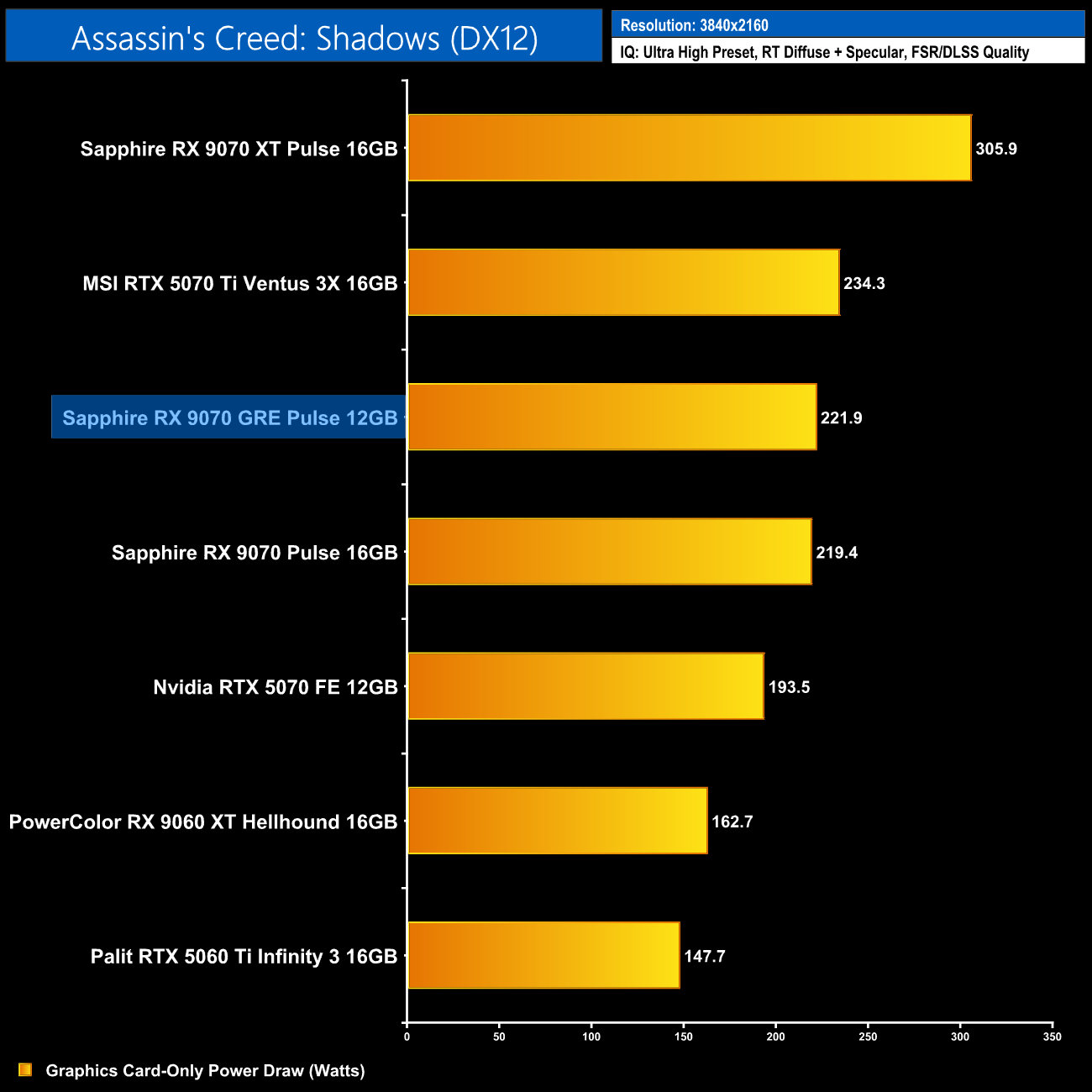
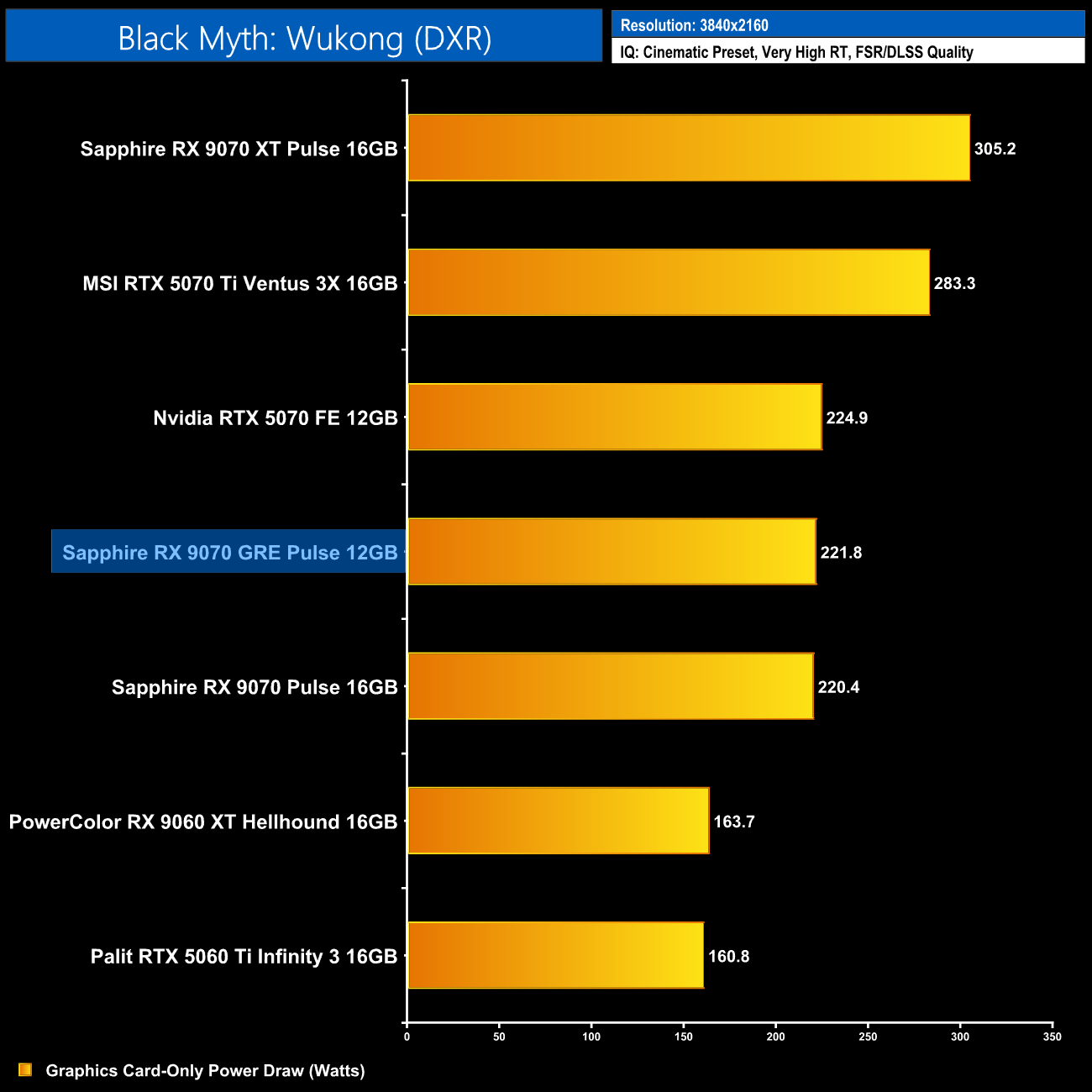
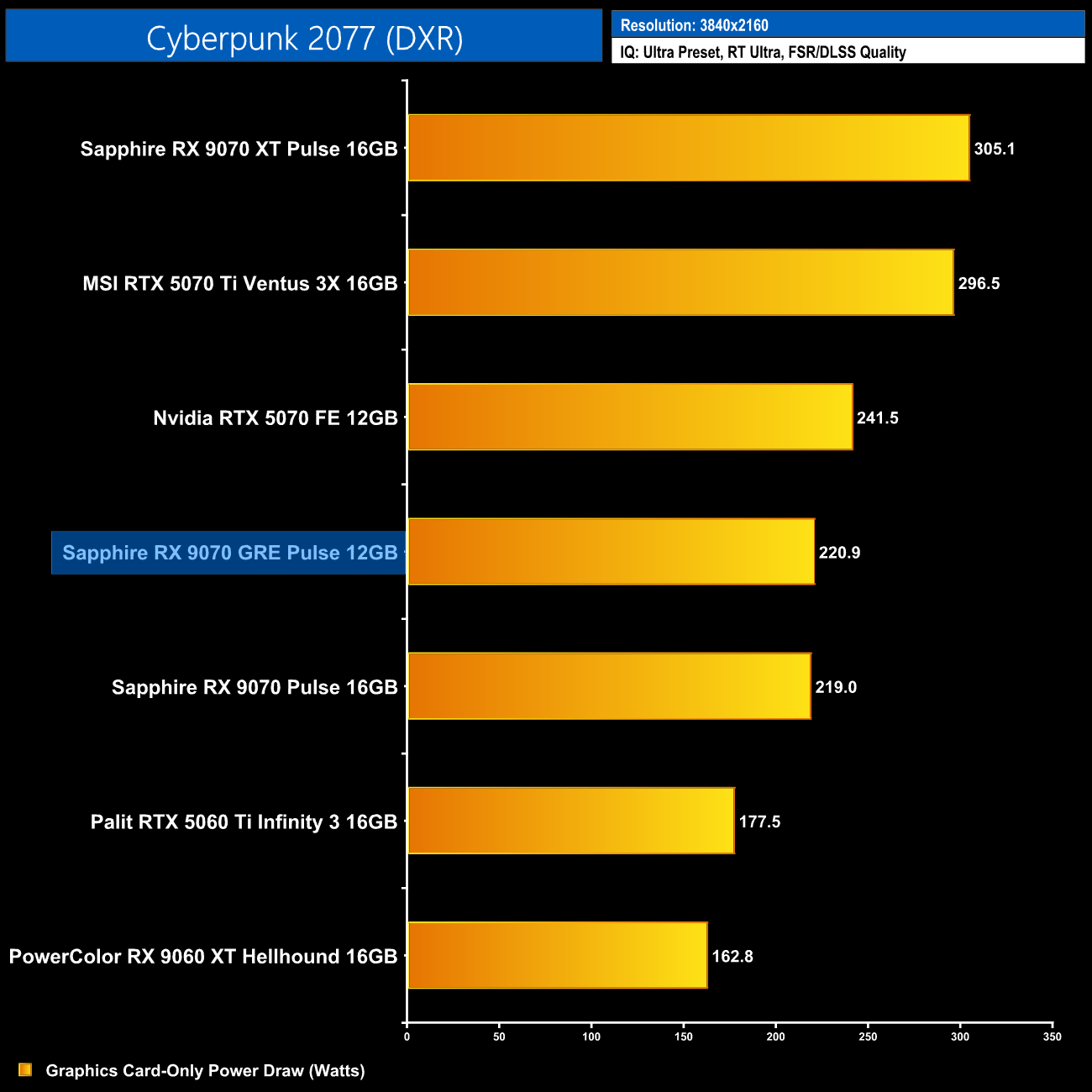
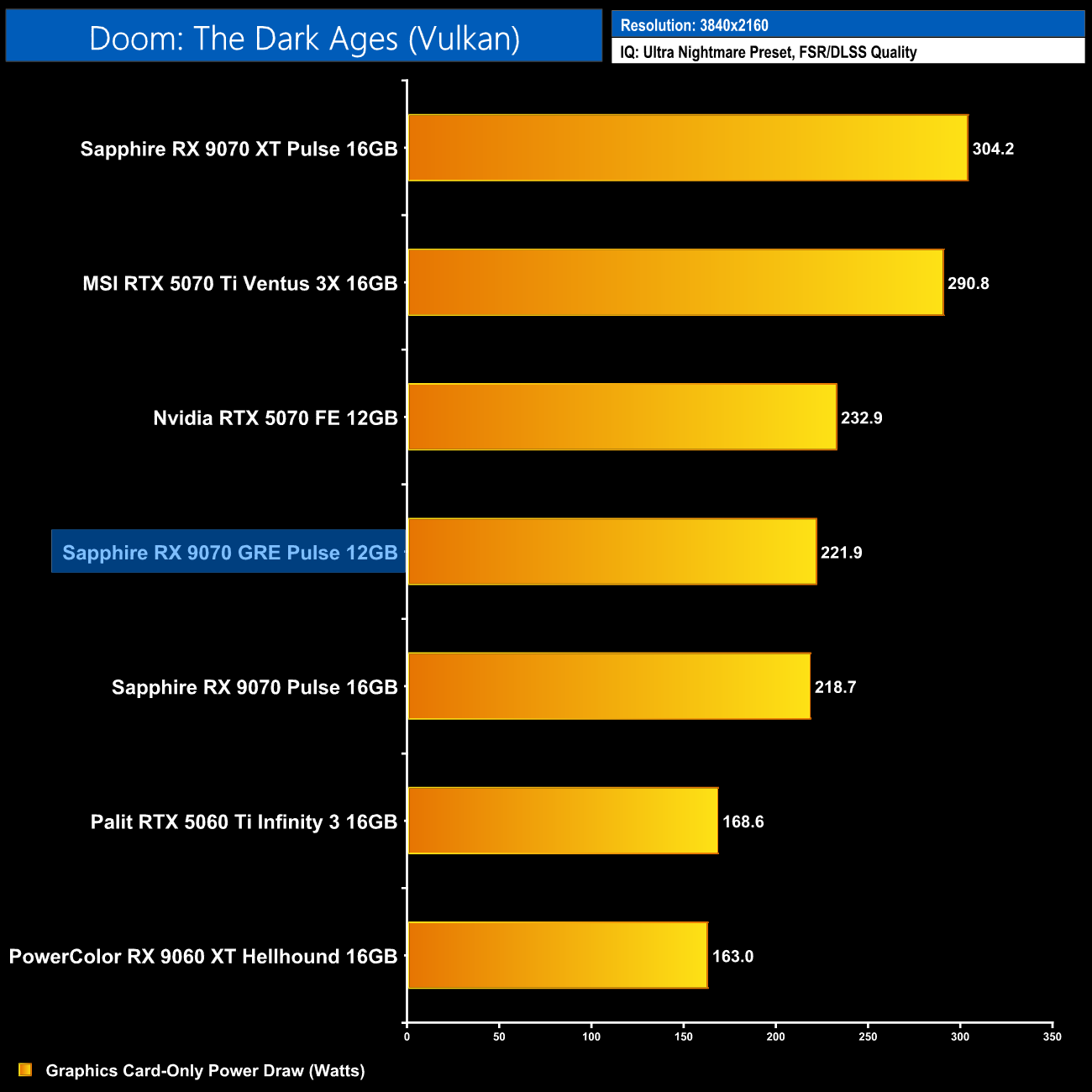
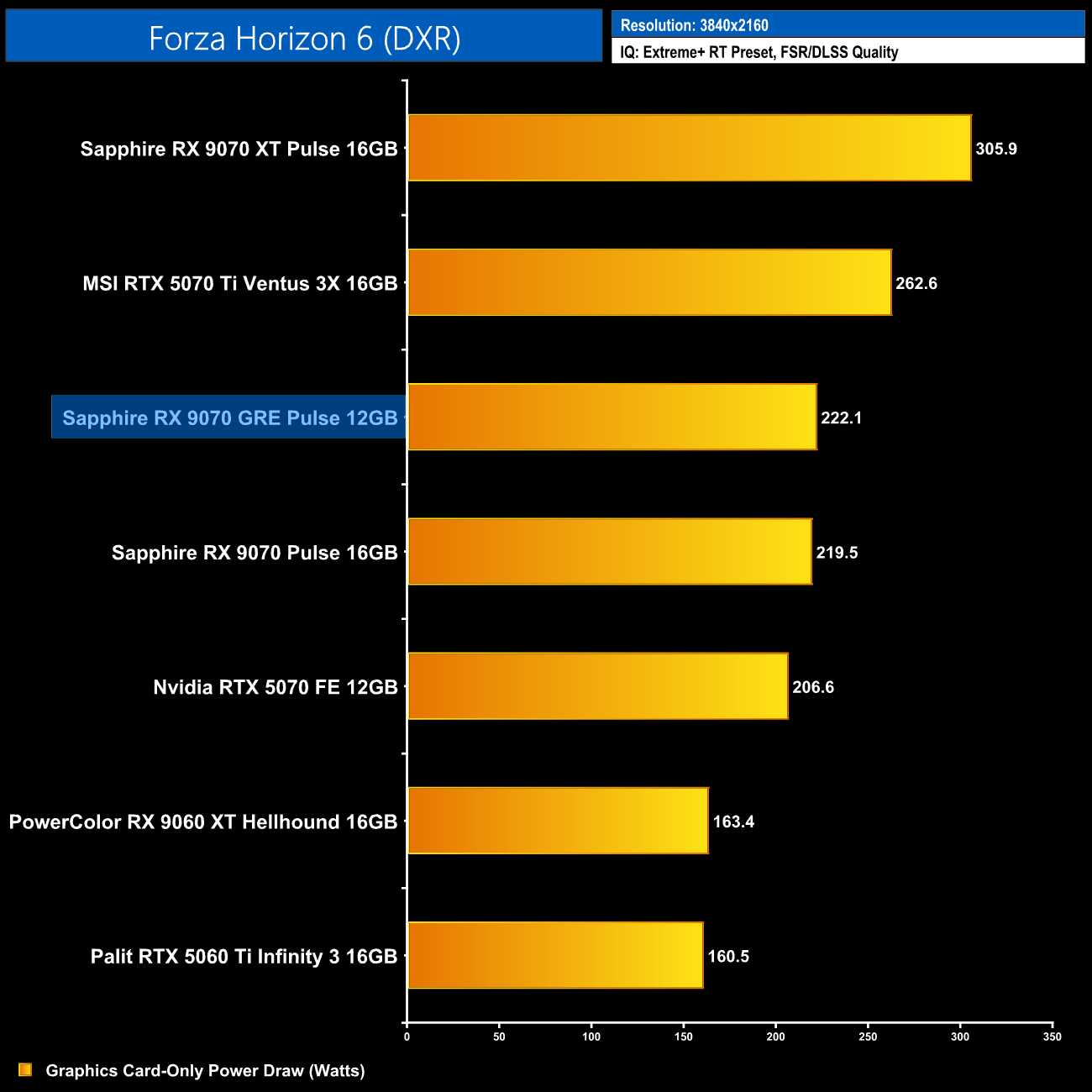
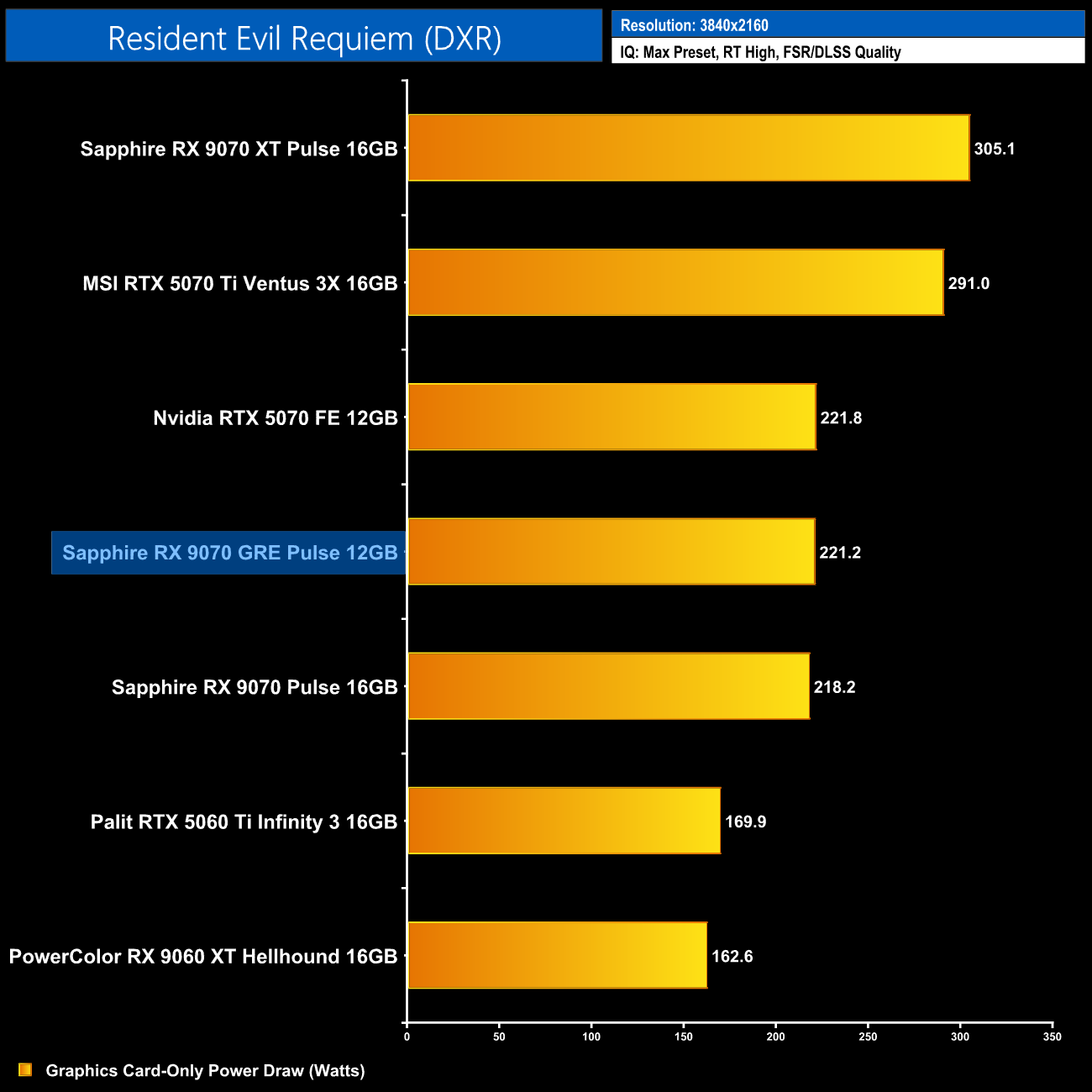
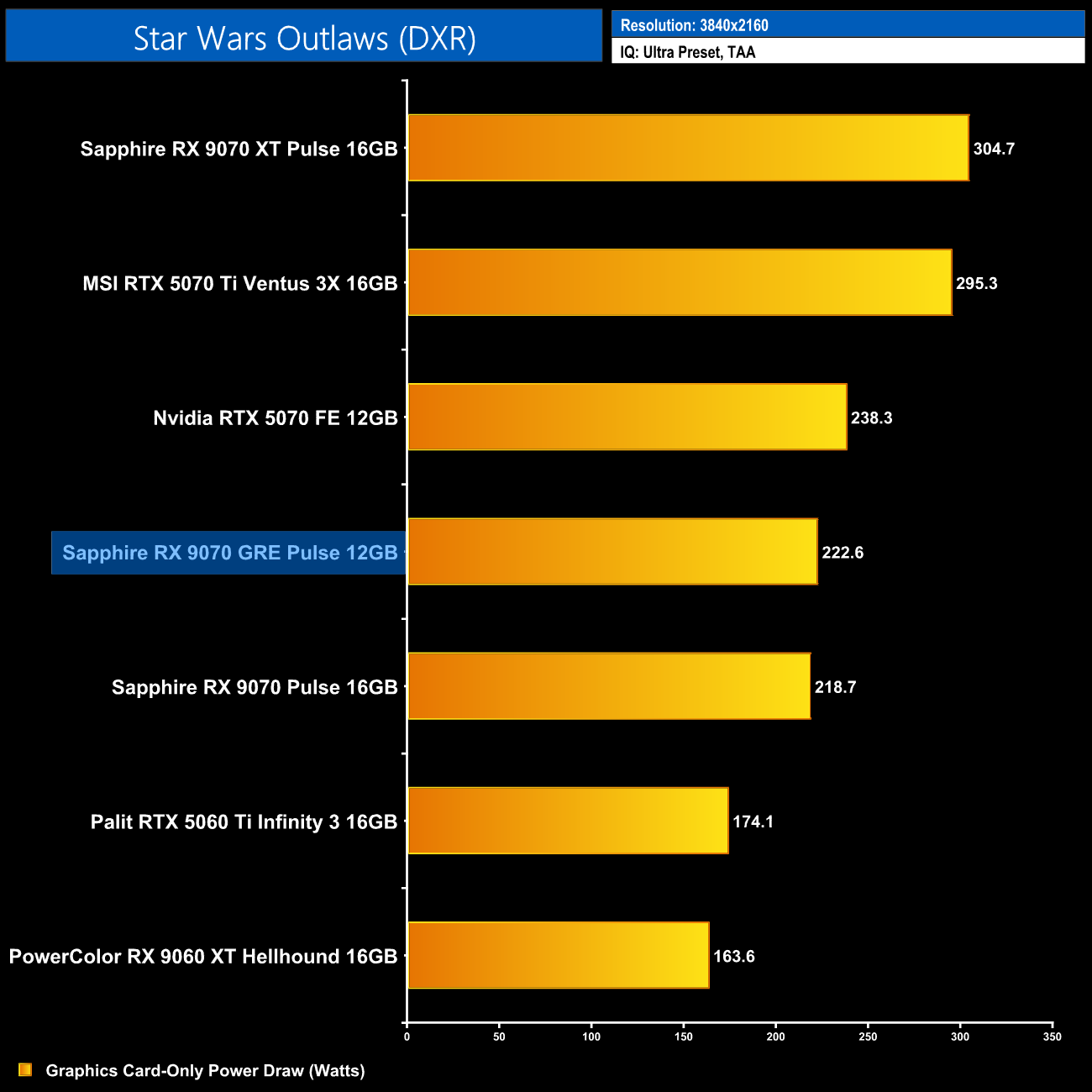
8-Game ray tracing average:
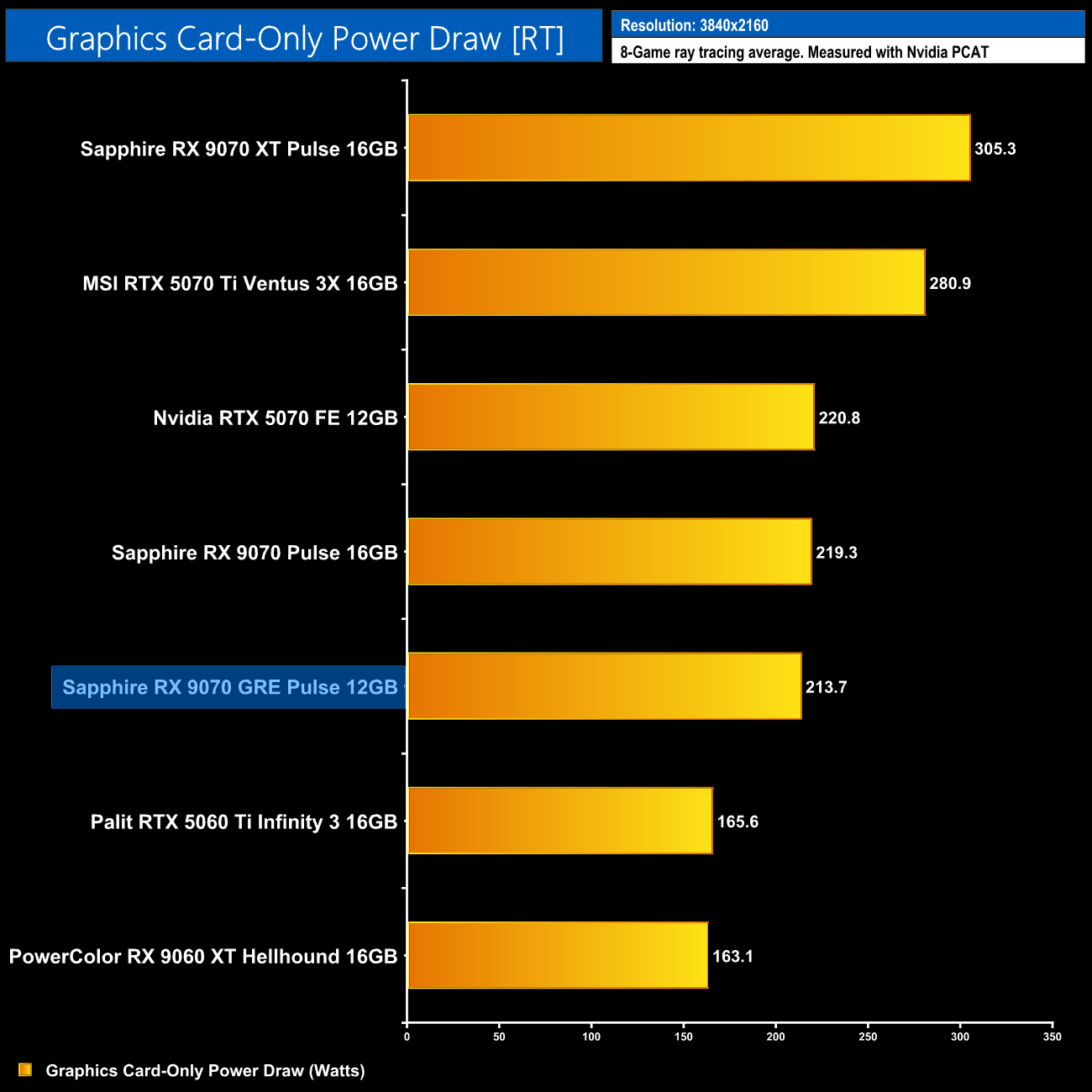
The ray tracing average for 4K is slightly lower due to performance in Alan Wake 2 dropping off a cliff, but you're unlikely to be using this GPU for 4K ray tracing anyway!
Using the graphics card-only power draw figures presented earlier in the review, here we present performance per Watt on a per-game basis for all twelve games we tested at 1080p.
Per-Game Results at 1080p:
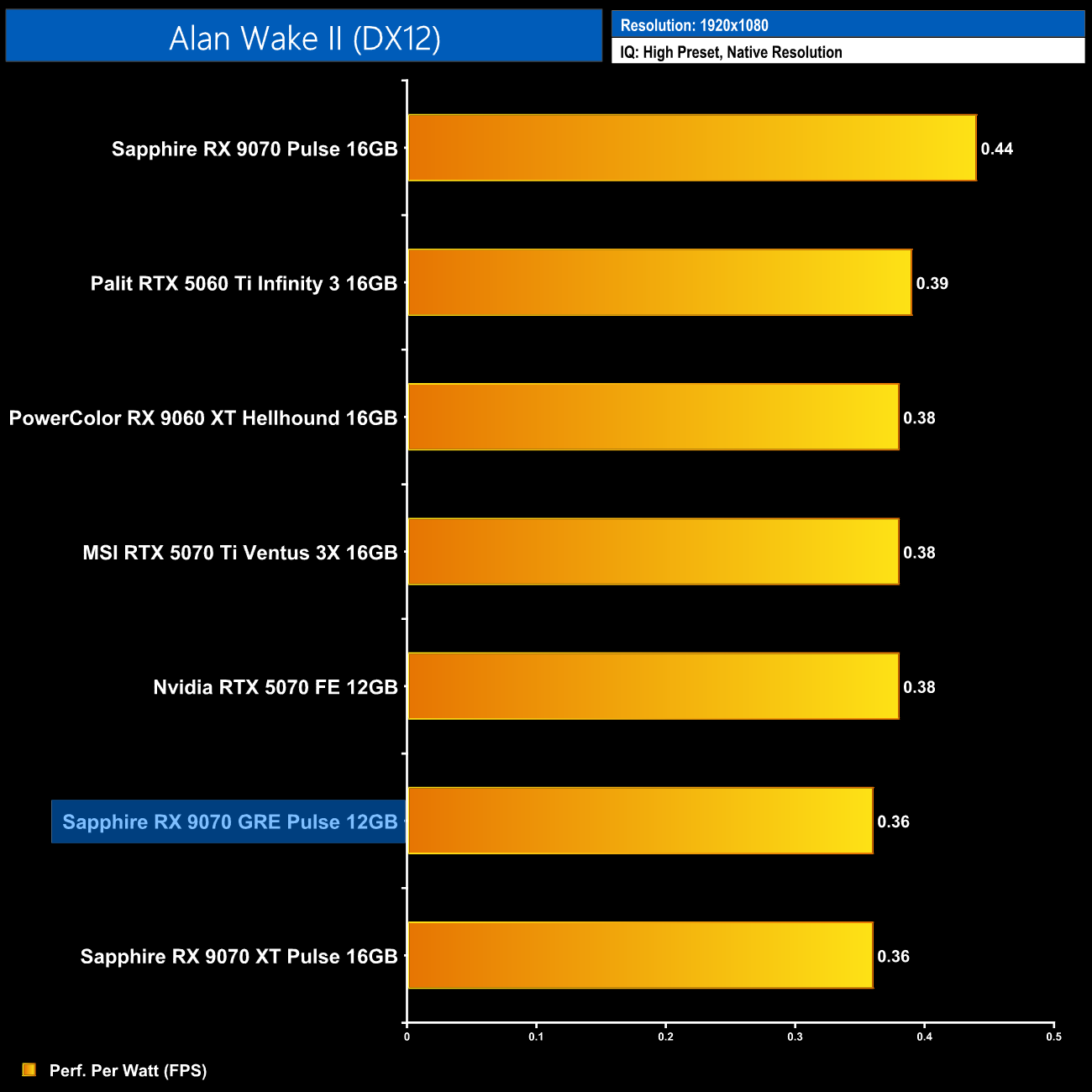
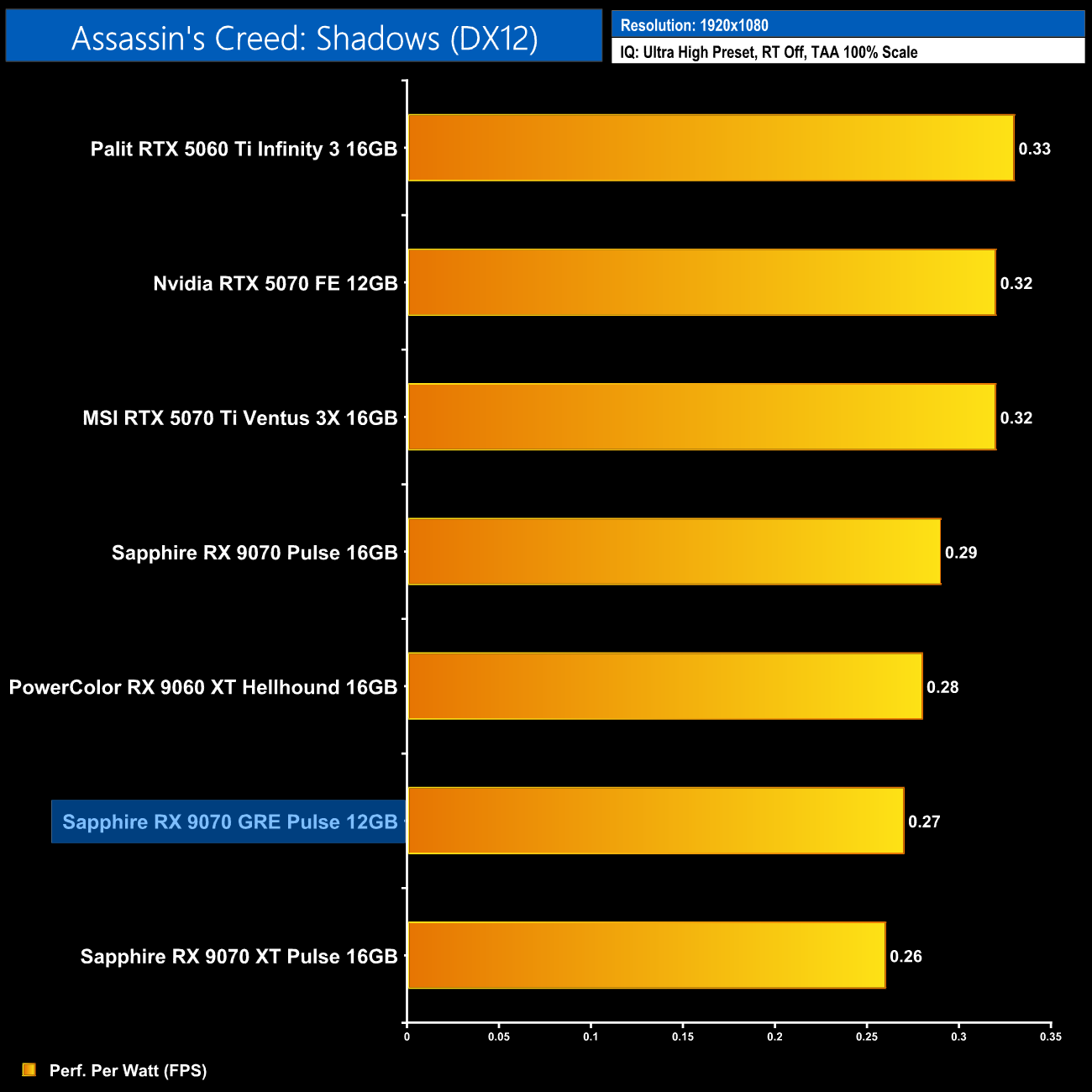
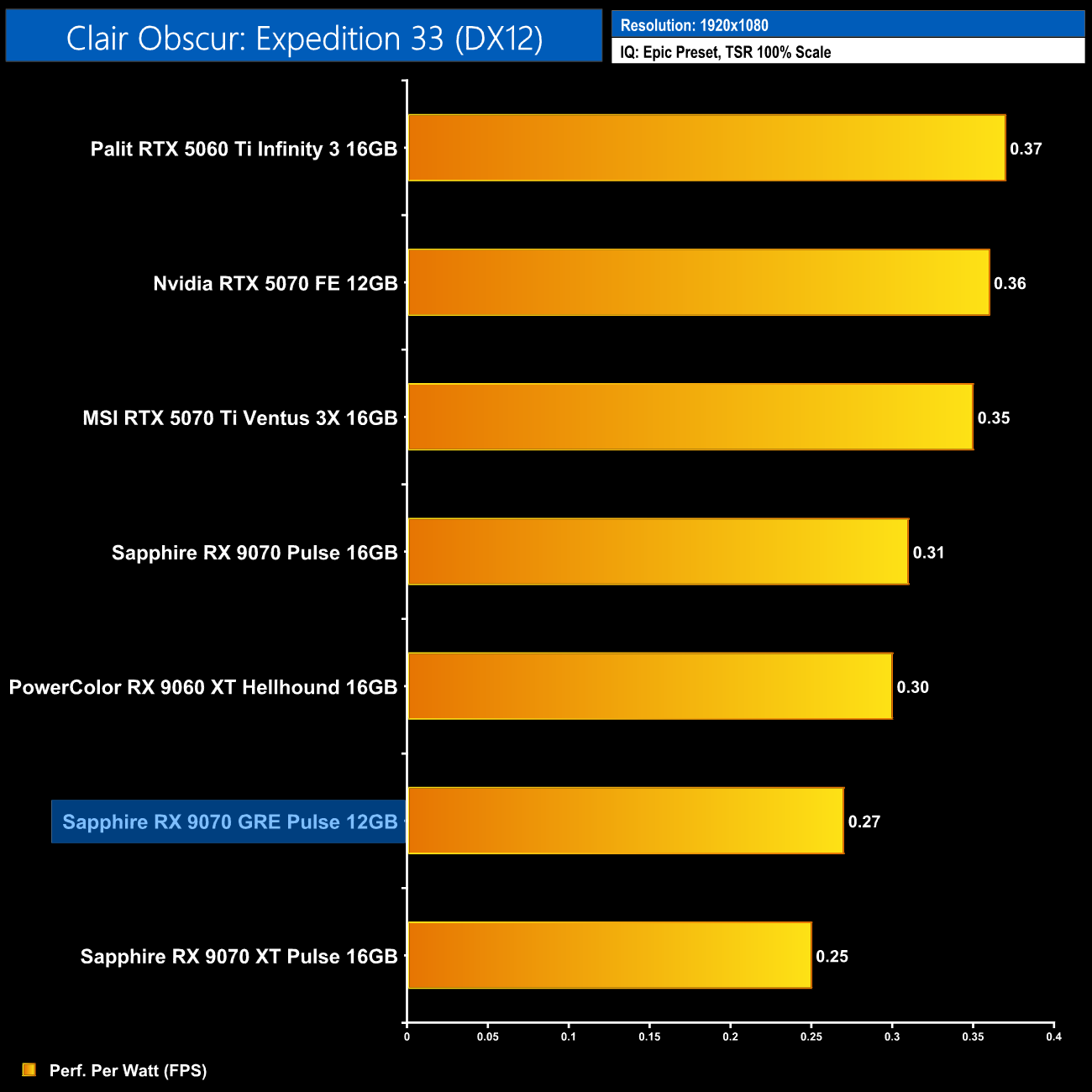
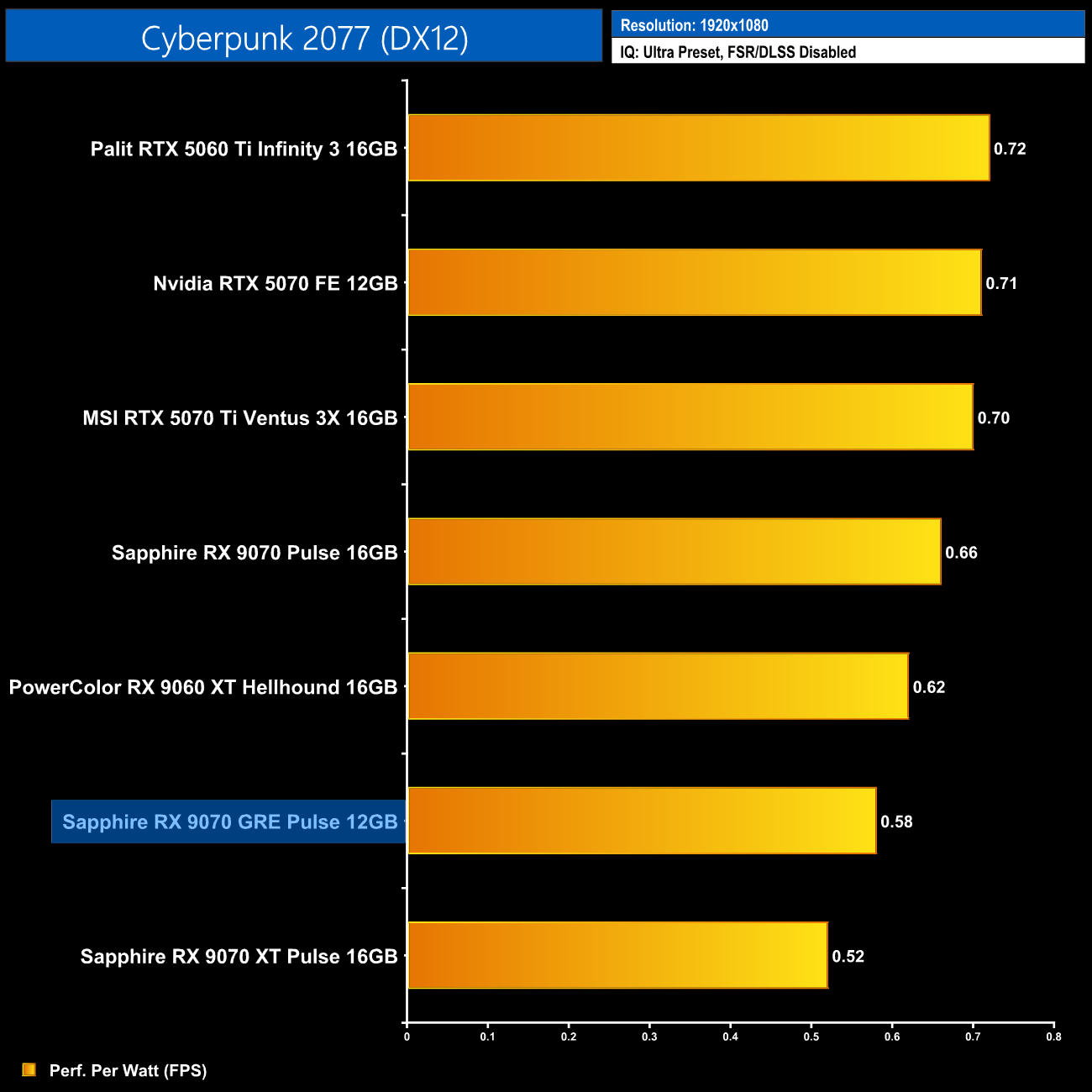
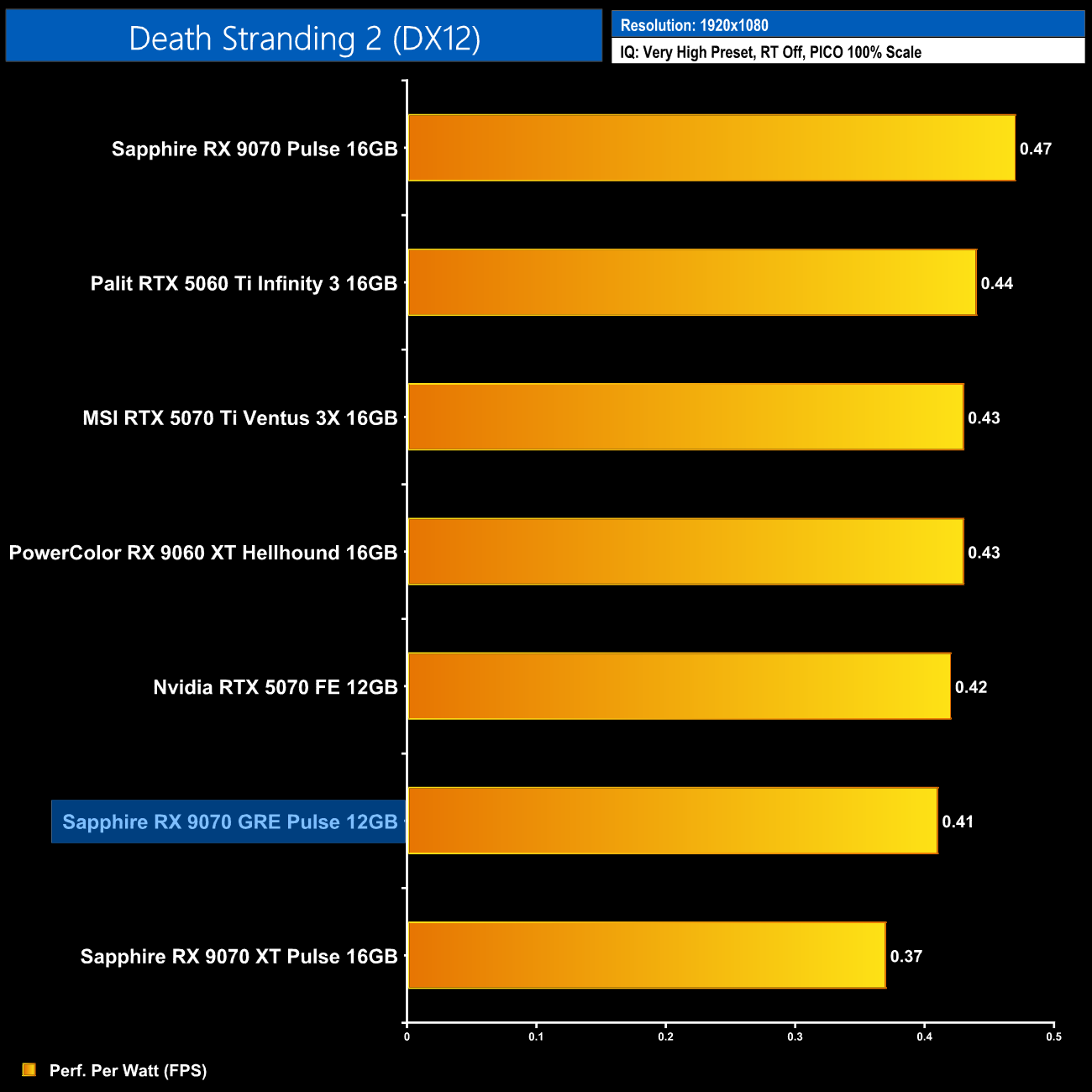
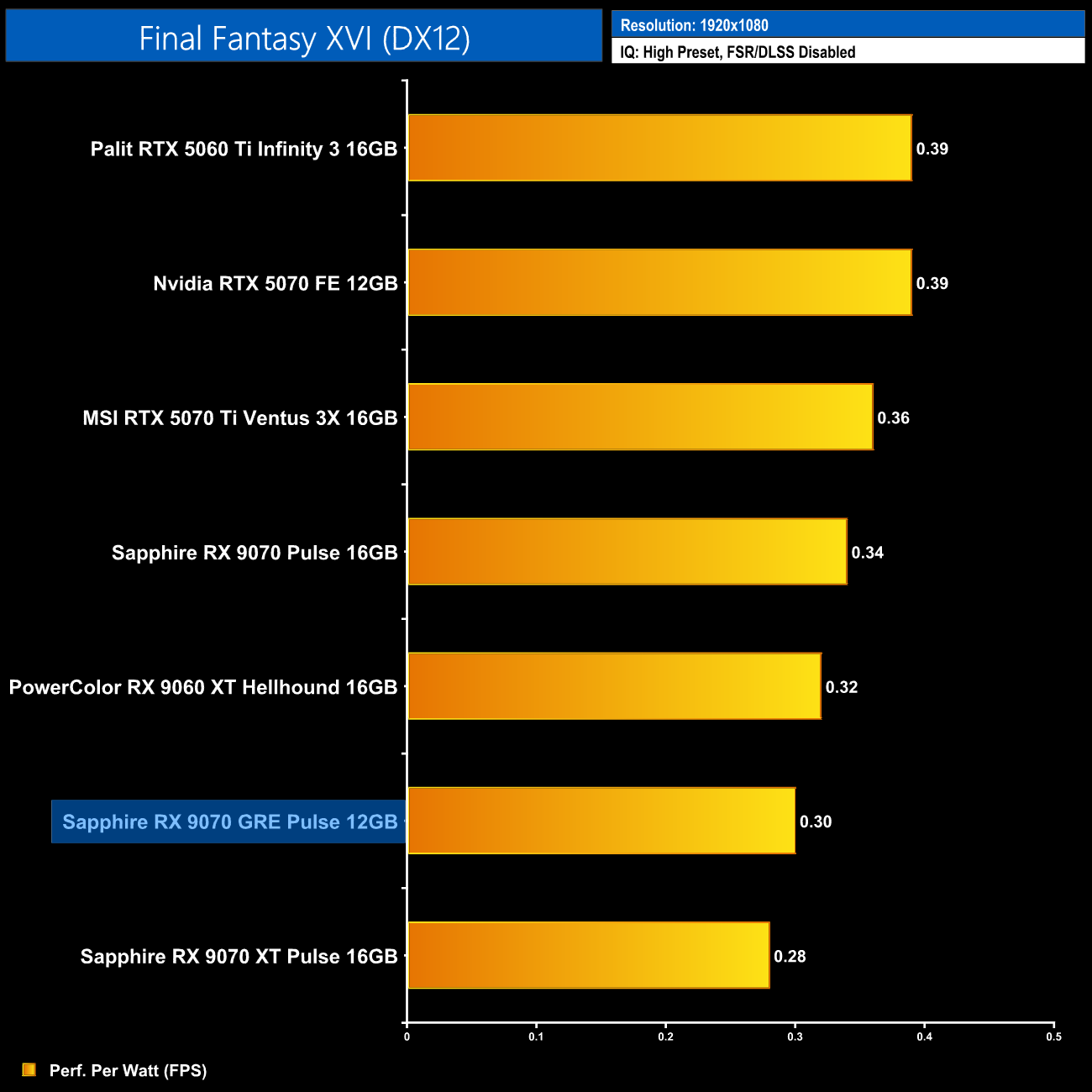
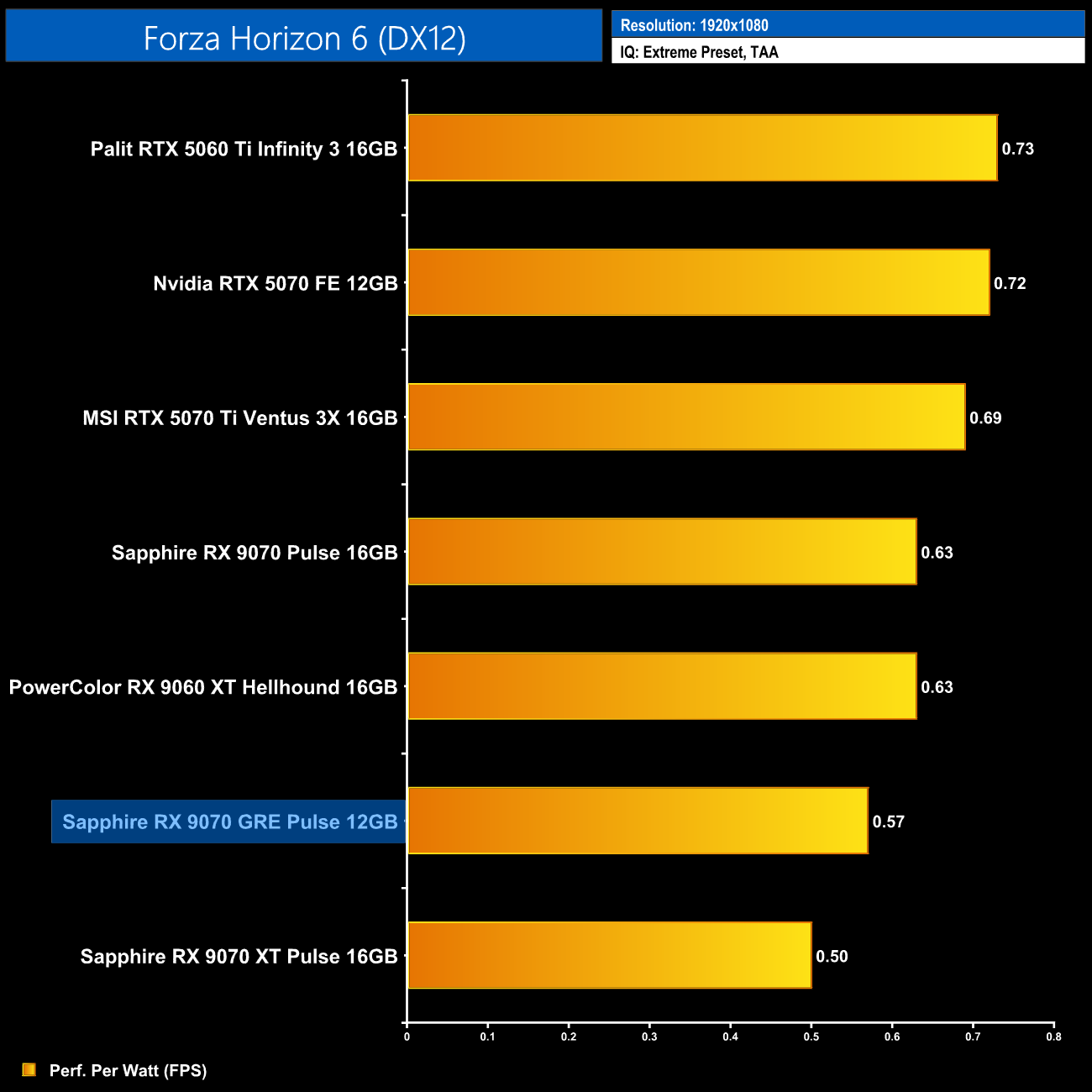
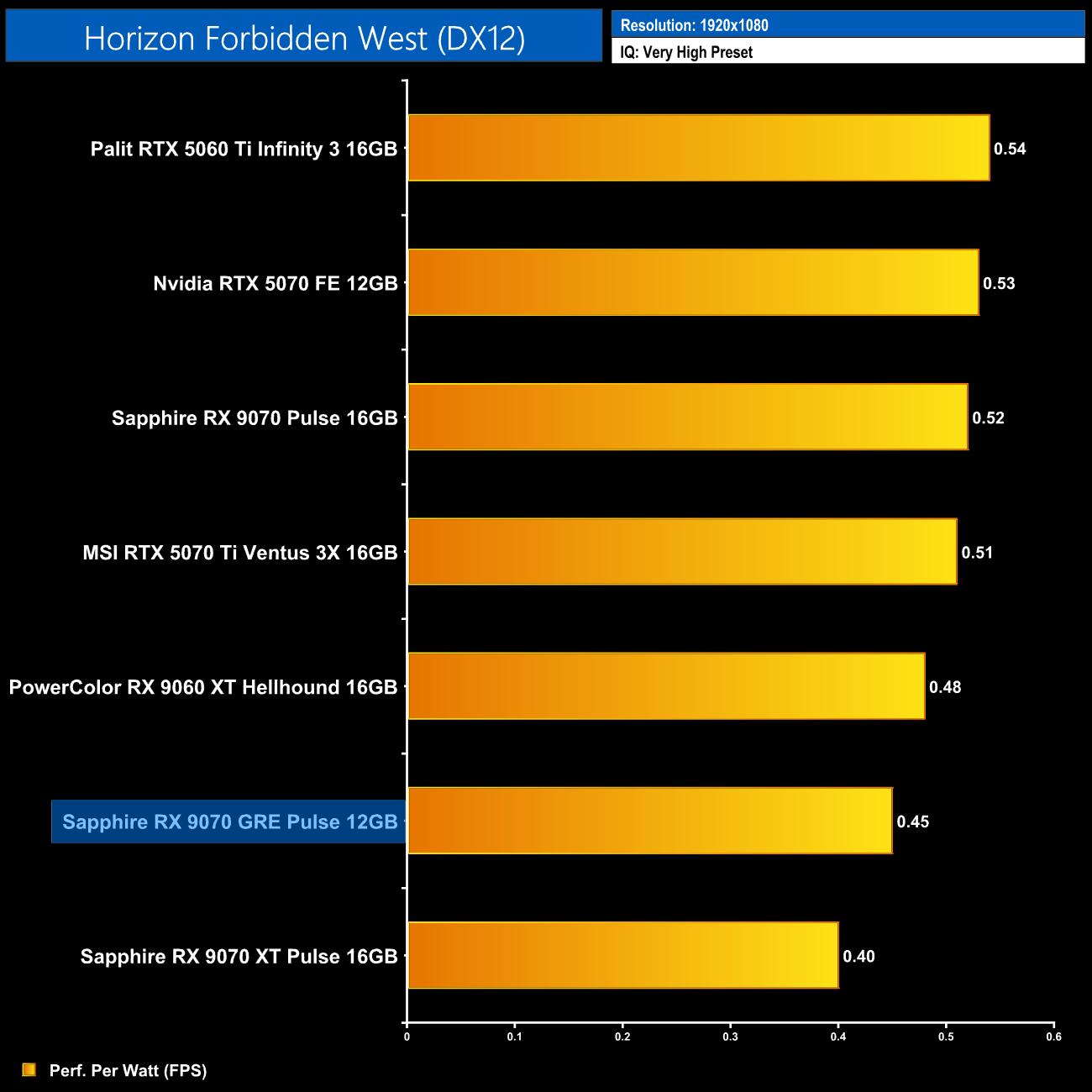
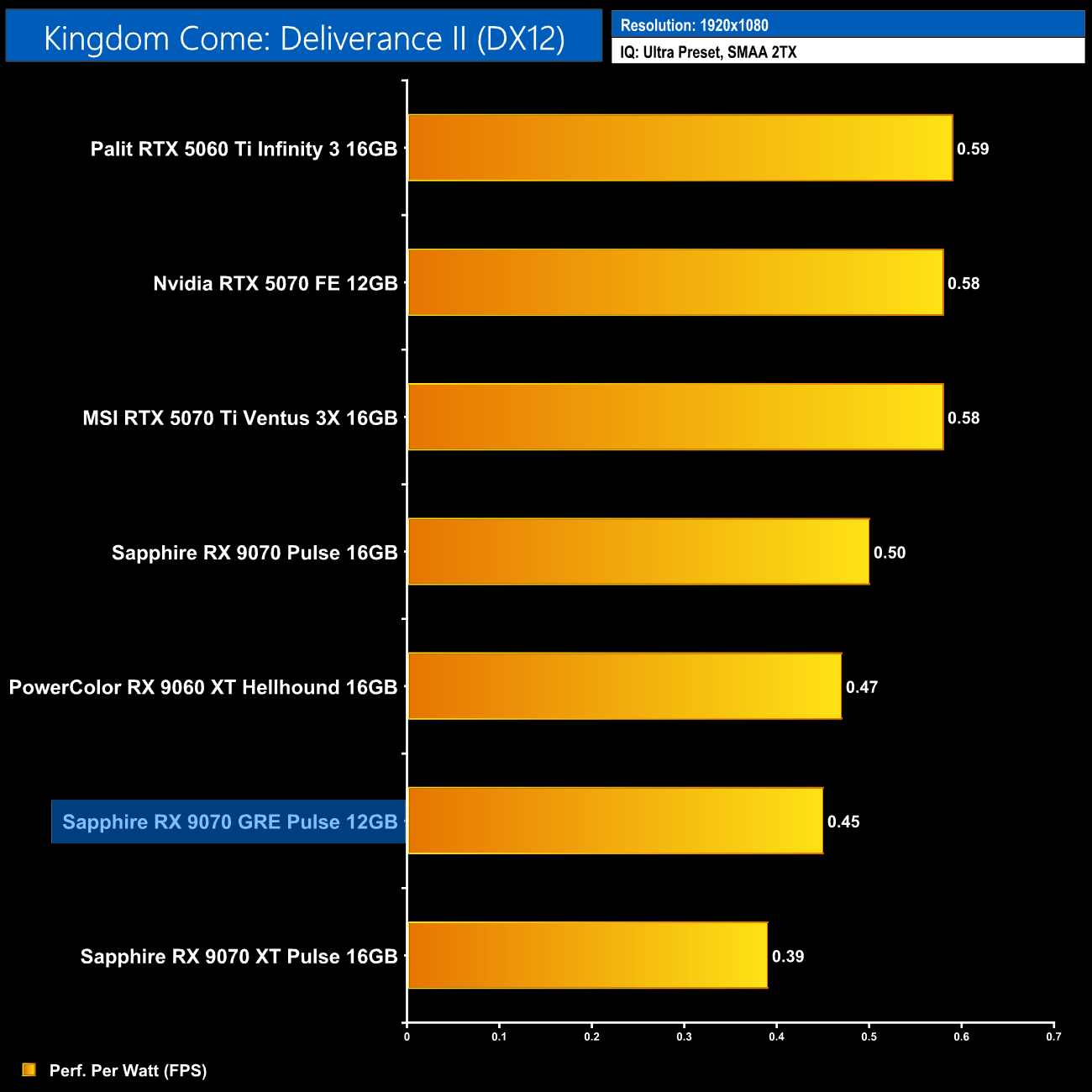
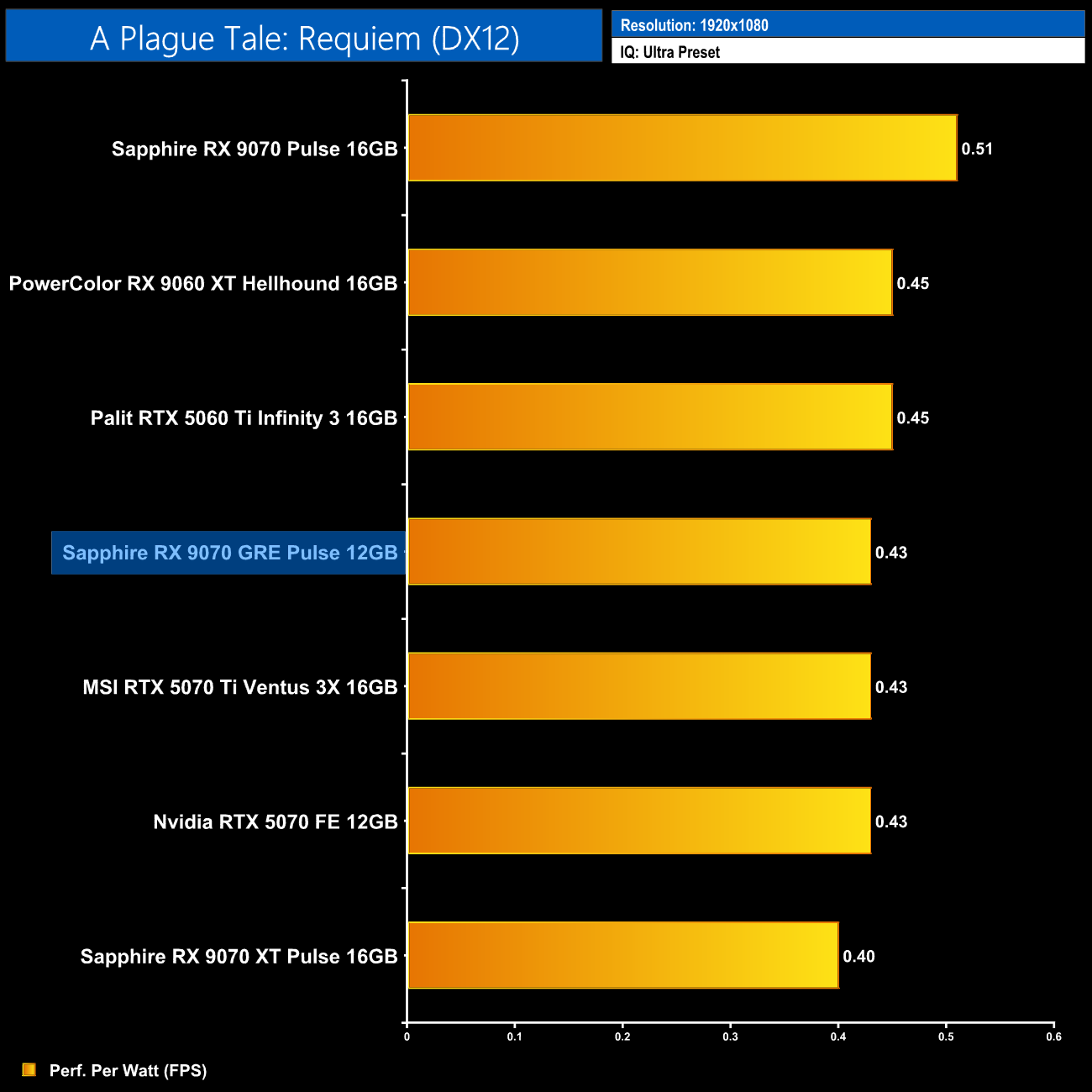
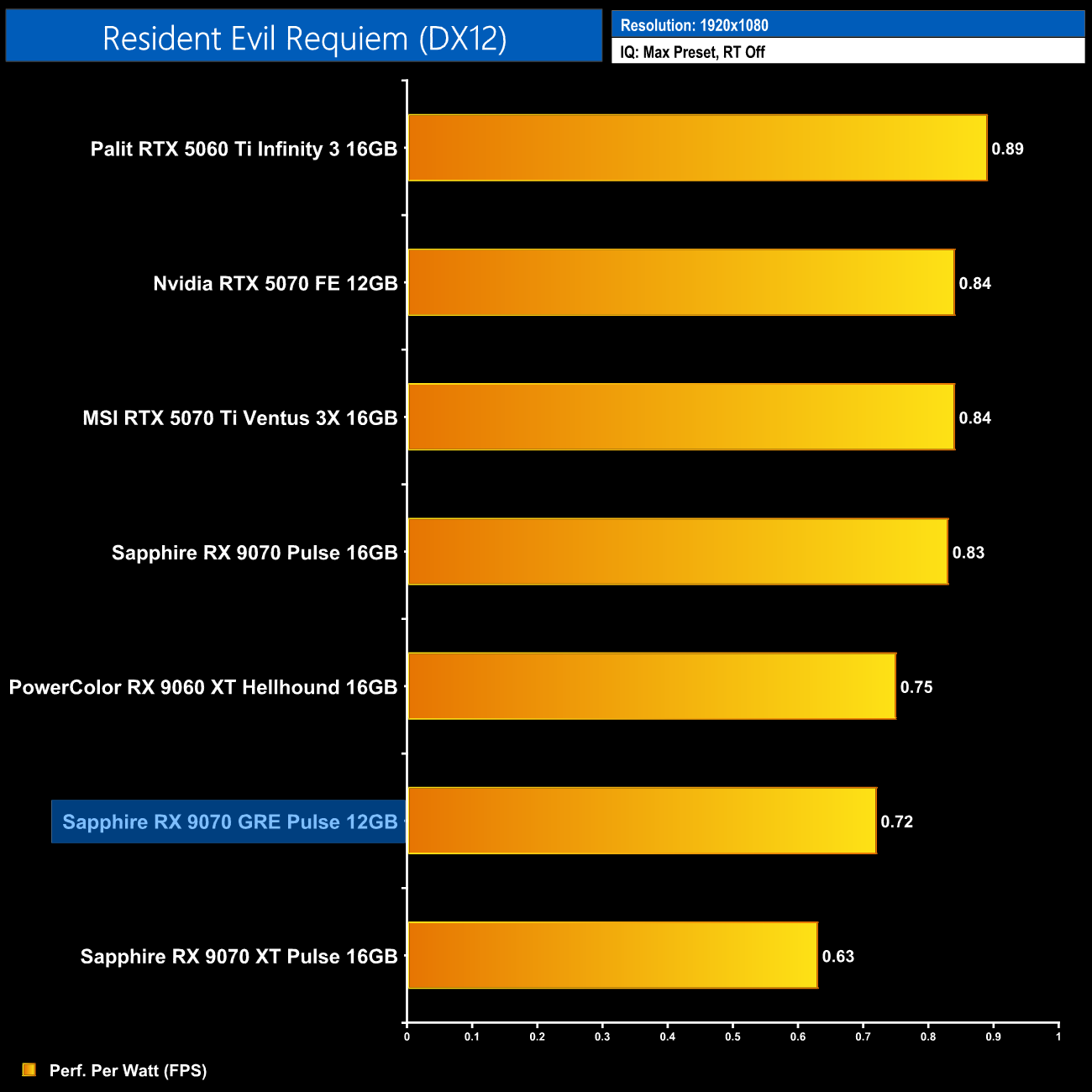
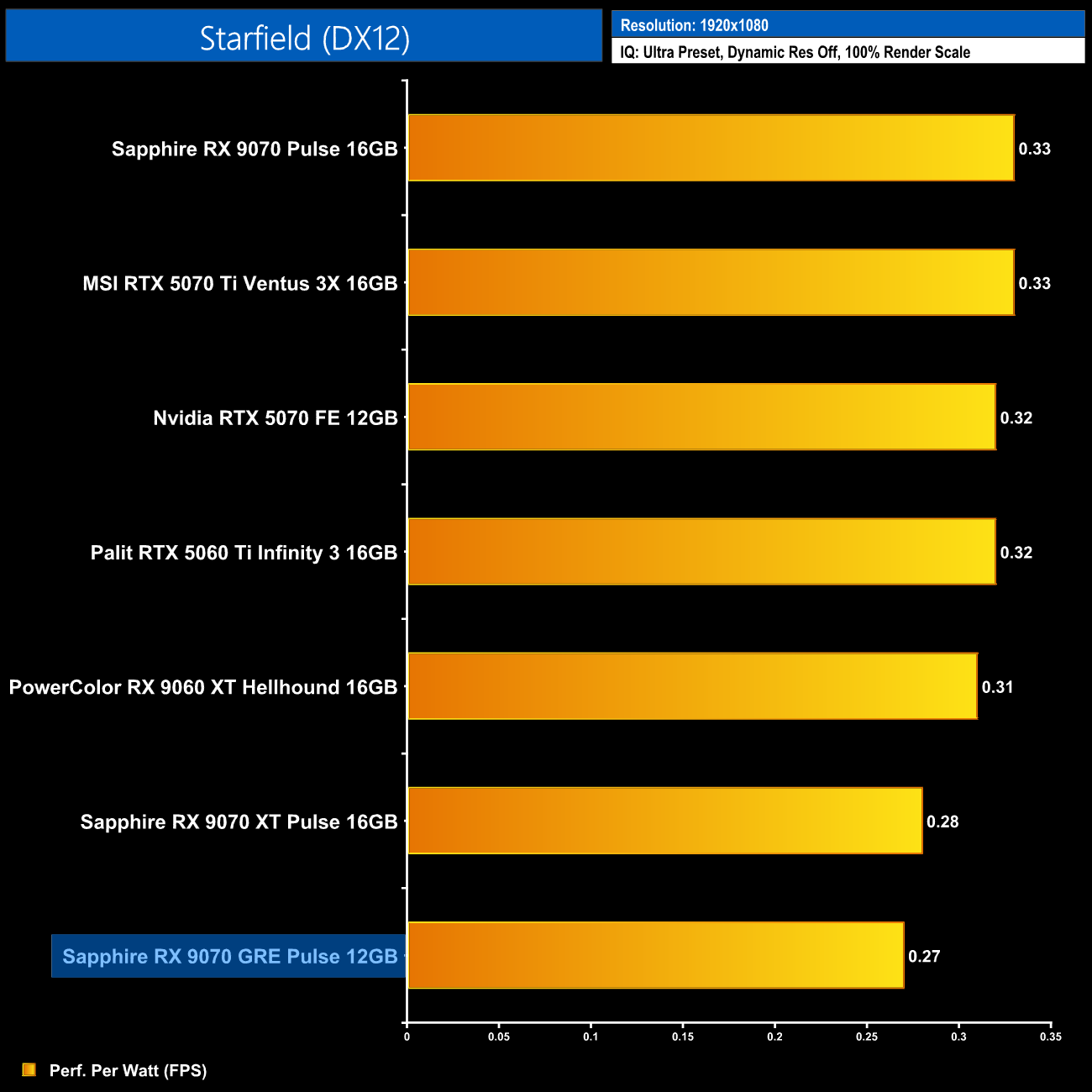
Click to enlarge.
12-Game Average at 1080p:
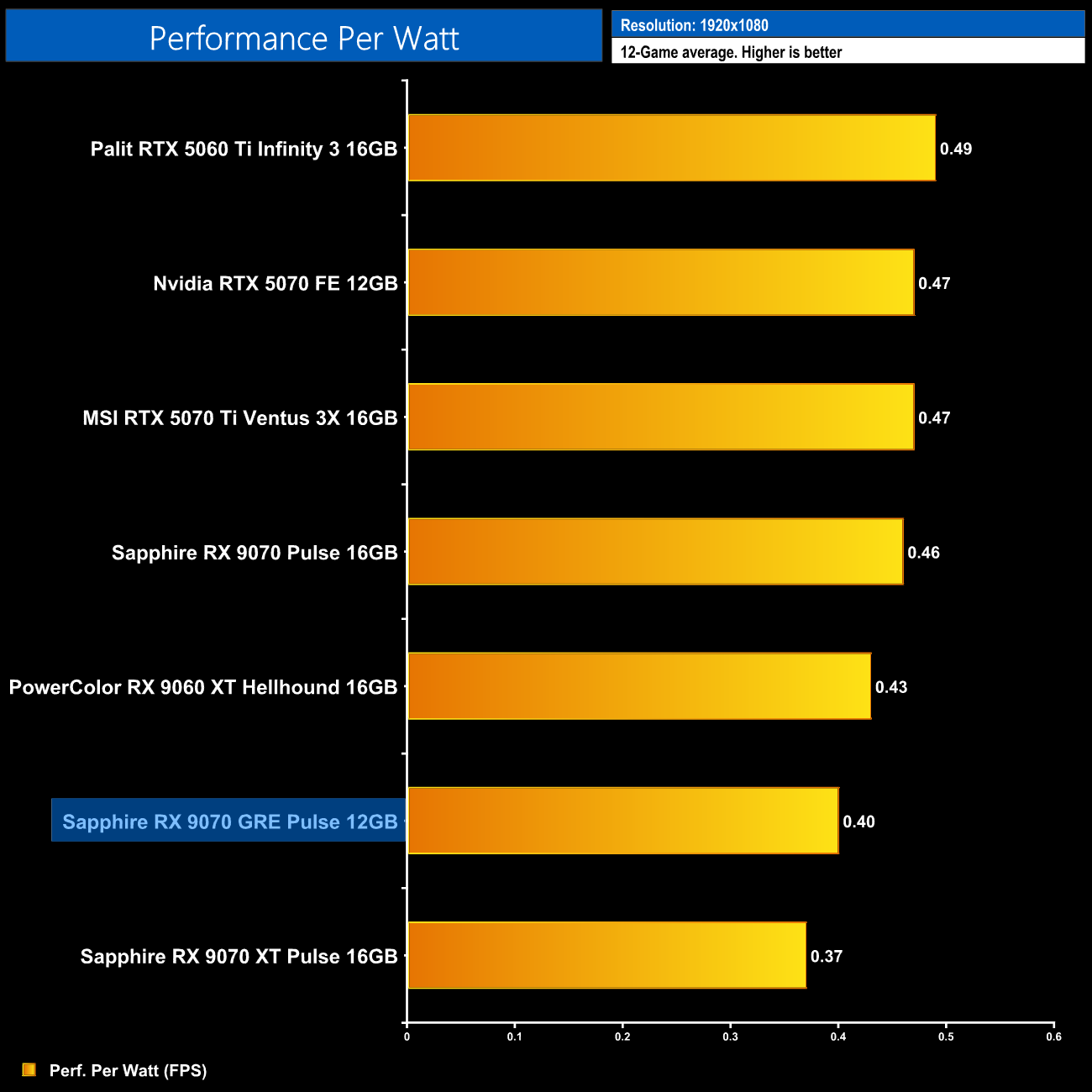
Looking now at efficiency, at 1080p the 9070 GRE lags behind, proving less efficient than all but the 9070 XT.
Ray tracing results
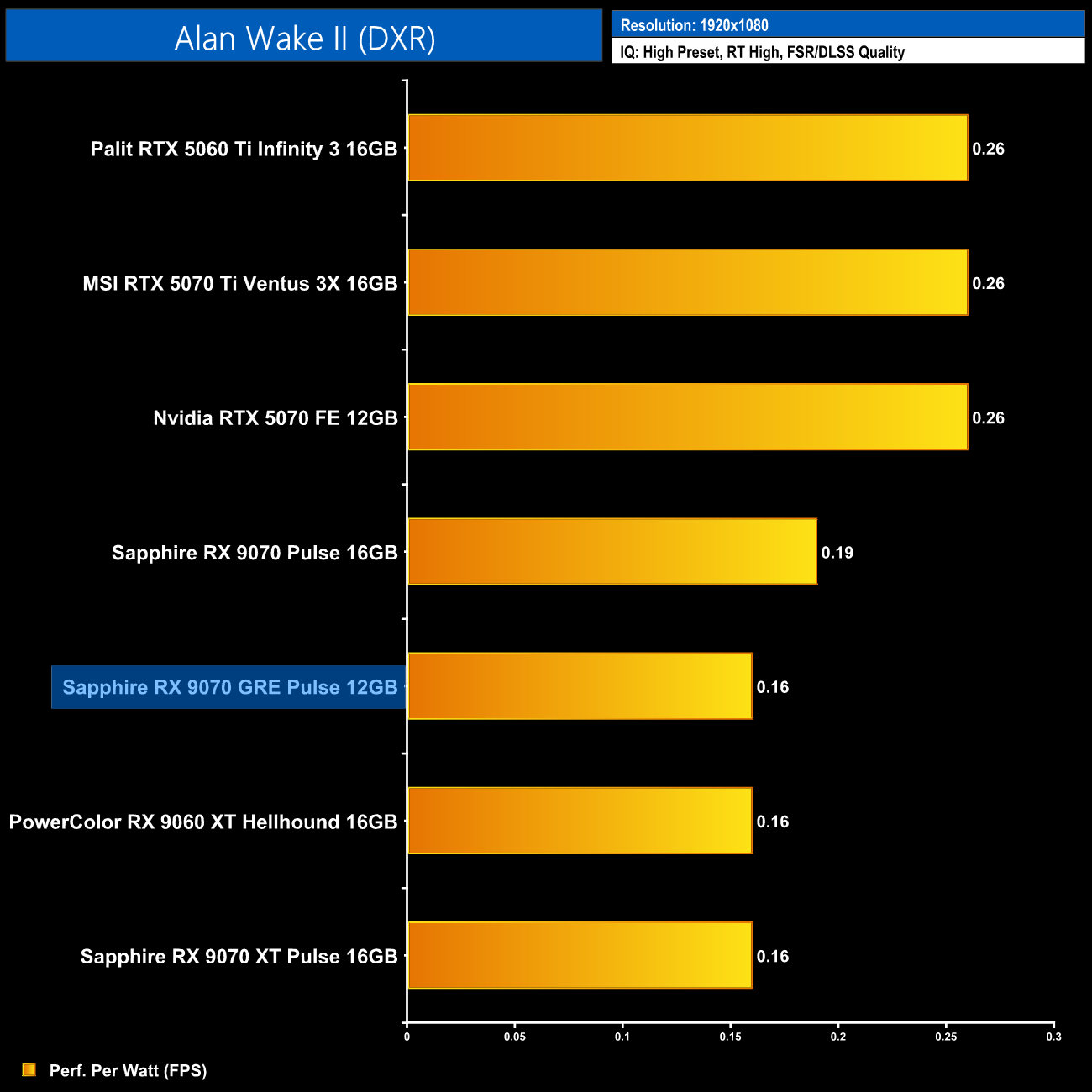
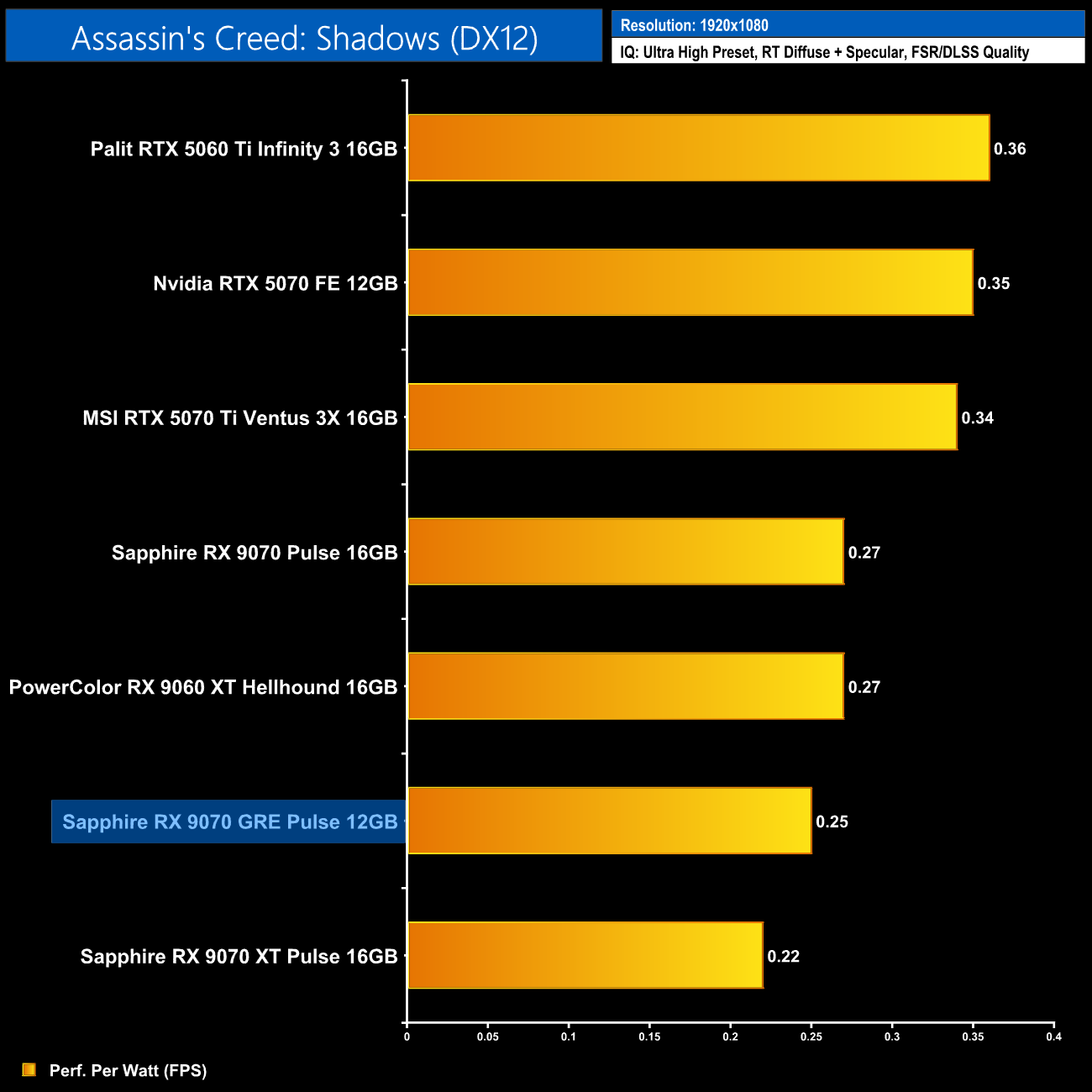
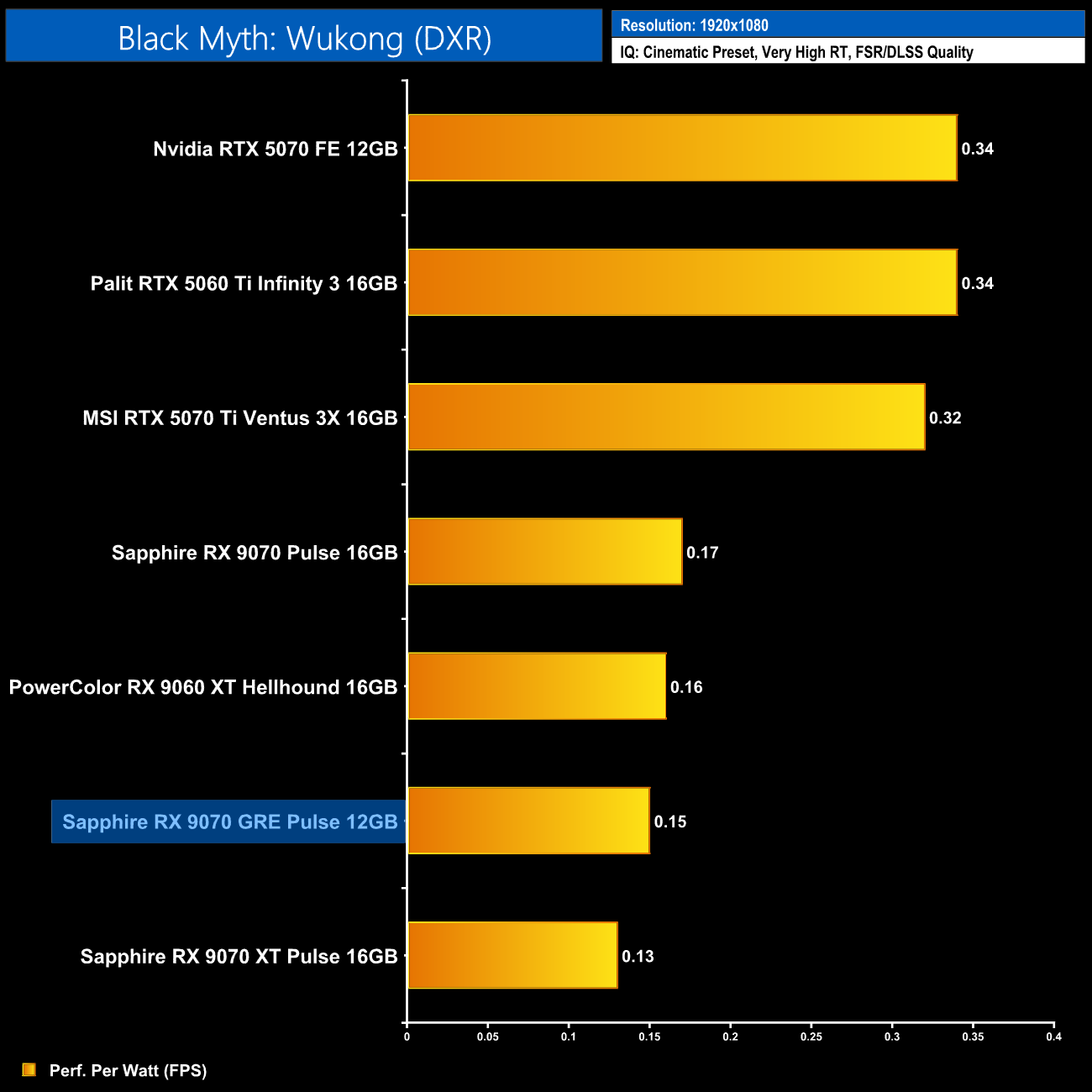
As a bonus, we now include the efficiency figures for all eight games we test with ray tracing enabled.
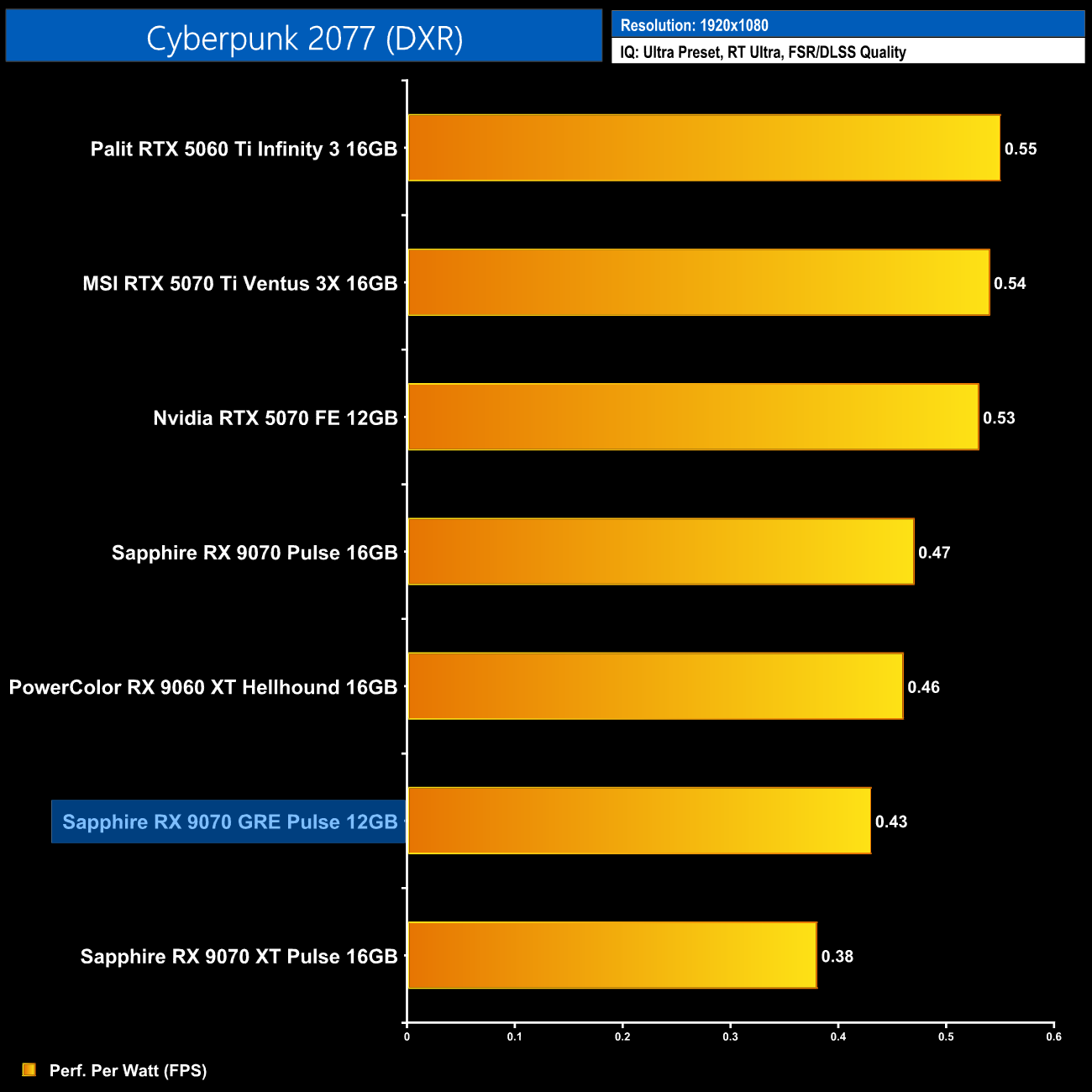
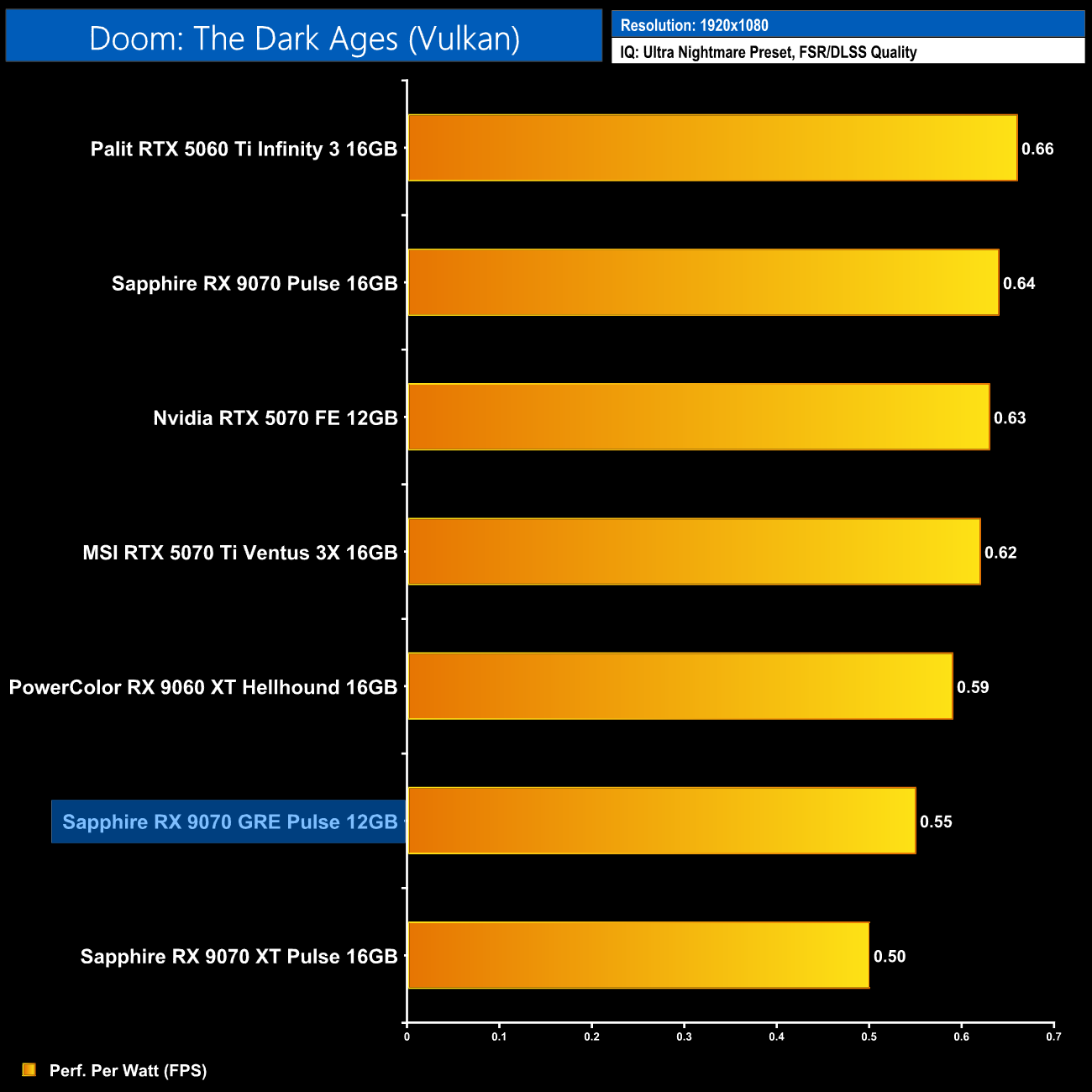
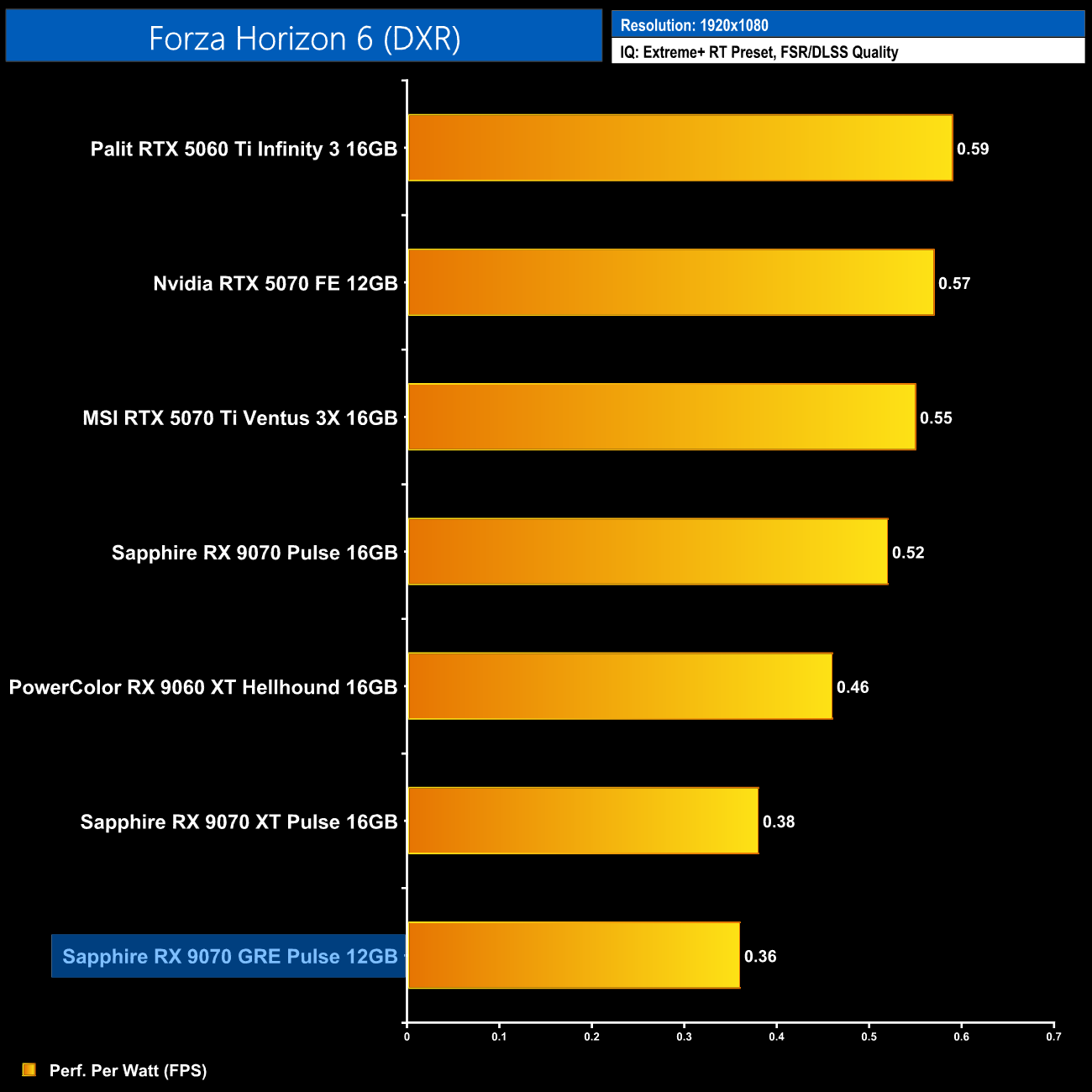
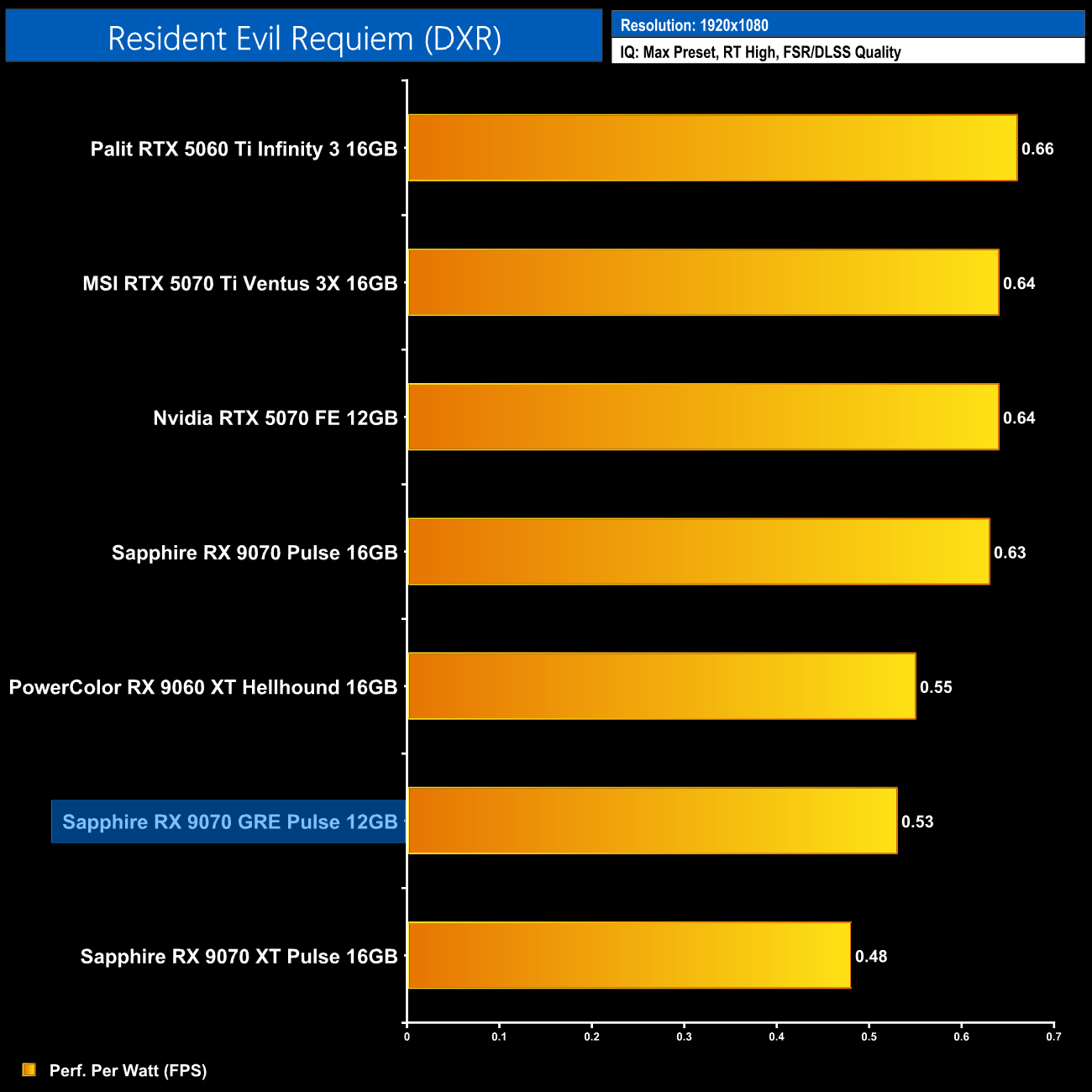
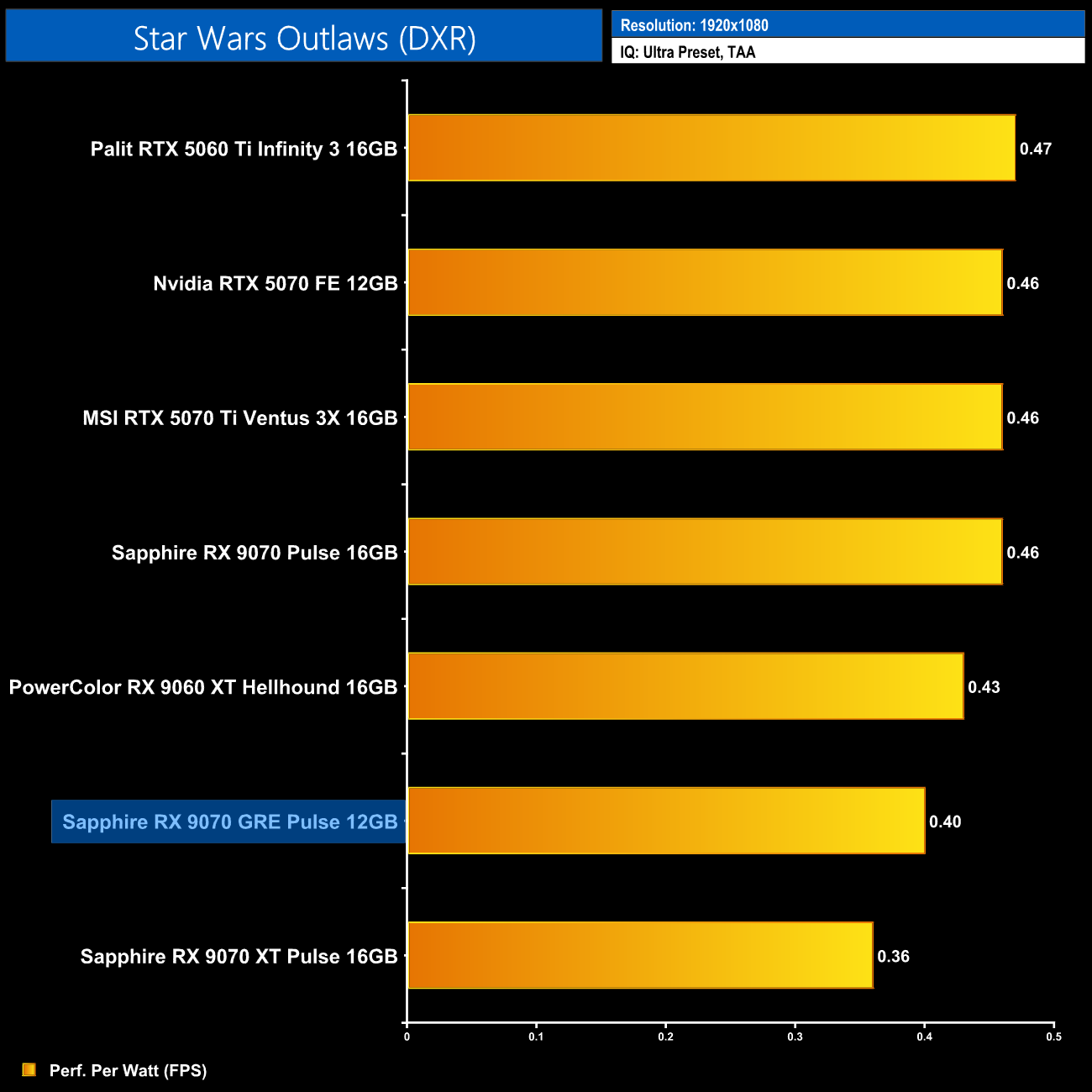
8-Game ray tracing average:
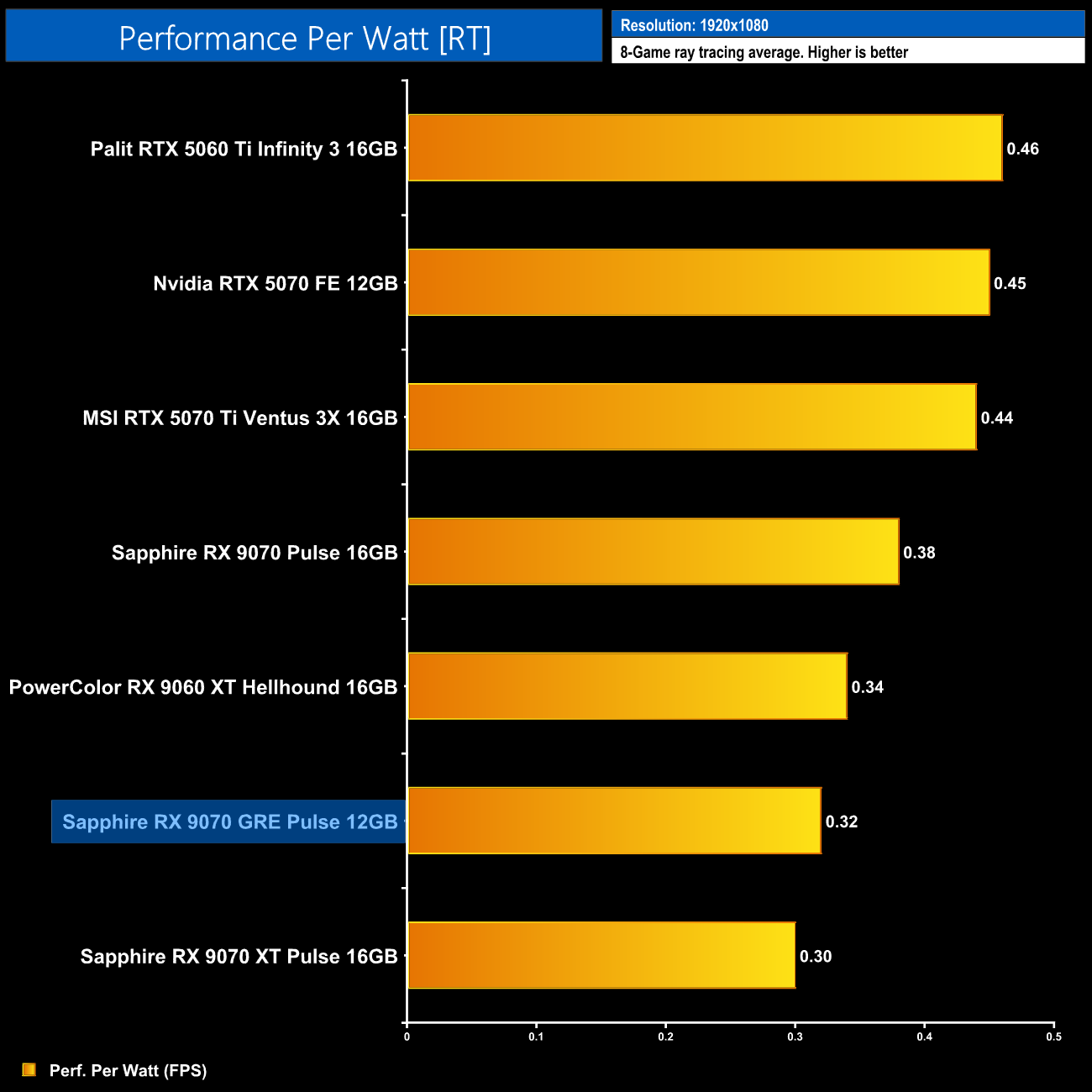
It's the same picture when looking at the ray tracing average, too.
Using the graphics card-only power draw figures presented earlier in the review, here we present performance per Watt on a per-game basis for all twelve games we tested at 1440p.
Per-Game Results at 1440p:
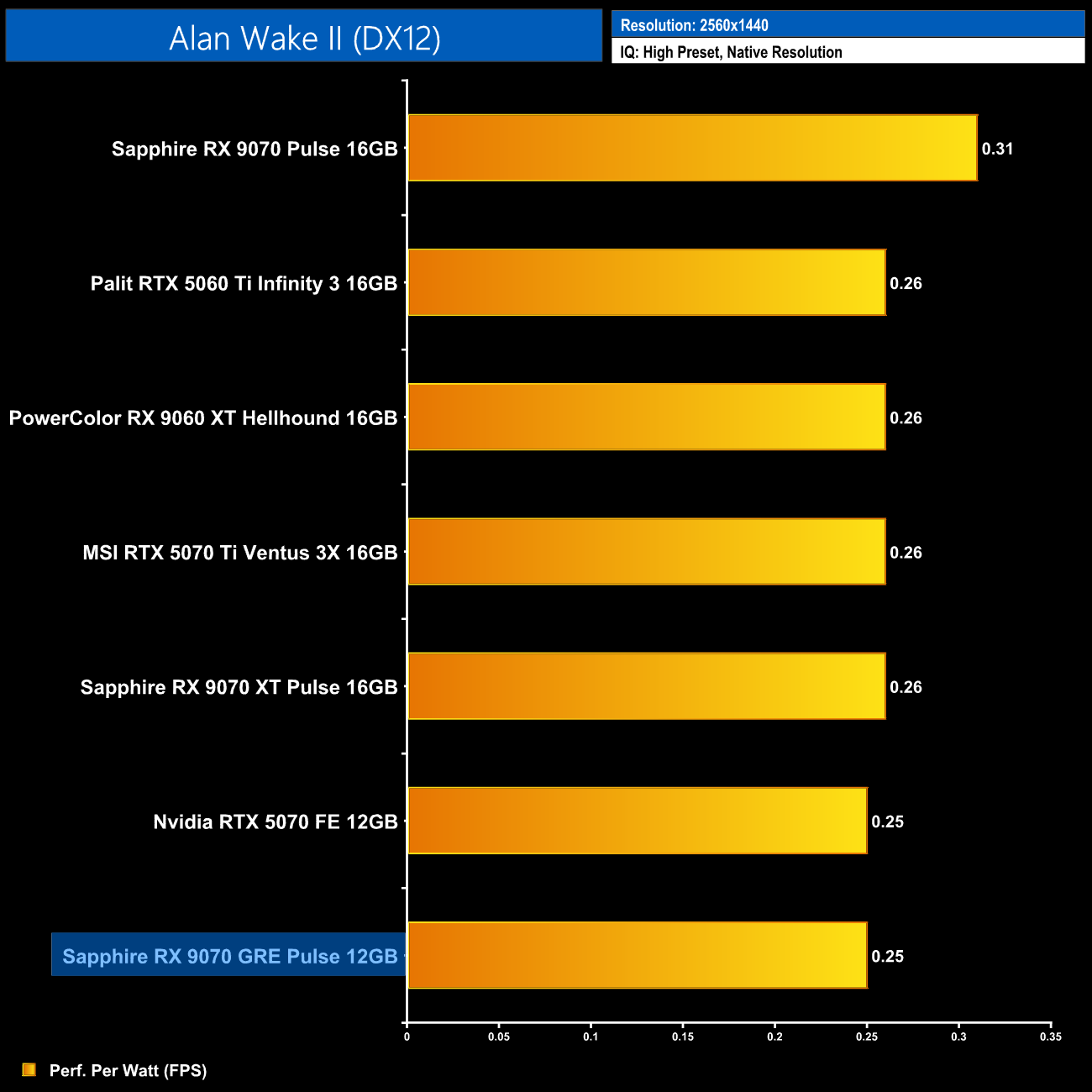
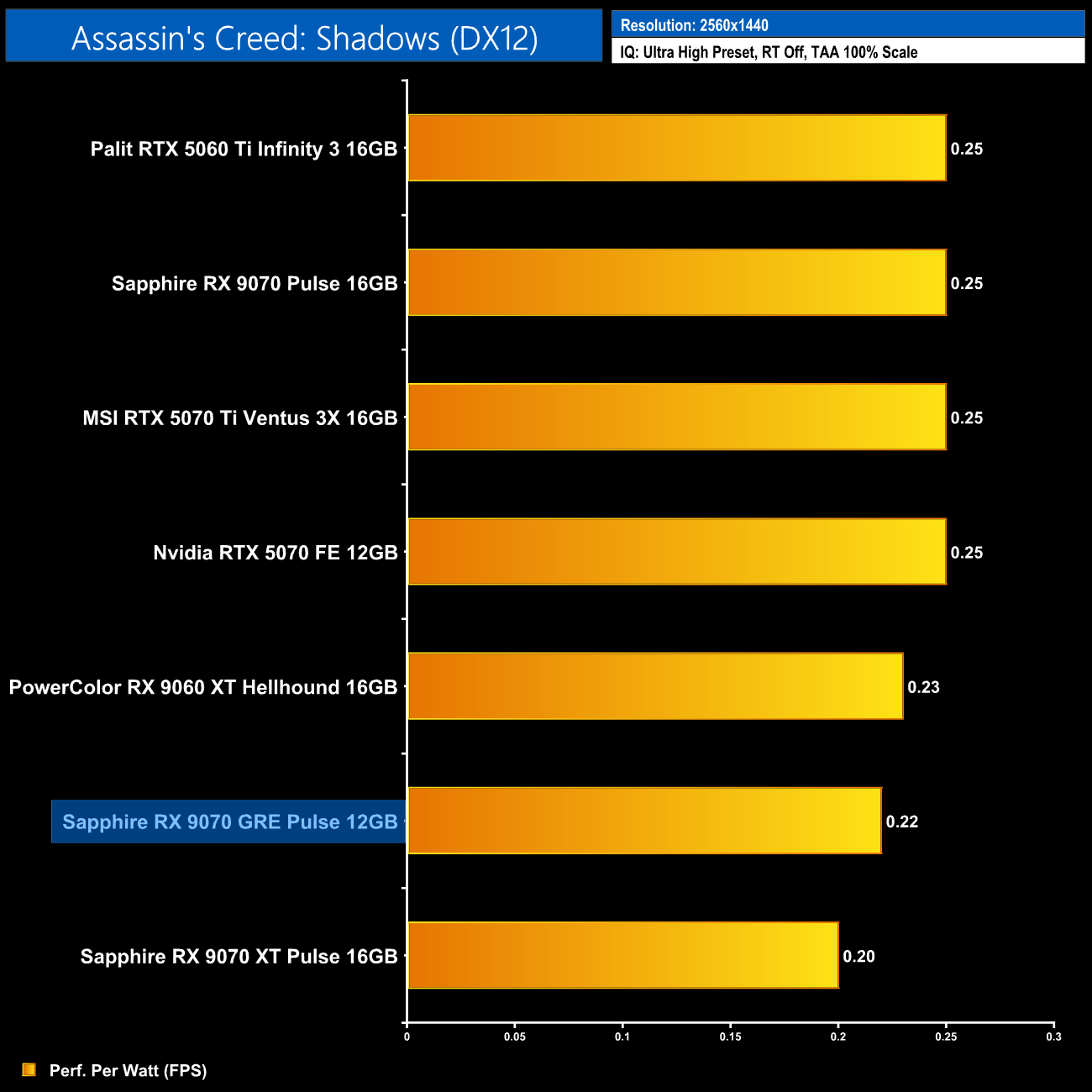
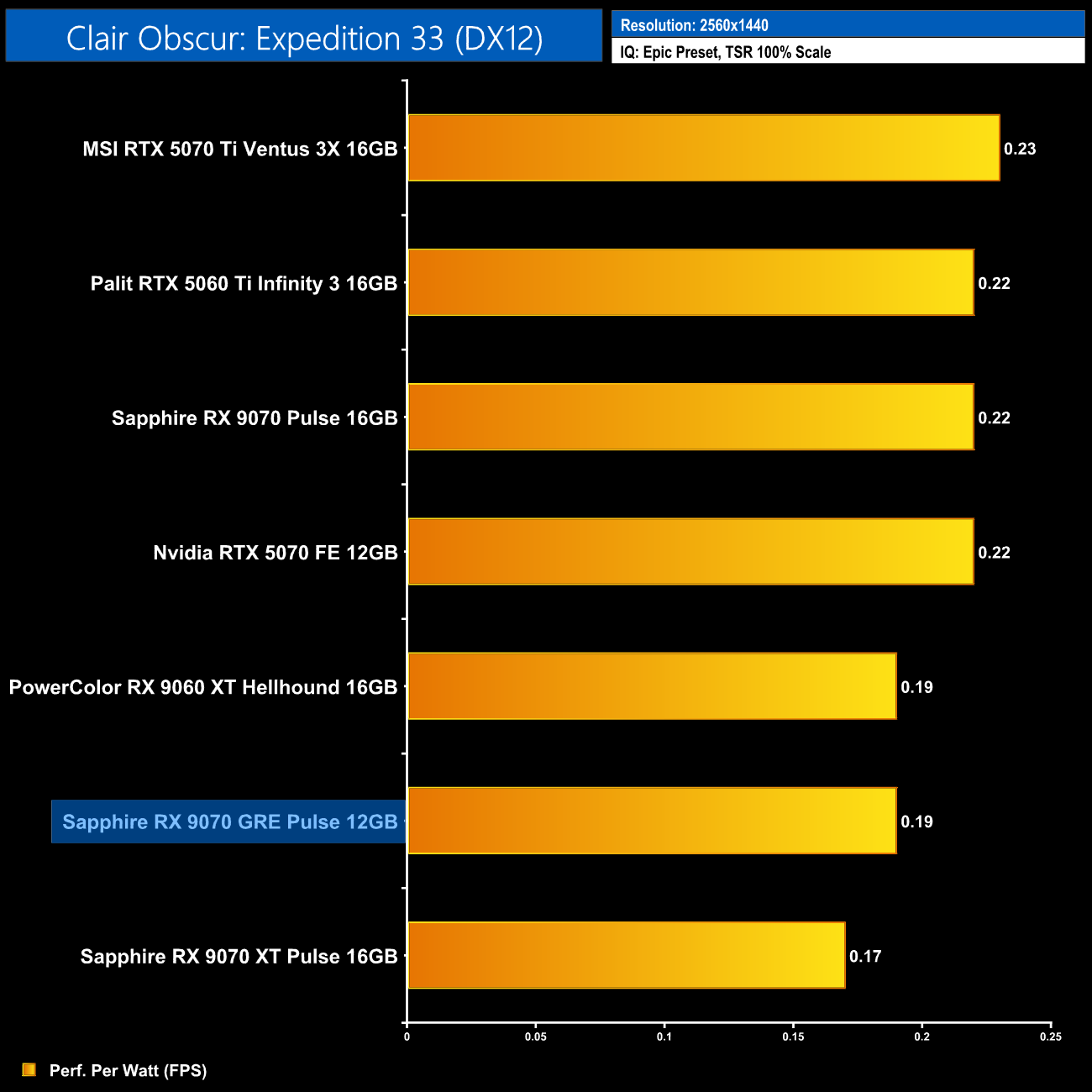
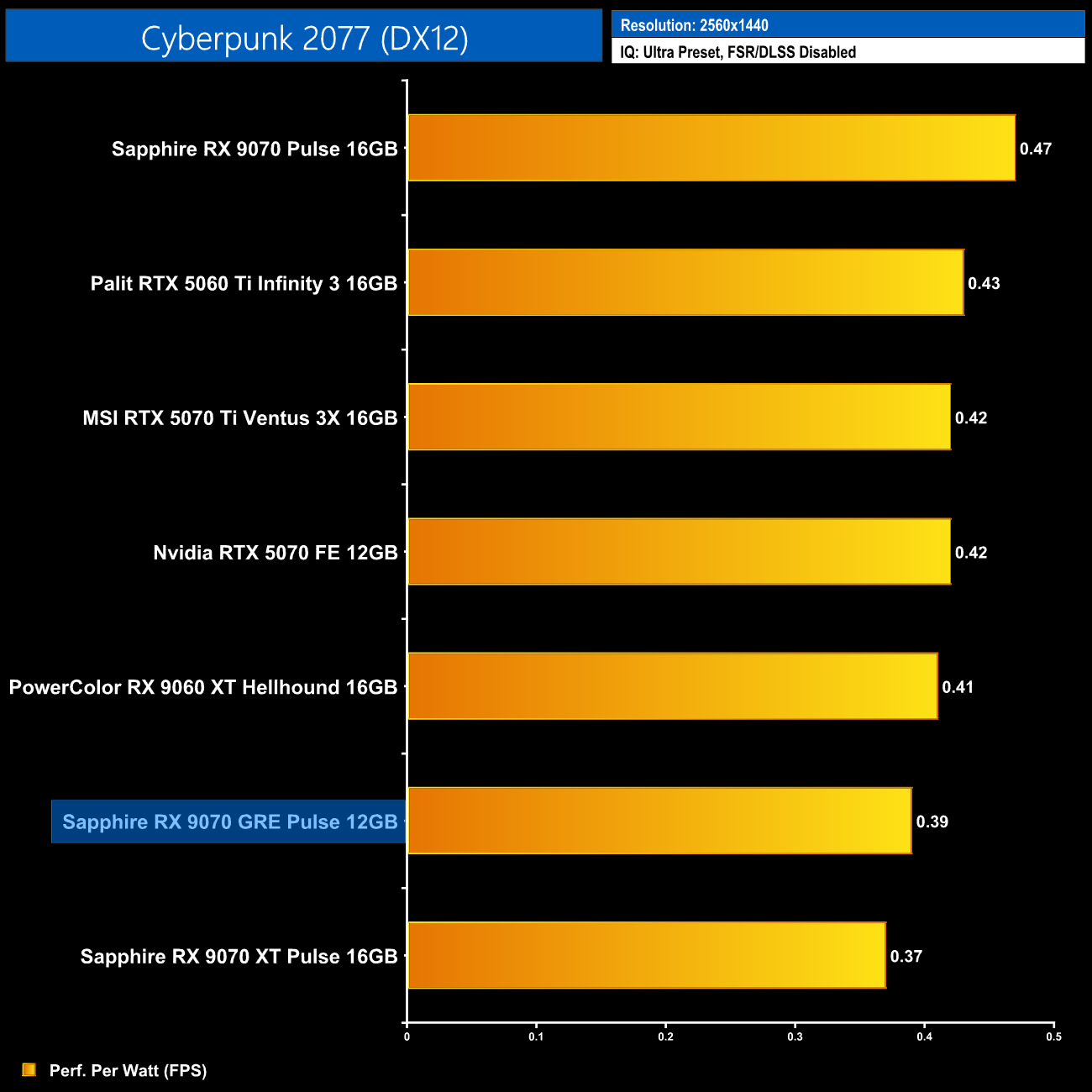
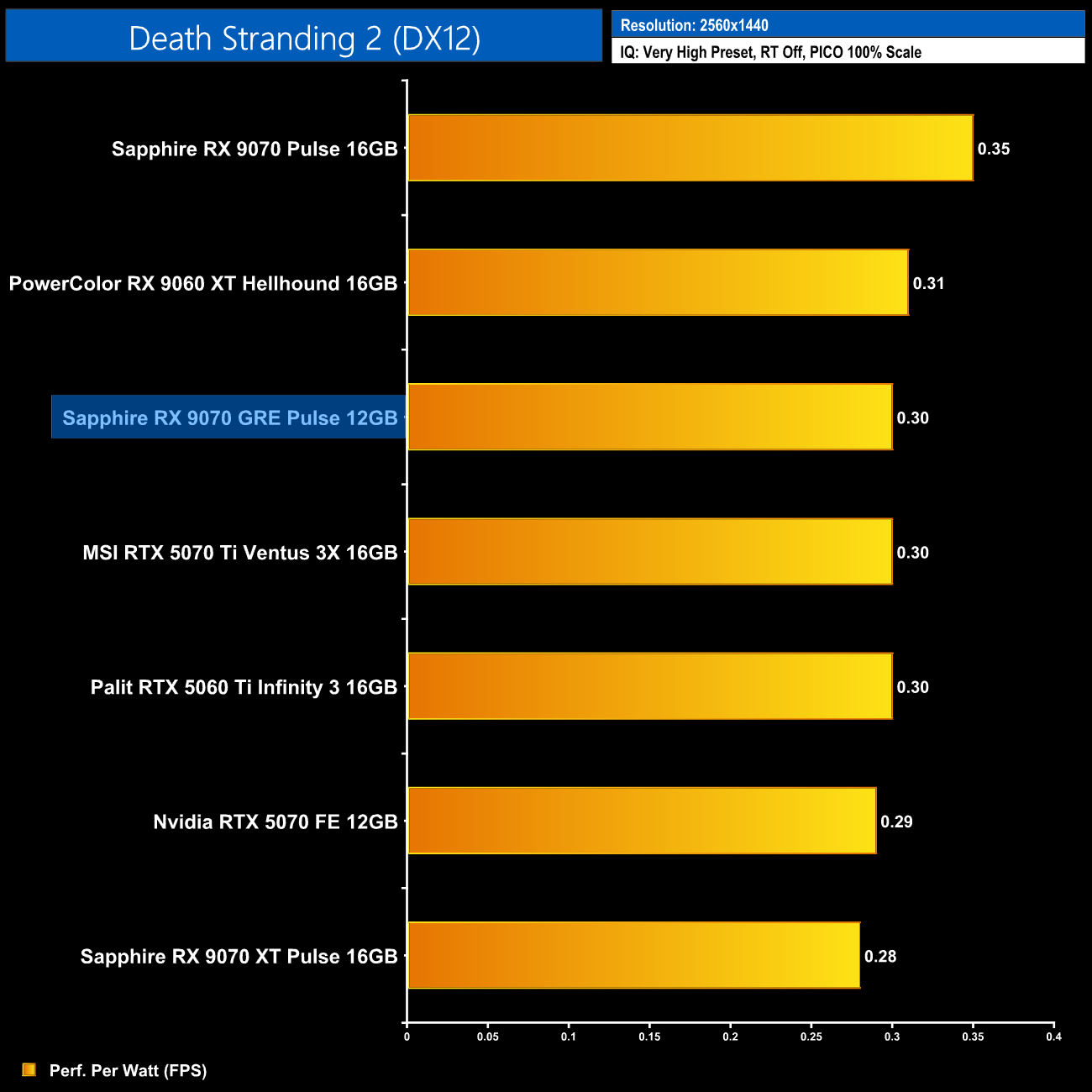
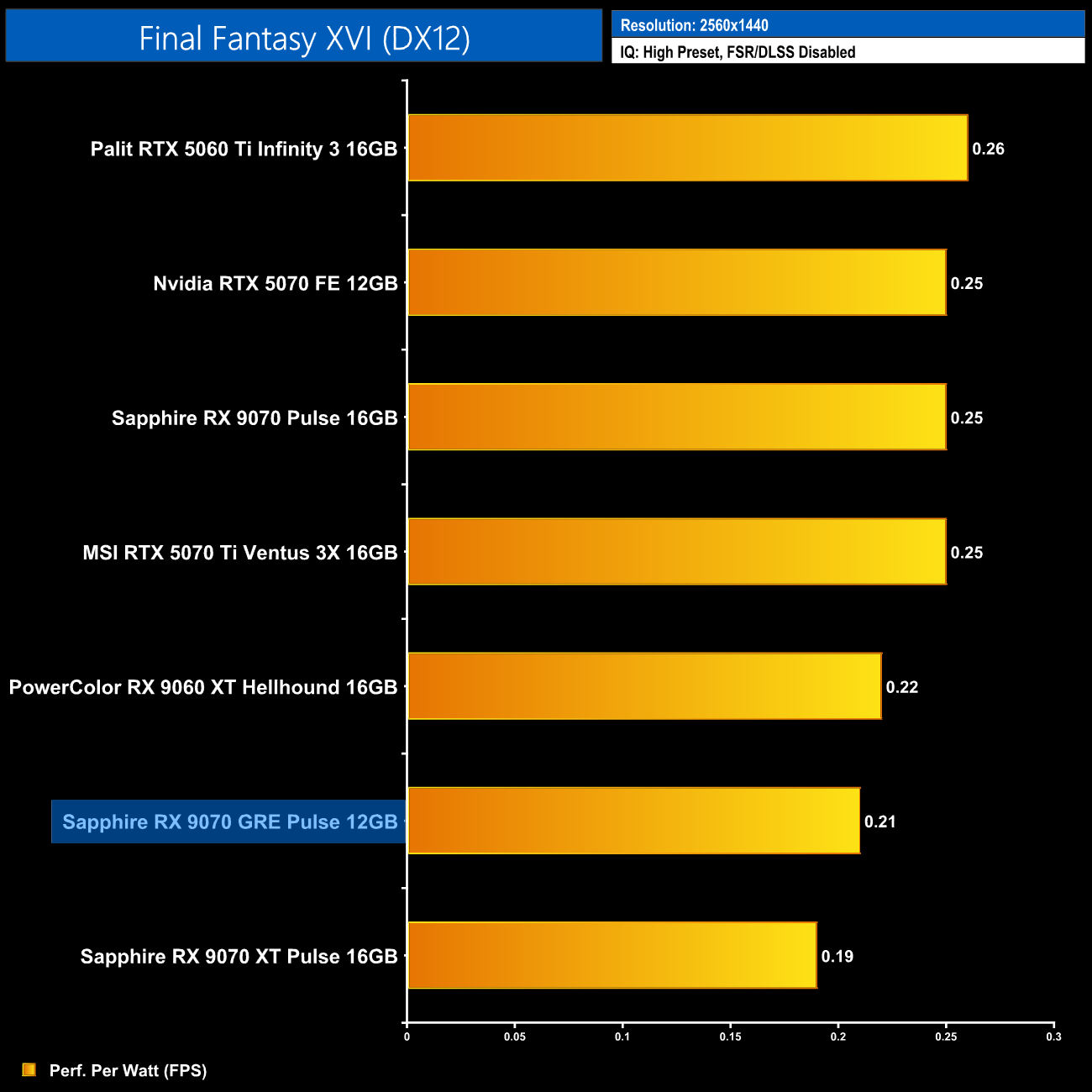
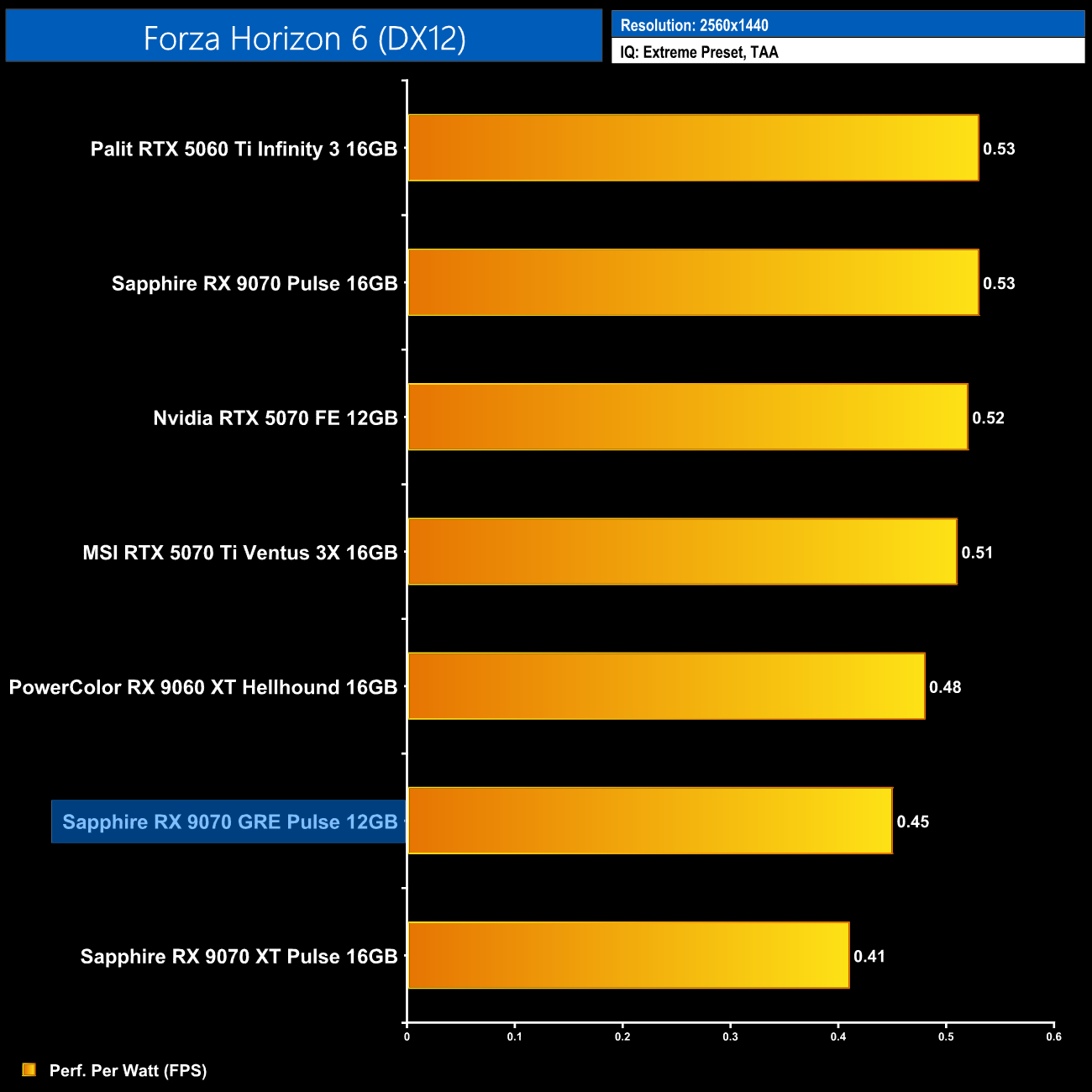
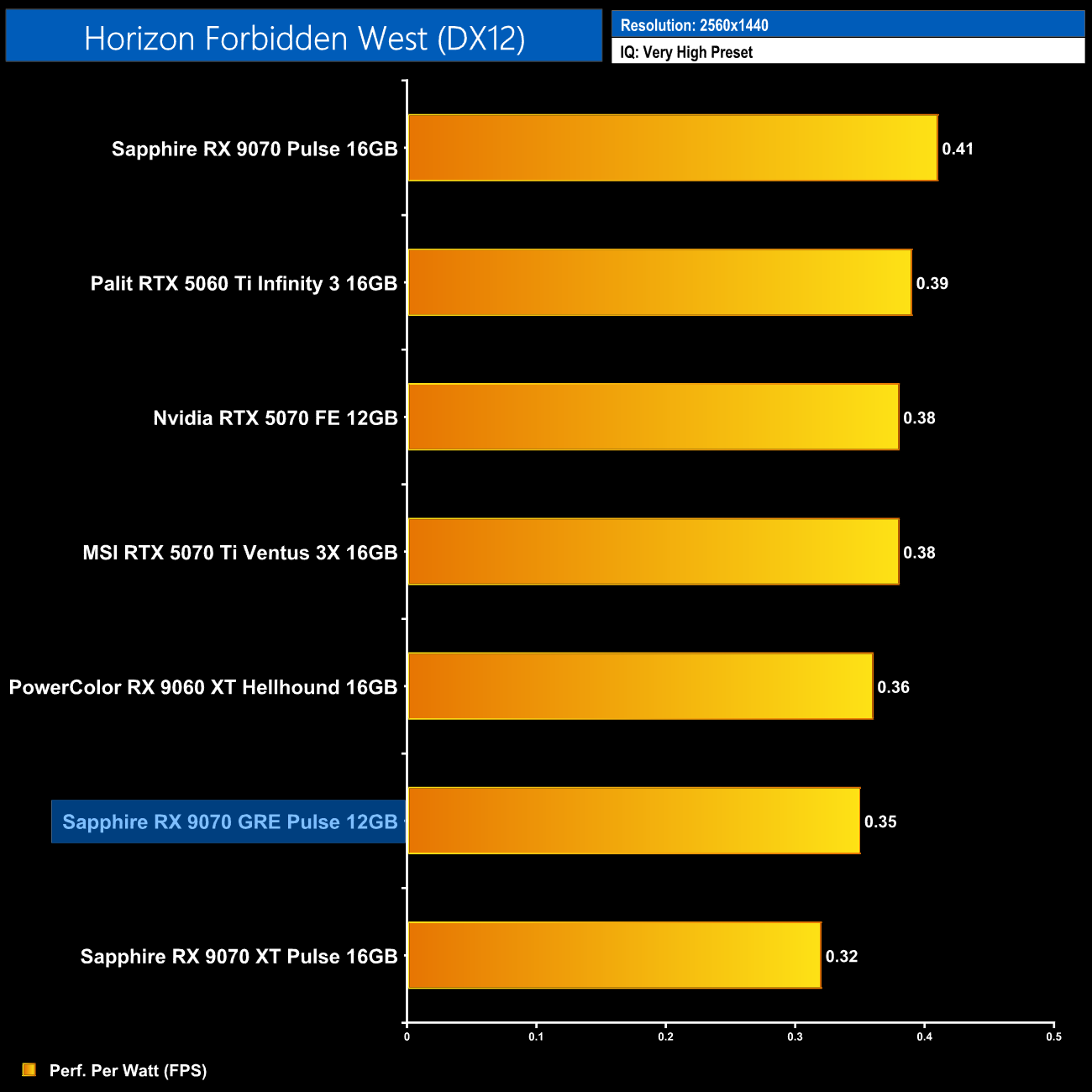
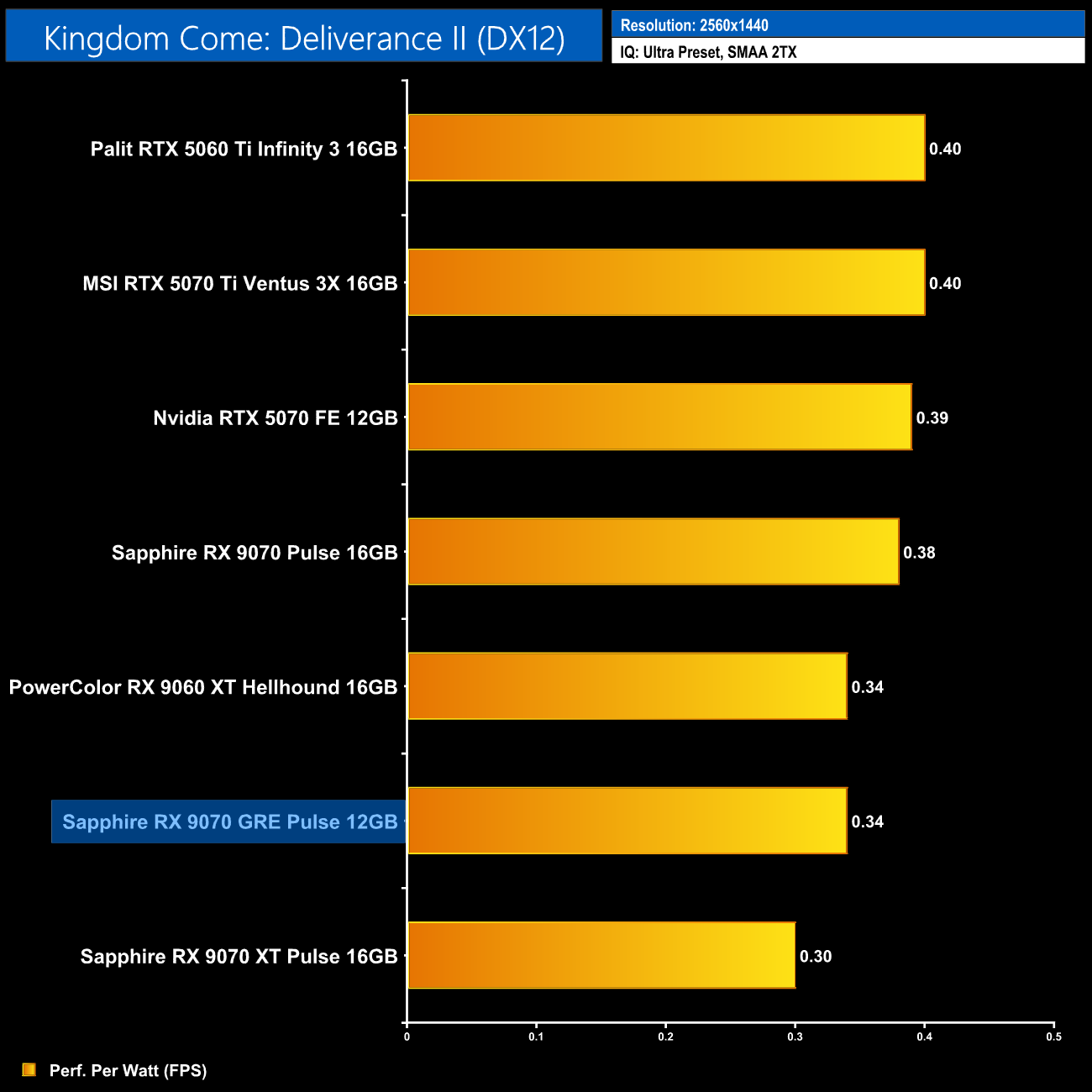
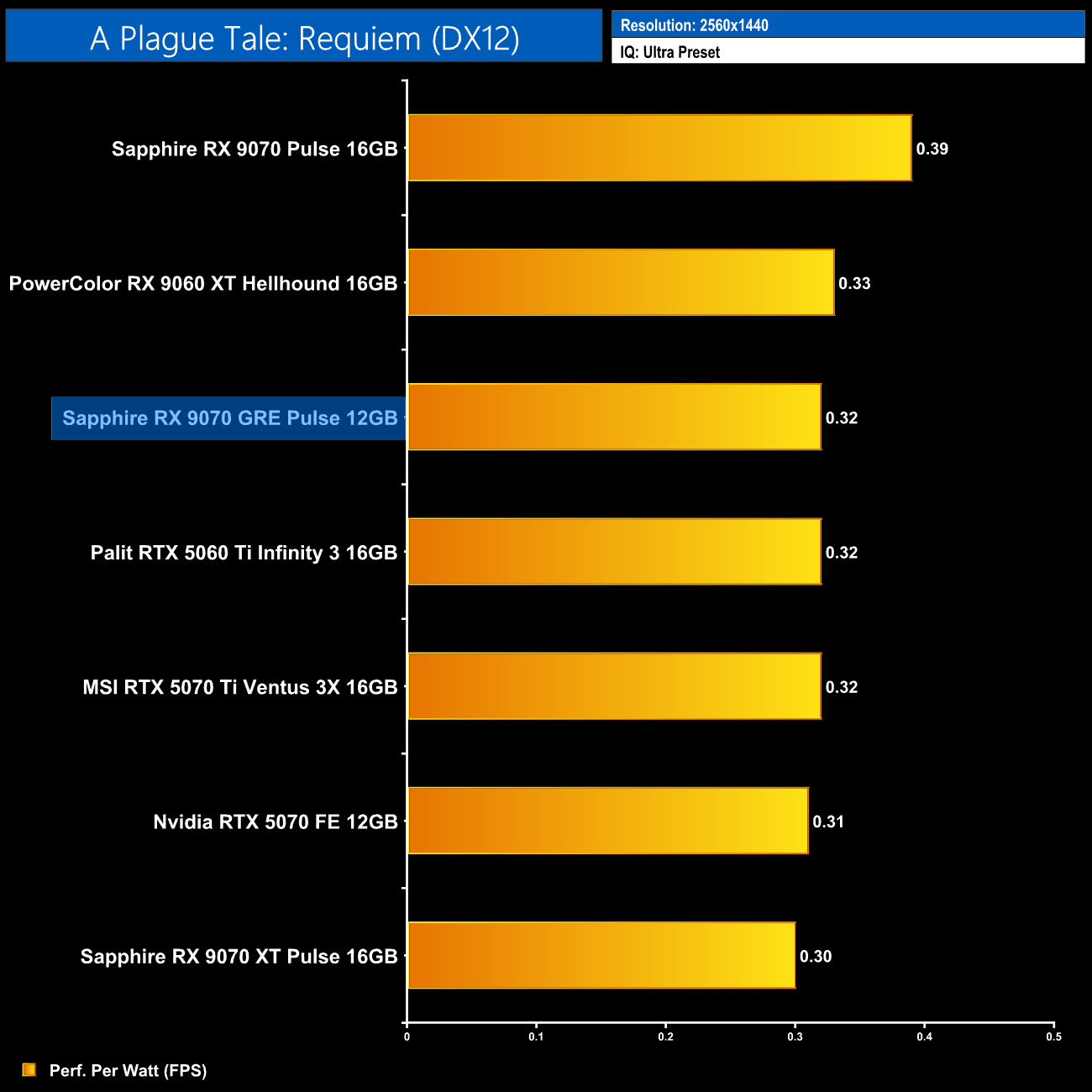
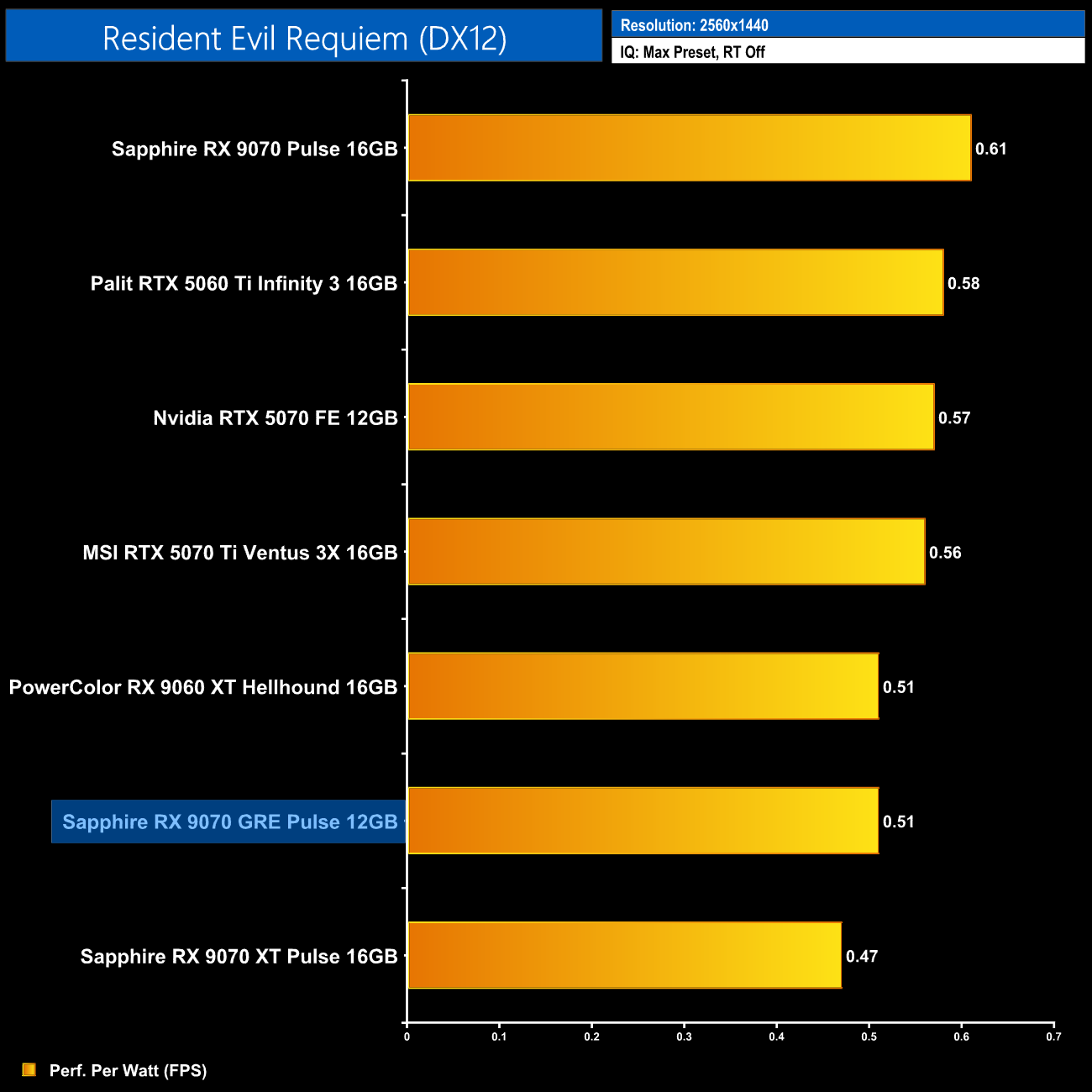
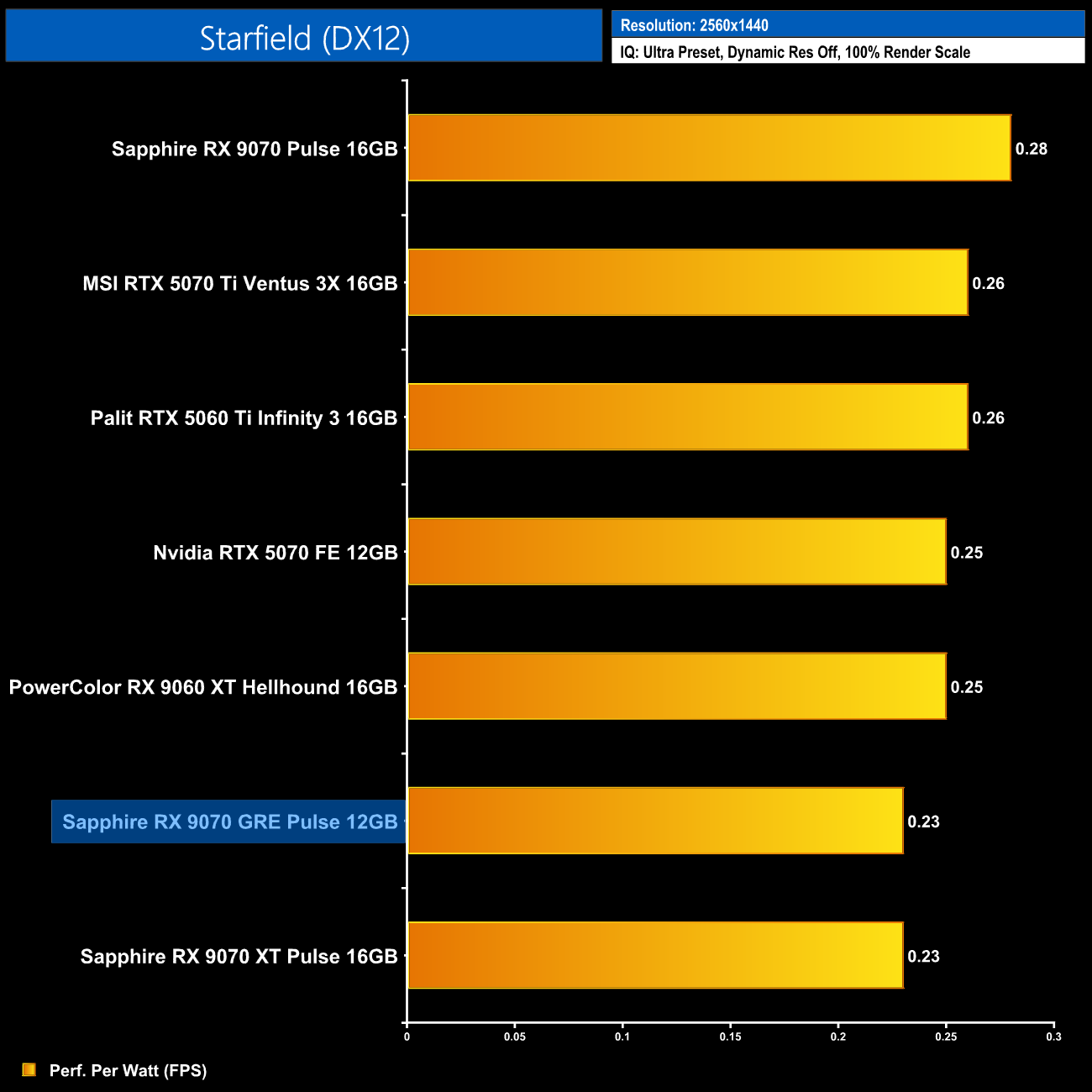
Click to enlarge.
12-Game Average at 1440p:
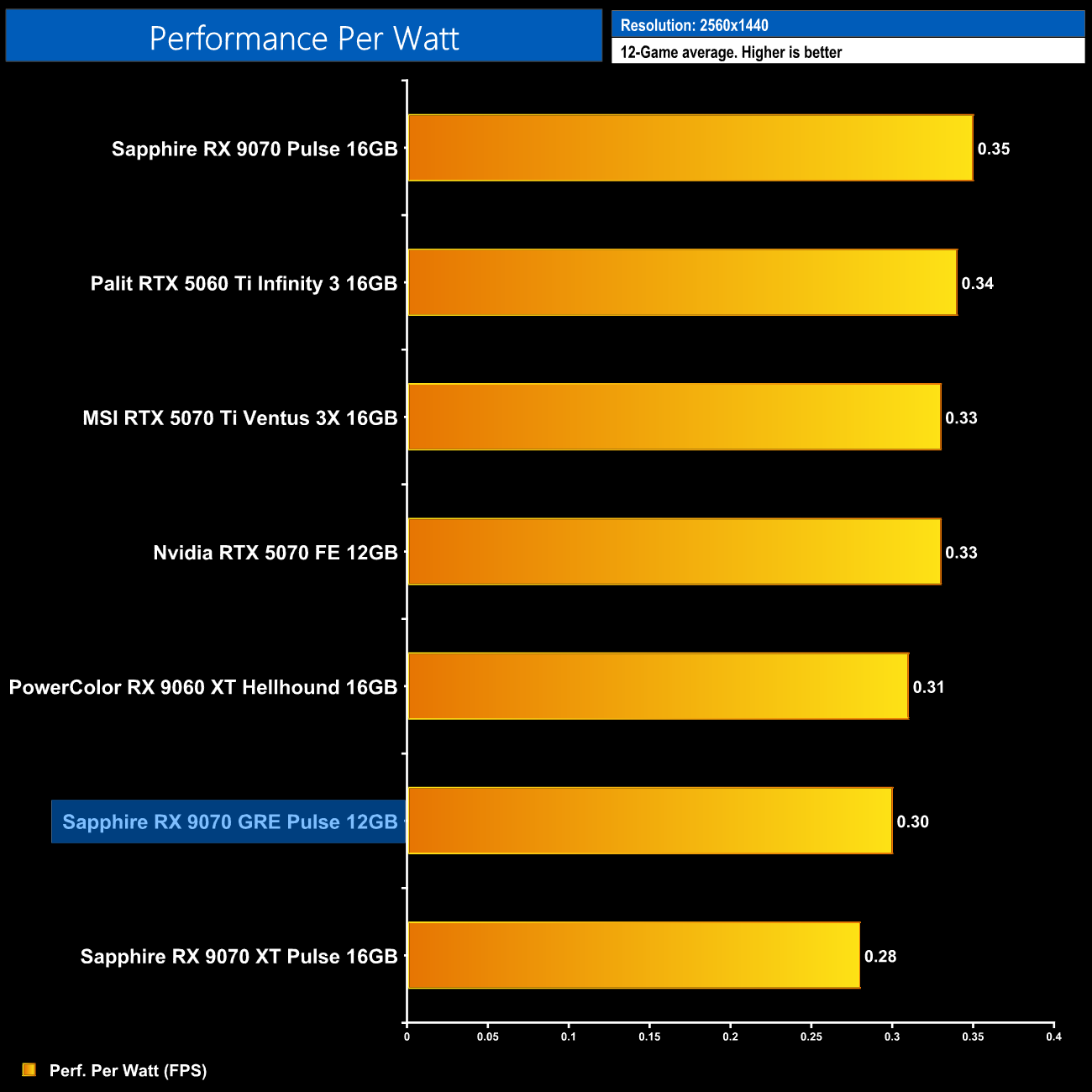
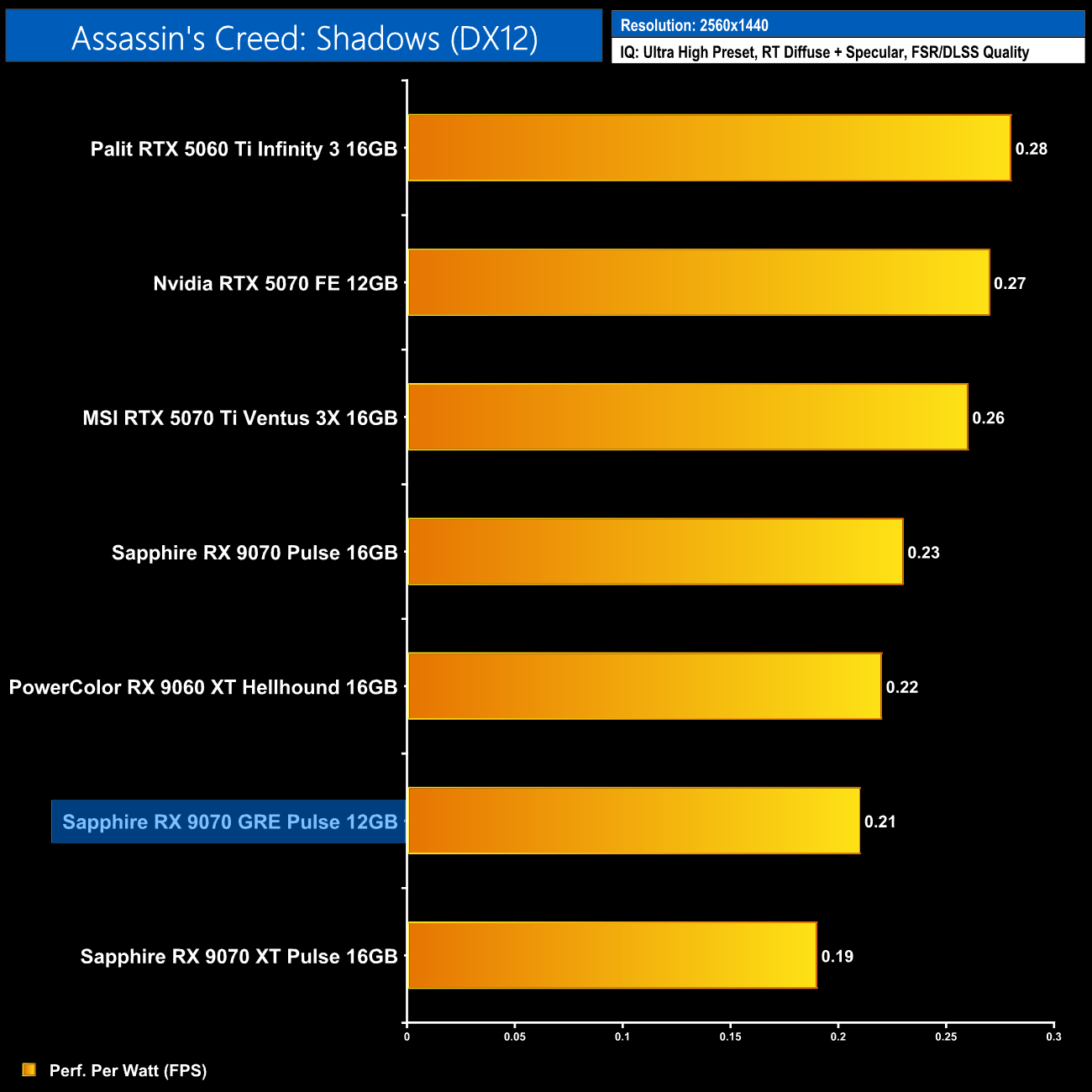
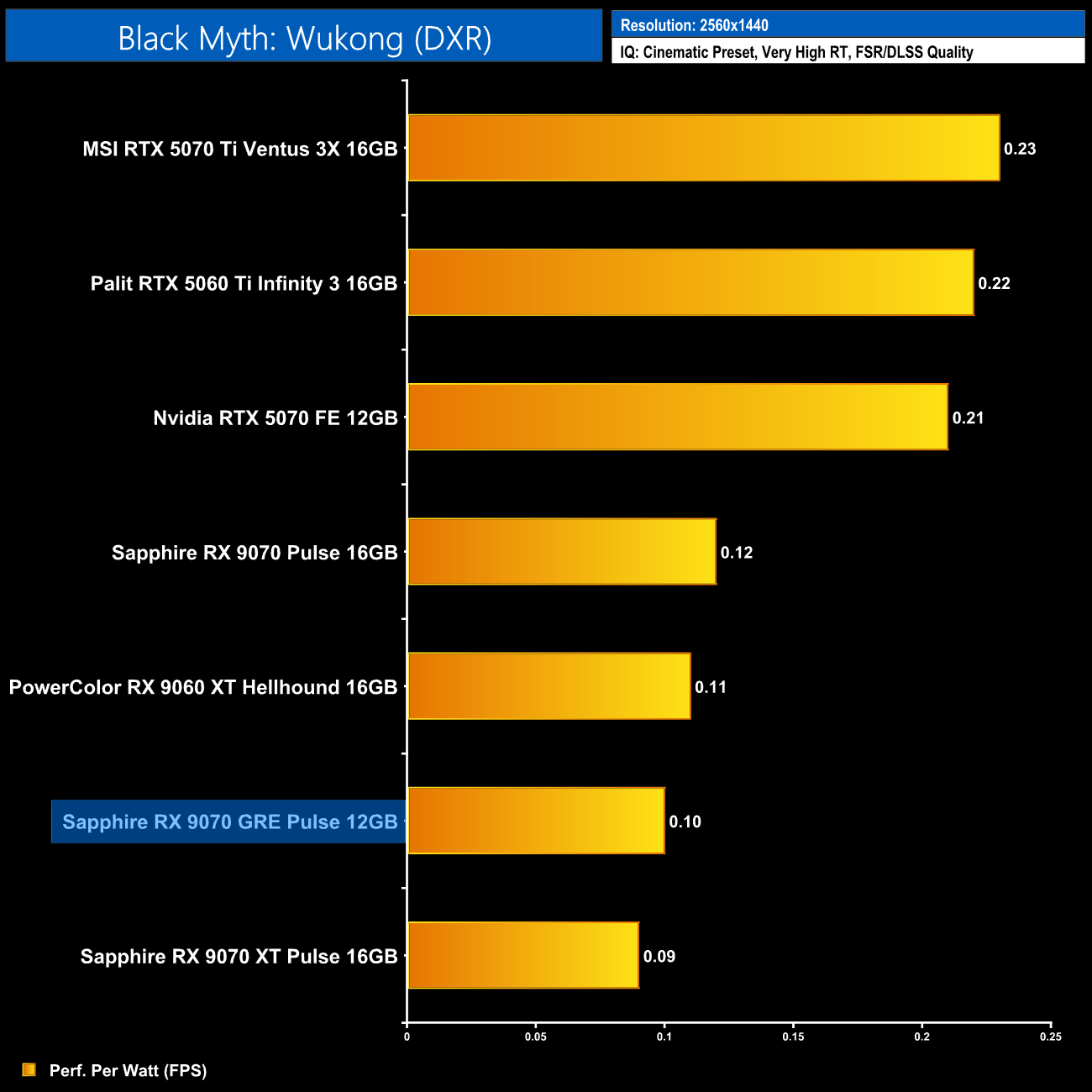
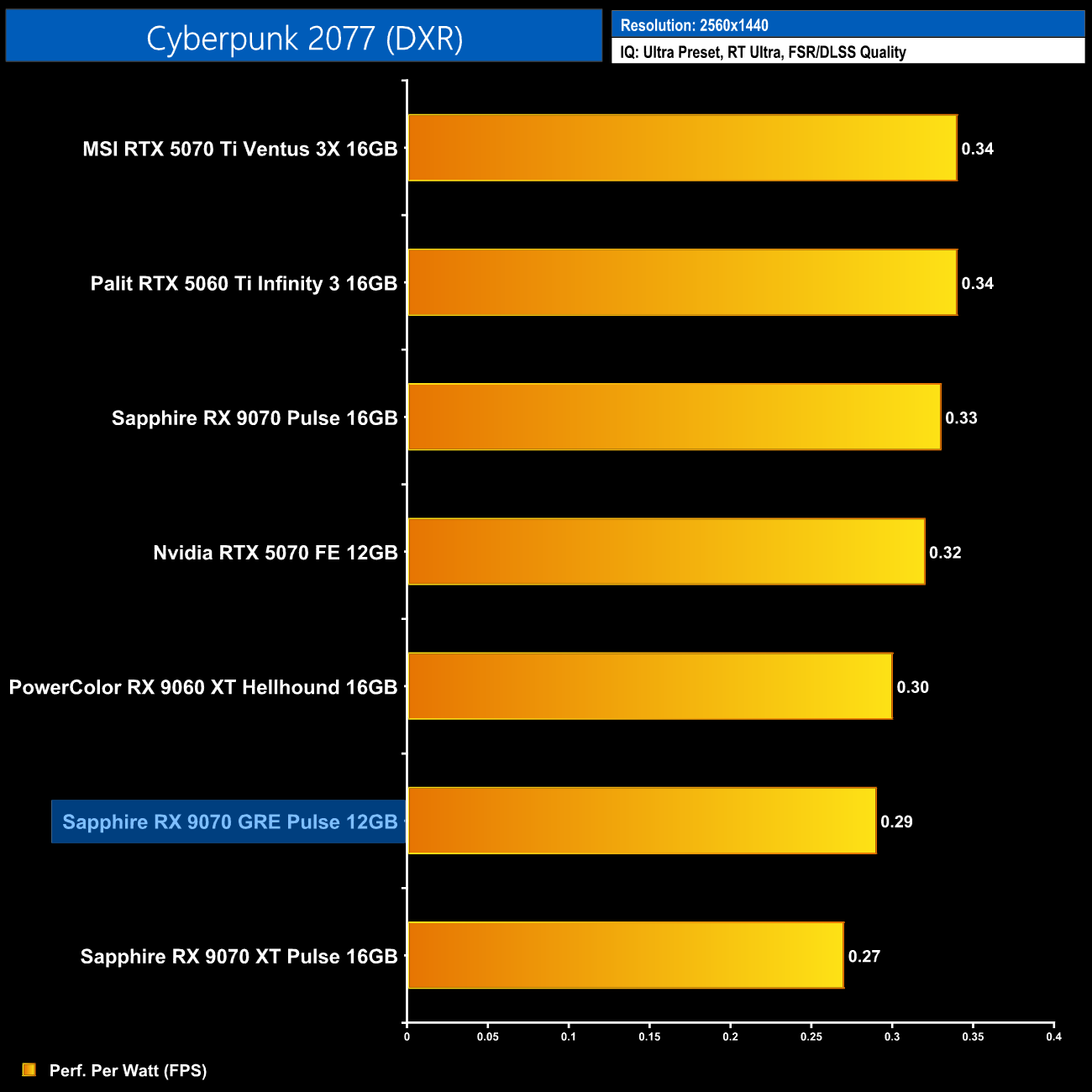
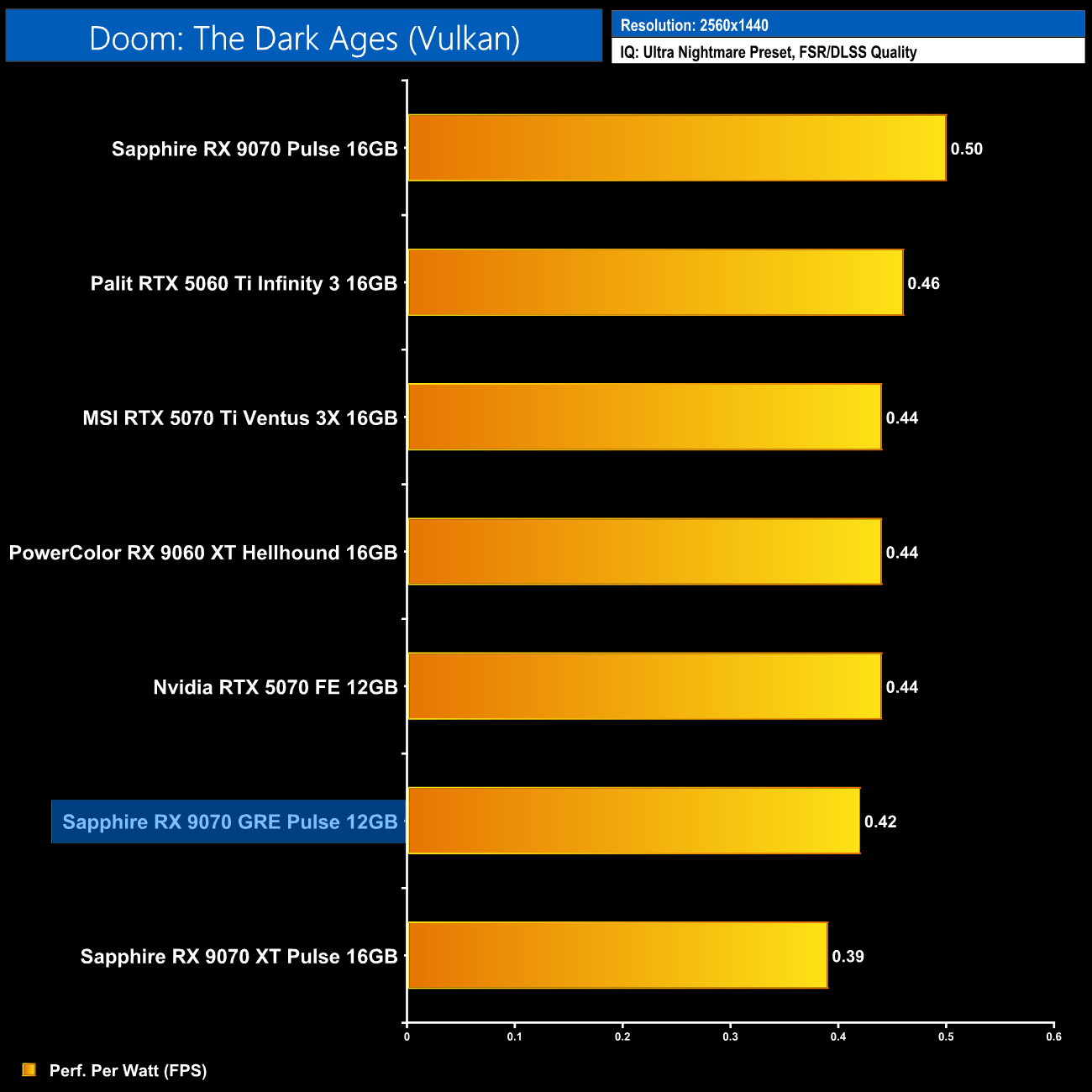
At 1440p, efficiency is still second from bottom – it is 9% less efficient than the RTX 5070, and some 14% less efficient than the chart-topping RX 9070.
Ray tracing results
As a bonus, we now include the efficiency figures for all eight games we test with ray tracing enabled.
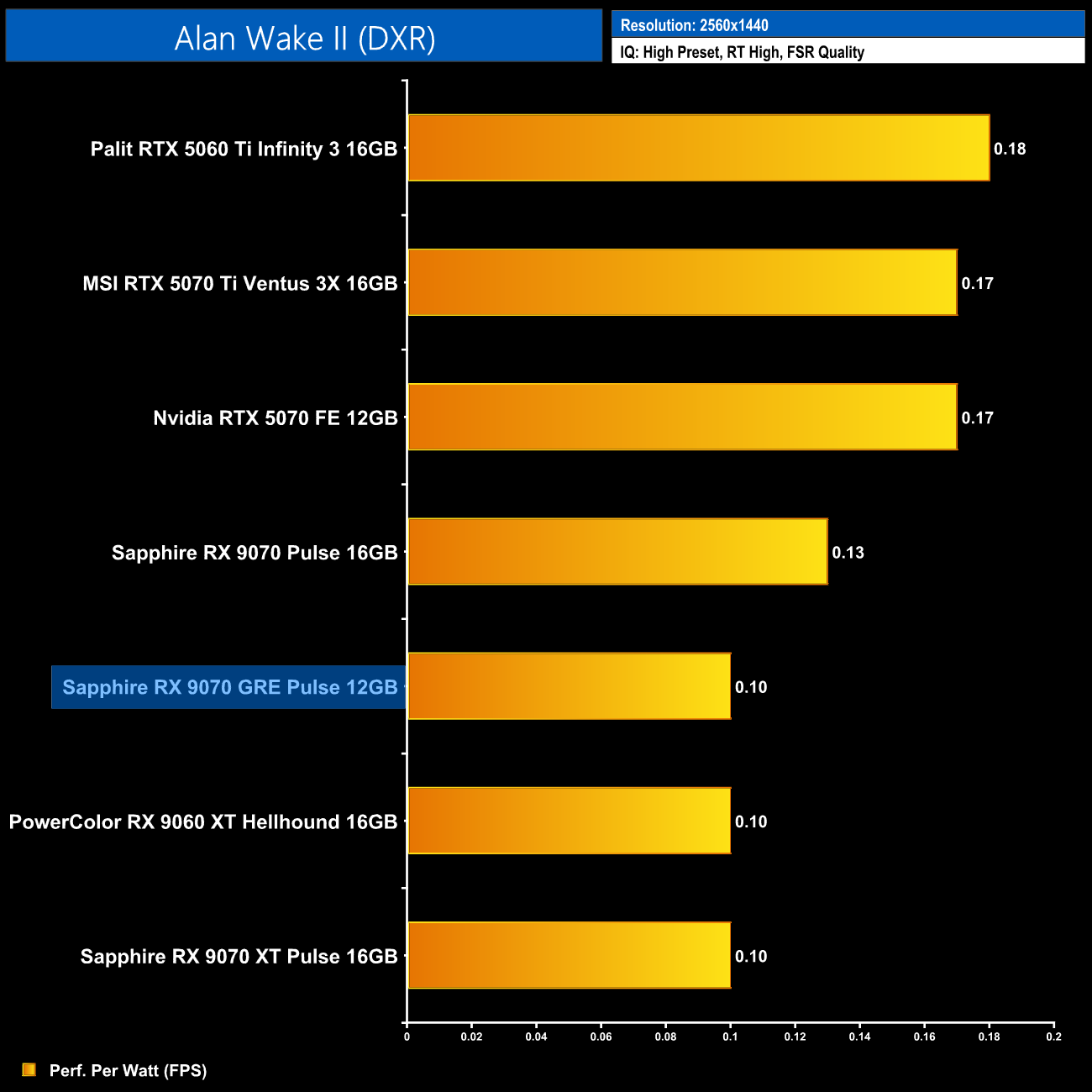
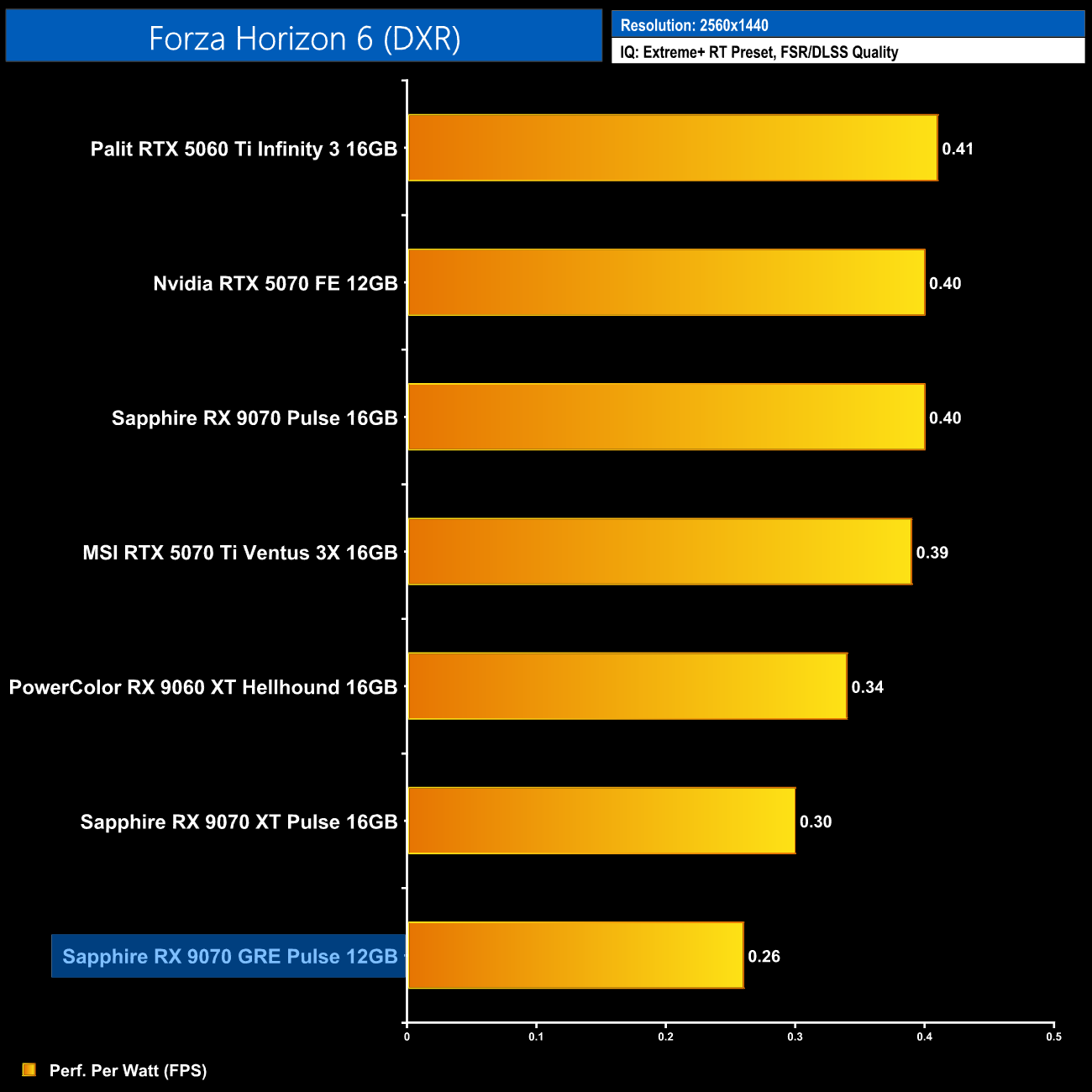
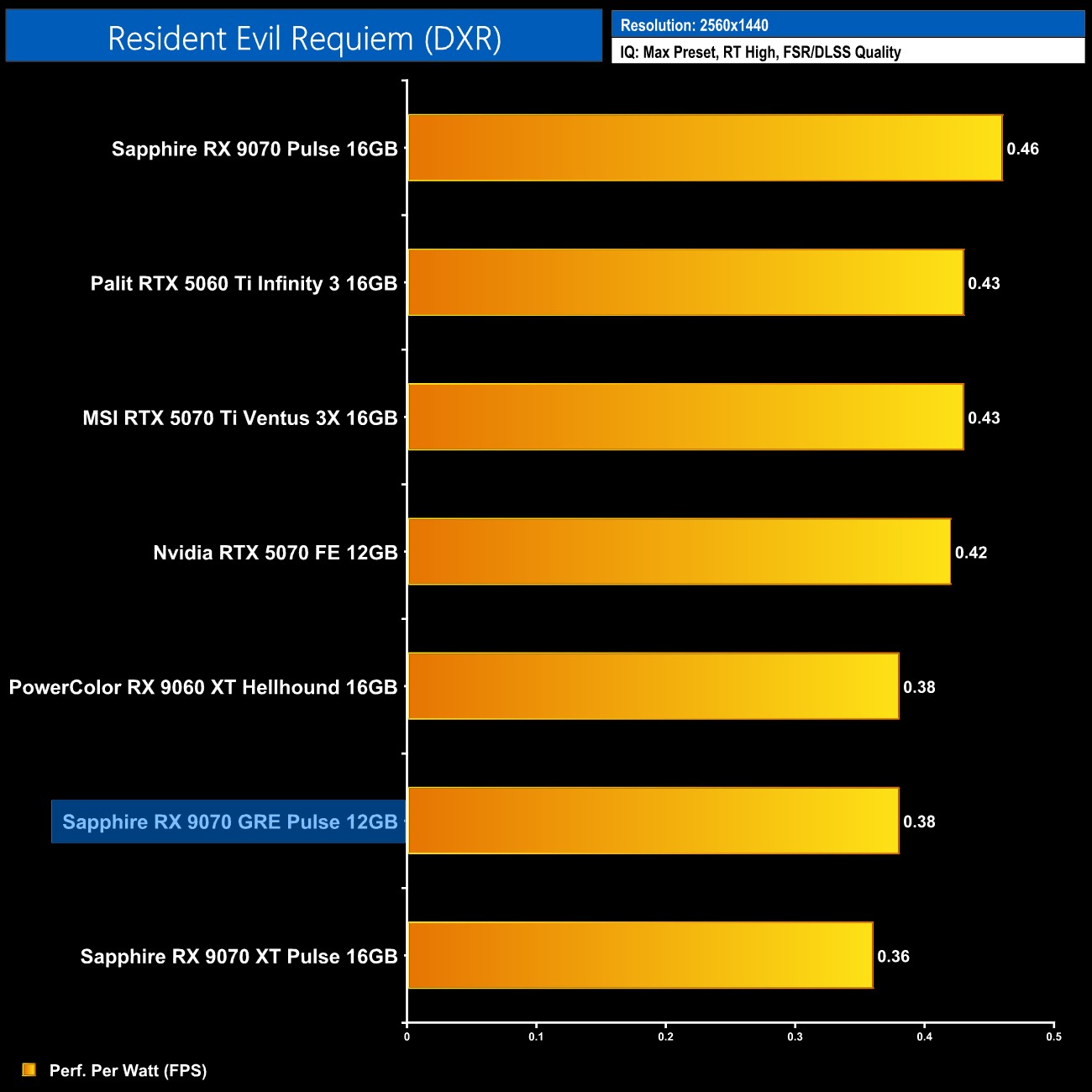
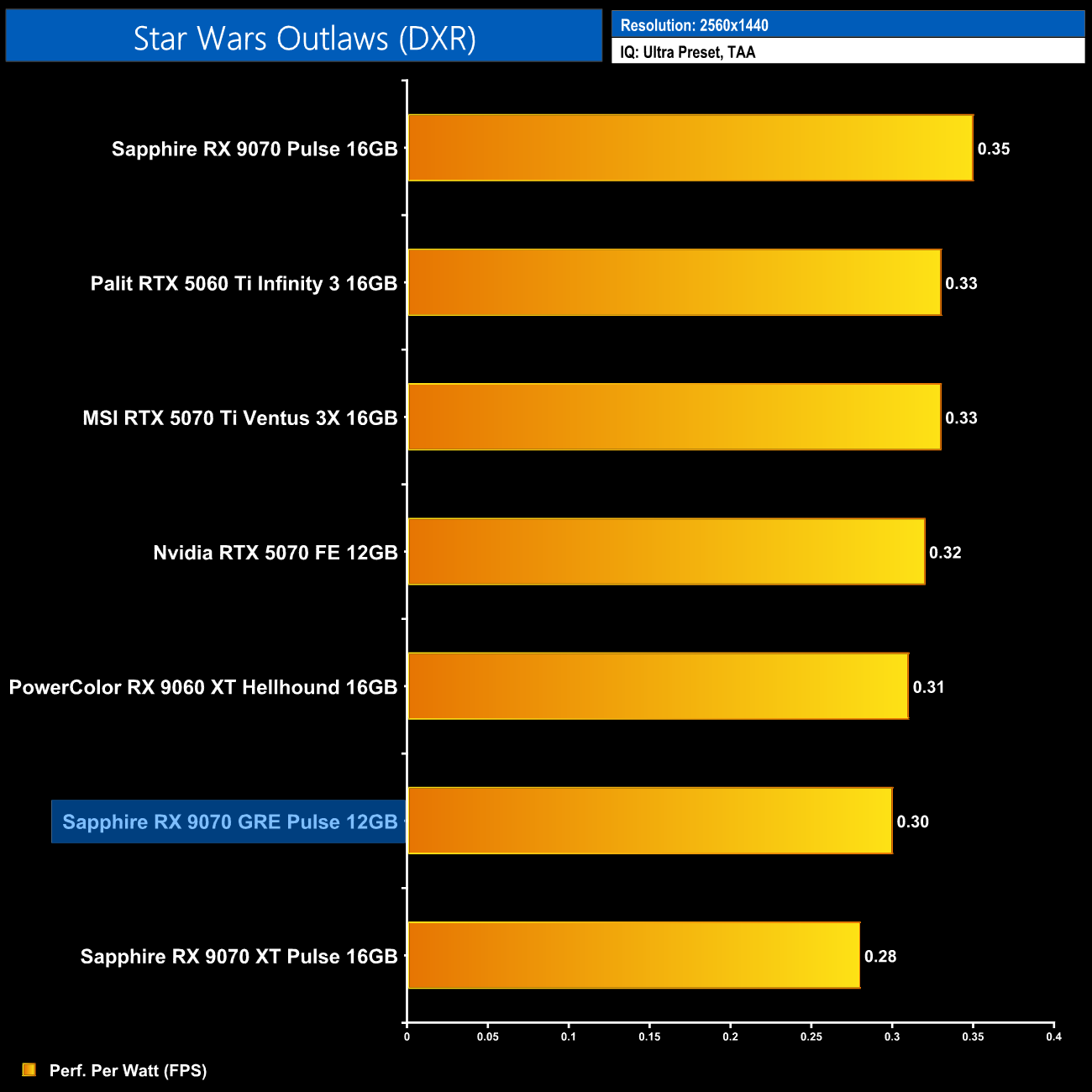
8-Game ray tracing average:
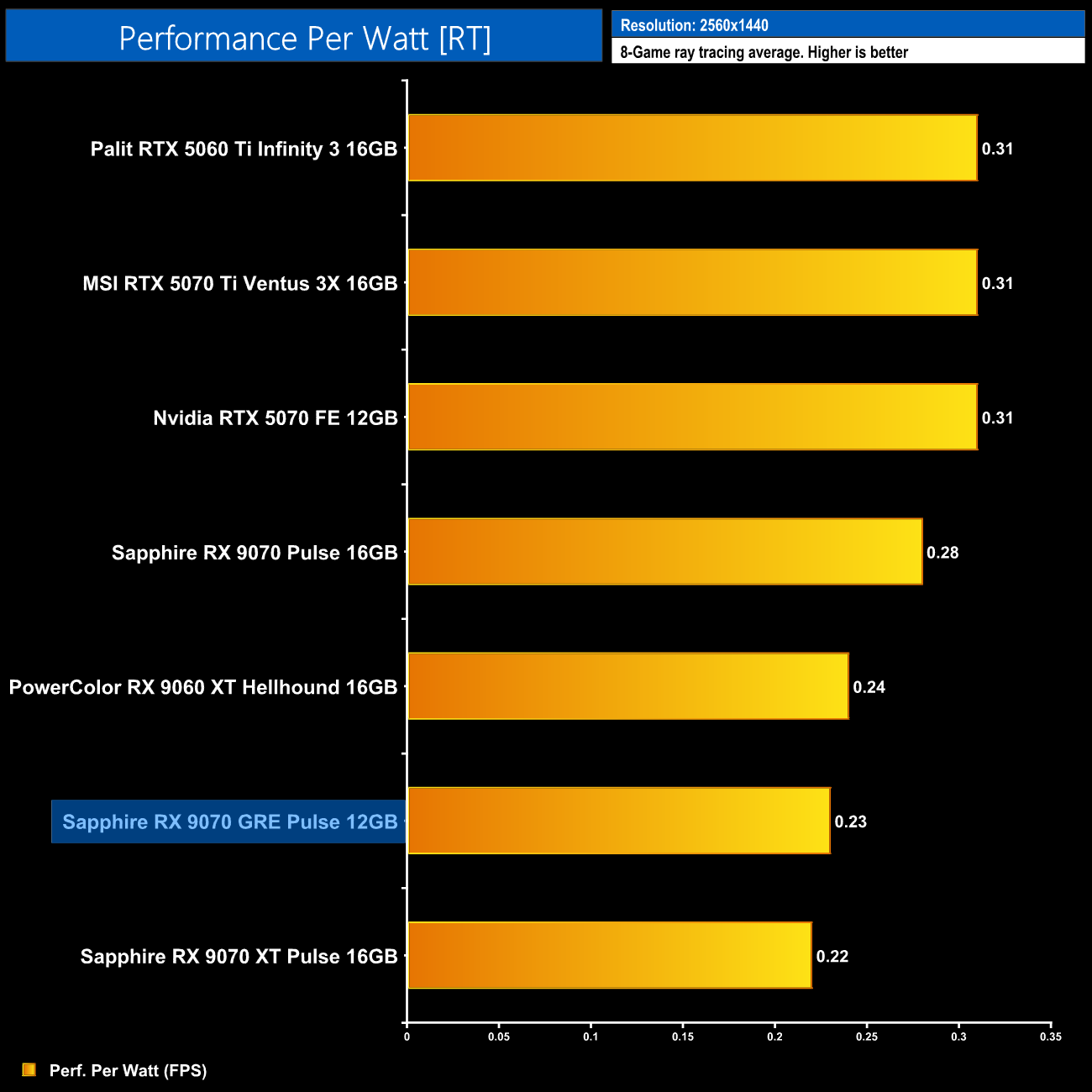
Once more we see the GRE second from bottom in the ray tracing average.
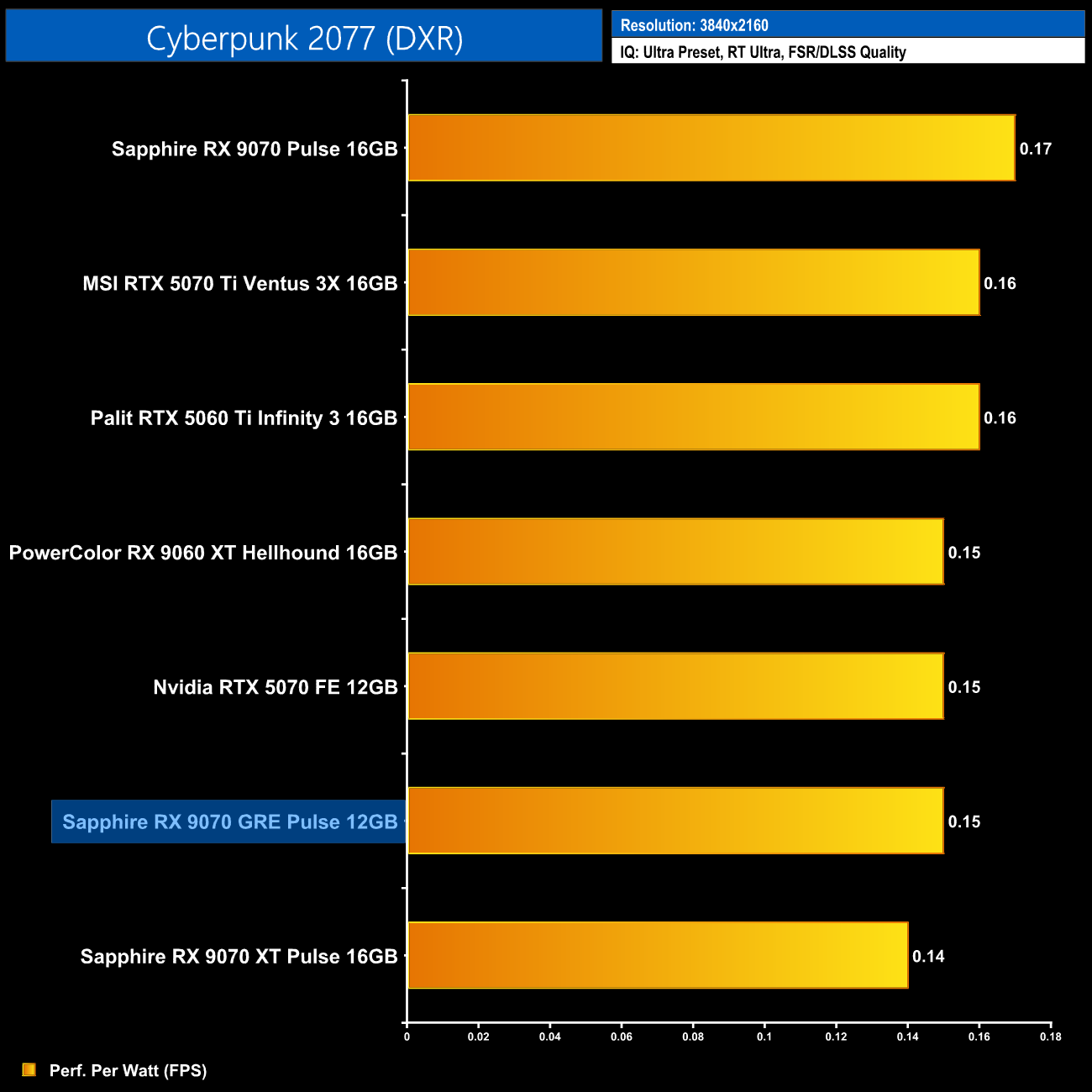
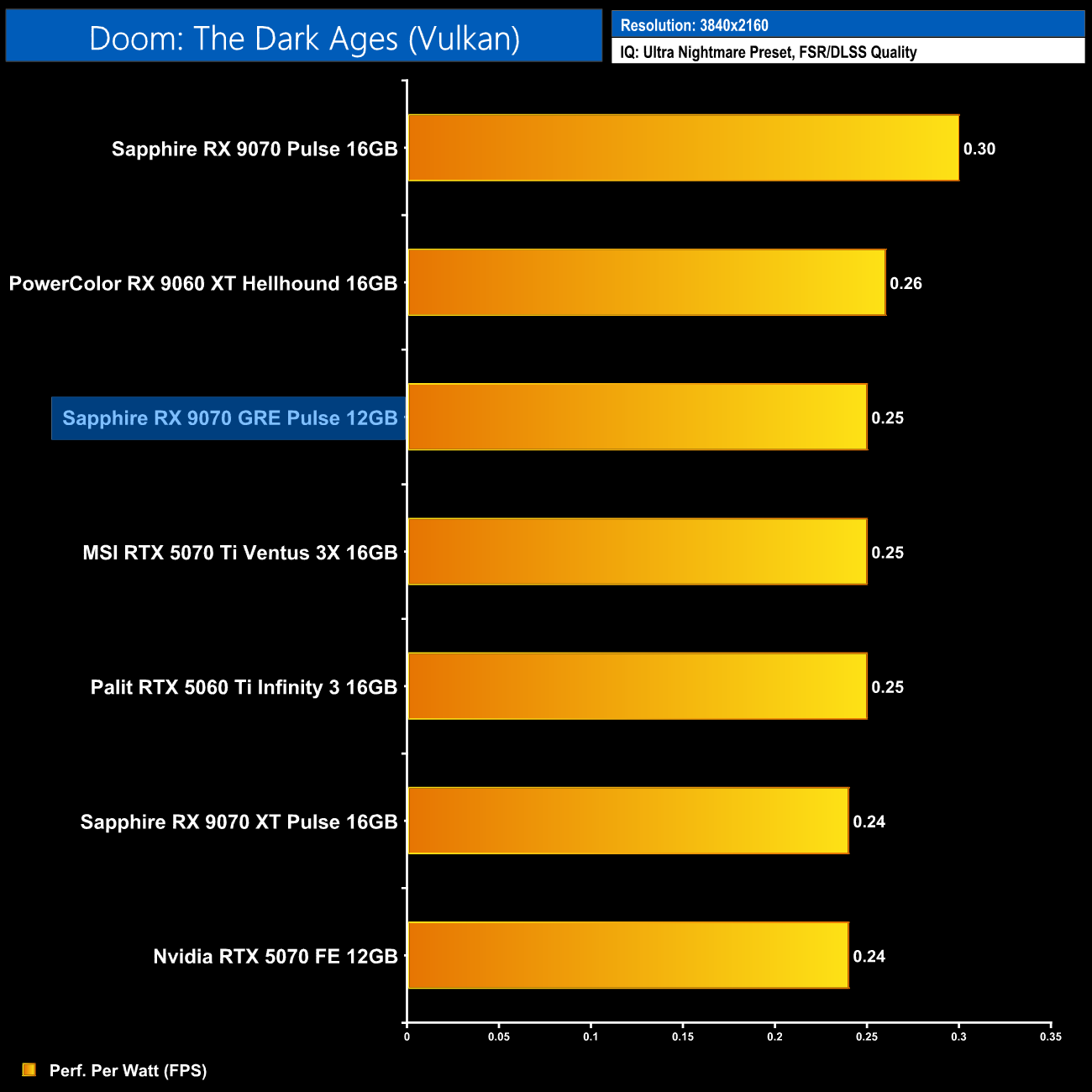
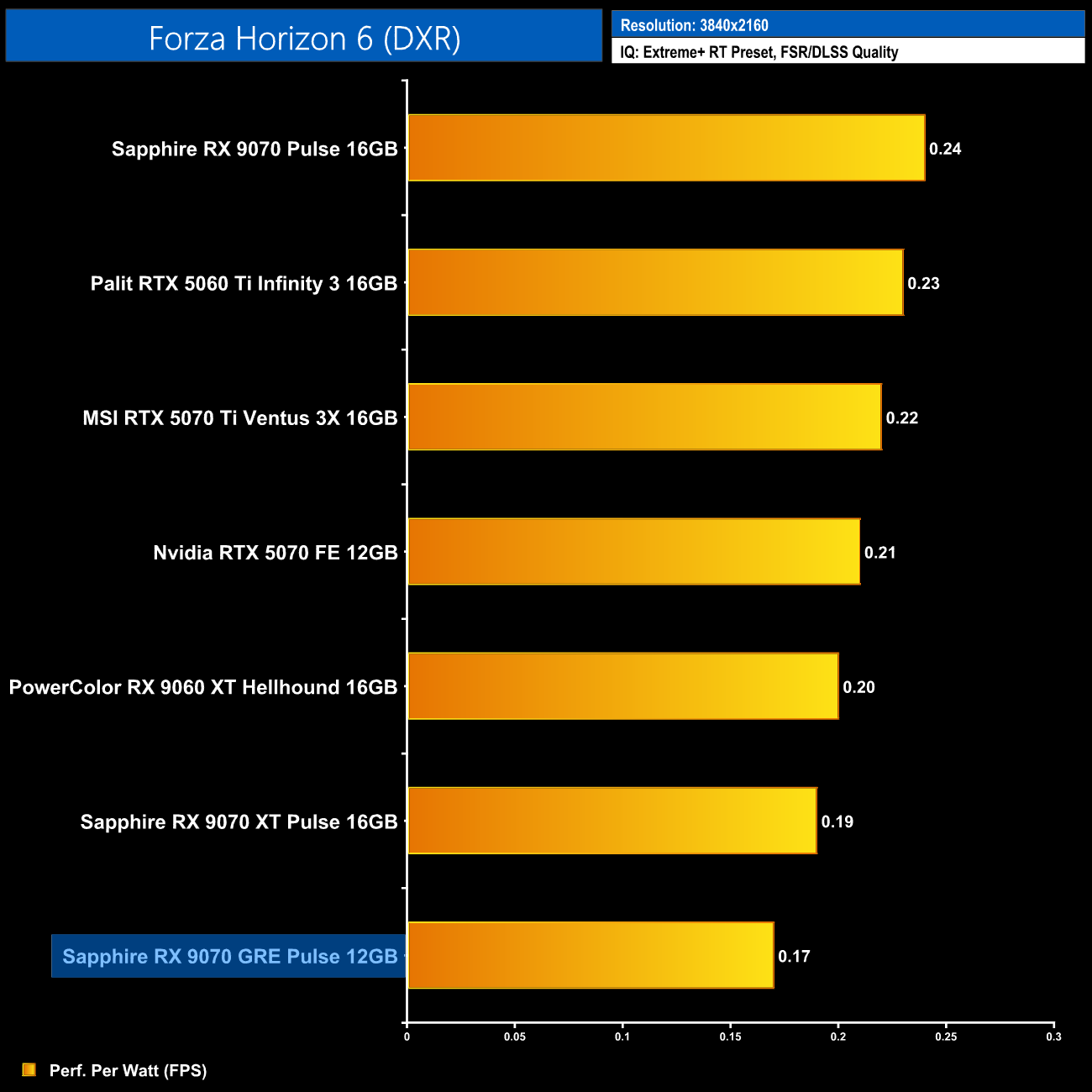
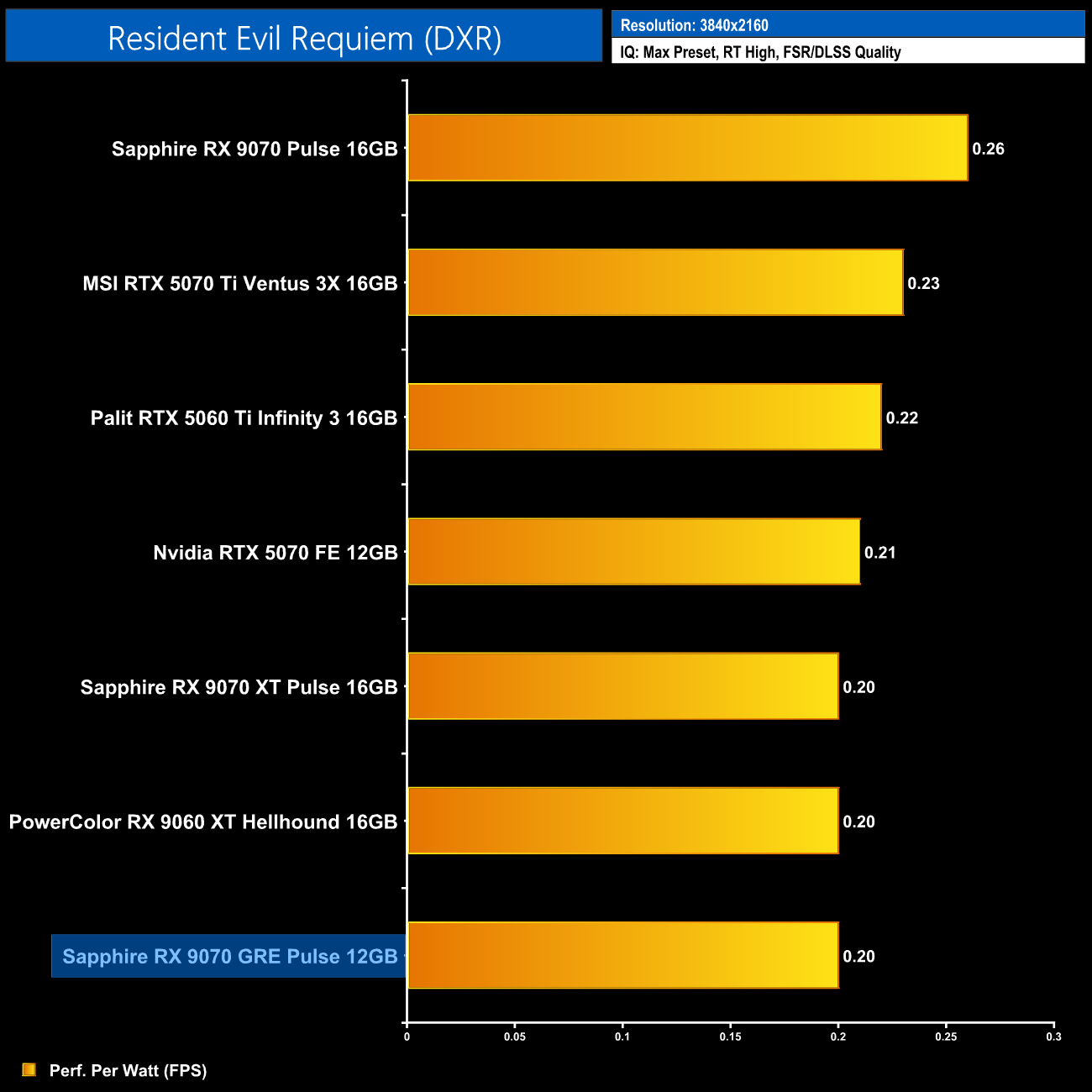
Using the graphics card-only power draw figures presented earlier in the review, here we present performance per Watt on a per-game basis for all twelve games we tested at 2160p (4K).
Per-Game Results at 2160p (4K):
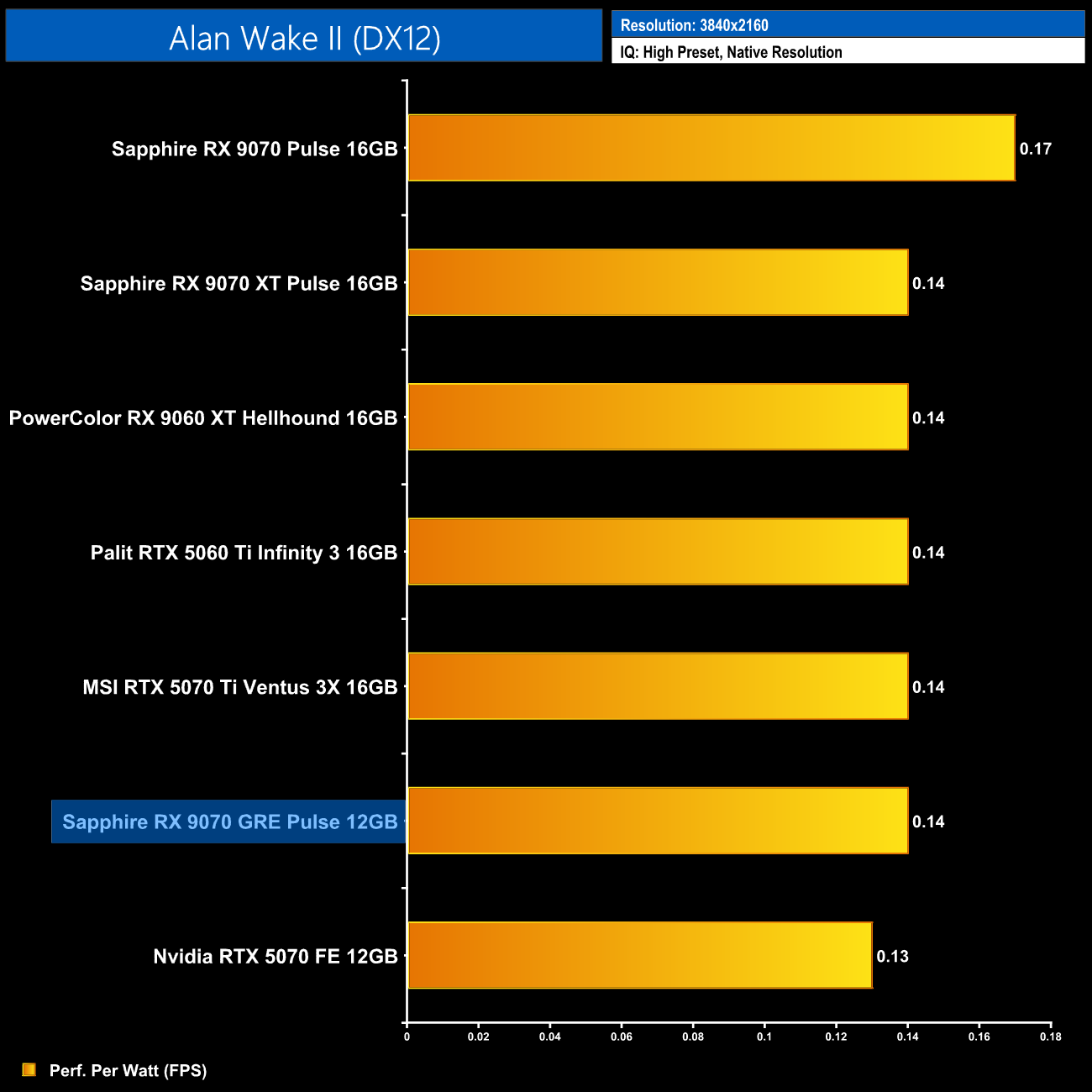
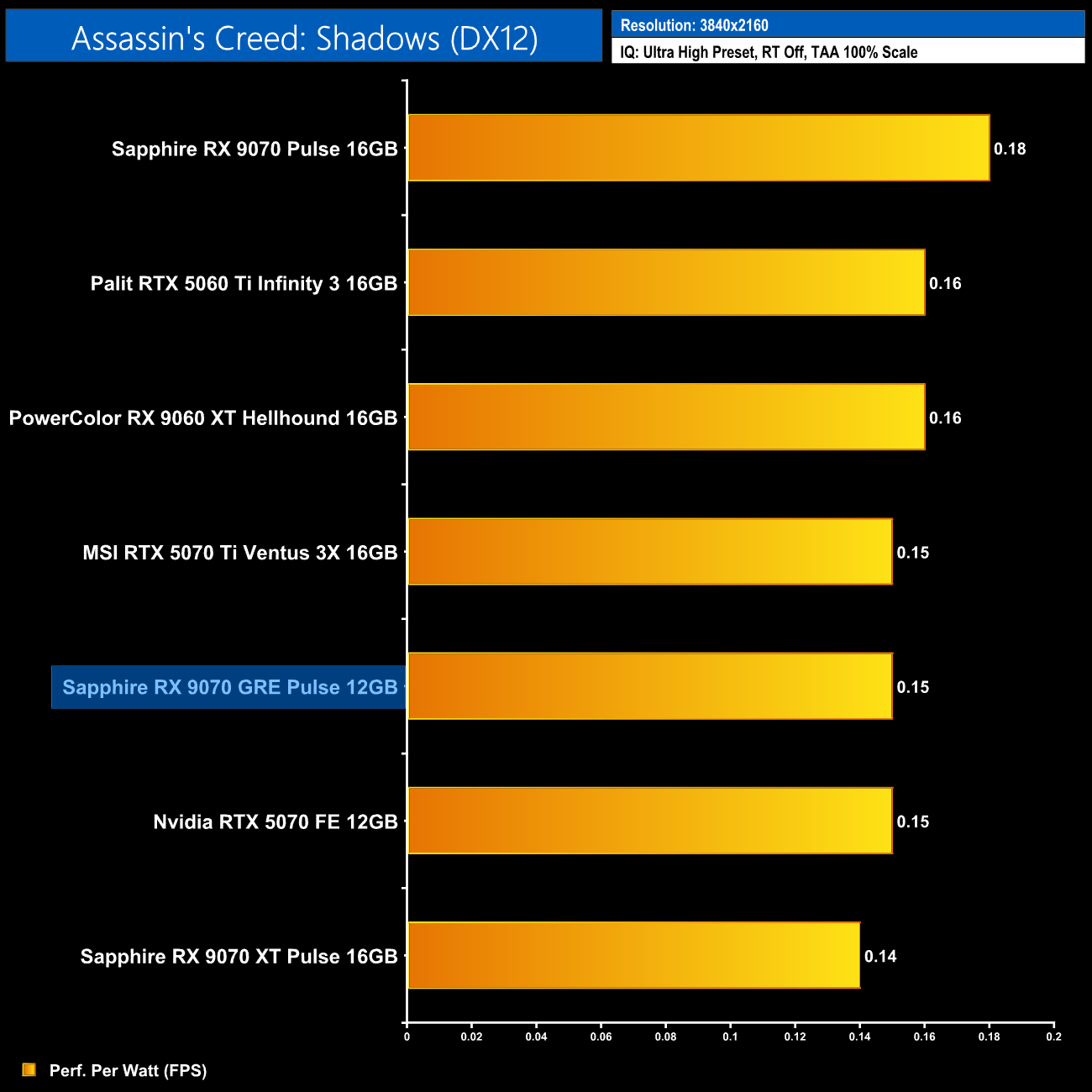
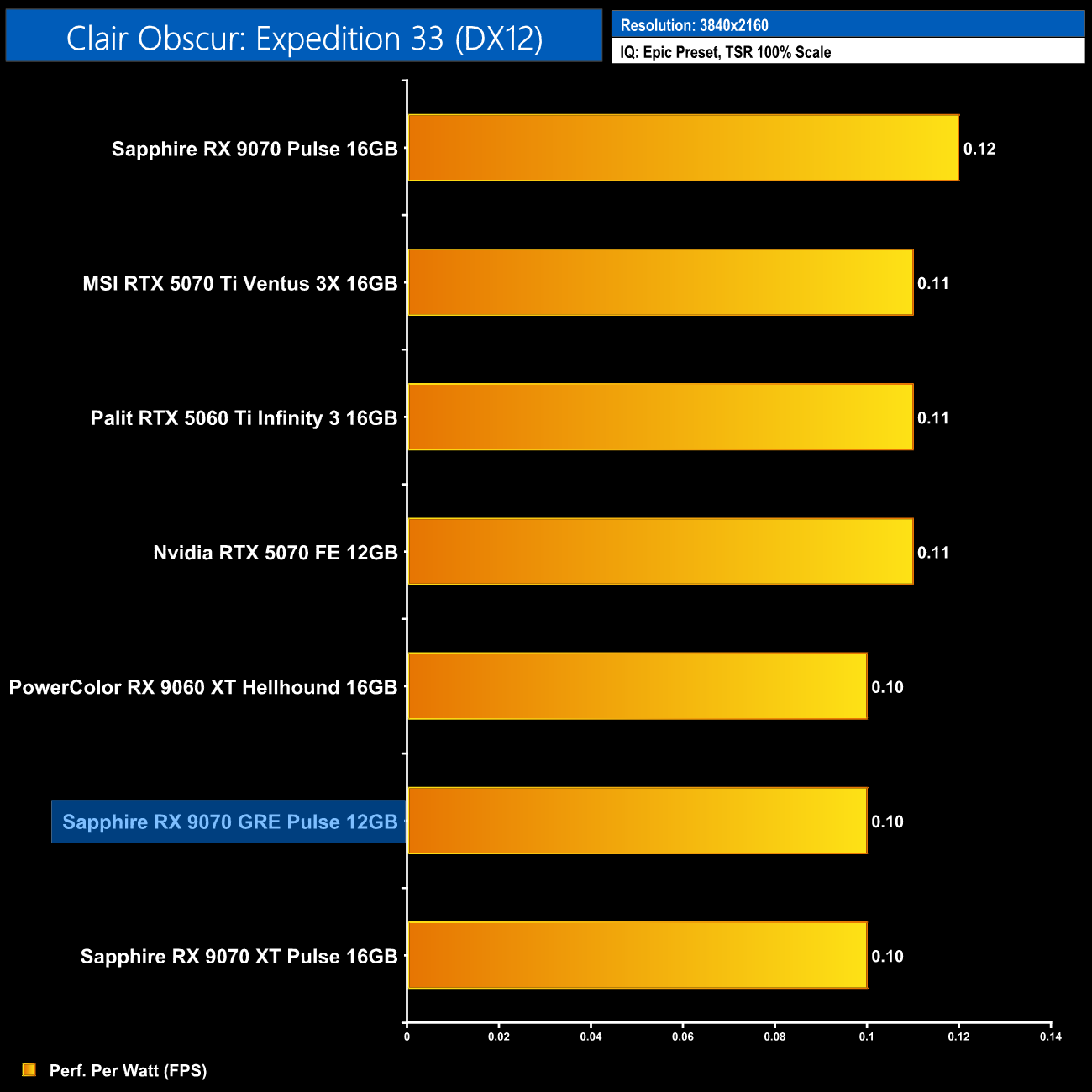
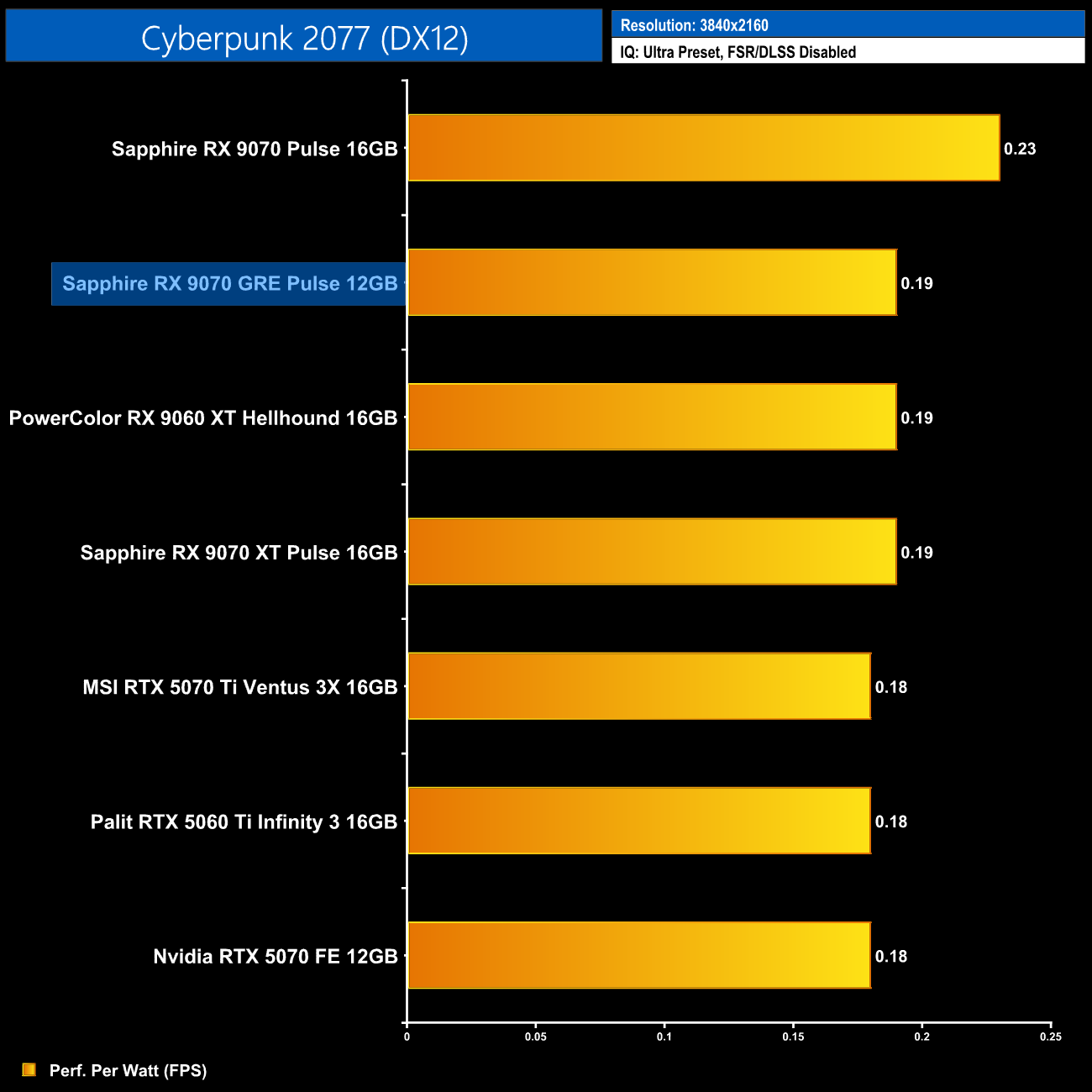
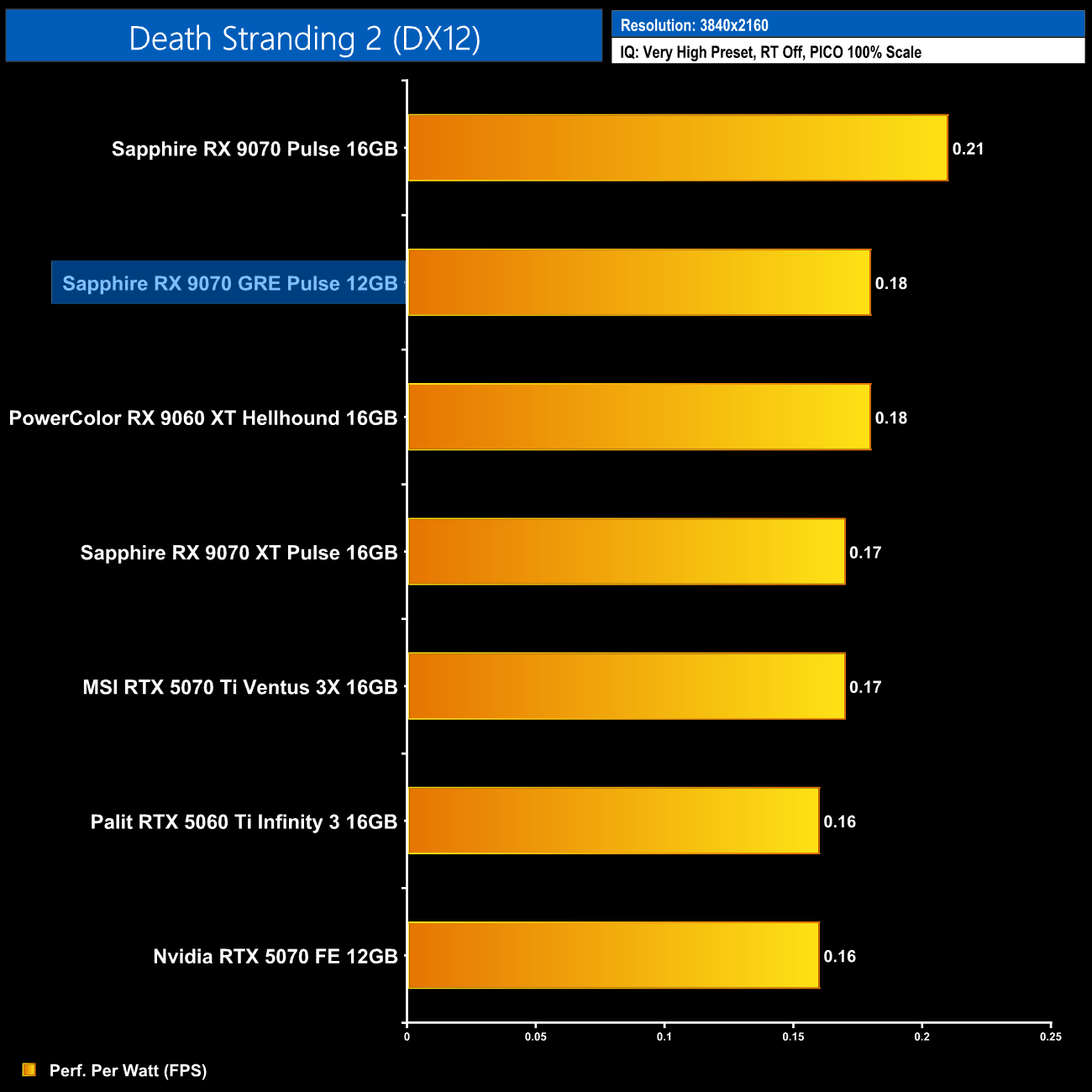
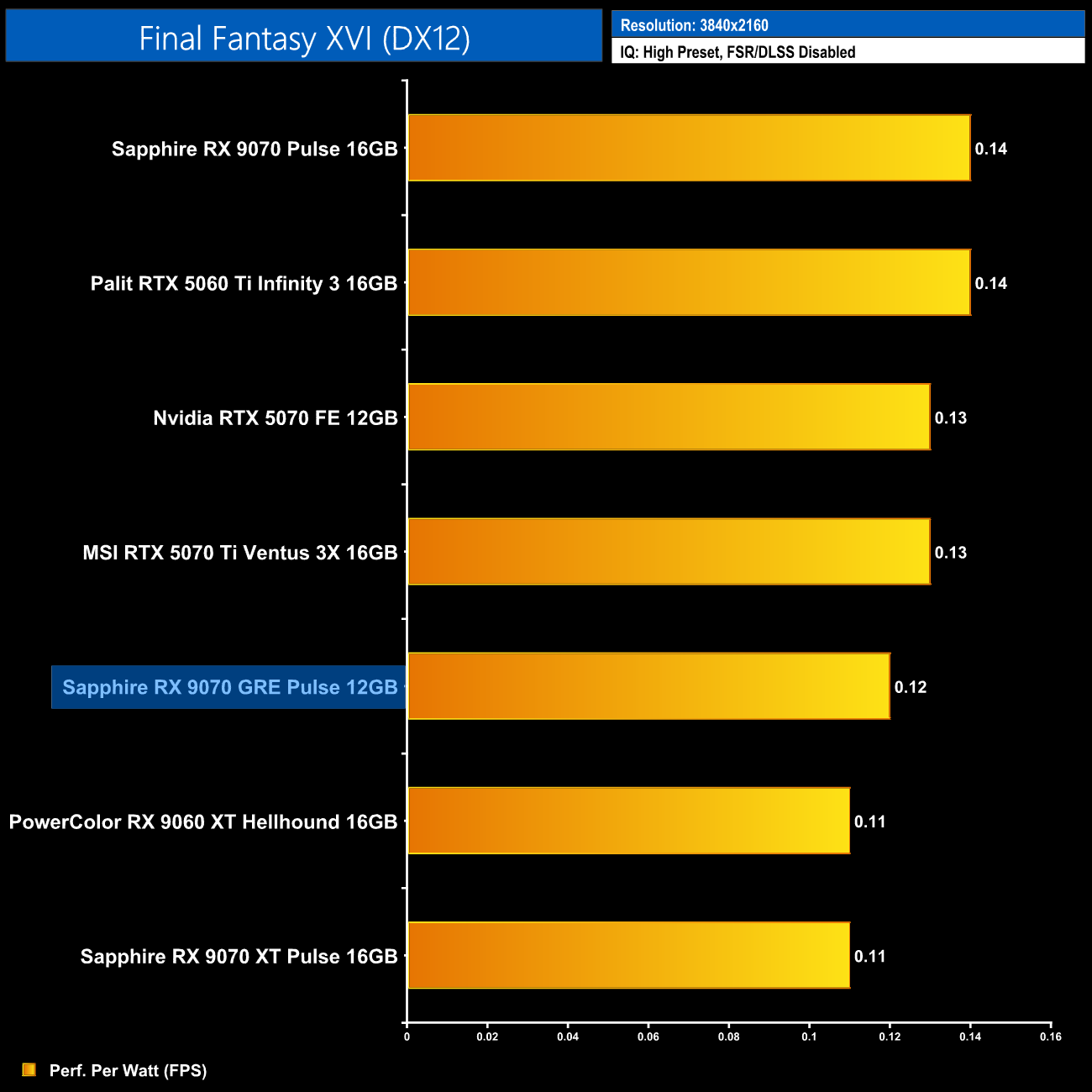
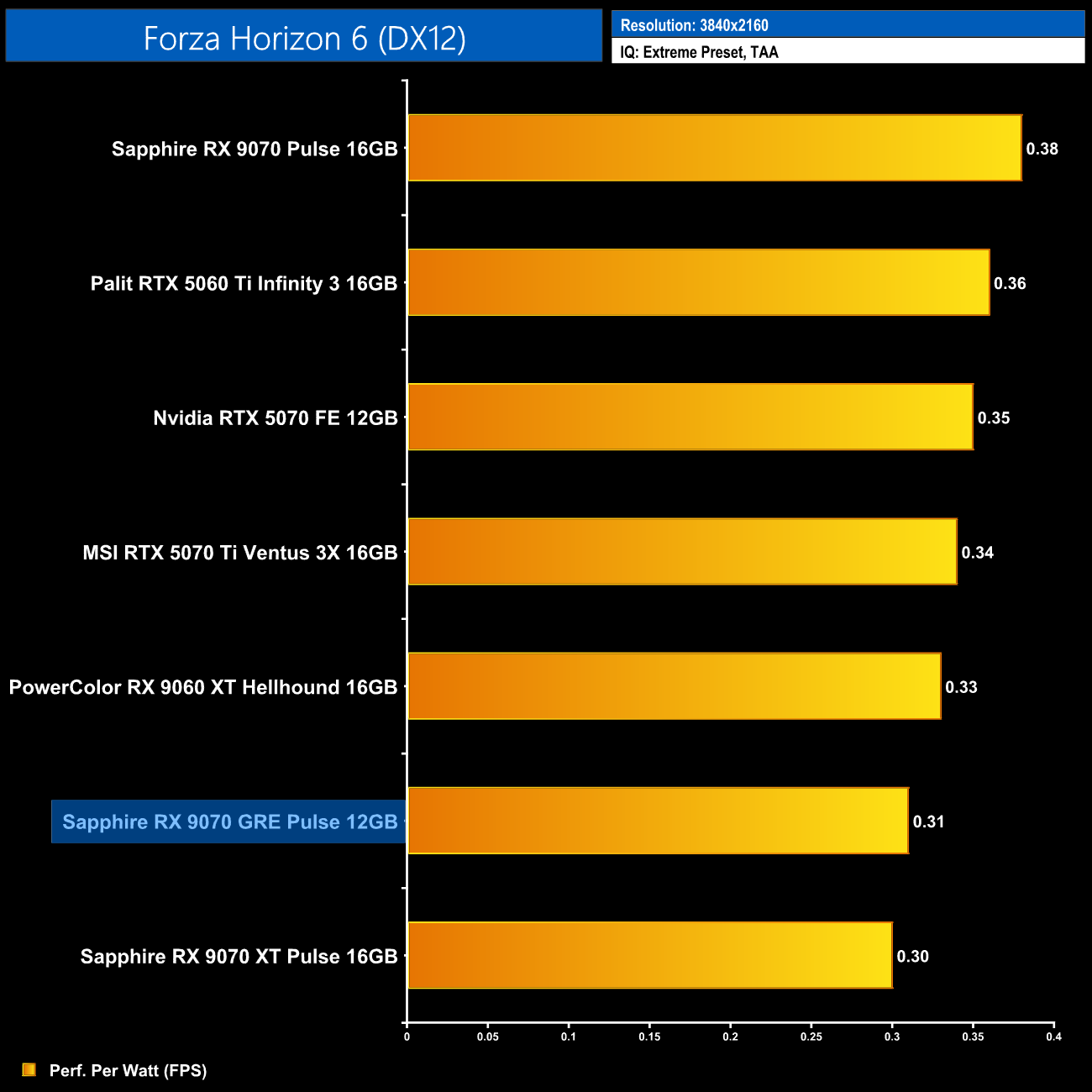
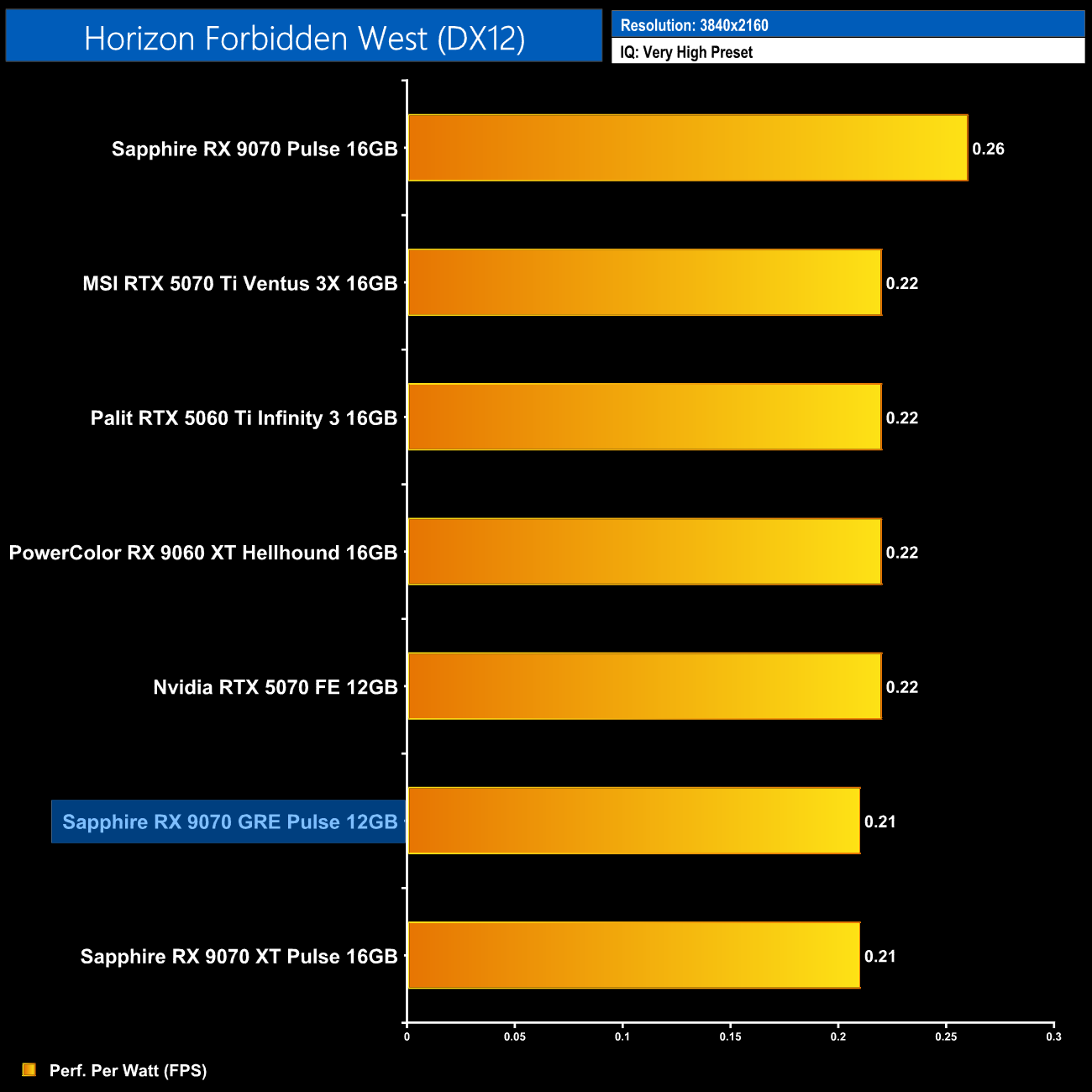
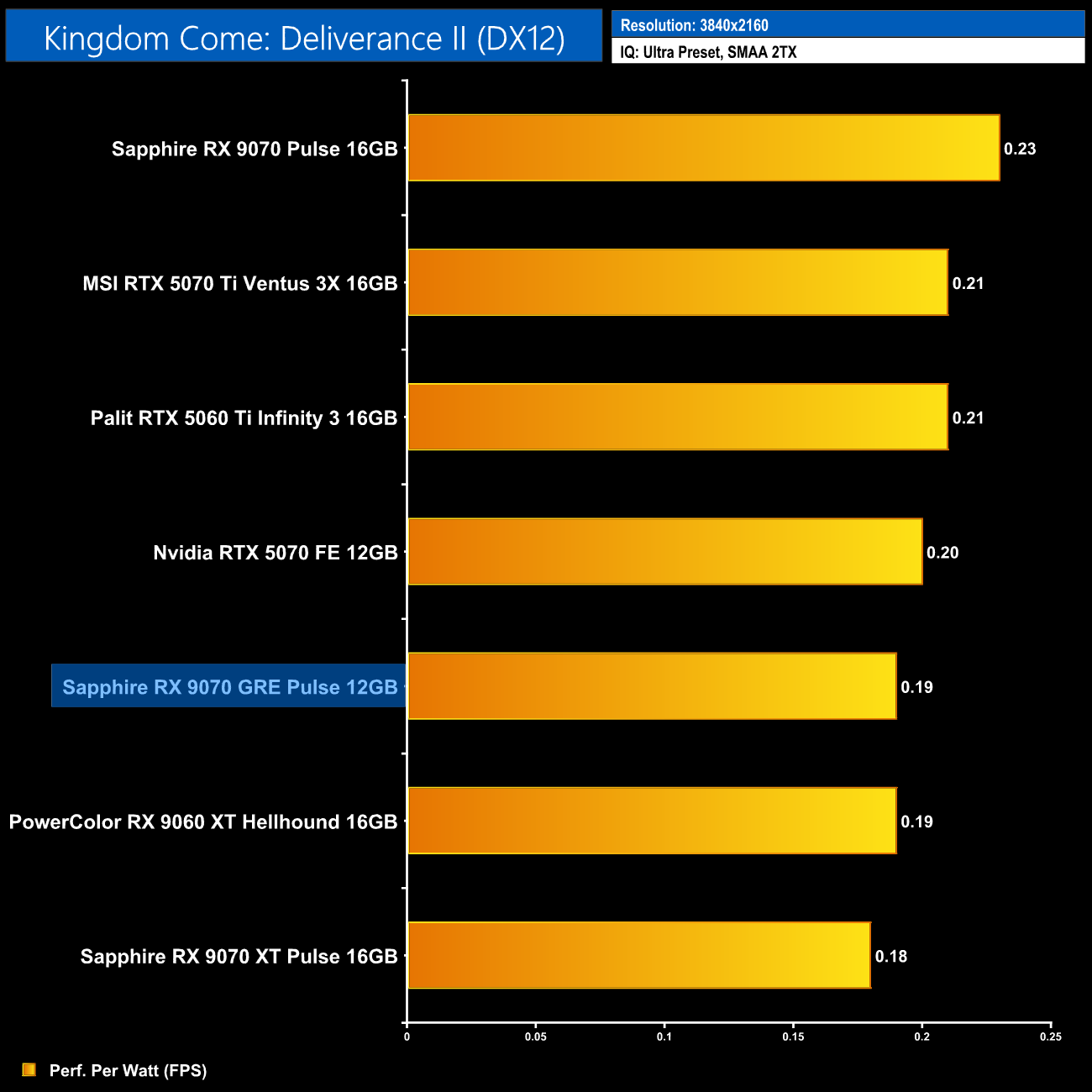
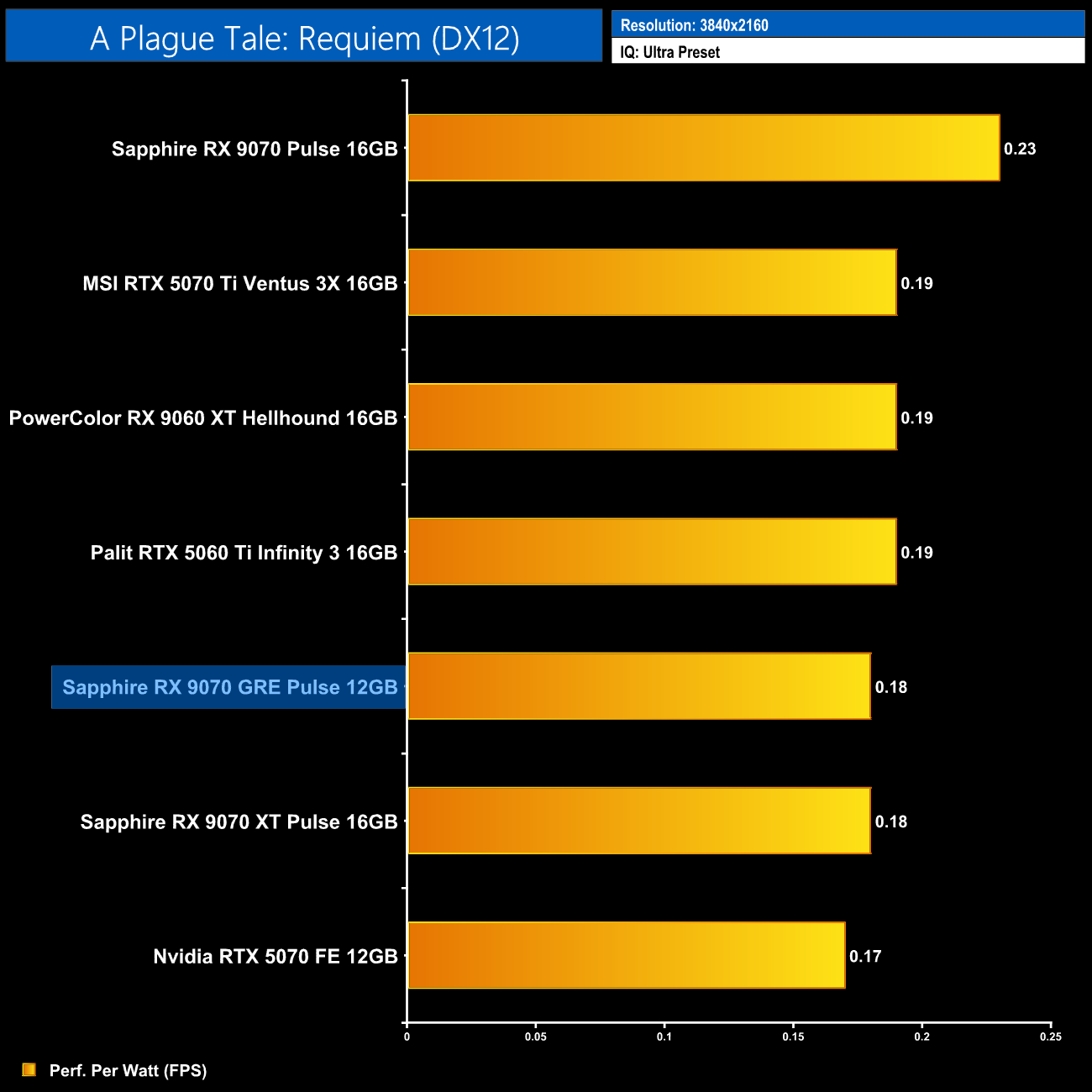
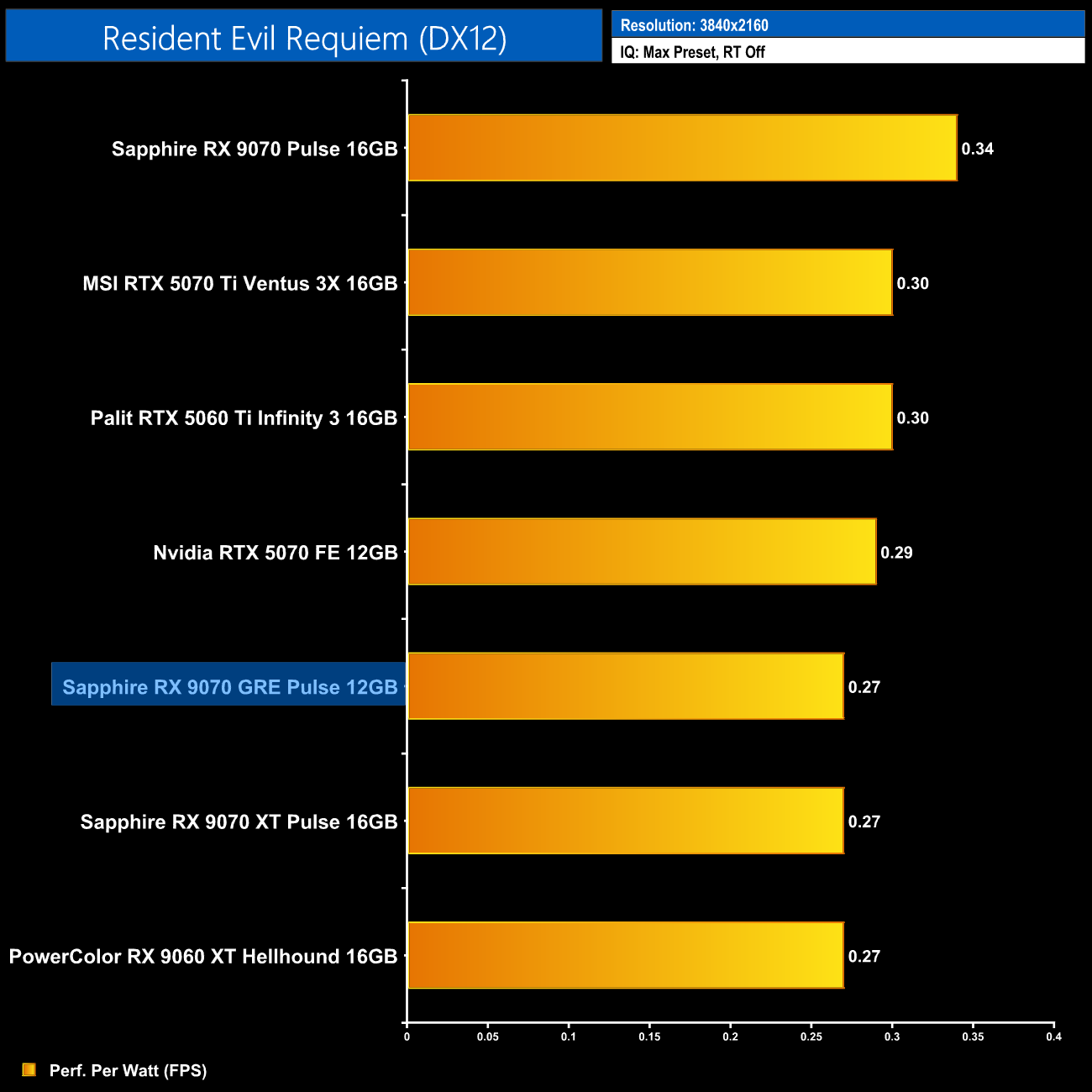
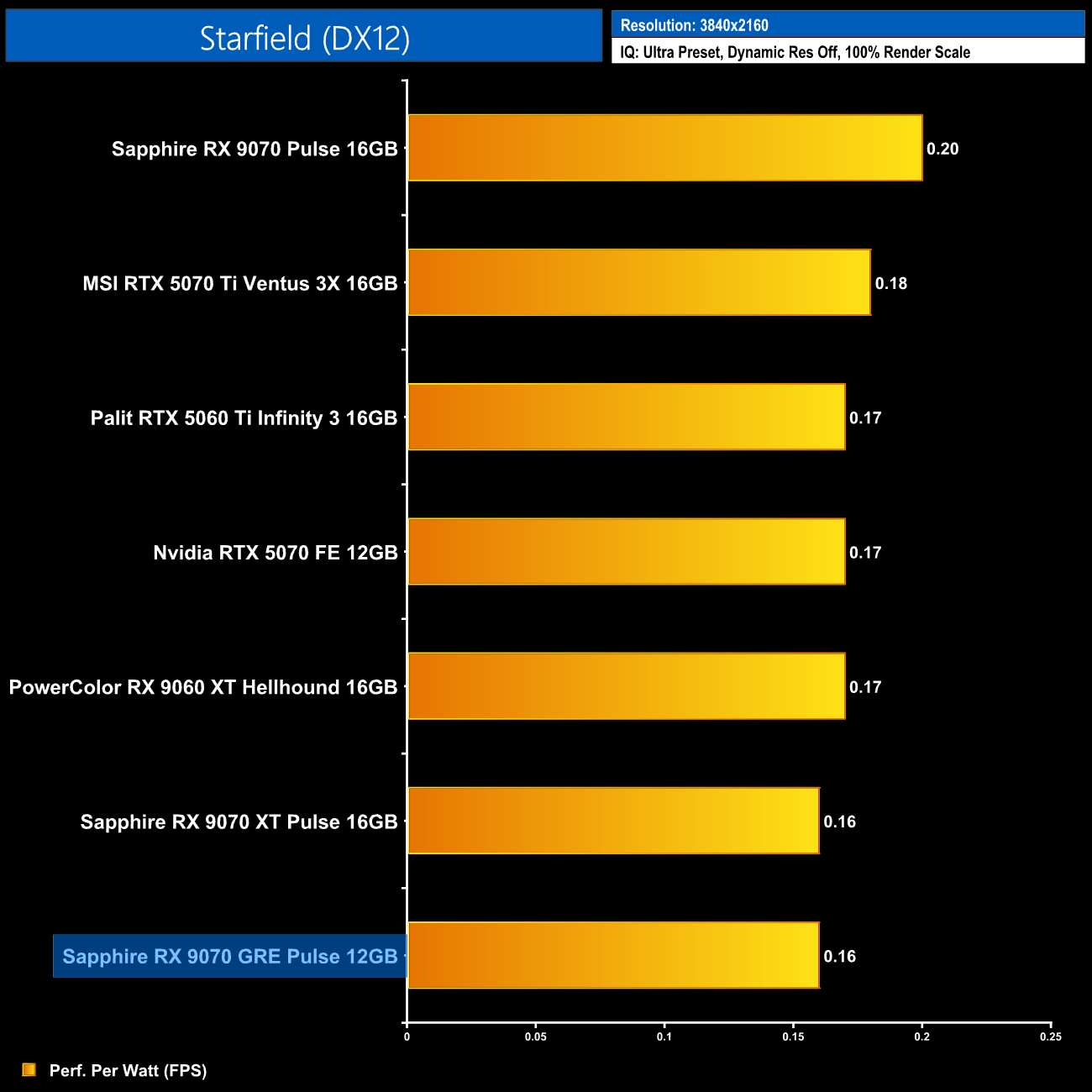
Click to enlarge.
12-Game Average at 2160p (4K):
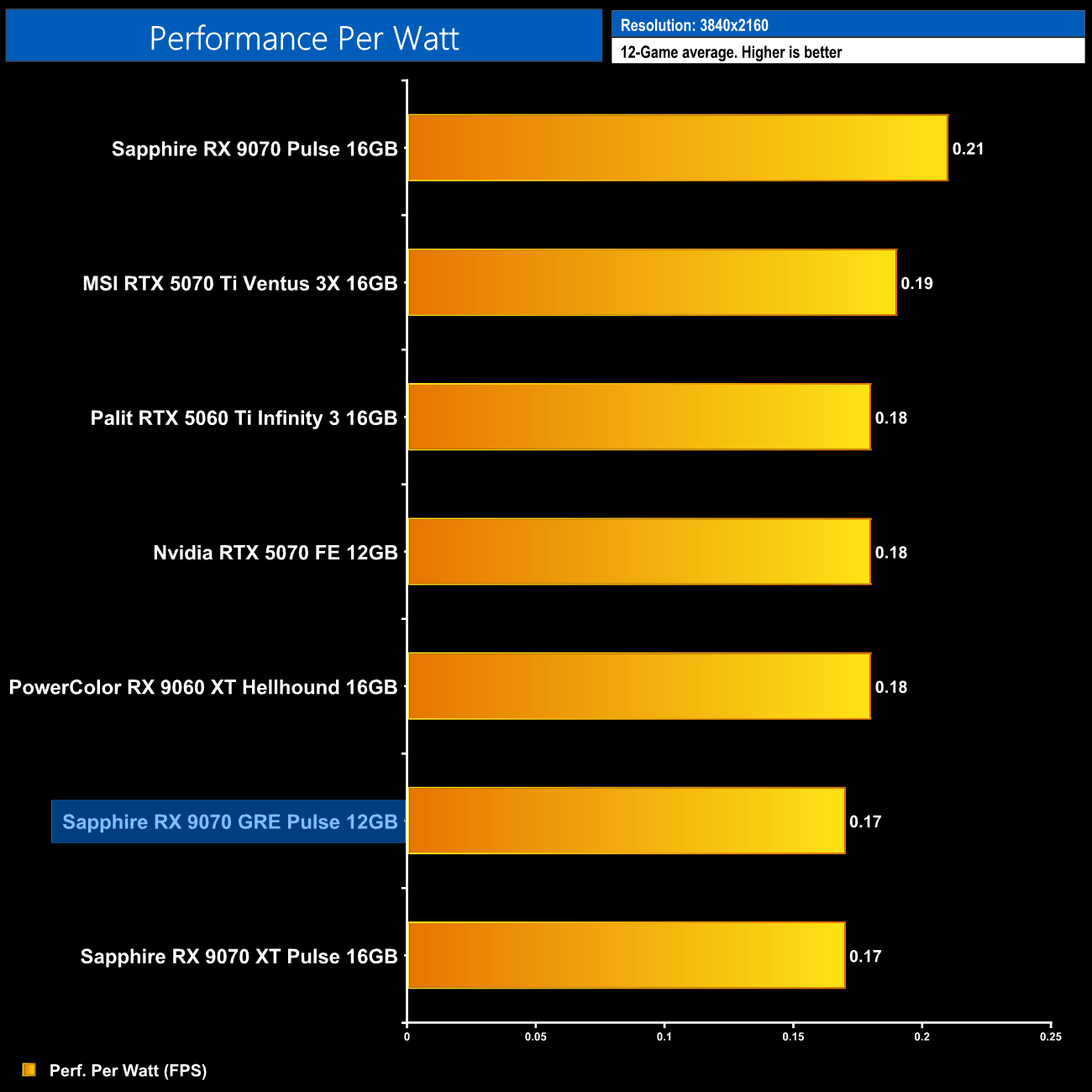
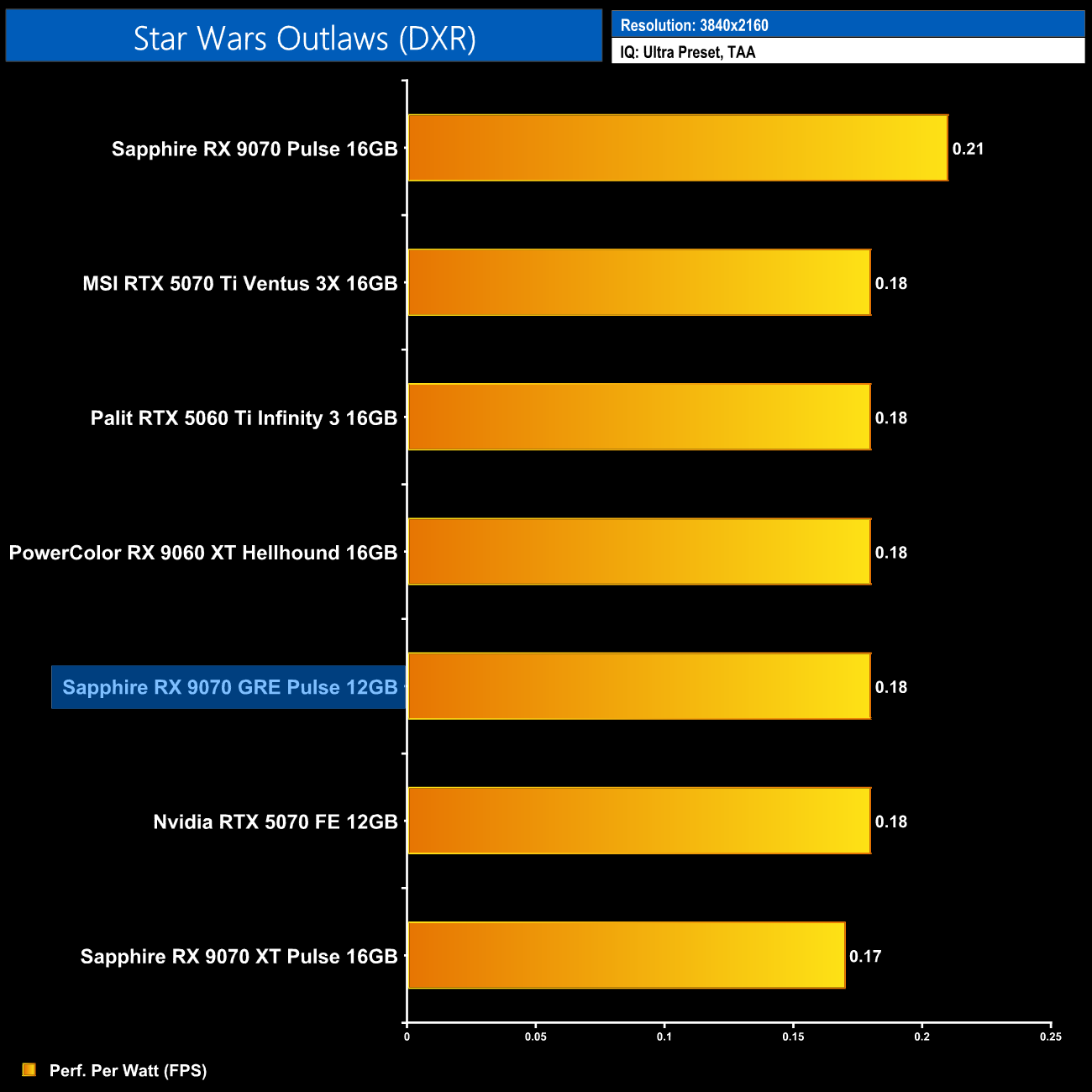
4K results follow the same trend, though it's largely academic as we don't see this is a GPU targeting the 4K resolution.
Ray tracing results
As a bonus, we now include the efficiency figures for all eight games we test with ray tracing enabled.
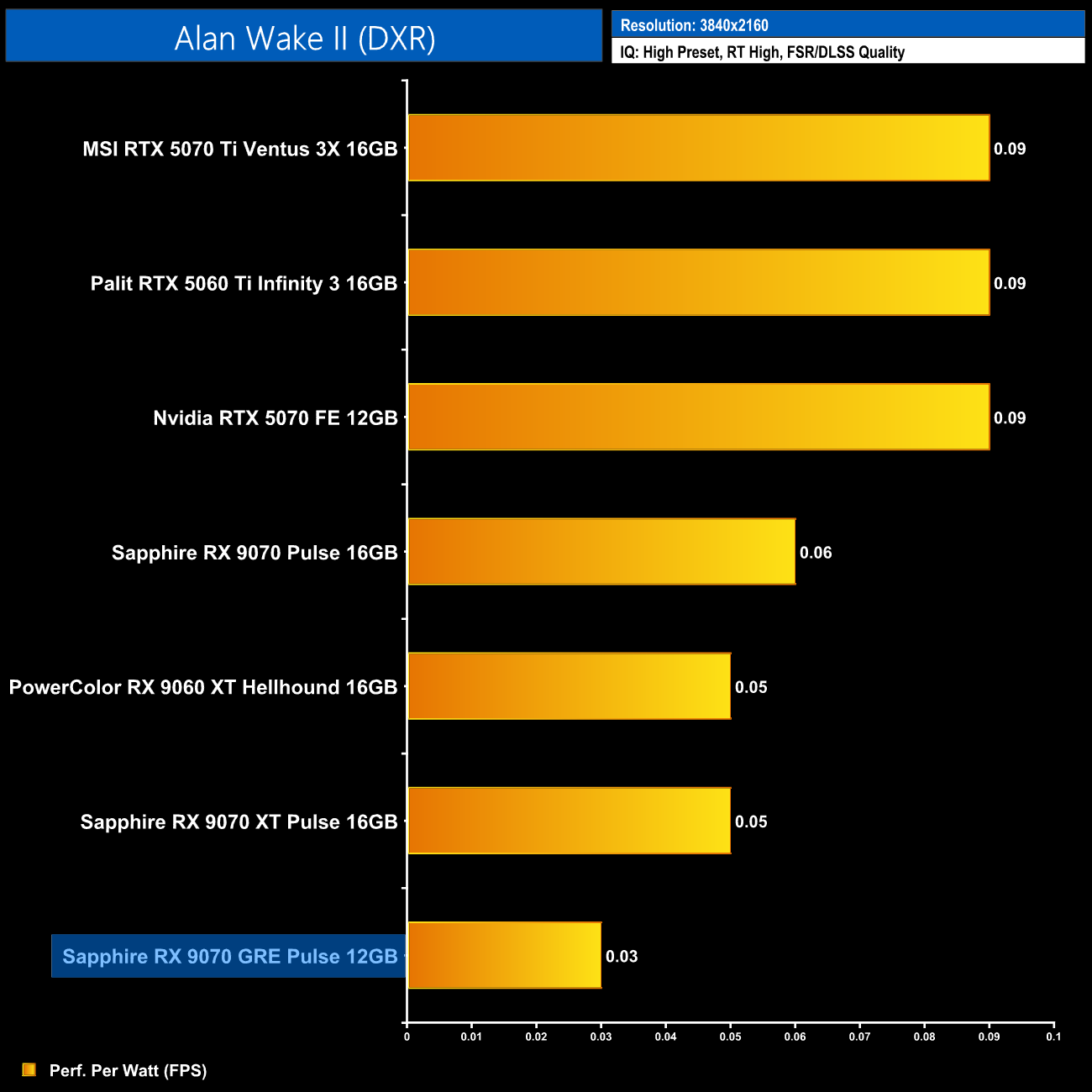
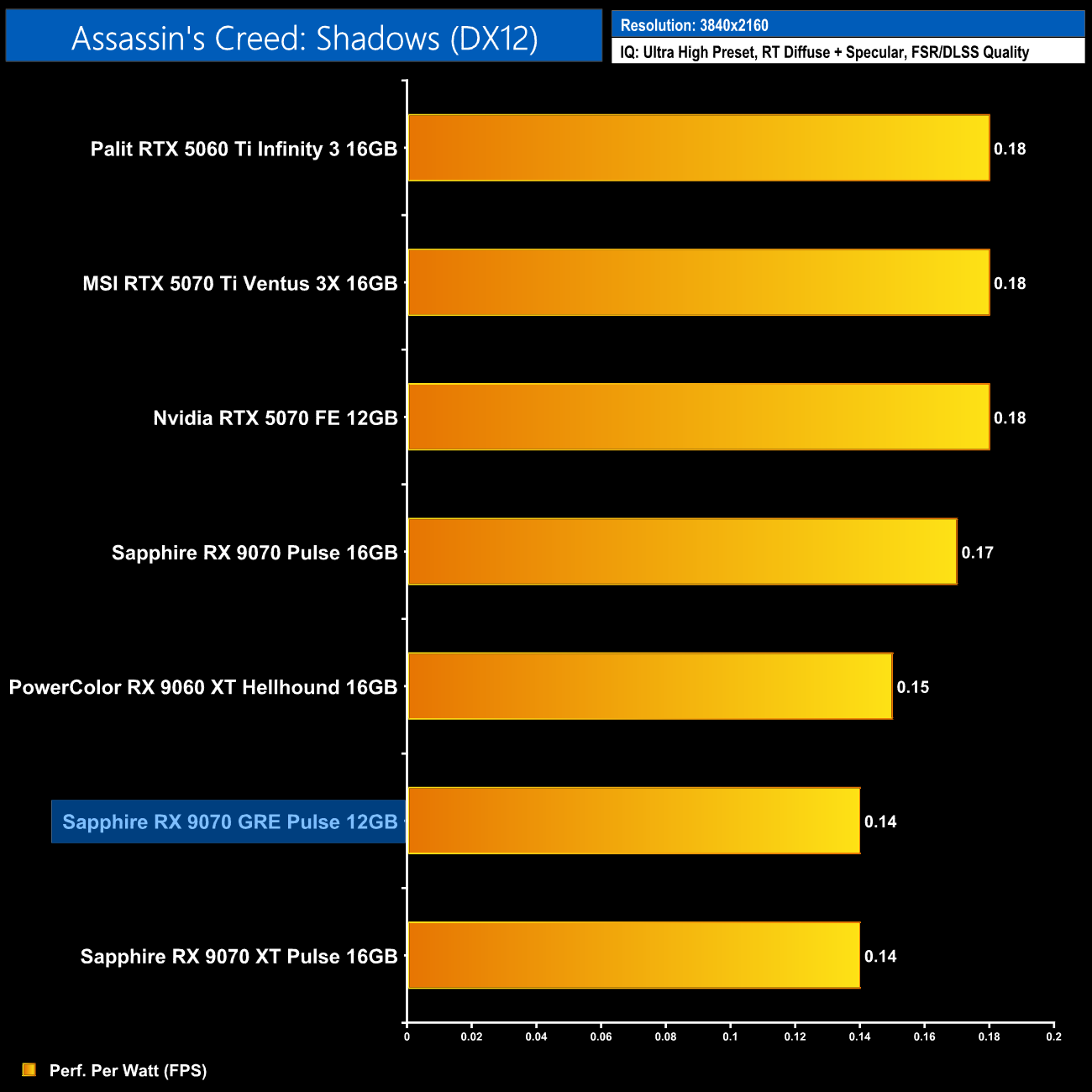
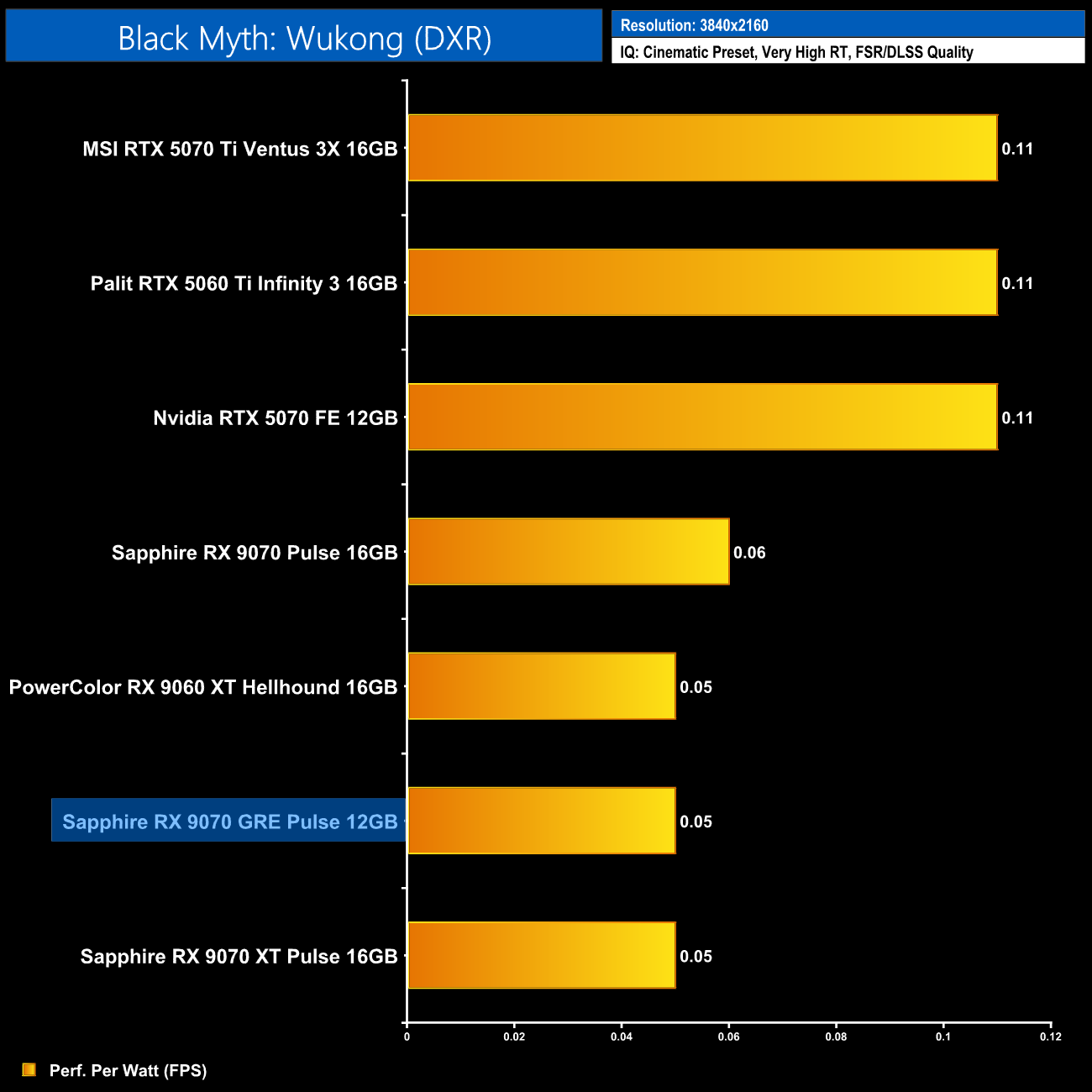
8-Game ray tracing average:
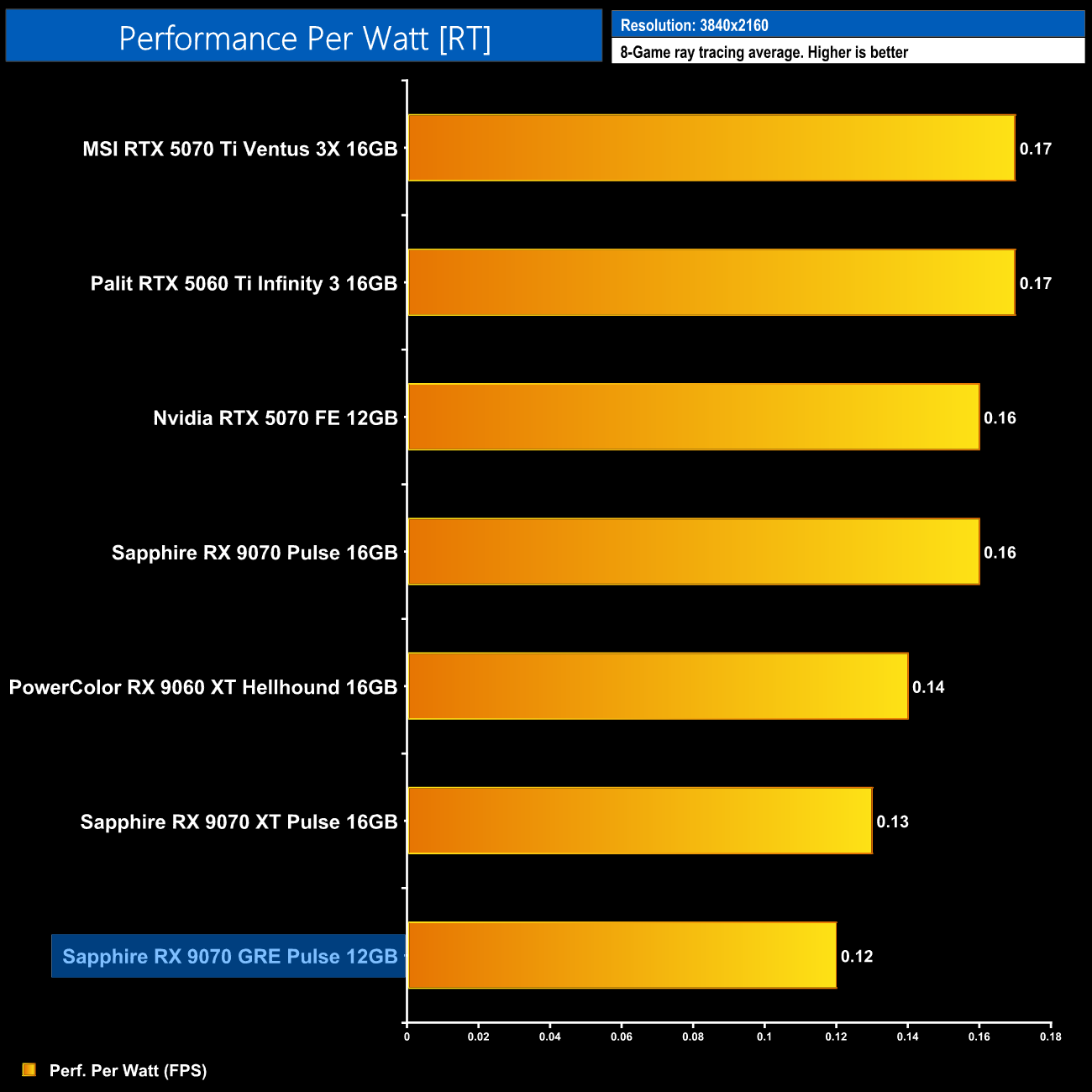
The same also goes for 4K ray tracing, where the 9070 GRE falls to the bottom of the chart
It's been a while since a new GPU hit the market, and we could even argue that AMD's RX 9070 GRE isn't new at all, given it actually launched in April 2025 as a Chinese regional exclusive. As of today, however, AMD has announced global availability and a $549 MSRP, while here in the UK we've been told to expect pricing in the £469-479 region.
To cut right to chase, given we are already very familiar with AMD's existing RDNA 4 lineup, the RX 9070 GRE offers no major surprises. It sits between the RX 9070 and RX 9060 XT, slotting in closer to the former than the latter, given it has 14% fewer cores than the 9070, but some 50% more than the 9060 XT.
In terms of gaming performance, funnily enough it came in 14% slower on average than the RX 9070 at 1440p, while it is roughly 30% ahead of the 9060 XT. I think the most interesting comparison is against Nvidia's RTX 5070, though, and we saw the AMD GPU come in 6% slower. I do encourage our readers to check out as many reviews as possible, as performance versus the GeForce competition can vary dramatically from game to game, so other outlets may well find different overall margins.
As we know, however, Nvidia holds the upper hand for ray tracing and things are no different here. There are plenty of games where the 9070 GRE will offer a good ray traced experience, but in titles with heavier ray tracing, and particularly path tracing, the RTX 5070 is streets ahead. We even saw the 5060 Ti 16GB coming in faster when looking at Alan Wake 2 and Black Myth: Wukong, so if that's your priority, Team Green is the way to go.
We measured power draw consistently around the 220W figure, though this would have been more like 240W if we weren't testing at reference specifications. Either way, it's not particularly high by modern standards, but it is actually the same level of power as the RX 9070 (non-XT and non-GRE), and we know that GPU is significantly faster. That, of course, has a clear knock-on effect that the 9070 GRE isn't the most efficient, and lags behind the 9060 XT 16GB, 5060 Ti 16GB and RTX 5070 as well.
Ultimately, the success of the RX 9070 GRE is all going to come down to pricing, and this is where I am somewhat concerned for the GPU. Even at the lower end of what we've been told to expect here in the UK, a £469 MSRP makes this just £30 cheaper than the RTX 5070, despite all the advantages the GeForce card has to offer – like its raw performance, superior ray tracing, DLSS and MFG support, plus it's more efficient and offers better productivity and AI workload capabilities.
Realistically, I think the 9070 GRE will need to be at least £50 cheaper to put clear daylight between it and the RTX 5070. Ideally, stumping up around £550 for an RX 9070 would be even more beneficial given it packs in 16GB VRAM, rather than the 12GB we find here and on the RTX 5070, for that matter. However, the situation has changed since RDNA 4 and the 50 series launched last year, and memory is now a lot more expensive, as exemplified by RX 9060 XT 16GB models often coming in over 25% more expensive than MSRP.
At the end of the day, the RX 9070 GRE was never going to set the world alight, but it could be worth considering, provided pricing makes sense versus the competition and AMD's own stack. At launch, however, it's certainly looking like it will need a price adjustment, with AMD confirming a £489.99 SEP, and that is just far too close to the real-world selling price of the RTX 5070.
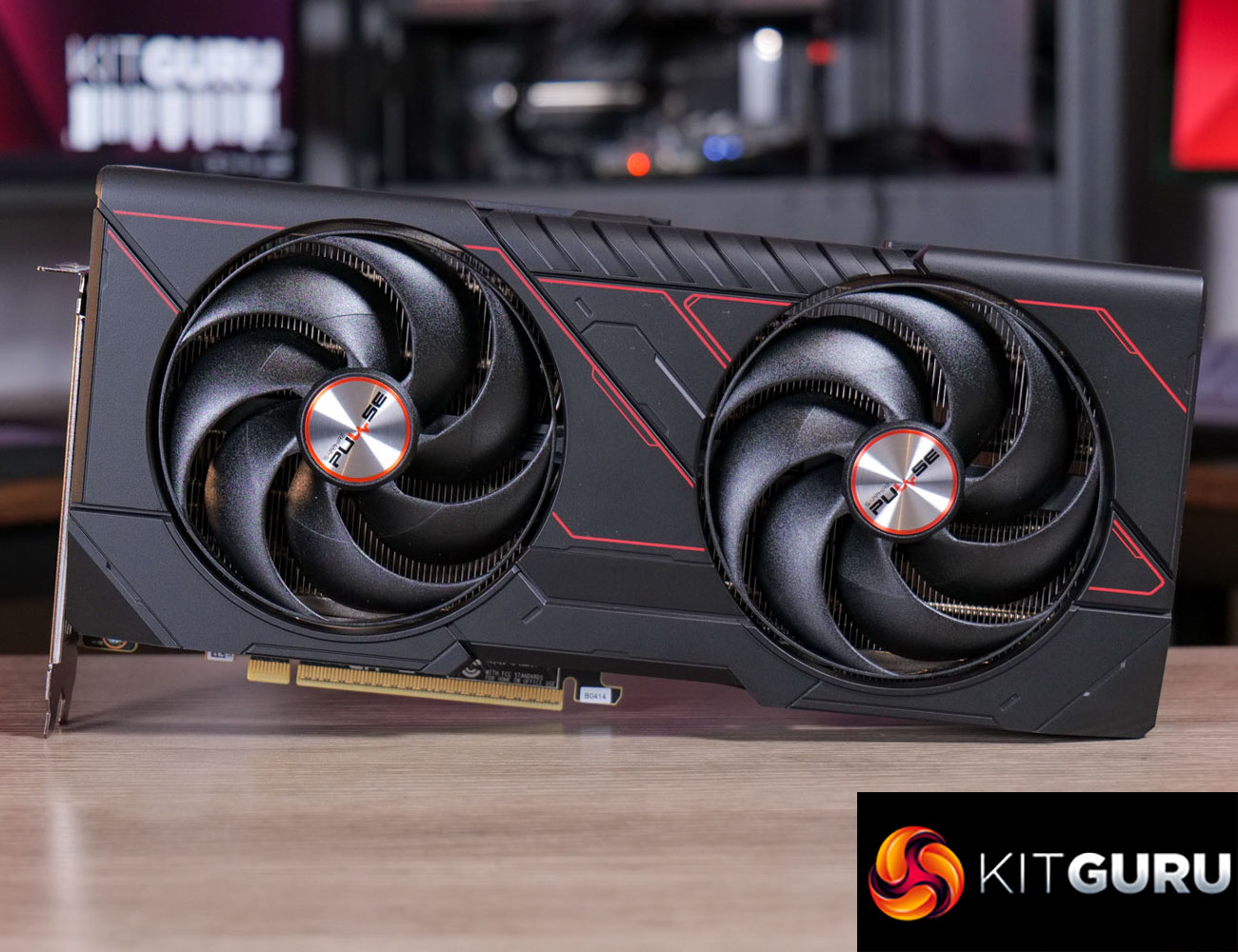
A final word on the Sapphire Pulse card we used for our testing today. It runs quiet and cool despite being a pretty compact card by modern standards, while memory temperatures appear much improved versus other RDNA 4-based models. It's not as feature-rich as the Nitro+ series, but Pulse is usually available at or around MSRP, so it's definitely one to look out for.
AMD has confirmed the UK SEP is £489.99 for the RX 9070 GRE.
Pros
- Solid 1440p gaming performance.
- Can offer a decent ray traced experience, too (but not in every game.)
- FSR 4 support.
- Sapphire Pulse card runs quiet and cool.
Cons
- Expected UK price puts it too close to the RTX 5070.
- Still struggles in more demanding ray traced/path traced games, particularly compared to GeForce.
- FSR 4, while significantly better, lacks the near-universal game support of DLSS.
- Lags behind in terms of efficiency.
- 12GB VRAM still isn't great for longevity, though market conditions have changed compared to last year.
KitGuru says: The RX 9070 GRE is nothing to write home about – it could be worth considering at a sensible price, but if not, the RTX 5070 is superior across the board.